A snake wraps around a forearm in a way a lion portrait never could, and a peony’s layered petals let an artist build depth that a single tribal line can’t match.
The placement you’re working with decides which drawing will actually fit: vertical designs like feathers and snakes follow the natural lines of an arm or calf, while wider compositions need the square footage of a thigh or shoulder blade to avoid cramping the detail.
If you’re sketching your own design, a mechanical pencil keeps tribal curves and tapered points cleaner than regular graphite, and fine-liner pens give you the consistent line weight that translates straight to a stencil.
1. Tiger Tattoos
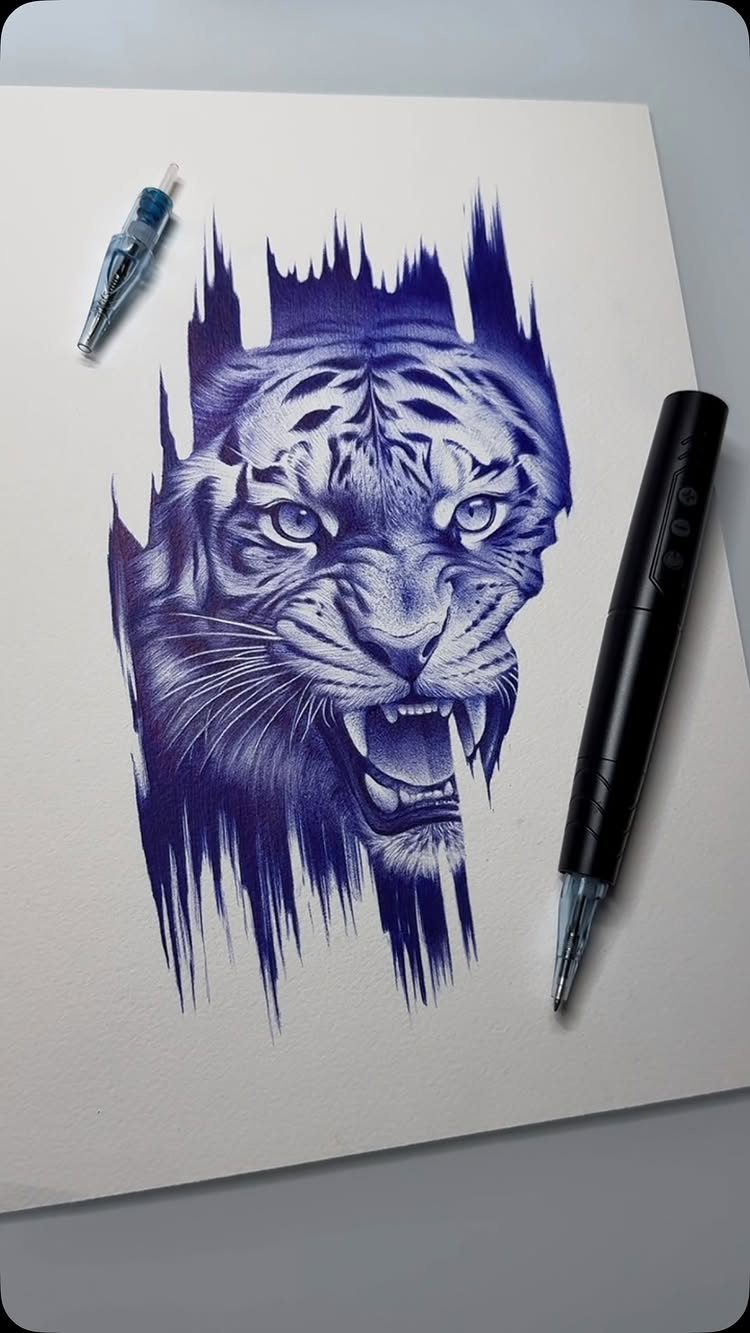
A tiger’s head in profile or mid-roar gives you a design that reads as power and motion, even when the animal is still.
The stripes alone make it recognizable at a distance, which matters if you want something that holds up as the ink settles.
Blue ink keeps the drawing softer than solid black and opens up styles that lean illustrative rather than photorealistic.
If you want the face to feel more approachable or you’re building a sleeve with other elements, blue can tie the whole composition together without the weight of a full blackwork piece.
2. Rose Tattoo Drawing Ideas
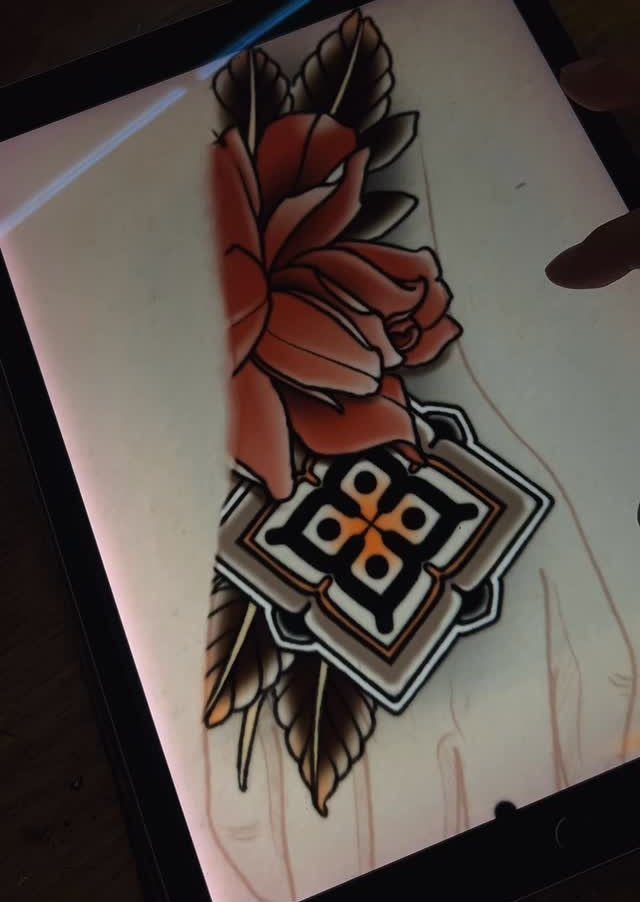
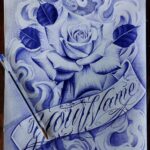
A rose gives you a shape that works at almost any size and pairs with geometry, script, or other florals without fighting for attention.
The petals layer in a way that lets an artist show depth and shading, so even a simple line drawing can look dimensional once it’s on skin.
Digital tools let you test placement and scale before you commit. You can adjust the stem length, rotate the bloom, or swap the geometric element to see what balances best on your arm or shoulder.
That flexibility is worth using if you’re not sure how much space you want the design to fill.
3. Feather Tattoo Drawing Ideas
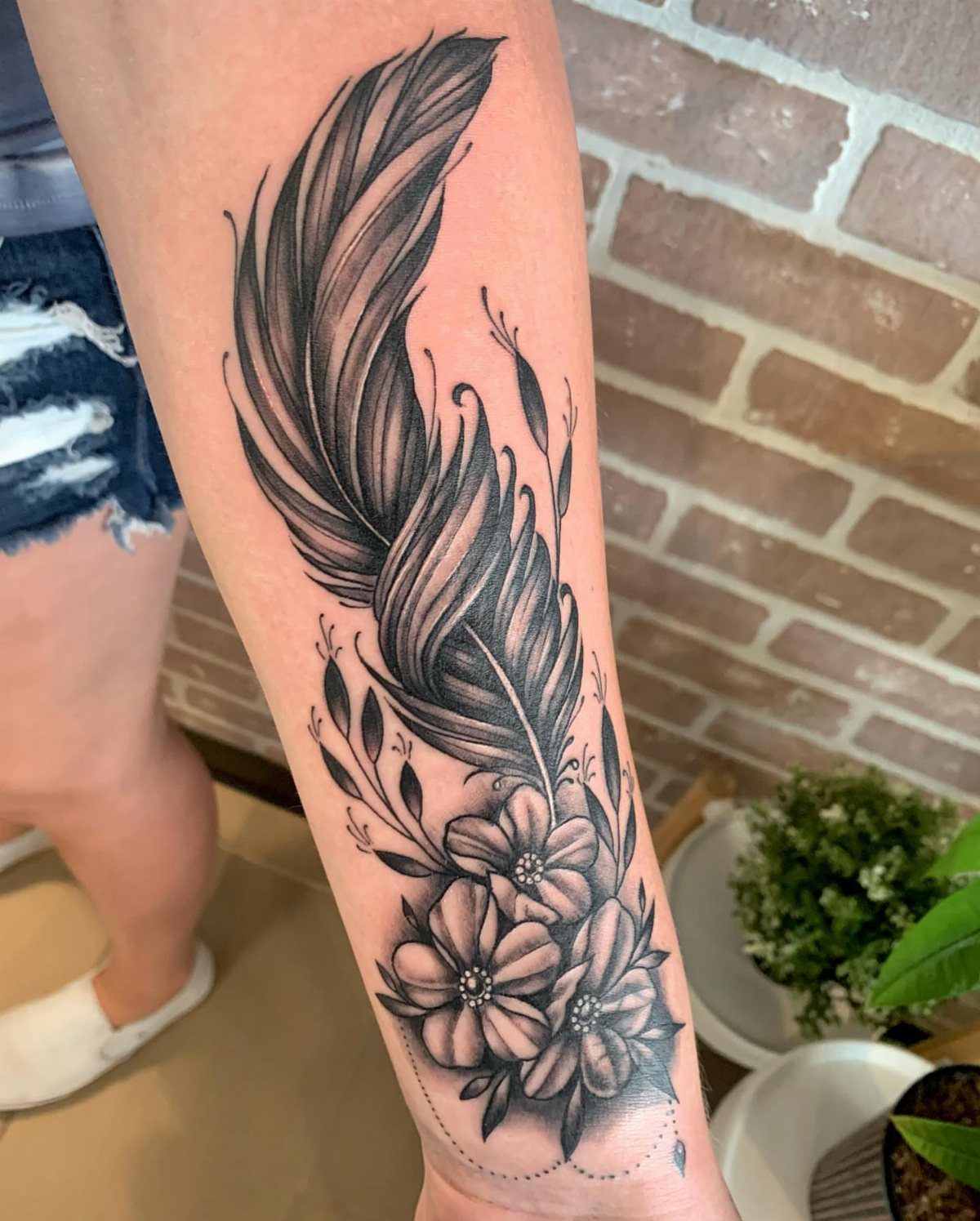
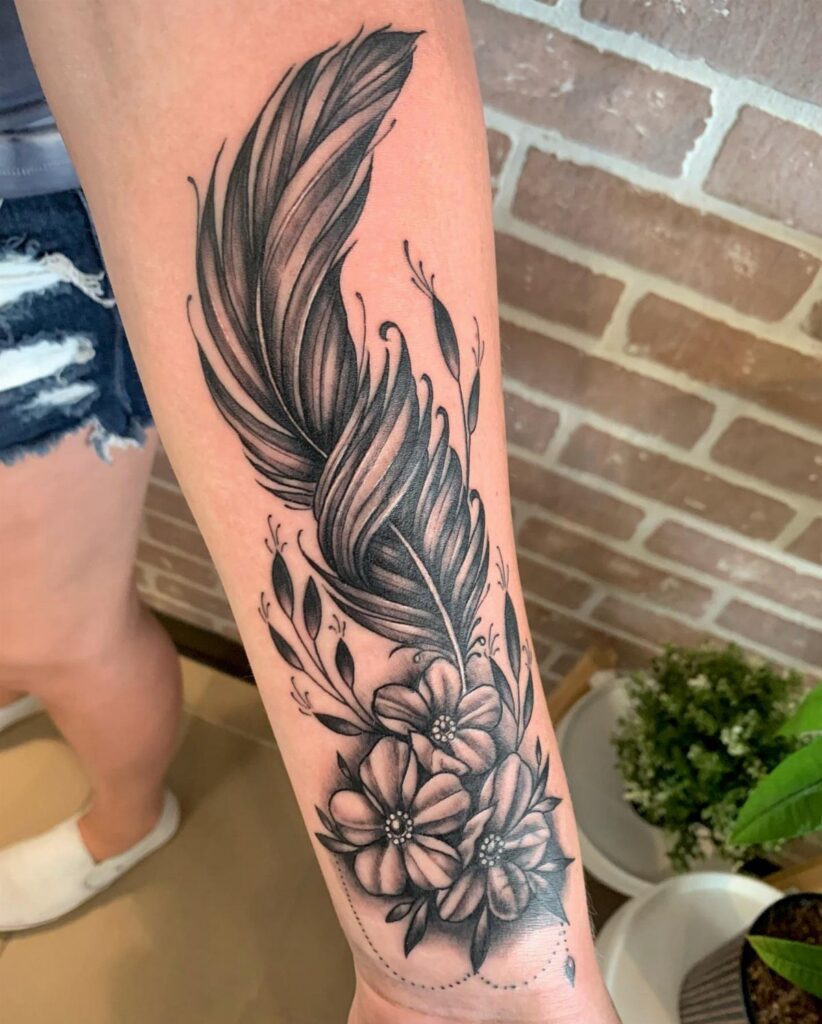
Feathers stretch vertically, so they fit the forearm, calf, or side of the ribcage without awkward cropping.
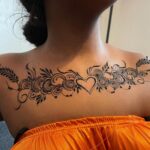
Adding flowers at the base or woven through the barbs gives the design a fuller footprint and softens the rigidity of a single quill.
If you want the barbs to stay sharp years later, this palette is the safer choice.
4. Lion Tattoo Drawing Ideas
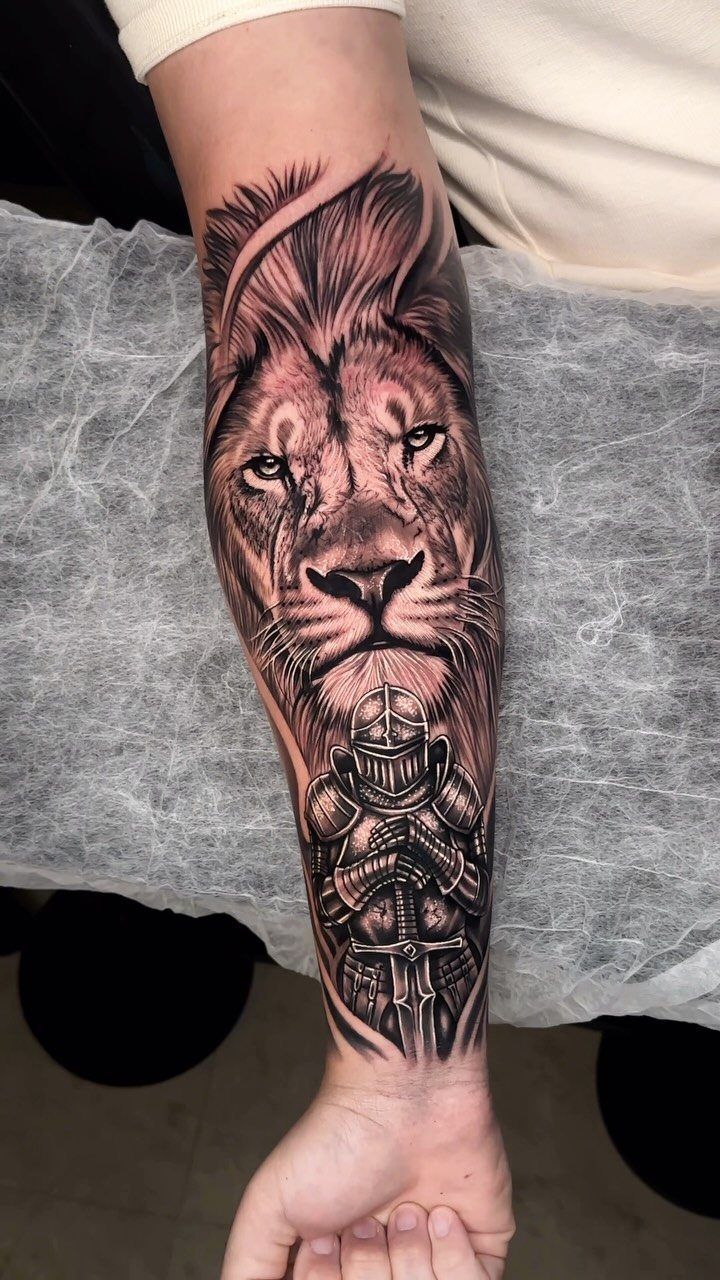
A lion’s mane gives an artist room to build volume and texture, and pairing it with a figure like a knight pulls the design into storytelling rather than leaving it as a standalone animal portrait.
That combination works best on a forearm or outer thigh where you have the vertical space to stack both elements without cramming them.
Black and grey ink keeps the focus on form and shading rather than competing colors.
If the lion’s expression and the knight’s armor are both detailed, a single palette lets the viewer read each part clearly instead of sorting through contrast.
5. Skull Tattoo Ideas
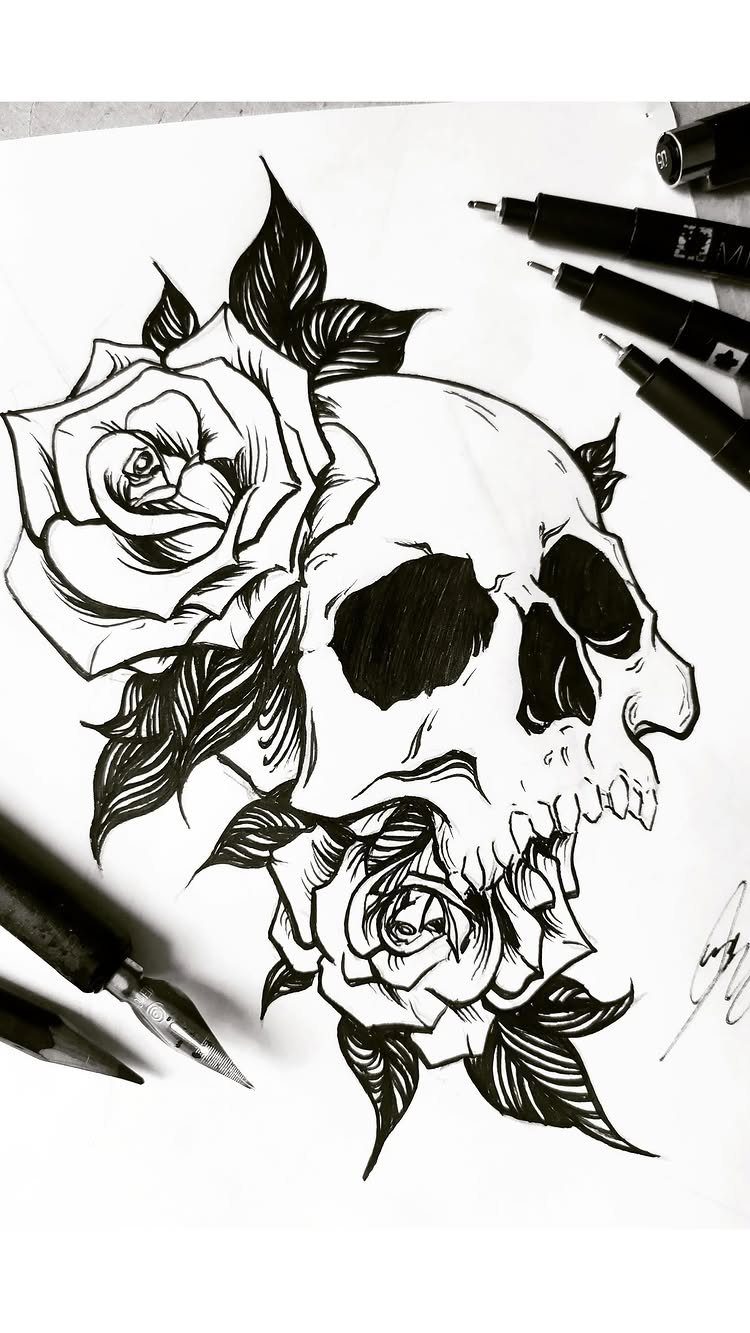
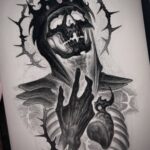
A skull wrapped in roses balances hard edges with organic curves, and that contrast is why the pairing shows up so often.
The roses soften the skull’s angularity without erasing what it represents, and the design reads clearly whether you’re 2 feet away or across a room.
Fine-liner pens give you clean, consistent lines that translate well to tattoo stencils. If you’re sketching this yourself, start with the skull’s structure before adding the roses so the flowers wrap convincingly around the bone rather than floating beside it.
6. Snake Tattoo Ideas
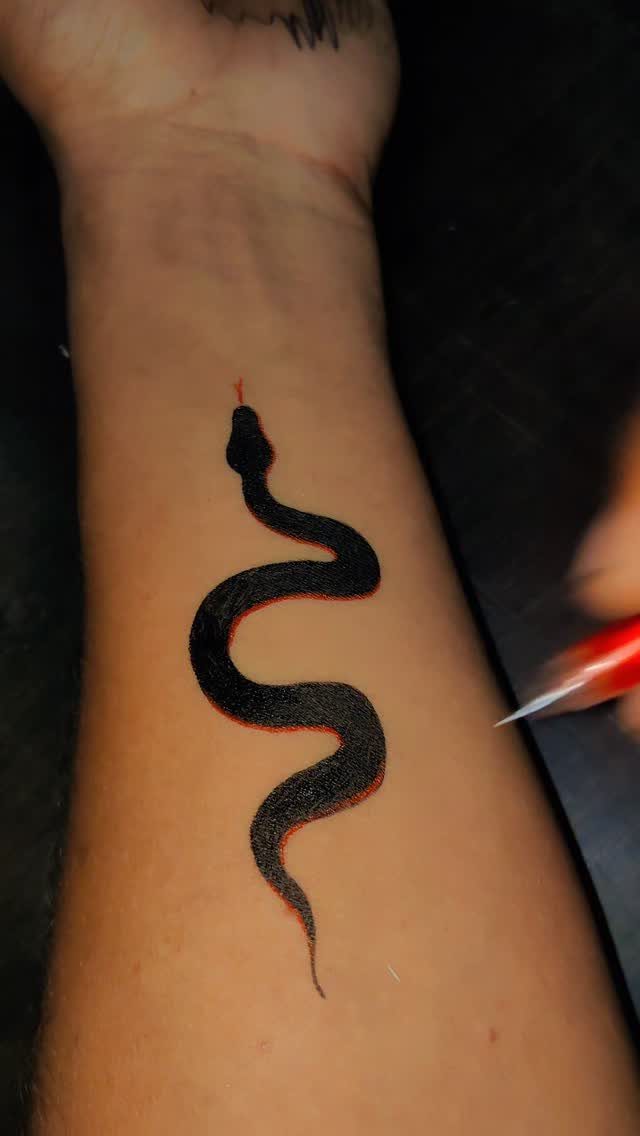
Snakes follow the body’s natural curves, so they adapt to almost any placement without looking forced.
A forearm lets you wrap the design partway around or keep it on the outer face, and the red accent pulls the eye to specific scales or the head without overpowering the black linework.
If you’re sitting for this piece, expect the outline session to move quickly since the snake’s body is mostly continuous curves.
Shading and color fill take longer, but a simple red highlight shortens that second session compared to a full-color reptile.
7. Peony Flower Tattoo Sketches
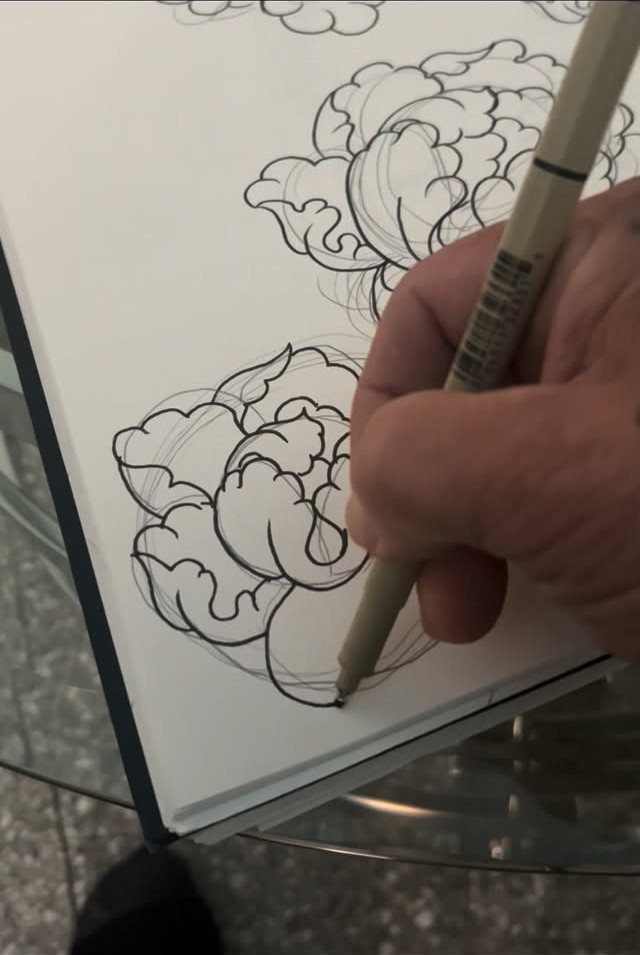
Peonies give you layered petals that stack in a way an artist can shade for real depth, and sketching them first lets you see how much contrast the design will carry before you commit to skin.
The overlapping blooms fill space naturally, so you can scale the piece to a shoulder blade or keep it tight on a wrist.
A sketchbook lets you refine the line weight and spacing before your artist transfers it to a stencil.
8. Tribal Tattoo Pencil Drawings
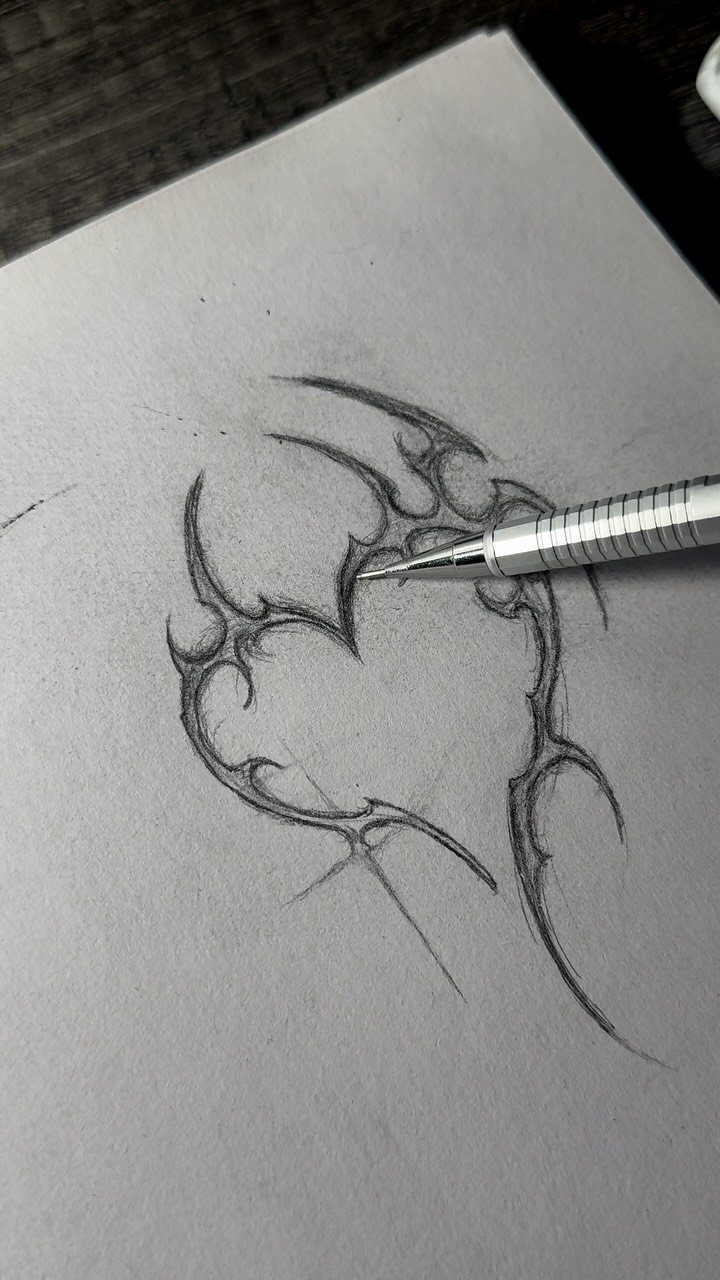
Tribal curves rely on consistent line weight and symmetry, and a mechanical pencil keeps both steadier than a regular graphite tip.
Mechanical pencil lead gives you the control to sketch tight spirals and tapered points that translate cleanly to a tattoo stencil, and you can erase without smudging the way softer pencils do.
Start with the central shape and mirror each curve as you build outward. If the design feels too busy, pull back on the smaller fill elements before you take it to your artist.
Advice on Tattoo Design Flow
A design that ignores the body’s proportions will look stretched or cramped no matter how clean the linework is.
Most placements run longer than they are wide: upper arms, thighs, calves, and forearms all favor vertical compositions over square or landscape ones.
If your sketch fills a square page, it probably won’t fit the actual spot without cropping or distorting something you wanted to keep.
Redraw it taller and narrower before you take it to your artist, or at least mark where the design can be trimmed if the placement demands it.
Muscle curves matter too. A design that works flat on paper can bend awkwardly once it wraps around a bicep or follows the curve of a ribcage.
Ask your artist to mock up the stencil placement if you’re not sure how the composition will sit.
Ethics of Using Tattoo Designs
Copying another artist’s design line for line is theft in the tattoo world, and shops will turn you away if your portfolio shows stolen work.
That rule applies whether you found the design on Instagram, in a flash book, or in a magazine.
If a design you like is already out there, use it as a starting point and change enough that the result is genuinely different.
Swap the angle, adjust the composition, or combine it with other elements so the final piece is yours. Better yet, ask the original artist for permission if you want to adapt their work directly.
Bringing a reference image to your artist is fine. Asking them to replicate it exactly is where the problem starts.
Frequently Asked Questions
What are some cool tattoo drawing ideas?
Tigers, roses, feathers, lions, skulls, snakes, and peonies all give you recognizable shapes that work across different sizes and placements.
Each one has built-in structure that an artist can shade for depth, and they pair well with other elements if you want to build a larger composition.
Start with the subject that fits the body part you’re planning to use, since vertical designs like feathers and snakes suit forearms and calves, while something like a rose or skull adapts to almost any spot.
What is the 1/3 rule tattoo?
Body parts aren’t shaped like printer paper, so a design that looks balanced in a sketchbook often needs its proportions adjusted before it works as ink.
Let your artist know which direction the spot runs so they can stretch or compress the layout where it counts.
A shoulder cap or the inside of a forearm will distort line weight and spacing in ways a scanner bed won’t, so test how the drawing reads when you bend that joint.
What are the top 10 most popular tattoo designs?
Roses, skulls, lions, snakes, tigers, feathers, and peonies show up often because they give you shapes that read clearly at a distance and hold up as the ink settles.
If you want a design that stays recognizable years later, these subjects are safe bets.