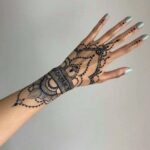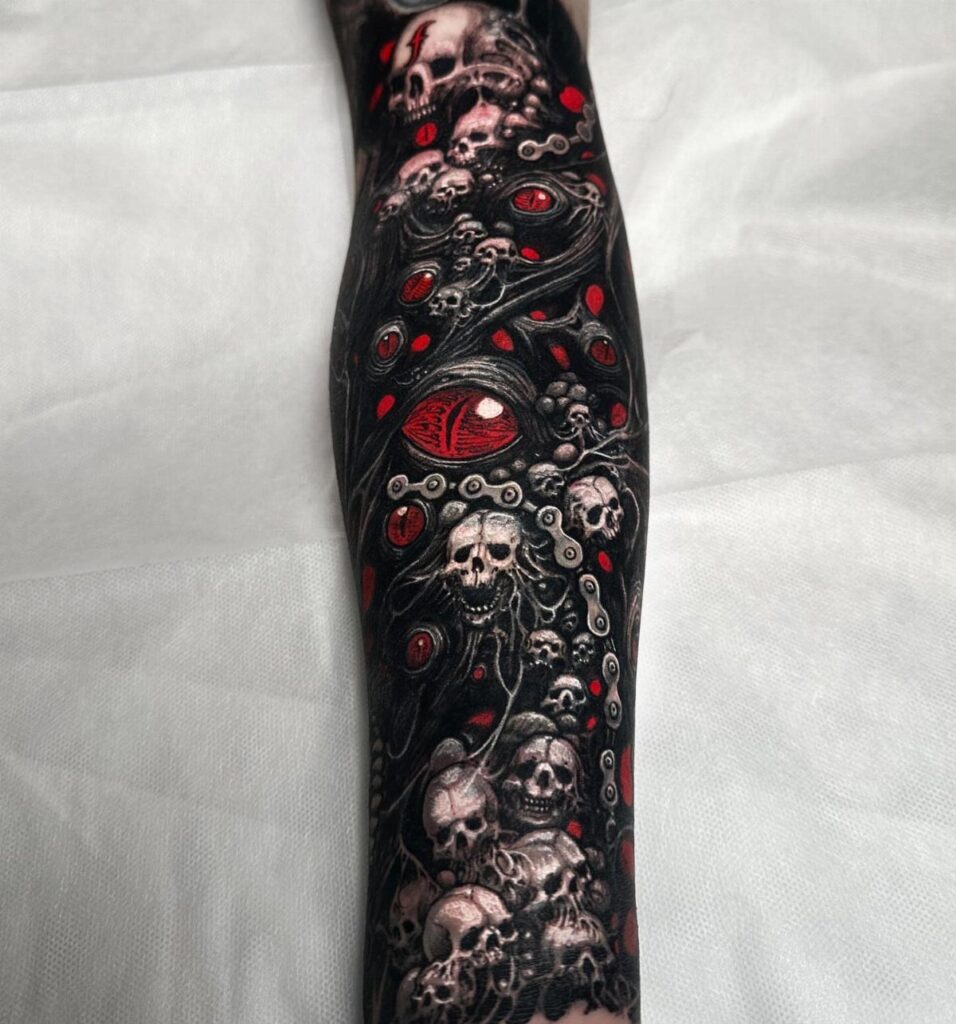
A full sleeve cover-up runs more than a fresh sleeve because the artist is adjusting shading and placement to hide what’s already there, and that difficulty shows up in both the session count and the hourly rate.
The choice between styles comes down to how heavy the original tattoo is: light or scattered work can disappear under neo traditional color, flowers or a portrait collage, while dense or saturated ink needs blackwork, a blackout or tribal to cover it completely.
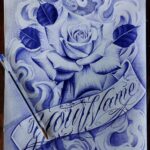
1. Flowers
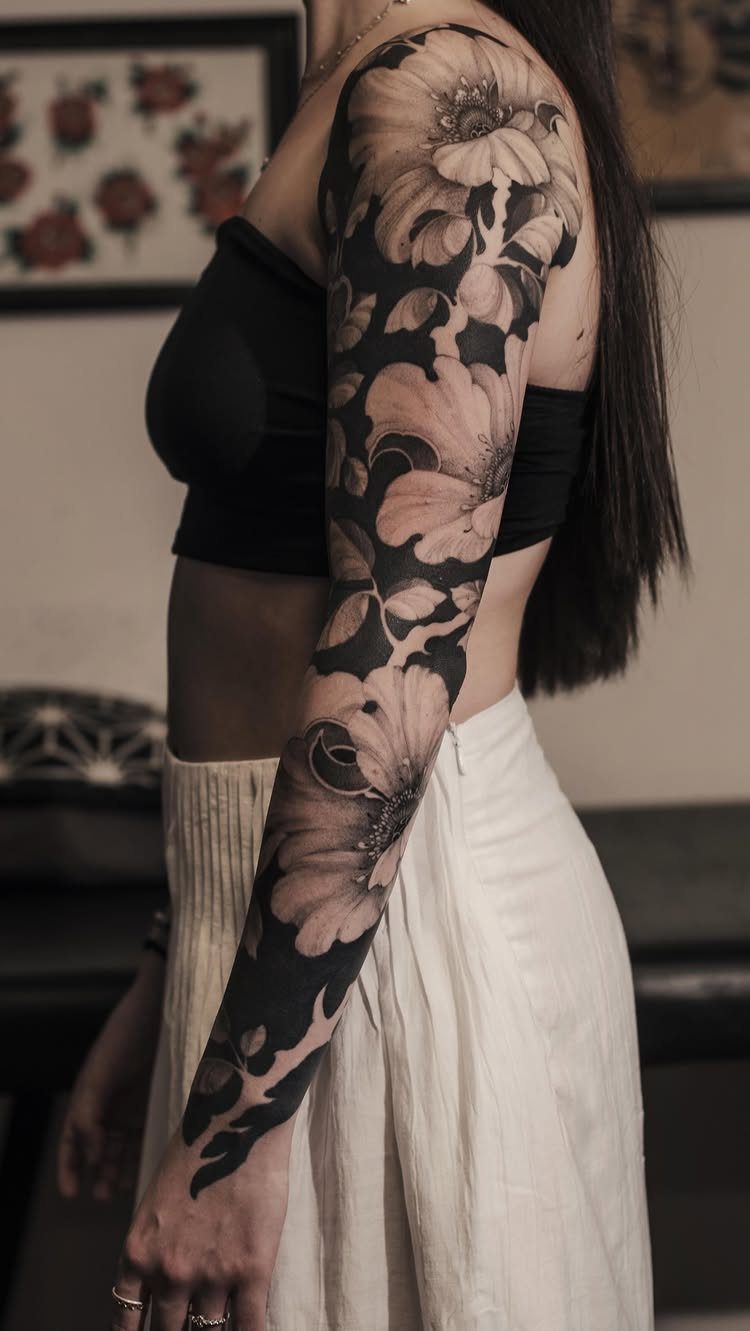
Flowers work for cover-ups because petals, leaves and stems give you places to hide dark lines. The shading between layers lets an artist bury what was there without needing solid black everywhere.
Monochrome shading keeps the focus on depth rather than fighting old color with new color. If the old tattoo has heavy black in one spot, a flower head or a cluster of leaves can sit right over it.
Go big enough that each bloom has room to build contrast. A sleeve gives you that space, and the design reads clearly from a distance even when it’s doing double duty.
2. Neo Traditional Tattoos
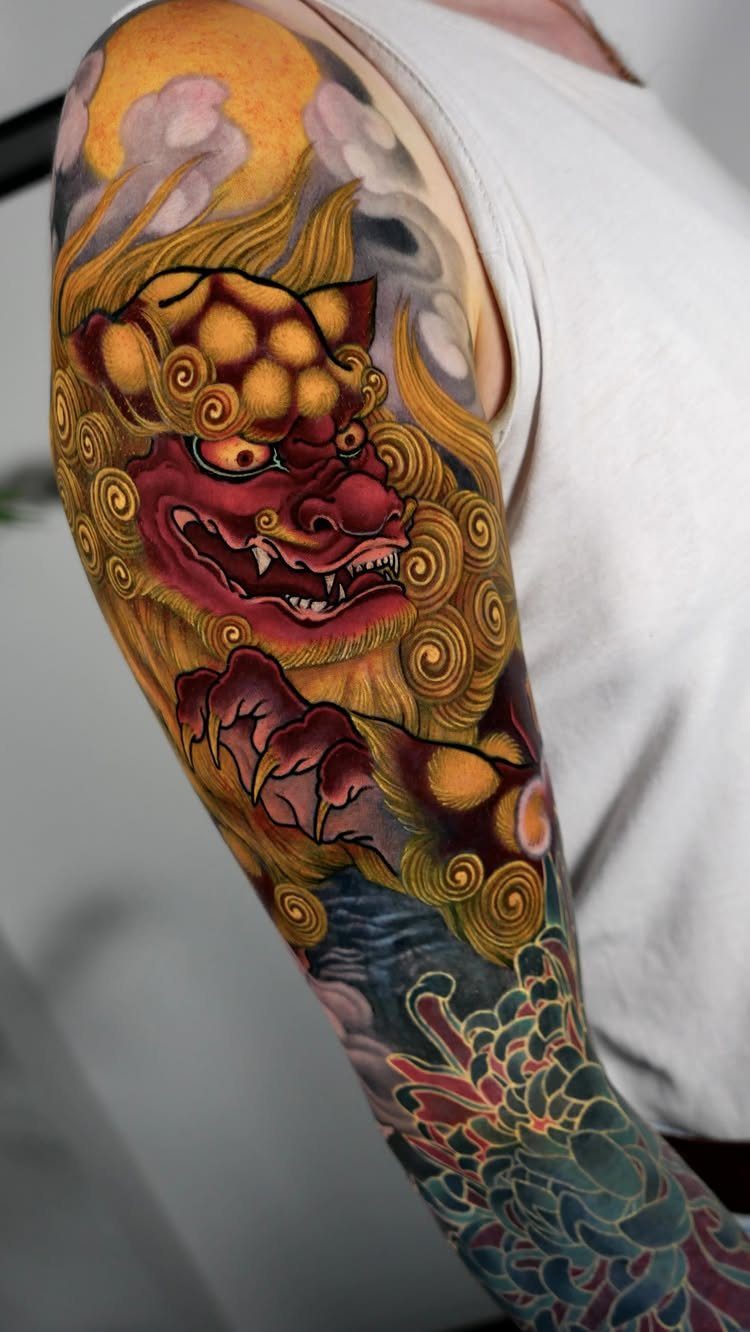
Bold outlines and saturated color make neo traditional designs strong enough to sit over older work.
The style uses thick black lines to frame each element, so an artist can place those lines where they need to be for the cover-up rather than tracing an older tattoo.
Neo traditional tattoos use that kind of density, which means fewer open areas where something underneath could show through.
Neo traditional also gives you flexibility with color. An artist can push warm tones where the old tattoo is light and use cooler shades or more black where it’s dark, all within the same piece.
3. Blackwork
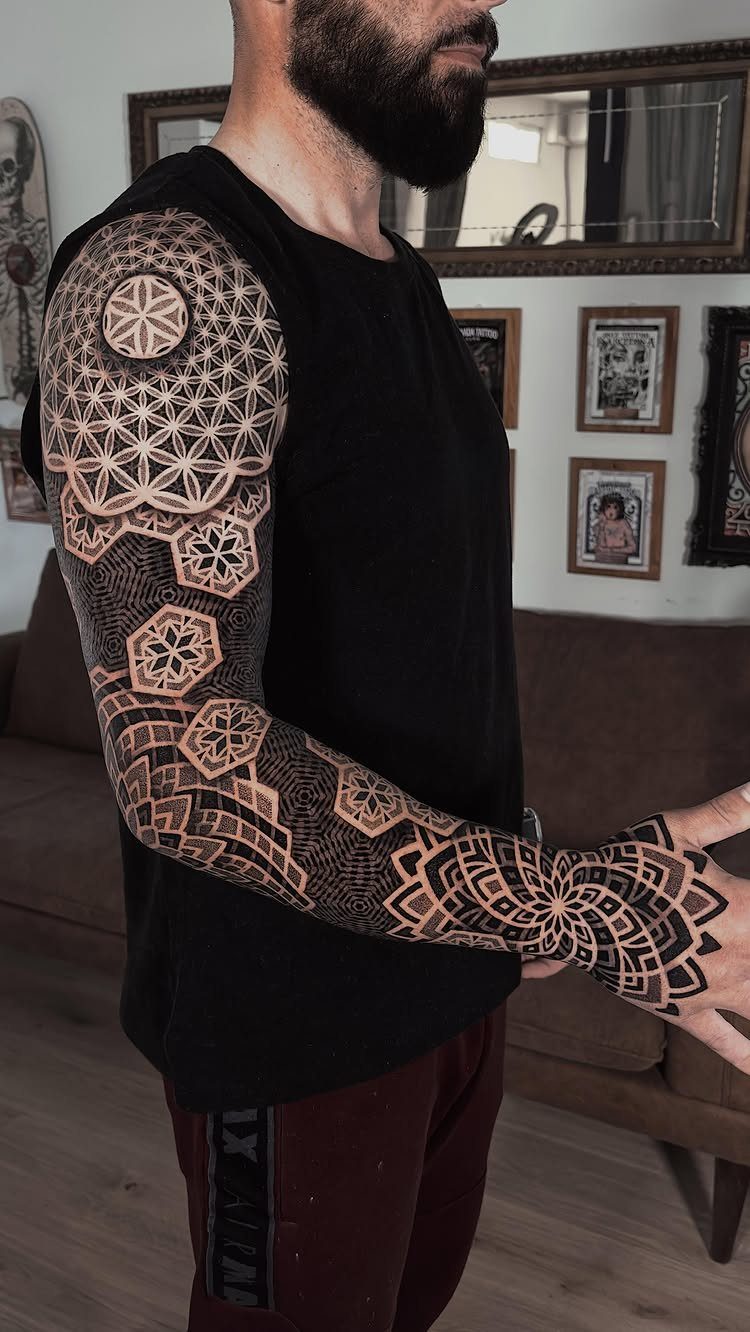
Blackwork relies on solid black and tight geometric patterns to cover what was there. Mandalas, sacred geometry and dotwork all give an artist places to pack ink densely without it looking like a blackout.
The contrast comes from the gaps you leave, not from shading. That makes it easier to control where the old tattoo hides, because you’re either covering it completely or leaving skin clean.
If the original tattoo has a lot of line work, geometric patterns can absorb those lines into the new design. The repetition in a mandala or a tessellation means small adjustments won’t throw off the whole sleeve.
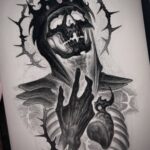
4. Skulls
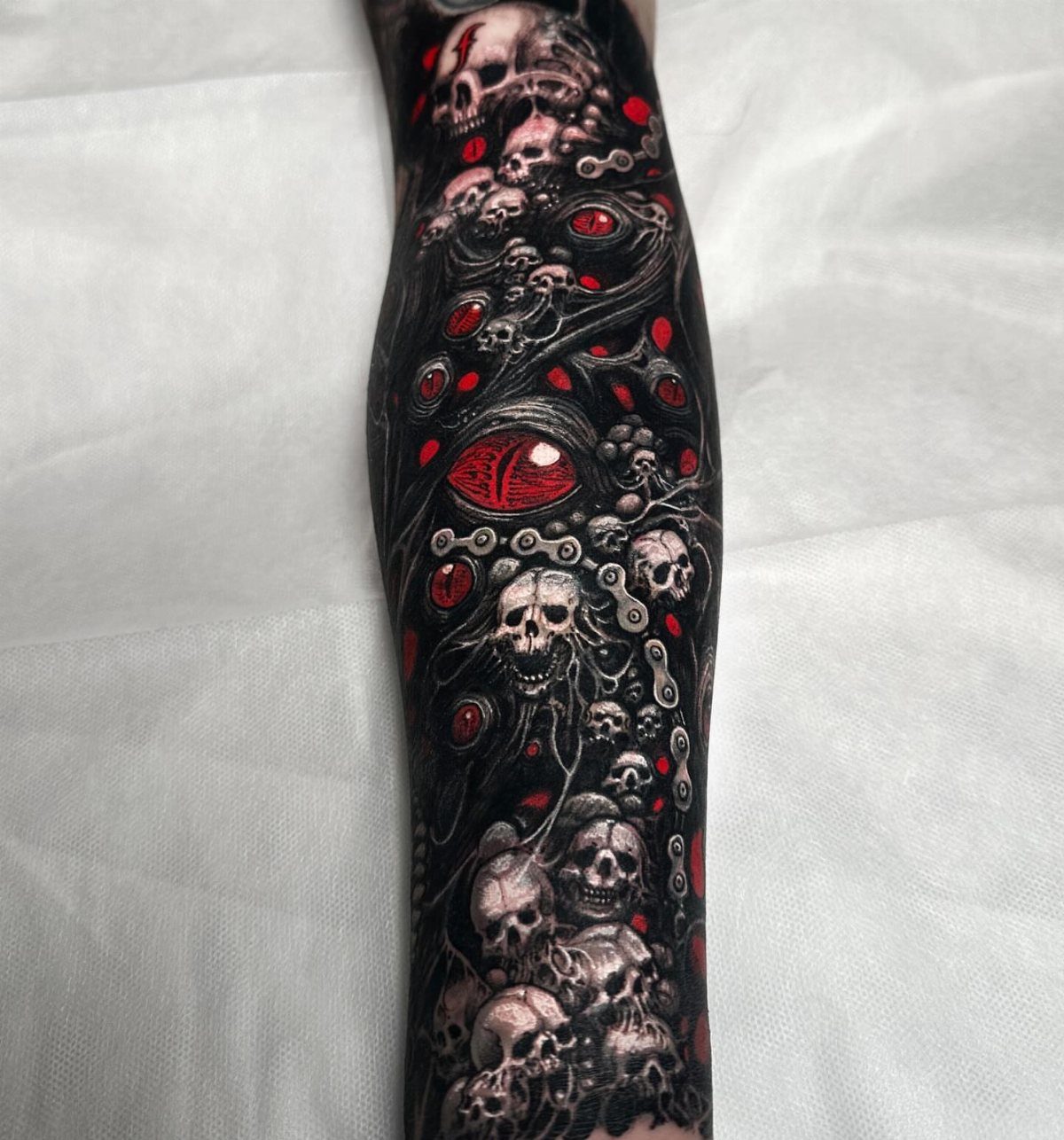
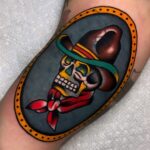
Skulls give you natural shadows: eye sockets, nose cavities, the underside of a jaw.
Skull tattoos create that overlap, which is useful because it gives you more places to tuck a line or a shape that doesn’t belong.
If the old tattoo has color, the monochrome skulls can neutralize it. The red stays an accent, just enough to pull the eye without opening up areas where something might show through.
5. Dark Fur Animal Tattoos
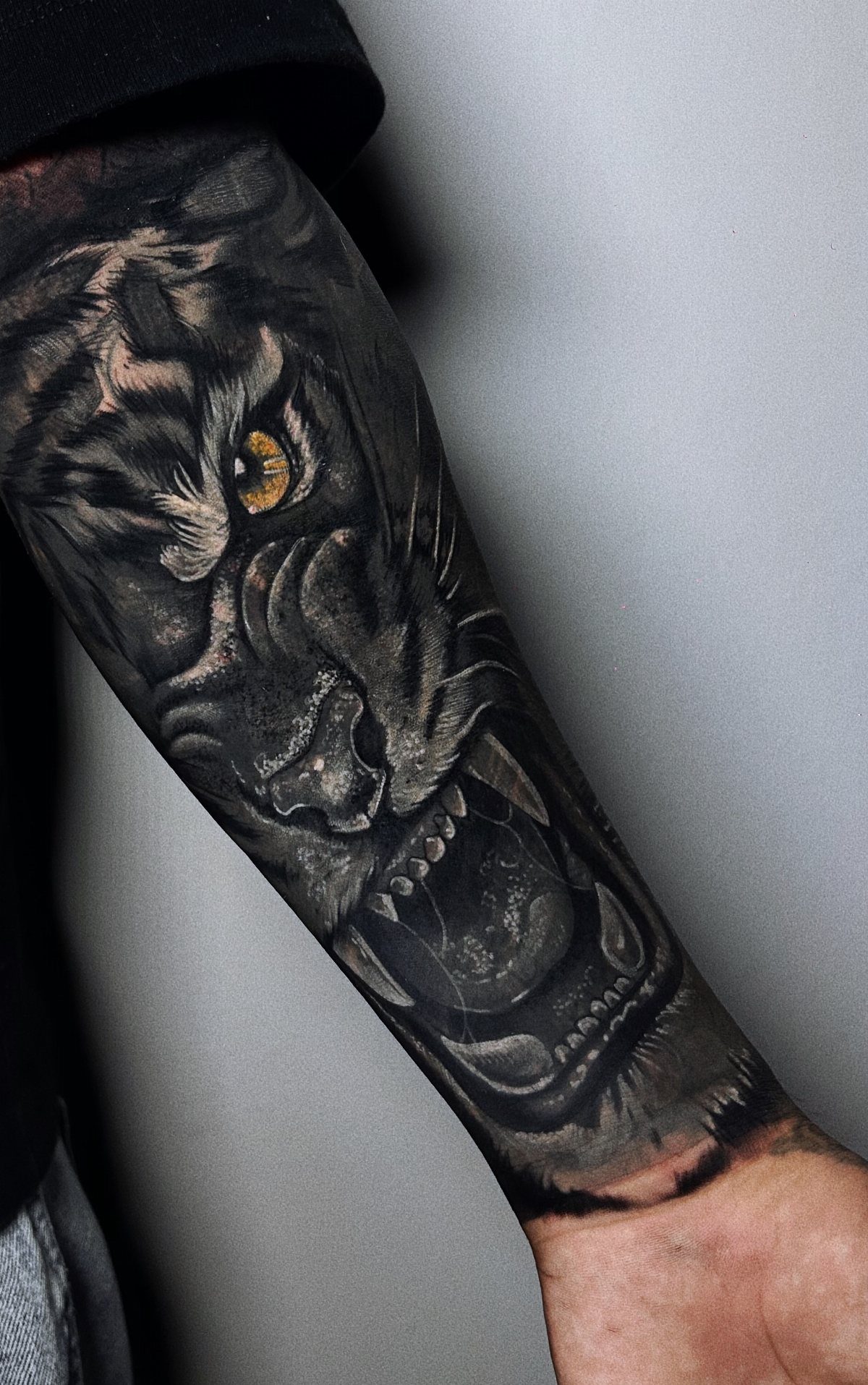
Dark fur gives an artist room to shade heavily without it looking like a mistake.
A panther, wolf or bear has enough black in the coat that you can push ink deep where you need to cover something, and it still reads as texture.
Fur direction also helps: you can angle the strokes to interrupt the shapes underneath rather than following them.
Big cats and predators fit the full sleeve format because their faces and bodies have enough detail to fill the space without feeling stretched. The muscle definition and the way fur wraps around a limb follow the arm naturally.
6. Blackout Tattoos
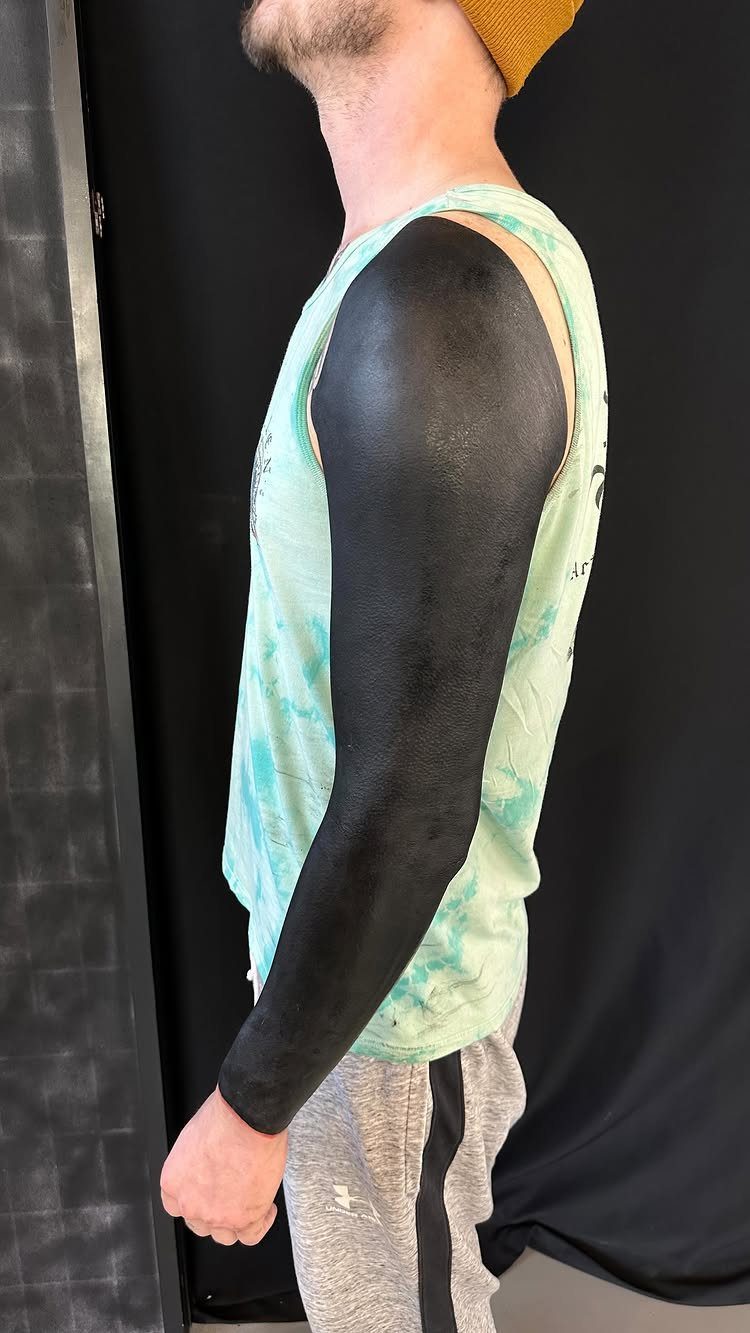
A blackout sleeve fills the entire area with solid black ink. If the old tattoo is too heavy, too large or too complex to rework, this is the most complete option.
One session got the artist’s piece from shoulder to wrist, with only a small cover-up on the inside where the old tattoo was.
The result is a clean slate. Some people leave it solid, others add white or color on top later, but the blackout itself erases what was there.
The process takes time because the artist is saturating every inch of skin.
Expect soreness and a longer heal, especially over areas that were already tattooed. If you’re not ready to commit to solid black, try a different idea first.
7. Tribal Designs
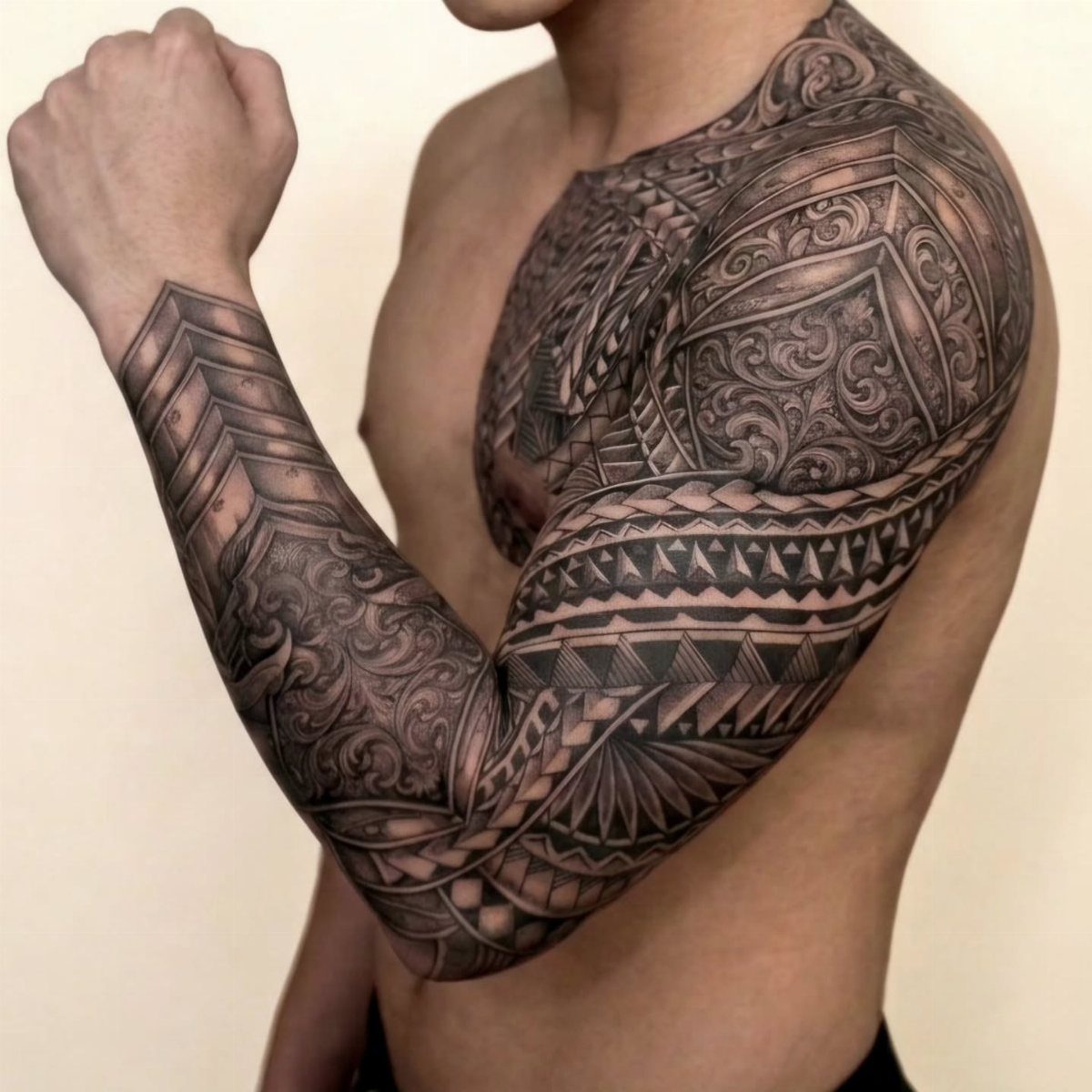
Tribal patterns use thick black bands and curves that flow with the arm’s shape, which gives an artist control over where the darkest ink goes.
The swirls and geometric fills let you place solid black directly over problem areas without it looking random.
The style works best when the old tattoo isn’t too detailed.
If there are fine lines or light shading underneath, tribal can absorb them into the pattern. Heavy color or dense linework will need more black than the style usually carries, so check with your artist first.
8. Japanese Style Sleeve
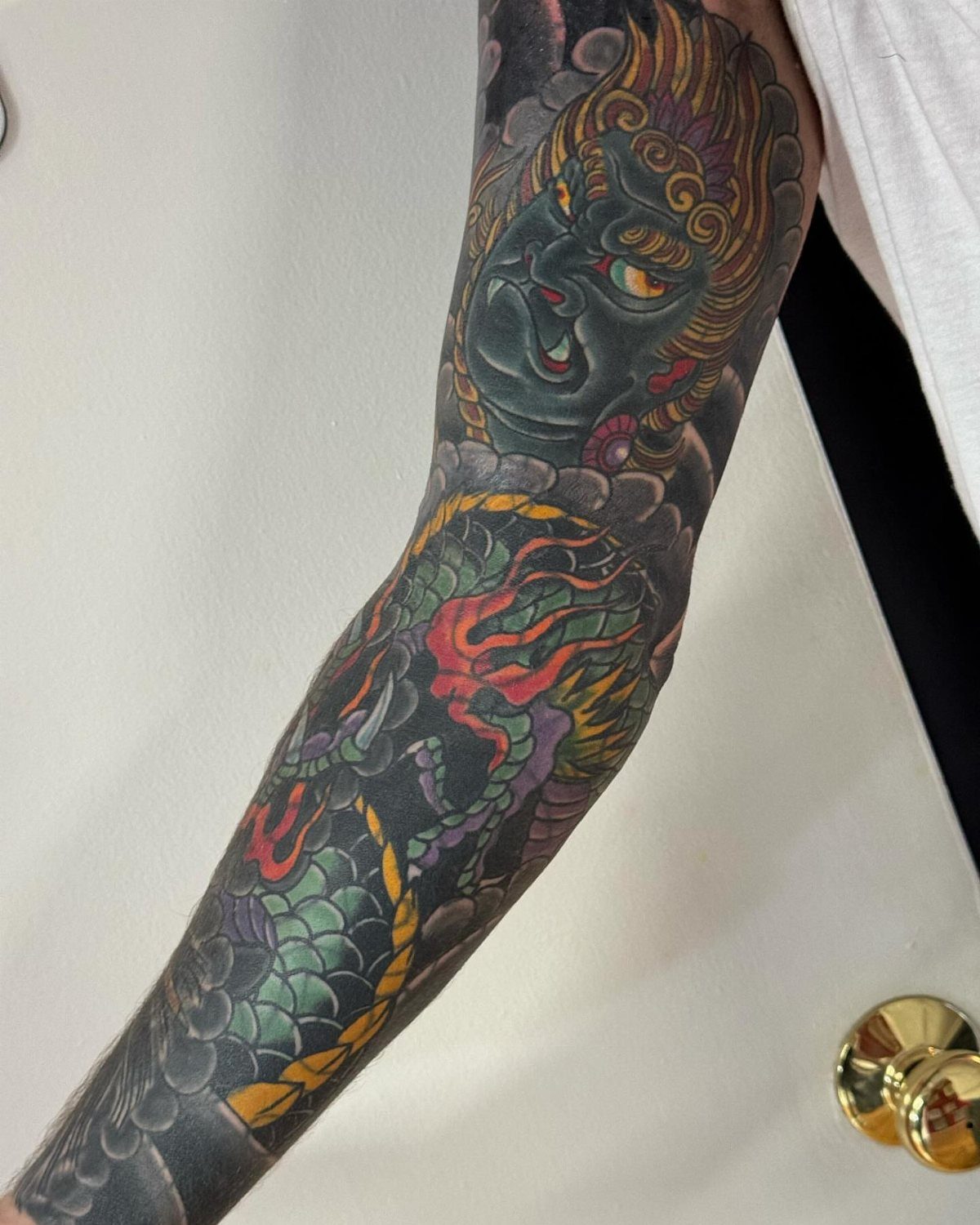
Japanese sleeves use bold background shading to push the main elements forward. That dark backdrop, whether it’s clouds, waves or smoke, gives you room to bury an old tattoo without touching the dragon or mask itself.
The style already expects heavy contrast, so an artist can adjust the background darkness to match what needs covering. If one section of the old tattoo is heavier, the shading just goes darker there.
The color in the main elements pulls the eye away from the background, which is where most of the cover-up work happens. That split keeps the design readable while doing its job.
9. Surreal Portrait Collage
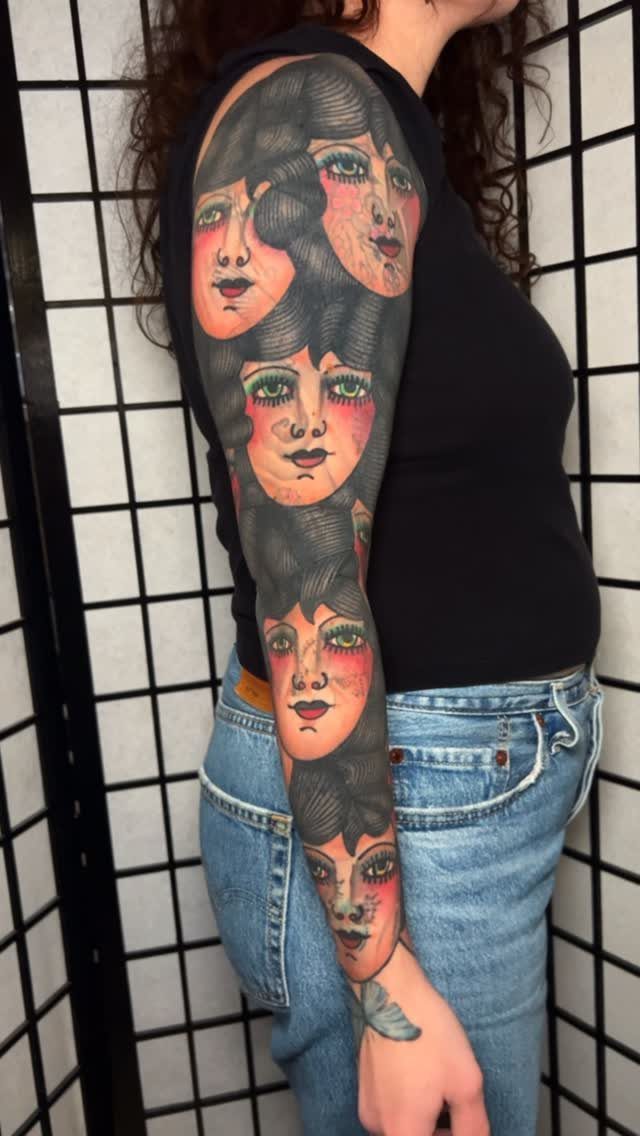
Overlapping faces create natural shadows where one portrait crosses another. Those intersections give an artist places to hide lines or shapes from the old tattoo, because the viewer expects complexity in a collage.
The style works when the old tattoo has scattered elements rather than one large image. Each face can cover a different section, and the shading between them ties it all together.
Dense shading in the hair, neck and background fills the gaps without solid black.
10. Statue and Mask Collage
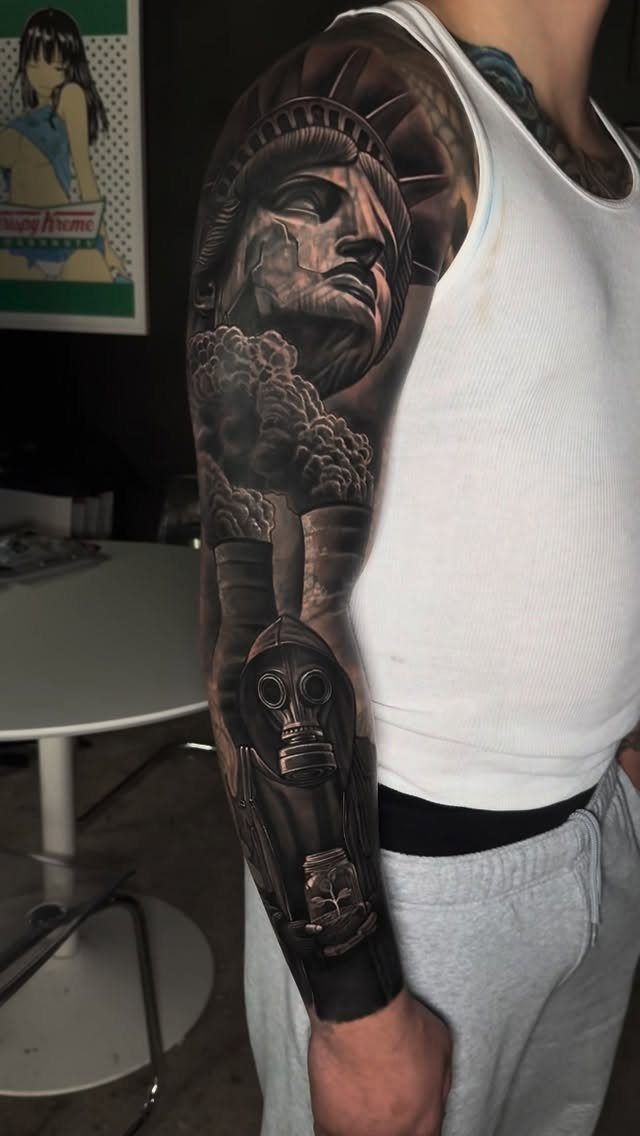
Architectural elements and smoke give you both hard edges and soft shading in one sleeve. The statue holds sharp detail where the skin is clean, and the smoke can go as dark as needed where the old tattoo sits.
The mask adds another layer of shadow, especially around the eyes and straps. That depth lets an artist pack ink where it’s required without the whole piece feeling heavy.
Ink in shades of gray holds the focus on contrast instead of matching hues.
11. Mandala Sleeve
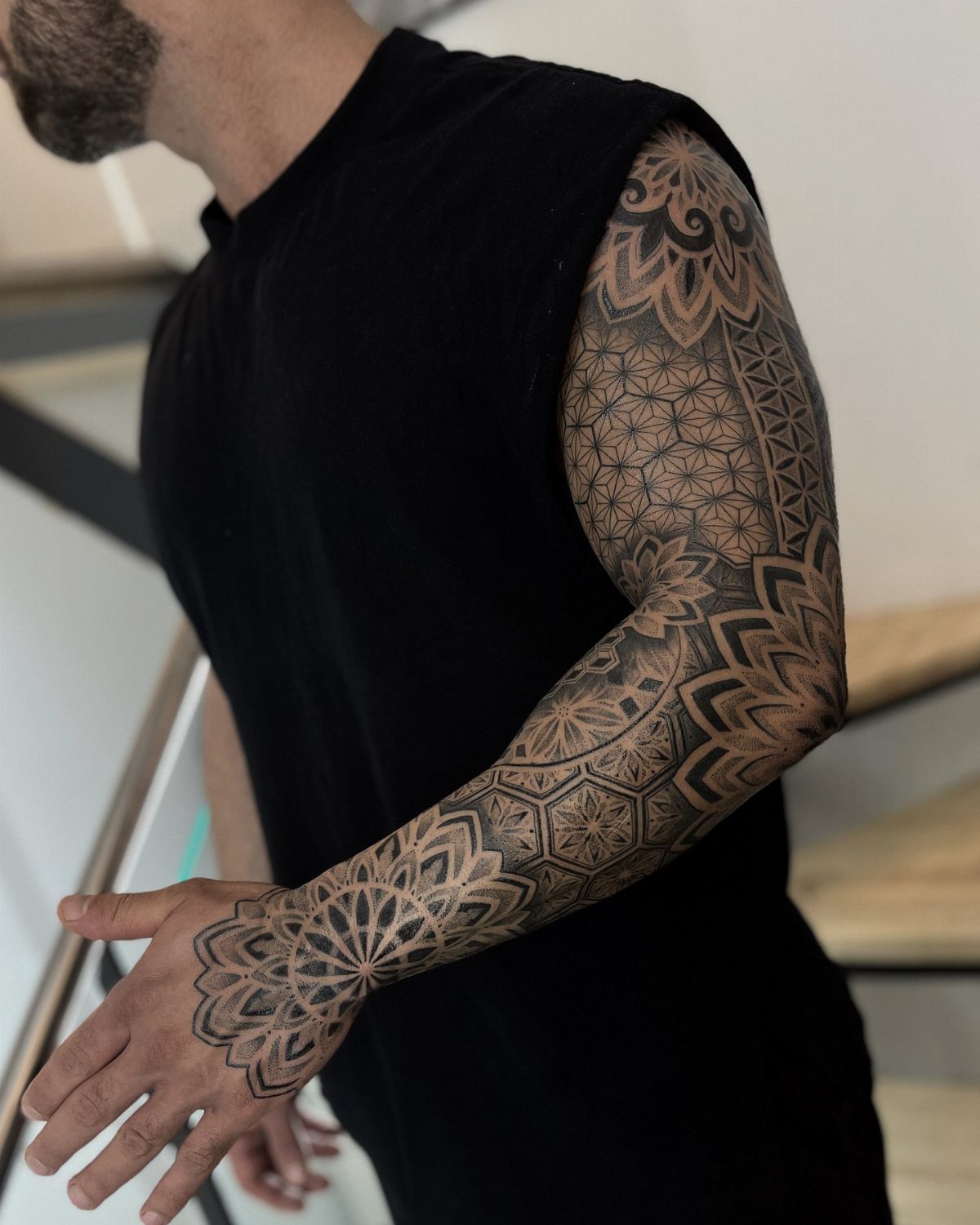
Geometric mandalas build density through repetition, so an artist can adjust how much black goes into each section based on what’s underneath.
The symmetry also means small tweaks to one part can be mirrored across the design without it looking off-balance.
Floral shading softens the hard lines and fills the spaces between geometric blocks. That combination gives you options: solid patterns where the old tattoo is dark, and lighter organic fills where it’s not.
The design wraps the arm evenly, which keeps the cover-up from looking like a patch job.
12. Gothic and Monster Sleeve
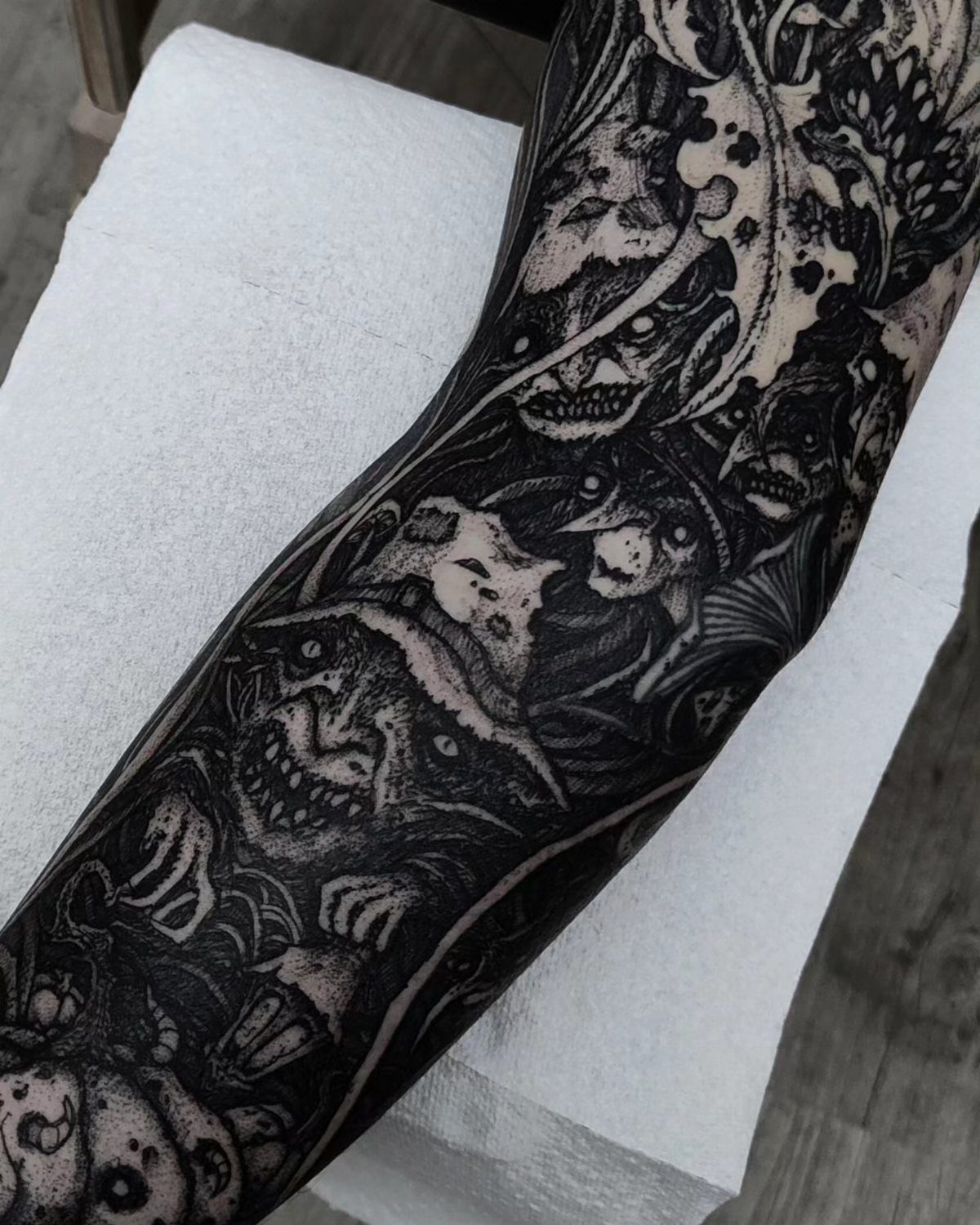
Monsters and gothic creatures thrive on chaotic detail, which means an artist can pack the sleeve with overlapping forms and heavy shading and skip the clean layout. The old tattoo disappears into the texture.
The style uses a lot of black, but it’s broken up by teeth, claws, eyes and other features, so it doesn’t read as a blackout.
If the original tattoo has distinct shapes, those shapes get absorbed into the bodies and shadows of the new creatures.
This works best if you’re comfortable with dark, surreal imagery. The density required for the cover-up is also what makes the style recognizable.
13. Phoenix Sleeve
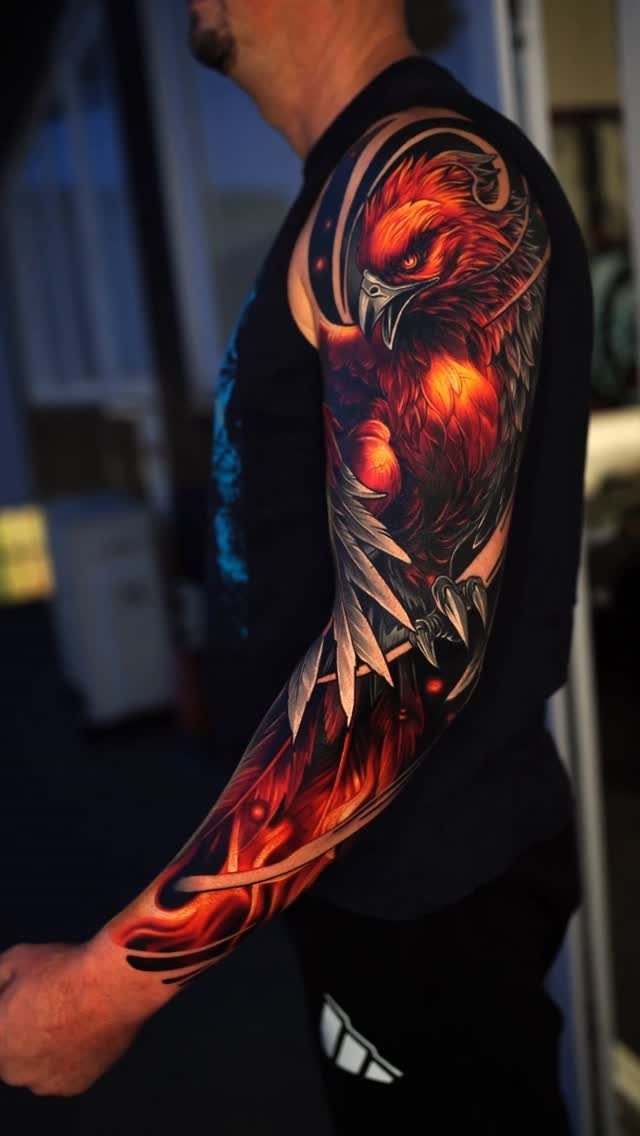
Wings give you wide, layered feathers that can shift direction to break up the shapes underneath. Each feather has its own shading, so an artist can go darker in the sections that need it without the whole bird looking muddy.
The flames and smoke around the phoenix add another place to pack ink. Fire reads as chaotic, which means the shading doesn’t have to stay even, and that flexibility helps when the old tattoo isn’t uniform.
The flames and feathers hold the color, and the darker fill around them hides what sits underneath. If the original tattoo has a lot going on, the phoenix’s movement and the flames give you enough visual noise to absorb it.
Advice on Tattoo Cover Ups
Find an artist who lists cover-ups in their portfolio, not just fresh work on clean skin.
A cover-up demands control over color and shading that general tattooing doesn’t always require, and an experienced cover-up artist knows how to disguise an old tattoo inside the new design rather than just blacking it out and adding decoration around the edges.
Expect the price to run higher than a comparable piece on unmarked skin.
The difficulty is real: the artist is working around shapes and ink density they didn’t choose, and that adds time to both the drawing and the session itself.
New artists should not be your first call for this. Cover-up work tests skills that come after years of practice, and a failed attempt leaves you with more ink to hide, not less.
Tattoo Removal Before Cover Ups
Laser removal before the cover-up can lighten the old ink enough to keep the new design from going too dark.
One session can lighten the old tattoo enough that your artist won’t need to pack as much black or heavy shading into the new design, which opens up more style options.
This matters most when the original tattoo is dense or heavily saturated. The lighter it gets, the easier it is to disguise without turning the whole sleeve into a shadow study.
Laser work takes time and adds cost upfront, but it can make the difference between a design you love and one that feels like compromise.
Cost Considerations
A full sleeve cover-up costs more than a fresh sleeve because the artist is solving a problem while they work.
They’re adjusting shading on the fly, placing elements to hide specific shapes, and sometimes redrawing sections when the stencil doesn’t land where it needs to.
That complexity shows up in the hourly rate or the session count.
Budget for it before you book. A cover-up that cuts corners to save money often looks like one.
Frequently Asked Questions
Can you cover up a full sleeve tattoo?
A full sleeve can be covered with a larger, darker design that uses heavy shading and bold elements to hide the old ink.
The new tattoo needs enough density to bury what sits underneath, which usually means styles like blackwork, Japanese sleeves or neo traditional.
Laser fading first lets the artist work with lighter ink and more color choices instead of packing every inch with black.
What is the 1/3 rule tattoo?
The new design should be 2 to 3 times larger than the old tattoo to cover it effectively.
That size gives the artist room to build shading and contrast around the original ink rather than just tracing over it. A cover-up that’s too close in size to the original leaves no space to hide edges or adjust placement.
Is $10,000 too much for a tattoo sleeve?
That figure can be reasonable for extensive sleeve work, especially a cover-up.