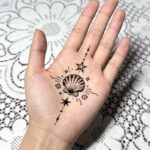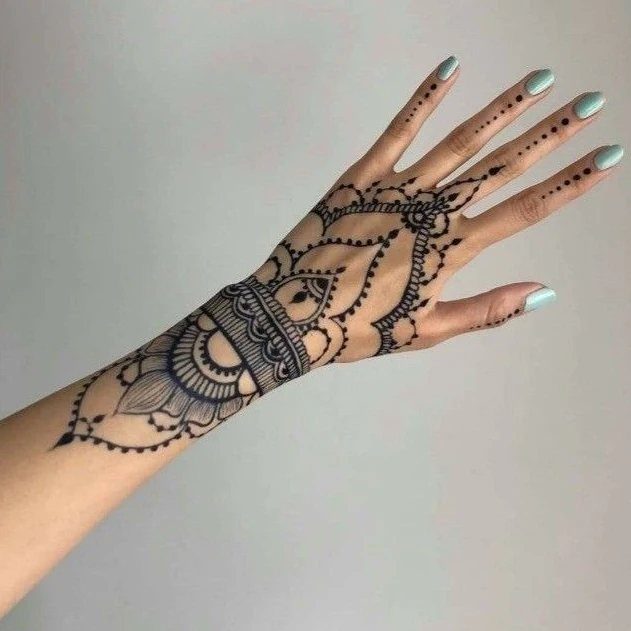
Henna designs range from simple florals and geometric shapes that finish in minutes to full sleeves and bridal sets that take hours.
The right choice depends on how much time the application takes and how long the paste needs to stay put before the stain sets.
Most designs fade naturally in 1–2 weeks as skin sheds, and the section on removing henna covers ways to speed that process or even it out.
1. Henna Sleeve
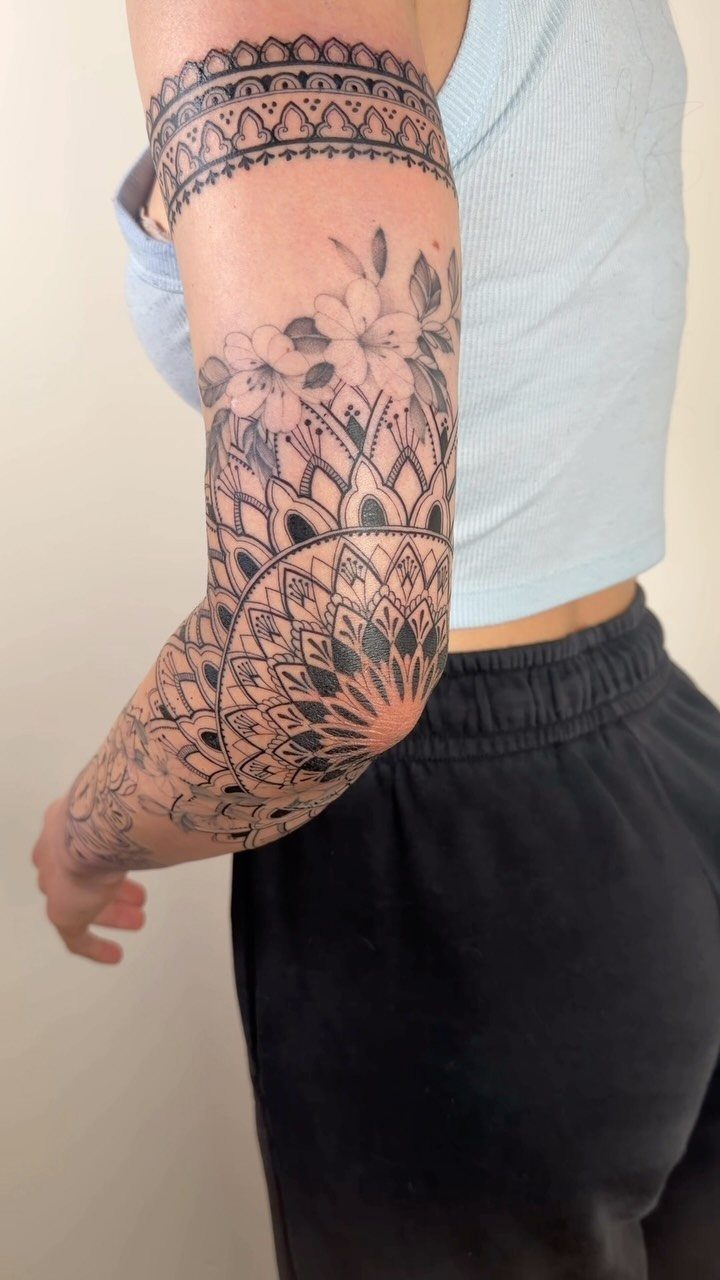
A sleeve wraps the entire arm in pattern, usually starting at the shoulder and running down to the wrist. The coverage gives you room for larger motifs like mandalas, florals and fine line work that flow together without gaps.
Henna sleeves take longer to apply than smaller designs, so expect to sit still while the artist works through each layer of pattern.
The paste needs to sit undisturbed while it dries, so plan for a session where you can keep your arm still.
The stain darkens as it oxidizes and fades naturally as your skin sheds, making it a good trial run before committing to permanent ink.
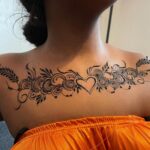
2. Henna Floral Design
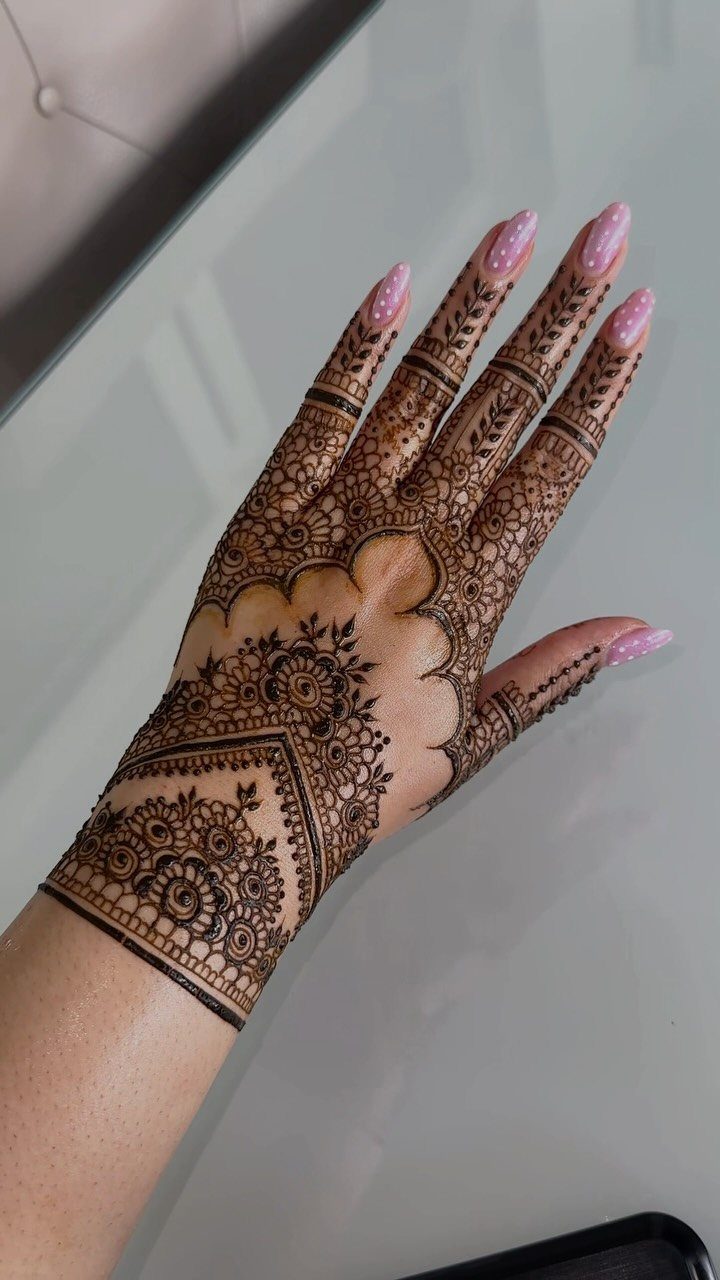
Flowers adapt to nearly any placement: hands, wrists, ankles, shoulders or along the spine. Roses, lotus blooms and vines are the most common shapes, and they scale up or down depending on how much skin you want covered.
Larger arrangements with shading and detail can run an hour or more. The stain fades as your skin sheds, so it works for short-term occasions or testing a spot before you go permanent.
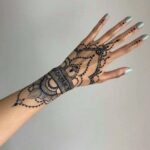
3. Asymmetrical Henna Hand Design
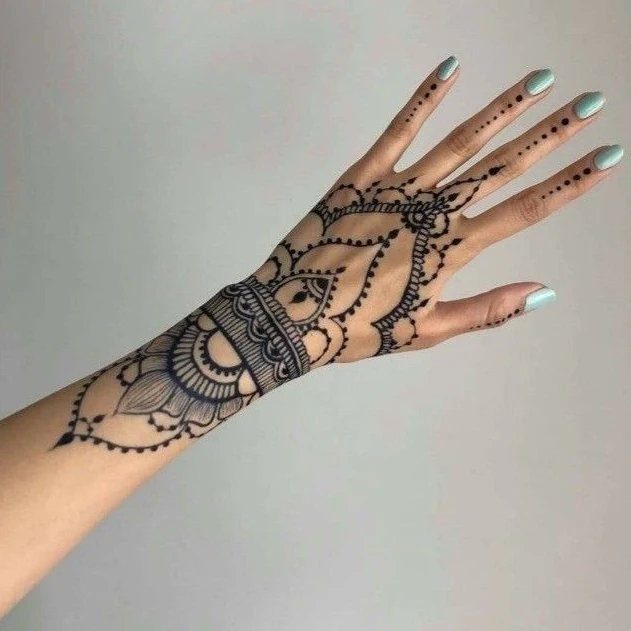
An asymmetrical layout skips the mirror-image approach and lets one side of the hand carry more pattern than the other.
Florals and geometric shapes wrap around the fingers and wrist in a way that follows the hand’s natural lines instead of forcing symmetry.
This style suits smaller hands or anyone who wants a design that feels less formal. The uneven balance keeps the eye moving, and the open space on one side makes the detailed side read more clearly.
4. Paisley Motif
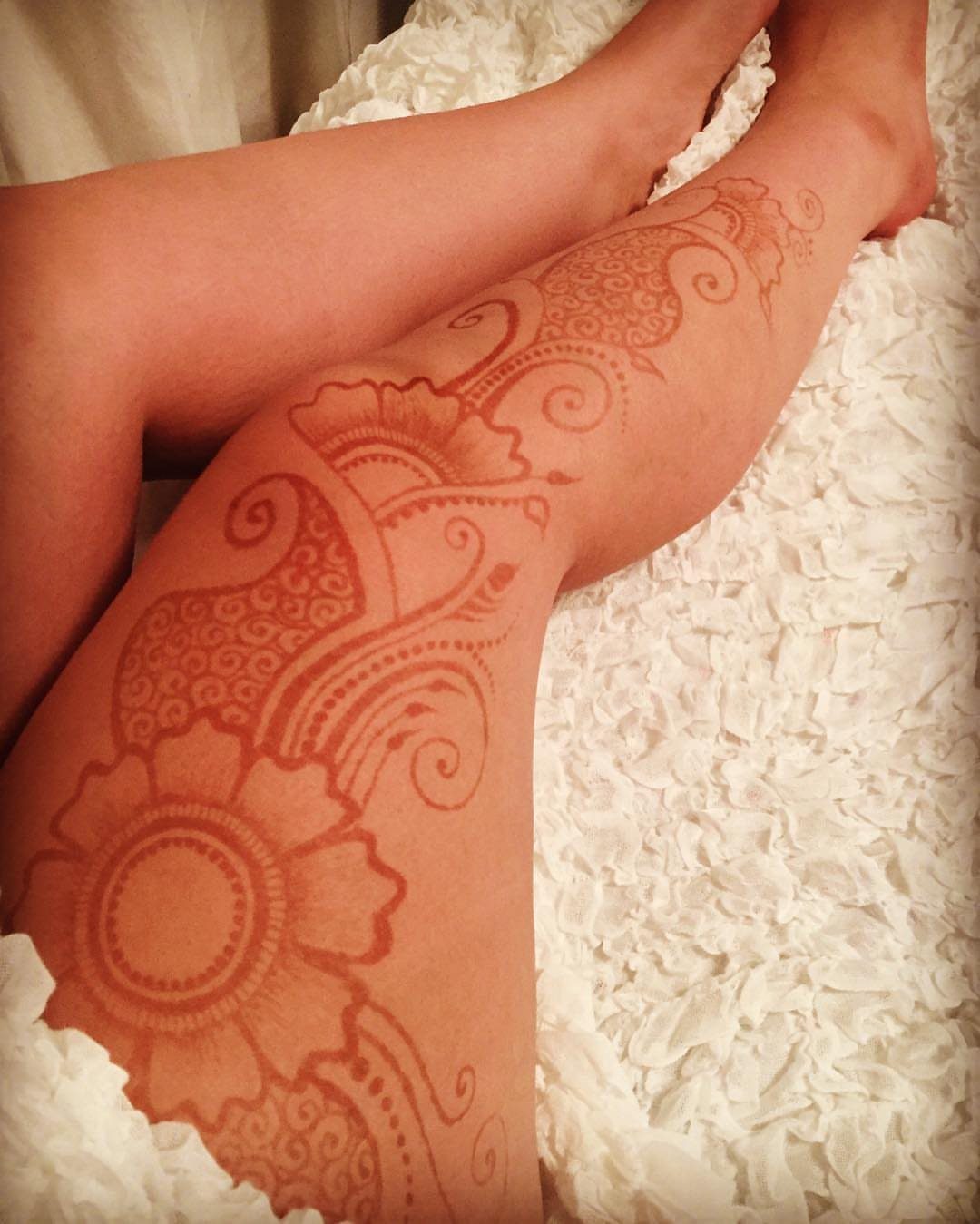
Paisley is a teardrop shape with a curved tip, often filled with fine lines, dots or small florals. It shows up across South Asian henna traditions and pairs well with vines, mandalas and geometric borders.
The motif works on legs, arms, hands or feet, and you can cluster several paisleys together or use a single large one as the anchor.
A simple paisley goes on relatively quickly; denser versions with internal detail run longer. The stain holds best on palms and soles, less on thinner skin.
5. Geometric Patterns
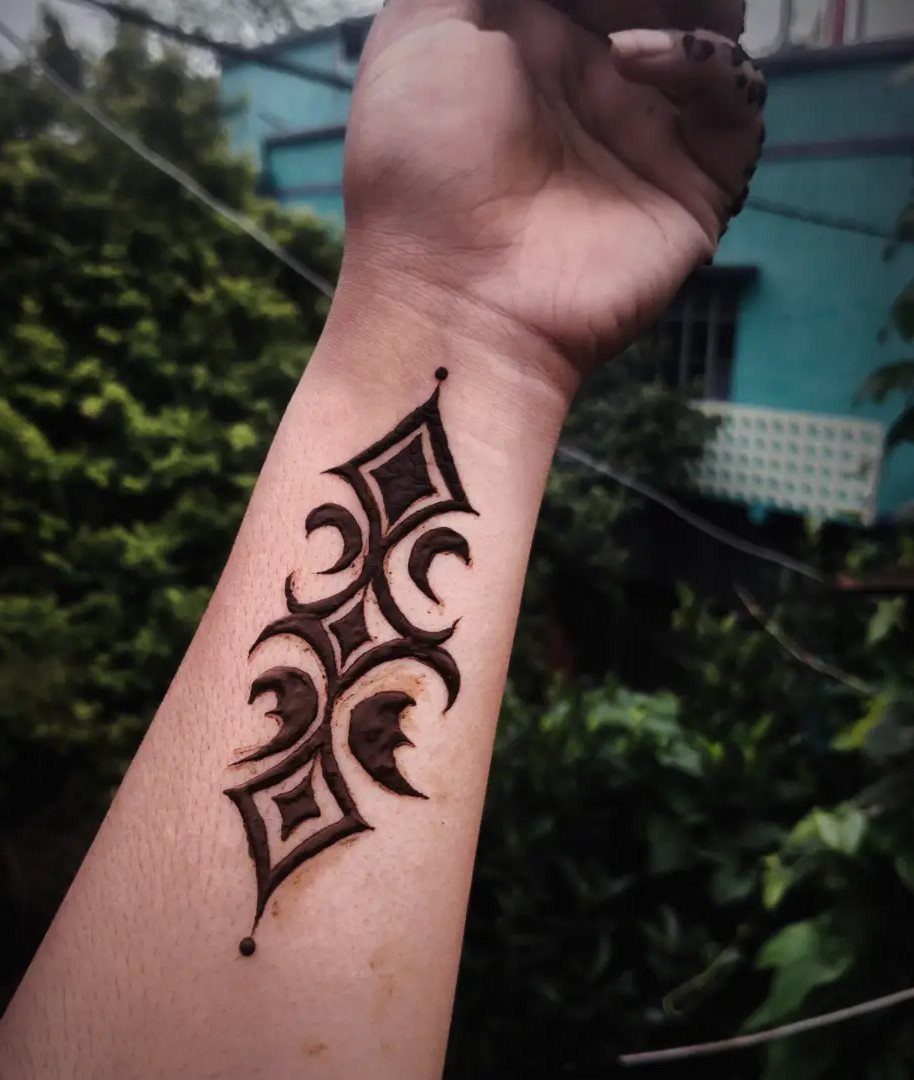
Geometric henna relies on bold shapes: diamonds, triangles, hexagons and straight lines arranged in repeating grids or stacked bands.
The style reads clearly from a distance and suits forearms, calves and shoulders where you have a flat plane to work with.
Large shapes fill faster than intricate florals, so a geometric pattern often takes less time to apply.
The clean edges stain evenly, and the design holds its shape well as it fades. Graphic rather than ornate, this is the direction for angular, structured work.
6. Mandala Designs
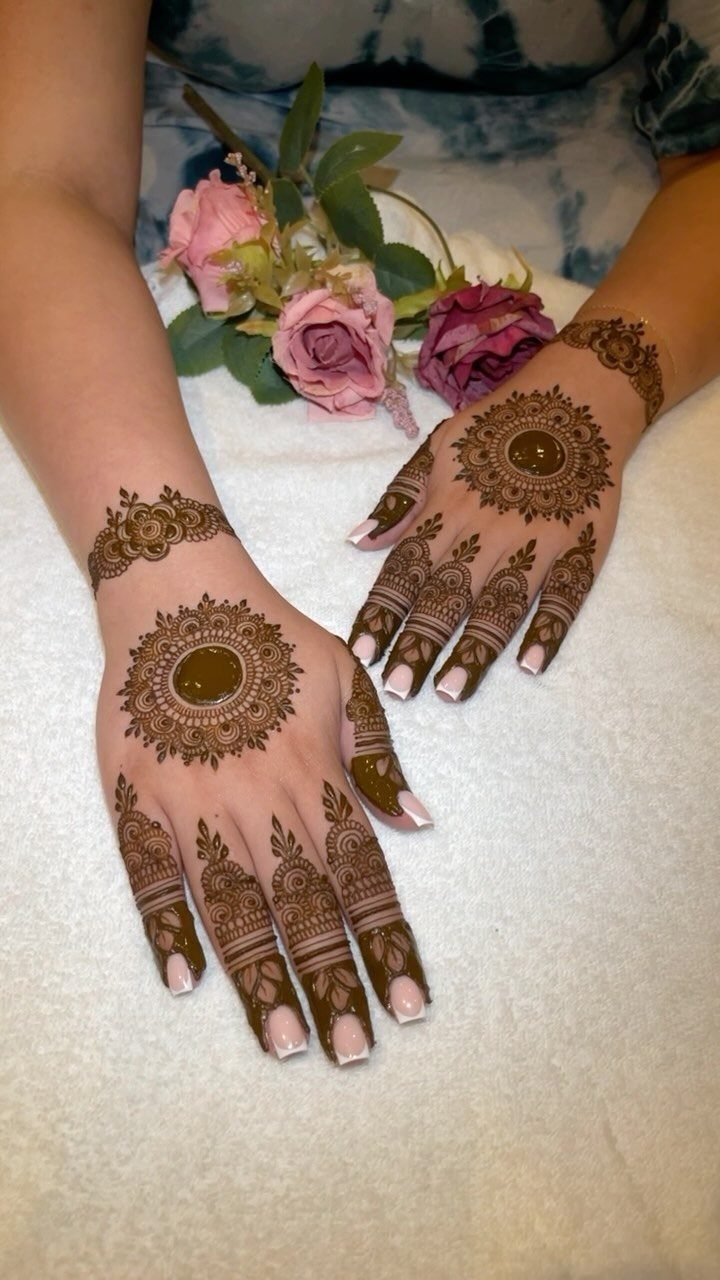
Mandalas are circular patterns built from a center point outward, with radiating petals, dots and lines that mirror across every axis.
The symmetry gives them a formal, balanced look, and they fit naturally on the backs of hands, feet or shoulders.
A mandala can sit alone or anchor a larger composition with vines or florals branching off the edges.
Application time depends on size and detail: larger versions take longer, while smaller pieces move faster. The circular shape works well on flat surfaces where you can keep the design level while the paste dries.
7. 3D Henna Tattoo
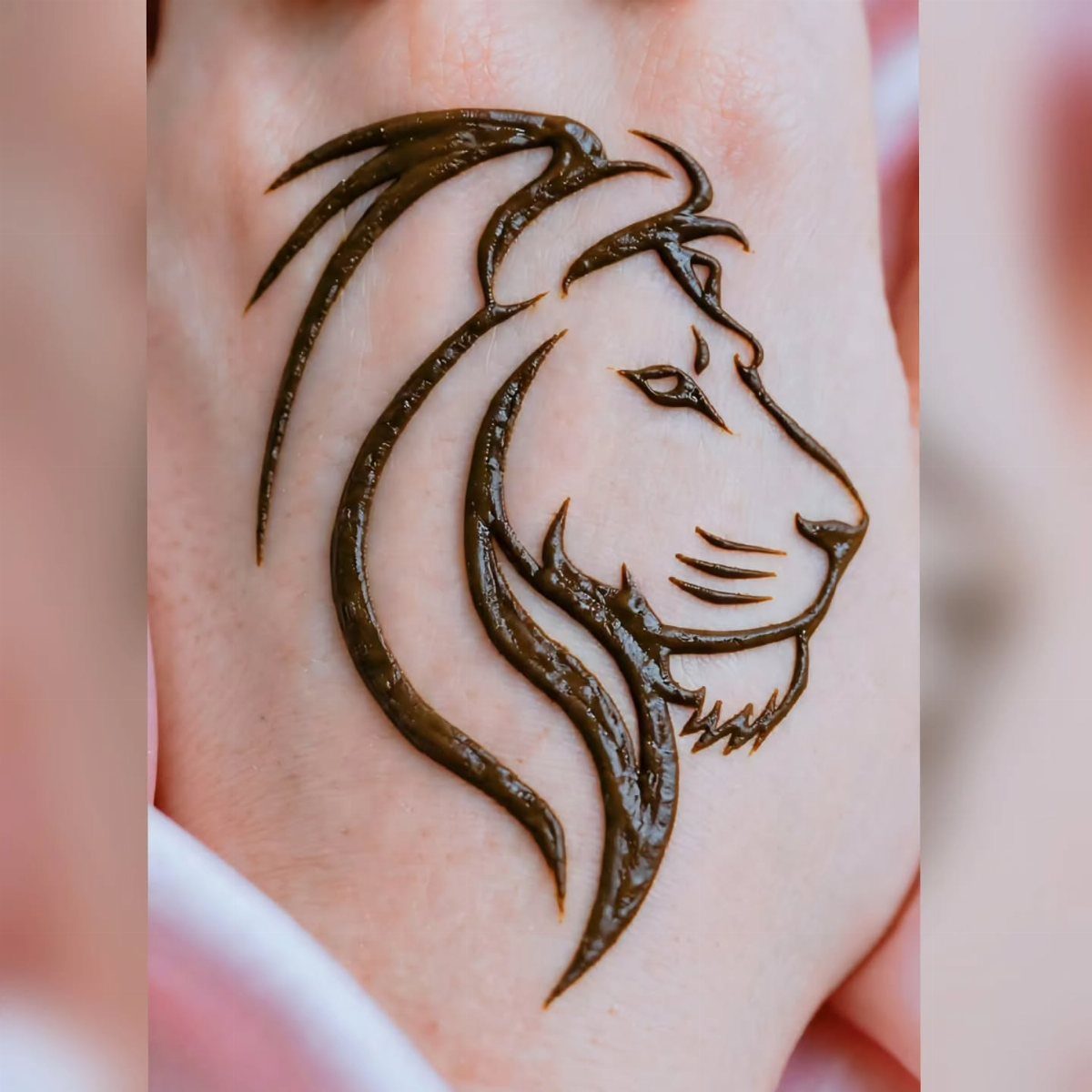
3D henna uses thick layers of paste that stay raised on the skin instead of being scraped off once dry. The dimensional effect works best with bold subjects like animals, skulls or abstract shapes where the depth reads clearly.
The paste takes longer to dry than a flat design, and you need to keep the area still until it sets.
Once the paste falls off, the stain beneath is darker where the paste sat thickest. The raised look lasts only while the paste is on; after that, you’re left with a standard flat stain.
8. Henna Tattoo Designs on Feet
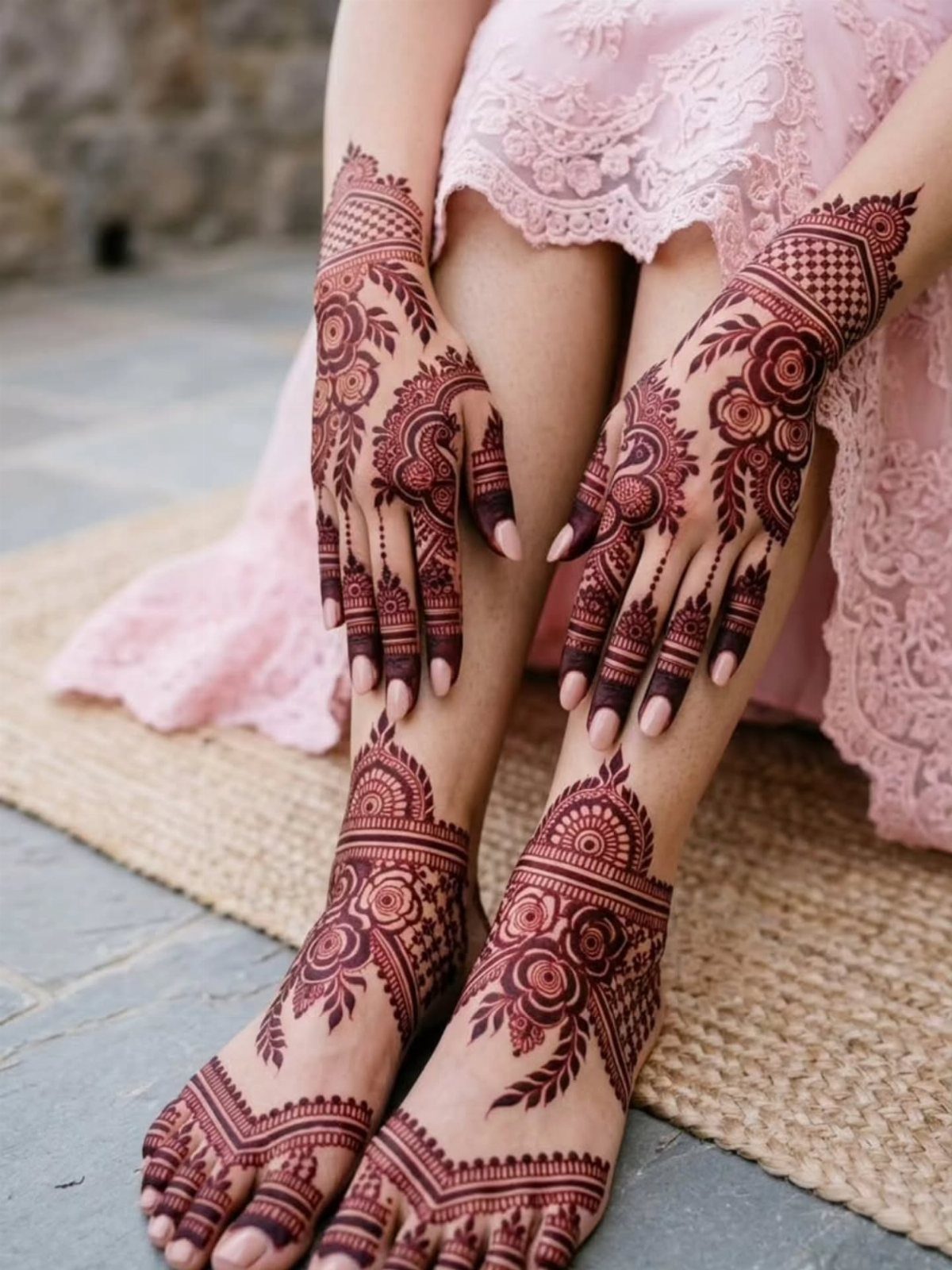
Feet take henna well because the skin on the soles and tops stains darker and holds color longer than most other areas.
Traditional bridal designs often cover the tops of the feet and wrap around the ankles, with chains, florals or mandalas extending from the toes upward.
Application takes longer on feet because the skin is uneven and the artist has to work around the arch and ankle bones. The stain lasts 1–2 weeks, longer if you avoid scrubbing the area or soaking your feet.
9. Simpler Henna Tattoo Designs
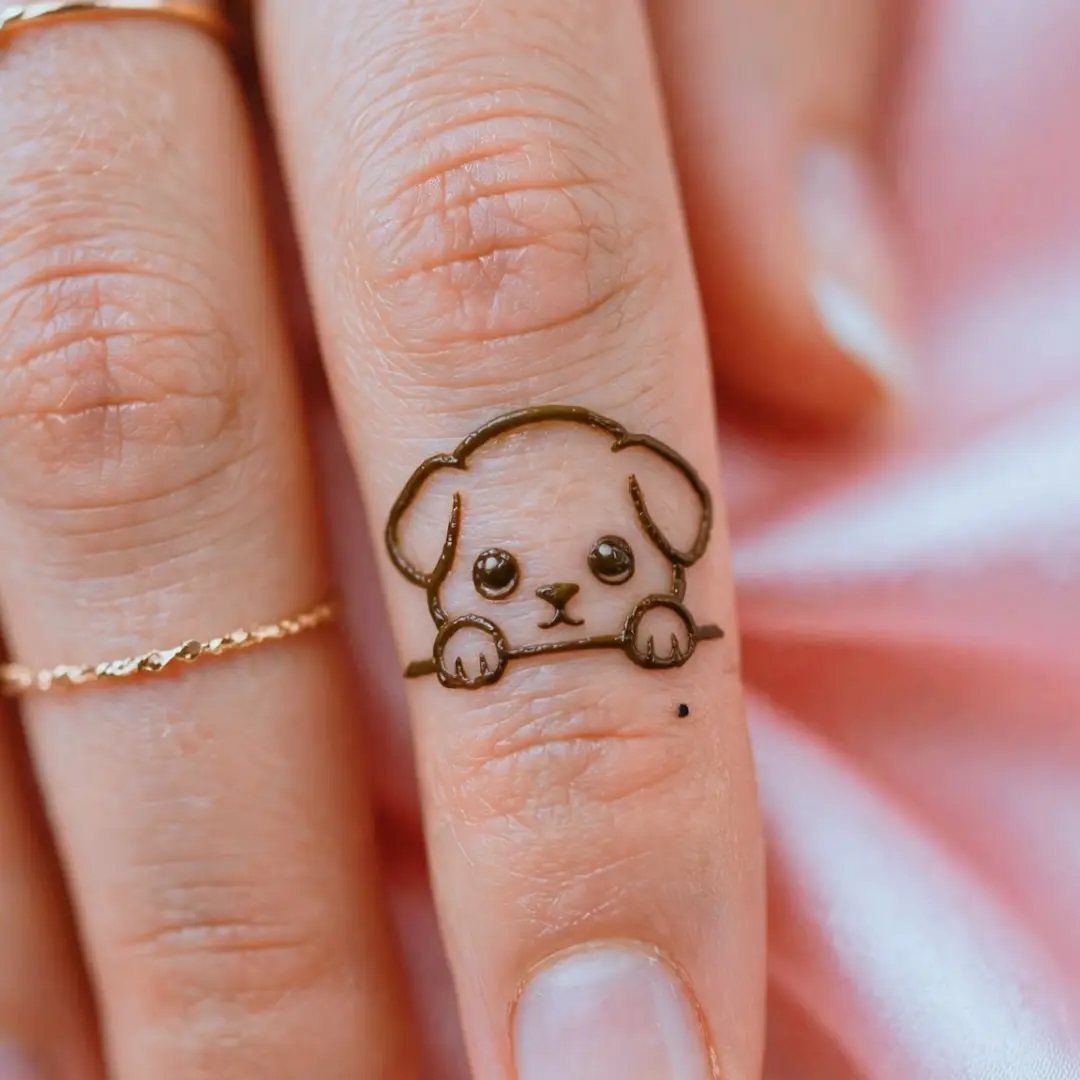
Small, single-subject designs work when you want henna without the time or commitment of a full hand or arm. A small animal, symbol or flower fits on a finger, wrist or behind the ear and goes on in minutes.
These designs suit first-timers or anyone testing henna before going larger. The stain fades faster on areas that see frequent washing, so expect a week or less on hands and fingers.
10. Henna Tattoo Designs for Weddings
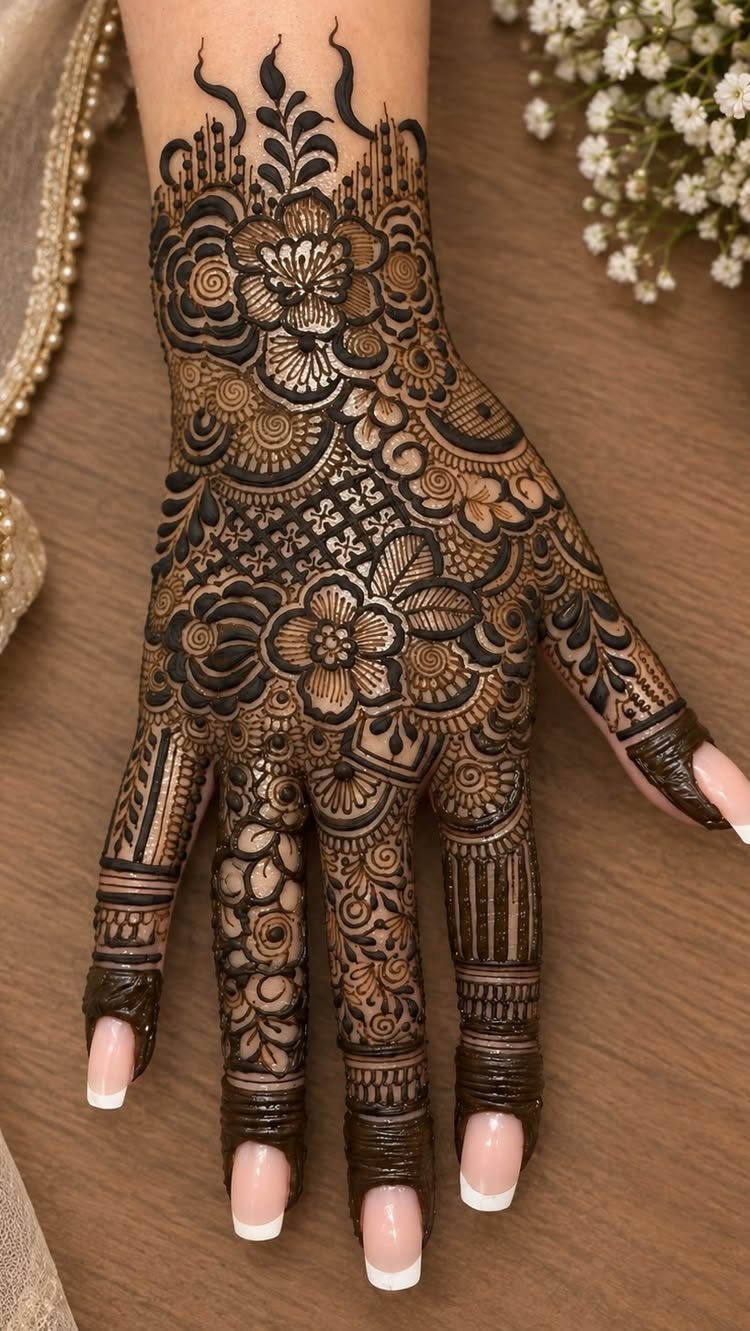
Wedding henna runs denser and more formal than everyday designs, with full hand and forearm coverage, intricate florals and fine line work that takes hours to complete.
Bridal patterns often include paisleys, mandalas and vines that extend from fingertips to elbows.
The application usually happens a day or two before the event so the stain has time to darken.
The darker the stain, the longer it lasts, so brides often leave the paste on overnight. Budget several hours for a full bridal set on both hands and feet.
On average, a simple henna tattoo design on one hand might cost between $10 to $15; an involved bridal design could cost upwards of $500.
11. Leg Henna Tattoo
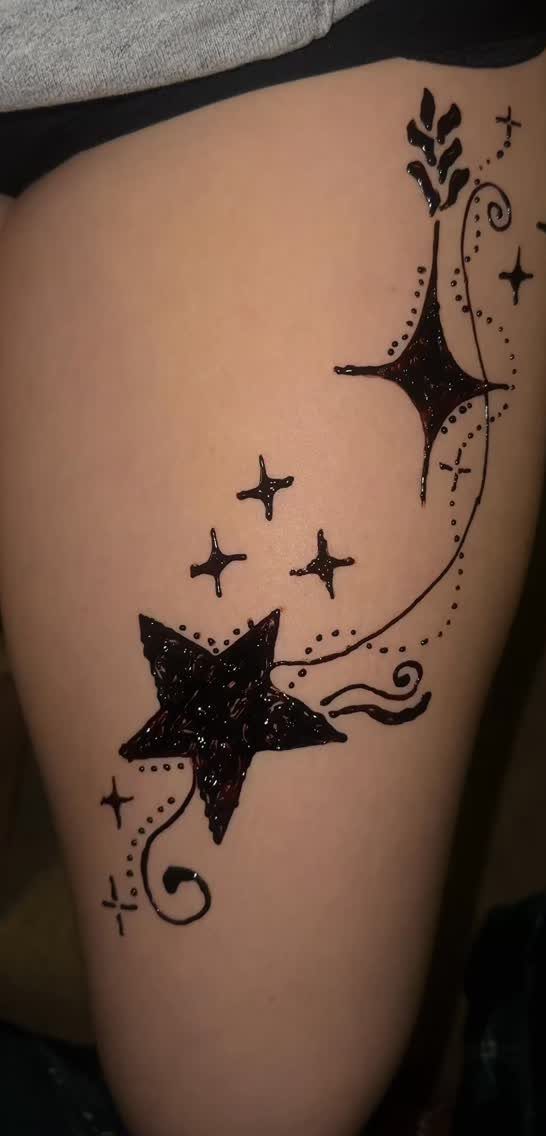
Stars and swirls read well on the leg because you have a long, relatively flat surface to work with.
The celestial theme suits calves, thighs or the outer ankle, and you can scale the design up or down depending on how much coverage you want.
Legs stain lighter than hands or feet, so the color will be softer and fade faster. The design works for events where you’re wearing a dress or shorts and want something visible without committing to a large, formal piece.
12. Tribal Henna Tattoo
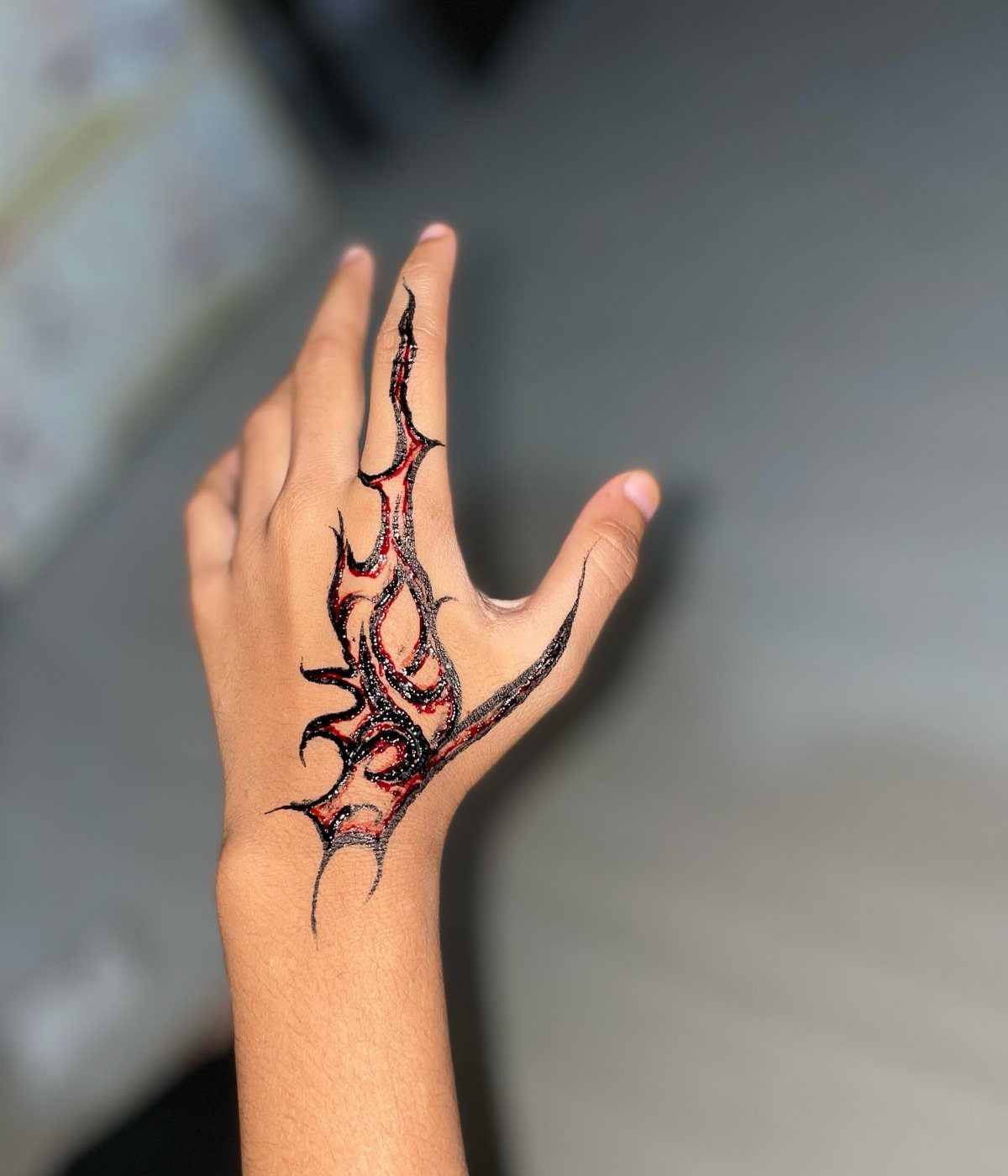
Tribal henna trades fine detail for bold, graphic shapes: thick lines, flames and angular patterns that read from a distance.
Mixing black and red adds more contrast, though traditional henna paste only stains reddish-brown, so the black is usually jagua or a synthetic gel applied separately.
The thick lines fill faster than intricate florals, so application is quicker. The bold shapes suit forearms, wrists and the backs of hands where you want a design that looks more graphic than ornamental.
13. Peacock Henna Design
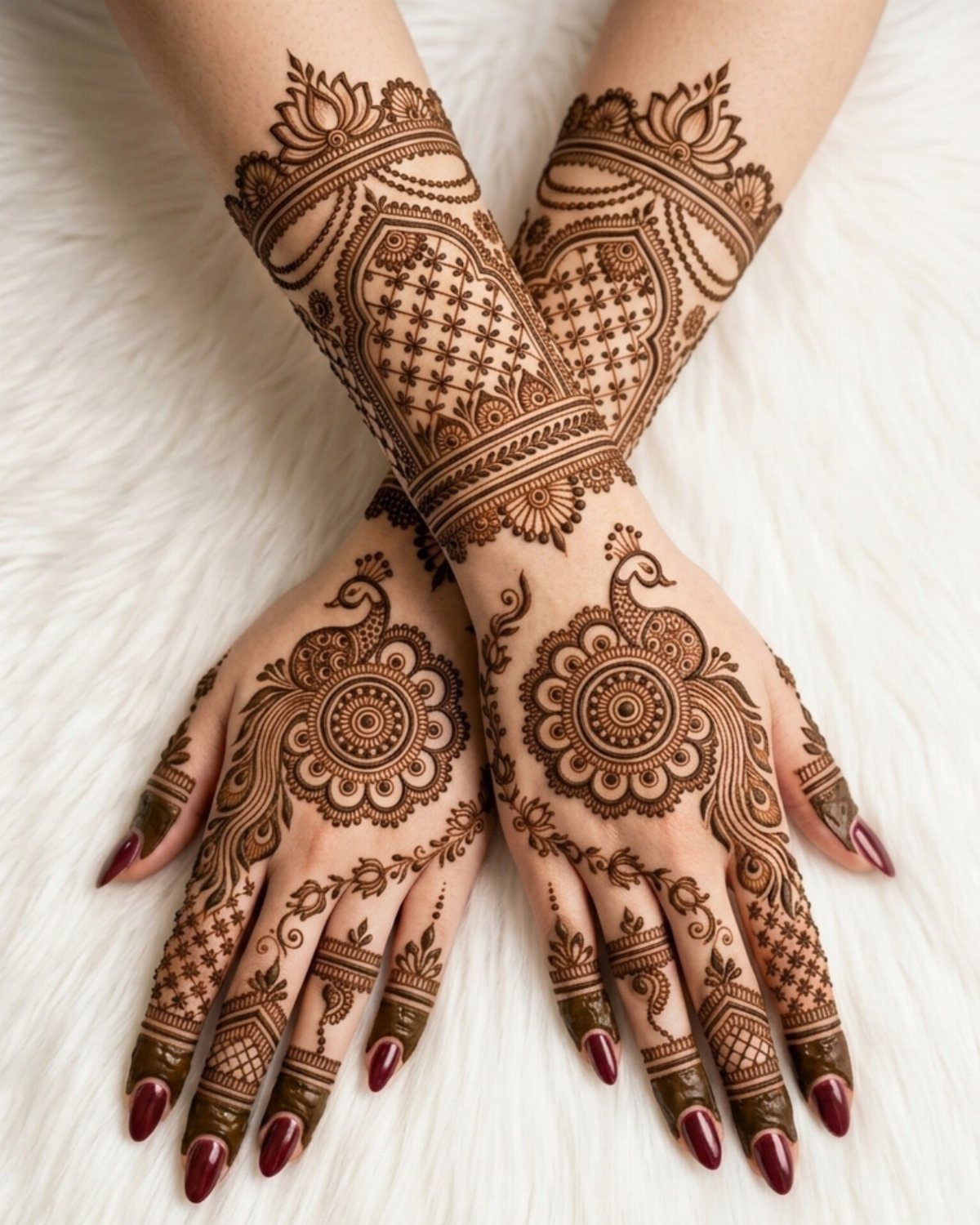
The peacock is a large, recognizable subject that fills space naturally. The bird’s fanned tail becomes a series of concentric circles or teardrop shapes, each one holding fine line work, dots and small florals that branch outward from the body.
Peacock designs work on the back of the hand, forearm or shoulder blade, anywhere you have room for the tail feathers to spread.
Application takes longer than a simple mandala because the artist has to build the bird’s body, head and multiple tail layers in sequence. The dense detail holds color well and reads clearly as it fades.
14. Palm Henna Tattoo
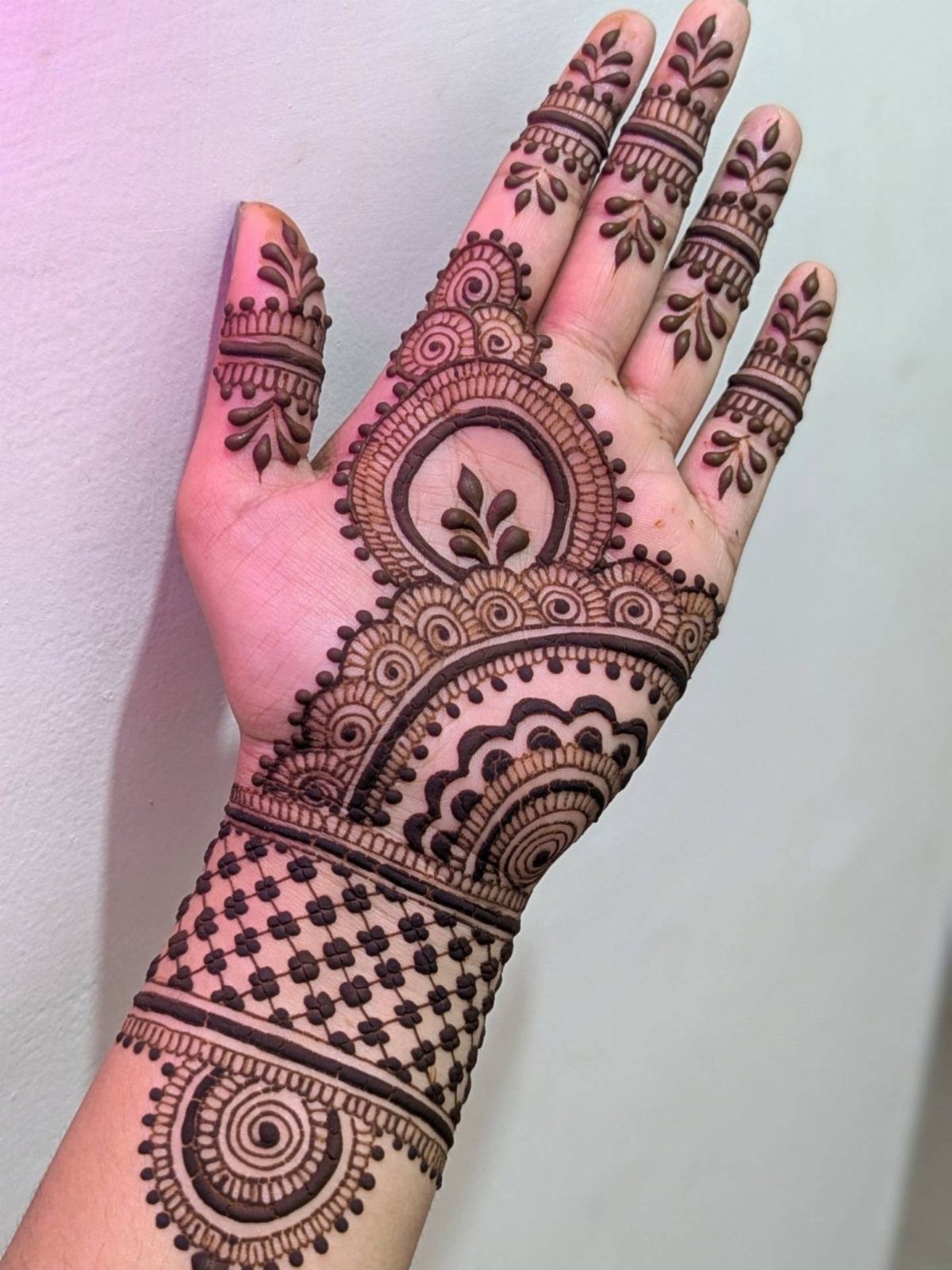
Designs usually center on a large floral, mandala or arch that radiates outward to the edges of the hand, with smaller details filling the gaps around the fingers and wrist.
The palm takes longer to apply because the skin shifts as your hand moves, so you need to keep it flat and still while the paste dries.
Stain lasts longer on palms than on backs of hands or arms because the skin is thicker and sheds more slowly.
Caring for Henna Tattoos
Once the artist finishes, the paste stays wet for 20 minutes to an hour before it dries enough to start flaking.
Let those pieces fall off on their own instead of picking at them, and keep the area dry while the dye sets.
Henna works as a stain, so it needs several hours on the skin to darken fully.
Leaving it overnight gives the deepest color. Some artists brush on a thin layer of sugar water after the paste dries, which helps the henna stick longer and pushes more pigment into the skin.
During this stage, avoid smudging the design or getting water on it.
Removing Henna Tattoos
Henna fades on its own as your skin sheds, usually over a few weeks. Washing the area with soap speeds that process by removing the top layers of stained cells, and exfoliating pushes it further.
Scrubbing the area in the shower will lighten it within a few days. Regular hand-washing alone will clear most of the color in about 2 weeks, depending on how dark the stain was to start with.
There is no instant removal method. The dye sits inside your skin cells, so you have to wait for those cells to turn over naturally or scrub them away manually.
Learning Henna Design
Learning henna takes practice, the same as any drawing skill. Beauty schools and esthetician programs that work with South Asian brides often include henna in their curriculum, since it’s a standard part of bridal prep.
If formal training is not an option, practice on your own.
Start with simple shapes on paper, then move to skin once your hand steadies. The cone or applicator bottle needs consistent pressure to keep the line even, and that control only comes with repetition.
Some artists learn by copying traditional motifs and then branching into their own variations. Others start with geometric patterns, which are more forgiving than florals, and build from there.
Frequently Asked Questions
What are some popular henna patterns?
Florals, paisleys and mandalas show up most often, along with geometric shapes like diamonds and hexagons. Flowers can be sized to fill a hand or scaled down to a wrist, and paisleys layer well in groups or stand alone.
Mandalas fit naturally on flat surfaces like the backs of hands or feet, where the circular symmetry reads clearly.
How long does a henna tattoo last?
Henna stains last 1–3 weeks depending on placement and how often you wash the area. Thicker skin on palms and soles holds stain longer, while thinner skin on arms and legs fades in half the time.
The stain starts bright orange and darkens to brown or reddish brown over the first 2 days as it oxidizes, then gradually lightens as your skin turns over naturally.
What can I use if I don’t have henna?
Henna is made from the dried, crushed leaves of a plant native to Asia and Africa, mixed into a paste and applied through a cone.
Jagua gel stains darker and closer to blue-black, and it comes from a fruit rather than the henna plant. Black henna often contains PPD at levels known to cause allergic reactions, so skip it entirely.