A shoulder cover-up can run anywhere from a simple silhouette in one session to a multi-session piece that needs careful shading and layered color to hide what sits underneath.
1. Geometric Patterns
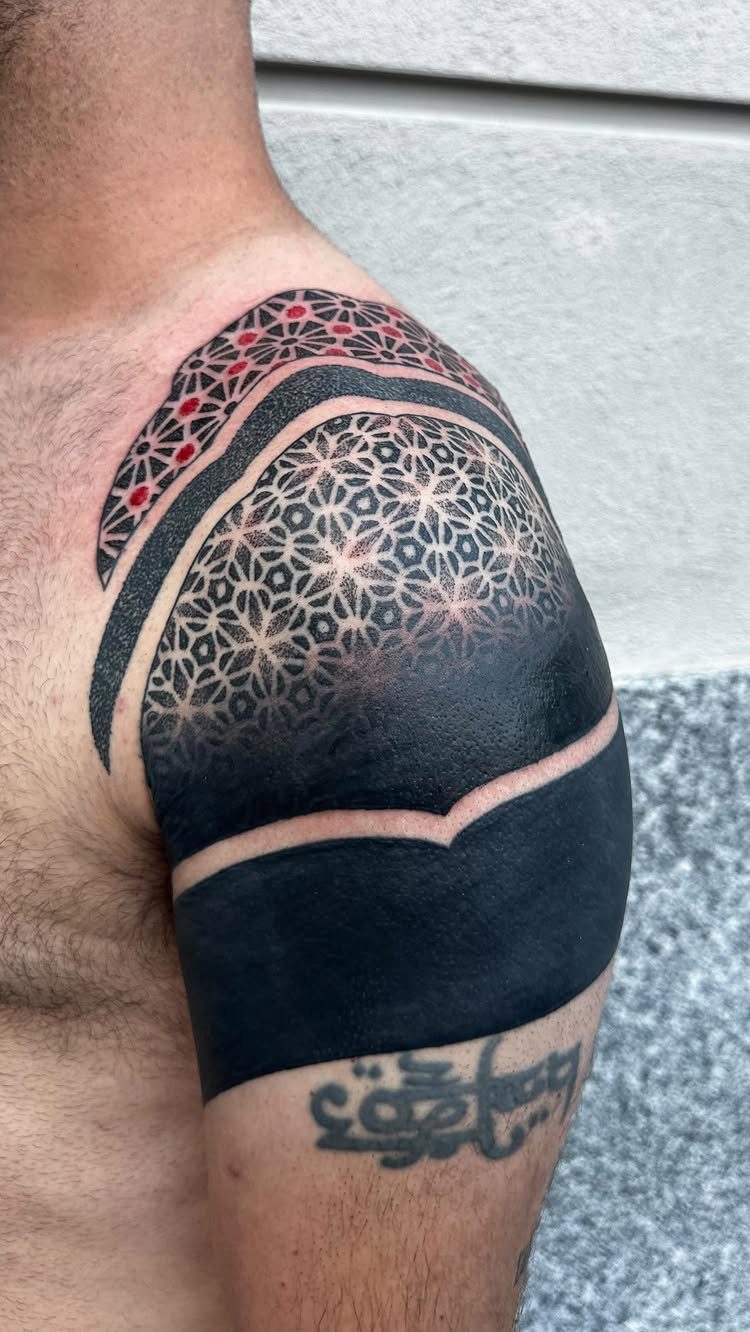
Geometric patterns work by laying down bold, clean shapes that pull the eye away from the lines underneath.
The shoulder gives you room to spread the design across curves, which helps the geometry sit naturally instead of looking pasted on.
Crisp linework is non-negotiable; if the edges blur or the shapes tilt off-axis, the whole piece loses its structure and the old tattoo can show through gaps.
2. Traditional Designs
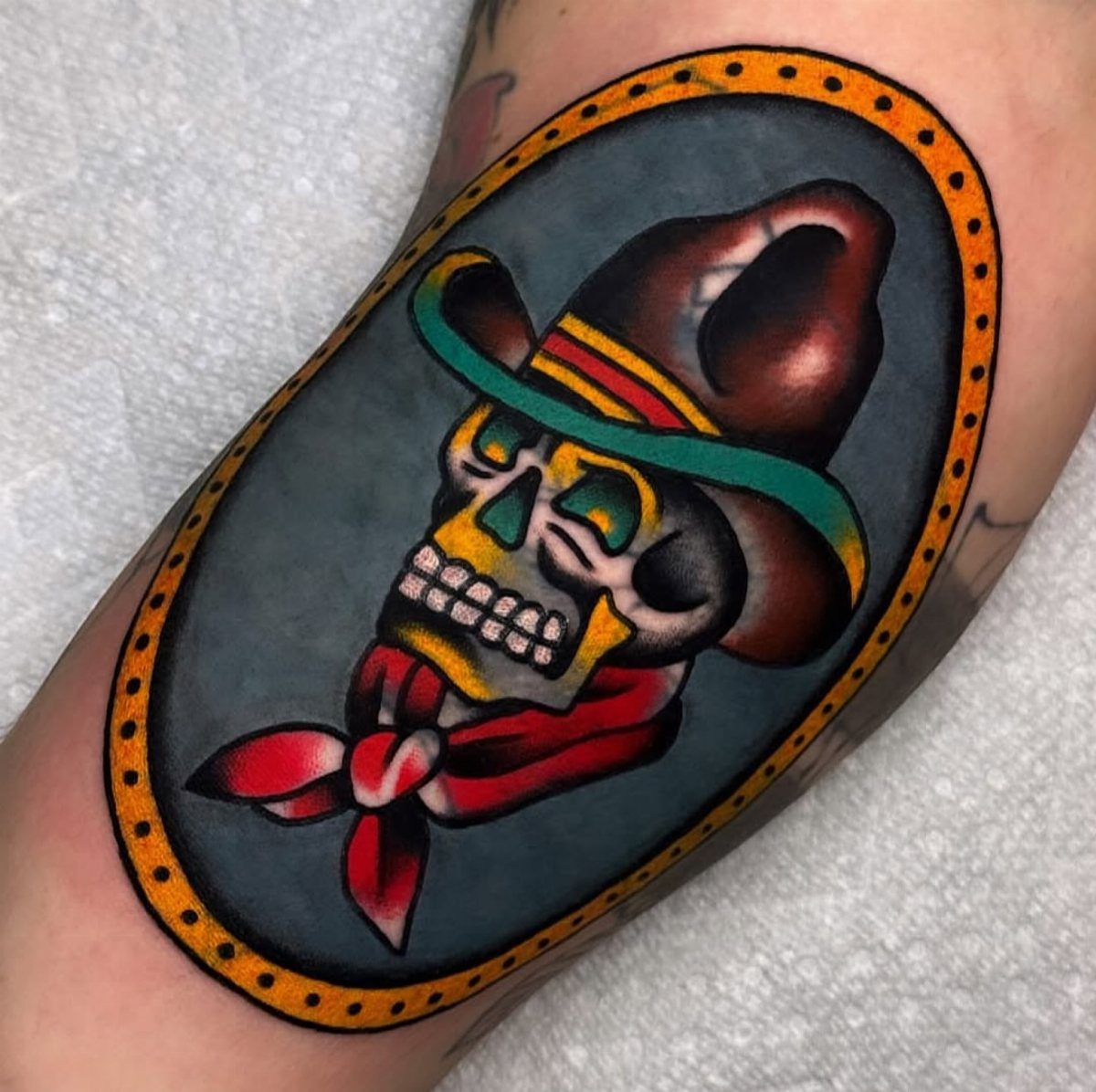
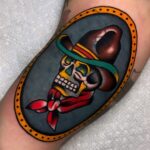
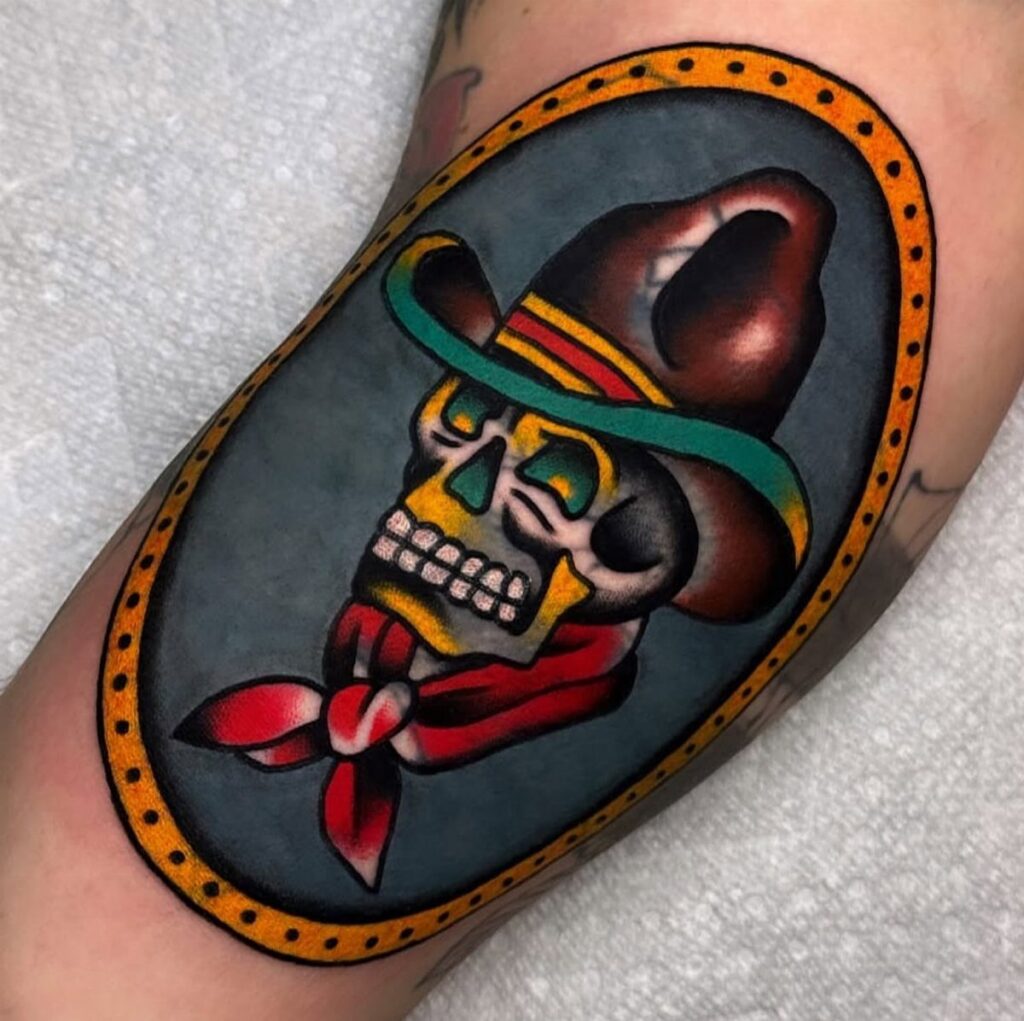
Traditional tattoos cover well because they rely on thick black outlines and solid color fills, both of which hide previous ink without demanding a lot of extra sessions.
This style holds up over time because the lines stay thick and the colors stay saturated, even as the skin ages.
3. Dark Color Cover-up
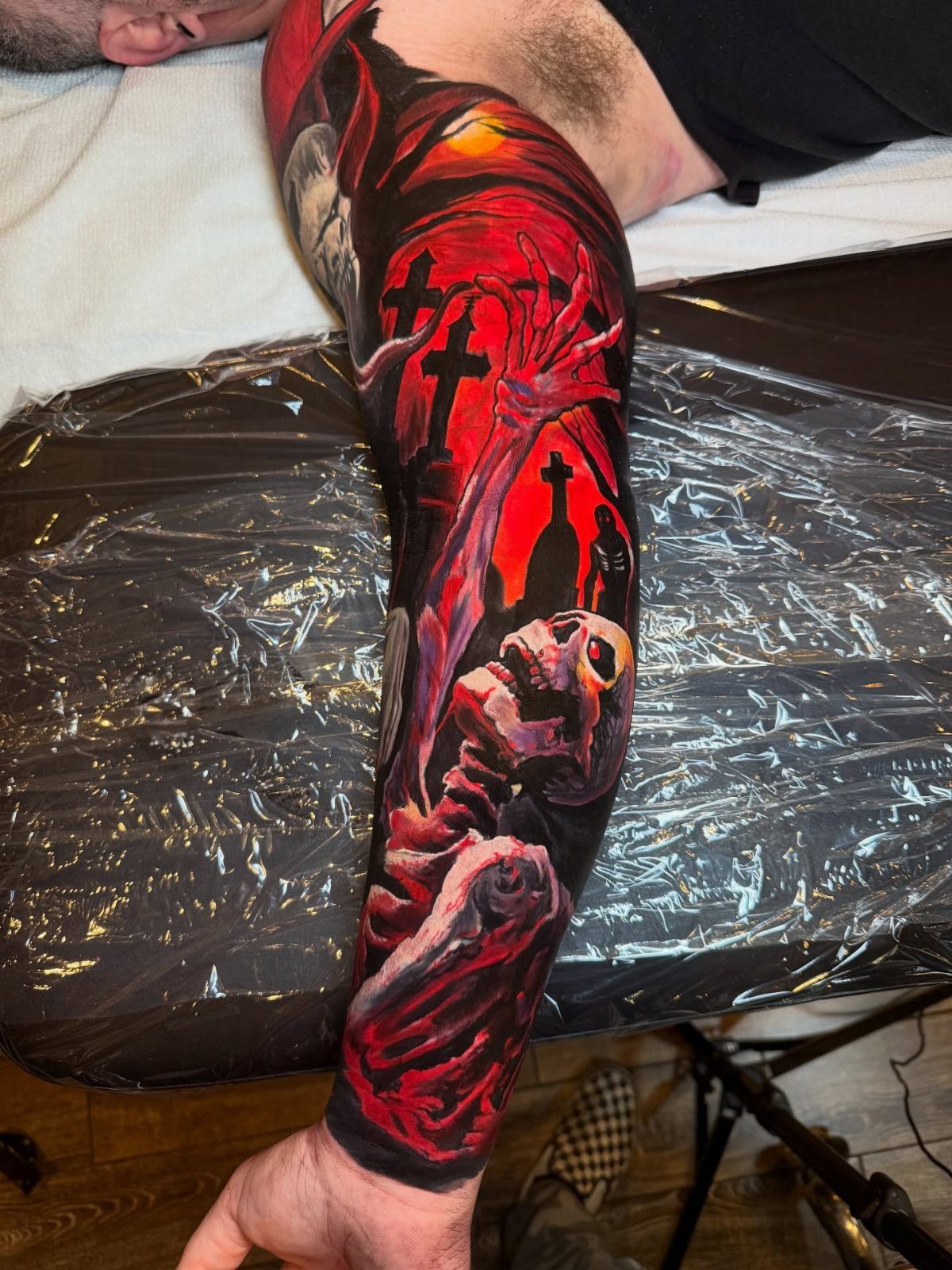
Dark reds and blacks saturate the skin enough to mask just about anything underneath, and a scene with heavy coverage like this builds real atmosphere when you commit to it.
The skeleton and crosses spread across the shoulder and down the arm, which means the artist can work around the old tattoo’s shape instead of fighting it head-on.
Full saturation like this usually takes 2 or 3 sessions, depending on how much old ink needs to be buried, and the darker palette means less risk of the original design bleeding through as everything settles.
4. Negative Space Designs
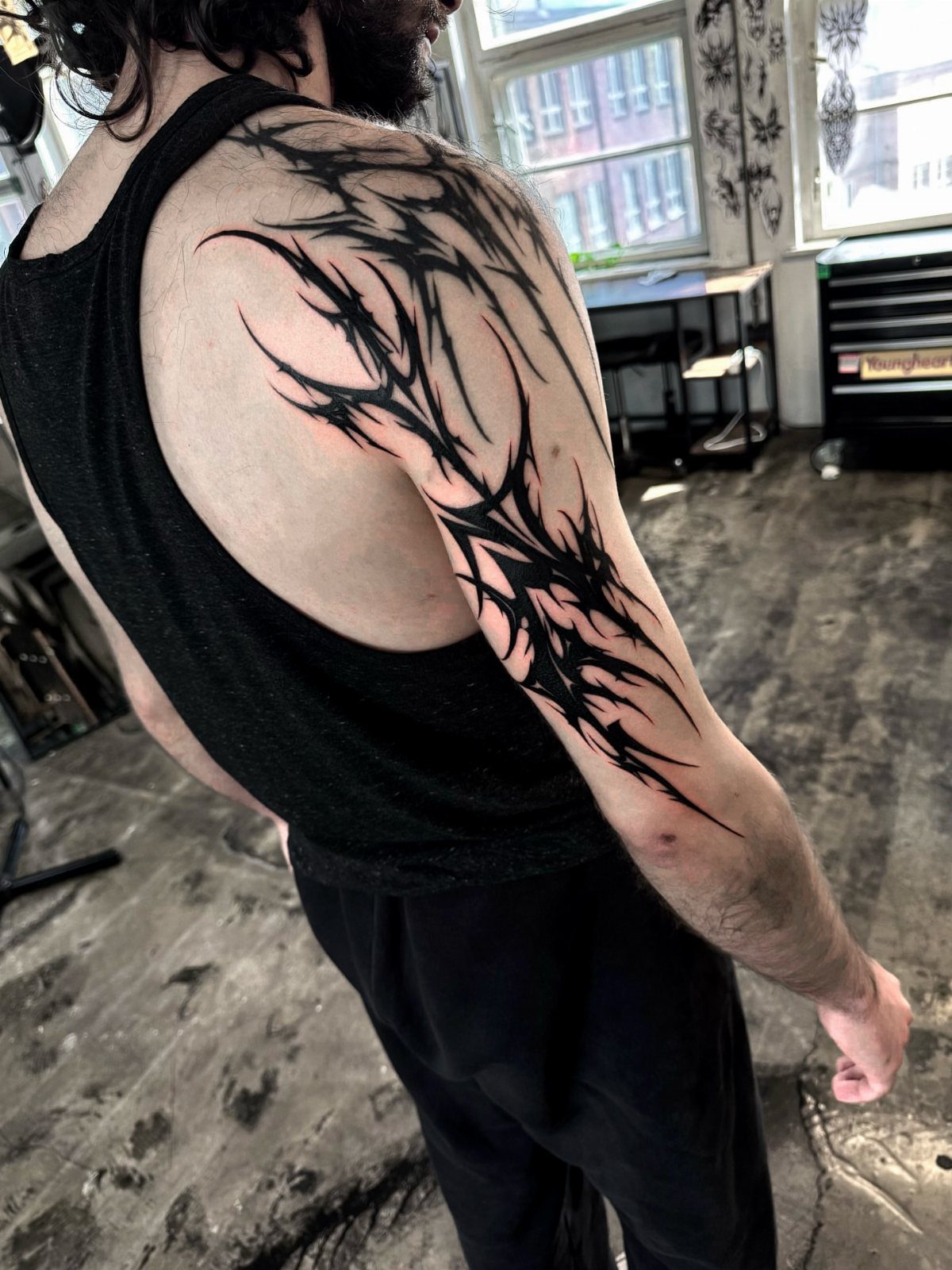
Negative space lets the skin itself become part of the design, which works well when the old tattoo sits in a spot that can be framed or woven into the new layout.
The sharp organic shapes here create gaps that balance the heavy black ink, so the piece feels open instead of packed solid.
This approach demands precision; if the negative space boundaries waver or the black sections bleed, the whole composition falls apart and the old tattoo can show in places it shouldn’t.
The shoulder’s curve helps the shapes flow naturally, but you need an artist who works confidently with freehand placement and can adjust the stencil to fit your specific anatomy.
5. Butterfly and Flower Designs
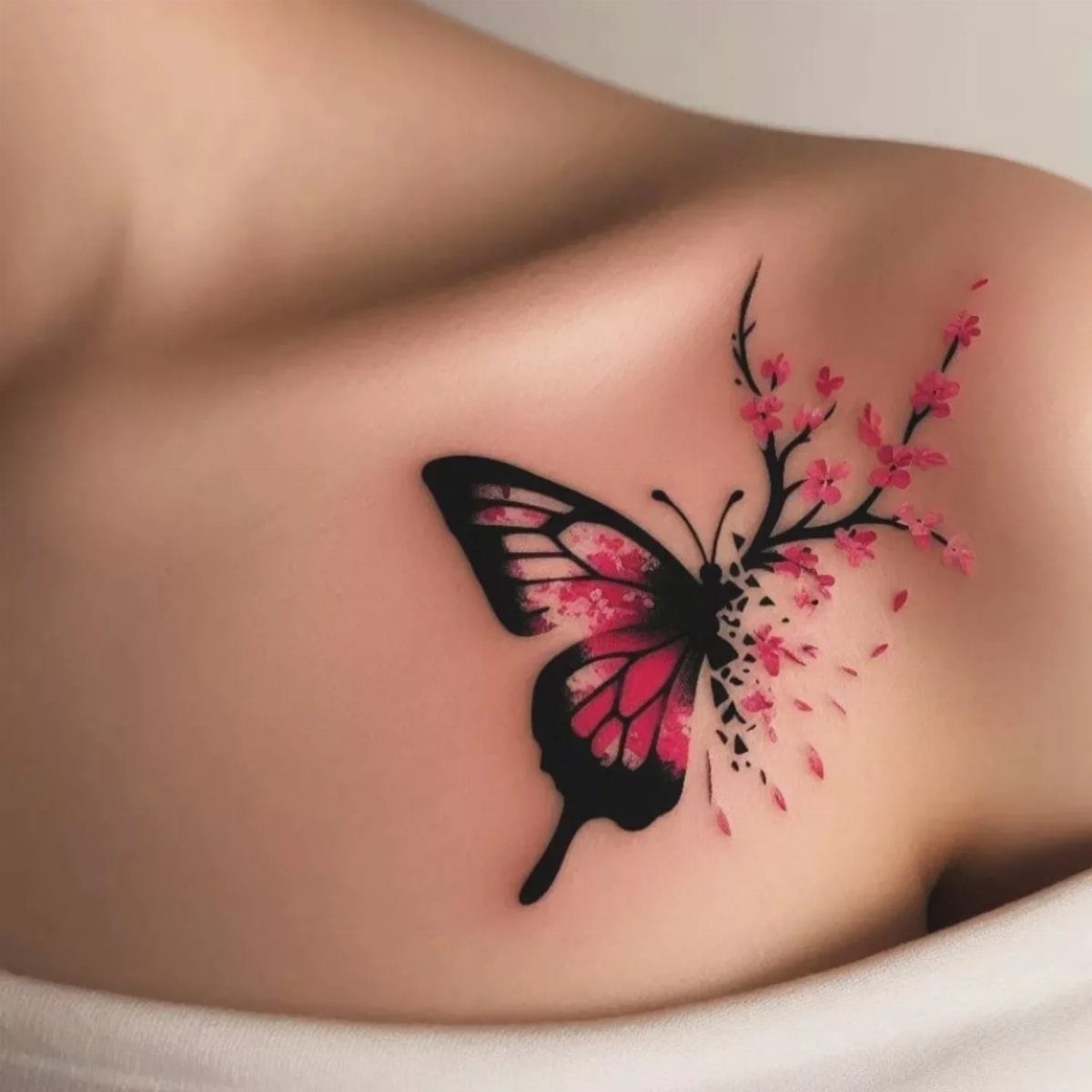
Butterflies and flowers soften the look of a cover-up while still giving the artist enough structure to hide what’s underneath.
Layering organic shapes can break up old lines without a solid color block, and when the butterfly merges into the branch it ties the whole piece together instead of leaving it as separate elements.
This style works best when the old tattoo is small or faded; if there’s a lot of dense black underneath, you’ll need to add more petals or darken the wings to compensate.
The shoulder gives you room to extend the design down the arm or across the chest if the original ink is larger than expected.
6. Cherub and Skull Design
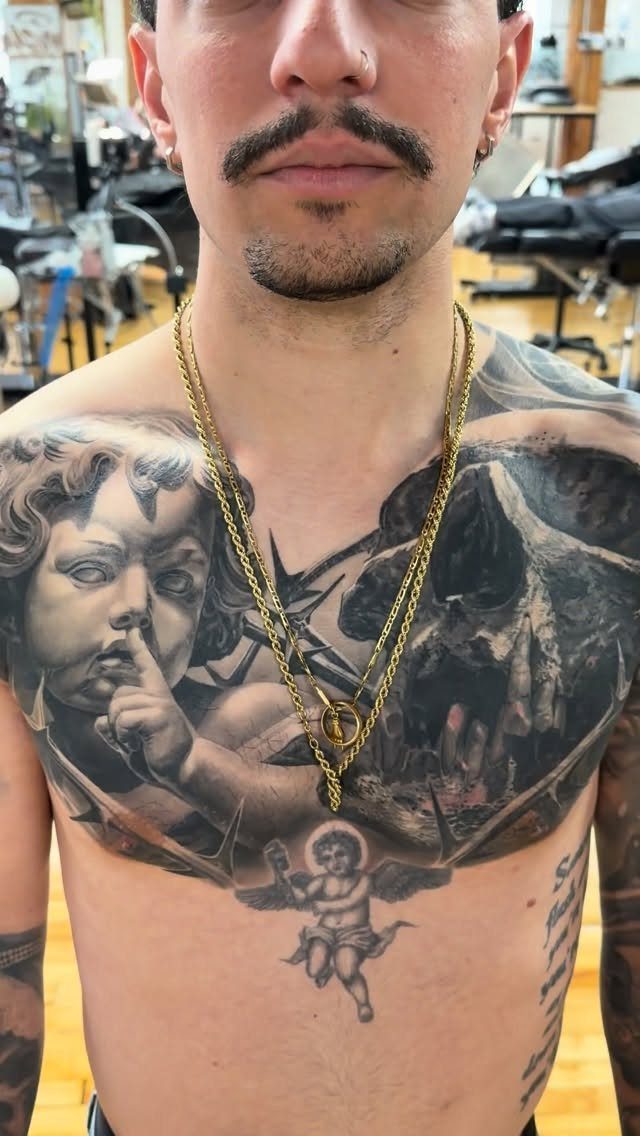
Pairing a cherub with a skull gives you two strong focal points that can anchor a large cover-up across the chest and shoulder.
The black and grey shading here creates dimension without relying on color, which lets the artist layer tones gradually to hide whatever sits underneath.
The cherub’s soft features contrast with the skull’s hard edges, so the piece holds visual interest even when it’s covering a big area.
This placement suits someone willing to commit to a multi-session piece, since blending the old tattoo into the background takes time and careful shading.
The chest offers a flat surface for the cherub’s face, while the shoulder’s curve fits the skull naturally.
7. Crescent Moon Silhouette
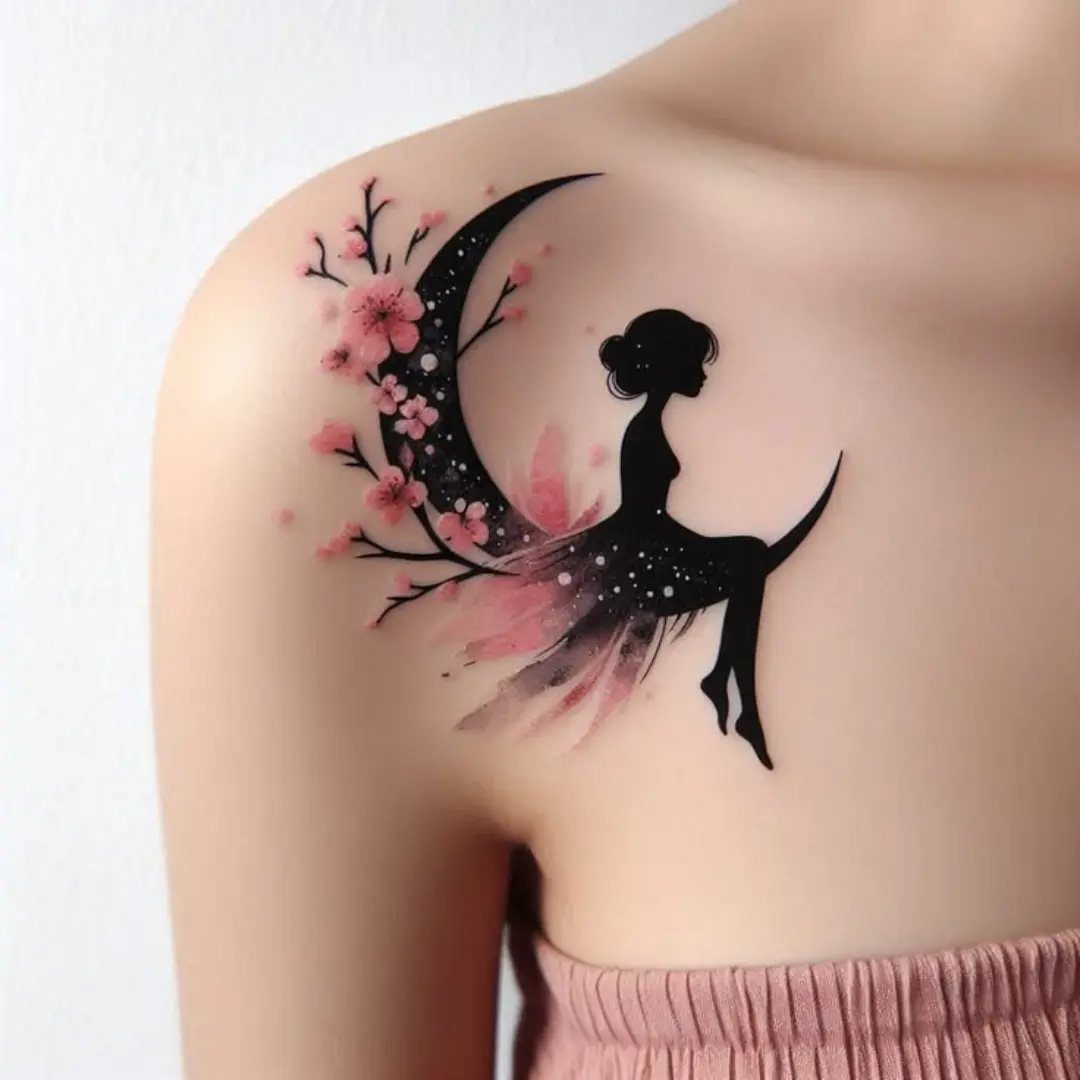
A silhouette on a crescent moon gives you a solid black shape that can cover a smaller old tattoo without needing multiple sessions or heavy shading.
The figure and moon form one clean block of ink, while the cherry blossoms and watercolor splashes around the edges soften the whole piece and keep it from looking too stark.
8. Bold Calligraphic Script
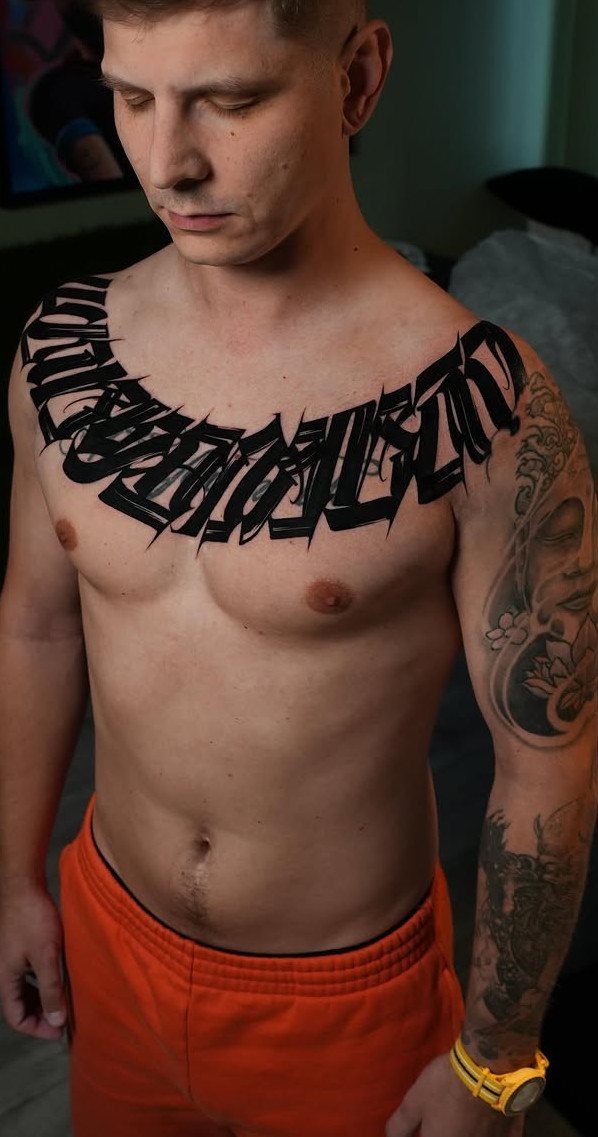
Calligraphic lettering across the chest and shoulders spreads black ink wide enough to bury an old tattoo without packing the entire area solid.
The thick strokes and connecting flourishes create natural coverage where you need it, and the script itself can be sized to fit whatever sits underneath.
If the original tattoo is large, blacking out the whole background would mean covering 2 or 3 times more skin than the script alone, according to the artist who inked this piece.
That makes the lettering a more targeted option when you want bold coverage but don’t want to commit to a full blackout.
Choosing the Right Artist
Start with the portfolio. You need to see finished cover-ups, not just regular tattoos, because the skills don’t transfer directly.
Look for clean blending where old ink meets new design, and check whether previous colors are actually buried or just sitting visible under a thin layer.
During the consultation, ask what’s realistic given your specific old tattoo.
An honest artist will tell you if scar tissue, heavy saturation, or stubborn colors mean you’ll need more sessions or a larger design than you hoped. If they promise easy fixes without examining the area first, walk.
A cover-up asks an artist to hide one design under another, which means working with density and tone in ways a fresh tattoo never does.
The artist needs to know which hues will neutralize what’s underneath and how to build coverage gradually across the shoulder’s curve.
A flat design that ignores your anatomy will look forced, and thin coverage will let the original lines show through within months.
Aftercare for Cover-up Tattoos
Wash gently with fragrance-free soap to keep bacteria out, then apply a thin layer of fragrance-free moisturizer. Too much product traps moisture and can cause breakouts or slow healing.
Sunscreen becomes critical once the tattoo heals. Colors fade faster in areas that see regular sun exposure, and a cover-up that took multiple sessions to build opacity can start showing the old ink again if the new pigment fades unevenly.
Apply it every time the shoulder will be uncovered outdoors, and reapply throughout the day.
Small tattoos and exposed colors can blur or fade within a few years, so aftercare isn’t just about the first 2 weeks.
Keep the skin hydrated long-term and protect it from UV, or you may be looking at another cover-up sooner than you planned.
Pain Considerations
Cover-ups can hurt more than the original tattoo if scar tissue sits in the area. The skin doesn’t take ink as smoothly, and the needle has to work harder to saturate it, which means more passes over the same spot.
Size adds to the discomfort.
A cover-up will always be larger than what it’s hiding, so you’re spending more time under the needle. If the design stretches across the shoulder and down the arm, expect a longer session or multiple appointments.
Talk to your artist about what to expect based on your old tattoo’s condition.
If the skin is heavily scarred or the original ink is dense, they can adjust the session length or break the work into stages so you’re not enduring hours of pain in one sitting.
Shoulder blade cover-up tattoos make a powerful statement with their vibrant colors! Those considering covering old tattoos with vibrant colorful saturated tattoos need to consider laser as fading existing linework is essential to the coverup process.
— Removery
Frequently Asked Questions
What tattoo is best for a cover up?
Darker colors and larger designs hide old ink most reliably. Black, dark red, and saturated tones bury previous tattoos without needing extra sessions, while bold outlines and solid fills prevent the original design from showing through gaps.
Extra size means the artist can route the new design around problem spots rather than pushing ink straight through them.
How to cover up a shoulder tattoo?
Pick a design larger than the original and use dark colors to mask what sits underneath.
That curved surface also lets you run the new piece forward onto your chest or down your upper arm when the original outline needs more than the shoulder alone can hide.
Bold shapes, thick outlines, or heavy shading all work better than thin coverage, which can let old lines show through within months.
Is it more painful to get a cover-up tattoo?
Scarred skin takes more passes to hold pigment, and each pass registers higher on the pain scale than smooth tissue would. Talk to your artist about breaking the work into stages if the old tattoo is dense or heavily scarred.