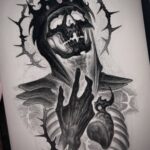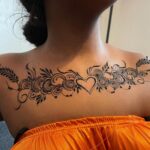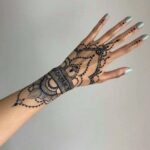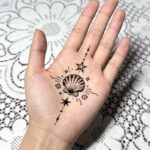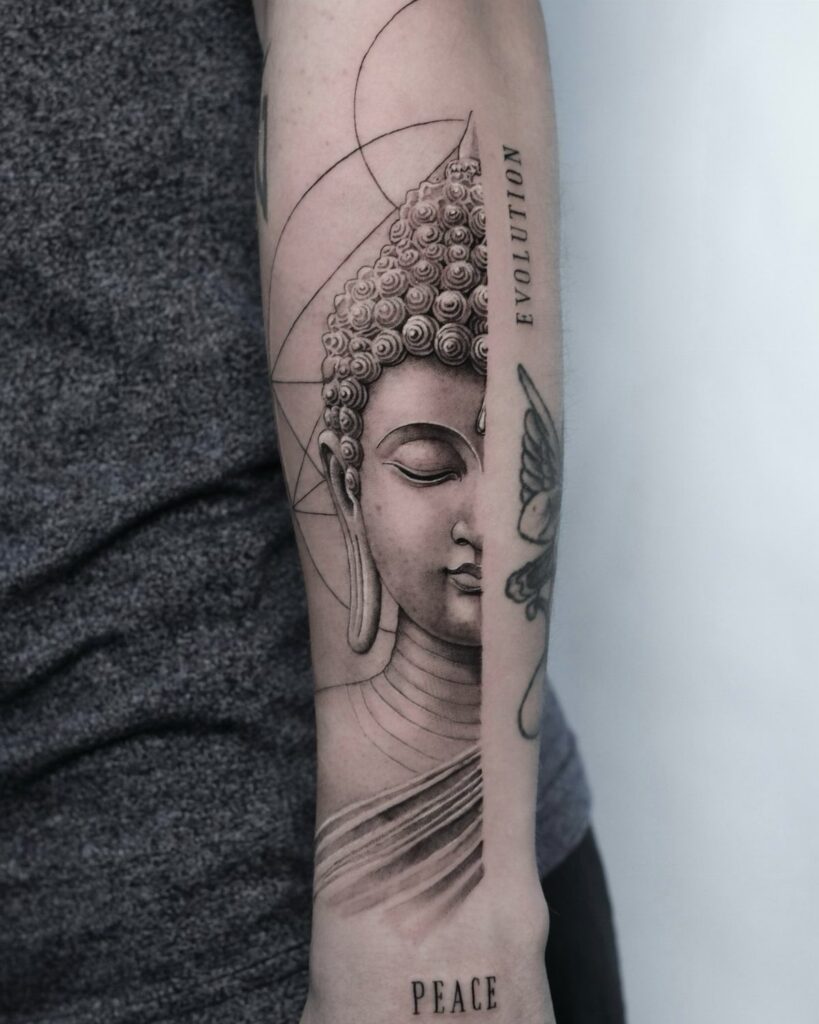
Religious filler tattoos include simple cross outlines that fit behind an ear, rosary beads wrapped around a wrist, and small seated Buddha figures tucked between larger pieces.
The choice comes down to whether you want a widely recognized symbol like a cross or rosary, or a deity figure like Ganesha or the Virgin Mary that holds personal meaning you can share when you choose to.
1. Cross Tattoo
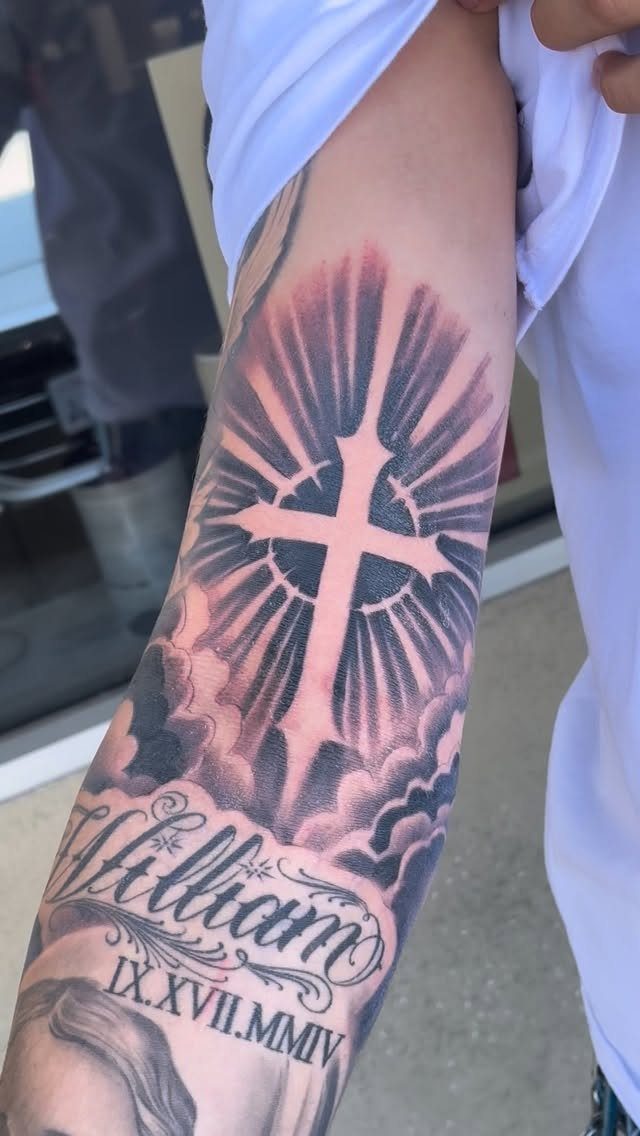
A cross marks your faith in a way everyone will recognize. The design can stay simple or pull in personal details like a name, a date that mattered, or light breaking through clouds.
Forearms and wrists are the most common spots because you see them daily. Smaller crosses fit behind the ear or on a finger when you want something quieter.
Black ink holds longest and reads clearest at any size. Shading and rays add depth without muddying the lines over time.
2. Angel Tattoo
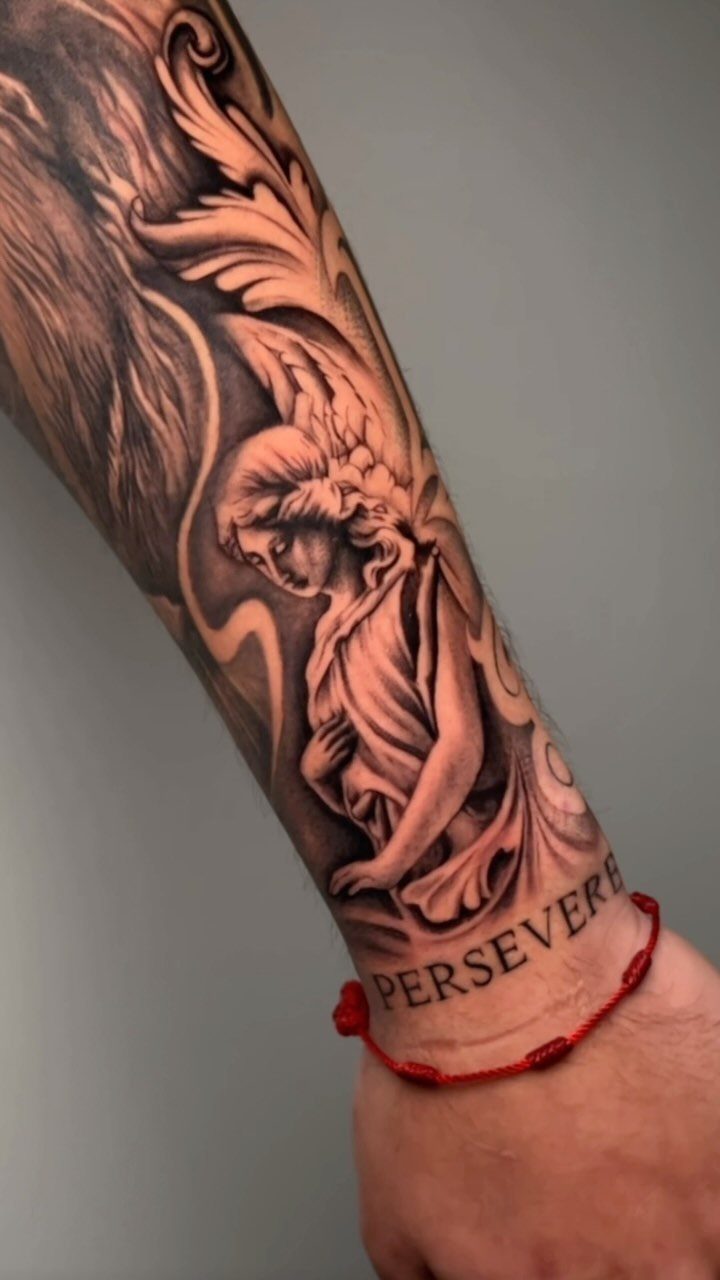
An angel brings the idea of protection into a form people have been inking for centuries.
The wings and robes give an artist room to work in fine shading, and you can add a word that anchors the image to your own story.
I like this placement on the forearm because it gives the design enough length to show detail without crowding. Upper arms and shoulder blades also suit larger compositions.
Grey wash softens the look while keeping contrast strong enough to age well.
3. Buddha Tattoo
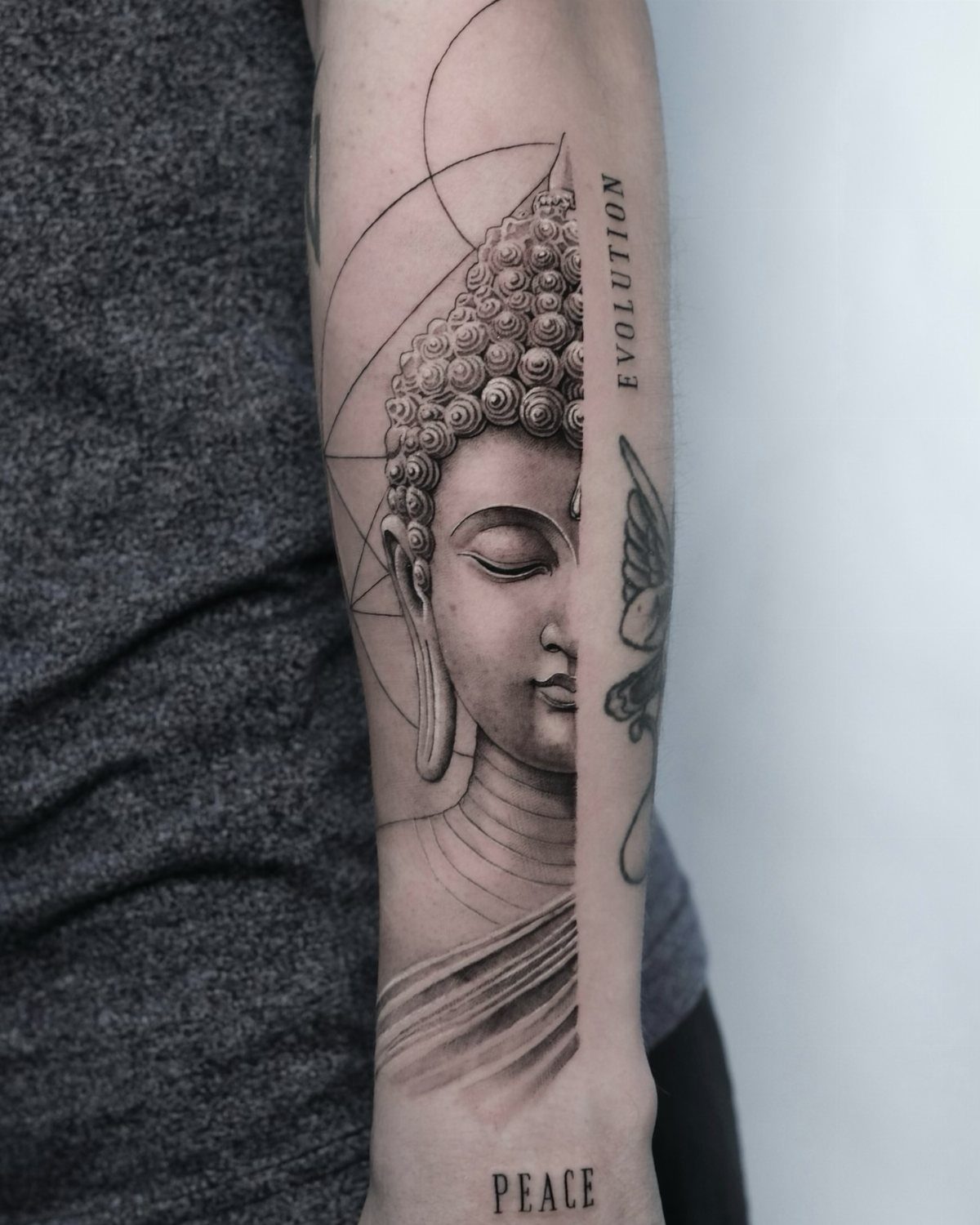
Buddha sits at the center of a lot of tattoo work tied to balance and inner quiet. Pairing the figure with a word makes the meaning unmistakable, and geometric borders frame the composition without adding clutter.
Forearms let you carry the image where you’ll see it, which matters if the design is meant to remind you of something. Calves and upper backs work when you want more space.
Fine line work needs an artist who can hold steady detail.
4. Virgin Mary Tattoo
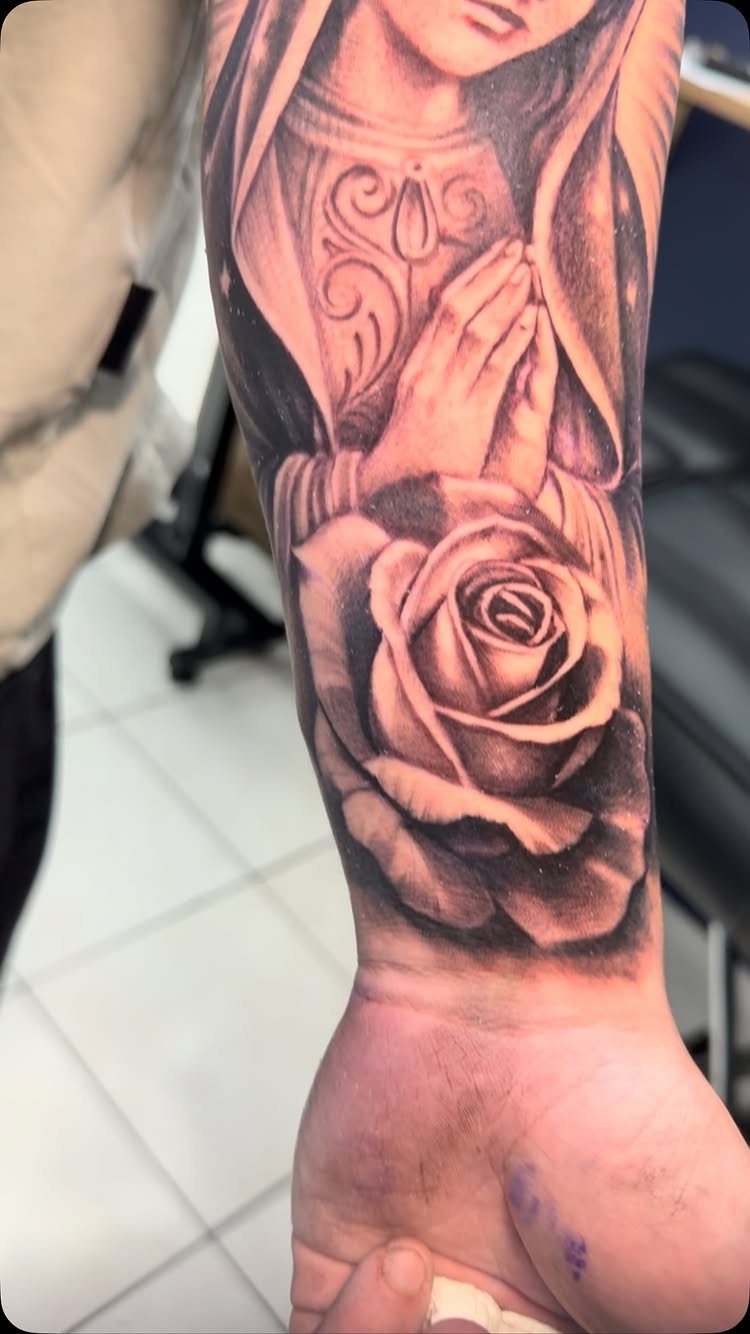
Mary shows up in Catholic and broader Christian tattoo work as a figure of comfort and devotion. Adding a rose or praying hands gives the design a second layer without competing with the central portrait.
Portrait tattoos ask for an artist experienced in faces, since proportion and shading make or break the likeness. Forearms, upper arms and ribs are the usual placements.
5. Ganesha Tattoo
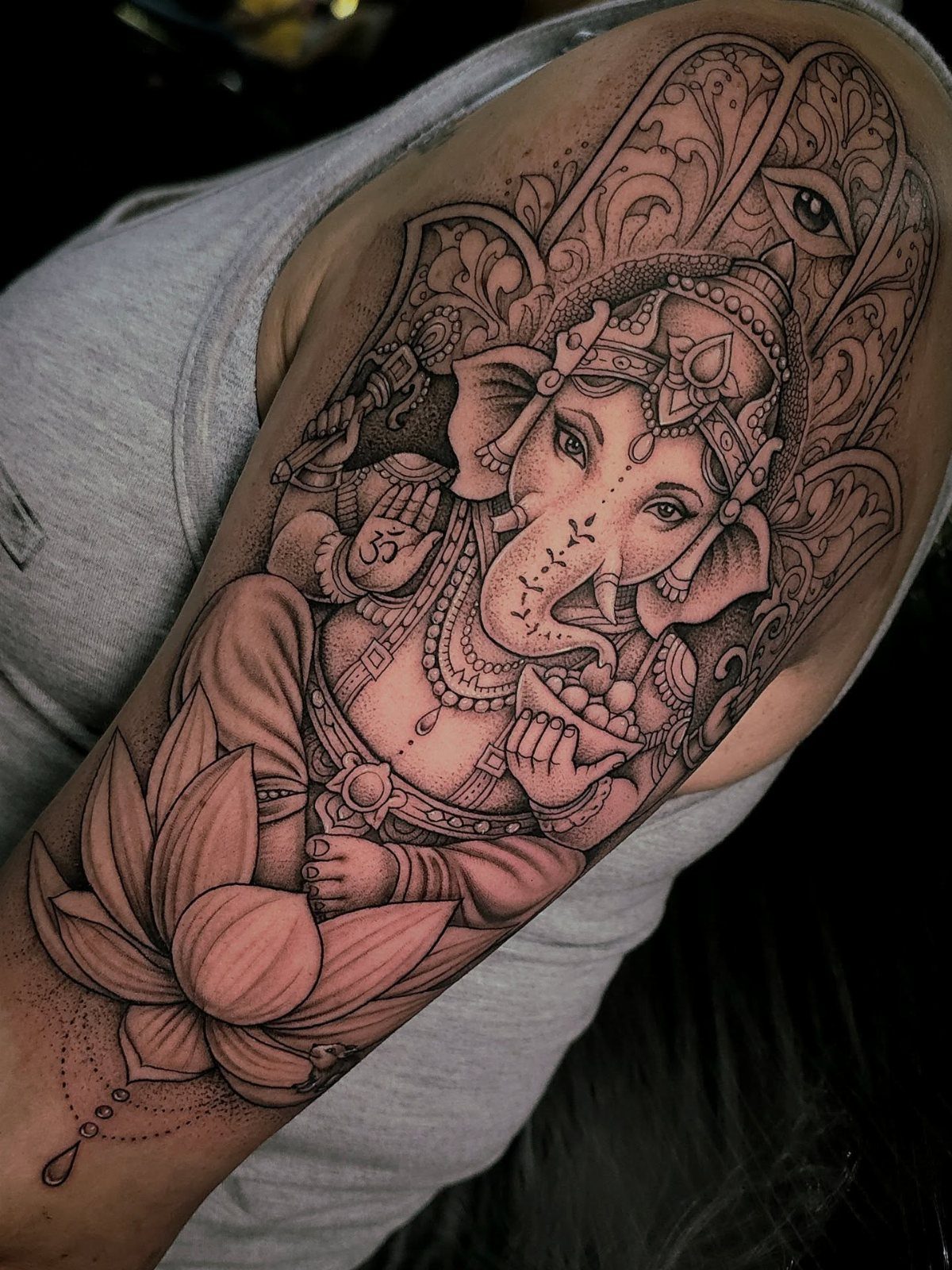
Ganesha carries meaning tied to clearing obstacles and starting fresh, which is why a lot of people choose this figure at a turning point.
The elephant head and multiple arms give the design a distinctive silhouette, and patterns around the border add cultural detail.
Upper arms suit larger compositions because the muscle gives a smooth canvas. Backs and thighs work when you want even more room.
An artist familiar with Hindu iconography will get the proportions and symbols right.
6. Sacred Geometry Tattoo
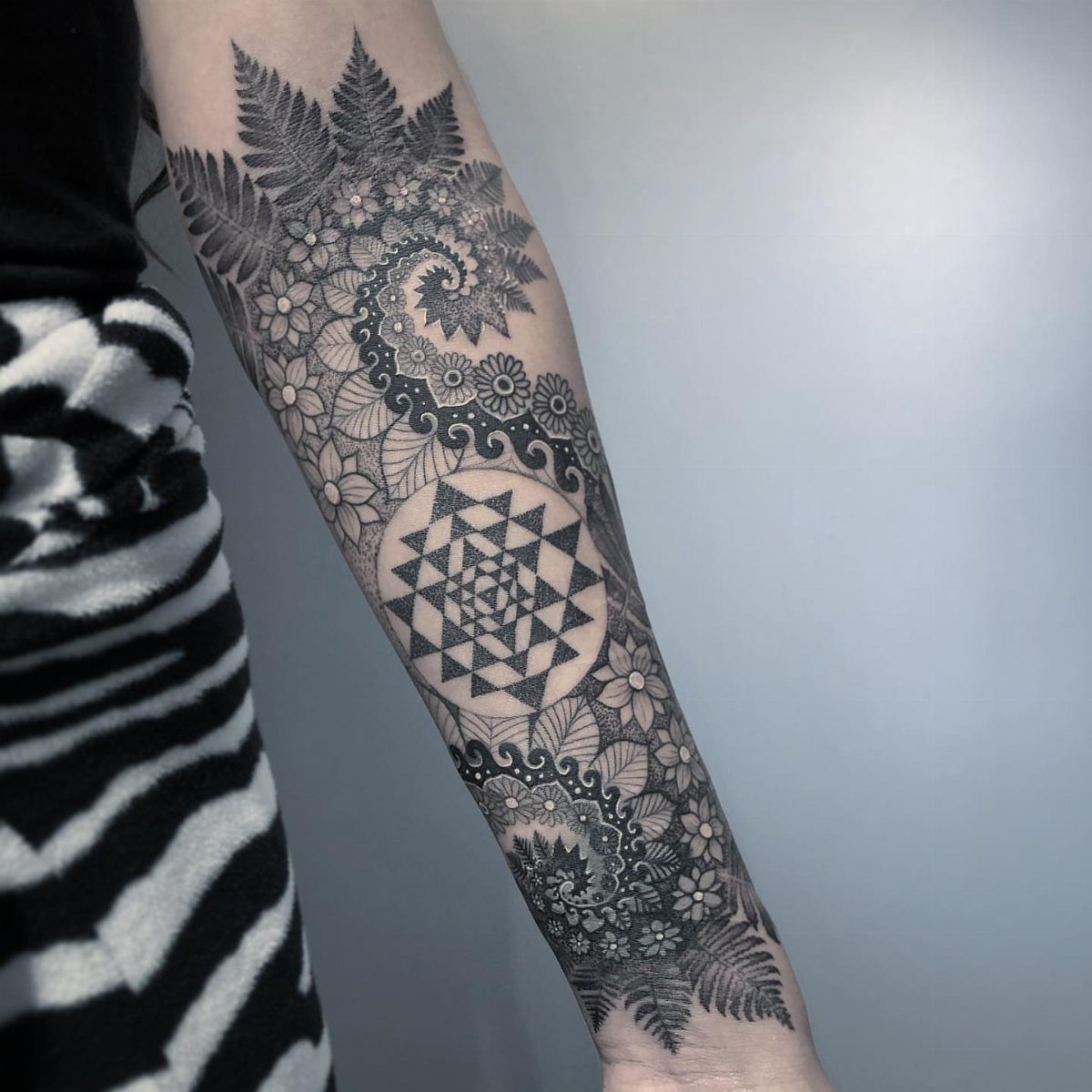
Sacred geometry pulls from patterns found in nature and older spiritual traditions, so the look feels both ancient and precise. Circles, stars and mandala forms lock together in a way that reads as intentional order.
Forearms are popular because the symmetry sits well on a cylindrical surface. Chests and backs offer more room when you want to expand the pattern.
Fine lines need an artist with a steady hand, since even a small wobble shows.
7. Religious Text Tattoo
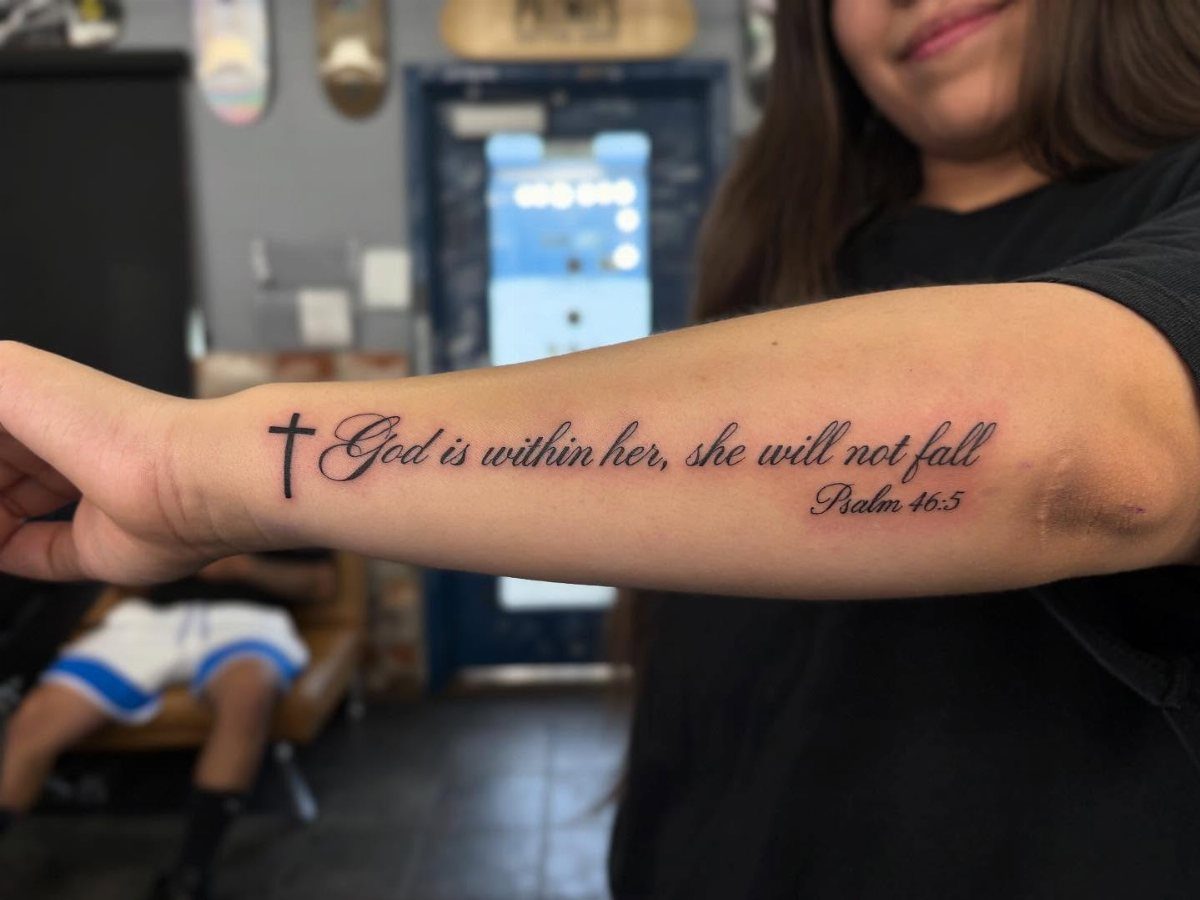
A verse or phrase from scripture gives you words you already know by heart in a form you can carry. Psalm 46:5, Romans 8:28 and Philippians 4:13 show up often because they speak to strength and trust.
Script fonts need an artist who can keep letter spacing even, since crowded words blur faster as the tattoo ages.
Black ink stays sharpest for readability. Adding a small cross or dove keeps the composition balanced without competing with the text.
8. Rosary with Cross Tattoo
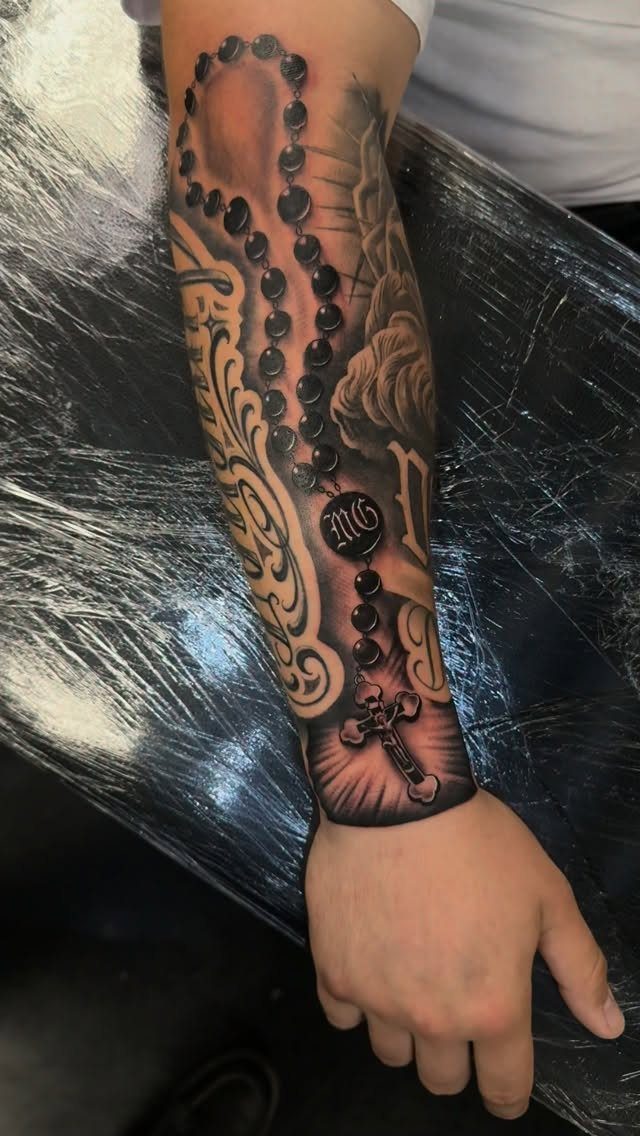
The rosary turns prayer into a physical object, and the tattoo version wraps that around your arm or drapes it down your ribs. Beads, a medal and a cross at the end give the design recognizable structure.
Forearms let the rosary follow the curve of the muscle. Upper arms and shoulders work when you want the beads to loop around a larger surface.
Shading on the beads adds dimension without heavy line work.
9. Archangel Tattoo
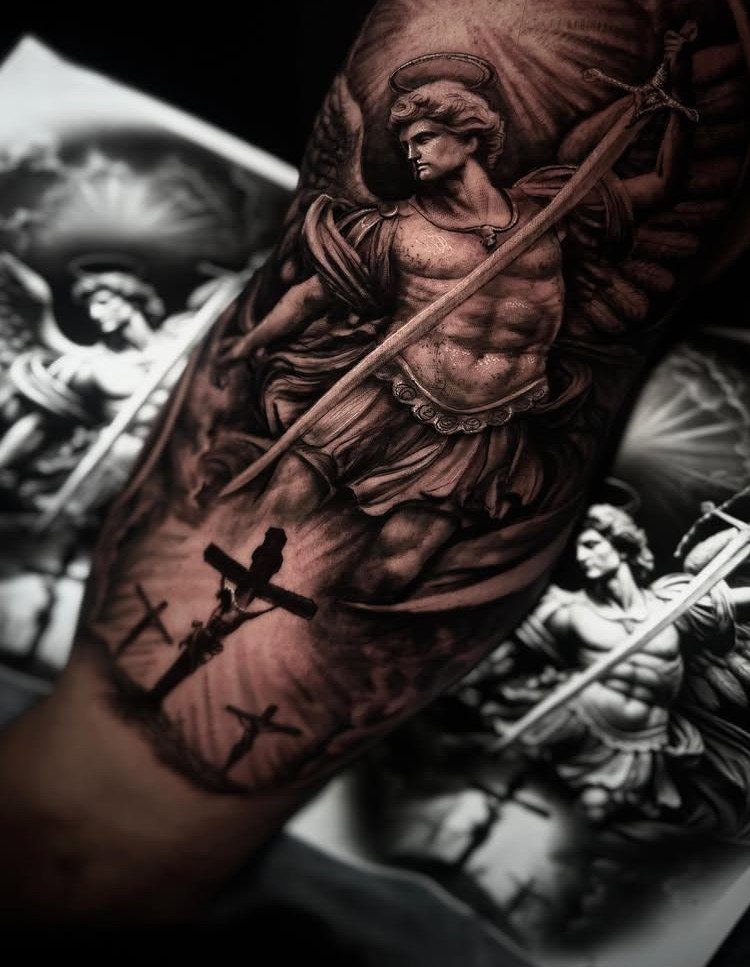
Archangels carry the weight of protection in a way that translates well into large, detailed tattoo work.
This design asks for an artist comfortable with anatomy and shading, since the figure needs depth to read clearly. Placement on the forearm lets the image run vertically, which suits the posture.
Grey wash holds detail longer than heavy black fills in this kind of work.
Meaning of Religious Tattoos
Religious tattoos mark faith in a form you carry every day.
Protection and guidance show up as the most common reasons behind these designs.
A figure like Mary or an archangel represents comfort when things get hard, and a verse gives you words you already lean on in a format that stays put.
Some people ink a symbol after a specific moment: a baptism, a recovery, a loss. Others just want their faith in a place they can see.
Respect for the symbol comes first. If a design draws from a tradition you don’t follow, an artist familiar with that iconography can tell you whether the image fits or crosses a line.
Cultural Significance
Across many cultures, people have worn religious tattoos to show affiliation or mark a moment in their spiritual life, treating the ink itself as an act of faith.
Today, acceptance still varies widely. Some communities read a visible cross or rosary as a proud declaration of faith, while others view religious imagery on skin as disrespectful or taboo.
Hindu and Buddhist figures carry specific meanings tied to posture, gesture, and surrounding symbols, and misplacing those details can turn reverence into offense.
If you’re borrowing from a tradition outside your own, an artist who knows the culture can point out what works and what doesn’t.
Placement also matters: some symbols are meant to stay above the waist, and others lose meaning when mirrored or altered for composition.
Styles of Religious Tattoos
Traditional religious tattoos lean on bold outlines and limited shading, keeping the image clear even as it ages.
Abstract and modern approaches strip the design down to line work or geometric patterns. A cross might become a few clean strokes, and a mandala can frame a word instead of a portrait.
Style choice depends on how much detail you want and how the design will age. Bold lines and solid black hold their clarity longer than delicate grey wash or thin single-needle work, so style choice affects how the piece ages.
Frequently Asked Questions
What is a good filler for tattoos?
Religious fillers that work well include small crosses, rosary beads, sacred geometry patterns, and short scripture verses. These designs fill space between larger pieces while keeping your theme consistent, and they scale down without losing clarity.
What are some good religious tattoos?
Crosses, angels, Virgin Mary portraits, and rosaries are among the most recognized Christian designs, while Buddha and Ganesha appear often in tattoos tied to balance and clearing obstacles.
Sacred geometry and scripture verses give you options that stay readable at smaller sizes.
What does God say about religious tattoos?
Leviticus 19:28 is often cited as a prohibition against marking the body, but interpretations vary widely across denominations and individuals.
Some read it as a ban on pagan mourning practices specific to that time, while others see it as a broader rule still in effect today.