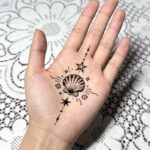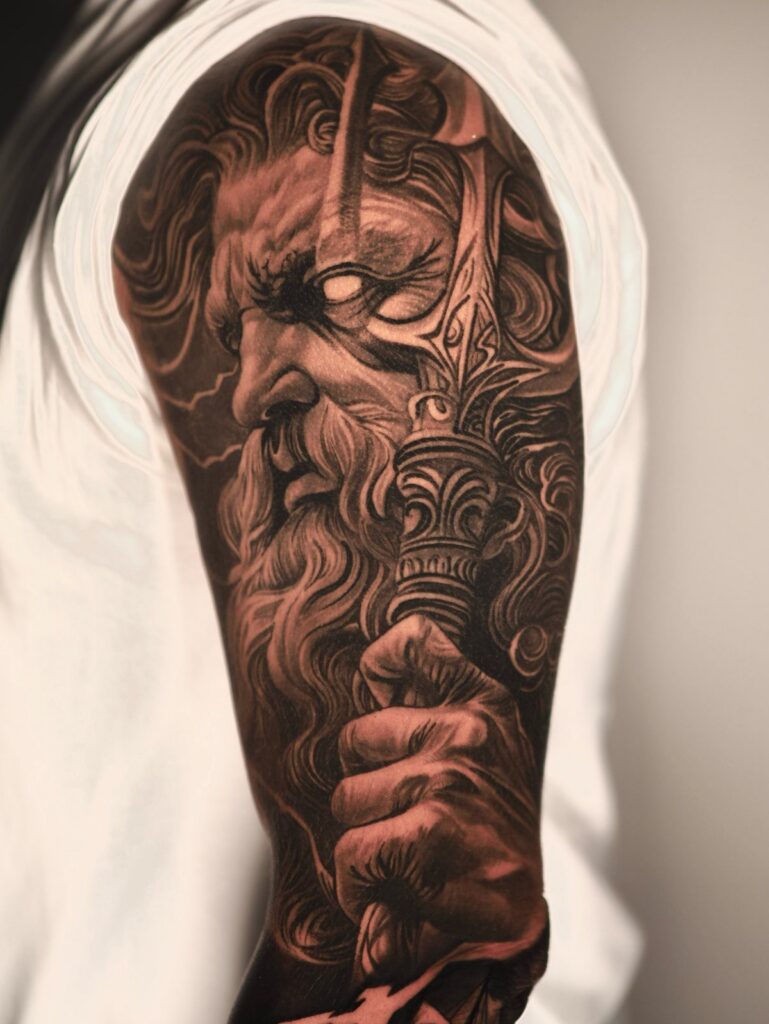
Tattoo styles range from fine line botanicals that fit a wrist to full blackout sleeves that take multiple sessions and considerable ink.
Forearms heal in about 2 weeks with minimal fabric friction, making them the most common placement for first-time and repeat work alike.
1. Realism Portrait Tattoos
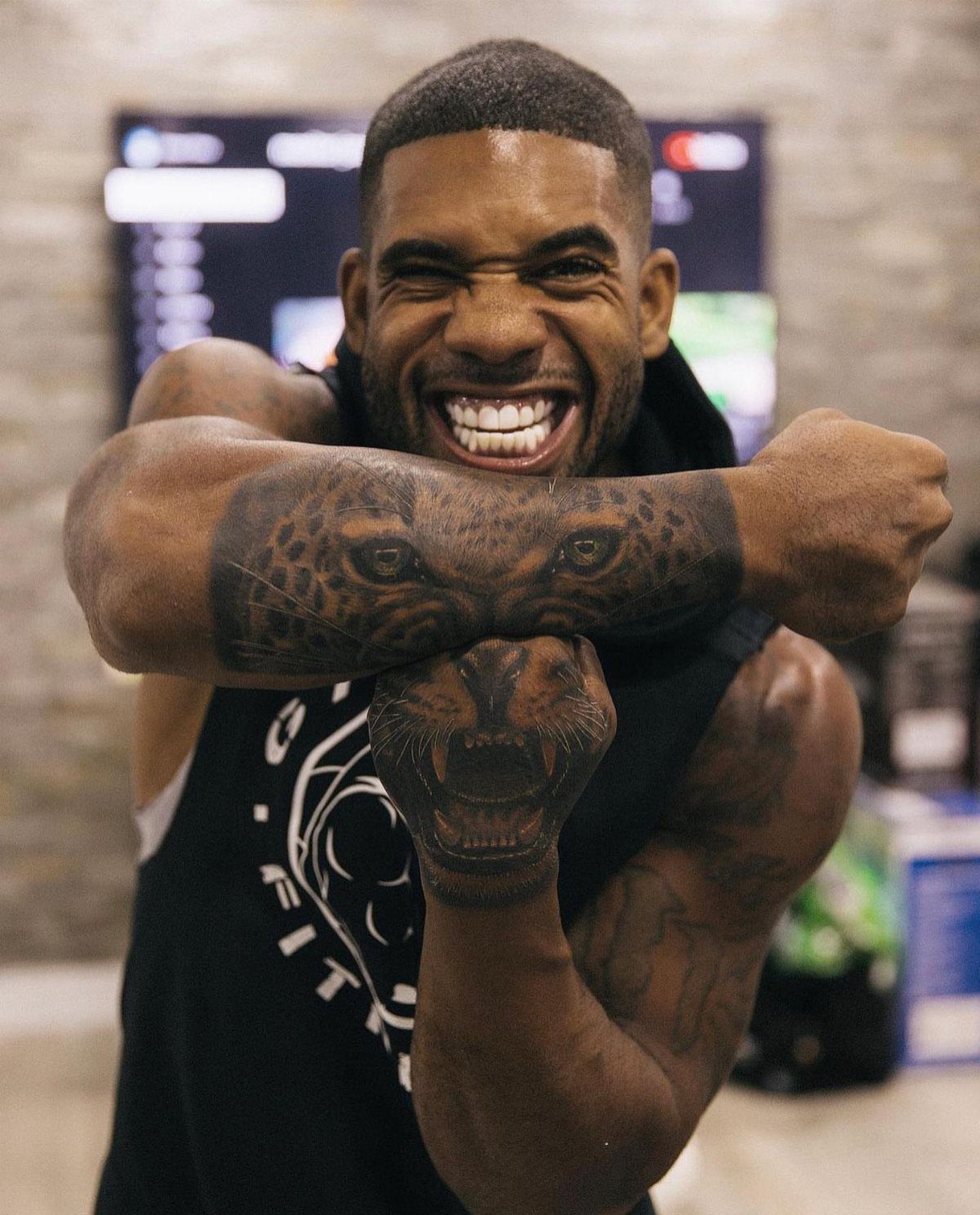
Realism portrait tattoos capture texture and depth through fine shading, whether the subject is a person or an animal.
The detail in the fur reads well even where the forearm curves, and that matters when you want something recognizable from a distance.
Forearms give your artist a good working surface for larger realism pieces. Healing takes about 2 weeks with minimal rubbing from clothing, and you can keep the design visible or cover it when needed.
If you want a portrait that looks photographed, find an artist who posts regular realism work with consistent detail across different animals or faces.
2. Geometric Mandala Tattoos
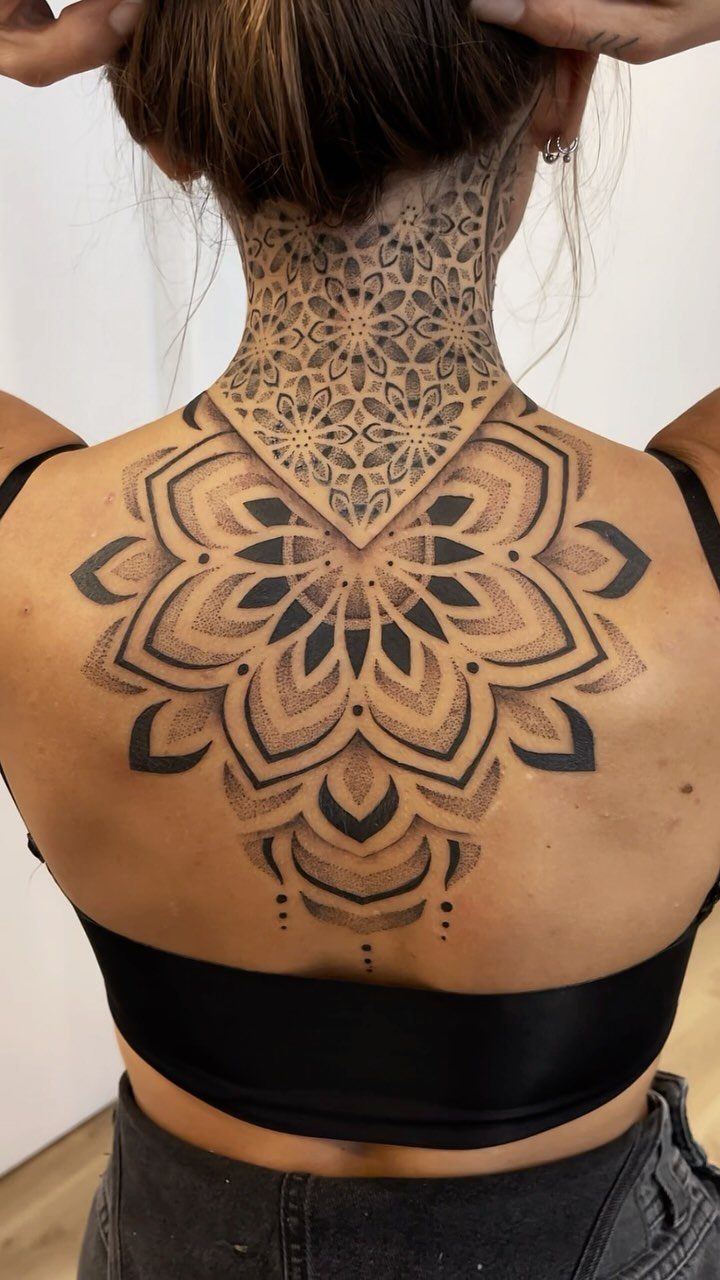
Geometric mandala tattoos layer circles and repeating patterns into symmetry that covers as much space as you give it.
This back piece fills the shoulder blades and neck with precise linework, and black ink keeps the pattern sharp as it heals.
Placement on the upper back lets the design spread without interruption. Healing in that spot is straightforward since fabric contact stays light, and you avoid the stretch marks that can distort patterns on areas like hips or ribs over time.
Mandalas scale well. A smaller version fits a forearm or calf, and the same radial structure holds up whether the piece is compact or covers your entire back.
3. Fine Line Botanical Tattoos
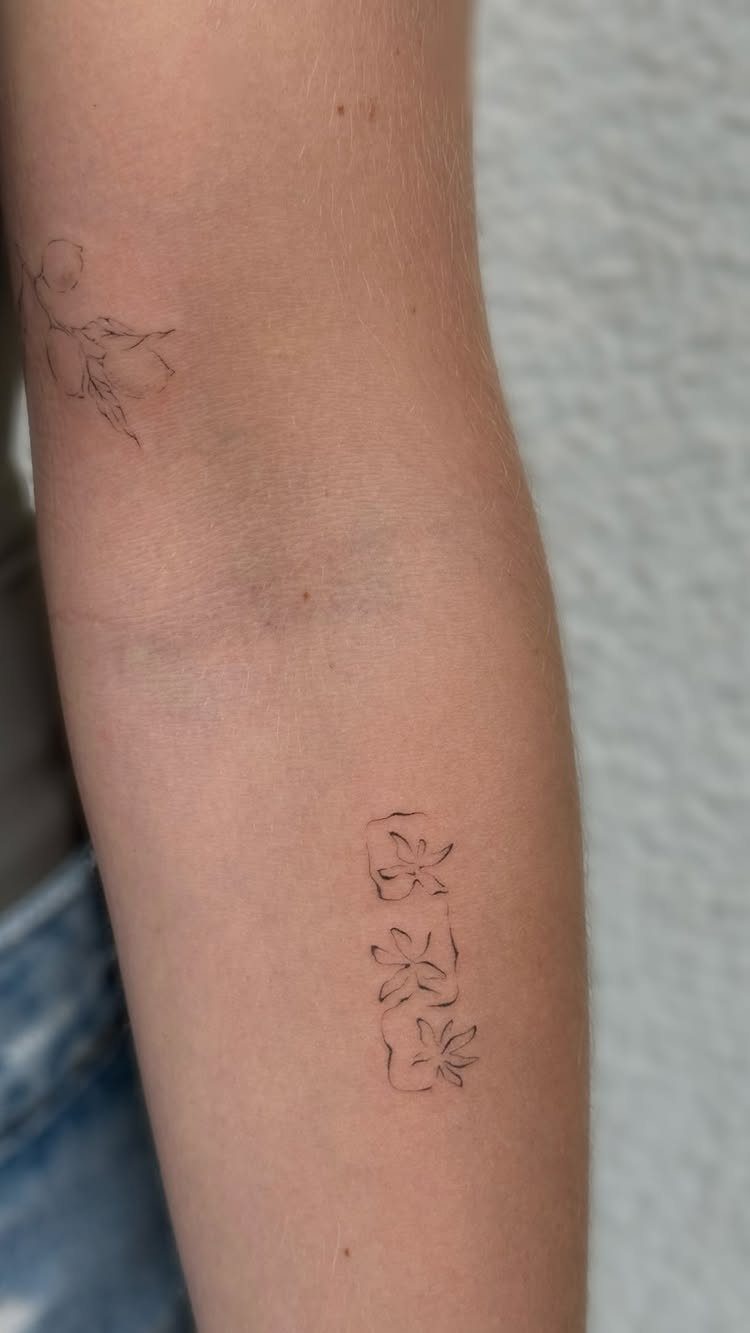
Fine line botanical tattoos keep plant shapes minimal, and single stems and stacked petals read clearly without heavy shading. The thin lines suit smaller designs that fit wrists, ankles or forearms without looking crowded.
Black ink in fine line work stays crisp longest on areas with less sun exposure. Forearms get more UV than inner arms or ribs, so plan on sunscreen if you want the lines to stay sharp years later.
Artists who specialize in fine line tattoos use single needles and work slowly. Expect longer sessions for intricate botanicals, even on a small piece, and check that your artist’s portfolio shows clean, consistent line weight.
4. Blackwork Blackout Tattoos
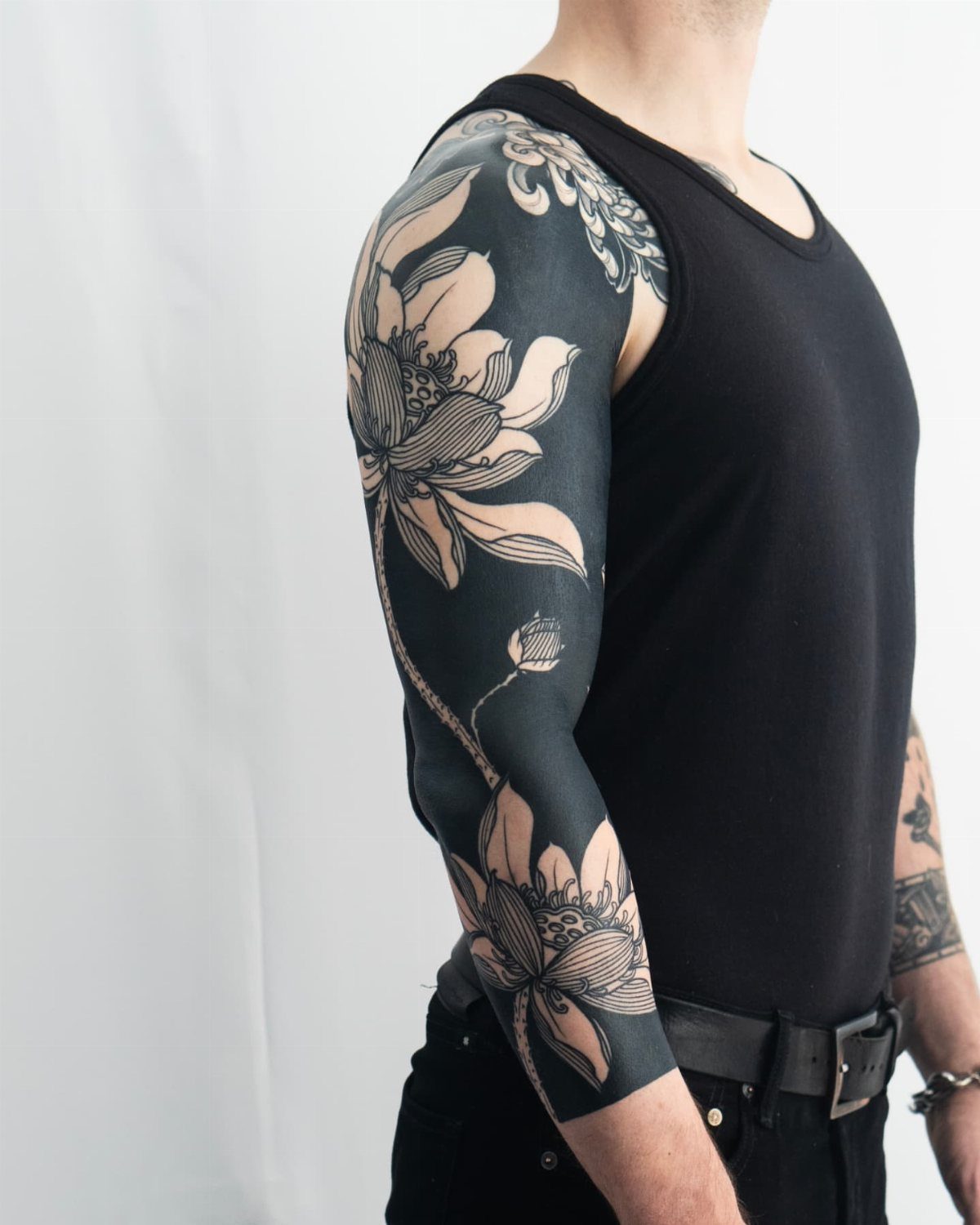
Blackwork blackout tattoos fill entire sections of skin with solid black ink, and this sleeve uses that coverage as a backdrop for lighter floral designs.
The contrast between the blackout and the lotus patterns gives you a negative-space look that stands out from across a room.
Full sleeves take multiple sessions and considerable ink. Plan on multiple hours per session depending on arm size, and expect some swelling as the skin adjusts to heavy saturation.
Cover-up candidates often choose blackout work when laser removal isn’t an option. The solid black hides old tattoos completely, and adding lighter details on top gives you a finished design instead of a simple block of ink.
"Medium-sized tattoo designs are on their way out as more clients get elaborate, full sleeves or tiny tattoos."
5. Tribal Tattoos
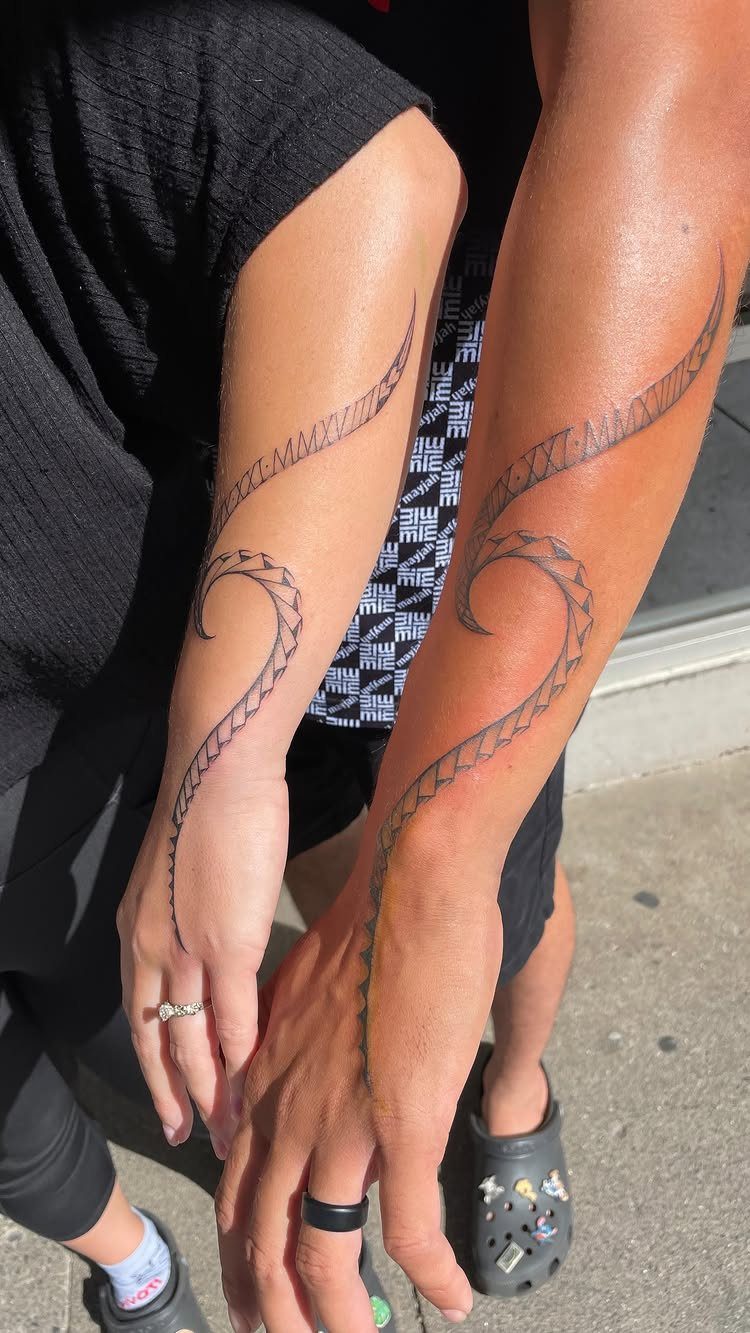
Tribal tattoos use thick black lines and swirling curves that wrap around limbs, layering movement without shading. The Roman numerals inside the swirls add personal meaning while keeping the bold silhouette intact.
Forearms handle tribal designs well because the curves follow muscle contours. Matching tattoos between two people work best when both choose the same placement and similar sizing so the symmetry reads clearly in photos.
Tribal heals faster than realism because there’s no fine detail to protect. Solid black ink settles quickly, and touch-ups are rare if your artist packs the ink densely from the start.
6. Watercolor Tattoos
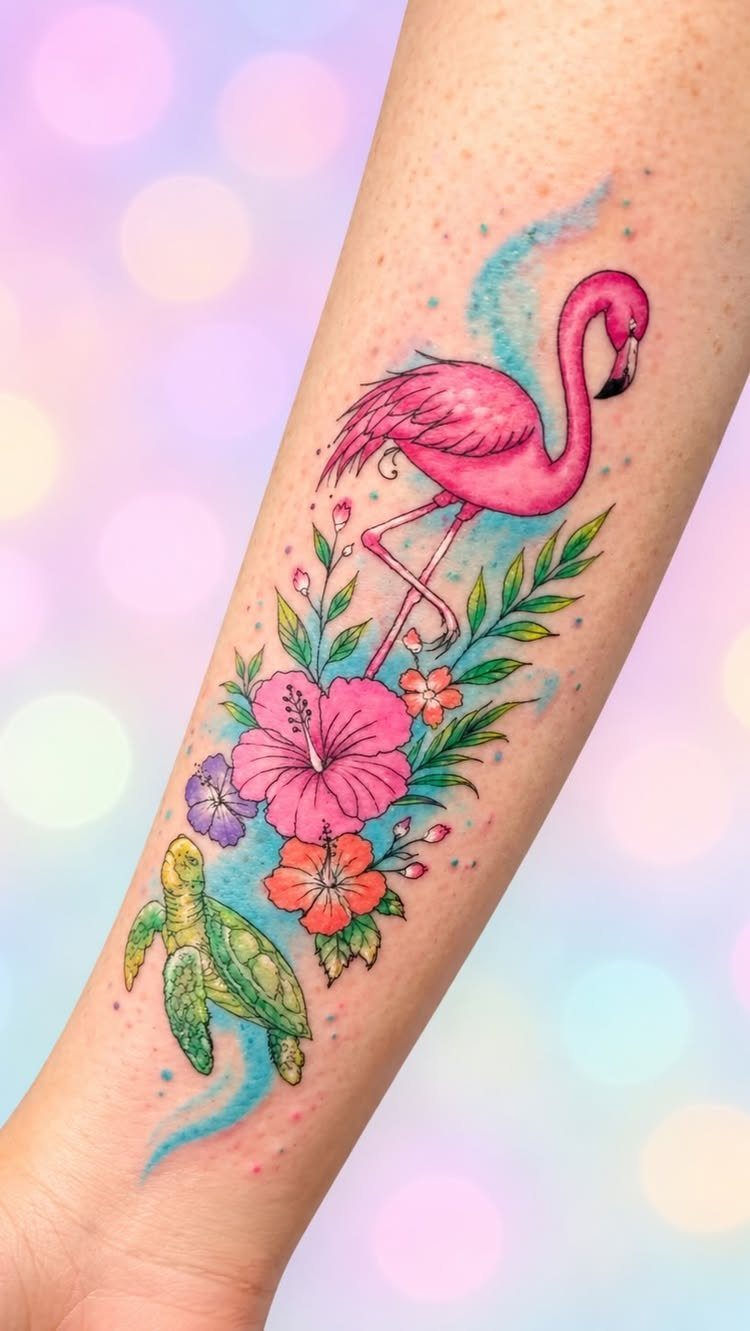
Watercolor tattoos mimic the soft washes and blended edges of painted art, and this flamingo and sea turtle piece layers pink, green and lighter tones without hard outlines.
The hibiscus flowers fill gaps between the animals, giving the forearm a tropical feel that reads as illustration rather than photography.
Forearms suit watercolor work because the flat surface lets colors blend smoothly during application. Healing takes the usual 2 weeks, but expect some fading as the softer pigments settle, especially in sun-exposed areas.
Watercolor pairs well with black linework if you want sharper definition. Some artists outline the main shapes first, then add washes on top, which helps the design hold its structure as it ages.
7. Japanese Tattoos
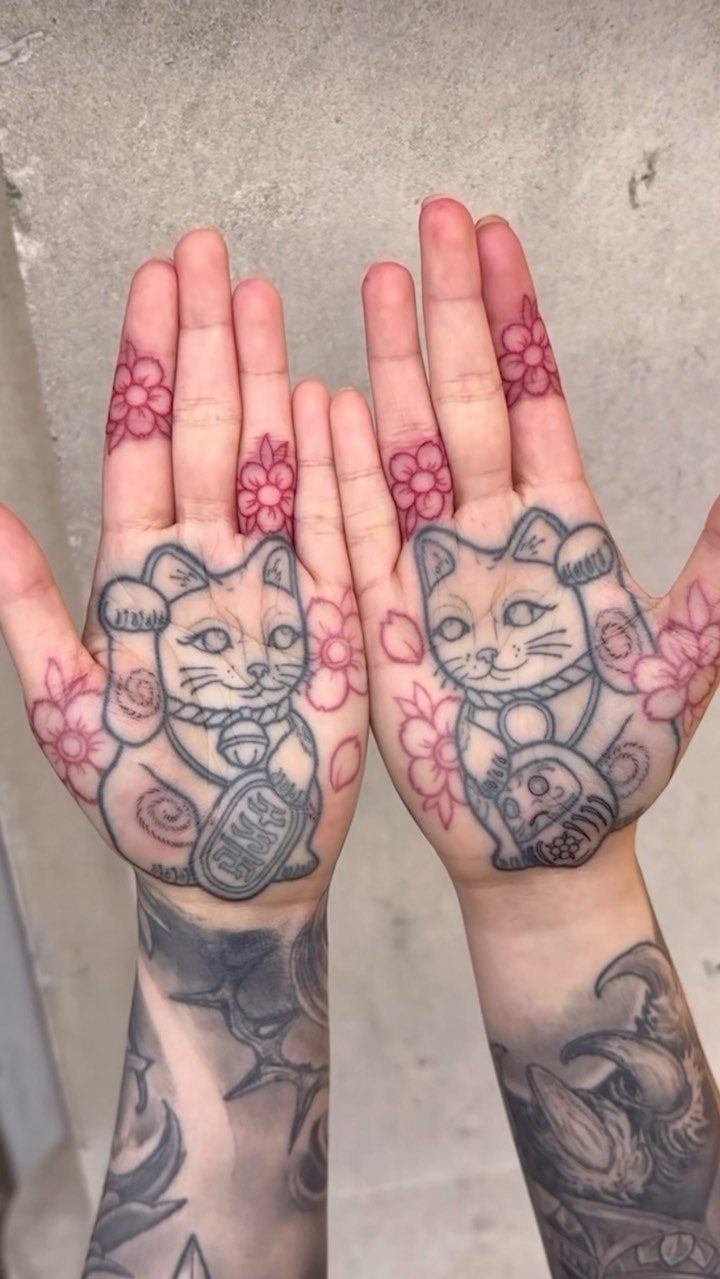
Japanese tattoos layer symbols that carry meaning in traditional design: lucky cats on palms, cherry blossoms across fingers, waves or koi that wrap around forearms.
This set uses black outlines with red accents on the blossoms, keeping the color minimal so the shapes stay recognizable as hands move.
Palms and fingers fade faster than other placements because the skin sheds constantly. Expect touch-ups every few years if you want the detail to stay sharp, and plan on pain during application since there’s little padding over bone.
Artists trained in Japanese tattooing work with specific motifs and placement rules. Find someone whose portfolio shows consistent traditional imagery if you want a design that follows those conventions.
8. Anime Tattoos
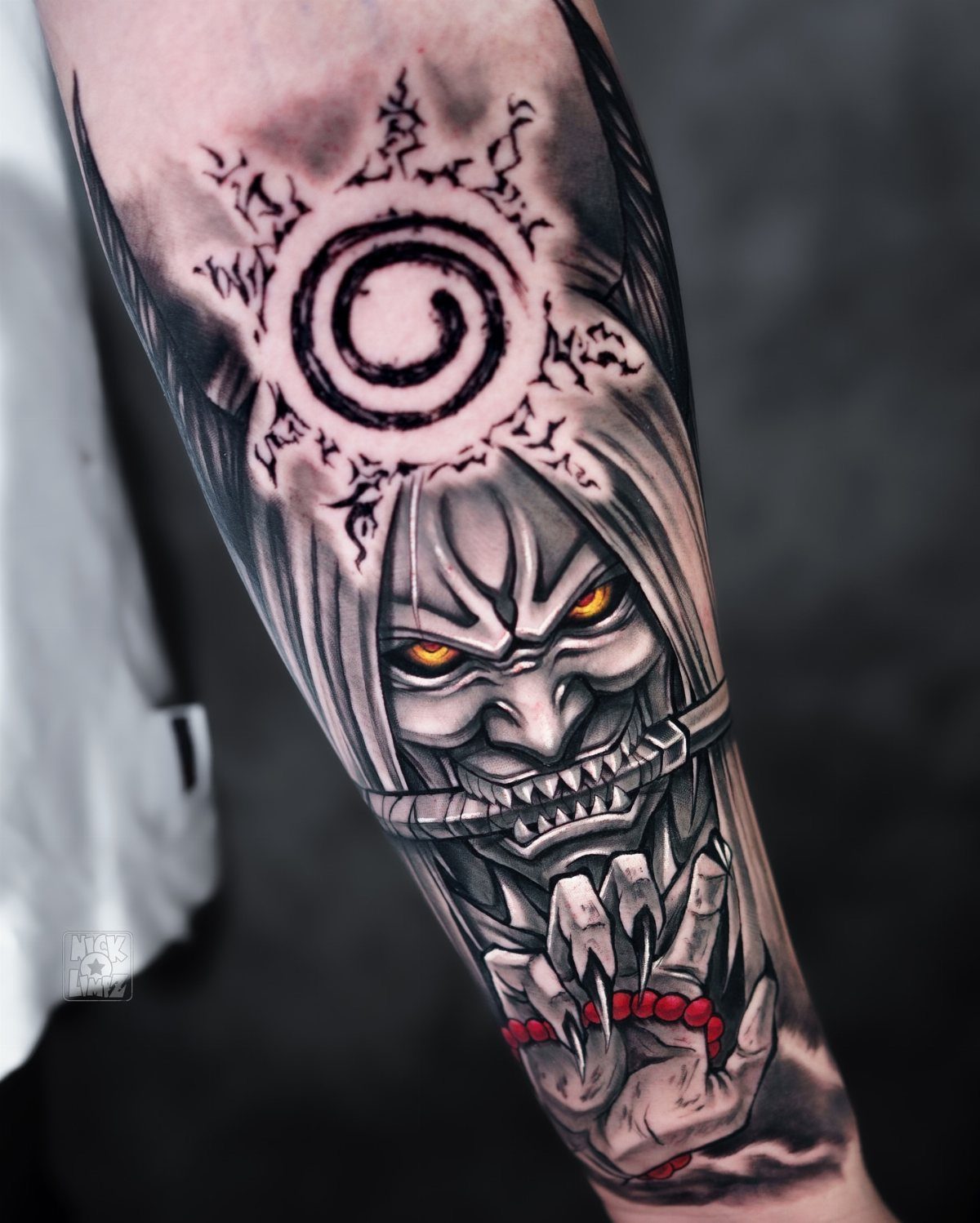
Anime tattoos translate illustrated characters into black and grey realism, and this forearm piece captures glowing eyes and the spiral symbol with shading that gives dimension to a flat drawing.
The style reads clearly to fans of the source material while staying recognizable as portrait work to everyone else.
Forearms offer enough space for a character’s face and key details without crowding. The monochrome palette ages better than full color since there’s no risk of certain pigments fading unevenly.
Bring reference images that show the character from multiple angles so your artist can adapt the flat illustration into a tattoo that wraps naturally around your arm.
9. Botanical Realism Flower Tattoos
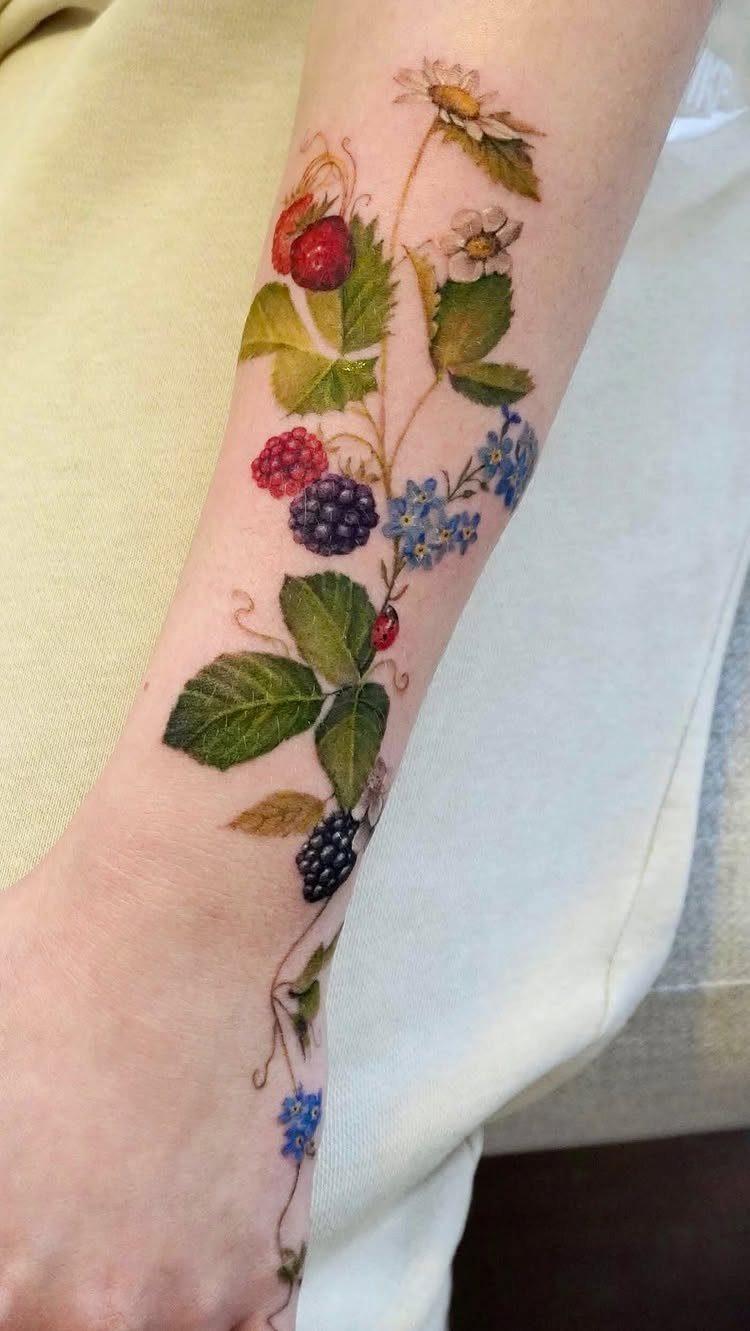
Botanical realism flower tattoos shade berries, leaves and petals to look three-dimensional, and this forearm piece layers raspberries, blueberries and blossoms with green foliage that fills the space between clusters.
Color work like this takes longer per session than black ink alone, but the detail holds up on skin that doesn’t stretch much.
Forearms heal cleanly because fabric rarely rubs the area. Keep the tattoo out of direct sun for the first month, then use sunscreen daily if you want the reds and greens to stay saturated.
Artists who specialize in botanical realism often work from actual plant photos rather than drawings. Expect to pay more per hour for color saturation and fine shading.
10. Patchwork Tattoos
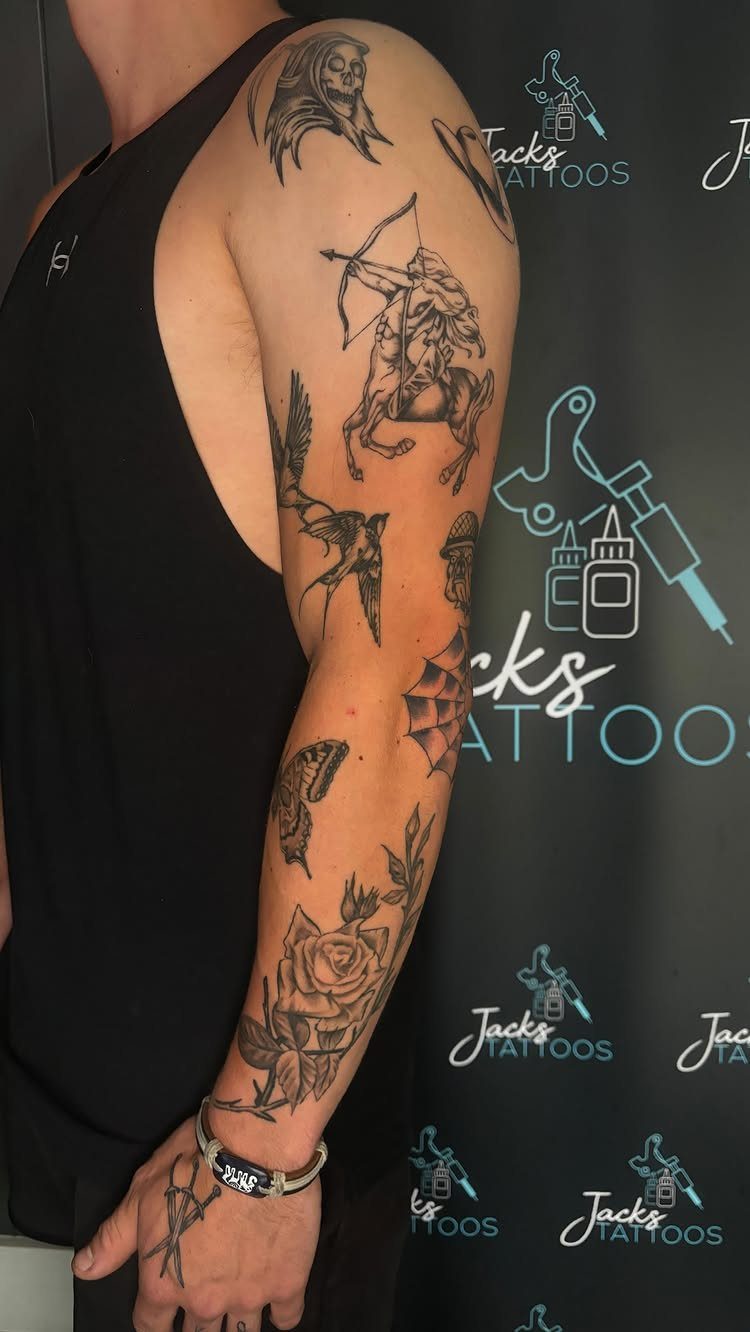
Patchwork tattoos collect individual designs across one area without a connecting background, and this arm shows a grim reaper, a centaur and a rose that sit near each other but don’t touch.
Each piece stands alone, which lets you add more over time without planning the whole layout in advance.
Patchwork suits people who want flexibility: you can fill gaps later or leave negative space between tattoos depending on how much coverage you want.
Start with placements that leave room for future additions. Arms and legs handle patchwork best because the flat surfaces let each design read clearly on its own.
11. Chicano Portrait Tattoos
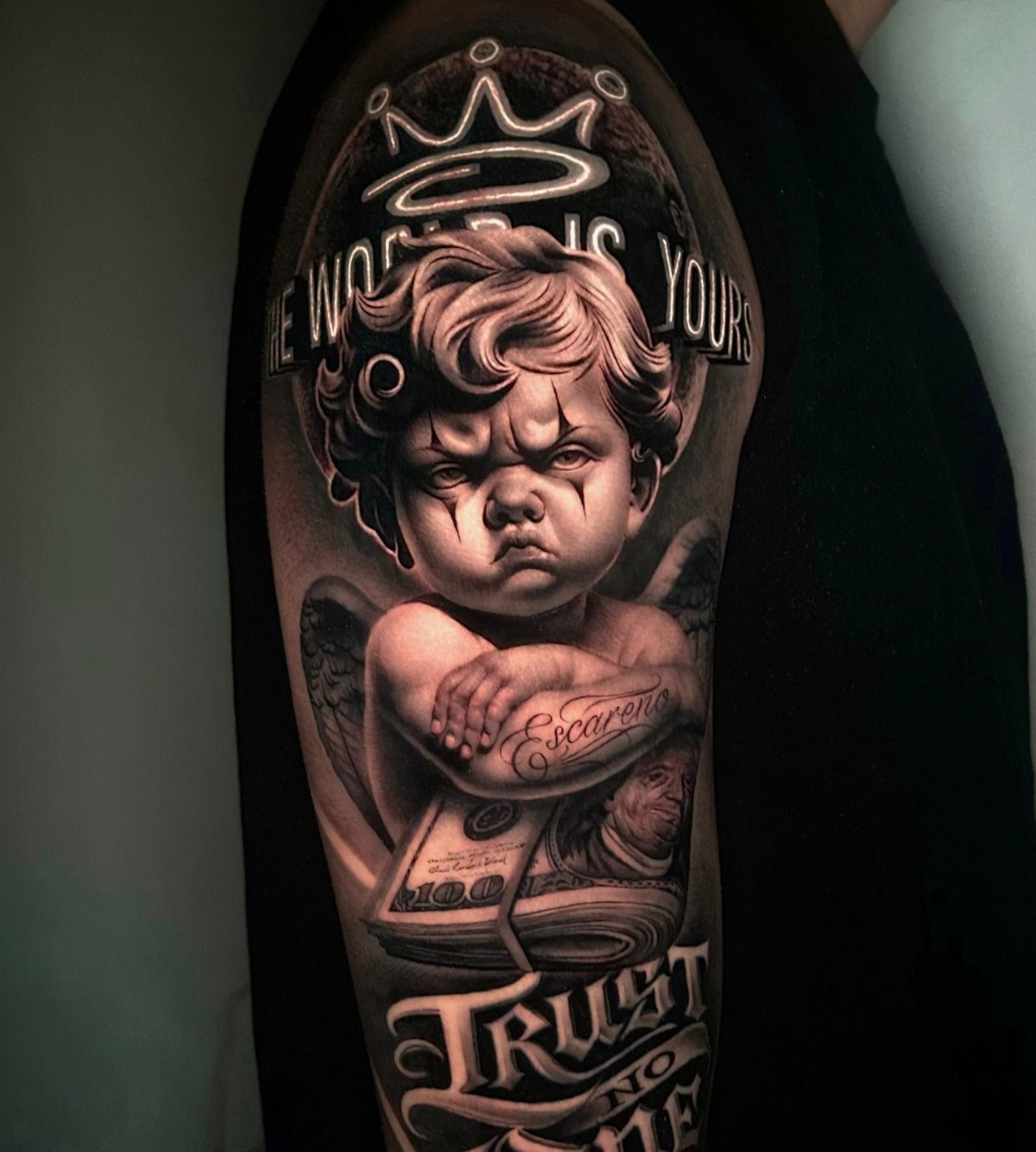
Chicano portrait tattoos use black and grey shading for faces, script and religious or cultural imagery, and this arm piece pairs a cherub with money, a crown and bold lettering.
The style developed in Los Angeles and carries specific visual language: faces with soft shading, ornate script and symbols tied to personal history.
Arms give enough space for detailed portraits and text without compressing the design. The monochrome palette stays sharp longer than color since there’s no pigment fade to manage.
Find an artist who works in Chicano style regularly. The shading technique and composition follow conventions that require practice, and a portfolio full of similar portraits tells you the artist knows the visual grammar.
Choosing the Right Style
Start with where the tattoo will sit on your body.
Lifestyle matters: if your workplace has visibility rules, forearms and hands need more thought than ribs or upper arms. Pain tolerance shifts the map too, since areas with less padding over bone hurt more during application.
Artist selection follows style. A realism specialist works differently than someone trained in traditional Japanese motifs, and switching between styles mid-portfolio is a sign the artist is still finding their focus.
Look for consistency across their posted work, especially in the technique your design requires.
Bring references that show what you want from multiple angles.
A flat illustration needs translation to wrap around an arm or follow a muscle line, and an artist who asks questions about placement and sizing is thinking through how the design will sit on your actual body.
Tattoo Aftercare
Your artist will give you aftercare steps specific to your tattoo’s size and placement. Follow them exactly, since different ink saturation and skin thickness change how healing progresses.
Keep the area clean and apply the moisturizer your artist recommends. Over-moisturizing slows healing just as much as letting the skin dry out, so use a thin layer and reapply only when the tattoo feels tight.
Sun exposure fades ink faster than anything else.
Skip picking at scabs. Pulling one off early takes ink with it, leaving gaps that need a touch-up appointment to fix.
Tattoo Placement
Forearms, upper arms and backs rank as the most common placements because they offer flat working surfaces and heal with minimal fabric friction.
Small designs fit wrists and ankles, but expect faster fading in those spots since the skin moves and rubs constantly.
Pain level changes with placement. Areas closer to bone, like ribs and ankles, hurt more than forearms or outer thighs where there’s muscle and fat between the needle and the skeleton.
Hidden placements inside the forearm, below the ribcage or along the bikini line let you control when the tattoo shows.
These spots suit people testing their tolerance for visible ink or working around dress codes that restrict what customers or colleagues see.
Meaningful tattoos you want private sit well on the chest or ribs, where clothing covers them by default.
Frequently Asked Questions
What are trendy tattoos?
Micro-realism, watercolor, geometric mandalas and neo-traditional designs are pulling searches right now. Micro-realism on fingers and hands especially took off in the last year, layering fine detail into small placements that read clearly up close.
What are cool first tattoos?
Small symbols, initials or single-line designs work well for a first piece because they keep session time short and let you test how your skin takes ink.
Start with a less painful spot like the forearm or outer arm rather than ribs or hands, and pick something that still feels right after a few months of consideration.
What’s the best tattoo to have?
The best tattoo is one that matters to you personally and fits the style you want to wear long-term.
Some people choose family initials, quotes or religious symbols, while others go for bold animals or portraits. A design that holds up through a few months of second-guessing has cleared most of the regret risk.
What’s the most popular animal tattoo?
Lions, wolves and pet portraits pull the most searches, usually done in realism with enough fur detail to read from across a room.
Koi, sea turtles and birds also appear often in Japanese and watercolor styles, layering movement or meaning into the design.