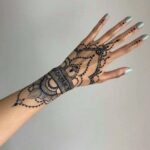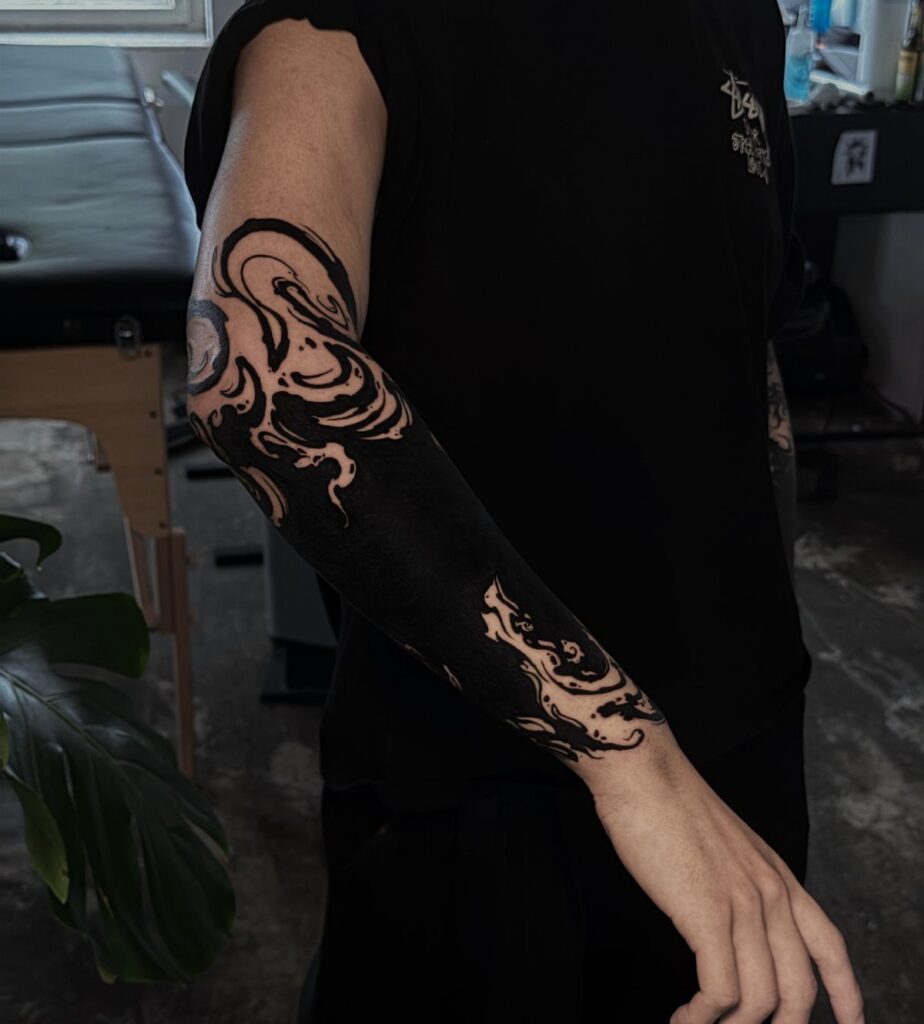
A cover-up stencil shows you exactly where the new tattoo will land before the needle starts, so you can see whether blackwork, florals or freehand outlines actually hide what you want gone.
Freehand marker outlines work when the old piece sits at an odd angle, while purple transfer stencils lock in floral shapes that break up hard edges.
Blackout designs need multiple sessions to build up enough opacity to erase dark ink underneath, and upper arm placement gives you a spot that curves enough to test coverage but stays easy to reach.
The Fixed Tattoos subreddit has more than 30,000 members posting what their cover-ups looked like healed, which matters more than fresh photos when you are planning yours.
1. Bold Blackwork & Solid Blackout
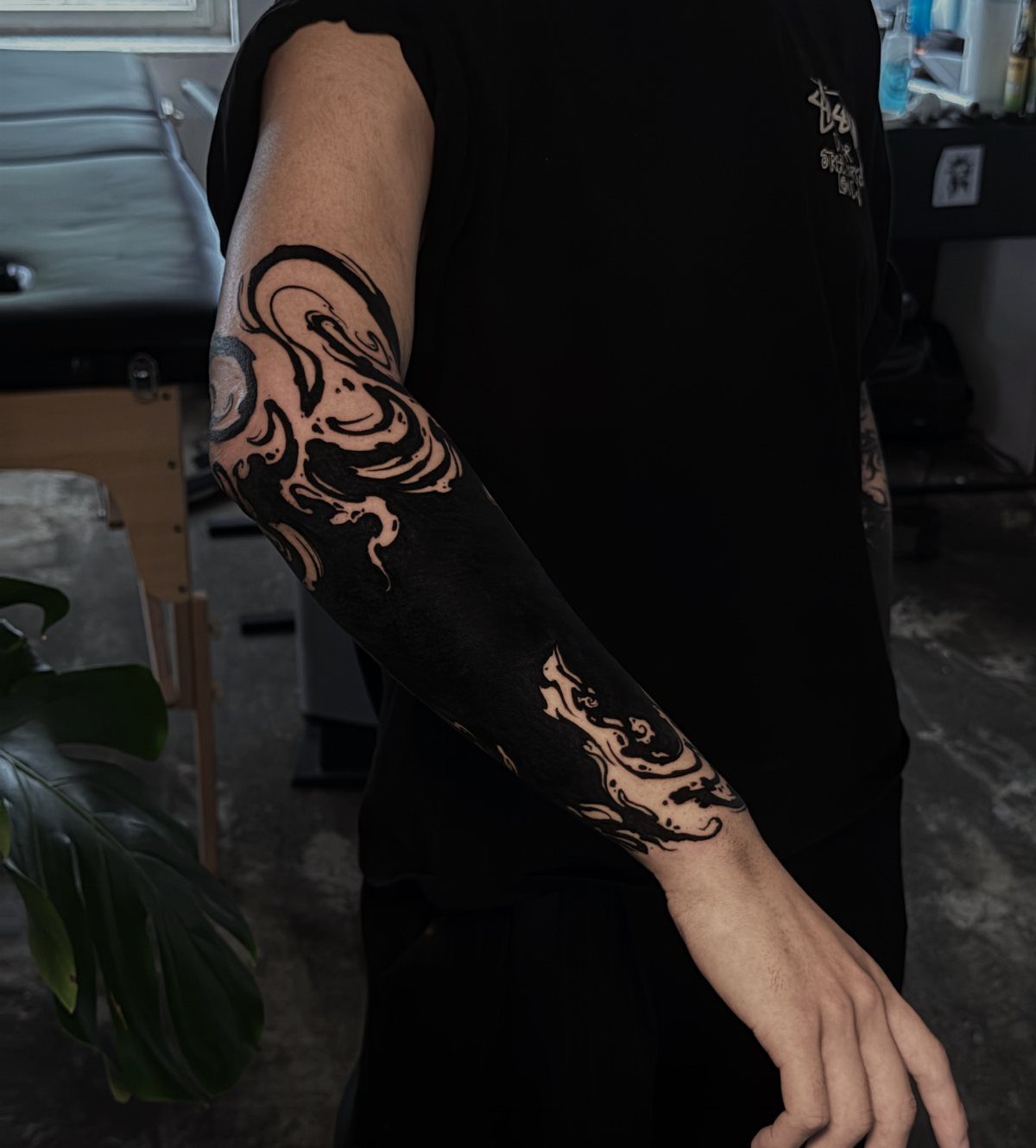
Blackwork uses dense, solid ink to obliterate what is underneath rather than hide it. When the old piece has dark ink or heavy shading, a blackout design gives you coverage that actually holds.
The artist builds up layers of solid black until the original tattoo disappears completely. Swirling patterns, geometric fills and negative space shapes can break up the mass so it reads as a design instead of a mistake.
Blackout takes multiple sessions if the area is large, and touch-ups keep the coverage opaque as it heals. Once it is finished, you have a bold sleeve or panel that owns the space.
2. Freehand Marker Outlines
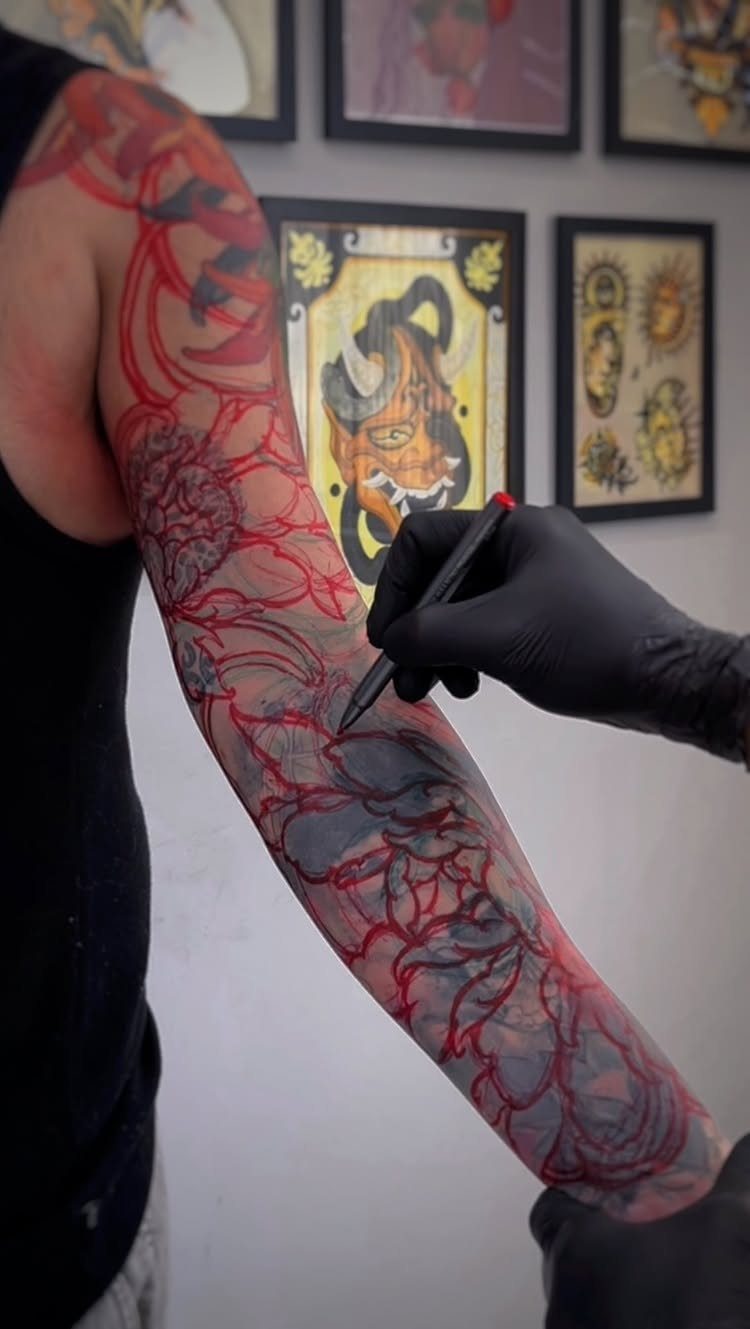
Freehand outlines let the artist draw directly on your skin instead of transferring a rigid stencil. This matters when the old tattoo has an irregular shape or sits at an angle that a paper stencil would not match.
Using a skin-safe marker, the artist sketches the cover-up design over the existing ink, adjusting lines in real time to make sure the new piece hides what needs hiding.
You see the layout before any needle touches you, and changes happen with an alcohol wipe.
This approach works best with artists who are confident drawing on the body. The marker stays visible long enough to finish the tattoo, and any smudging gets redrawn as you go.
3. Floral Cover Up Stencils
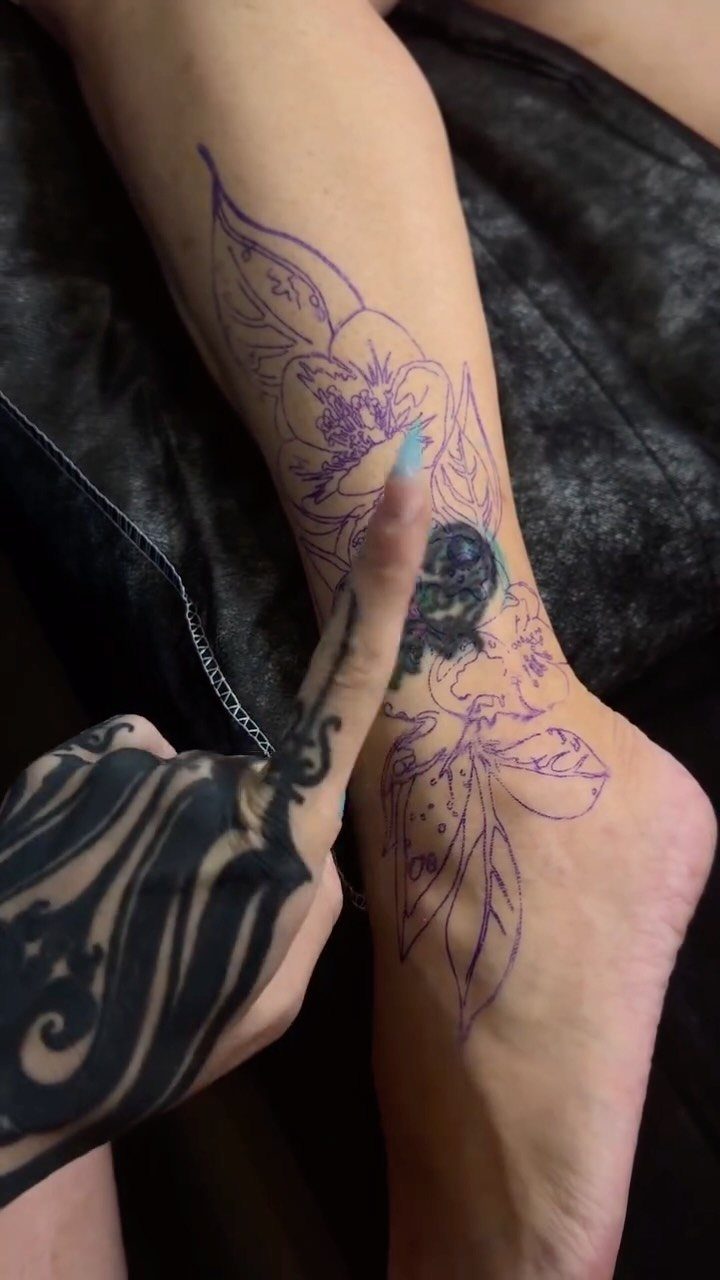
Floral stencils give you organic shapes that naturally obscure hard edges and scattered ink. Petals, leaves and stems spread in different directions, so the old tattoo gets broken up instead of outlined.
A purple transfer stencil shows exactly where each element lands before the tattooing starts. The artist positions blooms over the darkest parts and uses foliage to soften whatever is left.
Florals scale well, so a small regret becomes a single rose and a larger piece turns into a climbing vine or bouquet. The new design reads cleanly from a distance, and the old ink blends into shadow detail.
4. Upper Arm Stencil Placement
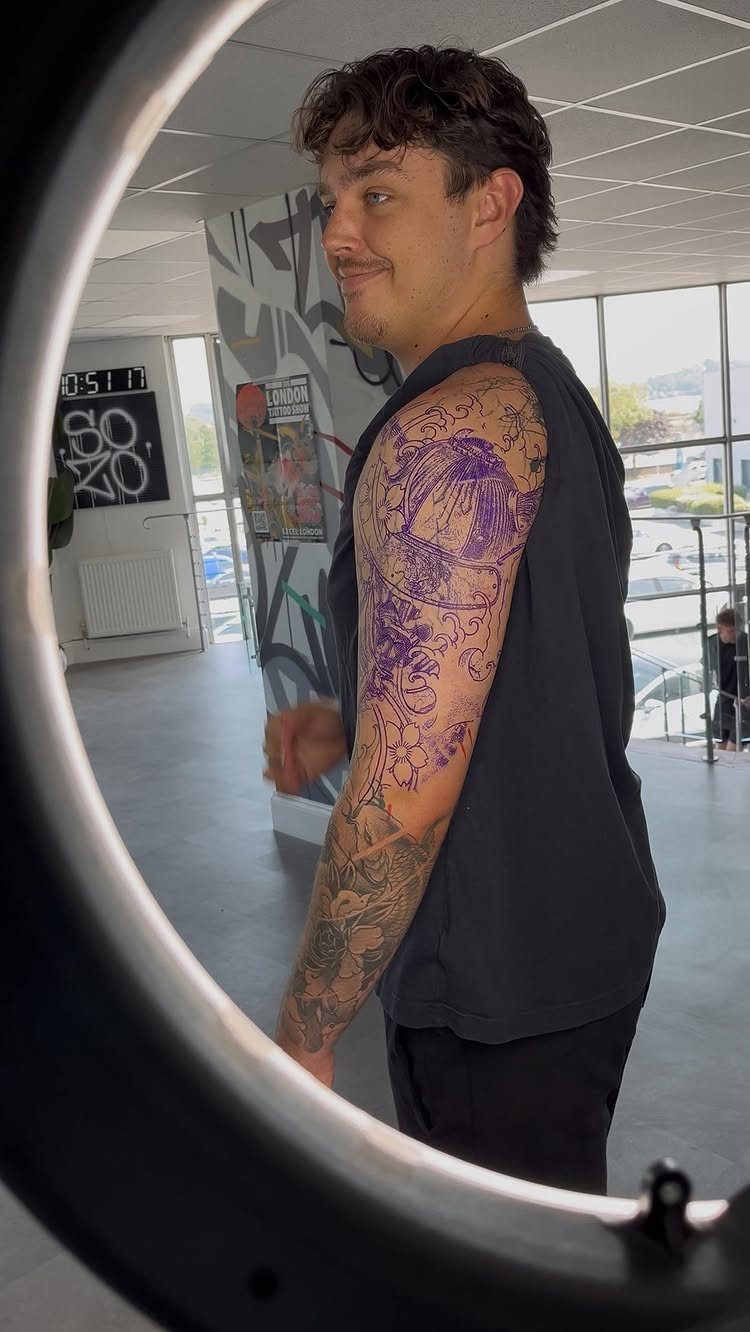
Stencil placement on the upper arm lets you preview how a cover-up will sit over curved muscle and how much of the old tattoo will show through.
The purple transfer ink marks the outline, and you check it in a mirror before committing.
Upper arm coverage works when the original piece is faded or small enough that a larger design can surround it. The stencil shows whether the new art needs to stretch toward the shoulder or wrap around to the inner arm.
If the old tattoo sits too dark or too low, the artist adjusts the stencil or suggests a different spot. This step catches alignment problems while they are still fixable.
Advice on Tattoo Cover-Ups
A consultation gives the artist a chance to see how the old ink sits in your skin now, not how it looked the day you got it.
Faded color, blurred lines and uneven healing all change what a cover-up design needs to do.
Older tattoos tend to cover more easily than fresh ones because the ink has lightened and spread. If the piece is still dark or densely packed, laser fading before the cover-up can open up more design options.
Skin condition matters just as much. Scarring, stretching or previous blowouts limit how much detail the new tattoo can hold.
The artist maps out where the heaviest ink sits and plans around it, so the stencil placement accounts for what is already there instead of pretending it will disappear.
Cost and Commitment
Cover-ups cost more than the original tattoo because the artist is solving a problem, not just applying a design.
The new piece has to be larger, darker or more detailed to hide what is underneath, and that means more hours in the chair.
A single session might finish a small cover-up if the old tattoo is light and the new design is bold. Larger pieces or stubborn ink need multiple appointments to build up coverage and let the skin heal between layers.
Budgeting for a cover-up means planning for the full process, not just the first pass. Quality work takes time, and trying to finish too fast usually leaves the old tattoo visible through thin spots.
Community Support for Cover-Ups
The Fixed Tattoos subreddit launched in March 2018 and has built a community of more than 30,000 people posting their cover-up transformations.
The group posts both full cover-ups and corrections where an artist reworks the original design instead of burying it under something new.
Scrolling through the archive gives you a realistic sense of what different cover-up strategies look like healed, not just fresh.
Comments offer suggestions on design direction, artist recommendations and whether a piece needs laser prep before the new ink goes in.
The community is useful when you know something is wrong with your tattoo but cannot figure out what would fix it. Seeing how other people handled similar problems makes the options clearer.
Frequently Asked Questions
How to get a stencil off after a tattoo?
The purple transfer stencil wipes away with soap and water once the session is done.
Any residue left around the fresh ink comes off during the first gentle wash when you get home. The stencil ink sits on top of the skin and does not interfere with healing.
Is it cheaper to cover or remove a tattoo?
You’ll pay more for a cover-up than you did for the original piece, since the artist is layering fresh ink over old pigment and usually needs a bigger, bolder design to hide what’s already there.
Full laser removal runs through multiple appointments and adds up quickly, so covering is usually the faster and less expensive route if a good design will hide what is there.