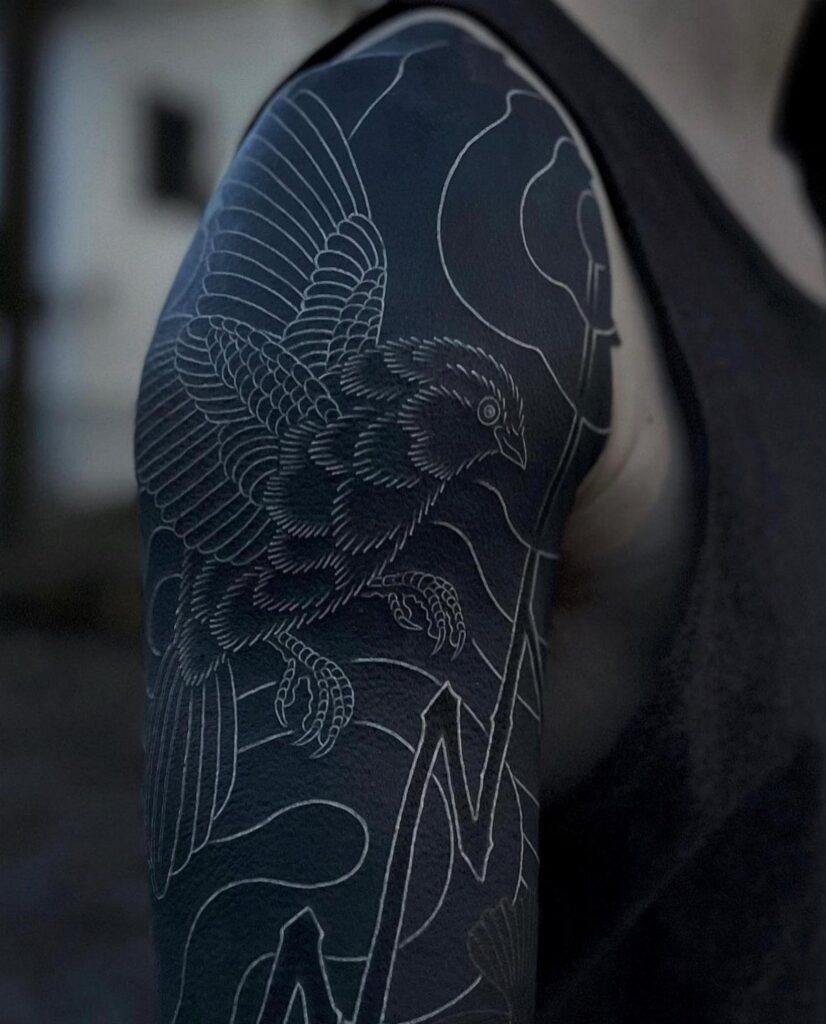
Black ink gives you the strongest contrast available on skin and the longest lifespan of any pigment, which is why it anchors everything from solid tribal bands to full blackout coverage.
Your choice comes down to how much coverage you want and how visible you need the design to be: a minimalist serif quote on the upper back stays private until you show it, while a chest piece extending up the neck sits above most necklines.
1. Blackwork Tattoo
Blackwork is any design built entirely from solid black ink, no color and no shading. That gives you the strongest contrast you can get on skin, which is part of the reason these hold up so well over time.
The style covers everything from bold geometric shapes to detailed illustrative work. What they share is that single, heavy pigment load, which reads clearly at a distance and stays sharp longer than work that depends on fine gray wash.
Blackwork holds its definition better than most styles as it ages.
A blackwork coverup is a great way to go about this because you can completely conceal the existing piece and if done properly, the end result is totally badass.
2. Geometric Blackwork Tattoos
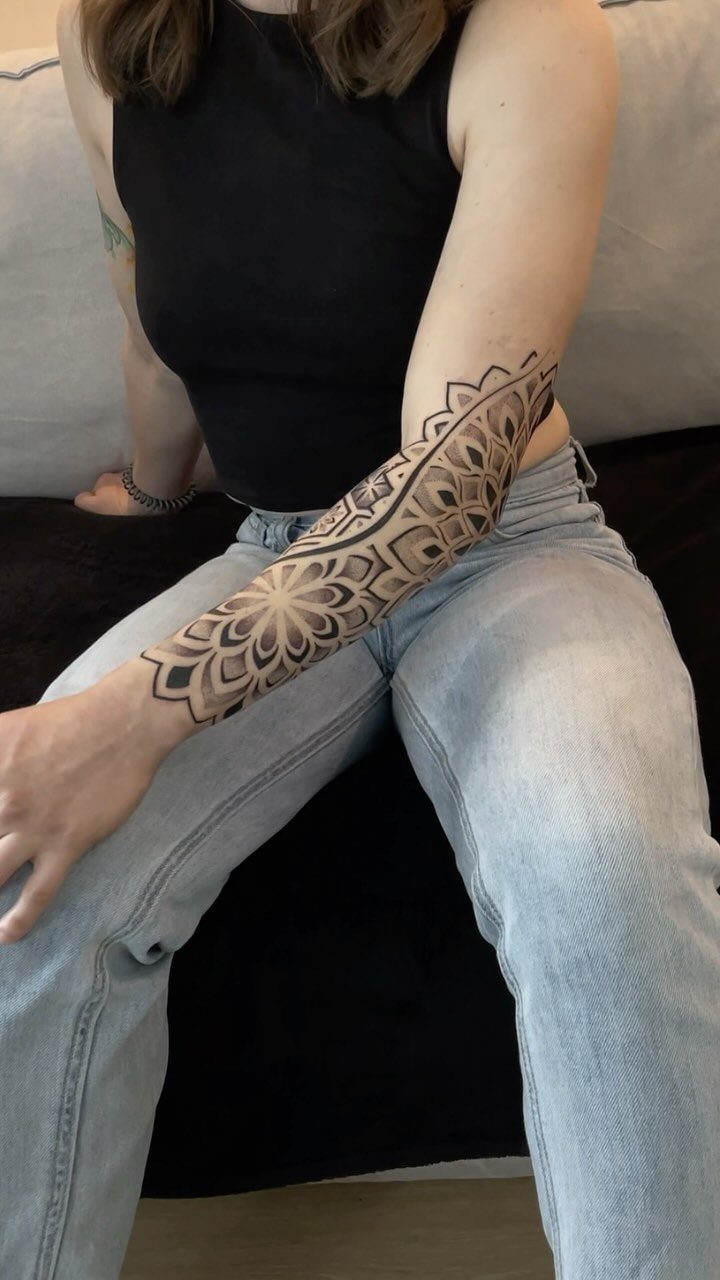
Geometric blackwork builds its design from repeated shapes: mandalas, hexagons, interlocking triangles, dotwork grids.
The precision is the point. A stencil gets the symmetry right, and the artist works section by section to keep lines clean and angles consistent.
Placement matters more here than in loose illustrative work. A mandala centered on the forearm or knee reads as intentional; off-center by half an inch and it looks like a mistake.
Expect longer sessions. Filling solid black areas goes faster than you think, but geometric work requires frequent breaks to check alignment.
3. Tribal Blackwork
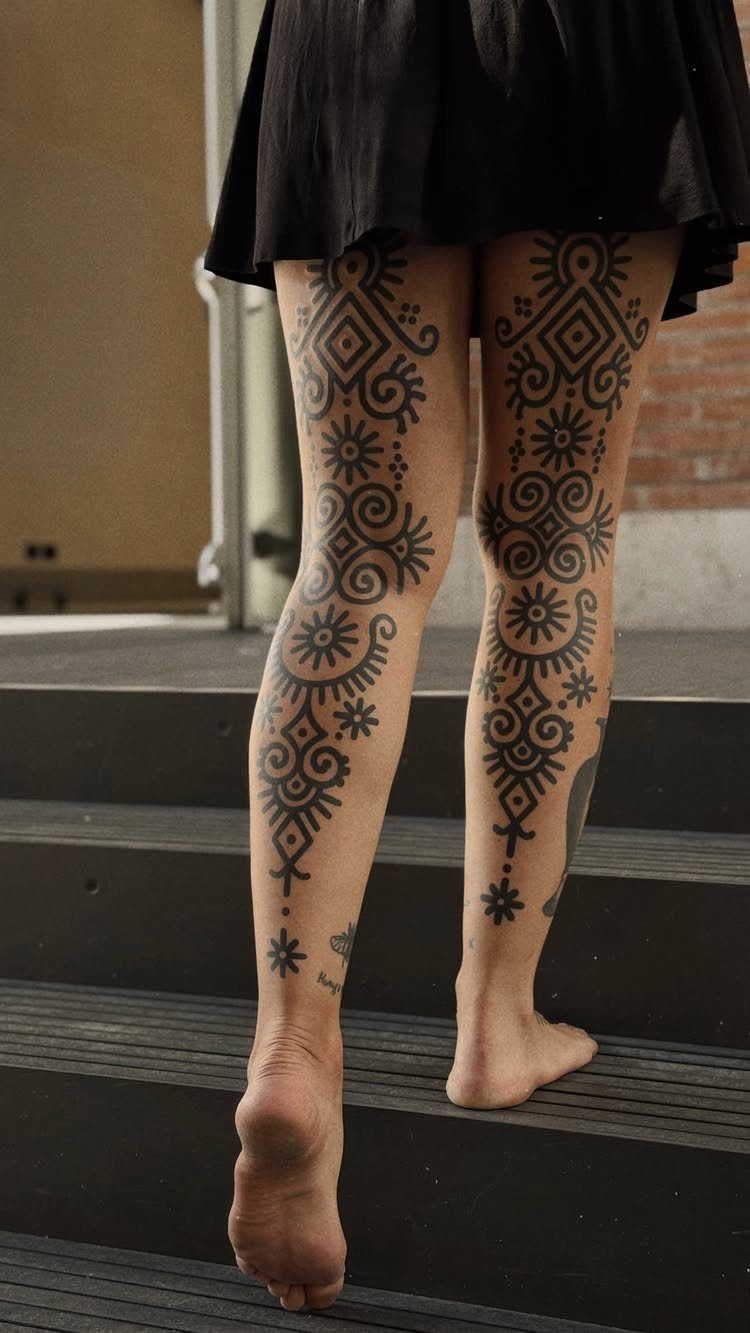
Tribal designs carry visual languages from Polynesian, Maori, and other indigenous cultures. The designs are built from bold black shapes: curves, points, bands that flow with the muscle underneath.
Modern versions sometimes borrow the look without the cultural context, which is fine if that is what you want, but worth knowing. Traditional tribal tattooing had specific meanings tied to lineage, status, and life events.
These age well because there is no fine detail to blur out. Thick lines stay readable, and the high contrast between black ink and skin does not fade the way gray wash does.
4. Blackwork Sleeve Tattoos
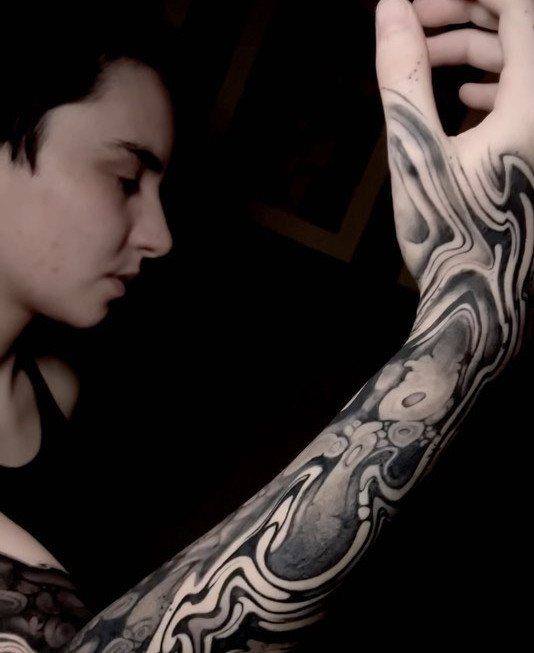
Plan on multiple sessions.
Solid fill takes longer than linework, so expect multiple sessions for a full sleeve. Solid black sections require more ink saturation than shaded work, so plan for heavy peeling during the first week.
Cost runs higher than a single piece because of the hours involved, but you get a design that reads as one continuous idea rather than a collection of smaller tattoos.
5. Forearm Blackwork Tattoos
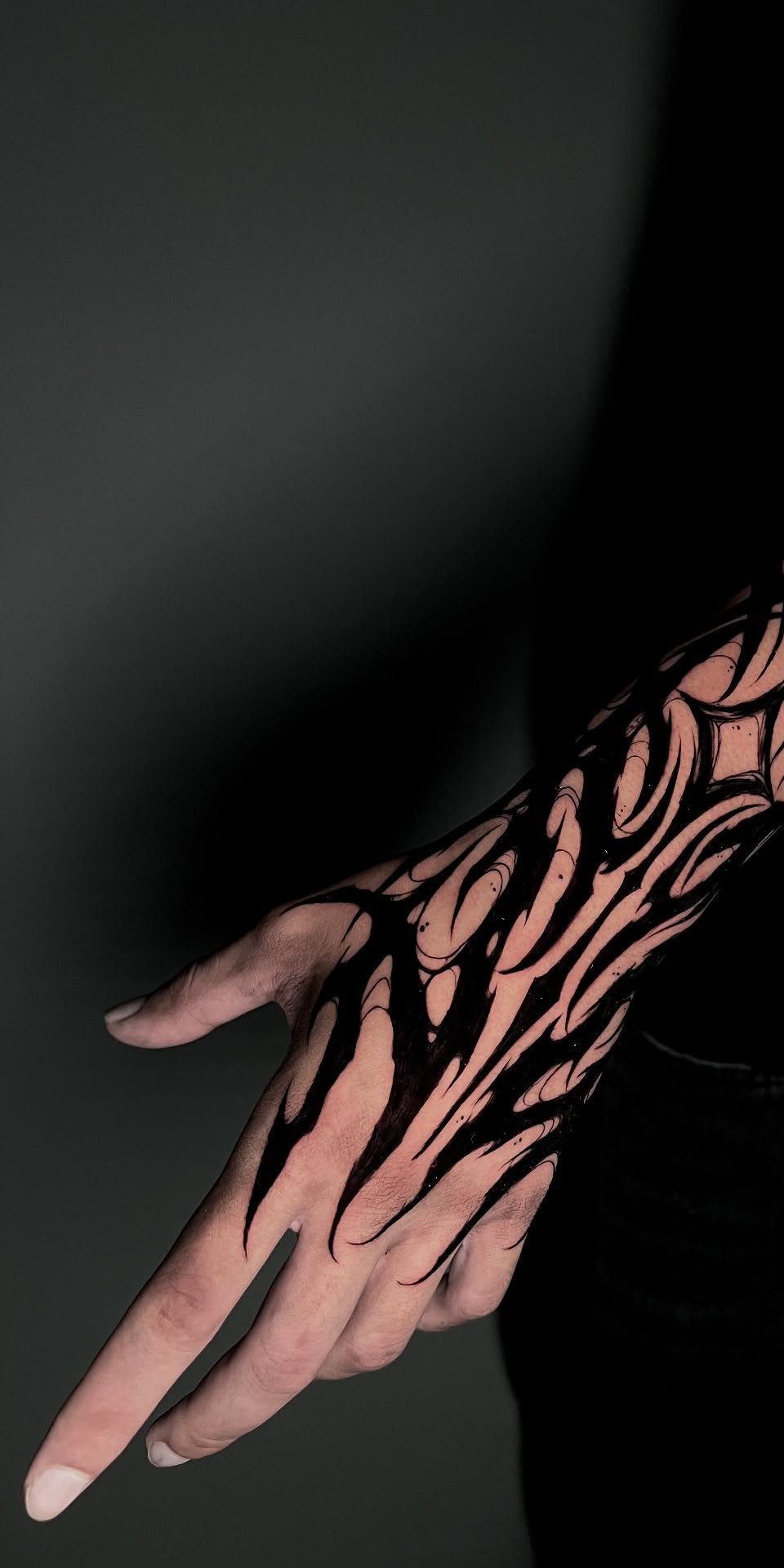
The forearm is one of the most visible spots you can choose, which makes it a good match for bold blackwork that you want people to see.
The flat surface gives the artist room to work without fighting contours, and healing is straightforward because the area does not flex much.
Organic shapes like the ones in this piece follow the natural taper of the arm, which keeps the design from looking stiff.
If you are going for something abstract, let the flow move with the muscle rather than sitting square to it.
Pain is moderate. The inner forearm has more nerve endings than the outer side, but nothing close to ribs or feet.
6. Illustrative Blackwork Tattoos
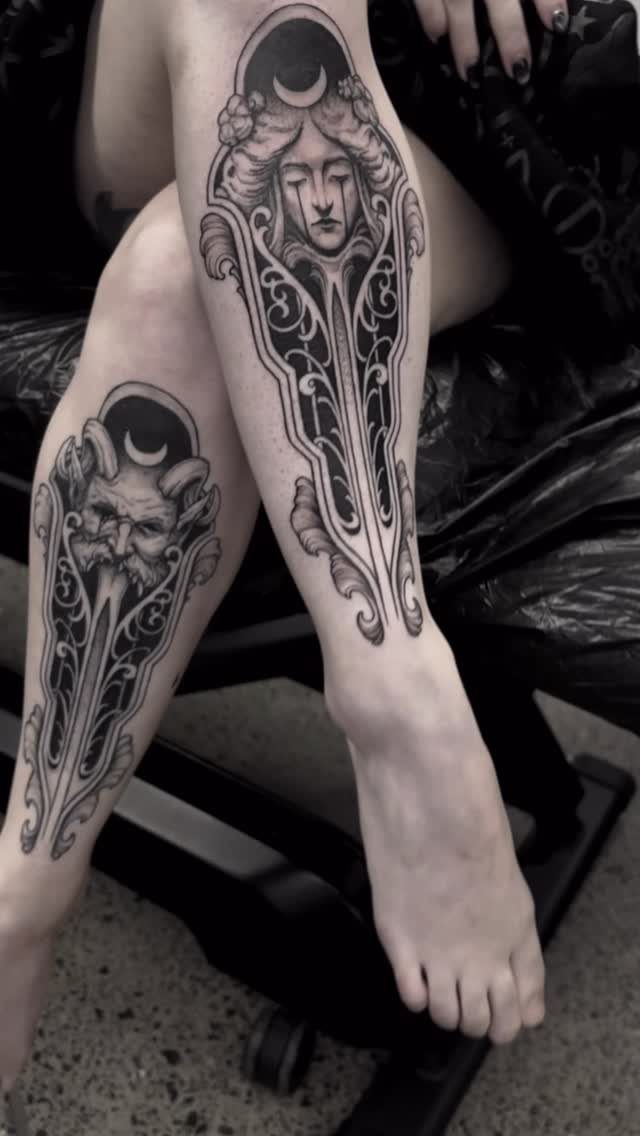
Illustrative blackwork mimics the line quality and detail of a pen-and-ink drawing: faces, figures, architectural elements, often framed with decorative borders or botanical motifs.
The artist builds the design through linework and solid fills rather than shading, which keeps it readable at any size.
Detail this fine requires a steady hand and a patient client. Sessions run longer because the artist is working with single-needle precision in some areas and bold fills in others, and any wobble in a facial feature shows immediately.
These age better than you would expect. Black lines blur slightly over time, but illustrative work has enough weight to stay legible where photorealism would soften out.
7. Blackwork Floral Tattoos
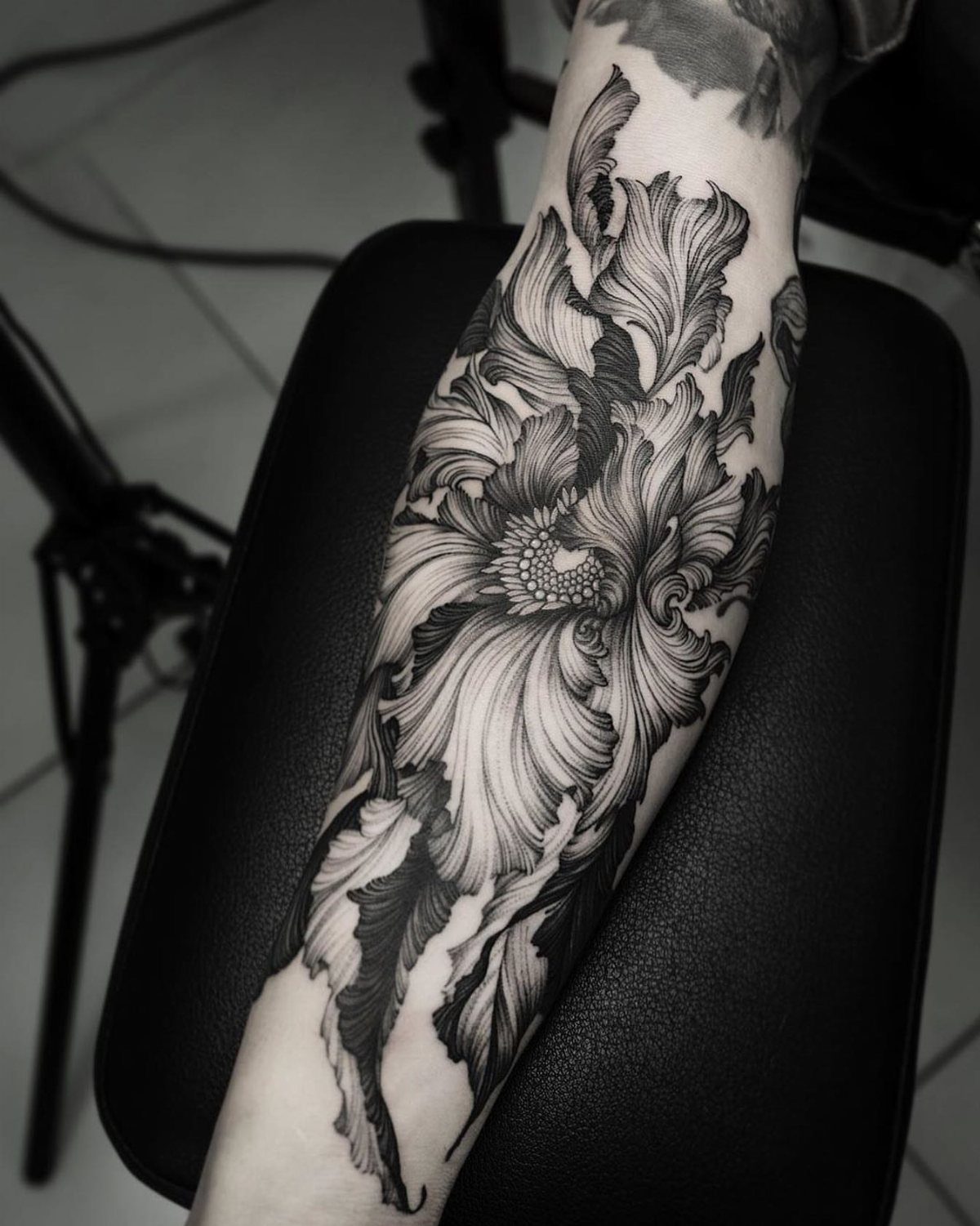
Floral blackwork strips out the soft gradients and focuses on shape: petals as bold fills, stems as clean lines, leaves built from negative space. The result reads more like a woodcut than a botanical drawing.
Flowers with strong silhouettes work best.
Roses, peonies, and dahlias hold their form in solid black where something delicate like baby’s breath would disappear. The artist uses line weight to separate overlapping petals, so detail comes from structure rather than shading.
These age cleanly. Black holds its edge, and floral shapes stay recognizable even as lines soften over time.
8. Blackwork Animal Tattoos
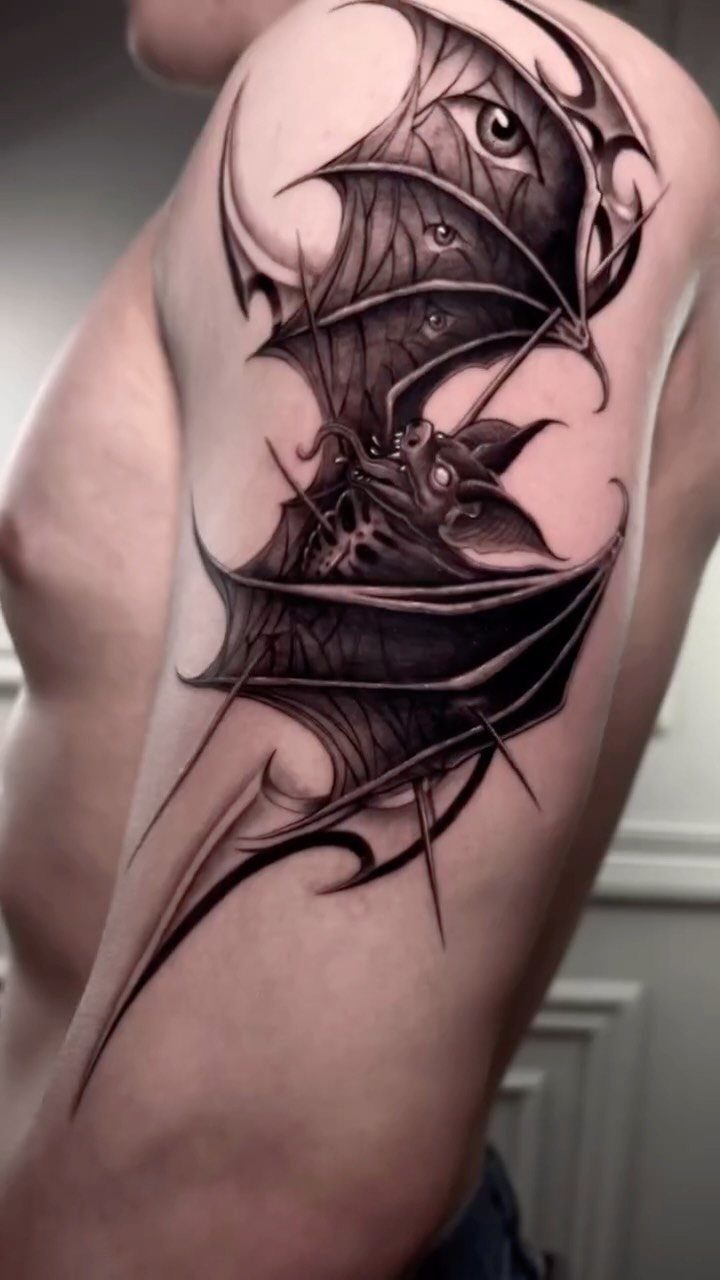
Animals in blackwork rely on silhouette and line quality to carry the form.
A bat like this one uses solid fills for the body and wings broken into sections, with linework defining the joints and membrane. The eye becomes a focal point because it is the only area with internal detail.
Choose an animal with a strong outline.
Predators, birds, and insects translate well because their shapes are already bold. Anything with subtle texture, like fur or feathers, needs careful planning so the detail does not blur into a solid mass.
Placement follows the animal’s natural movement. Bats work particularly well on curved placement like the shoulder or upper arm where the wings follow the natural contour.
9. Blackwork Portrait Tattoos
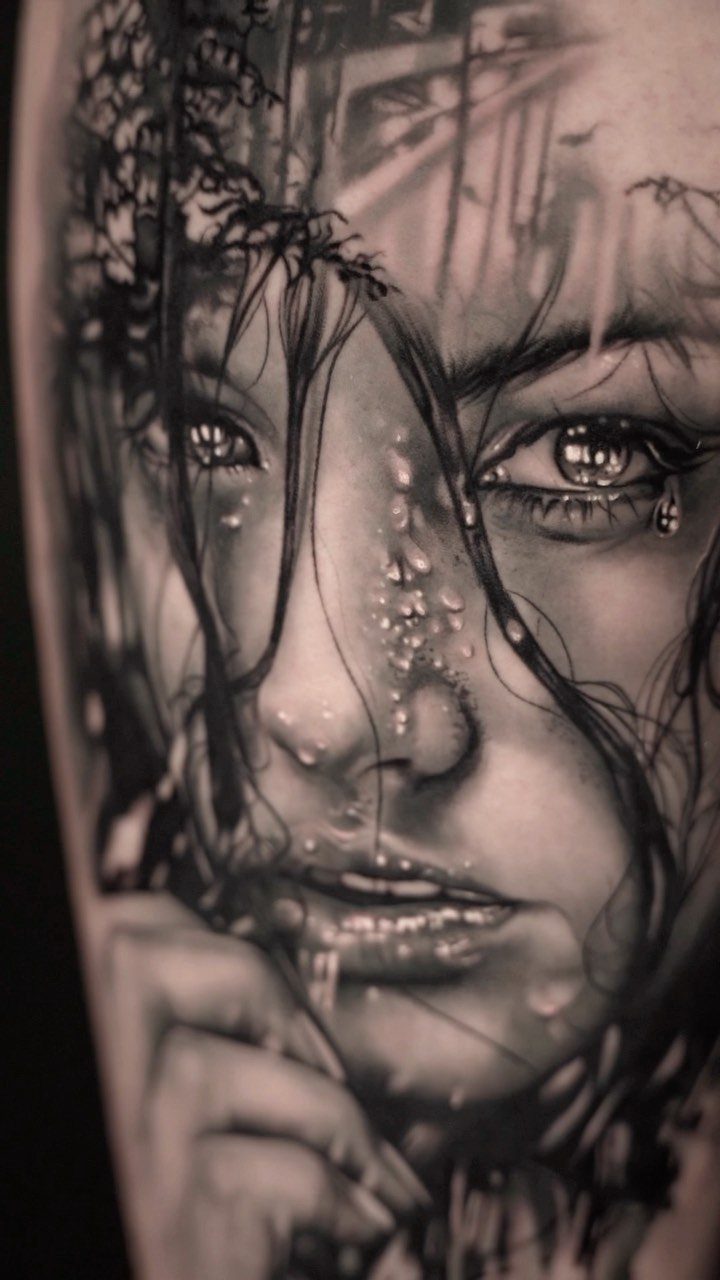
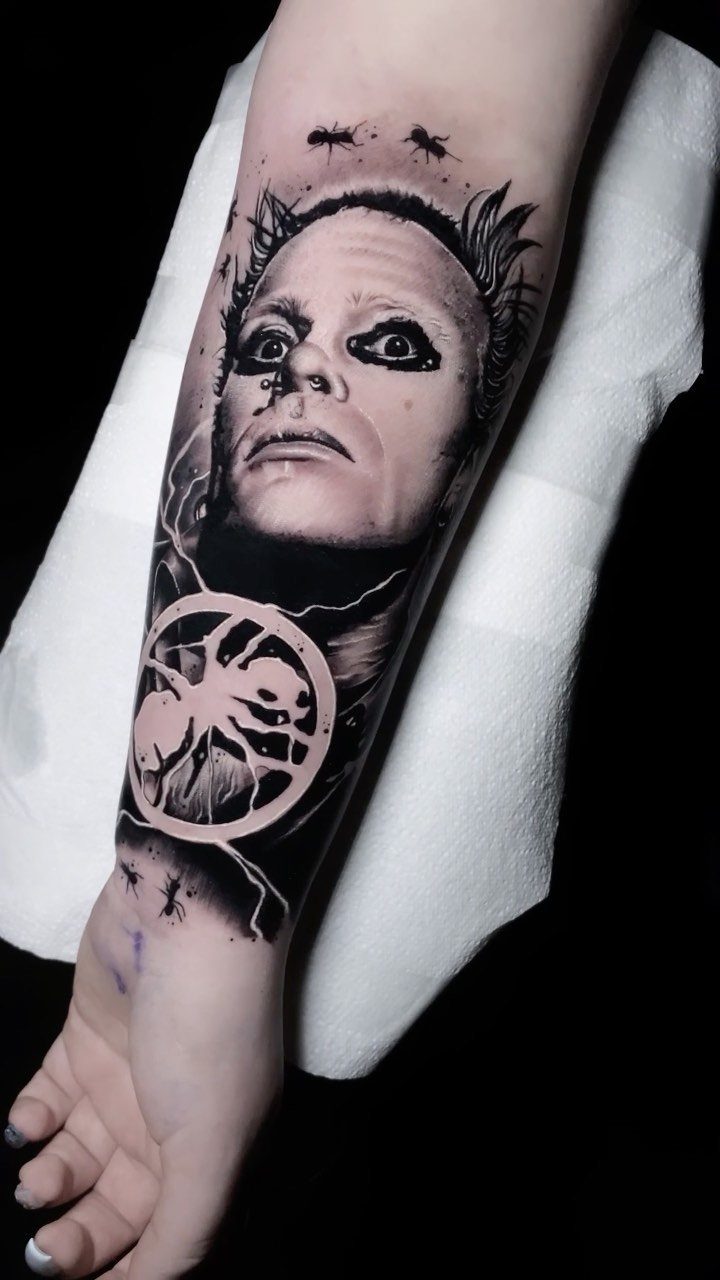
Portrait work in black ink depends on contrast to build the face: solid blacks for hair and shadow, clean skin left bare, and fine linework for features.
Water droplets like these add dimension without color, but they require precision because any wobble in a highlight shows immediately.
Realism portraits take longer than illustrative work. The artist is matching proportions and working with tight detail, so expect multiple sessions for anything larger than a palm.
These demand an experienced artist. A portrait that is off by a millimeter reads as wrong, and black ink leaves no room to soften mistakes with shading.
10. Blackout Tattoos
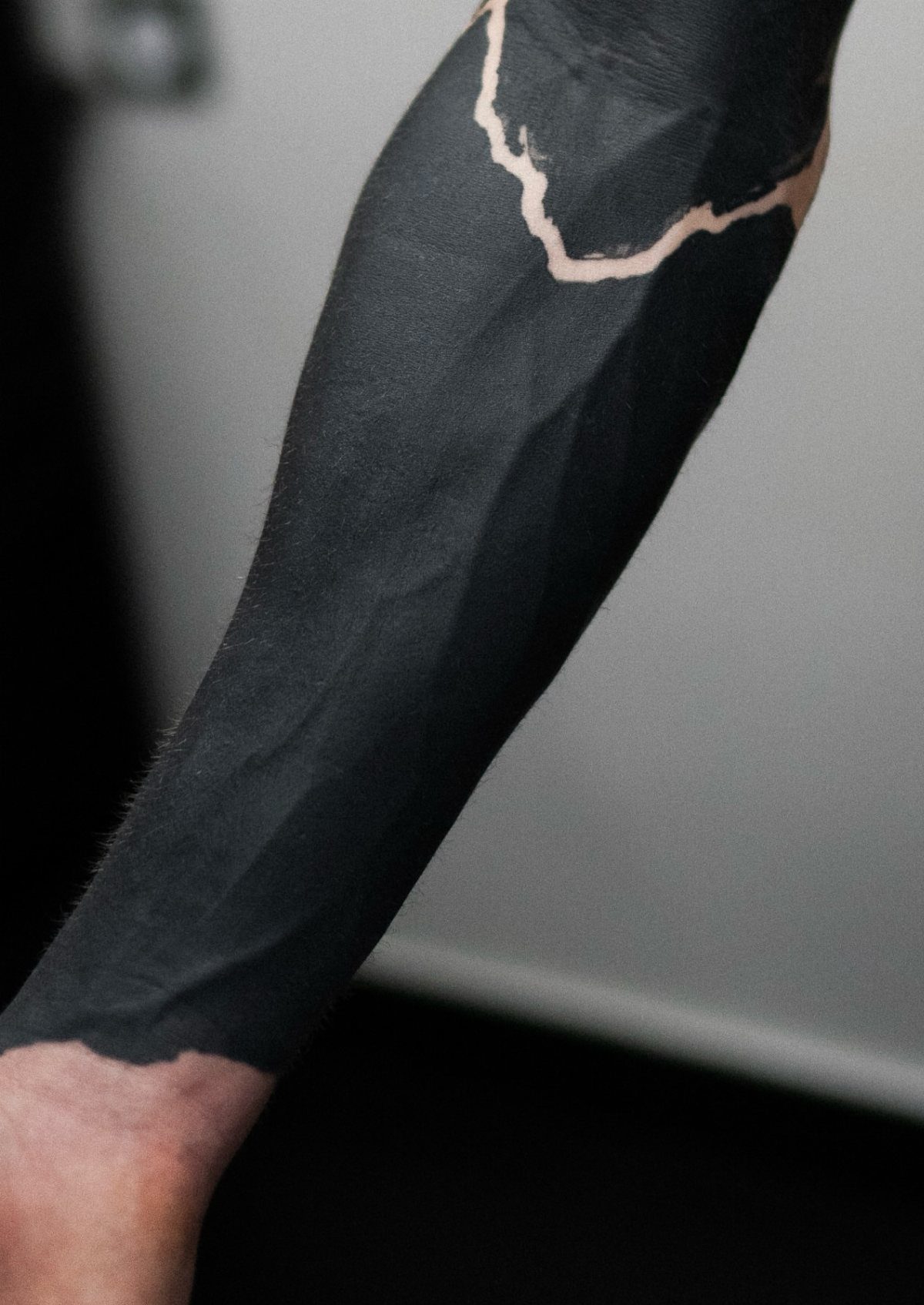
Blackout tattoos cover entire sections of skin in solid black ink, sometimes leaving deliberate gaps or patterns cut through the fill.
The jagged opening in this piece turns the negative space into part of the design rather than just an edge.
Sessions are long and painful.
Solid saturation requires multiple passes, and the artist has to work in sections to avoid overworking the skin. Healing takes longer than linework because the ink load is heavier, and expect thick scabbing.
Some people use blackout work to cover old tattoos they no longer want. It is permanent and bold, so commit before you start.
11. Black Ink Chest Piece
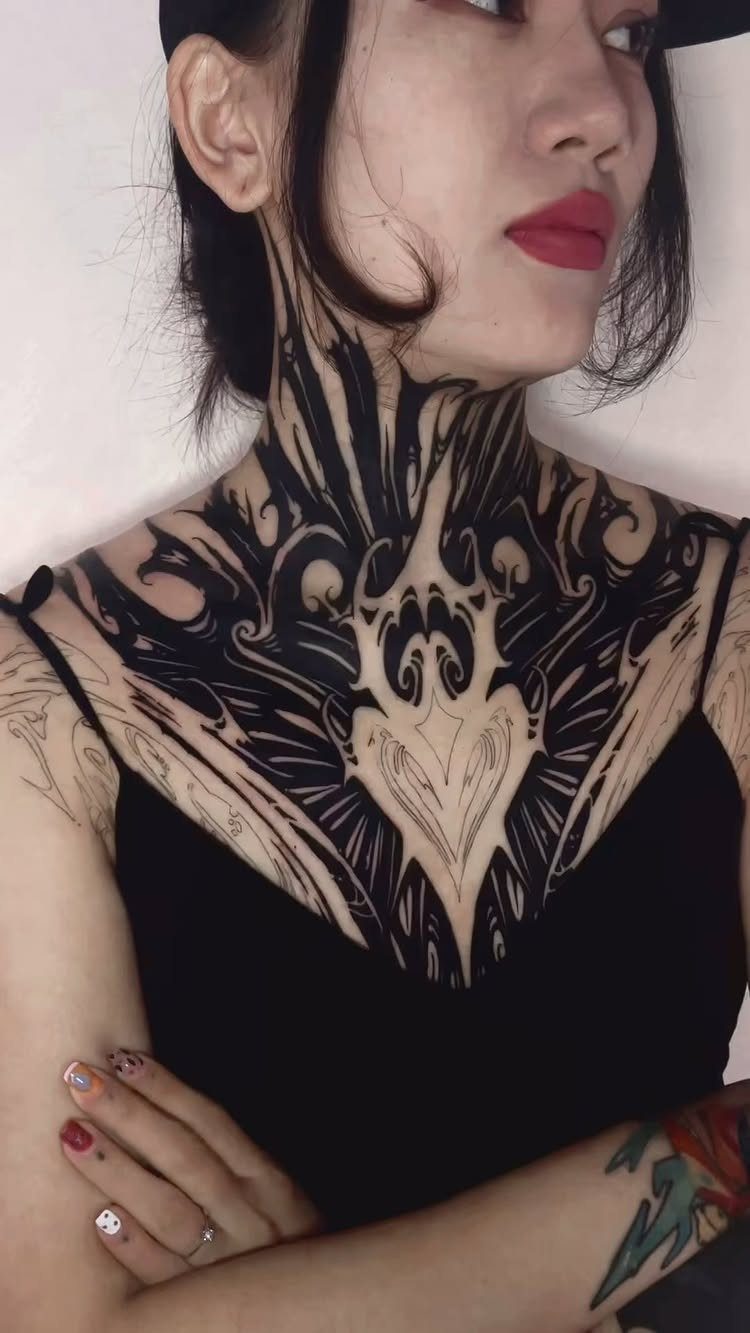
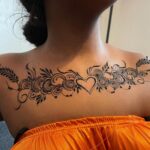
A chest piece that extends up the neck demands symmetry. The design in this piece mirrors cleanly down the center, which keeps it balanced even as it wraps across the collarbone and up to the jawline.
Pain is high.
The sternum, collarbones, and throat are all sensitive areas, and the neck has almost no padding. Expect to book several appointments for a chest piece this size, since most artists won’t finish it in one sitting.
Visibility matters here.
A chest and neck tattoo sits above the neckline of most clothing, so this is a choice that stays visible in professional settings. If that is a concern, stop the design below the collarbone.
12. Black Ink Hand Tattoo
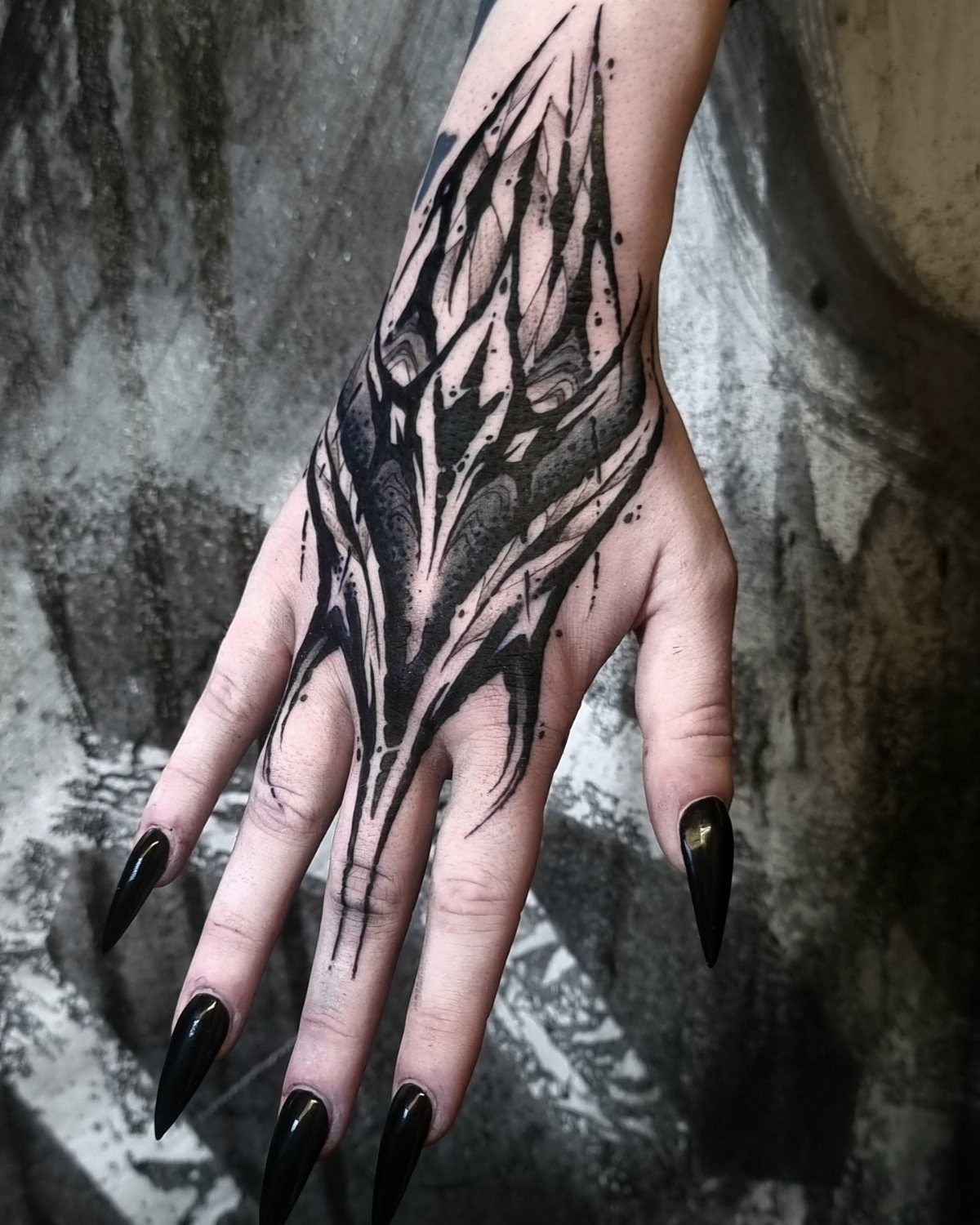
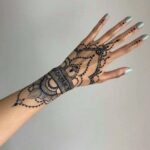
Hand tattoos are visible in nearly every situation, which makes them a strong choice for bold blackwork that you want seen.
The design wraps across the top of the hand and wrist, following the bones and tendons underneath rather than sitting flat.
Pain is sharp.
Hands have thin skin and a lot of nerve endings, and the needle passes close to bone. Sessions are usually shorter because the area is small and sensitive.
Fading happens faster on hands than on most placements. Constant movement and sun exposure wear the ink down, so expect touch-ups every few years to keep the black solid.
13. Minimalist Black Lettering Tattoo
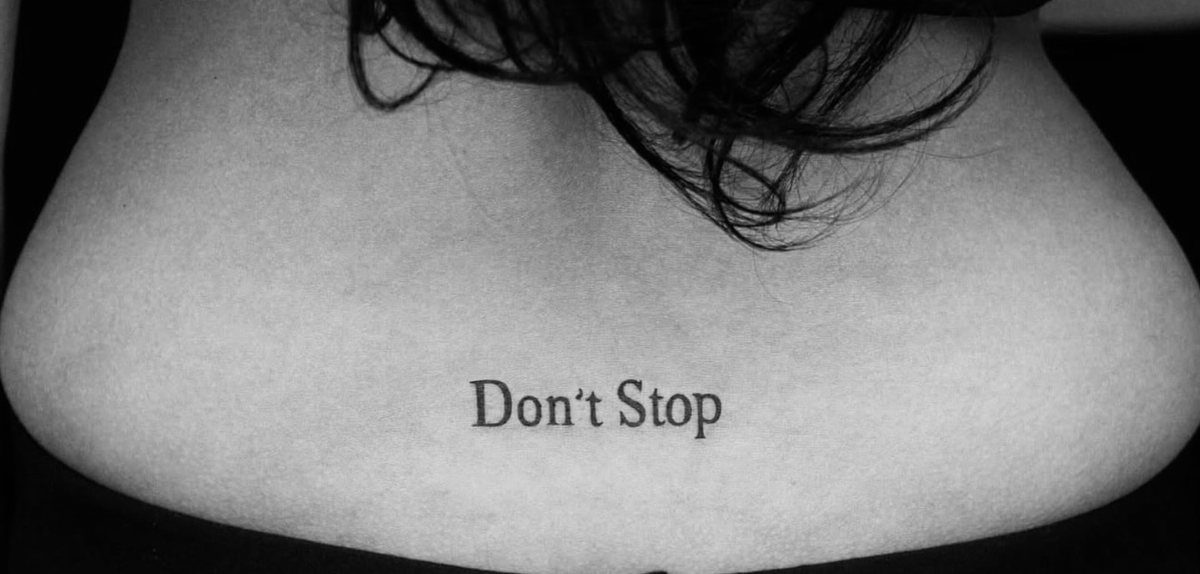
A short quote in clean serif font sits high on the upper back, just below the neck. The placement keeps it private until you want it seen, and the serif gives it more weight than script would.
Keep it short.
Longer phrases need more space, and the upper back curves enough that a full sentence can start to distort at the edges. Two or three words stay centered and balanced.
Pain is low. The upper back has good padding and fewer nerve endings than most placements, so this is one of the easier spots to sit through.
Black serif holds up well over time because the letters have enough structure to stay readable even as the ink softens slightly.
How Long Black Ink Tattoos Last
Black ink outlasts every other pigment. The carbon particles are larger and more stable than the compounds used for color, so they resist breakdown from UV exposure and the body’s immune response.
That advantage holds only if the tattoo heals correctly. Picking scabs pulls pigment out before it settles, and skipping sunscreen lets UV degrade the ink faster than anything else.
High-contact areas fade faster regardless of care.
Hands, fingers, and the sides of feet rub against fabric and surfaces constantly, which wears the top layer of skin down and takes ink with it. Touch-ups every 2–3 years keep those placements solid.
Apply SPF 50 to any visible tattoo before going outside.
Reapply every 2 hours if you are in direct sun. That single habit does more to preserve black ink than any aftercare product.