Hand tattoos cover differently than most other placements, which means your best option depends on how dark you’re willing to go and how much detail you want to keep.
Blackwork saturates the entire area with solid black ink and hides almost anything underneath, while realistic skulls use grey shading and strategic shadows to cover without total blackout.
1. Blackwork Tattoo Cover Up
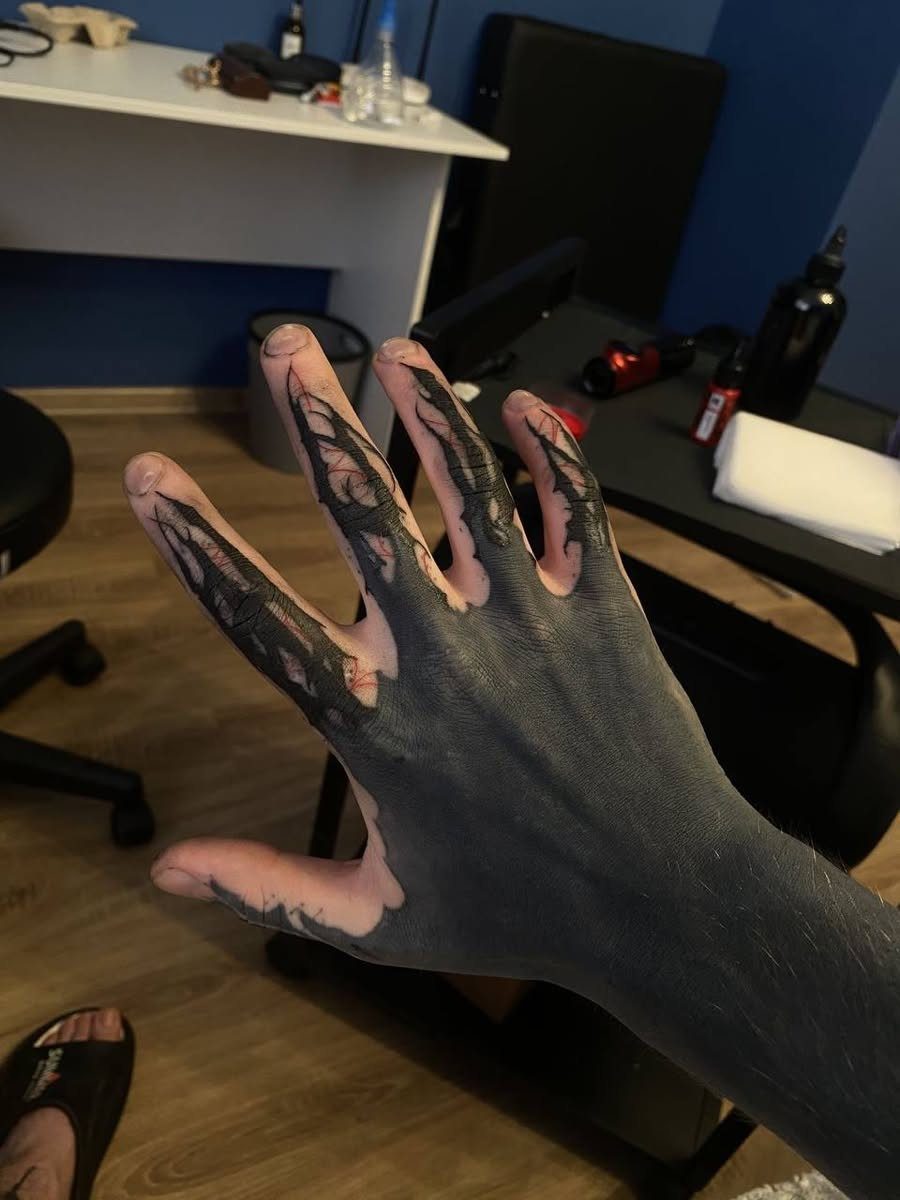
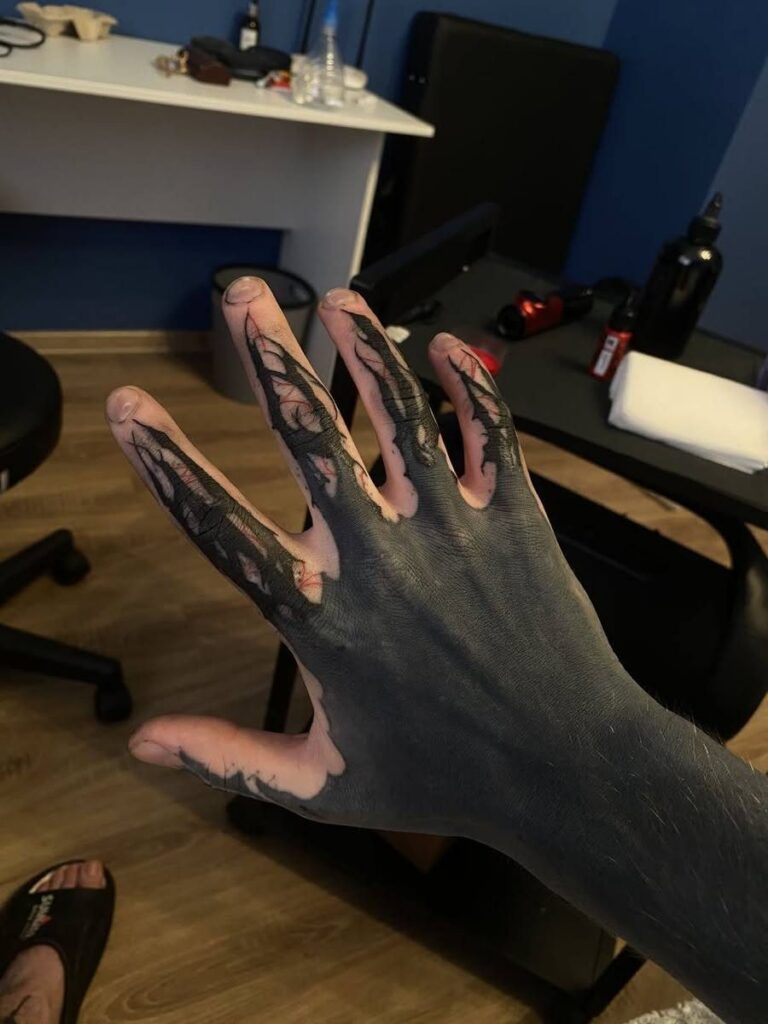
Blackwork covers old hand tattoos by saturating the area with solid black ink, leaving only strategic cut-outs in organic shapes to break up the weight. The technique hides almost anything underneath because the coverage is total.
Budget matters less than finding an artist comfortable working in pure black at this scale.
Hand skin moves constantly, so expect touch-ups as the ink settles. The contrast between solid black and negative space reads clearly from a distance, which makes it a strong choice when the old tattoo has faded unevenly or spread.
2. Realistic Rose Bloom
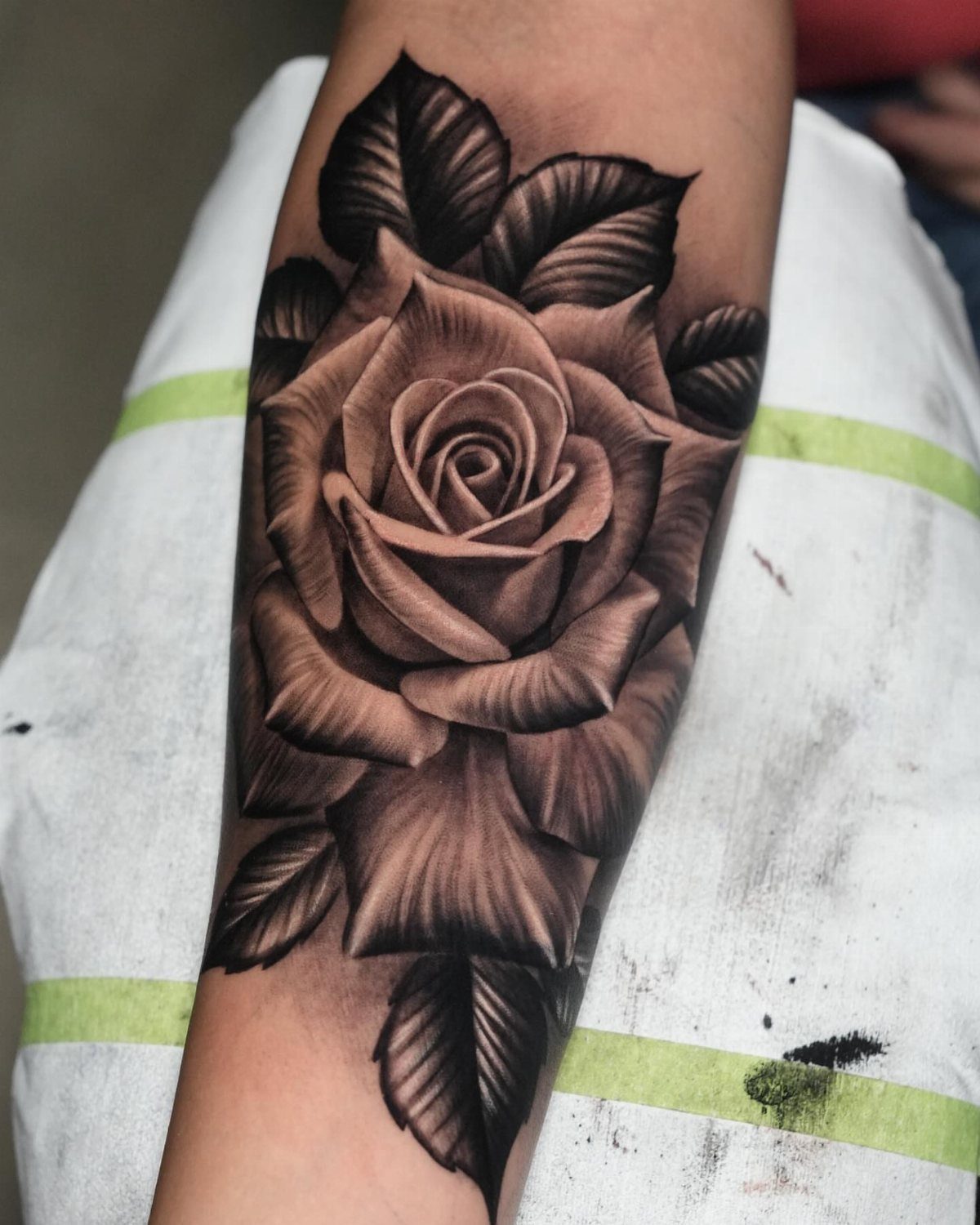
A realistic rose uses tight grey shading and deliberate highlights to build depth, with dark leaves framing the bloom to add coverage where you need it most.
The petals curl naturally, so the design can expand or contract to fit the shape of whatever you’re covering.
Black and grey ages better on hands than color because there’s no red or yellow to fade into skin tone.
Realism takes longer to tattoo than graphic work, usually 2–3 sessions for a piece this size, and the shading needs to be dark enough to fully hide what’s underneath without looking muddy.
3. Skull and Cemetery Scene
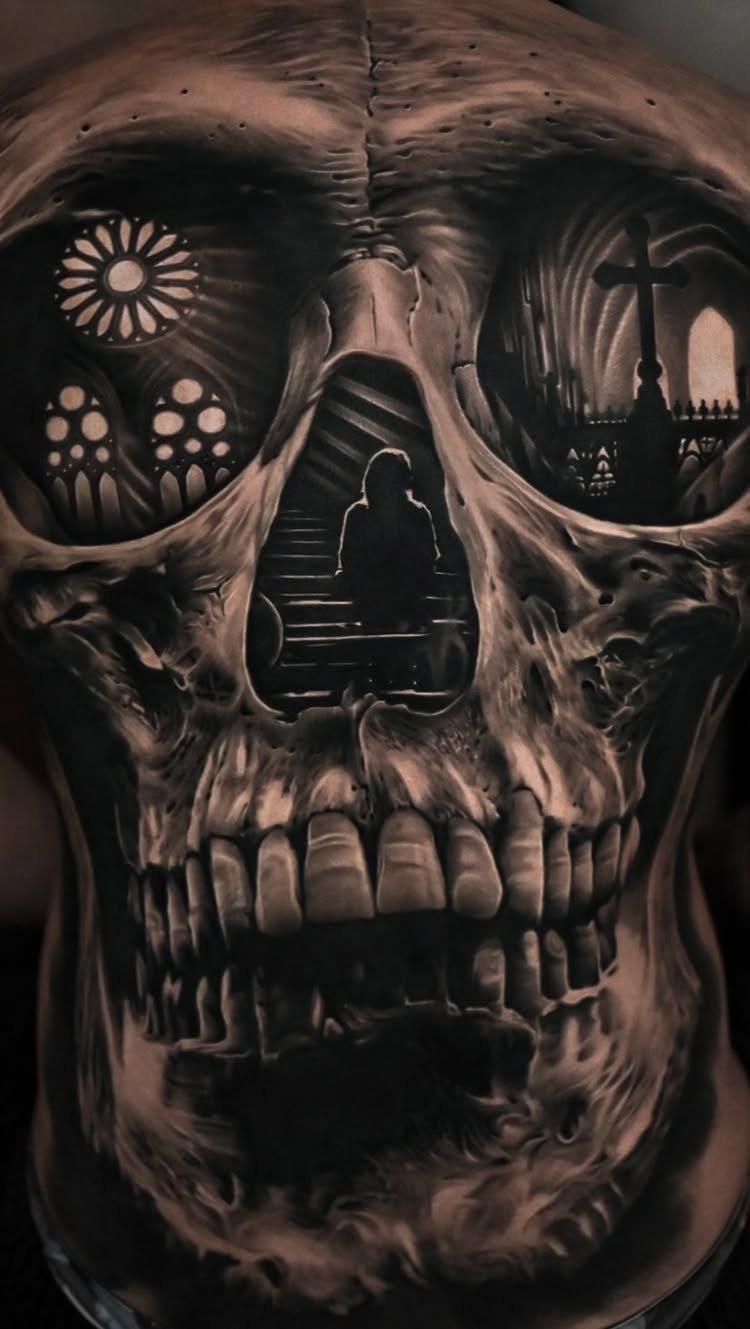
A skull with cemetery scenes worked into the eye sockets and nasal cavity turns negative space into storytelling. The silhouettes, crosses and cathedral details sit inside the bone structure, so the design reads as one image rather than a collage.
Gothic imagery covers well because the shadows are already dark and deliberate. If your old tattoo has strong lines, placing them inside the skull’s natural voids hides them without needing total blackout.
The vertical elements like stairs and tombstones give the composition direction, which helps when you’re covering something that didn’t have clean flow to begin with.
4. Biomechanical Skull
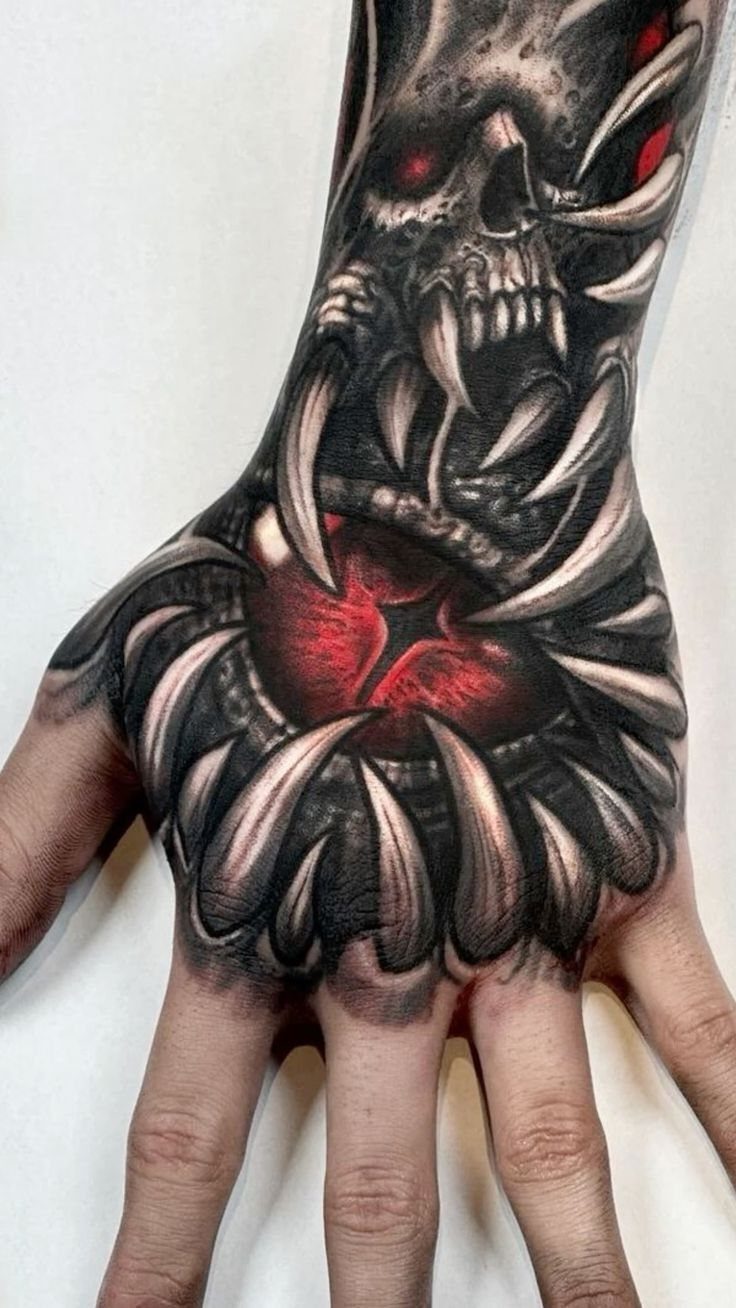
Biomechanical skulls combine bone with metal plating, gears and cables, so the design can layer over an old tattoo by treating it like part of the machinery underneath.
The red accents in the eyes pull attention up and away from any residual marks lower on the hand.
Metallic shading needs high contrast to look three-dimensional, which means the darkest areas go very dark.
That contrast is what hides the original ink. The style works best when your artist can ink crisp edges on the mechanical parts while keeping the organic skull soft, and hands heal inconsistently, so budget for at least one touch-up.
5. Skull and Ornamental Patterns
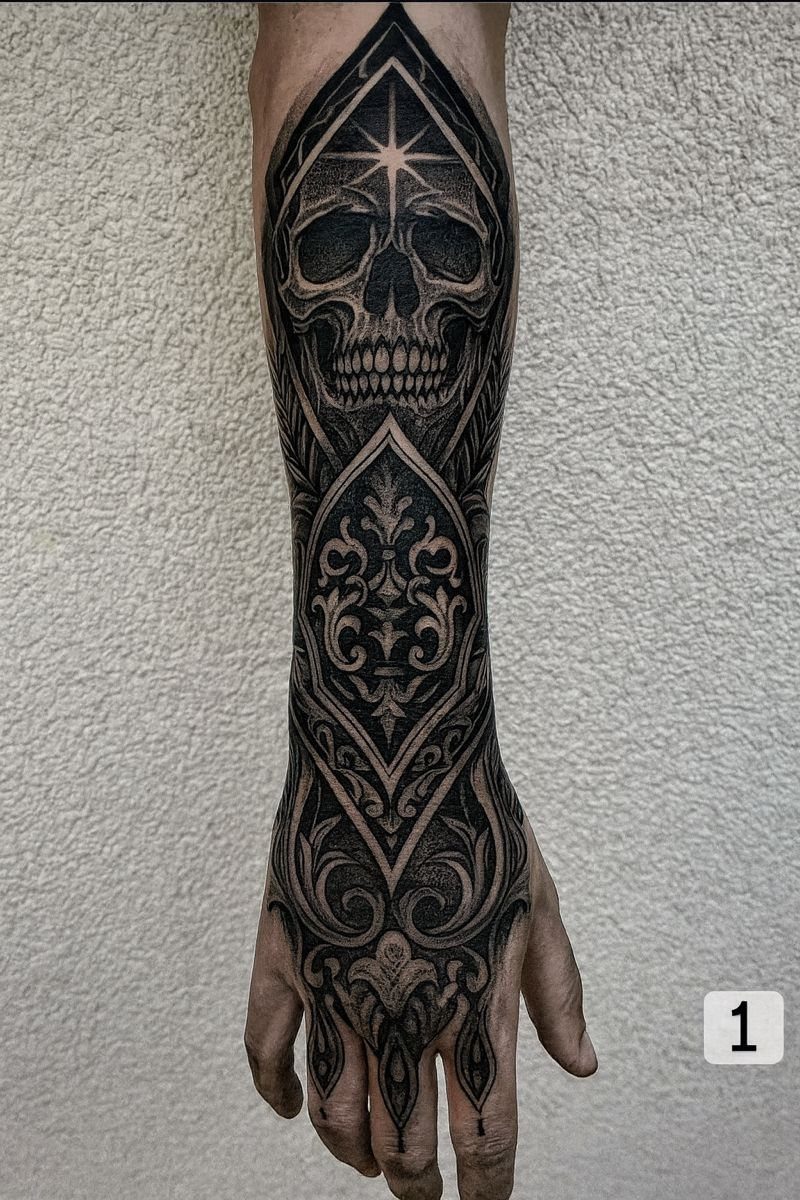
A skull paired with symmetrical geometric patterns uses the ornamental work to extend coverage beyond the skull itself, filling the hand and forearm with deliberate black ink.
The patterns frame the skull and carry the eye across the whole piece, so old tattoos disappear into the larger composition.
Solid black ornamental work ages cleanly because there’s no gradient to blur or fine line to thicken. If your old tattoo sits outside the skull, the geometric sections can stretch to cover it without looking forced.
The symmetry makes the design feel intentional rather than reactive, which matters when you’re trying to move past a cover-up and into something that stands on its own.
Frequently Asked Questions
How do tattoo cover ups work?
A cover-up places a new tattoo over the old one using darker ink and deliberate composition to hide what’s underneath.
The new design needs enough contrast and saturation to fully block the original, which usually means working in black, dark grey or heavy shading.
Artists use negative space, layered imagery and strategic placement to absorb old lines into the new piece so it reads as one intentional tattoo rather than a patch.
Are there any tattoos that can’t be covered up?
Hand tattoos are harder to cover than most placements since they heal inconsistently and stay exposed all the time, but blackwork and high-contrast designs like skulls with ornamental patterns can hide nearly anything if the artist goes dark enough.
Total blackout covers almost any old ink, though you lose the option for fine detail. If the original tattoo is very dark or heavily saturated, laser fading before the cover-up gives you more design flexibility.
Is it cheaper to cover or remove a tattoo?
Covering a hand tattoo costs less up front than full laser removal, which usually runs multiple sessions before the ink is gone. A cover-up takes 2–3 sessions depending on the design and how much shading you need to hide the original.
Removal is the better cost for a blank canvas or when you plan to get something small and light later, but covering gets you a finished piece faster.