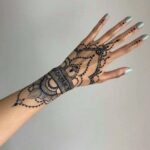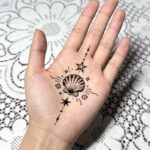
A star stencil can run from a simple five-point outline that fits on your finger to a dotted pattern, a tribal design wrapping your upper arm, or a Mario power star.
The choice depends on how many points you want, whether you add clouds or keep the star alone, and how much skin you’re filling.
1. Five-pointed Star Designs
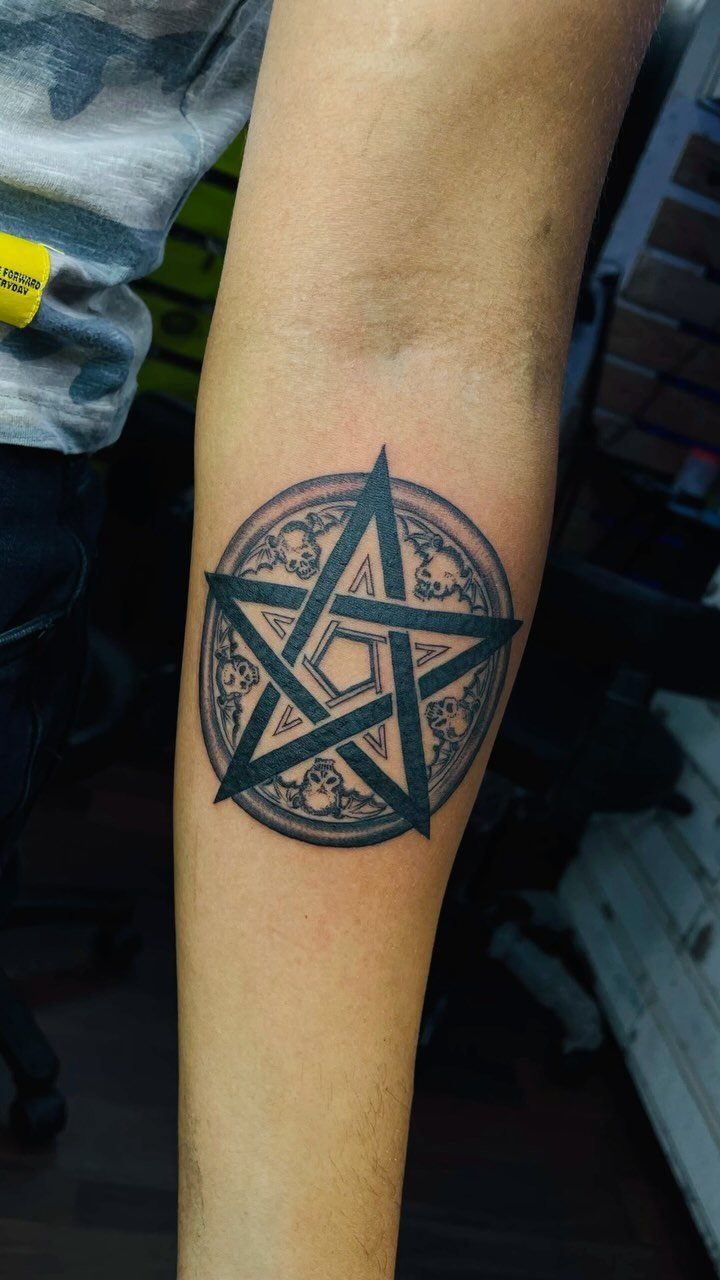
The pentagram sits inside a circle here, a detail that turns the classic five-pointed shape into something more formal and symbolic. Skulls tucked into the design push it darker.
If you want the star alone, you can strip out the circle and just trace the 5 points. The stencil transfers clean on a flat surface like the forearm, and the shape holds its geometry even at smaller sizes.
Black ink reads sharpest. Shading inside the points or along the circle gives depth without cluttering the star itself.
2. Four-pointed Star Designs
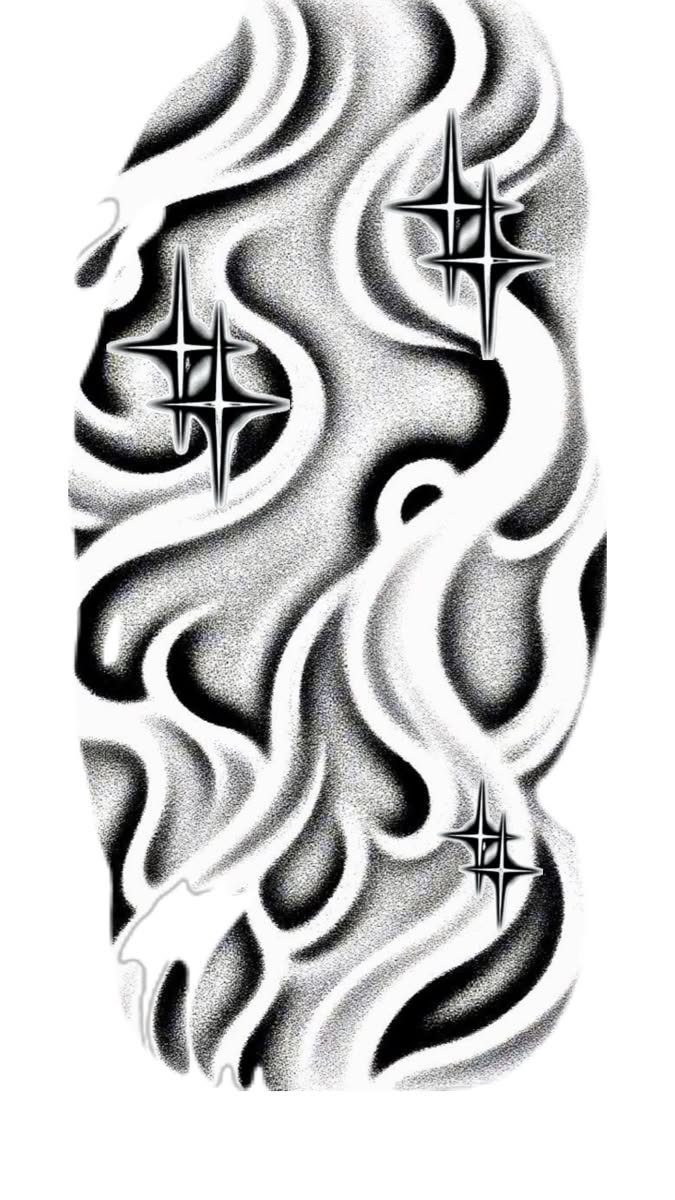
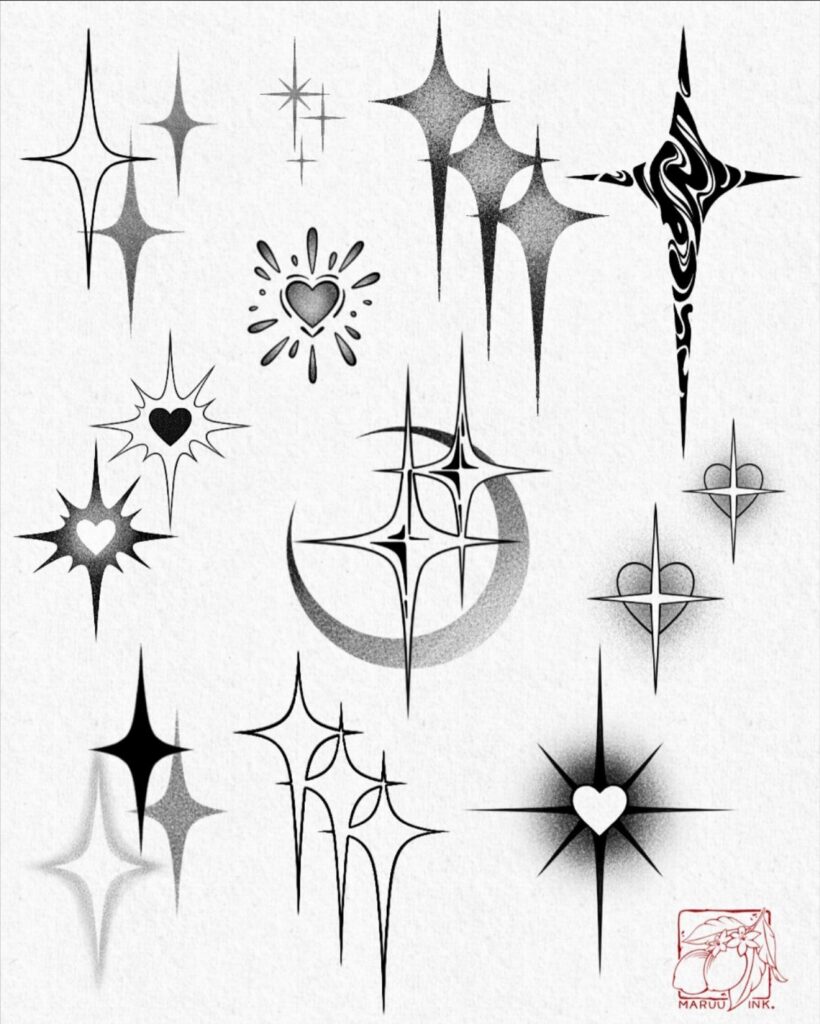
Four points give you a different rhythm than the standard five. These stars sit lighter, and when you layer them into smoke or flowing shapes, they move through the composition instead of anchoring it.
The visible design wraps them into shaded curves, so the stars appear and disappear as the eye follows the line. That movement works on areas with natural contour like the shoulder or ribs.
Stencils with layered elements like this need careful placement. Test the transfer on skin first to see where the stars land relative to muscle or bone.
3. Dotted Star Tattoo Stencil
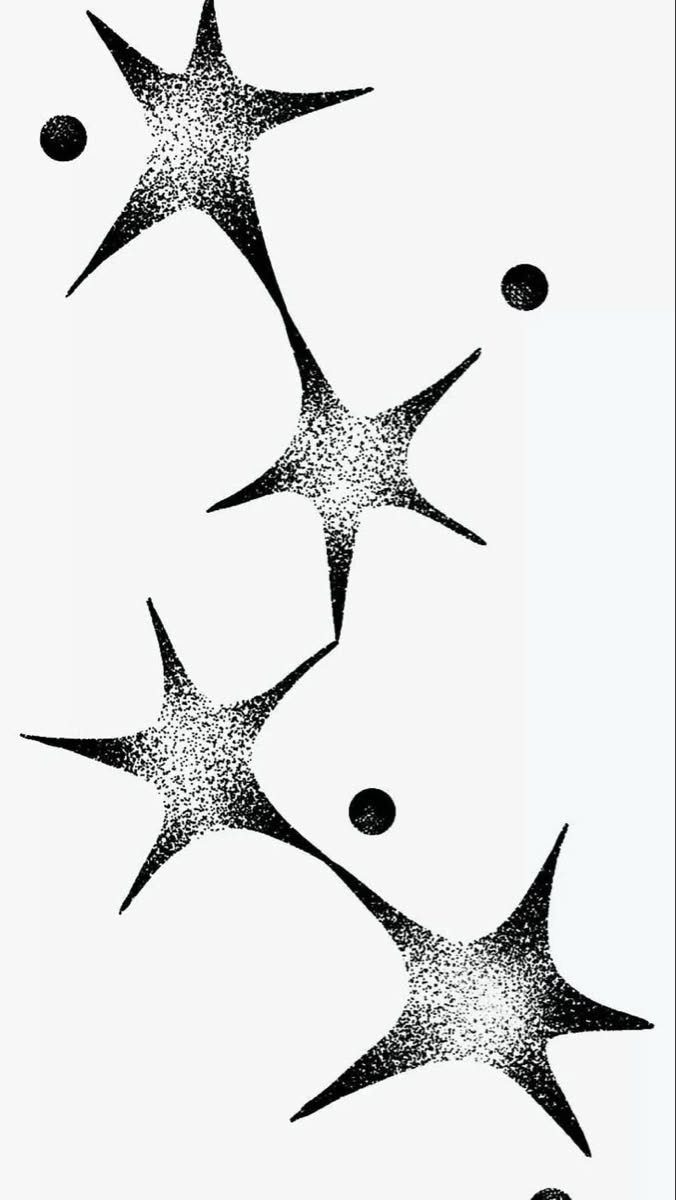
Stippling builds the star out of individual dots instead of solid fill. The technique gives texture and lets you control how dark or light the star reads by spacing the dots closer or farther apart.
A stencil here acts as the outline only. The dots themselves come in during the tattoo, so if you’re practicing with temporary ink or henna, you’ll need a fine tool or marker tip to place each one.
This takes longer than a solid star, but the result holds detail better over time because there’s no large block of ink to blur at the edges.
4. Star and Cloud Designs
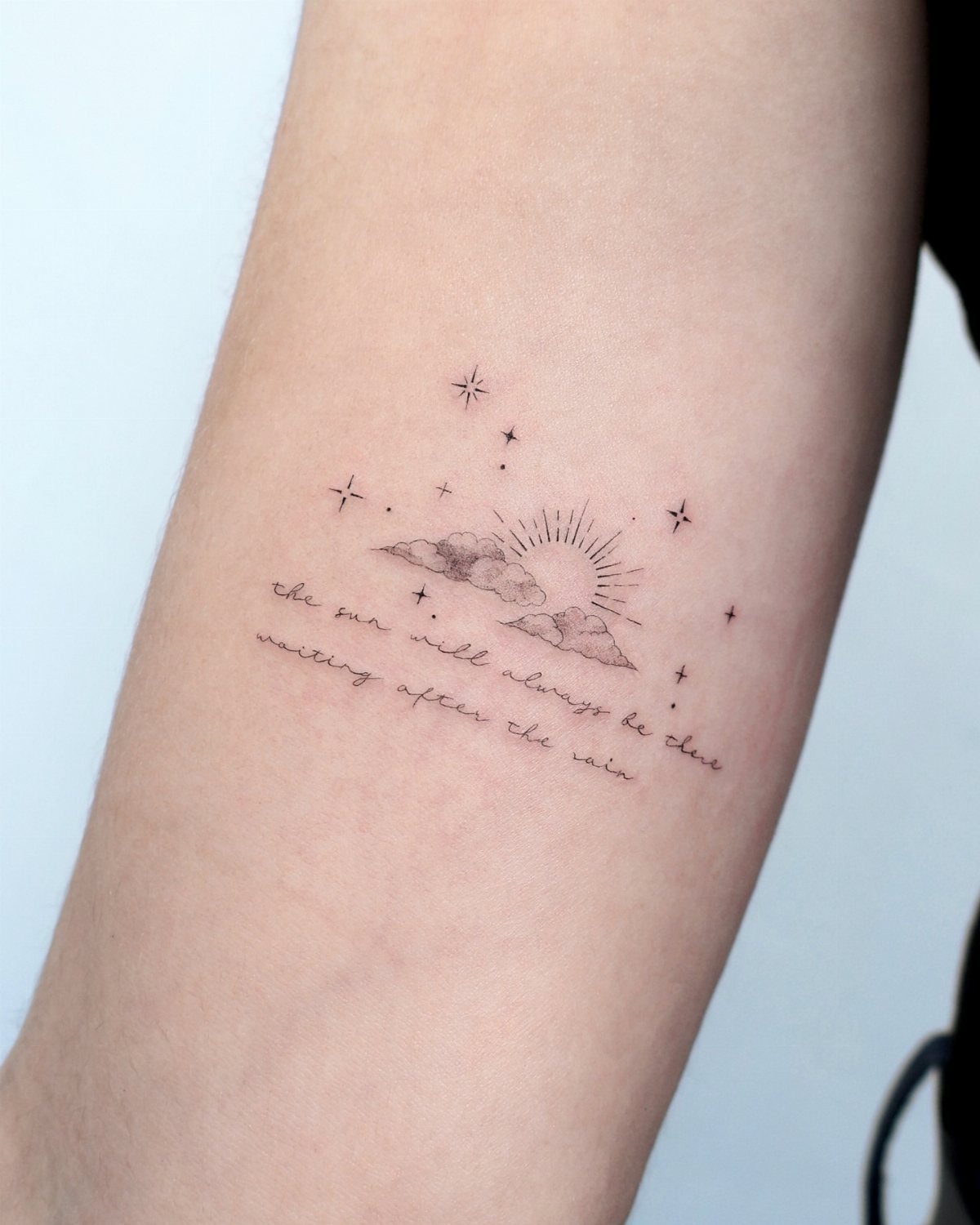
Clouds soften the star and give you space to add text or other elements without crowding the design. The combination reads well on the forearm where you have length to run a horizontal composition.
Small stars scattered around larger clouds keep the design airy. If you’re working from a stencil, transfer the clouds first and then position the stars by eye so they feel random rather than gridded.
Fine-line work like this heals cleanest when the stencil lines are sharp and the artist doesn’t overwork the skin.
5. Tribal Star Designs
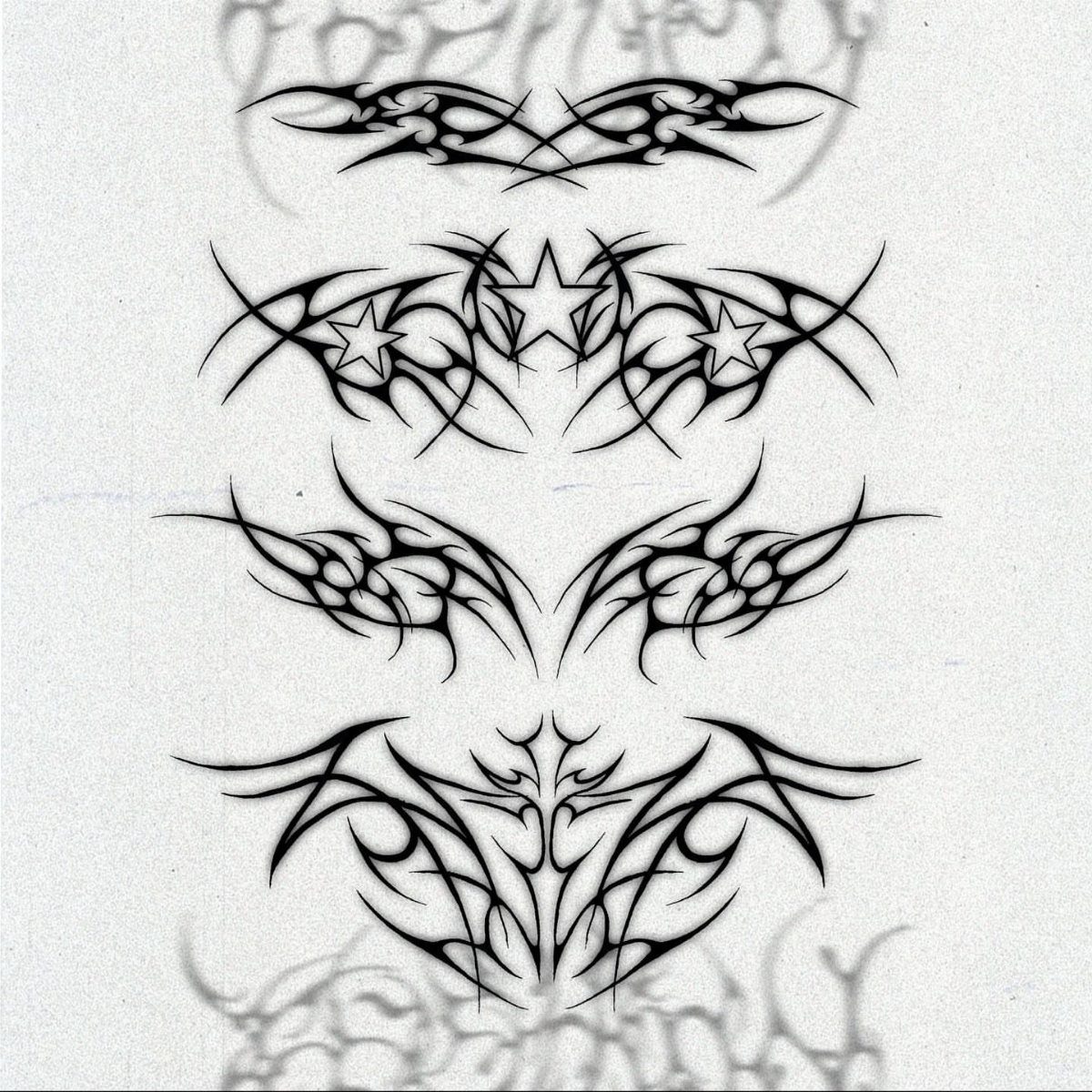
Tribal shapes use bold black bands and negative space, and when you drop a star into that framework, it becomes part of the pattern instead of sitting on top of it.
The star points follow the curves of the tribal design, so both shapes move as one.
This style scales well. A small tribal star fits on the wrist or ankle, and larger versions wrap around the upper arm or calf.
Stencil transfer is straightforward because the lines are thick and the shapes are simple. Just make sure the paper sits flat so the symmetry doesn’t distort.
6. Mario Star Tattoo Stencil
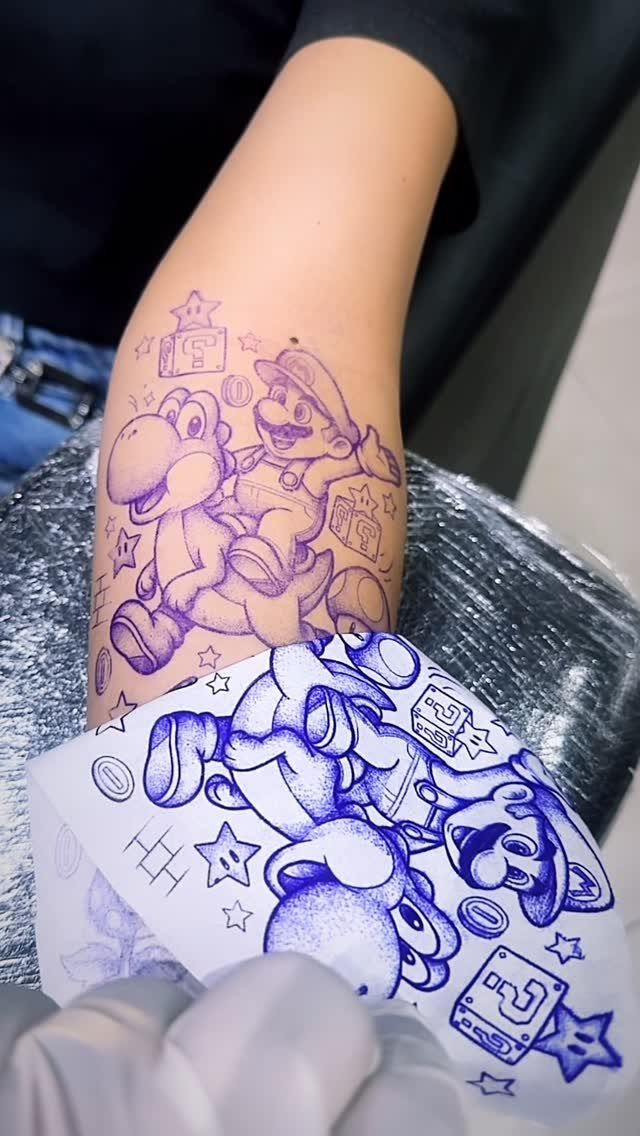
The Mario star brings instant recognition, and when you pair it with characters like Yoshi, you get a scene instead of just an icon.
This works best as a color piece. The star’s yellow fill and the character detail both need clean stencil lines to guide the artist, so use transfer paper that holds fine edges.
If you want just the star without the character, you can pull that element out and place it anywhere on the body. It still reads as Mario without the full scene.
7. Star Tattoo Outlines
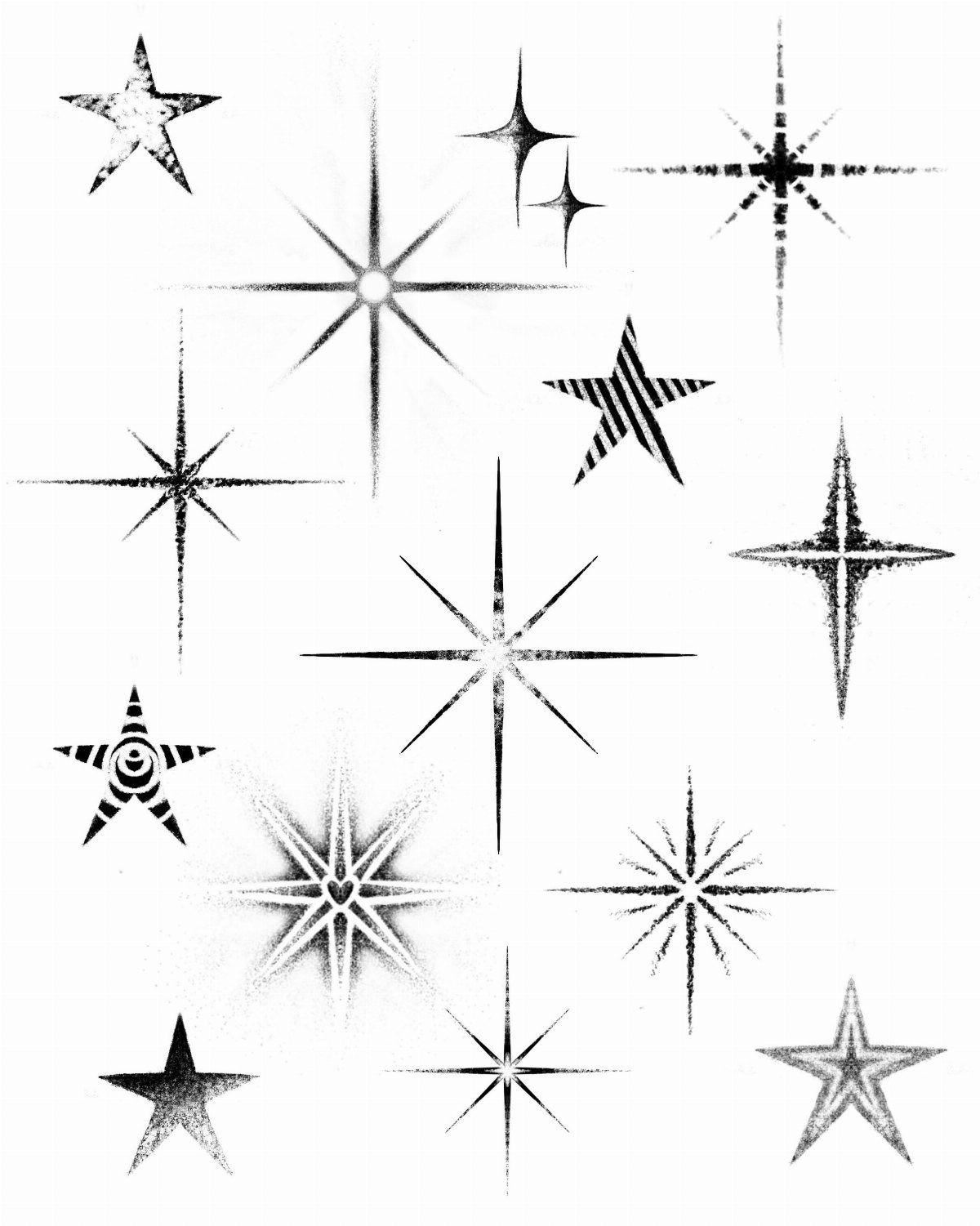
Simple outlines give you the bones of the design without committing to fill or shading. You can use these as practice stencils, transfer them for temporary ink, or hand them to an artist who will add detail during the session.
The stencil you pick decides whether the shape reads as bold geometry or a delicate sparkle, so match the silhouette to how much skin you’re filling.
Small outlines work on fingers, behind the ear, or on the ankle where space is tight.
Black line only keeps the design flexible. You can leave it as linework or fill it later if you change your mind.