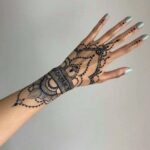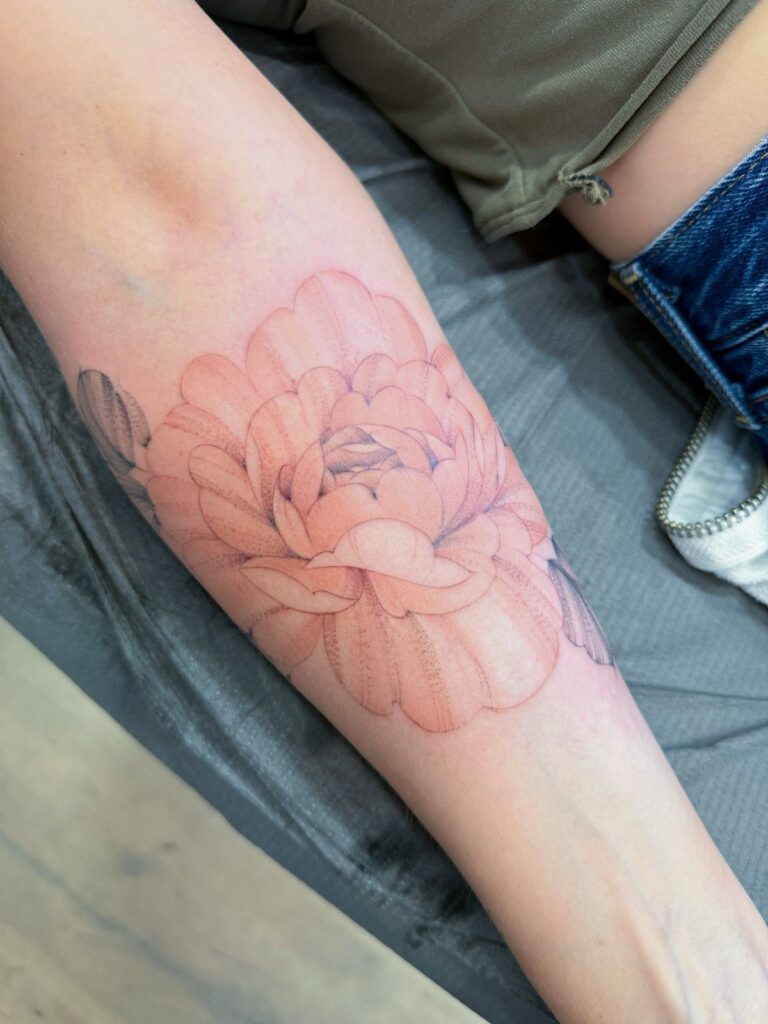
A tattoo placed where sun hits daily will lose color faster than one that stays covered, which changes how both pigment and color read over time.
1. Portfolios Showcasing Work on Dark Skin
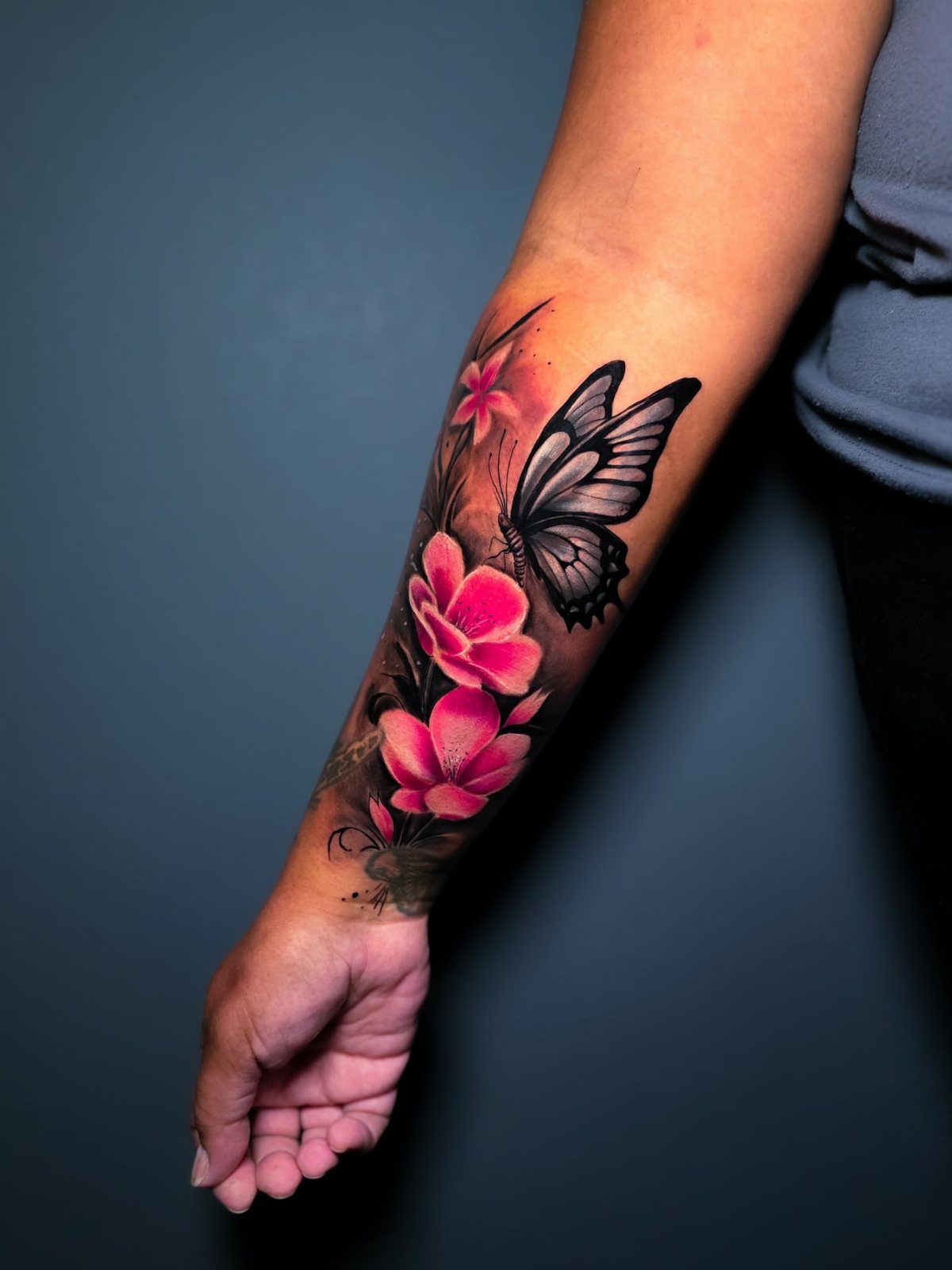
Artists who specialize in tattooing darker skin tones build portfolios that prove they know how to saturate color and place contrast where it will read clearly.
A butterfly and florals worked in pink and black can hold brightness and clean edges on deep brown skin when the artist knows how to pack color and choose pigments that read true.
If your skin is dark, you want an artist whose portfolio shows finished tattoos on clients with skin close to yours.
That portfolio tells you they understand which pigments hold and which techniques make color pop without washing out over time.
Because of this, artists strongly encourage people to look for photos of tattoos on healed dark skin tones versus photos taken moments after the tattoo is completed.
2. Color Tests on Skin
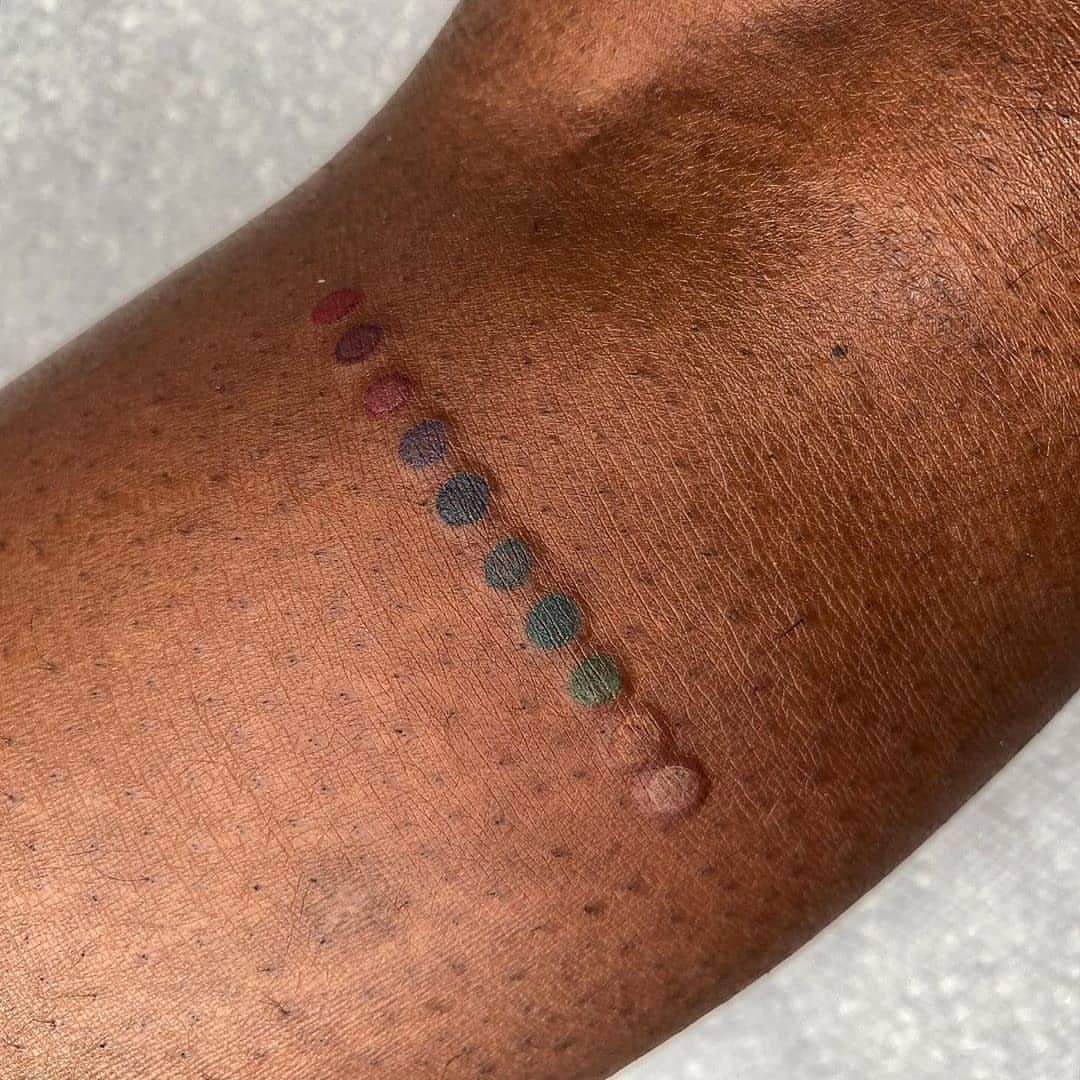
Some artists tattoo a row of small color dots on a hidden patch of skin before committing to a full design.
Test swatches the size of a pencil eraser, placed in red, purple, blue and green, let you see how each ink settles and heals on your skin tone before committing to the full design.
A color test takes a few minutes and costs little or nothing if the artist includes it as part of your consultation.
You heal those dots over 2 weeks, then return to see which shades stayed vibrant and which faded or shifted tone. That tells you whether to adjust your palette or stick with the original plan.
3. Tattoos on Light Skin Tones
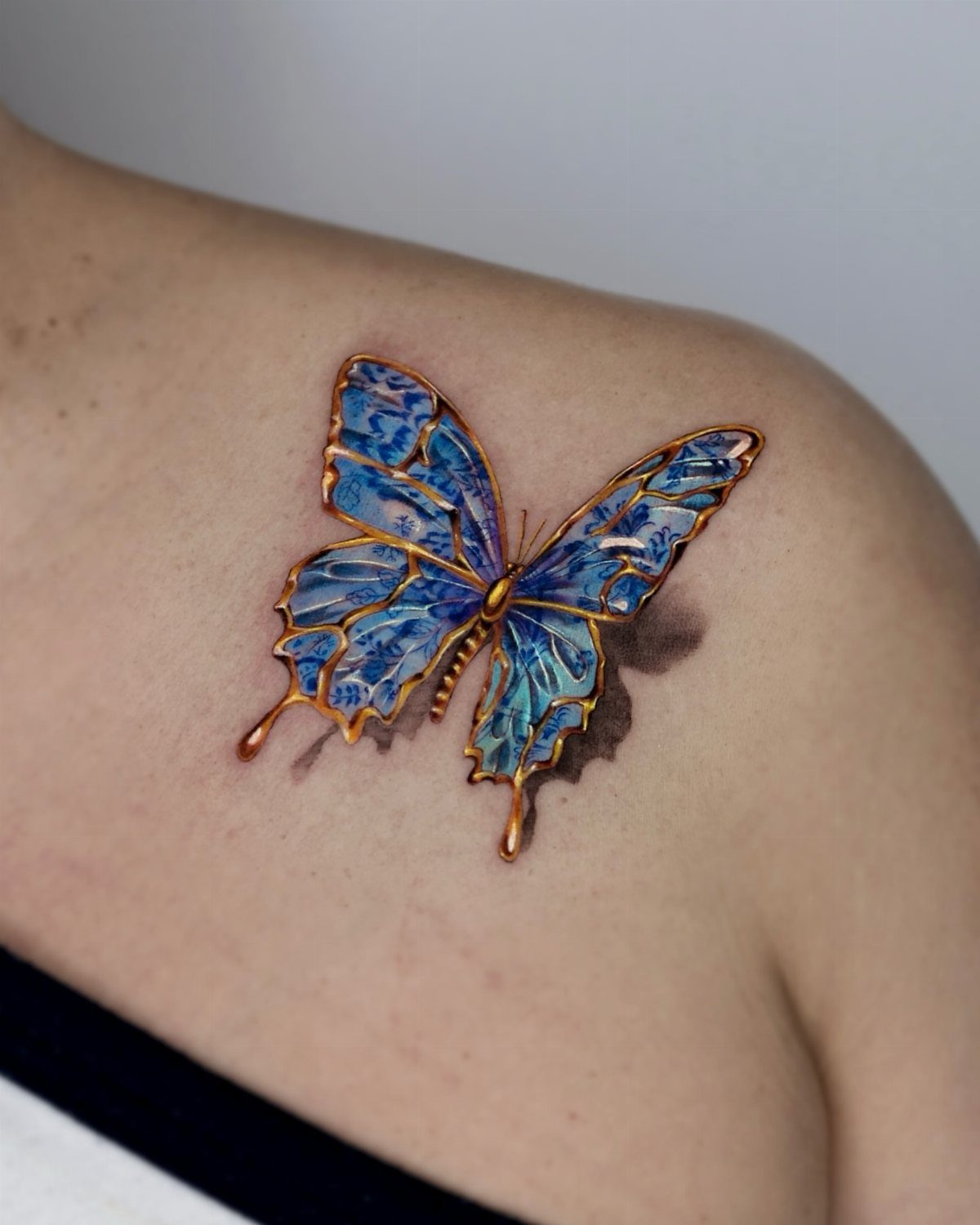
Light skin tones give you the widest color range to work with.
A 3D butterfly worked in bright blue and orange with a shadowed underside holds all its tonal separation cleanly on light skin because the base reflects light back through the ink.
Bright primaries like red, blue and yellow read clearly, deep blacks and rich purples stay saturated, and pastels and white highlights show up without extra passes.
If your skin is pale to medium, you can run any color you want without worrying whether it will disappear or shift gray as it heals.
Tattoo Removal for Dark Skin
Laser removal on dark skin carries a real risk of hypopigmentation if the technician does not know how to adjust pulse width and energy levels for higher melanin content.
The lighter patches left behind can be harder to fix than the original tattoo, so I only recommend booking with a clinic that shows before-and-after photos of clients with skin close to yours.
Experienced technicians use longer wavelengths and lower fluence settings to target ink without damaging surrounding melanin.
A free consultation gives you a chance to ask how many dark-skinned clients they have treated and whether they use Q-switched or picosecond lasers, both of which can work safely on darker skin when operated correctly.
Tattoo Placement Considerations
A tattoo placed where sun hits it daily will lose color well before one that stays hidden under clothing.
Forearms, calves and the back of the neck lose color quicker because UV breaks down ink pigments over time, and colored ink fades faster than black.
On an exposed spot, you’ll need to reapply sunscreen every 2 hours outdoors once it heals. The chest, back and upper thigh stay covered most of the time and hold color longer without extra maintenance.
Sun exposure also affects how areas tan or fade, which changes how color reads and may shift your palette choices.
Color Mixing Techniques
A color test done a few weeks before your appointment lets the artist see how your skin absorbs each pigment and whether any shade triggers irritation.
The test usually looks like a row of short lines or small dots in different colors, placed somewhere hidden, and it heals in about 2 weeks.
That healing period shows the artist which inks hold saturation and which fade or shift tone on your skin.
If a color does not perform the way you hoped, the artist can adjust the palette or mix a custom shade before starting the full design.
Frequently Asked Questions
What colors show up best on dark skin?
Deep blue, crimson, red and deep purple hold saturation and read clearly on dark skin because they carry enough intensity to show through higher melanin content.
White can work for highlights when packed densely, but yellow and pale pastels tend to disappear or look muddy once healed.
An experienced artist will assess whether your skin runs warm or cool and adjust the palette so each shade contrasts cleanly against your natural tone.
What do color tattoos look like when healing?
Color tattoos heal duller than they looked fresh because you see the ink through a layer of skin and melanin.
On darker skin tones, bright ink may settle darker or shift tone as it heals, which is why many artists tattoo small test dots first to see how each pigment performs.
A tattoo that looked bright in the chair can turn lighter or muddier by week 2 if the artist misjudged how your skin takes and keeps pigment.
Does red ink fade faster than black?
Red stays strong on dark skin and often reads brighter than it does on lighter tones, though certain reds shift toward burgundy as they age.
Black stays the most stable of any color and fades slower because the pigment particles are larger and resist breakdown from sun and immune response longer than most colored inks.