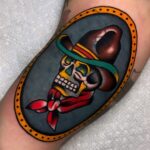
American traditional cover-ups rely on bold outlines and saturated color to hide what sits underneath, which means your design has to match the size and darkness of the tattoo you’re covering.
Panthers, ravens, wolves and gorillas deliver concentrated black shading that obscures faded lines in a compact footprint, while roses and peonies adapt to irregular shapes when the old tattoo sits awkwardly.
1. Cover-up Tattoo Design
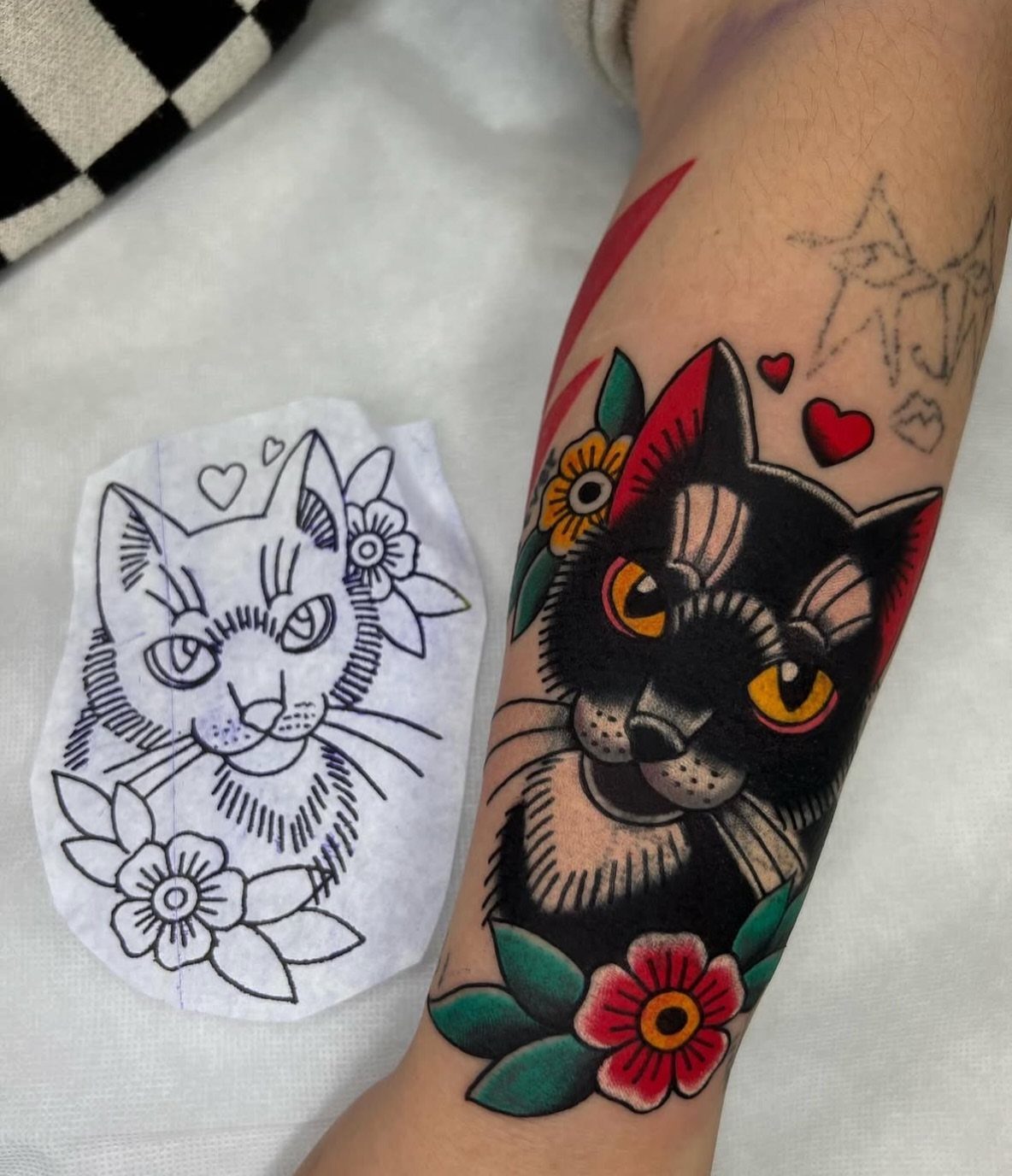
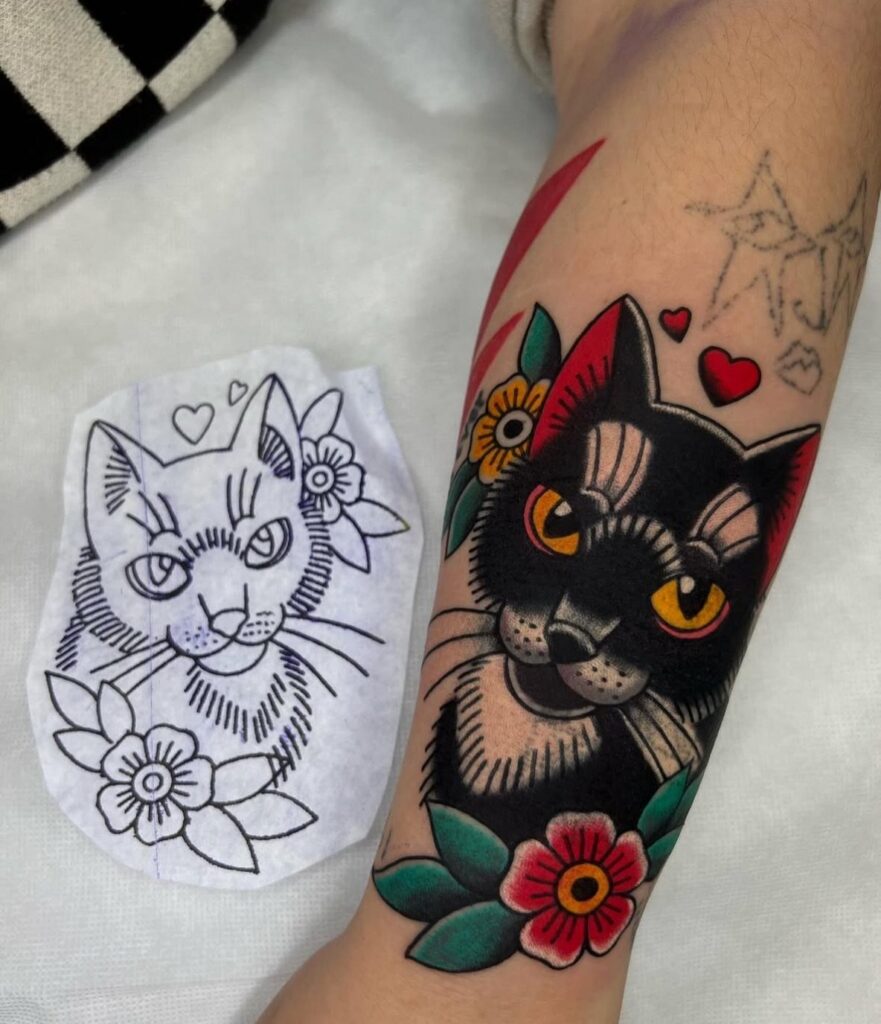
A black cat placed over the original design brings personality and solid coverage in one move.
American traditional works well for cover-ups because the bold outlines and heavy color saturation hide what sits underneath without needing a full blackout layer first.
Cats, panthers and other animals with dark bodies give you enough density to obscure faded lines while keeping the design readable from a distance.
2. Use of Dark Colors
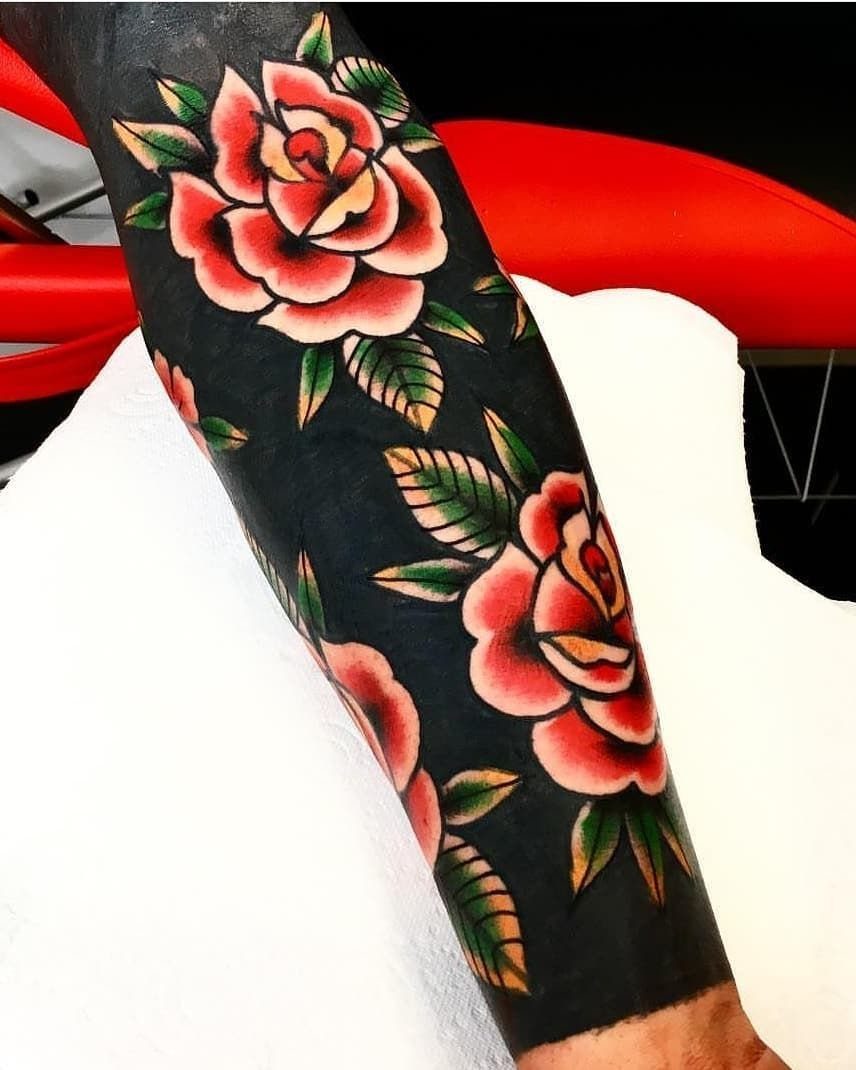
A blackout base gives you a clean slate when the old tattoo has too much contrast or detail to work around.
Roses layered over solid black read clearly because the red and green sit on top instead of trying to fight through what was there before.
This approach takes 2 sessions in most cases: one to lay down the black and let it heal, then a second to add the color on top.
Blackout sections hurt more than regular shading because the needle has to cover every millimeter, but the result is total control over what shows through.
3. Traditional Black Panther Cover Up
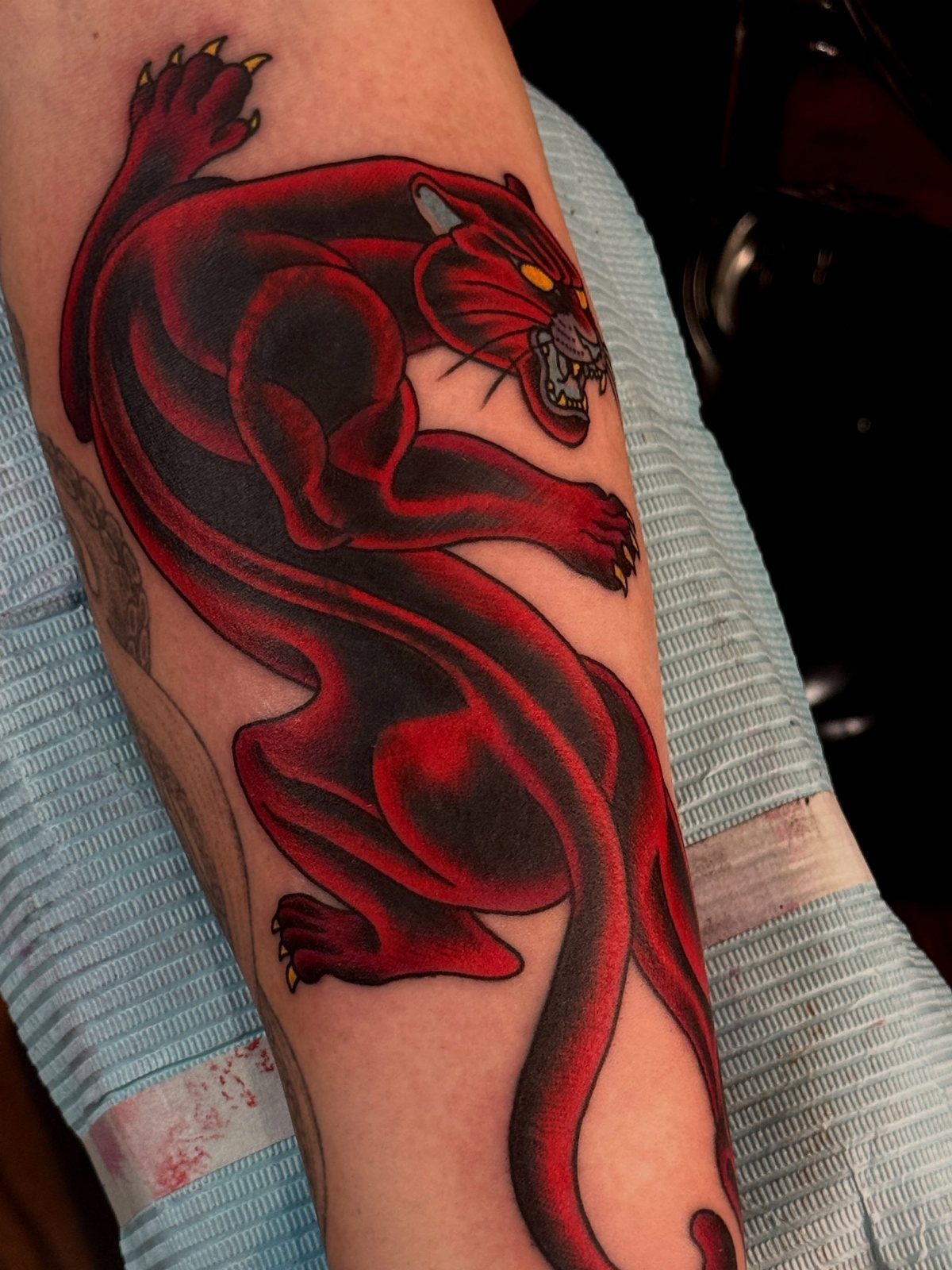
A snarling panther in red and black covers the faded piece underneath without needing a blowout in size.
The heavy black shading in the panther’s body and the solid red fill both work to hide the original lines, and the curved shape lets the artist wrap the design around the old tattoo’s placement.
Panthers have been a traditional cover-up favorite for decades because the anatomy gives you flexibility: you can stretch the body, tilt the head or adjust the legs to match whatever shape you’re covering.
4. Traditional Raven Tattoo
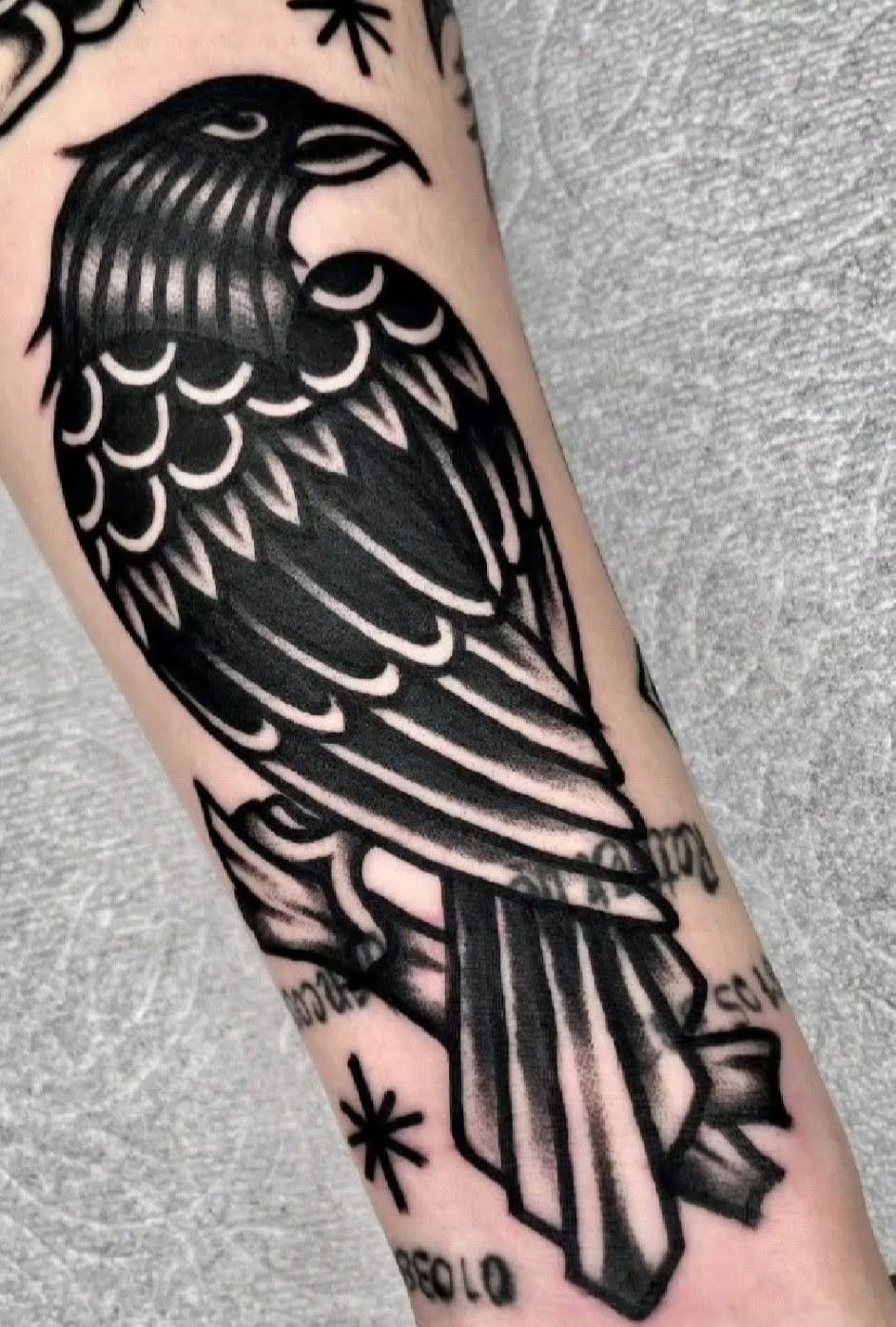
A raven perched on a banner gives you vertical coverage and a focal point that pulls the eye away from what used to be there.
The heavy black and grey shading in traditional raven tattoos makes them effective for covering older work, and the banner at the bottom lets you add text or leave it blank depending on how much space you need to fill.
Birds in profile work better than head-on designs for cover-ups because the wings and tail feathers can extend in any direction to match the shape you’re hiding.
5. Bold Lightning Bolt Cover-up
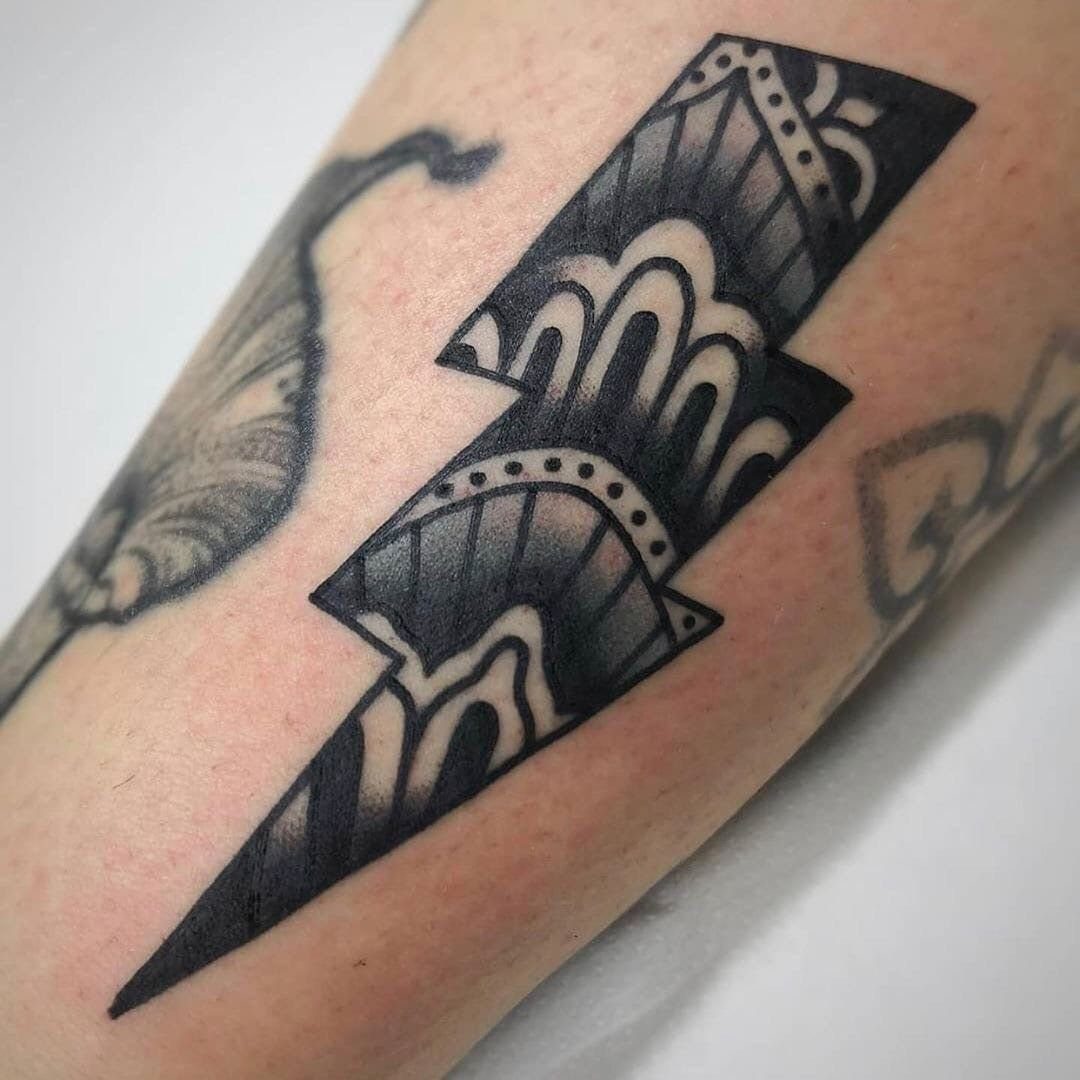
A lightning bolt filled with geometric patterns adds enough visual density to cover faded ink without relying on color.
The decorative lines inside the bolt give the artist room to work around any spots where the old tattoo still shows faint edges, and the angular shape fits well on forearms, calves and ribs.
Black and grey patterned designs like this take less time to heal than heavily colored pieces, and the high contrast between the black fill and the negative space inside stays sharp even as it ages.
6. Traditional Rose Tattoo
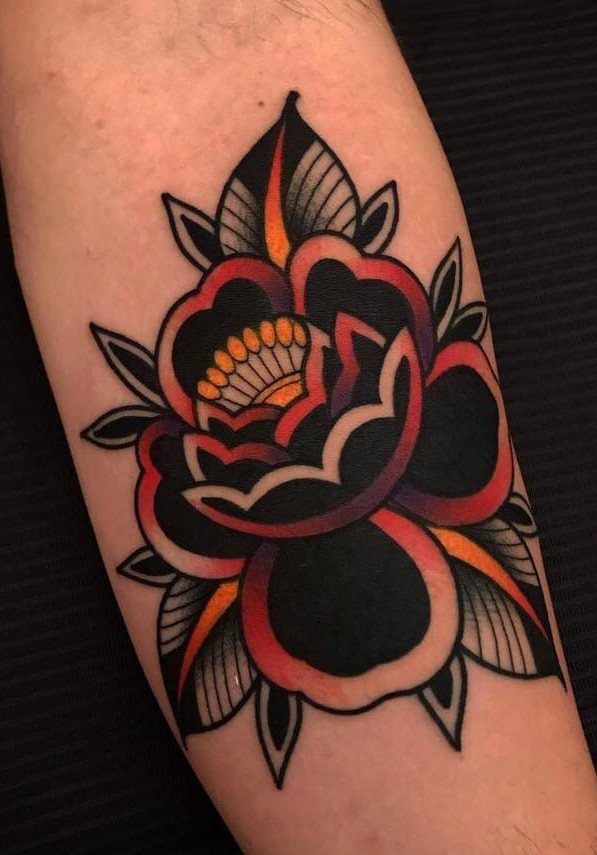
A single rose with thick black outlines and concentrated red shading covers small to medium tattoos without expanding too far beyond the original footprint.
The bold line weight in American traditional roses hides previous outlines, and the orange tones layered into the red petals add depth without needing a second color to fill space.
Roses adapt to almost any body placement and read well from any angle, which makes them reliable when you’re covering something awkwardly positioned or shaped irregularly.
7. Snarling Wolf Cover Up
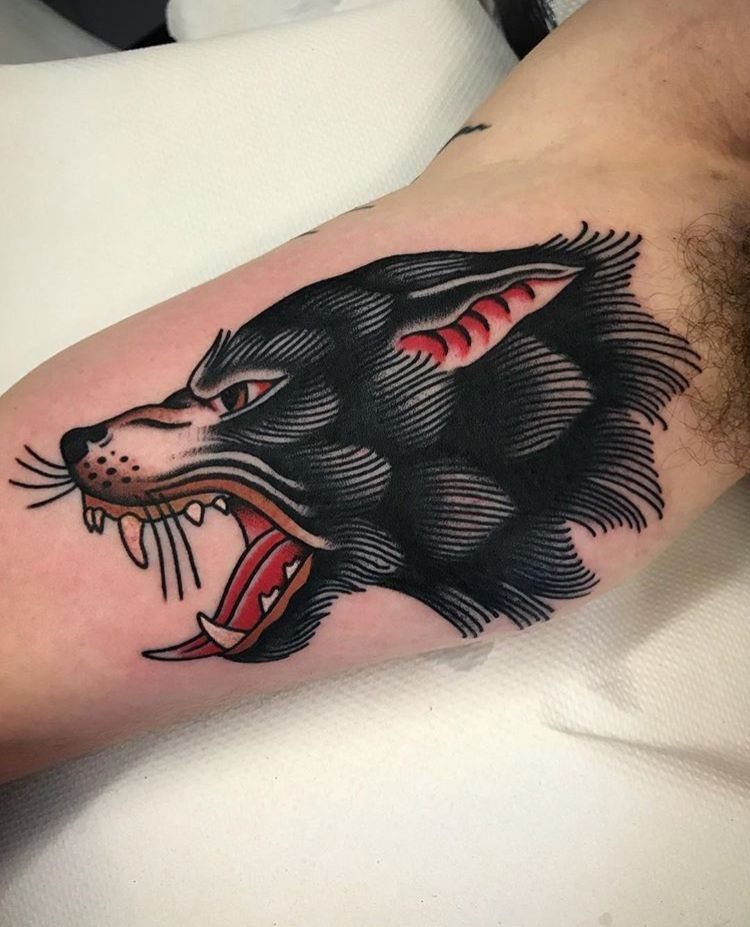
A wolf head with bared teeth gives you concentrated shading in the face and neck that hides older tattoos without spreading the design across too much skin.
The snarl lets the artist pack black into the mouth and gums, and red accents in the eyes or tongue add a second layer of coverage where the old ink needs it most.
Wolf heads in traditional style keep their impact in a compact footprint, which matters when you’re covering something small or placed where you can’t extend the design much farther.
8. Bold Peony Cover Up
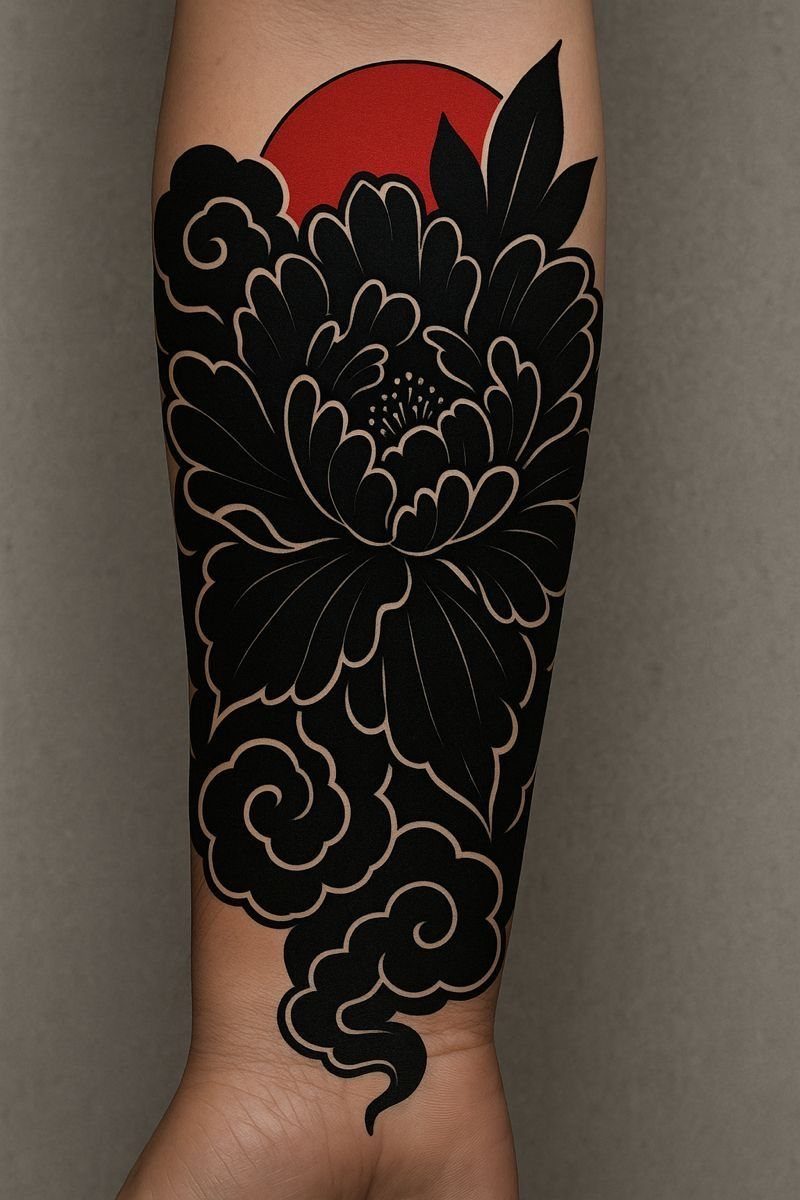
Peony petals drawn in black ink instead of the usual red or pink give you solid coverage with decorative edges that soften the transition between the new design and surrounding skin.
Clouds fill awkward gaps around the flower, and a red sun in the background adds a focal point that pulls attention without needing heavy color everywhere.
Black botanicals age cleanly because there’s no color to fade unevenly, and the organic shapes adapt to irregular cover-up zones better than geometric designs.
9. Roaring Gorilla Head
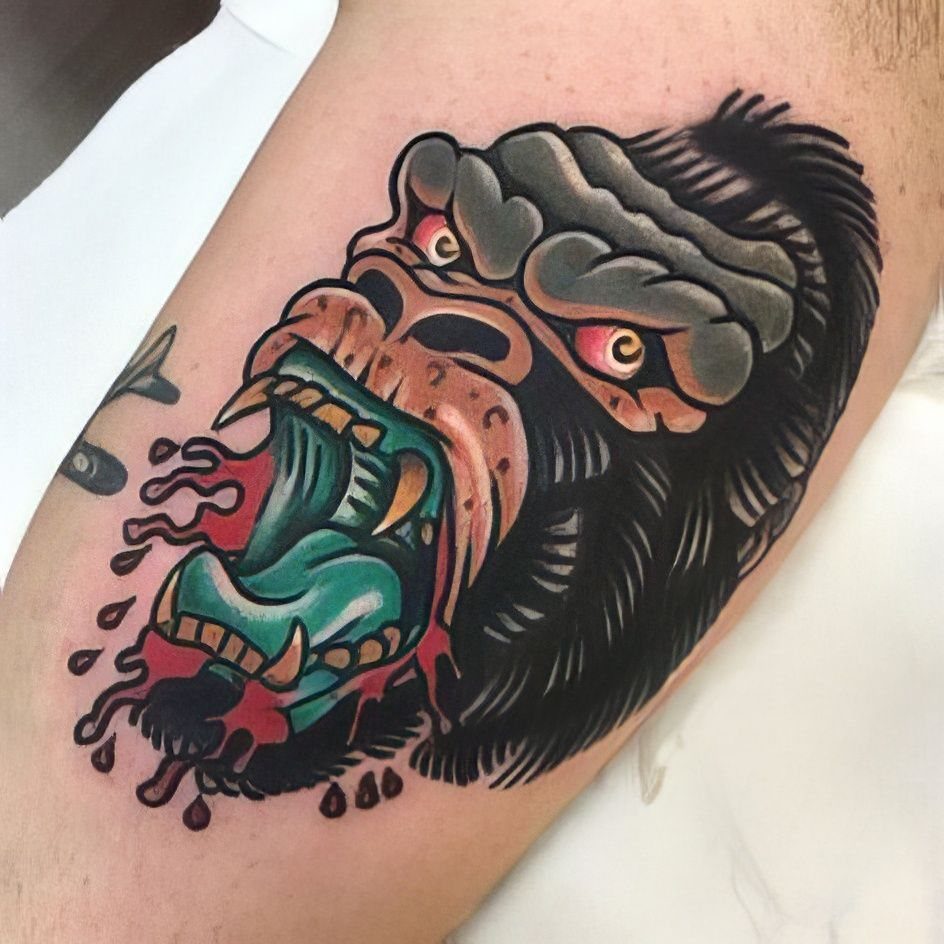
The gorilla’s open mouth and heavy brow shading deliver the density needed to cover stubborn old lines, and the symmetrical face holds balance even when the original tattoo sits off-center.
Saturated colors in the eyes and mouth layer over black shading to add depth without thinning out the coverage.
Traditional gorilla heads work for cover-ups on shoulders, chest and upper arms where you need a design that reads from a distance but still hides detail up close.
10. Stylized Bat Head Design
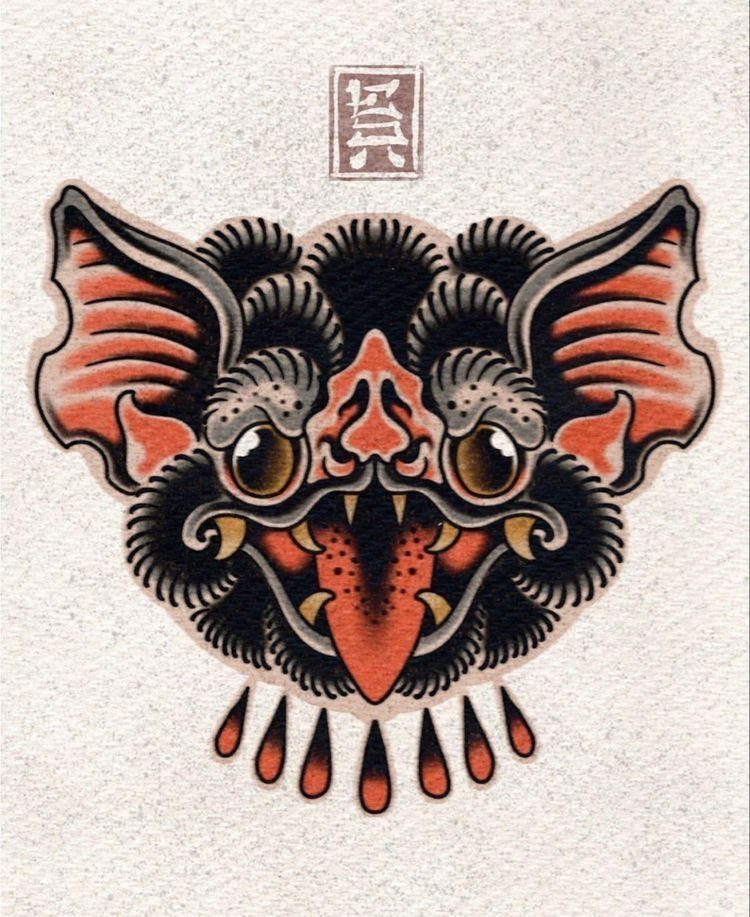
A bat head with angular shapes and solid black fills covers small tattoos in spots where rounded designs don’t fit well.
The red inside the ears and mouth gives you a second color option without diluting the black coverage, and the symmetrical layout lets the artist center the design over whatever needs hiding.
Bats suit narrow placements like wrists and ankles where the wings can extend horizontally without crowding the surrounding skin.
Choosing the Right Design
The design needs to hide what’s there now, not just look good on clean skin.
Size and color both matter: a small delicate piece won’t cover a dark bold one, and pale ink won’t layer over saturated color without showing through.
Full coverage replaces the old tattoo completely. You’re choosing something with enough black and color density to erase what’s underneath, which usually means going bigger or bolder than the original.
The other option is to incorporate what’s already there. Instead of hiding the old tattoo, the artist works elements of it into the new design.
This keeps the footprint smaller and the color lighter, but only when the existing shapes can be turned into something you actually want to keep.
Talk to the artist before you settle on a design. They’ll tell you whether what you want can actually cover what you have.
Post-tattoo Care
Before you leave, your artist will walk you through how to care for it.
Follow them exactly: wash and moisturize the tattoo on the schedule they give you, keep it dry between cleanings, and skip tight clothing over the area while it heals.
Cover-ups hurt more and take longer to heal than fresh tattoos because the needle is working through scar tissue and older ink.
Pain and swelling during the first week are normal. If it’s still sore, ibuprofen can help.
You want sharp lines and solid color once it settles. A cover-up that fades unevenly or scars will show the old tattoo through the new one, so treat aftercare like part of the work itself.
Finding a Skilled Artist
Look for an artist who has done cover-ups before. This work is different from tattooing clean skin: it requires knowing how colors layer, how to compensate for what’s underneath, and how to design around shapes you can’t change.
Ask to see their portfolio of cover-up work specifically. Check their Instagram and other platforms like Yelp or Google for reviews that mention cover-ups, and look at the photos clients post to see whether the results hold up.
Schedule a consultation before you commit. Bring photos of the tattoo you’re covering and any design ideas you have.
An experienced artist will tell you what will work, what won’t, and whether you need laser removal first to lighten the old ink before a new design can go over it.
Frequently Asked Questions
What are traditional American tattoos called?
They’re called American Traditional tattoos. The style uses bold black outlines, heavy color saturation, and a limited palette that makes it effective for cover-ups because the density hides what sits underneath.
What are the hardest tattoos to cover up?
Dark, heavily saturated tattoos are the hardest to cover. The more black and color density the original has, the bigger and bolder your new design needs to be to erase it completely without the old lines showing through.
What are the best tattoo styles for cover-ups?
Dark, bold styles like American Traditional, blackwork, and neo traditional make the most reliable cover-ups. Dense pigment in those styles hides stubborn old lines without forcing you into a massive design.