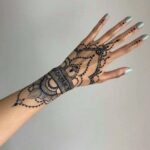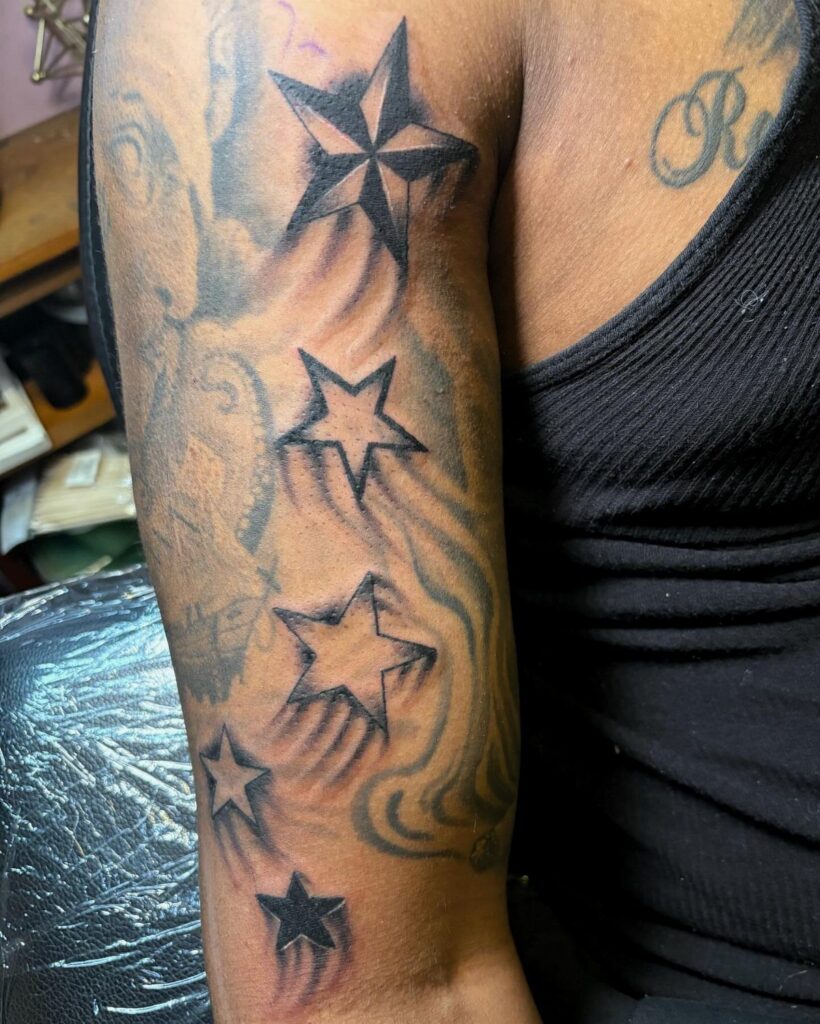
Star filler runs from single black fine-line points to crescent moons paired with dotwork, five-pointed outlines, trailing lines, and floral accents that wrap forearms or fill sleeves.
Fine-line holds up best on low-friction spots like inner arms, while bold outlines resist fading on elbows and knees where fabric hits repeatedly.
1. Black Ink Fine-line Stars
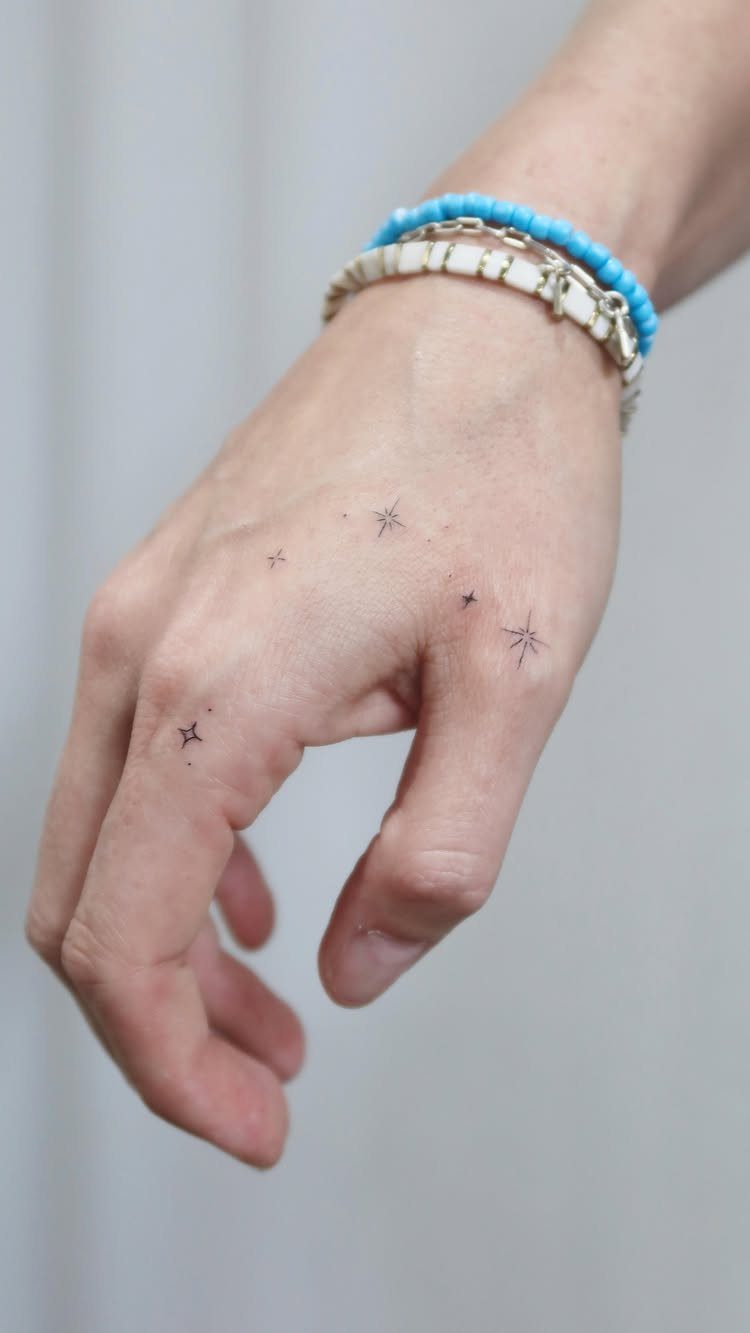
Fine-line stars in black ink give you a clean, minimal look that reads well on hands and fingers. The thinner needle keeps the design light, so you get definition without taking over the space between larger pieces.
Stars in different sizes fill odd gaps better than matching ones. Mixing smaller stars with larger ones breaks up the rhythm and keeps the filler from looking stamped.
Fine-line holds up best on low-friction spots. Hands fade faster than arms, so expect a touch-up down the line if you want the lines crisp.
2. Five-pointed Stars
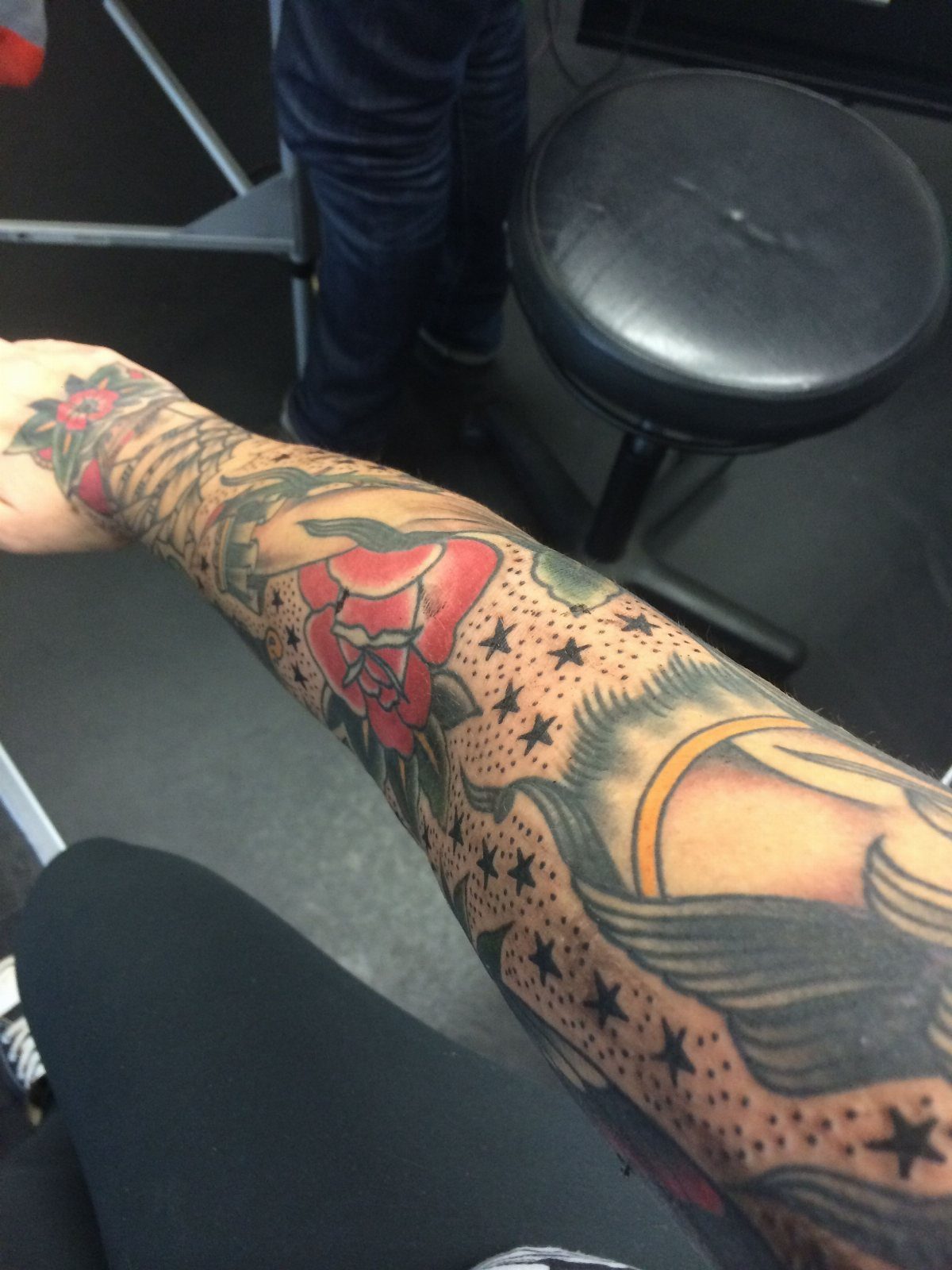
Five-pointed stars are the shape most people picture when they think filler, and that recognition is exactly why they work.
They fill negative space without competing with the main design, especially around florals like roses or peonies where the contrast in form helps both read.
Small works better here.
Keep stars small enough that the piece stays balanced; larger and they stop being filler. Black ink is standard, but a single red or blue star can pull attention where you want it.
These hold detail well over time. The 5 points stay distinct even after a decade, which matters when the filler sits next to something intricate.
3. Small Dots and Stars
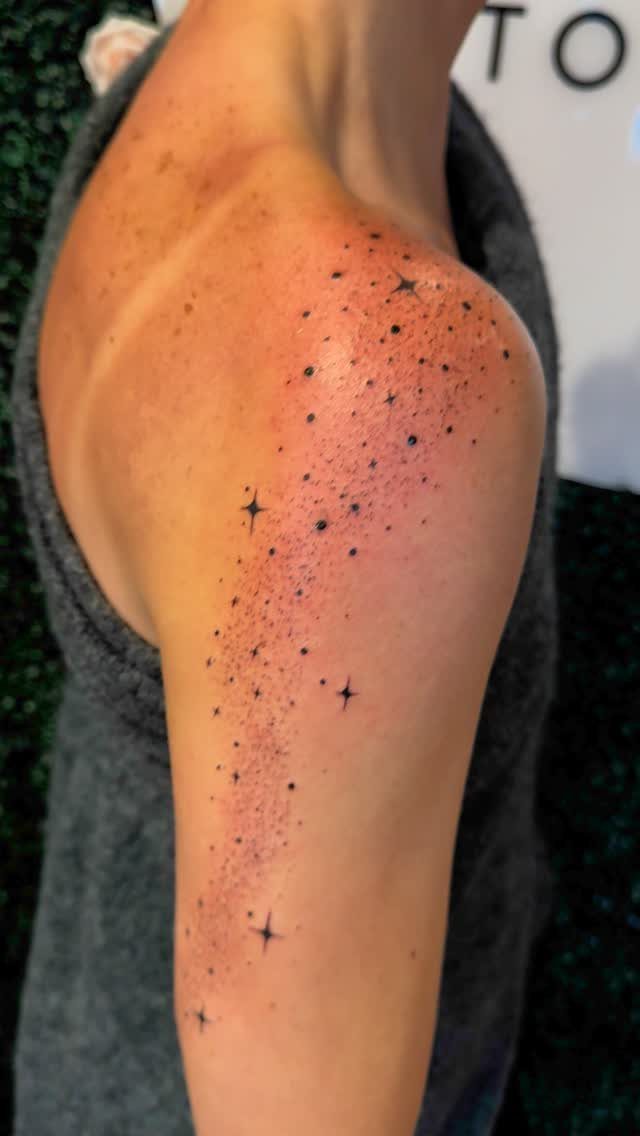
Dots scattered between stars soften the geometry and fill space that a star alone would miss. The mix gives you more coverage without adding weight, and the randomness keeps it from reading too uniform.
Size matters with dots.
Tiny dots fade into a blur over time; slightly larger holds better and still reads light. Place them unevenly, closer to some stars and farther from others, so the filler looks deliberate instead of grid-stamped.
This idea works well on shoulders and upper arms where you have room to spread the pattern. Tighter spots like wrists lose the effect.
4. Small Black Four-pointed Stars
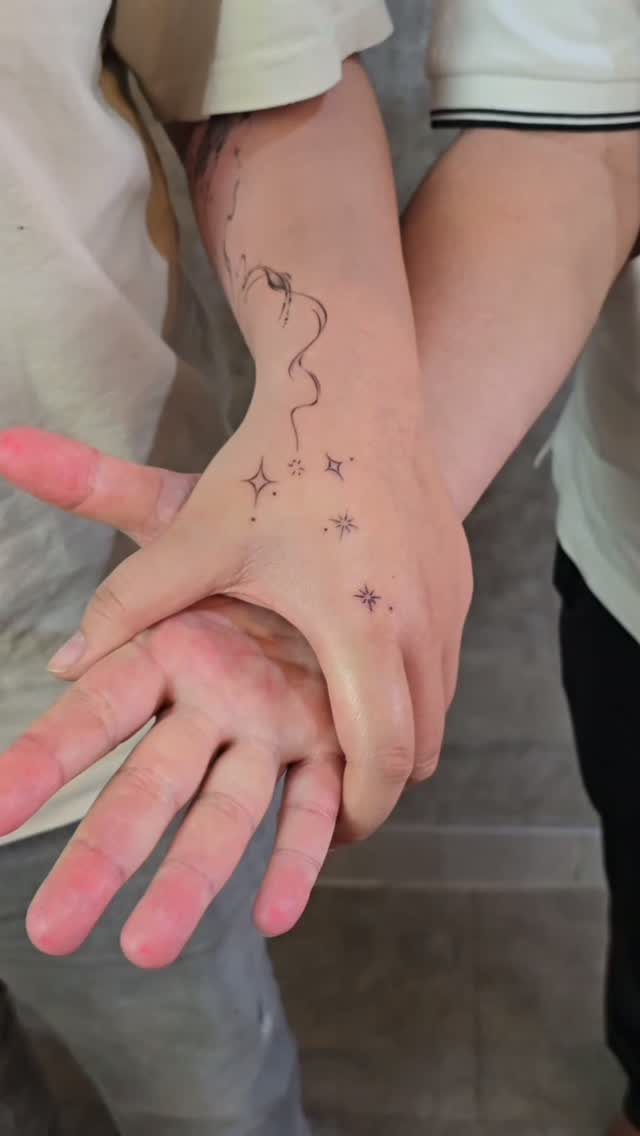
Four-pointed stars sit flatter and quieter than the five-pointed version, which makes them useful when you need filler that stays in the background.
The simpler shape also ages well; fewer points means fewer chances for lines to blur together as the ink settles.
These read best small.
Any larger and the proportion feels off next to detailed line work like portraits or script. Black ink keeps them subtle, though white ink works if you want filler that only shows up close.
Placement on hands and wrists is common, but expect faster fading there. Plan for a touch-up if you want them sharp.
5. Stars with Trailing Lines
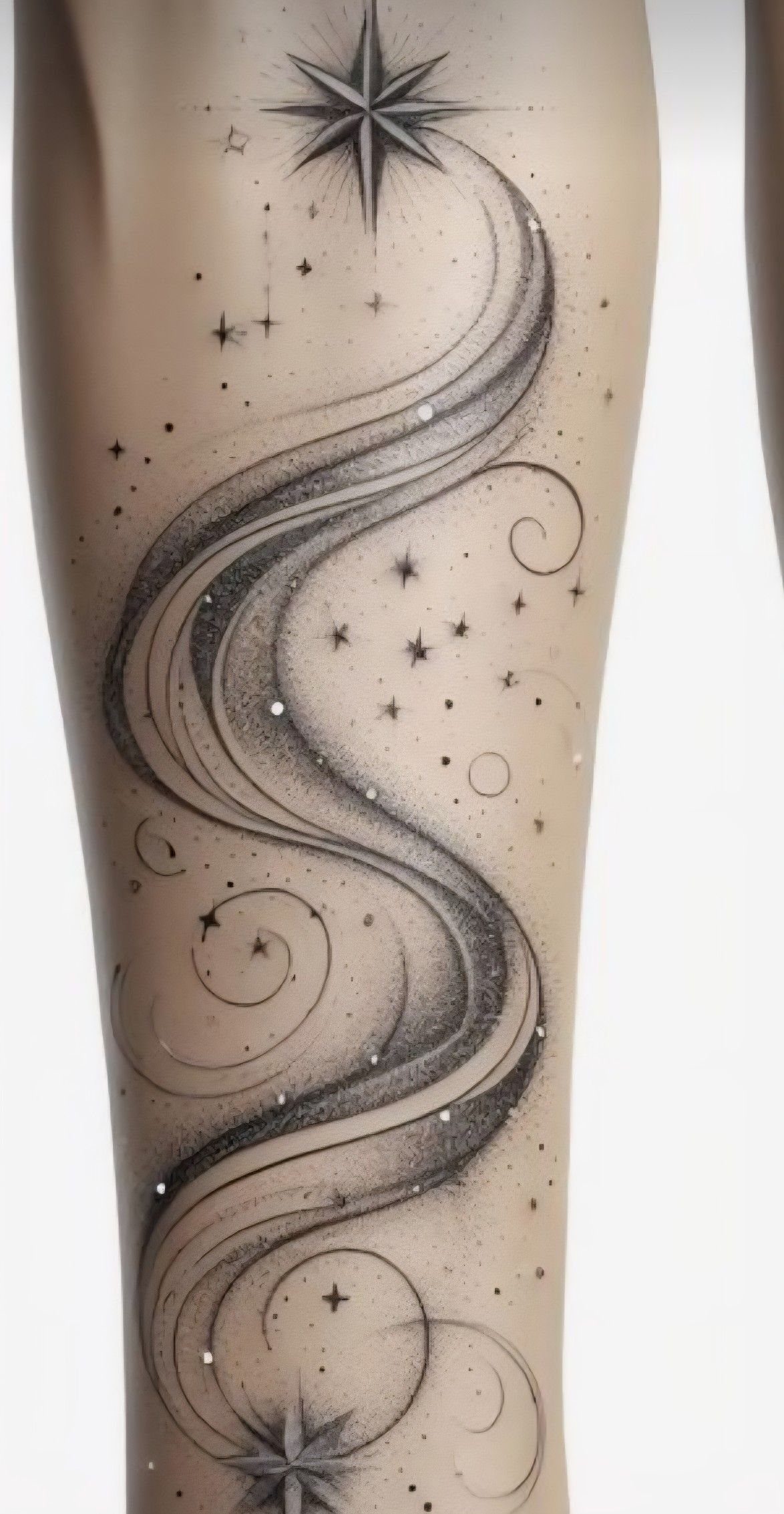
Stars with trailing lines add movement, which is rare in filler. The swirling lines can follow the curve of an arm or wrap around a leg, so the filler works with the body instead of sitting flat on it.
Stippling or dotwork inside the trails gives texture without solid black, which keeps the design airy.
This style fills larger gaps better than scattered small stars. If you have open space between pieces, a star with trails can bridge it without looking forced.
6. Crescent Moon and Stars
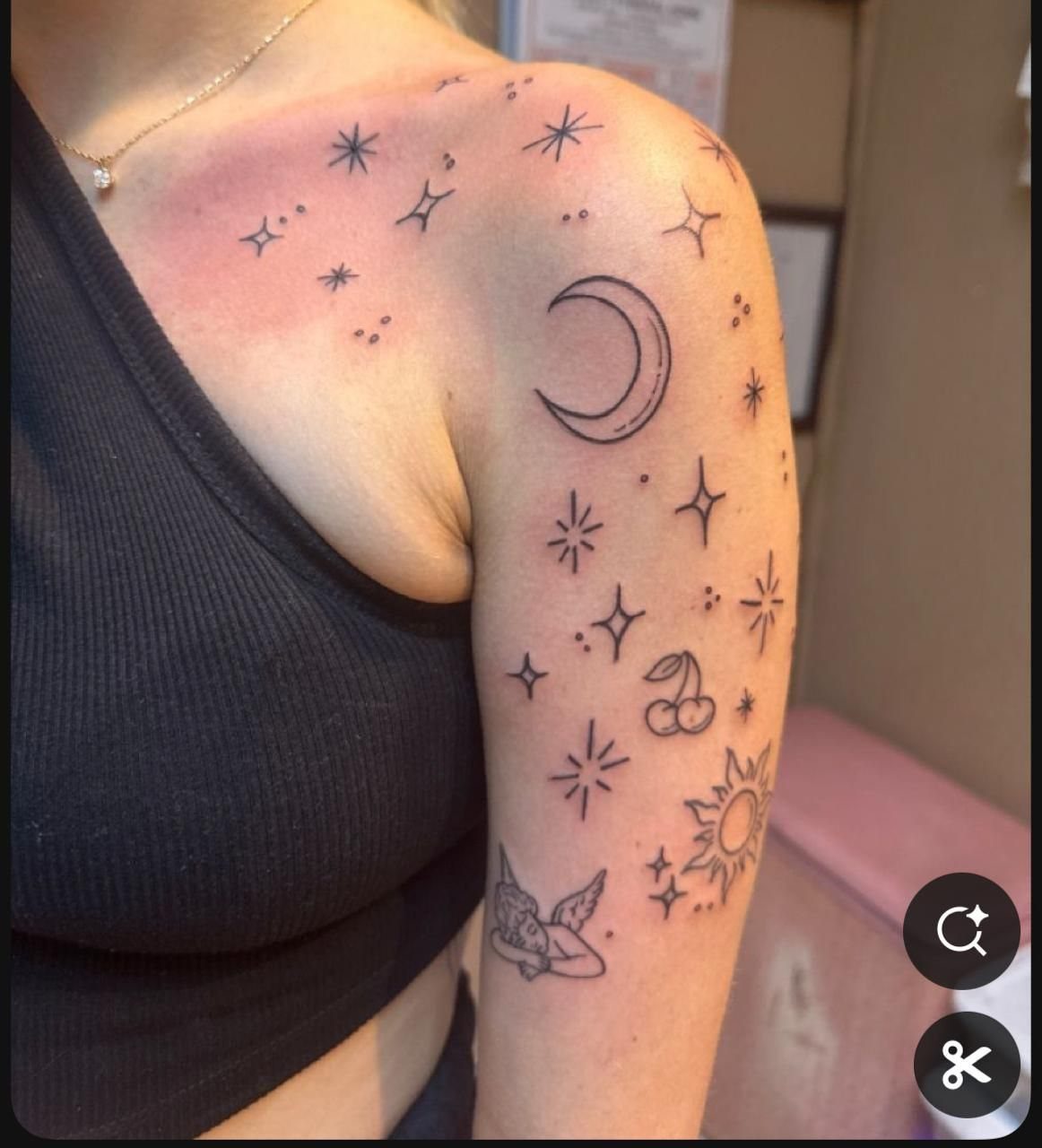
A crescent moon next to stars gives you a theme instead of just filler, which helps if you want the negative space to feel intentional. The mix reads as celestial without needing explanation, and the different shapes balance each other.
Small moons and stars keep the grouping light. Clustering them on a shoulder or upper arm works better than spreading them out; too much distance and they lose the relationship.
Black ink is standard, but adding one element in white or pale blue can lift the whole cluster if your skin tone holds light ink well.
7. Stars and Floral Filler Tattoo
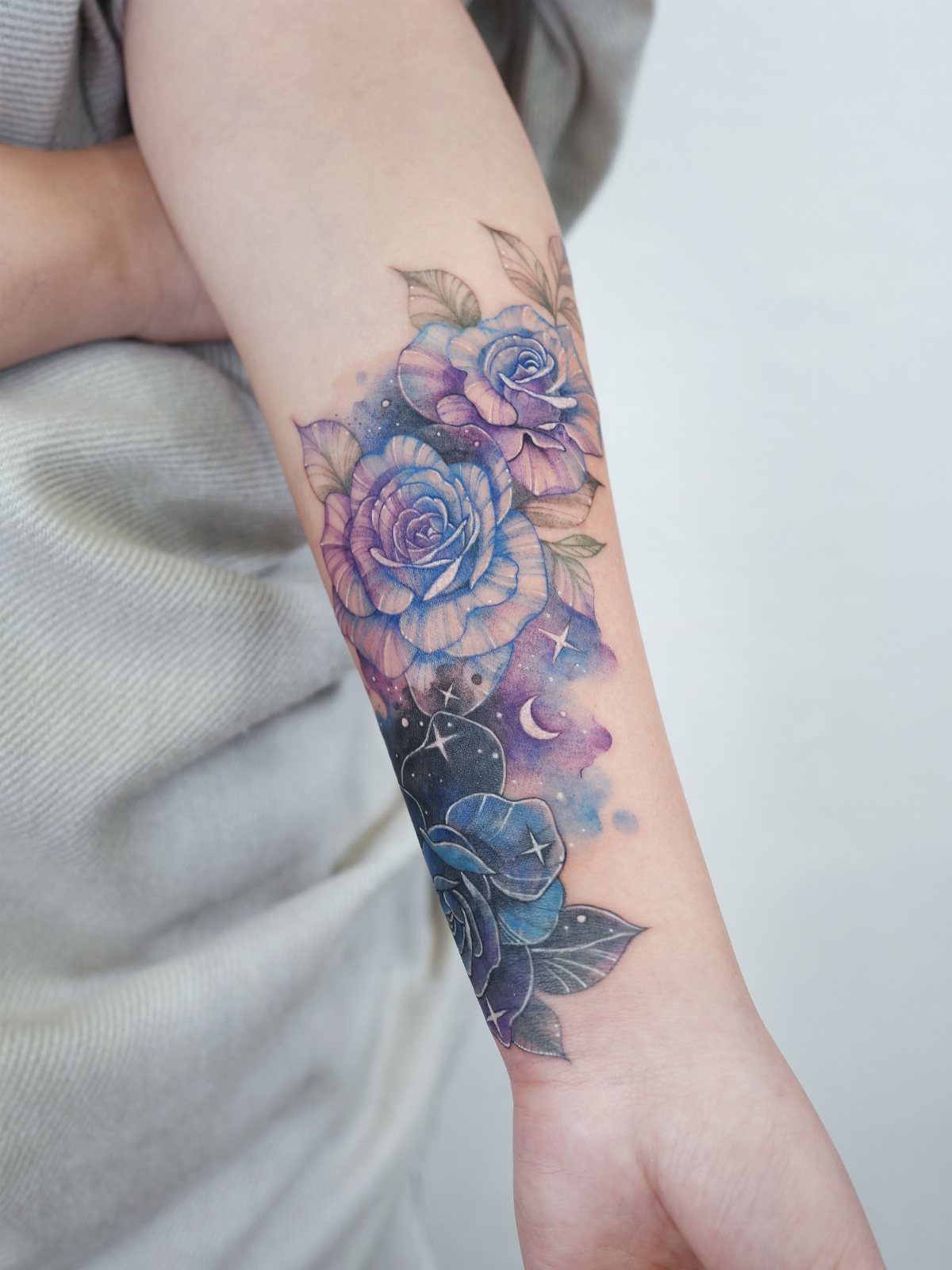
Pairing stars with flowers builds a theme that holds negative space together instead of leaving it scattered. The contrast in form helps both elements read, especially when the floral piece has weight and the stars stay small.
Purple and blue tones in flowers pick up well against black or white stars. If the main tattoo already has color, keep the stars simple so they support rather than compete.
Adding flowers brings scale and softness to areas stars can’t quite cover on their own.
If you have room between a floral piece and another tattoo, adding a few stars ties the space to the existing work without forcing a full sleeve.
Filling Gaps in Tattoos
Gaps appear in sleeves and half-sleeves when you space larger pieces out over months or years, and filling them later keeps the overall design from looking patchy.
Stars work because they scale down small enough to fit irregular negative space without forcing symmetry.
Dots sit closer to the edges of existing tattoos, and moons add a curve that softens the grid pattern stars can fall into.
Colorful traditional pieces benefit from black ink filler.
Random spacing looks better than even distribution.
Styles of Star Tattoos
Bold outlines hold up better than fine line on high-friction areas like elbows and knees. The thicker line resists fading where fabric hits repeatedly, though fine line still works on inner arms and chest.
Placement Ideas
Sleeves are the most common placement for star filler because they naturally collect multiple pieces over time, and the gaps between them show up clearly once you reach a certain level of coverage.
Upper arms and shoulders give you room to scatter stars without crowding, while forearms need tighter spacing to avoid looking sparse.
Hands and wrists work for standalone star clusters, though fading happens faster there. If you place stars on fingers, expect the lines to soften within a year or two.
Stars between larger tattoos on the leg follow the same logic as sleeves. Thighs hold detail well, while ankles and calves fade faster and need touch-ups if you want the filler sharp long-term.