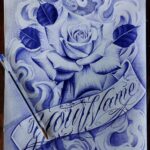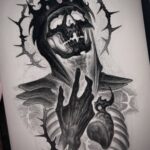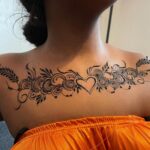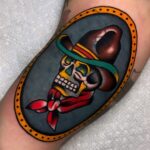
Stomach cover-ups range from centered mandalas that work with scars to classical statues and surreal creatures that stretch from ribs to hip.
Designs that layer heavy shading, like mandalas and black-and-grey skulls, hide darker ink underneath, while floral layouts soften faint edges with petal overlap and light blending.
1. Floral Stomach Cover-up
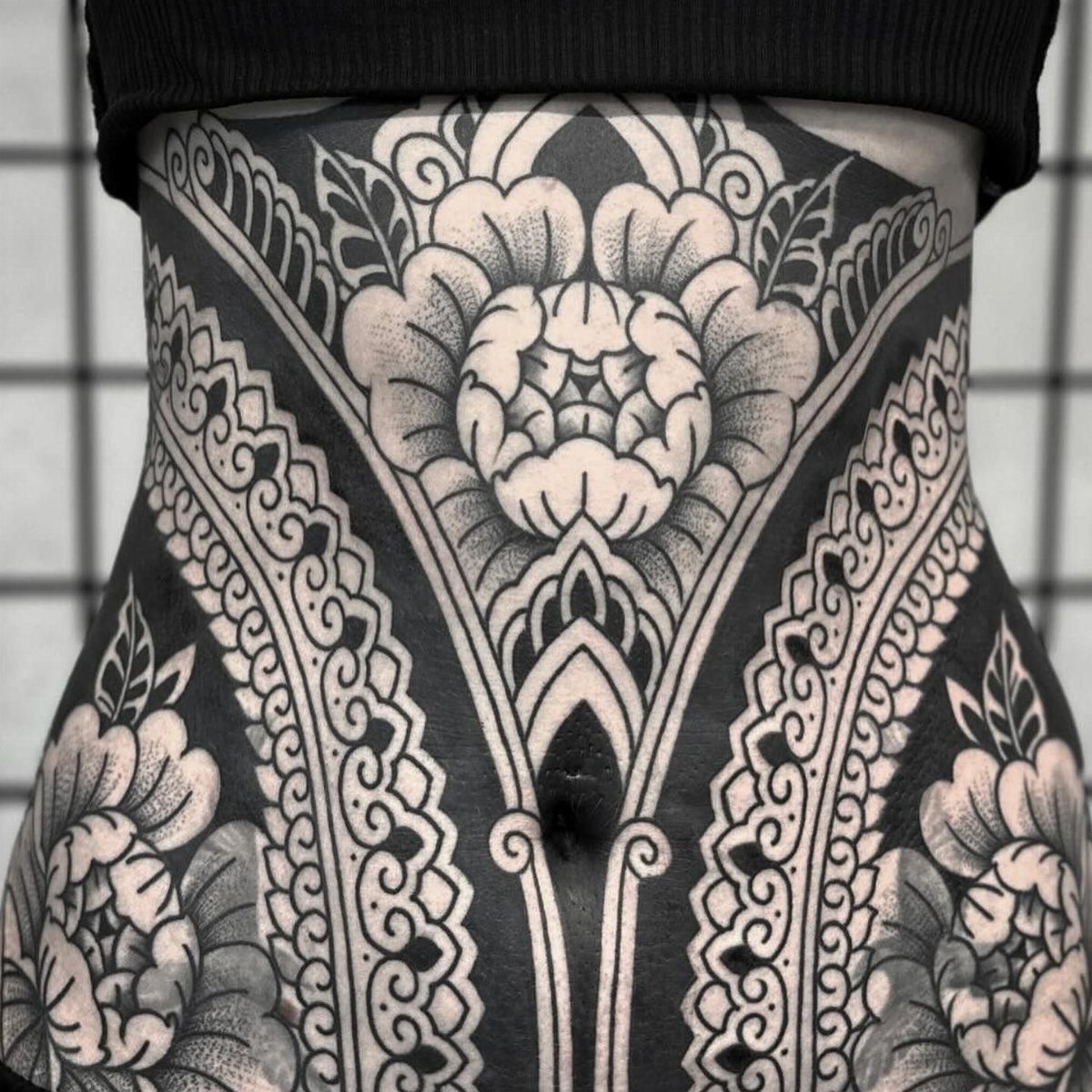
Floral designs use the natural curves of petals and leaves to soften the edges of what you’re covering. The stomach shifts with every breath and movement, and flowers bend with it instead of fighting it.
Black and grey work gives you the contrast needed to block out an old tattoo without needing heavy saturation.
Your artist can layer shading where the old ink sits darkest and let lighter petals fall where the original piece was already faint. The symmetry here centers the design and keeps it balanced as your body moves.
2. Geometric Stomach Cover-up
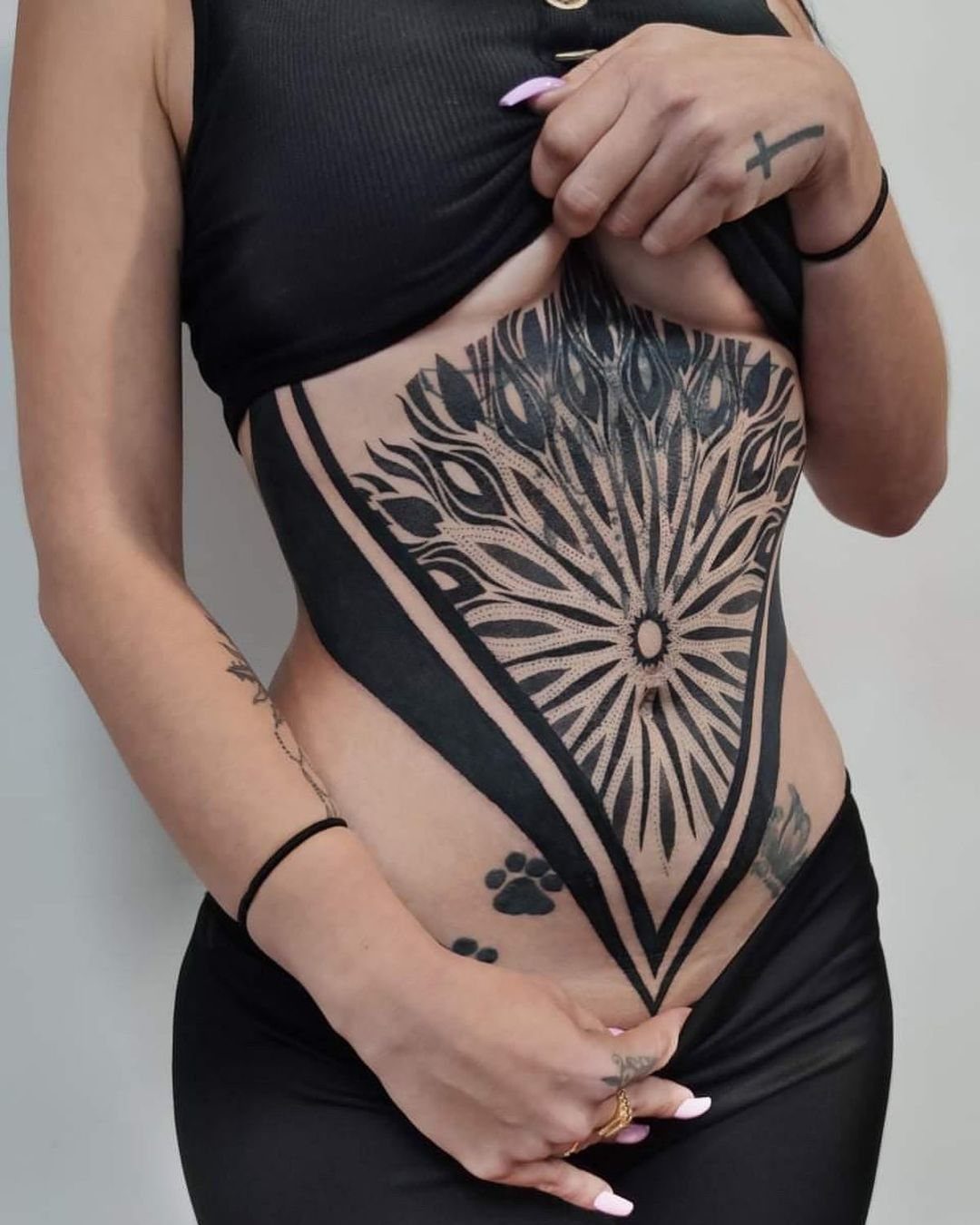
Geometric patterns build density exactly where you need it. Sharp lines and repeating shapes create solid blocks of ink that cover old work without looking like a patch job.
The structure of geometric designs lets your artist control exactly how much black goes into each section.
Radiating patterns like this one pull the eye toward the center, so even if the old tattoo sits off to one side, the new piece reads as intentional.
Symmetry matters: a centered geometric layout works with the natural line down your stomach instead of competing with it.
3. Black and Grey Skulls Stomach Cover-up
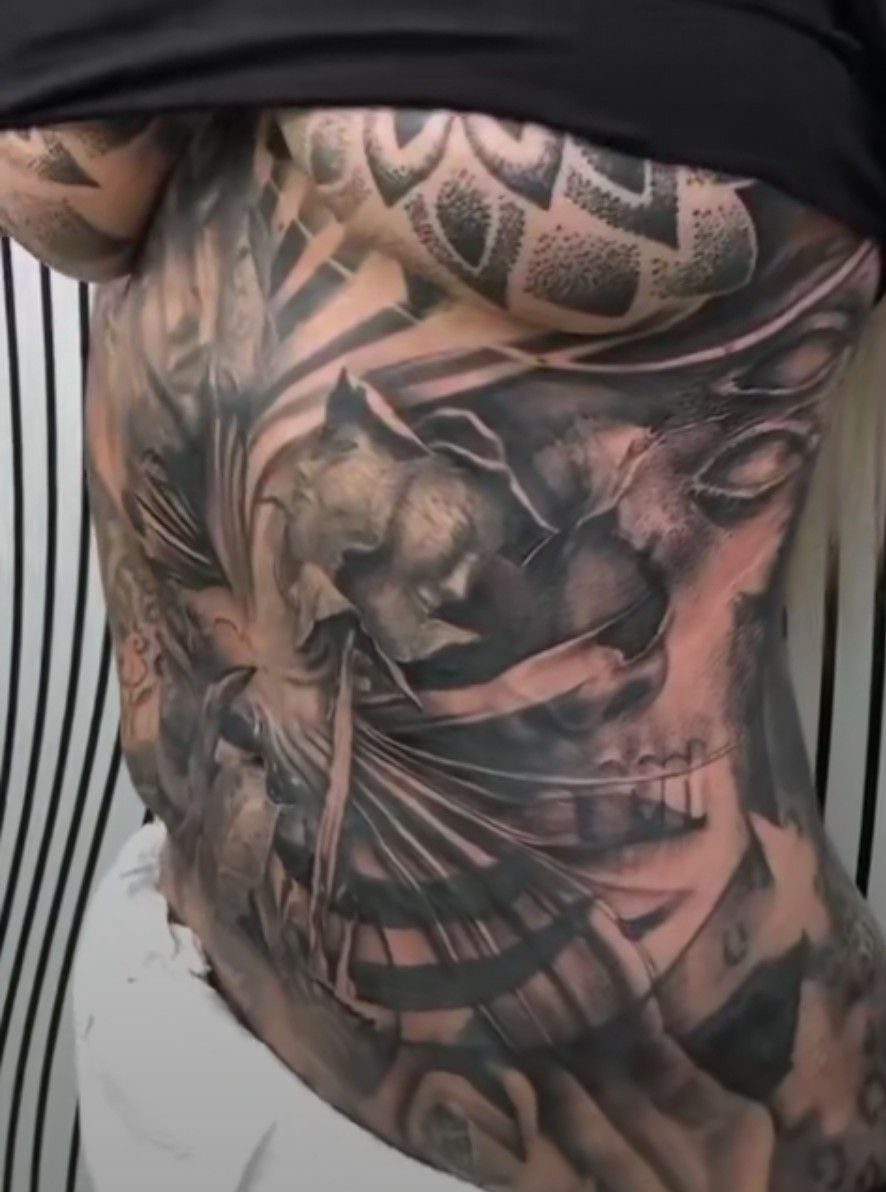
Skulls in black and grey give you heavy coverage where old ink needs it most. The deep shadows in eye sockets, jawlines and abstract shapes around the skull create solid blacks that block out previous work without needing color.
This approach works well when the old tattoo has bold lines or dark areas you can’t lighten with laser.
Your artist can use the skull’s natural anatomy to place the darkest shading over the heaviest parts of what you’re covering. The abstract elements extending from the skull let the design stretch across scars or uneven skin texture.
4. Mandala Stomach Cover-up
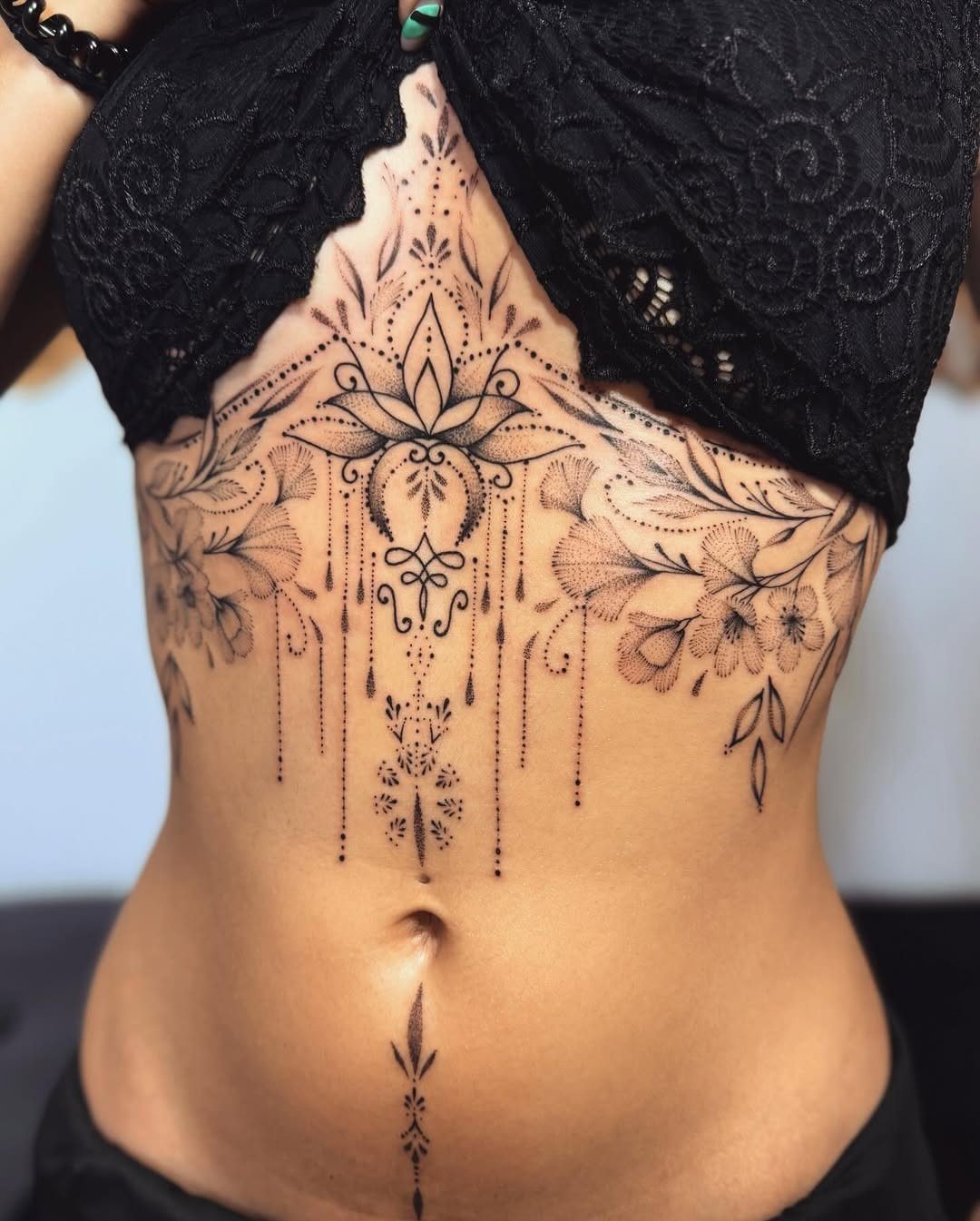
Mandala patterns use repetition and tight linework to build coverage gradually. Each concentric ring adds another layer of ink, and your artist can adjust the density as the design moves outward from the center.
The symmetry of a mandala works particularly well over scars because the pattern itself expects regularity, so small variations in how the skin takes ink read as part of the design.
Placement matters: centering the mandala on your sternum or just below your ribcage lets the pattern follow the natural contours of your torso. Shading in the petals and geometric elements creates depth that distracts from whatever sits underneath.
5. Dragon Stomach Tattoo
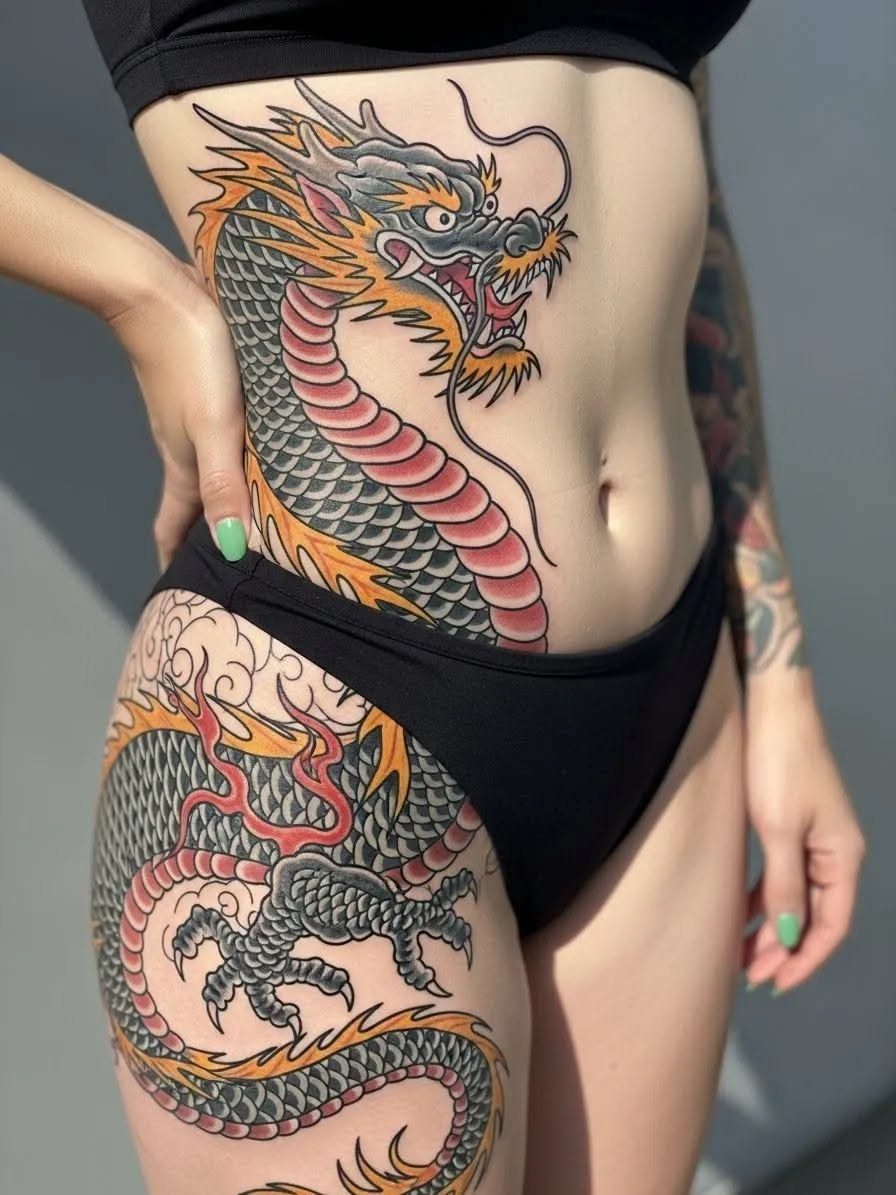
A Japanese dragon stretches from ribs to hip, giving you enough real estate to cover large pieces or multiple old tattoos in one session.
The scales, flames and clouds that surround the dragon create built-in areas of dense color exactly where you need them.
Red and yellow scales catch attention and pull focus away from the covered area. Your artist can place the dragon’s body over the old tattoo and use the tail, claws or surrounding elements to blend the edges into clean skin.
The design reads as one piece instead of a cover-up because the dragon’s movement gives it a reason to span that much space.
6. Classical Statue Stomach Tattoo
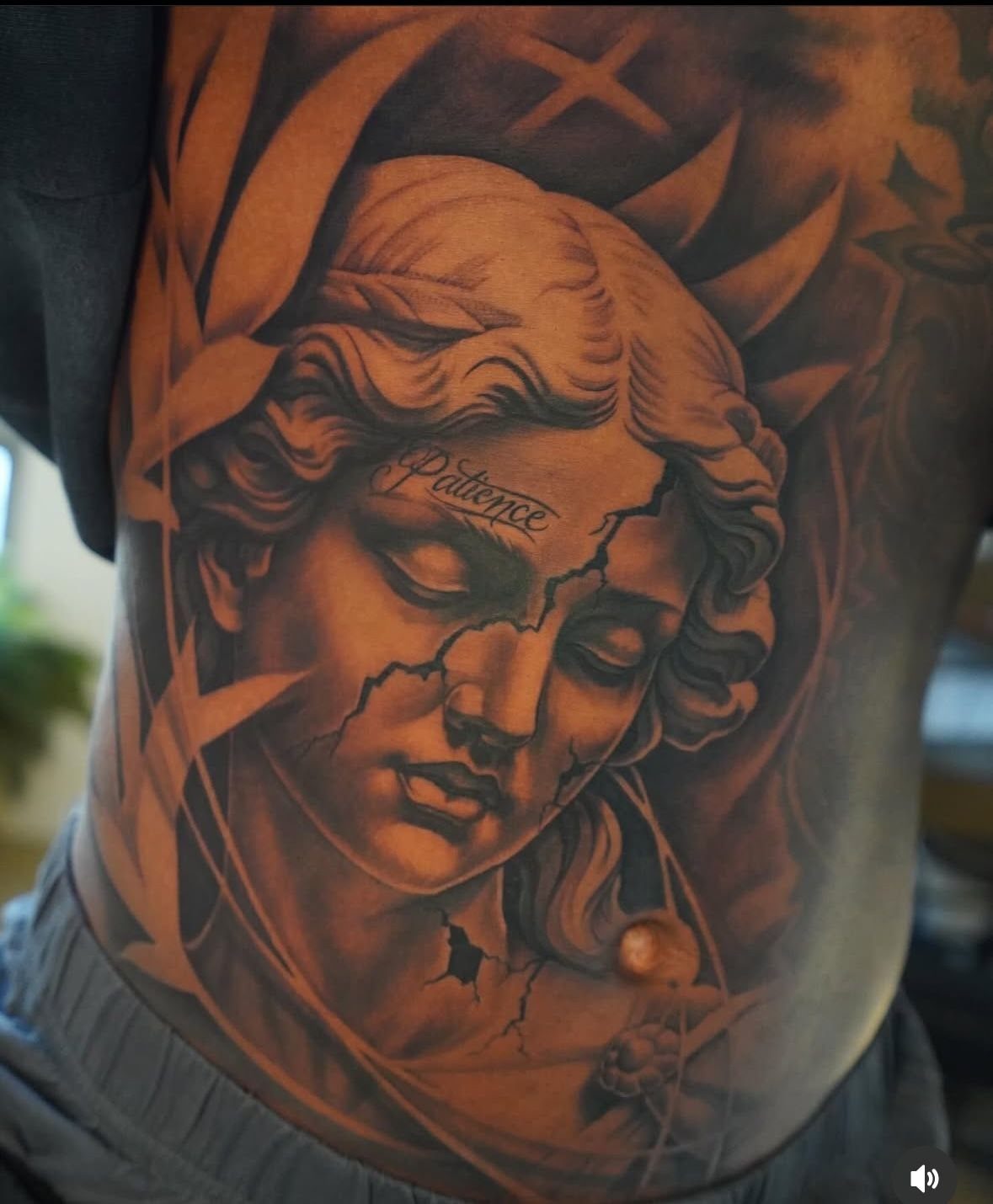
A cracked statue face gives you realistic shading that can cover dark ink without looking forced.
The fractures and texture in the stone create natural breaks where your artist can place the heaviest blacks, and the grey tones fill in everywhere else.
Realism demands precise shading, which means your artist will likely need multiple sessions to build up the depth.
The cracks work particularly well over old linework because they interrupt the eye’s path across the design, so even if some of the original tattoo shows faintly through the grey wash, it reads as part of the stone texture.
Text can sit across the statue’s forehead or along a crack line to add meaning without another separate piece.
7. Surreal Creature Stomach Tattoo
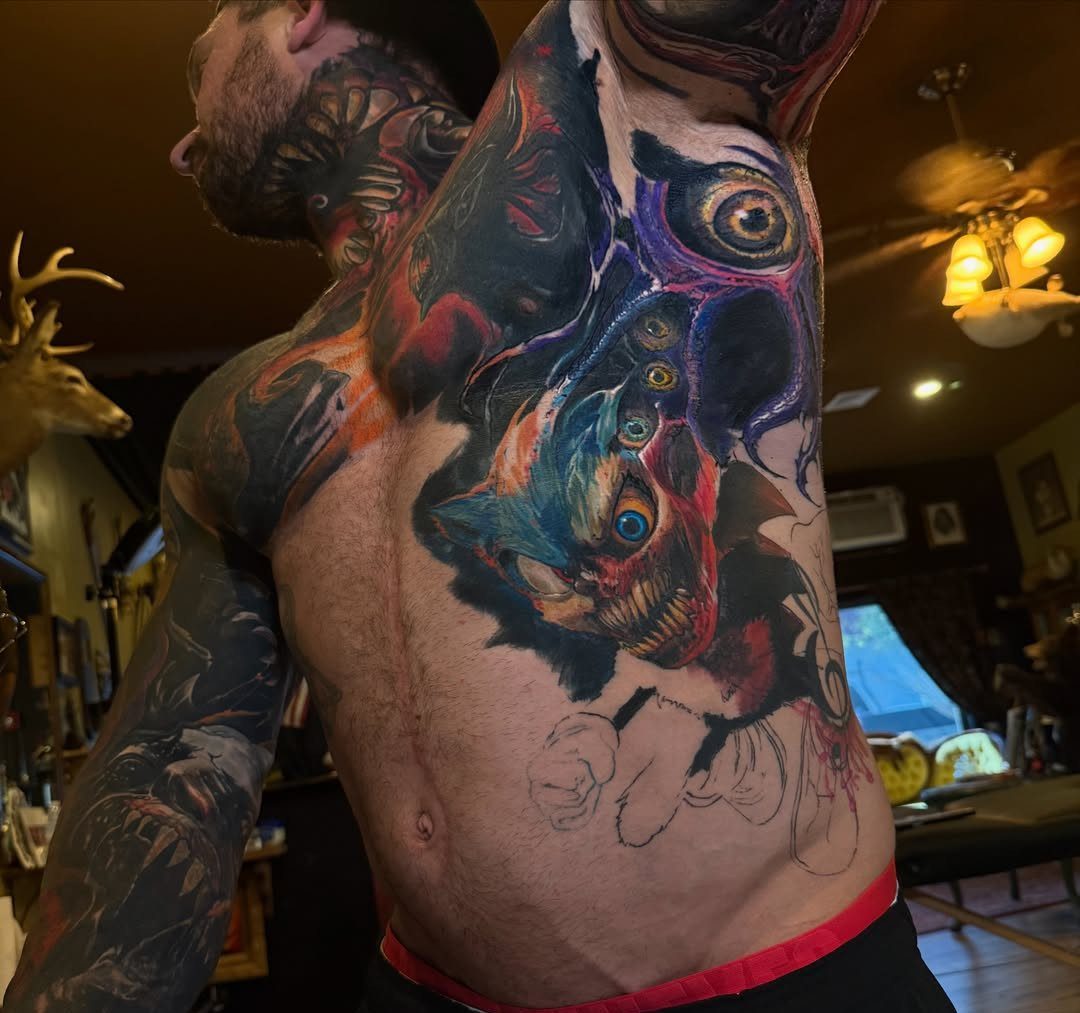
Surreal creatures let you stack as many colors and textures as you need to bury an old tattoo.
Multiple eyes, twisted limbs and swirling backgrounds create chaos on purpose, so heavy coverage reads as part of the design instead of a mistake you’re hiding.
The overlapping elements give your artist room to place the darkest ink exactly where the old piece shows through.
Color saturation matters here: bright oranges, purples and greens pull attention to the new work, and the dark outlines between each section break up whatever sits underneath. This approach works best if you’re comfortable with a piece that demands explanation.
Pain Level of Stomach Tattoos
You feel the machine more directly on the stomach than you would on your shoulder or calf.
Skin here is thin, and the tissue underneath offers no cushion. The closer you get to your ribs or hipbones, the sharper it gets.
Breathing moves the skin constantly, which means your artist has to pause and adjust more often than they would on a limb.
Sessions tend to run shorter because the area fatigues faster. If you’re covering a large piece, plan for multiple appointments instead of one marathon sit.
Weight fluctuations change how the skin sits, and that can affect how the tattoo heals and settles. Scar tissue under an old tattoo sometimes hurts more when the needle passes over it a second time.
Design Considerations for Scars
A surgical scar or old tattoo needs to sit entirely inside the new design, not at its edge. If the piece ends right where the scar stops, any shifting in how your skin heals will make the border obvious.
I leave at least an inch of new ink on every side so the covered area disappears into the design.
Scars take time to settle.
Fresh scar tissue is raised, red, and still changing. Most artists want you to wait a full year after surgery before tattooing over the area, and some wait longer if the scar is still firm or discolored.
A straight scar from a C-section sits low and horizontal. Flowing designs like vines or florals follow that line instead of crossing it at an angle.
Tattoo Placement Advice
Take a clear, front-facing photo of your stomach in good light before your consultation so the artist can plan around what’s already there.
The camera shows exactly how much space you have to work with and where the old tattoo or scar actually sits. What looks centered in a mirror often isn’t once you stand up straight.
Your stomach stretches when you sit, breathe, or move, so a piece that relies on perfect symmetry will distort. Florals, animals in motion, and organic shapes adapt to that movement instead of fighting it.
Centering a design on your sternum or navel anchors it to a fixed point. Anything placed off to one side can look unbalanced as your body shifts.
Frequently Asked Questions
What are the best tummy tuck cover-up tattoos?
Designs that flow with your body instead of sitting rigid work best: florals, vines, or organic shapes that bend when your skin moves.
The design should reach at least 1 inch beyond the scar in all directions to blend the mark into the overall image.
Locking the tattoo to your sternum or navel gives it a stable reference point that won’t drift when your abdomen changes shape.
Are stomach tattoos really painful?
Yes, stomach tattoos hurt more than work on areas with muscle underneath. The needle hits bone and internal structures more directly on the stomach because there’s very little muscle or fat separating them from the surface.
Each breath lifts and drops the canvas, so your artist has to stop and restart frequently, making full sessions harder to finish in one go.
What tattoos are the hardest to cover up?
Old tattoos with bold lines or solid black areas need the heaviest coverage, often requiring designs with deep shadows like skulls or dense geometric patterns.
Tattooing over scar tissue can feel more intense the second time because the scarred area responds differently to the needle.
Laser can lighten the darkest parts before your cover-up session if the original work is too heavy to bury in one pass.
Can I get a tattoo on my belly to cover up stretch marks?
Yes, but the design has to work with the texture instead of ignoring it. Florals work with stretch marks because their natural asymmetry hides any slight unevenness in how the pigment settles.
Your artist will assess whether the stretch marks have fully settled and choose a style that builds coverage gradually where the skin texture changes.