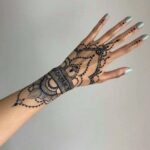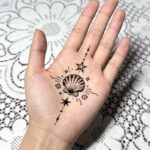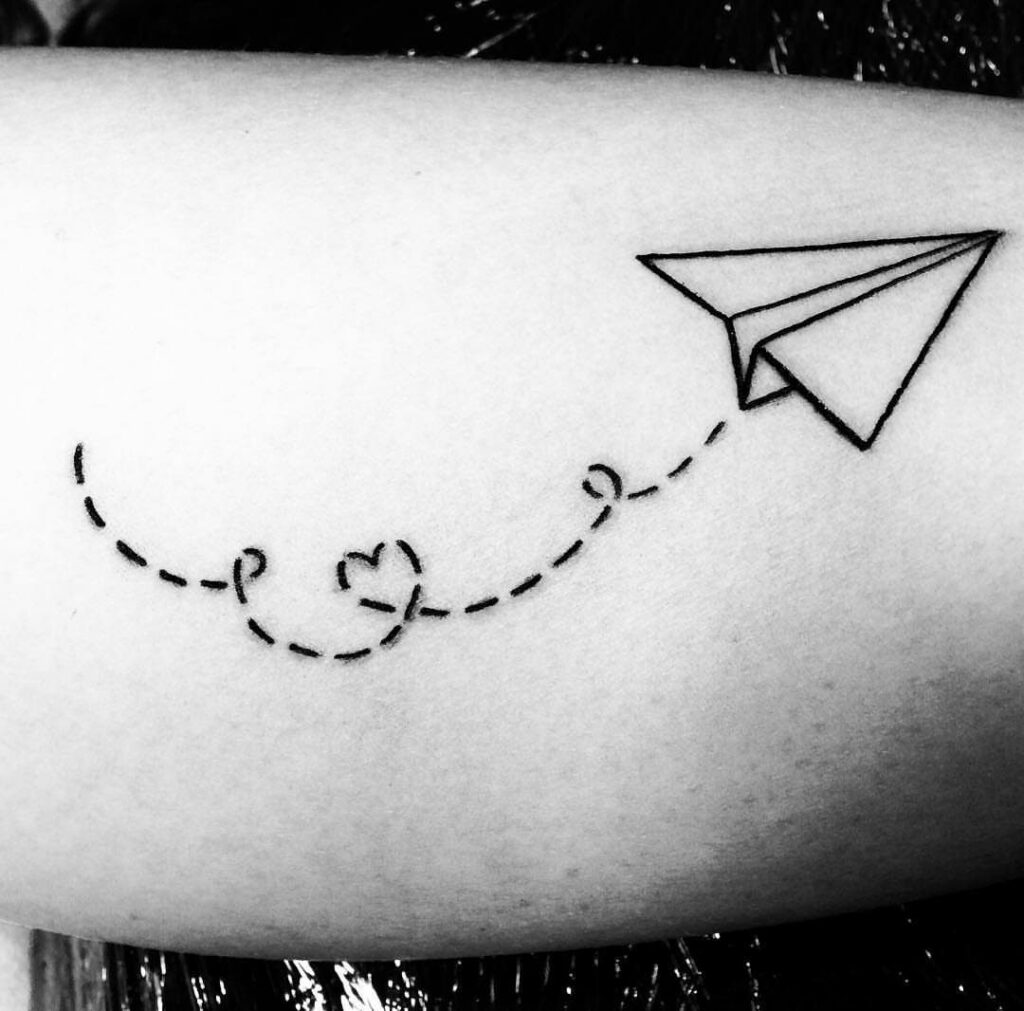
A paper airplane takes a few straight lines and some evenly spaced dashes, while a traditional rose needs layered petals and bold color fills.
Some designs finish in one quick sitting, others give you room to show off clean line work and shading control.
A 1201RL needle handles the fine outlines on a monogram or the dashed trail behind that airplane, but the rose outline and tribal heart extensions call for a 3RL or 5RL so you can lay down thicker strokes without making multiple passes.
1. Simple Heart Tattoo
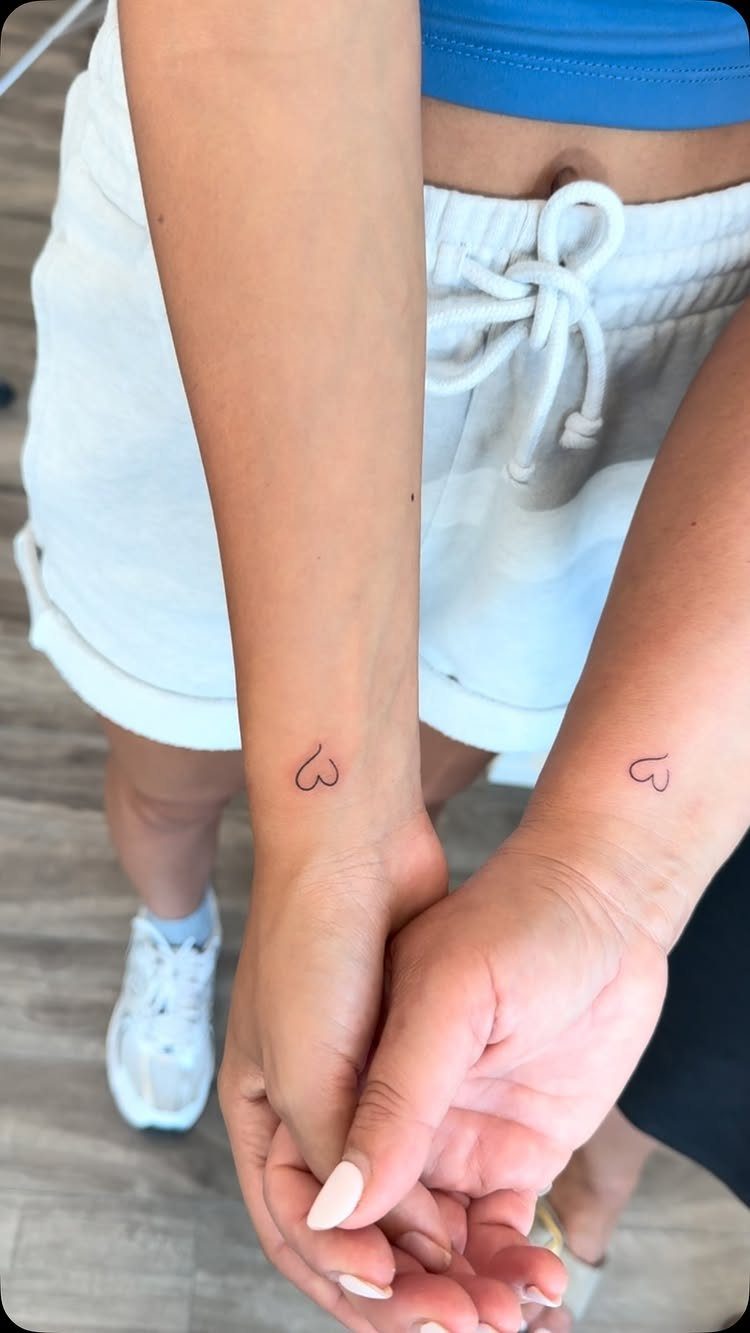
A heart outline drawn with a single continuous stroke is about as simple as a tattoo gets.
The shape is familiar enough that even slight wobbles won’t wreck it, which makes it a solid first attempt if you’re learning to control line weight.
Start at the top center, curve down one side, then mirror it on the other. Keep the line thickness consistent and avoid lifting your hand mid-stroke.
2. Cute Cherry Tattoo
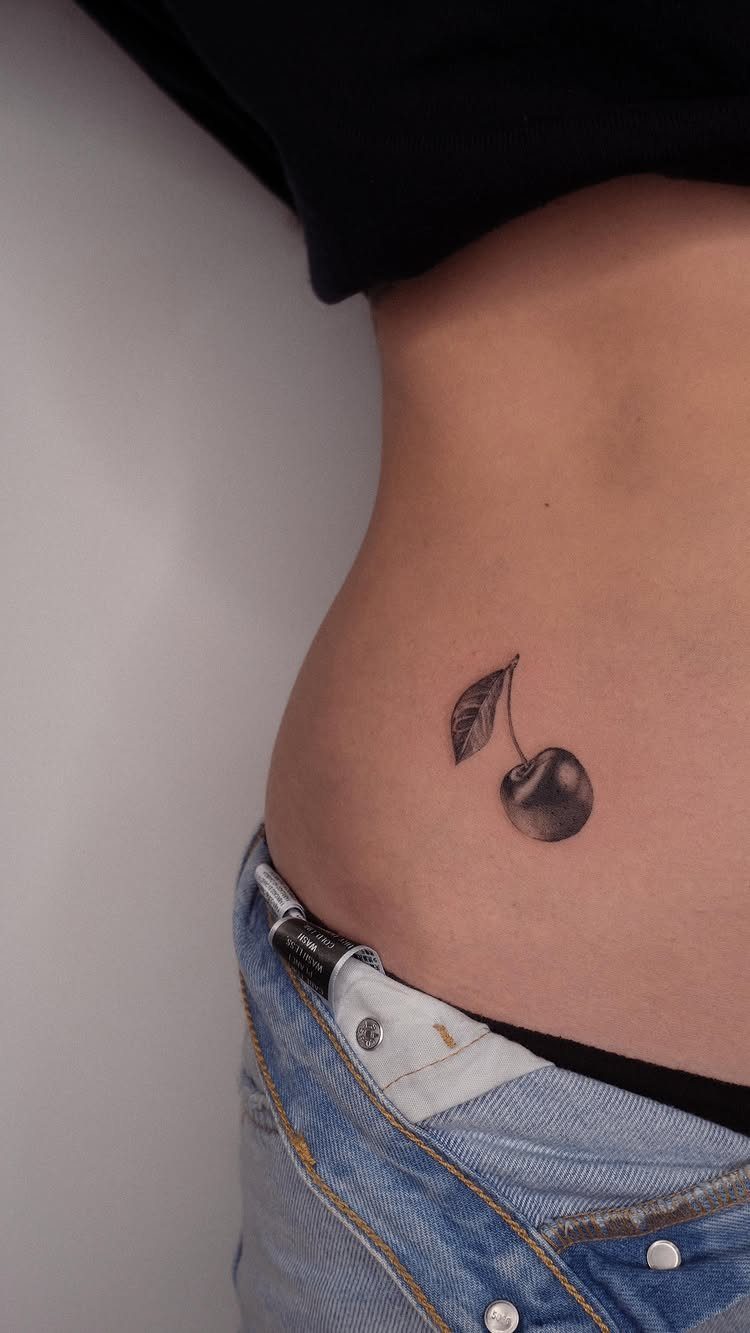
A cherry on a stem gives you clean curves without much fuss. The circles don’t need to be perfect, and the stem and leaf add just enough detail to keep it from looking flat.
Draw the stem first in a gentle curve, then add the cherry shape at the end.
Add a single leaf where the stems meet. If you want depth, shade one side of the cherry with small hatch marks or a light dot pattern.
3. Easy Paper Airplane Tattoo
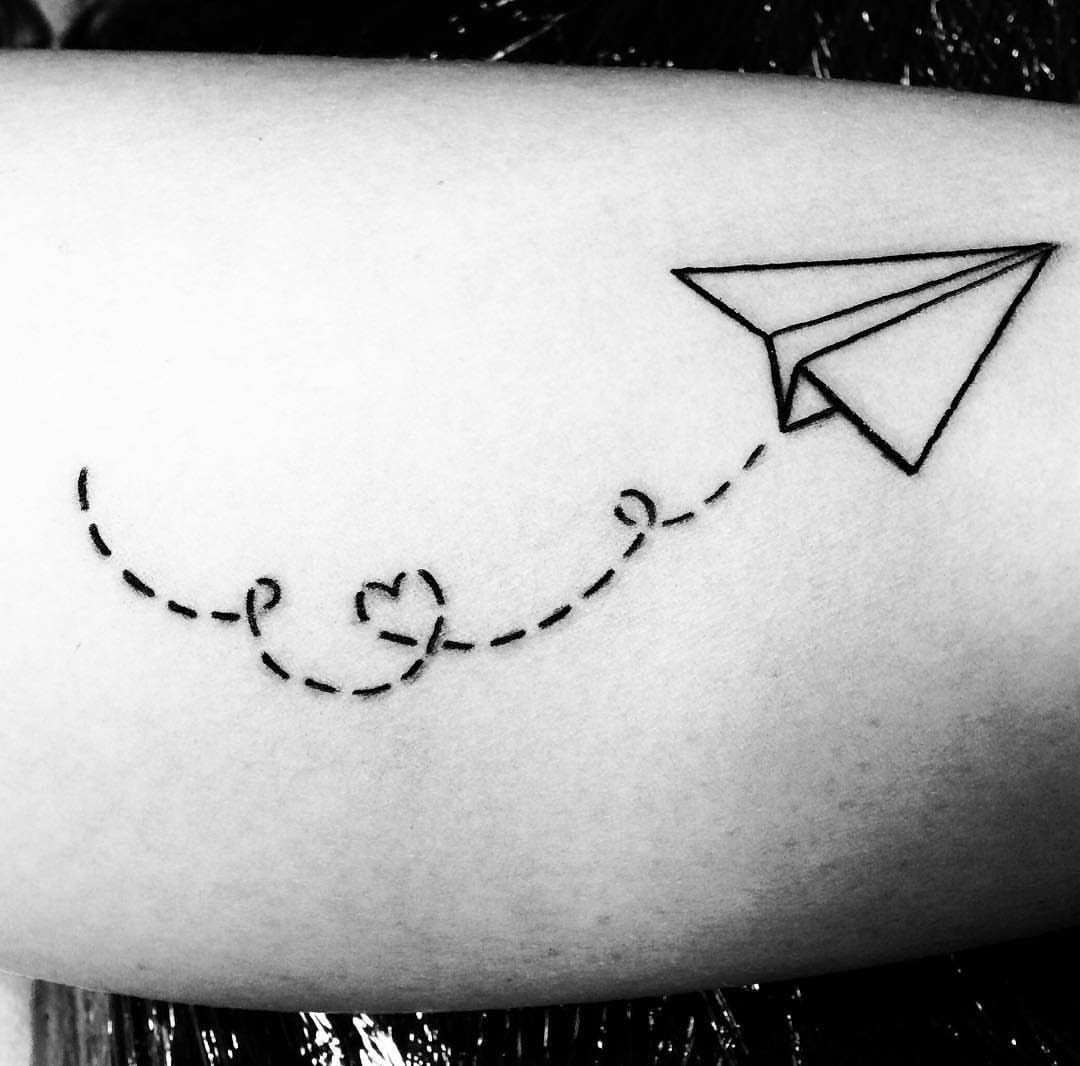
A paper airplane is a few straight lines folded into a triangle, which means you can sketch the whole thing fast. The dashed trail behind it adds motion without adding difficulty.
Draw the airplane body first, then extend a line of evenly spaced dashes curving away from the tip.
The heart at the end is optional but turns the design into something about distance or connection. I’d keep the whole piece under 3 inches so the dashes stay readable.
4. Easy Elephant Tattoo
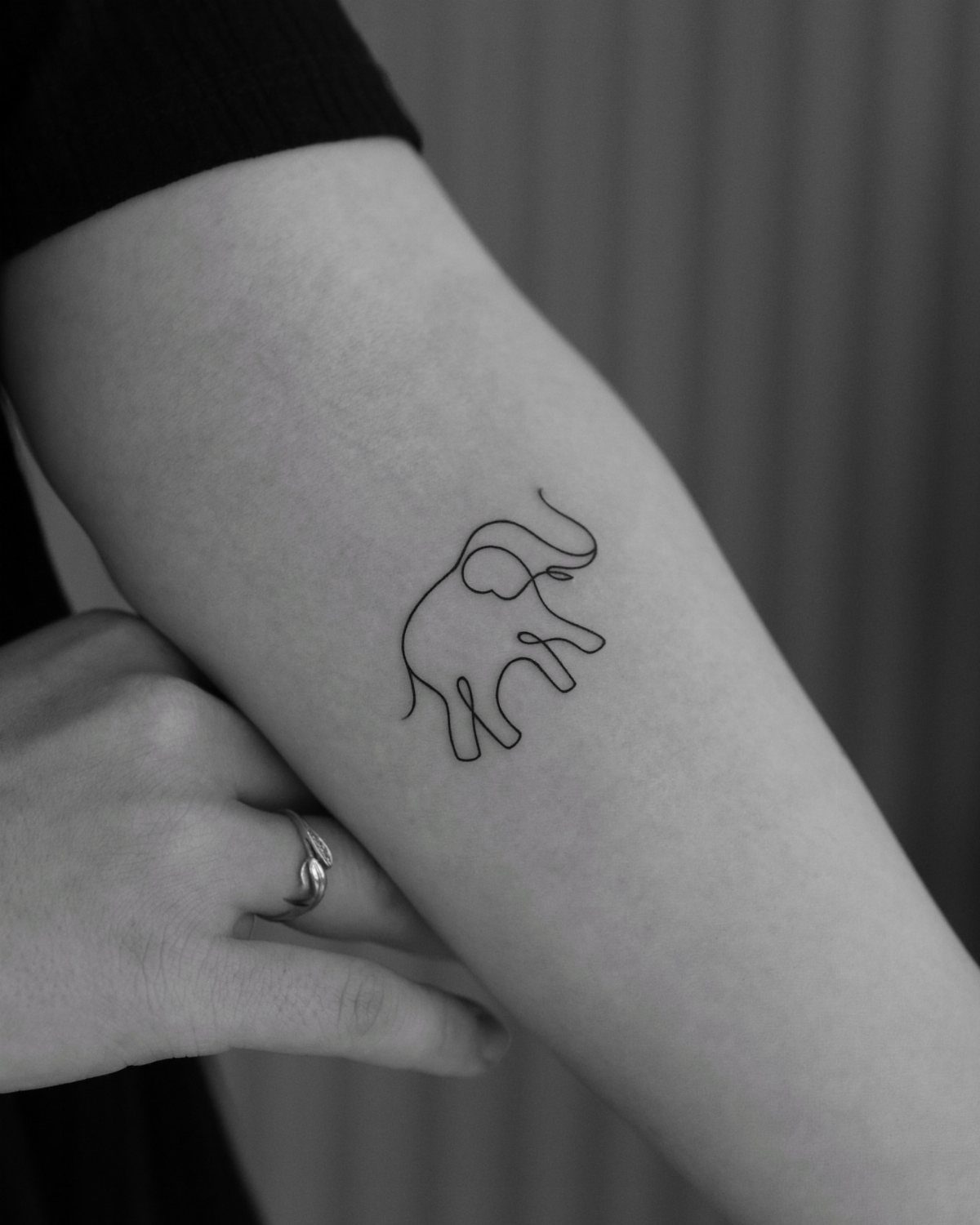
Animal tattoos work well when you strip them down to their most recognizable feature.
For an elephant, that’s the trunk. A single line that traces the profile, ears and trunk in one continuous stroke gives you a silhouette that’s immediately clear without any shading or color.
Start at the top of the head, follow the ear down, then loop around to form the trunk.
The line can be slightly thicker at the body and taper toward the trunk tip. If you’re placing it on a forearm, keep the overall height around 2 inches so the proportions stay balanced.
5. Traditional Rose Tattoo
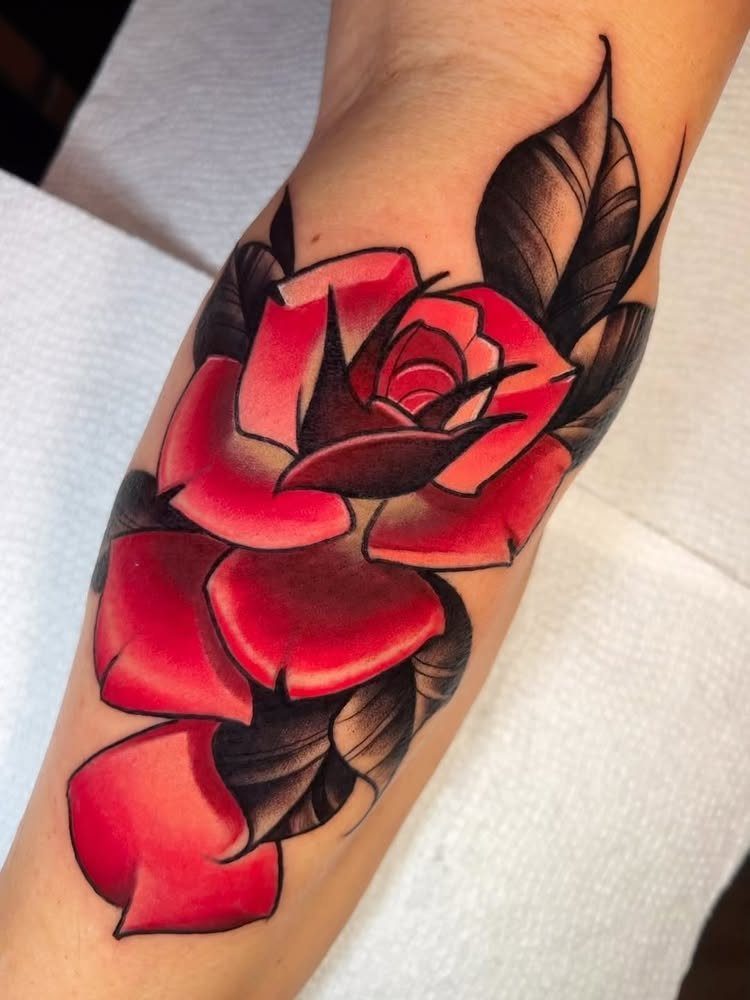
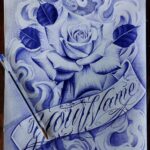
A traditional rose is built from a center spiral and layered petals radiating outward. The bold outline and limited color make it easier to draw than a realistic flower, and it’s forgiving if your petals aren’t perfectly symmetrical.
Draw a small spiral in the center, then add curved petal shapes around it in layers, getting larger as you move out. Fill the bloom with red and the leaves with black.
The style is meant to be clean and graphic, so soft shading and gradients stay out. Size it around 3 inches tall for a forearm or calf placement.
6. Minimalist Sun Tattoo
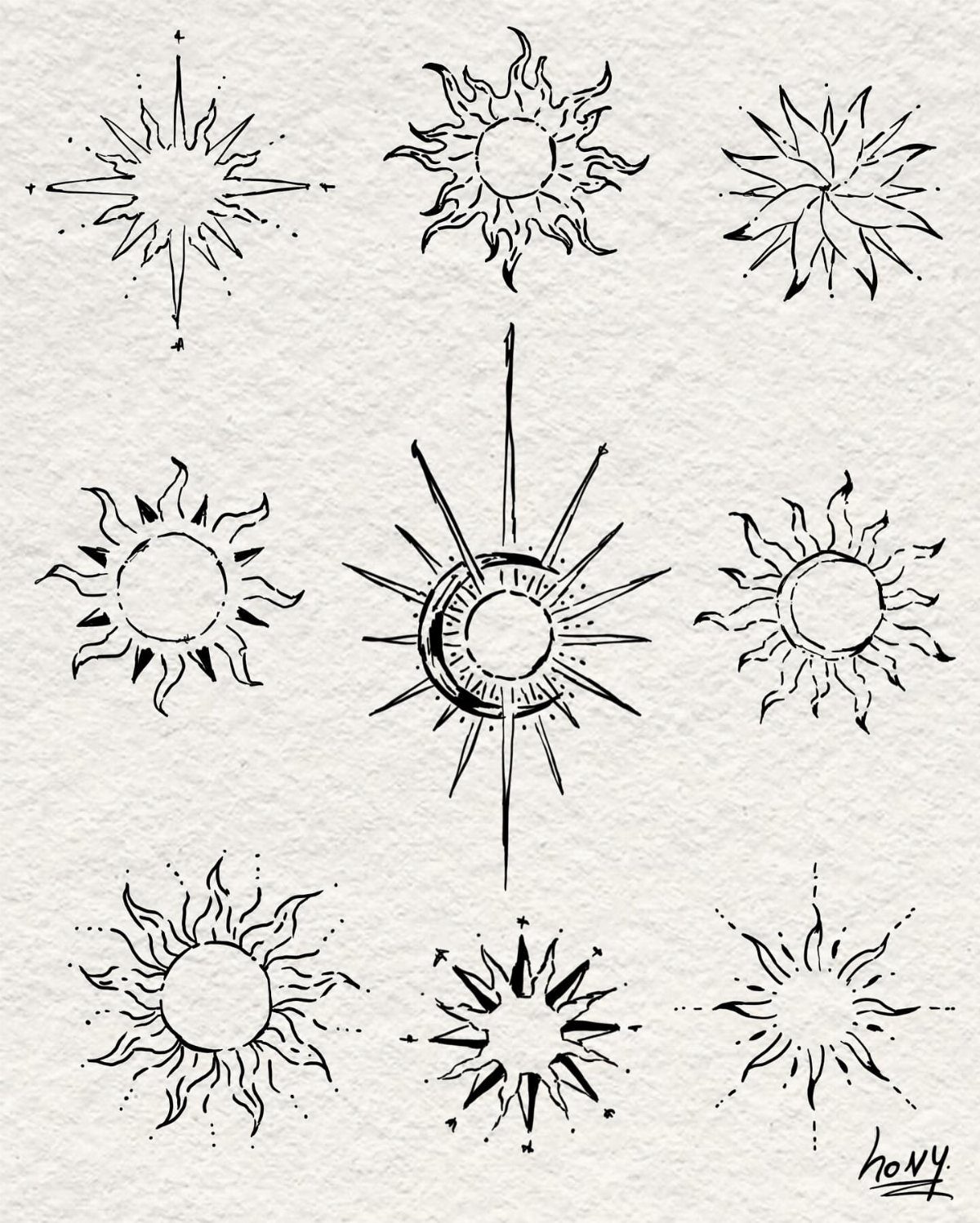
A minimalist sun is a circle with rays, and the circle doesn’t need to be perfectly round to work. Freehand curves give it a handmade feel that suits the style better than a compass-drawn edge.
Sketch the circle first, then add rays in whatever pattern you like: short dashes, long lines, or alternating lengths. I’d keep the diameter around 2 inches so the rays stay proportional and the design doesn’t look crowded.
7. Yin Yang Tattoo
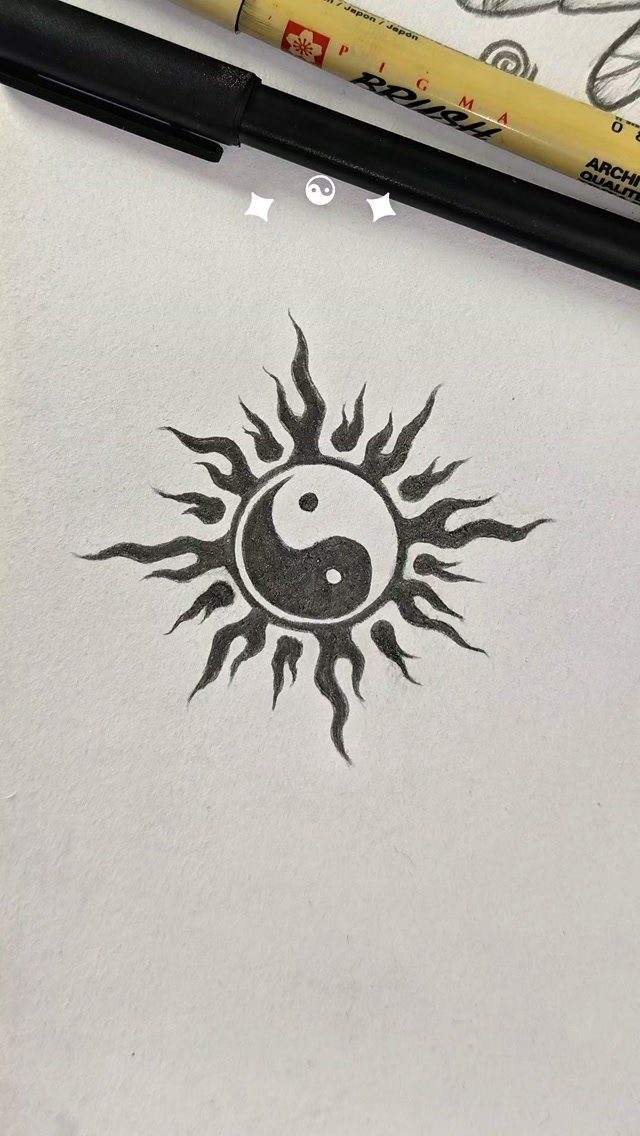
2 interlocking halves with opposite dots create the balance symbol, and the curved dividing line is the only part that needs real control. The circle can be drawn freehand or traced.
Draw the outer circle, then add the S-curve that splits it down the middle.
Fill one side black and leave the other blank, then drop a small dot of the opposite color into each half. The rays radiating outward add a decorative frame without much extra work.
8. Serotonin Molecule Tattoo
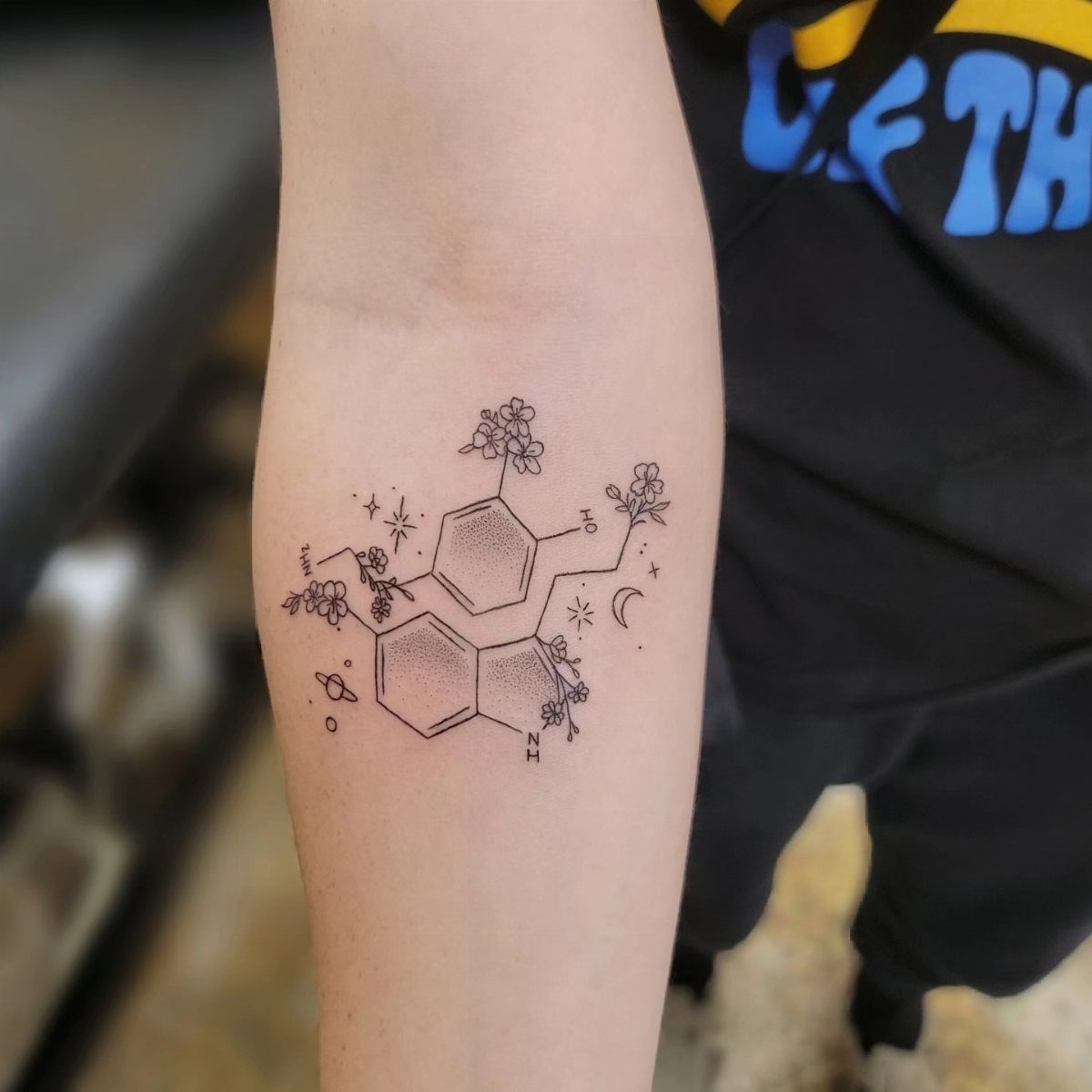
The serotonin molecule is a hexagon with a few lines branching off, and the chemical structure is simple enough that you can memorize it after drawing it once.
Sketch the hexagon first, then add the short lines and rings that complete the molecule. Add small decorative elements around it to balance the clinical lines without losing the clarity of each bond.
9. Simple Music Note Heart
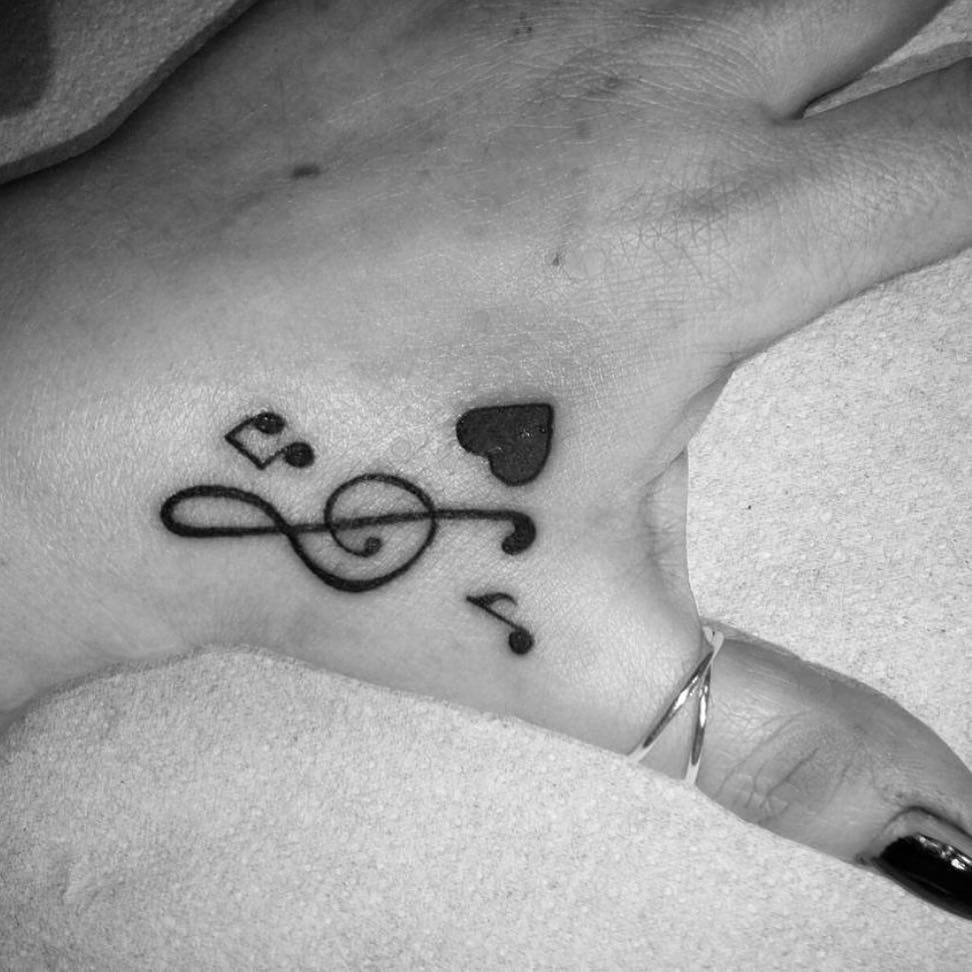
A treble clef paired with a heart gives you 2 recognizable shapes that fit together without much adjustment. The clef’s spiral naturally leads the eye toward the heart.
Draw the treble clef first, starting with the spiral at the top and looping down. Place the heart near the bottom curl or off to the side.
Add a few eighth notes trailing behind if you want more fill, but the 2 main elements carry the design on their own. I’d keep the total width under 2 inches for hand placement.
10. Heartbeat Treble Clef Tattoo
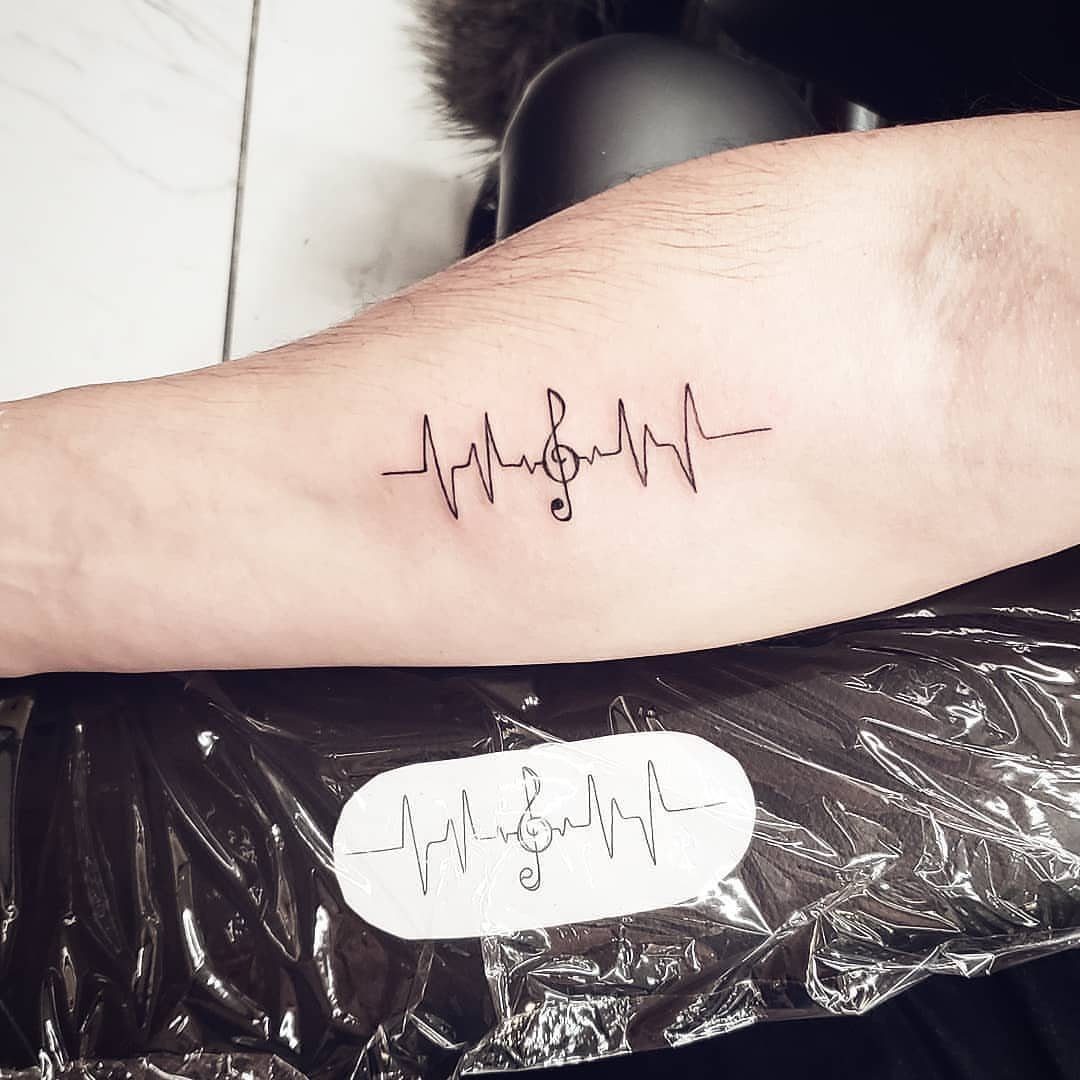
The EKG line with a treble clef built into the pulse combines two ideas into one continuous stroke.
The flatline on either side keeps the treble clef from looking crowded, and the contrast between sharp peaks and smooth curves makes the design easy to read.
Start with the horizontal baseline, spike up into the heartbeat peaks, then form the treble clef where the line rises. Finish with another flatline trailing off.
11. Flowering Branch Line Art
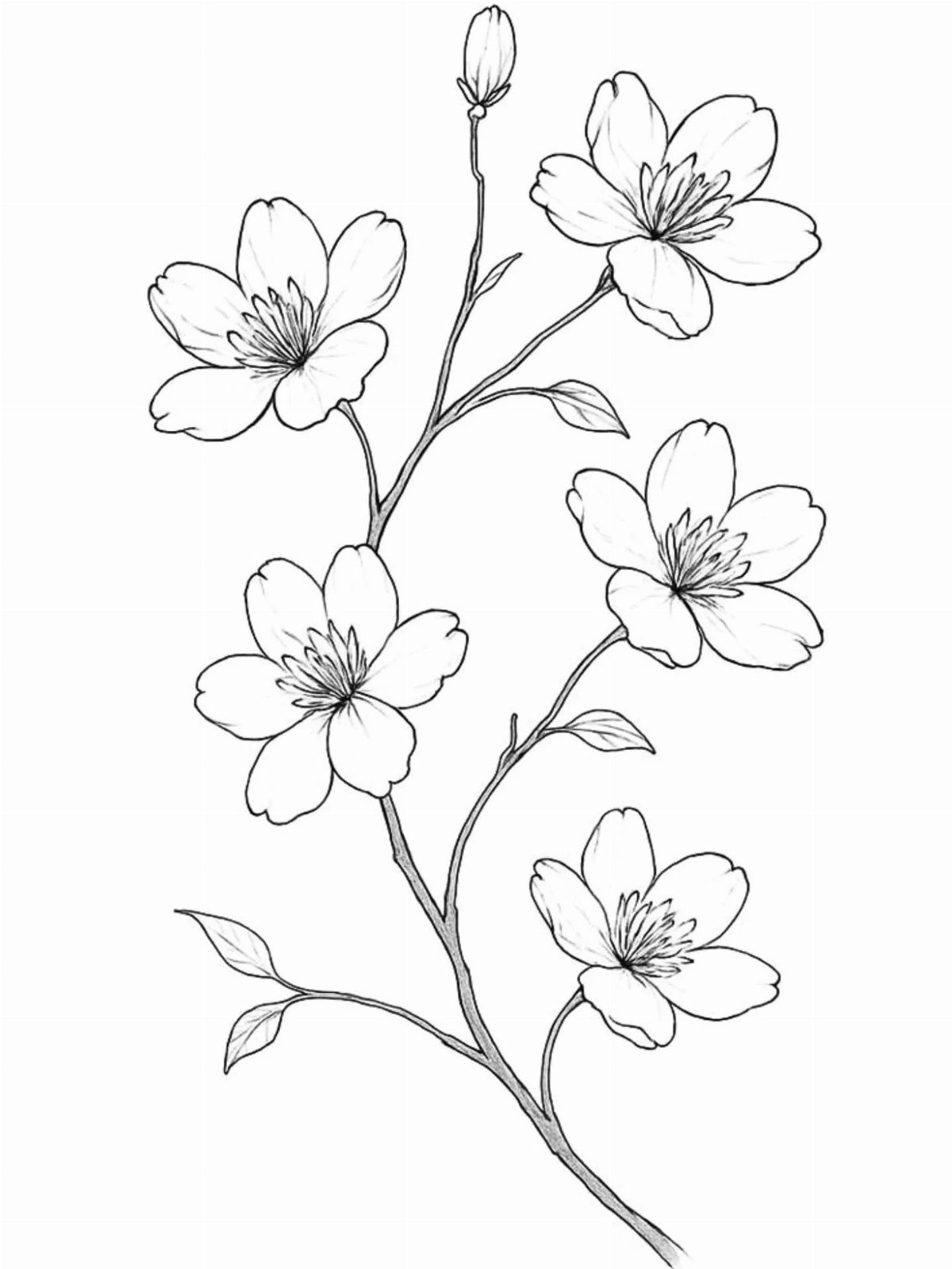
A branch with blossoms and buds gives you organic curves without needing shading or color. The open flowers and single bud create a natural rhythm along the stem, and the line weight can stay consistent throughout.
Start with the main branch line, then add shorter stems for each blossom.
Draw the flowers as simple petal outlines radiating from a center point, and keep the bud closed with just a rounded tip. A few small leaves fill the gaps.
12. Simple Butterfly Tattoo
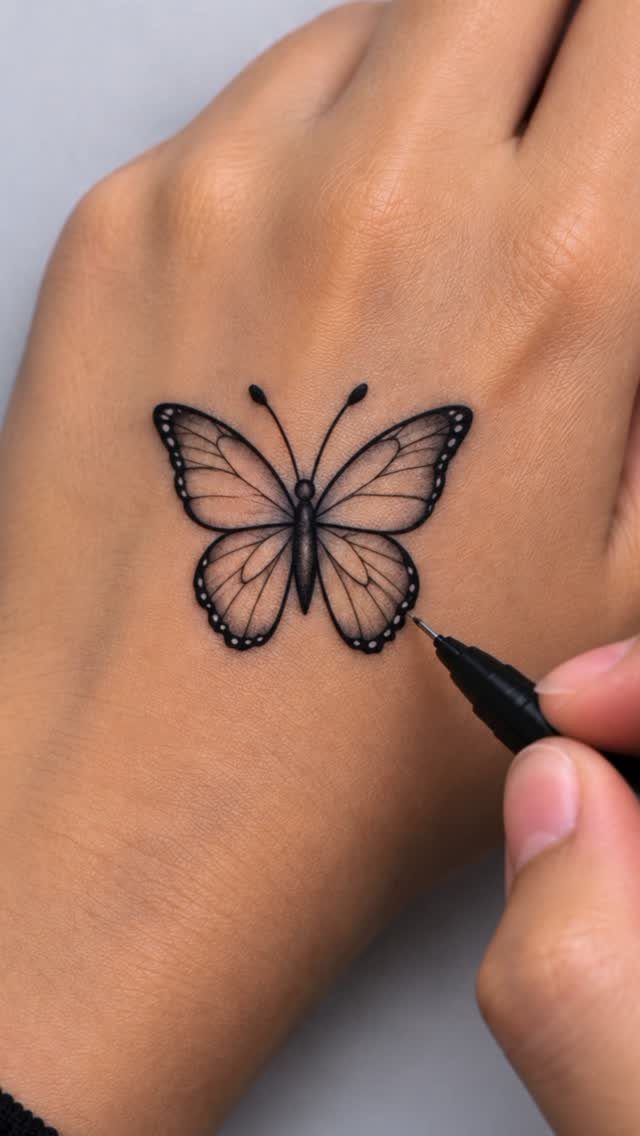
A butterfly breaks down into 2 wings, a body and a pair of antennae, all symmetrical. The outline alone is enough to make the shape recognizable, so you can skip interior detail and still have a finished design.
Draw the body as a vertical line, then mirror the wing shapes on each side.
The upper wings are larger and rounder, the lower wings smaller and more angular. Add 2 curved lines at the top for antennae.
13. Stylized Tribal Heart Drawing
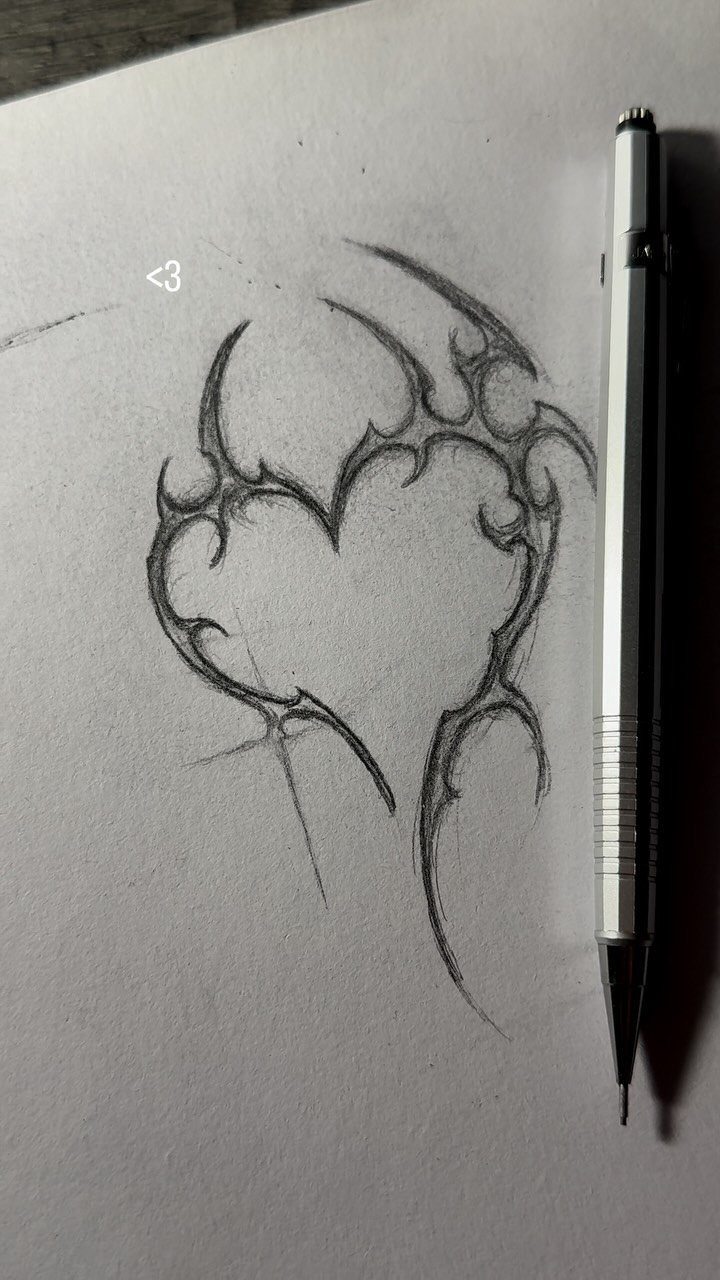
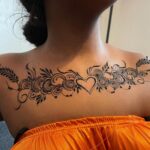
Tribal shapes turn a simple heart into something with more edge. The thick black fills and pointed extensions make the design look intentional even when the lines aren’t perfectly smooth.
Sketch the basic heart shape first, then add the tribal points and curves radiating outward. The style is forgiving because the bold fills hide small mistakes in line work.
A pencil draft on paper lets you adjust the proportions before committing to skin, and you can trace over it with a marker once the shape feels right.
14. Bat Outline Tattoo Sketch
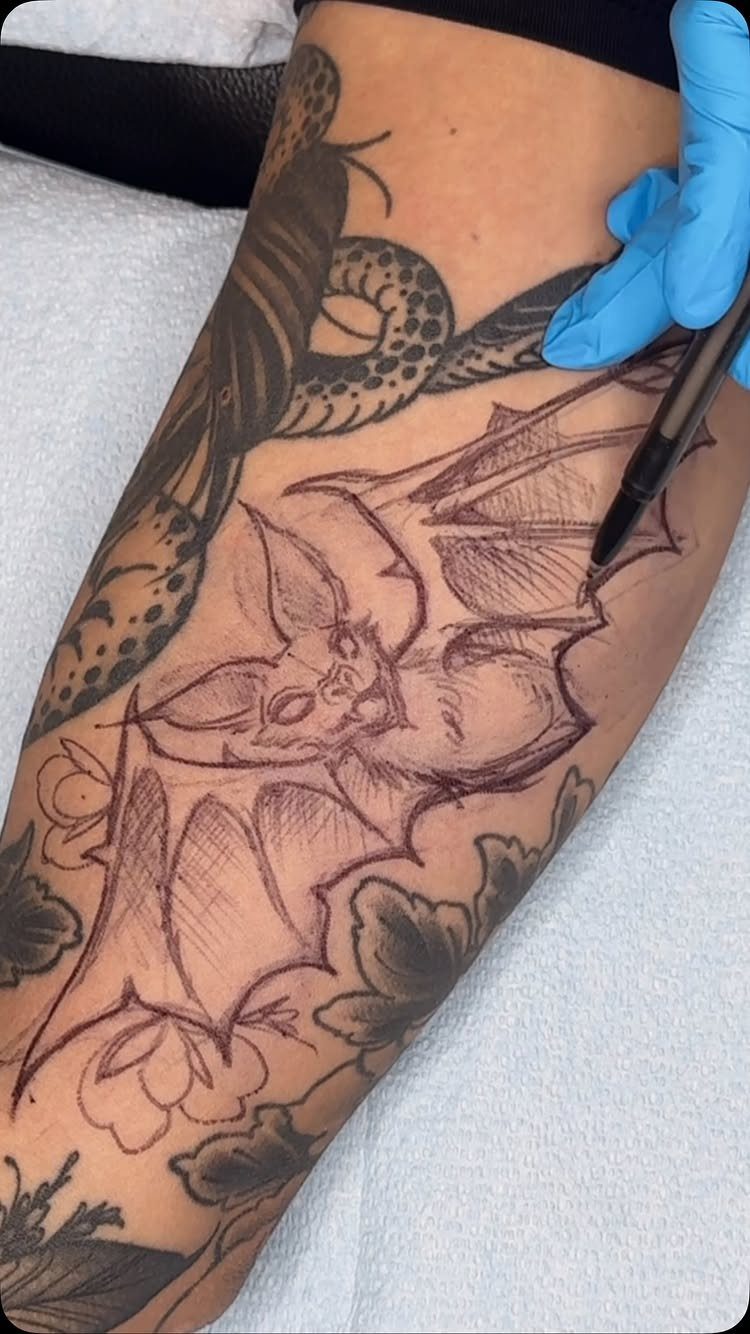
Drawing directly on skin with a marker lets you adjust the design in real time before the needle goes in. A bat silhouette is just wings, a small body and pointed ears, all symmetrical.
The wings can be angular or rounded depending on how much detail you want.
Keep the marker tip fine so the outline stays clean, and wipe off any mistakes with alcohol before they set. The whole sketch takes under a minute once you know the shape.
15. Minimalist Letter Monogram Tattoo
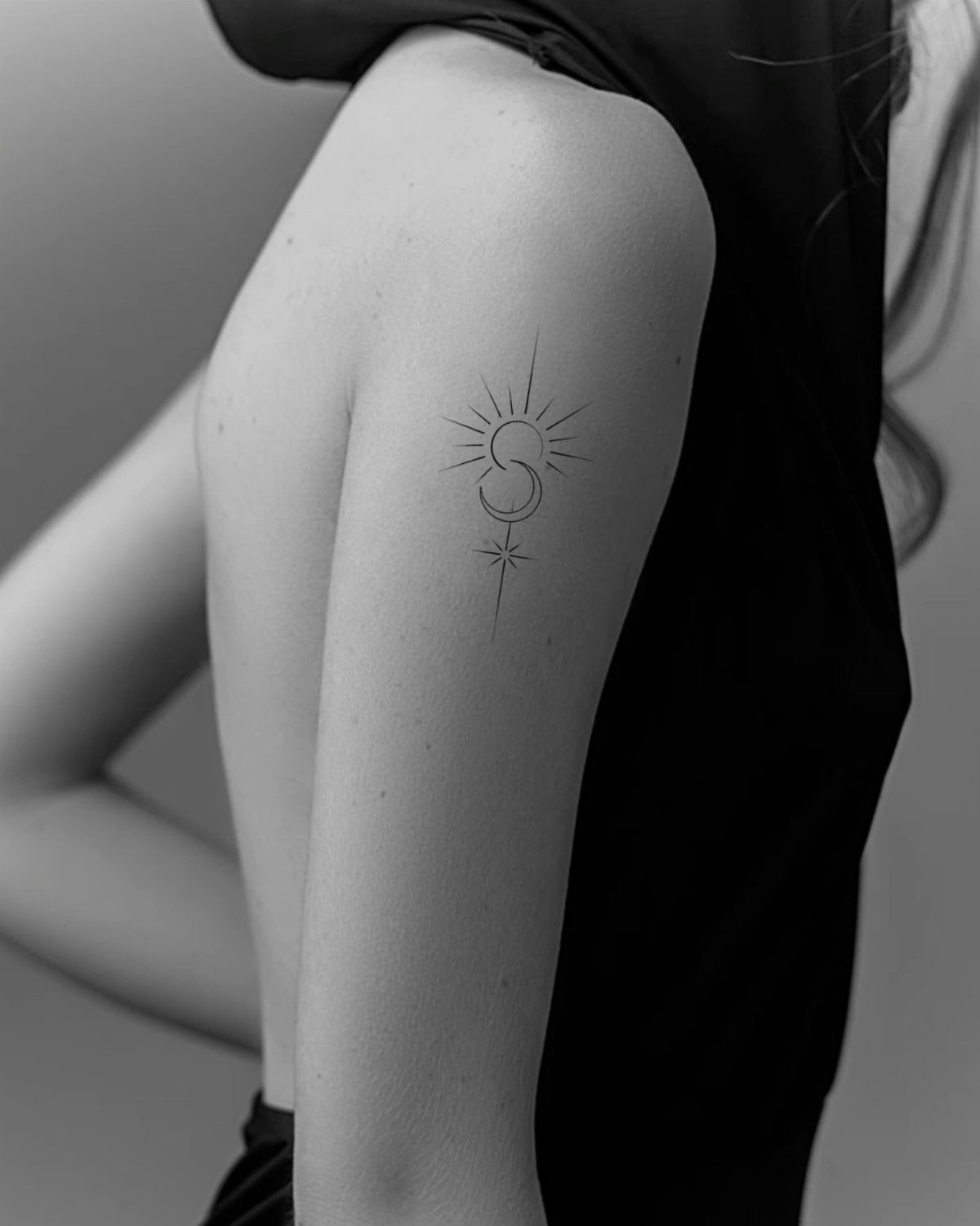
A single letter with radiating lines around it reads like a personal marker without much detail. The rays give the monogram weight, and the small star balances the composition without crowding the letter.
Draw the letter first in a simple serif or sans-serif style, then add short lines radiating outward from the edges. Space the rays evenly so they don’t bunch up on one side.
The star sits off to the side, small enough that it doesn’t compete with the letter. Thin, precise strokes keep the whole design delicate and suited to visible placement like the upper arm or wrist.
Practice Techniques for Beginners
Artificial skin lets you practice line control without the pressure of working on a person.
Start with basic straight lines at consistent depth, then move to curves once you can hold a steady speed. You’re training your hand to move smoothly without pausing or wobbling mid-stroke.
Keep your needle depth and hand speed constant through the whole design and your line weight stays even. Practice on flat sheets first, then graduate to curved surfaces that mimic real body placement.
A wobbly line on paper will be worse on skin, so if your practice sheets don’t look clean, slow down and focus on control before adding speed.
Keep your practice sheets dated so you can track improvement over time.
Choosing the Right Tools
A 1201RL needle gives you the fine lines needed for small details like the dashed trail on a paper airplane or the thin outline of a monogram.
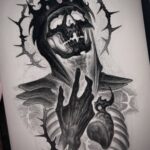
For thicker outlines on designs like the skull or tribal heart, a 3RL or 5RL offers better control without requiring multiple passes.
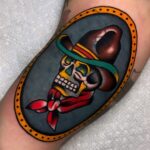
Shading on simple designs like skulls and roses calls for a 5RS or 7RS needle. These configurations let you build up tone gradually, which matters when you’re learning to avoid overworking the skin.
Match your needle to the design before you start. A rose outline needs bold, clean edges, so a round liner in the 3 to 5 range handles that better than a shader.
Building Your Reputation
A clean simple tattoo builds your portfolio faster than a complicated piece with shaky lines. Clients looking at your work will judge your control and precision first, and a well-executed heart or butterfly proves both.
Photograph each finished tattoo in good light before the client leaves.
A sharp image of a small design shows detail better than a blurry shot of something ambitious. Post your best work consistently, and potential clients will see that you can deliver what you promise.
Quality tools matter when you’re starting out. Reliable needles and machines let you focus on technique instead of troubleshooting equipment, and every successful tattoo adds to your reputation.
Frequently Asked Questions
Can you provide some free tattoo ideas?
Hearts, butterflies, music notes and simple geometric shapes like paper airplanes or suns all work well as beginner tattoos because they use clean lines and minimal shading.
Pick something with personal meaning rather than copying a design just because it looks easy, since even a small tattoo is permanent.
What do tattoo artists use to draw designs?
Fine-line work calls for a 1201RL needle on details like monogram rays or paper airplane trails, and 3RL or 5RL needles when you need more control on thicker outlines for roses or tribal hearts.
For shading on skulls or building tone in petals, switch to a 5RS or 7RS configuration so you can layer gradually without overworking the skin.
How to draw a tattoo drawing?
Begin with straight lines on artificial skin to lock in consistent depth and speed, then move to curves once your hand stops wobbling.
Flat sheets are the place to start, then move to curved surfaces that match real body placement, and date each practice sheet so you can see how far you’ve come.