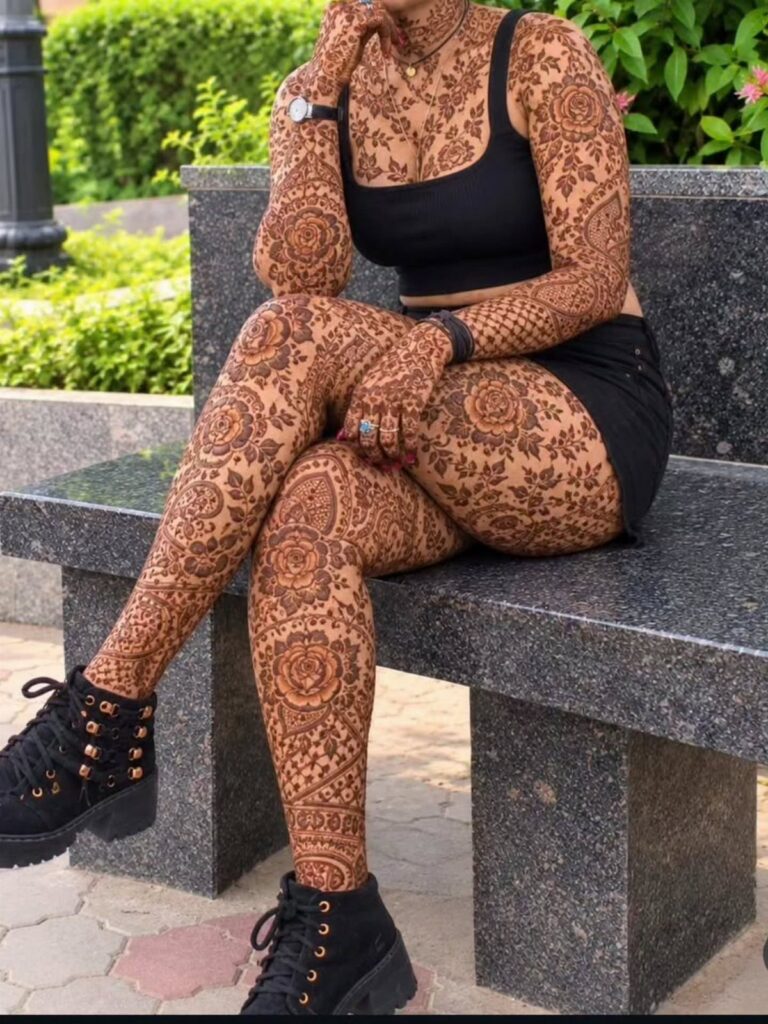
Henna stains last 1 to 3 weeks depending on placement and care, and the designs range from fine floral lacework on hands to full sleeves that read like permanent ink from across a room.
If you’re testing a pattern before you commit to real ink, pick a flat surface like the forearm or shoulder blade where the lines stay crisp and you can see how the design reads on your body.
1. Temporary Henna Tattoo Body Art
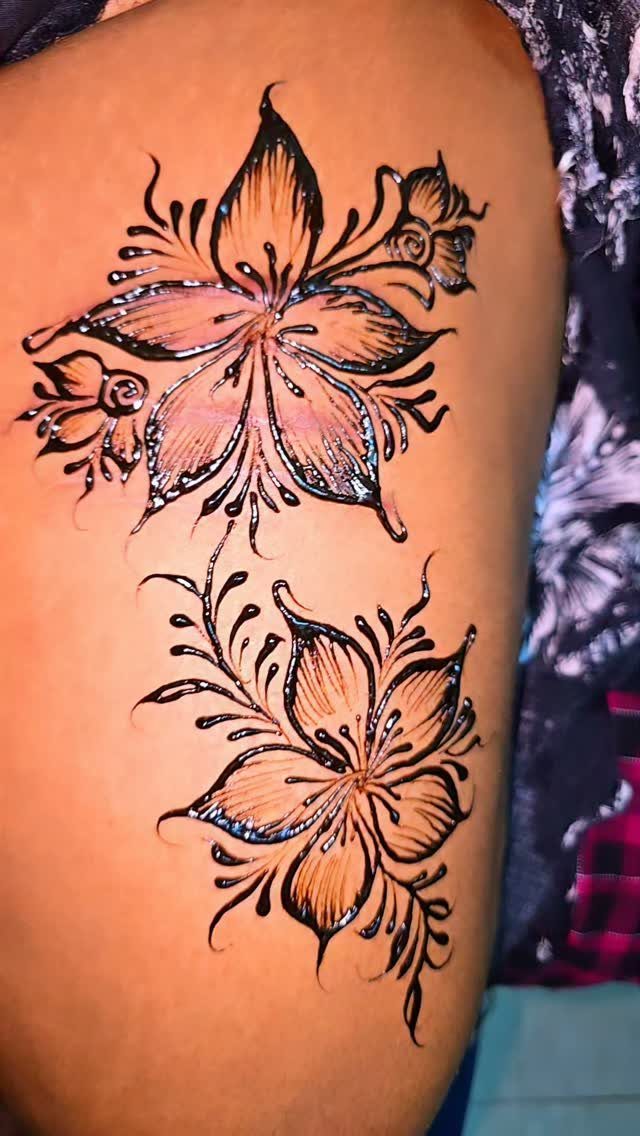
Henna gives you a way to test patterns and placements before you commit to ink.
The paste sits on the skin, then flakes off to leave a stain that darkens over the next day or 2 and fades naturally over a couple of weeks.
I like this for anyone who wants to see how a design reads on their body, or who needs temporary art for an event.
The stain peaks at a deep reddish brown, so it works best on lighter skin tones where the contrast shows clearly.
2. Henna Foot Tattoos
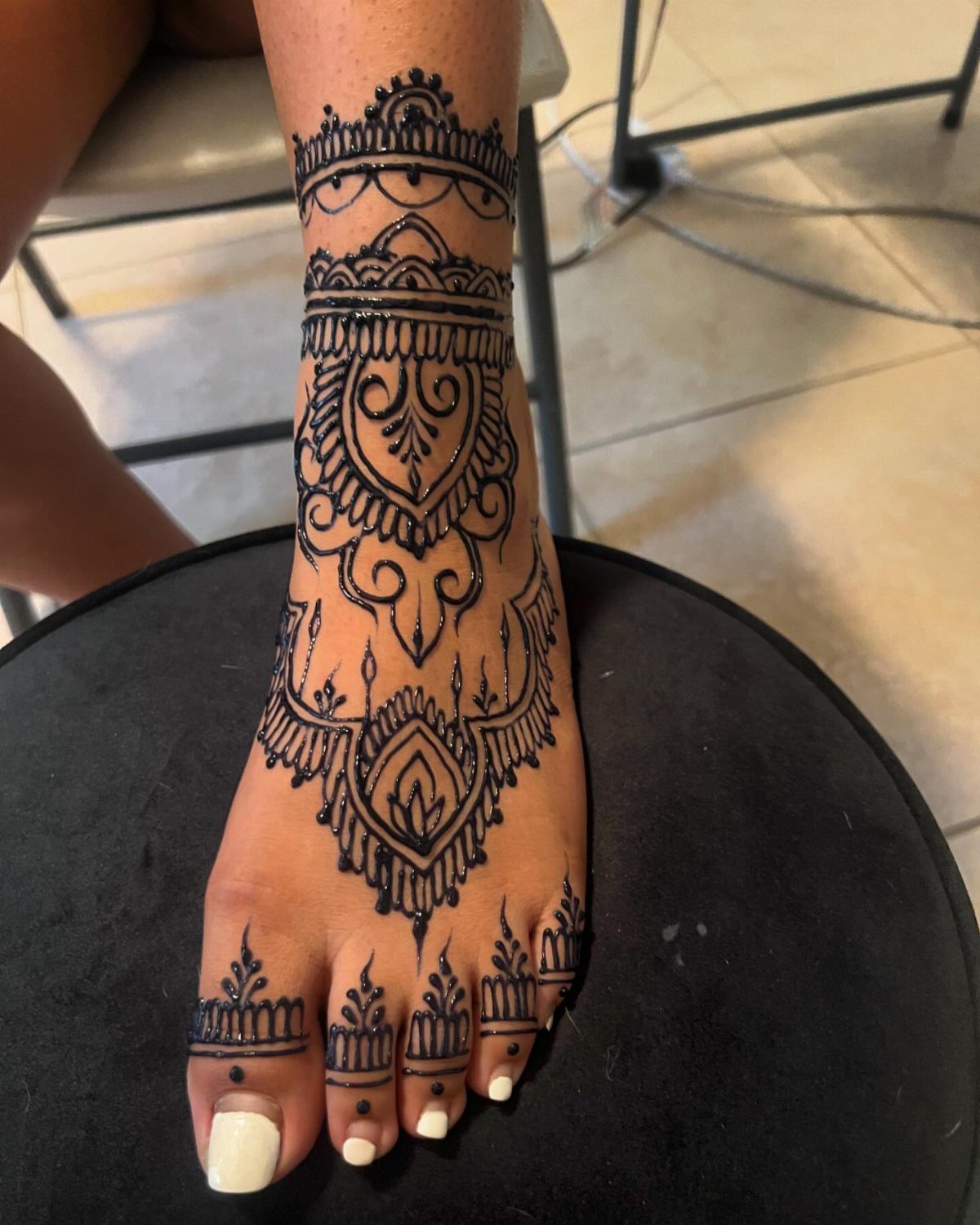
Feet take henna well because the skin is smooth and the flat surface lets fine detail show. Traditional Indian and Middle Eastern bridal designs often cover the tops of the feet and toes in dense florals and geometric patterns.
The stain lasts longest here since the skin is thicker and tends to stay dry. If you’re walking around a lot, let the paste sit long enough so the color sets deeply enough to survive friction from shoes.
3. Floral Henna Tattoo Designs
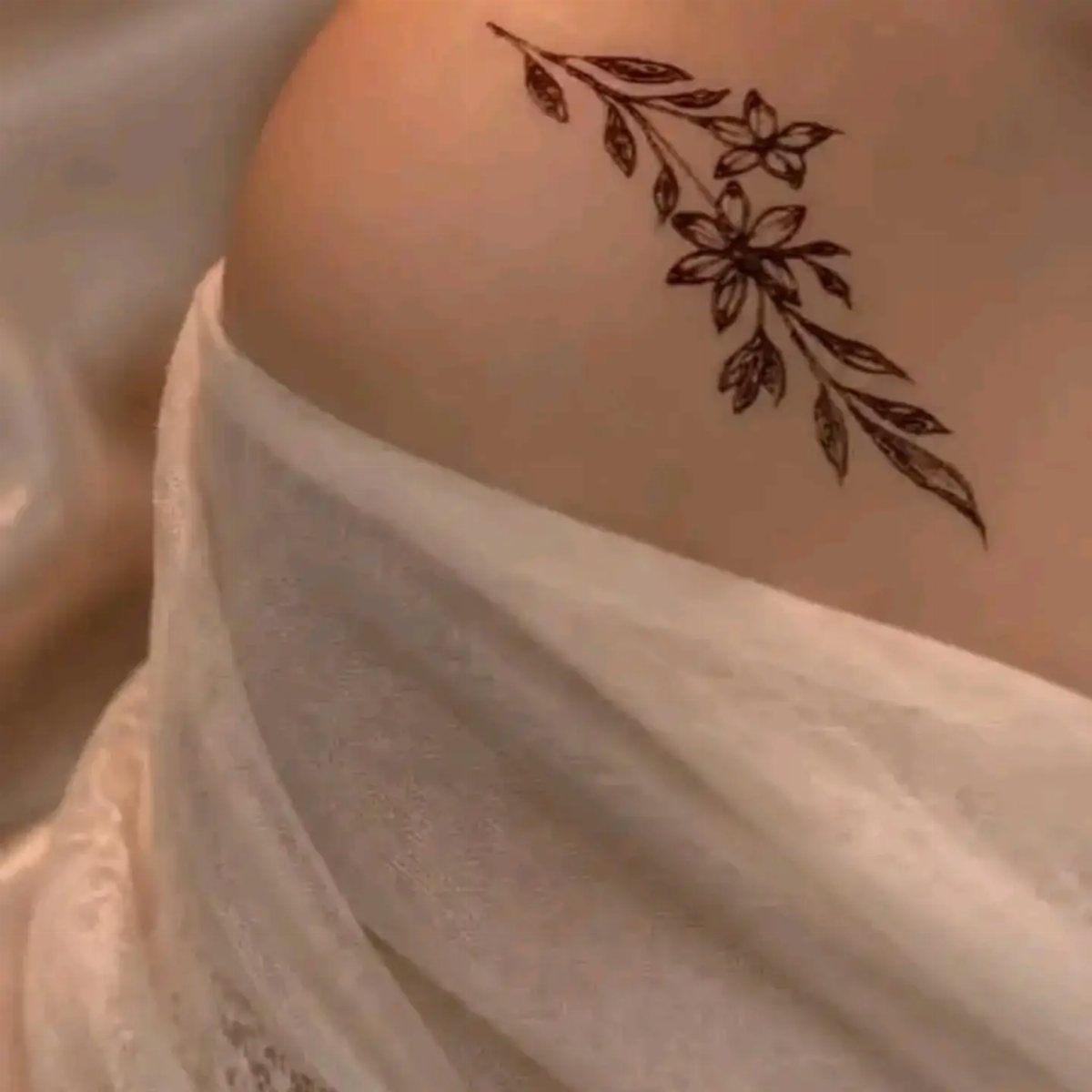
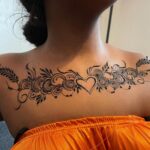
Flowers translate well in henna because the paste lets you draw fine lines and tight curves. Roses, lotuses, and vines all work, and you can scale them to fit a shoulder blade, collarbone, or wrist.
If you’re applying it yourself, practice on paper first so you know how fast the paste flows from the cone.
4. Henna Hand Tattoos
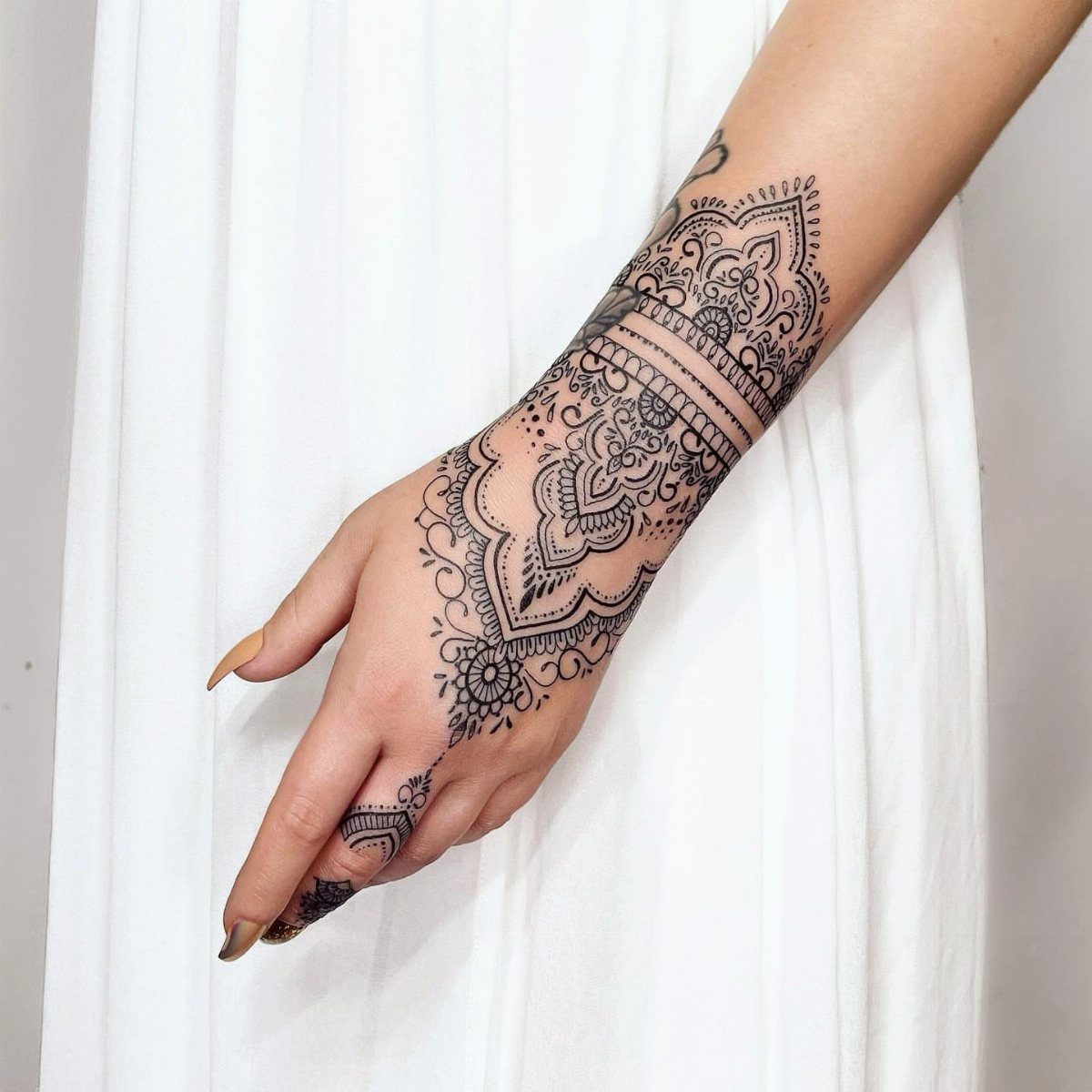
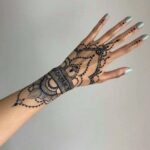
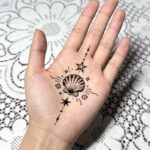
Hands are the most traditional canvas for henna, especially in South Asian and North African cultures where brides wear full coverage from fingertips to wrists.
The design wraps around the fingers and palm in lacework that follows the natural lines of the hand.
Because hands wash often, the stain here fades faster than on other placements. To stretch the life of the design, avoid scrubbing with soap right after the paste comes off.
5. Henna Arm & Shoulder Designs
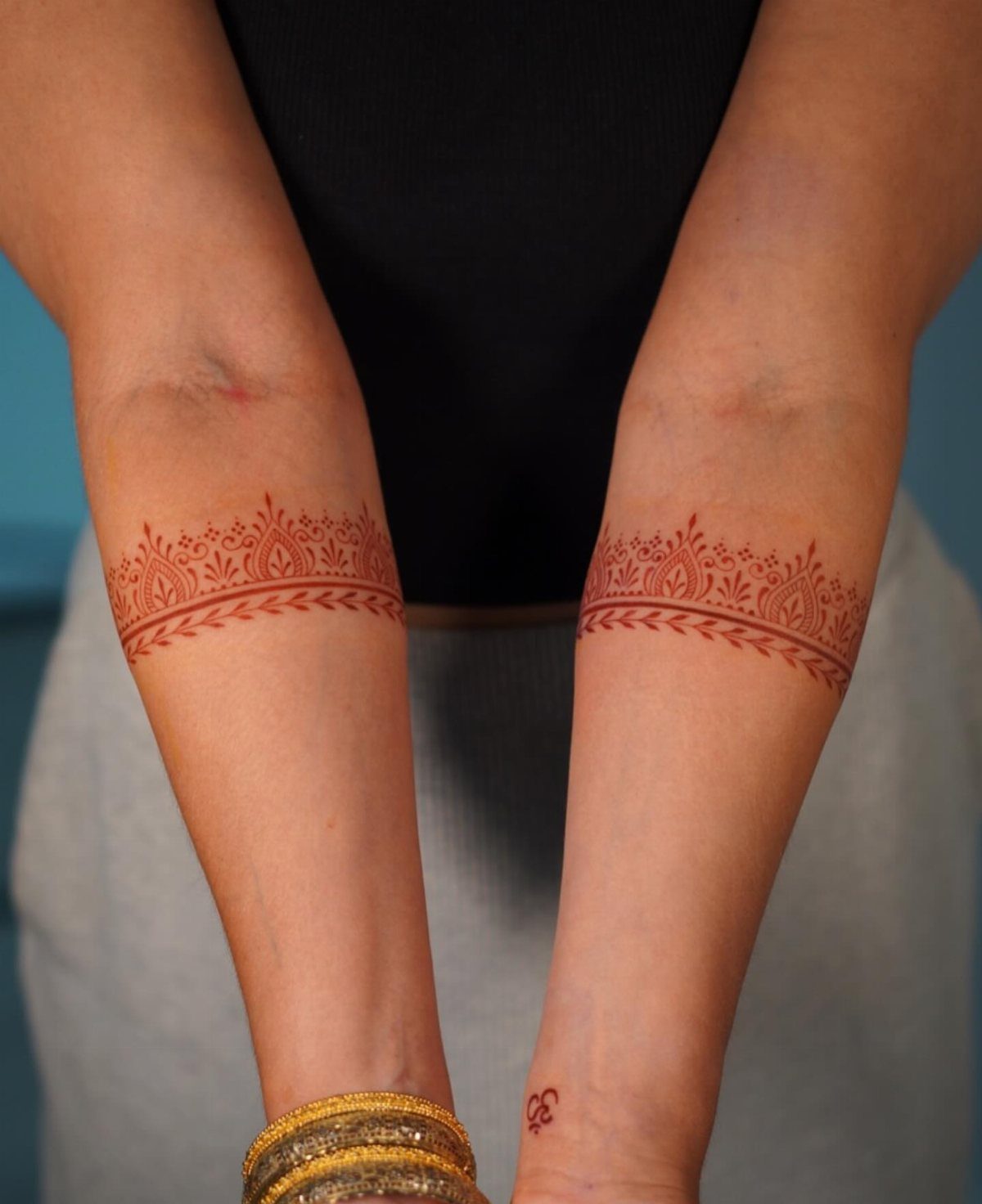
Bands that wrap the forearm or circle the shoulder give you a bracelet or armlet effect without jewelry. The repeating pattern holds together visually and suits anyone who wants coverage that reads from a distance.
Matching designs on both arms, like the mirrored bands visible here, take more time but keep the look balanced.
If you’re working with a friend or an artist, plan for at least an hour per arm depending on how dense the pattern runs.
6. Henna Sleeve Tattoos
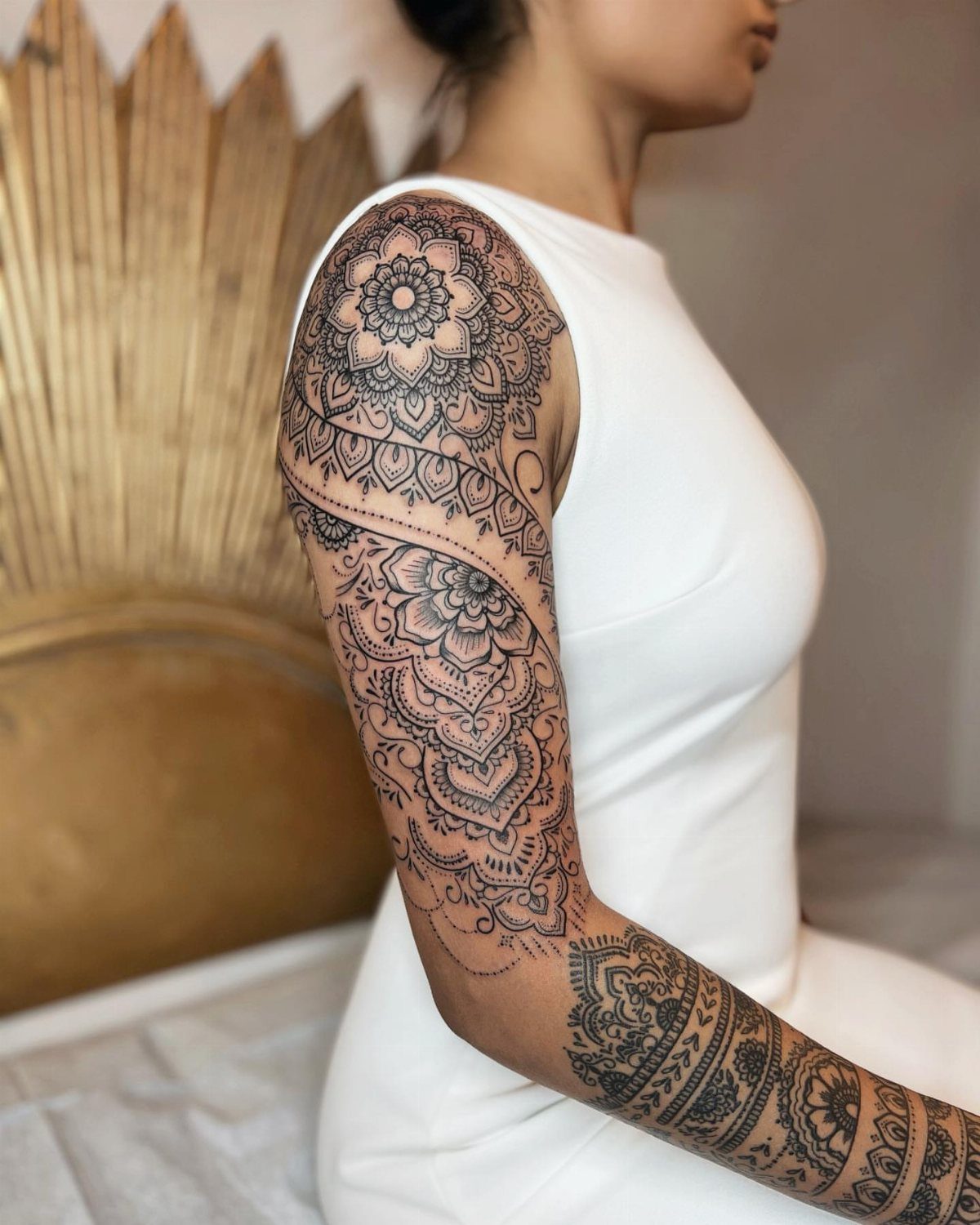
A full sleeve in henna covers the shoulder, upper arm, and forearm in one continuous design.
The dense floral pattern visible here reads almost like permanent ink from across a room, and the coverage suits anyone who wants drama for a wedding, photoshoot, or festival.
This takes time to apply and requires a steady artist. Because the paste needs to dry before you move, budget time to sit still and keep the arm extended while it sets.
7. Henna Leg Tattoos
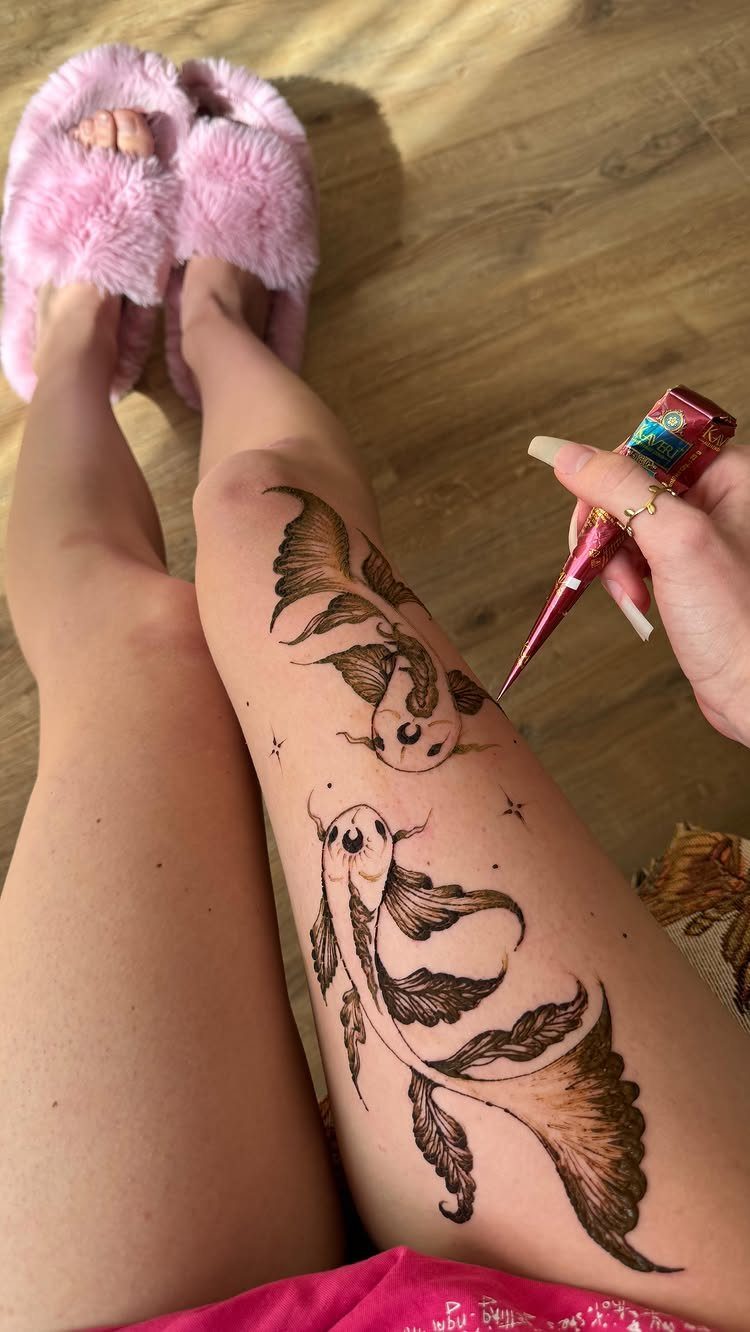
Legs give you a large, flat surface for henna designs that wrap around the calf or run down the shin.
Fish motifs like these suit anyone who wants something playful or symbolic, and the curved shape follows the natural contour of the leg.
The paste takes longer to dry here than on flatter placements, so prop your leg up and give it time before you stand or pull on pants.
If you’re doing this yourself, start with the cone at the tail and work toward the head so your hand doesn’t smudge what you’ve already drawn.
8. Henna Back Tattoos
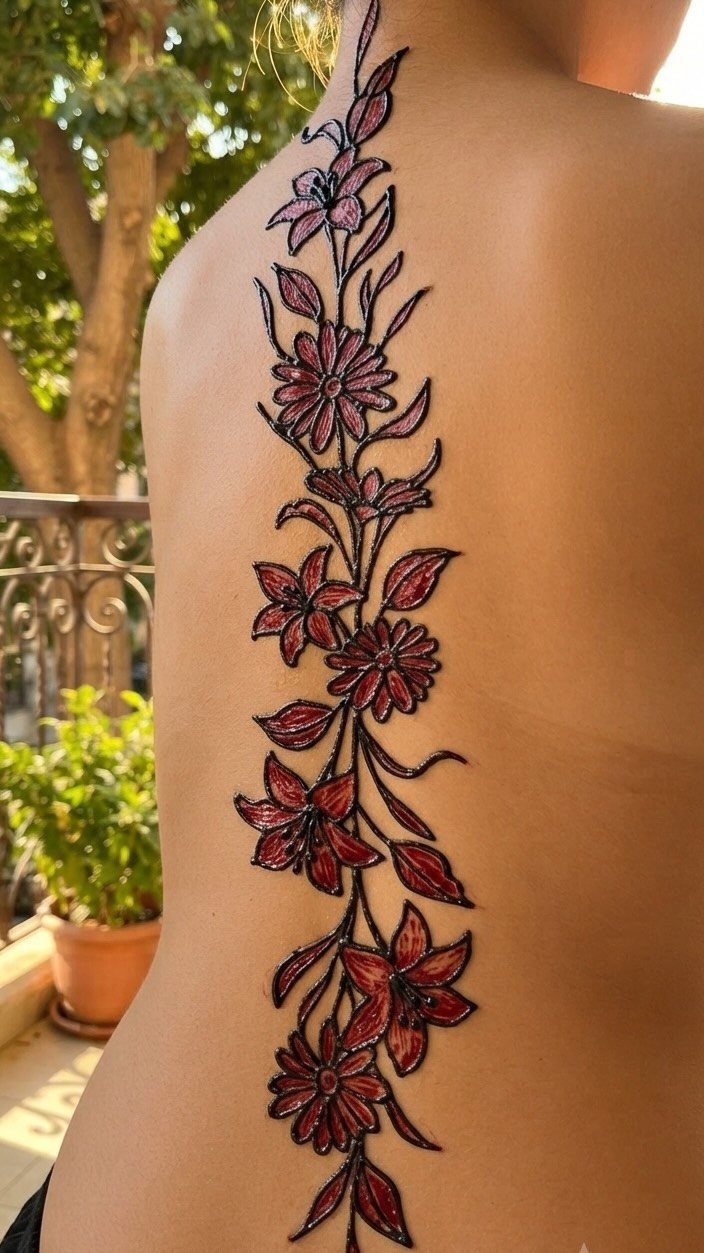
The spine gives henna a vertical line to follow, and floral designs that run from the nape down to the lower back read well when your hair is up.
Because the back is harder to reach, this placement usually needs a second person to apply the design evenly.
Skin on the back holds stain well, but sitting still while the paste dries can be awkward. Wear something backless or loose that won’t drag across the wet henna, and plan to sit forward while it sets.
9. Henna Stomach Tattoos
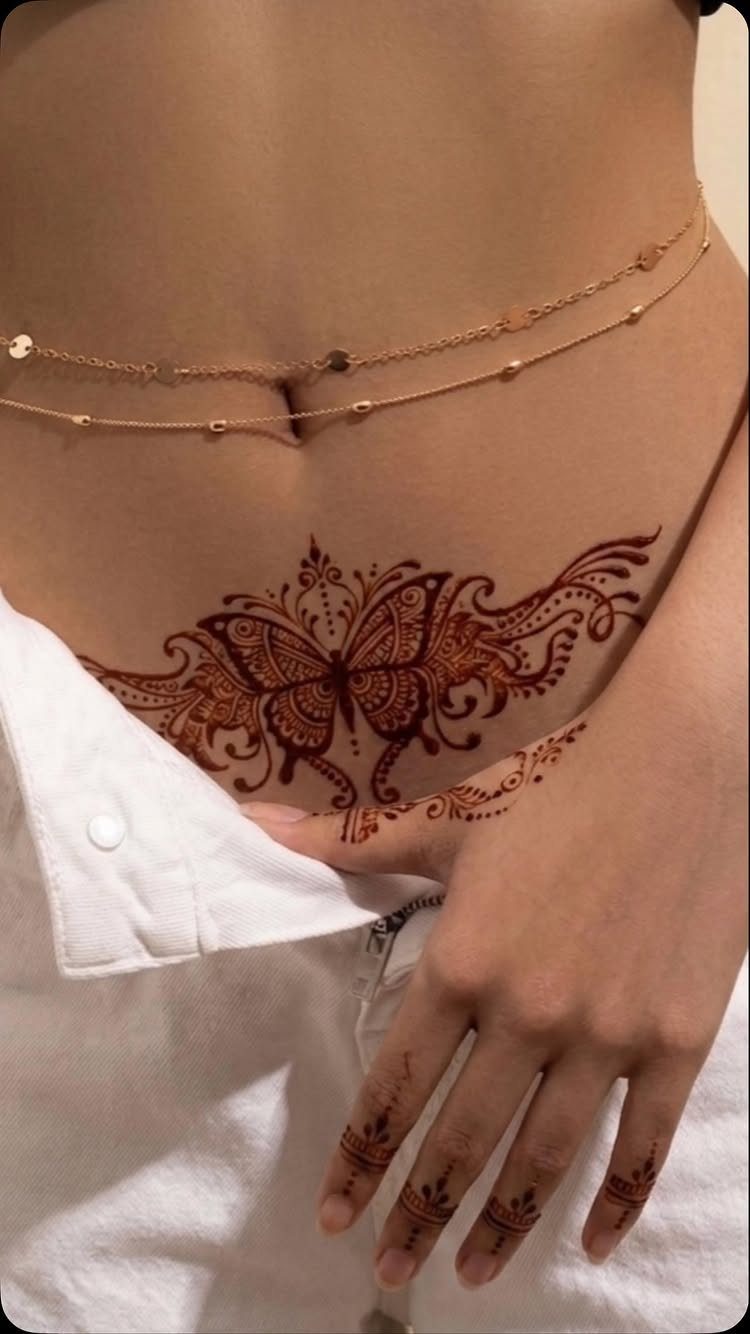
The stomach offers enough room for a single large motif like a butterfly or mandala, and the flat surface keeps the lines crisp.
This placement shows when you’re wearing a crop top or swimwear, so it suits events where you want the design visible.
Because the skin here moves when you sit or bend, let the paste dry completely before you fold at the waist.
The stain fades faster in areas that stretch often, so apply a thicker layer of paste if you want the color to last.
10. Henna Neck Tattoos
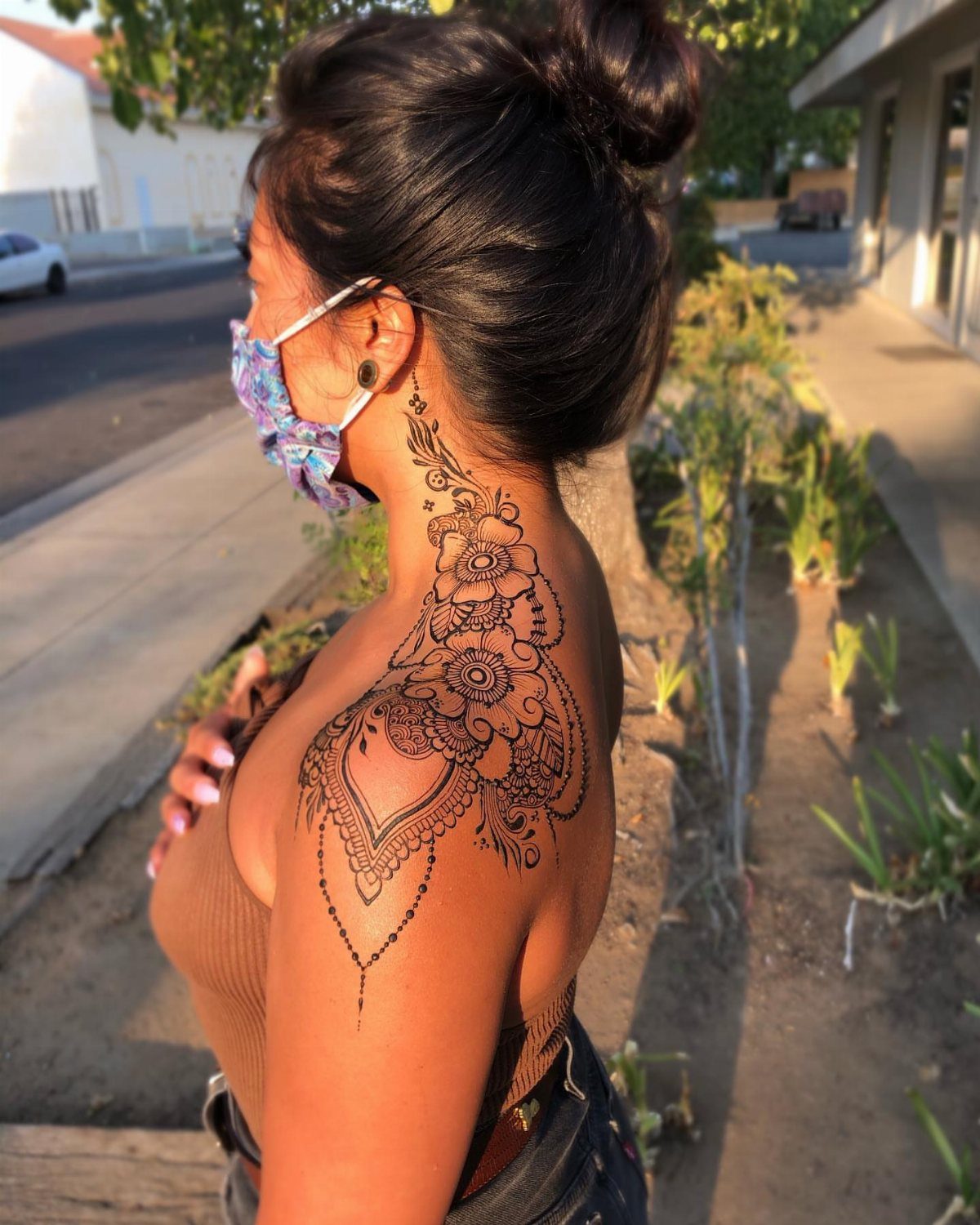
Henna on the neck stands out immediately because it sits near the face, and patterns that curve along the side or back frame the jawline without covering too much skin.
This placement works for anyone who wants something visible but easy to cover with hair or a scarf when needed.
The neck is sensitive and the skin is thin, so the stain may darken faster here than on other placements.
Go small or medium so it doesn’t overwhelm the space, and avoid anything too dense that might look heavy once the color sets.
Henna Tattoo Safety
The paste is plant-based, and the stain it leaves comes from a dye molecule in the crushed leaves.
Black henna is a different story.
PPD, the chemical sometimes added to darken the stain faster, can trigger serious reactions: blisters, burns, contact dermatitis that lasts weeks. If someone offers you henna that dries black or promises a dark stain immediately, walk away.
Stick with organic henna powder from a reputable seller or artist.
It should contain no added dyes, no synthetic ingredients, and nothing that smells like gasoline or hair dye. The stain from real henna starts orange and darkens to reddish brown over a day or two, never black.
If you’re mixing your own paste, check the ingredient list on the package. If you’re hiring an artist, ask what brand they use and whether it’s pure henna.
Henna Tattoo Duration
Henna stains last 1 to 3 weeks, depending on where you place the design and how you care for it.
The color starts bright orange, then turns deep red or reddish brown by day 3. That’s when it looks its best.
After the first week, the stain begins to fade as your skin sheds its outer layer. Areas that exfoliate faster, like hands, lose color sooner than thicker skin on the back or shoulder.
Moisturize regularly and pat the area dry instead of rubbing it. Chlorine strips the stain fast, so seal the area with a layer of waterproof balm or sunscreen before you swim.
Leave the paste on for at least 3 hours before you remove it. Longer is better for a deeper stain.
Frequently Asked Questions
How long do henna tattoos stay on your body?
Henna tattoos last 1 to 3 weeks.
You’ll see orange first, then a deep brownish red after a few days, before the color slowly lifts as dead skin comes off. Palms and soles lose color quicker than your shoulder or back because you’re shedding more cells there.
What are the downsides of getting a henna tattoo?
Black henna is the main risk because it contains PPD, a chemical that can cause blisters, burns, and contact dermatitis that lasts weeks.
Genuine henna comes from a plant and won’t hurt you, but the color lands somewhere between rust and mahogany, not black. If someone offers instant black color, skip it.
How much does a henna tattoo cost?
Hiring a henna artist for an event usually runs $200 for the first hour. An artist can apply 12 to 15 tattoos per hour depending on the size and complexity of each design.