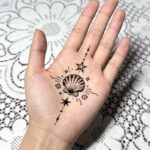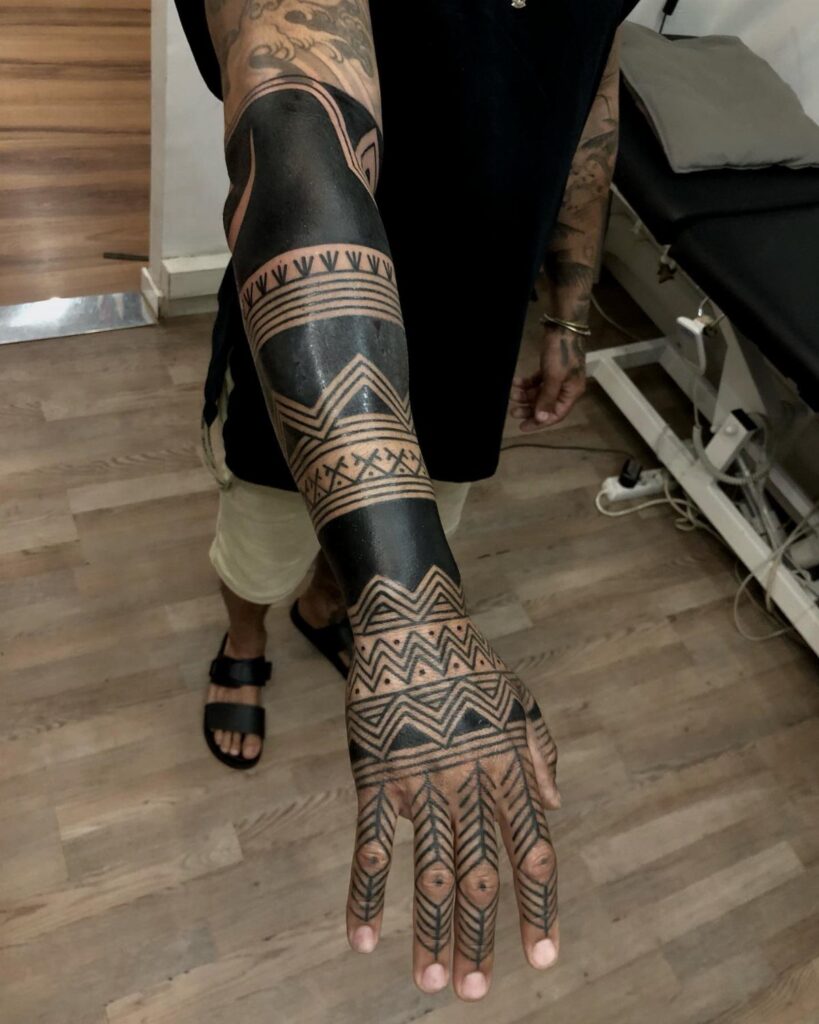
Black pen tattoos cover crosses and tribal geometry, single-line shapes you can draw on first with marker, animals and florals that need a machine, and abstract ink splatter that looks accidental but takes real control.
A black line holds its edge for years if you keep sun off it, but skip the sunscreen through a few summers and that sharp ink fades to a softer gray.
1. Cross Tattoo
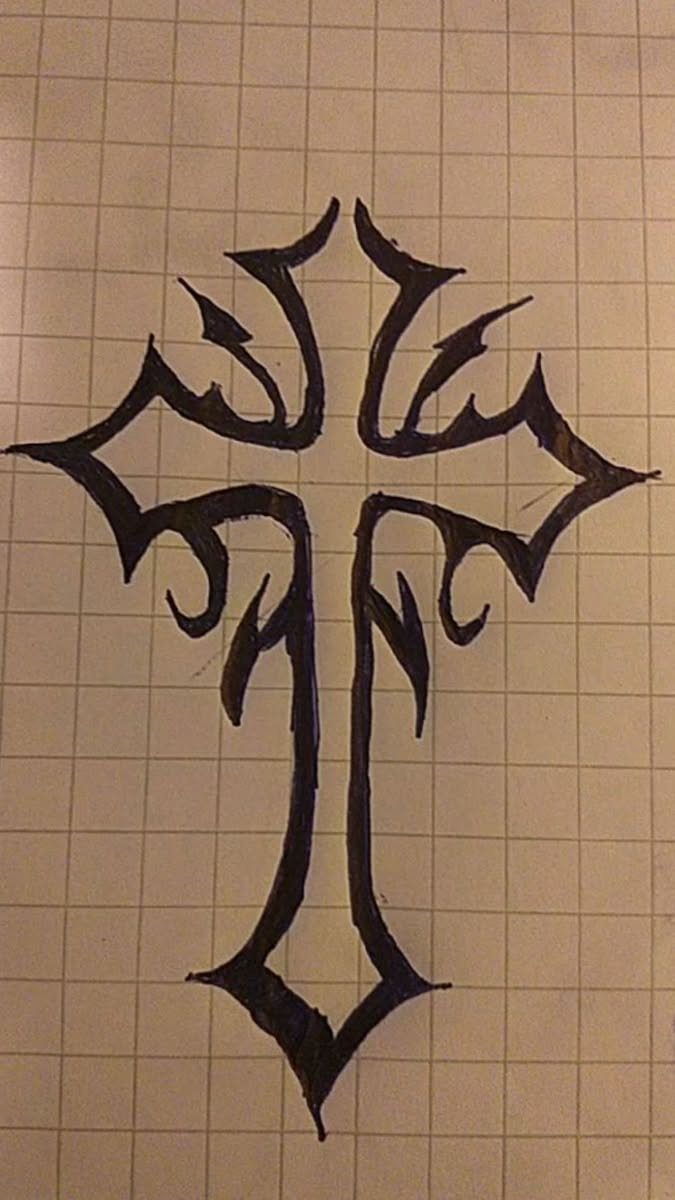
A cross drawn with clean black lines, then layered with sharp tribal points and curves that branch out from the center.
The design fits anywhere on the body where you want something bold but contained, from the forearm to the upper back.
Tribal elements thicken the cross and give it weight without shading. The style reads clearly at small sizes and scales up well if you want it larger later.
Sketch a few versions on paper first to find the right amount of detail. Too many small spikes get lost once the ink sits in skin.
2. Abstract Tribal Patterns
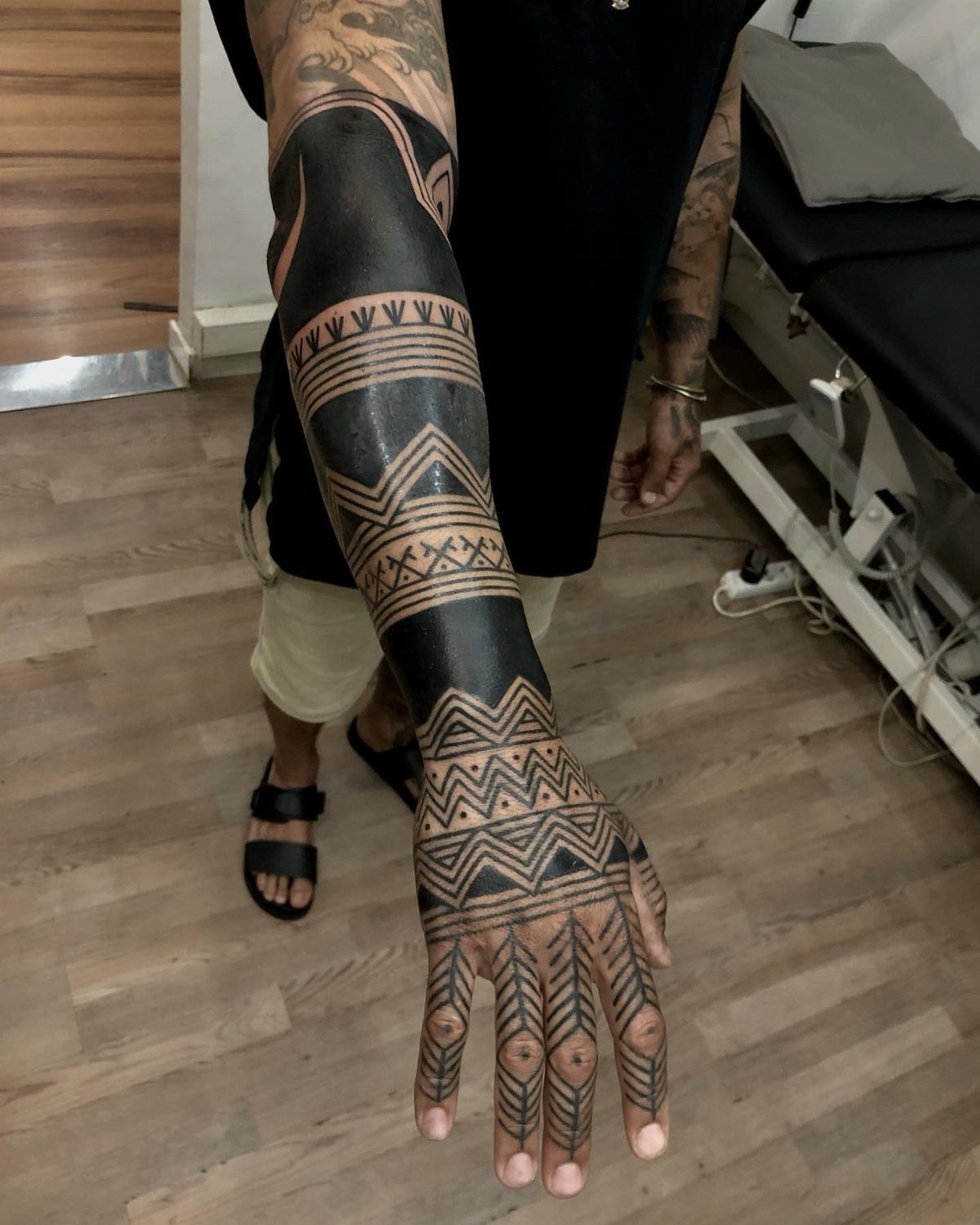
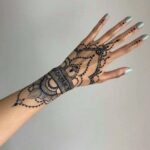
Bold black bands wrap around the arm and hand, stacked with triangles, chevrons and thick lines that follow the shape of the limb.
Tribal geometry like this commits to high contrast: solid black against bare skin, no gray wash or fine detail.
The hand is a visible spot that moves constantly, so ink there fades faster than on the forearm. Plan to touch it up every few years if you carry the design all the way to the fingers.
Each section locks into the next, so map the full layout before you start. A good stencil here saves hours of guessing during the session.
3. Small Symbols and Shapes
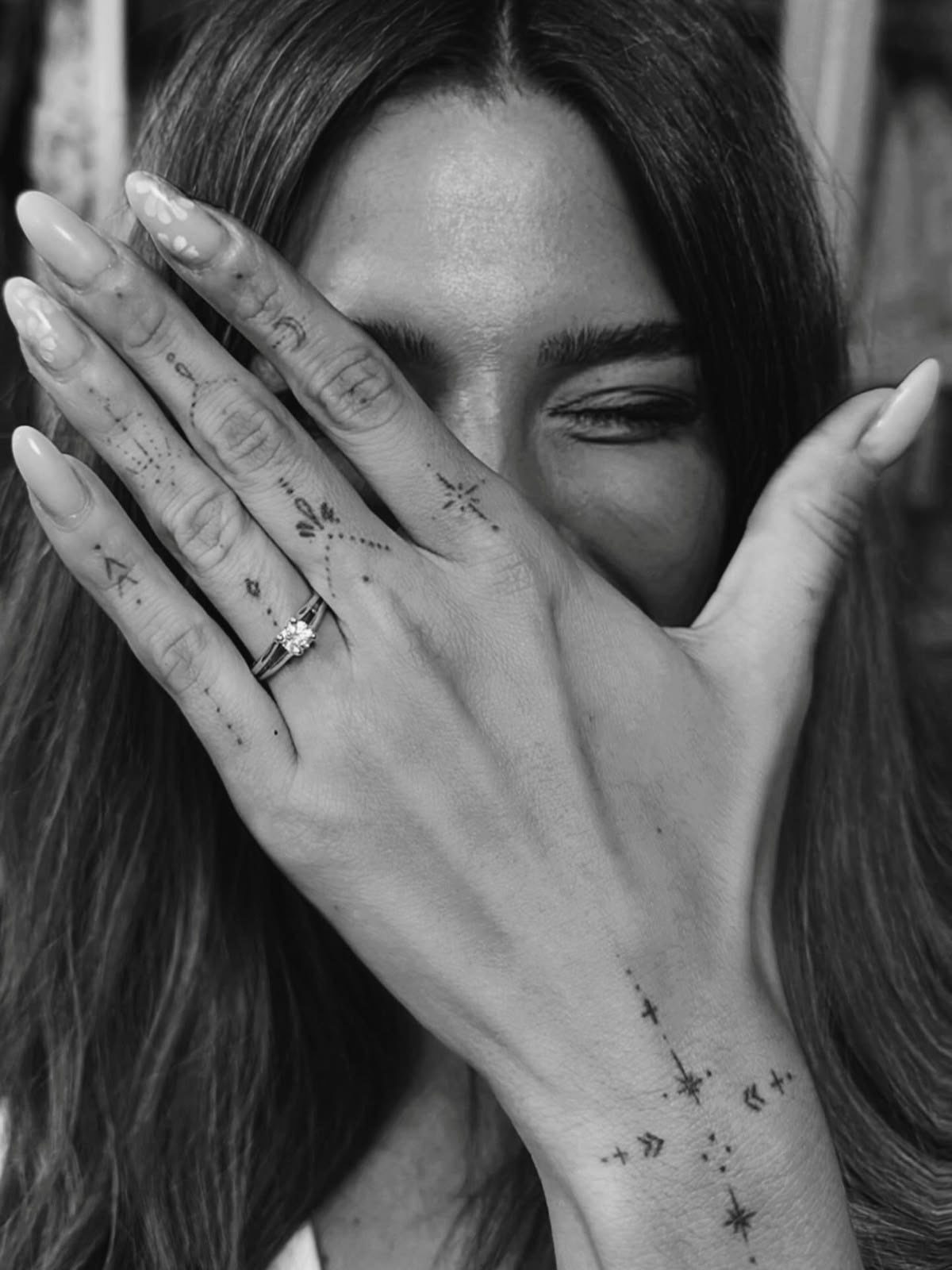
Tiny symbols scattered across fingers, knuckles and the inside of the wrist: dots, lines, arrows, crescents, whatever holds meaning for you. Each one takes a few minutes and heals in about a week.
Finger tattoos blur faster than most placements because the skin there sheds constantly. Fine lines spread after a year or two, so keep the shapes simple and expect to refresh them.
Start with 1 or 2 before you commit to a full collection. Small doesn’t mean easy; finger work hurts more than you’d expect from the size.
4. Flowing Curved Lines
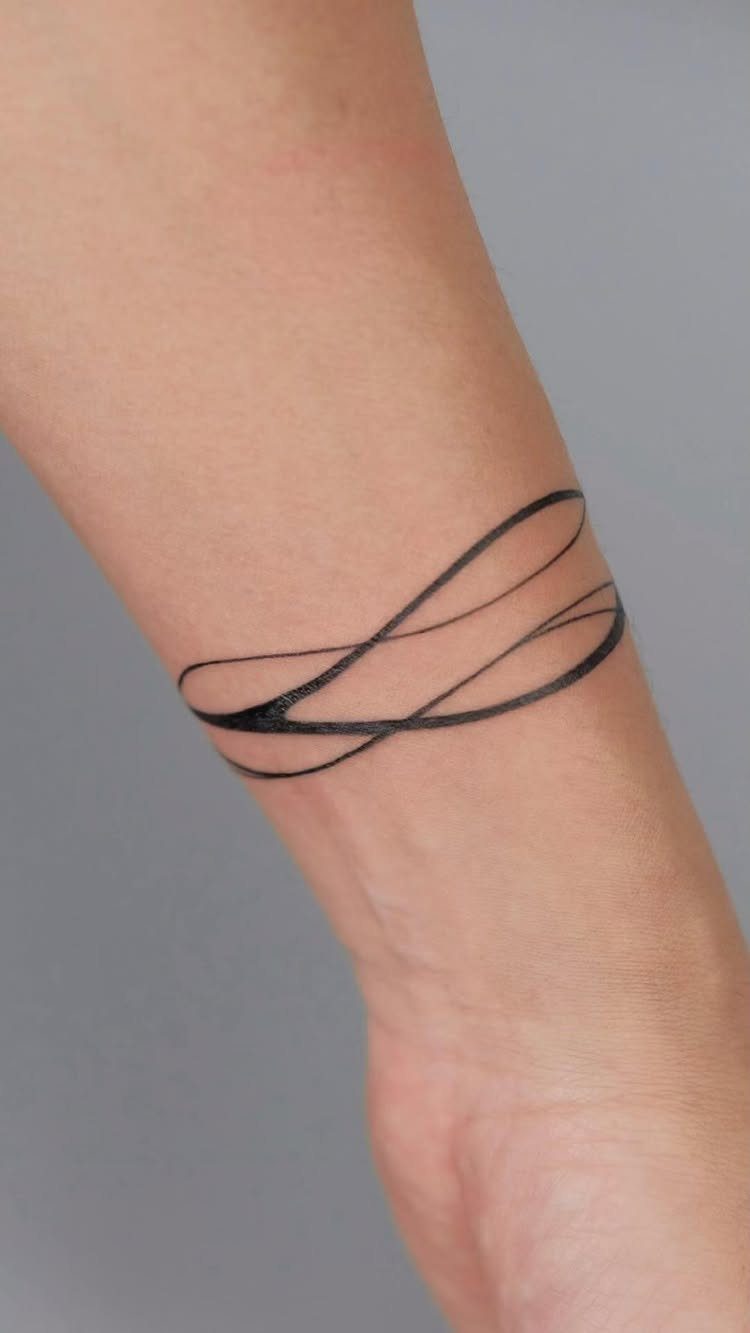
Black curves that loop and overlap around the wrist, drawn freehand so no 2 lines match exactly. The result looks organic, almost calligraphic, and the movement keeps the eye traveling instead of landing on one focal point.
Flowing line work like this depends entirely on your artist’s hand.
A steady pull creates smooth curves; a shaky one shows every wobble. Check their portfolio for script or ornamental work before you book.
The wrist flexes constantly, which can distort the lines slightly as they heal. Plan the design so it reads from the angle you see most often.
5. Stylized Eye Tattoo
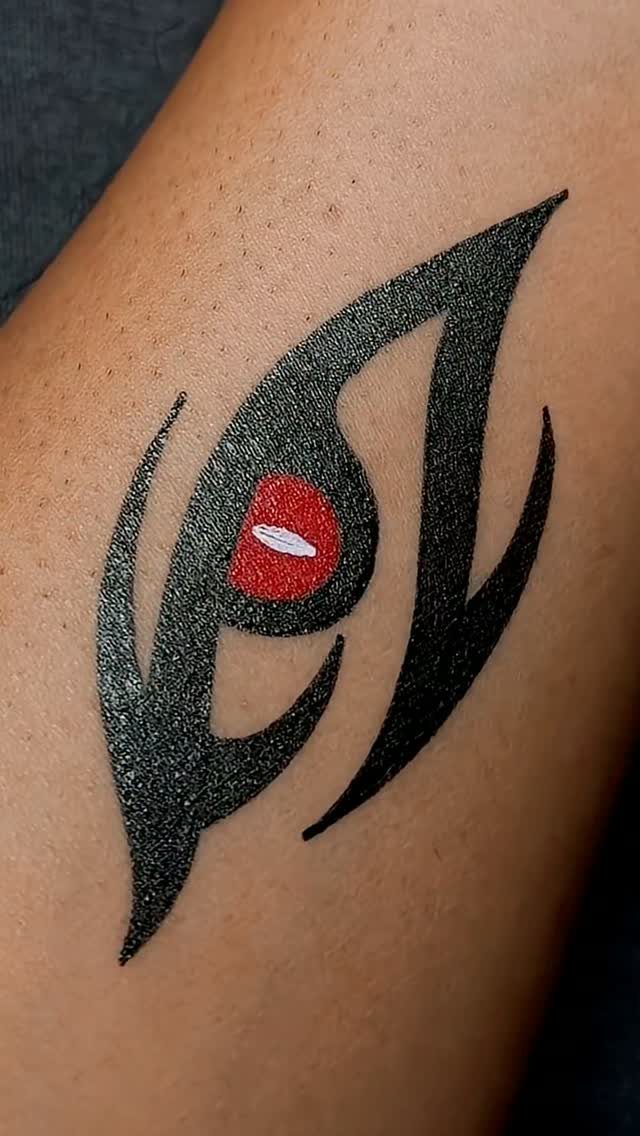
An eye drawn with curved black lines that radiate outward, surrounding a bold red iris at the center. The contrast between the monochrome linework and the single color accent makes the eye the immediate focus.
Red holds well in skin but fades faster than black, so expect to touch up the iris every few years to keep the color saturated. Some artists mix a warmer red to compensate for how it settles.
Placement matters here. An eye on the forearm or shoulder reads clearly; tucked into a tight spot like the ankle, the detail collapses.
6. Floral and Vine Patterns
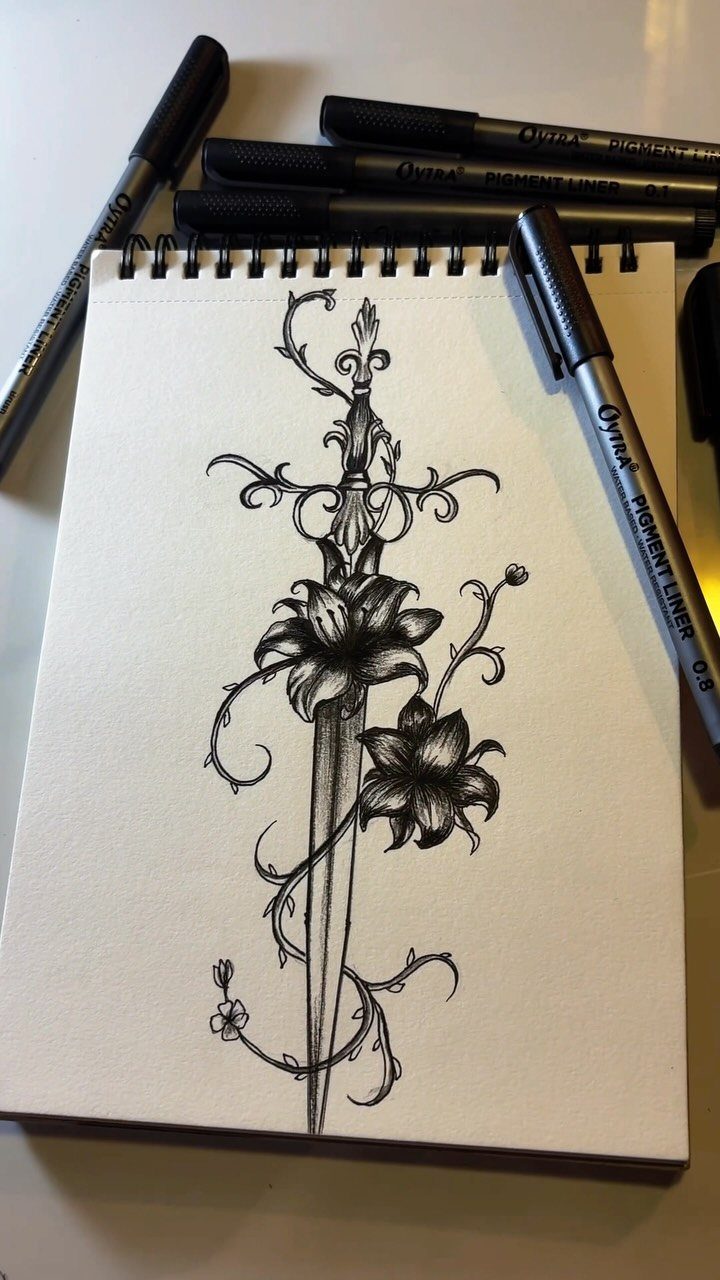
A dagger or sword runs vertically, wrapped in lilies and curling vines that soften the hard edges of the blade.
Floral patterns like this balance the aggressive shape of the weapon with something delicate, and the combination works well on the forearm, thigh or ribcage where you have the length to let it flow.
Lilies have wide petals that fill quickly with black ink, so leave enough negative space between the petals and the vines or the design will bleed together as it heals.
Fine vine tendrils need a light hand; too much pressure and they’ll spread into blurry stems within a year.
Sketch the full composition to scale before the session. Floral pieces look cramped if you try to fit too many blooms into a small area.
7. Animal Tattoos
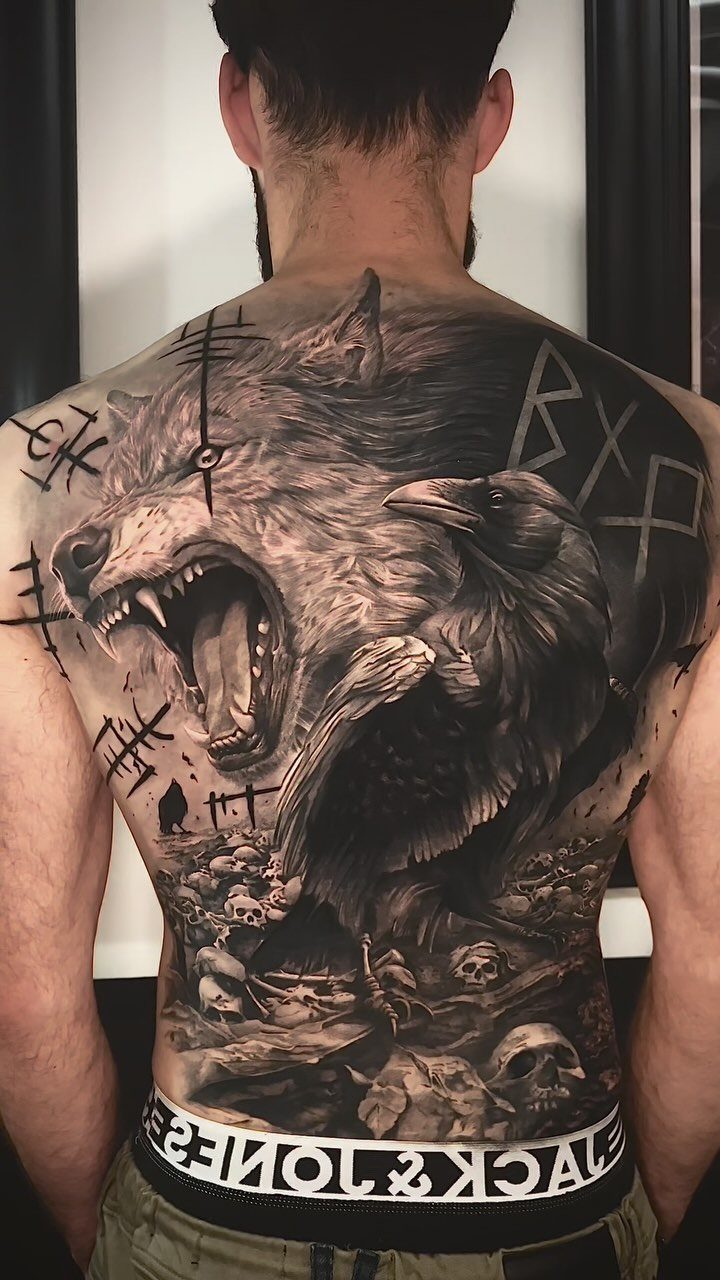
Wolf and raven designs layer well with skull imagery when you want a full back piece that tells a story in black ink alone.
Animal pieces like this need room to show the teeth, feathers and bone structure that make each species recognizable, so the back, chest or full sleeve gives you the canvas.
Gray wash builds dimension in the fur and feathers without color. Smooth gradients take longer to pack than solid black, and a heavy hand can muddy the detail.
Bring reference photos that show the angle and expression you want. A wolf mid-snarl has different musculature than one at rest, and your artist needs to see that before they draw the stencil.
8. Geometric Shapes
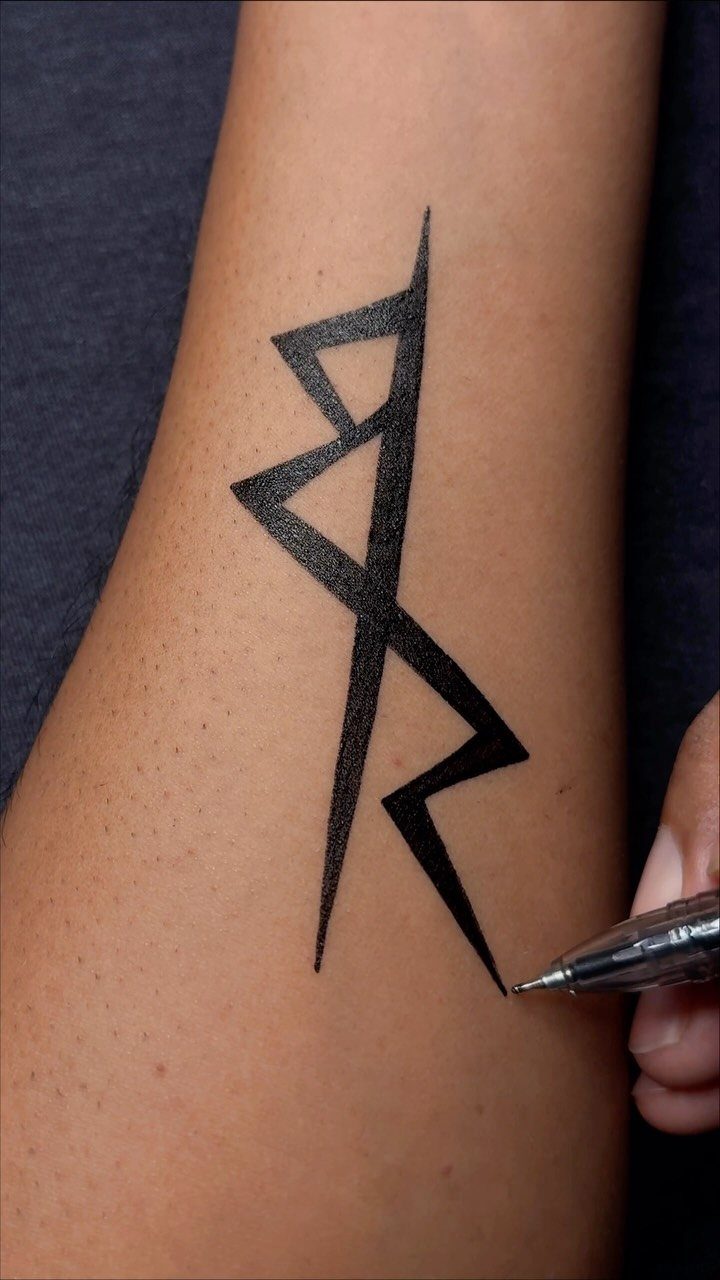
Sharp angles and stacked lines form a symbol on the forearm, drawn freehand with black ink.
Geometric designs like this work well as test pieces before committing to a machine-tattooed version, or as final tattoos if you want the rougher, hand-drawn look.
Pen ink fades completely in a few days, which gives you time to live with the shape and see how it reads on your arm. If you like it, bring a photo to your artist for the permanent version.
Keep the lines thick enough to stay readable. Fine geometry collapses once it settles into skin.
9. Ink Splatter Designs
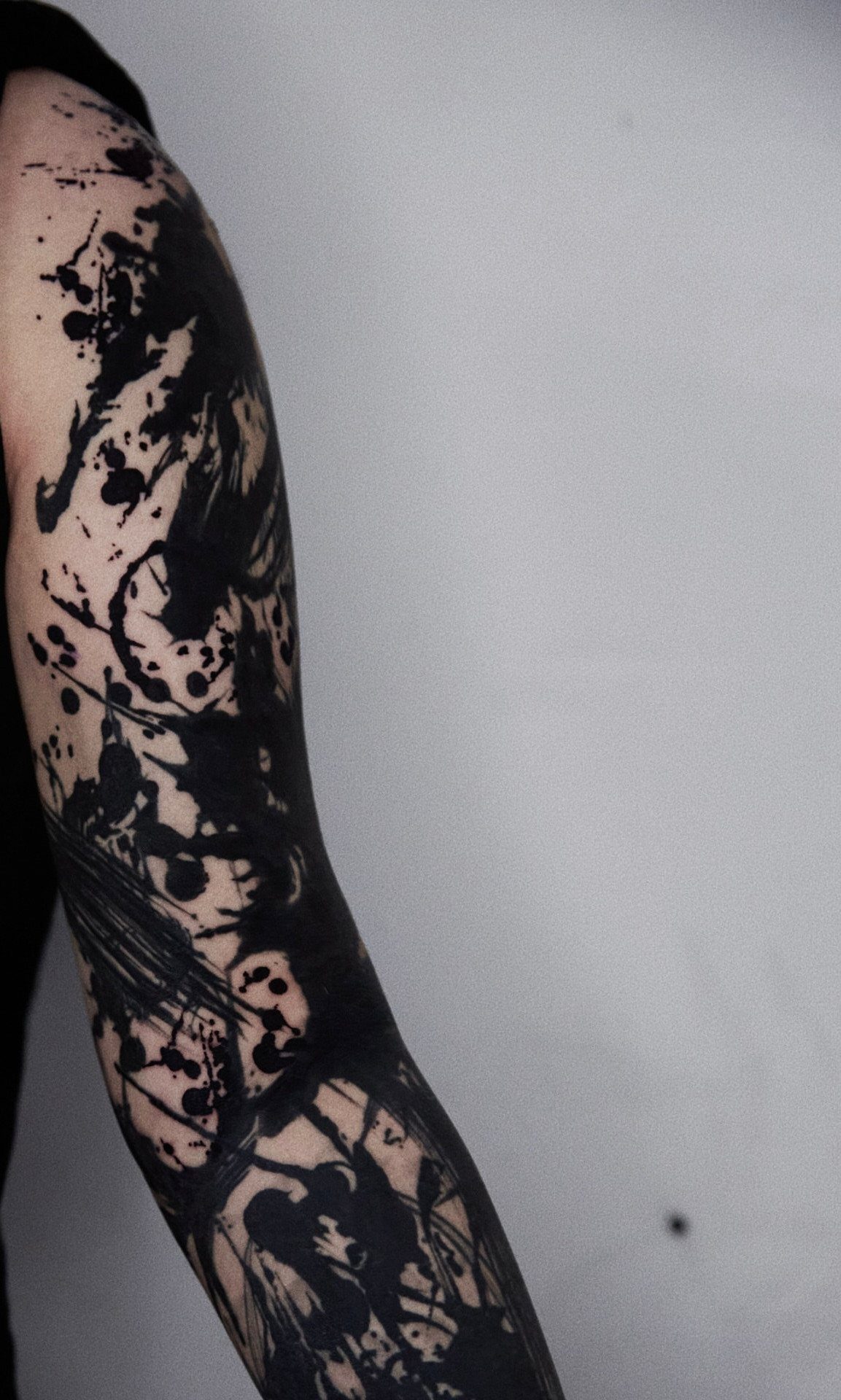
Black ink scattered in organic blots and drips across the forearm, mimicking the randomness of an actual spill. Splatter tattoos lean on chaos, so the design depends on your artist’s ability to make disorder look intentional.
Some artists freehand the splatter; others use a stencil as a guide and adjust as they go. Either way, the session is faster than geometric or floral work since there’s no symmetry to match.
Placement on the forearm keeps the design visible, and the loose edges blend easily if you add more ink later.
DIY Tattoo Tips
If you’re drawing with a pen before committing to the machine, use non-toxic ink meant for skin contact. Office pens and craft markers contain solvents that irritate or stain skin for days.
Wash the area with soap and dry it completely before you start. Oil, lotion or sweat keeps the ink from sitting evenly, and you’ll end up with patchy lines that look sloppy even for a test piece.
Test a small mark on the inside of your wrist first and watch for any reaction. If it burns, itches or reddens, wipe it off and switch to a different pen.
Most Sharpies and similar brands are safe for short-term wear, but skin chemistry varies enough that checking first saves you from spending the day with an inflamed arm.
Tattoo Longevity
Real tattoo ink sits deeper, in the dermis, so it stays for years, but black still lightens over time if you don’t protect it.
Sun exposure is the fastest way to fade a tattoo.
UV breaks down the pigment, and black turns muddy gray after enough summers without sunscreen. I keep SPF 50 on any visible ink year-round.
Exfoliating scrubs and retinol creams speed up skin turnover, which pulls ink closer to the surface and fades the edges faster. If you’re using them elsewhere, keep them off the tattooed area or plan to touch up more often.
Frequently Asked Questions
Can I make a DIY tattoo using pen ink?
You can draw temporary designs with a pen before getting the real thing, but pen ink won’t create a permanent tattoo.
Stick to markers labeled for temporary skin use, which skip the solvents and heavy metals found in standard writing ink.
Will pen ink tattoos fade?
Pen ink drawn on skin disappears completely in a few days.
How long does a black ink tattoo last?
Black tattoo ink lasts for years when you protect it, but UV exposure turns it muddy gray over time.