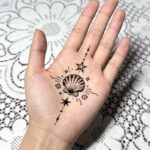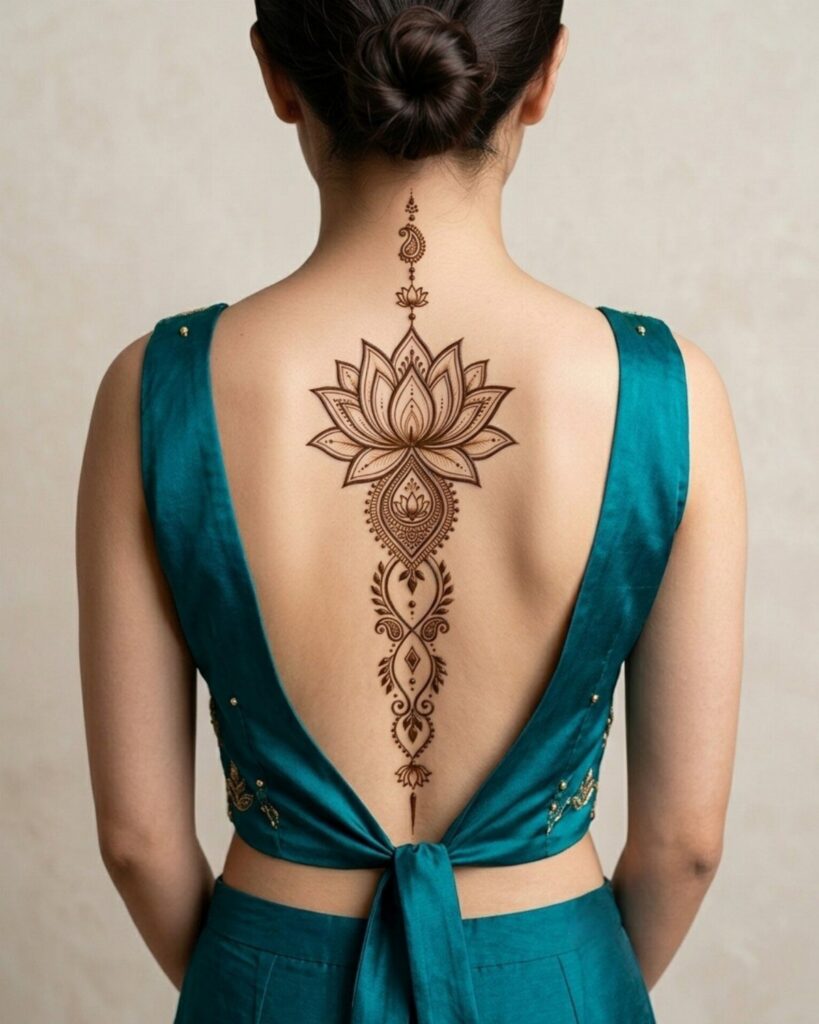
Henna on your back can span from a single lotus down the spine to full shoulder coverage, and the layout you pick depends on how much skin you want filled and whether you need the design to show in formal clothing.
A lotus centered at the nape reads clearly from a distance and stays visible when you wear your hair up, while vine work that curves from shoulder blade to lower back photographs well under an open-back dress.
1. Lotus Henna Tattoo Back
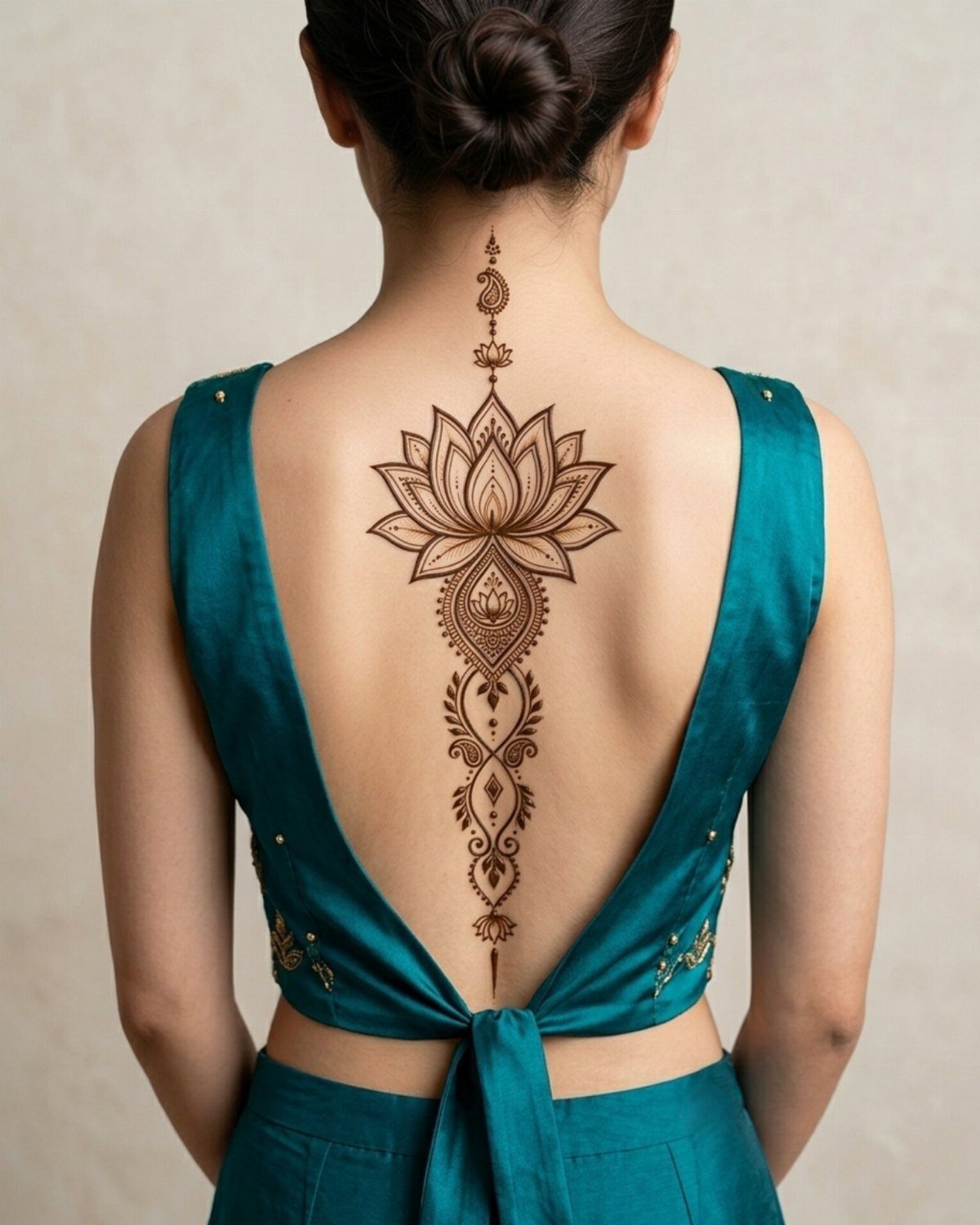
A single lotus sits at the nape and runs down the spine, its petals radiating outward in symmetrical layers. The design reads clearly from a distance, which matters when the canvas is your entire back.
Placement along the spine keeps the lotus centered no matter how you move. Something that fills more of your upper back calls for wider petals or additional leaves that extend toward your shoulder blades.
Henna typically lasts 1–2 weeks before it fades, longer if you keep the area moisturized and avoid scrubbing it in the shower.
2. Mandala Henna
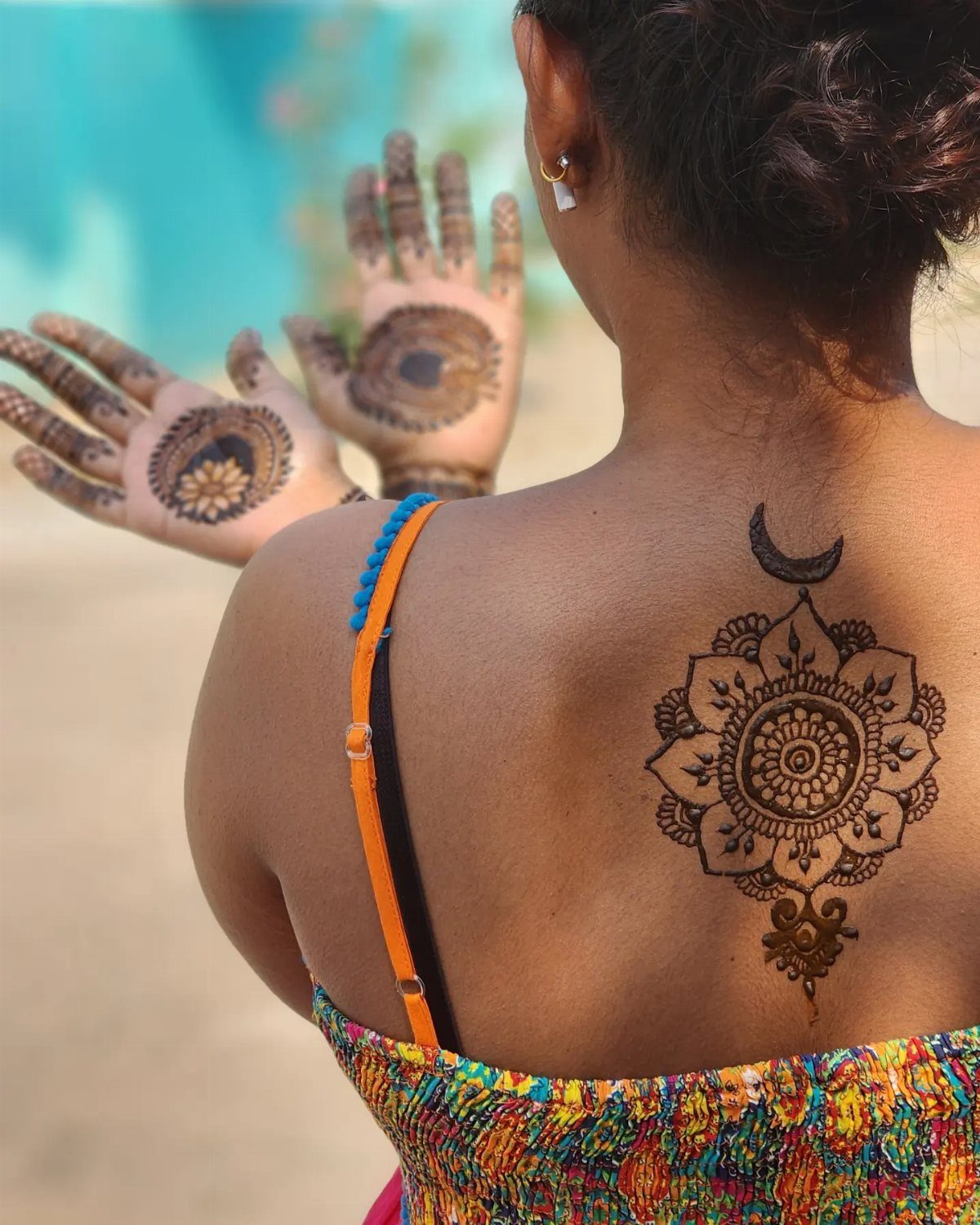
Mandalas translate well to the upper back because the circular geometry sits flat against your shoulder blades. Concentric rings of petals, dots and fine linework create a pattern that mirrors itself around a center point.
The moon needs to be sketched in proportion first so it balances with the outer ring.
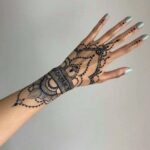
Matching henna on your palms ties the look together for events where your hands will be visible, like weddings or festivals.
3. Floral Henna Tattoo Back with Vines and Leaves
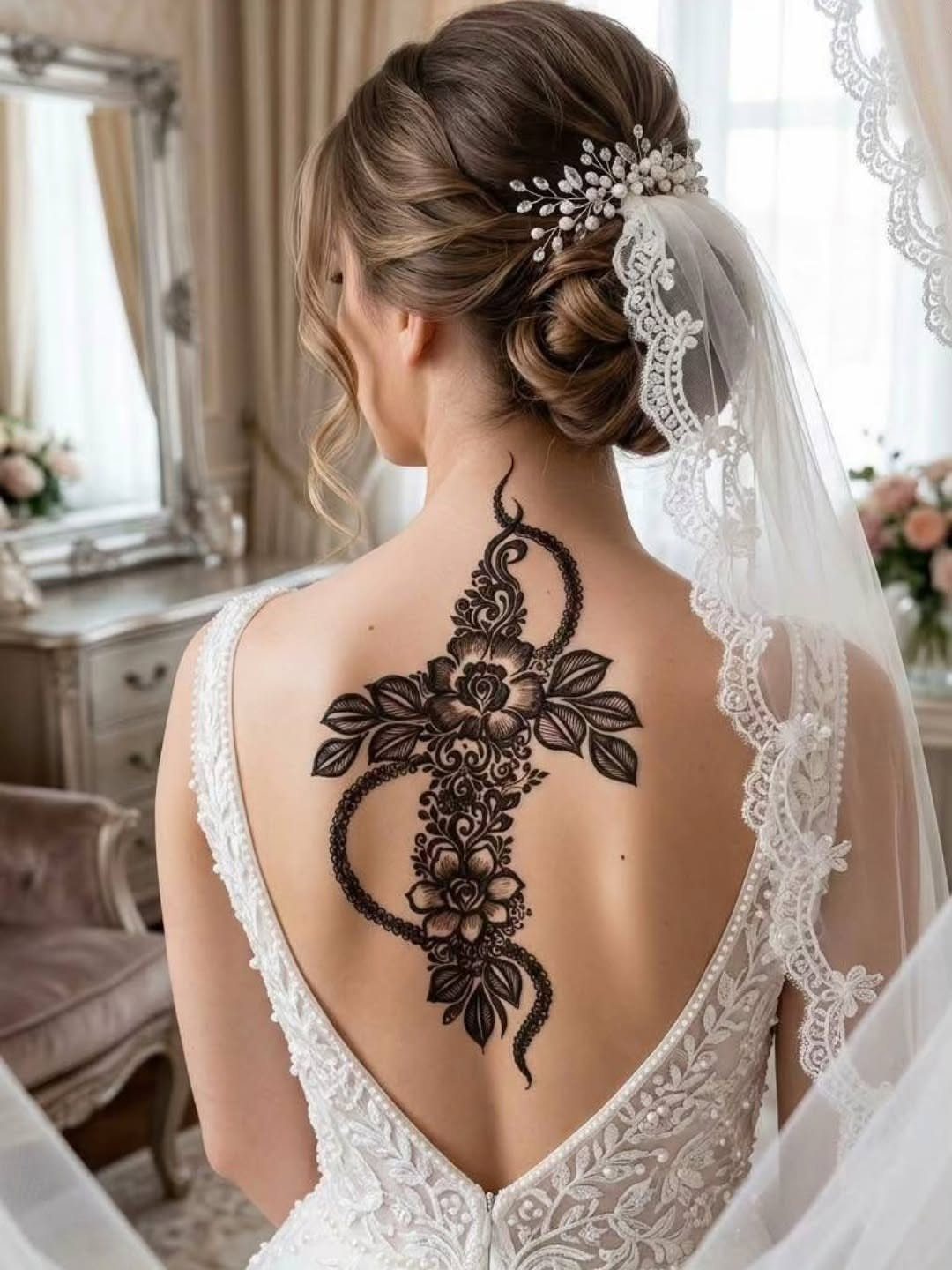
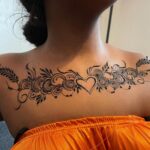
Vines and leaves let the henna flow across your back without hard edges. The design starts at one shoulder and curves down toward your waist, with flowers spaced along the vine to break up the line.
Bridal henna often includes this much coverage because it photographs well under a veil or open-back dress. A dress with a lower cut calls for vine work that extends farther down and fills the visible area.
Book your henna session before your event so the stain has time to darken fully.
4. Butterfly Henna on Lower Back
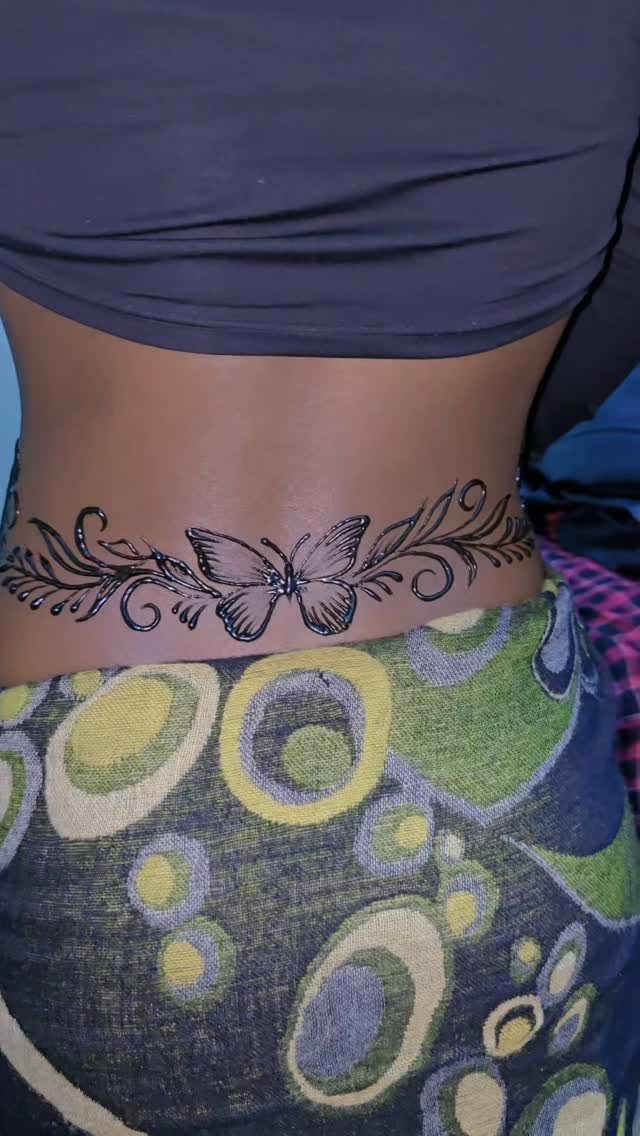
A butterfly centered on the lower back works as a standalone design or as the anchor for swirling vines that extend toward your hips.
The wings give your artist room to add fine detail, dots and shading that show up well on skin.
Lower back placement means the henna stays covered most of the time, though waistbands and chairs will rub against it. Avoid tight clothing right after application so the design lasts longer.
Pairing the butterfly with floral swirls softens the edges and makes the whole piece feel more organic.
5. Upper Back and Shoulder Henna
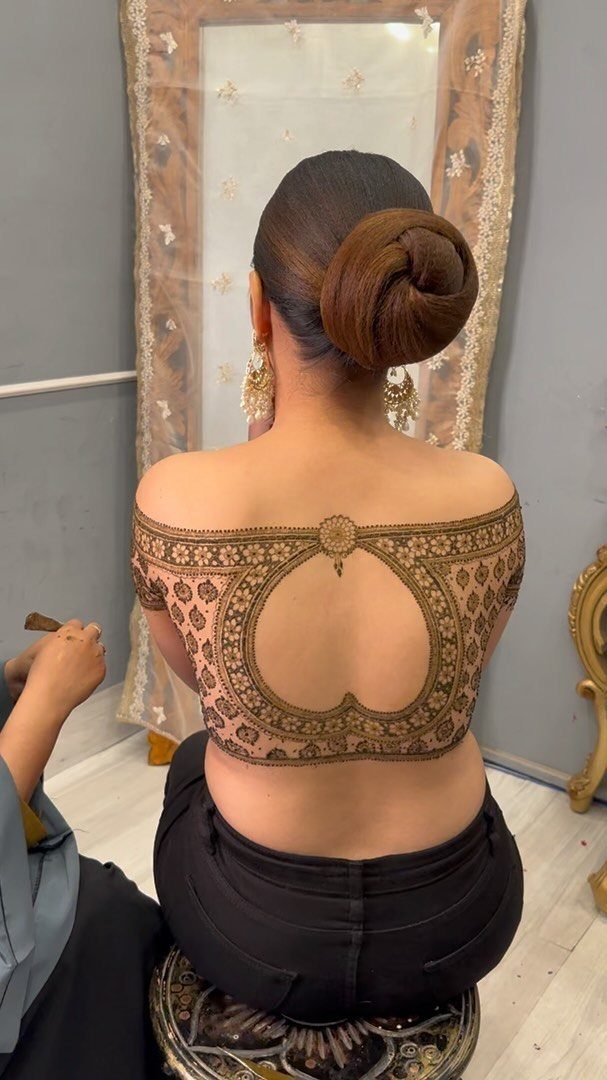
Spanning your upper back and shoulders gives your artist the most space to work with, and the result looks balanced whether you wear your hair up or down.
The design can wrap around your shoulders to frame your collarbone, or stop at the shoulder blades for a more contained look.
Application takes longer because of the coverage, depending on how much detail you go with.
The henna needs to dry completely before you put on a shirt, so plan to sit still or wear something loose that won’t smudge the pattern.
This much henna makes sense for special occasions where your back will be on display.
Frequently Asked Questions
How long does henna last on the back?
Henna on your back fades within 1–2 weeks, the same as anywhere else on your body. Keeping the area moisturized and avoiding scrubbing in the shower stretches that timeline.
How do I make the henna stain darker on my back?
Let the henna sit on your skin long enough before washing it off, and avoid water as much as possible right after application. The longer the paste stays on, the deeper the stain.