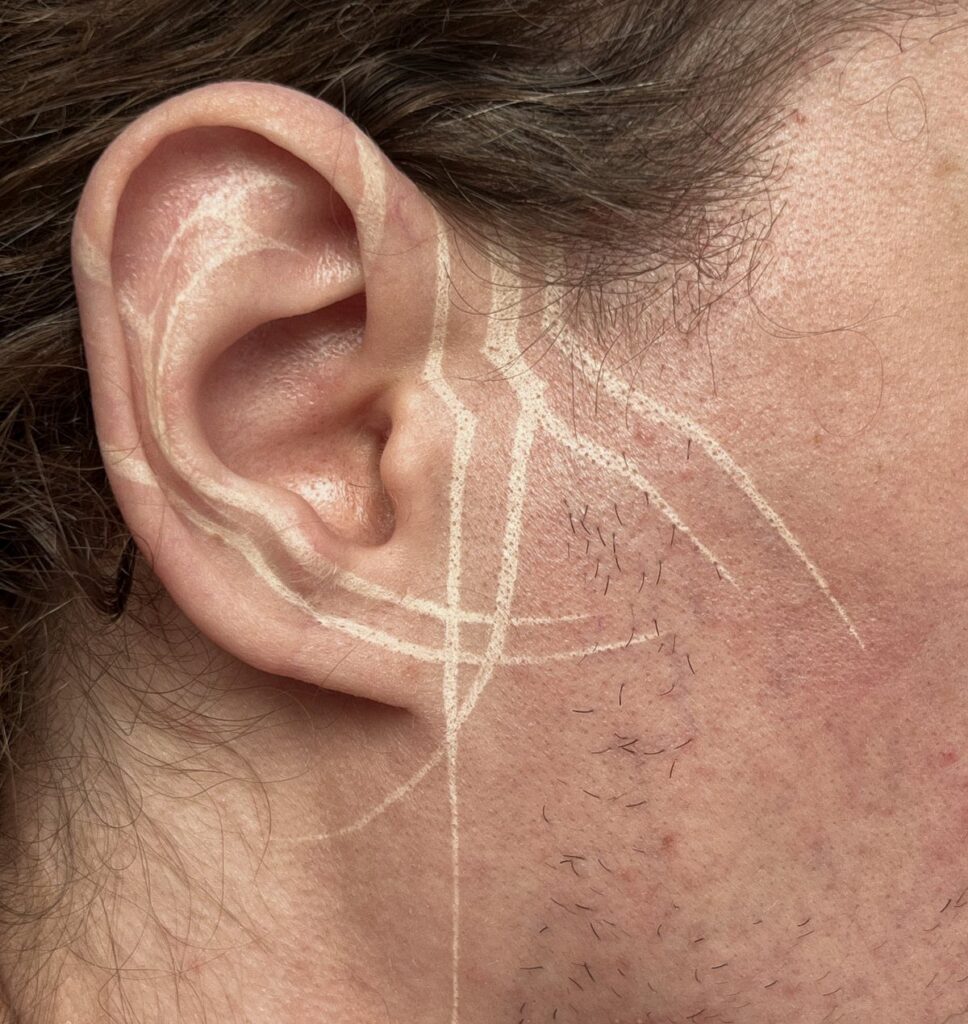
White ink shifts to yellow or grey within a year, and the contrast you saw fresh never lasts.
The choice between white ink alone and white layered over black decides how long the design stays visible: white on bare skin reads as texture more than color, while white over a healed blackout base holds brightness longer because the black blocks the skin tone that dulls the pigment.
1. Subtle and Delicate White Ink Tattoo
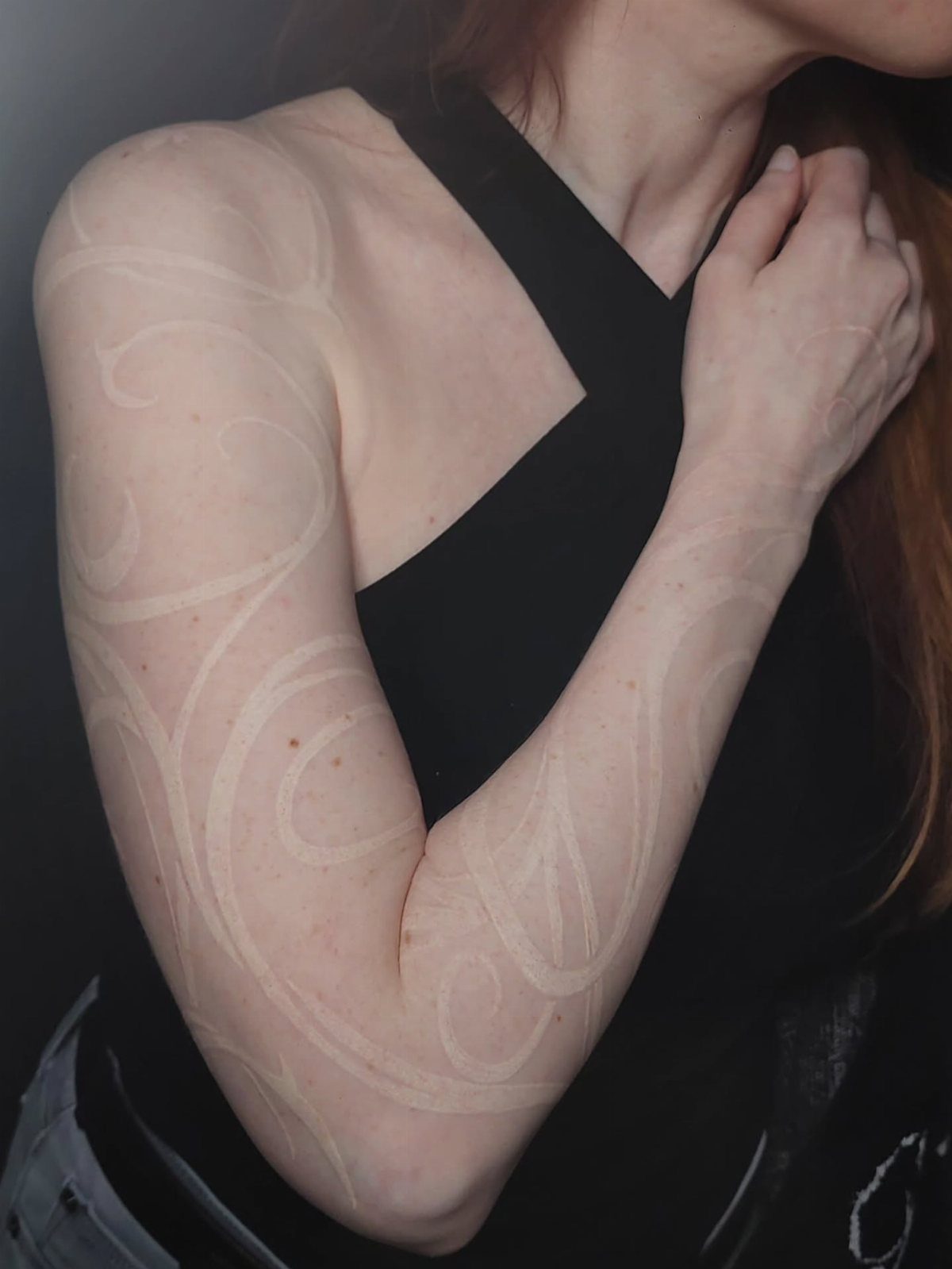
White ink sits almost invisibly on the skin, reading more as raised texture than sharp contrast. The swirls here catch light but blend into skin tone from a few feet away.
This subtlety is the appeal for anyone who wants body art that feels private rather than broadcast. White ink works best as fine line or minimal geometry; heavier fills can blur into scar tissue over time.
The design will soften within a year. Touch-ups restore definition, but the faded look is part of the aesthetic.
2. Aging of White Ink Tattoos
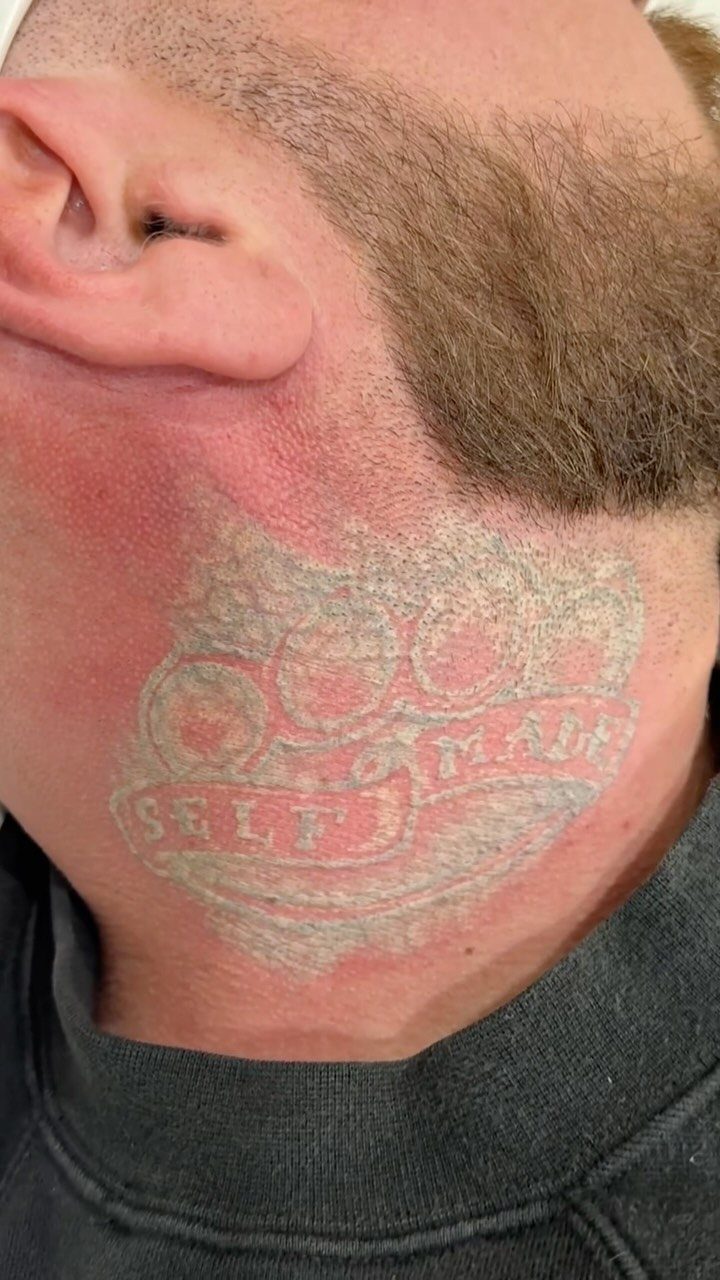
White ink changes as it heals. The crisp lines you leave the shop with fade to a yellowish or greyish tint, and the contrast drops sharply over the first year.
White ink needs maintenance sessions to stay visible. Without them, the tattoo fades into something closer to a scar than a graphic.
3. White Ink Highlights in Larger Tattoos
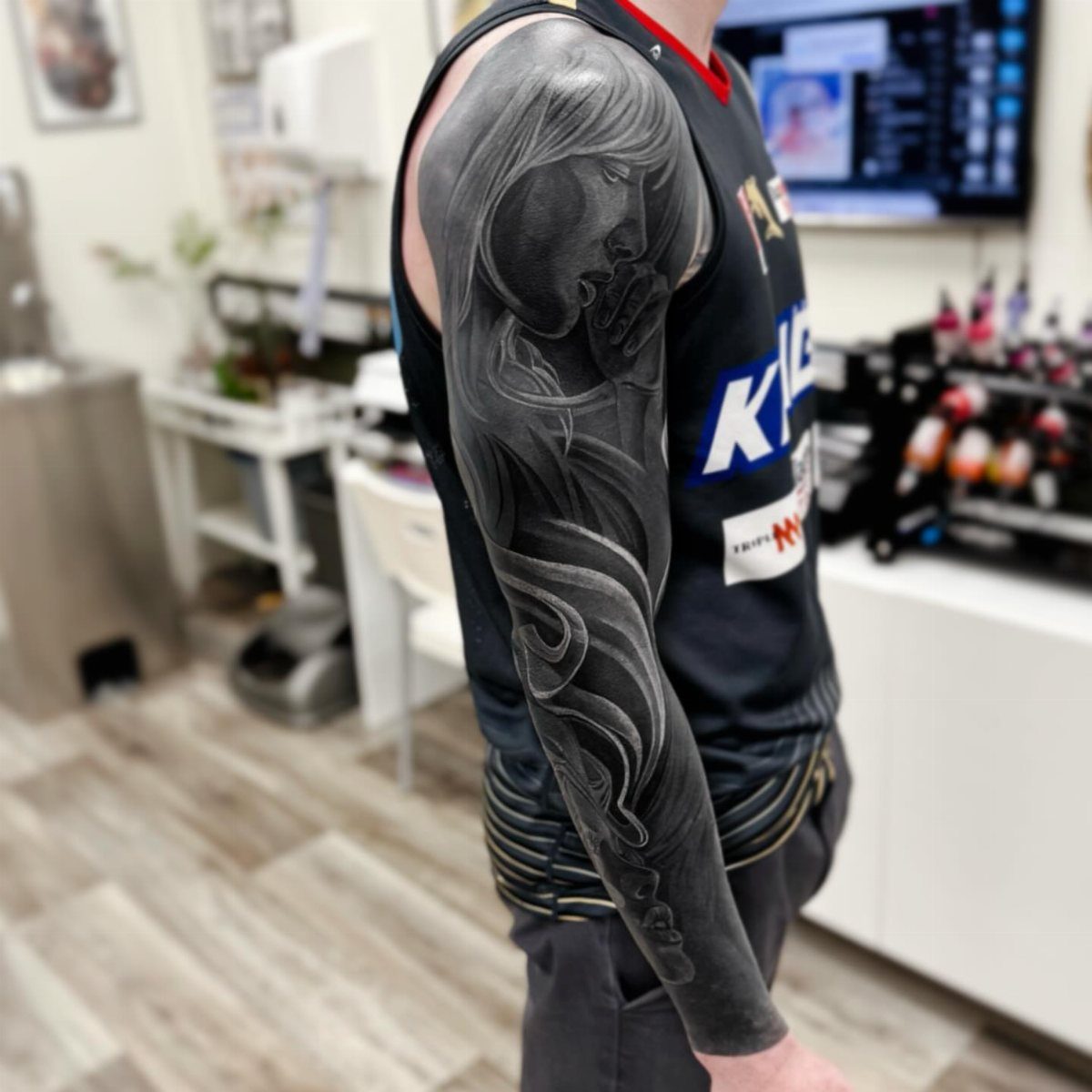
White ink works best as highlight rather than base in darker pieces. The bright accents here bring dimension to the portrait and swirls, making the piece read clearly from a distance.
Adding white over healed black ink is common, but it requires a light hand. Too much saturation can blur into the darker tones as both fade.
This technique works best on skin that already holds black ink well. On lighter skin, white highlights stay visible longer; on darker tones, they fade faster and may disappear entirely within a year.
4. White Ink Over Black Tattoo
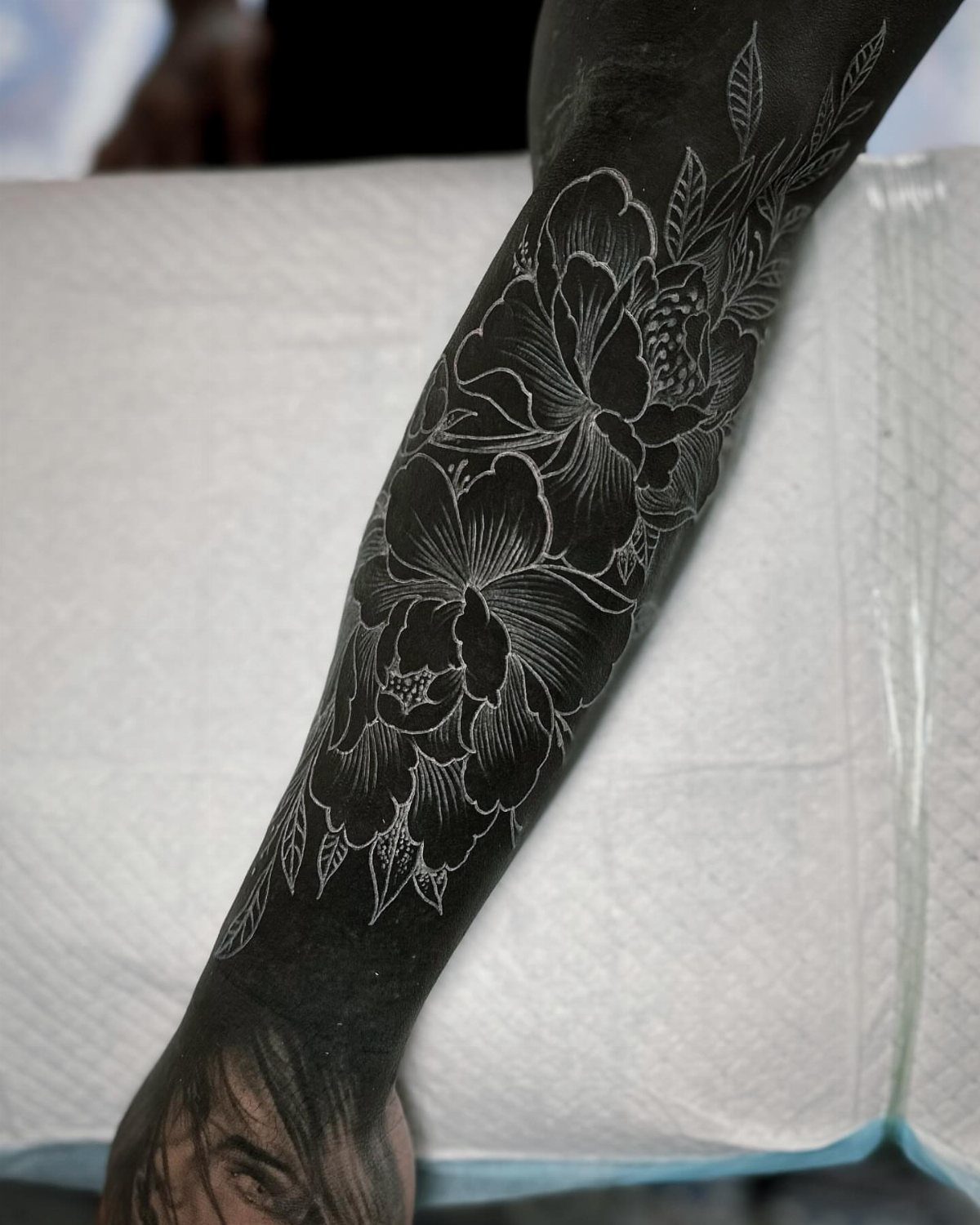
Layering white ink over solid black creates contrast that holds up better than white on bare skin.
The peonies here sit on top of a healed blackout sleeve, and the white reads clearly because the black underneath provides a dark canvas.
This approach gives white ink a longer visible life. Black ink blocks the skin tone that usually dulls white pigment, so the design stays brighter through the first year.
You’re committing to both layers at once. You need a fully healed black base before adding white, and any touch-ups require careful placement to avoid muddying the boundary between the two.
5. Whimsical Butterflies
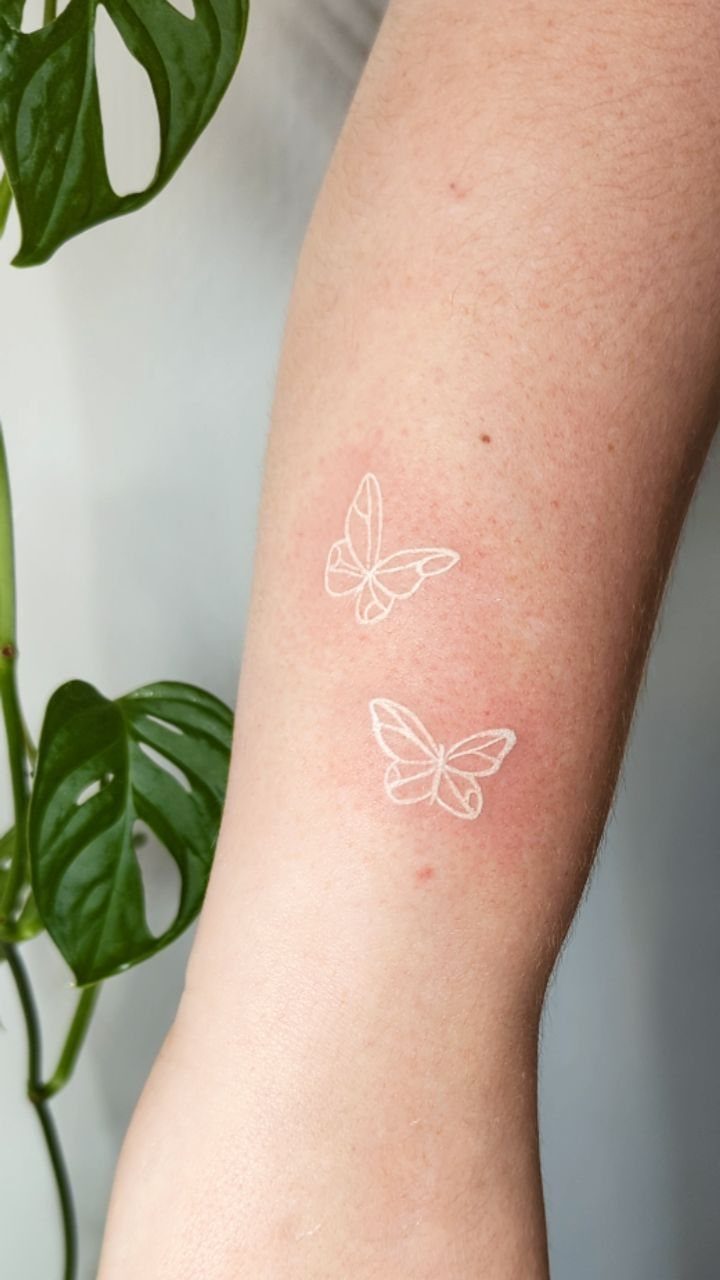
Butterflies in white ink carry all the symbolism of transformation and rebirth while staying low-contrast and delicate. Both use dynamic triple white ink, a pigment formulation meant to hold brightness longer than standard white.
The small scale keeps the design readable as it fades. Larger white ink pieces can blur into indistinct shapes over time, but fine-line butterflies stay recognizable even after the ink softens.
Placement matters.
White ink shows best on the inner forearm, wrist, and other areas where skin stays lighter year-round. Sun exposure yellows white ink faster, so daily sunscreen is part of the maintenance.
6. Skin Tone Impact
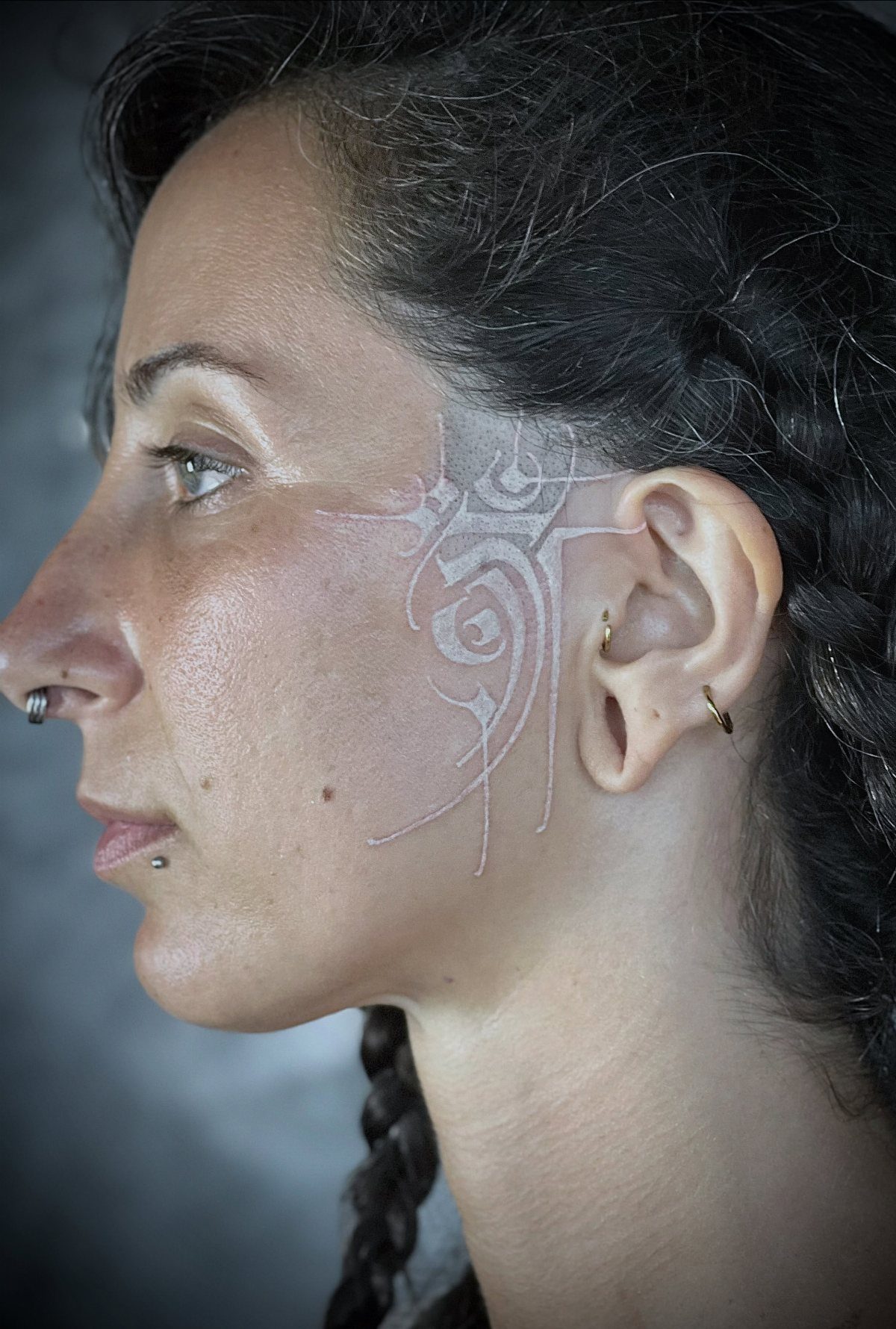
White ink heals differently depending on your natural skin tone. On lighter skin, it stays visible as a soft contrast; on medium to darker skin, it can fade into near invisibility or turn greyish as it settles.
On darker complexions, the same design might disappear entirely or require a much heavier application to show at all.
Test with a small piece first if you are unsure how white ink will heal on your skin. A wrist or ankle gives you a preview before committing to a visible spot.
7. White Ink Tattoo Glowing Under Blacklight
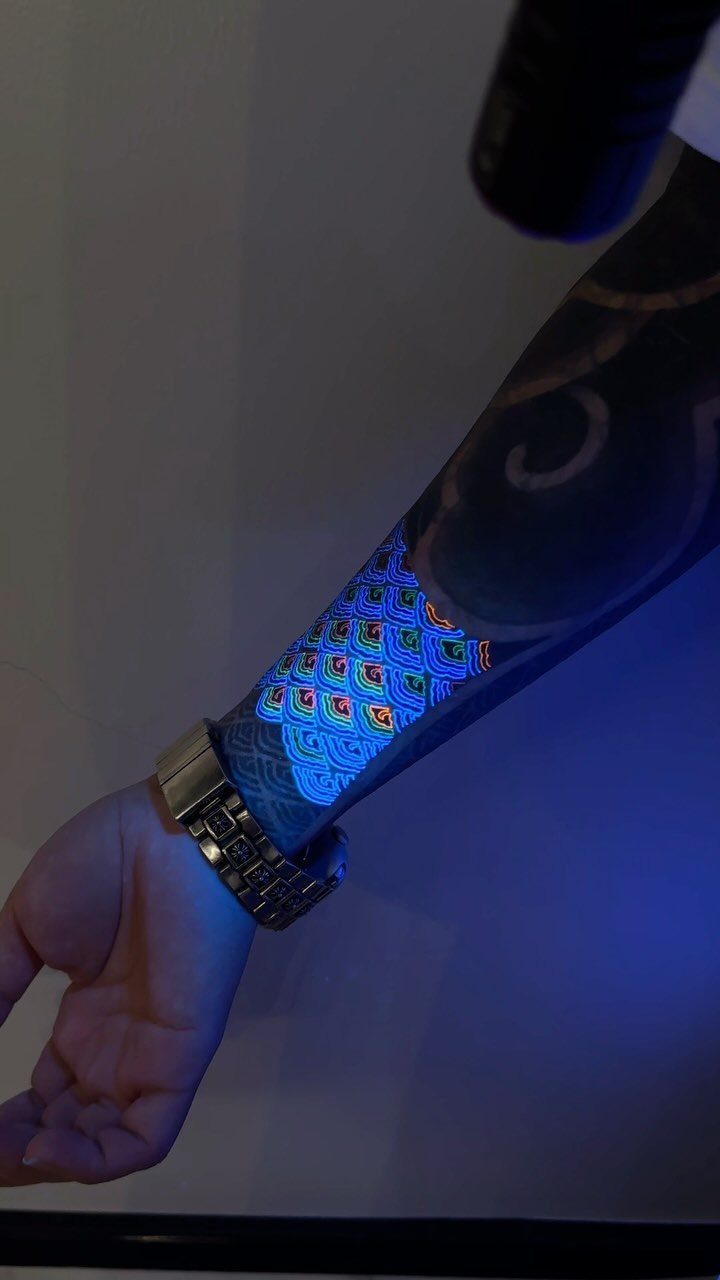
The scales here glow under blacklight but stay nearly invisible in daylight. UV-reactive white ink is a separate pigment from standard white, formulated to fluoresce under ultraviolet light.
This gives you a tattoo that reads 2 different ways depending on the lighting. In natural light it sits soft and subtle, in a club or under a blacklight it jumps bright neon.
The glow drops off more quickly than it does with UV-reactive pigments formulated to hold up under repeated exposure. Most UV pigments lose intensity over time, and touch-ups are frequent when you need the effect to stay bright.
8. White Ink Flowers Tattoo
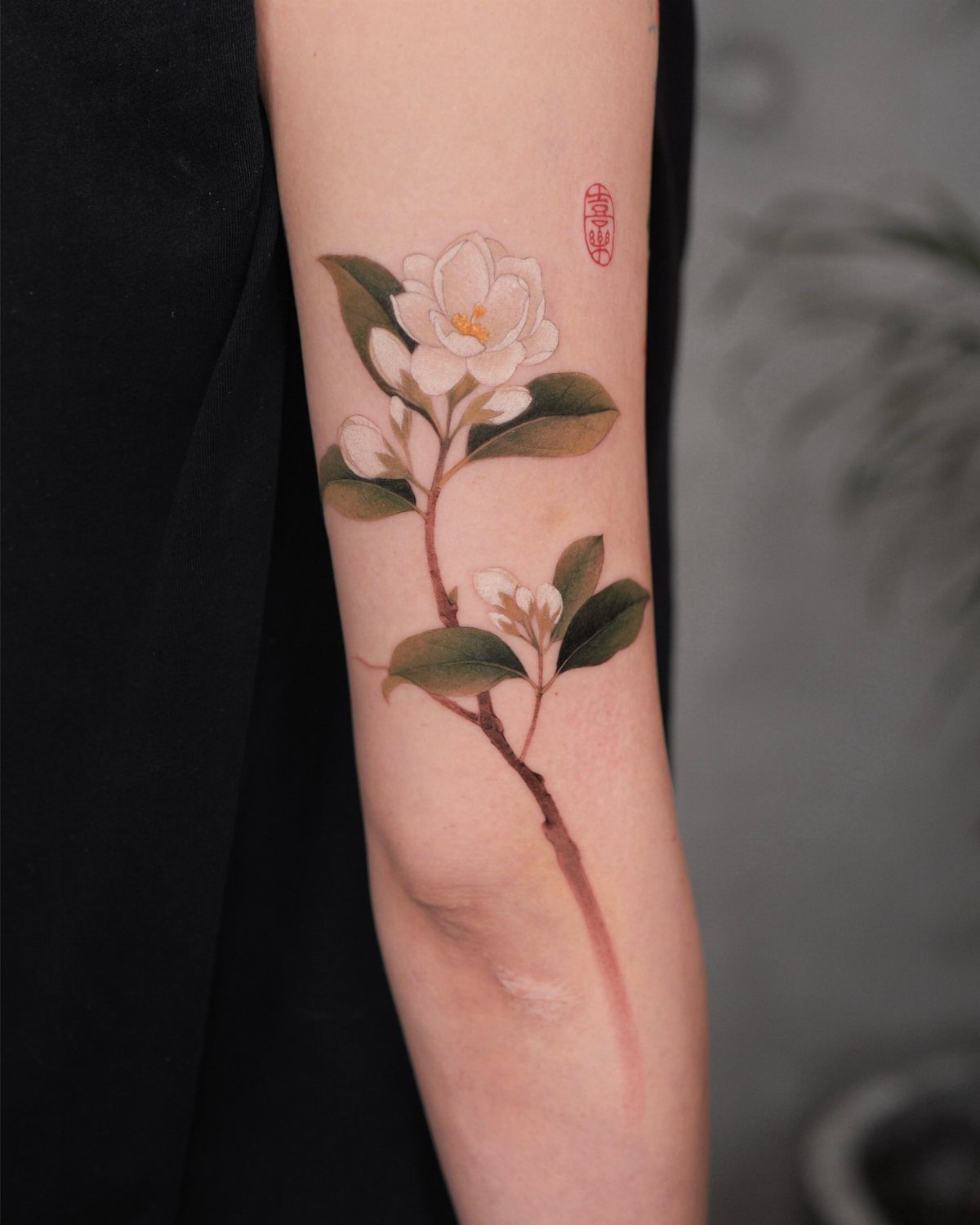
Flowers in white ink hold their shape better than solid fills. The petals and stem here stay recognizable because the design relies on line rather than mass.
Mixing white ink with color, like the green leaves and red stamp, gives the piece more staying power.
The darker pigments anchor the composition, and the white stays visible longer when it sits beside contrast rather than alone on bare skin.
Small floral pieces like this fade gently. You lose some definition in the petals, but the overall form stays readable for years.
9. White Ink Jellyfish Tattoo
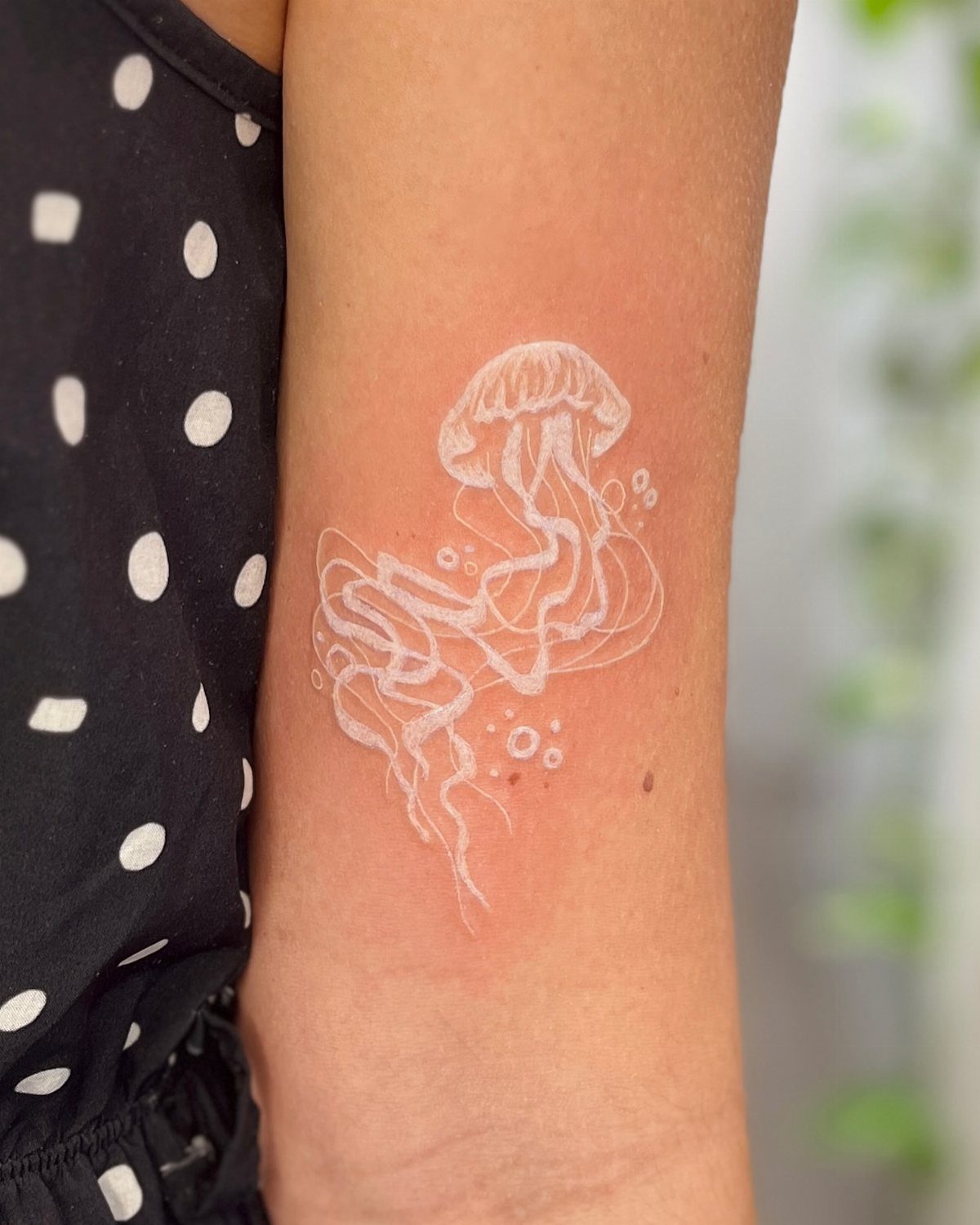
A jellyfish translates well to white ink because the subject is already soft and translucent. The tentacles and bubbles here mimic the creature’s natural glow, so the faded look of white ink reads as intentional rather than worn out.
Flowing shapes hold up better than hard geometry in white. As the ink softens, curves and organic lines blur less obviously than straight edges or fine detail.
Forearm placement keeps the piece visible to you. White ink is easy to forget about, and a spot you see daily reminds you to apply sunscreen before the pigment yellows.
10. White Ink Lightning Tattoo
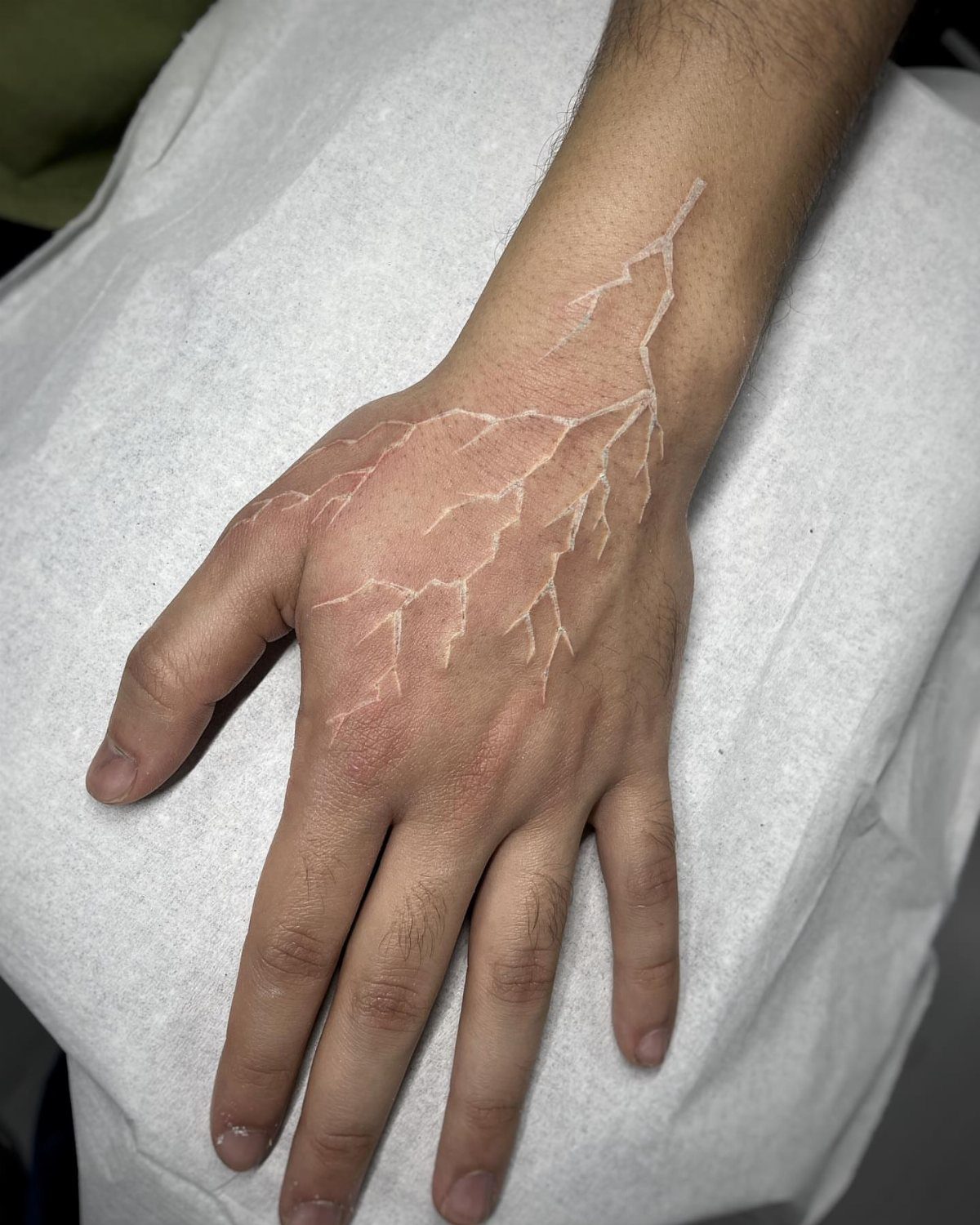
Lightning bolts in white ink give you bold graphic impact without the solid contrast of black. The angular lines here stay sharp because they are thick enough to hold definition as the ink fades.
Hands are high-movement, high-exposure areas. White ink on the hand fades faster than most other placements, and you will need touch-ups every year if you want the lines to stay visible.
The geometry of a lightning bolt keeps the design readable even after the ink softens. Simple shapes survive better than intricate detail in white.
11. White Ink Mandala Back Tattoo
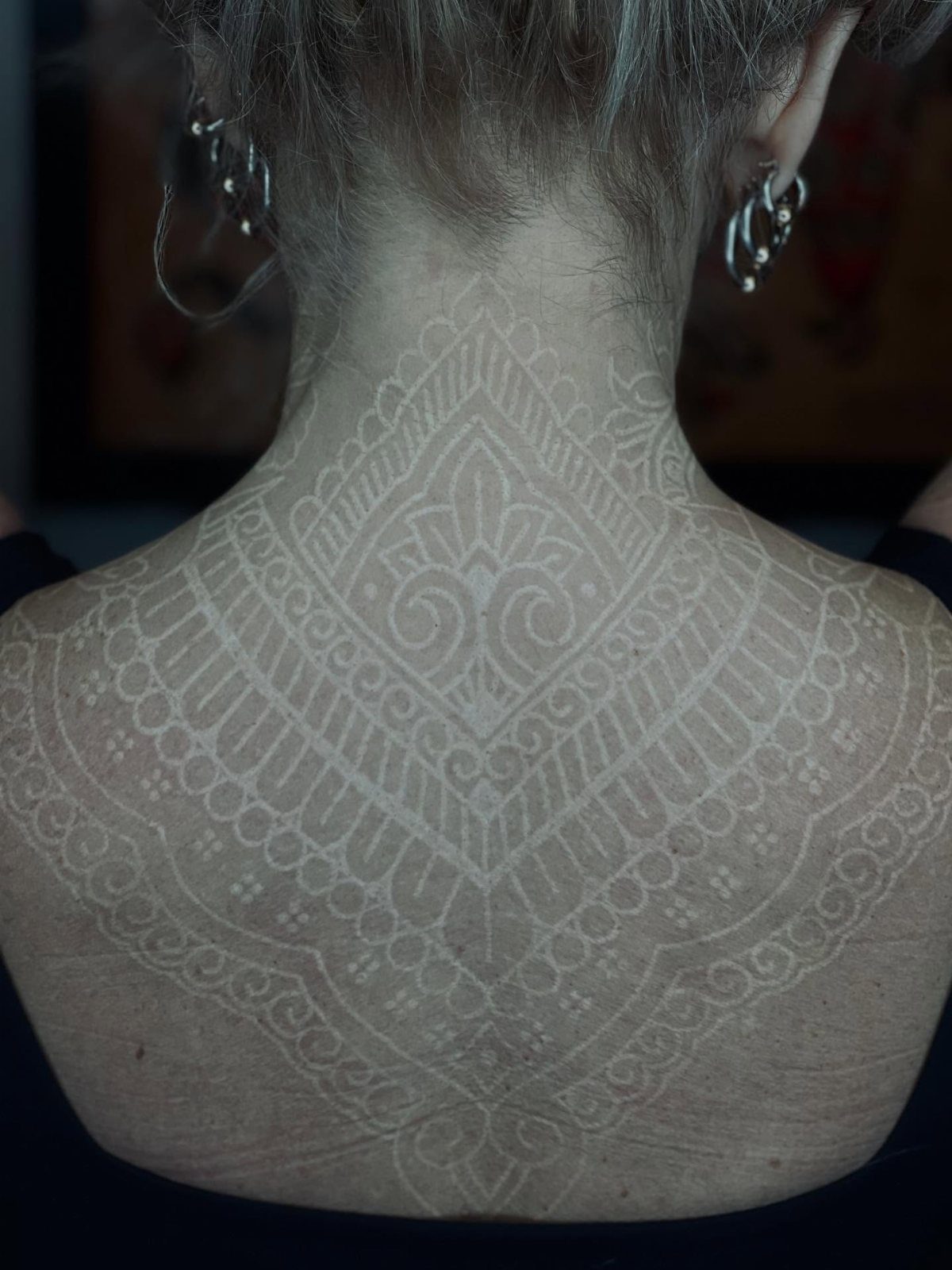
A mandala this large in white ink means regular maintenance over the long run. The symmetry and fine detail here will soften noticeably within a year, and restoring the crisp lines requires careful touch-up work.
Placement on the upper back and neck means the piece stays covered most of the time, which helps preserve the ink. Sun exposure yellows white pigment faster than anything else, and this spot avoids daily UV damage.
Large white ink pieces read best on very fair skin. On medium or darker tones, a design this size can fade into near invisibility.
Longevity of White Ink Tattoos
The translucent quality that makes it subtle on fresh skin works against it over time, and most pieces lose brightness within months.
The pigment often shifts from bright white to a yellowish or greyish tone as it settles. Direct sun speeds the fade, and the color loses intensity even when protected.
The faded look is built into the medium, not a sign of poor work.
Without it, UV damage speeds up every stage of fading.
Choosing a Tattoo Artist
An artist experienced with white ink knows how the pigment behaves on different skin tones and can show you healed examples from their own portfolio.
Find an artist who will tell you exactly how it fades and how the texture changes during your consultation.
White ink shifts over time rather than holding a sharp line, and knowing that up front keeps you from regretting the piece later.
Request photos of their white ink tattoos taken at least 12 months post-session. If the artist cannot provide healed examples, that is reason enough to look elsewhere.
Quality pigment makes a difference.
Expectations for Healed Tattoos
The pigment often takes on a raised, textured appearance that reads more like a scar than a graphic, and many people choose white ink specifically for that effect.
The area may feel slightly raised during healing. This usually settles on its own, though some pieces keep a subtle 3D quality even after they fully heal.
Clean aftercare keeps the ink from picking up contamination while the skin is open. Any stray pigment or debris that enters the skin while it heals can turn the white muddy or off-color.
Fresh tattoos are misleading. The healed result looks different from what you walk out with, so request photos of their healed white ink pieces during the consultation before you settle on a design or spot.
Frequently Asked Questions
Is it possible to get a tattoo with white ink?
Yes, white ink tattoos are possible and come in 2 forms: standalone pieces for a subtle, low-contrast look, or highlights layered over darker ink to add dimension.
White ink starts out sharp and luminous, then loses brightness fast and reacts unpredictably across different skin tones. Fine-line designs hold up better than heavy fills, which can blur into scar-like texture over time.
Why don’t tattoo artists use white ink?
White ink is harder to see on skin during application, which makes it more difficult to place accurately, and it behaves unpredictably once healed.
On very pale skin it can disappear entirely, and on darker tones it often fades to near invisibility or turns greyish within months.
Artists who work with white ink need experience showing how it ages on different skin tones, and many avoid it because the results vary so much from person to person.
What are the downsides of getting a white ink tattoo?
White ink fades fast, often losing brightness and shifting to yellow or grey within the first year, and it requires frequent touch-ups to stay visible.
On medium to darker skin the pigment barely registers, and even fair skin can let it vanish almost completely over time.
UV rays turn it yellow in a hurry, and once healed it can read more like a scar than a tattoo.