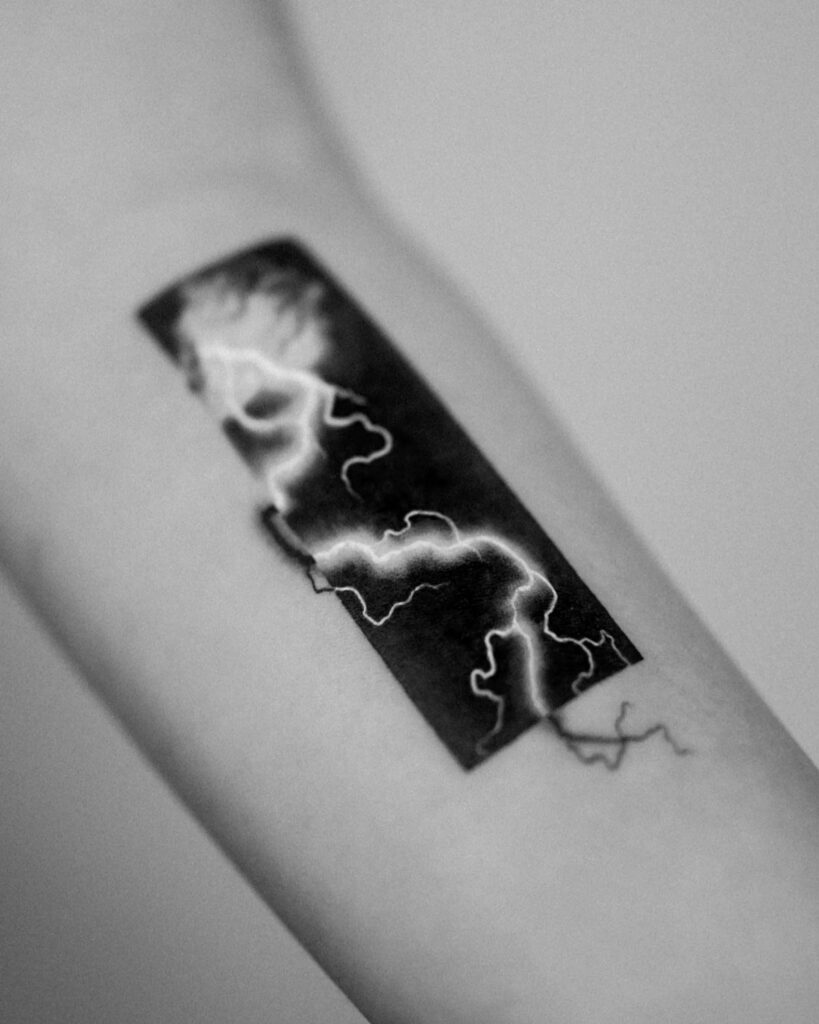
White ink on dark skin delivers the sharpest contrast you’ll get without color, while the same bolt on bare light skin reads closer to a scar than a tattoo.
The choice comes down to whether you want a jagged bolt or something that branches, one thin line or a pattern built over black.
White pigment loses half its opacity within the first year, faster on hands and anywhere sun hits regularly, so placement and background color decide how long the bolt stays visible.
If you’re working with darker skin or layering over blackwork, the white behaves differently than it does on pale, unmarked skin.
1. Jagged Lightning Bolt Tattoo
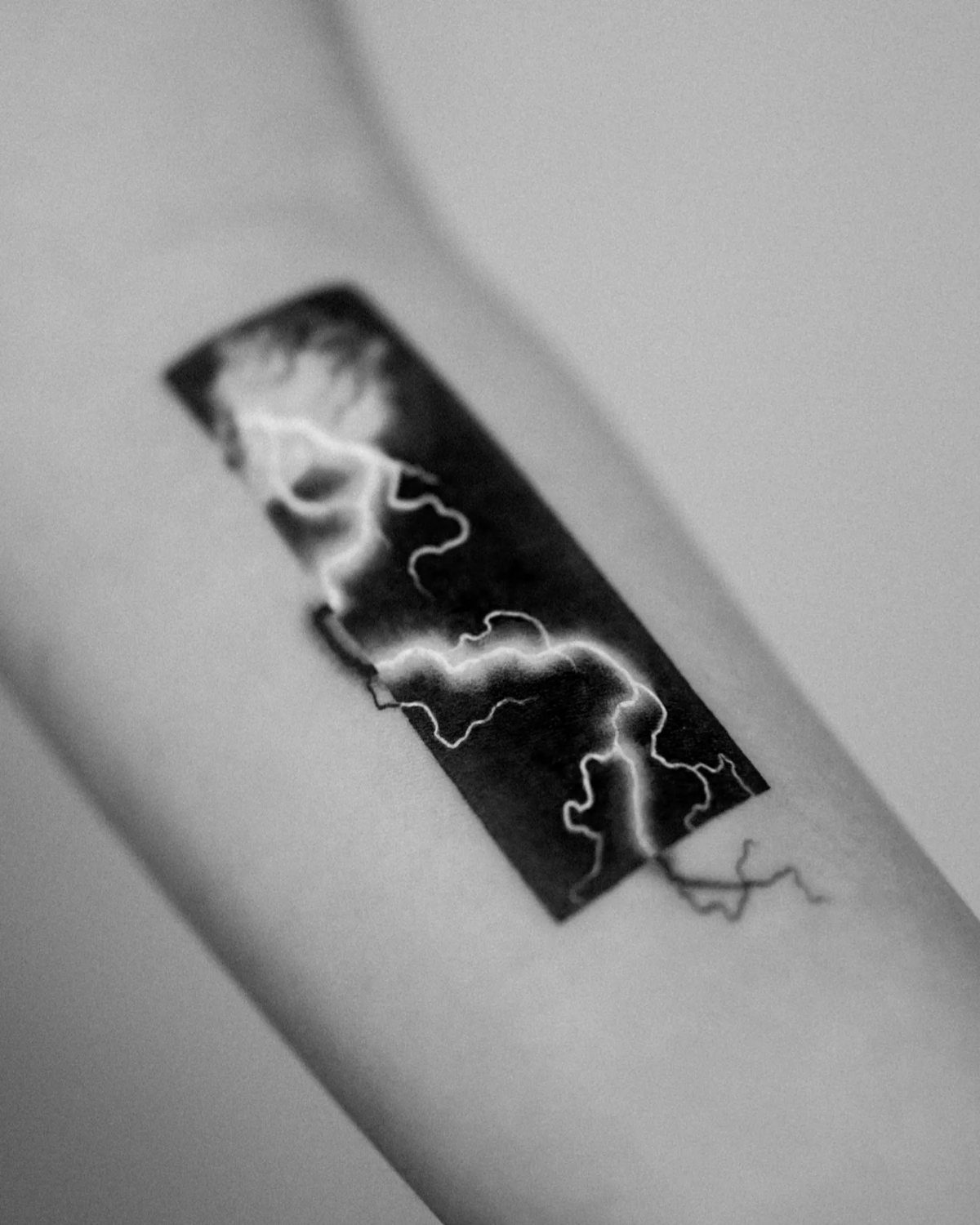
A single jagged bolt cuts through a solid black rectangle, each angle sharp enough to look like it was pulled from a real strike.
The contrast does all the work: white ink reads cleanest against saturated black, and the geometric block keeps the eye from losing the bolt in surrounding skin tone.
This style leans hard on precision.
If the lines waver or the points round off, the whole thing softens into a generic zigzag. A steady hand and opaque white pigment make the difference between lightning and a sketch that fades too soon.
2. Branching Lightning Patterns
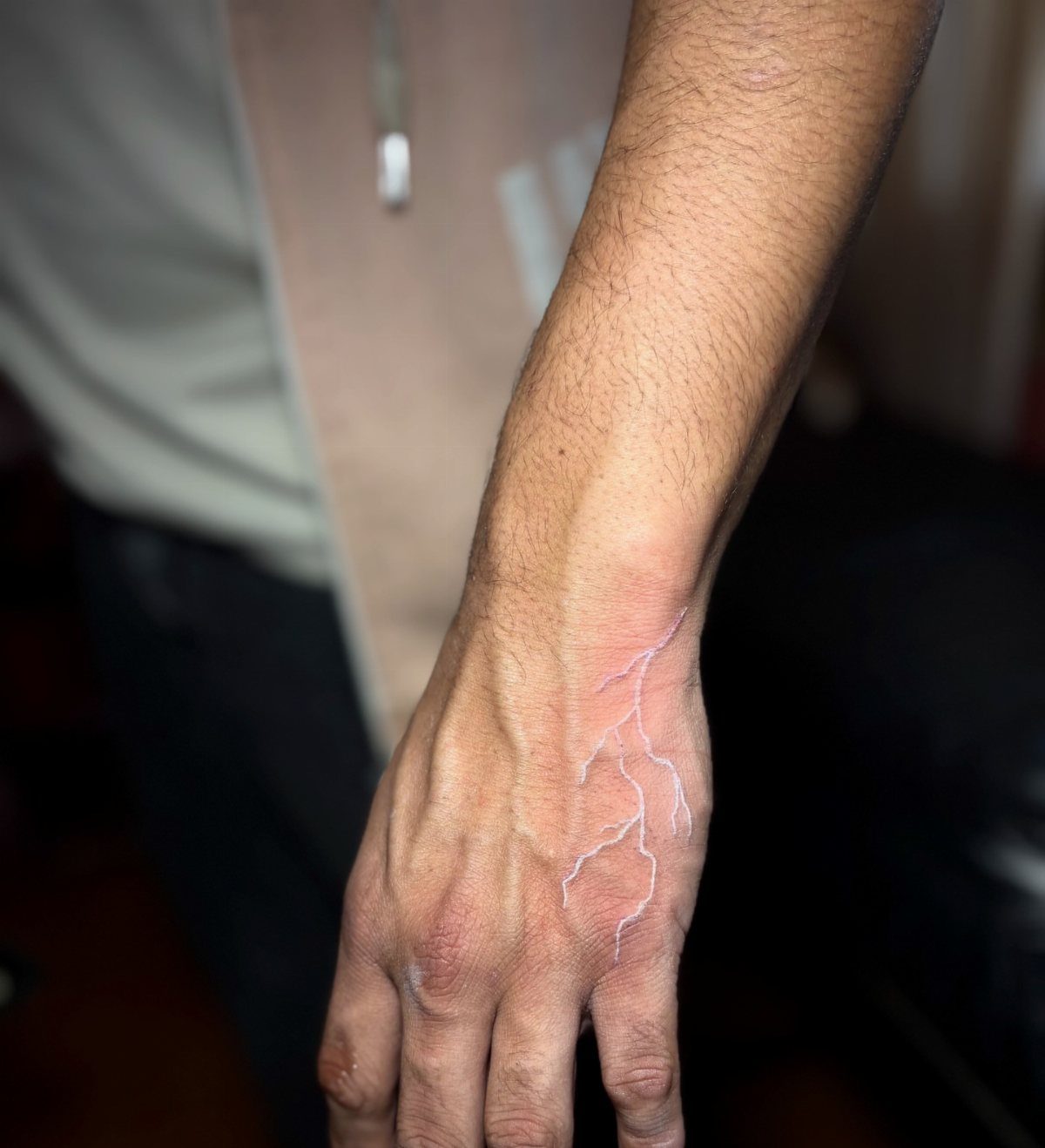
Real lightning splits into dozens of smaller veins as it travels, and this design copies that organic sprawl. One main bolt branches into thinner offshoots, some curling back toward the wrist, others fading out near the knuckles.
White ink on untouched skin reads as a scar at first glance, which works if you want something subtle.
Legibility depends on the choice: without a dark background, the branches need to be thick enough to hold their shape as the ink settles. Too fine and they blur together within a year.
3. White Ink Lightning Tattoo on Dark Skin
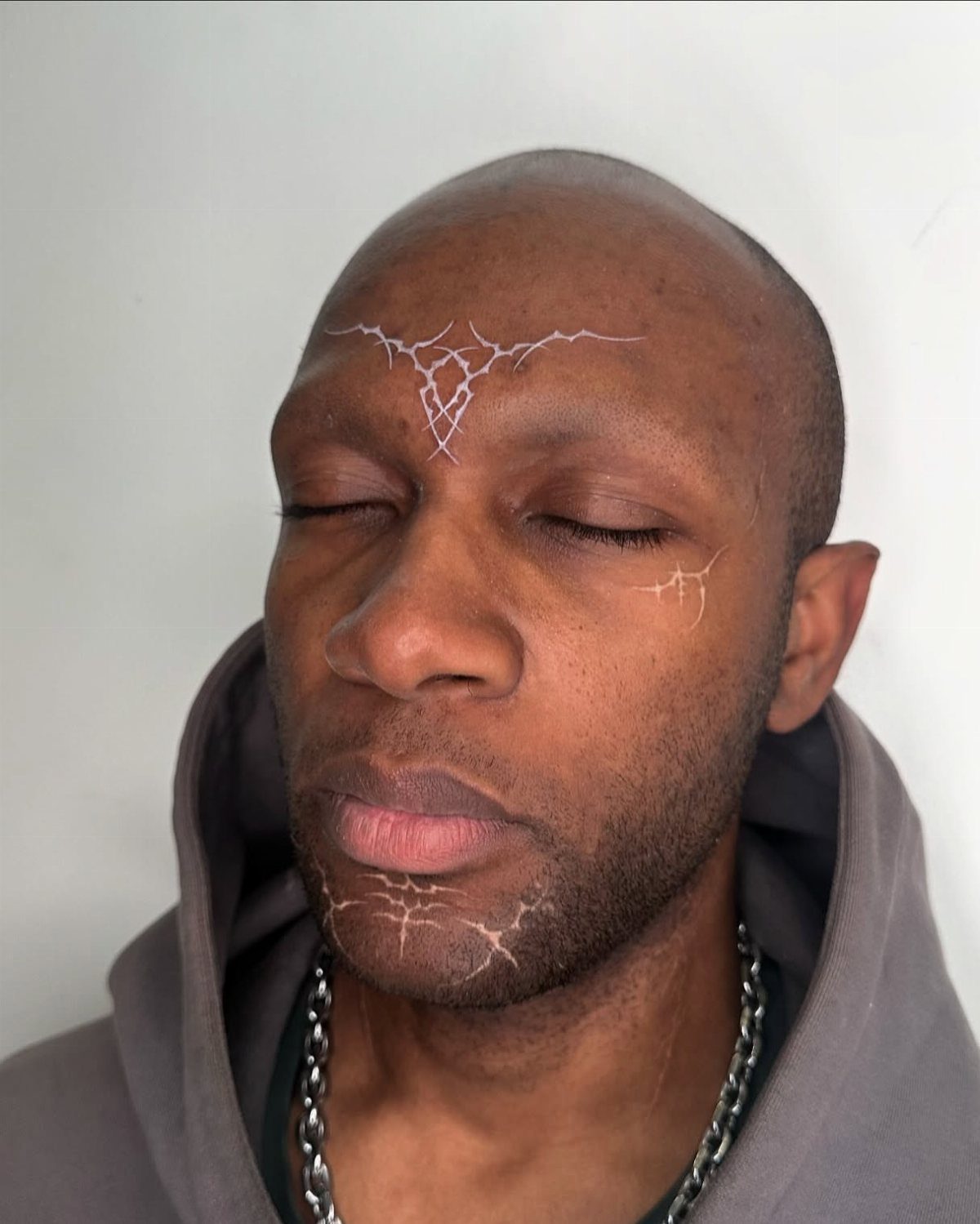
White ink on dark skin delivers the highest contrast you can get without color, and these bolts read like raised keloid scars or ceremonial marks.
The forehead, cheek, and chin placements put the design where light hits first, which keeps the white from disappearing in shadow.
Visibility depends on pigment load. White ink applied too thin will heal nearly invisible, even on deep skin tones.
The artist needs to pack it dense and go over each pass to build opacity, which adds time and discomfort but keeps the design from vanishing after healing.
4. Minimalist Lightning Bolt Tattoo
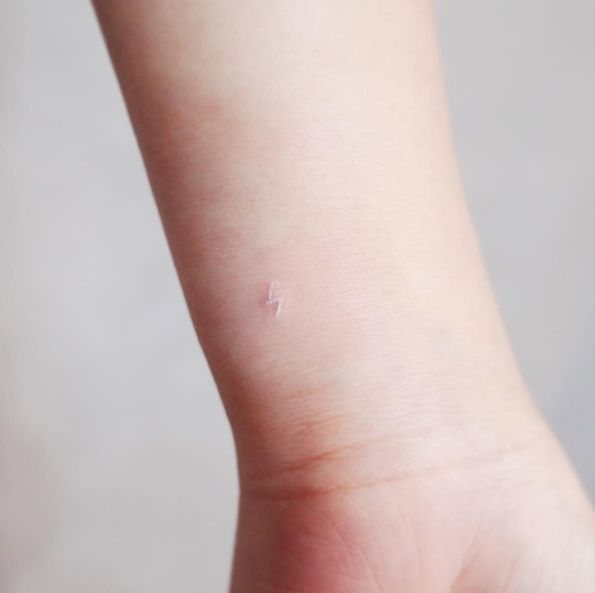
A single clean bolt, no branches, no background, small enough to fit on the narrowest part of the wrist. The shape is instantly recognizable, and the size keeps it from dominating the space or requiring a long session.
White ink alone means the design will read faint once healed, closer to a watermark than a bold graphic.
That works if you want something you can forget about most days, but if you expect it to pop the way black ink does, this will disappoint.
5. Lightning Over Blackwork Hand Tattoo
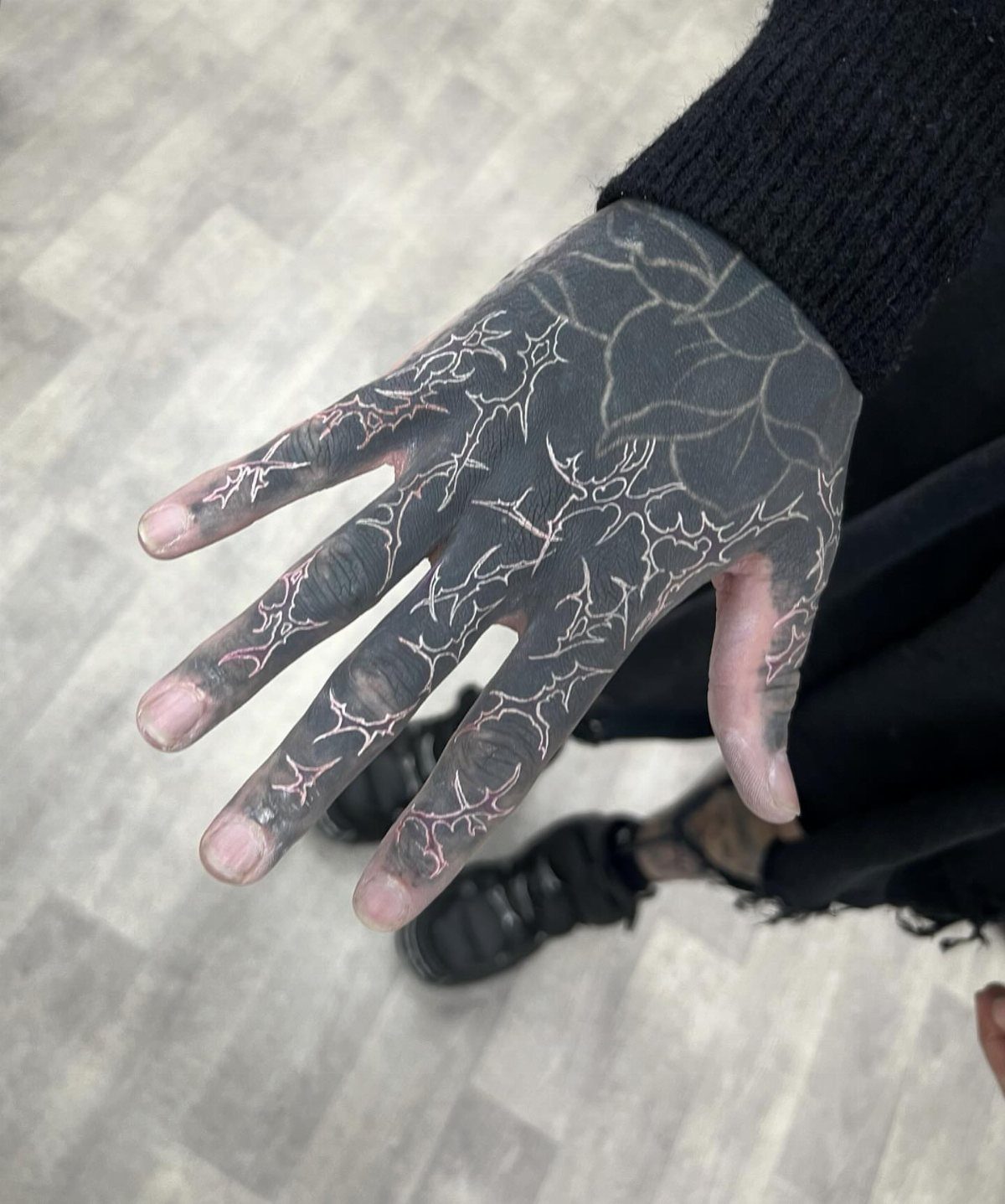
White lightning laid over solid black ink turns the negative space into the design itself. The bolts branch across the knuckles and fingers, each vein standing out because the black underneath gives it a floor to sit on.
This only works if the blackwork is fully saturated first. Patchy black means patchy contrast, and the white will sink into gaps instead of floating on top.
Hands fade faster than most placements, so expect touch-ups on both layers if you want the effect to last more than a few years.
Symbolism of Lightning Tattoos
Lightning carries immediate meaning before you add any style to it. Power and speed sit at the front: the bolt moves faster than anything else in nature, and the energy behind a single strike could run a house for weeks.
That makes it a natural pick if you want something that reads as decisive or unstoppable.
Transformation shows up just as often.
Lightning changes whatever it touches, whether that’s a tree split down the middle or a stretch of sand turned to glass. If you’ve been through something that changed you, a lightning bolt says it without words.
Intelligence ties back to older associations, the Greek and Roman idea that the gods who controlled lightning also controlled insight. It’s less literal now, but the link between a flash of light and a flash of understanding still holds.
Placement Options
Arms and shoulders give you room to let the design branch without running into awkward edges.
A bolt that starts at the shoulder and splits down toward the elbow follows the muscle and looks like it belongs there, not like it was dropped onto the nearest flat spot.
Backs work when you want scale. A full lightning network that covers the shoulder blade or runs down the spine uses the space the way the design actually moves, wide at the top and narrowing as it travels.
Hands put the tattoo where you’ll see it constantly, which matters if the symbol is tied to something you want to remember.
Durability of White Ink
White ink fades faster than black or color, and that’s true no matter where you put it.
The pigment sits closer to the surface, and as your skin renews itself, the white gets pushed out or diluted. Most white ink tattoos lose half their brightness within the first year.
Touch-ups maintain visibility, but they add cost and time. If you’re working with a dark background, the white will hold longer because the contrast hides some of the fading.
On bare skin, you’ll notice every drop in opacity, and the design can start to look more like a scar than ink.
Sun exposure speeds up the fade. White ink has no natural protection against UV, so if the tattoo sits somewhere that sees daylight regularly, expect it to wash out even faster.
Frequently Asked Questions
Does white ink in tattoos last?
White ink loses visibility faster than any other color, dropping to about half its original brightness within 12 months.
Your skin treats the pigment like surface debris and pushes it out cell by cell as new layers form underneath. Direct sun strips opacity even faster since the pigment blocks no UV, and on bare skin every shift shows immediately.
Why don’t tattoo artists like white ink?
Building enough opacity takes several slow passes with the needle, which stretches the session and adds pain.
It fades faster than other pigments, which means clients often return disappointed when the design washes out or disappears entirely. On lighter skin tones especially, white can heal nearly invisible if not packed dense enough during application.
Do lightning tattoos have a meaning?
Lightning stands for raw force, sudden change, and speed that nothing else in the natural world can match.
It also signals change, referencing how lightning alters whatever it touches, and ties back to older ideas linking flashes of light to flashes of insight.