Test patches, bold outlines, henna-style patterns and maintenance all play a part in making a design last and look right on your particular skin.
The single thing that decides your choice is how much contrast your natural skin tone creates with the ink once the tattoo heals.
Packing solid blacks and lifting grey highlights on dark skin, or choosing muted peach and beige florals on lighter tones, both depend on understanding how pigment reads against your own complexion.
1. Small Test Patches
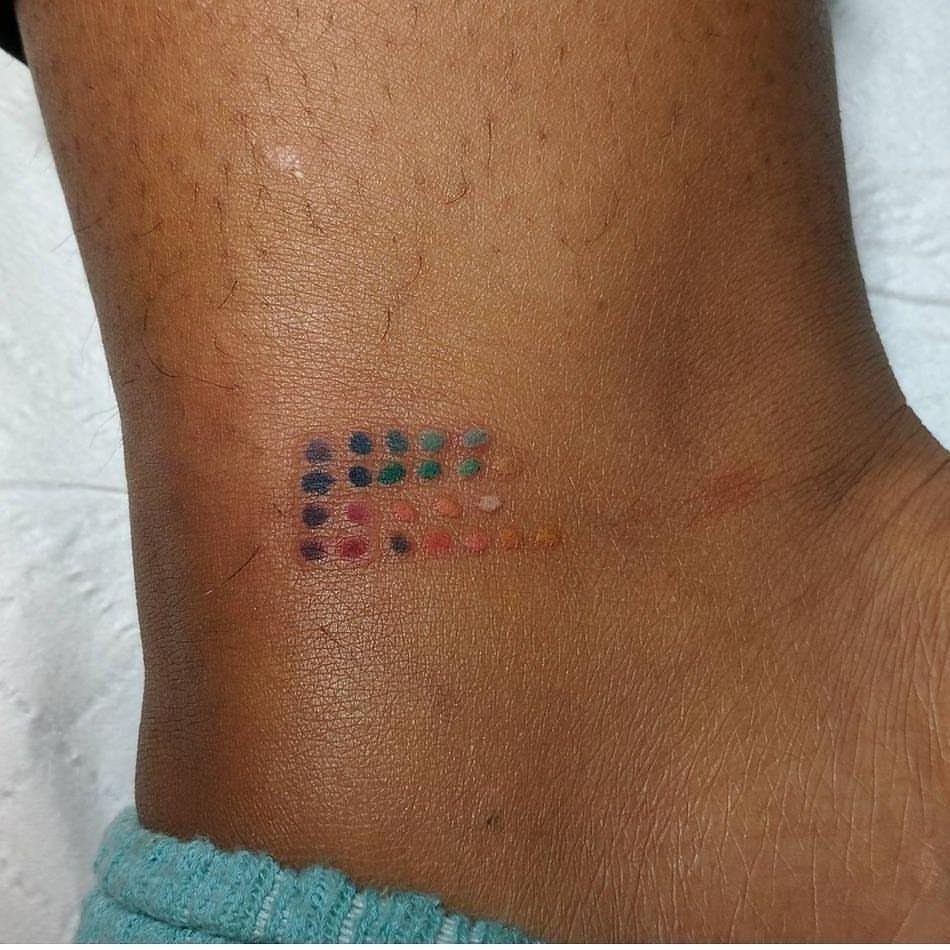
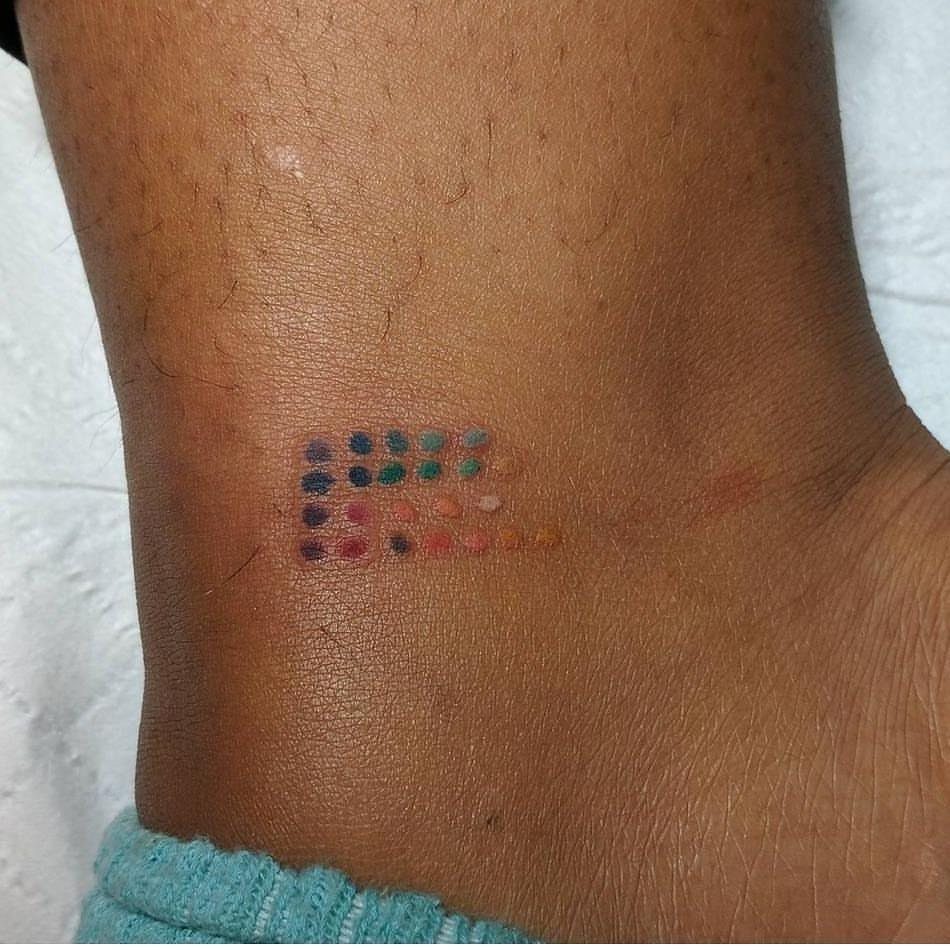
A small grid of colored ink dots tattooed on the ankle lets you see how different shades will actually heal on your skin before committing to a full piece.
Each patch shows a different ink color against your natural tone, and after healing you know exactly which ones read clearly and which ones fade or blur.
I like this approach if you’re planning a large tattoo with multiple colors. The test patches save you from regretting a shade that looked good on paper but disappeared into your skin.
2. Bold Outlines and Negative Space
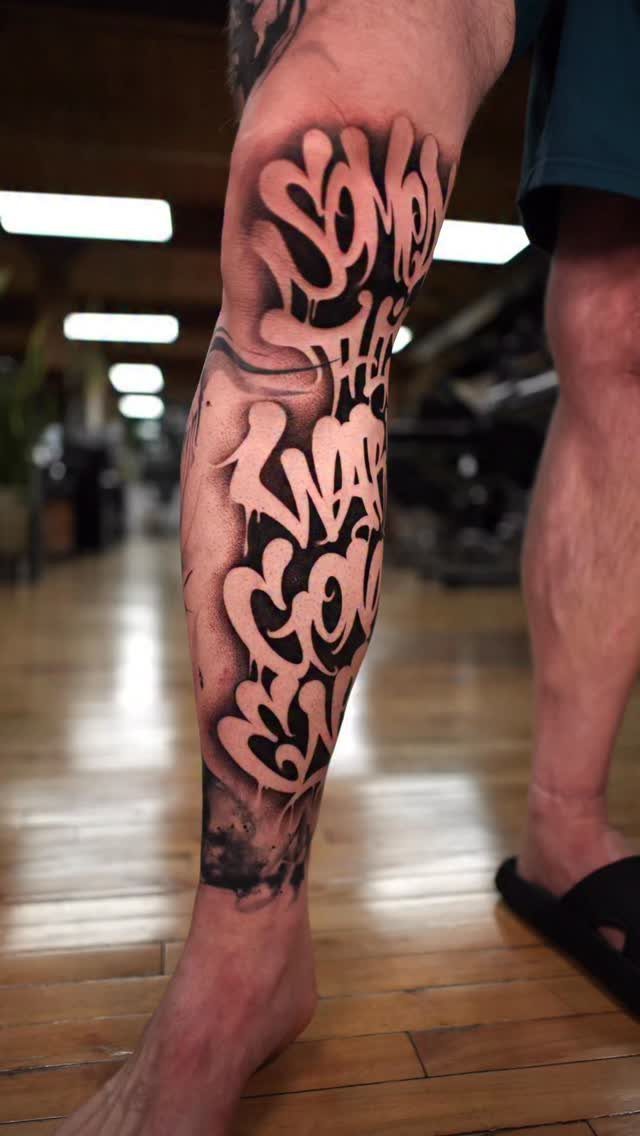
Thick black outlines with open negative space keep the design legible on any skin tone. The contrast between solid ink and bare skin does the work, so you don’t rely on subtle shading or color to make the image read.
Graffiti-style lettering and graphic designs benefit most from this approach.
The bold line weight holds up as the tattoo ages, and the negative space prevents the piece from looking muddy over time. This is the structure to start with for something that stays crisp for years.
3. Detailed Black and Grey on Dark Skin
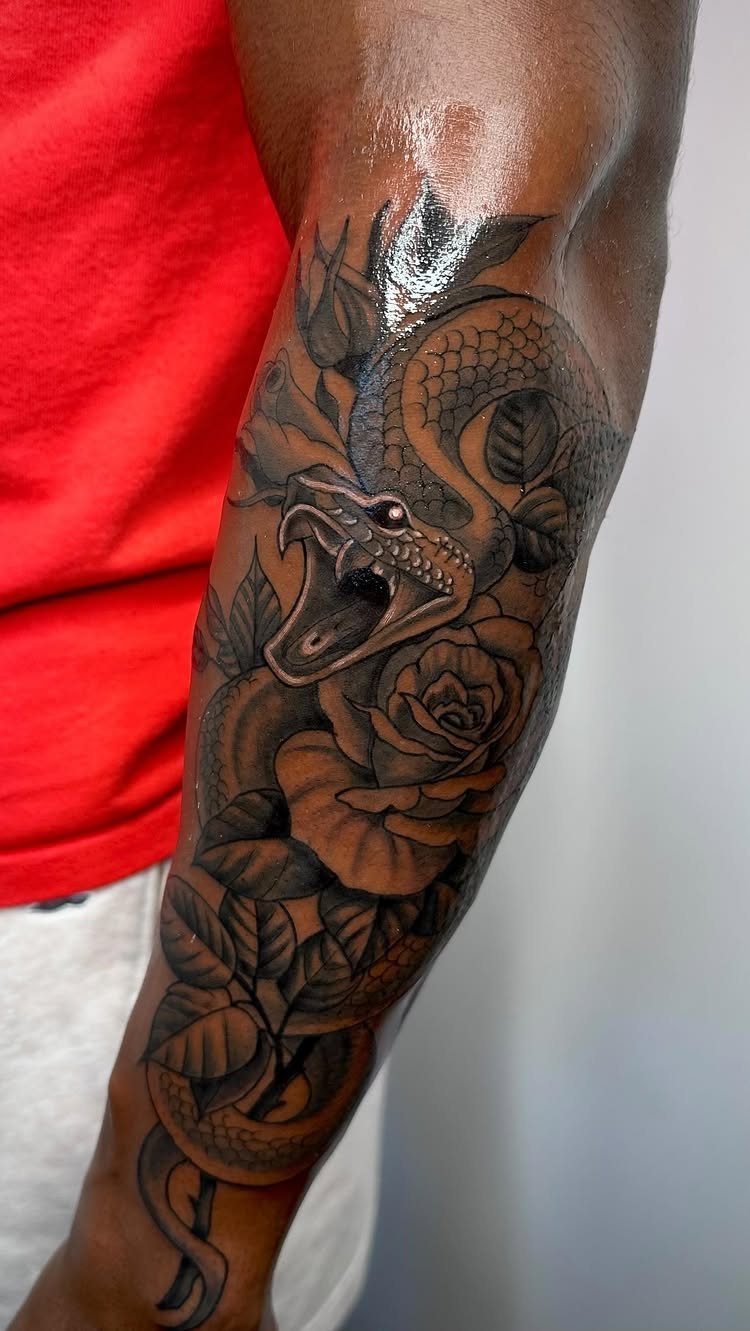
Black and grey work translates beautifully on dark skin when the artist uses enough contrast between the darkest blacks and the lighter grey tones.
An artist who knows how to adjust their shading technique for darker tones makes this work.
They need to pack the black solid in the shadows and use a light hand on the highlights so the full range shows through. Ask to see their portfolio on skin close to your tone before booking.
4. Muted Floral Skin-tone Palette
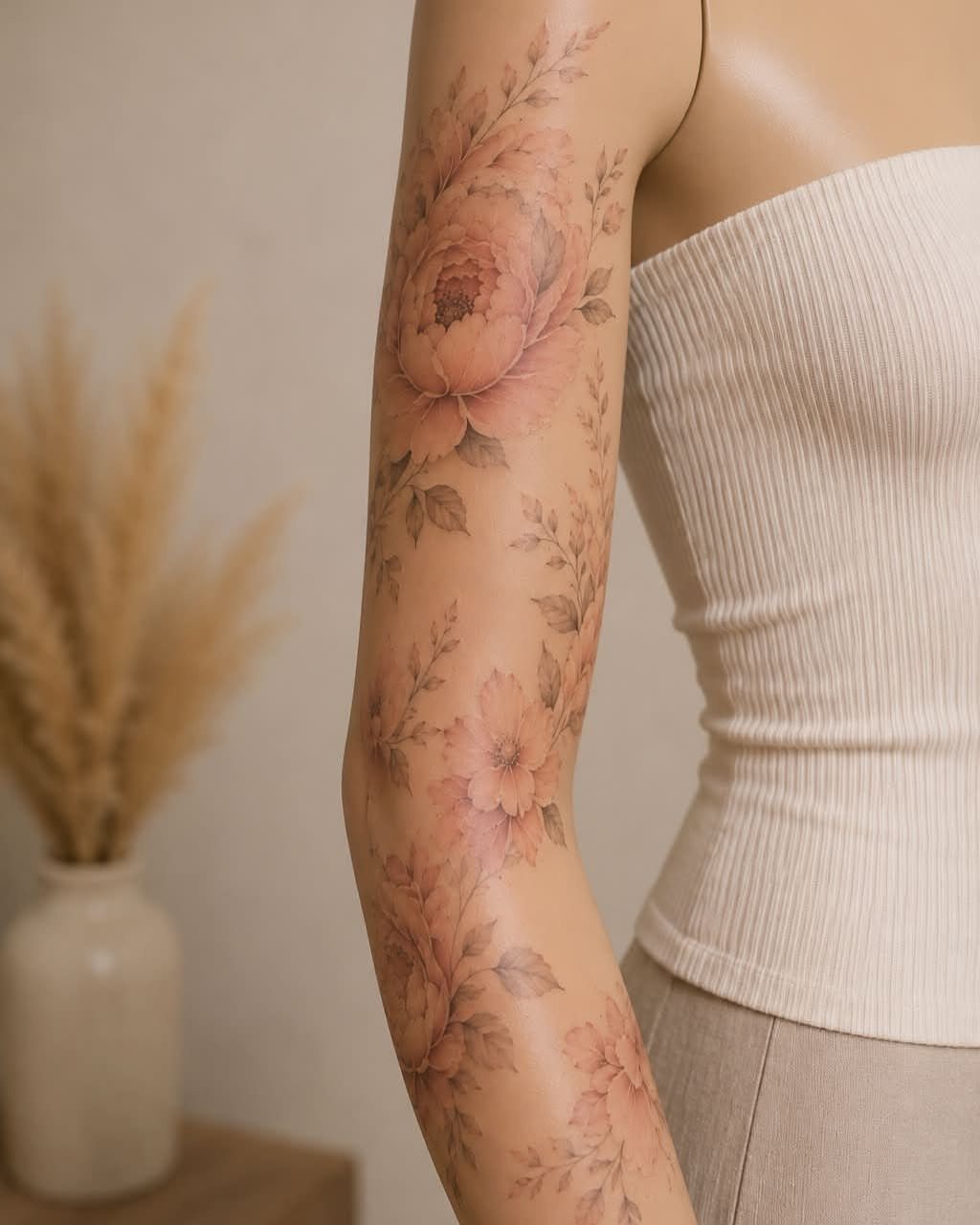
Peach, beige, and soft brown inks create a floral tattoo that sits quietly on the skin instead of announcing itself.
The colors blend with the natural tone, so the design feels like it belongs to the body rather than sitting on top of it.
This palette works best on light to medium skin where the subtle tones can still be distinguished.
On very dark skin, these shades may fade into the background and lose definition over time. A tattoo that reads from across the room needs bolder colors or stronger contrast.
5. Henna-style Patterns on Dark Skin
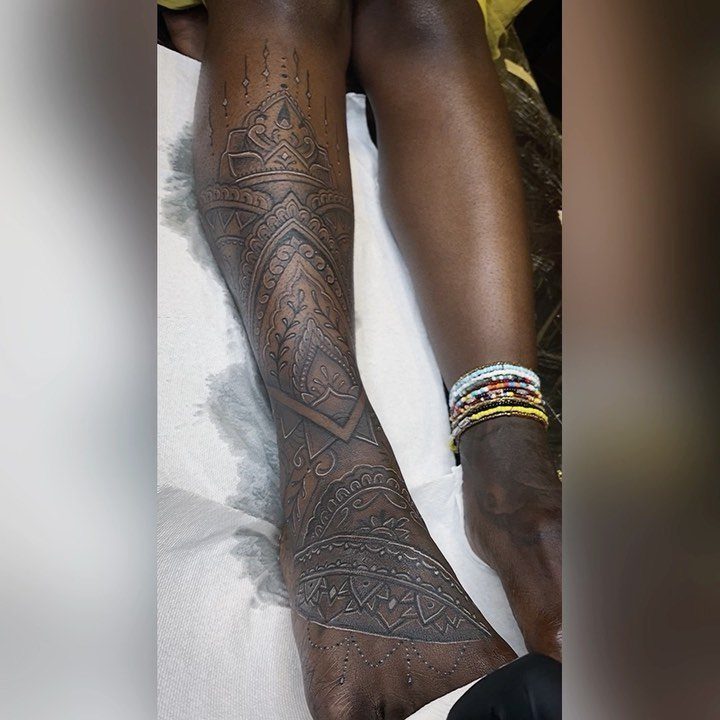
Dark brown ink in geometric and floral patterns mimics the look of traditional henna but lasts permanently.
The intricate line work flows down the leg and foot, and the single-color approach keeps the design cohesive without competing with the skin’s deep tone.
This style suits dark skin particularly well because the brown ink creates enough contrast to stay visible while maintaining a natural, earthy feel.
The detail requires an artist comfortable with fine line work, and you’ll want to keep the design scaled large enough that the individual patterns don’t blur together as the tattoo settles.
Inclusive Tattooing Practices
An artist worth booking asks questions before sketching. How does your skin typically heal after a cut or scrape?
Do you see raised scars, dark spots that linger, or smooth fading? Does the area you want tattooed tend to stay dry, or does it get irritated easily?
These questions matter because skin behaves differently person to person, and a design that works beautifully on one tone or texture may need adjustment for another.
Talk through how bold the settled result should look, what level of color saturation works for your skin, and whether certain shades will hold or fade.
If an artist jumps straight to stencil placement without asking about your skin’s behavior or your vision for contrast and color, keep looking.
Myths About Tattooing Dark Skin
One persistent myth claims that dark skin scars more easily during tattooing.
The truth is that scarring comes from technique, not skin tone. Years ago, some artists wrongly assumed darker skin was thicker and needed more pressure or extra passes.
That technique damages the skin and increases the chance of keloid scars. Gentle, precise work prevents damage on any tone.
Another myth insists that color tattoos won’t show on dark skin.
Color absolutely works when an artist chooses saturated shades that create contrast. Deep reds, blues, and greens stand out well, and bolder line weight helps intricate designs stay legible as the natural pigment of the skin interacts with the ink.
Tattoo Maintenance
Skin-tone tattoos fade faster than high-contrast designs, so expect to schedule touch-ups every few years to keep the colors fresh.
The ink interacts with your skin’s natural pigment, and sun exposure accelerates fading, so a daily SPF on the tattooed area extends the time between sessions.
Darker skin tones face a higher risk of hyperpigmentation during healing, so aftercare matters more. Keep the area moisturized with a fragrance-free lotion, avoid picking at scabs, and stay out of direct sun while the tattoo heals.
The way your skin responds to the initial trauma affects how well the ink settles and how clearly the design reads once healed.
Frequently Asked Questions
What skin tone do tattoos look best on?
Tattoos look great on all skin tones when the artist chooses ink that creates contrast and adjusts technique for how your skin heals.
Darker skin benefits from saturated reds, oranges, and warm greens, while lighter skin handles a wider range but fades faster in sun. The right pigment and proper execution matter more than the tone itself.
Can you get a tattoo that matches your skin tone?
Yes, skin-tone tattoos work for camouflaging scars or creating subtle floral designs that blend with your natural color.
Matching ink to your own complexion works best on lighter skin, where peach and tan hold a visible edge against the base tone. These tattoos need more frequent touch-ups than high-contrast designs.
Can skin-colored tattoos cover older tattoos?
No, skin-colored ink can’t hide a darker tattoo underneath because the new ink stays translucent and the old pigment shows through.
It works like using light concealer over a dark scar: the shadow remains visible. A proper cover-up needs bold colors or black ink that fully blocks the old design.