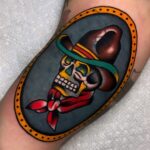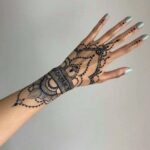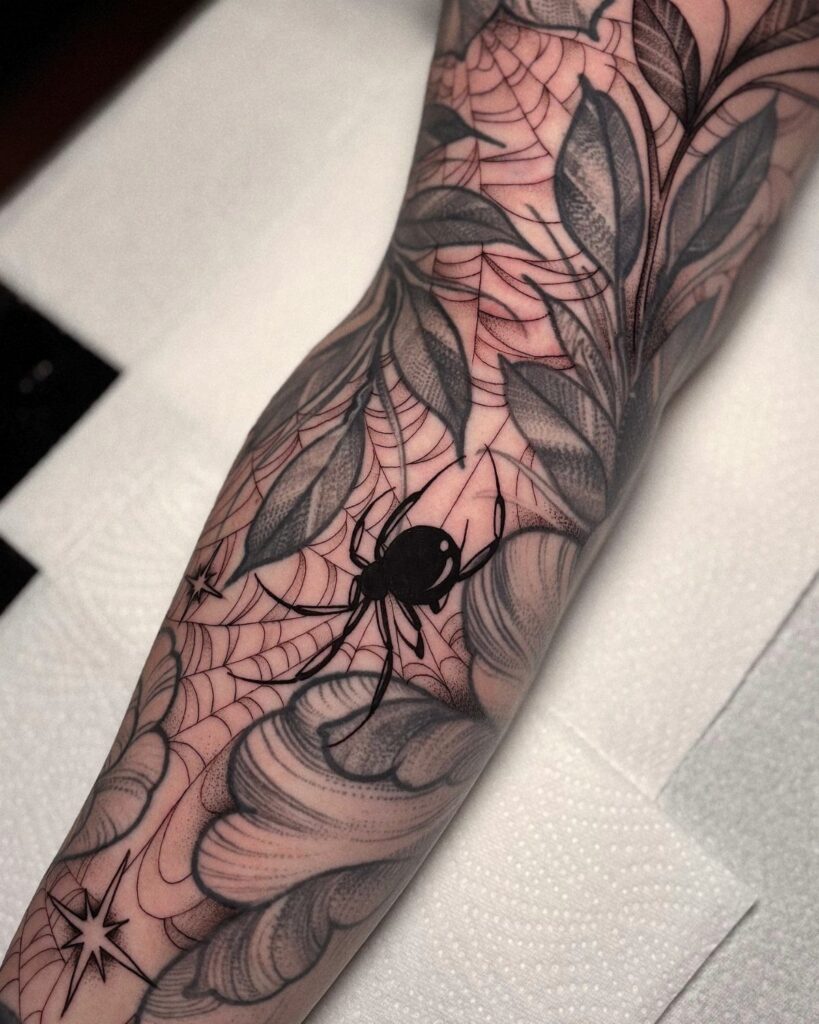
Fillers range from shop minimum dots and single stars to animal print patterns that cover the entire background of a sleeve, and the right one depends on whether your gap is narrow enough for a fern frond or wide enough to need a geometric grid.
1. Dots and Stars
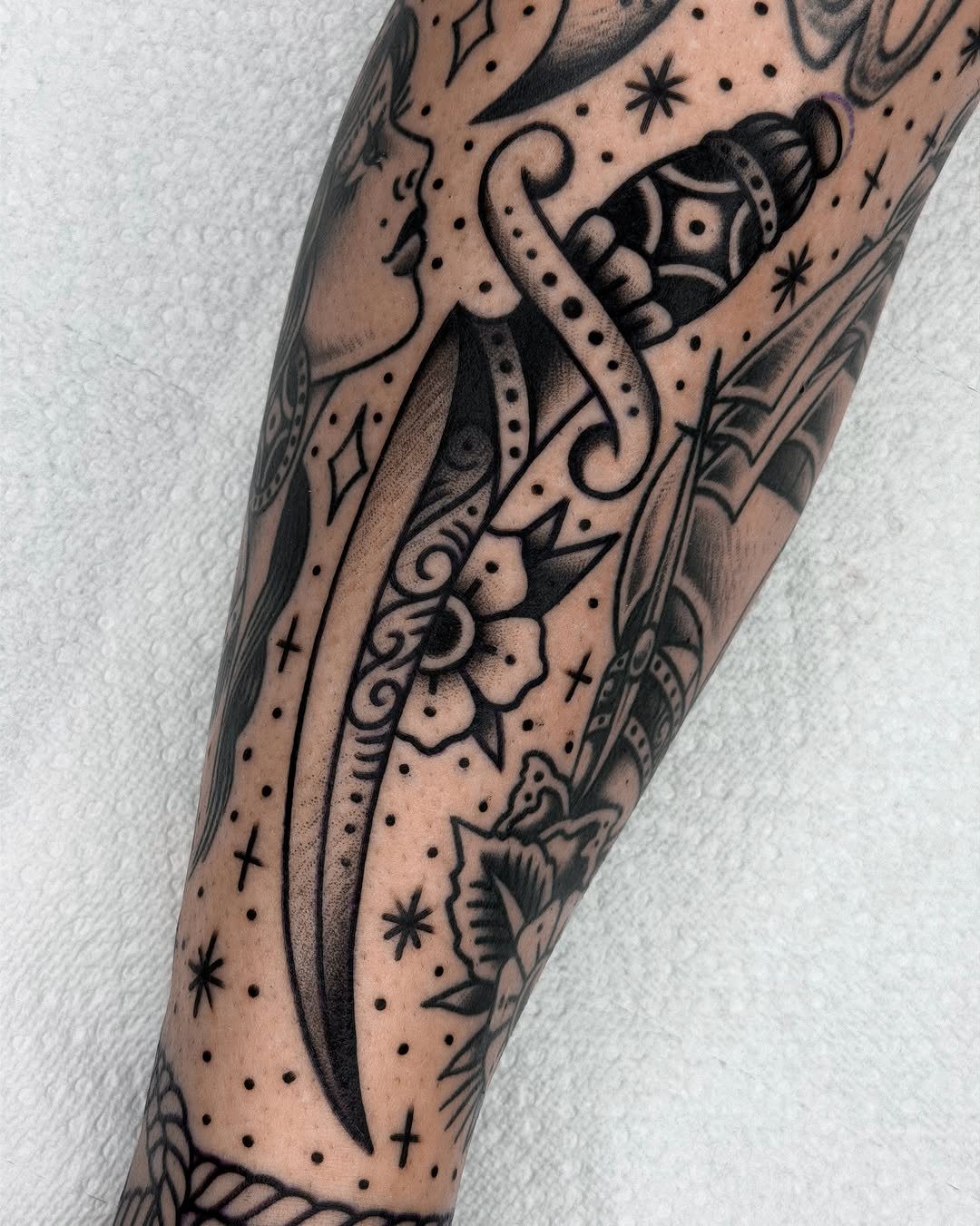
Dots and stars fill small gaps without competing with larger pieces.
A cluster of dots or a single star can bridge the space between a portrait and a floral piece, and the simplicity keeps the eye moving across the whole arm rather than stopping on the filler itself.
Black ink reads cleanest.
Dots stay crisp over time, and a 4-pointed star holds its shape better than a fine 5-pointed one. Most artists charge these as shop minimum work, since they take minimal chair time.
2. Moons and Planets
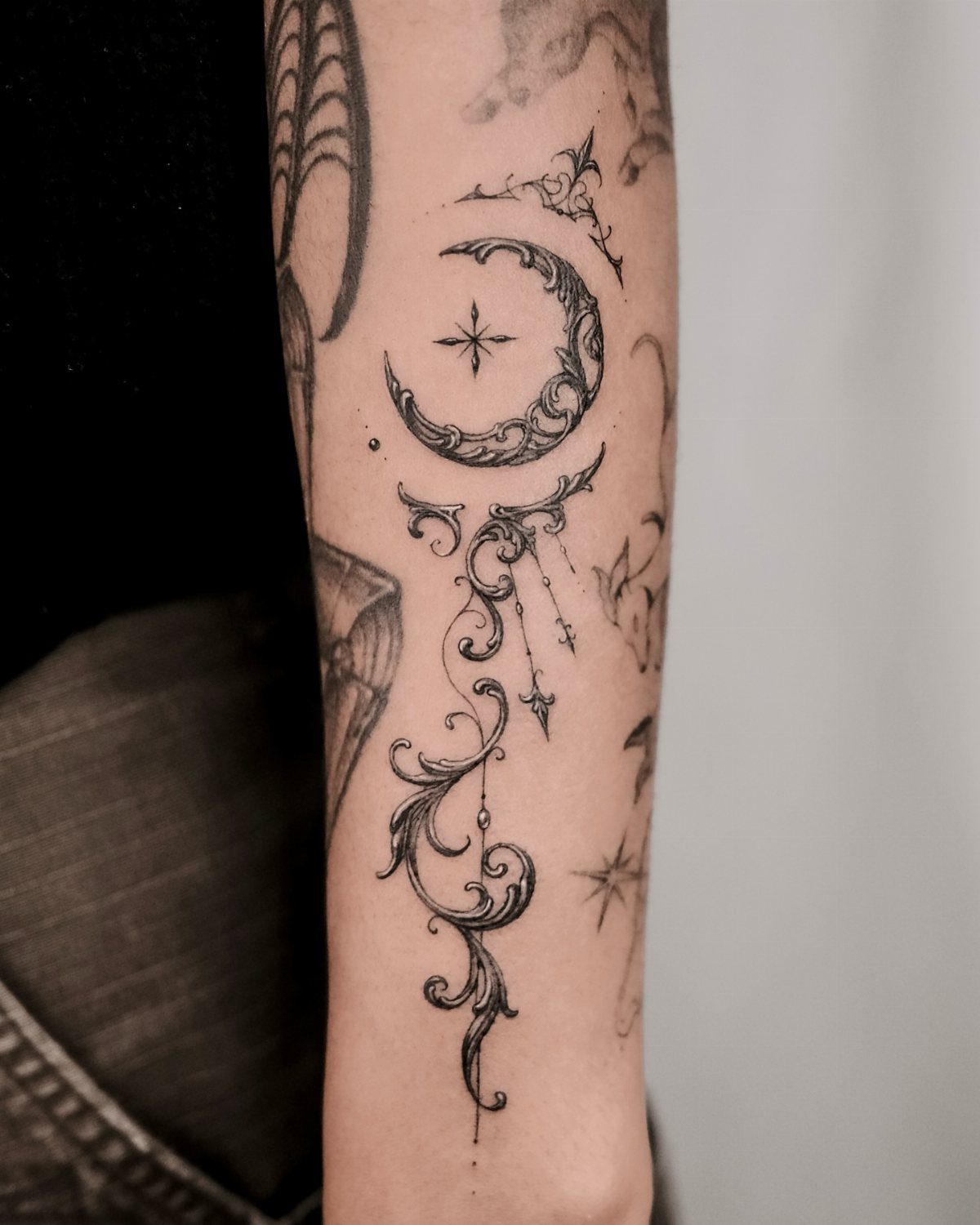
A crescent moon or a small planet adds a cosmic layer between existing tattoos.
The curve of a crescent fits naturally around the edge of a larger piece, and a ringed planet or a simple circle for a full moon works in tighter spots.
Filigree swirls around the moon give it more visual weight if the gap is bigger than expected.
Artists often use the same line weight as your existing tattoos so the filler blends into the collection rather than standing out as an afterthought.
3. Flowers and Leaves
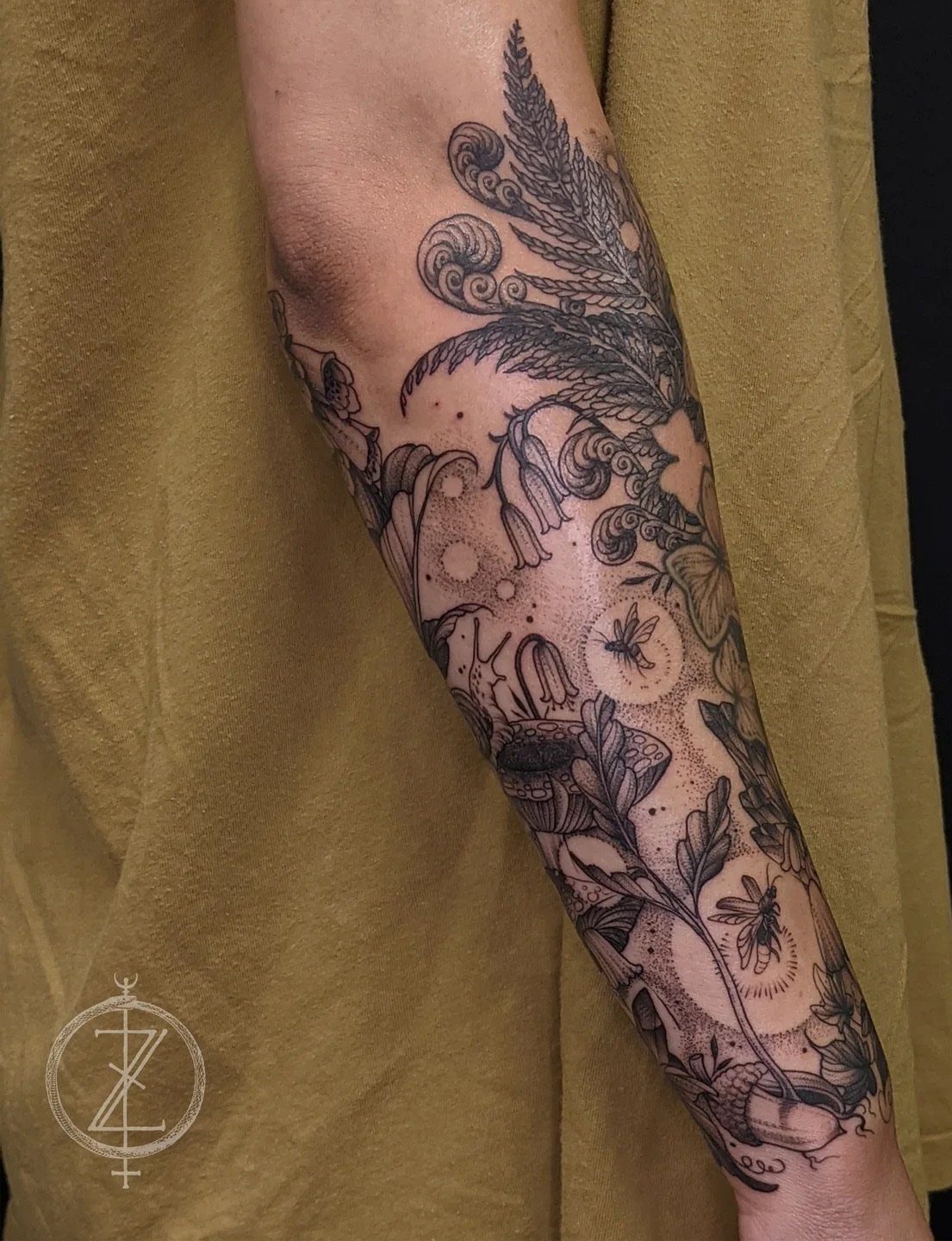
Botanical fillers like ferns, small flowers, or single leaves follow the natural flow of an arm or leg.
A fern frond fits into narrow vertical gaps, while a simple 5-petal flower or a broad leaf like a monstera works in wider spaces between larger tattoos.
Black ink keeps the botanical look clean, and the organic shapes soften the edges of geometric or portrait work nearby.
Most artists can draw a custom leaf or flower on the spot to match the scale of your existing pieces, so you’re not stuck with a generic flash design.
4. Swirls and Waves
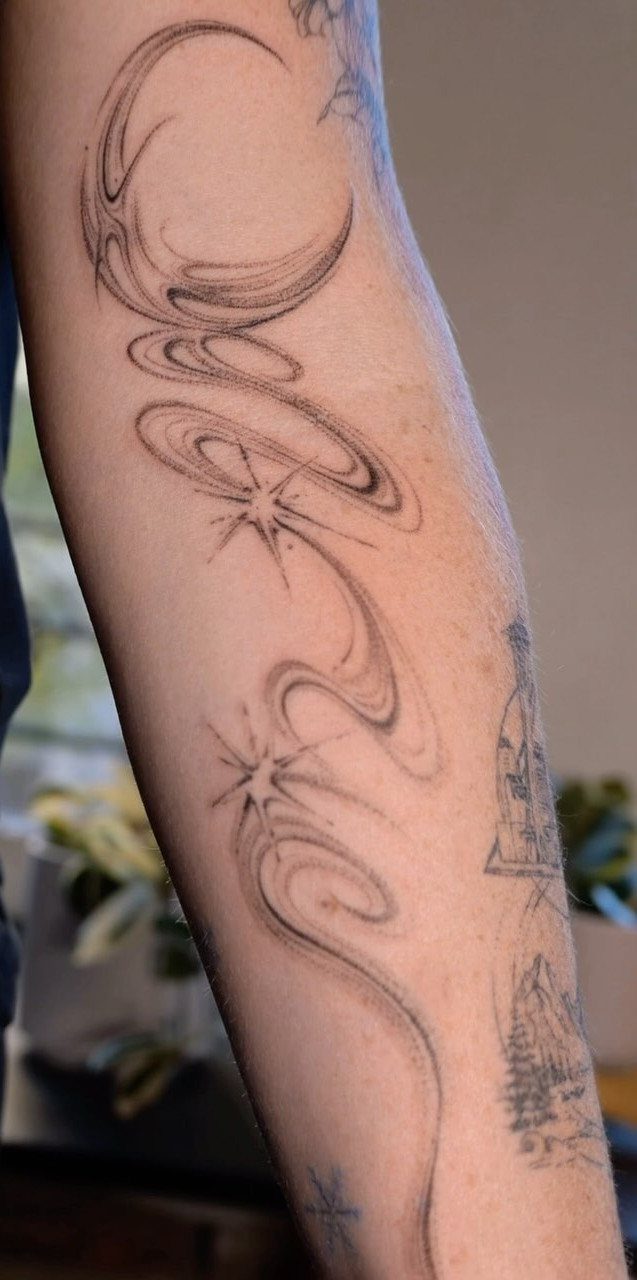
Swirls and waves fill irregular gaps by following the negative space itself.
A single curving line can connect 2 tattoos, and adding a second parallel line or a few small stars inside the wave gives it more presence without overcrowding the area.
The line weight matters. If your existing tattoos use bold traditional lines, a thin swirl will look out of place; match the thickness so the filler reads as part of the same collection.
Artists often freehand these directly on the skin to fit the exact shape of the gap.
5. Pop Culture Icons
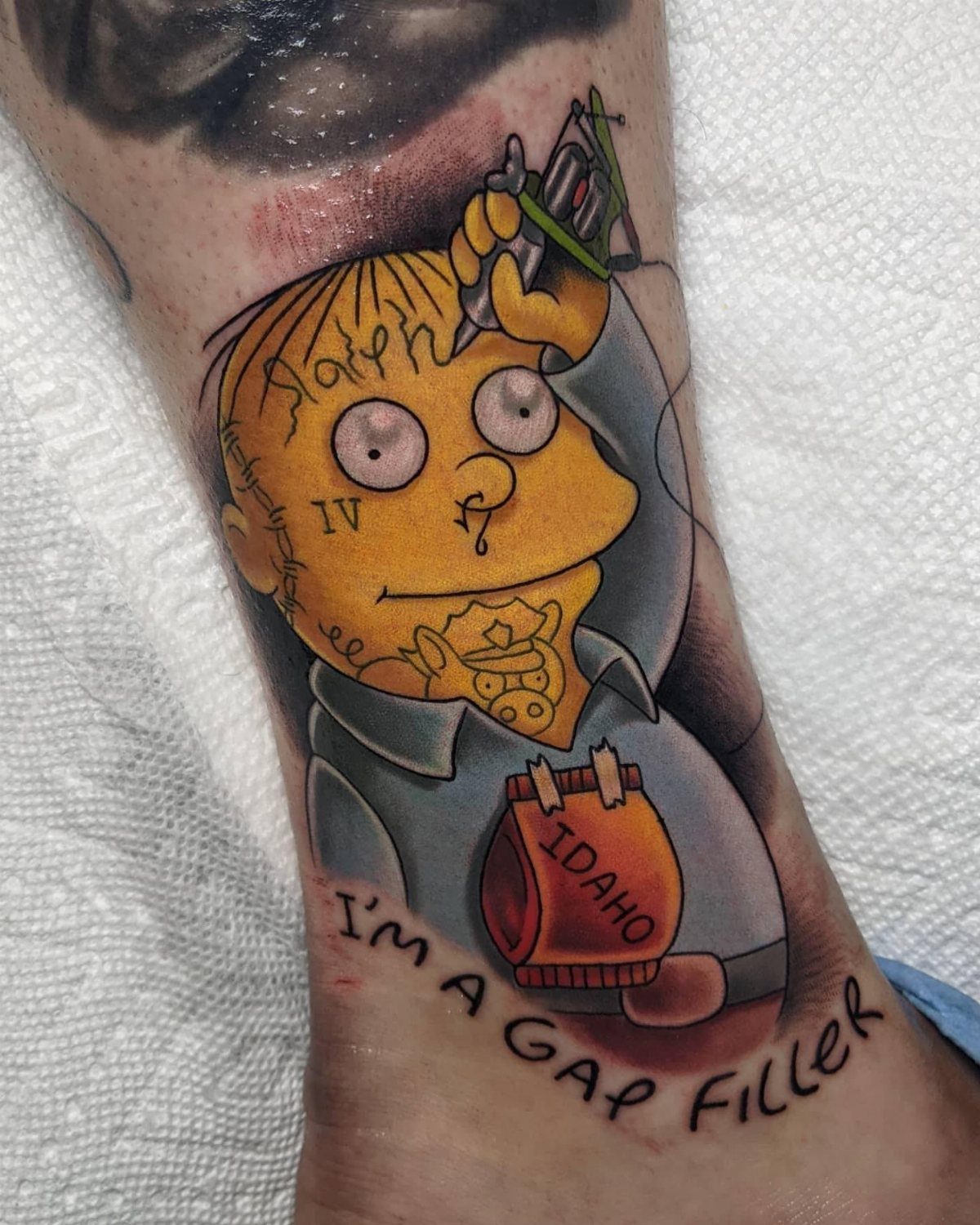
Small icons from cartoons, movies, or games work as gap fillers when they match the scale of your existing tattoos.
A character head, a logo, or a recognizable object like a lightsaber or a Pokéball fits into a small space without needing a full scene around it.
Humor lands better in filler work than it does in a large centerpiece.
A character holding a tattoo machine or a joke about filling gaps keeps the tone light, and the smaller size makes it easy to place between pieces that already have their own serious themes.
6. Creative Filler Tattoo Inspiration
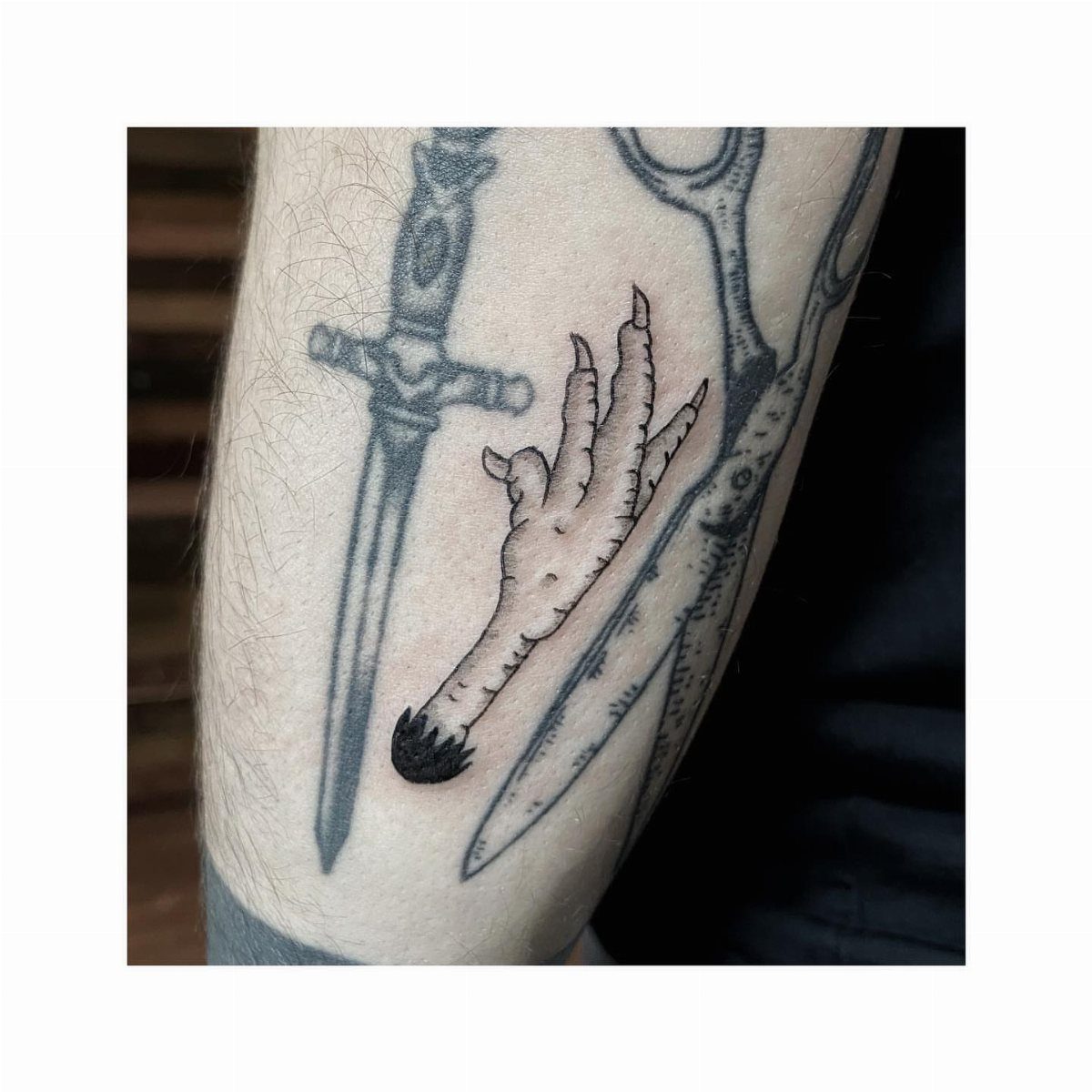
Objects that relate to your existing themes make fillers feel intentional rather than random.
A bird’s foot between a dagger and scissors ties into a natural or gothic collection, and a small tool, key, or hand gesture can bridge 2 unrelated tattoos by adding a narrative thread.
Negative space around the filler keeps it readable.
If the gap is tight, a simple silhouette works better than a detailed design with shading, and placing the filler at a slight angle often makes it fit more naturally than forcing it parallel to the larger pieces.
7. Traditional Fillers
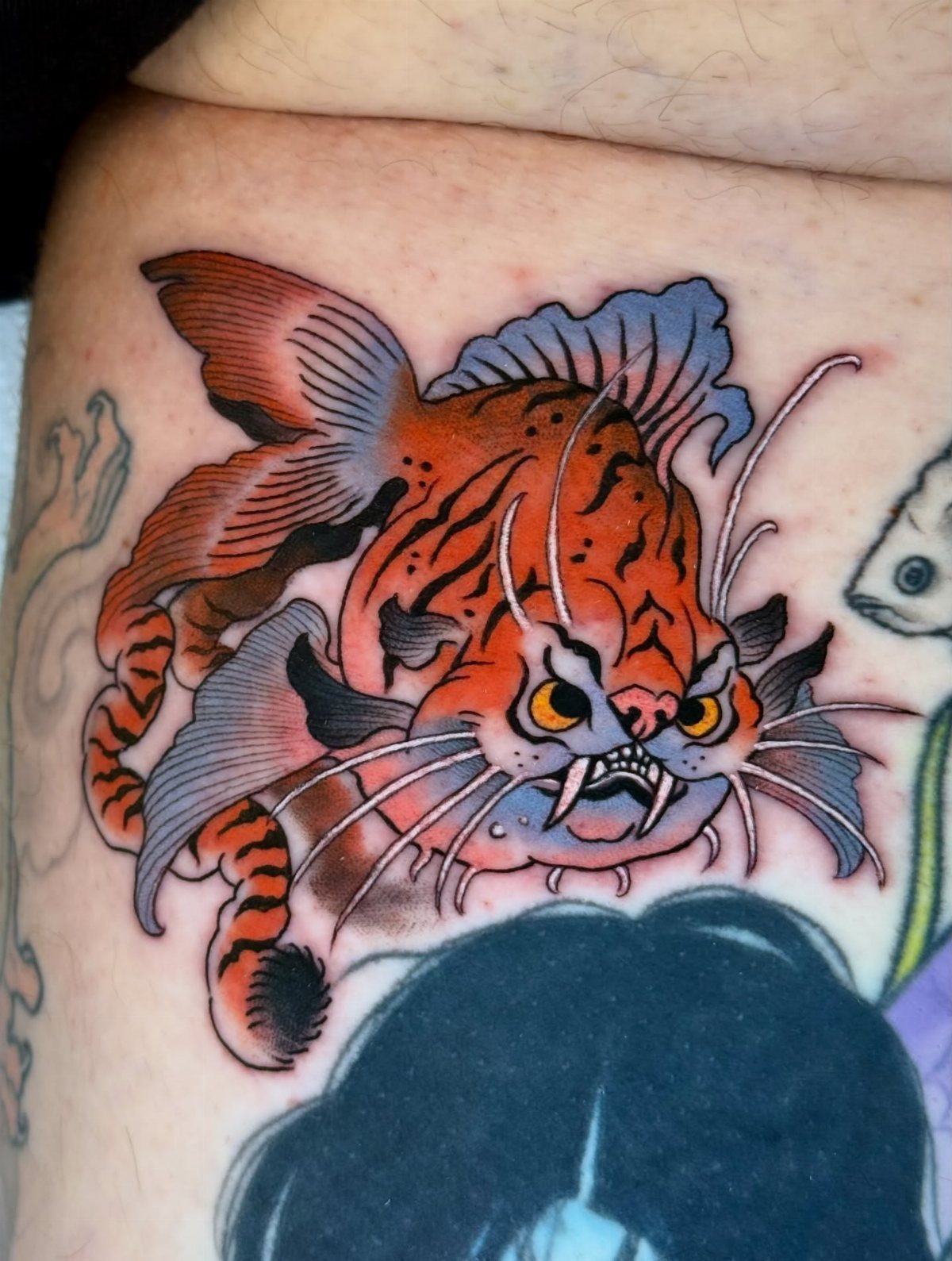
Traditional flash designs like roses, daggers, anchors, and panthers fit into small gaps because artists already know the proportions by heart.
The bold outlines and limited color palette match the visual weight of older traditional work, and if your arm or leg already leans classic Americana, a single traditional filler reads as part of the same era rather than a patchwork fix.
A fish, swallow, or single blossom is quick work in the chair. The solid black outlines age well, and the shading stays simple enough that the design won’t blur into the pieces around it after a decade.
8. Geometric Pattern Fillers
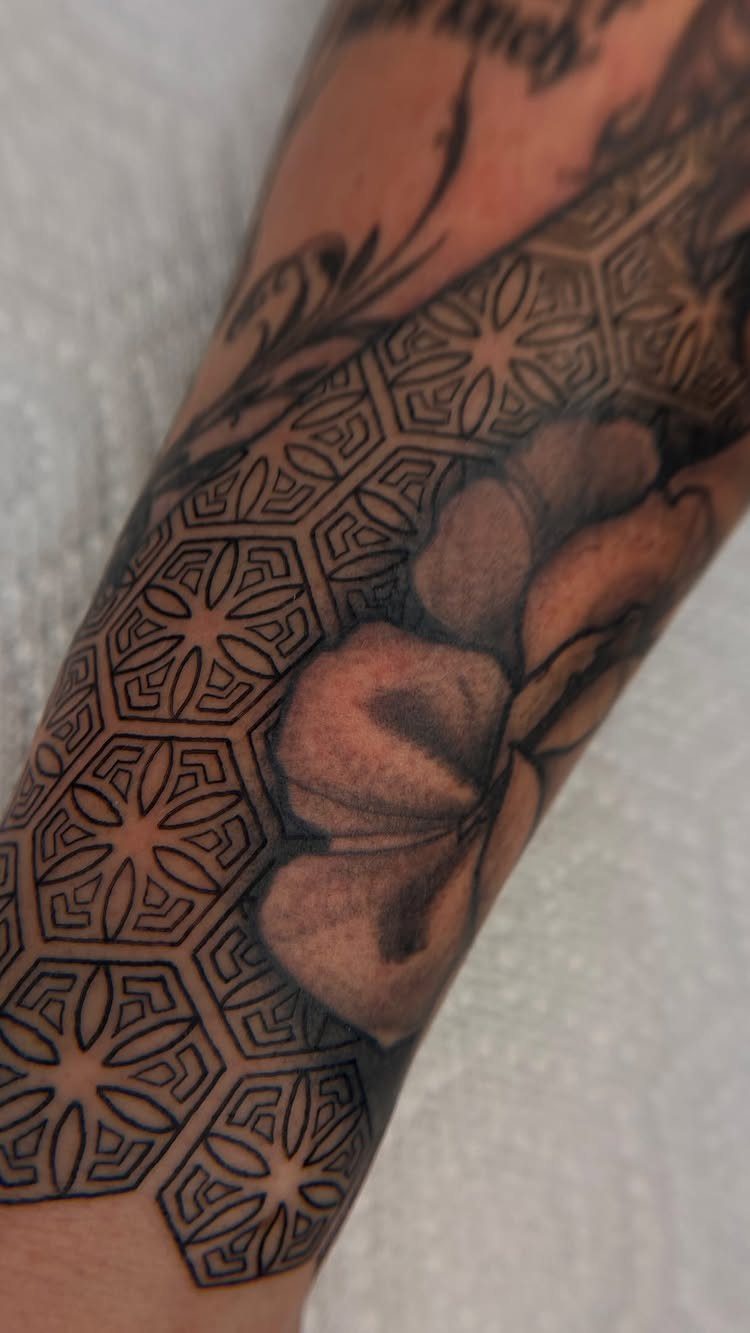
Geometric patterns like honeycombs, triangles, or dot grids fill irregular gaps by creating visual texture rather than adding another subject.
The repeating shapes break up dead space without telling a new story, and the black linework keeps the pattern from pulling focus away from your larger tattoos.
Hexagons fit awkward angles better than squares because the extra sides let the pattern turn without leaving large blank corners.
Most artists can stop the pattern exactly where your gap ends, so you’re not forced to extend it farther than you need just to finish the shape.
9. Small Animal Tattoos
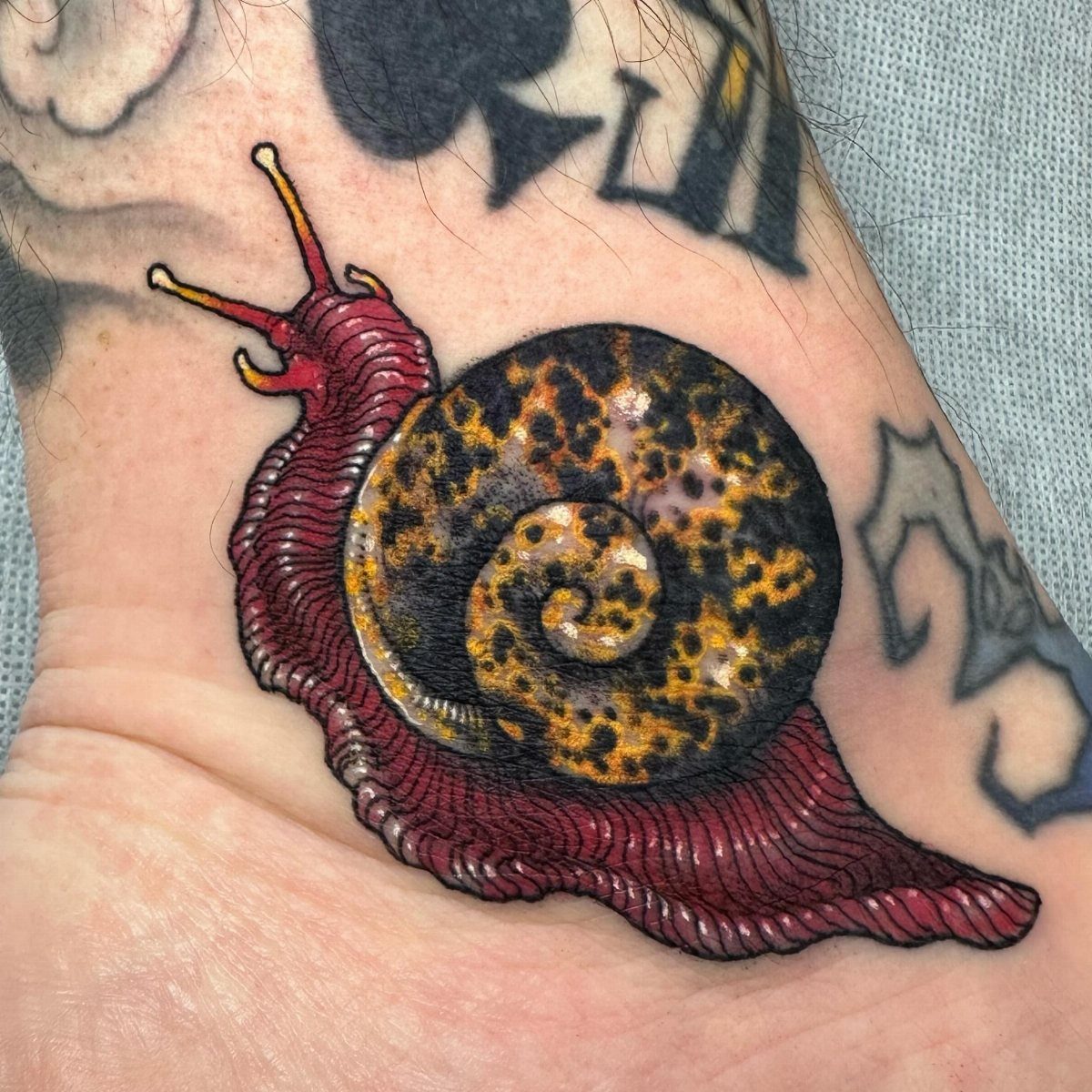
Small animals like snails, beetles, frogs, or mice fit into tight spaces because their natural size already matches the scale of a gap filler.
A snail’s spiral shell gives the design built-in visual interest, and adding a bit of color to the body or shell keeps it from disappearing into black-heavy sleeves.
The animal’s posture matters. A side view reads faster than a head-on angle, and tucking the legs or antennae inward keeps the silhouette compact enough to fit between 2 larger pieces without overlapping their edges.
10. Flash Sheet Symbols
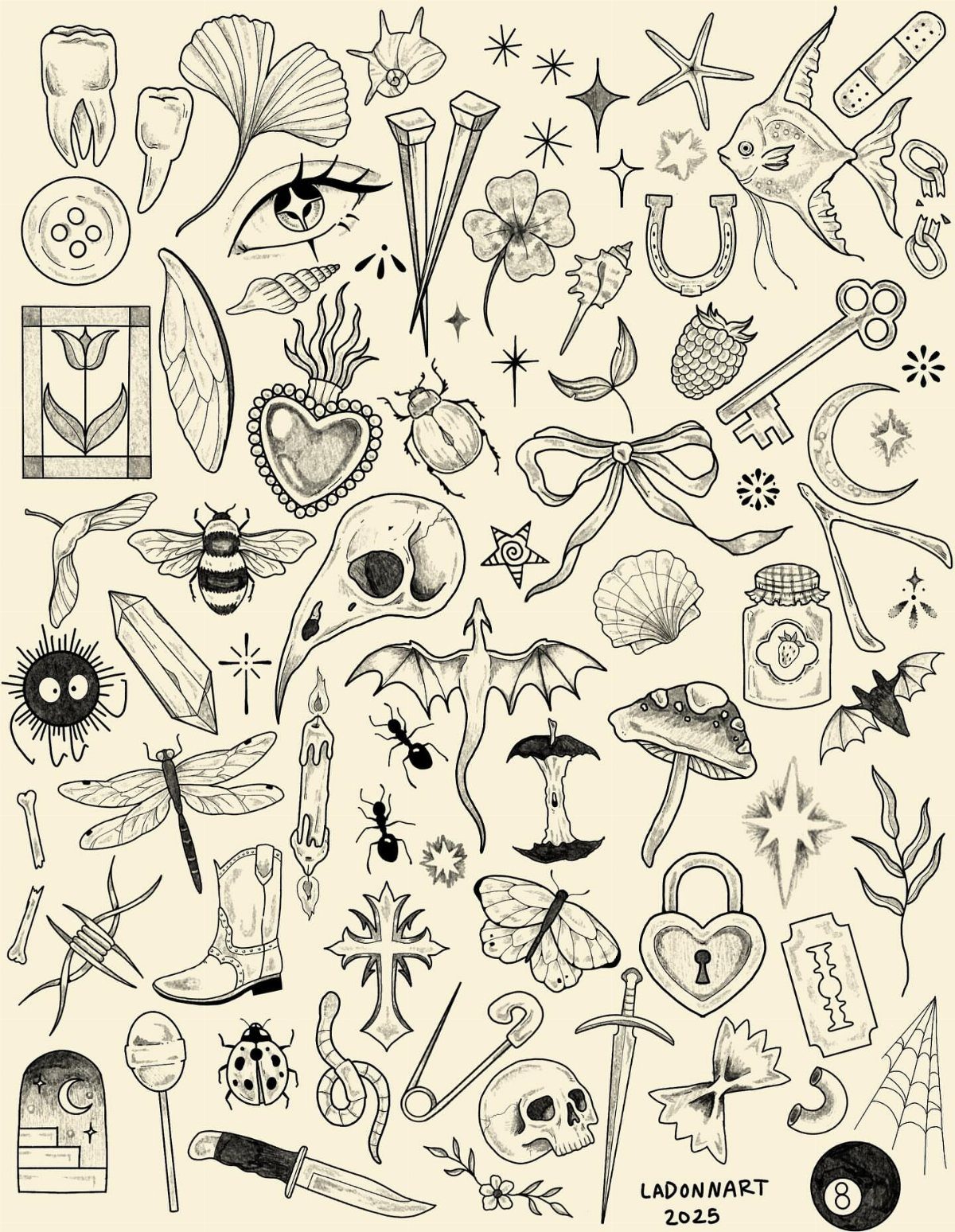
Flash sheets full of tiny symbols like bees, keys, skulls, or butterflies give you a library of ready-made fillers that artists can trace and apply in a single session.
The designs are already sized for small gaps, and because they come from a set, picking 2 or 3 from the same sheet keeps the visual style consistent across your arm or leg.
Most shops sell flash sheets, and you can bring one in and point to the exact symbol you want.
The artist will adjust the placement to fit your gap, and since the line weight is already set, you know how bold it will look before the needle starts.
11. Animal Print Patterns
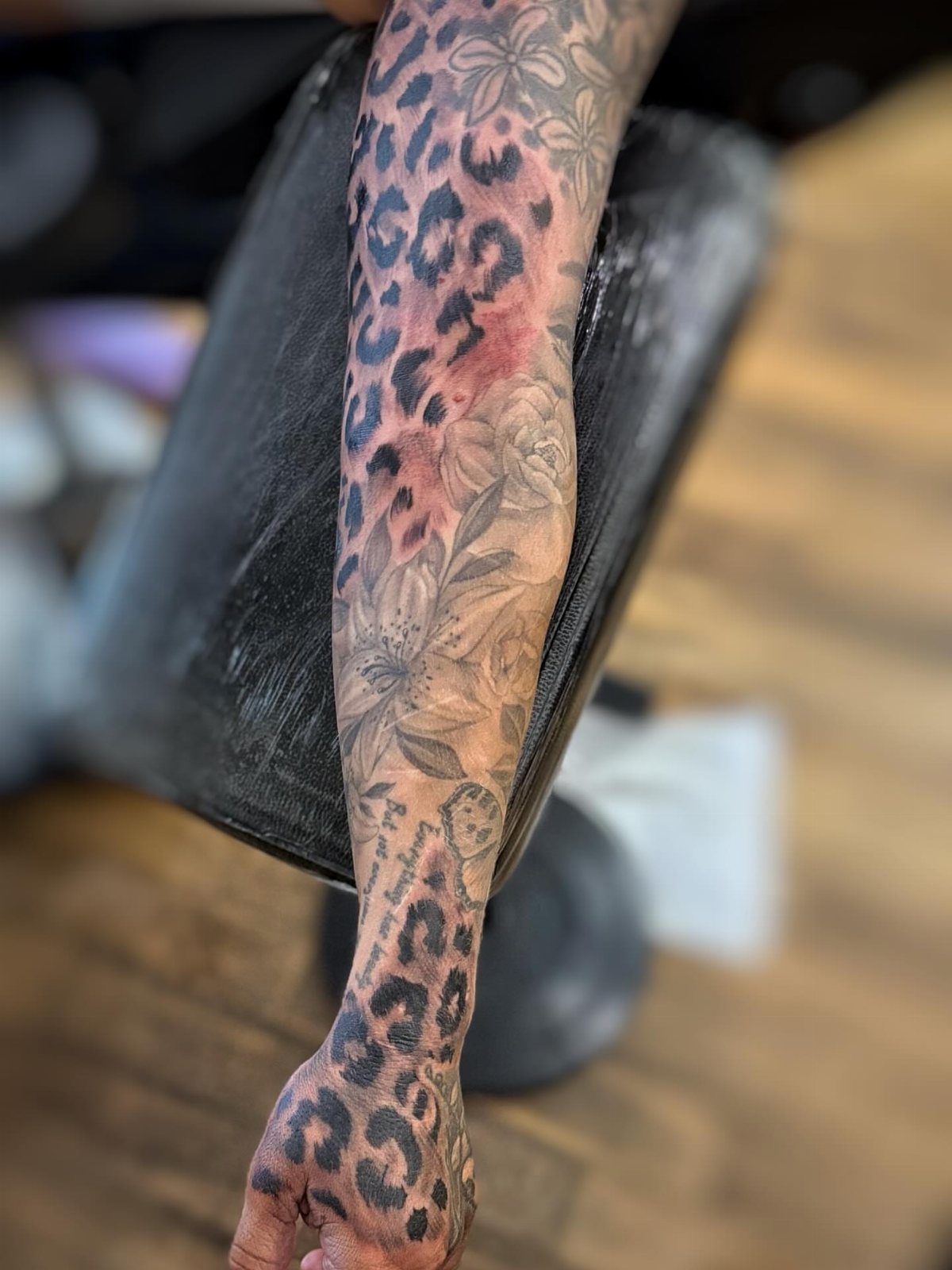
Animal prints like leopard spots, tiger stripes, or zebra stripes fill large background areas between tattoos by creating a pattern that connects everything without competing for attention.
The spots or stripes flow around the edges of your existing pieces, and the organic randomness of the pattern hides any awkward negative space left over from poor planning.
Leopard spots work best in black ink. Adding brown or orange fills can muddy the contrast over time, and keeping the spots solid black lets them sit behind colorful tattoos without clashing.
The pattern looks intentional if you carry it across a joint like an elbow or knee, since the skin’s natural creases break up the repetition.
Understanding Filler Tattoos
Filler tattoos bridge the gaps between larger pieces, turning a scattered collection into a sleeve or leg that reads as one cohesive surface.
The designs themselves are small, but their job is to connect unrelated subjects, balance negative space, and give the eye a path to follow from one tattoo to the next.
A filler works when it doesn’t compete. The best ones sit in the background, adding texture or a small detail that ties into the theme you already have without demanding focus.
If your arm leans dark and traditional, a tiny rose or dagger fits the visual weight; if your leg is mostly geometric, a grid or dotwork pattern keeps the same energy.
Artists can place fillers in a single session once the surrounding tattoos are fully healed.
Gap filler tattoos prove that it’s not the size of the tattoo that matters but the creativity behind it. A lot of really cool tattoos can fit into the tiniest of spaces.
Incorporating Filler Tattoos
Theme comes first. If your arm is all black and gray realism, a cartoon icon or a bright traditional rose will stand out in the wrong way.
Placement depends on the shape of the gap itself.
Long vertical spaces along the forearm or calf take narrow designs like ferns or single lines; wider gaps near the elbow or behind the knee fit round shapes like moons or small animals.
Balance the visual weight across the limb by placing heavier fillers opposite lighter ones, so one side doesn’t look packed while the other stays bare.
Essential Care for Your Tattoos
Numbing cream applied before the session takes the edge off filler work, especially in thin-skinned areas like the wrist or behind the knee where even small tattoos sting more than you’d expect.
A product designed for tattoo use absorbs without leaving residue that interferes with the stencil.
Healing cream applied 2 or 3 times a day after the tattoo keeps the skin from drying out and cracking, which can pull ink out of fine lines and dots.
Filler tattoos heal faster than large pieces because the needle doesn’t work over the same patch of skin for long, but the ink still needs moisture to stay sharp.
Skip scented lotions and anything with alcohol in the first 2 weeks. Both dry the skin and slow healing.
Frequently Asked Questions
What to fill gaps in tattoos with?
Dots, stars, small flowers, or leaves fit into tight spaces without pulling focus from larger pieces.
The best filler matches the visual weight and theme you already have, so a traditional sleeve takes a rose or dagger while a geometric leg takes a grid or simple pattern.
Pick something small enough to sit in the background rather than competing for attention.
How to fill a negative space tattoo?
Swirls, waves, or geometric patterns that bend with the contour of the gap tend to look more intentional than something that fights the shape.
If the line weight or shading style feels off from the tattoos around it, the filler will read like an afterthought instead of part of the same sleeve.