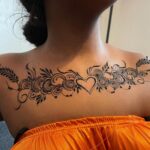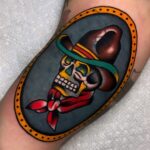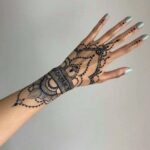
A rose stencil can stay minimal with single-line contours, or it can show realistic shading and texture that takes a longer session.
The stencil you pick depends on what you pair with the rose: a rosary, a butterfly, a clock face, a heart, folded bills, a skull, or just the stem and petals on their own.
1. Rose with Rosary Tattoo Stencil
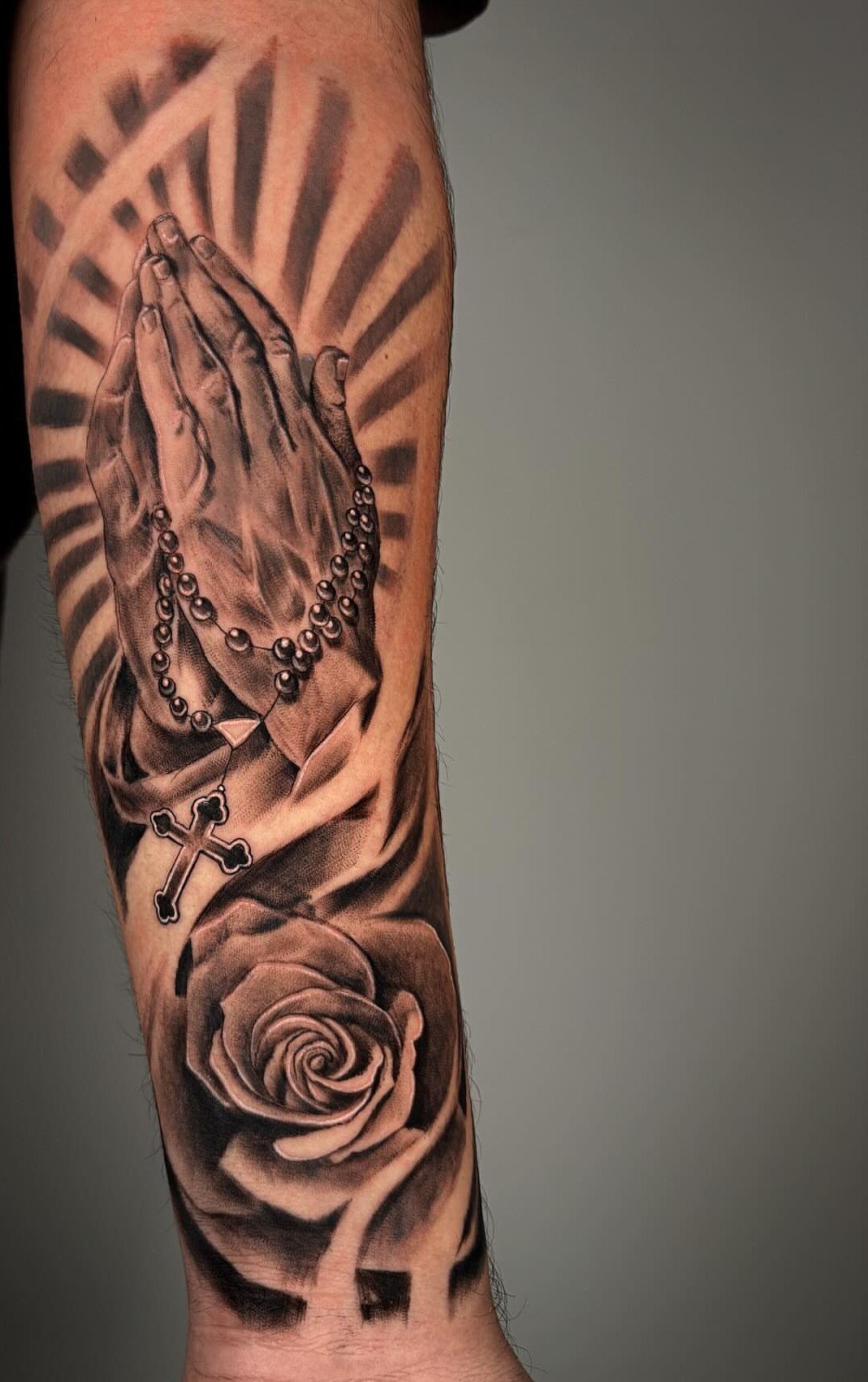
Praying hands wrapped around rosary beads with a rose below give you a layered design that pulls faith and natural beauty together on one stencil.
The rays behind the hands add depth, and the rose softens the religious elements without losing their meaning.
Forearms show the full composition clearly, though upper arms and calves work just as well when you need more vertical space.
Black and grey shading keeps the focus on form rather than color, and the contrast between the hard beads and soft petals reads from a distance.
2. Rose and Butterfly Tattoo Stencil
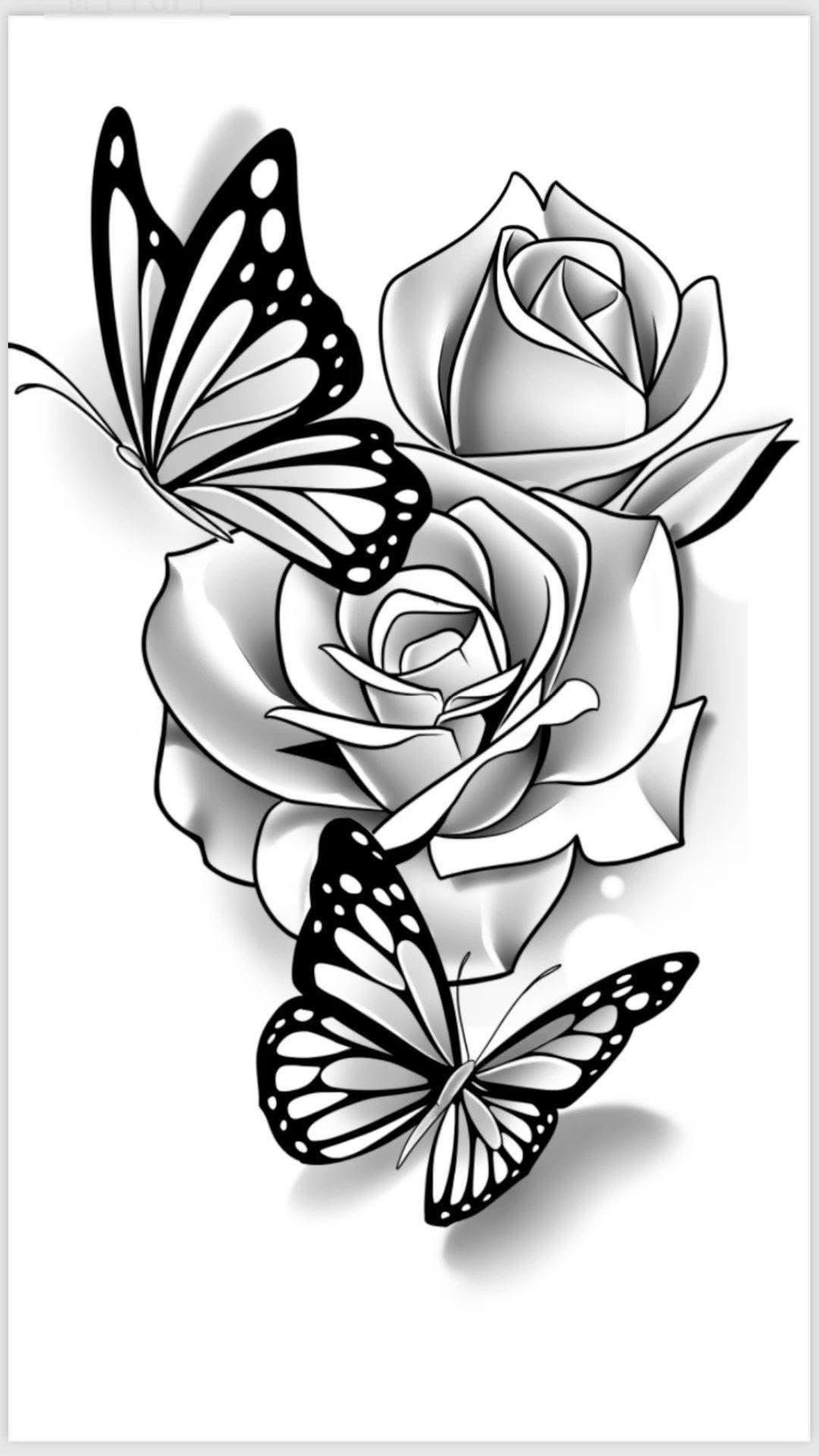
A rose paired with a butterfly lands the symbolism fast: growth, change, and the fleeting nature of beauty all in one frame. Two of each fills the stencil and balances the composition without crowding it.
Black and white linework keeps the outlines sharp, which matters when you size this down for wrists, ankles, or behind the ear.
Shading comes later if you want it, but the design holds on line alone. Place the butterfly wings near the rose petals so the shapes nest rather than float apart.
3. Rose and Clock Tattoo Stencil
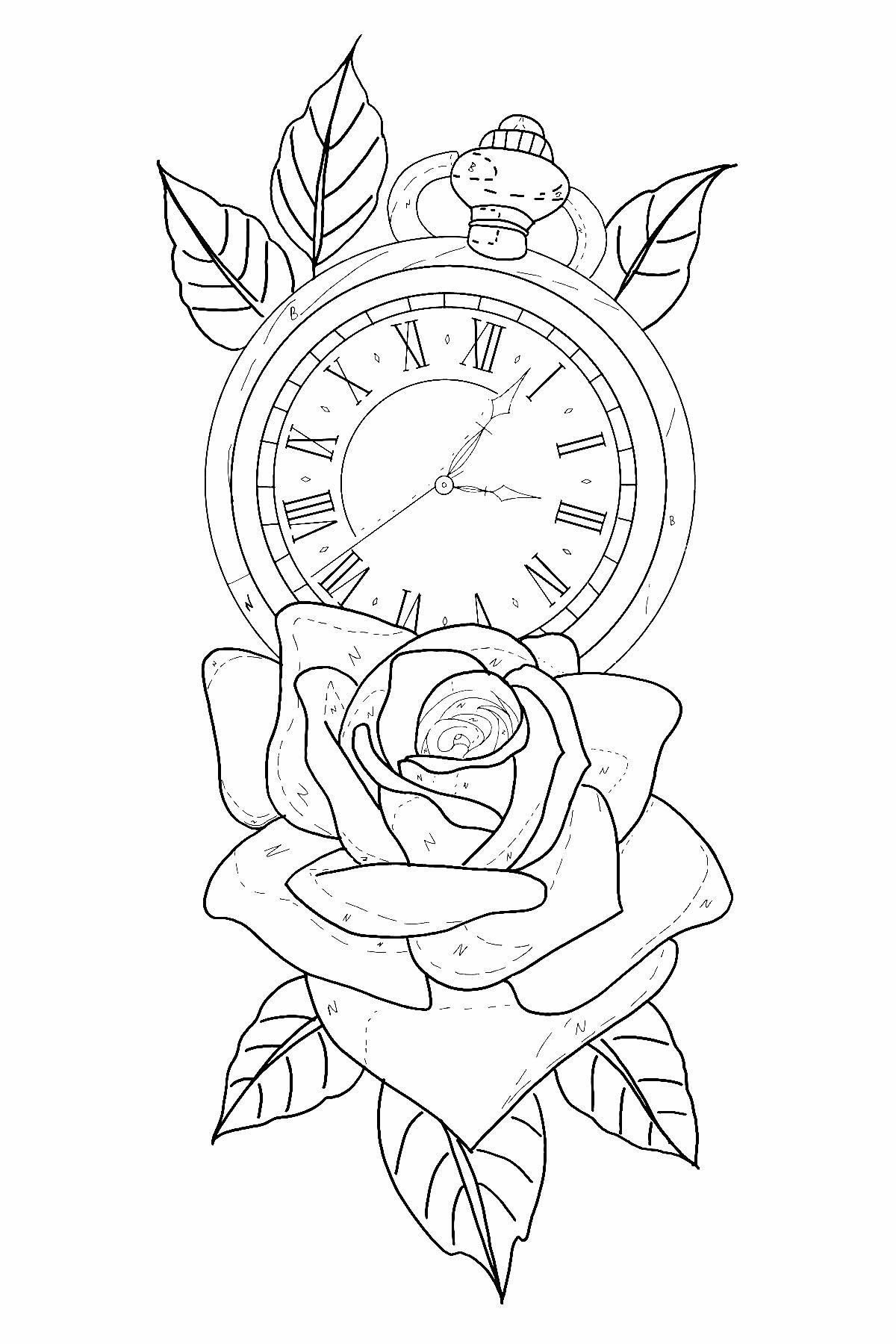
A pocket watch set over a rose ties time to memory, often read as a reminder to value the people you care about while they’re here.
Roman numerals on the clock face add detail that holds up at medium and large sizes, though smaller placements start to lose the numbers.
The stem and leaves extend below the watch, so the stencil fits forearms, thighs, and ribs where you have room to run vertically. Line drawing keeps it adaptable: add shading for realism or leave it graphic.
4. Heart and Rose Tattoo Stencil
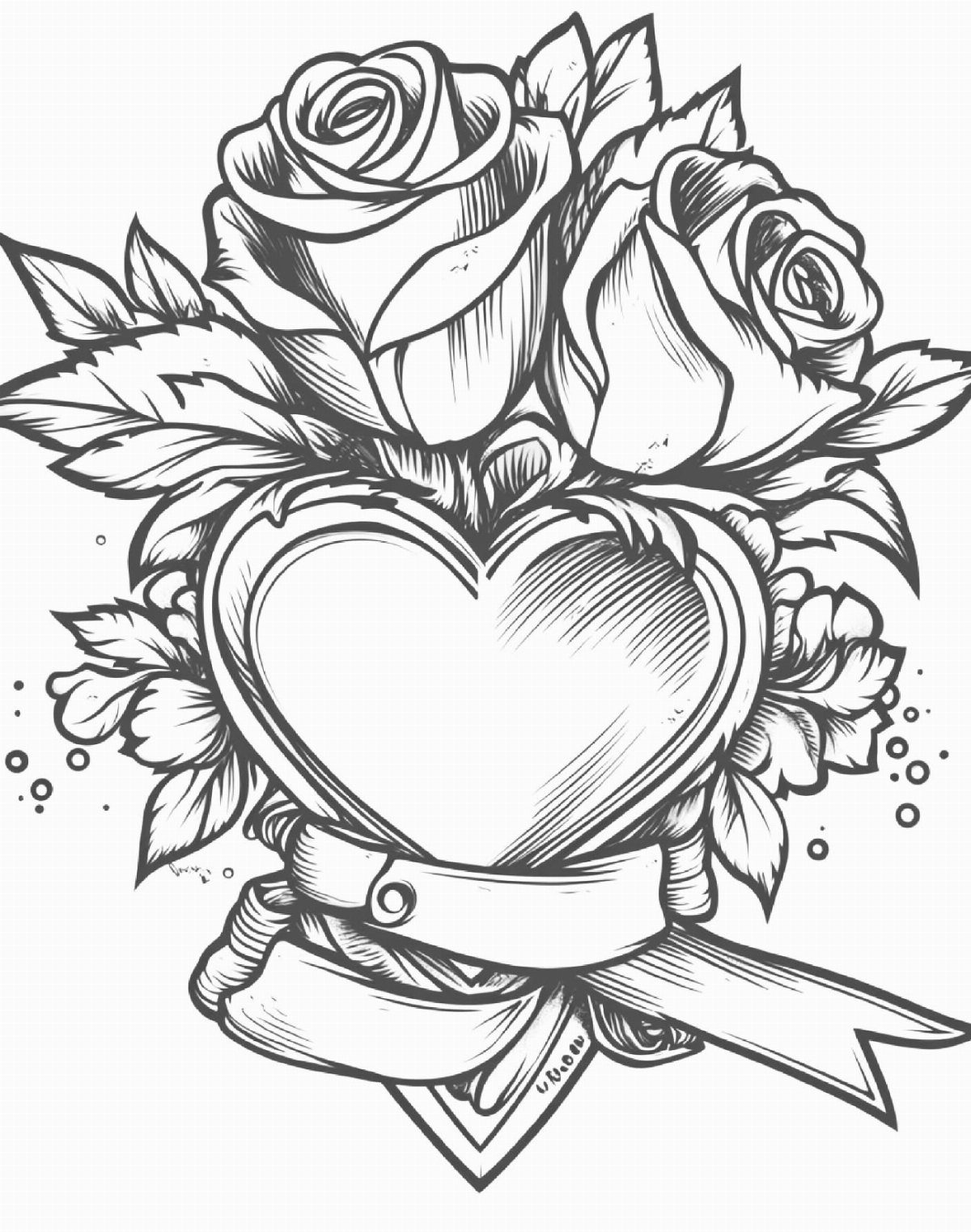
A heart topped with roses and wrapped in a ribbon banner gives you the classic love motif with room to customize the ribbon text later. The leaves fill out the sides and stop the piece from reading too symmetrical.
This stencil works at almost any size because the shapes are simple and the linework holds detail without relying on shading.
Shoulders, chests, and upper thighs are common placements, though smaller versions fit forearms and calves. Leave the ribbon blank in the stencil and add names or dates during the session.
5. Money Rose Tattoo Stencil
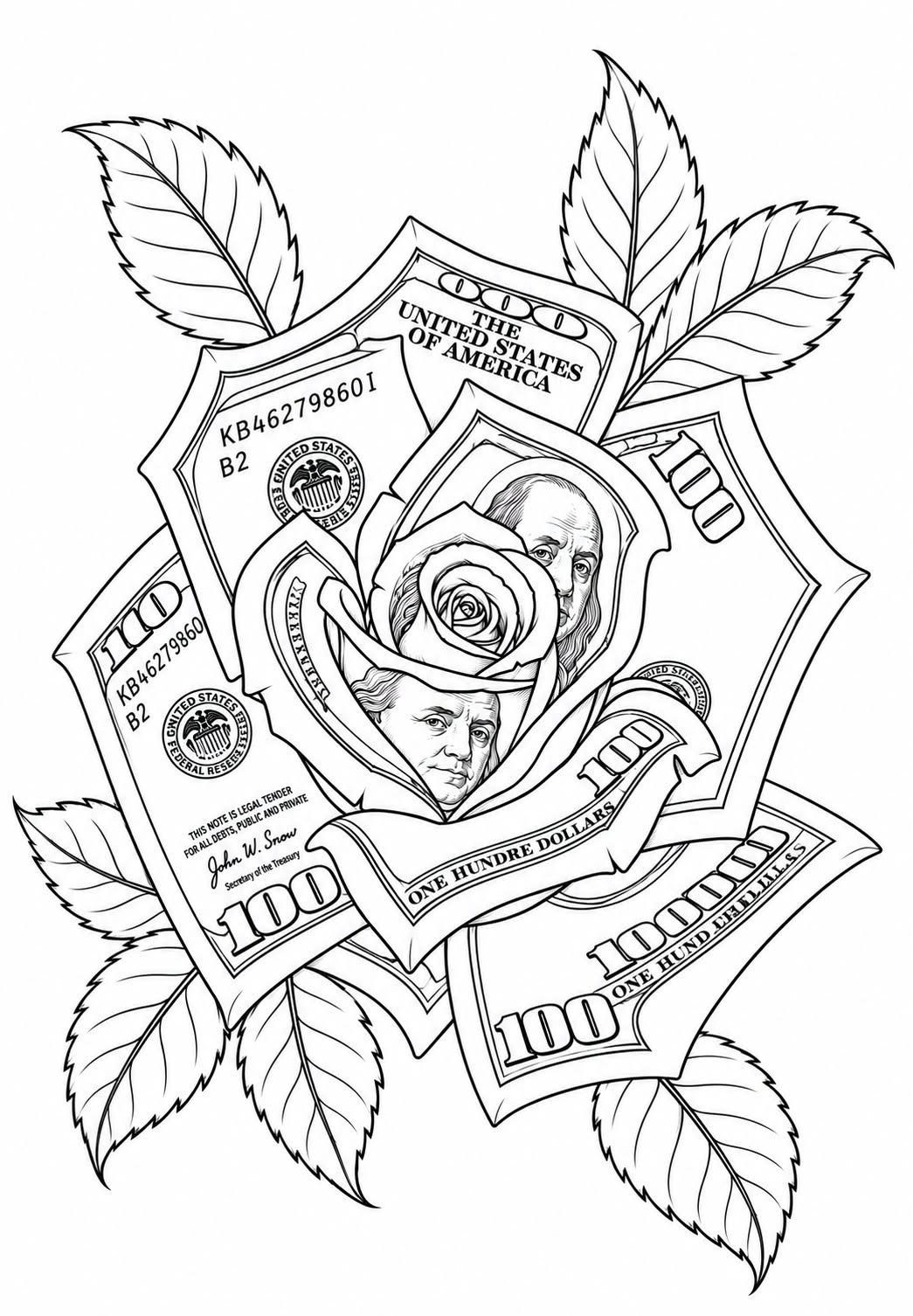
Rose petals folded from dollar bills turn the flower into a statement about wealth, ambition, or the cost of beauty, depending on how you read it.
The denomination shows clearly in the line art, and the leaves around the base ground the design so it still reads as a rose first.
This stencil scales well because the bill details are already simplified into outlines.
Upper arms, forearms, and chests give you enough space to keep the text legible. Shading the folds adds dimension, but the design works flat too.
6. Rose with Stem Tattoo Stencil
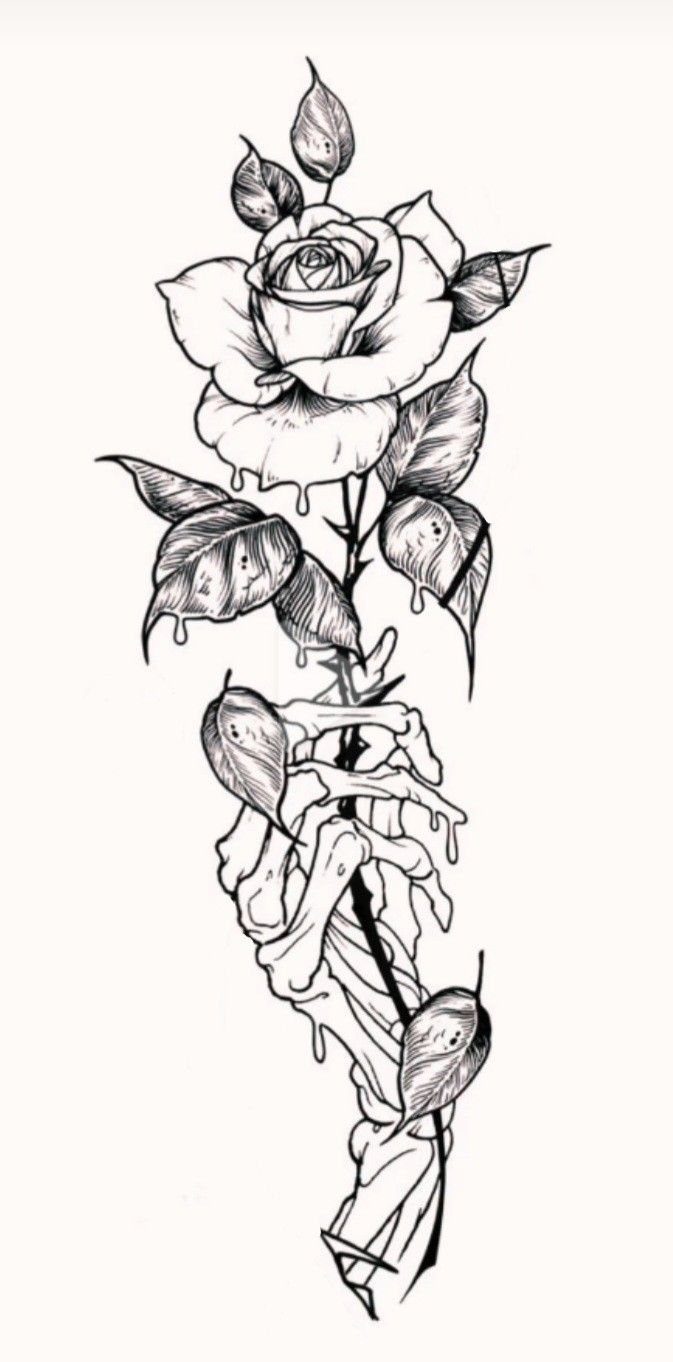
A skeletal hand gripping the rose stem brings an edge to an otherwise soft design, often read as beauty held by death or the cost of desire.
The long stem suits placements that run along the body: forearms from wrist to elbow, calves, or down the side of the ribs.
Linework alone gives you clean bones and petals, though shading the hand adds weight and makes it pop against the flower. The thorns on the stem are optional but reinforce the pain-and-beauty angle if that’s the story you want.
7. Skull Rose Tattoo Stencil
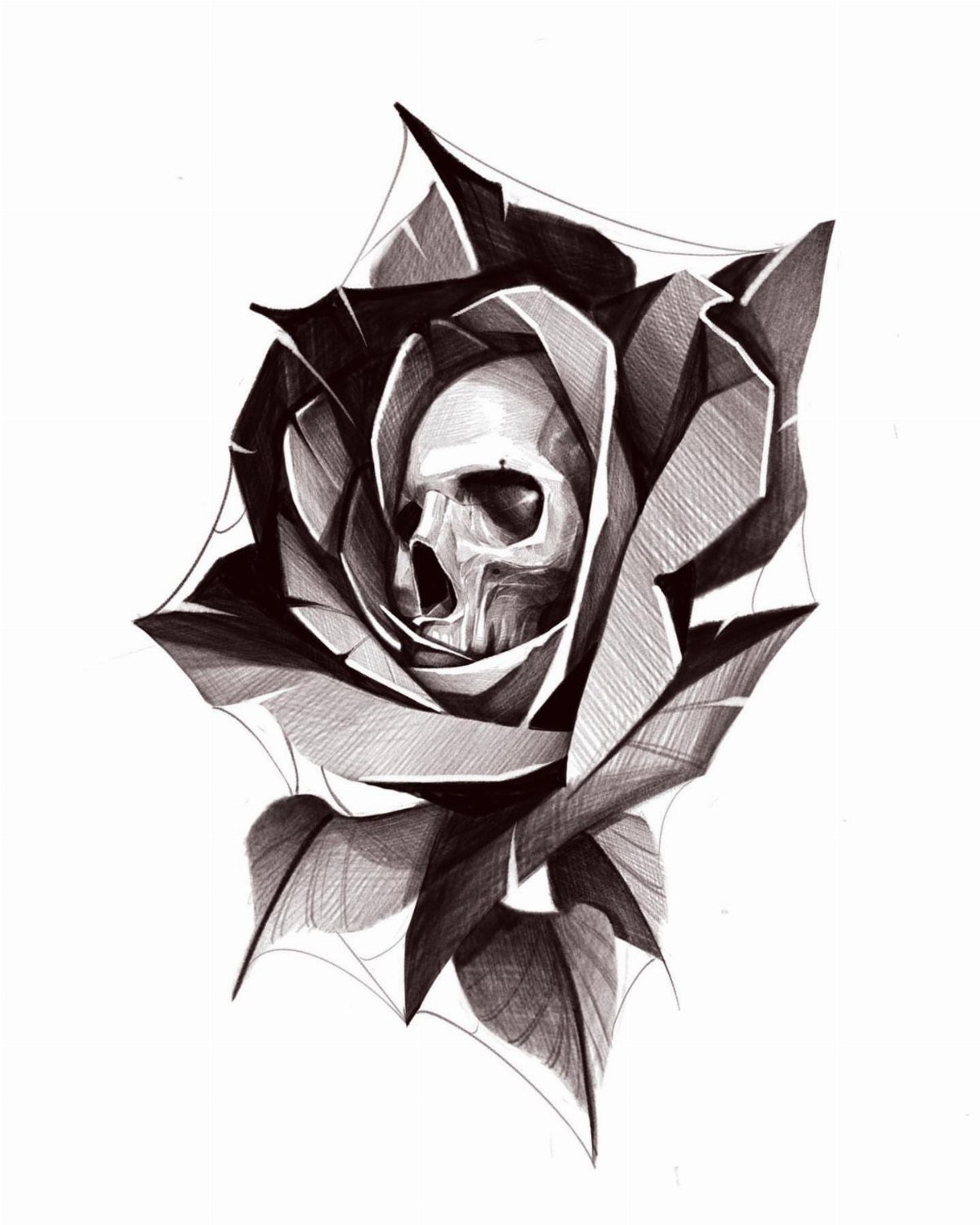
The petals wrap around the skull’s contours, so the design holds together as one shape rather than two separate elements.
Stencils like this suit medium to large placements where the skull details stay legible: upper arms, thighs, and chest panels.
Line art alone gives you clean bone structure and petal edges, though shading adds dimension and makes the skull recede or come forward depending on where you place the dark values.
8. Two Roses Tattoo Stencil
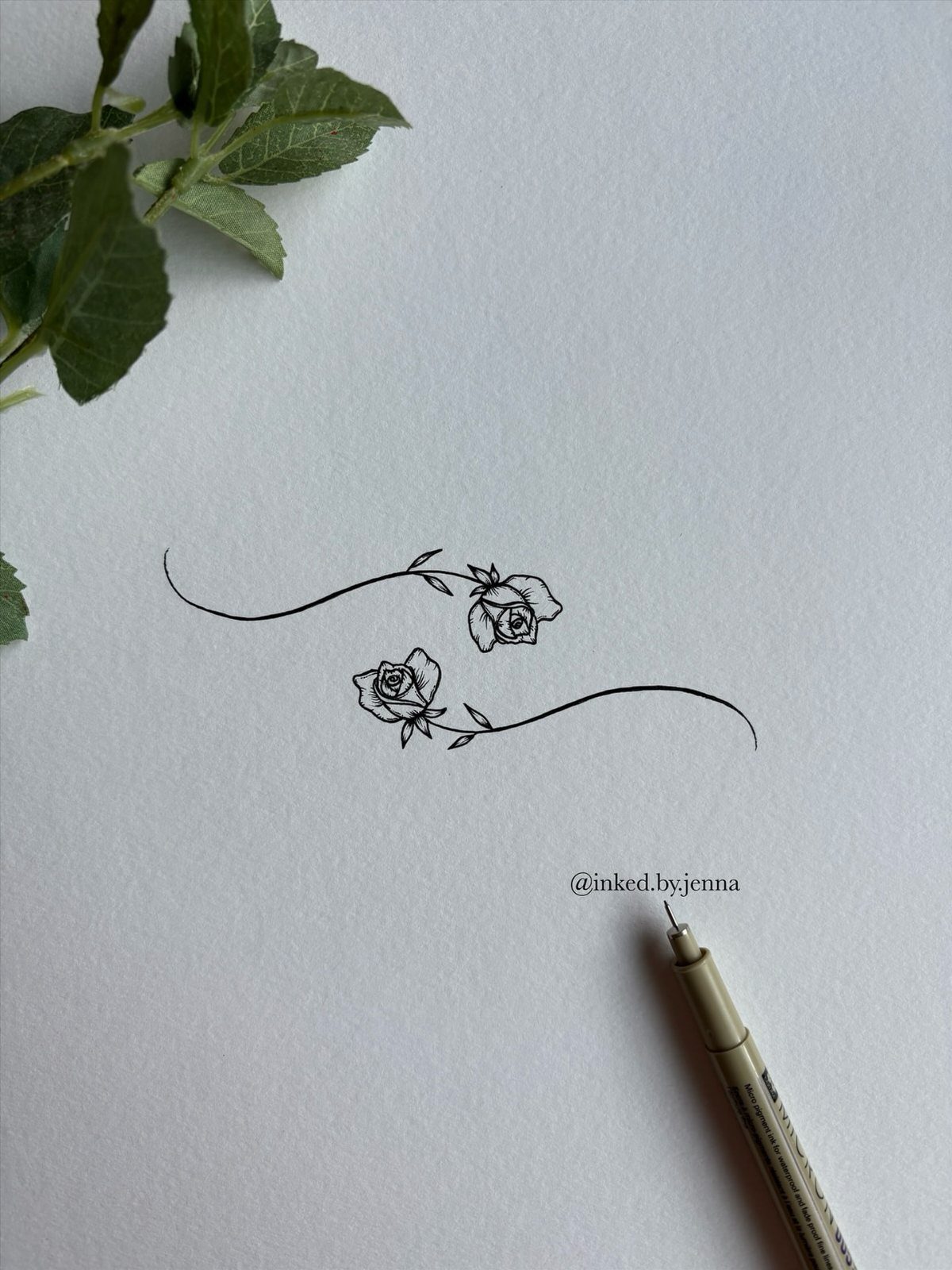
2 roses mirror each other or overlap, which balances the composition and fills horizontal placements better than a single stem. The stems can cross, run parallel, or tangle, depending on how much movement you want.
This stencil adapts to shoulders, upper backs, and thighs where you need width.
Black ink alone keeps it readable at smaller scales, and the doubled shape still registers from a distance. Adding leaves between the blooms ties the two together without extra motifs.
9. Linework Rose Tattoo Stencil
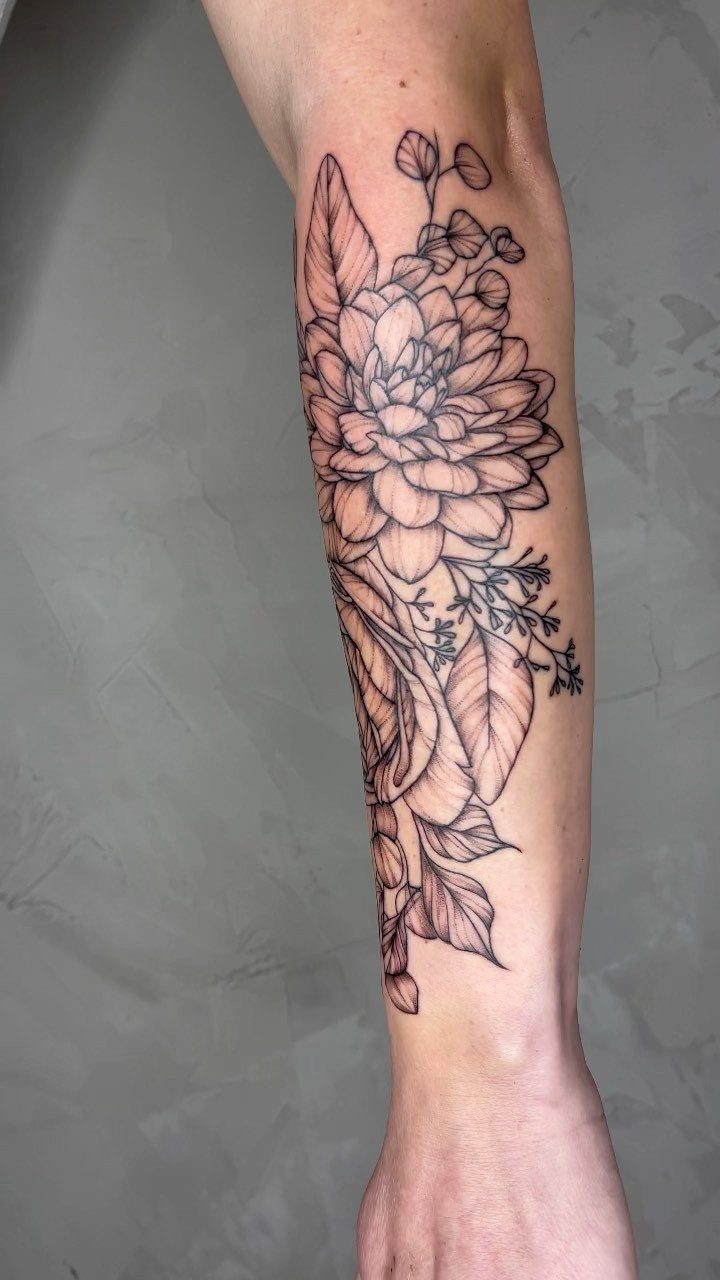
Single-line contours without shading or fill give you a stripped-down rose that relies on clean paths and careful placement.
The berries and leaves in this version add visual weight without breaking the linework rule, so the design reads as delicate but not unfinished.
Forearms, ankles, and wrists suit this approach because the thin lines show clearly on skin with less texture.
Healing is faster than shaded work since there’s less trauma to the skin, and touchups are rare when the lines are placed well from the start.
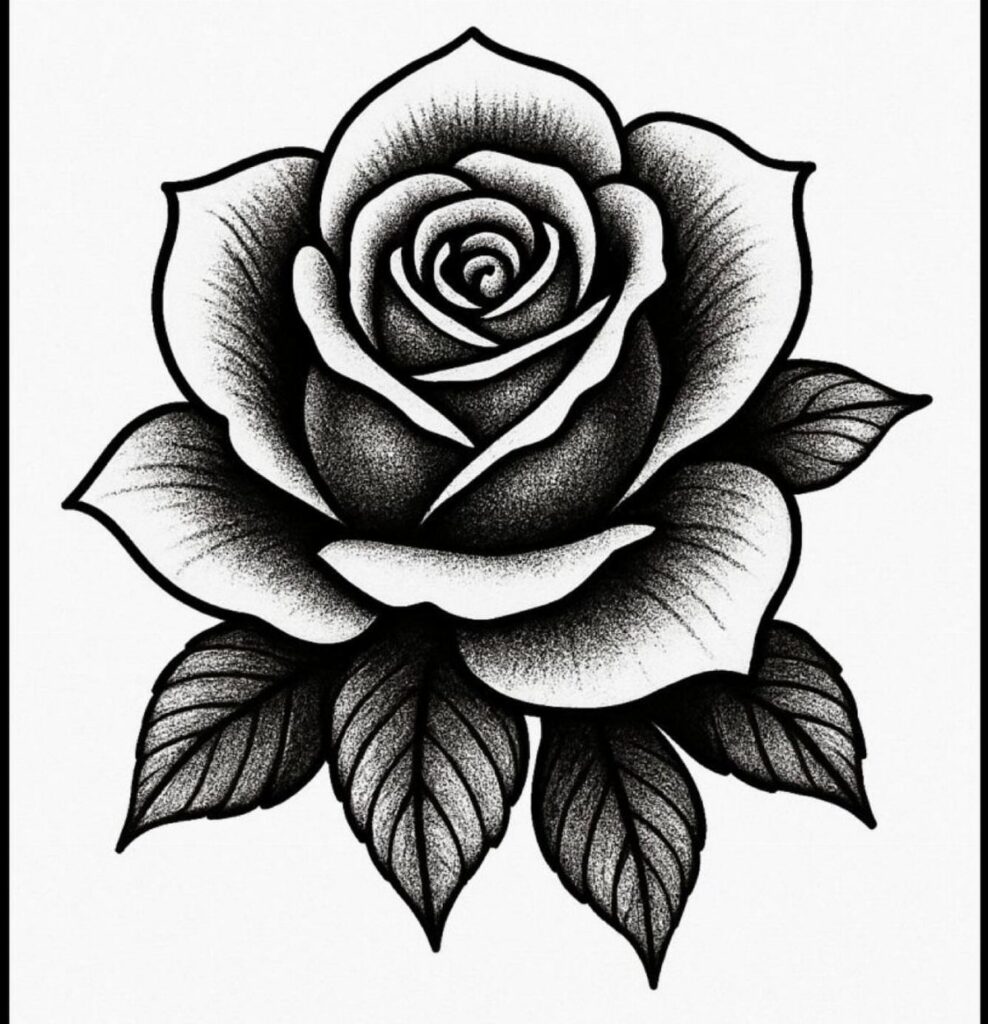
10. Black and White Rose Tattoo Stencil
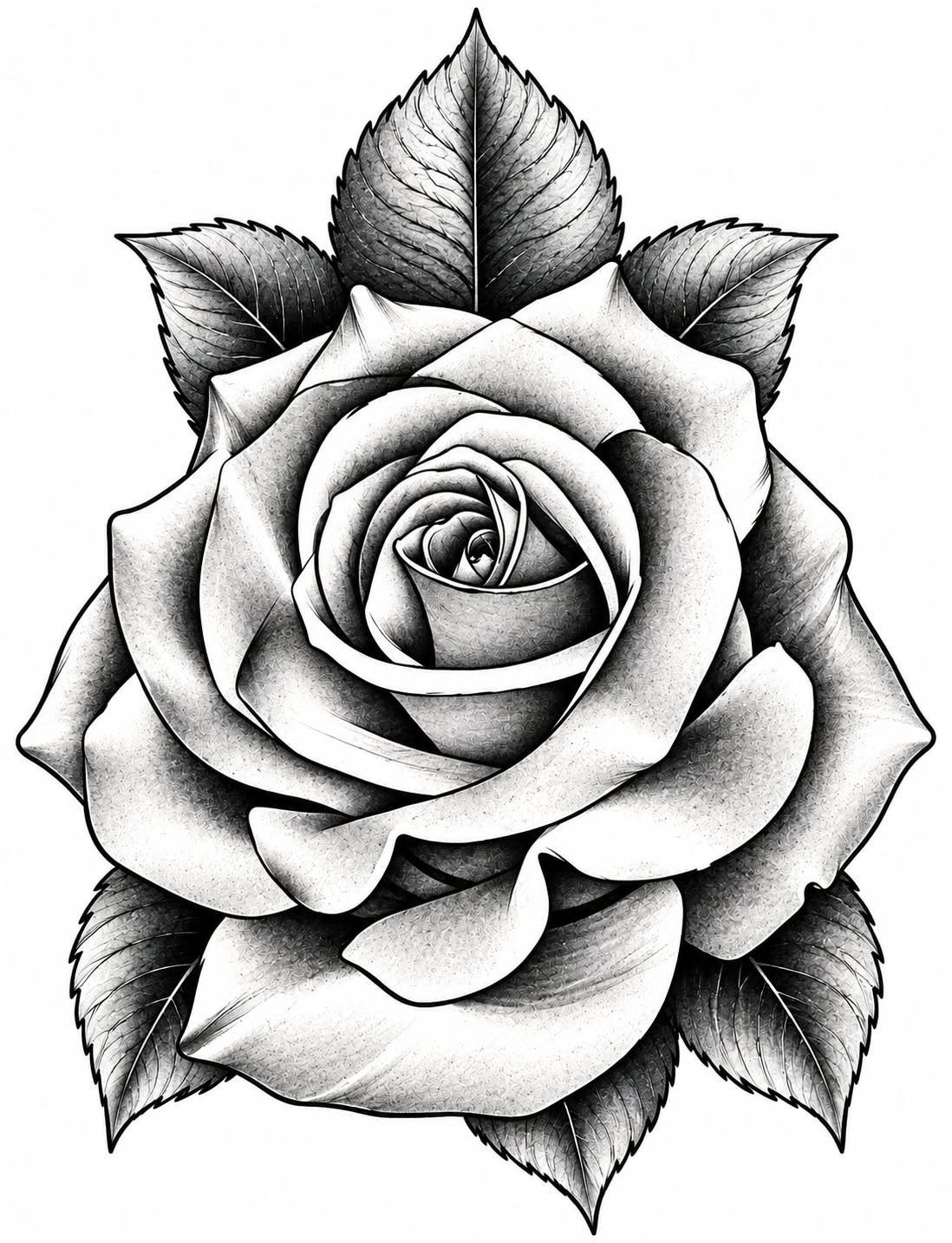
Shading in black and grey tones gives the rose dimension without color, a standard choice that ages predictably and works across all skin tones.
The leaves add contrast, and the gradients from petal highlights to shadow keep the flower from reading flat.
This stencil fits nearly any placement because the tonal range adapts to the body’s curves.
Upper arms, calves, and shoulders are common, though ribs and thighs work when you want something larger. Artists can adjust the shading density during the session to match your skin’s undertone.
11. Realistic Rose Tattoo Stencil
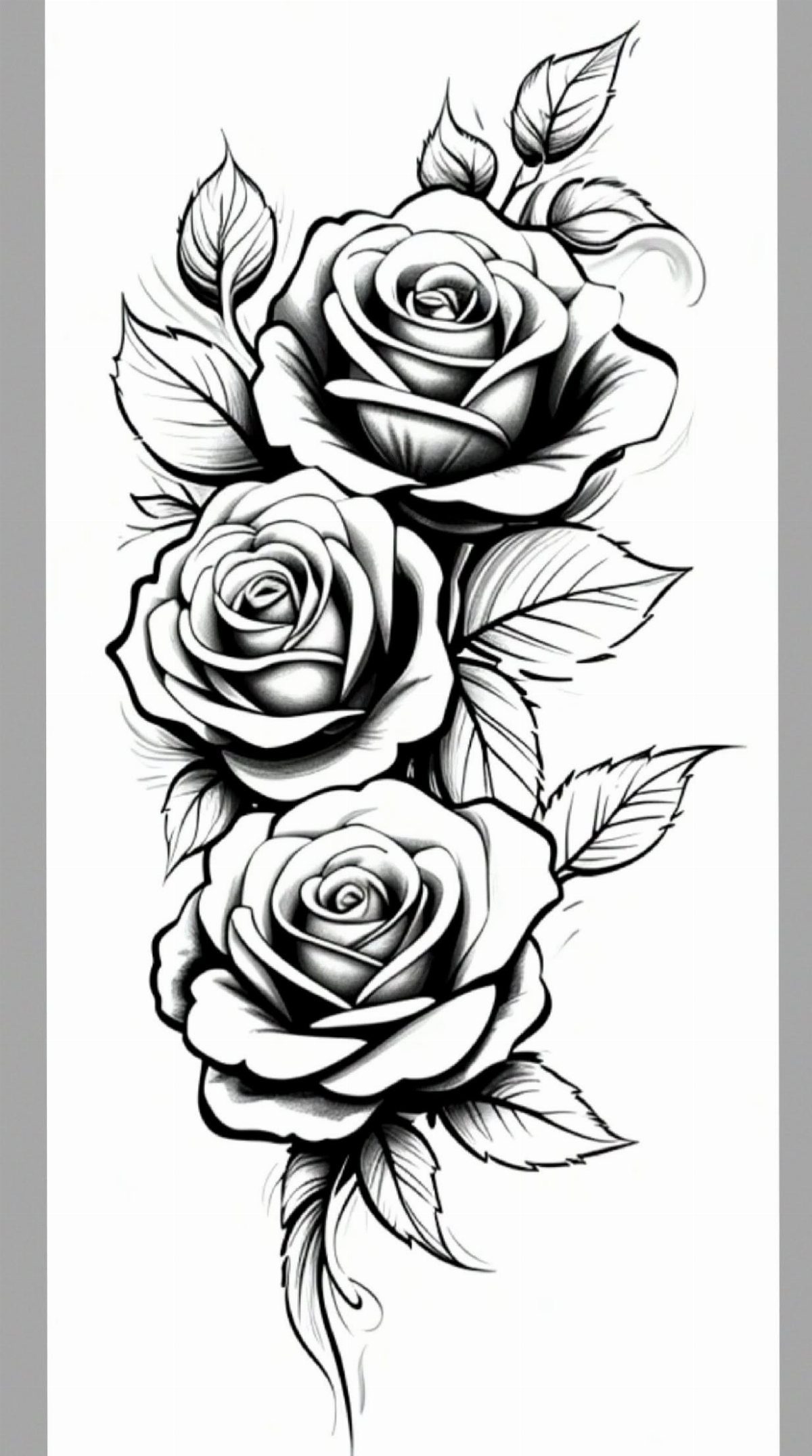
3 roses layered with fine line work and detailed petal edges aim for photorealism, which demands more session time and a larger canvas to hold the detail.
The vertical stack suits forearms, calves, and thighs where the roses can run top to bottom without compressing.
Stencils this detailed need an artist comfortable with smooth gradients and tight line spacing. Plan for a touchup after initial healing since heavy shading can blur as the skin settles.
12. Single Rose Tattoo Stencil
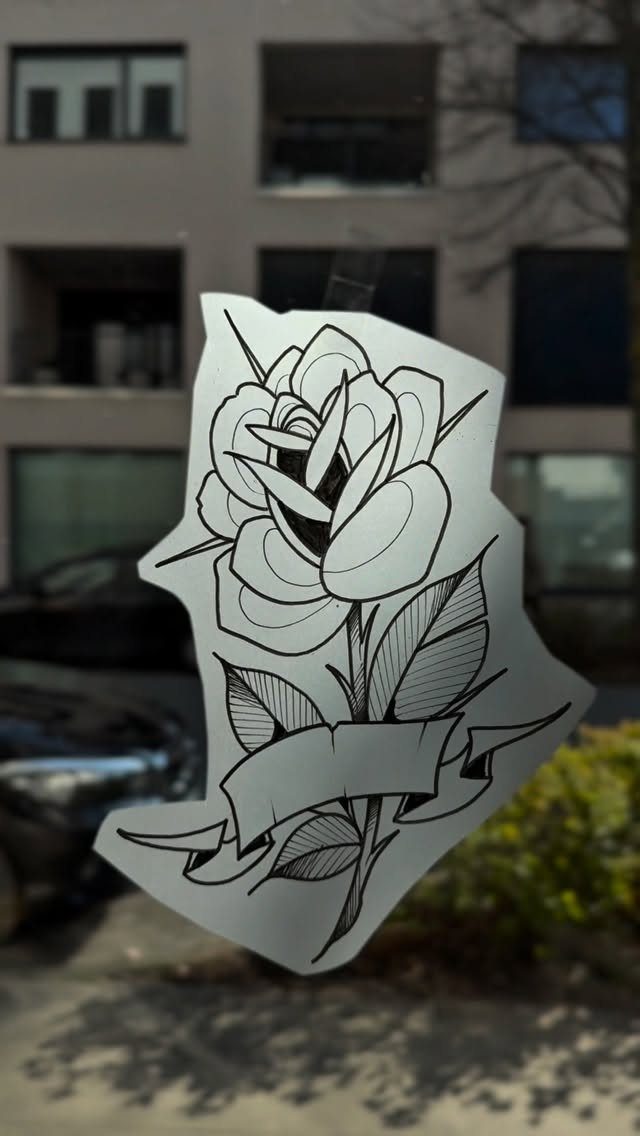
One rose with a blank banner below keeps the design simple and leaves space to add text later, a common choice for names, dates, or short phrases.
The single bloom reads clearly at small and medium sizes, so the stencil scales down to wrists, ankles, or behind the ear without losing detail.
The banner stays empty in the stencil so you can decide on text during the session or leave it blank.
Forearms and upper arms are typical placements, though calves work when you want the rose to sit higher and the banner to run downward.
Rose Tattoo Symbolism
Roses carry meaning beyond the standard love-and-beauty read. A red rose leans into passion and romance, but color shifts the message: yellow for friendship, white for remembrance or new beginnings, black for loss or rebellion.
Artists working in black and grey skip the color question entirely and let the shading do the work.
The shape matters too. A rose in full bloom reads as confidence or arrival, while a bud signals potential or something still unfolding.
Pairing a rose with hands, whether holding the stem or cupping the petals, adds intention to the image and suggests care, sacrifice, or control depending on the gesture.
If the symbolism feels too broad, narrowing it down comes from what you put next to the rose, not the rose itself.
Tattoo Stencil Longevity
A stencil applied with transfer paper lasts a few hours on skin before sweat, movement, or rubbing starts to fade the lines.
Artists apply the stencil just before starting the tattoo, so timing the session matters if you’re sitting for multiple pieces in one day or breaking a large design into sessions.
Some artists use freehand drawing with a skin marker instead of a printed stencil, which gives more flexibility to adjust the design on the body but wipes away even faster.
If the stencil fades mid-session, the artist reapplies the missing sections or works from the outline already tattooed.
Stencil longevity isn’t something you control as a client. Show up on time, keep the area dry, and let the artist handle reapplication if needed.
Converting Images to Stencils
Most artists will take a photo, sketch, or existing design and turn it into a stencil for you.
The image needs enough contrast and clean edges to print clearly, so high-resolution photos or bold line art work better than soft gradients or low-quality screenshots.
Intricate petal edges, tight line spacing, and small text lose clarity as the tattoo ages, so removing those elements before printing the stencil keeps the design readable long-term.
Bring the reference image to your consultation. The artist will adjust it for placement, proportion, and technical limits before committing it to a stencil.