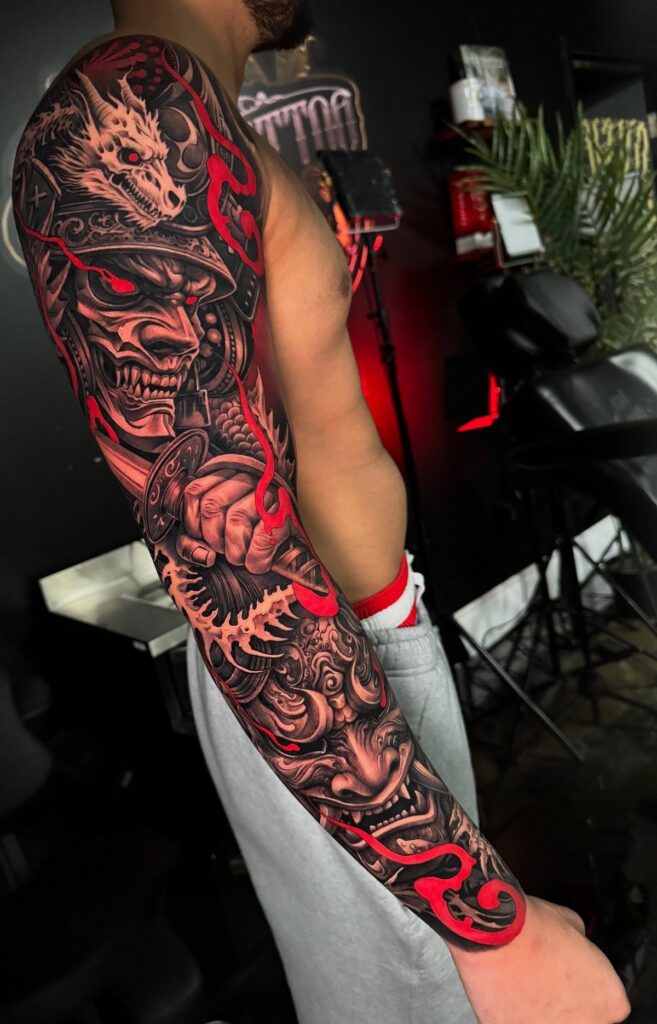
Red and black split the work in ways other two-color palettes cannot: black anchors structure, red lifts detail or contrast without shading.
The choice between them depends on whether you want the red to highlight specific elements like petals or splatters, or whether you need it bold enough to hold its own over a black background that heals darker than most ink.
1. Symmetrical Mandala Tattoos in Red and Black
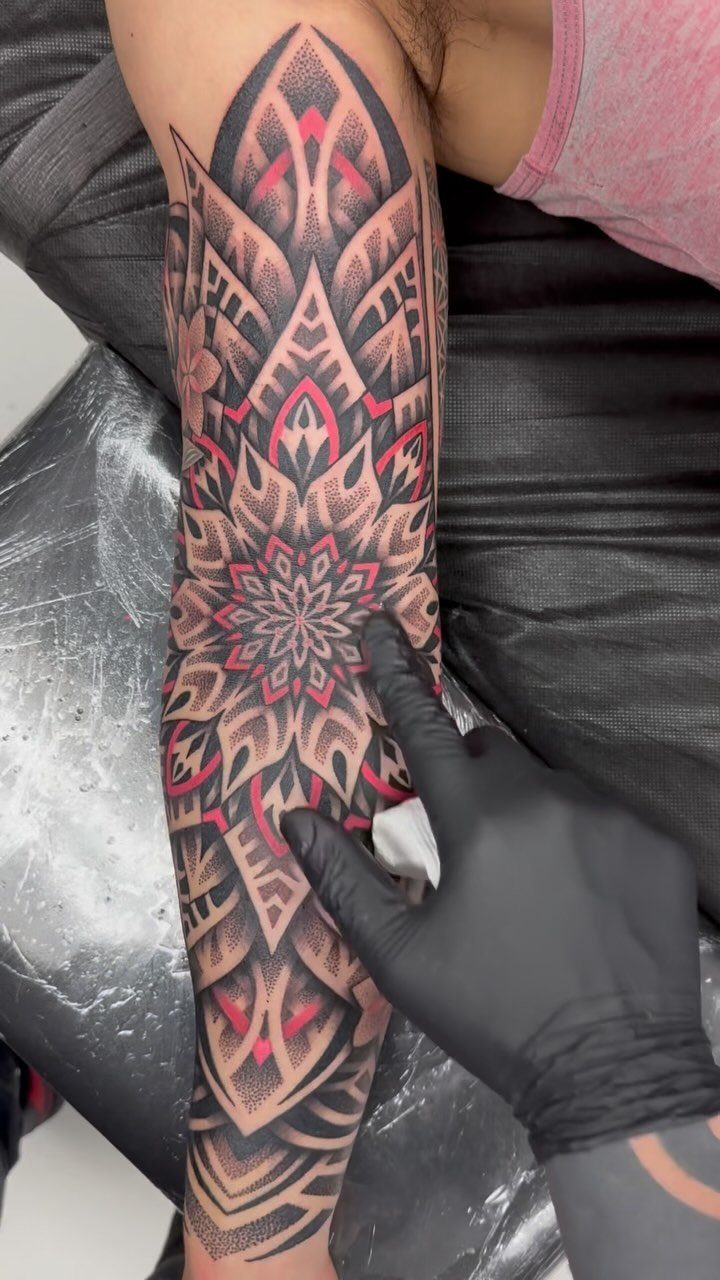
A mandala done in red and black puts balance front and center. Every petal, dot and line mirrors across the center, so a detail out of place shows immediately.
The red lifts certain rings or petals off the black framework, giving the piece depth without shading. Black anchors the structure, red highlights the rhythm.
Forearms and calves suit this style because the skin stays flat enough to keep symmetry clean as it heals. A mandala wrapping around a joint will distort when you move, so placement matters more here than with looser designs.
2. Red and Black Floral Tattoos
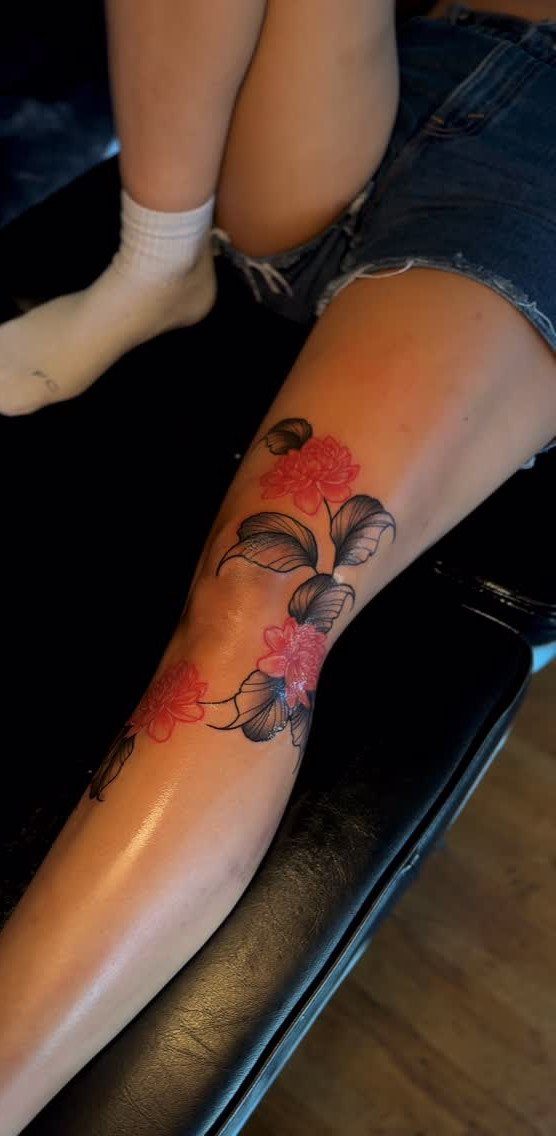
Floral tattoos gain contrast when you split the palette between red blooms and black stems or leaves. The red reads from a distance, the black keeps the composition from floating.
Roses, peonies and poppies hold their shape in red ink better than pale flowers would. Black foliage frames the color without competing for attention.
Legs handle this combination well because the longer canvas lets a stem trail or a cluster stack without crowding.
If you want the piece to age cleanly, ask for solid red fill rather than fine gradients, which can blur over time.
3. Red Geometric Patterns on Black Background
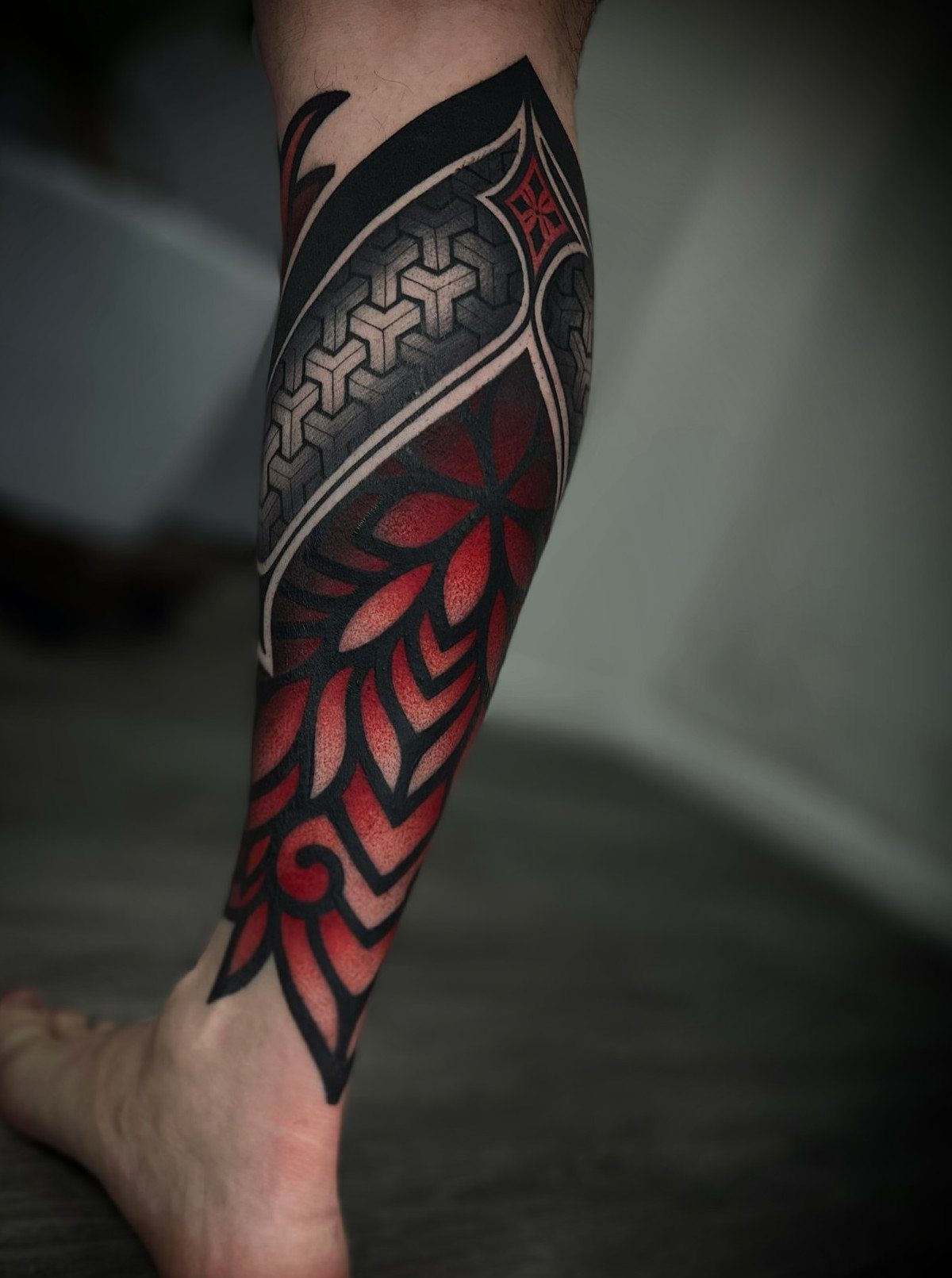
Geometric patterns in red over a solid black background turn negative space into structure. The black sits as a backdrop, often filling a large area, and the red shapes or lines cut through it.
This approach works when you want sharp edges and high contrast. Black heals darker than most ink, so the red needs enough weight to hold its own years later.
Calves and thighs give you room for a black field large enough to anchor the design. Smaller placements can feel unbalanced if the black overpowers the red detail.
4. Red and Black Animal Tattoos
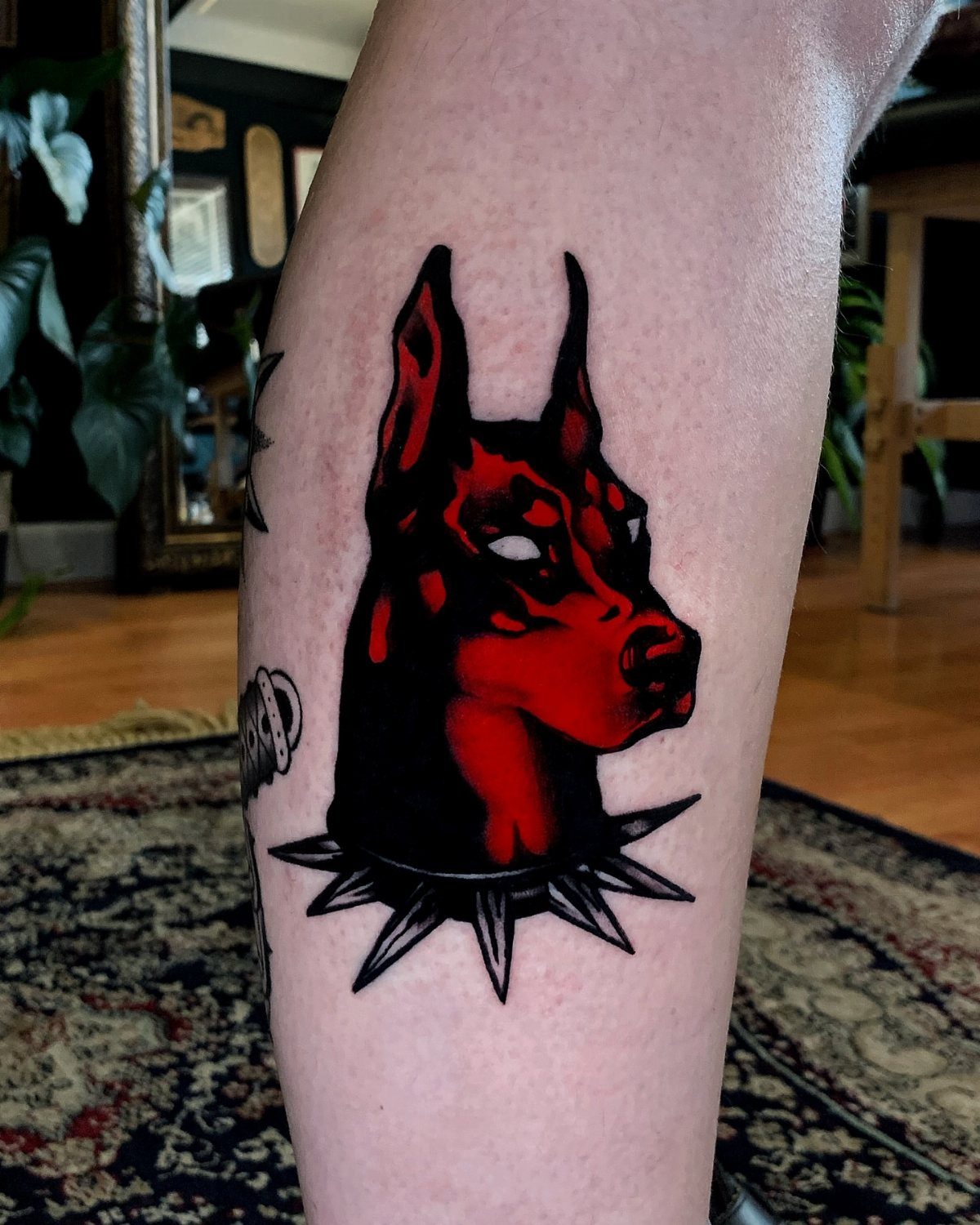
Animals done in red and black shift depending on which color carries the form. A Doberman, for instance, suits black as the base with red in the collar, eyes or shadow, matching the breed’s natural markings.
Other animals flip the balance. A cardinal or fox might lead with red, black reserved for outline and detail.
The palette limits your options to species that already wear these colors or designs abstract enough that realism does not matter.
If the animal’s natural palette leans warm or neutral, red and black can feel forced unless you lean into graphic style over realism.
5. Red and Black Skull Tattoos
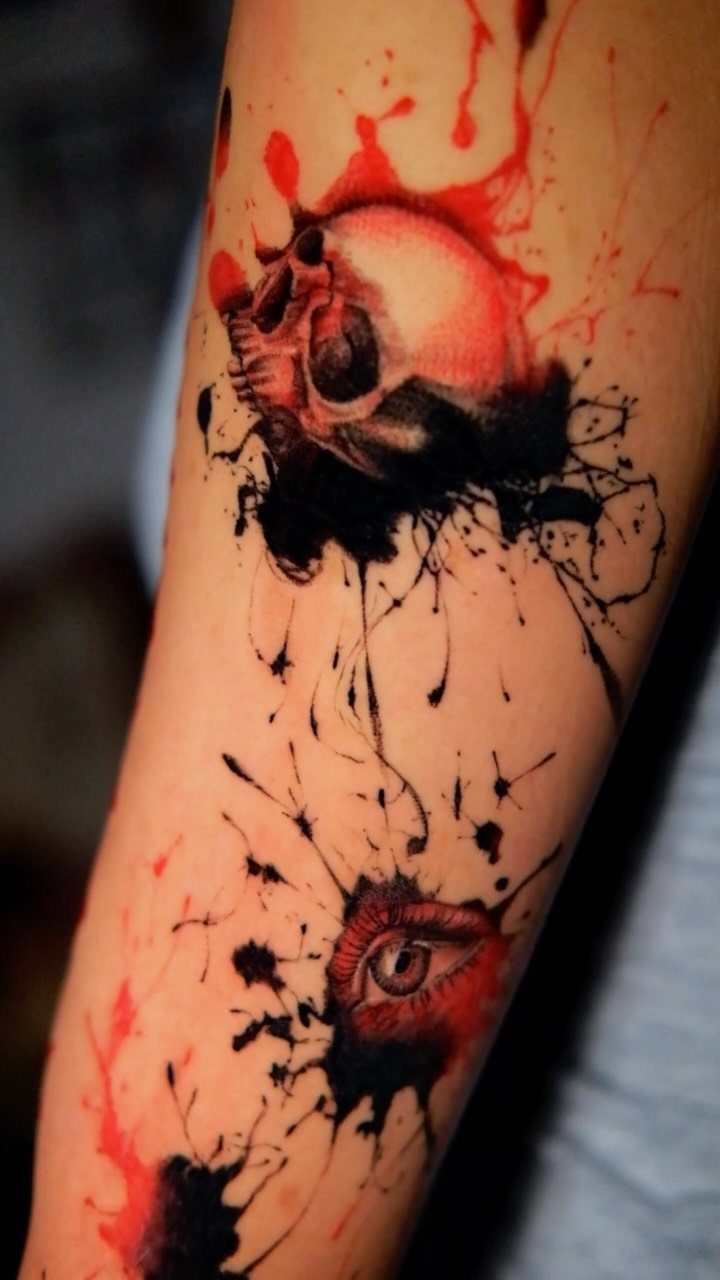
Skulls pair naturally with red because the color reads as blood, fire or warning without needing context. Black handles the bone structure, red fills the sockets, drips or surrounding elements like roses or flames.
A splatter style trades clean lines for texture and lets the red read as fresh blood or raw energy against black bone. The red and black spread in irregular bursts, giving the piece an unfinished, raw edge.
This style hides imperfections well since splatters are meant to look chaotic.
If you want a skull that stays readable as it ages, stick with solid fills and bold outlines rather than fine splatter dots, which can fade into each other over time.
6. Red and Black Tribal Tattoos
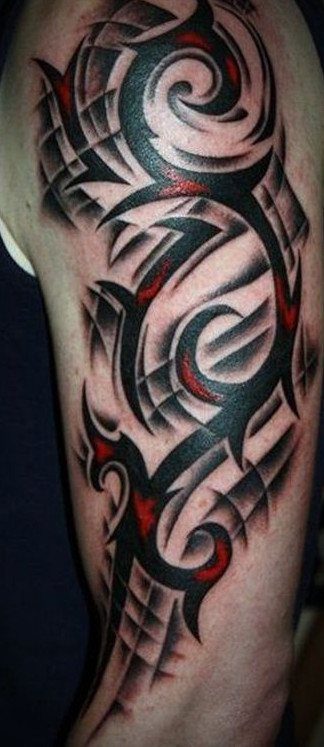
Tribal tattoos in red and black add a second layer to a style that traditionally runs solid black. The red highlights certain curves or fills specific sections, breaking up the mass without softening the bold lines.
Black still does most of the work, forming the thick swirls and tapers that define tribal style. Red sits inside or alongside, giving the eye a place to land.
This combination suits larger placements like upper arms, shoulders or thighs where the tribal shapes have room to flow. Small tribal pieces can feel cluttered with 2 colors competing in a tight space.
7. Red and Black Abstract Tattoos
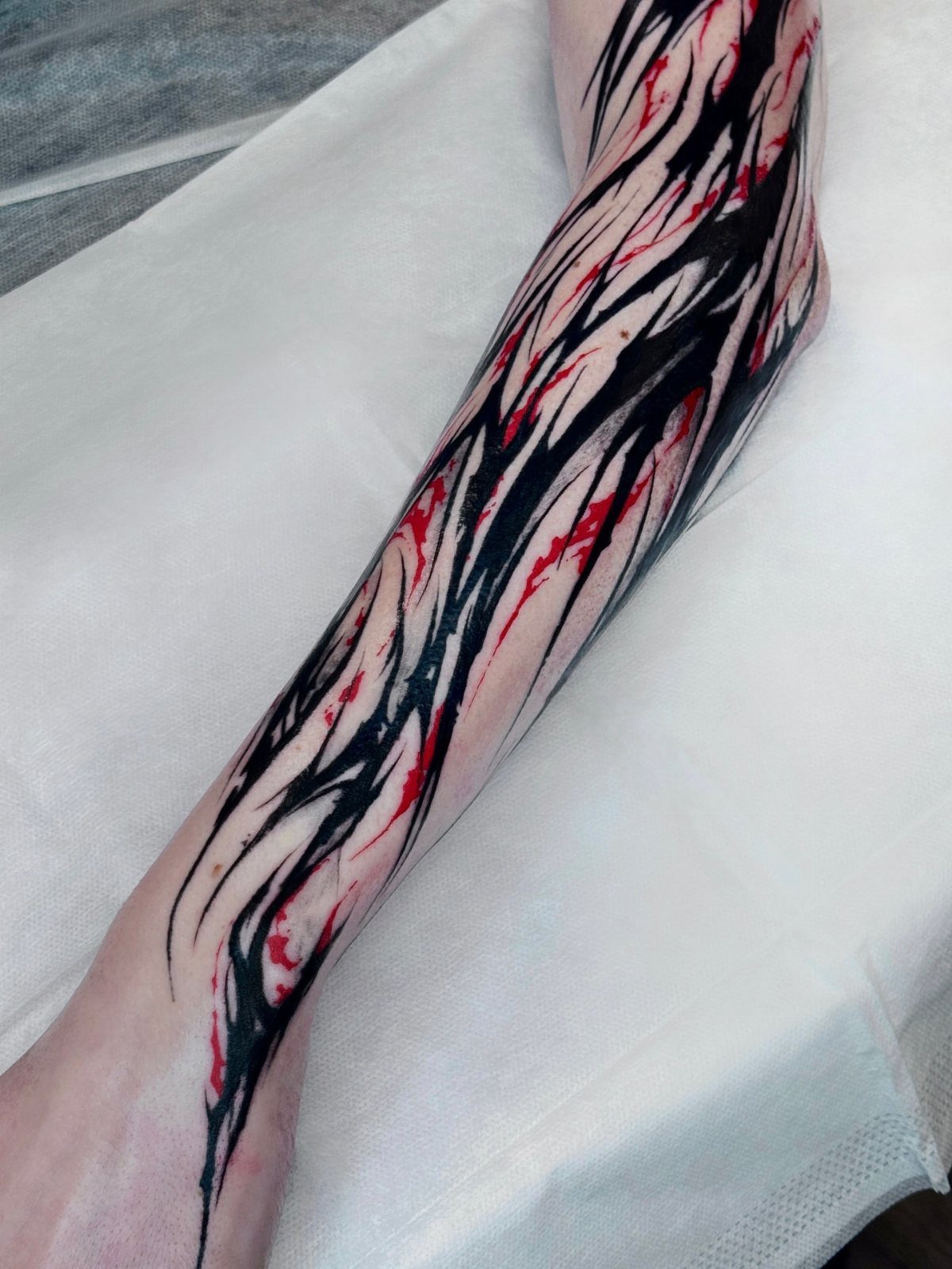
Abstract work trades recognizable shapes for movement and contrast. Black forms the heavier strokes, red arrives as accent lines or fills that break up the composition without taking over.
The style forgives uneven healing better than precise geometric or realistic designs because the eye expects irregular edges. Red can fade faster than black, so keeping the red lines bold rather than delicate gives the piece longer legs.
Forearms and calves offer flat visibility for abstract layouts. If you want the piece to read clearly from a distance, keep the red concentrated rather than scattered across the whole design.
8. Black Armored Centipede Entwined with Red Outline Spider Lily Flowers
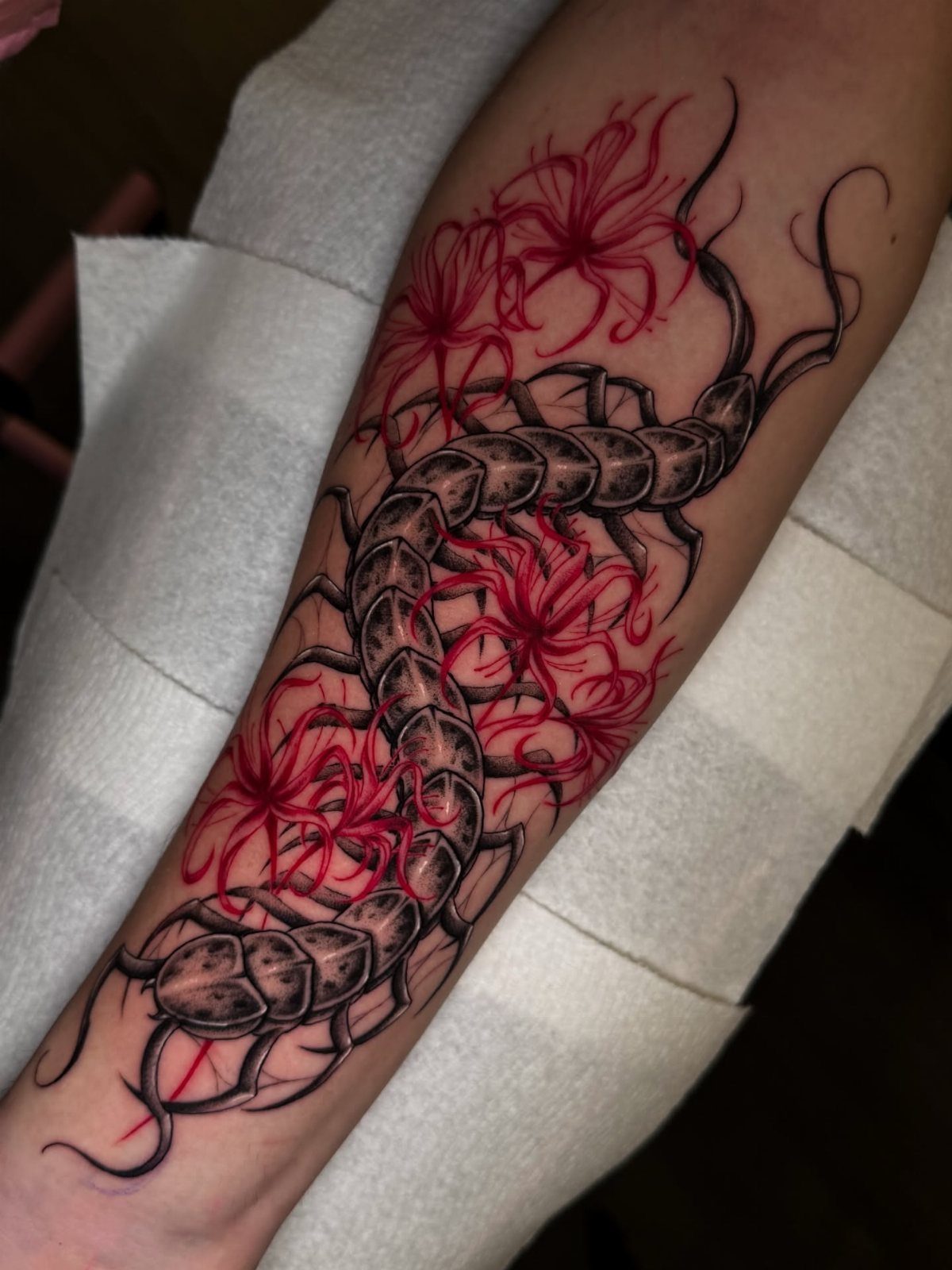
A centipede wrapping around the arm brings natural movement to the space. The segmented body follows the curve of the muscle, and spider lilies fill gaps without crowding the insect’s form.
Black carries the centipede’s armor and legs, red outlines the flowers to keep them distinct from the body. The contrast keeps both elements readable even where they overlap.
This combination suits shoulders and upper arms where the centipede can arc across contours. Spider lilies traditionally mark death or rebirth in Japanese imagery, so the pairing leans darker in meaning than purely decorative florals.
Frequently Asked Questions
Can you cover a black tattoo with red ink?
Yes, red ink can cover black tattoo areas, but it works better over faded black than fresh solid fills.
Red sits lighter in the skin than black, so it shows more clearly when the old ink has lightened through years of healing or a few laser sessions.
If the black is still dark, the red will read more like a brown or rust tone rather than true red.
What color is red and black mixed?
Red and black mixed in skin create a muddy dark red or brownish tone, not a clean color.
That’s why red and black tattoos keep the 2 colors separate rather than blending them. The contrast comes from placing red next to or inside black shapes, not from mixing the inks together.
How long should redness last around a new tattoo?
Redness around a fresh tattoo should fade as the skin starts healing.
If it stays bright red, spreads or feels hot after a week, that signals infection rather than normal healing. Keep the area clean and moisturized, and watch for swelling or fluid that doesn’t match the usual plasma and light scabbing.