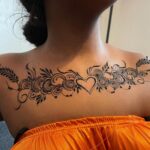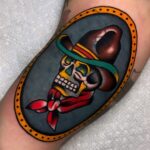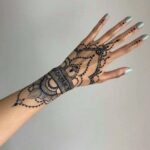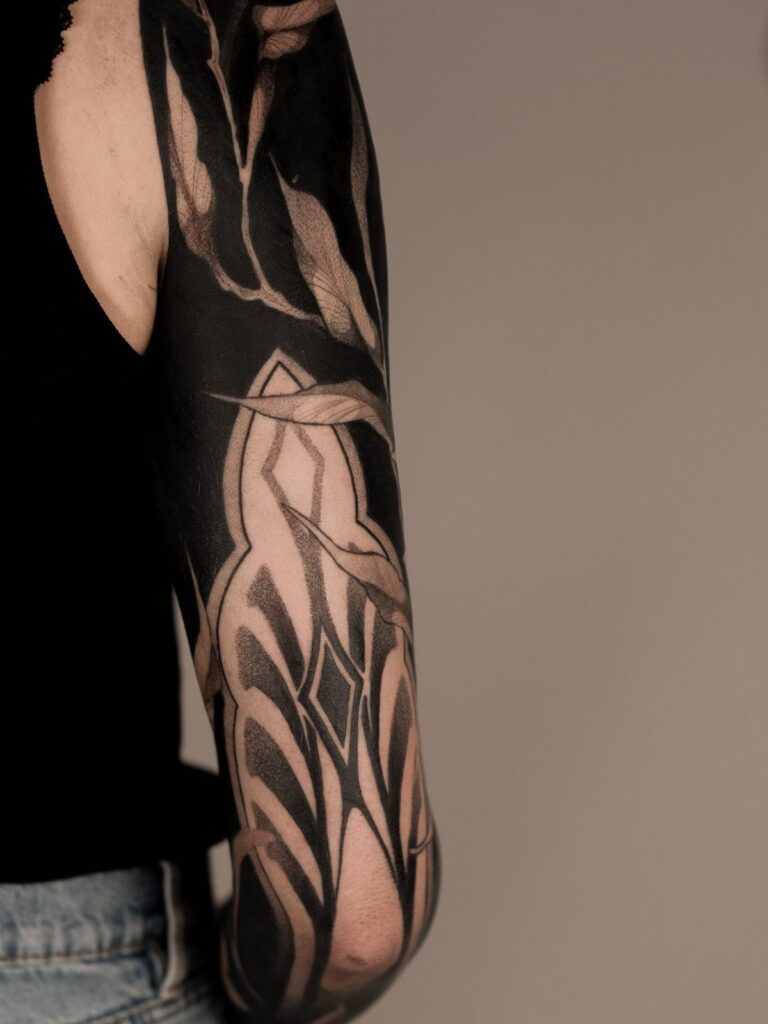
A sleeve runs a few thousand dollars across several sessions, a full leg takes longer, and adding white ink or color over the black brings the price and chair time up from there.
What fits depends on how bold you want to go: a sleeve stops at the wrist, a leg piece hides under jeans, and a neck or hand blackout puts ink where everyone sees it.
1. Solid Black Ink Blackout Tattoo
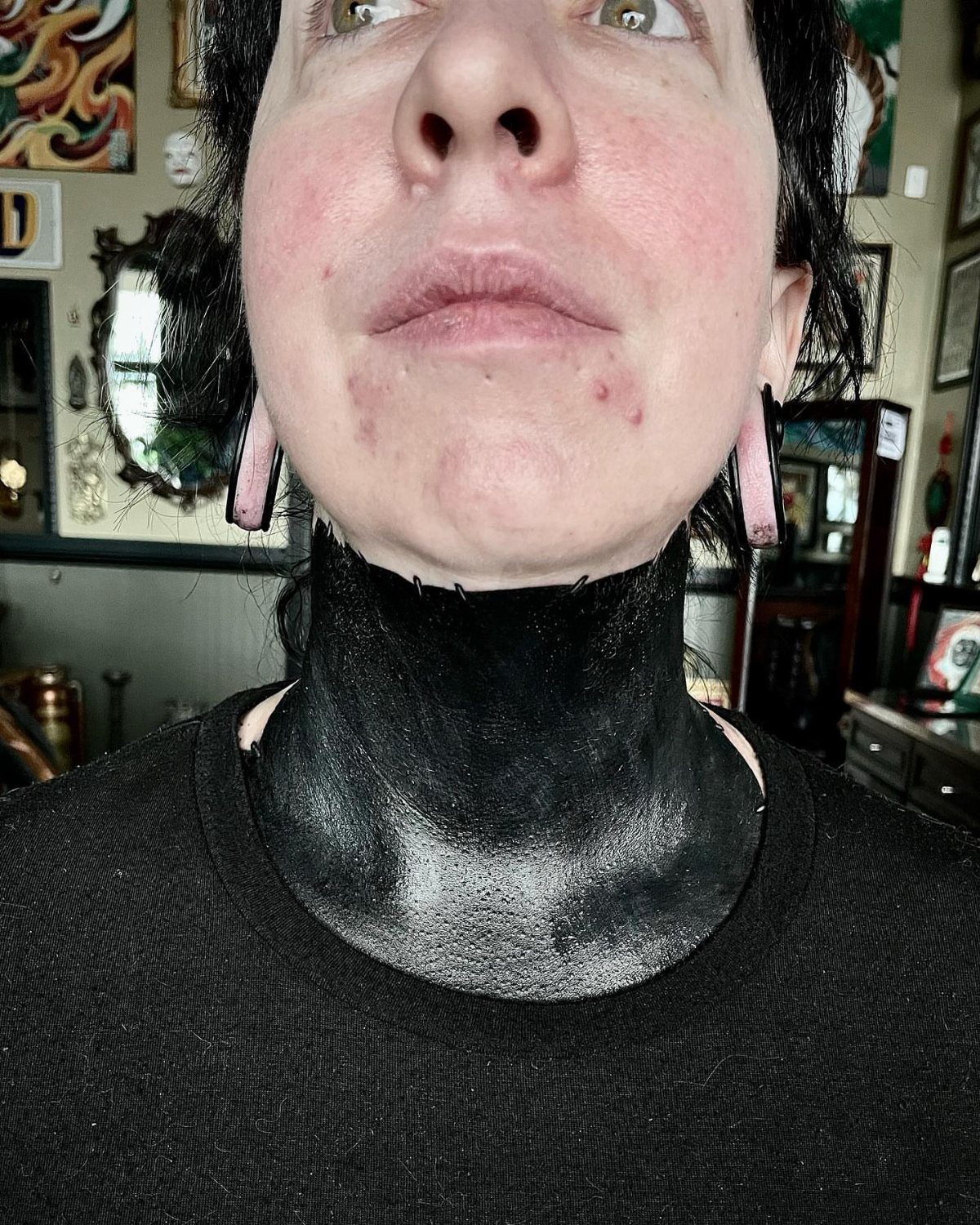
A neck wrapped entirely in solid black ink leaves no room for interpretation. The coverage here reads instantly and leaves the face floating above a continuous dark shape.
Expect several sessions to build density this even, and budget for touchups once the ink settles. Black this saturated shows every healing flaw, so aftercare has to be careful and consistent.
The neck hurts more than most placements, and the social weight is real. This works if bold is the point and you already know what wearing permanent black on visible skin will ask of you.
2. Full Body
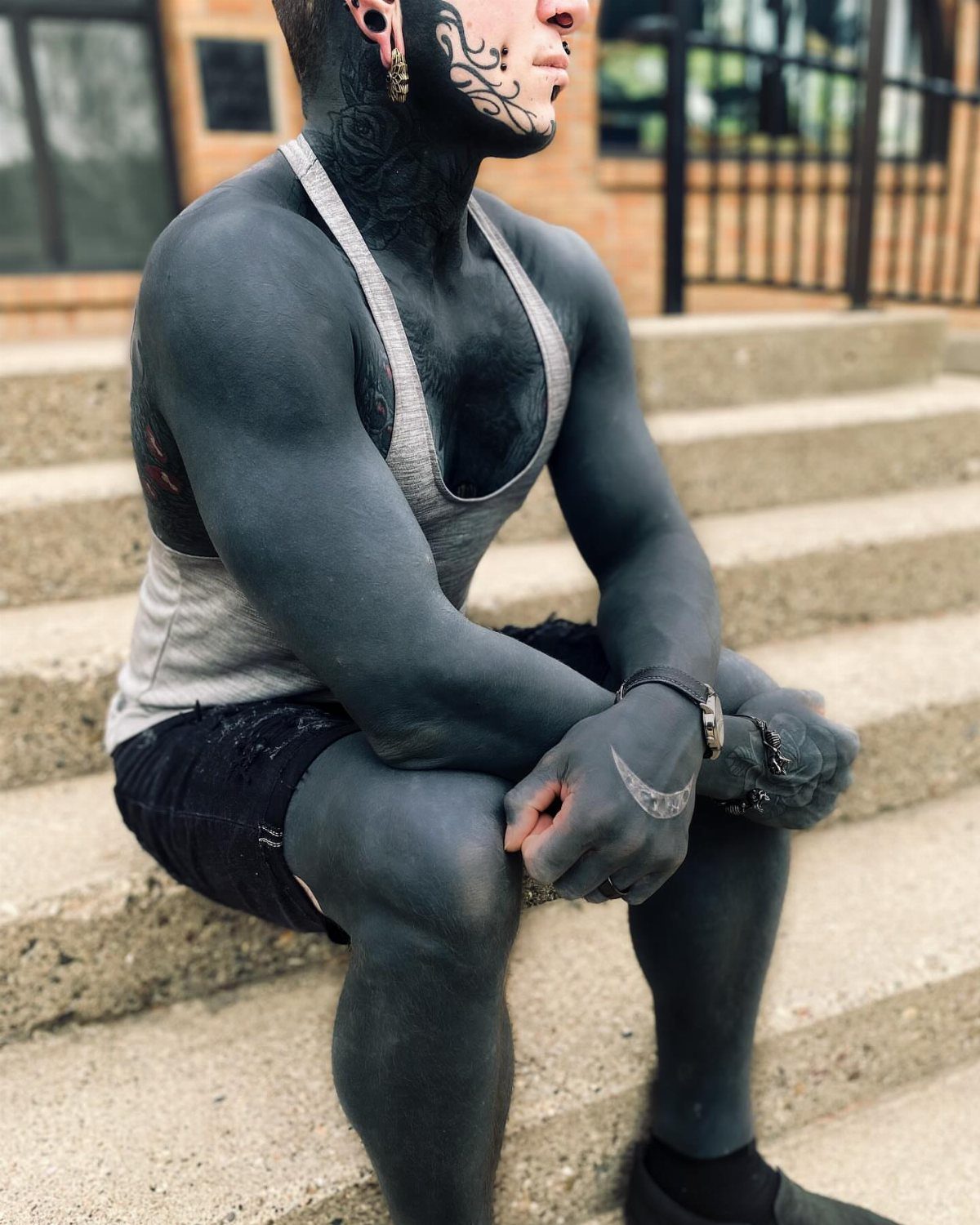
Covering arms, legs and neck in continuous black ink turns the body into a single surface. What stands out here is commitment, both to the look and to the hours it takes.
A project this size splits across dozens of sessions. Artists often work in panels, blacking out one limb or section at a time so the ink can heal before the next round.
Healing takes longer when large areas are saturated at once, and your schedule will stretch across months or years.
Full coverage costs what it sounds like. If bold simplicity appeals more than detailed work, this is the furthest you can take it.
3. Negative Space Blackout
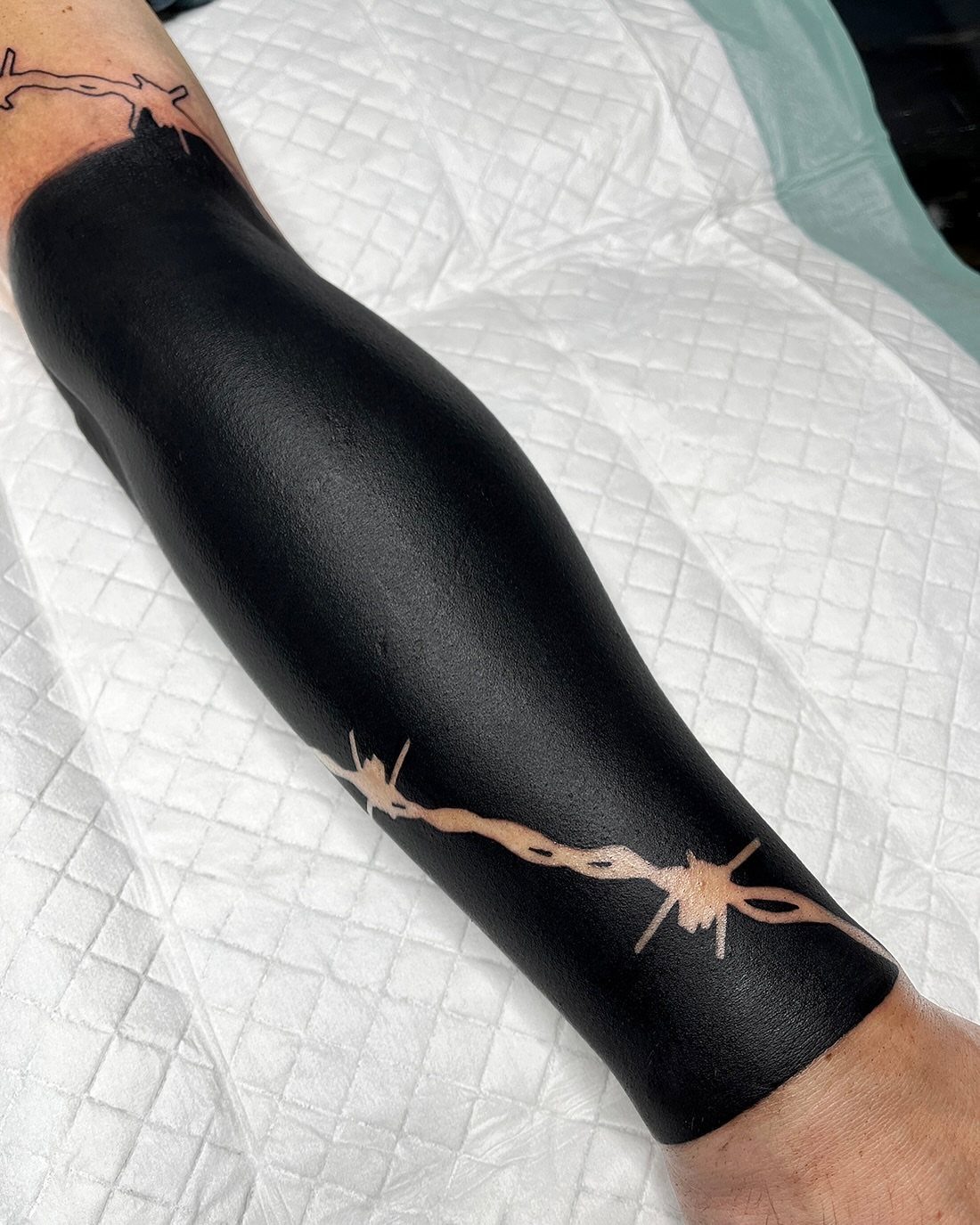
Instead of filling the design, you fill everything around it. The barbed wire stays skin-toned while the rest of the forearm goes black, and the contrast reads sharper than a standard tattoo.
Negative space suits simple shapes with clean edges. Fine detail gets lost when the contrast flips, so stick to bold outlines, text or geometric forms that still read from a few feet away.
Placement matters more here than with standard ink. Once the black goes down, you cannot expand the design without sacrificing the negative space, so plan the layout before the first session.
4. Blackout with White Ink
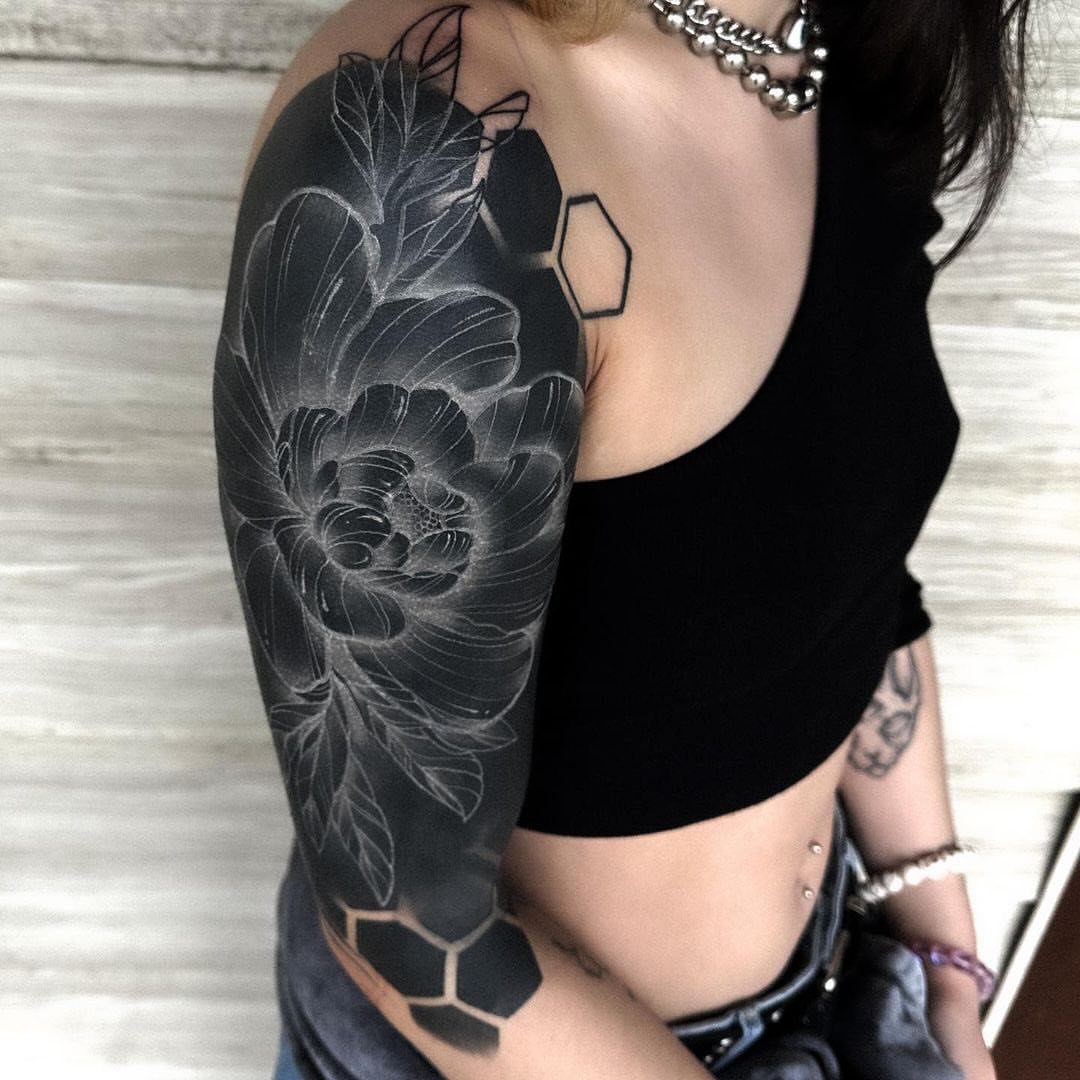
White ink laid over a black canvas gives you contrast without breaking the dark field.
The florals and hexagons here glow against the black rather than sitting on bare skin, and the effect holds up better than white ink on its own.
White ink fades faster than black, so expect touchups every few years to keep it crisp.
The ink also shows best on lighter skin tones; on darker skin it reads closer to gray and can blur into the black background over time.
Healing white over black takes longer than a single-pass tattoo, since both layers need time to settle. If you want detail that pops without adding color, this is one of the cleanest ways to do it.
5. Blackout with Color
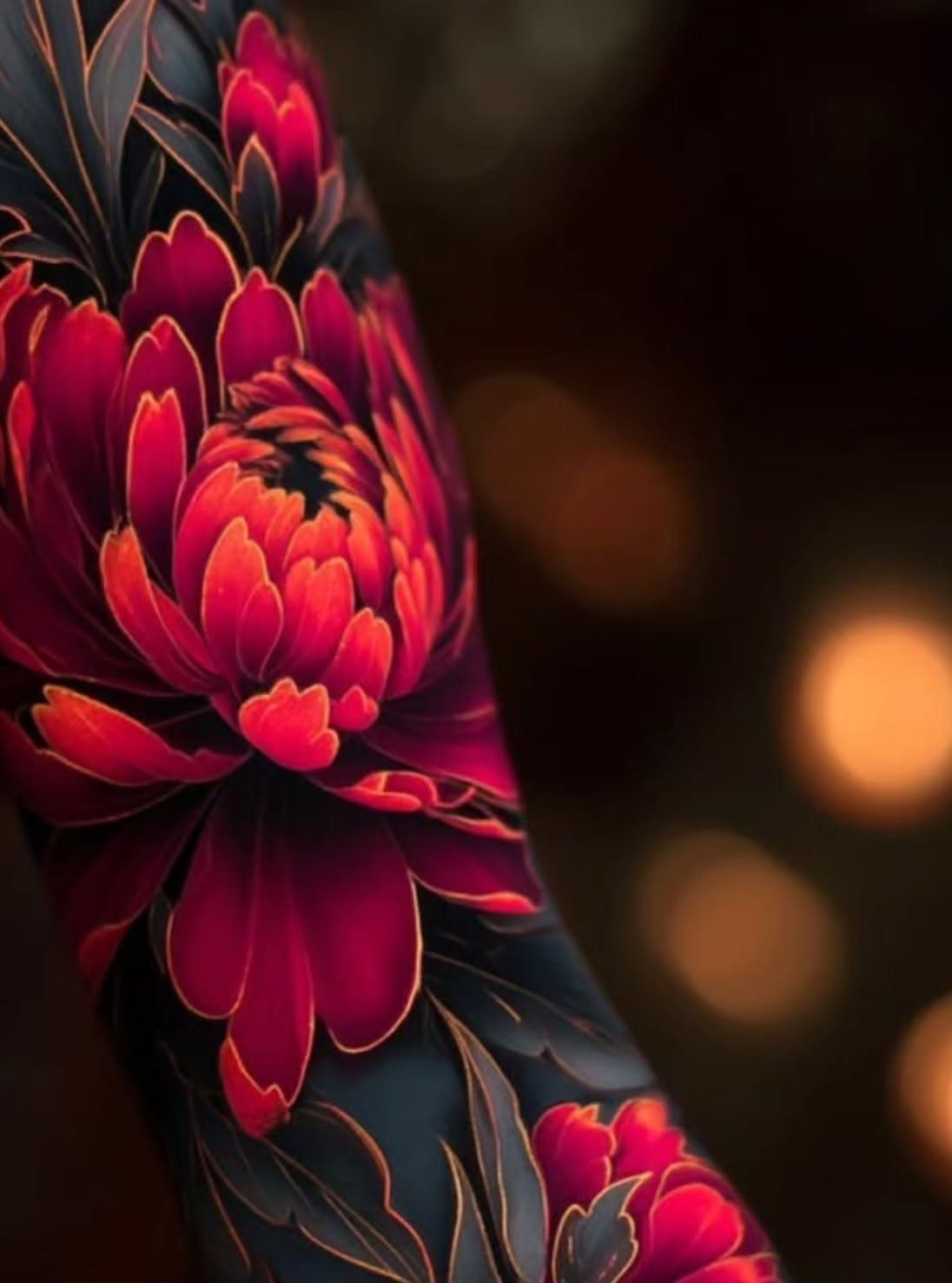
Red and orange flowers over a solid black sleeve turn the black into a backdrop rather than the main focus.
The color here reads brighter than it would on bare skin, and the black keeps the design from bleeding into surrounding ink.
Saturation matters.
Reds and oranges hold up better on black than pastels or yellows, which can fade or muddy over time. Choose saturated hues if you want the color to stay visible years out.
A blackout base simplifies coverups.
If you are blacking out old work, adding color on top gives you a fresh design without the ghost of what was there before. This suits anyone who wants bold color but also likes the weight a blackout brings.
6. Blackout Sleeve Tattoo
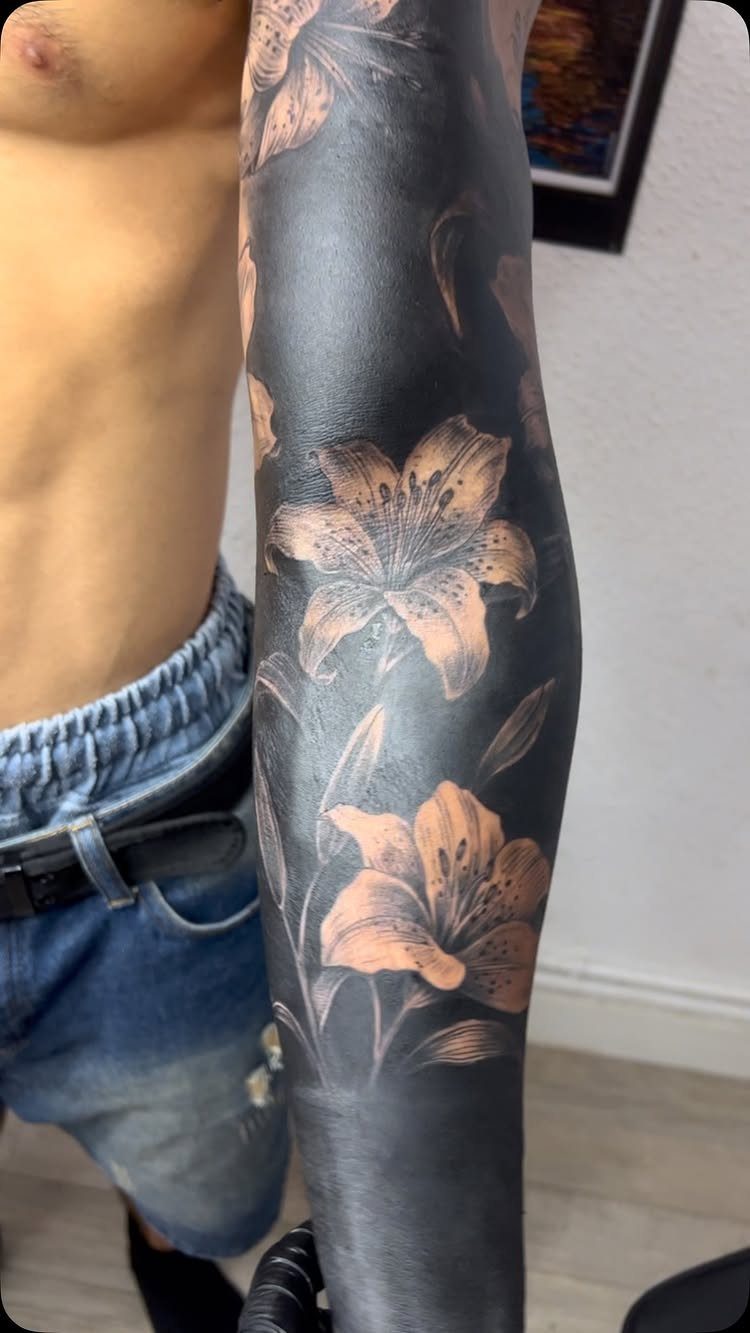
A blackout sleeve runs from shoulder to wrist and covers the arm in one continuous field. Lilies left in lighter ink here break up the black and give the design a focal point without losing the bold coverage.
Sleeves take multiple sessions, and a full blackout adds time since saturation has to be even. Healing one section before starting the next keeps the ink even and reduces blowouts, so plan for several weeks between appointments.
This placement works if you want a statement piece that still leaves your hands and neck clear. Sleeves read strong but stay coverable with long sleeves when you need them to.
7. Hand Placement
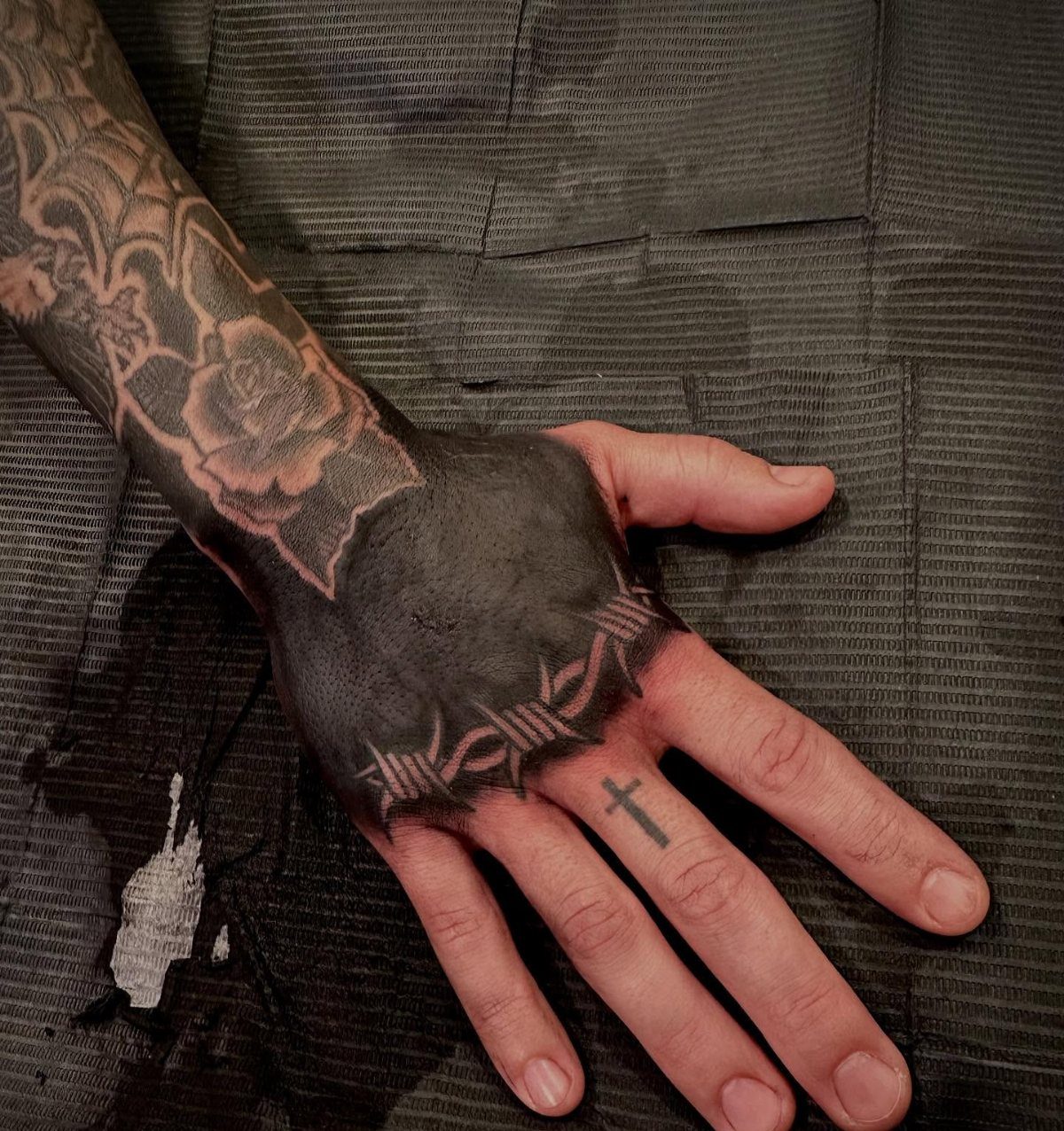
Blacking out a hand puts bold ink where long sleeves cannot hide it. The barbed wire and cross here sit on skin that moves constantly and heals slower than most placements.
Hands fade faster than arms or legs.
The skin flexes with every gesture, and sun exposure is constant unless you wear gloves daily. Plan for touchups every few years if you want the black to stay saturated.
This placement limits some job options and reads strong in every social setting.
If you want ink that announces itself, hands do that. If you need the option to cover up, look elsewhere.
8. Floral Patterns
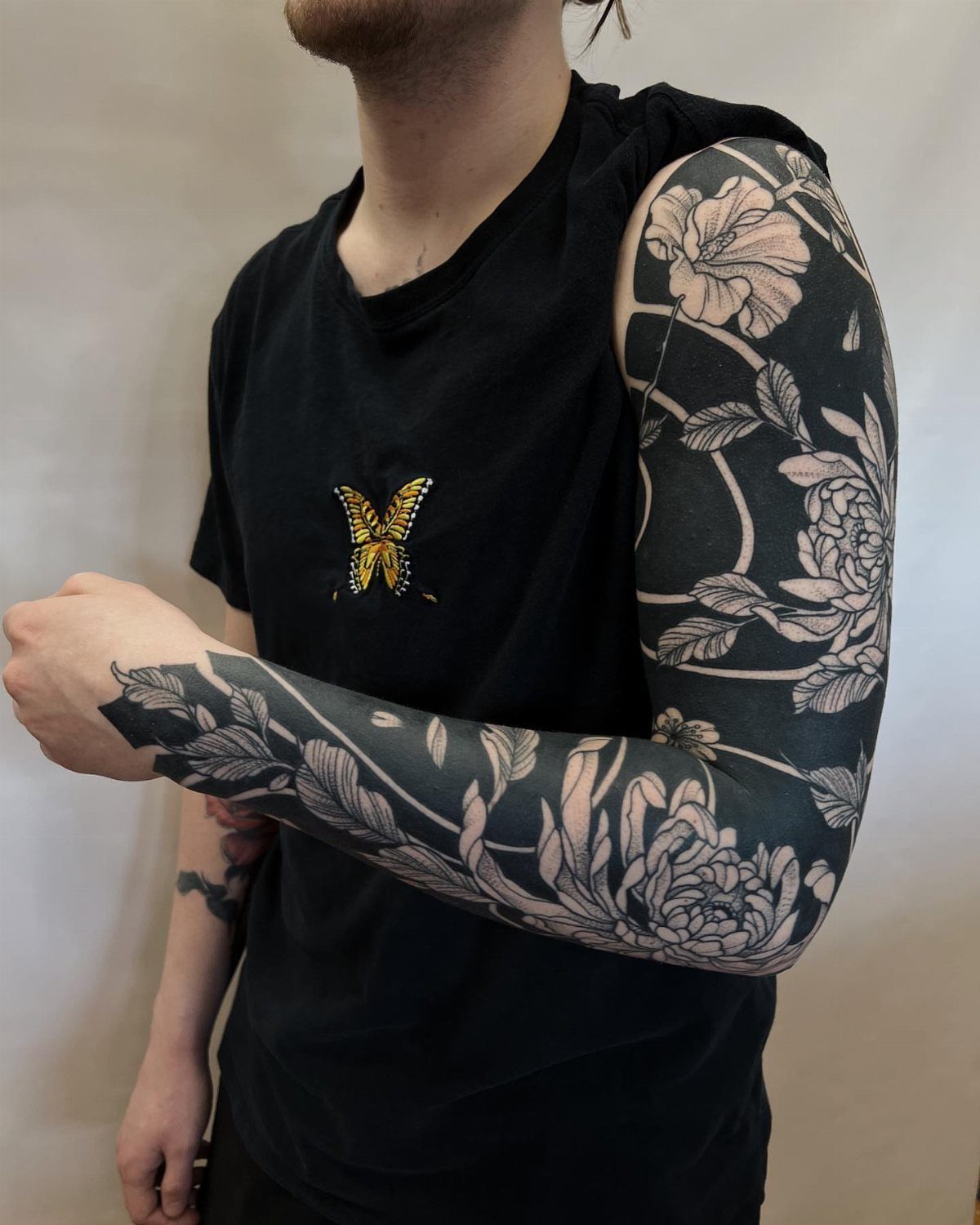
Flowers and leaves held in negative space turn a blackout into something more detailed without softening it.
Negative space floral designs work best when the shapes are large enough to read clearly. Small petals or thin stems can blur as the black spreads during healing, so size the flowers bigger than you would on bare skin.
The flowers stay botanical without feeling delicate, and the black keeps the overall look bold.
9. Skull Tattoos
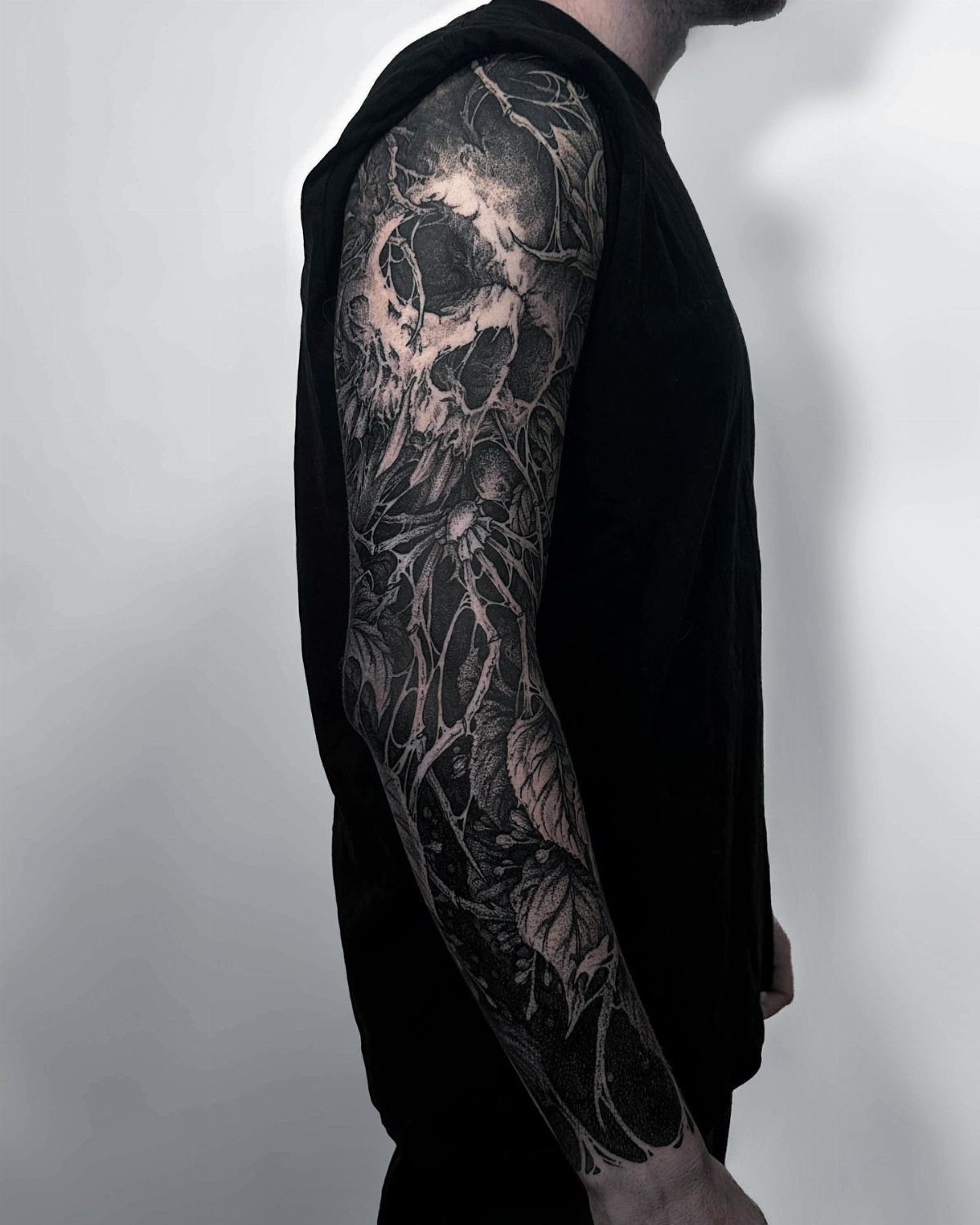
A skull rendered in gray and black tones over a solid blackout background creates depth without breaking the dark field.
The skull here emerges from the black rather than sitting on top of it, and the effect feels layered instead of flat.
Shading a skull over saturated black takes an artist who knows how to layer gray tones so they stay visible as the ink settles.
The contrast is subtle, so expect this to read best up close rather than from across a room.
This works if you want death imagery that integrates with the blackout instead of competing with it.
10. Mandala Tattoos
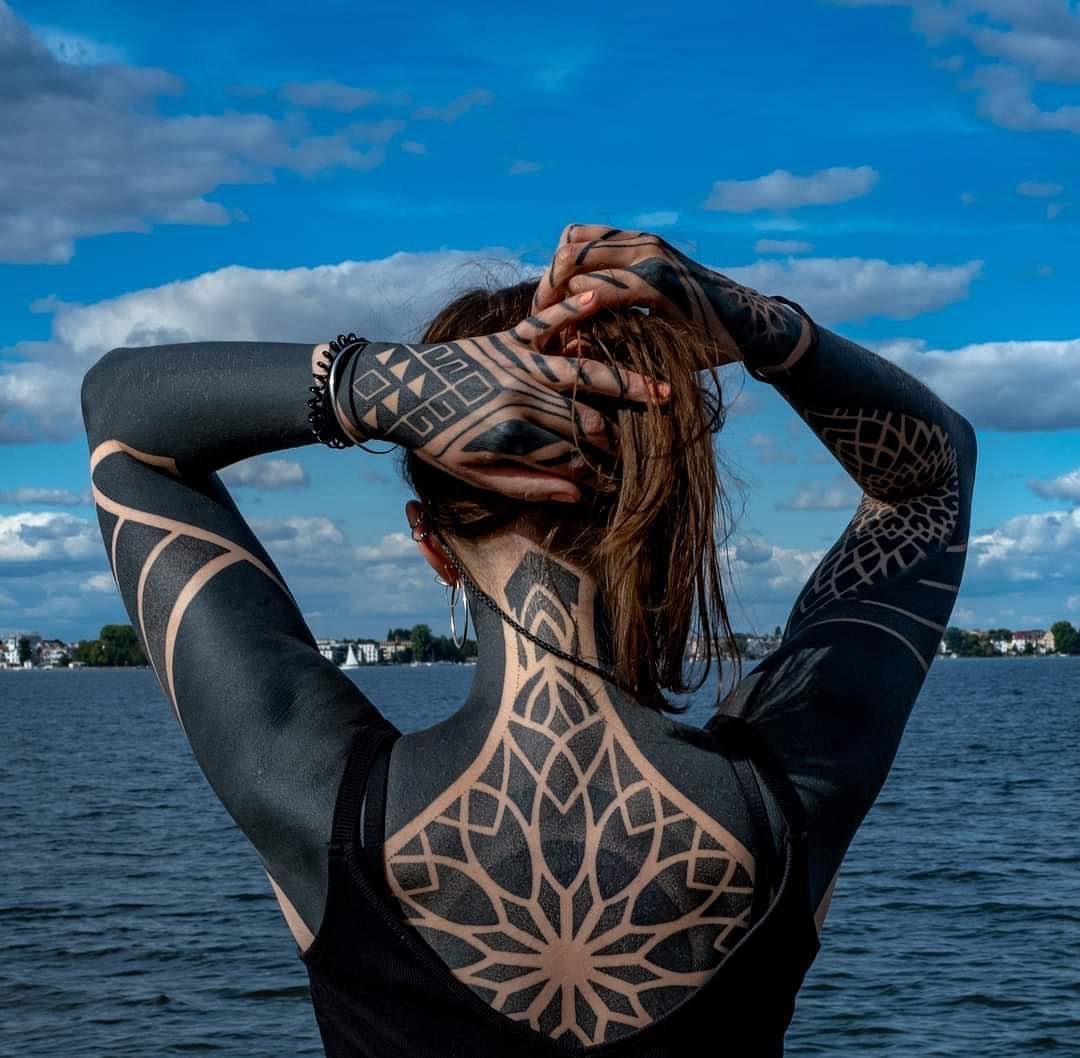
A mandala centered on the back and held in negative space gives structure to a blackout that could otherwise feel shapeless. The symmetry here anchors the design, and the pattern reads clearly even from a distance.
Mandalas suit blackouts because their geometry holds up when the contrast flips. The precision required means this takes longer than a simple solid fill, and any wobble in the lines will show once the black is down.
Back placement keeps this coverable when needed. If you want a blackout with spiritual or meditative weight, a mandala gives you that without adding color or realism.
11. Blackout with Portrait Realism
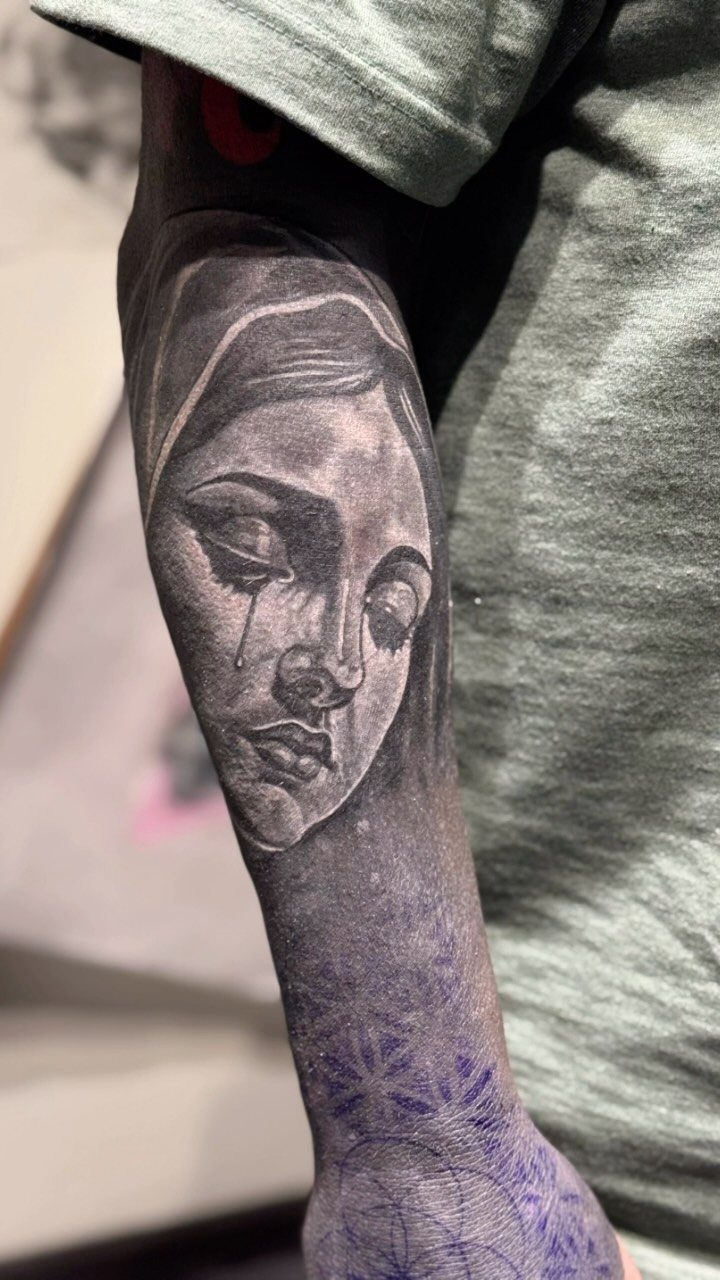
A realistic female portrait framed by solid black ink and geometric shapes splits the focus between fine detail and bold coverage. The woman’s face here stays grayscale while the black and purple patterns anchor it in place.
Portrait realism over or beside a blackout demands an artist who can handle both styles.
The face needs soft shading to look lifelike, while the black has to stay saturated and even. Expect multiple sessions and a higher cost than a blackout alone.
The geometric shapes keep the composition tight.
12. Blackwork Neck and Chest
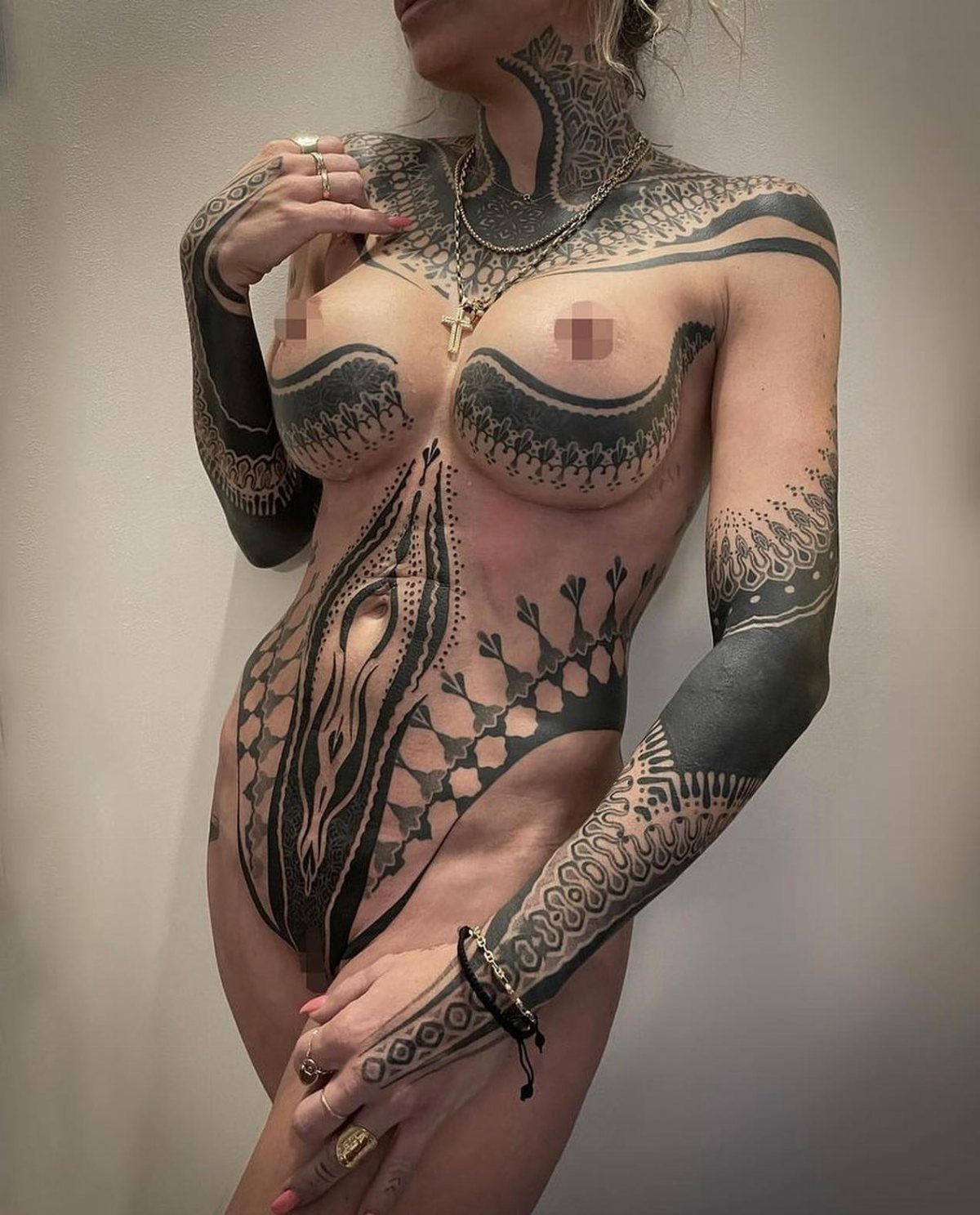
Covering the neck, chest and torso in solid black and ornamental patterns creates one of the most visible and least coverable tattoo placements possible. The geometric work here adds structure without softening the overall boldness.
Neck and chest tattoos hurt more than most placements, and healing takes longer because clothing rubs constantly.
This placement works only if you are certain about the commitment. Jobs, family reactions and public attention all shift when your tattoos reach your neck.
13. Full Blackout Leg
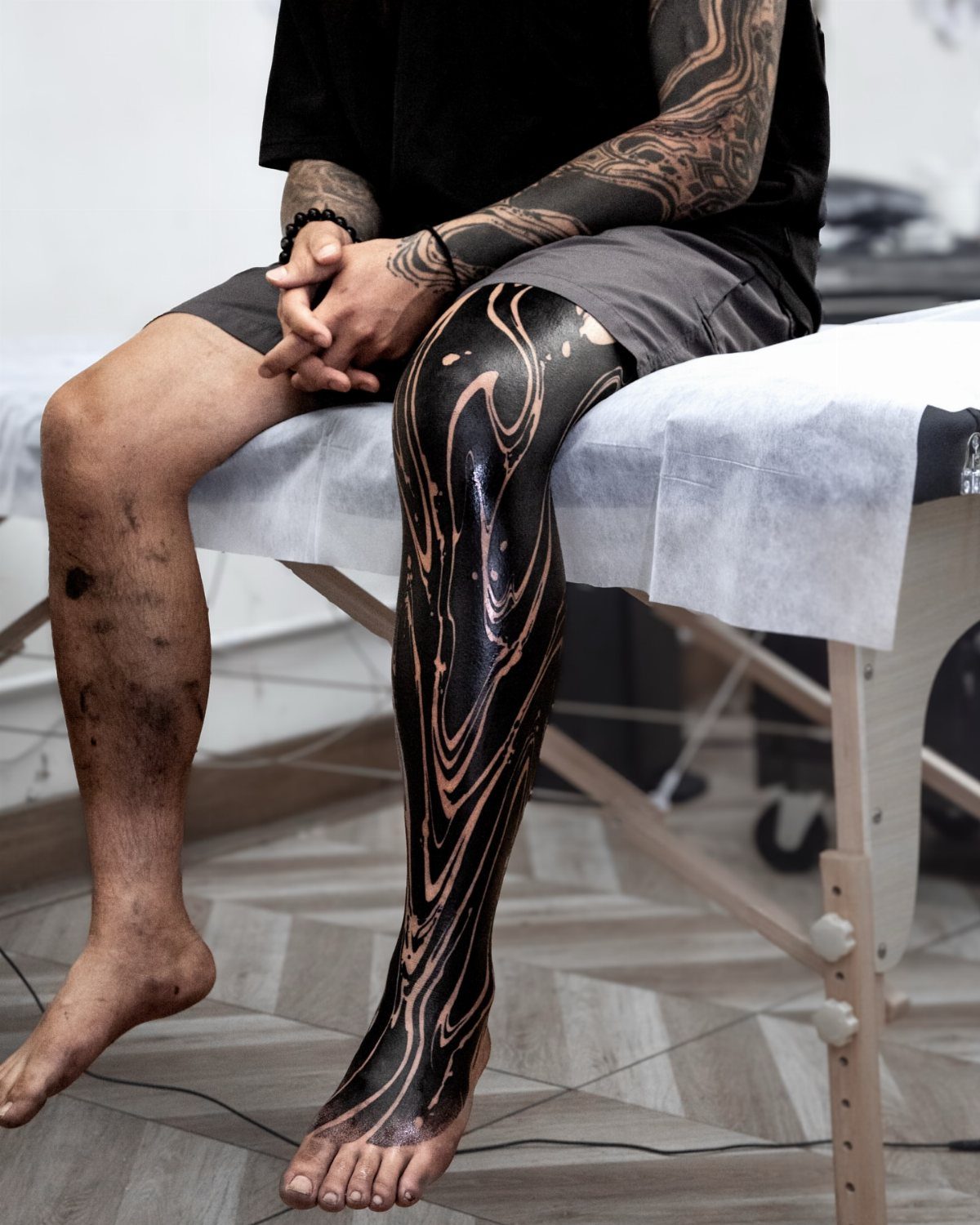
Blacking out the entire leg from thigh to ankle gives you one uninterrupted dark surface. The swirling organic texture here keeps the finish from reading flat, but the overall effect is still bold and simple.
Legs offer a broader canvas, which lets artists work faster in each session even though the total timeline stretches longer than a sleeve.
Healing is easier than hands or neck since fabric contact is minimal and you can keep the area elevated.
Coverage this large costs what you expect, and once it is down, there is no room left to add detail. This works if you want maximum impact with minimum pattern.
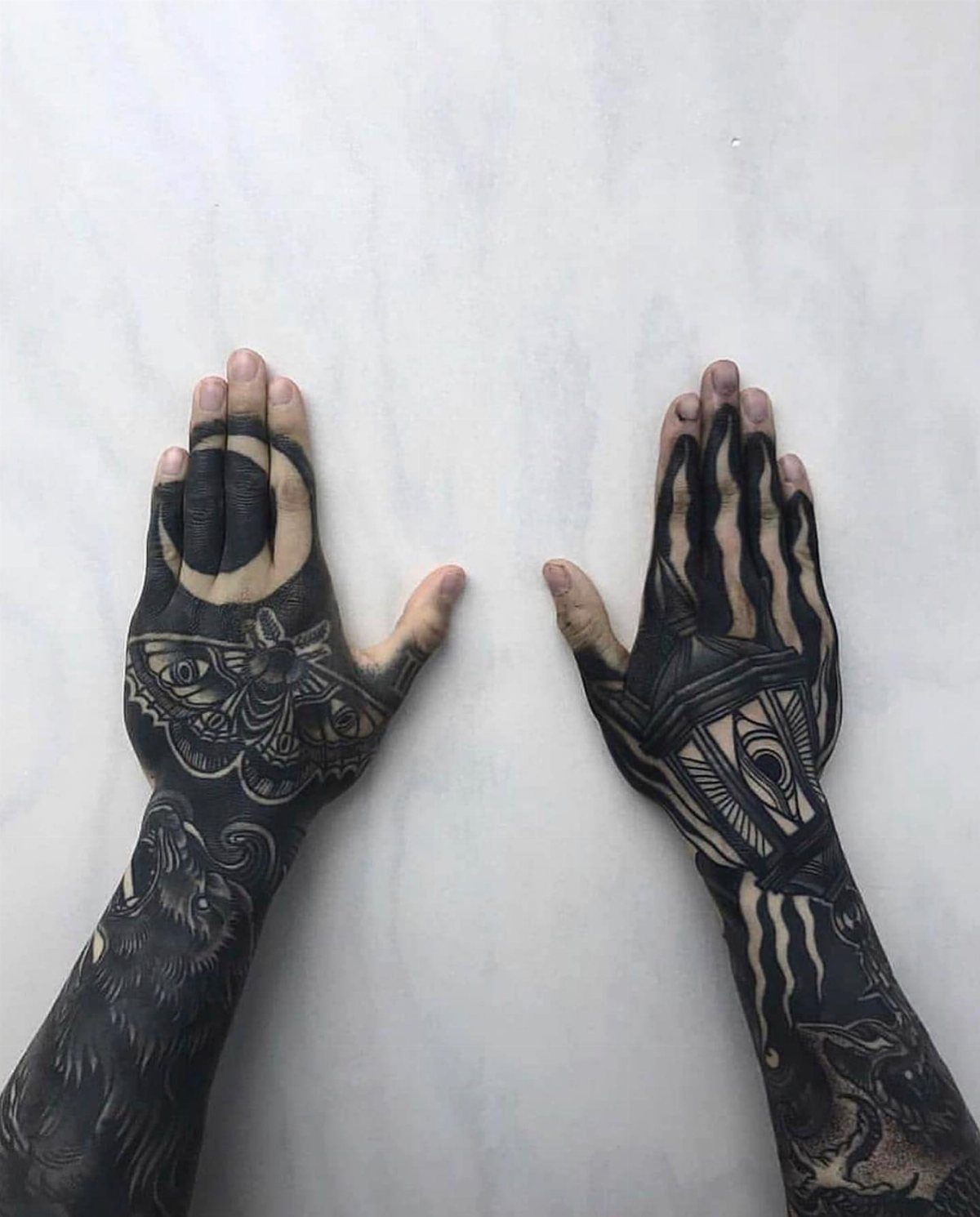
14. Claw Gradient Hand Blackout
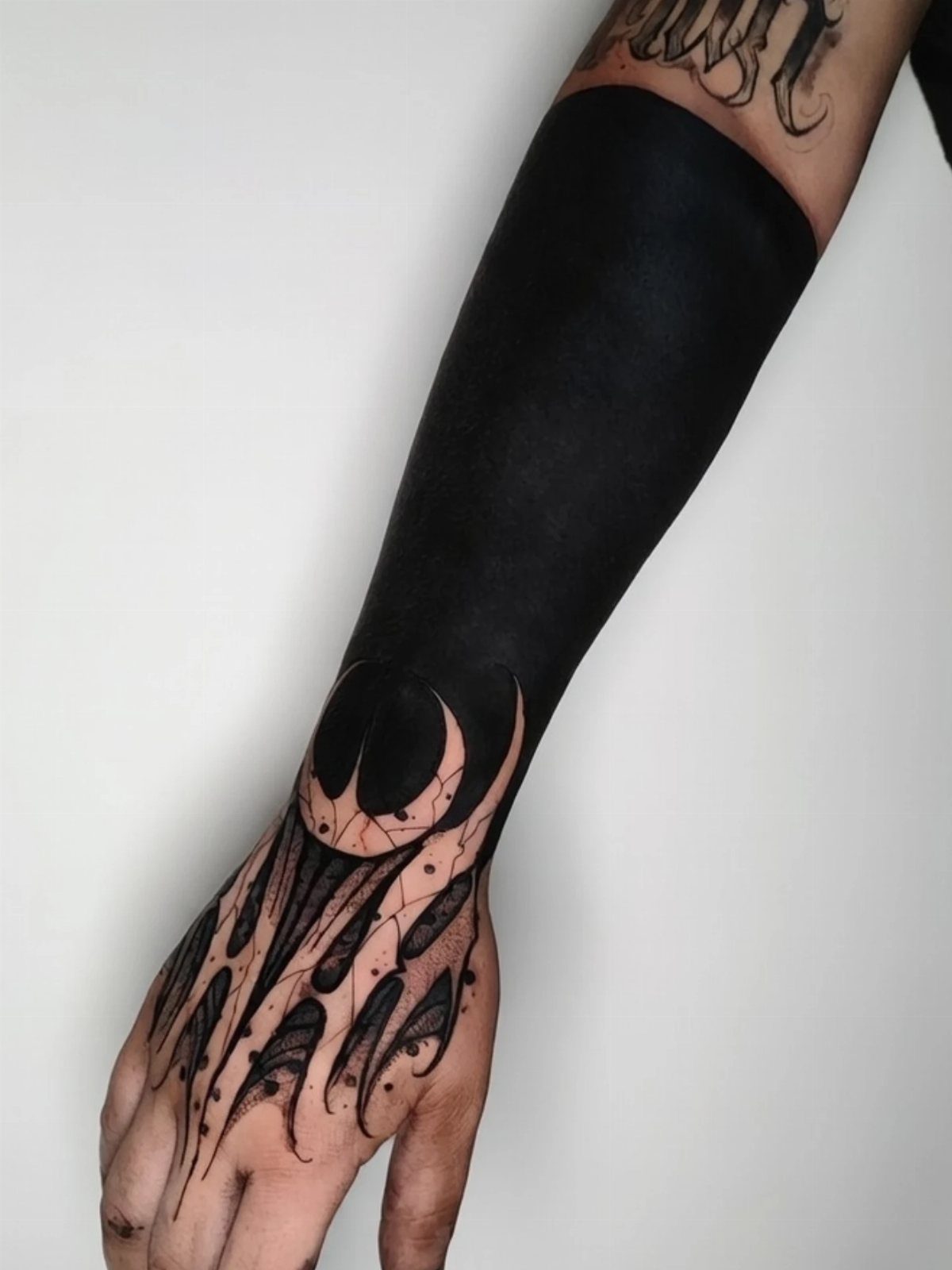
Starting with a solid black forearm and letting it break into claw-like lines across the hand avoids the harsh stop a full blackout usually creates.
The gradient here feels deliberate rather than unfinished, and the organic shapes keep the transition smooth.
The claw design works because it follows the natural movement of the hand. Fingers already taper, so extending black lines along them reads as an extension of the body rather than something applied on top.
This suits anyone who wants a blackout forearm but needs their hand less saturated for work or visibility. The softer fade still reads bold without committing to full hand coverage.
15. Solid Blackout Neck Tattoo
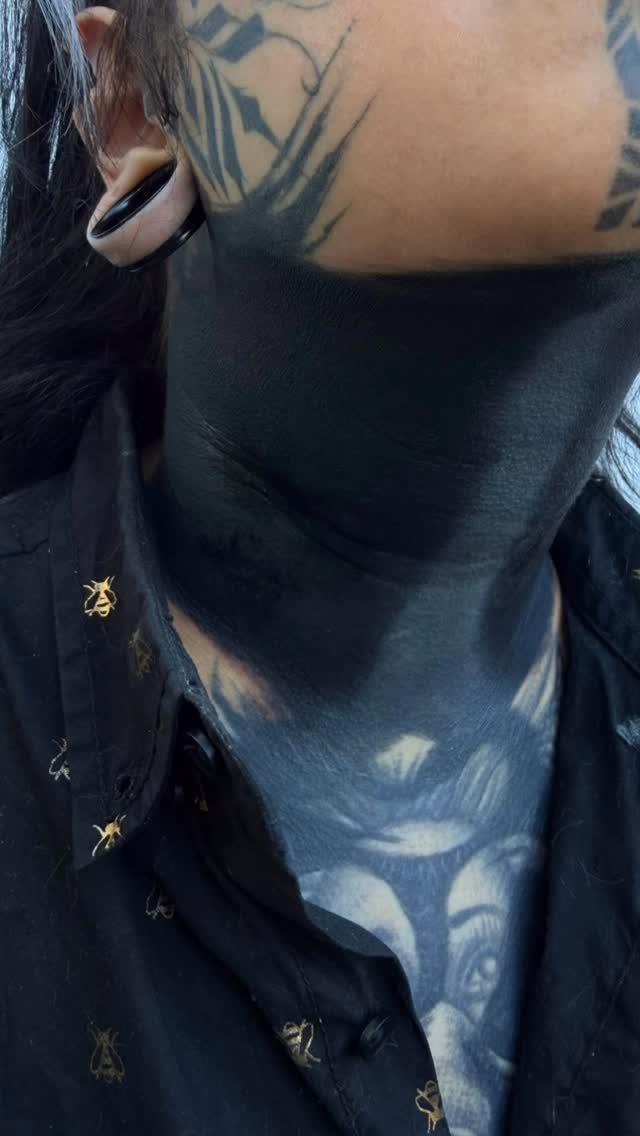
Covering the throat in solid black ink is one of the most visible placements you can choose. The tattoo here wraps the entire neck up to the jawline, and nothing hides it short of a turtleneck or scarf.
Throat tattoos hurt more than most neck placements because the skin is thin and sits directly over cartilage and muscle.
Swelling during healing makes swallowing uncomfortable for a few days, and you will need to sleep propped up to reduce it.
This placement works only if you are past worrying about how strangers or employers will react. If you want bold and you want it seen, this does both.
16. Biomechanical Blackout Hand Tattoo
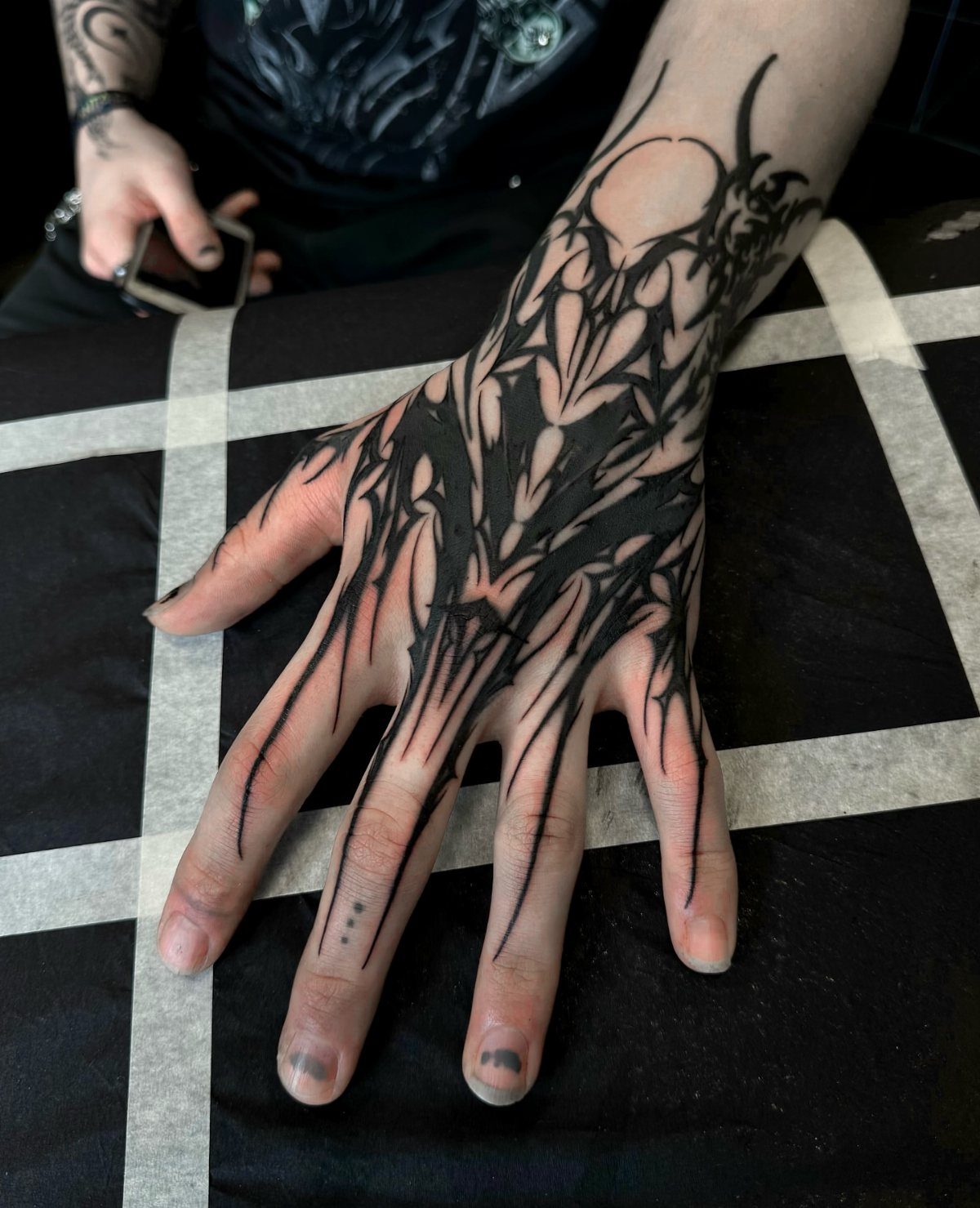
Sharp, biomechanical shapes laid in black ink across the hand and wrist create the look of exposed machinery under the skin. The angular forms here follow the bone structure, so the design feels integrated rather than decorative.
Biomechanical blackouts take longer than solid fills because each piece has to be shaped and shaded to look three-dimensional. The detail shows best on hands because the skin is tight and the shapes move with your tendons when you flex.
This works if you want a blackout that reads technical instead of ornamental. The intricate shapes give you something to look at without breaking the overall dark field.
17. Geometric Patterned Blackout Forearm
Layering geometric shapes, crescents and an eye motif over heavy blackout ink turns the forearm into a patterned surface instead of a solid one.
The symbols here break up the black without softening it, and each shape stays legible against the dark background.
Geometric patterns over blackouts require precision.
Lines have to stay straight and spacing has to be even, so choose an artist who works clean. Any wobble will show once the black is fully healed.
The eye and crescent add meaning without requiring color or realism, and the overall look stays bold.
Cultural Context Importance
Blacking out large areas of skin carries associations that reach beyond aesthetics.
In the United States, blackout tattoos can evoke blackface, a racist theatrical practice from the late 19th and early 20th centuries where non-Black performers darkened their skin to mock people of color.
In African, South Asian, and Polynesian communities, similar solid ink traditions marked rites of passage or indicated social status. When someone outside those contexts gets a blackout tattoo for style alone, it can read as appropriation.
Interpretation varies by placement, design, and individual perspective. Not everyone will see offense, but people of color still face daily discrimination based on skin tone, and that history shapes how the tattoo lands.
If you are considering a blackout, know what it references and be ready for the questions it will raise.
Tattoo Aftercare Tips
The top layer of skin closes in 2 to 3 weeks, but full healing below the surface takes up to 6 months.
Wash the area twice daily with unscented antibacterial soap and lukewarm water. After washing, apply a post-tattoo lotion to calm inflammation and keep the skin from drying out.
Itching will be worse than a standard tattoo because the ink sits denser and covers more ground. Do not scratch.
Large blackouts also hide changes in skin color or texture that might signal a health issue, so keep up with yearly checkups. Follow whatever aftercare instructions your artist gives you.
Frequently Asked Questions
What do blackout tattoos look like?
You see continuous black ink filling an entire area of the body, no gradients or breaks in tone.
The finish reads as one continuous dark field, sometimes with designs held in negative space or layered on top in white or color. The black sits dense enough that the skin underneath disappears completely.
How much is a blacked out tattoo?
Cost scales with coverage.
A blackout sleeve takes multiple sessions and runs several thousand dollars, while full body coverage splits across dozens of appointments over months or years and costs accordingly. Large areas require more ink, more time, and more touchups than standard tattoos.
Does blacking out tattoos hurt?
Yes, and placement decides how much.
The throat especially sits high on the pain scale since there’s almost nothing between needle and cartilage. Hands fade faster and heal slower because the skin flexes constantly, but pain during the session stays moderate compared to bonier placements.