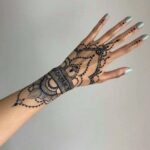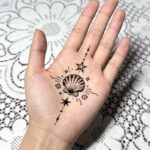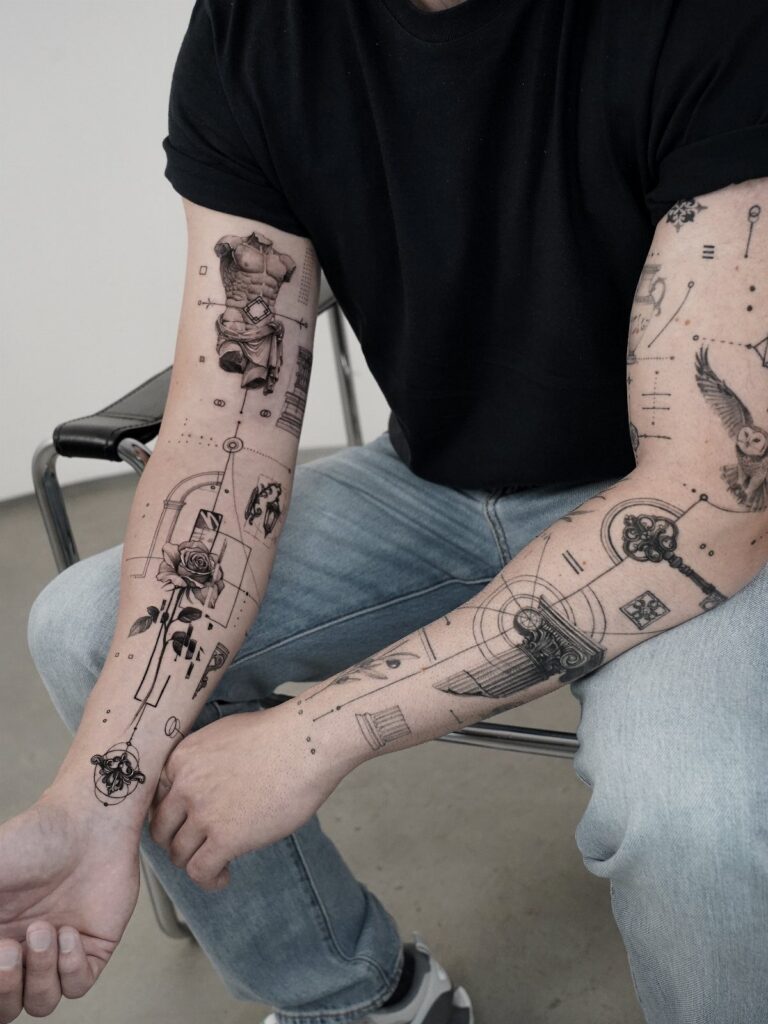
A sleeve stencil can cover just the forearm or bicep in a tribal half sleeve finished across 1 or 2 sessions, or it can map a full arm design from shoulder to wrist that takes months to complete.
For flexibility to add pieces over time without a master plan locked in, patchwork placement lets each tattoo sit independently while the collection grows.
Black line work moves faster and costs less than full-color realism, though portrait sleeves with veiled figures and detailed fabric folds still demand multiple sessions because shading at that level cannot be rushed.
1. Stencil Style Tattoo Sleeve
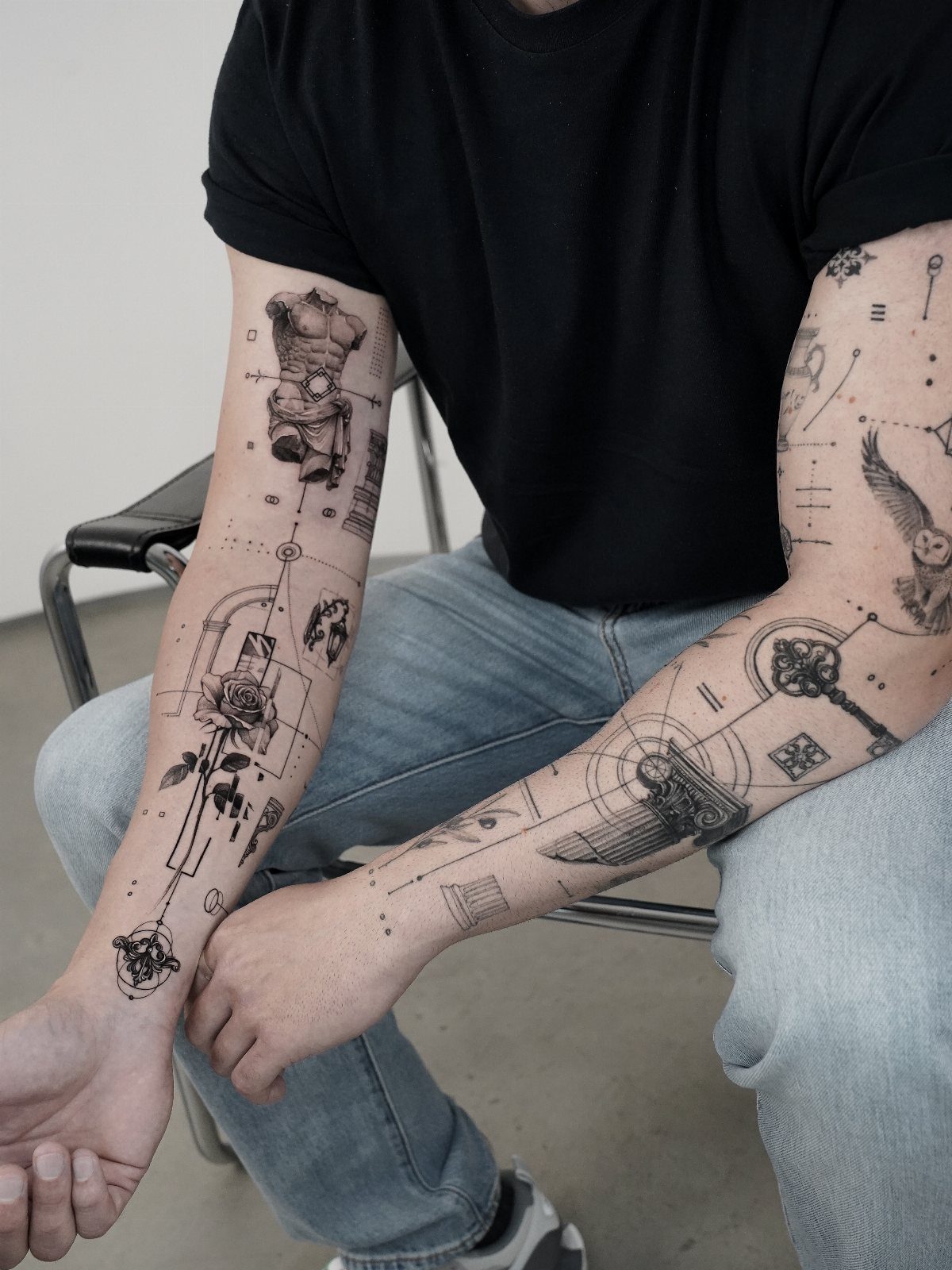
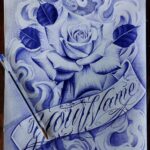
A sleeve built entirely in black line work, where geometric shapes, classical figures or text fill the arm from shoulder to wrist without solid color or shading.
The stencil stays visible in the final tattoo through sharp outlines and repeating patterns.
This approach keeps cost lower than full-color sleeves because each session moves faster, and touch-ups are simpler when a line fades. Black ink also holds its clarity longer on most skin tones.
This style lets you add pieces over time and spread sessions across months without committing to a full design up front. Each section reads on its own while building toward a complete arm.
2. Tribal Half Sleeve Tattoo Stencils
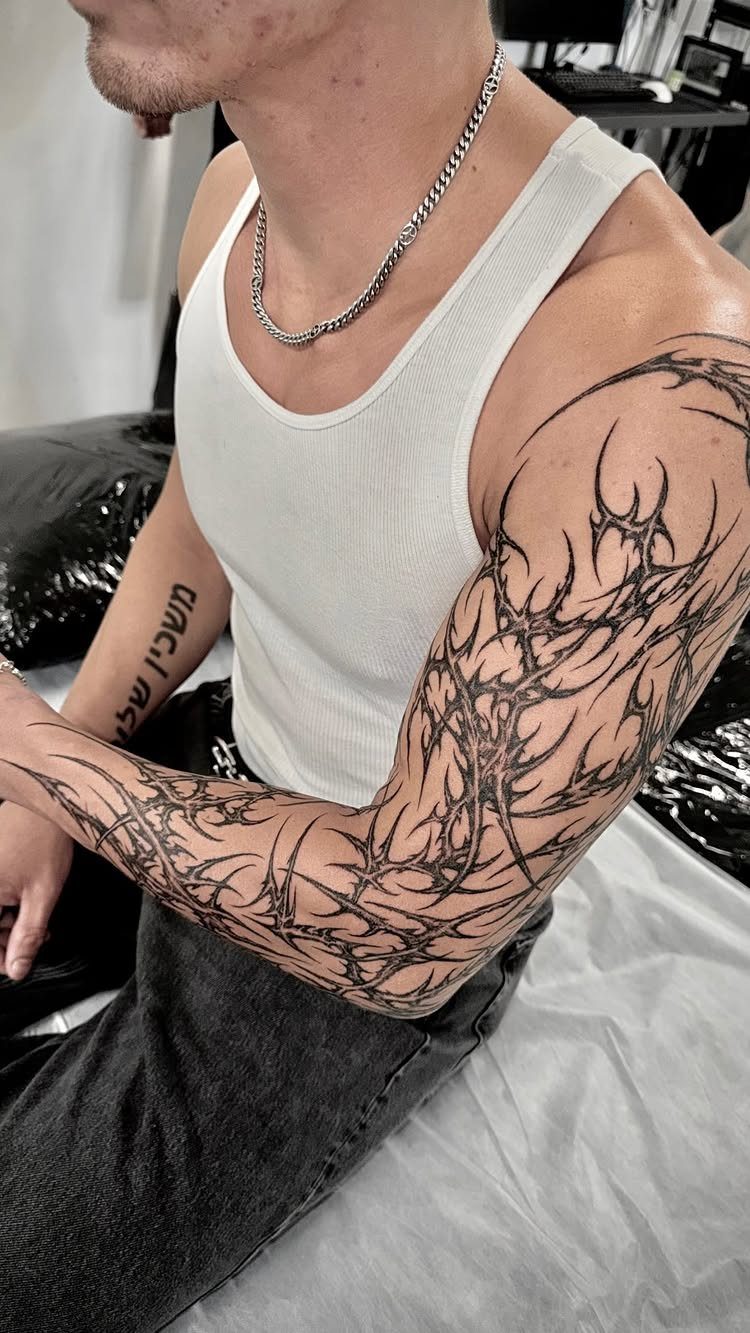
Tribal designs sized to cover from shoulder to a point between the elbow and wrist. The motifs use bold black shapes with sharp edges, flowing around the muscle without filling the forearm.
Artists often base these on Polynesian, Maori or Native American patterns, though many modern versions simplify the line work. Expect solid fills and negative space rather than gradient shading.
A half sleeve usually needs 1 or 2 sessions, depending on detail. Pain stays moderate on the outer arm and increases closer to the elbow and inner bicep.
This placement works well if your job limits visible tattoos, since a long sleeve covers it completely.
3. Animal Tattoo Stencils
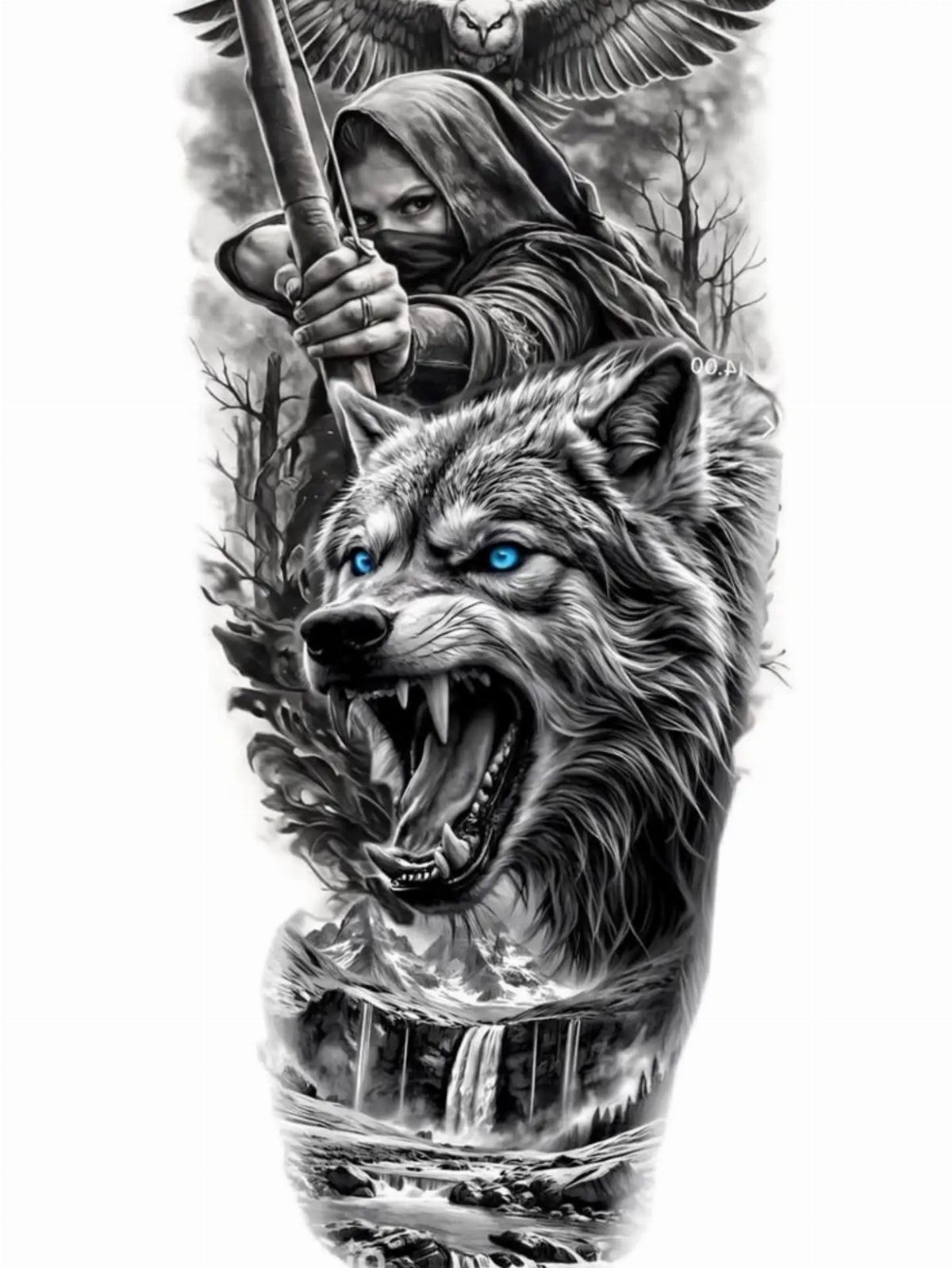
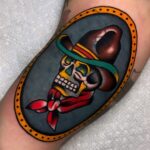
Animals become the central figures in a sleeve, often paired with landscape elements like trees, water or mountains. Wolves, owls, bears and big cats are common choices because their features scale well across the arm.
Realism and illustrative styles both work here. Realism demands more shading and longer sessions, while illustrative linework keeps the design bolder and faster to apply.
Stacking multiple animals vertically along the arm usually reads better than scattering them. A single large animal wrapped around the bicep or forearm gives the most impact without competing imagery.
Blue or amber eyes stand out in an otherwise black and grey sleeve, though adding color increases both time and cost.
4. Floral Tattoo Stencils
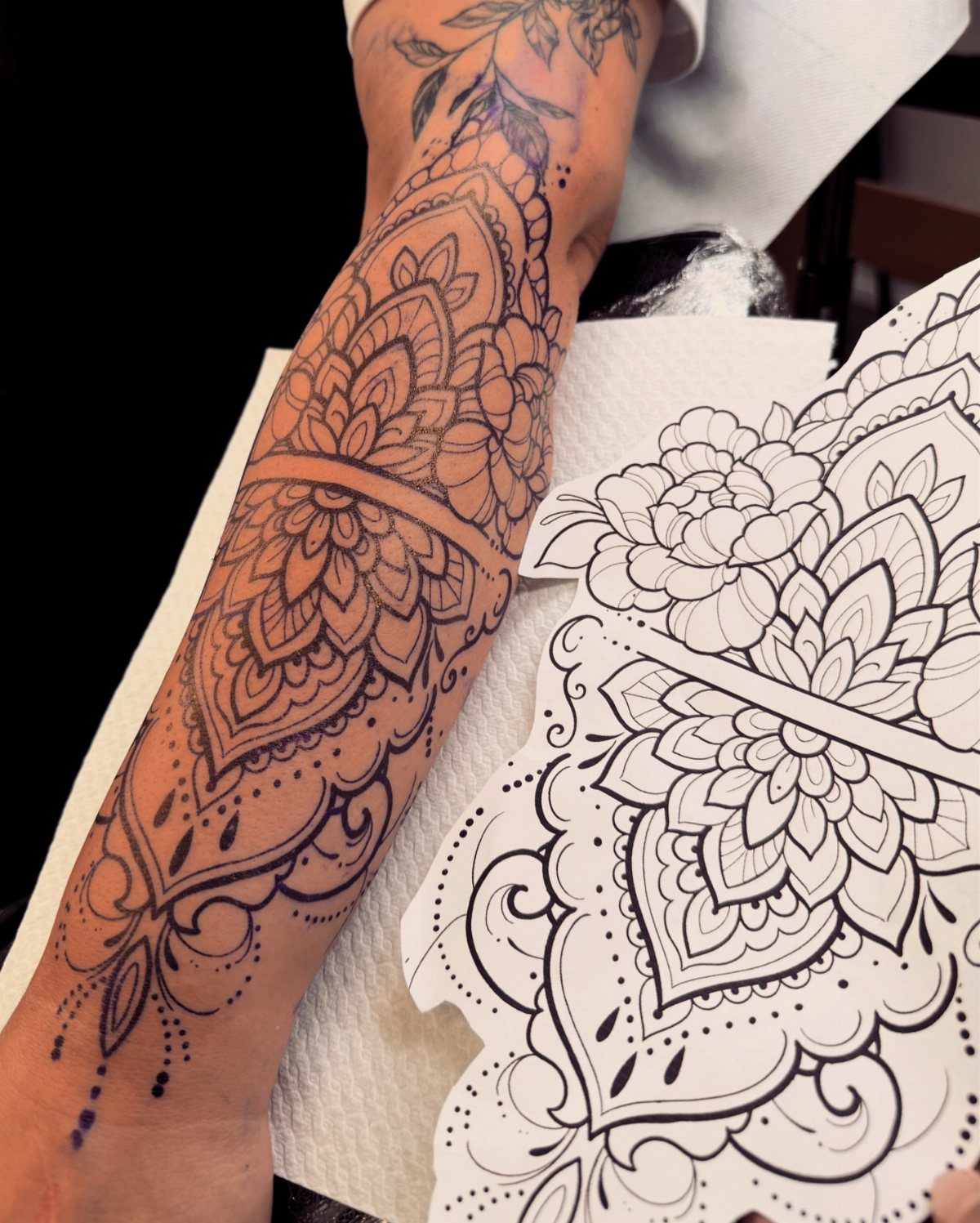
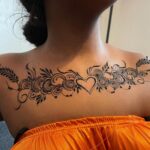
Flowers arranged in repeating patterns or mandalas, sized to wrap the forearm or full arm. Roses, peonies, lotus and cherry blossoms are the most requested because their petal shapes fill space smoothly.
Artists apply the transfer, check alignment, then adjust before starting.
Floral sleeves take well to both black line work and color. Color requires more frequent touch-ups as petals fade unevenly over time.
Placement matters: flowers across the shoulder and upper arm hurt less than dense coverage near the wrist and elbow, where bone sits close to skin.
5. Christian Symbols Tattoo Stencils
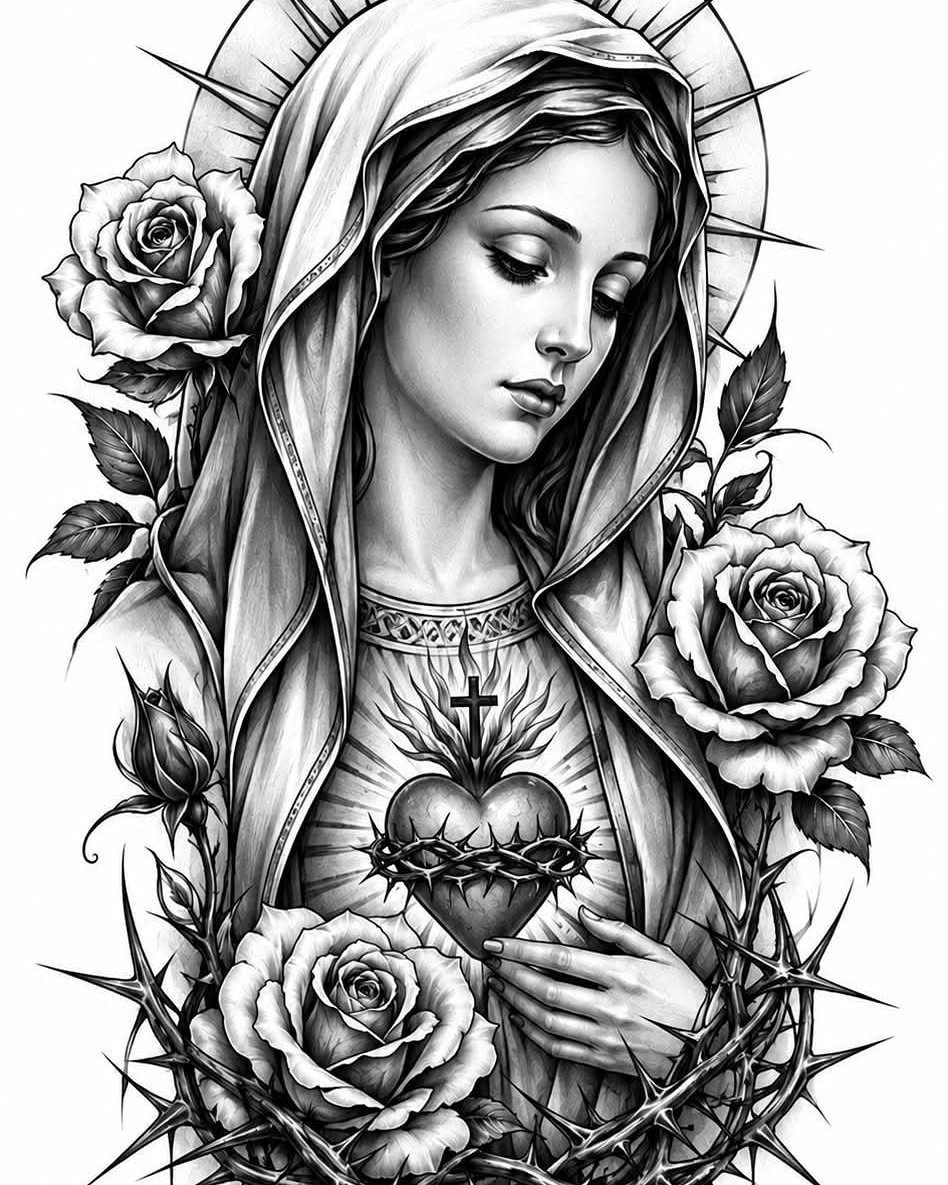
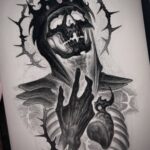
Religious imagery built around the Virgin Mary, the Sacred Heart, crosses or rosary beads. Roses and thorns often frame the central figure, adding detail without requiring a second subject.
These designs suit black and grey ink best because shading gives depth to robes, halos and facial features. Color sometimes appears in the heart or roses, though most artists keep it minimal.
A full sleeve with this level of detail takes multiple sessions. Fine line work on faces and hands demands an artist experienced in portraiture, since small mistakes show clearly.
Custom elements like specific scripture or family names woven into the design will raise the cost.
6. Patchwork Sleeve Stencil Placement
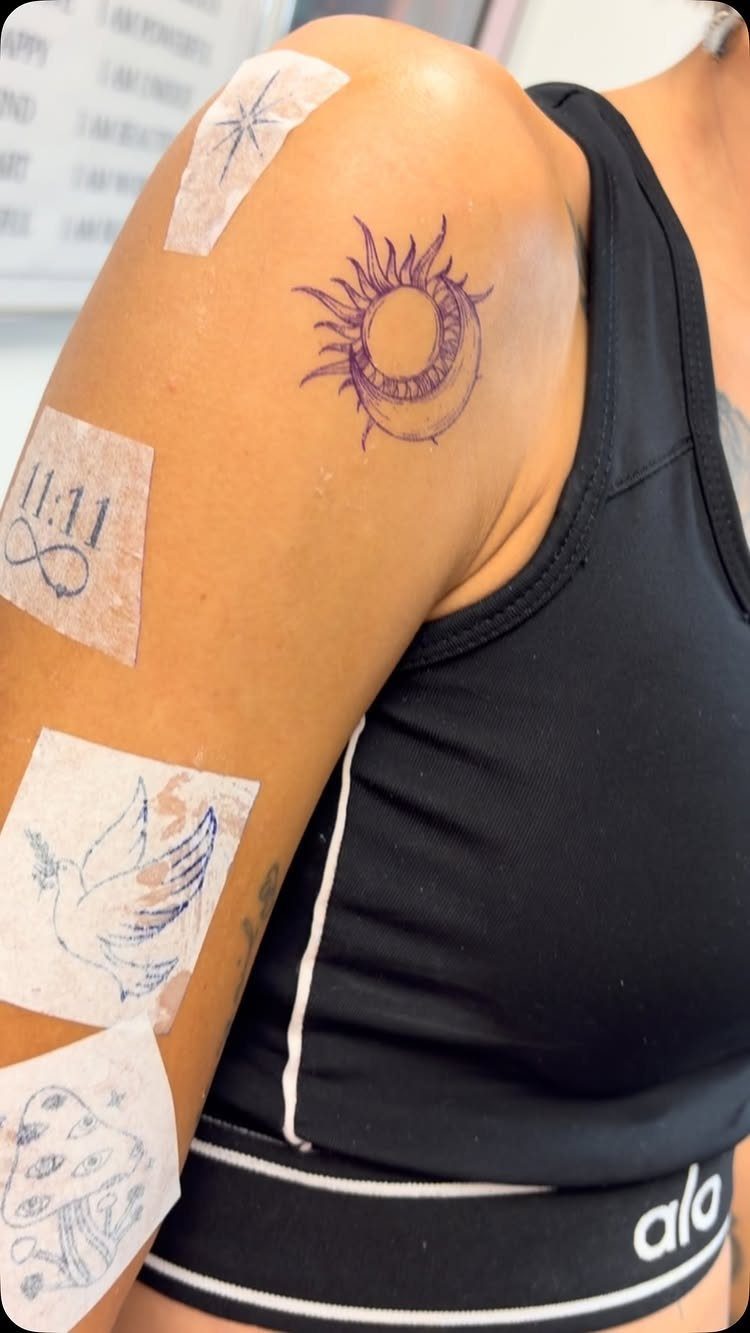
Instead of planning a full sleeve at once, individual stencils get placed across the arm one at a time, leaving space between each piece.
Purple transfer ink marks where each tattoo will go before the artist commits to black. This lets you test spacing and move designs if something feels off.
Patchwork grows naturally over months or years. You can add to the collection whenever you like without needing a master plan.
This style suits people who prefer collecting smaller tattoos rather than committing to one large concept up front.
7. Veiled Woman Portrait Sleeve Stencil
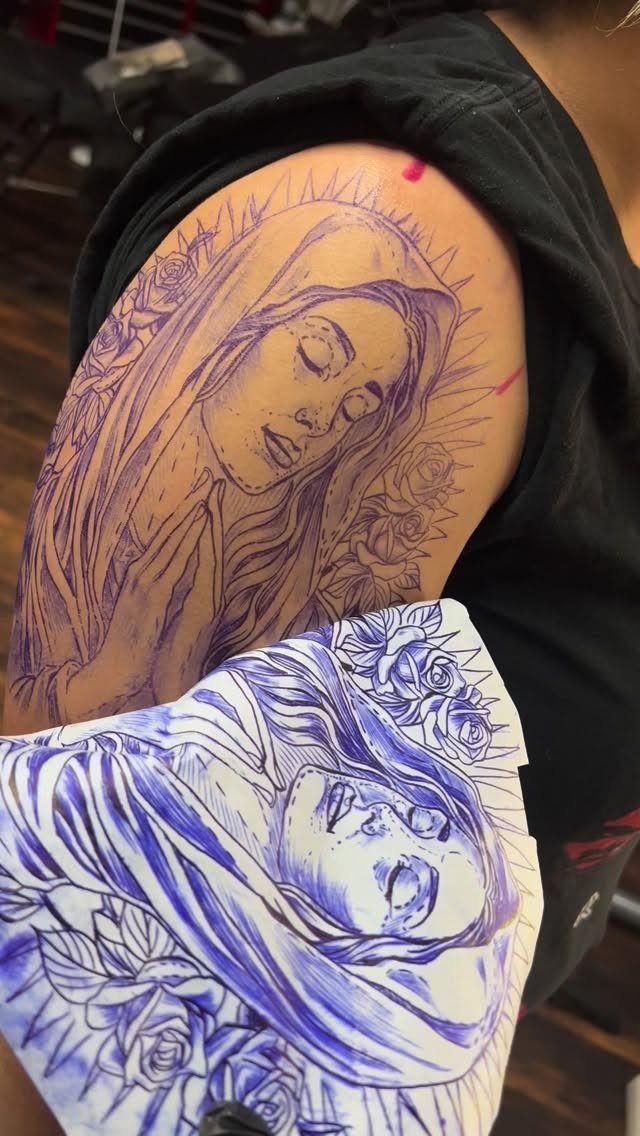
A veiled woman with roses wrapped around the bicep and shoulder, captured here at the transfer stage before the needle starts.
The purple stencil ink shows exact placement and lets you adjust position if the design sits too high or low on the muscle.
Portrait sleeves demand an artist who works in realism, since facial proportions and fabric folds show mistakes clearly. Shading takes longer than bold linework, so budget for multiple sessions if the design continues past the shoulder.
The veil adds dimension without requiring color. Most artists keep these pieces in black and grey because skin tone variations affect how lighter ink settles.
8. Japanese Dragon Sleeve Stencil Design
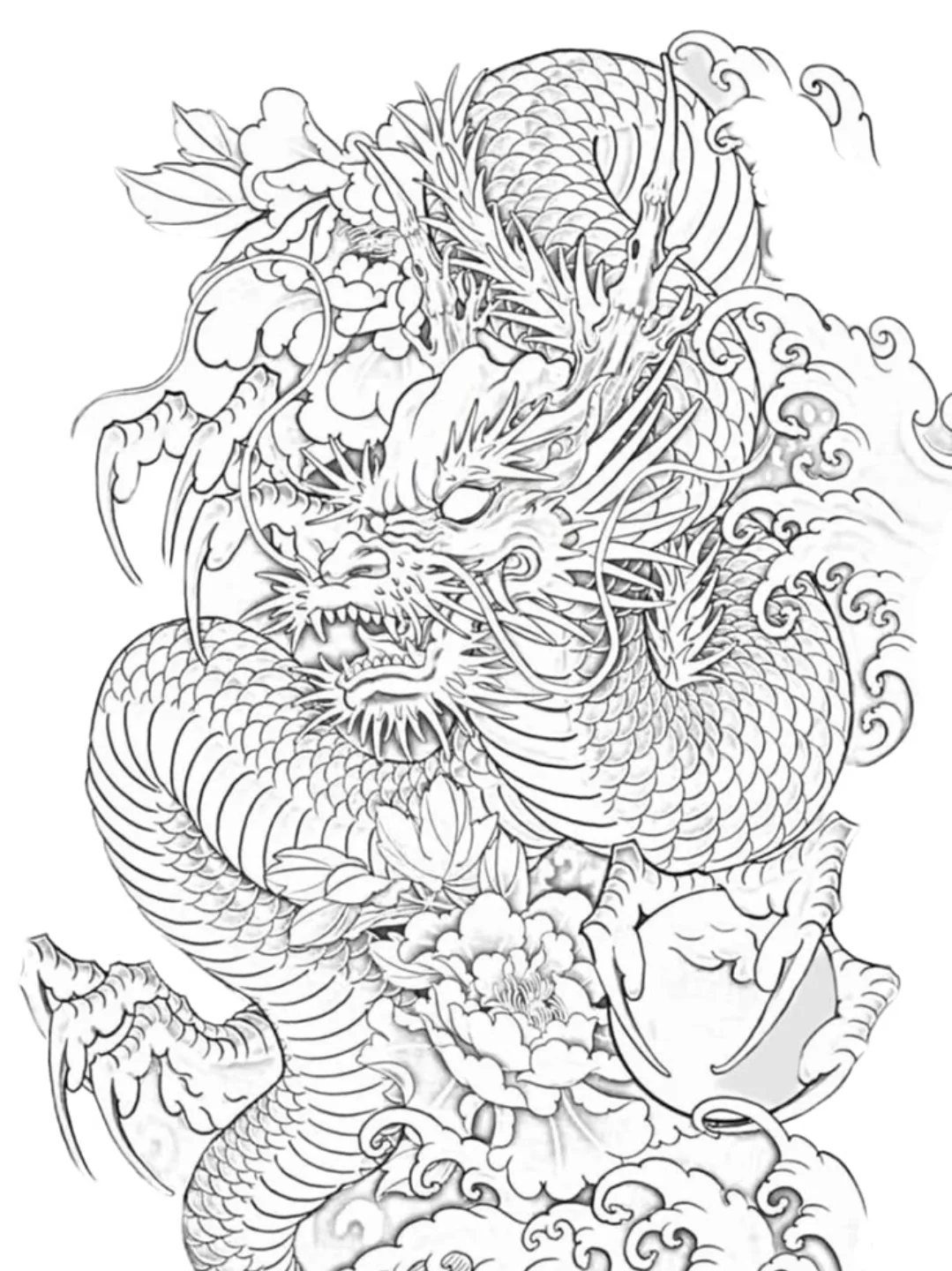
A Japanese dragon stencil that flows vertically through clouds and blossoms, designed to follow the natural line of the arm. Line art keeps the design readable at full sleeve scale without requiring heavy shading in the first session.
Dragons in this style typically start at the shoulder and coil down to the wrist, with the head placed where the muscle gives the most dimension. Clouds and flowers fill gaps between the body segments.
Black line work goes in first. Color can be added later, though traditional Japanese designs often stay in black and grey with minimal red accents.
Frequently Asked Questions
What do you use for tattoo stencils?
Thermal stencil transfer paper works for most sleeve designs. Artists apply the transfer with stencil fluid, which leaves purple ink on the skin to mark every line before the needle starts.
What are some good themes for sleeve tattoos for men?
Animals, tribal patterns, religious symbols and floral arrangements are the most common sleeve themes because they scale well across the full arm.
Geometric line work and patchwork collections also suit men who want bold designs without heavy shading. Pick a theme based on what reads clearly at arm length and fits the natural shape of your muscle.
How to choose a sleeve tattoo design?
Start by deciding whether you want a single large concept or a patchwork collection you can build over time.
Animals and portraits demand an artist skilled in realism, while tribal and geometric styles work with bold line work and fewer sessions.
Black ink costs less and ages better than full color, so save color for small accents unless you’re ready for frequent touch-ups.