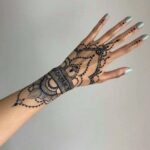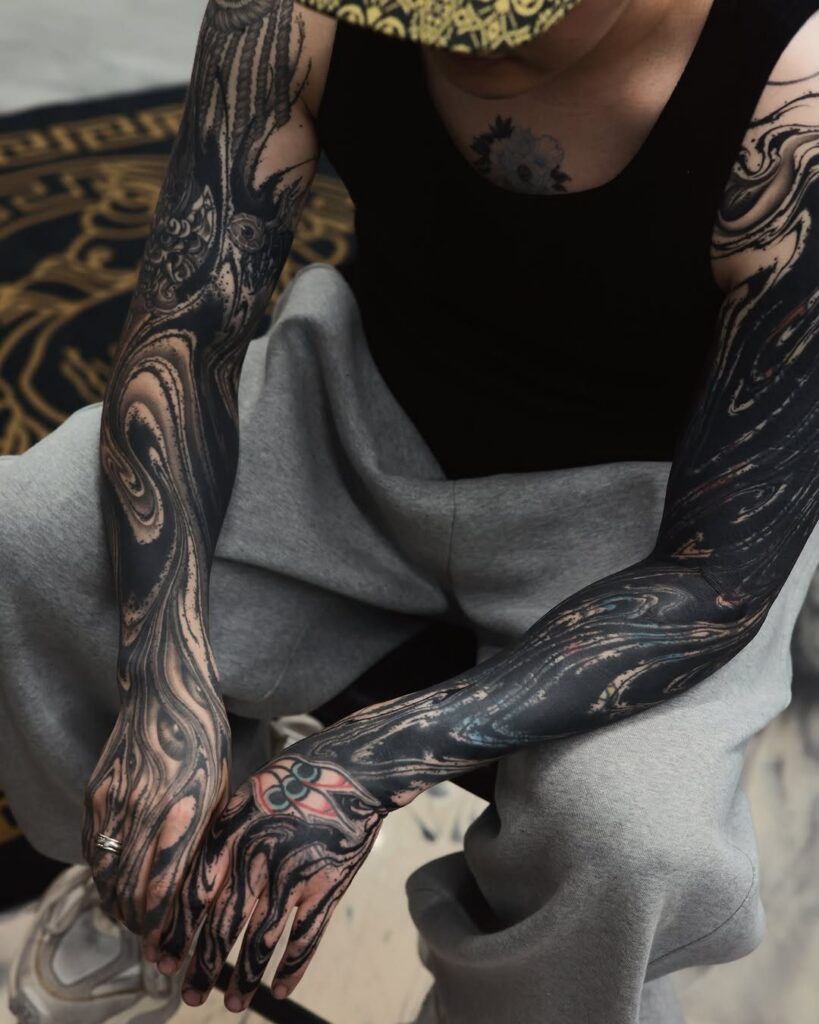
How dark your old tattoo sits decides whether you need solid blackwork, a few laser sessions to lighten it, or a layered design that works coverage into the composition.
Blackwork, dark art and Japanese masks can bury old ink under heavy shading in one session, while red outline florals need the original piece faded to light grey first.
1. Blackwork Forearm Cover Up
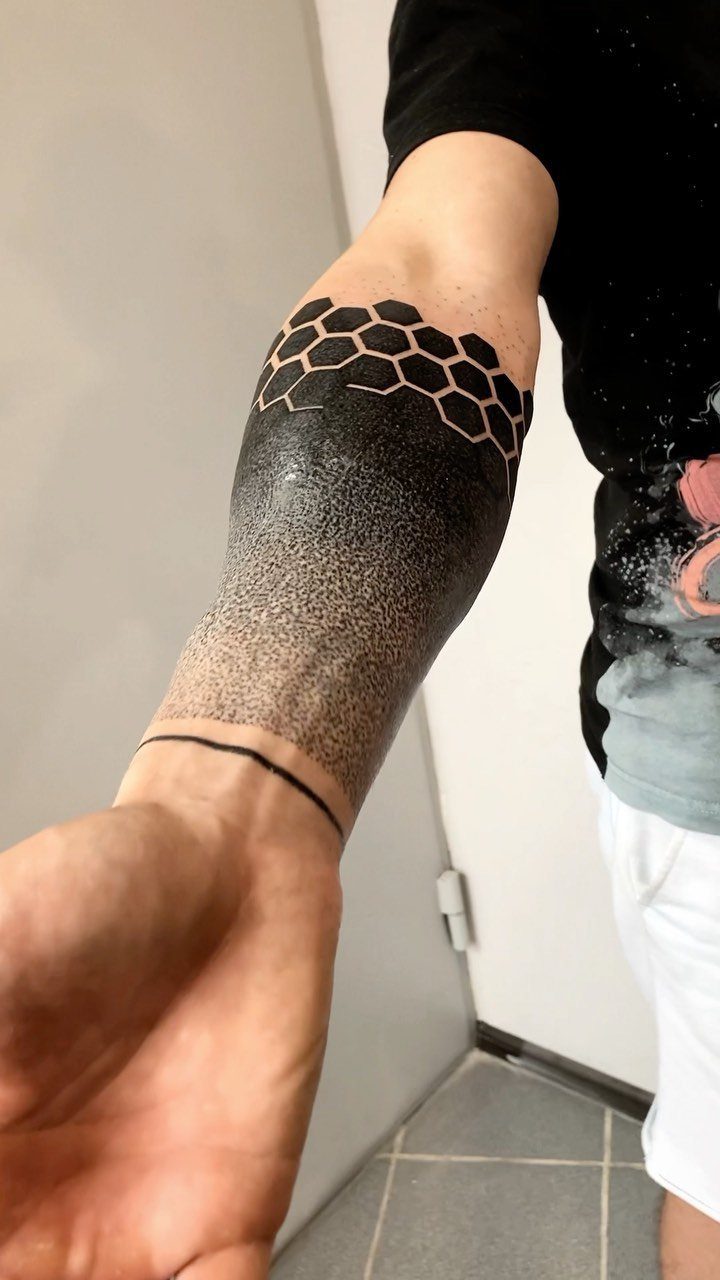
Blackwork fills old ink with solid black or geometric patterns that sit dark enough to block whatever sits underneath.
The honeycomb grid spreads wide and holds clean edges, and the stippled gradient at the wrist softens the transition without leaving a hard stop.
Big black shapes give an artist room to hide color and linework that laser can’t fully clear.
If the old tattoo sits light or patchy, one session of blackwork can finish it. Solid black heals faster than color, and geometric patterns read clearly even as skin ages.
2. Lion Forearm Cover Up
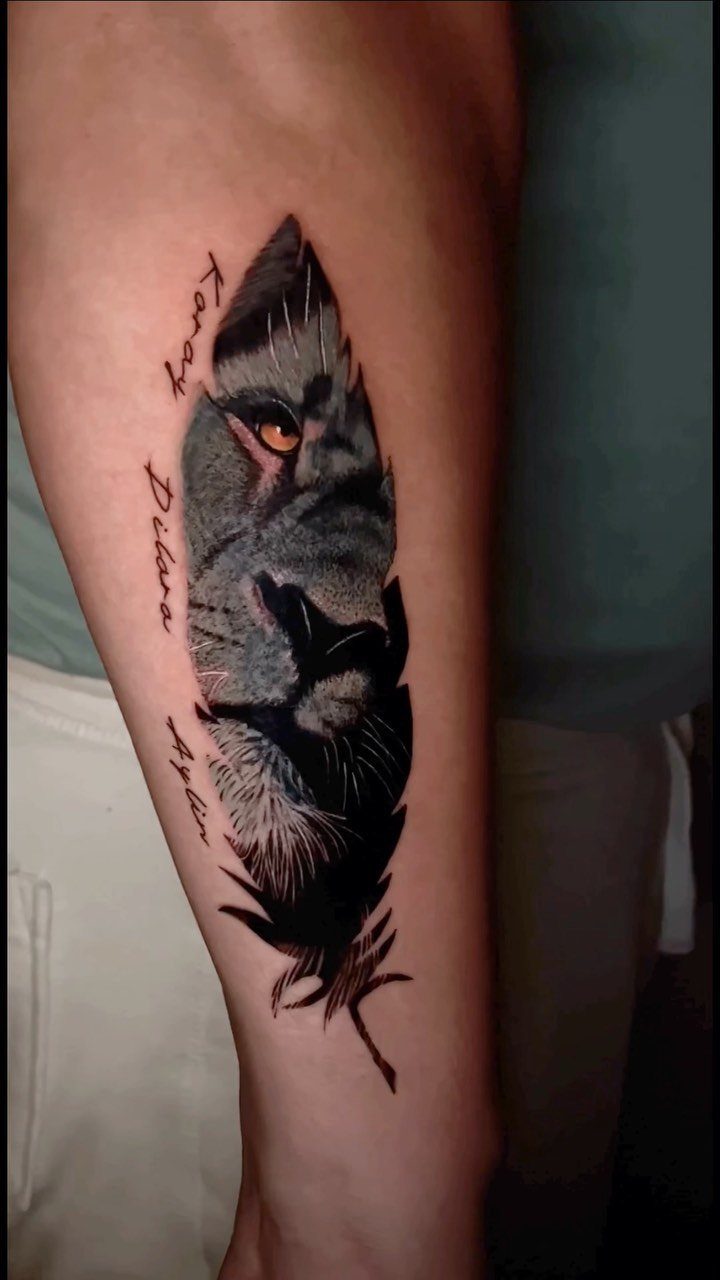
A lion face stretches across the forearm with enough detail in the mane and eyes to pull attention away from what sits below.
The feather shape here keeps the design tall and narrow, fitting the forearm’s natural line without wrapping too far around the arm.
Realism needs an artist who can place dark shading exactly where the old tattoo shows through.
The orange eye and the names in script sit outside the heavy black, so they stay readable. Lions work well for cover-ups because the mane’s dark patches let an artist bury old lines without forcing symmetry.
3. Dark Art Forearm Cover Up
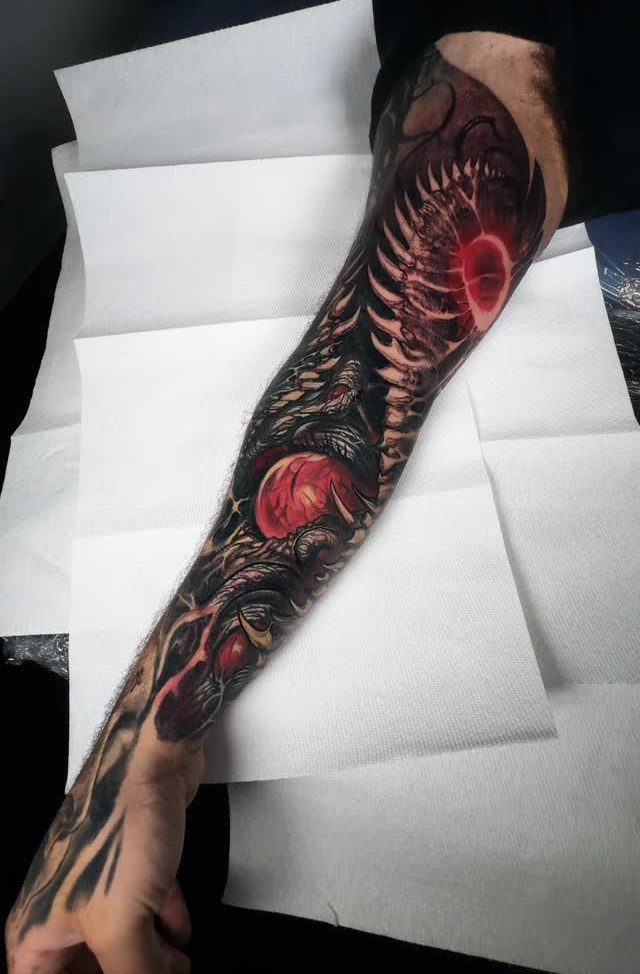
Dark art mixes horror, surrealism and biomechanical elements into designs that sit almost entirely black with small bursts of red or white.
The red accents mark focal points without lightening the overall coverage, so the old tattoo stays hidden under layers of black ink.
This style needs an artist experienced in dark realism because mistakes in black ink are hard to fix. Sessions run long for a forearm, and healing takes strict aftercare to keep the red from fading early.
4. Abstract Forearm Cover Up
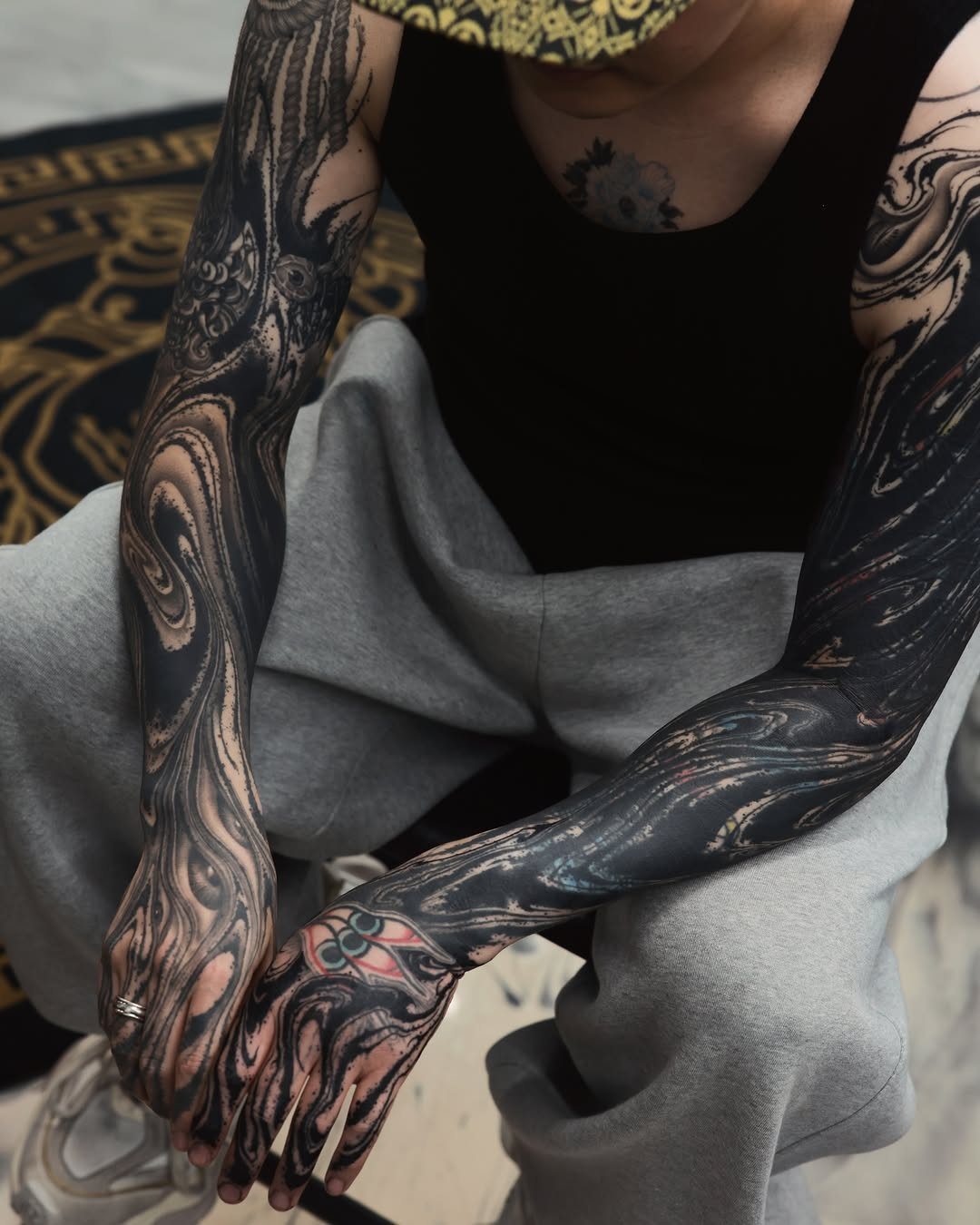
Abstract blackwork wraps the forearm in swirling shapes that follow no fixed subject, so an artist can place the darkest sections exactly where old ink needs the most coverage.
The organic curves here move around the arm instead of sitting flat, which helps the design feel intentional rather than forced.
Because abstract work has no recognizable image to protect, an artist can adjust the composition on the fly to cover problem areas. Expect 2 to 3 sessions for full forearm coverage, with touch-ups if any old lines ghost through after healing.
5. Bold Ornate Script Cover Up
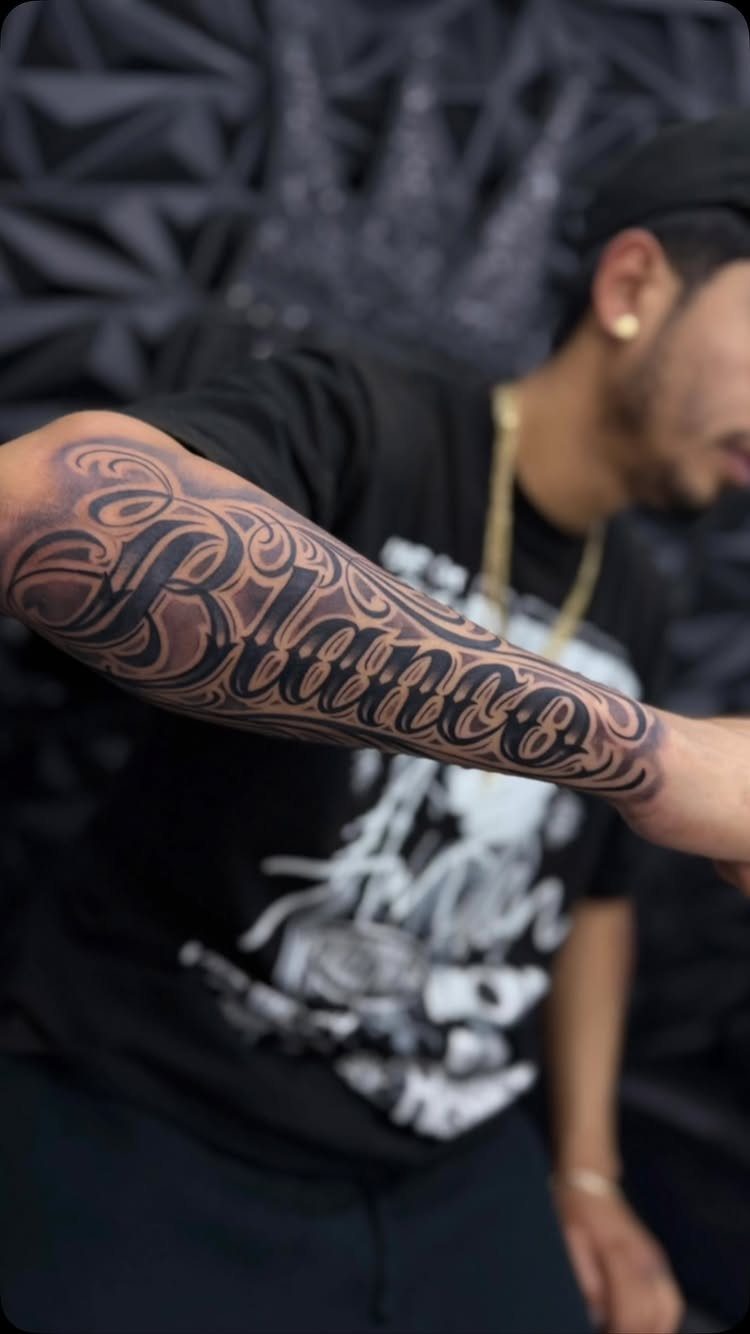
Script tattoos sized this large sit bold enough to cover smaller old designs underneath, and the heavy shading around each letter hides anything that might show through.
The decorative swirls here fill gaps and extend the design without adding more words, which keeps the composition balanced across the whole forearm.
Ornate script needs precise stencil placement because letters this size can’t be adjusted much once the outline is down. If the old tattoo sits too dark, the artist may add a background or more flourishes to push coverage wider.
6. Red Outline Floral Cover Up
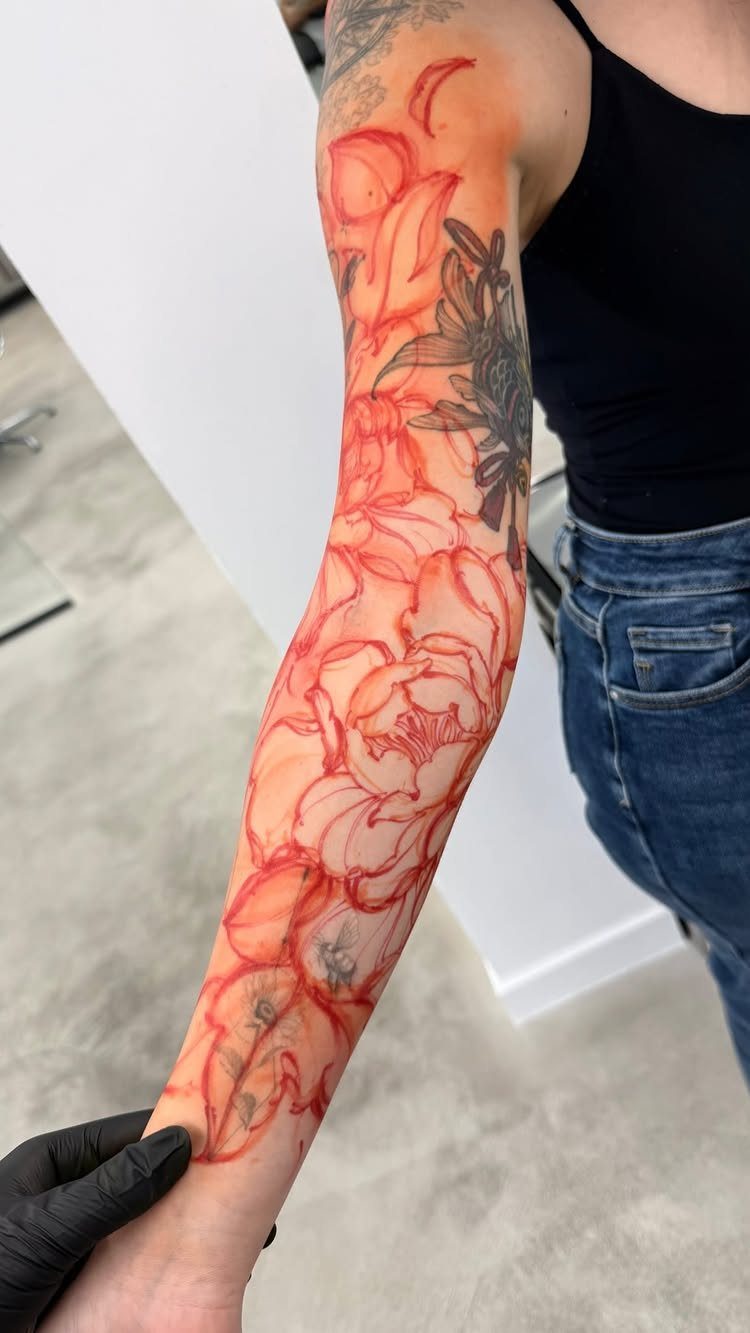
Red ink sits translucent, so this approach only works if the old tattoo underneath has already faded to light grey or tan.
The floral outlines here trace over the existing shape rather than trying to hide it, turning the old ink into part of the new design’s background texture.
This method skips the heavy black shading most cover-ups need, so sessions run shorter and healing is faster.
Red ink fades quicker than black, especially on sun-exposed forearms, so plan for a touch-up every few years to keep the lines bright.
7. Japanese Oni Mask Cover Up
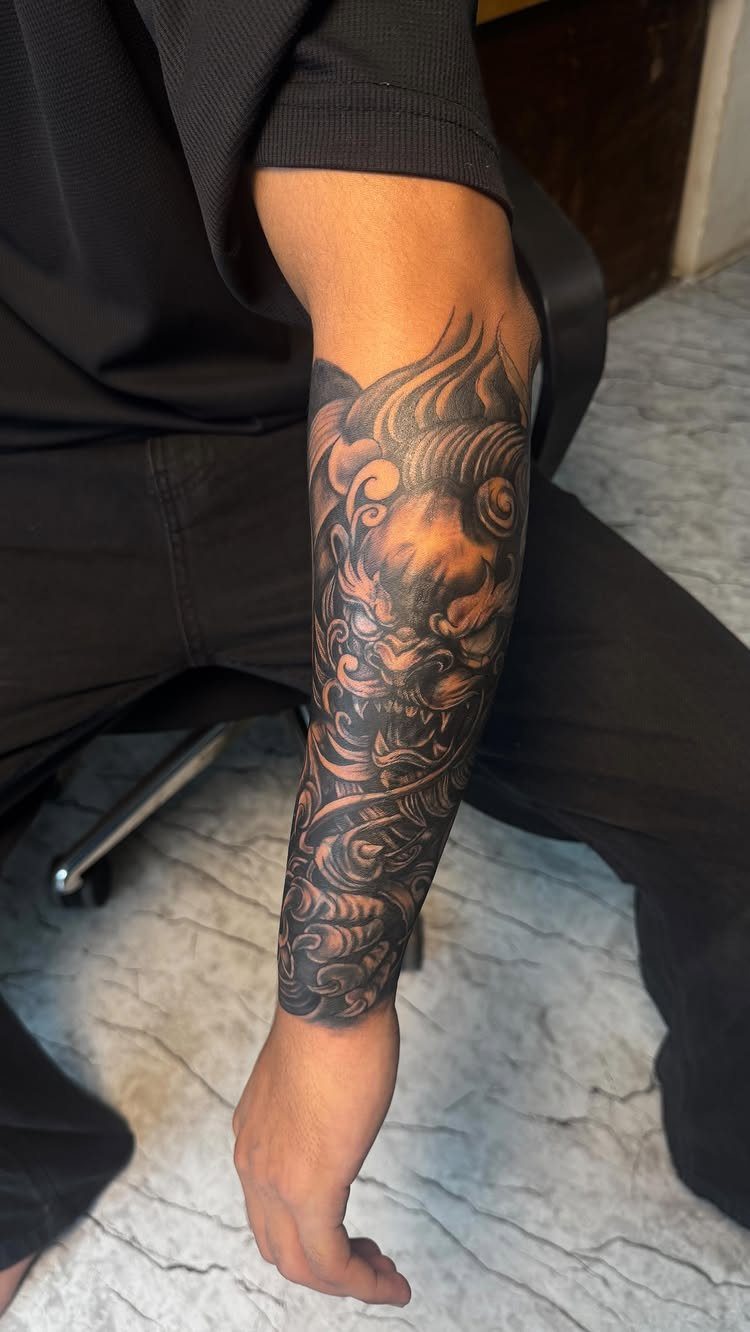
Oni masks sit heavy with horn detail, sharp teeth and deep shadow, giving an artist plenty of dark area to place over old ink.
The clouds here wrap around the negative space and soften the transition from mask to bare skin, while the black and grey palette keeps coverage consistent across the whole forearm.
Japanese designs follow rules about placement and flow, so find an artist who works in that style regularly. A detailed mask needs multiple sessions, and the shading has to heal completely before any touch-up work.
8. Roaring Tiger Forearm Tattoo
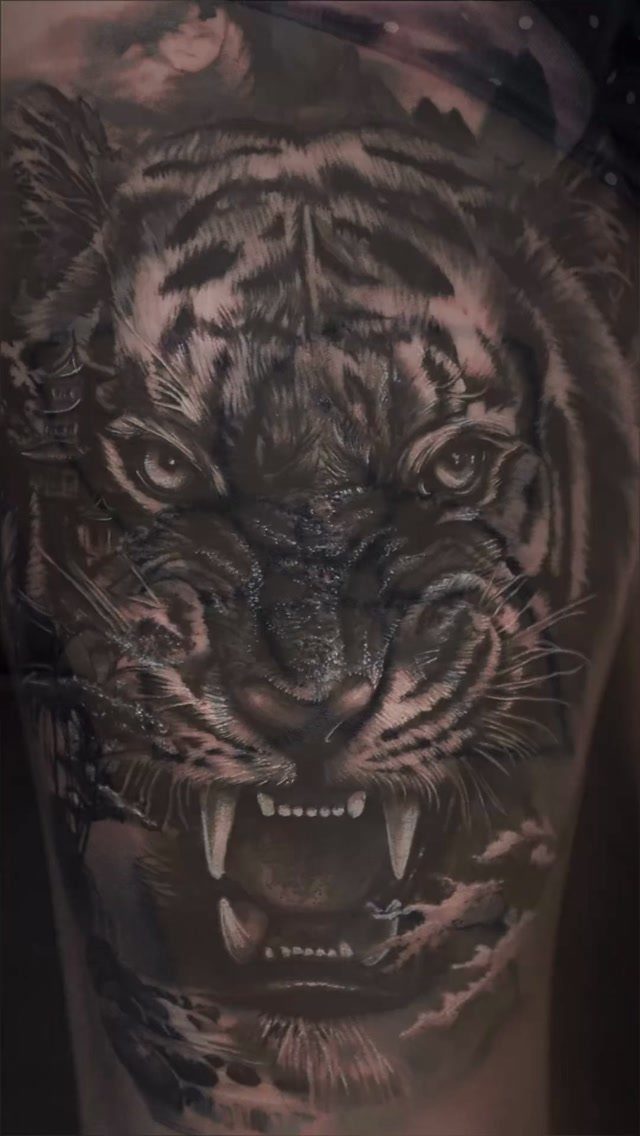
Tiger realism fills the forearm with textured fur and deep black in the mouth and stripes, which hides old tattoos without needing a full sleeve.
The open roar here gives the artist room to place the darkest shading inside the mouth, where coverage matters most.
Fur detail takes longer to tattoo than smooth shading, so expect a longer session for a forearm piece this detailed.
Black and grey heals faster than color and shows less fading over time, which matters if the cover-up sits on a sun-exposed arm.
9. Vibrant Colorful Floral Cover Up
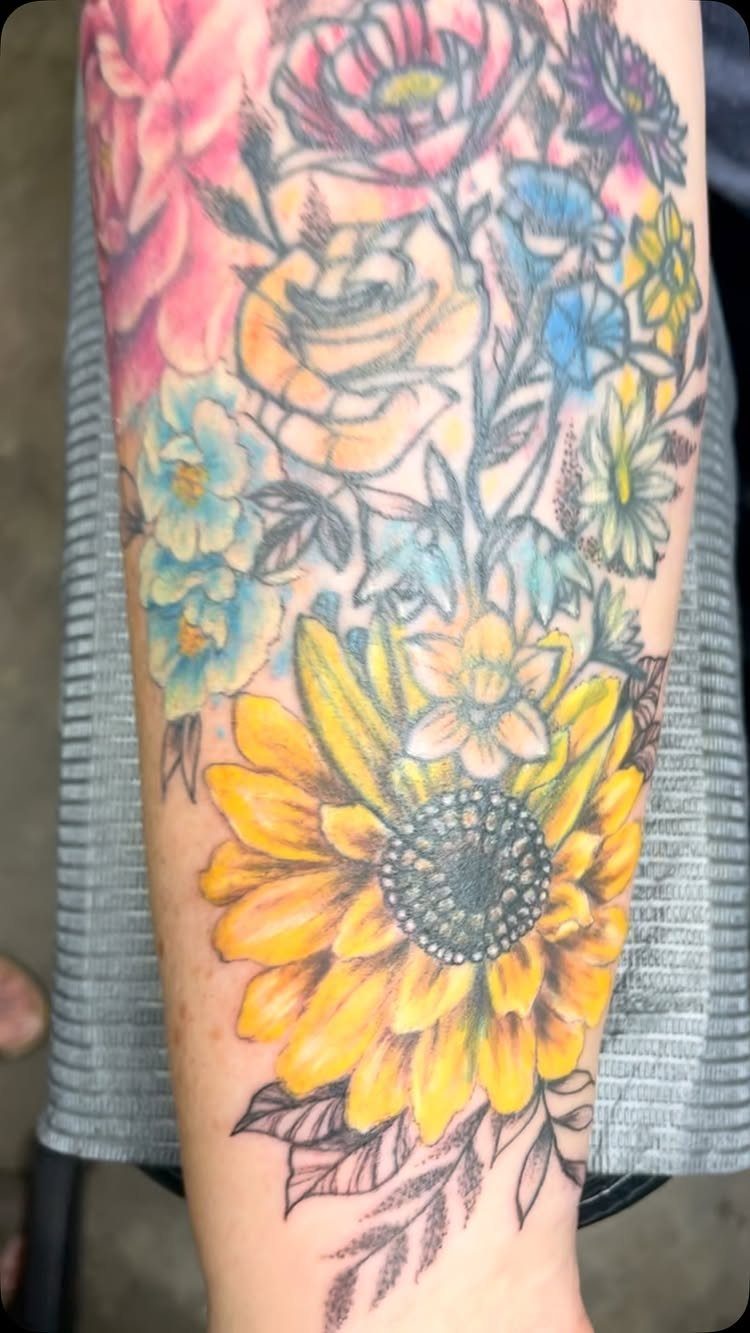
Saturated color can cover old tattoos if the artist layers it thick and outlines each petal in black to define the edges.
The yellow sunflower here sits bright because it covers faded ink, but darker old tattoos need heavier shading mixed into the petals or background to block what sits below.
Color takes more sessions than blackwork, and each hue heals at a different rate.
Expect at least 2 sittings for a full forearm floral, with touch-ups once the first layer settles. Bright colors fade faster on forearms than on covered areas, so sunscreen becomes part of maintenance.
10. Moth and Rose Forearm Tattoo
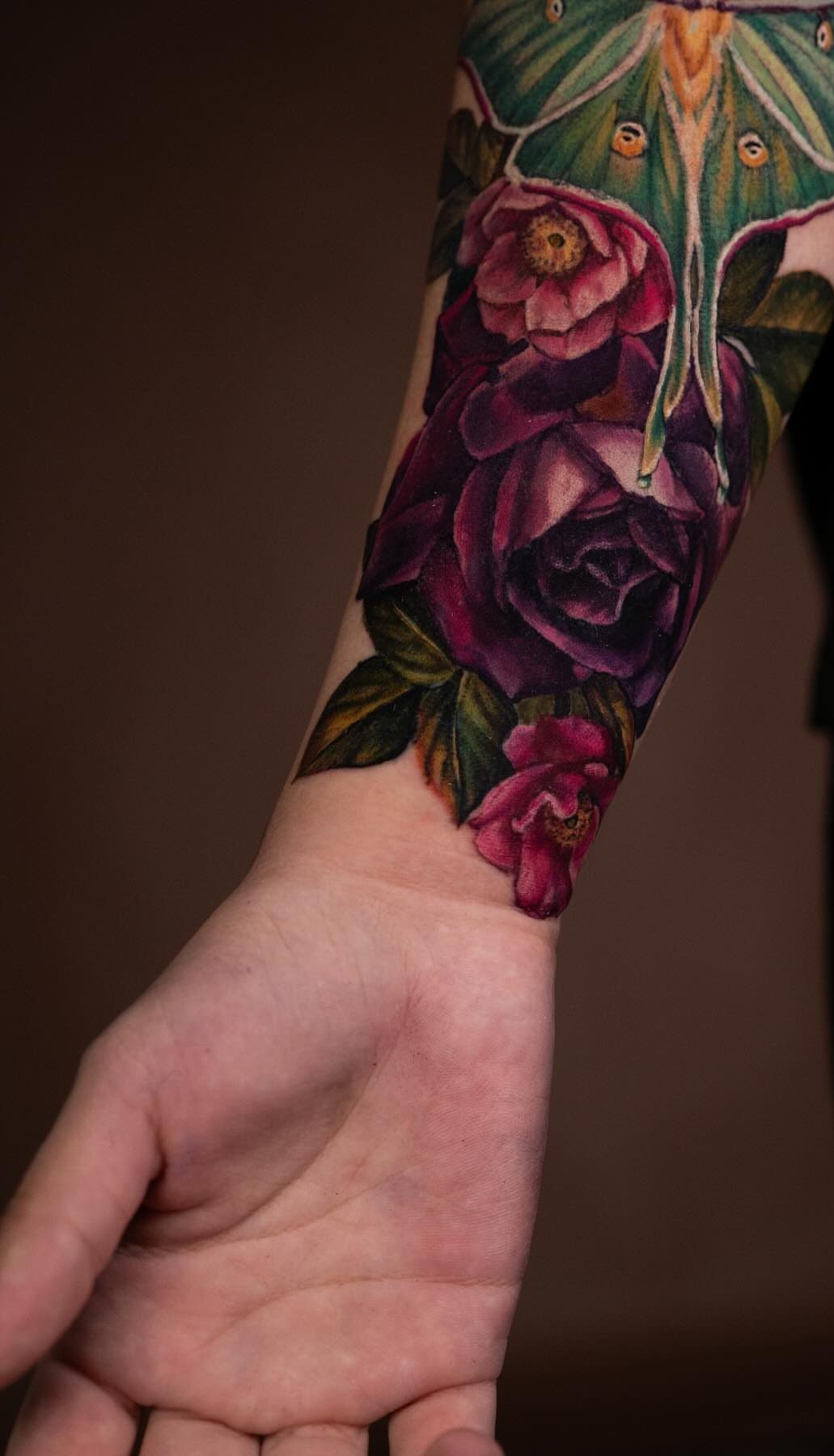
Moths pair well with florals because the wings give an artist large sections of dark shading to place over old ink, while the flowers add color without needing full coverage.
The purple roses here sit saturated enough to distract from what might show underneath, and the green moth ties the composition together without forcing symmetry.
Color mixes like this take longer to tattoo than single-tone designs, and the artist has to let each color set before moving to the next. Plan for multiple sessions to finish the piece.
11. Dense Pine Forest Cover Up
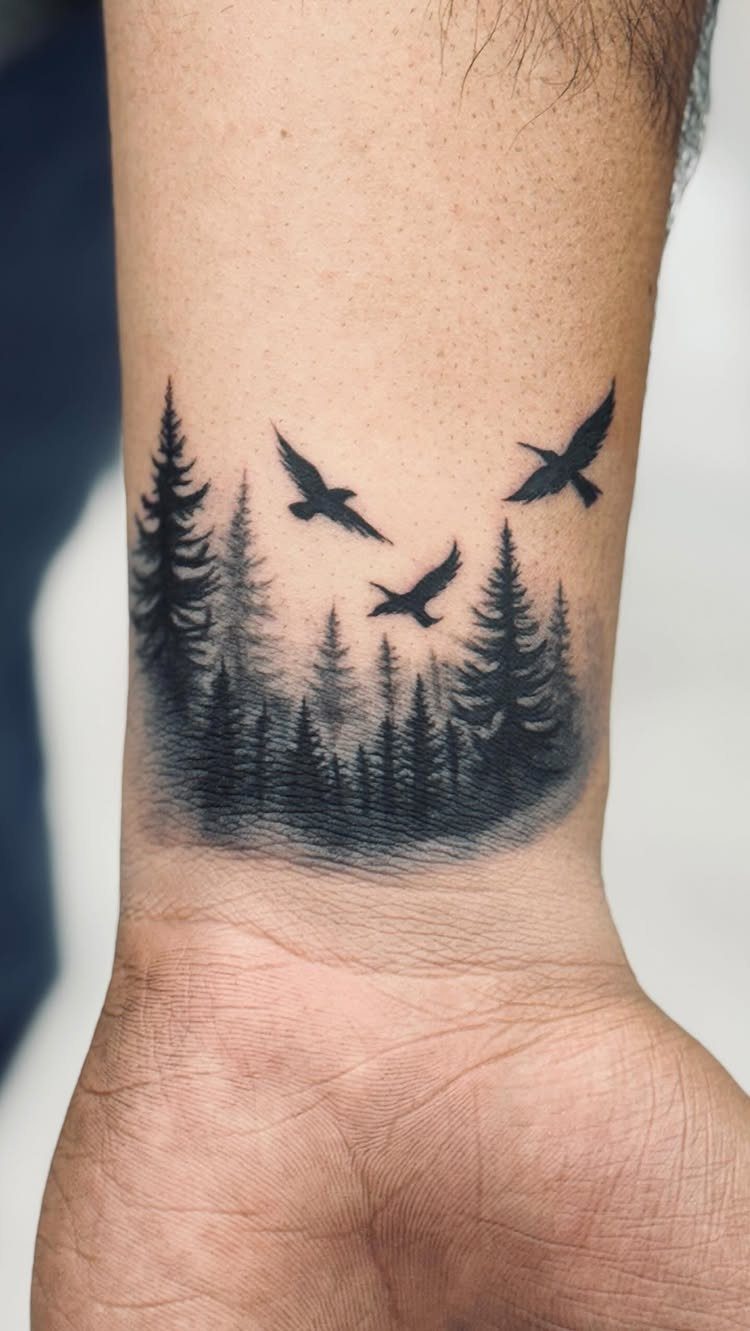
Solid black silhouettes cover old tattoos completely because they sit opaque and need no gradient or shading to work.
The treeline here stretches wide enough to hide whatever sits below it, and the birds add movement without breaking up the coverage.
Forest designs fit the forearm’s long shape naturally, and because the whole piece reads as one dark block, an artist can place it over almost any old tattoo without worrying about color showing through.
One session usually finishes a silhouette this size, and black ink heals faster than detailed realism.
12. Japanese Maple and Cloud Cover Up
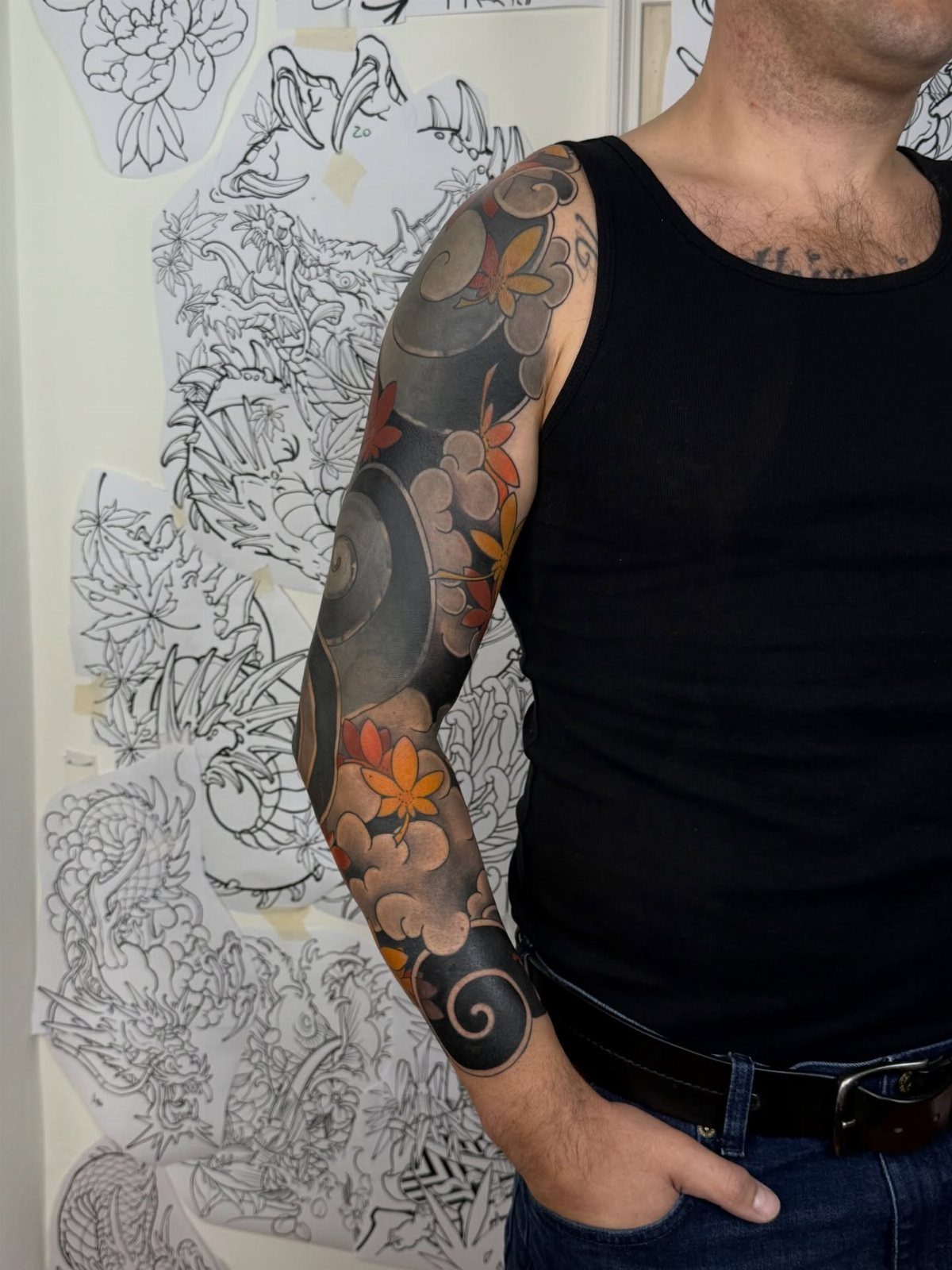
Storm clouds in grey ink give an artist flexible shading that can sit darker where old ink needs the most coverage, while the orange maple leaves add color without lightening the overall design.
Full forearm coverage like this takes 2 to 3 sessions, with the grey clouds going in first to establish coverage before the orange leaves get layered on top.
Considerations for Cover Ups
The size and darkness of the old tattoo set which designs can cover it.
Age matters because older ink settles deeper into the skin and often fades to grey, making it easier to cover than fresh black.
An artist evaluates the old tattoo in person before committing to a design. Sometimes the best move is building a larger composition around the old ink rather than trying to cover every part directly.
Laser Removal Before Cover Up
Laser lightening before a cover-up gives the artist more design flexibility, but most cover-ups don’t require it.
Laser work doesn’t have to remove the tattoo fully; even partial lightening opens up options for color, finer detail or smaller coverage areas.
An experienced artist assesses the old tattoo before recommending laser. If it’s fresh and saturated, a few sessions can turn a difficult cover-up into a straightforward one.
Cost of Cover Ups
A forearm cover-up costs more than the original tattoo because the artist works around existing ink, adjusts the design to match coverage needs, and often tattoos more area than a fresh piece would require.
The complexity of hiding old lines, balancing dark and light sections, and layering texture adds time to every session.
Cover-ups account for a large share of business at many shops, and artists experienced in this work charge accordingly.
An older faded tattoo is easier to cover than a new one, so if the piece you want covered is recent, expect the artist to quote more sessions or recommend laser lightening first.
Hourly rates for cover-up specialists sit higher than general tattoo pricing, and a detailed forearm piece can run multiple sessions at several hours each.
Tattooing cover-ups is a specialized skill that leverages color theory and expert artistry to hide an old tattoo with new, beautiful ink. Professional tattoo cover up artists completely camouflage unwanted ink, making the old design disappear in fresh line work, vivid color, and optical illusions.
— Removery
Frequently Asked Questions
Do forearm tattoo sleeves hurt?
The forearm sits in the middle range for tattoo pain because the muscle and fat cushion the needle more than bonier spots like ribs or ankles.
The inner forearm feels more sensitive than the outer side for most people, but pain stays manageable enough that full sleeves get finished in multiple sessions without major issues.
Is it cheaper to get a tattoo removed or covered up?
Cover-ups cost less than full laser removal because removal takes multiple sessions spaced months apart, while a cover-up finishes in 1 to 3 sittings.
Cover-up specialists charge more per hour than standard tattoo rates since the work requires adjusting the design around existing ink, but the total still runs lower than the cost of erasing the old piece completely.
What are the hardest tattoos to cover up?
Fresh tattoos with saturated black ink are the hardest to cover because the pigment sits dense and hasn’t faded yet.
Dark shading placed strategically over the strongest parts of the old tattoo helps reduce visible lines, and adding texture like fur, feathers or ornamental patterns breaks up what shows through instead of trying to hide every mark directly.
What types of old tattoos can be covered on the forearm?
Faded tattoos, small designs, text and names, and even dark saturated pieces can all be covered on the forearm.
Faded ink gives an artist more flexibility because the remaining lines sit less visible, while small tattoos are easier to work around with flowers, animals or blackwork that creates a larger focal point.
Should you cover the inner or outer forearm?
Both the inner and outer forearm work for cover-ups, and the choice depends on where the old tattoo sits.
The inner forearm suits vertical compositions and detailed designs but feels more sensitive during tattooing, while the outer forearm handles realistic animals, Japanese work and blackwork with clear visibility from the outside.
Do you need laser removal before a forearm cover up?
Most cover-ups don’t require laser removal, but very dark or heavily saturated tattoos may benefit from a few lightening sessions to give the artist more design options.
Partial lightening opens up choices for color and finer detail without needing to erase the old tattoo completely, and an experienced artist assesses the piece in person before recommending it.