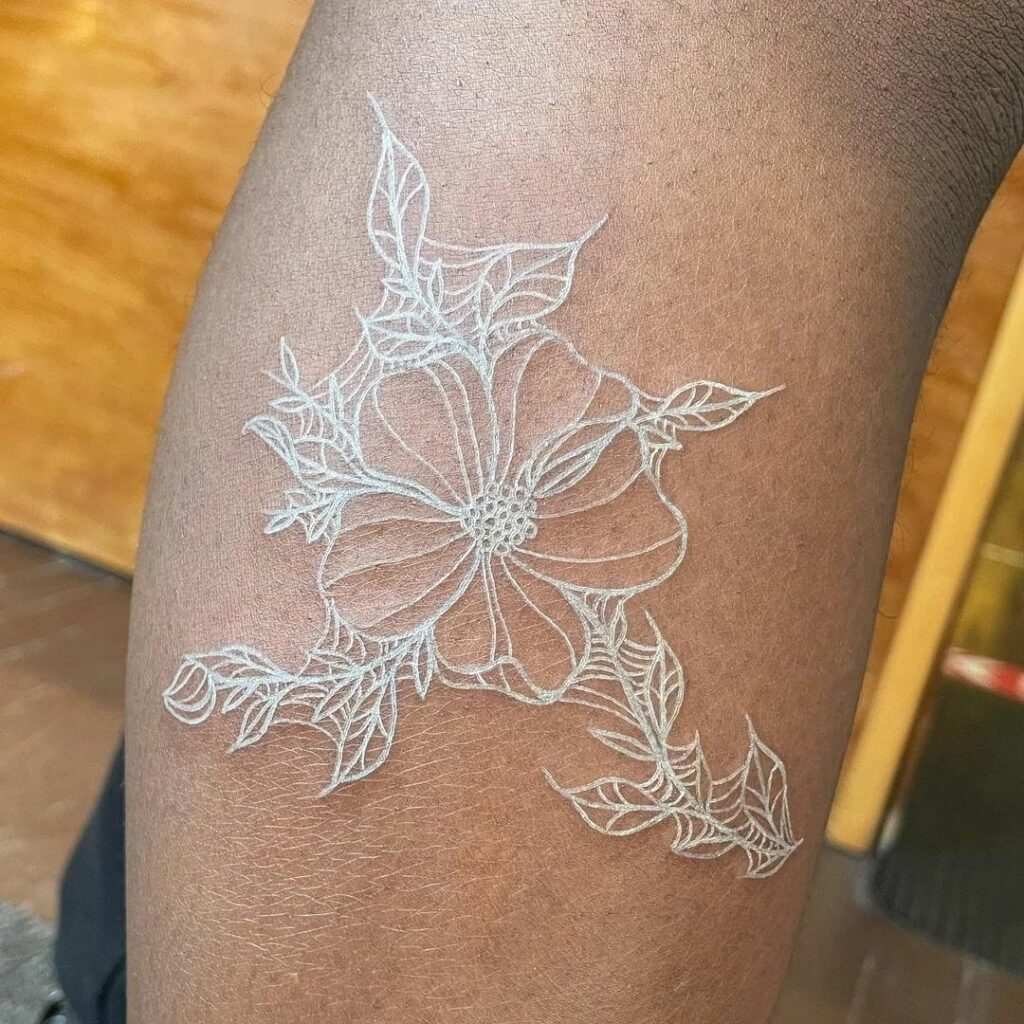
White ink on dark skin fades to warm cream or light gray within the first year, so the healed result is closer to embossed texture than the bright white most artists lay down fresh.
Constant rubbing from shoes and movement breaks down the pigment, and UV exposure speeds that shift unless you apply SPF 30 or higher once it’s healed.
1. Healed White Ink Tattoo
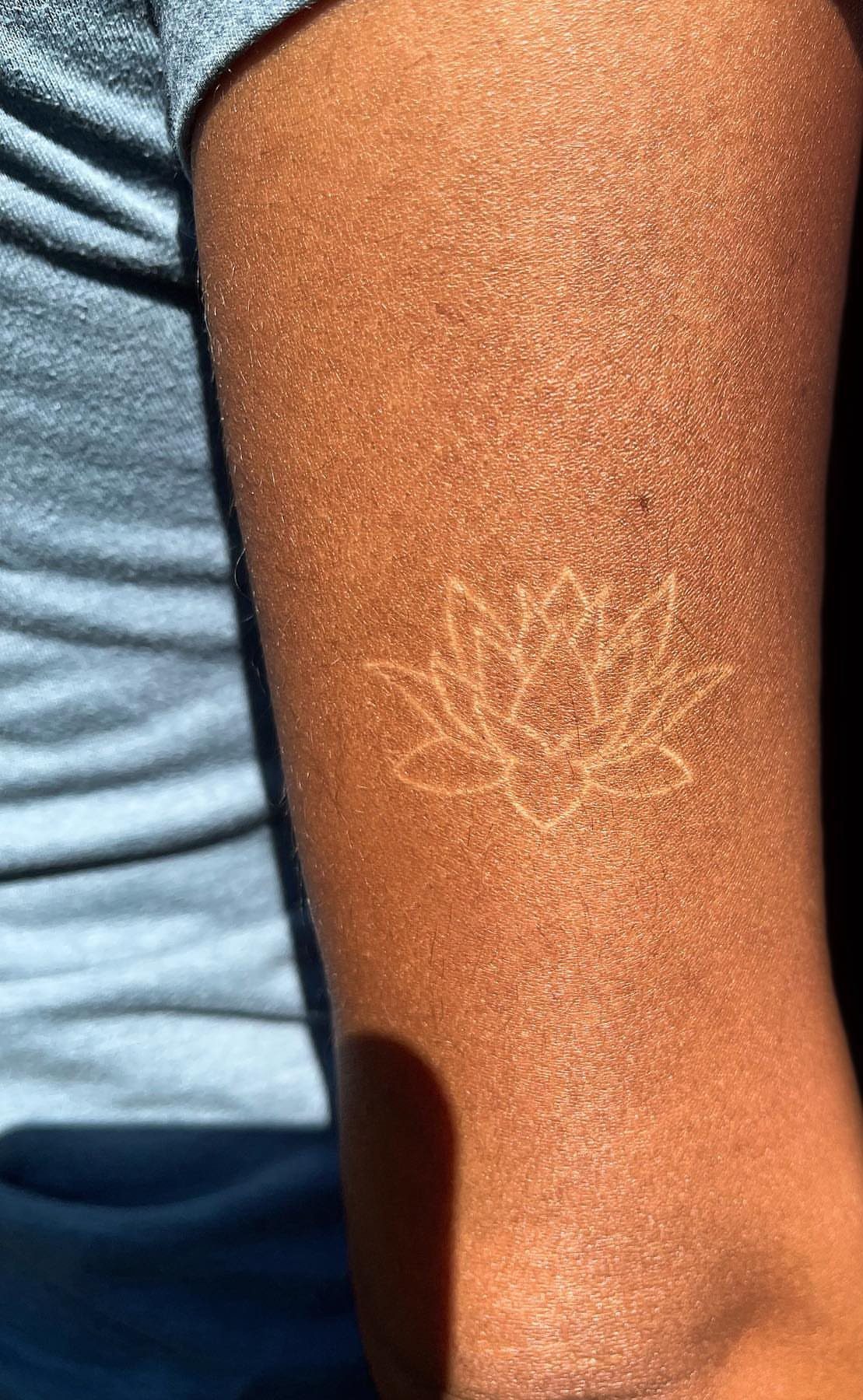
The contrast softens as it heals, leaving a subtle raised texture that catches light rather than standing out in bold color.
White ink on dark skin tends to fade to a warm cream or light gray over time, so a healed piece is closer to the long-term result than the bright white most artists lay down fresh.
If you want a tattoo that reads as a whisper rather than a statement, this is the finish you’re actually getting.
2. Minimalist Appeal
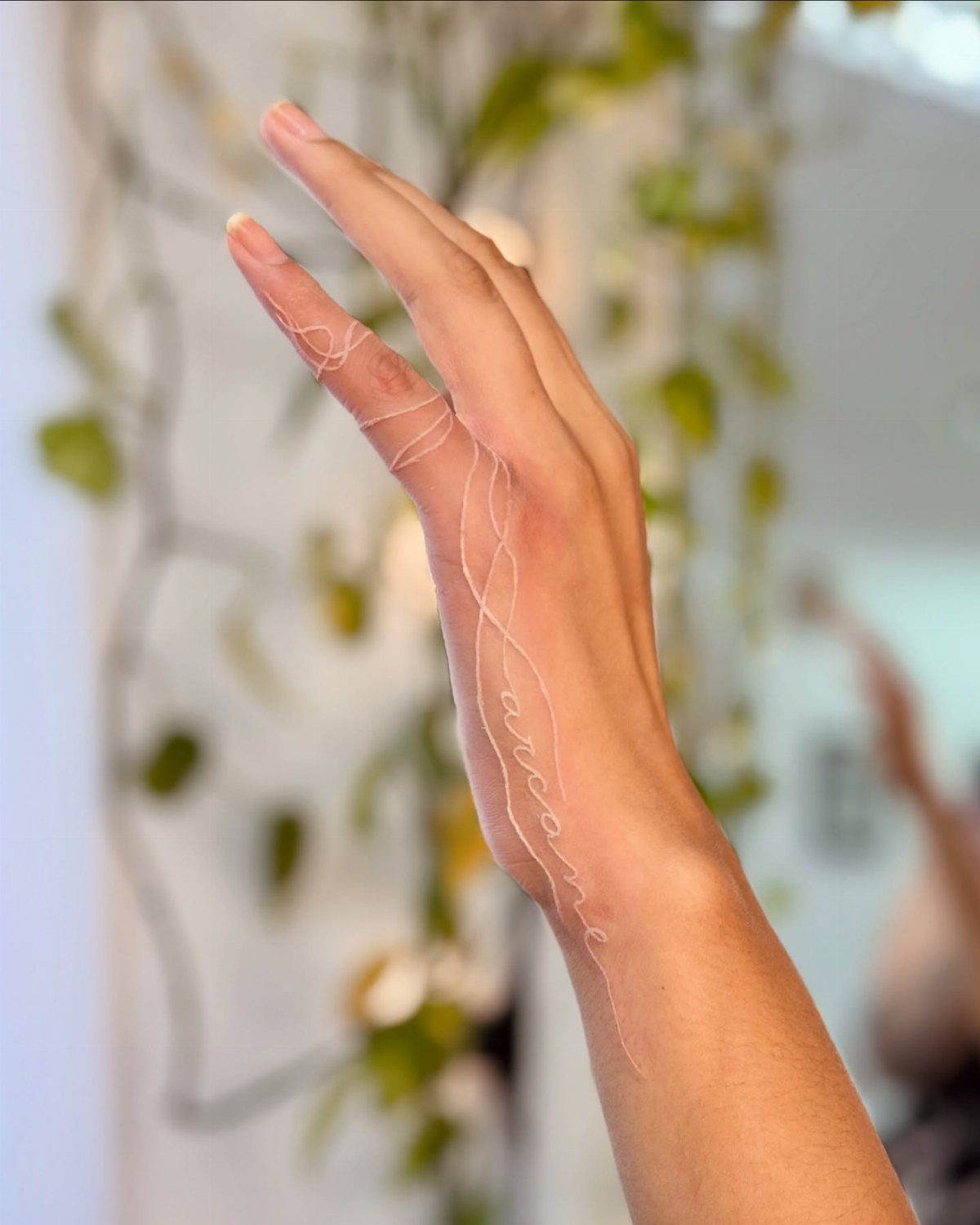
A swirling line and the word "arcane" in white ink give you a tattoo that disappears in most light and only shows when you want it to.
White ink on dark skin reads as subtle texture first, lettering second, so script and line work stay discreet even when placed on highly visible spots like the hand or wrist.
This approach suits anyone who wants ink without the commitment to high contrast. The design stays personal, and unless someone’s close enough to notice the raised surface, it goes unread.
3. Geometric White Ink Tattoo
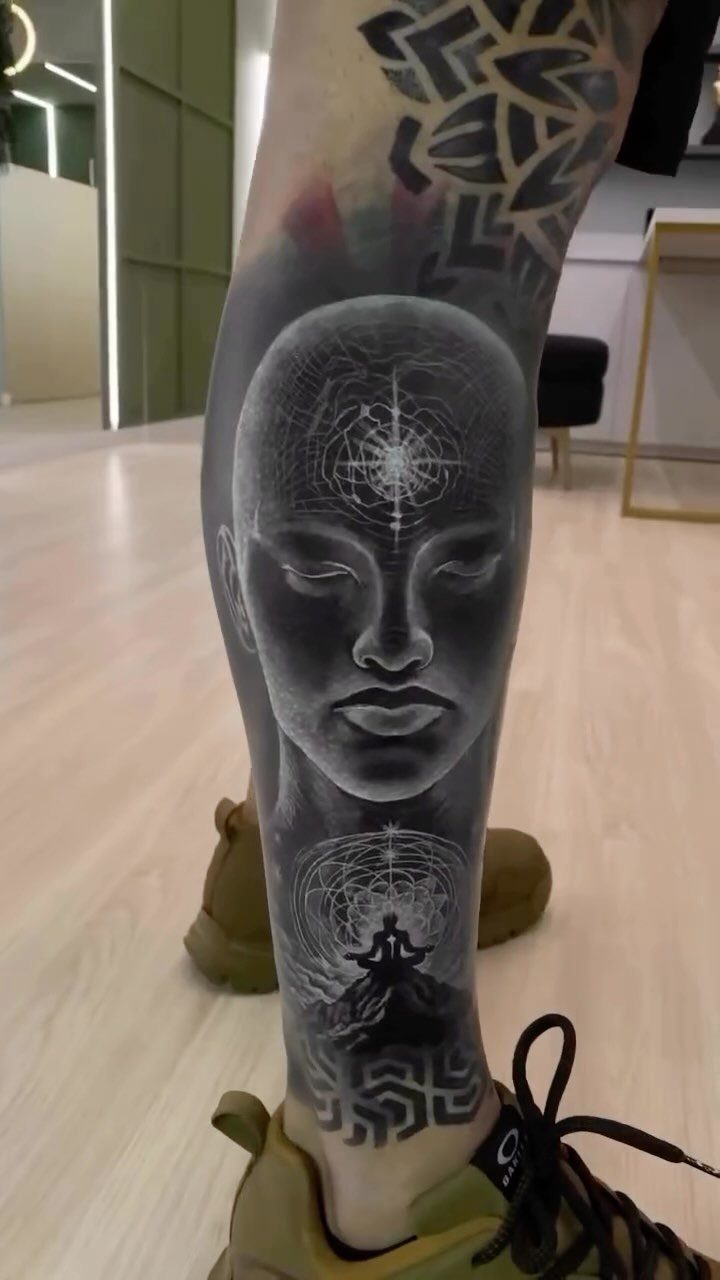
Geometric white ink over dark skin creates a soft, almost embossed effect, especially when combined with shading or black linework.
The face and symbols here rely on fine detail, and white ink holds that level of precision better when the artist uses a tight needle grouping and builds the opacity in passes.
Geometric designs benefit from the contrast dark skin provides, since the white reads as highlight rather than solid fill. Expect the edges to soften slightly as it heals.
4. White Ink Highlights on Black Tattoo
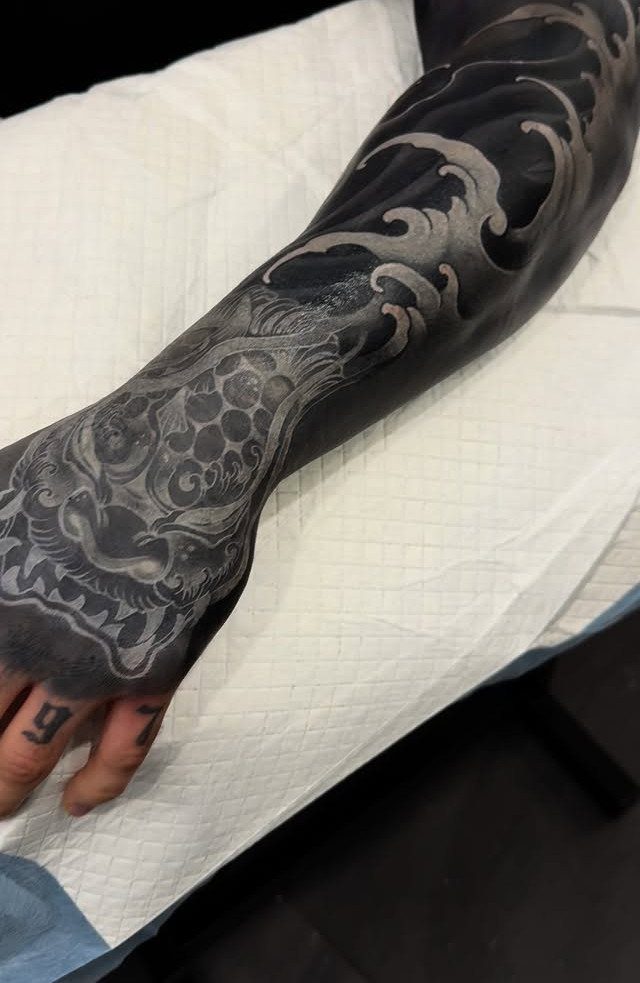
White ink layered over black and gray tattoos adds dimension without overpowering the original design. The highlights here follow the curves and swirls, lifting certain areas forward while leaving the darker ink intact.
This technique works best on already healed tattoos, since adding white over fresh black can push ink around and muddy the contrast.
If you’re planning a piece with white accents, talk to your artist about building it in from the start or adding the white in a separate session once the base has fully settled.
5. White Ink Spiderweb on Elbow
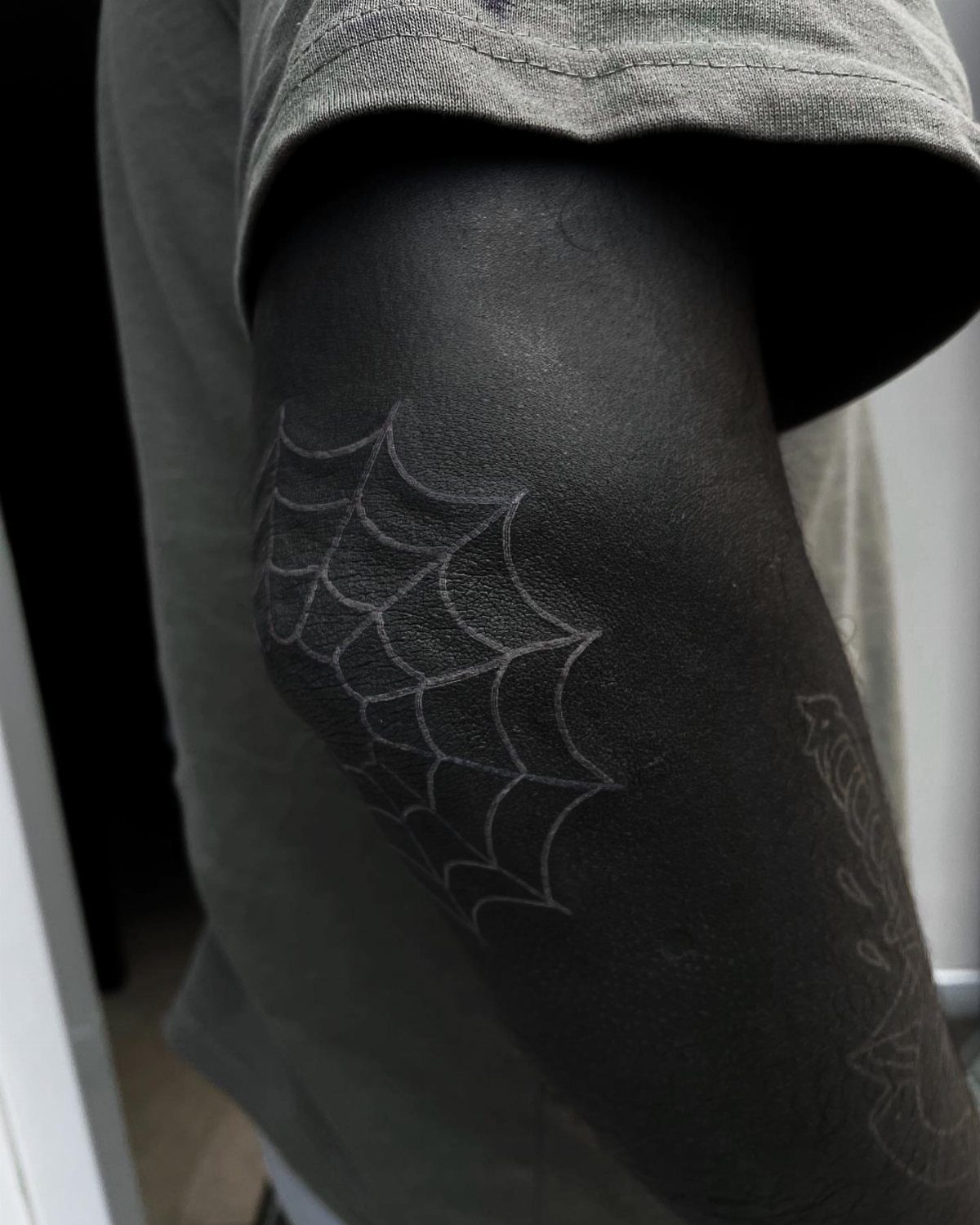
A white ink spiderweb sits directly over the elbow, using the joint’s natural shape to anchor the design.
The elbow is a high-movement area, so white ink here fades faster than it would on flatter skin, and touch-ups every few years keep the web crisp.
Spiderweb tattoos carry strong associations in some circles, so know what it signals before you commit. The white ink version tones down the visual weight, but the symbolism stays the same.
6. Delicate White Ink Floral Ankle
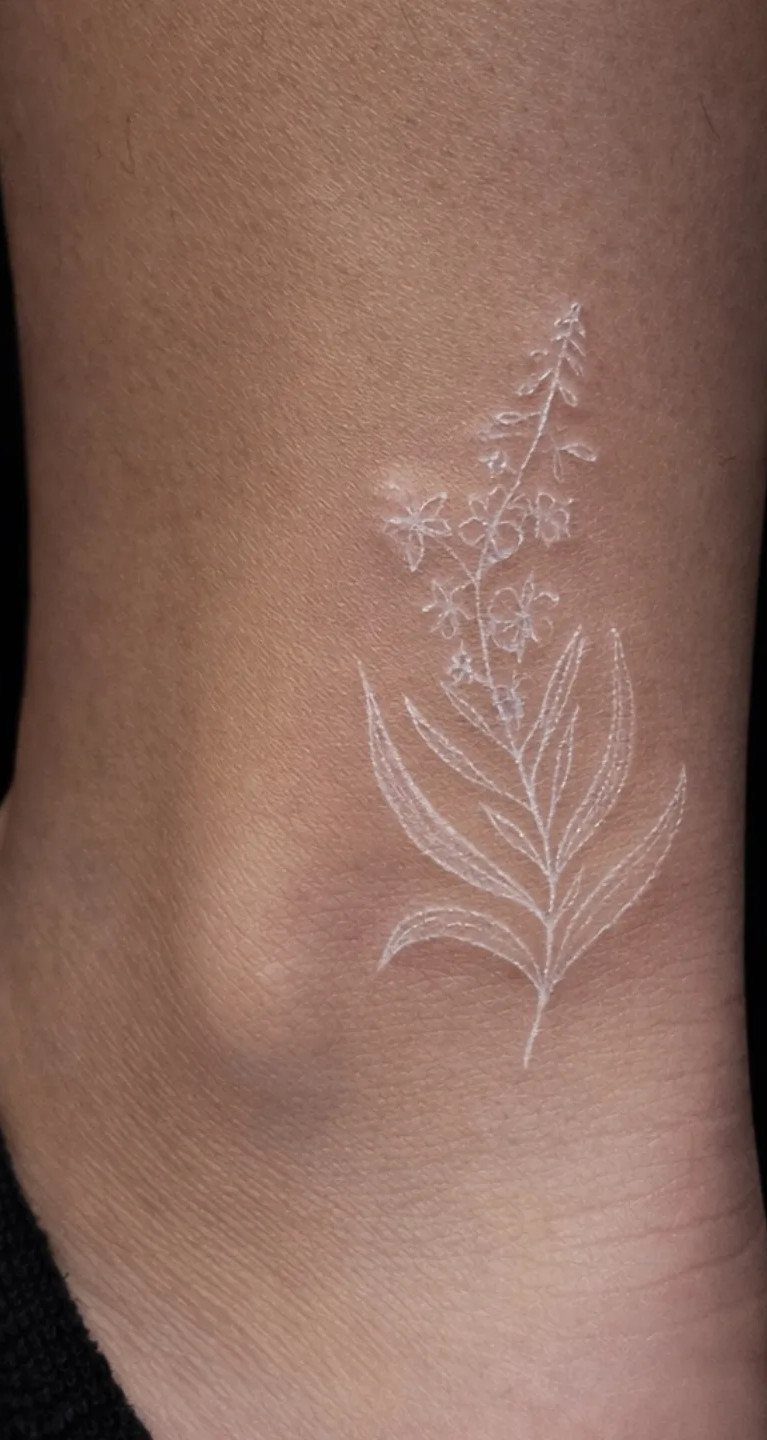
A leafy stem and small flowers in white ink on the ankle give you a soft, barely-there design that suits someone who wants ink but doesn’t want it to dominate.
The ankle is a bony spot with thin skin, so expect sharper pain during the session and slower healing compared to fleshier areas.
White ink on the ankle fades faster than on the forearm or shoulder, since shoes and socks rub the area constantly. Plan for touch-ups if you want the design to stay visible past the first year.
7. White Ink Facial Script Tattoo
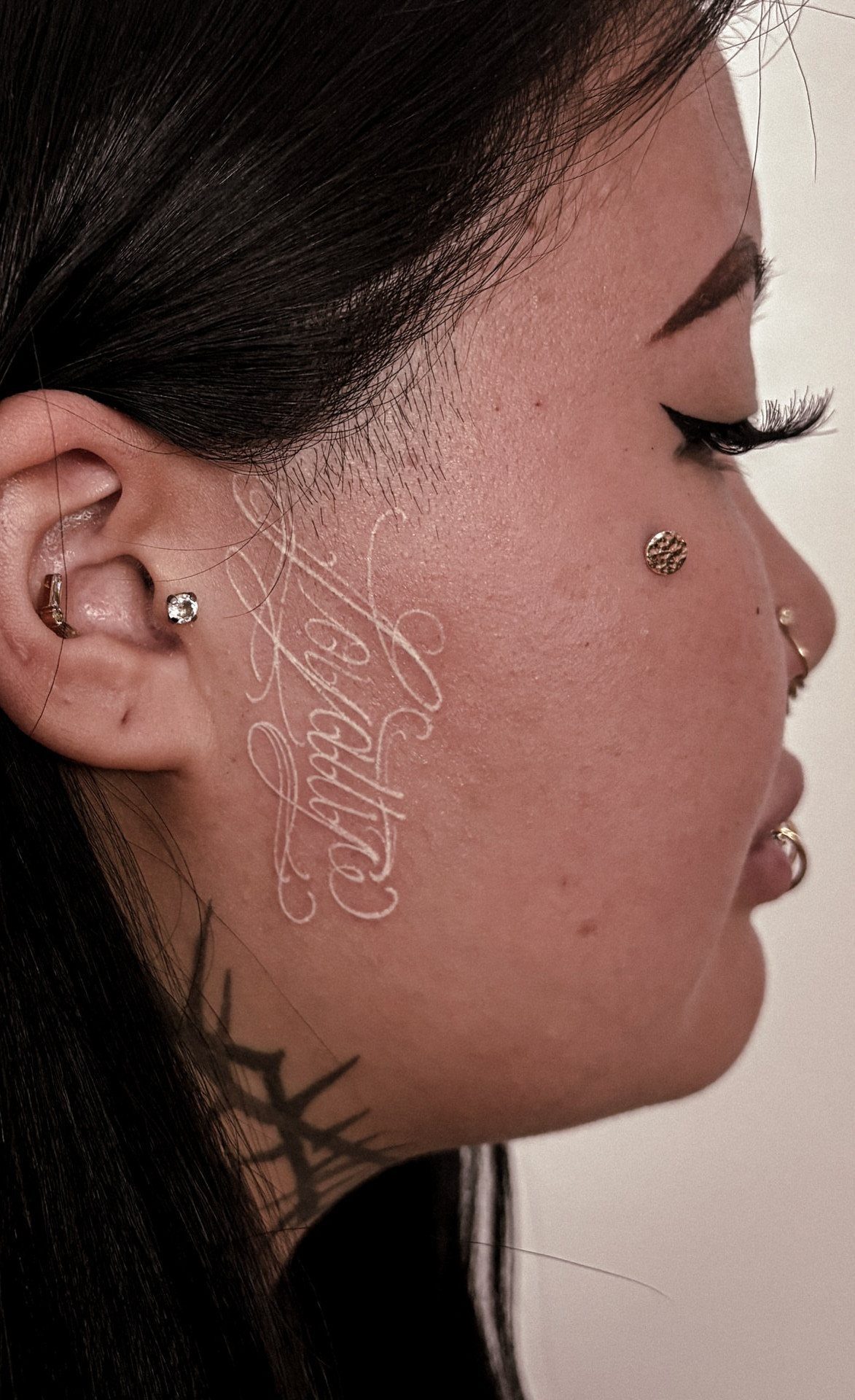
Script tattooed on the face in white ink stays subtle on dark skin, reading more like a scar or birthmark than bold lettering unless someone’s standing close.
The cheek and temple are common placements, following the natural contours of the bone.
Facial tattoos carry weight beyond the design itself. Most employers still reject visible face ink, and removal or cover-up options are limited on skin this exposed.
If you’re set on script, keep it short and consider how it will read as the ink fades to cream or gray over the next few years.
Sunlight Protection
UV exposure breaks down white ink faster than darker pigments, so keep fresh tattoos covered or shaded for the first month.
Once healed, apply SPF 30 or higher to the area before you head outside, especially during summer or if you spend hours in direct sun.
Unprotected sun exposure speeds that shift and can leave the design patchy rather than evenly softened.
Moisturize daily with an unscented lotion during healing, and avoid picking at scabs. Patchiness in white ink usually comes from disturbed healing, not the ink itself.
Visibility on Dark Skin
Darker skin provides less contrast for white pigment to sit against, so the tattoo often reads more as highlight than solid fill.
A crisp result at first can fade to barely there without a refresh, though timing depends on your skin, how you heal and the ink itself.
Pick an ink with solid pigment and put it somewhere that won’t rub constantly, upper shoulder or upper back both hold up better.
Tattooing Techniques
White ink calls for a lighter touch and different depth than you’d use for black or color.
An experienced artist adjusts needle depth to sit the pigment where it holds best without going so shallow that it fades in weeks or so deep that it blurs.
Not all white inks are made equal, so ask your artist about pigment-rich formulas designed for darker skin.
Location changes how long the ink lasts.
White ink fades quicker than black or color no matter where you put it, but the right technique and placement extend how long it reads clearly.
According to sources at Precision Body Art, white tattoos fade on everyone, but when they are performed on dark-skinned babes, they tend to fade completely after the healing process, which is why many tattoo artists are hesitant to perform them in the first place.
— Bustle
Frequently Asked Questions
Does white ink show up on dark skin?
Yes, white ink shows on dark skin, though it reads as subtle texture and soft contrast rather than bold color.
The result depends on pigment quality, artist technique and placement, with high-movement areas fading faster than spots like the upper shoulder or back.
How long do white ink tattoos last?
White ink tattoos can last 3 to 6 years before significant fading, though darker skin tends to cover the light pigment faster over time. Touch-ups refresh the design and extend visibility, especially on areas that rub constantly like the ankle or wrist.
Can I combine white ink with other colors?
Yes, white ink works as highlights or contrast over black and colored tattoos, following curves and adding depth where you want it.
Is a white tattoo safe?
White ink tattoos are safe when done by an experienced artist who adjusts needle depth and uses high-quality pigment designed for darker skin.
The healing process differs from darker ink, with raised areas that resemble scar tissue during the first few weeks, so follow your artist’s aftercare instructions closely.