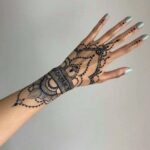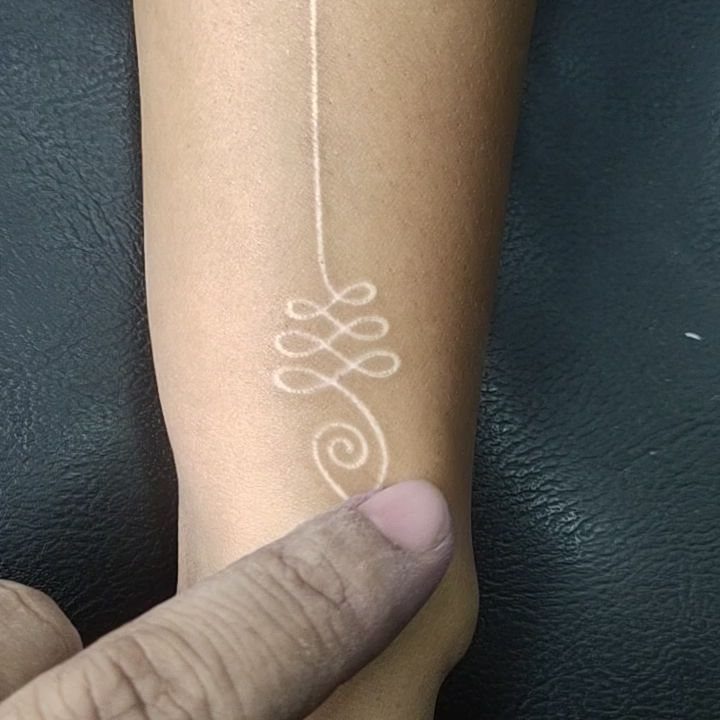
White ink reads as texture and sheen rather than solid color, sitting just under the surface where it catches light instead of blocking it.
That contrast works best on medium to darker skin tones, since fair skin provides too little for the design to show clearly once the initial redness fades.
Sun breaks down white pigment faster than any other ink color, and high-friction placements like palms and feet blur the design within weeks or months, while areas like the inner forearm or behind the ear hold the ink longer before it shifts from white to cream.
1. Subtle Design
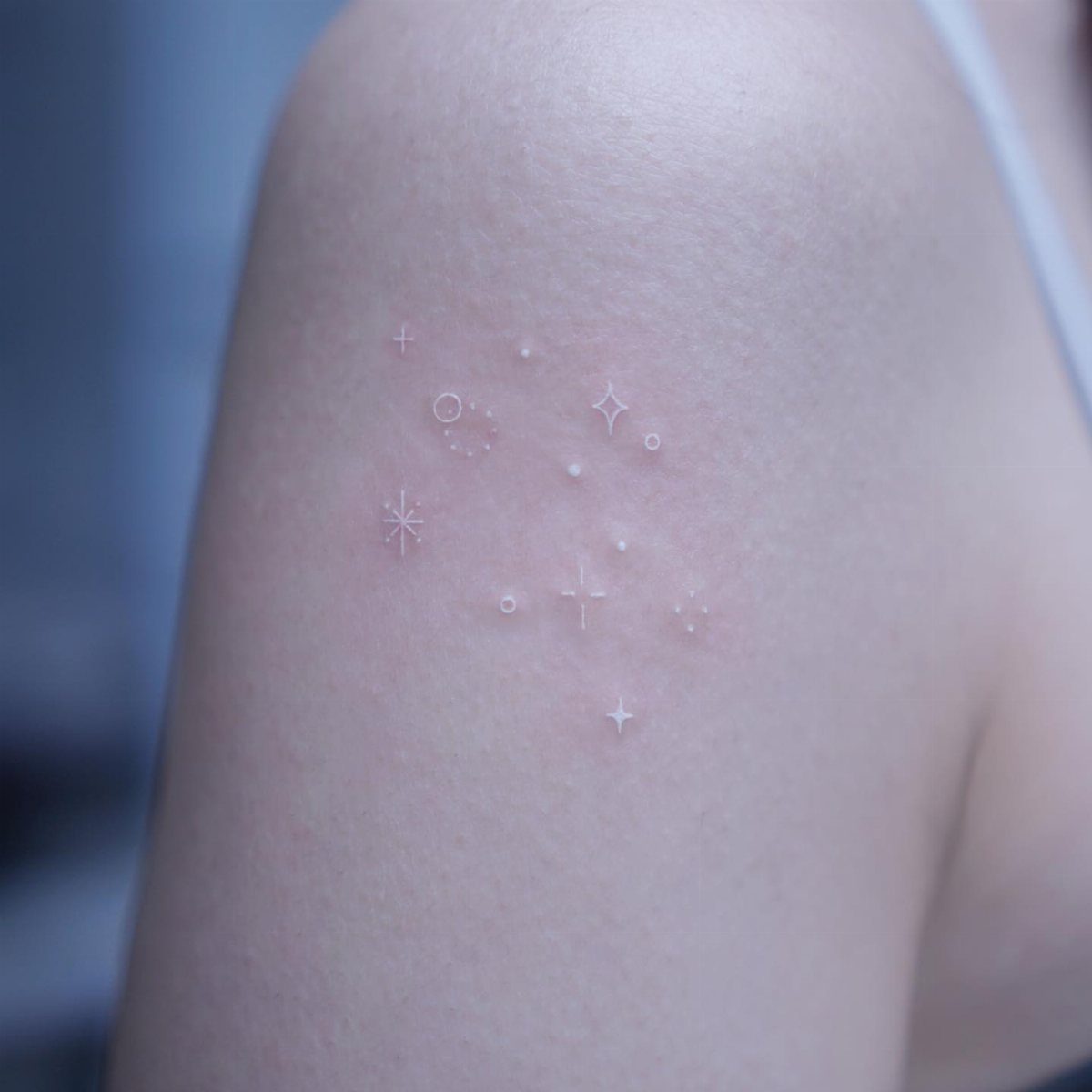
White ink sits just under the surface and catches light instead of blocking it, so the design reads as texture and sheen rather than solid color.
That makes it perfect for someone who wants ink that feels personal without announcing itself across a room.
The stars and moon here stay small and spaced out, which keeps each shape clear.
White ink blurs faster than black, so simple outlines hold up better than fine detail. On fair skin the contrast fades over time, but the raised texture often stays visible.
2. Butterfly Tattoo
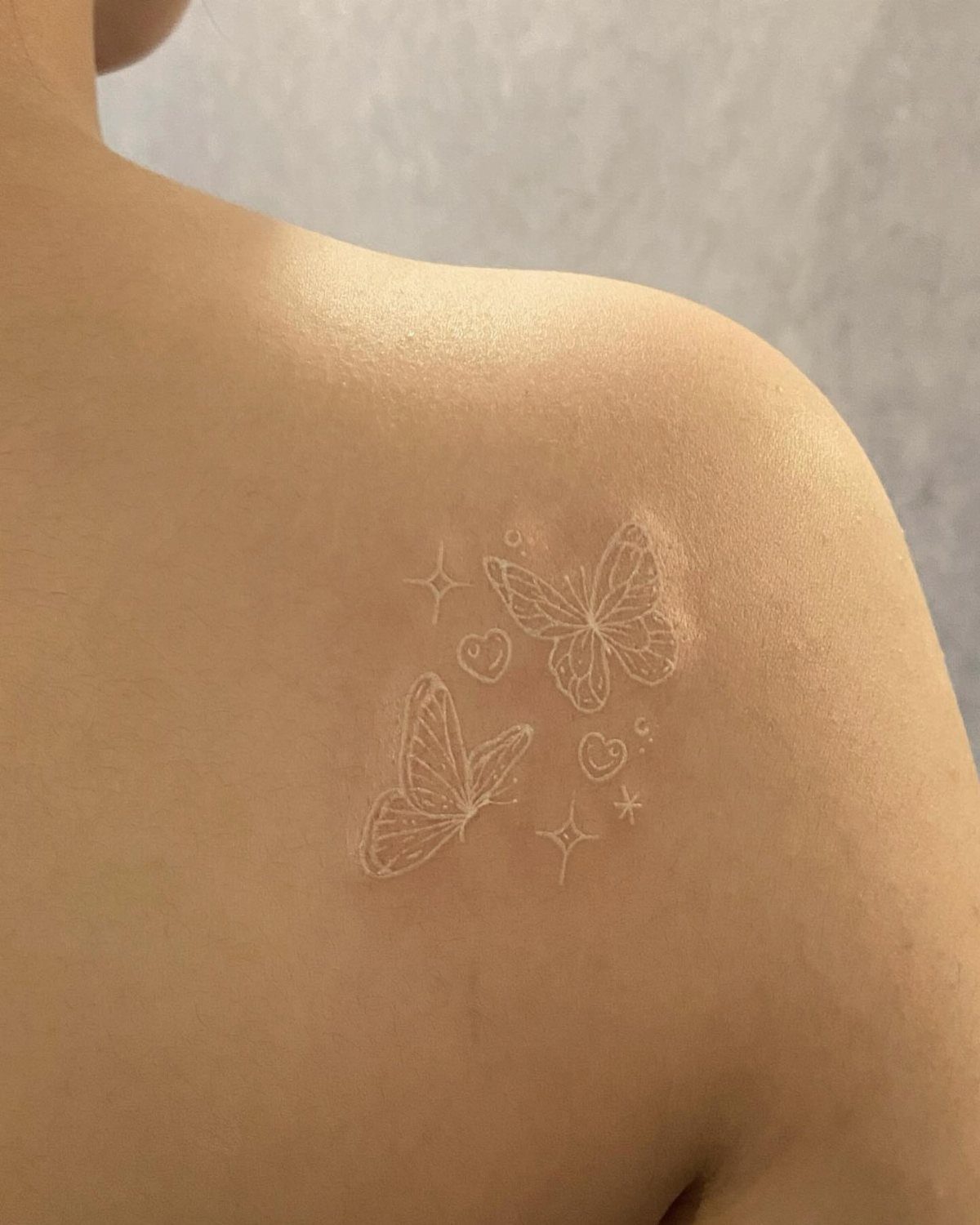
Butterflies in white ink keep the symbolism without the boldness of black or color. The soft outline still shows the wings and body, and pairing them with small hearts and stars fills the space without crowding.
White works well for designs you want to layer or add to later.
If you decide down the road that you want more contrast, an artist can trace color or black over the white, using the original outline as a guide.
On its own, the design stays delicate and fades into the skin tone over a few years.
3. Rose
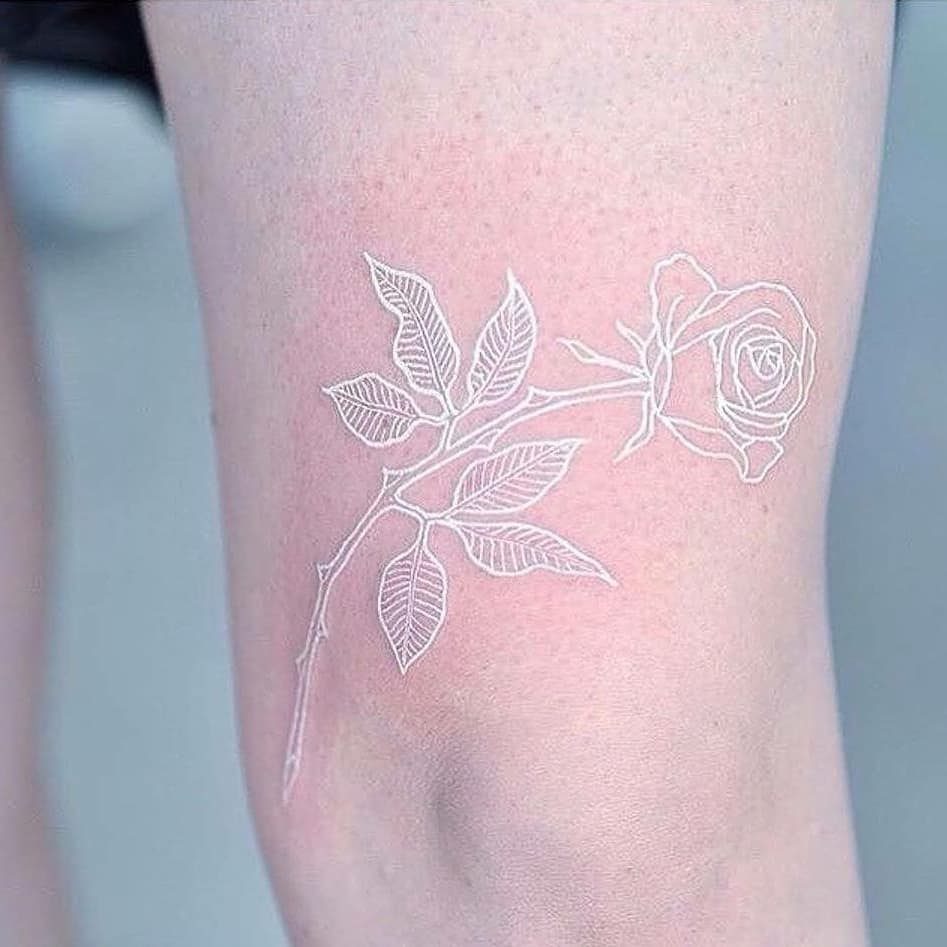
A rose in white ink keeps the shape recognizable while softening the look. The petals, leaves and thorns here are outlined with enough detail to read as a rose, not just a generic flower.
White ink roses look best when the lines stay thick enough to hold their shape as the ink settles.
Fine shading disappears faster in white than in black, so the stem and thorns need clear edges. On darker skin tones, white ink actually shows more contrast and lasts longer before fading into the background.
4. Limited Visibility on Pale Skin
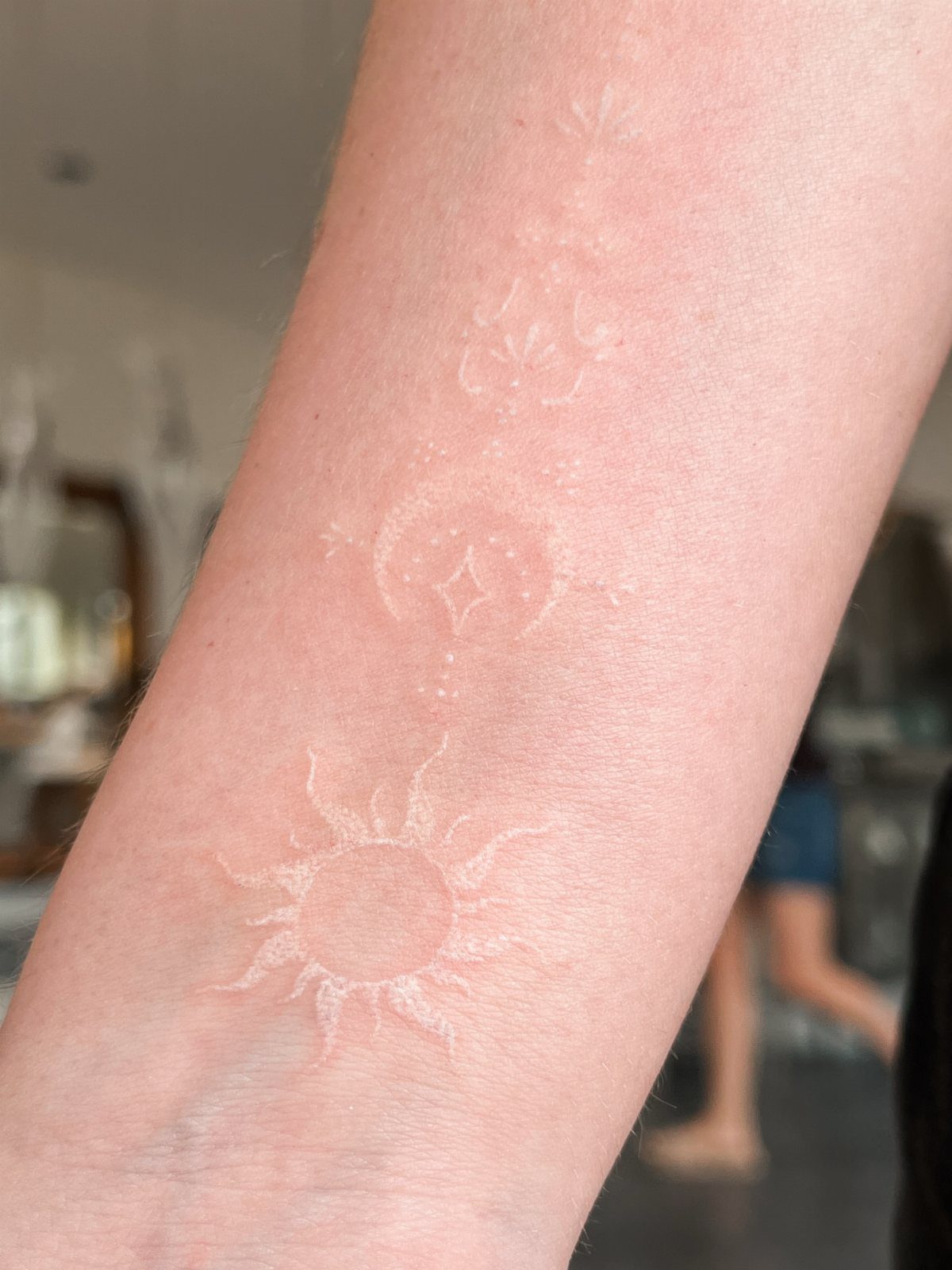
On very pale skin, white ink can disappear almost completely once the initial redness fades. The sun and symbols here are still visible, but mostly as a subtle texture rather than a defined color contrast.
That near-invisibility is the point for some people. If you want a tattoo that only shows up in certain light or when your skin tans slightly, white on pale skin does exactly that.
Just know it will fade faster than darker inks and may need a touch-up within a few years to stay visible at all.
5. UV Glowing Tattoos
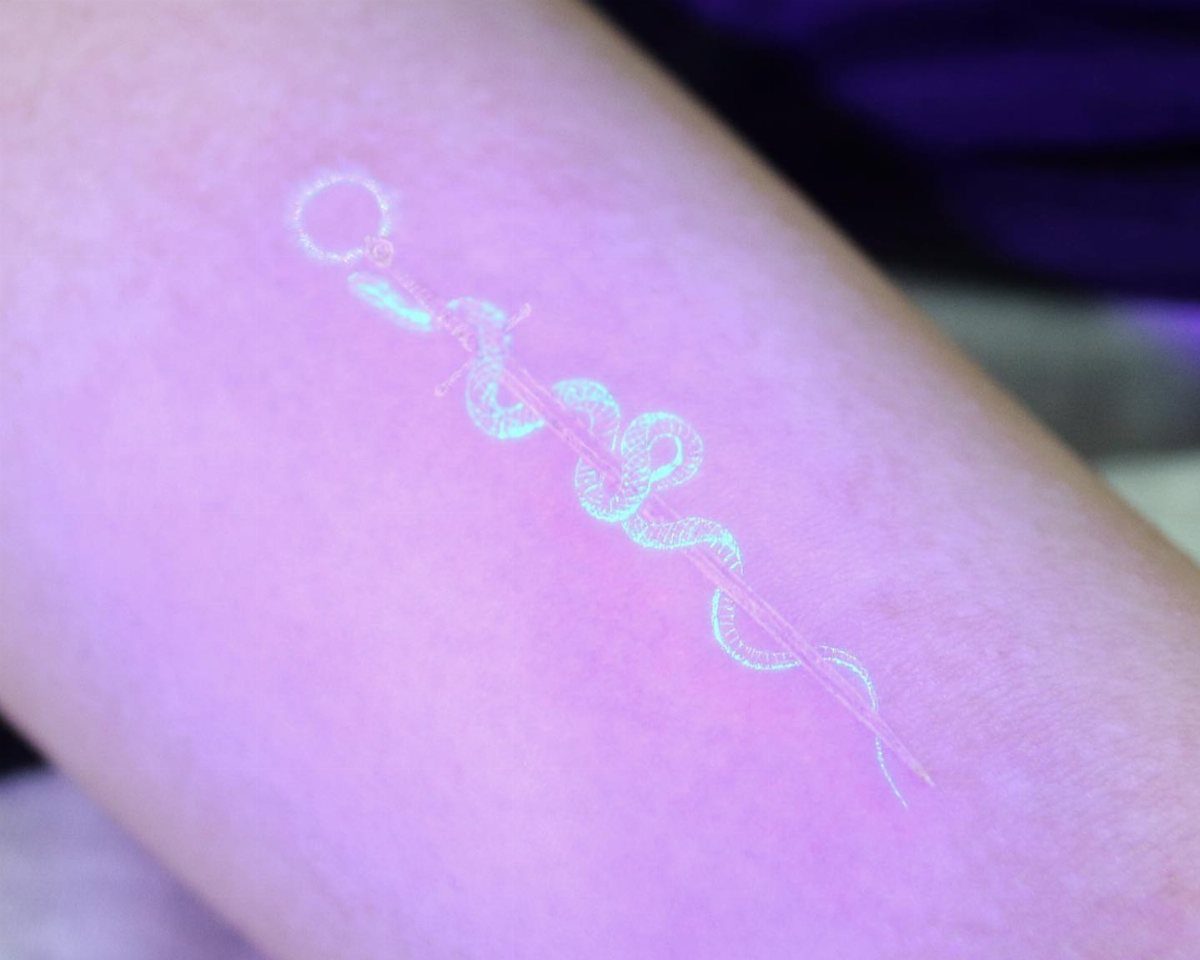
UV ink glows under blacklight, turning a design that looks white or nearly invisible in daylight into something that lights up in clubs, at night events, or anywhere with UV lighting.
The snake and sword here show clean lines in normal light and a bright glow under UV.
Not all white ink is UV-reactive, so you need to ask for it specifically.
The ink is still relatively new, and long-term fading data is limited compared to standard tattoo inks. Expect the glow to dim after a few years, and budget for a touch-up if you want it bright again.
6. Flower Tattoos
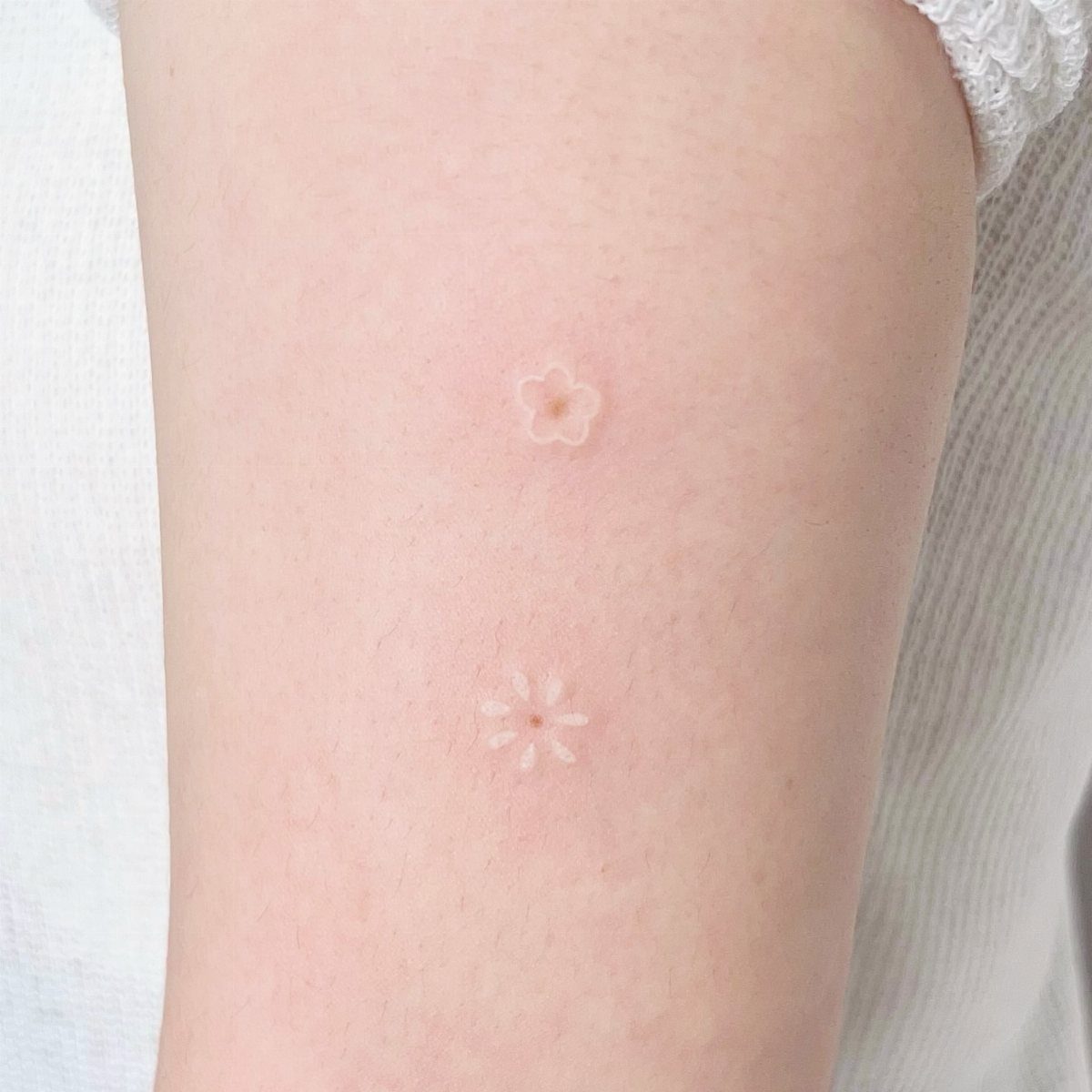
Small flowers in white ink give you the look of botanical detail without the commitment of a bold, colored piece. The 2 flowers here stay simple in shape, which helps them age well as the ink softens over time.
White ink flowers suit someone who wants a tattoo that blends into their skin tone but still carries meaning.
The ink tends to yellow slightly as it heals, especially on fair skin, so the final color may be closer to cream than pure white.
If you keep it on an arm or leg that sees sun every day, the white will fade faster than it would on your ribs or shoulder blade.
7. Intricate White Ink Hand Tattoo
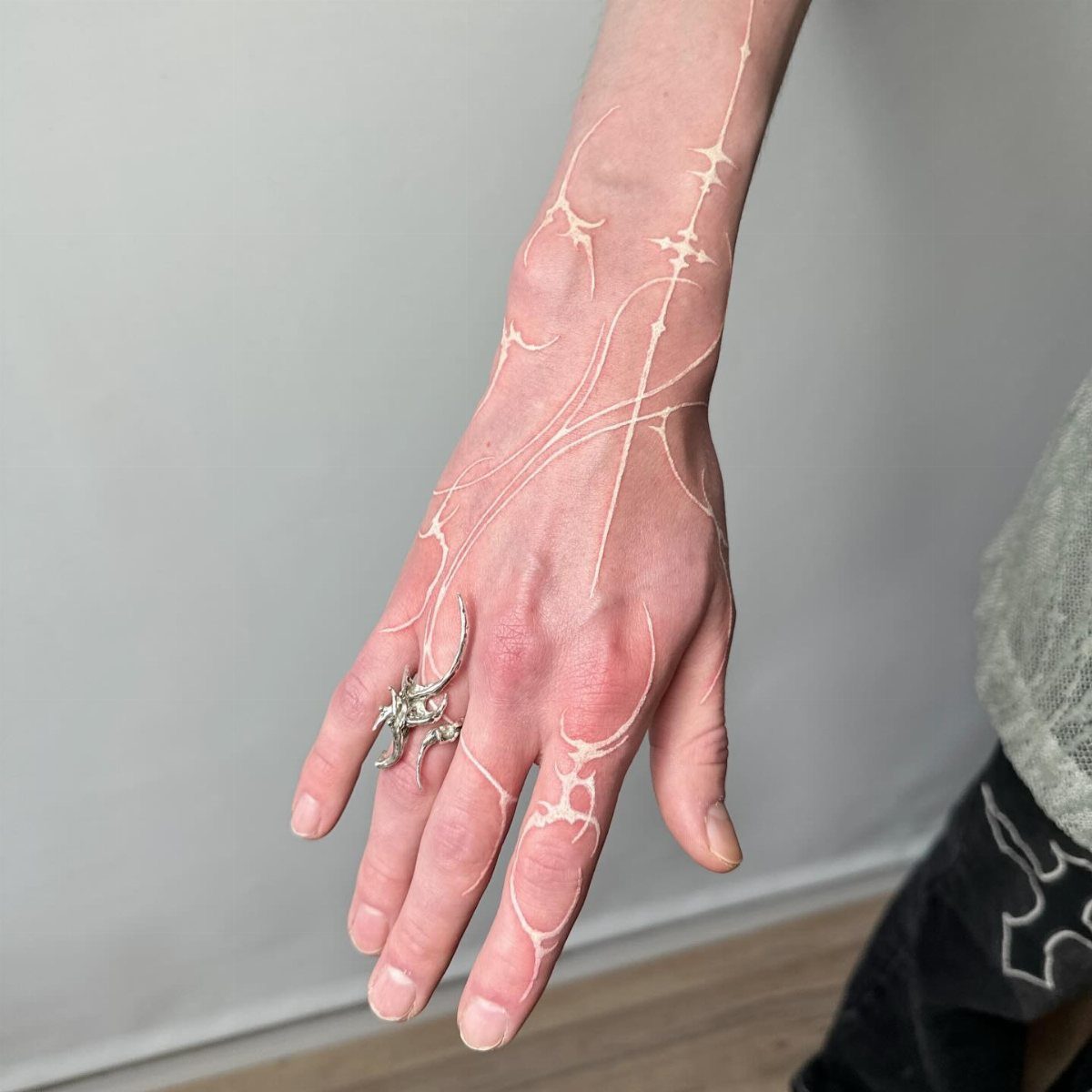
Hands fade white ink faster than almost any other placement because the skin renews itself constantly and every wash, scrape and UV hit works against the pigment.
The organic pattern here uses thick, flowing lines that can handle that wear better than tiny details would.
The design will shift from bright white to a faint scar-like texture as it ages, and some people prefer that look to a fresh tattoo.
8. White Ink Feather Tattoo
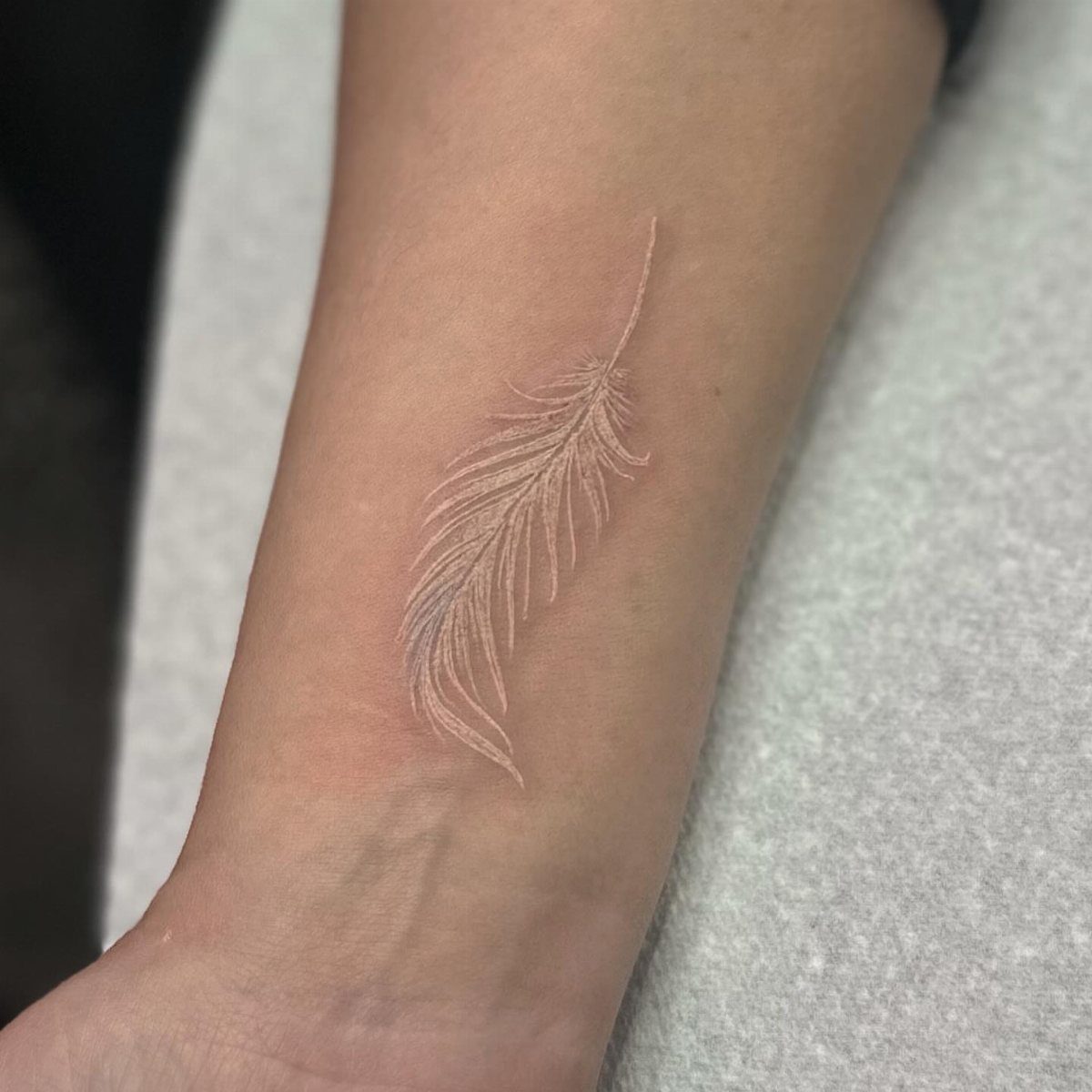
Feathers in white ink give you the softness of the subject without the hard contrast of black.
The barbs and center shaft here stay detailed enough to read as a feather, and the inner forearm placement keeps it visible to you without putting it in a high-friction zone.
White ink on the inner forearm lasts longer than on hands or feet because the skin moves less and sees less sun.
The feather will fade from white to a light cream over time, but the shape holds if the lines start thick enough.
9. Geometric White Ink Tattoo
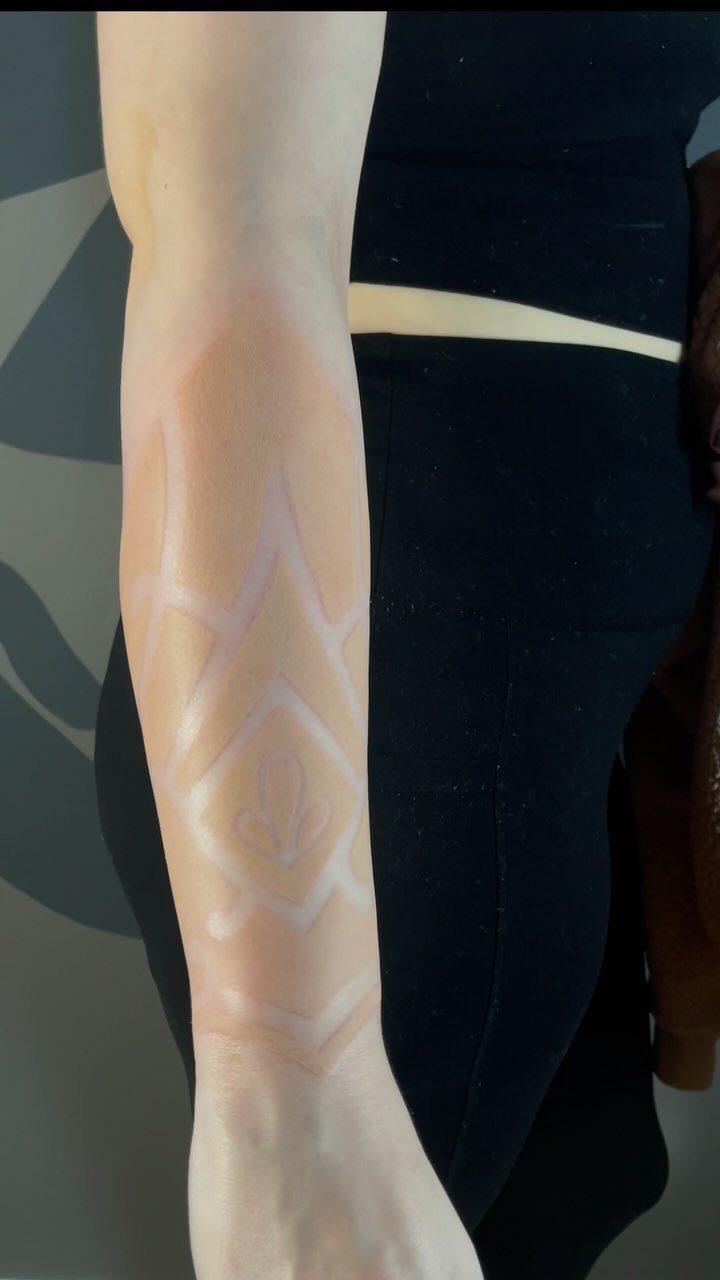
Geometric patterns in white ink rely on clean angles and repetition, so any blurring shows up fast. The diamond here uses straight lines and symmetry, which means the design either holds its shape or it doesn’t.
White ink on the forearm stays visible longer than on areas that bend or rub constantly.
If the lines blur after a few years, the pattern loses its geometry and starts to look more organic. Some people like that shift, but if you want sharp angles long-term, black ink holds them better.
10. White Ink Fish Scales Tattoo
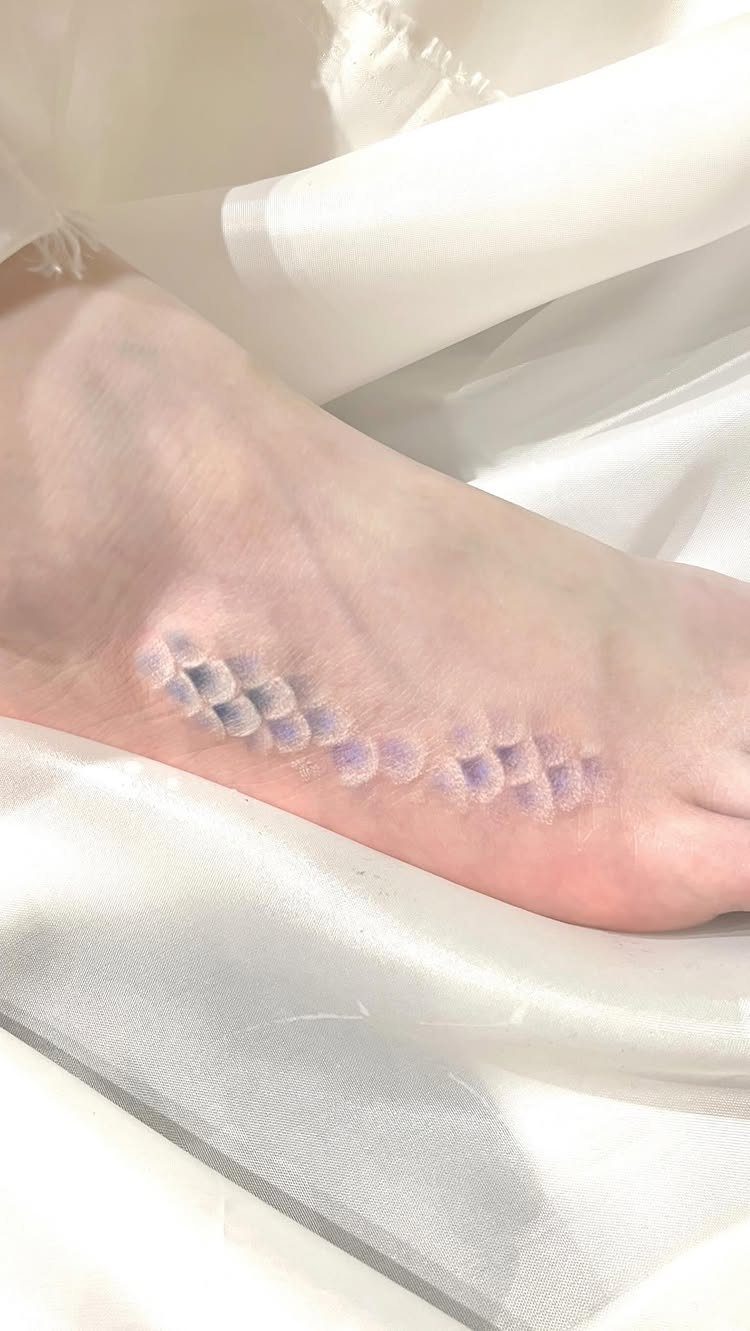
Fish scales in white ink mimic the natural texture of skin, and the side of the foot gives you a curved surface that suits the overlapping pattern.
The scales here follow the arch, which makes the design look like it belongs on the anatomy instead of sitting on top of it.
Feet fade tattoos faster than most placements because of friction from shoes and socks. White ink on the foot may need a touch-up within a year, and parts of the design that sit where your shoe rubs will blur first.
11. White Ink Snowflake Palm Tattoo
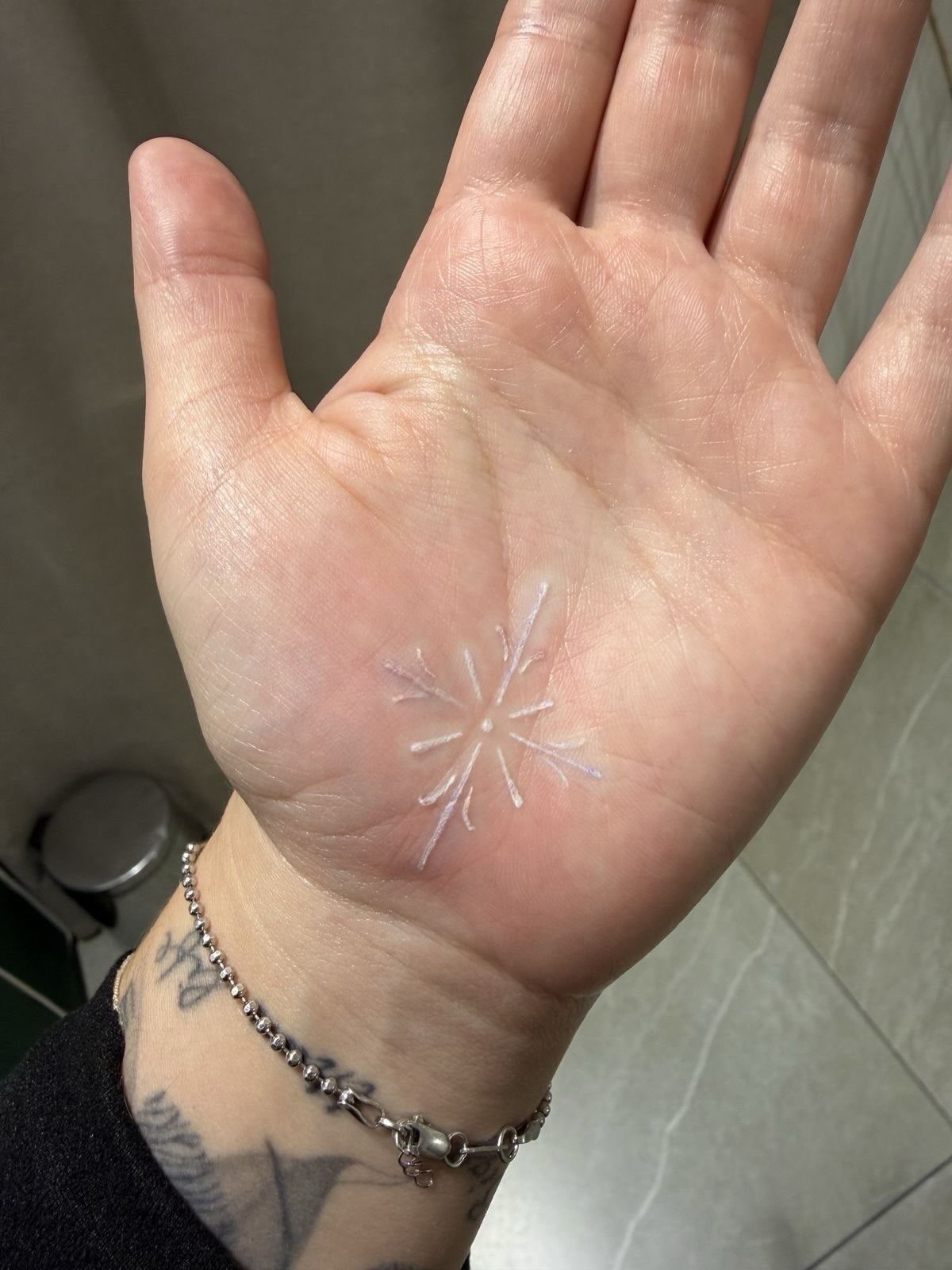
Palms reject ink more than any other body part because the skin is thicker and sheds faster.
A snowflake here will fade significantly within weeks, and most of the white ink will disappear or blur into a ghost of the original shape.
If you want a palm tattoo, you need an artist willing to work on a placement that fades by design.
The snowflake will likely need multiple sessions to build up enough pigment, and even then it will look more like a scar than a tattoo after a few months.
12. Behind the Ear Swirls
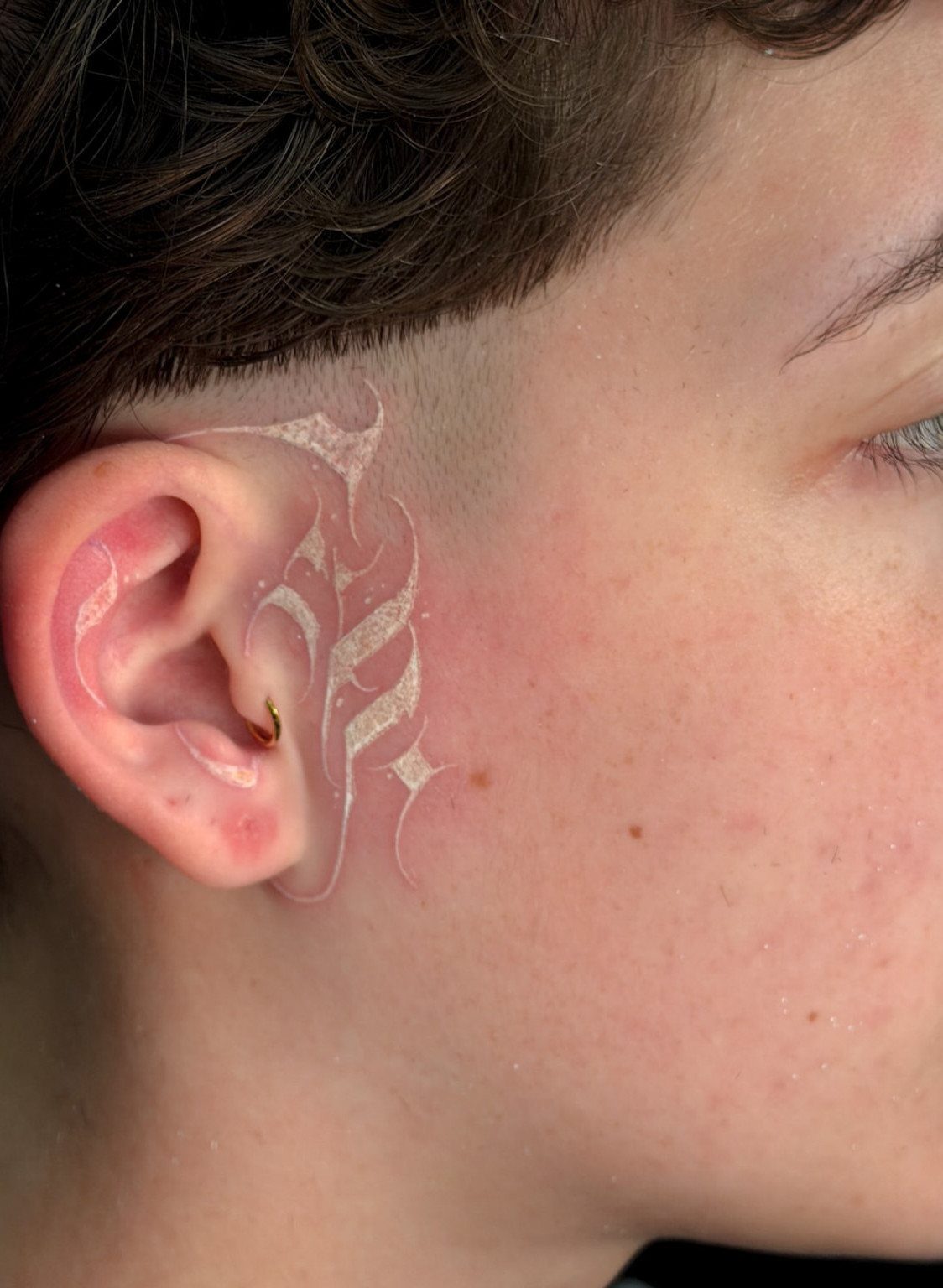
The skin around the ear is thin and tight, which makes it a good placement for white ink that needs to stay crisp.
The swirls here follow the curve of the ear and stay visible because the area is rarely covered or exposed to direct sun.
White ink behind or around the ear fades slower than on hands or feet, but it still shifts from white to cream over time.
The placement keeps the design hidden when you want it to be and easy to show when you pull your hair back.
Tattoo Care
White ink needs more careful aftercare than black because it sits closer to the surface and any scabbing or uneven healing shows up as blotchy patches instead of blending in.
Clean the area gently with mild, fragrance-free soap and keep it moisturized with an unscented ointment while it heals.
Sun breaks down white pigment faster than any other ink color, so cover the tattoo or apply sunscreen every time you go outside once the skin has closed.
Let the tattoo heal on its own. Scratching or picking at scabs pulls out pigment and leaves gaps in the design that are harder to fix later than they would be with darker ink.
Longevity Concerns
Sun exposure speeds up the process by breaking down the ink particles.
Even with careful aftercare, white tattoos lose crispness over time as the ink gets absorbed into the skin. Edges blur and the color can shift from white to cream or pale yellow, especially if the area sees regular sunlight.
Budget for those sessions when you choose white, because the design will need them to stay clear.
Skin Compatibility
White ink tattoos work best on medium to darker skin tones, since fair skin provides too little contrast for the design to show clearly.
Frequently Asked Questions
Do white tattoos fade faster than traditional tattoos?
Yes, white ink fades faster because it has less pigment than black or colored ink and sits closer to the skin surface.
Sun exposure breaks down the particles quickly, and on fair skin the contrast can disappear almost completely within a few years. Most white tattoos need touch-ups to stay visible.
What tattoo colors look good on white skin?
White ink on very pale skin provides almost no contrast and may disappear once the redness fades, showing up only as subtle texture.
White ink pops better against deeper skin and holds its contrast for years before it starts to fade into the surrounding tone. Medium to dark skin gives white tattoos the best visibility.
Are white tattoos safe?
White tattoo ink is typically made from metal-based pigments like titanium dioxide or zinc oxide, and follows the same safety standards as other tattoo inks.
UV-reactive glow inks are newer and have less long-term data, so expect the glow to fade over time. Use a licensed artist and follow proper aftercare to avoid infection.
What does a healed white tattoo look like?
After healing, expect pale cream or soft yellow rather than the original bright white, and the design may feel slightly raised.
Edges blur as the ink gets absorbed, and sun exposure speeds up the fading. On fair skin it can become nearly invisible, while on darker skin it stays more noticeable.
Can I get a white tattoo on dark skin?
White ink shows up better on medium to dark skin because the contrast is stronger.
Against darker skin, white ink creates a subtle scar-like contrast that outlasts its appearance on lighter complexions. The ink still fades over time but holds its shape better before blending in.
How do I take care of a white tattoo during the healing process?
Wash twice a day with plain, unscented soap and keep a thin layer of fragrance-free ointment on it until the surface heals over.
Let scabs fall away on their own; pulling them off leaves gaps that show as uneven patches once the color settles.