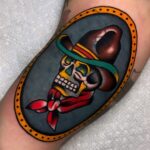
A thick white outline, a soft drop shadow, or both layered together are what separate a tattoo that looks like a sticker from one that sits flat on the skin.
The width of that border decides how long the effect lasts: narrow outlines blur as the tattoo ages, while a generous margin holds its shape years later.
1. Bare Skin Border
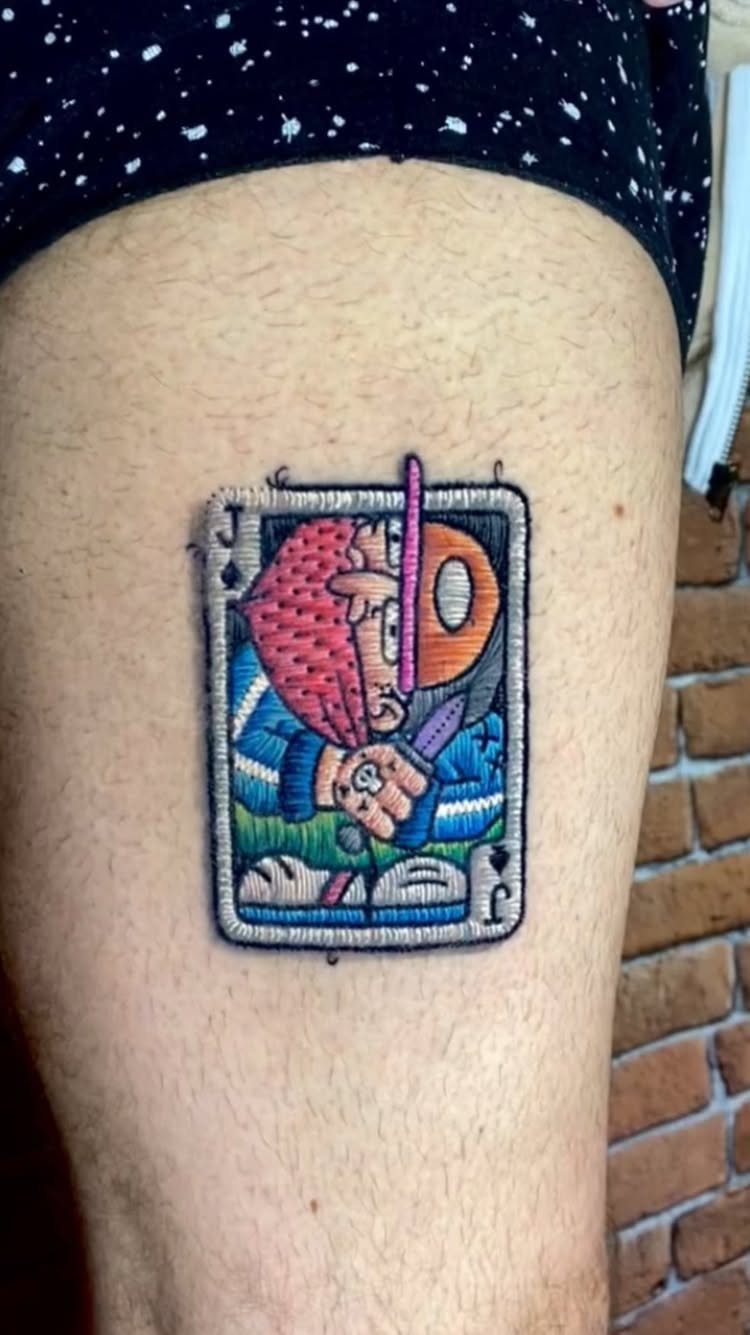
A thick outline runs around the design, mimicking the paper edge you peel off a real sticker. That border lifts the tattoo off your skin and gives it a finished, contained look.
The width matters.
2. Drop Shadow
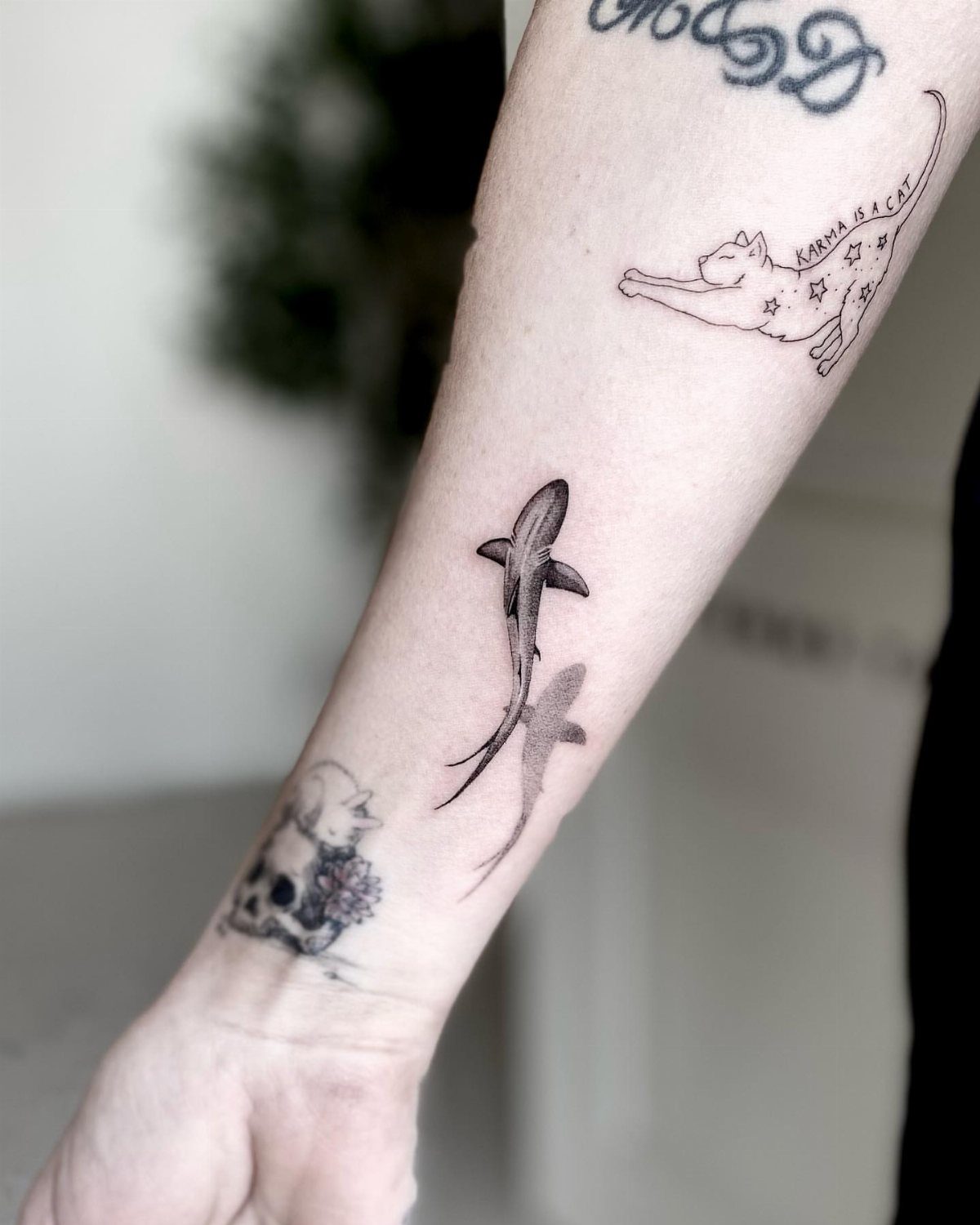
A soft grey or black shadow sits just below and to one side of the design, giving the illusion that the tattoo is lifting slightly off your skin.
That single detail turns a flat image into something that looks stuck on.
The shadow stays subtle. A heavy drop pulls attention away from the design; a light gradient that fades outward sells the sticker effect without competing for focus.
3. Cartoon Characters Tattoos That Look Like Stickers
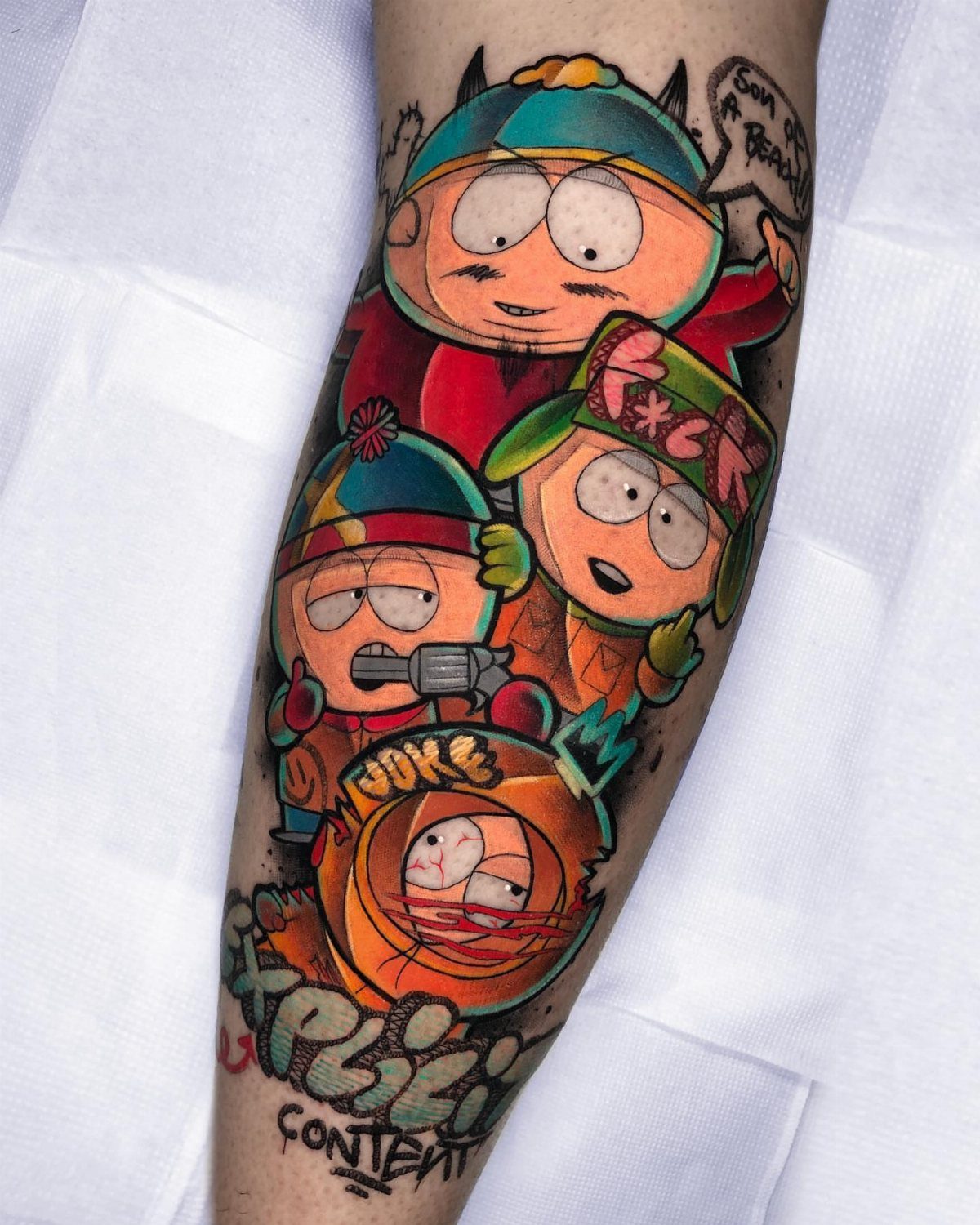
Bold outlines and flat color blocks make cartoon characters natural candidates for sticker tattoos.
The art style already reads as graphic and contained, so adding a white border and maybe a drop shadow finishes the illusion without changing the character itself.
Older animation tends to work better than recent designs. Characters with thick black outlines and simple shading translate cleanly to skin, while heavily rendered or gradient-heavy art can lose detail as it heals.
4. Sticker Tattoo
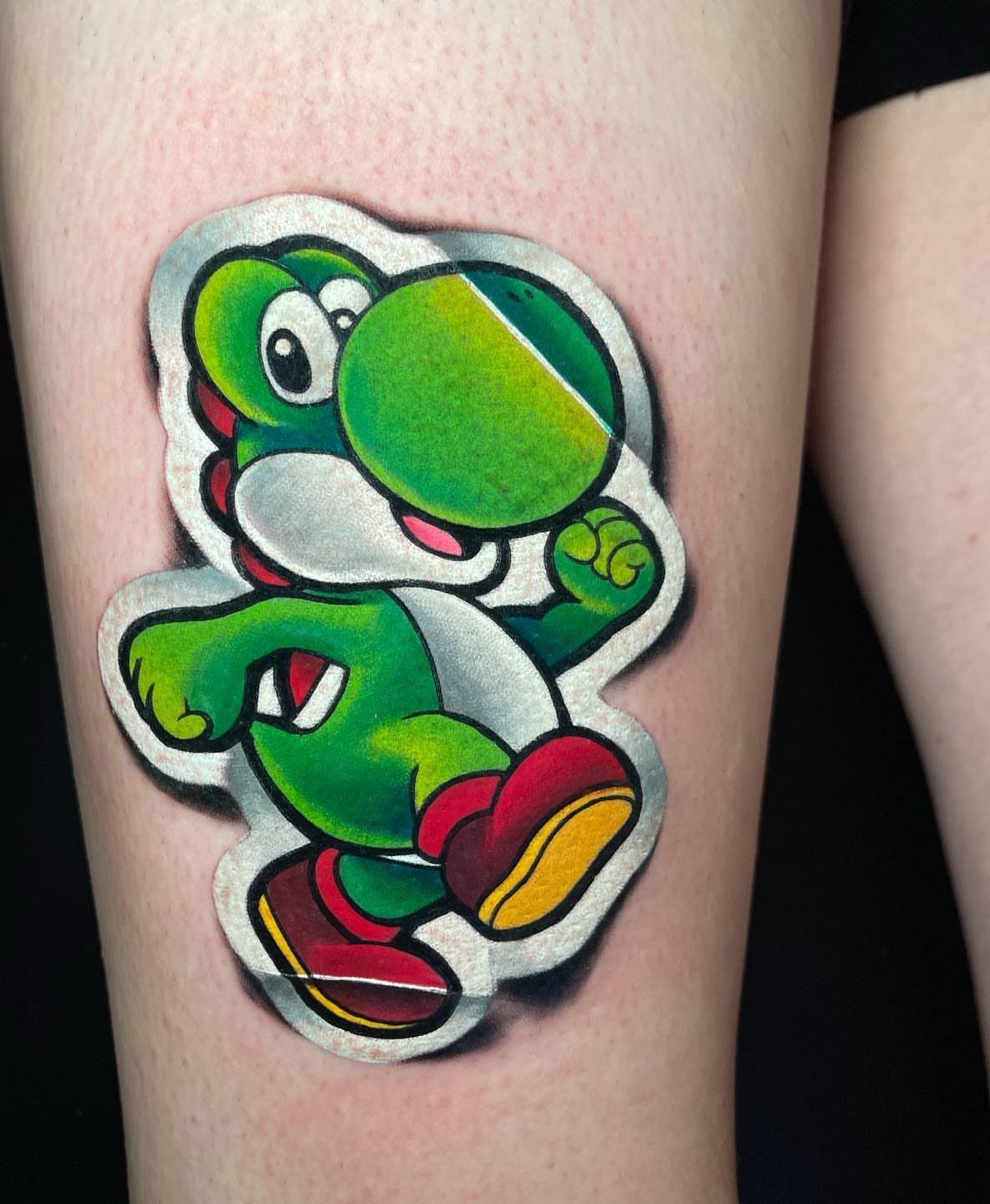
This approach combines a white border with a drop shadow, layering both effects to push the sticker illusion as far as it goes.
The border defines the edge, the shadow adds depth, and together they make the design look like it could peel off if you picked at a corner.
Placement matters more here than with a flat tattoo. Areas where skin folds or stretches will distort the shadow, so forearms, calves and outer thighs hold the effect better than elbows, wrists or ribs.
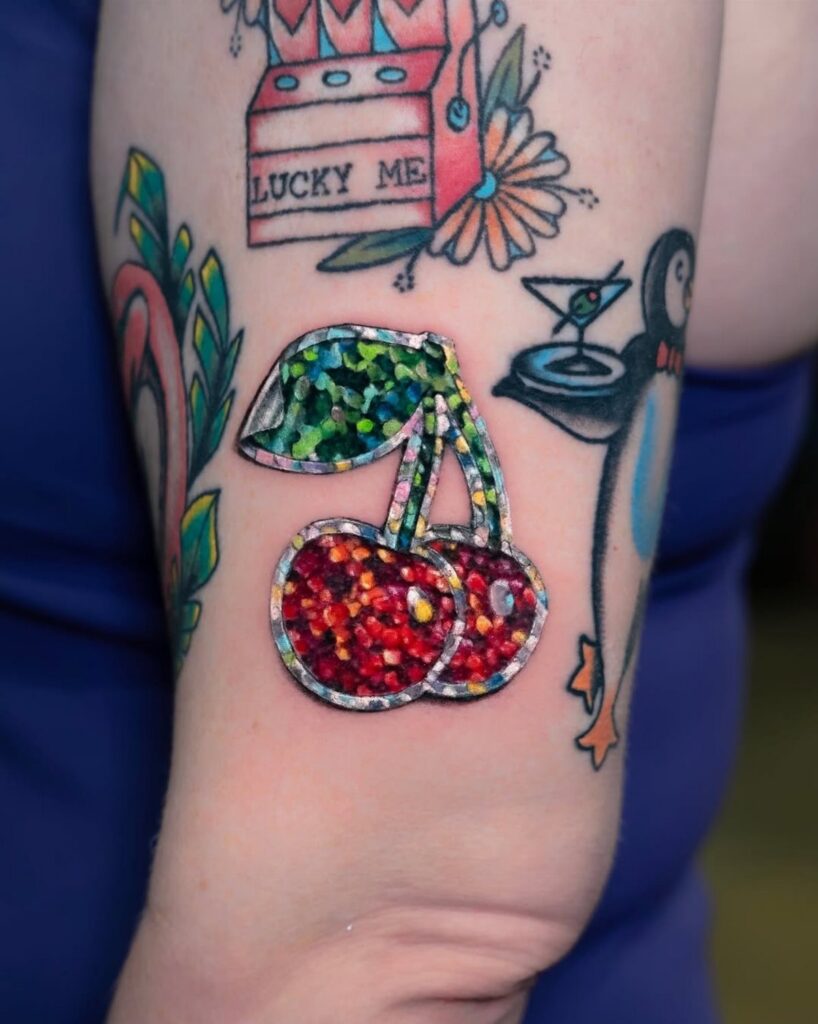
5. Glitter Sticker Tattoos
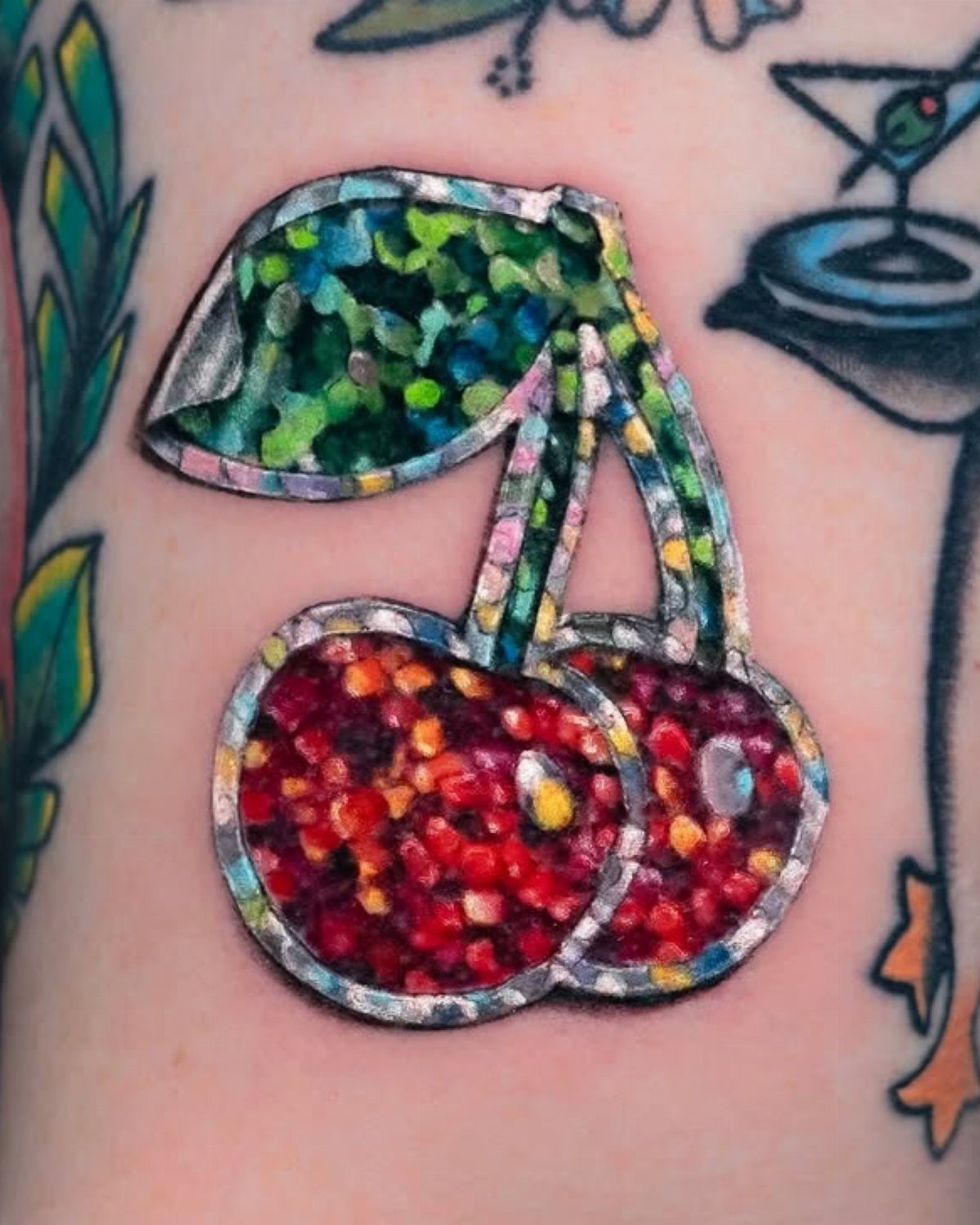
Stippling or tight dot work inside the design creates a sparkly, textured look that mimics the reflective surface of a glitter sticker. The white border holds it together, but the fill is what sells the effect.
Expect to sit longer. Building that texture takes more needle passes than flat color, and the artist has to keep the dots dense enough to read as shimmer without muddying into a solid block.
Healing is standard, but the final result looks best on skin that holds fine detail well.
6. Holographic Sticker Tattoos
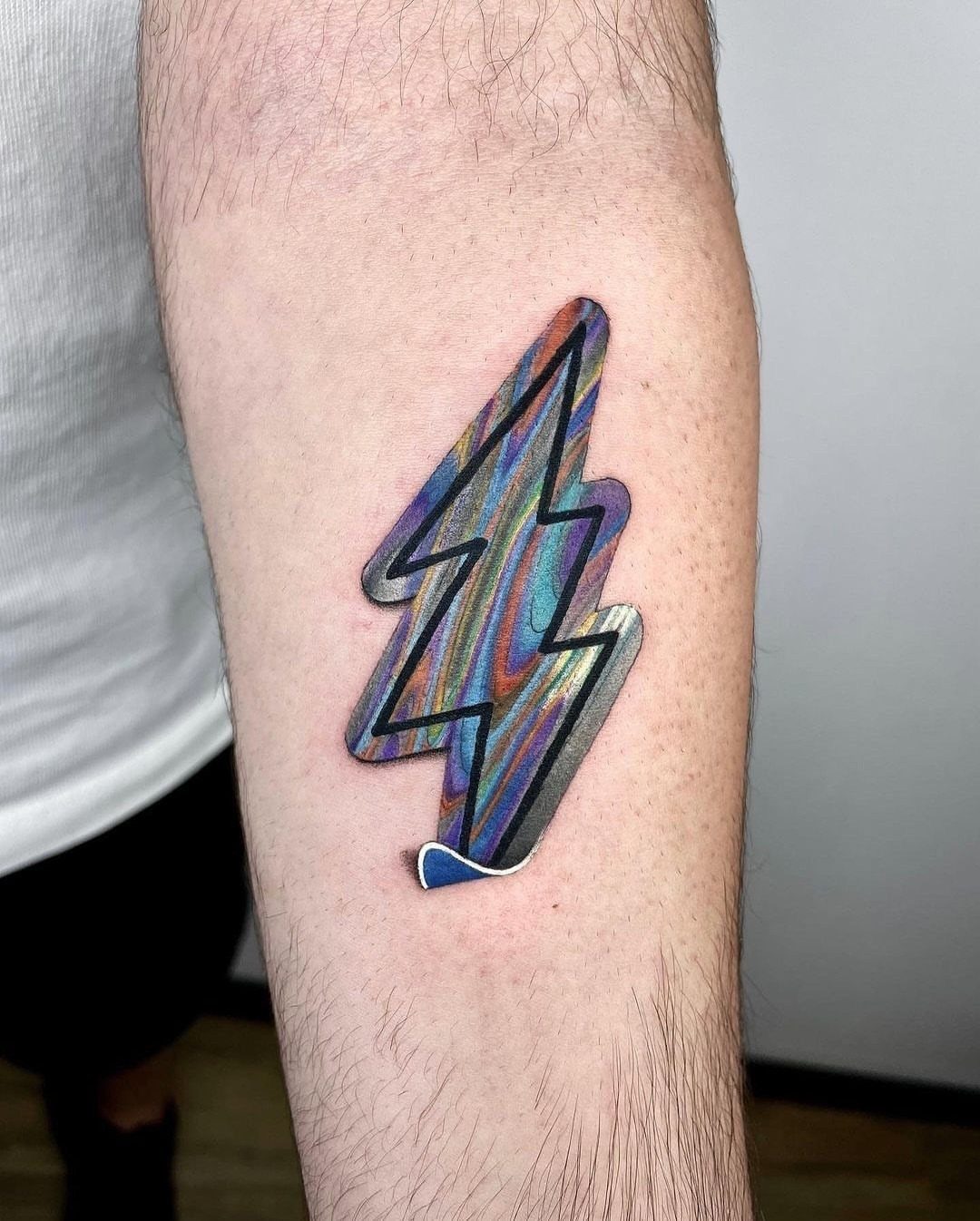
Soft gradients of pink, blue, purple and yellow blend inside the design to replicate the color-shifting surface of a holographic sticker. The white border and drop shadow frame it, but the real finish is that iridescent fill.
Color choice affects how well it reads.
Pastels and jewel tones blend smoothly and catch light the way real holographic film does; darker or muddy tones flatten out and lose the effect. Placement on flat areas like the forearm or shoulder blade keeps the gradient clean.
Tattoo Longevity
The border and shadow age faster than the design itself.
Over time every tattoo spreads a little, and the outline and shadow take the hit. Soft gray shading always fades faster than solid black.
A wide border keeps reading as a border years later, and extra room lets the shadow fade gracefully instead of vanishing.
Design Clarity
Bring a clear reference.
Realism Vs. Sticker Style
Realistic tattoos do not fit this style.
The sticker look is built on crisp outlines, flat bold color, and negative-space borders, which suits illustrative, cartoon, and pop-culture subjects. Photorealistic portraits or soft painterly work lose clarity when forced into that format.
Your artist will guide you toward designs that work. Anything with a hard edge and flat color translates cleanly; subjects that rely on soft gradients or realistic texture do not.
Frequently Asked Questions
Does the white border use white ink?
Usually not.
Most artists leave that border as bare skin instead of tattooing it white, because white ink fades unevenly and can yellow over time. Bare skin stays clean and holds the sticker effect reliably.
Can I get one small?
You can, but small works against the style.
Both the border and the shadow need space to do their job, and when you scale the whole thing down you lose the details that sell the effect. A larger size keeps the effect sharp as it ages.
Can it cover an old tattoo?
Rarely on its own.
The effect depends on a ring of clean skin, and old ink right up to the edge kills that. Your artist will look at what you already have and tell you which methods can actually hide it.