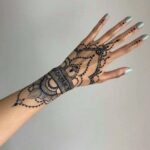
Black ink sits on dark skin with clarity that lighter shades cannot match, and most of the ideas here build on that strength: mandalas, tribal patterns, portraits and bold outlines all depend on deep saturation to hold their detail as years pass.
Color needs multiple passes to build opacity, and saturated reds, oranges and blues hold visibility longest while pastels fade within a few years.
1. Ornate Mandalas
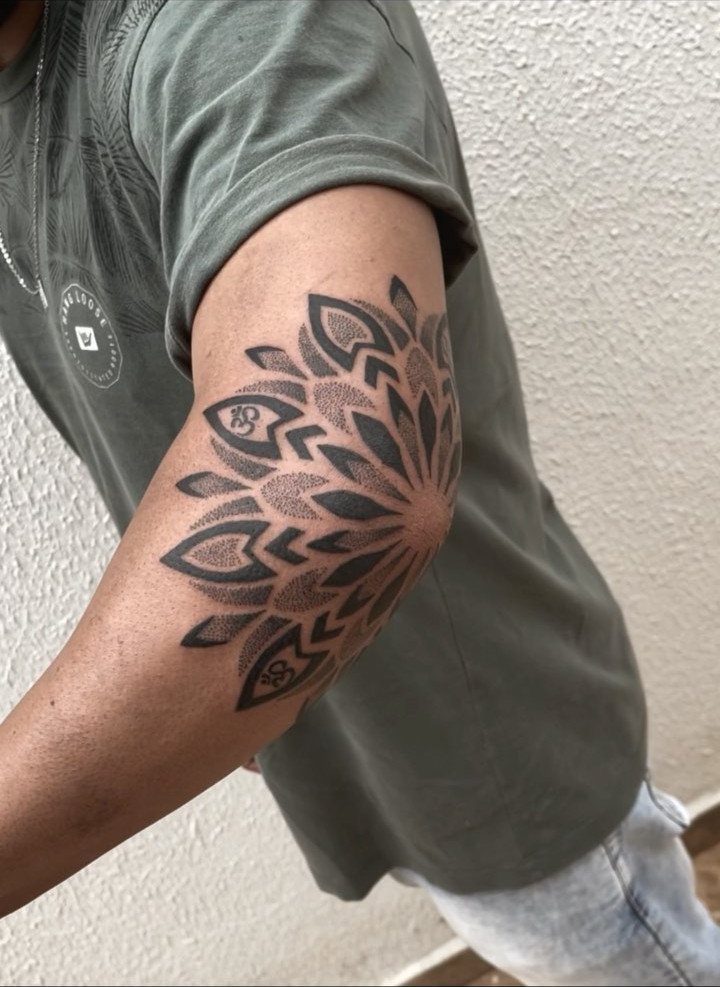
A mandala gives you a design built from repeating geometry, and on deeper skin tones the layered line work reads with real definition.
The contrast inside the pattern itself does the lifting here, so black ink alone delivers the detail you want without needing color to separate one ring from the next.
Mandalas scale well to arms, shoulders and backs. Tighter line spacing fills the design with more texture, while wider gaps keep it cleaner and let the skin show through.
2. Tribal/Cultural Patterns
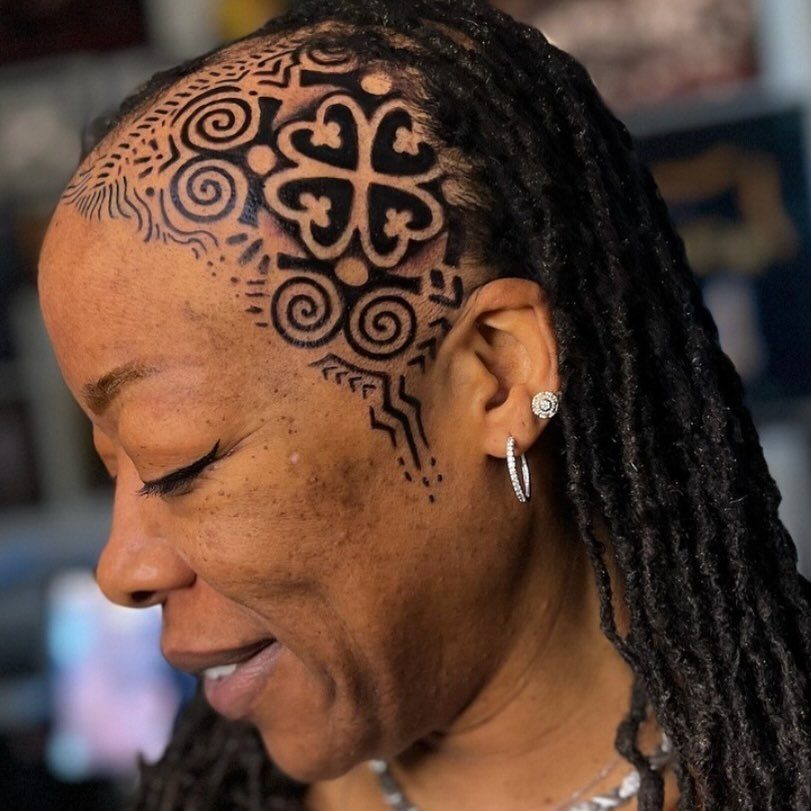
Tribal patterns rely on solid black fills and thick lines, and that weight suits darker skin perfectly. The heavy saturation gives you a design that holds its shape over time and stays sharp even as the ink settles.
This style works across broad flat areas like the upper arm, chest or calf.
Placement on the temple or scalp adds visible impact but commits you to keeping the area visible, so hair length and growth matter if you go that route.
3. Black Ink Flowers
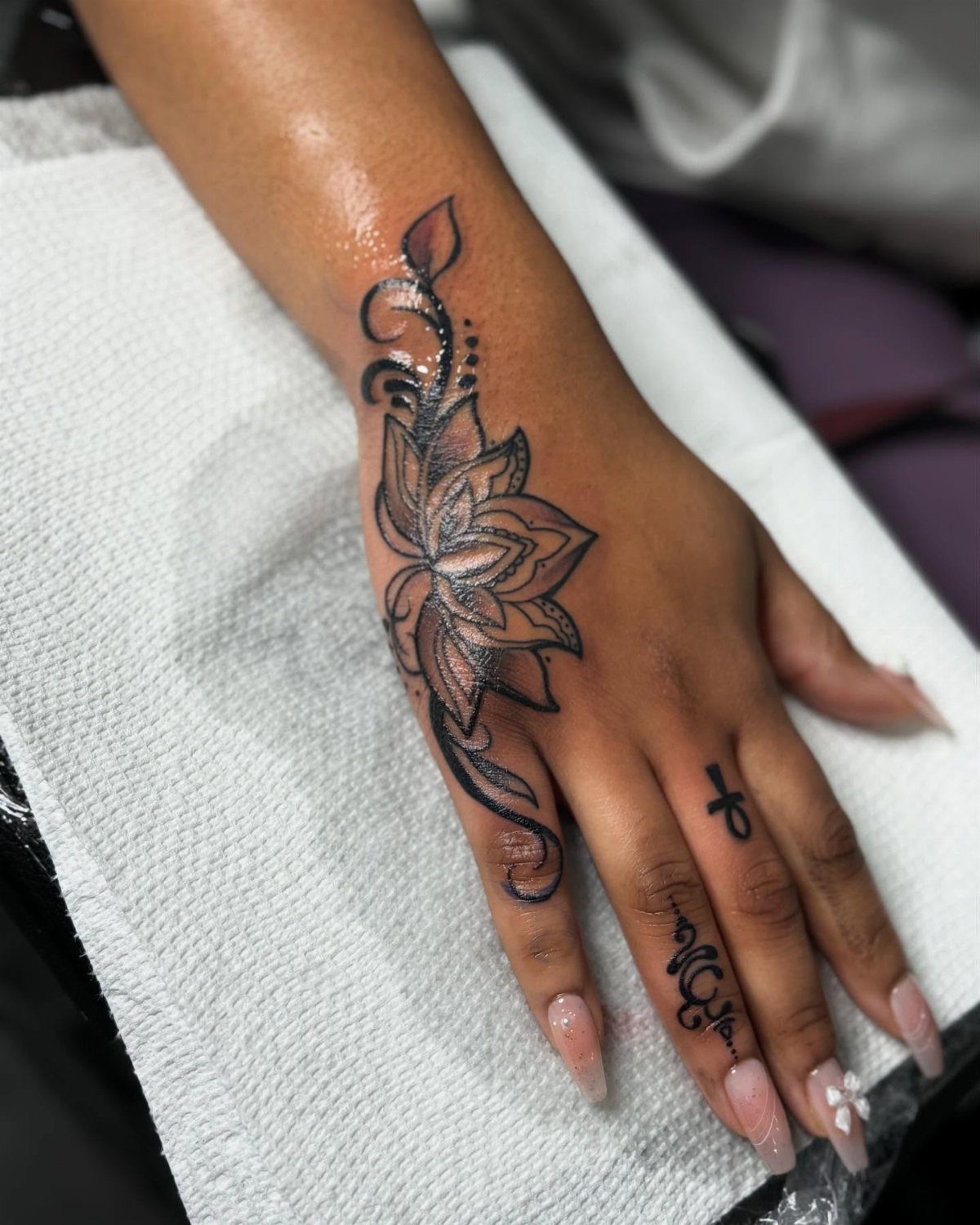
Black ink flowers give you organic shapes without the color matching question that comes with realistic petals. The line work alone carries the design, and the contrast between ink and skin keeps the forms readable.
Hands and fingers take detail well but fade faster than covered areas, so expect touch-ups if you place a flower there. Shoulders and forearms hold black ink longest, while hands and fingers fade faster and need touch-ups.
4. Deep Reds
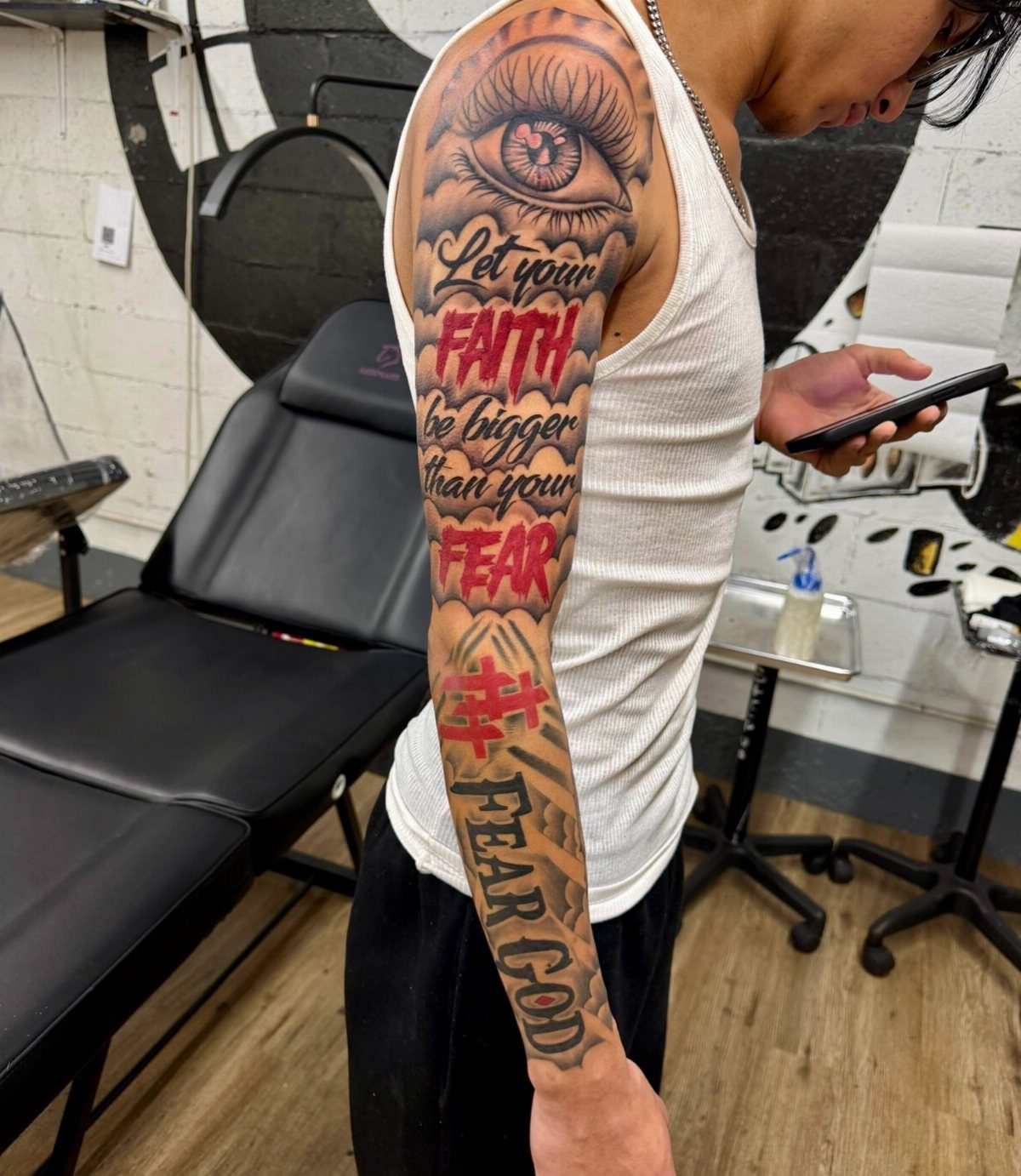
Deep red sits between black and brighter colors, and on darker skin it shows up as a saturated accent rather than a soft wash.
The color reads best when the artist uses enough pigment and keeps the layers dense, so the red holds its own against your natural tone.
Red pairs well with black script or linework. It adds dimension without needing a full color palette, and over time it ages darker rather than fading to pink the way it can on lighter skin.
5. Bold Outlines with Vibrant Colors
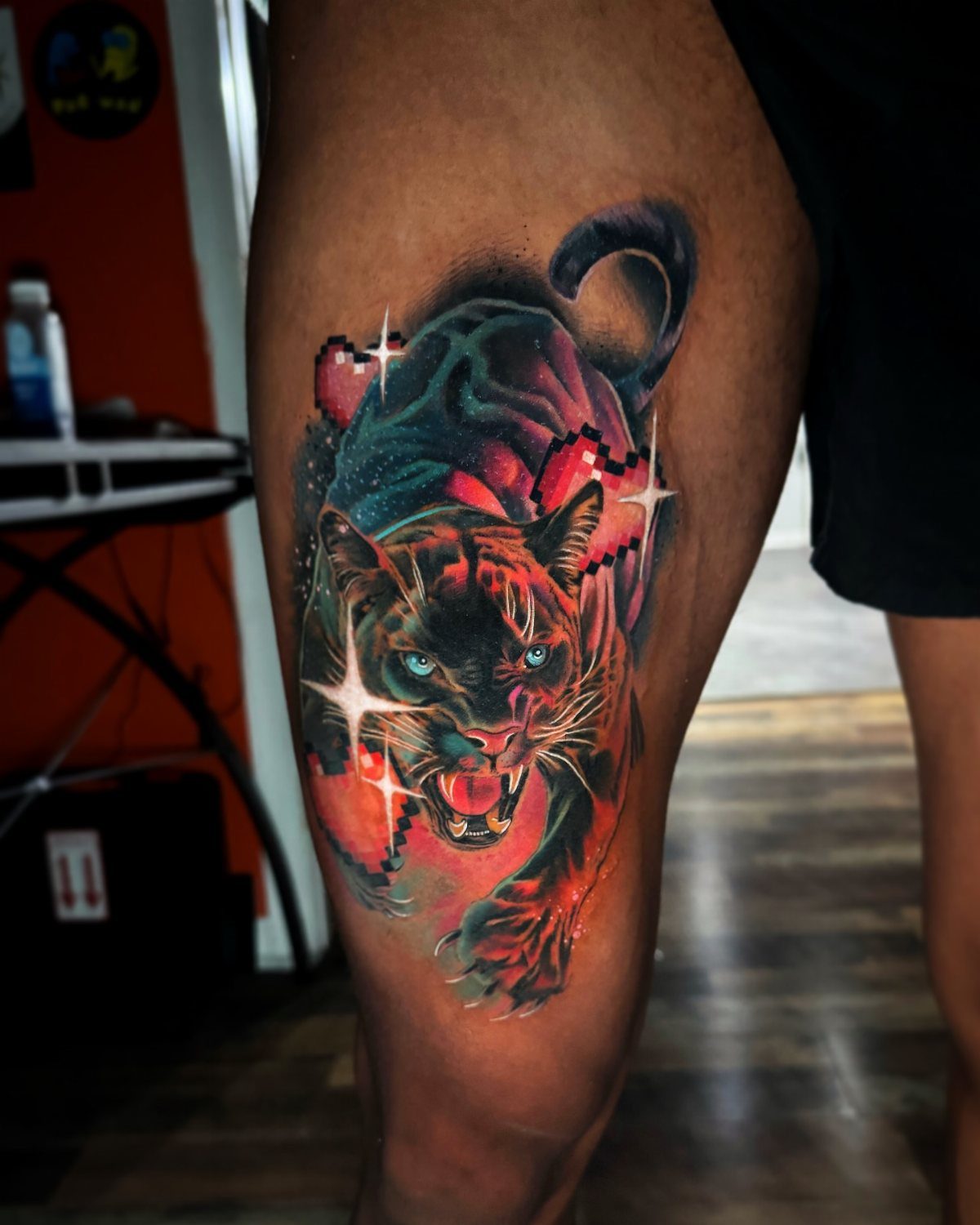
Bold outlines frame the color inside and give the design structure, which matters when you want bright hues to show clearly on darker skin.
The line keeps the shapes distinct even when the color sits close in value to your skin tone.
Bright yellows, oranges and greens read better on deeper skin tones when an artist uses a bold black outline to frame the color and control how it shows against your natural undertone.
That technique lifts the pigment off your skin and makes it visible.
6. Color Tattoos
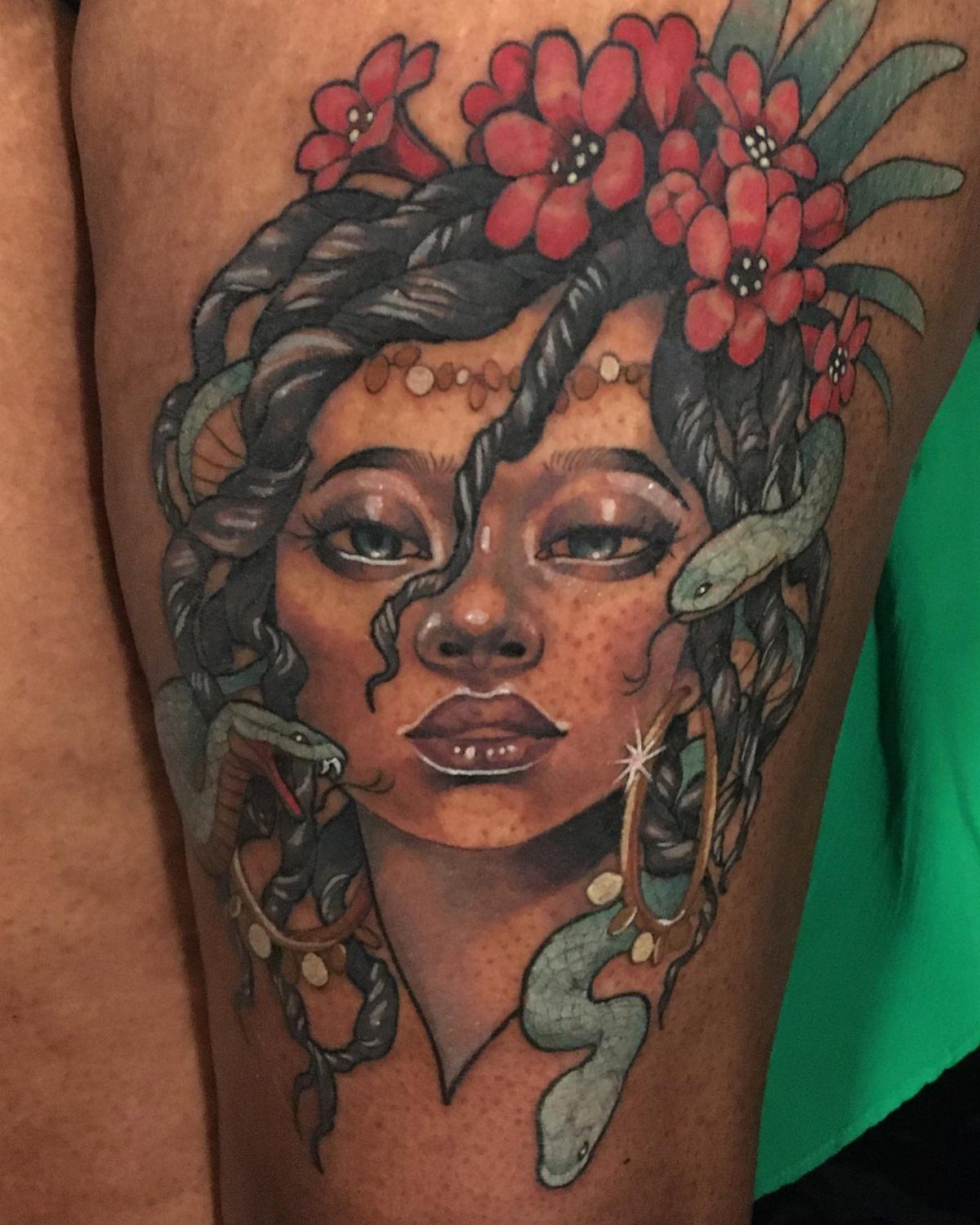
Getting color to read on dark skin takes saturated ink and multiple passes, not just one application.
Artists who specialize in this work know to build opacity first, then add the hue on top, so the color reads as the shade you chose rather than blending into your skin.
Reds, oranges, purples and blues hold visibility longest. Pastels and light pinks fade faster and often disappear within a few years, so stick with saturated tones if you want the color to last.
7. Realistic Portrait Tattoos
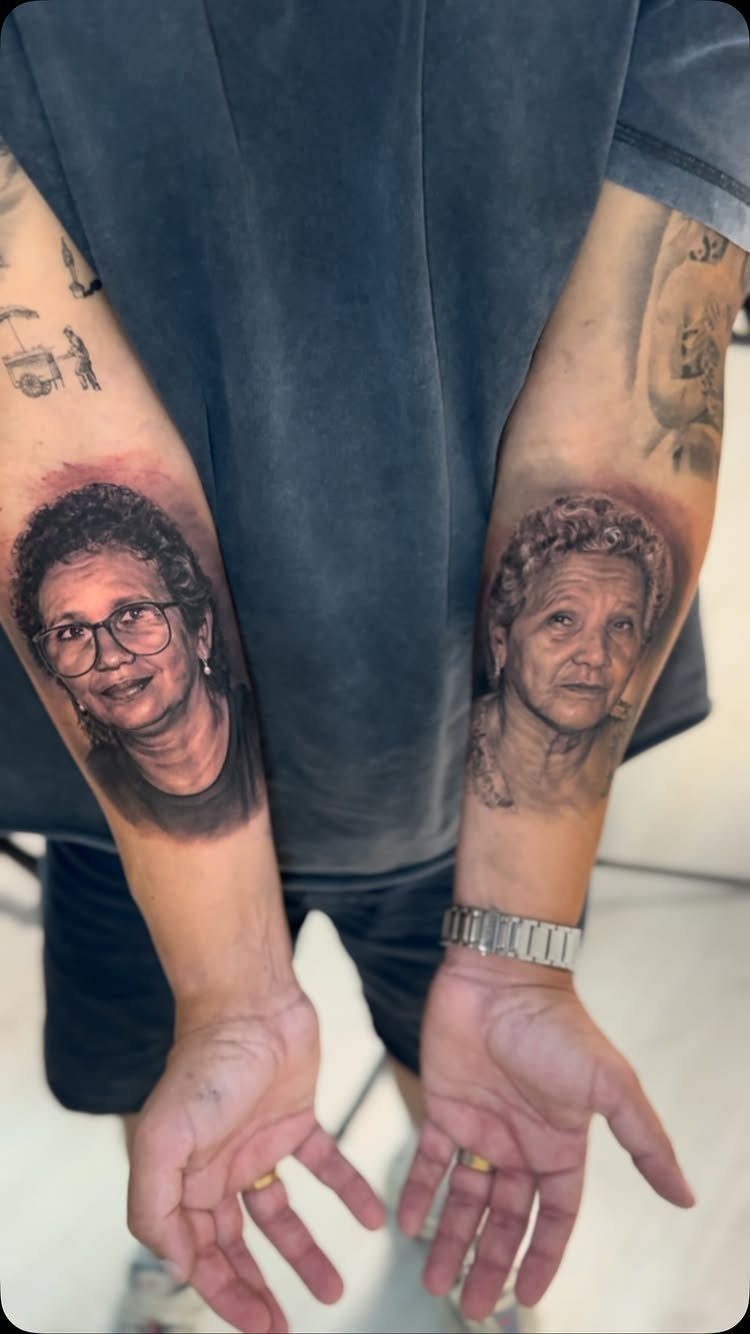
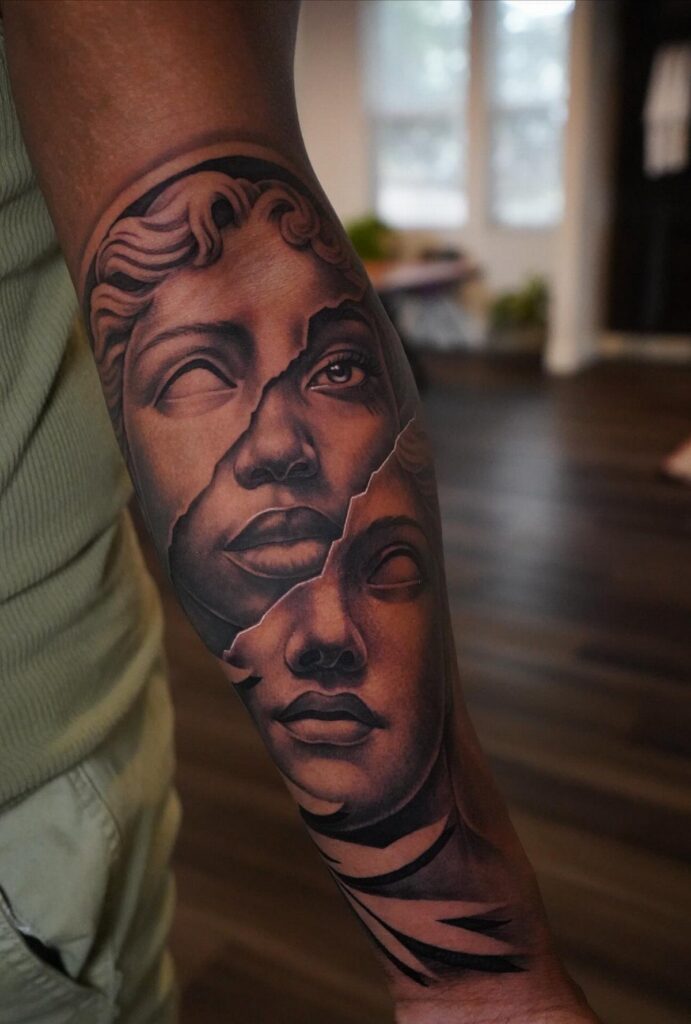
Black and grey portraits rely on contrast built from shading rather than color, and on dark skin that tonal range shows up clearly when the artist keeps the highlights strong and the shadows dense.
Grey work on dark skin needs layered contrast to separate the portrait from the background, and forearms give you enough surface to hold that detail.
Faces need an artist experienced with darker skin tones. The technique changes: more passes to build opacity in the lighter values, and careful placement of the brightest highlights so the likeness reads from a distance.
8. Gemstone and Jewelry Tattoos
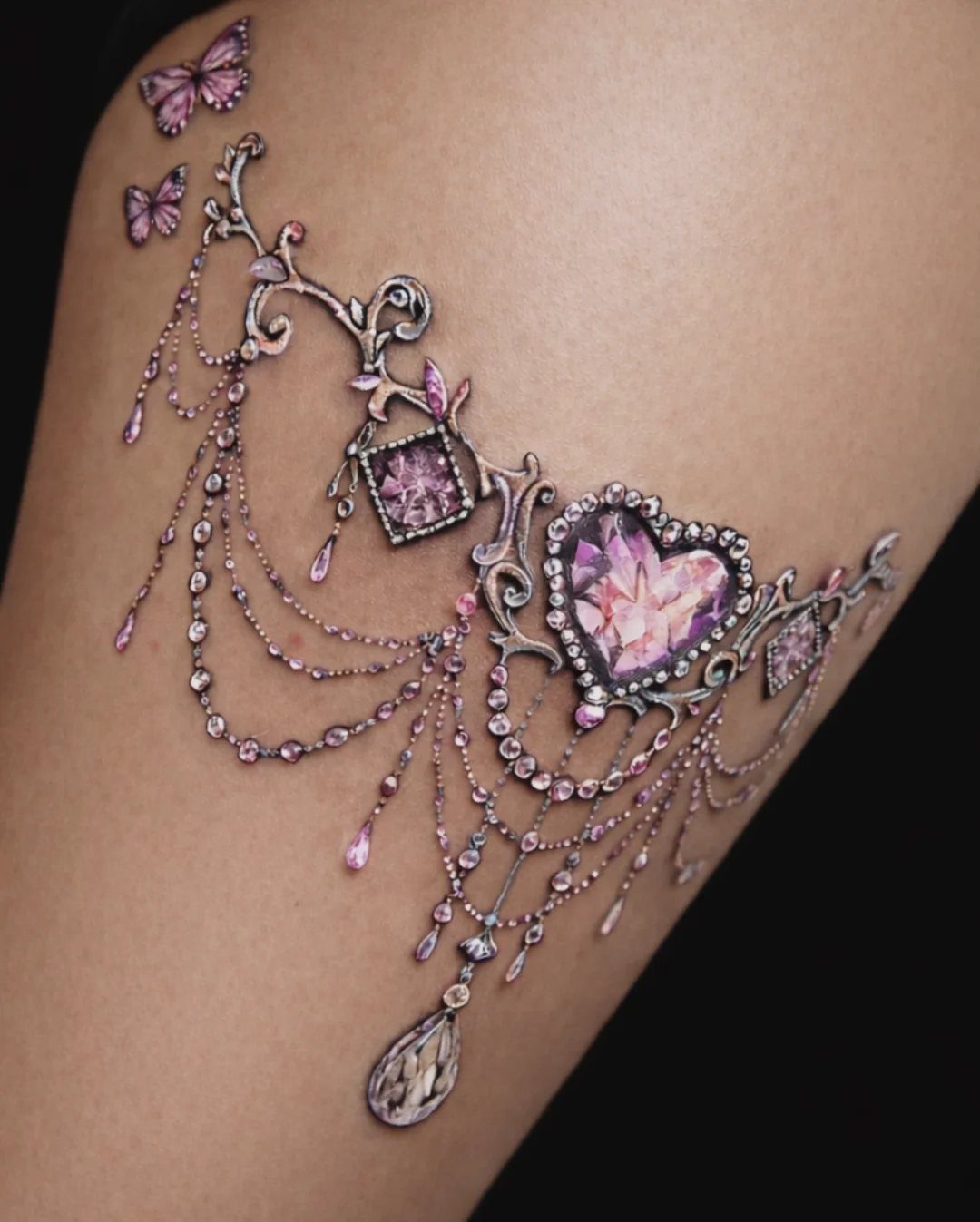
Jewelry designs translate well to ink because the structure is already there: chains, settings and stones laid out the way metal would sit on skin.
The butterflies add movement around the main piece.
Placement on the chest, collarbone or forearm lets the design follow your natural contours, and the delicate line work in the chains needs steady hands and time, so expect multiple sessions for anything this detailed.
Choosing the Right Artist
Check the portfolio for healed photos on skin that matches your own tone.
What reads well fresh on the table can settle differently over time, and you want to see how their color saturation and line weight hold up months later.
An artist experienced with melanin-rich skin knows to adjust technique, not just design.
The canvas changes everything, and a strong portfolio on one range does not guarantee the same result on another. Ask to see examples across a range of tones, and if the artist can’t show that breadth, keep looking.
Placement Considerations
The inner forearm and inner bicep often carry slightly lighter natural pigmentation than surrounding areas, which gives color tattoos better contrast and makes the hues more visible.
The calf gives you the same advantage: a smooth canvas that holds detail cleanly.
For bold blackwork, the upper arm, shoulders and thighs offer enough space to let geometric patterns and large solid fills stretch out without distortion.
Skip high-friction zones like the inner joints.
Constant movement and stretching wear the ink faster and lead to fading before the rest of the tattoo shows age. Flat, stable skin holds detail longest.
Healing and Aftercare
Darker tones can develop temporary dark patches around a healing tattoo, a reaction called post-inflammatory hyperpigmentation.
The best defense is gentle care: never pick or scratch scabs, even when the itch kicks in. Light tapping helps without causing damage.
UV exposure both fades pigment and triggers melanin, leaving a darker halo where the tattoo sits. Once healed, apply SPF 30 or stronger; while it’s fresh, keep it out of the sun entirely.
Your artist will recommend a plain, unscented lotion; use it daily to keep the area soft.
Dry skin cracks and leads to excessive scabbing, which raises the risk of scarring and uneven healing. Treat the area like an open wound until it closes completely.
Frequently Asked Questions
What colors show up best on dark skin?
Black, deep blue, grey, and saturated reds hold the strongest visibility on darker skin tones.
What are some creative tattoo ideas for brown skin?
Ornate mandalas, tribal patterns, and black ink flowers all use contrast and line weight to read clearly on brown skin.
Deep jewel tones like sapphire, emerald, and crimson add color without fighting your natural pigment, and bold script with geometric accents gives you clean, lasting designs.
Do black or color tattoos look better?
Black tattoos deliver classic contrast and age well on dark skin without needing touch-ups as often as color.
Color works when an artist builds opacity with multiple passes and uses saturated hues like deep red, orange, or purple, but pastels fade faster.
What is a black tattoo?
A black tattoo uses black ink as the primary or only pigment, relying on solid fills and line work rather than color to define the design.
On dark skin, black ink provides immediate contrast and holds its sharpness over time, making it a reliable choice for geometric patterns, portraits, and cultural designs.