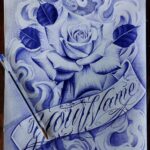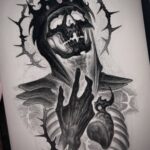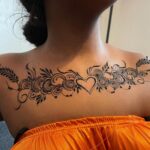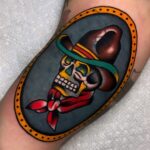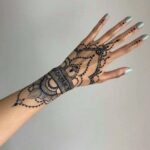
Cover-up tattoos for women range from solid blackout panels that erase anything underneath to black and grey florals and neo traditional designs with bold outlines that work best over already dark ink.
A portfolio full of before and after shots tells you more about cover-up skill than a gallery of clean pieces on blank skin.
1. Dark Fur Animals
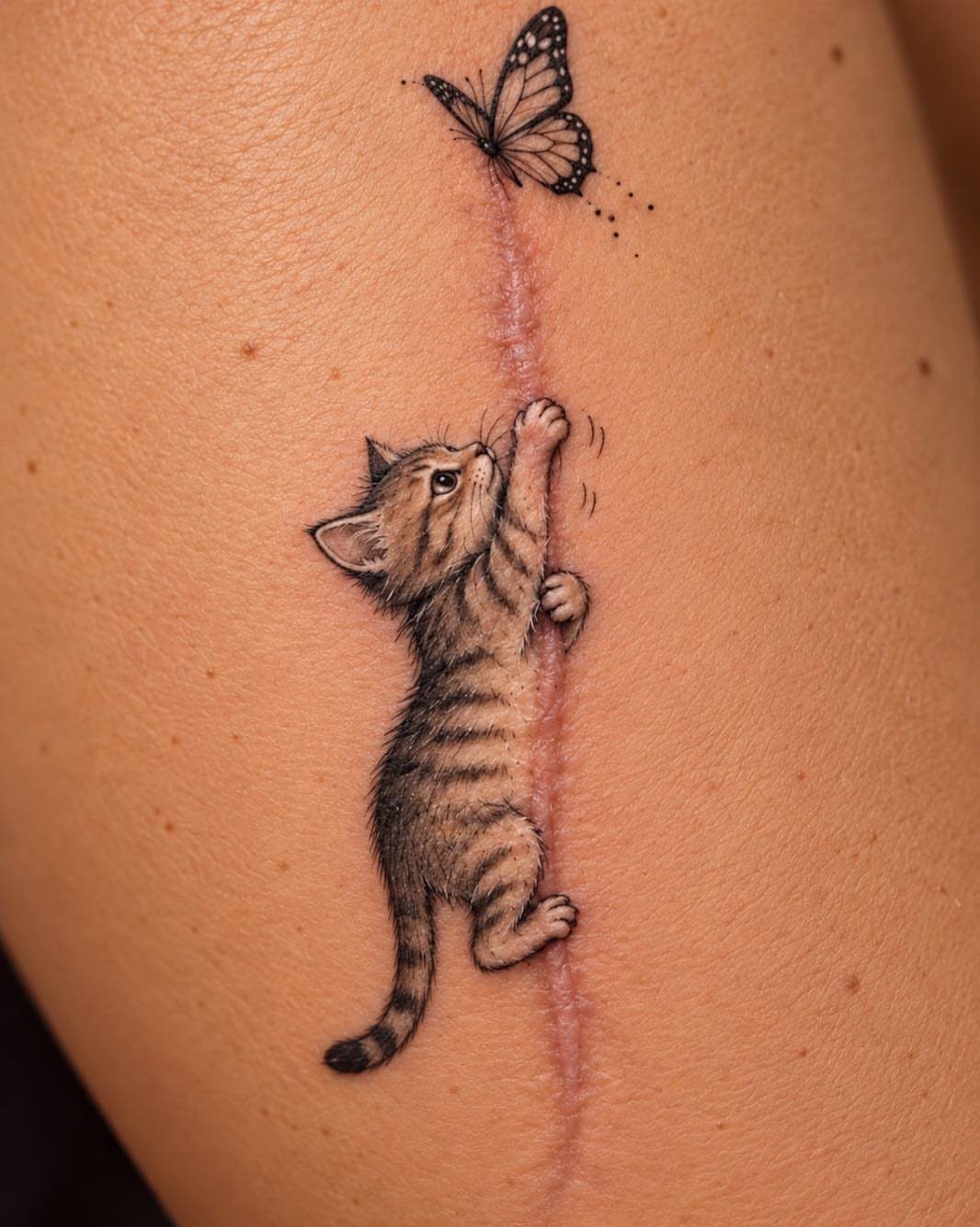
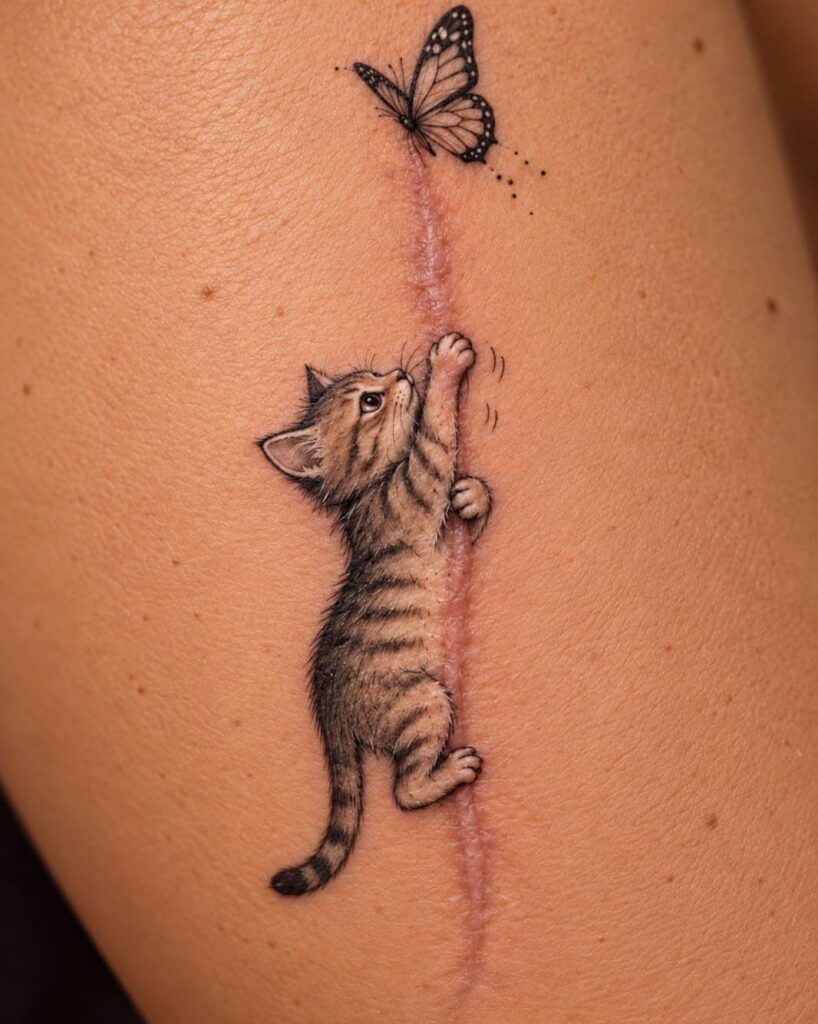
A realistic animal in dark brown or black fur gives you dense coverage through natural shading. The depth in striped or spotted patterns hides old ink without needing a solid block of black.
Cats, wolves, bears and similar subjects work well over pieces you want gone. The layered fur texture breaks up what sits underneath, and the artist can adjust the darkest areas to sit exactly where the old tattoo shows through.
If the original has bold lines, position the animal’s face or body so the heaviest shading lands on top of them.
2. Blackout Tattoos
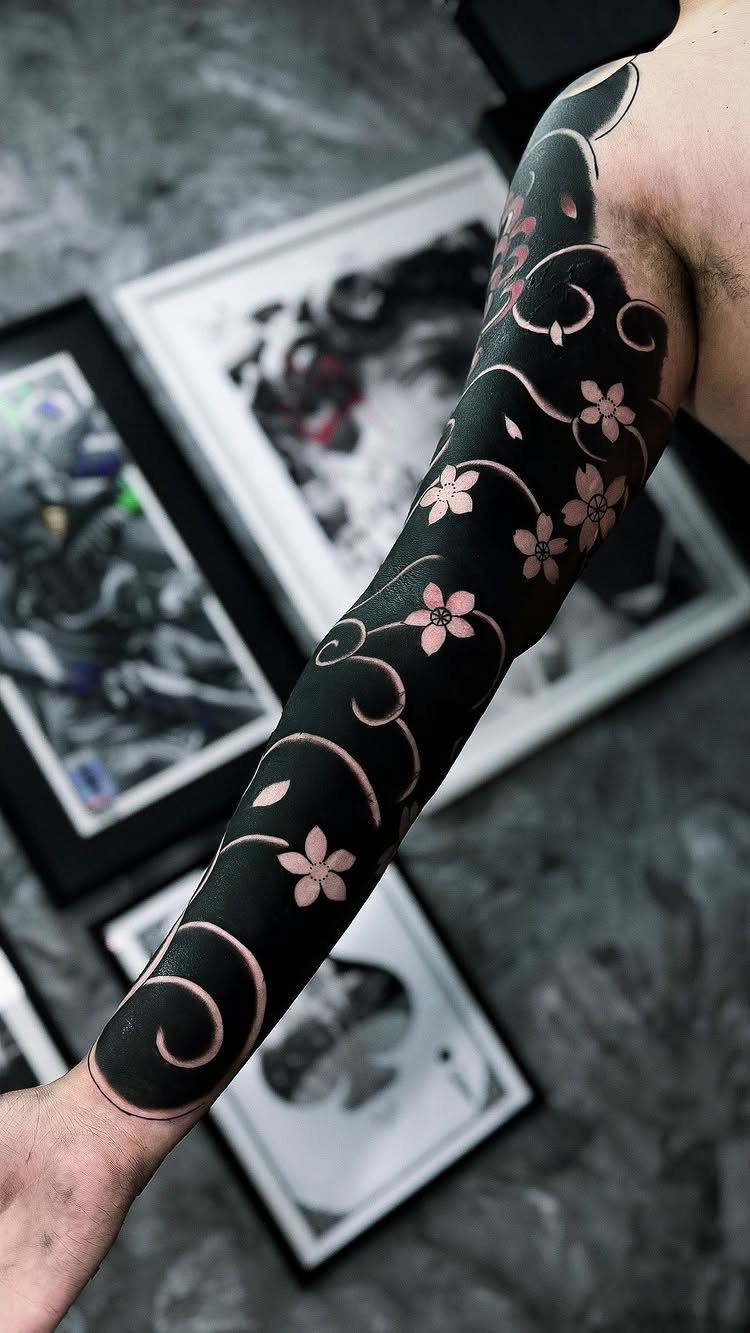
Blackout covers anything underneath with solid black ink, then carves out your new design in negative space where skin shows through. You get complete coverage and a graphic look that reads clearly from a distance.
The technique works best over large pieces or heavily saturated color that resists lighter cover-ups. Floral shapes, vines and geometric patterns all translate well into negative space, though fine details can blur over time as the edges soften.
Blackout takes multiple sessions. The solid fill requires more passes than a standard tattoo, and healing between appointments matters more because you’re saturating a large area all at once.
3. Neo Traditional
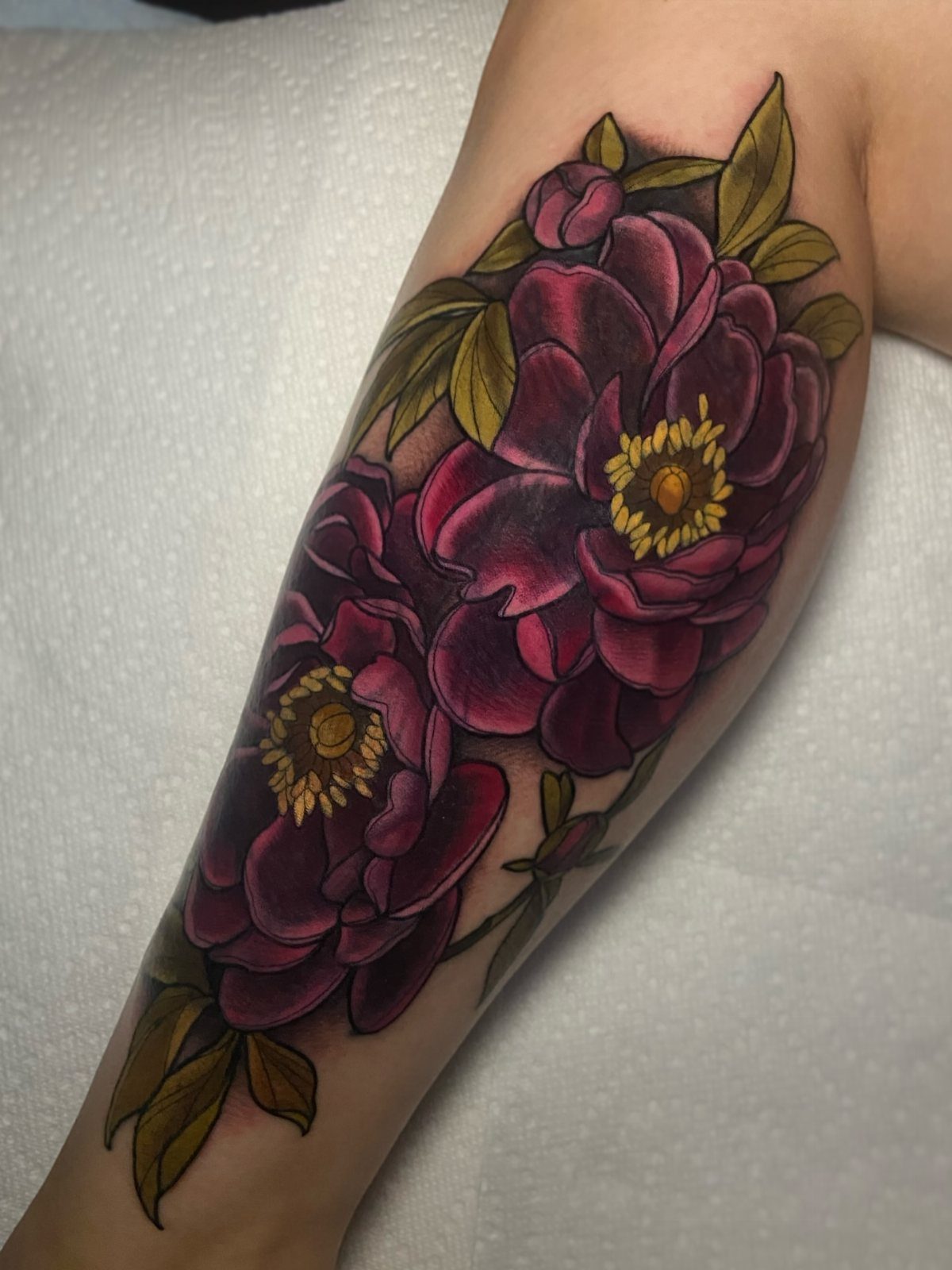
Neo traditional combines bold black outlines with rich color saturation, and that heavy line work sits over old tattoos more reliably than delicate styles.
The thick contours hide what came before, and the shading inside them adds another layer of coverage.
Peonies, roses and similar florals give you dense petal shapes to fill the space. The style lets an artist pack color into those petals while keeping everything anchored by dark outlines that won’t fade into the background.
If your original tattoo has strong lines, a skilled artist can incorporate them into the new design’s structure or bury them under the boldest parts of the composition.
4. Watercolor Designs
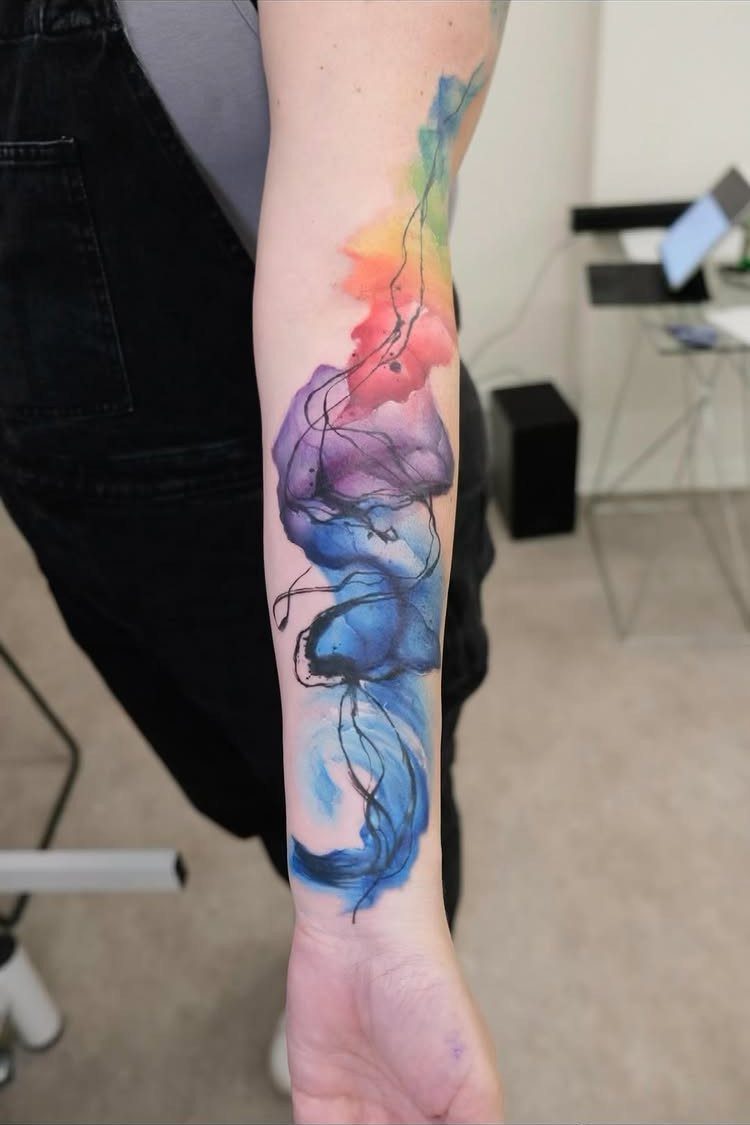
Watercolor tattoos layer translucent washes of color that blend like paint on paper, often with minimal black line work.
The soft edges and light saturation give you a painterly look, but that same lightness means they rarely cover dark or saturated ink underneath.
This style covers faded tattoos, light linework or small pieces where the original has already lightened. If you’re covering something bold, you’ll need a darker base layer first, which changes the final effect.
Expect the colors to soften further as the tattoo heals. The blended edges that define the style also make touch-ups harder to match years later.
5. Black and Grey Floral
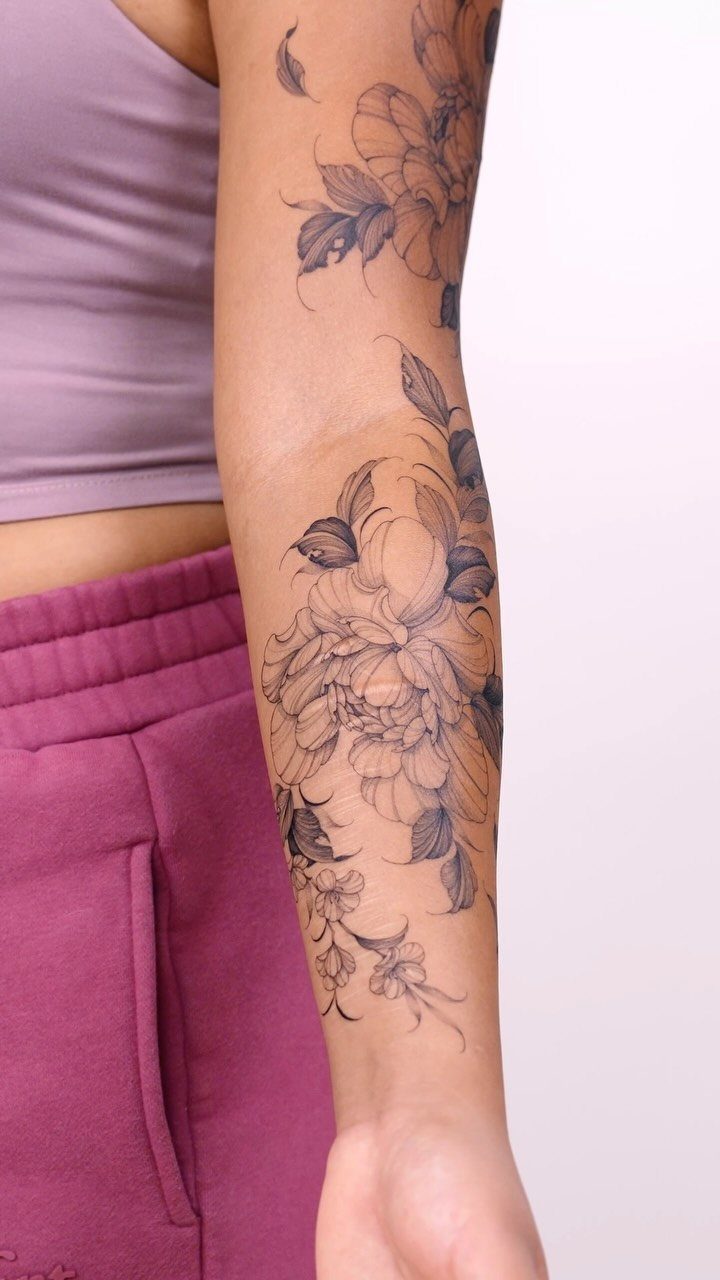
Black and grey florals build coverage through layered shading rather than color saturation.
The artist uses varying densities of black ink to create petals, leaves and negative space, and that range of tones hides old work without relying on a single opaque layer.
Peonies give you large, ruffled blooms that fill space quickly. The overlapping petals and clustered leaves let the artist adjust shading to sit over the parts of your old tattoo that need the most coverage.
This approach ages well. Black ink fades more predictably than color, and the tonal range means small shifts won’t flatten the entire design.
6. Mystical Forest Landscape
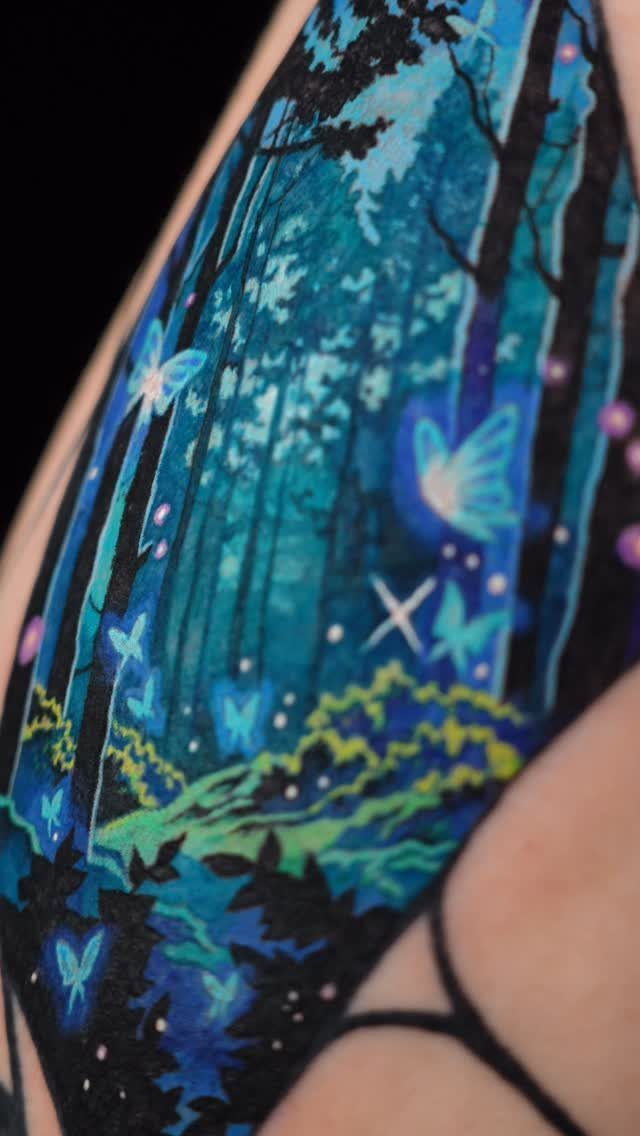
A forest scene gives you dark backgrounds and layered foreground elements that hide old tattoos through depth rather than a single opaque layer.
Trees in deep teal or black anchor the composition, and glowing accents like blue butterflies draw the eye toward lighter areas where less coverage sits.
The heavily shaded background does most of the work. An artist can adjust how dark the forest goes based on what you’re covering, then add lighter details in the negative space where your skin shows through.
Saturated color in the trees and foliage helps, but this approach relies more on value contrast than hue. If your original tattoo has bold lines, position the darkest trees and shadows directly over them.
7. Red Peonies Over Blackwork
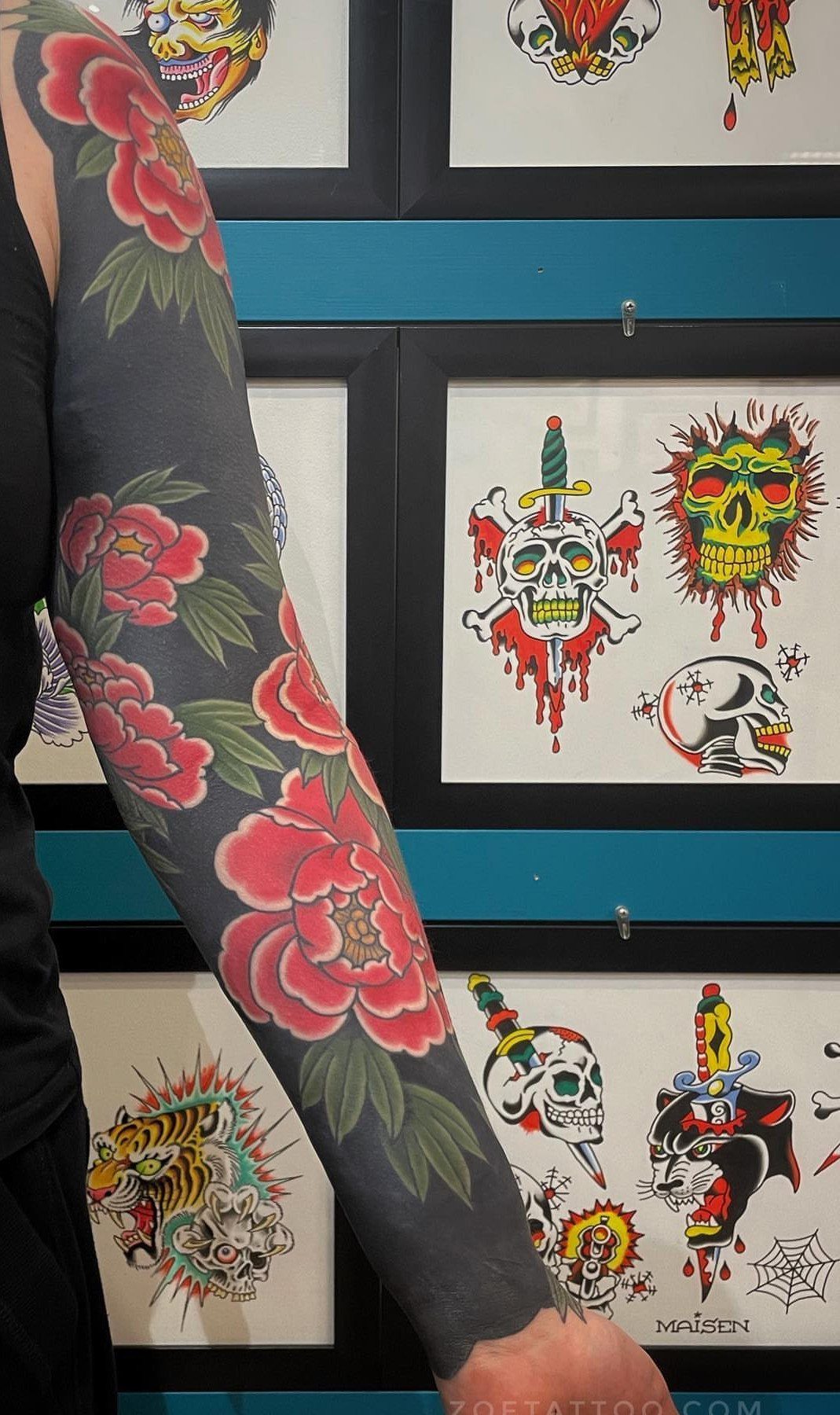
Red peonies layered over a solid black sleeve give you saturated color that pops against the dark base while the blackwork underneath does the actual covering.
The contrast between the bright florals and the black background holds up well over time and adds depth you don’t get with color alone.
The black sleeve handles whatever you’re covering, so the peonies can stay bright without needing extra opacity. An artist builds the petals and leaves in full color, and the black does the rest.
This approach works best when you want vibrant results over something bold or heavily saturated.
8. Portrait with Butterfly and Roses
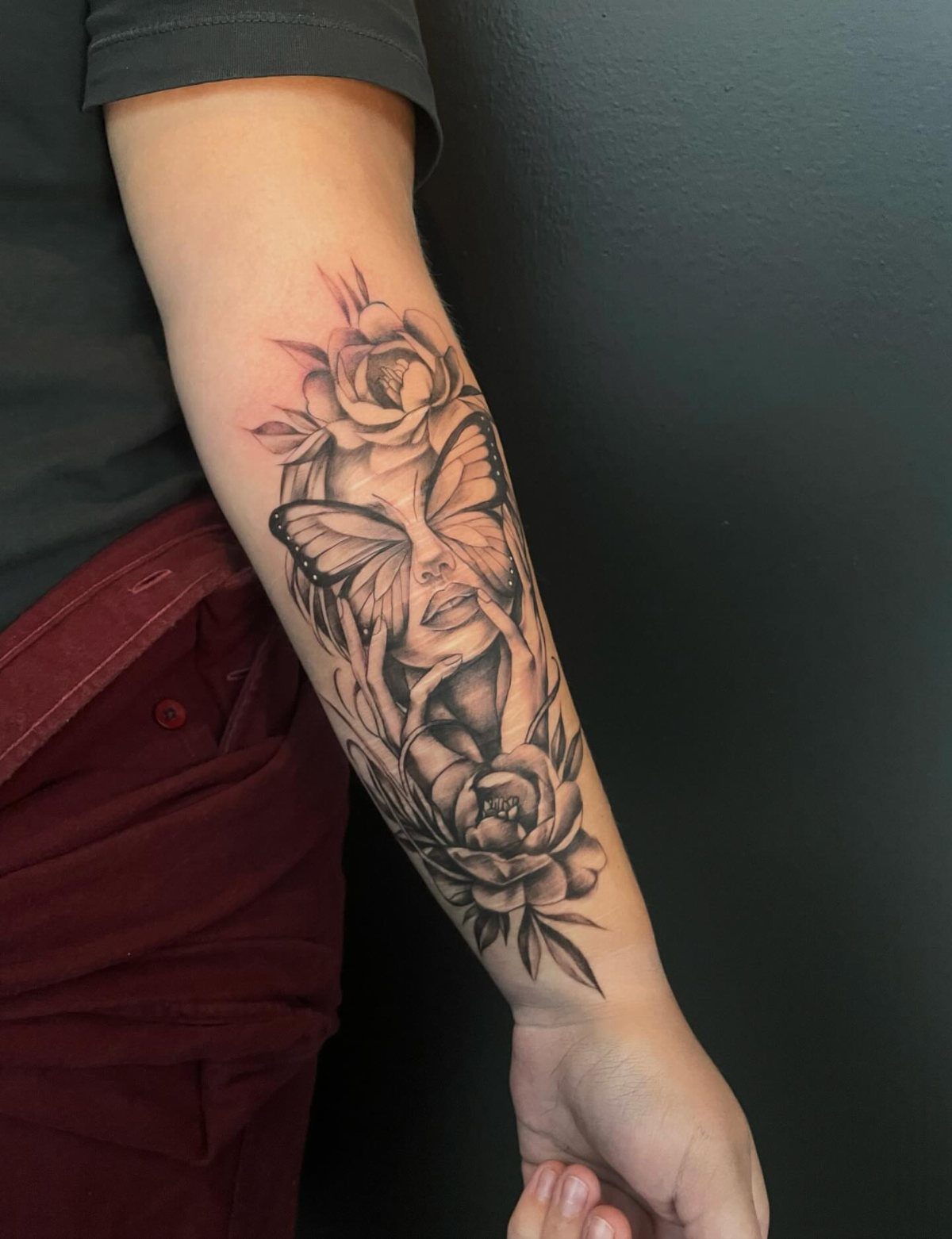
Portraits need strong contrast to read well as cover-ups, and this design uses deep shading in the roses and background to create the coverage while keeping the woman’s face lighter.
The butterfly adds movement without requiring the same level of opacity.
The roses give you dense, organic shapes that fill space around the portrait without competing for attention.
9. Flowing Jellyfish Tattoo
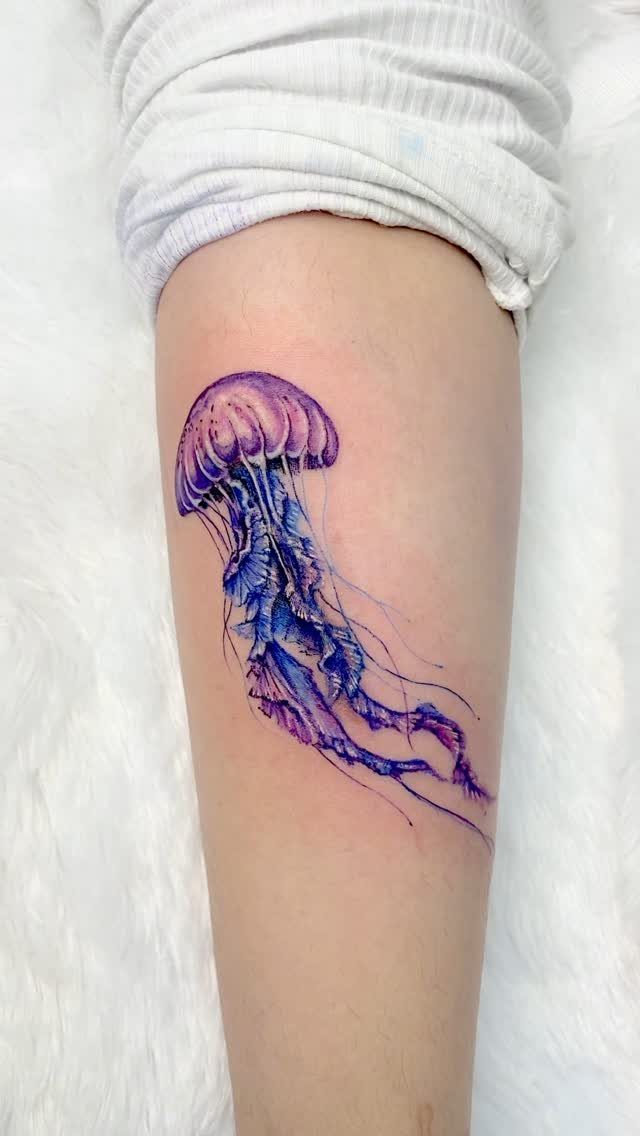
Jellyfish tentacles give you long, flowing lines that spread across a large area, and the color saturation in purple and blue hides old ink through layered transparency rather than solid coverage.
The tentacles can weave around or over what you’re covering, and the gradient between colors adds dimension.
This works best over faded tattoos or lighter pieces where you don’t need full opacity. The organic shape lets an artist adjust where the darkest color sits, but the style relies on soft blending that won’t cover something heavily saturated.
Expect the purple tones to fade faster than the blue.
10. Colorful Floral Sleeve
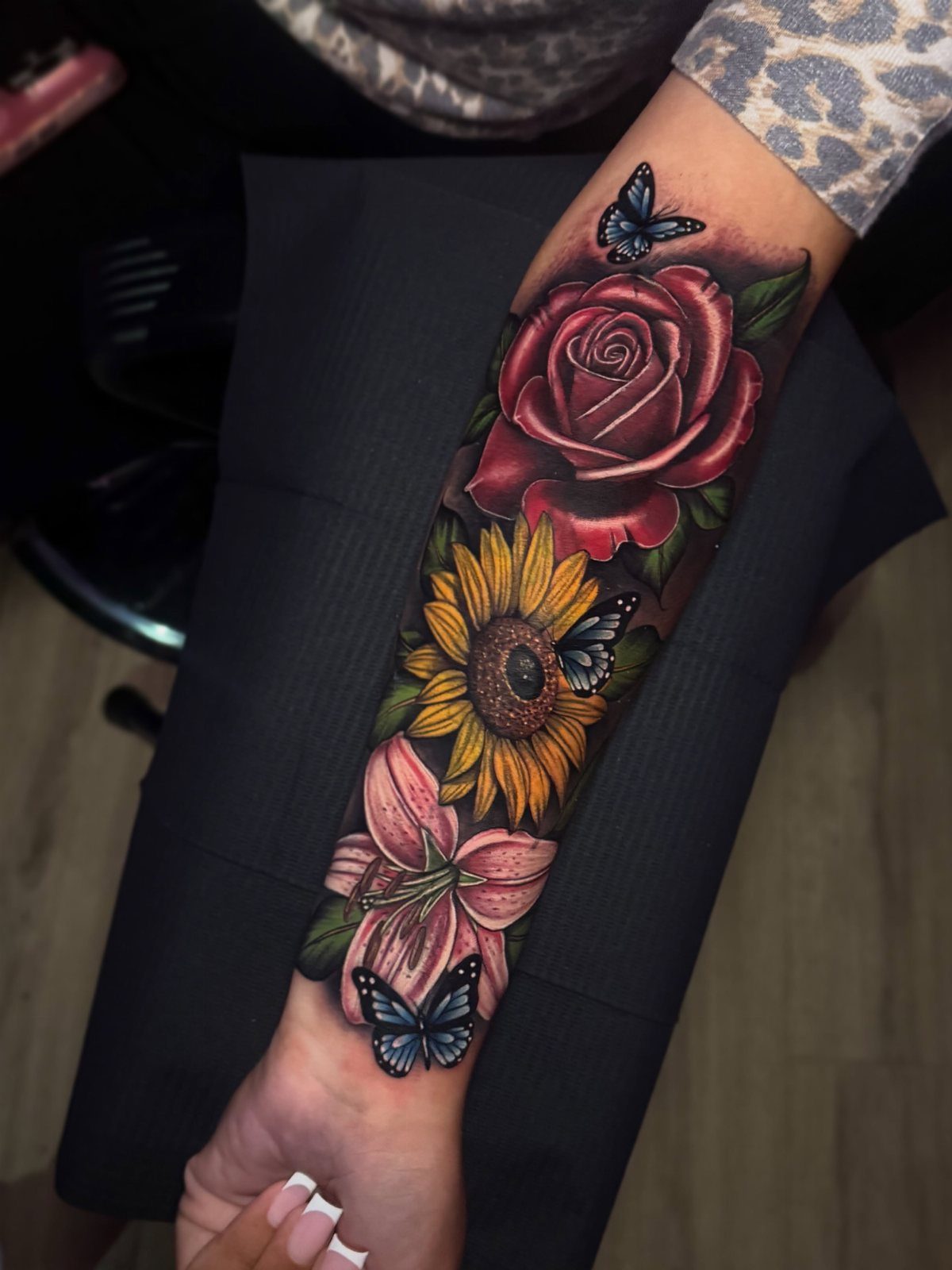
Mixing several flower types in different colors gives you coverage through variety rather than a single dense bloom.
The red rose, sunflower and pink lily each bring their own saturation level, and the blue butterflies add contrast without needing the same opacity as the florals.
This approach works when your old tattoo isn’t uniform. An artist can position the darkest flowers where you need the most coverage and use lighter blooms or butterflies in areas where the original has already faded.
The mix of warm and cool tones keeps the sleeve from reading flat, but it also means touch-ups down the line will involve multiple colors.
11. Blue and Purple Peonies
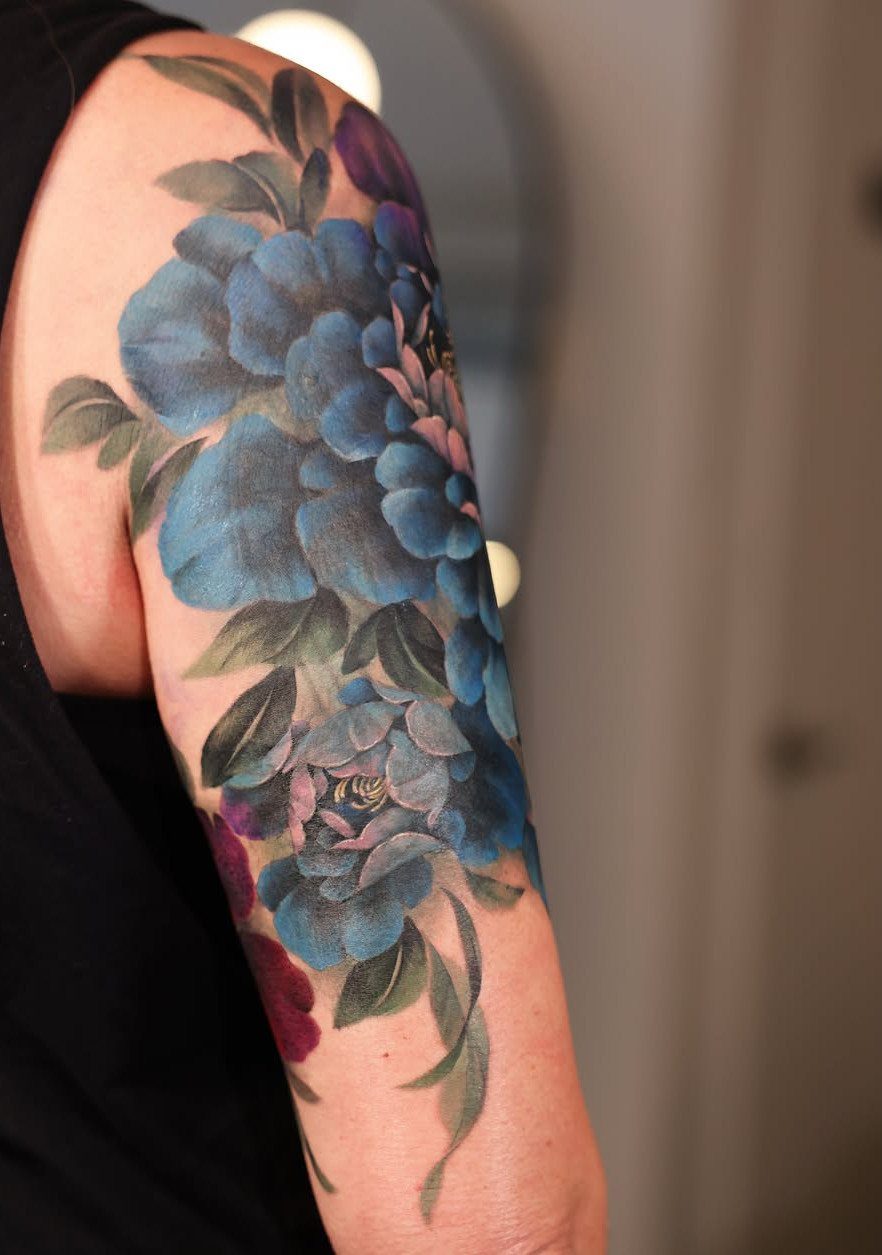
Blue and purple peonies deliver saturated cool tones that cover through color density rather than relying on black shading. The petals layer over each other, and the green leaves add contrast that helps the composition read clearly.
Cool colors like these work well over warm-toned tattoos you want gone, since the hues sit opposite on the color wheel and don’t blend into what’s underneath.
The ruffled petals give an artist room to adjust saturation exactly where your old tattoo shows through.
This style needs a skilled colorist. Purple loses intensity before black or blue does, so plan for touch-ups.
12. Floral with Bird and Butterfly
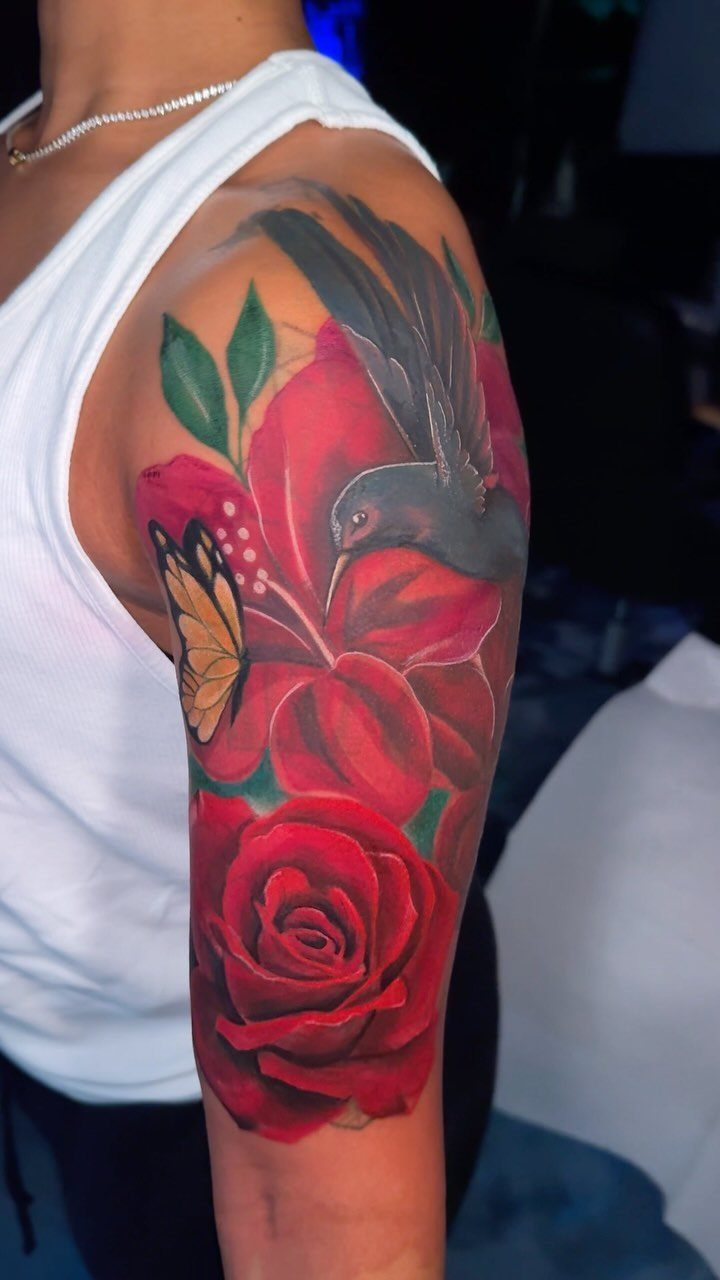
Combining red florals with a dark bird and a bright butterfly gives you contrast in both color and subject.
The hibiscus and rose bring saturation, the bird adds a solid mass of dark feathers where you need coverage, and the butterfly keeps the composition from feeling too heavy.
The bird does most of the work.
Position it over the boldest part of your old tattoo, then let the florals and butterfly fill the surrounding space. The mix of subjects gives the piece more weight than pure decoration while still giving you the coverage florals provide.
Red ink holds well, but the yellow butterfly will fade faster than the rest.
13. Orange Lilies Sleeve
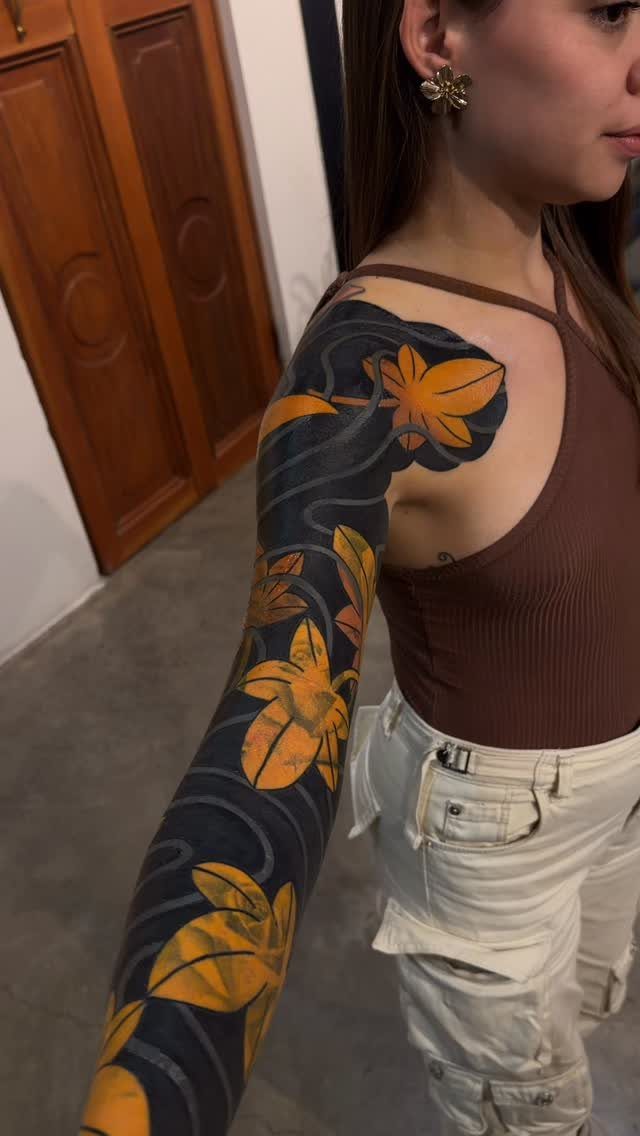
Orange lilies against dark grey swirls give you warm, saturated blooms that stand out through color contrast rather than relying on black alone.
The petals carry enough pigment to cover faded or light tattoos, and the swirls add depth without competing with the florals.
The grey background can go darker where you need more coverage, letting the artist adjust opacity based on what sits underneath. Orange holds well over time, though it will soften before black or grey does.
The biggest flowers give you the most coverage right where you need it.
14. Black and Grey Birds and Flowers
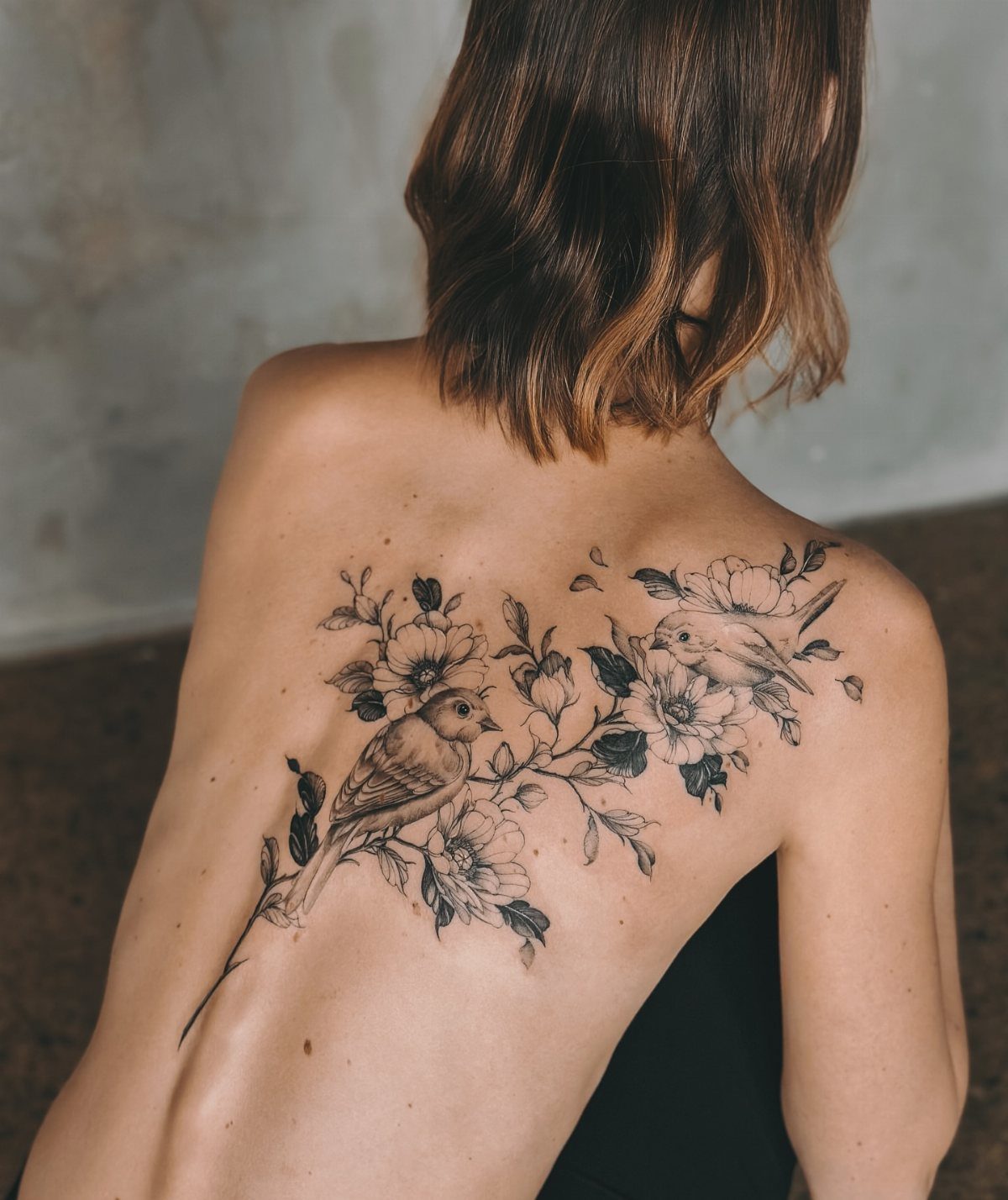
Birds and blossoms in black and grey give you both solid mass and soft texture, so you get coverage where the birds sit and layered shading where the flowers fill the rest.
The feathered bodies hide old ink through dense, dark values, and the petals add dimension without needing the same weight.
This works across the upper back and shoulder because the large area lets an artist spread the composition without crowding the elements. The tonal range keeps it readable as the tattoo ages, and touch-ups stay simpler than multi-color pieces.
15. Eagle and Sunflower Design
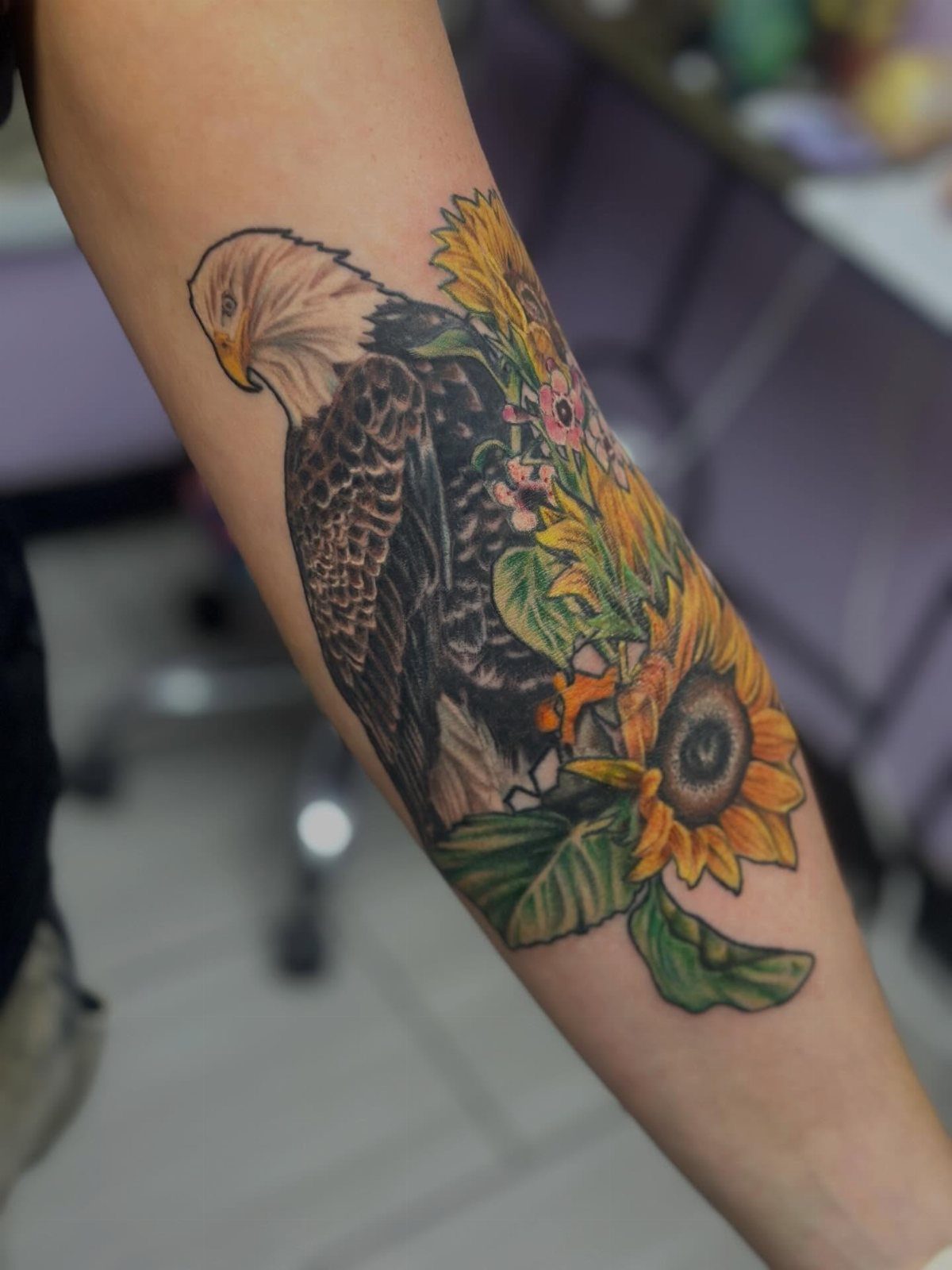
Pairing a detailed eagle with yellow sunflowers gives you a bold focal point in the bird and saturated color in the petals.
The eagle’s feathers deliver dark, textured coverage, while the sunflowers and pink accents keep the piece from reading too heavy.
Yellow fades faster than most colors, so plan for touch-ups if you want the sunflowers to stay bright. The pink keeps the palette from feeling flat, but the eagle does the actual work of covering what came before.
This suits a forearm where the bird can wrap around the muscle.
16. Floral and Mandala Sleeve
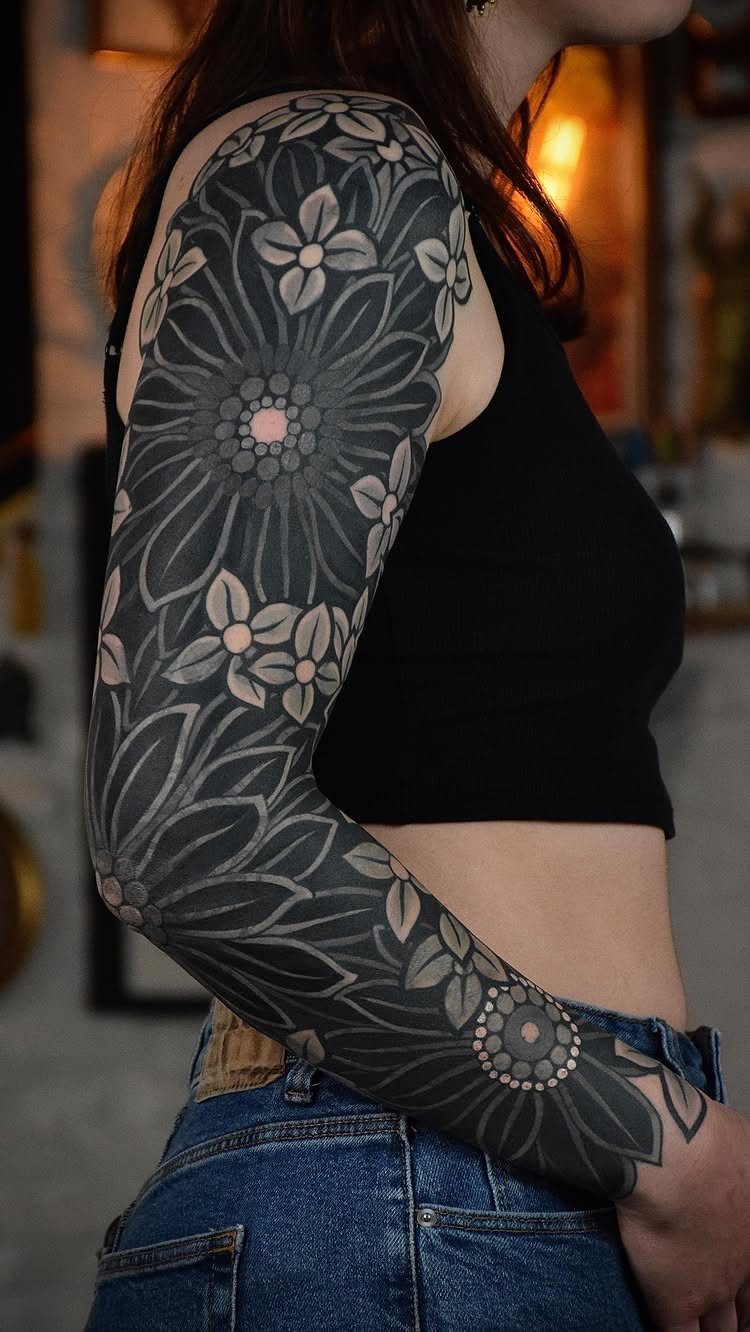
Mandala patterns integrated with florals give you geometric precision where the mandala sits and organic shapes where the flowers take over.
The dark grey and black tones build coverage through repetition and density, and the layered symmetry hides old tattoos without needing solid fills.
The mandala can anchor the design at the shoulder or elbow, then let the florals spread across the rest of the sleeve.
This approach works well over pieces with scattered elements, since the pattern gives structure while the flowers fill gaps.
Expect longer sessions. Mandalas require precise line work.
Reasons for Covering Up Tattoos
Professional dress codes remain the most common reason for covering ink.
Fields like law, finance and healthcare still enforce visible tattoo restrictions, and a piece that worked fine in your 20s may become a barrier in a role that requires conservative presentation.
Personal growth drives the rest. A design that felt right years ago can stop reflecting who you are now, and covering it gives you a clean slate without erasing the skin entirely.
I see this most often with names, symbols tied to beliefs that shifted, or art that simply aged poorly.
Regret over quality matters too. A blurry piece from an inexperienced artist or a design that didn’t heal well reads as unfinished, and a strong cover-up fixes that better than living with work that never looked right to begin with.
Choosing the Right Artist
Portfolio review matters more for cover-ups than for fresh work. Look specifically for before and after shots that show how an artist handles old ink, not just their strongest standalone pieces.
The best cover-up artists show transformations where the original tattoo disappears completely or gets absorbed into the new design in a way that reads intentional.
Ink quality and line consistency tell you whether the work will hold up.
Blurry edges or uneven saturation in healed photos mean the same problems will show up in your cover-up, and that becomes more obvious when you’re already fighting an old tattoo underneath.
Match the artist to the body area you’re covering. Chest and wrist placements each require different approaches to flow and coverage, and an artist experienced in those spots will design something that works with your anatomy instead of against it.
Cost Considerations
Cover-ups cost more than new tattoos because the technical difficulty jumps. Cover-up tattoo artists with specialized expertise in concealing old ink command a higher rate.
Artists known for cover-up work will quote higher, and I think the extra cost is worth it for a piece that hides the old ink completely.
A poorly executed cover-up leaves visible remnants of the old tattoo or creates a blacked-out patch surrounded by filler, and fixing that costs more than paying for expertise up front.
Expect the price to reflect both the size of the new design and the complexity of what sits underneath.
Frequently Asked Questions
What type of tattoo is best for a cover up?
Designs with heavy black outlines and dense shading cover old ink most reliably.
Neo traditional, blackwork and black and grey florals all use enough dark pigment to hide what sits underneath, while styles like watercolor rarely have the opacity to cover anything bold or saturated.
A more detailed piece lets your artist place the heaviest shading right over the parts of your old ink that are hardest to hide.
Is it cheaper to remove a tattoo or cover it up?
Cover-ups cost more than standard tattoos because the technical work is harder, but removal typically runs higher and takes multiple sessions with no guarantee of complete fading.
A cover-up gets you finished ink in fewer appointments, though artists who specialize in concealing old work charge more for the skill.
Covering costs less when you’re happy trading one design for another instead of paying for multiple laser sessions to clear the area completely.