A cover-up on the neck works best when the new design uses enough black ink to block out what’s underneath, which is why roses with heavy shading, ornamental blackwork and biomechanical pieces handle old ink better than fine line or color alone.
If it wraps all the way around or has sharp edges and text, botanical vines or abstract brushstrokes adapt to irregular shapes better than geometric patterns or symmetrical portraits.
Geometric patterns and lace designs pull focus in multiple directions, which hides old work by creating visual noise, but they need solid fill in the right spots to cover anything darker than faded gray.
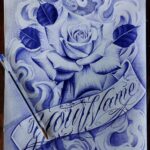
1. Large Black and Grey Rose
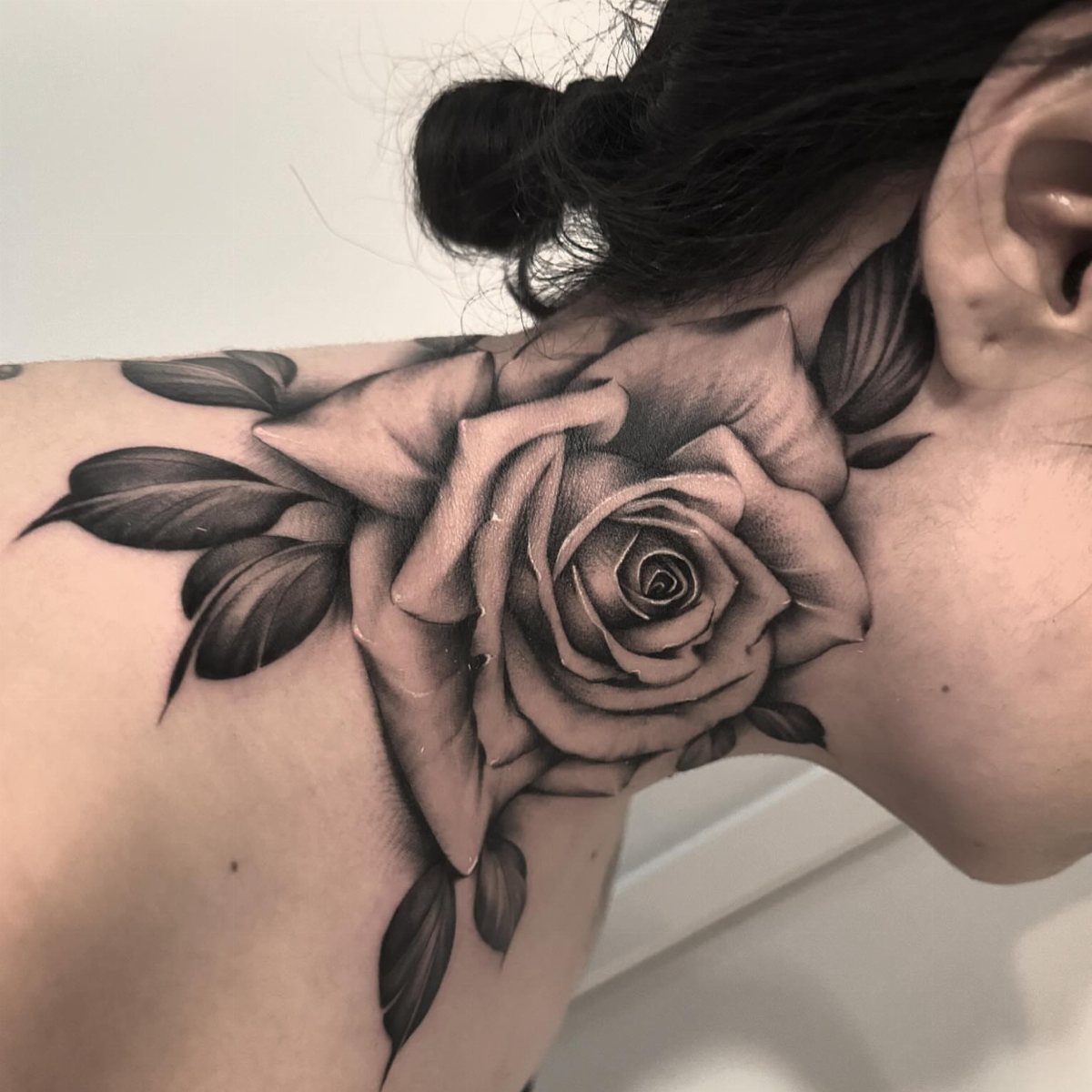
A single large rose fills the space with enough detail to pull the eye away from what sits underneath.
Black and grey shading gives you control over how dark the petals go, which means the artist can layer enough ink to block out old work without the design looking heavy.
The leaves add width, which helps when the original tattoo spreads across the neck rather than sitting in one tight spot.
If the piece you’re covering has sharp edges or text, the soft curves of the petals do a better job of breaking up those lines than a geometric shape would.
2. Geometric Patterns
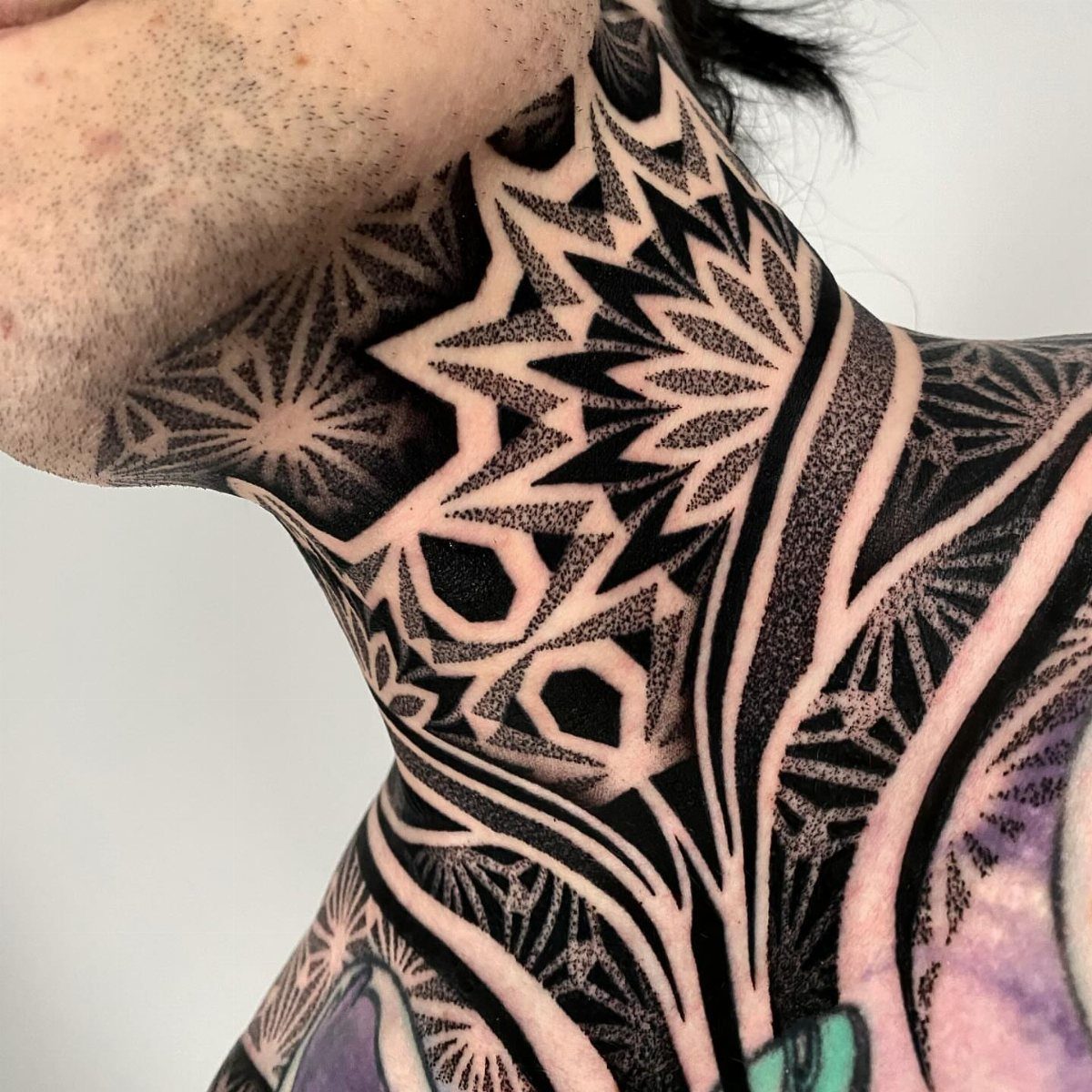
Symmetrical geometric shapes create visual noise, and that noise is exactly what makes an old tattoo disappear.
The pattern pulls focus in multiple directions at once, so even if the original ink is dark, the viewer’s eye follows the lines of the new design instead of searching for what’s underneath.
Mandalas and dot work pack a lot of detail into a small area, which means you can go bold without adding width if your neck space is limited.
The clean edges read well from a distance, and the design holds up as the ink settles over time.
3. Botanical Vines
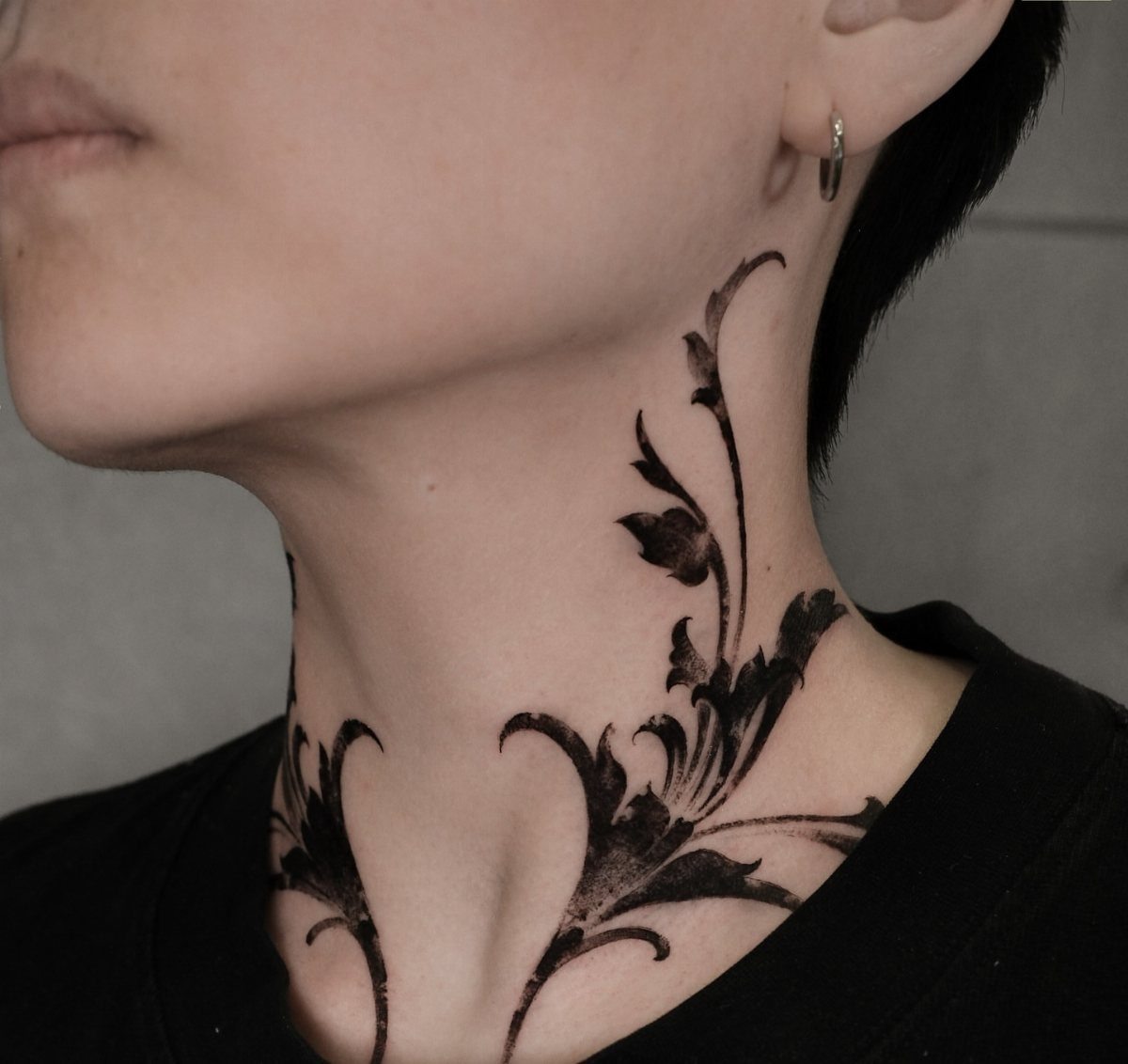
Vines wrap around the contour of the neck, and that natural flow makes them one of the easier designs to place over irregular shapes.
If the tattoo you’re covering has an awkward outline, the leaves and stems can follow it or ignore it depending on where the artist puts the thickest parts of the vine.
Black ink keeps the design high-contrast, which helps when you’re working over faded color.
The thin lines between the leaves let the artist adjust coverage on the fly, adding density where the old tattoo is darkest and pulling back where less ink will do.
4. Ornamental Blackwork
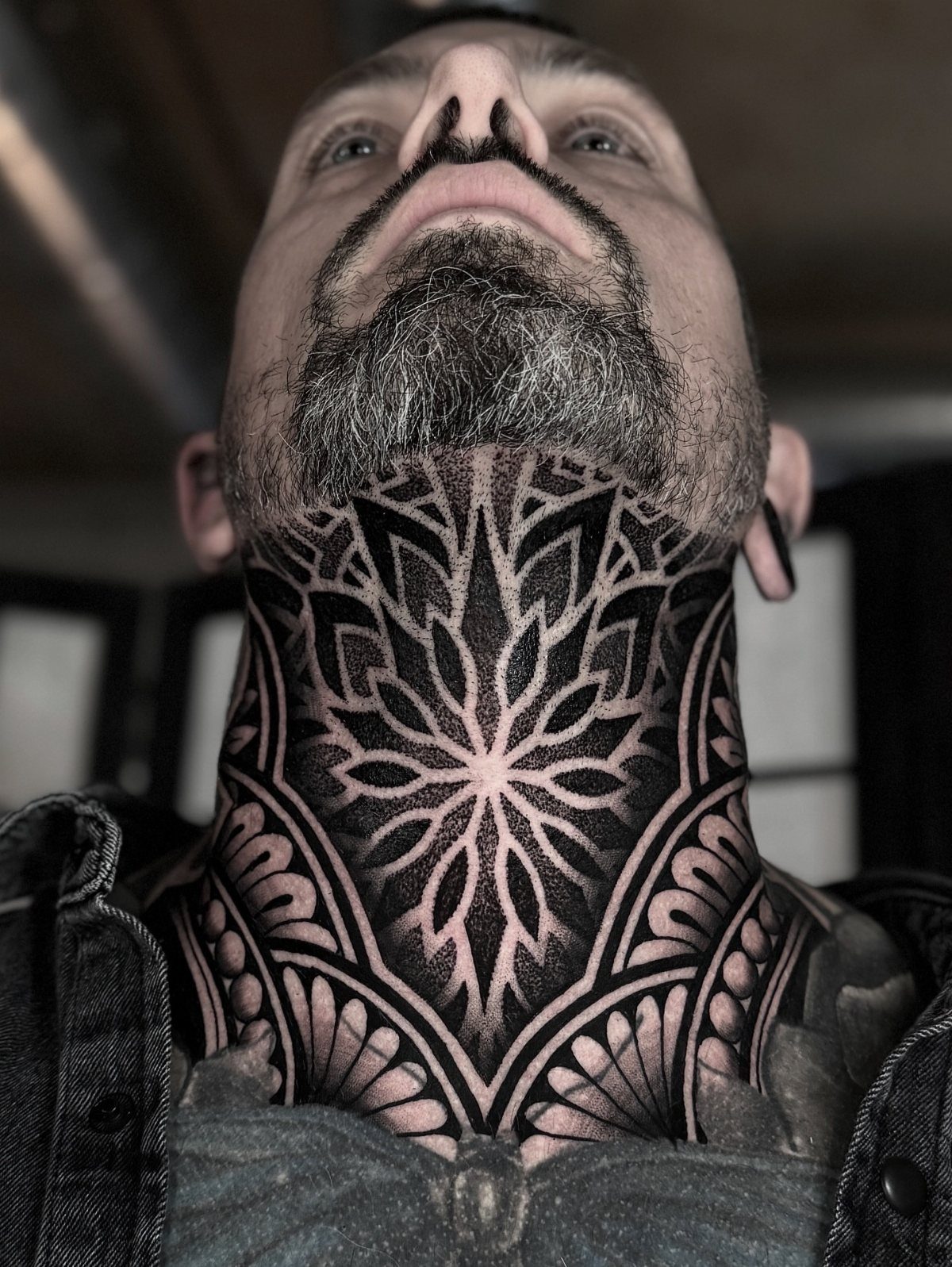
Thick blackwork gives you maximum coverage, and that makes it the best option when the tattoo underneath is dark, large, or both.
The ornamental patterns layer solid black shapes with negative space, so the design reads clearly even when the artist is packing ink over heavy old work.
This style covers the entire neck and often extends to the chest, which means you need to be ready for a big piece.
The session time runs longer than a smaller cover-up, and the bold look changes how visible your tattoos are in everyday settings.
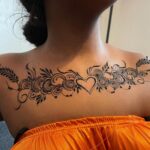
5. Lace/jewelry Patterns
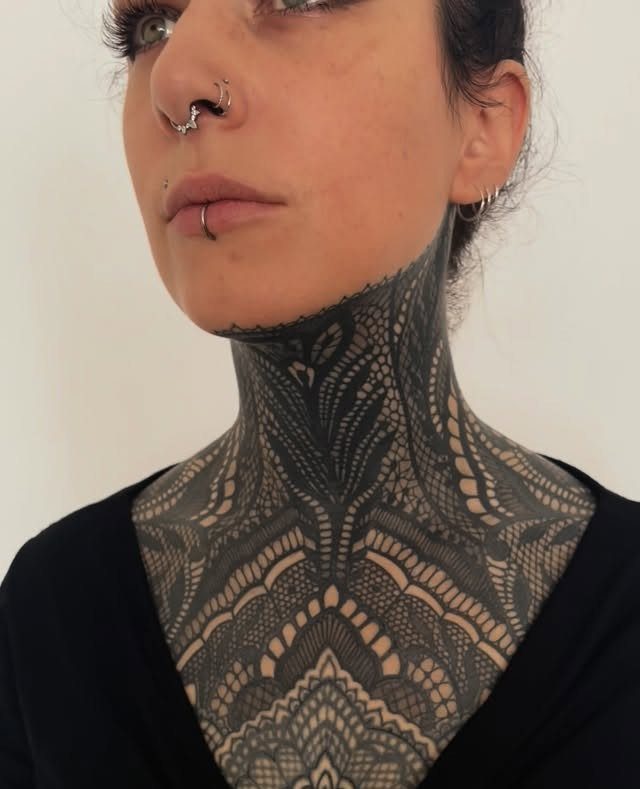
Lace patterns sit somewhere between ornamental blackwork and fine line, giving you intricate detail without the solid fill.
The overlapping shapes create enough visual complexity to hide an old tattoo, but the negative space keeps the design from feeling too heavy.
This works best when the tattoo you’re covering is already faded or was never very dark to begin with.
If you’re dealing with bold black ink underneath, the artist may need to add more solid areas to the lace pattern, which changes the look slightly but keeps the overall effect.
6. Abstract Brushstroke Blackwork
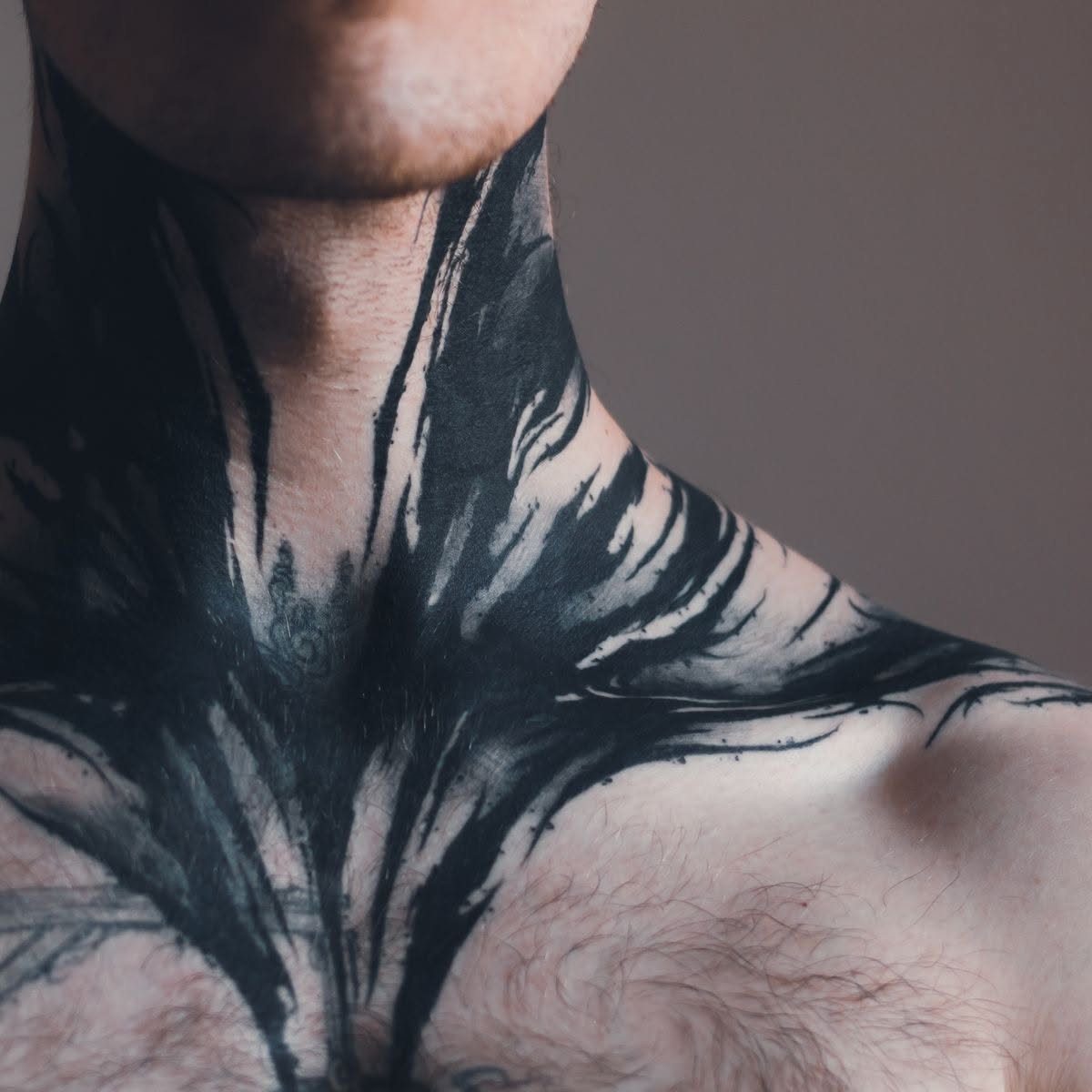
Abstract brushstrokes give the artist freedom to place heavy black ink exactly where the old tattoo sits, without the design needing to follow a set pattern.
The sweeping lines can curve around text, fill in gaps, or widen out over larger areas, which makes this style adaptable when the piece you’re covering has an unusual shape.
The lack of fine detail means the tattoo ages well, and touch-ups are straightforward if the ink fades unevenly.
If you want a cover-up that feels artistic without looking like it’s hiding something, the bold gestural lines do that better than most realistic designs.
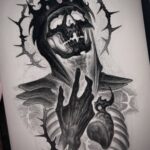
7. Biomechanical or Organic Dark Art
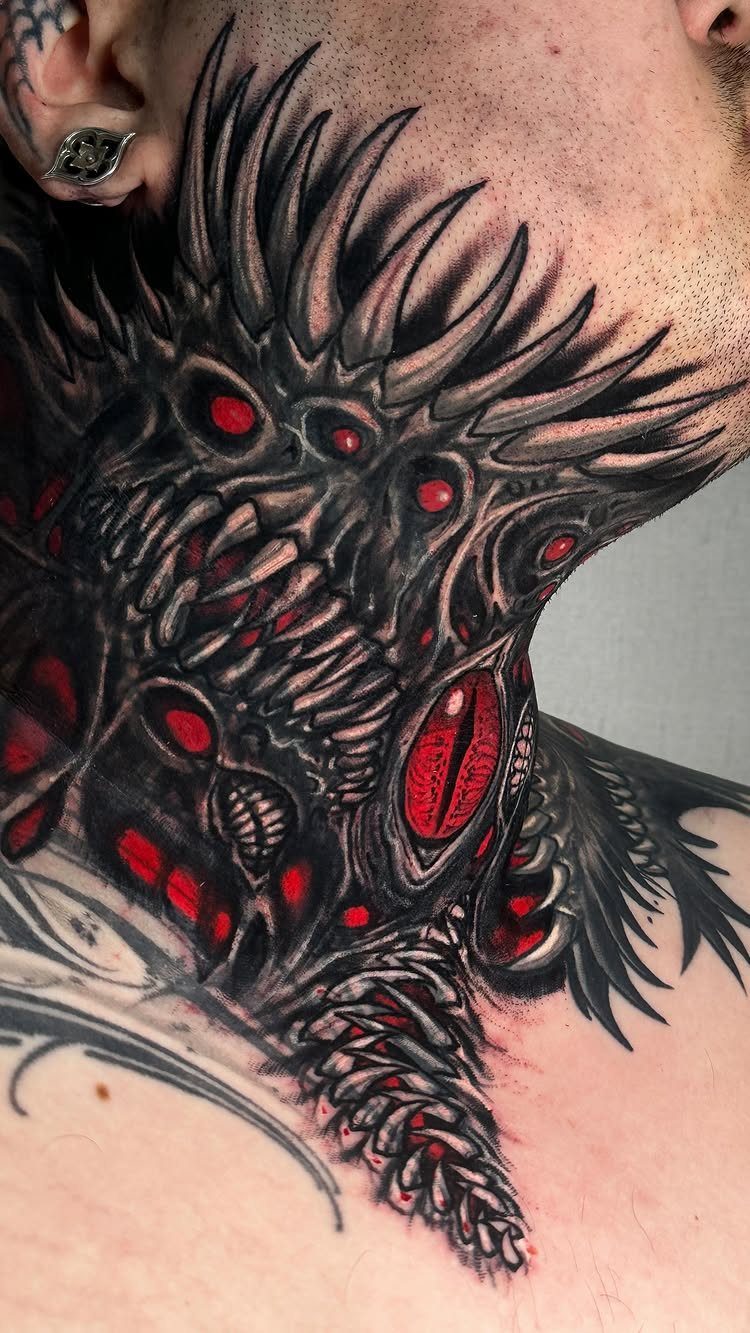
Sharp organic shapes and dense black shading let a biomechanical design sit over almost anything, because the textures don’t need to make literal sense.
The artist can push the darkest ink into the spots where the old tattoo shows through, and the chaotic detail keeps your eye moving instead of settling on one area long enough to notice what’s underneath.
The spikes and mechanical elements give the piece structure without symmetry, which means the layout can bend around an awkward original shape.
If you’re covering something that already has a lot of black in it, this style adds more ink without looking like a mistake.
8. Roaring Lion Portrait
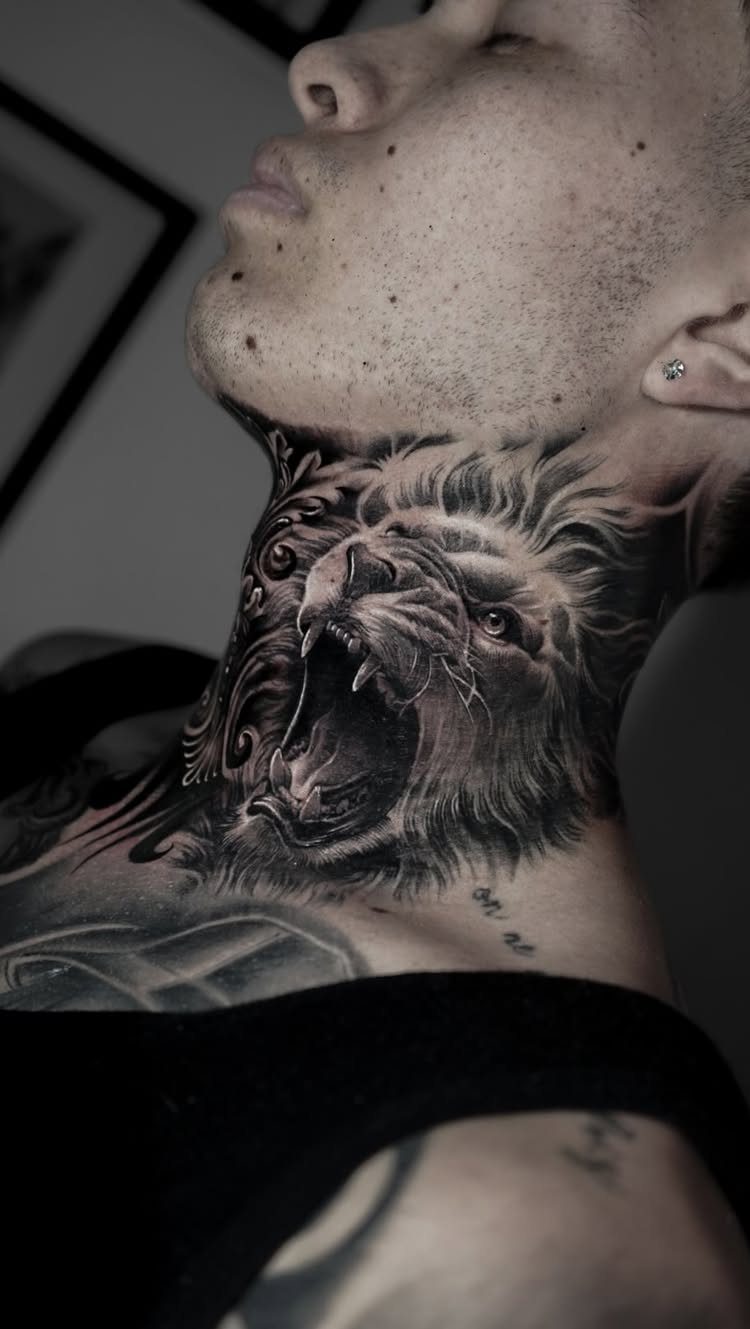
A lion’s mane gives the artist a built-in reason to pack black ink across a wide area, and the directional fur lines can follow the curve of the neck or cut across it depending on where the old tattoo sits.
The open mouth adds a focal point that pulls attention to the center of the design, so even if the original ink bleeds through at the edges, the viewer looks at the lion first.
Realism takes longer than most other styles, and the detail only holds up if the artist has experience with portraits.
If the old tattoo is small and centered, a lion head works. If it wraps all the way around, the design may need to extend onto the chest to cover everything.
Frequently Asked Questions
What tattoos are the hardest to cover up?
Dark tattoos with a lot of black ink are the hardest to cover because they require heavier shading in the new design to block them out.
Old work that spreads wide across the neck also makes placement trickier, since the cover-up needs enough size to hide the entire shape without looking forced.
Is a neck tattoo a red flag?
A neck tattoo changes how visible your ink is in everyday settings, especially if you go with a bold style like ornamental blackwork that covers the entire area.
If you’re covering an old piece, the new design may be larger and darker than what you had before, so think about how that fits your work and social life.
Is it more painful to get a cover-up tattoo?
Cover-ups can hurt more because the artist is tattooing over skin that already has ink in it, and the neck itself is a sensitive spot with thin skin close to bone.
The session also tends to run longer when the design needs heavy shading to block out old work, which adds to the discomfort.