A tattoo style that suits your idea depends on whether you want soft color transitions, bold tribal lines, precise geometry or realistic detail that captures a face or animal exactly as it appears.
Watercolor designs fade faster than traditional work because they lack the dark outline that anchors pigment, so plan for touch-ups every few years if you want the saturation to hold.
Portrait tattoos need space to preserve the fine shading that makes a face recognizable, while geometric patterns, Celtic knots and mandalas demand precision since a line that wavers breaks the symmetry immediately.
Placement matters too: the forearm and calf offer flat canvases for mandalas and geometry, while the upper arm’s curve suits flowing designs like koi fish and flowers that move with the muscle.
1. Watercolor Tattoo Designs
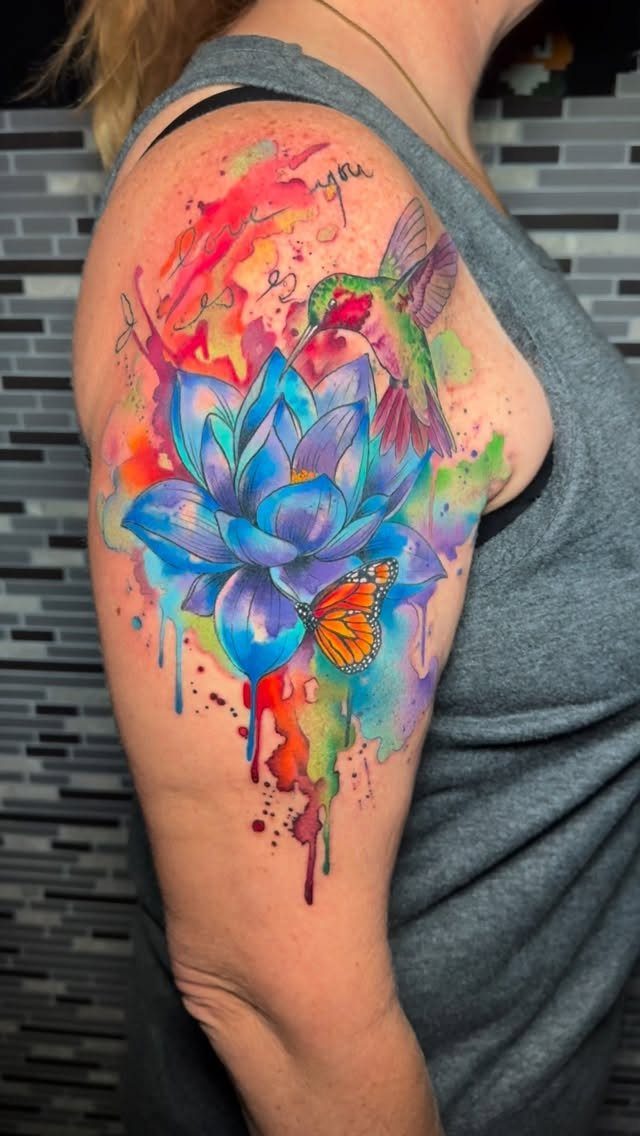
Watercolor tattoos replicate the loose, saturated look of brush painting, with color that bleeds past the edges and no hard black outline holding it in. The style suits organic subjects like flowers, birds and insects, where soft transitions feel natural.
This upper arm piece took about 9 hours, according to the artist. That matches what I see for medium-sized watercolor work with multiple elements and color gradients.
They fade faster than traditional tattoos.
Without a dark outline to anchor the pigment, watercolor tattoos fade faster than traditional work, and the soft edges blur further over time. Plan for a touch-up every few years if you want the colors to stay vivid.
2. 3D Compass Tattoo
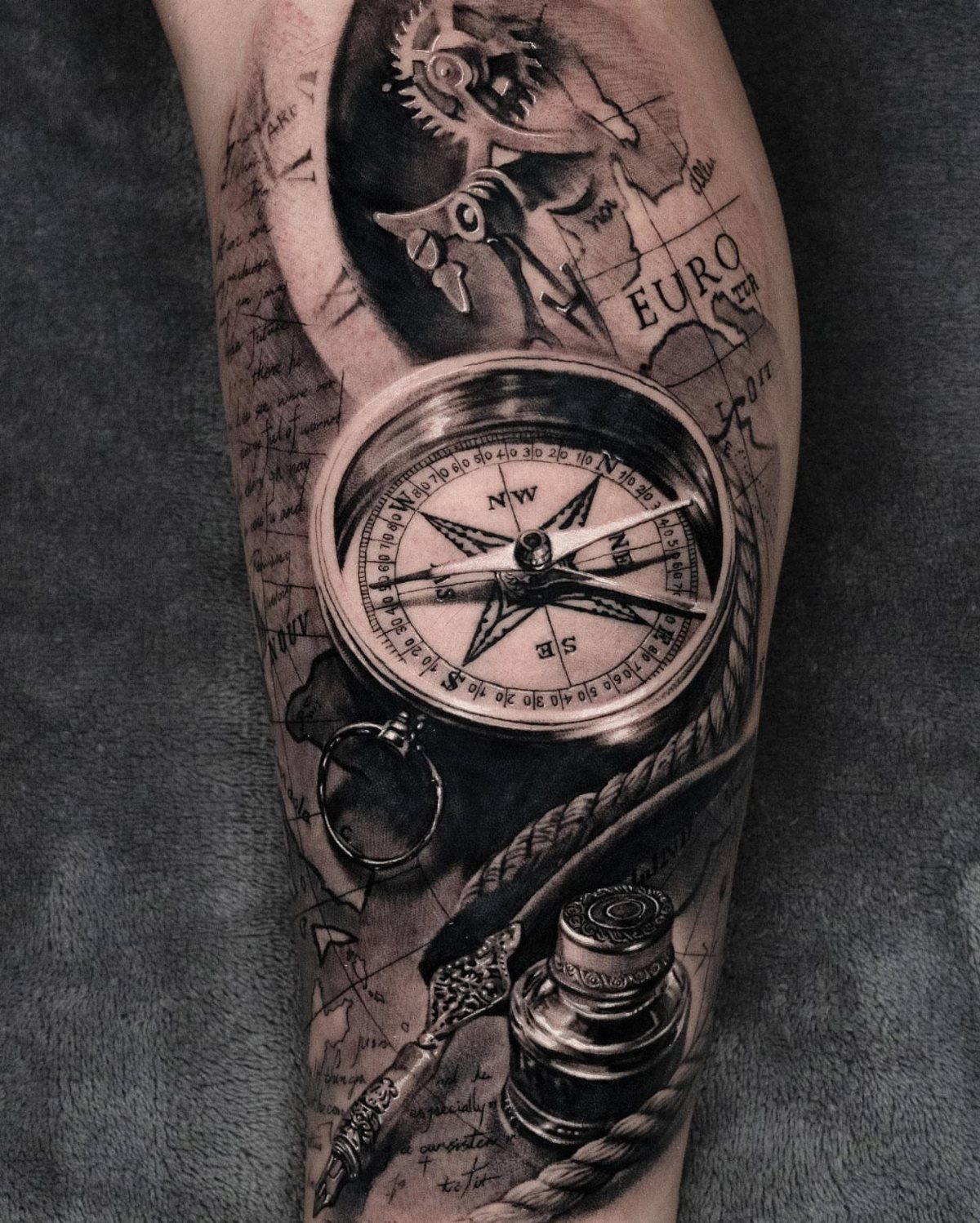
A 3D compass tattoo uses shading and perspective to make the design appear raised or recessed against the skin.
A compass paired with an inkwell, quill and map in black and grey needs strong contrast between layers so each piece reads clearly.
The effect depends on precise line work and consistent light direction.
If the shadows conflict, the illusion flattens. Placement matters too: areas with more natural contour, like the forearm, help sell the depth.
3. Japanese Koi Fish Tattoo
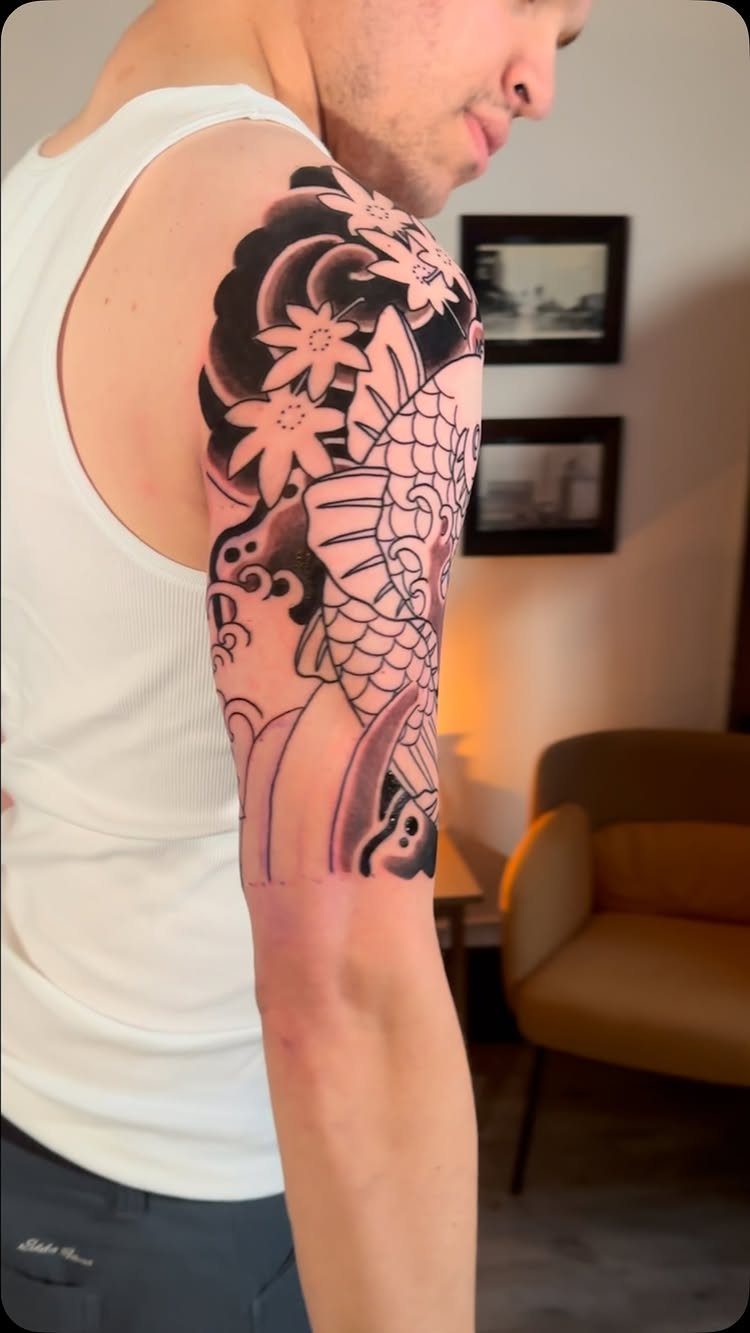
Japanese koi fish tattoos pull from traditional irezumi, pairing the fish with water, flowers or clouds in a way that wraps the body’s natural curves. The koi often swims upward, referencing the legend of fish climbing waterfalls to become dragons.
Black and grey versions like this one emphasize the scales and shading over color, keeping the focus on form. The style works well on the upper arm, where the muscle gives the design movement when you flex.
4. Tribal Tattoos
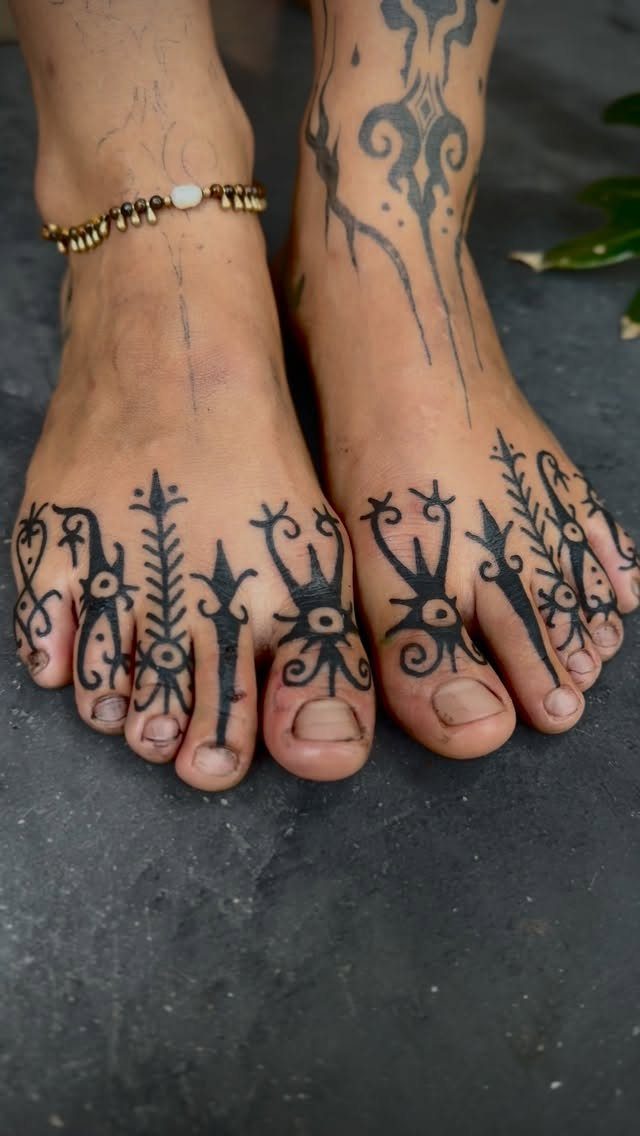
Tribal tattoos rely on solid black ink arranged in geometric or curved patterns that follow the body’s lines. The style has roots in Polynesian, Maori and other indigenous traditions, though modern versions often simplify the motifs.
Placement on the feet and ankles, like these, highlights the symmetry and keeps the design compact. The bold lines age well because there’s no shading to fade or blur, just high-contrast black on skin.
5. Animal Tattoos
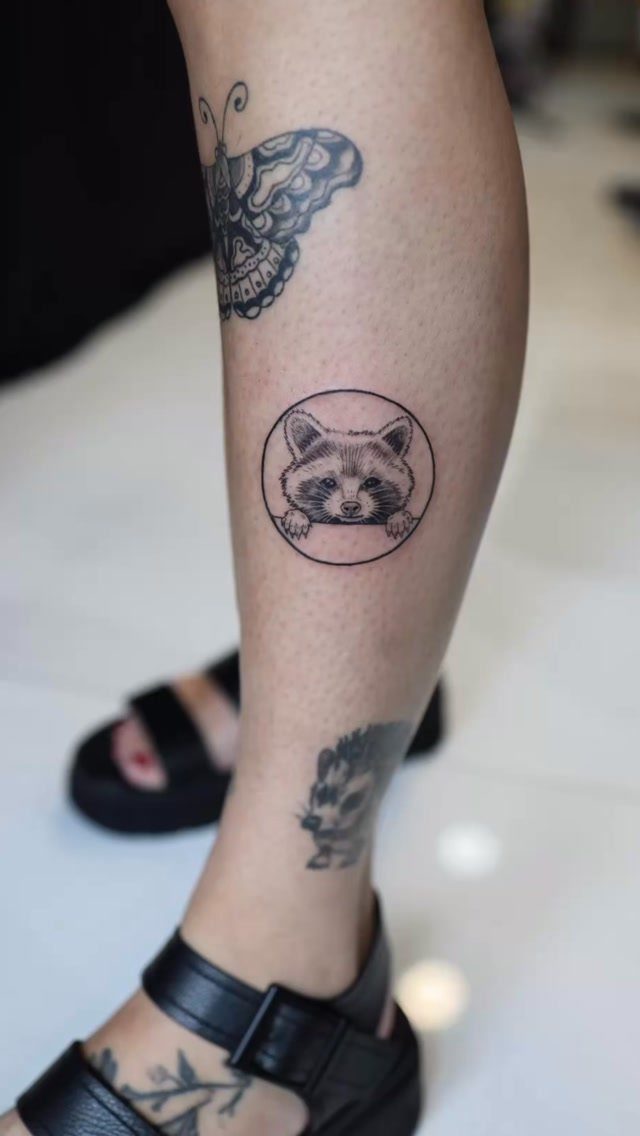
Animal tattoos let you carry something symbolic or personal: a raccoon for resourcefulness, a butterfly for change, a pet’s portrait. Black ink lets the animal’s shape and detail do the work.
Stacking multiple small animals on the lower leg and ankle works when each piece stays self-contained.
If you want cohesion, pick a consistent style or have one artist complete the set so the line weight and shading match across all of them.
6. Quote Tattoos
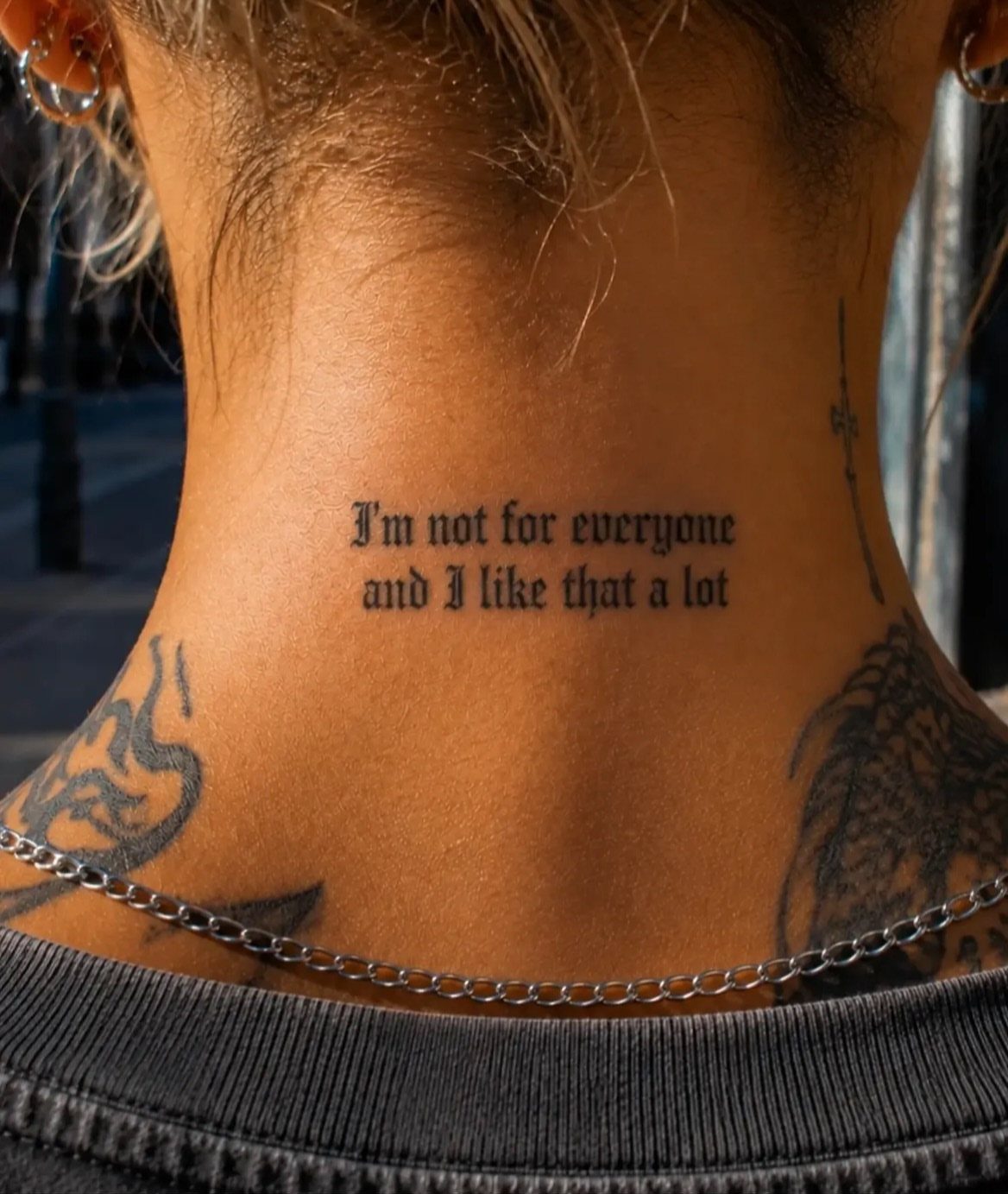
Quote tattoos put words you want to remember directly on your skin, often in a font that reinforces the message. Gothic lettering like this reads formal and permanent, which suits declarations of identity or boundaries.
The back of the neck keeps the text visible to others but easy for you to cover.
Length matters: short phrases fit better and age more legibly than full paragraphs, especially in ornate typefaces where thin strokes can blur over time.
7. Geometric Tattoos
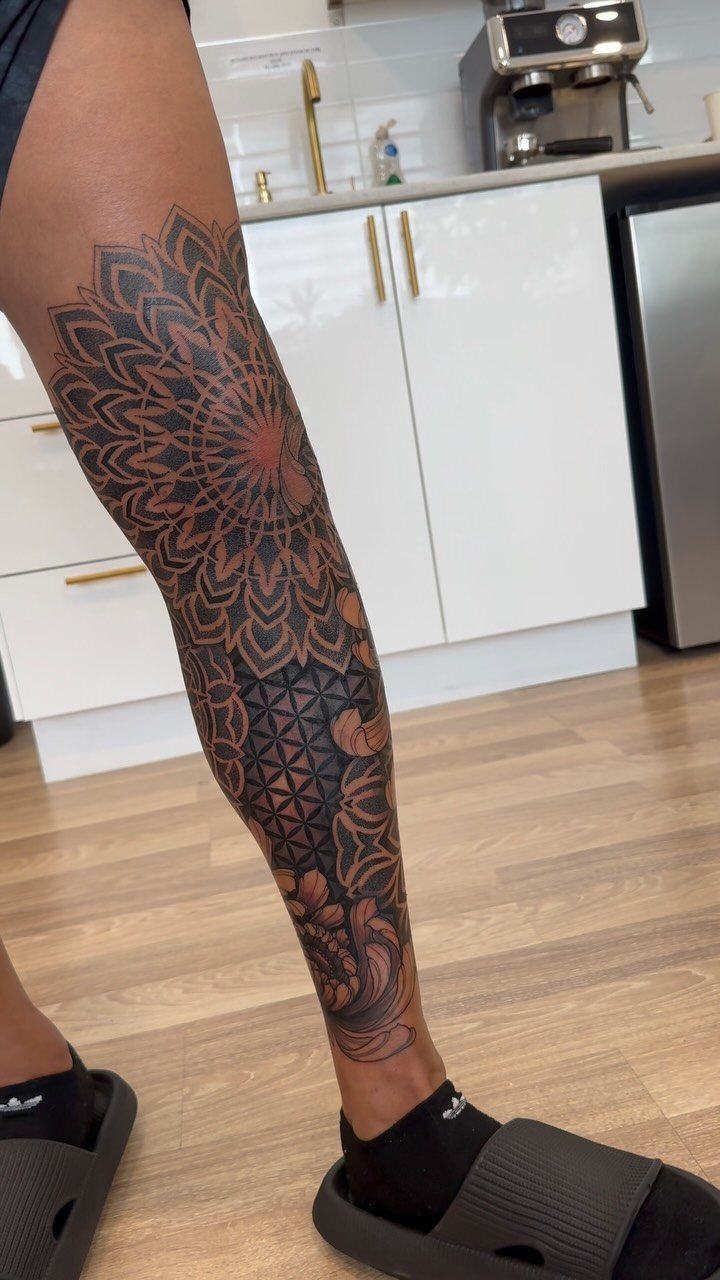
Geometric tattoos build patterns from clean lines, circles, triangles and polygons, often layered to create symmetry or optical weight. This lower leg piece centers a mandala inside concentric shapes, all in solid black.
The style demands precision.
A line that wavers or a circle that doesn’t close reads immediately, so find an artist whose portfolio shows tight geometry. Placement on the calf or shin gives you a flat canvas where the pattern won’t distort when you move.
Black ink holds the sharpest contrast, and without shading to fade, geometric work ages cleanly if the lines start crisp.
8. Flower Tattoo
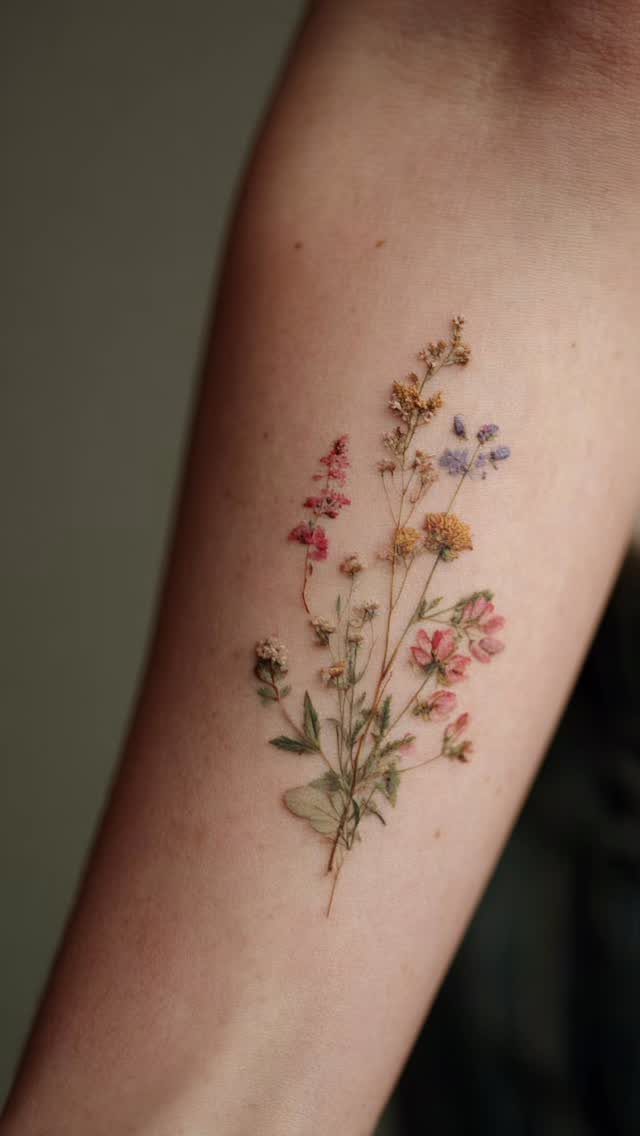
Flower tattoos let you choose blooms that mean something or simply look right together. This forearm piece layers wildflowers in full color, with stems and leaves filling the space between petals.
Botanical styles like this one show the plant’s natural structure rather than simplifying it into an icon. The mix of warm and cool tones keeps each flower distinct, even when they overlap.
Color fades faster on the forearm because of sun exposure, so plan to touch up the saturation every few years if you want the palette to stay this bright.
9. Portrait Tattoos
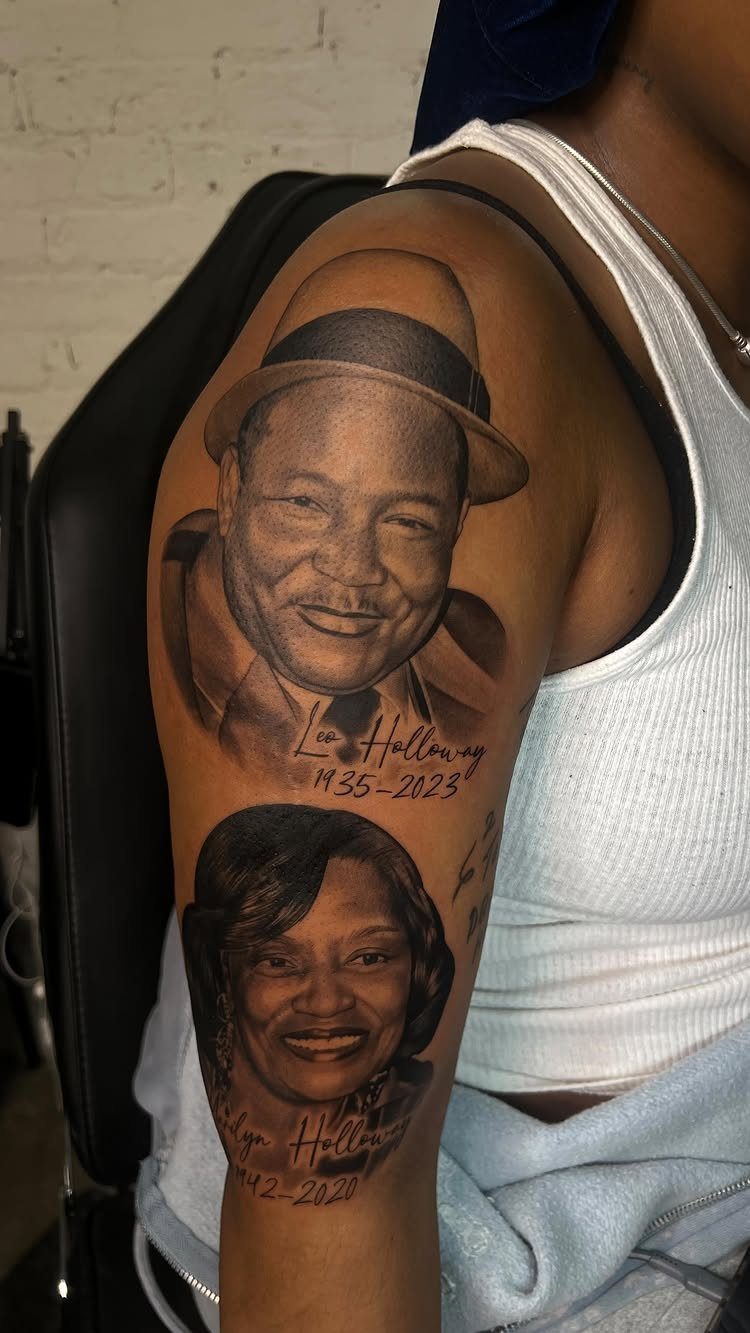
A portrait tattoo translates a photo into skin, usually rendered in black and grey with fine shading to catch the likeness.
The artist has to translate a photo’s midtones into a limited range of shading, so skin texture, wrinkles and eye detail separate a strong portrait from a flat one.
Faces need space: cramming a portrait into a small area loses the fine detail that makes it recognizable.
Expect multiple sessions for 2 portraits this size, and bring high-resolution reference photos with good lighting and clear facial features.
10. Celtic Knot Tattoo Designs
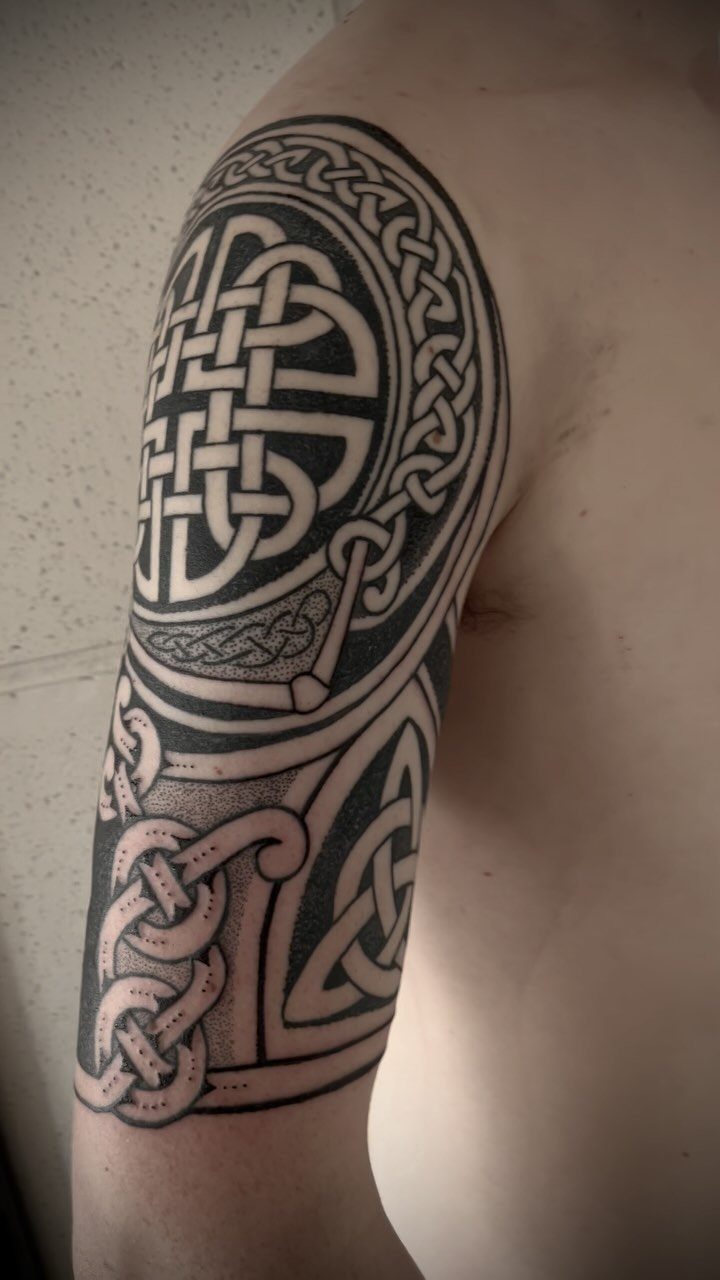
Celtic knot tattoos use continuous loops and interlaced lines that have no beginning or end, rooted in medieval Irish and Scottish design.
The interlacing has to stay consistent or the pattern breaks visually, so the artist needs a steady hand and a clear reference. Knots read best in solid black; adding color or shading often clutters the pattern instead of clarifying it.
Placement on the upper arm or shoulder lets the design wrap slightly, following the muscle’s curve without distorting the symmetry.
11. Mandala Tattoos
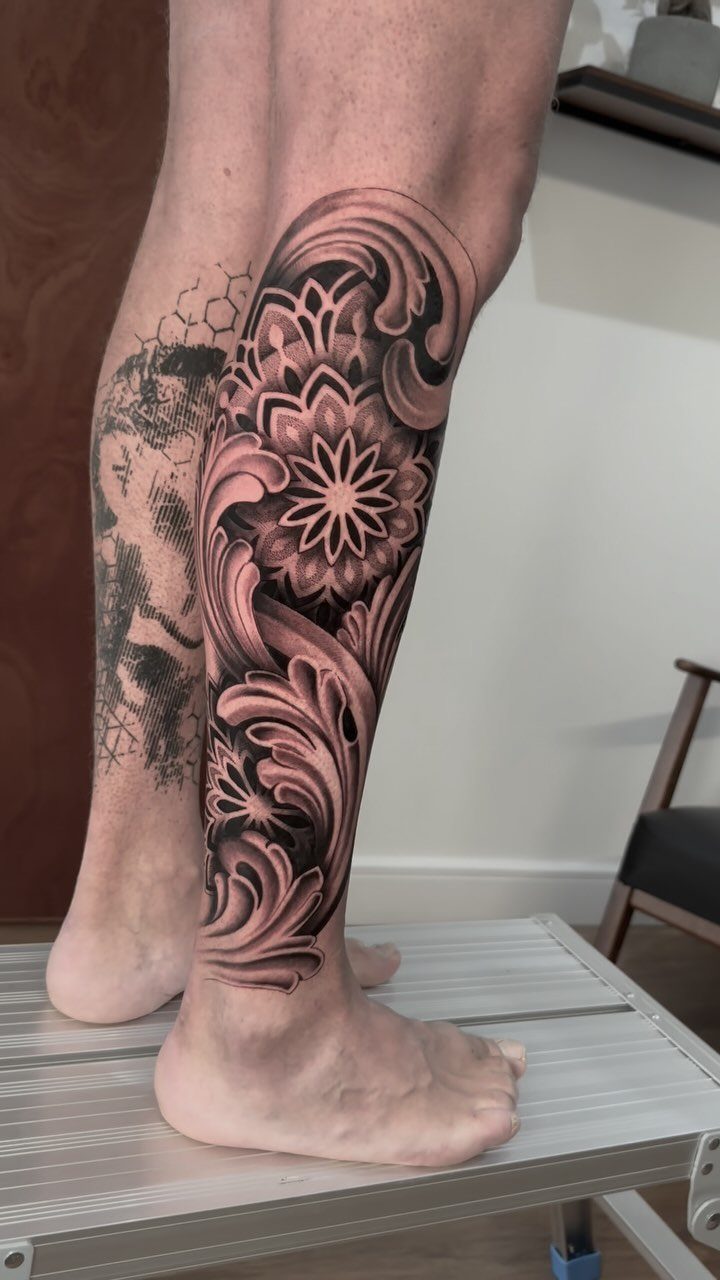
Mandala tattoos radiate outward from a center point, built from repeated petals, dots and geometric shapes arranged in concentric rings.
Symmetry defines the design, so any wobble in the pattern stands out. The artist often uses a stencil for the framework, then freehand the shading to add depth between layers.
Placement on the calf or shin keeps the mandala upright and gives enough flat area for the design to expand without hitting a joint or bone that would warp the circles.
Frequently Asked Questions
Can you provide some free tattoo ideas?
Watercolor flowers, 3D compasses, Japanese koi fish, tribal patterns, animal portraits, meaningful quotes, geometric mandalas and Celtic knots all offer strong starting points.
Pick a style that matches how much detail you want and where on your body the tattoo will sit, since some designs need more space or flatter skin to read clearly.
What are trendy tattoos?
Watercolor designs with soft, bleeding color edges stay popular, along with black and grey portraits that capture fine facial detail.
Geometric mandalas and botanical flower arrangements in full color also show up often, though watercolor and bright color both fade faster and need touch-ups every few years to stay vivid.