A floral design hides old ink when the petals, leaves and shading together create enough mass and dark value to absorb what sits below.
Neo-traditional outlines and saturated color conceal faded tattoos better than delicate line work, while mandala geometry absorbs hard edges into repeating patterns. Laser fading before the cover session lets the new design sit more cleanly over what remains.
1. Floral Mandala Hybrid Cover-Up
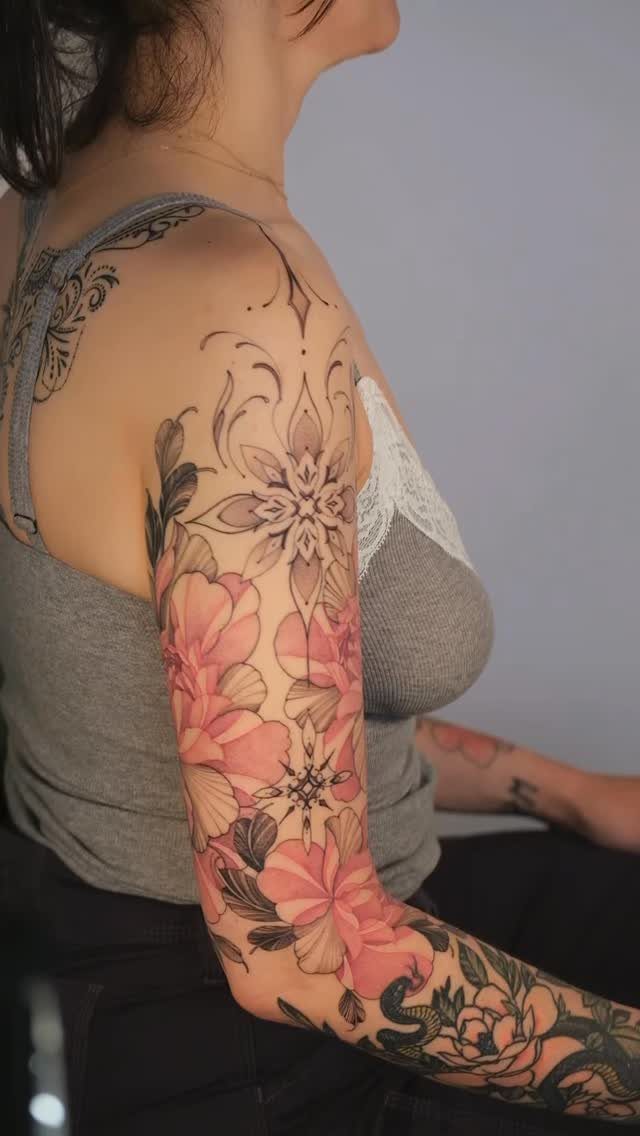
Mandala geometry gives floral cover-ups a natural framework for hiding old ink. The repeating lines and symmetrical dot patterns build density where you need it most, while petals soften the outer edges into something less rigid.
Pink and soft coral tones sit over faded black ink, adding color while the shadow underneath still shows through. If your old tattoo has hard edges or lettering, the mandala center can absorb those lines into its own structure.
Plan for a full session. The detail level here takes time, and rushing dot work shows.
2. Neo-Traditional Floral Bouquet Cover-Up
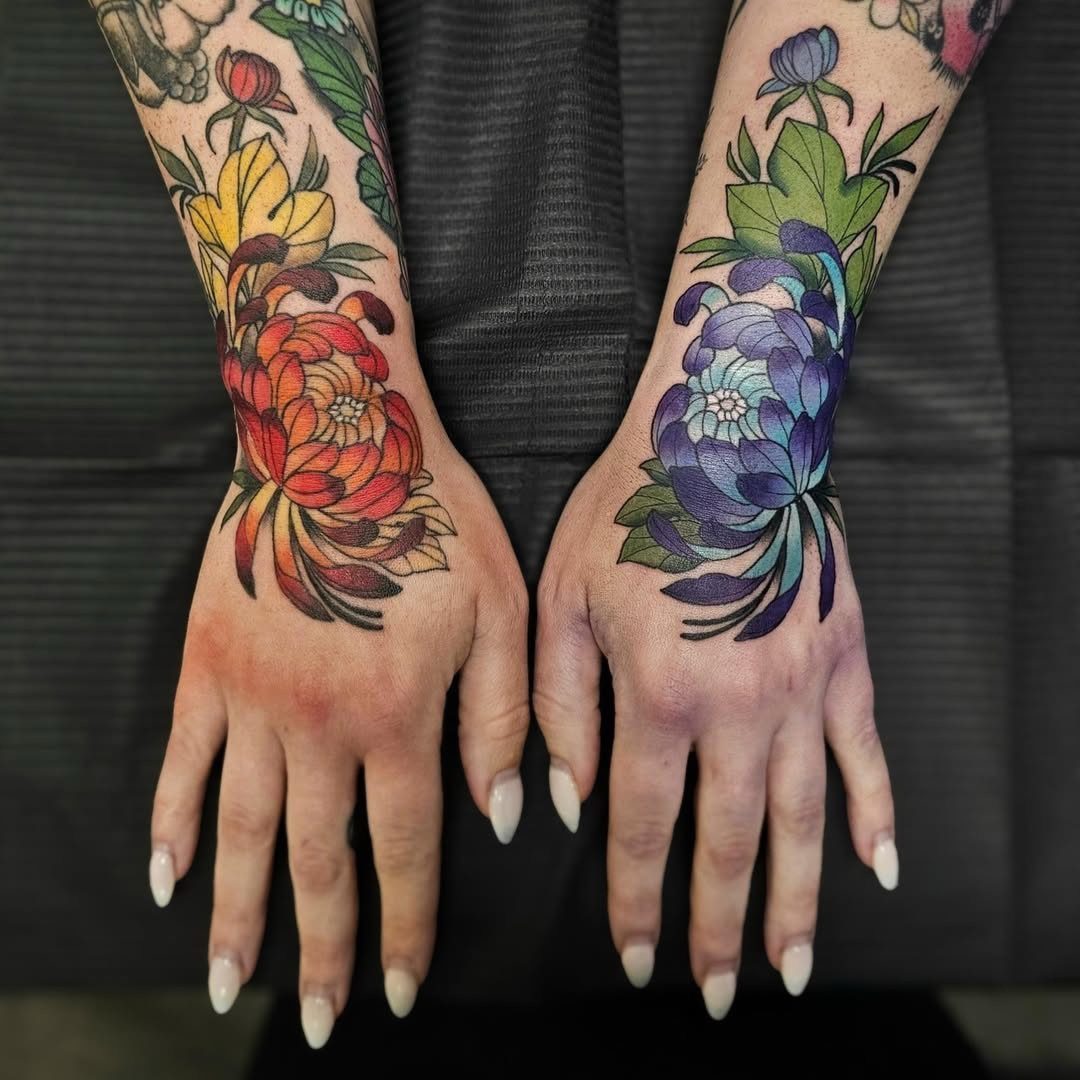
Neo-traditional style brings bold outlines and saturated color, both of which help conceal what sits beneath. The thicker black borders define each petal clearly, and layering red with purple creates enough contrast to pull the eye away from older work.
This approach works best over tattoos that have already started to fade.
Fresh black ink underneath will still show through lighter petals, so timing matters. If removal or additional fading is an option, a few laser sessions first can make the cover-up more complete.
The style reads well from a distance, which matters if the old tattoo was large.
3. Floral Vine Cover-Up
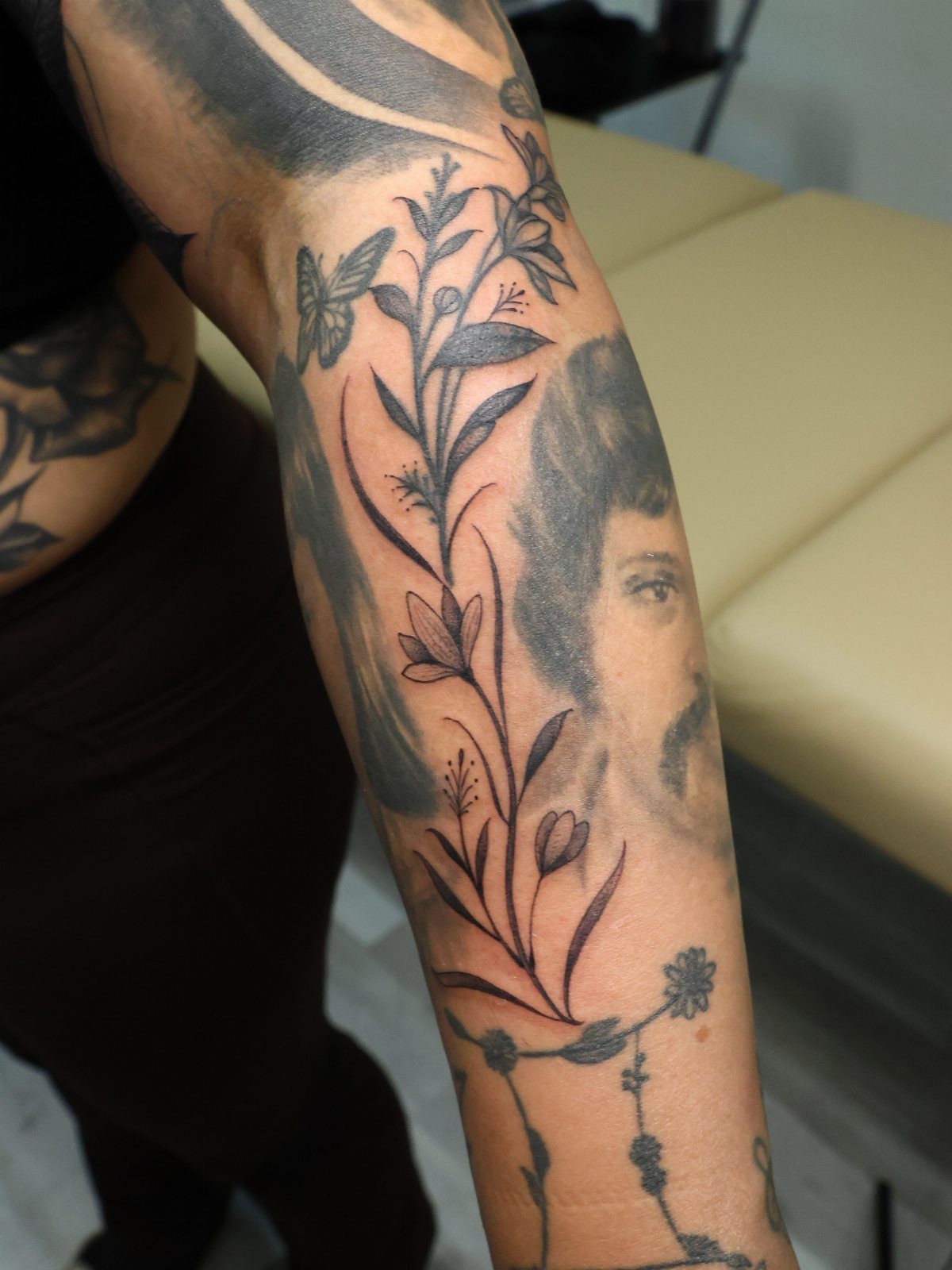
Black ink vines move easily around the shapes you are trying to hide. The leaves and small blooms can follow the contours of an old portrait or script, breaking up recognizable features without needing full saturation everywhere.
This works when the original tattoo is light enough that solid black linework will dominate it.
If the underlying ink is still dark and dense, the vine alone may not be enough coverage, and you will need to add shading or background fill to finish the job.
Placement on the forearm lets the design flow, but detail at this level takes time in the chair.
4. Bold Red Bloom Cover-Up
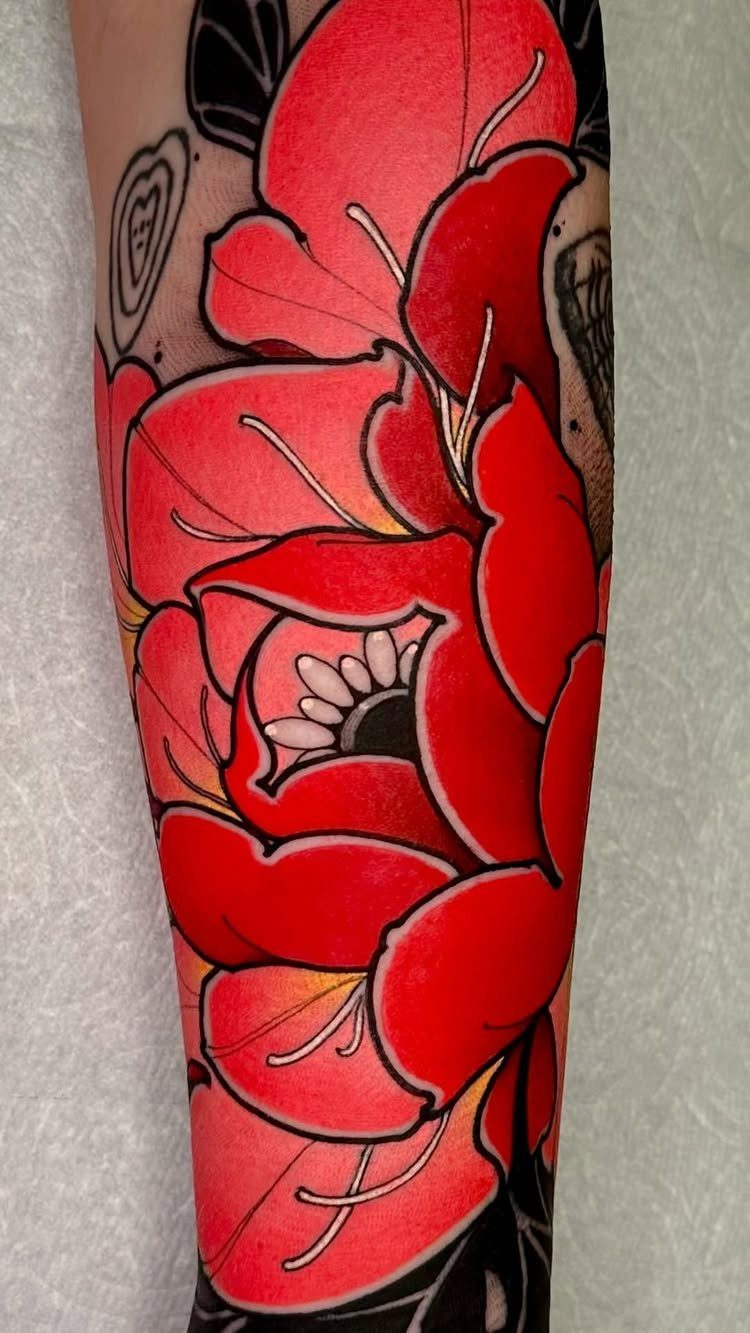
Red with heavy shading creates the opacity needed to cover dark, saturated ink. The color sits on top rather than blending through, and the black shading around the petals reinforces that coverage by adding another layer of density.
This option requires an artist who can pack color solidly.
Gaps or uneven saturation will let the old tattoo show, especially once healing pulls some of the pigment out. A touch-up session is common.
Red loses intensity before black does, so expect the color to soften over time. If long-term vibrancy matters, ask about adding darker tones or scheduling future touch-ups before the red loses its punch.
Finding the Right Artist
Cover-up work sits in a different category than a new tattoo on clean skin. The artist has to build around what is already there, which means experience with this specific challenge matters more than a general portfolio.
Look for artists who show cover-up work in their galleries, not just finished pieces on blank skin. Look at whether they managed to hide dark lines and kept fine details readable in their finished work.
A strong cover-up artist knows how to read old ink and plan around it rather than hoping saturation alone will fix the problem.
Ask to see examples close to your situation.
If your old tattoo is dense and dark, you need someone who has covered similar work successfully. If it is faded script or small symbols, that is a different skill set.
Schedule a consultation before committing. A good artist will photograph your old tattoo, discuss what can realistically be hidden, and explain whether additional fading or a different design would help.
Aftercare for Cover-Up Tattoos
A cover-up puts ink over skin that has already been tattooed, which means the area has been worked twice. That changes how healing goes and how much attention the tattoo needs in the first few weeks.
Keep the area clean and moisturized exactly as your artist directs.
Sun exposure will fade the new ink faster than it would on a fresh tattoo over clean skin, so keep it covered or use high-SPF sunscreen once healing is complete.
The color and saturation you start with will not stay if the tattoo is left unprotected.
Touch-ups are common with cover-ups. Plan for at least one follow-up session to fill any spots where the old ink pushed through or the new color did not hold as expected.
Transformation of Perception
A floral cover-up tattoo replaces something you stopped wanting with a design you chose deliberately, and that shift changes how the tattoo sits in your mind.
Regret turns into intention.
The new piece reflects who you are now rather than a decision you made years ago under different circumstances. That difference matters when you look at it every day.
Growth shows up in the work itself.
Choosing a cover-up means acknowledging that the first tattoo no longer fits and taking the time to plan something better. The result is not just coverage but a design that carries meaning you can stand behind.
Frequently Asked Questions
How do flower cover-up tattoos work?
Floral designs hide old tattoos by layering new ink over what is already there, using petals, leaves, and shading to break up or fully conceal the original image.
The artist builds around the old tattoo’s shape and color rather than pretending it is not there.
What should I consider when choosing a cover-up?
Look at how dark and dense your old tattoo is, because that decides whether the new design needs extra shading or a few laser sessions first.
Look for someone whose book includes healed cover-ups, since hiding another tattoo takes different skill than working on bare skin. Schedule a consultation so the artist can photograph your old ink and explain what can realistically be hidden.