UV face tattoos glow under blacklight and stay invisible in daylight, which lets you wear a bold design at night without showing ink the rest of the week.
Red glows brighter than blue or white and reads from farther away, but the pigment can irritate skin more during healing.
1. Design Ideas for UV Tattoos
UV ink glows under blacklight but stays invisible or faint in daylight, which gives face tattoos a different kind of flexibility. You can wear something bold at night and look unmarked the rest of the time.
The glow reads best on bare skin in a dark room with a UV bulb overhead.
Natural light won’t show it, and most indoor lighting won’t either. If you want the design visible during the day, layer UV ink over a fine black stencil outline.
Face skin is thin, so the glow needs extra care while it settles in.
Black light tattoos are created using ultraviolet-reactive ink, and while UV tattoos are quasi-invisible in plain daylight, they shine under an ultraviolet black-light bulb.
2. Forehead Crescent Moon UV Tattoo
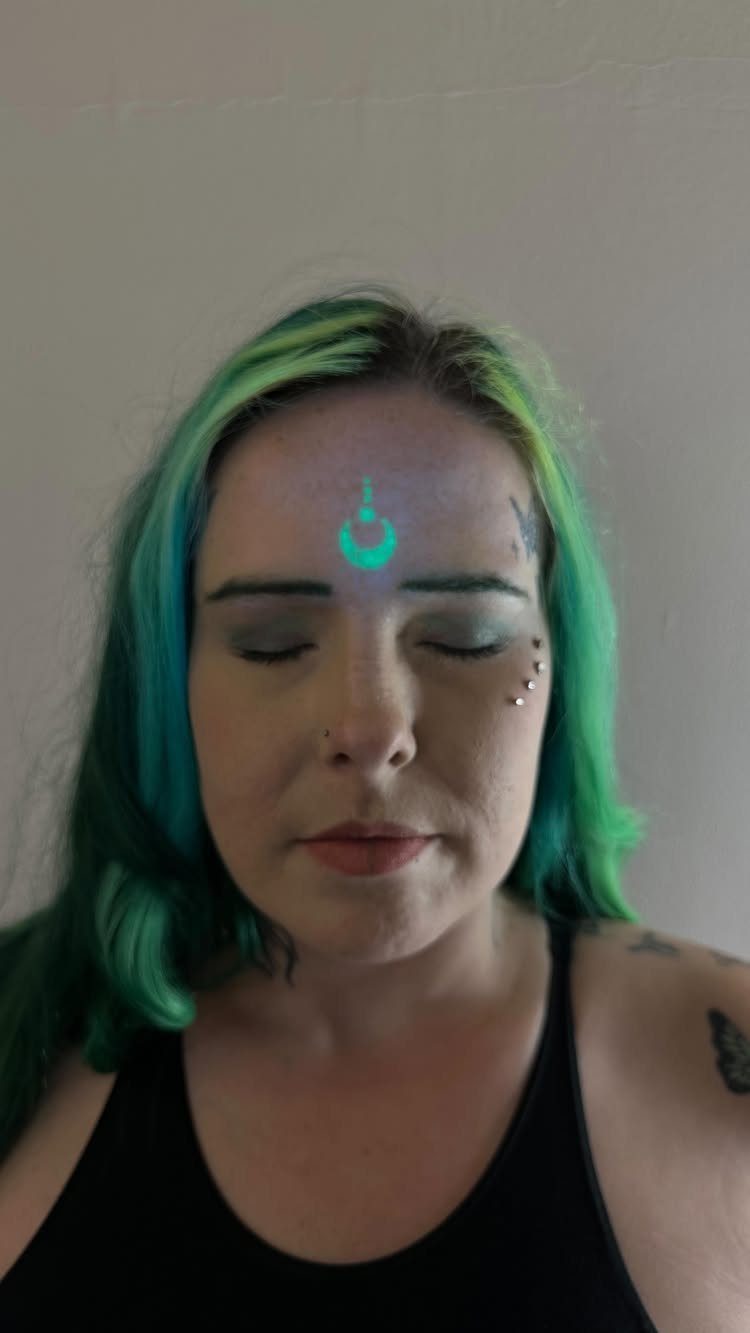
A crescent moon and single dot sit centered on the forehead, glowing bright blue under UV light. The shape reads cleanly from across a room, and the forehead gives you enough flat space to keep the curve smooth.
Forehead tattoos hurt more than most other placements because the skin lies directly over bone with almost no fat cushion. The session runs short, but the sting is sharp while the needle moves.
UV ink fades faster than standard pigment, so expect touch-ups if you want the glow to stay bright.
3. Face-spanning Lightning Bolt UV Tattoo
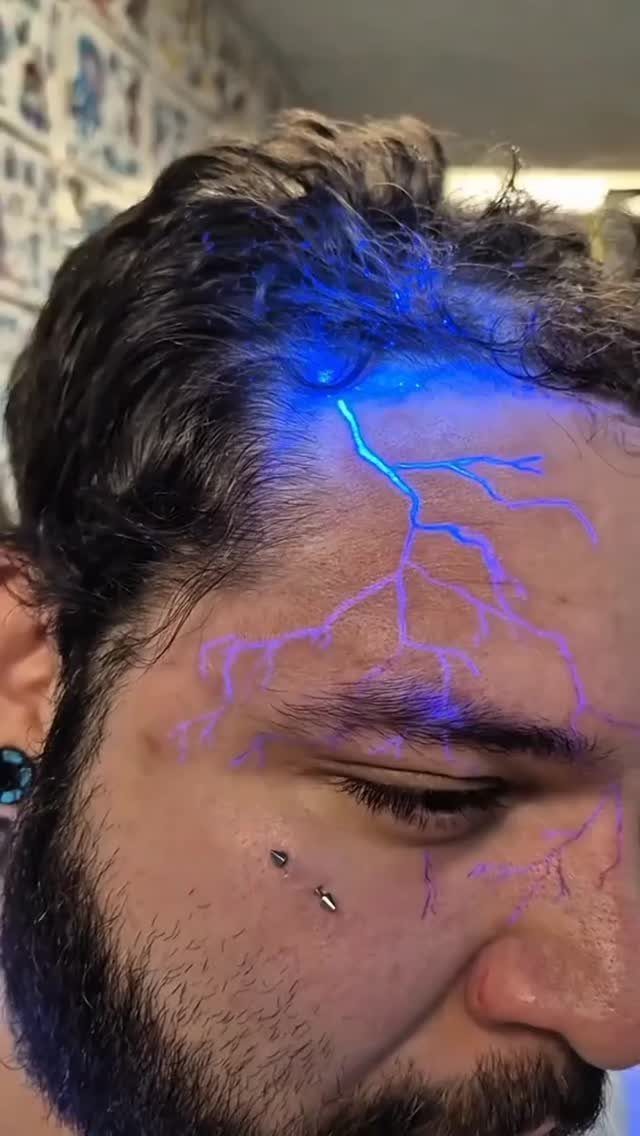
A jagged lightning bolt runs diagonally from the forehead down across the cheek, glowing blue under blacklight. The shape covers a lot of real estate, so it reads as a statement piece even when the room is dim.
The forehead and cheek heal at different rates because the cheek moves every time you talk or eat. Plan for careful aftercare, and keep your pillowcase clean to avoid friction on the cheek side.
UV ink shows up brightest on lighter skin tones. Darker skin may need multiple passes to get the same intensity of glow.
4. Glowing Blue Star Cheek Tattoo
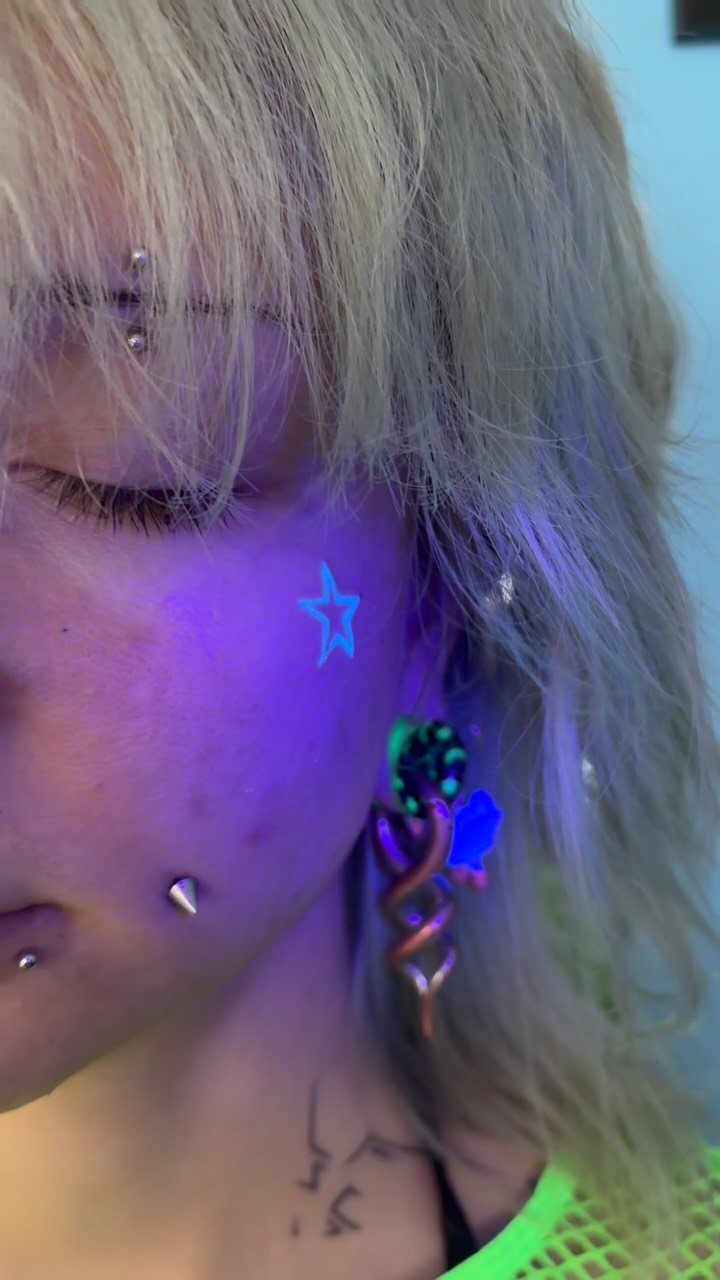
A single star glows blue on the cheek, positioned high enough to catch light but low enough to avoid the orbital bone. The shape stays simple, which keeps the glow sharp instead of blurred.
Cheek tattoos sit in a high-movement zone, so healing takes longer than static areas like the forearm. Avoid sleeping on that side for the first week, and skip spicy or acidic foods that make you sweat near the fresh ink.
UV ink can migrate slightly as it heals, so a design with clean edges like a star holds its shape better than something with fine detail.
5. Blue Scratch Mark Cheek Tattoo
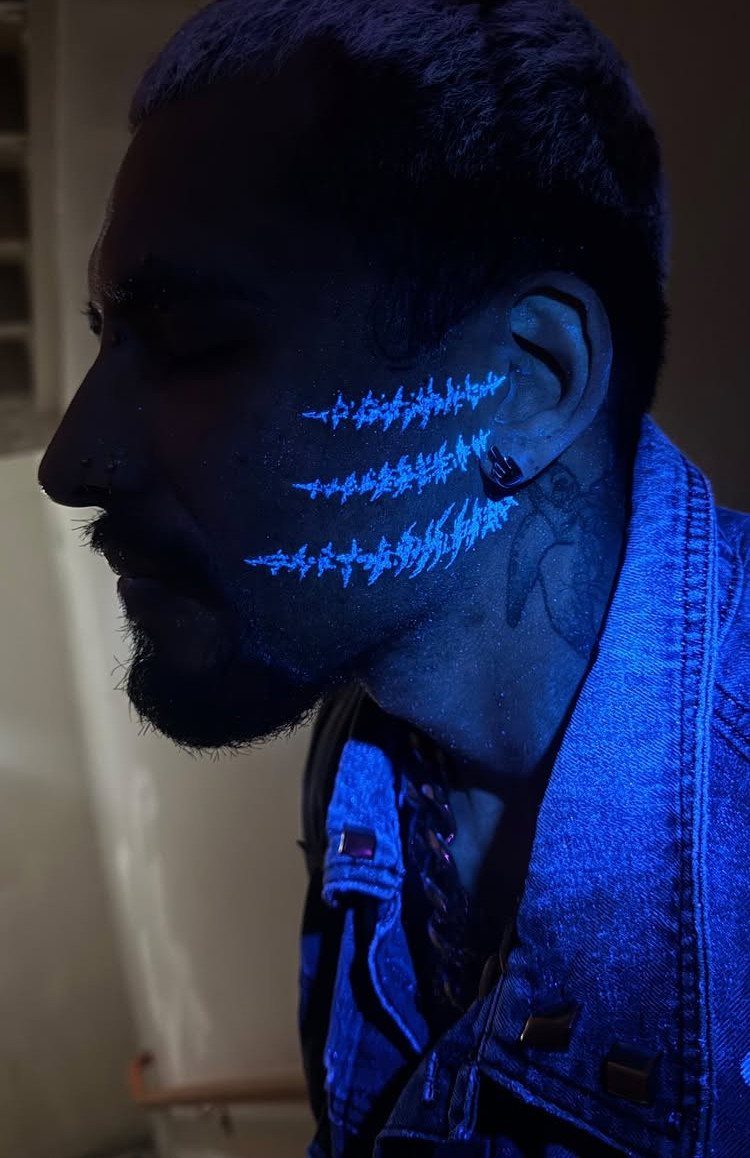
Three parallel scratch marks glow blue along the cheekbone, angled like claw tracks. The spacing between the lines keeps each one distinct under UV light, and the diagonal slant follows the natural contour of the face.
Cheek tattoos hurt less than forehead work because there’s a thin layer of fat between skin and bone, but the area swells more after the session.
Ice packs help, but keep them wrapped in cloth so you don’t freeze the fresh ink.
UV ink fades unevenly on high-movement areas like the cheek, so plan for a touch-up down the line.
6. Glowing White Constellation Freckle Dots
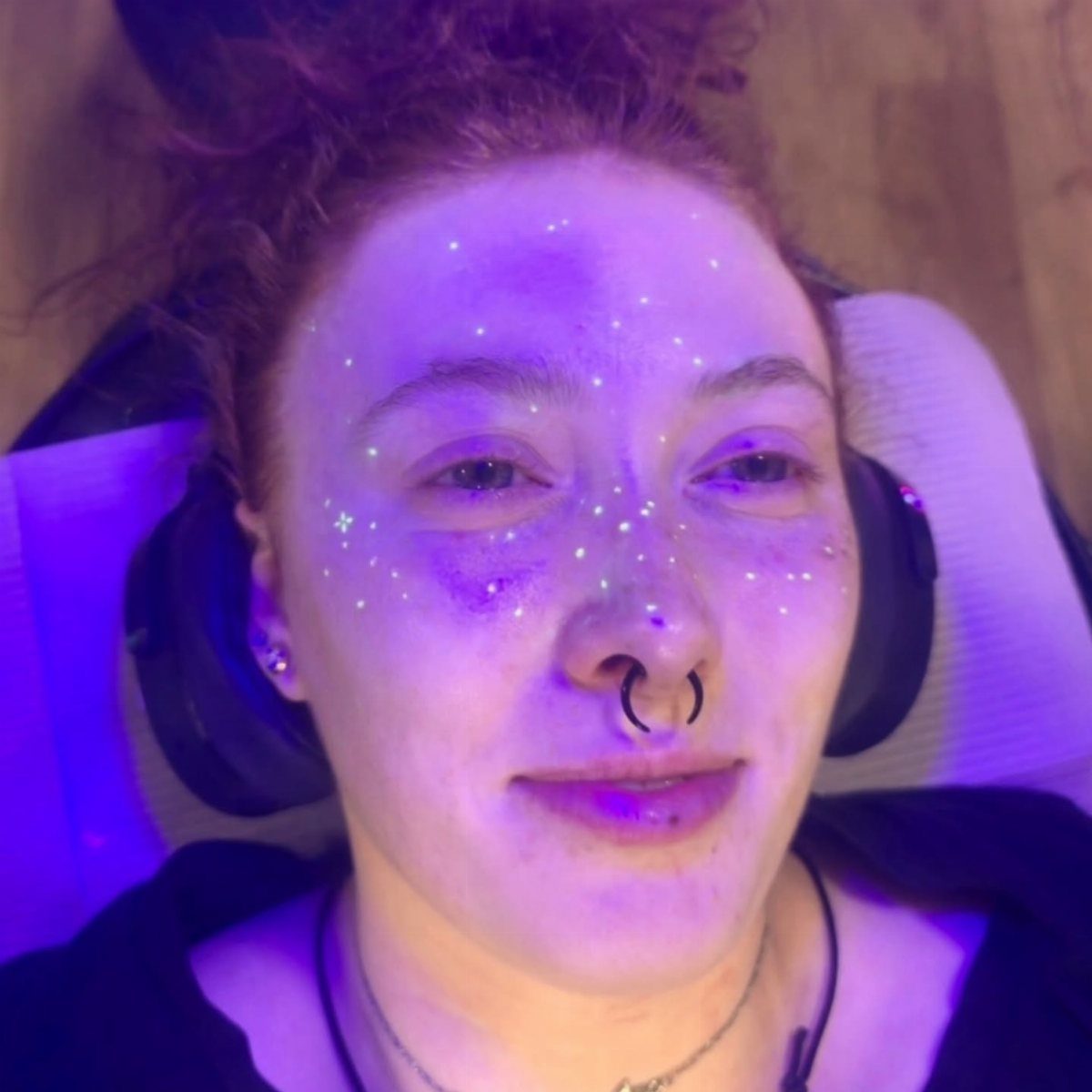
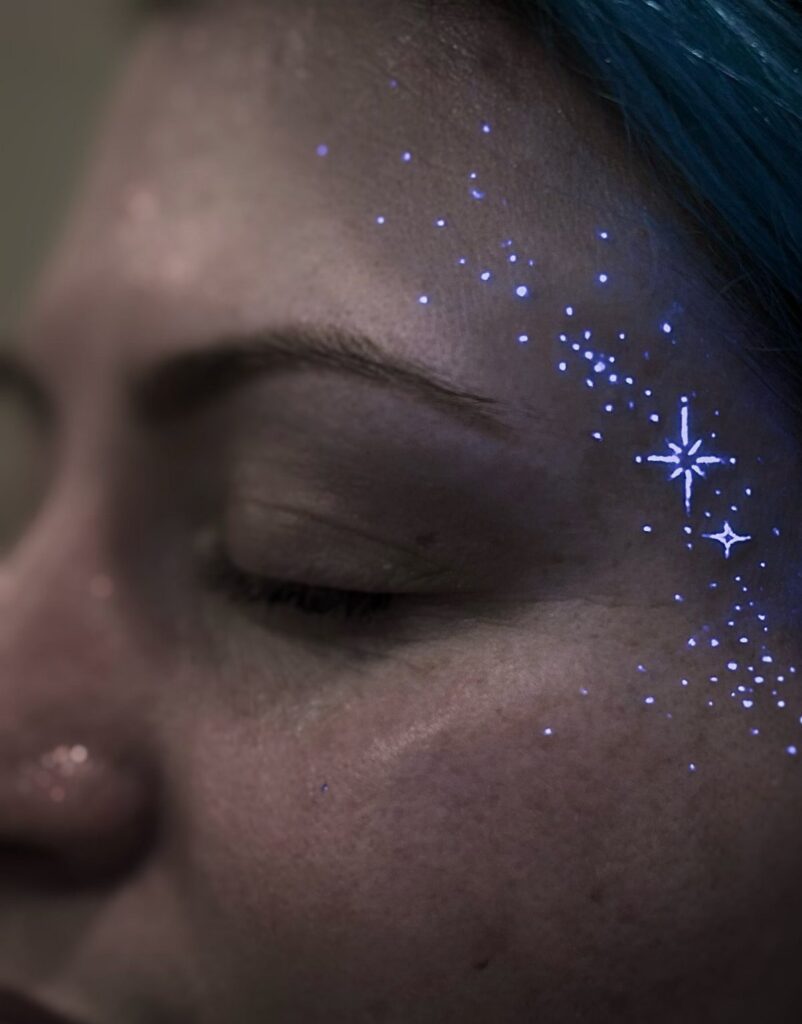
Small white dots scatter across the forehead and cheeks like freckles, glowing under purple UV light. The pattern looks random but needs deliberate spacing so the dots don’t blur together when they glow.
Each dot takes only a few seconds to ink, but placing 20 or 30 of them means the session can stretch to an hour.
Your artist will mark each spot with a pen first so you can approve the layout before the needle starts.
White UV ink fades faster than blue or green, so expect the glow to soften over time.
7. Glowing Red Cheek Accent Tattoo
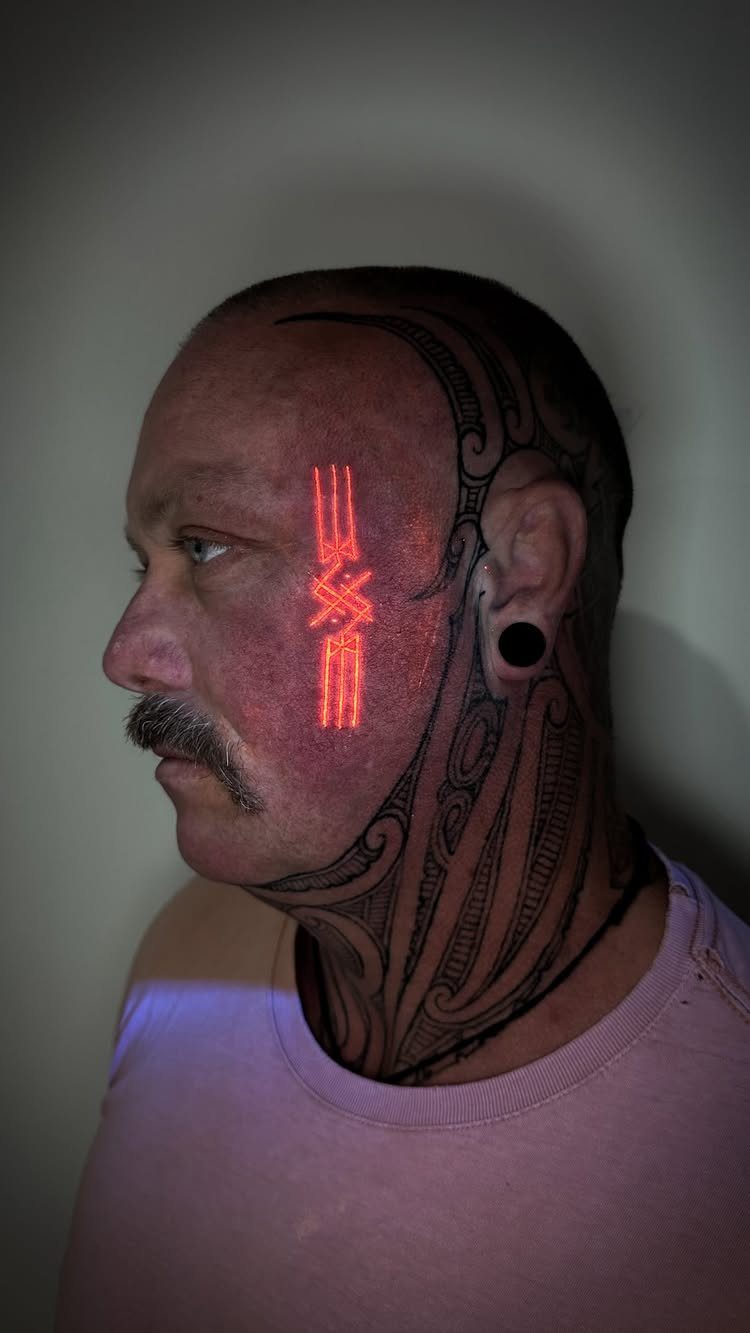
Red UV ink glows brighter than most other colors under blacklight, so a cheek design like this one reads from farther away than blue or white ink.
The color sits warm against skin tone instead of cool, which changes how the glow reads at night.
Red UV pigment can irritate skin more than blue or green because the compound used to produce the glow reacts differently with tissue. Patch-test the ink on your inner arm a week before the face session.
Cheek tattoos stay visible when you talk, so pick a size and shape you’re comfortable showing off.
Potential Side Effects of UV Ink
UV ink causes skin reactions more often than traditional pigment. Burning, pain, blistering and rashes can appear at the tattoo site during healing or after.
The FDA has not approved UV ink for tattoo use.
Some formulations contain phosphorus to boost the glow, and phosphorus carries potential cancer risk. Other UV inks use nontoxic reactive compounds, but without industry standards you can’t confirm what’s actually in the formula.
Traditional tattoo ink isn’t FDA-approved either, so the absence of approval alone doesn’t single UV ink out. The difference is frequency: UV ink triggers more adverse reactions in practice.
Most reputable studios avoid UV ink until better safety data exists. If you’re set on a glowing face tattoo, find out which brand your artist uses and whether they’ve seen reactions before.
Best Practices for UV Tattoos
UV ink works best in small amounts.
A few dots or thin accent lines glow cleanly under blacklight without muddying the overall design. Oversaturating a tattoo with UV pigment blurs the glow and loses the detail you’re aiming for.
Layering UV ink next to dark color makes the glow pop harder. Black or deep blue placed right beside a neon section sharpens the contrast and gives the piece a 3D lift under purple light.
Treat the tattoo like white ink: keep it clean, avoid friction, and don’t let dirt sit on the surface while the skin is still open.
Find an artist who has worked with UV ink before. The application technique is the same, but managing the pigment load and keeping the skin clean takes practice.
Considerations Before Getting a UV Tattoo
Long-term health effects of UV ink haven’t been studied in depth. Skin irritation and allergic reactions appear more often with UV pigment than with standard ink, but long-term effects haven’t been studied.
If you’re moving forward with a UV face tattoo, choose an artist who’s worked with the ink before.
Everyone’s skin reacts differently, and UV pigment shows more reports of irritation and side effects than regular ink. An experienced hand will know how many passes the ink needs and how to keep the skin from staining during the session.
How long the glow lasts is a gamble: everyone’s skin reacts differently, and aftercare plays a big part in how the pigment holds. Aftercare matters, but skin type and pigment brand play a role too.
Frequently Asked Questions
What exactly are black light tattoos?
The ink contains fluorescent particles that react to ultraviolet wavelengths, making the design light up in clubs, blacklight rooms, or anywhere a UV source is present.
Some designs layer UV ink over traditional black outlines so the tattoo shows in daylight and glows under blacklight, while others use only UV pigment to stay hidden unless a UV bulb hits them.
Is UV tattoo ink safe?
The reaction rate runs higher than standard ink: more itching, more irritation, sometimes severe blistering that leaves scarring. Phosphorus compounds in certain brands deliver the brightest glow and also carry toxicity concerns that standard pigment does not.