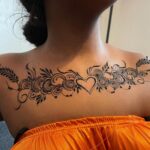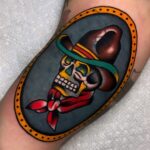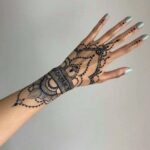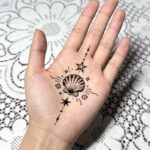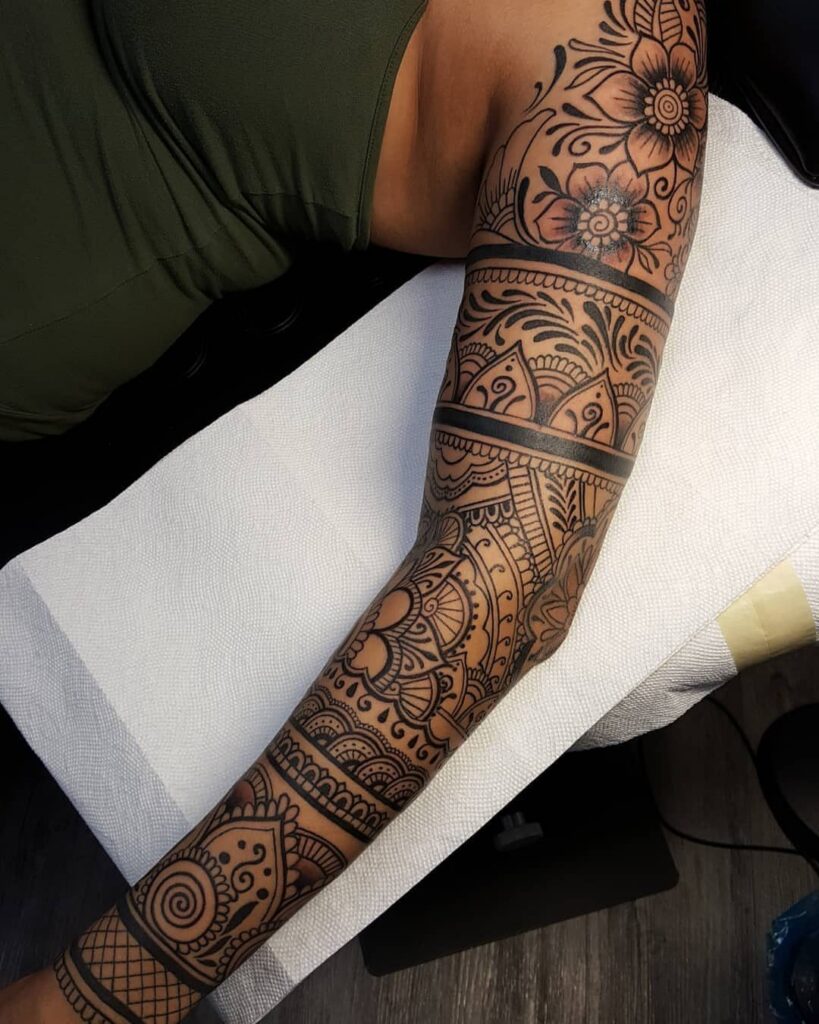
Henna-style tattoos in black or brown ink give you permanent versions of patterns that would otherwise fade in 1 to 3 weeks, and the designs range from small finger details to full sleeves covering arm and hand.
Your tolerance for visible ink decides where the design sits: hands and face read immediately in any setting, while legs, back and feet stay hidden under most clothing.
1. Henna Foot Tattoo
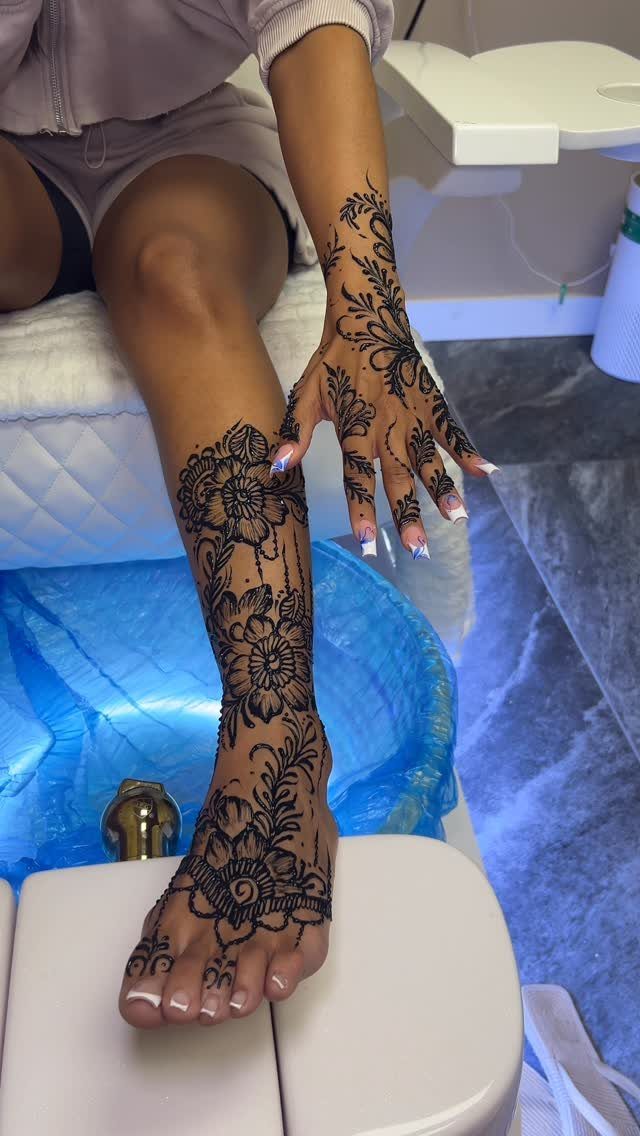
Foot tattoos in this style wrap florals and paisleys across the top and toes, following the natural lines of the foot.
The black ink stands out clearly against lighter skin, and the curves soften hard edges around the ankle and arch.
Placement means you’ll feel more during the session since skin sits closer to bone here. Healing takes longer if you’re on your feet all day, so plan around that.
The design works best when it mirrors traditional bridal mehndi but stays readable as it ages.
2. White Henna Tattoo
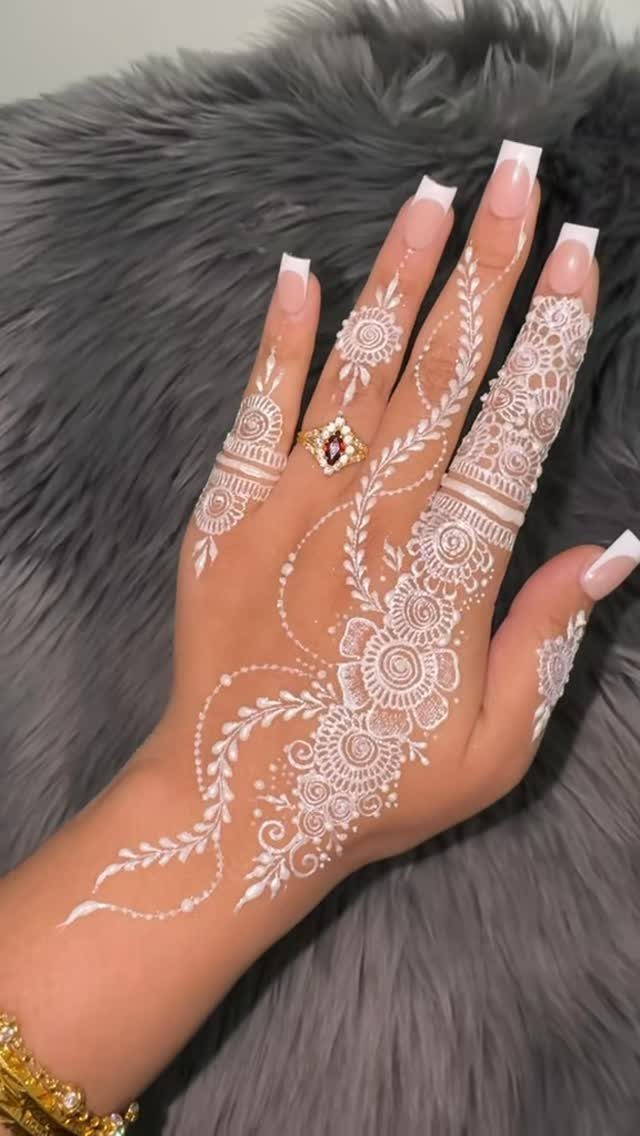
This look skips henna entirely and uses white body paint or white ink instead. Painted versions last a few days and photograph well for events, while white ink tattoos fade faster than black but stay visible on darker skin tones.
Artists apply the paint freehand or with a stencil, layering details like lace or geometric chains across the hand and fingers. White ink heals unpredictably since it can turn cream or disappear depending on your skin.
If you want the henna effect without committing to permanent black, painted white henna gives you the detail for a weekend.
In an interesting twist on traditional Indian henna tattoos, numerous beauty and fashion sites have started selling stunning white henna-inspired flash tattoos that are blowing up on Instagram.
3. Henna Leg Tattoo
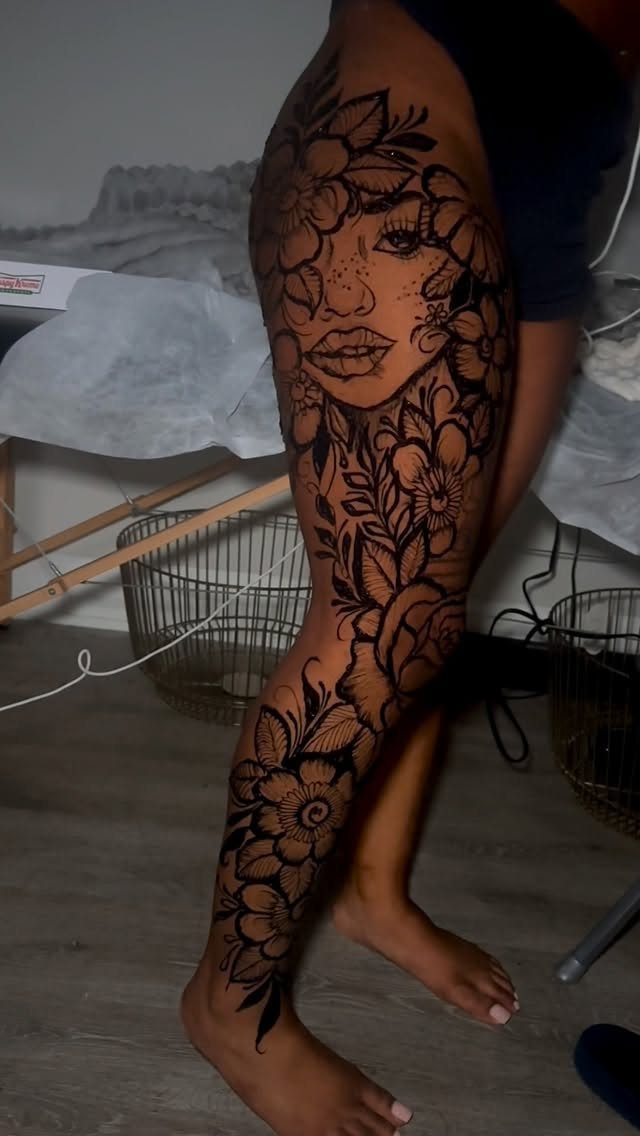
Leg placement opens up space for larger compositions that run from thigh to calf. The design here centers a portrait inside florals, using the length of the leg to balance heavy elements with fine linework.
Black ink on this scale takes multiple sessions, and shading around curves requires an artist who works well with soft gradients. Legs heal easier than hands or feet since fabric protects fresh ink most of the day.
Designs this bold read well from a distance, so pick an artist whose portfolio shows clean black shading that ages without muddying.
4. Henna Arm and Shoulder Tattoo
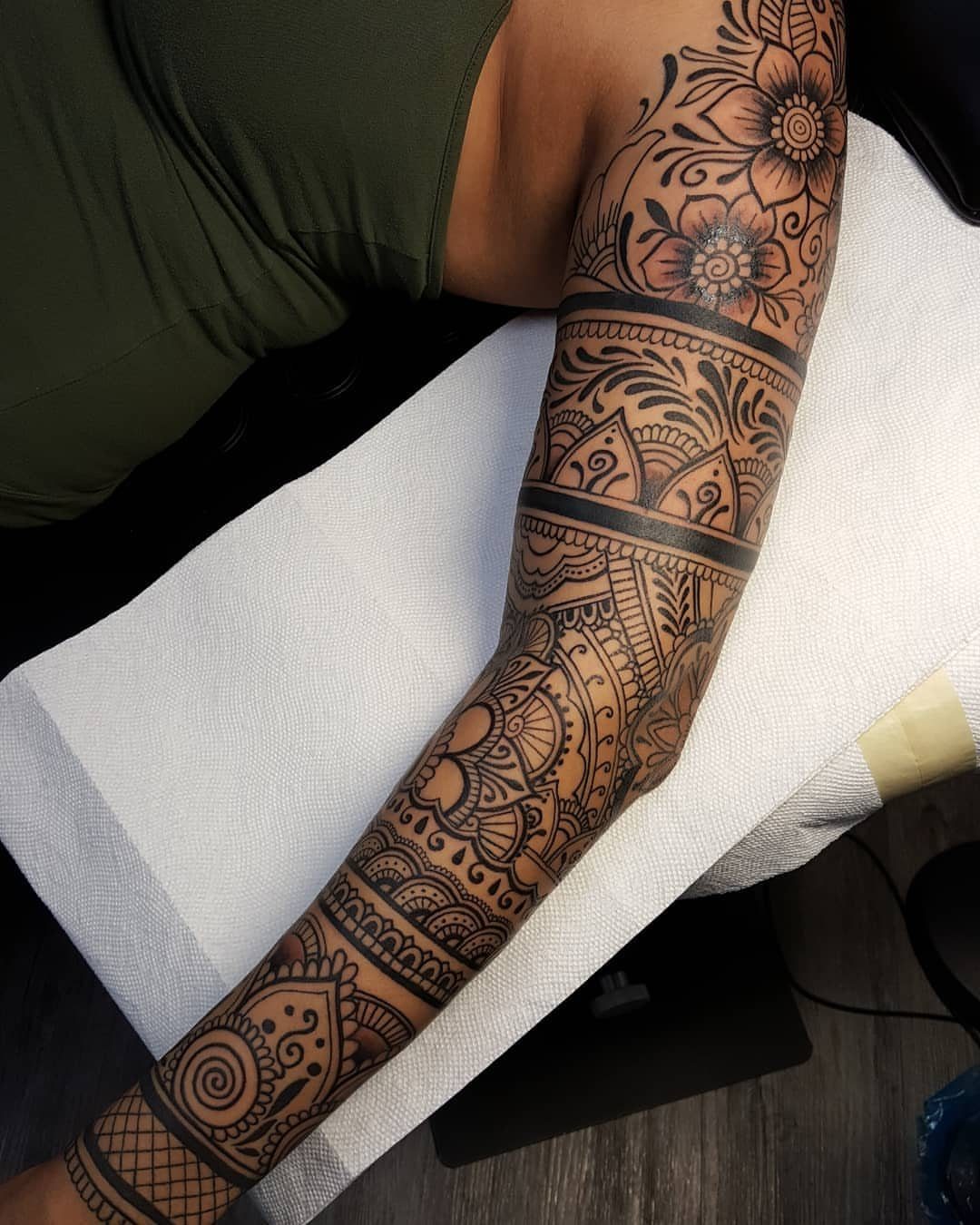
Patterns here climb from the wrist up over the shoulder, using mandalas and leafy vines to follow muscle contours. The geometry sits tight around the shoulder cap while florals trail down the arm, creating balance across a large area.
The shoulder and inner bicep feel sharper than the outer arm, and aftercare means loose clothing for the first week.
This placement suits anyone ready for visible ink that still hides under a sleeve when needed.
5. Henna Bangle Tattoo
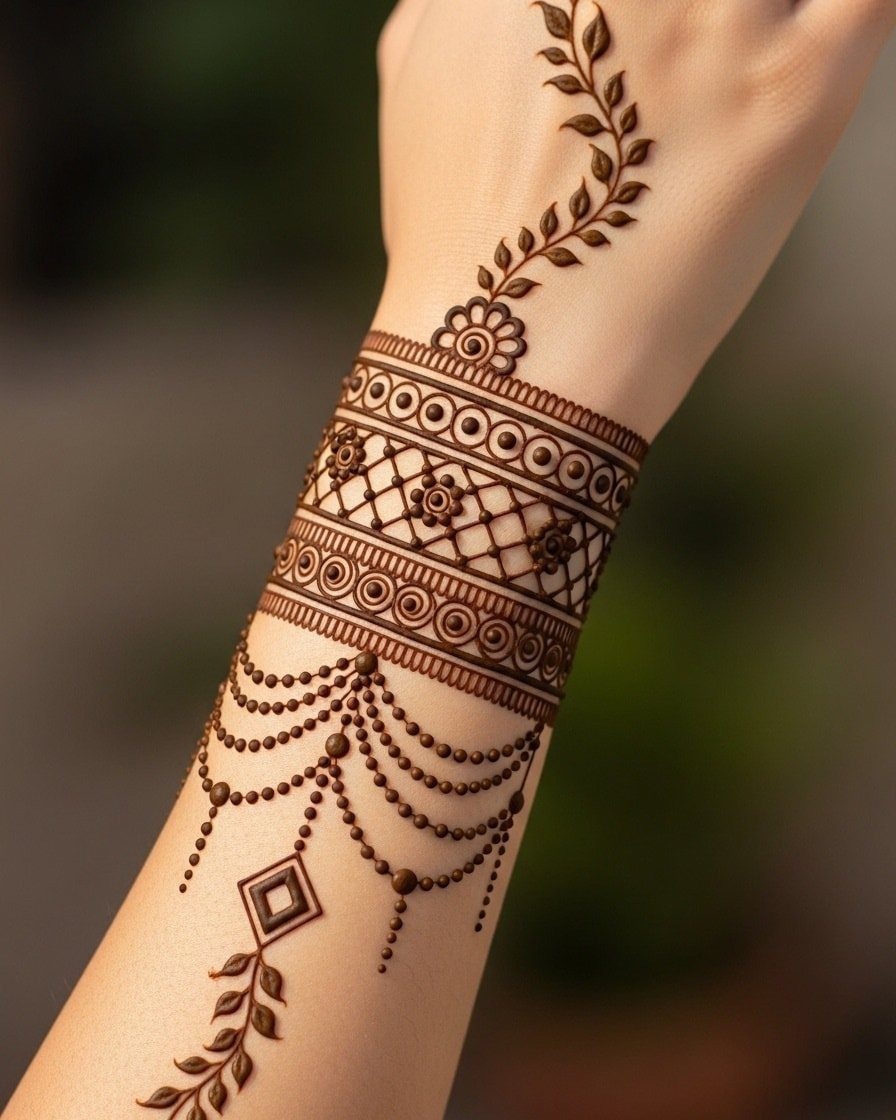
Bangle designs wrap the wrist in rings of pattern that mimic stacked bracelets, sometimes adding chains or drops that hang toward the hand. Brown or black ink works, and the thin linework reads as jewelry from a few feet away.
Wrist tattoos fade faster than most placements since washing and sun hit them daily. Touch-ups every few years keep the detail crisp.
If you love the henna jewelry look but want it permanent, this gives you a bracelet that never comes off.
6. Henna Hand and Wrist Tattoo
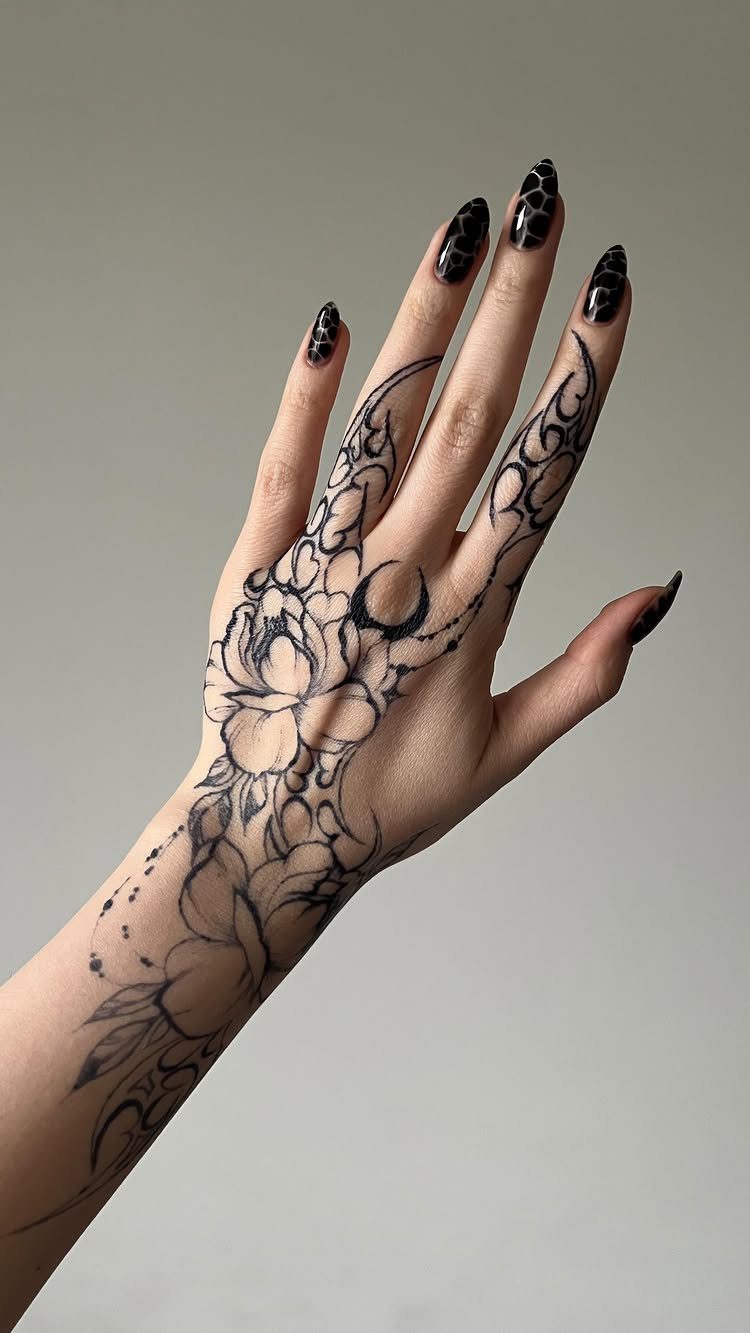
This design covers the back of the hand and wrist with florals, crescents and ornamental chains, often extending onto one or two fingers. Black ink keeps it bold, and the pattern frames the hand without covering the palm.
Hands hurt more than most spots and heal slower since you use them constantly. Ink on fingers fades quickest and may need a touch-up within a year.
The look pairs well with rings and reads clearly in photos, but commit only if you’re fine with visible ink in professional settings.
7. Brown Forearm Henna Tattoo
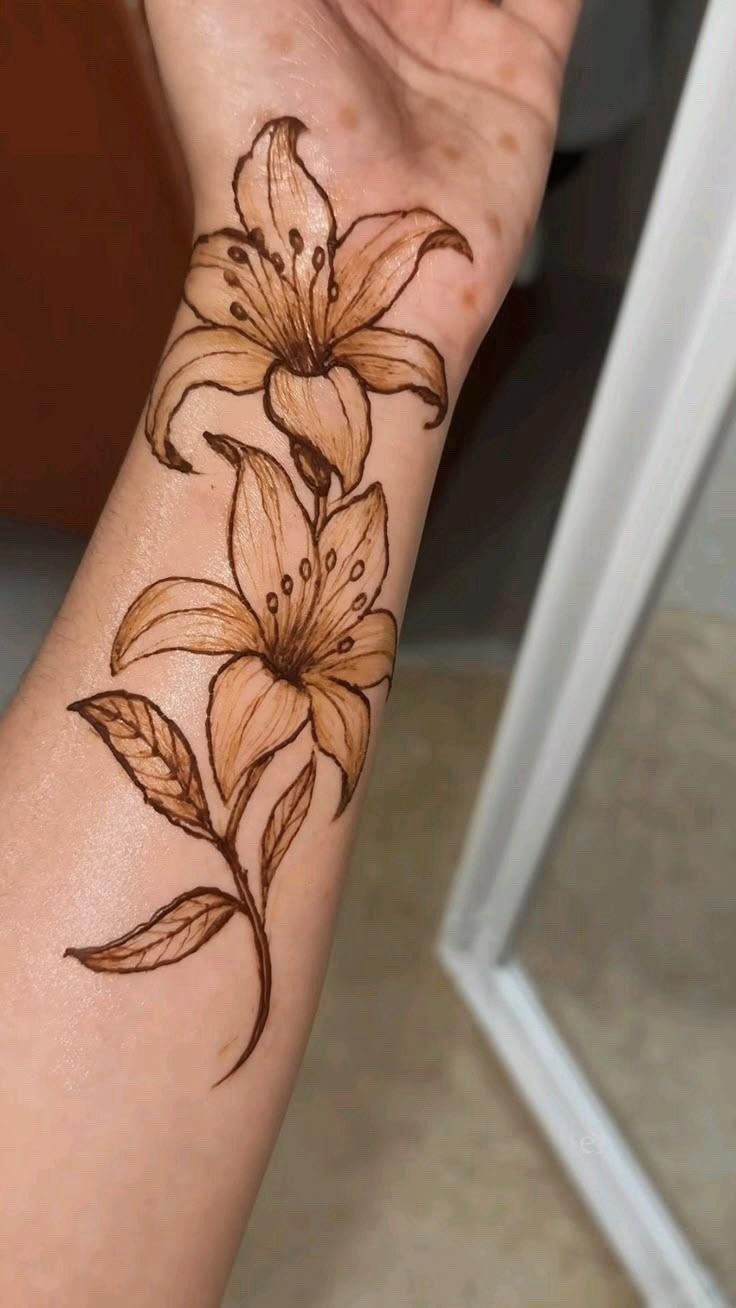
Brown ink softens the henna look while still holding detail over time.
Florals like these lilies read clearly on the forearm without the full contrast of black, and the color sits somewhere between fresh henna and the stain it leaves after a few days.
Brown heals lighter than it appears when fresh, so ask your artist to go slightly darker during application. The forearm offers flat space that shows the design well and heals faster than joints or hands.
If you want henna-style florals but prefer subtlety over bold black, brown ink gives you that middle ground.
8. Henna Face Tattoo
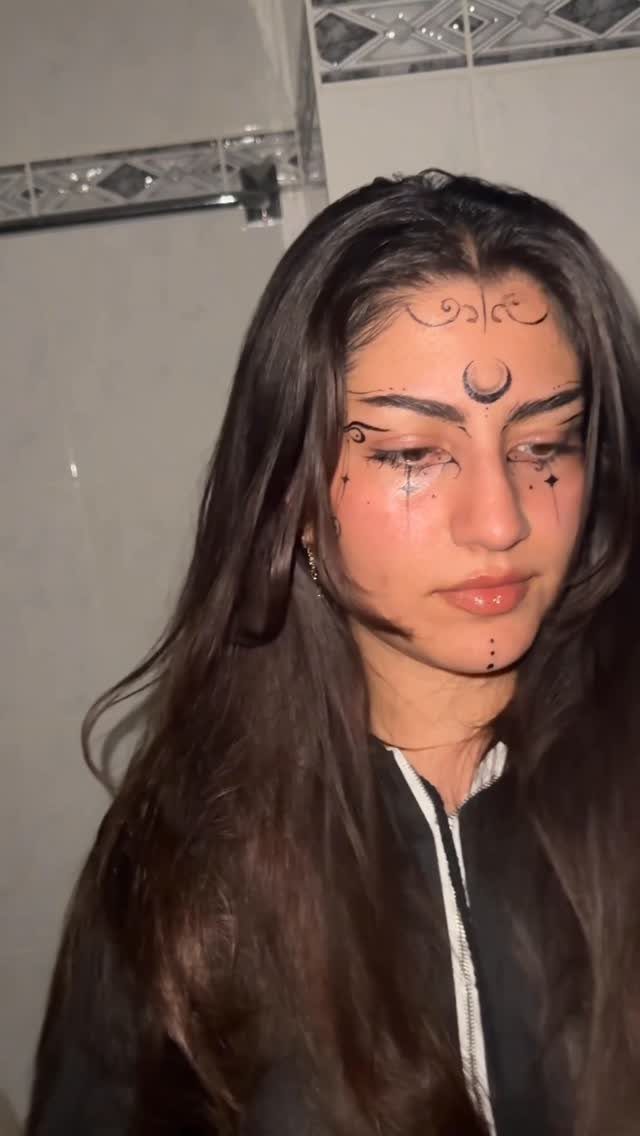
Face tattoos in this style place small ornamental marks on the forehead, temples and chin, often adding dots or crescents between the brows. The black ink reads as bold decoration and sits in spots where makeup would normally go.
Pain varies by placement, with the forehead feeling sharper than the cheekbones. Healing means no makeup on the area until the skin closes completely.
This choice suits anyone comfortable with permanent, highly visible ink that changes how strangers see your face.
9. Henna Back Tattoo
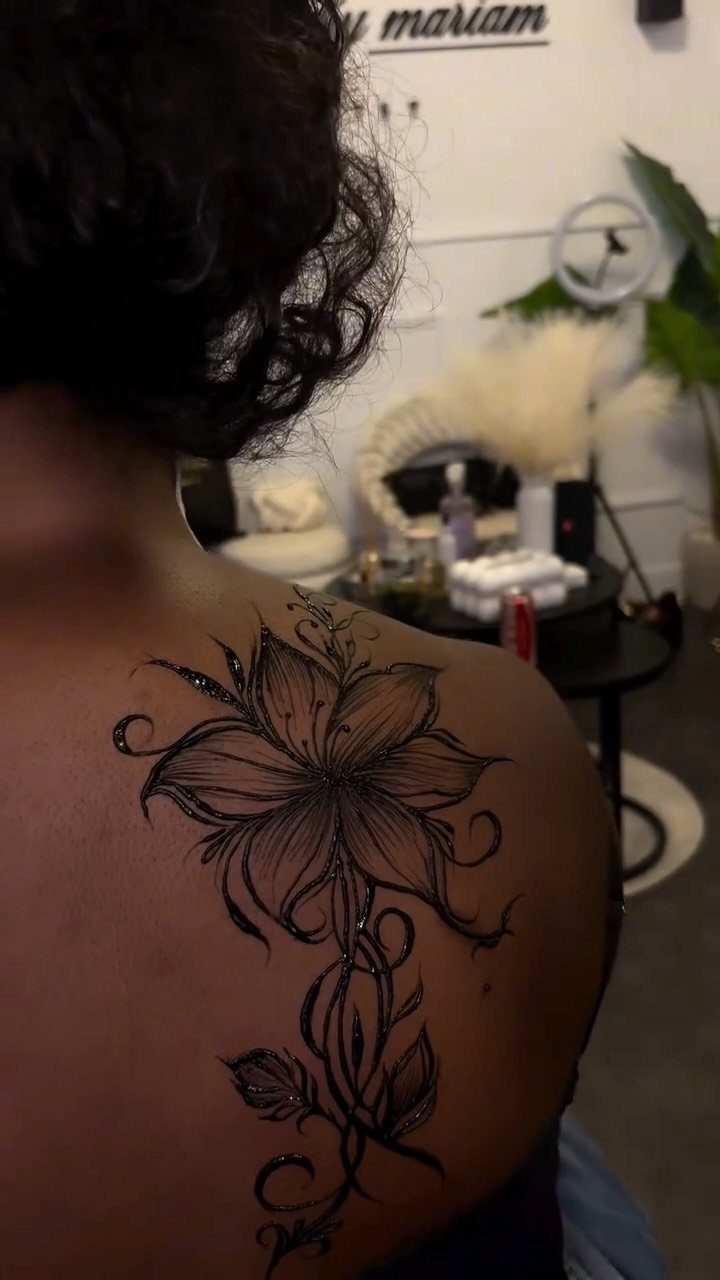
Upper back placement lets you center a floral design across the shoulder blades, using the width of the back to balance a large composition.
Black ink here ages well since clothing protects it from sun, and the area heals without the friction hands or feet deal with.
The spine and shoulder blade edges feel sharper than the flat muscle in between.
Back tattoos stay hidden under most clothing, so this spot works if you want a large henna-style piece that shows only when you choose.
10. Henna Finger Tattoo Details
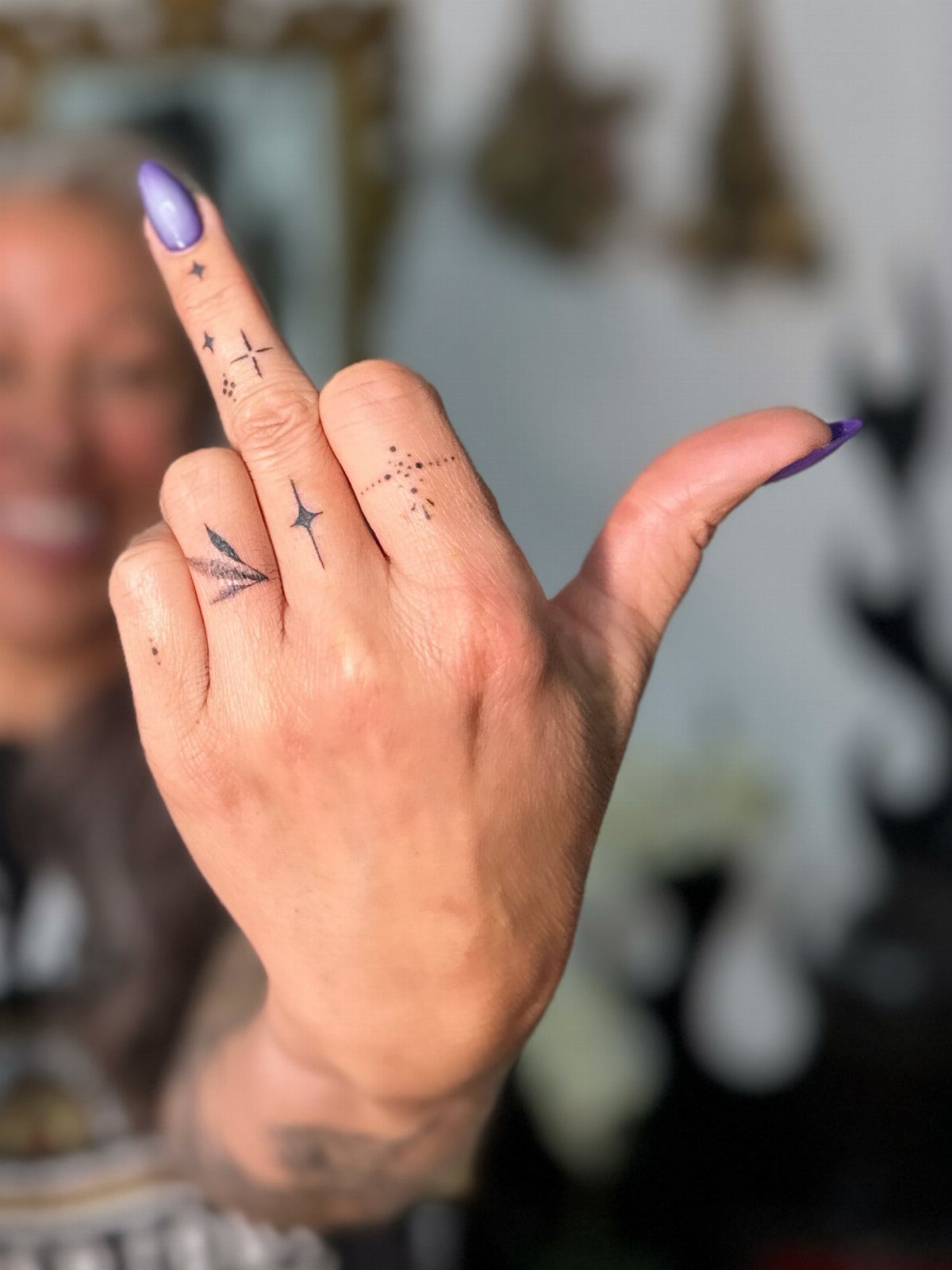
Small dots, stars and crescents scattered across the fingers mimic the fine accent marks in traditional henna without covering large areas.
Black ink keeps the symbols crisp, and placing them between knuckles or along the finger sides means less fading than designs on the knuckle tops.
If you want henna detail that stays subtle, finger accents give you the look without committing to a full hand piece.
11. Black Forearm Henna Tattoo
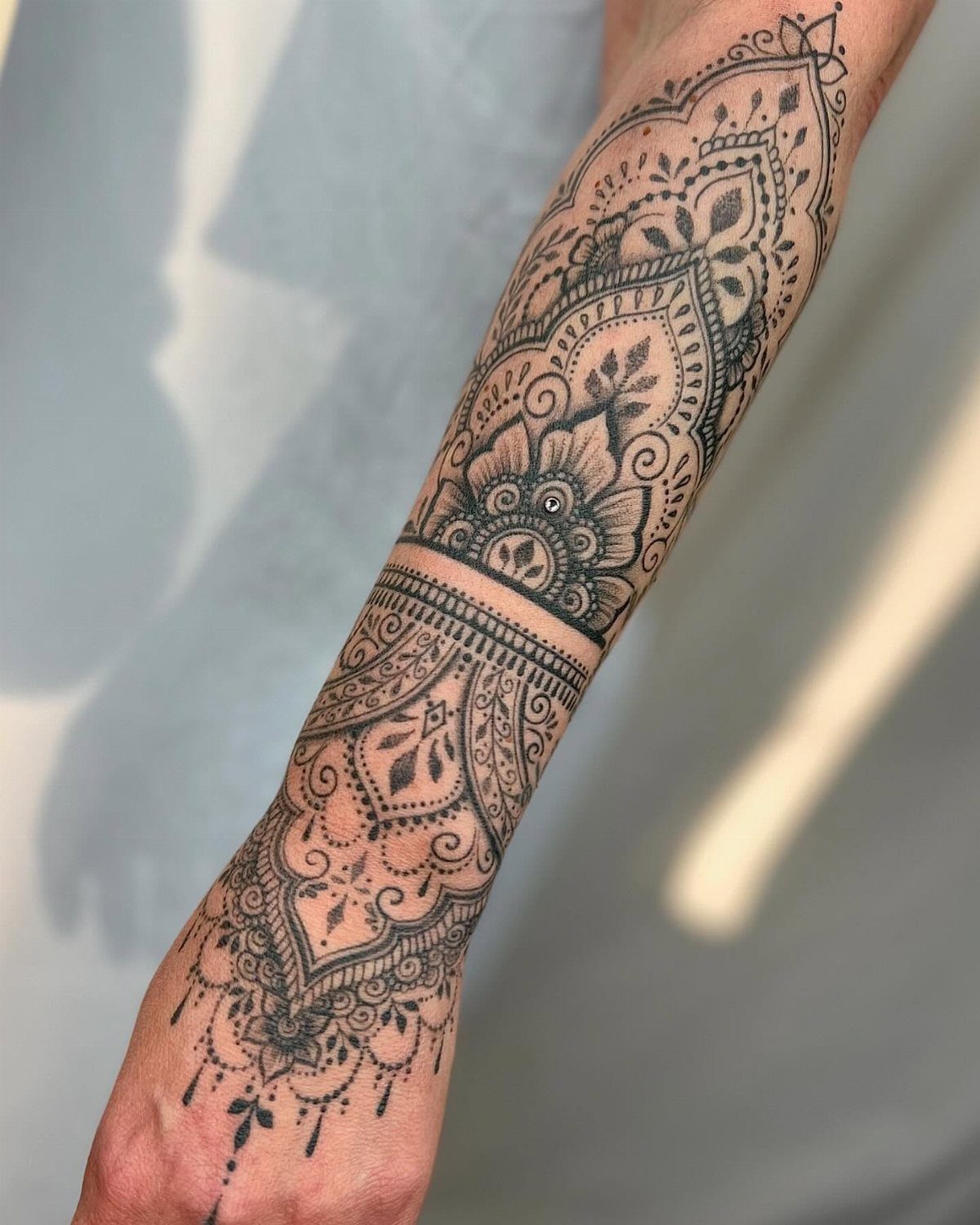
A forearm mandala in black ink centers a geometric design that radiates outward, using fine linework and stippled shading to match henna complexity.
The flat surface of the forearm shows symmetry clearly, and the area heals well with less fading than hands or wrists.
This placement hurts less than bonier spots and the session length depends on how much detail you pack in. Choose an artist whose portfolio shows tight geometric work that stays even as it heals.
Forearm ink stays visible in short sleeves, so pick this spot only if you’re fine with everyday visibility.
12. Matching Hand and Foot Tattoos
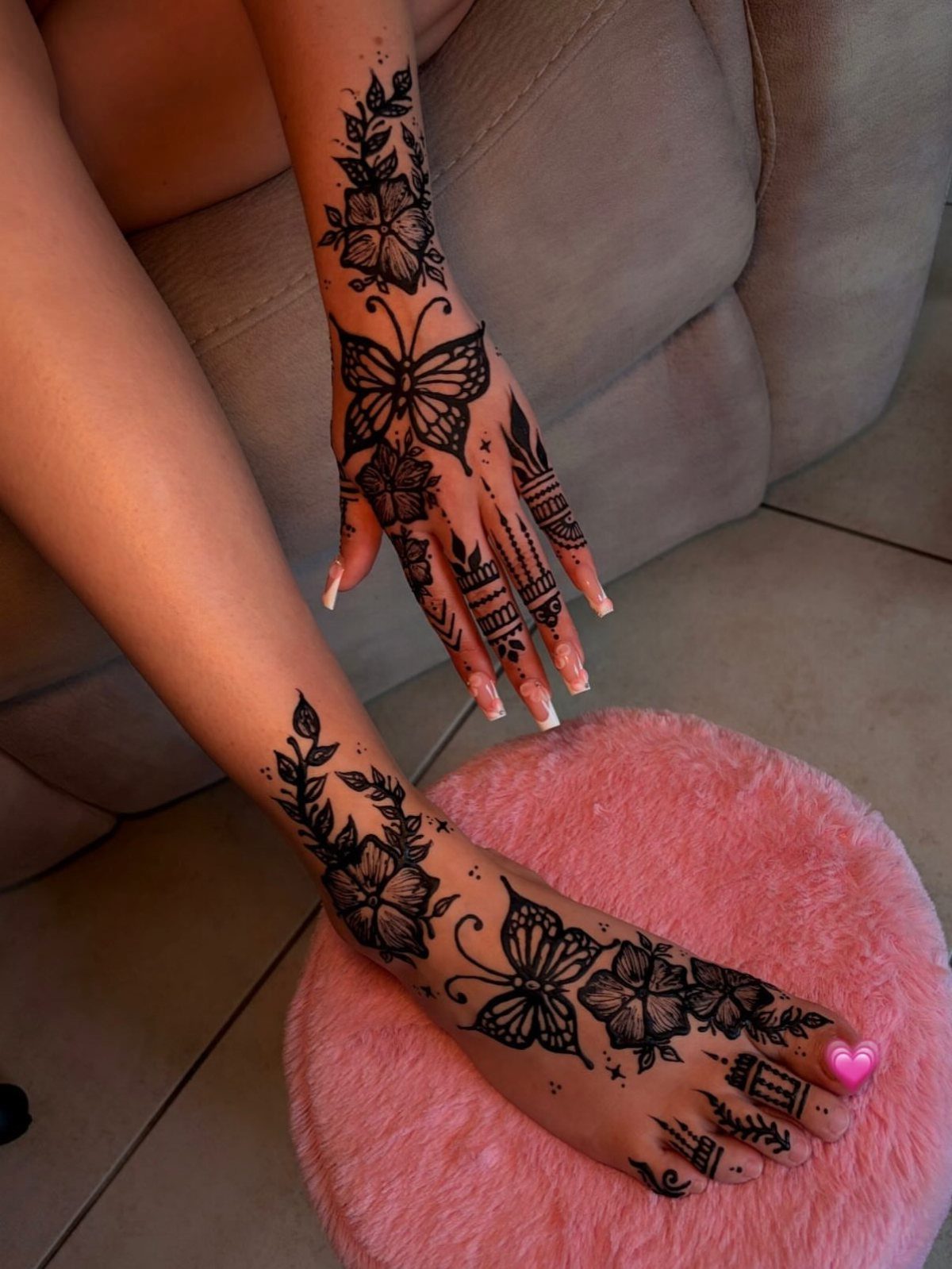
Matching sets across the hand and foot coordinate florals and butterflies in black ink, styled to look like paired henna applications. The designs mirror each other in theme without copying the exact pattern, so each side keeps its own balance.
Both placements fade faster than covered areas since hands and feet see constant friction and sun. Plan to refresh the fine lines periodically as hand and foot ink softens faster than other placements.
This pairing works if you want symmetry across your body and don’t mind the upkeep that comes with tattooing high-wear spots.
13. Full Arm and Hand Sleeve
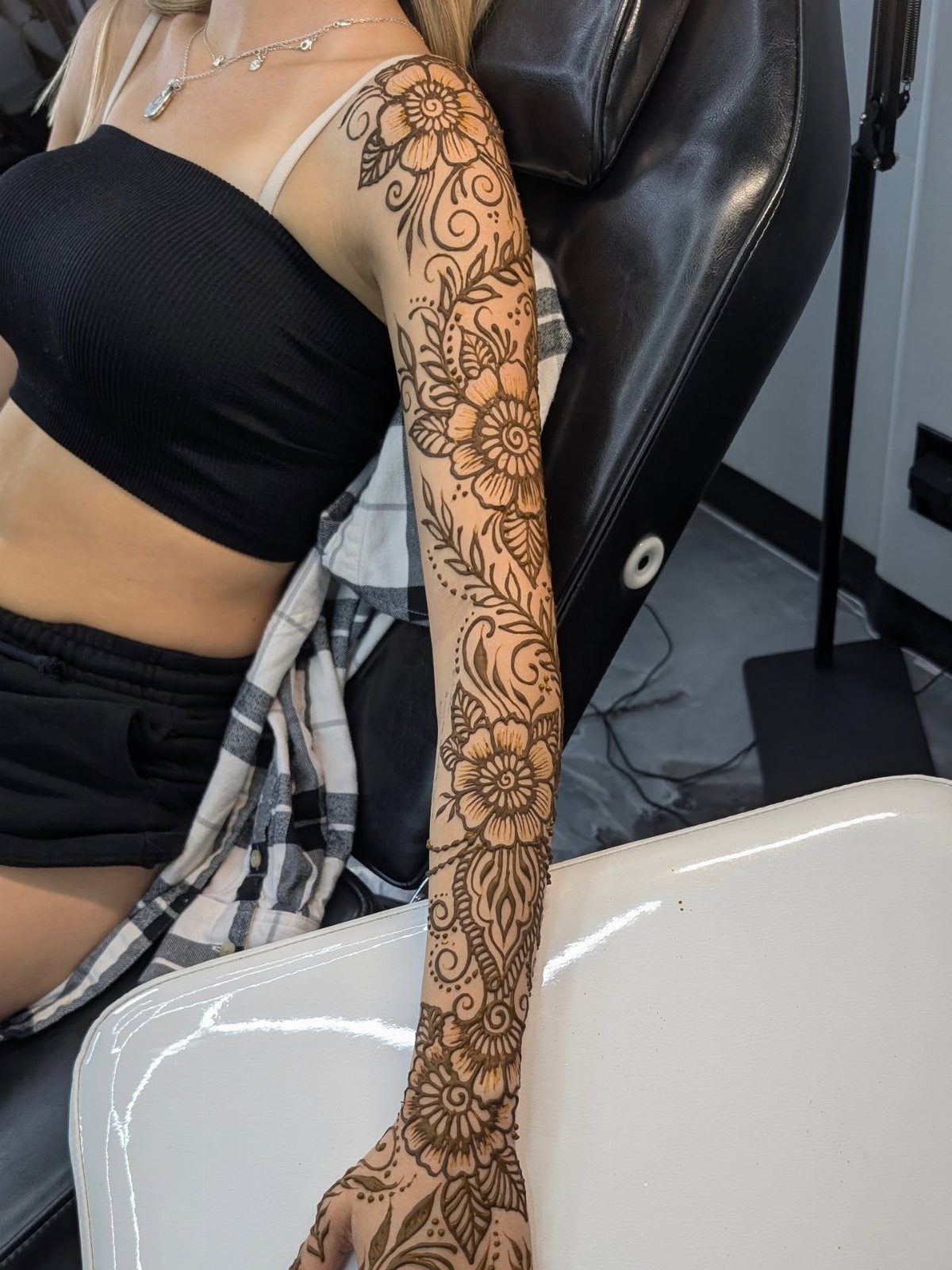
A sleeve this size combines multiple henna motifs into one continuous piece, running from shoulder to fingertips.
Brown ink softens the overall look while keeping the paisleys and florals readable, and the design flows across the arm’s contours without leaving gaps.
Full coverage takes multiple sessions. Arms heal easier than hands, but the hand portion will fade faster and need touch-ups sooner.
This placement suits anyone ready for highly visible ink that fills most of the arm and stays part of every outfit.
Henna Tattoo Application
Stencils offer a faster option if you want symmetry or a design you can’t draw yourself, and some artists use carbon paper to transfer an outline before filling it in with paste.
You’ll leave the paste in place for at least 4 hours, sometimes overnight, to let the dye soak in. Body heat and the time you leave it on determine whether the color lands closer to orange or deep brown.
Henna-style temporary tattoo ink sits on top of the skin rather than staining it, lasting 4 to 8 hours before you wash it off.
The look photographs well and shows up clearly on darker skin tones, but it won’t leave a mark once you remove it.
Henna Tattoo Safety
Natural henna comes from powdered leaves of the Lawsonia inermis plant and is safe for most people. The paste stains skin without breaking the surface, so there’s no needle and no healing process like a real tattoo.
Black henna carries risk.
It often contains PPD (paraphenylenediamine), a chemical additive that can cause severe allergic reactions, blistering and scarring. Real henna stains orange to brown, never black.
Before you sit for any henna application, ask about ingredients.
Stick with pure organic henna that lists no synthetic dye or chemical additive, and turn down anything called black henna or instant henna. Reputable artists stick to natural paste and will tell you exactly what’s in it.
Henna Tattoo Longevity
A henna design fades over 1 to 3 weeks, faster or slower depending on where you put it, how your skin behaves and what you do to it afterward.
The stain starts bright orange on day 1, then deepens to red-brown by day 2 as the dye oxidizes. Peak color hits between days 3 and 7, then fades gradually as your skin sheds.
To keep the stain longer, skip exfoliants, pool chlorine and harsh soaps on the area.
Moisturize daily and pat the skin dry instead of rubbing it. Hands and feet fade faster than arms or legs since you wash them more often and friction wears the stain down.
White henna behaves differently since it’s paint, not stain, and washes off within hours rather than fading over weeks. It lasts 4 to 8 hours before washing off and leaves no color behind once removed.
Frequently Asked Questions
What are henna style tattoos called?
Permanent versions are called henna-style tattoos or mehndi-inspired tattoos, using black or brown ink to recreate the florals, paisleys and geometric patterns traditional henna leaves behind.
The temporary kind is just called henna or mehndi, applied as paste that stains the skin for 1 to 3 weeks. Artists apply it freehand with cones, use stencils for symmetry, or transfer carbon paper outlines before filling them in.
Is there such a thing as a permanent henna tattoo?
Real henna stains the skin temporarily and always fades, but you can get a permanent henna-style tattoo using black or brown ink applied with a tattoo machine.
The design mimics traditional henna patterns like florals, mandalas and paisleys, but the ink sits under the skin and stays for life. White henna is different since it’s body paint that washes off after 4 to 8 hours without staining at all.