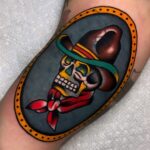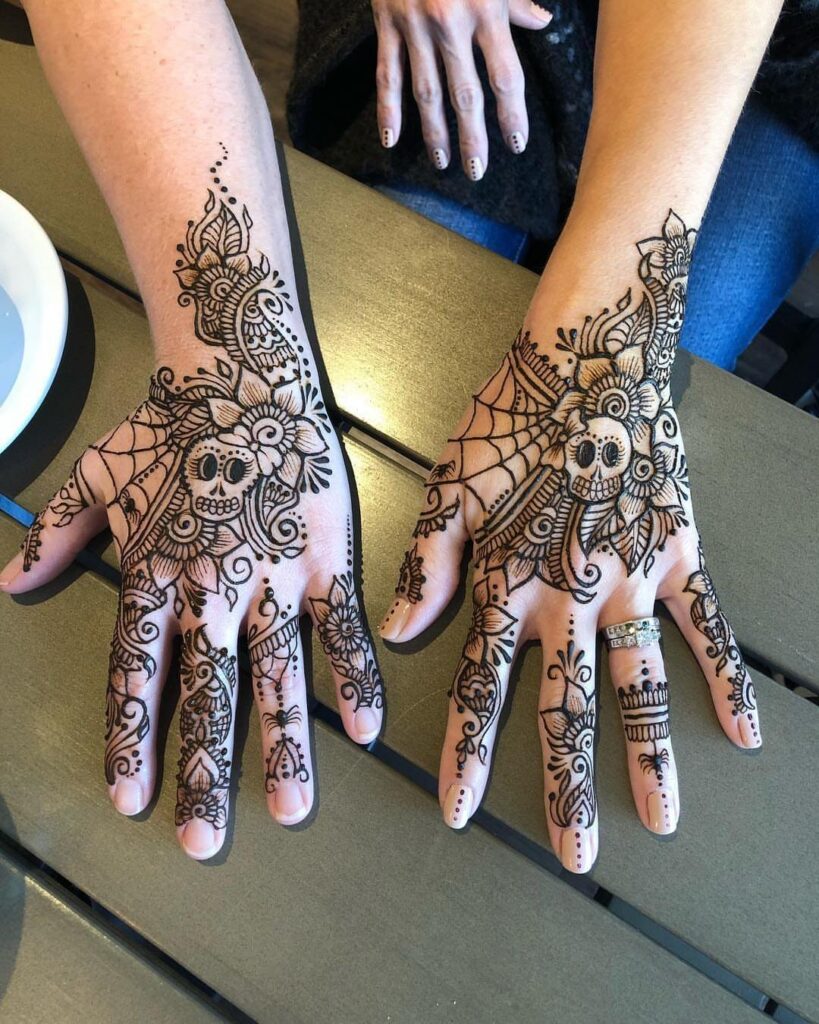
Henna skull designs range from ornamental sugar skulls layered with petals to stripped-down silhouettes, with roses, snakes and peace signs filling out the middle ground.
Placement decides how long the stain lasts: hands fade within a week, while forearm holds color longer since the skin sees less friction.
Sugar skulls and floral patterns need stencil sheets to keep both sides even on curved surfaces, but simpler motifs like skull and crossbones work freehand on narrow spots like the forearm.
1. Sugar Skull Henna
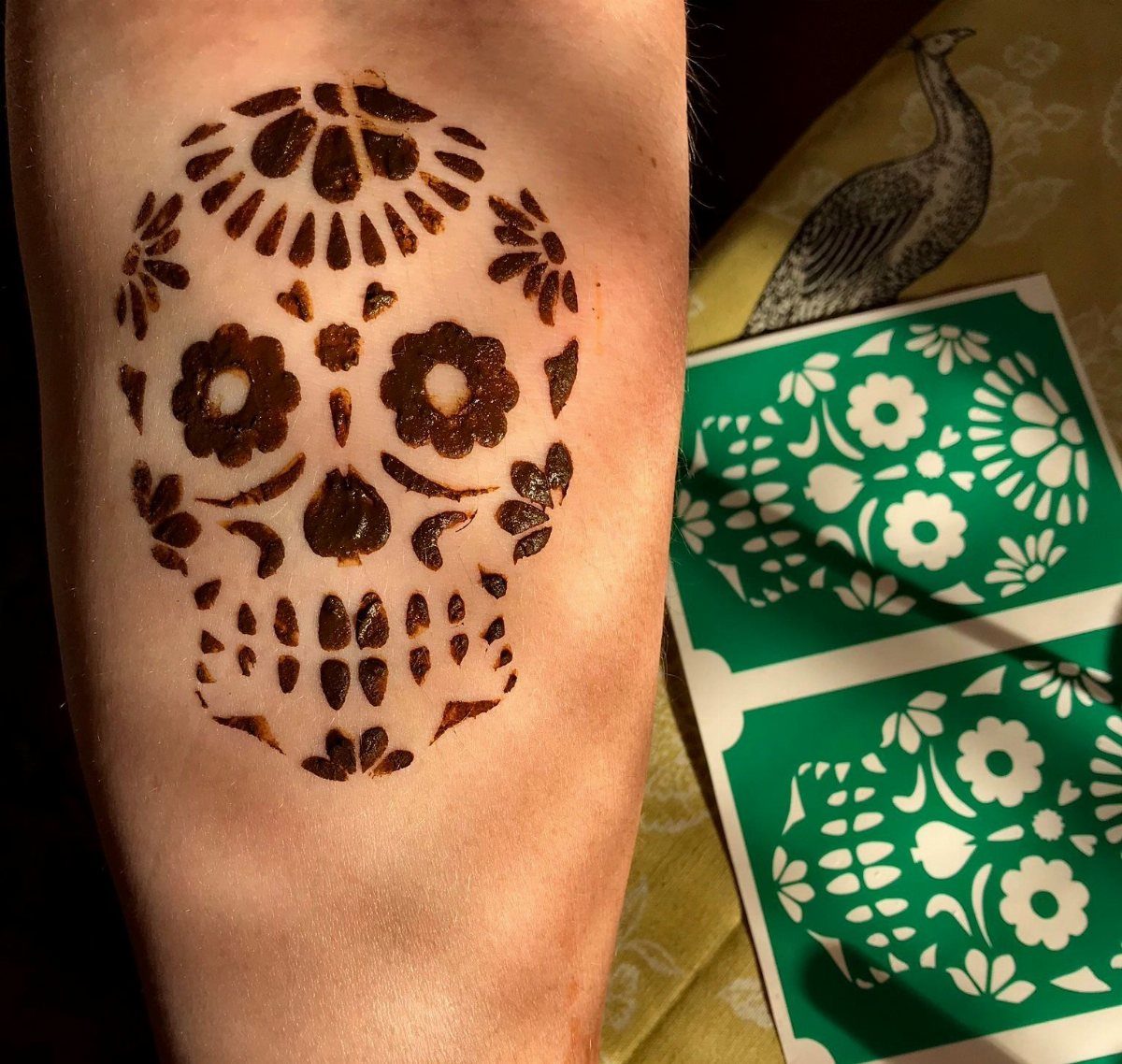
Sugar skulls layer pattern over the bone structure: petals around the eyes, scrolls across the forehead, dots and lines filling the cheeks. Henna fits that ornamental style naturally since both work in positive line and fill rather than shading.
The stencil sheets simplify placement. You can press the transfer onto clean skin, peel it away, then trace the outline with henna paste.
I prefer freehand when the design is small, but for symmetrical work on a curved surface like the upper arm, a guide keeps both sides even.
2. Skull with Peace Sign
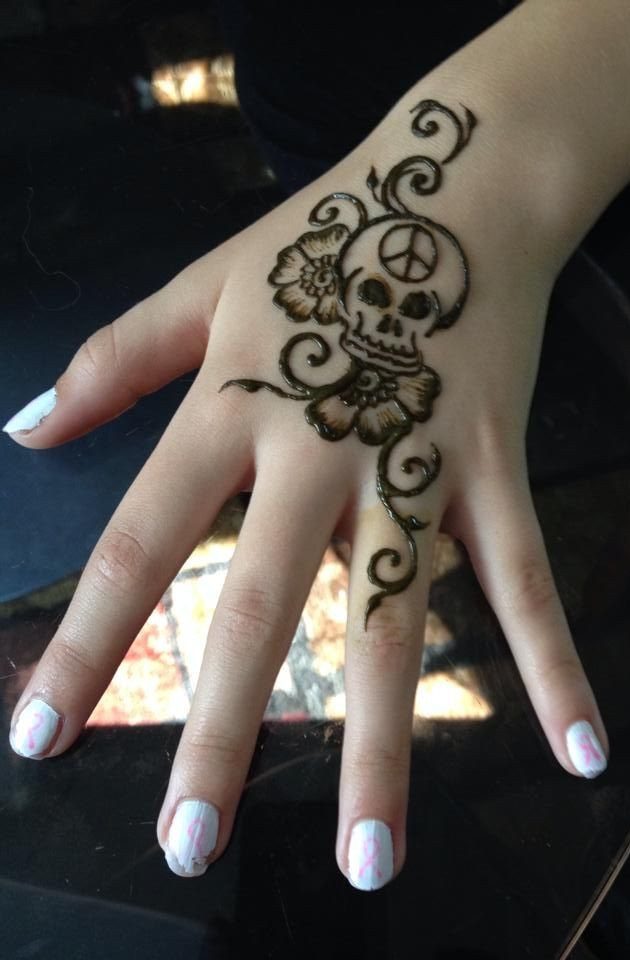
Dropping a peace sign into the skull’s forehead keeps the motif recognizable while softening the traditional read.
The swirls around the edges anchor it on the hand without running onto the fingers, which matters if you need the design to set before you use your hands again.
Hands show henna well but heal faster than most placements, usually fading noticeably within a week. If you want the design to last longer, forearm or shoulder will hold better than hands or feet.
3. Skull with Roses
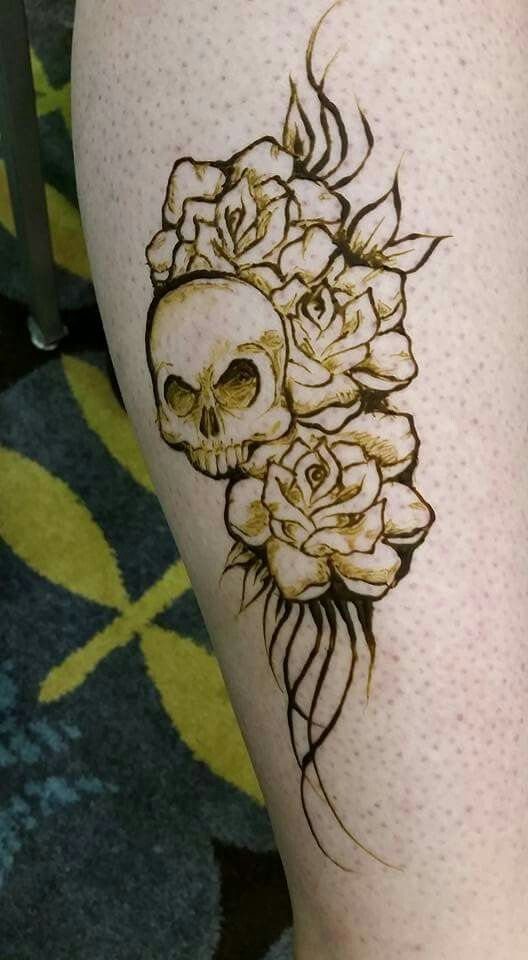
Roses threaded through a skull balance hard and soft without leaning too far into either.
The placement on the leg gives you room to scale the design larger than you could on a wrist or hand, and the calf holds henna paste securely while it sets.
Leg designs take longer to develop their deepest stain since the skin is farther from your core and stays cooler. Leave the paste on as long as you can manage, ideally overnight.
4. Stylized Skull Silhouette
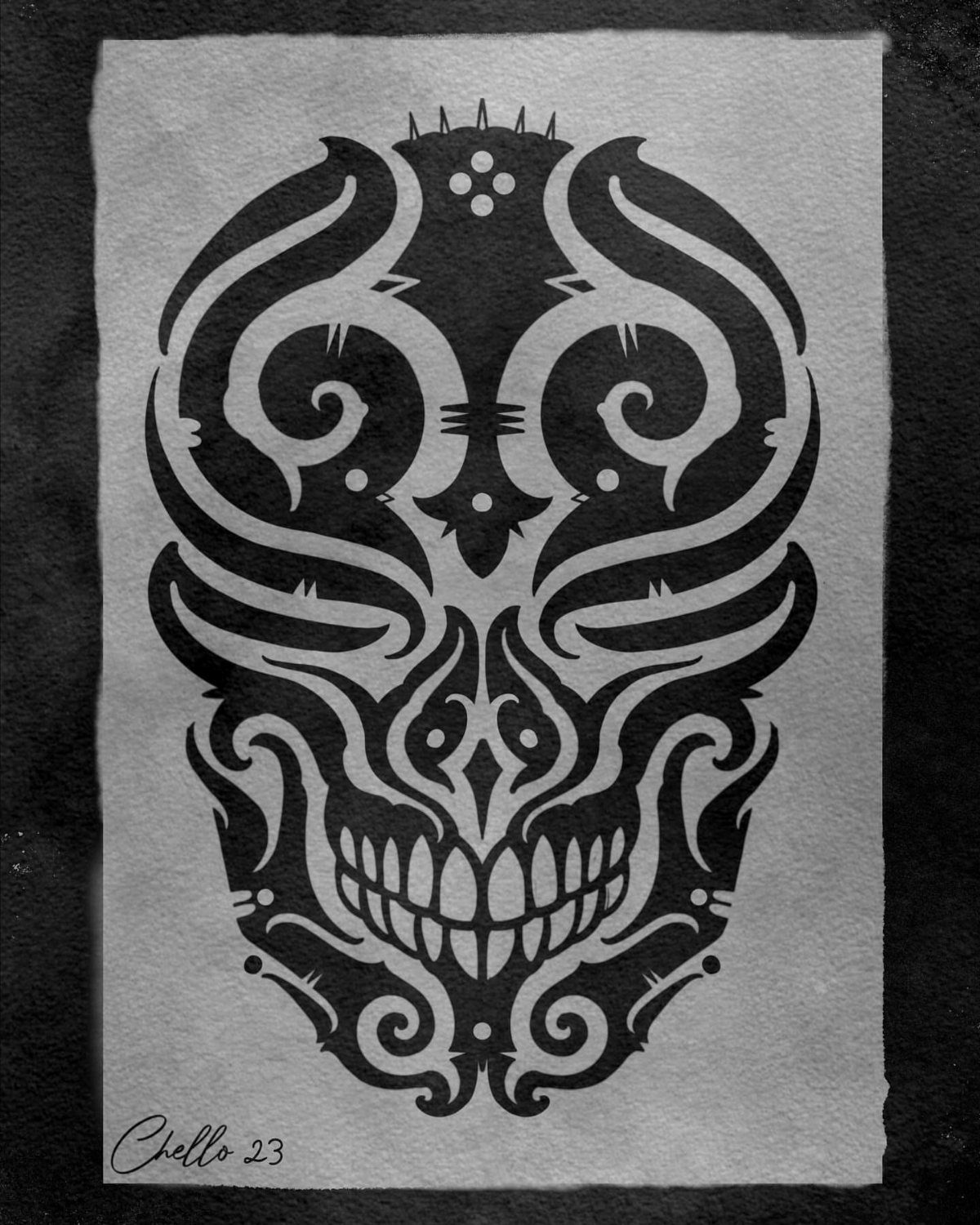
Silhouette work trades detail for boldness.
The solid fill reads clearly from a distance, and the ornamental swirls inside the skull keep it from looking flat. Black ink gives sharper contrast than brown henna paste, which always dries to a warm tone.
If you want true black, jagua gel is the alternative. It stains blue-black and fades over time, similar to henna’s timeline but darker in finish.
5. Skull with Floral Patterns
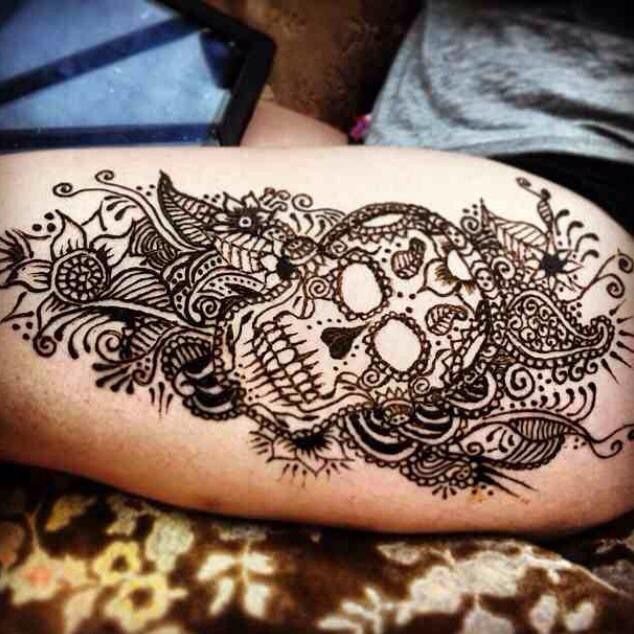
Surrounding the skull with flowers and swirls softens the imagery without losing the structure. The floral patterns fill space symmetrically, which suits placements like the upper arm or thigh where the design wraps slightly around the curve.
Intricate line work like this takes time. The more lines you pack in, the more paste you need to keep consistent thickness.
6. Skull and Crossbones
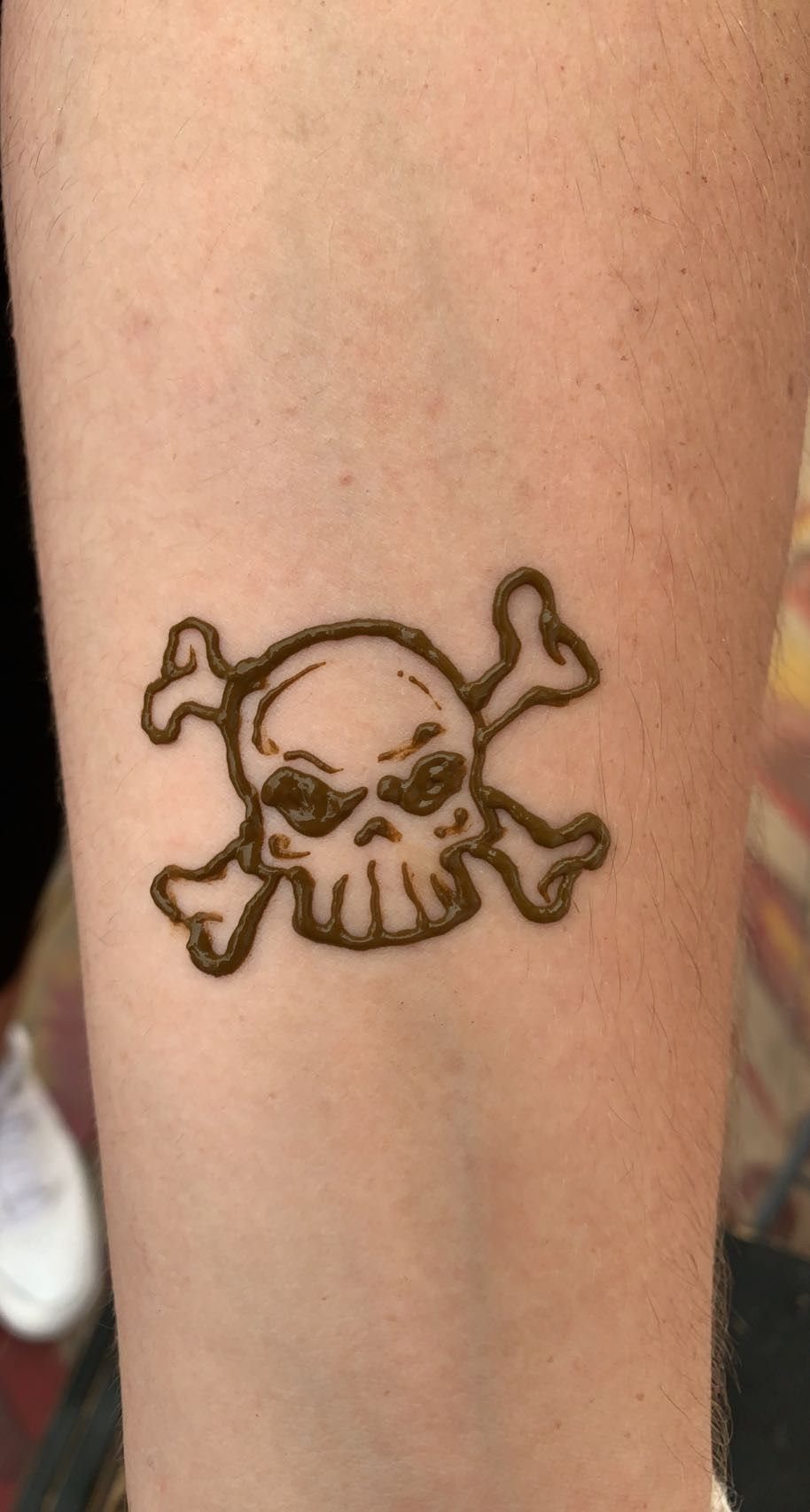
Skull and crossbones is the most stripped-down version of this motif.
It reads instantly and fits narrow placements like the forearm without needing much width. The simplicity also makes it easier to apply cleanly if you’re new to henna.
Forearms develop good stain since the skin is thin and holds warmth well. You’ll see the darkest color after the paste comes off, then gradual fading over the next week.
7. Skull with Snake
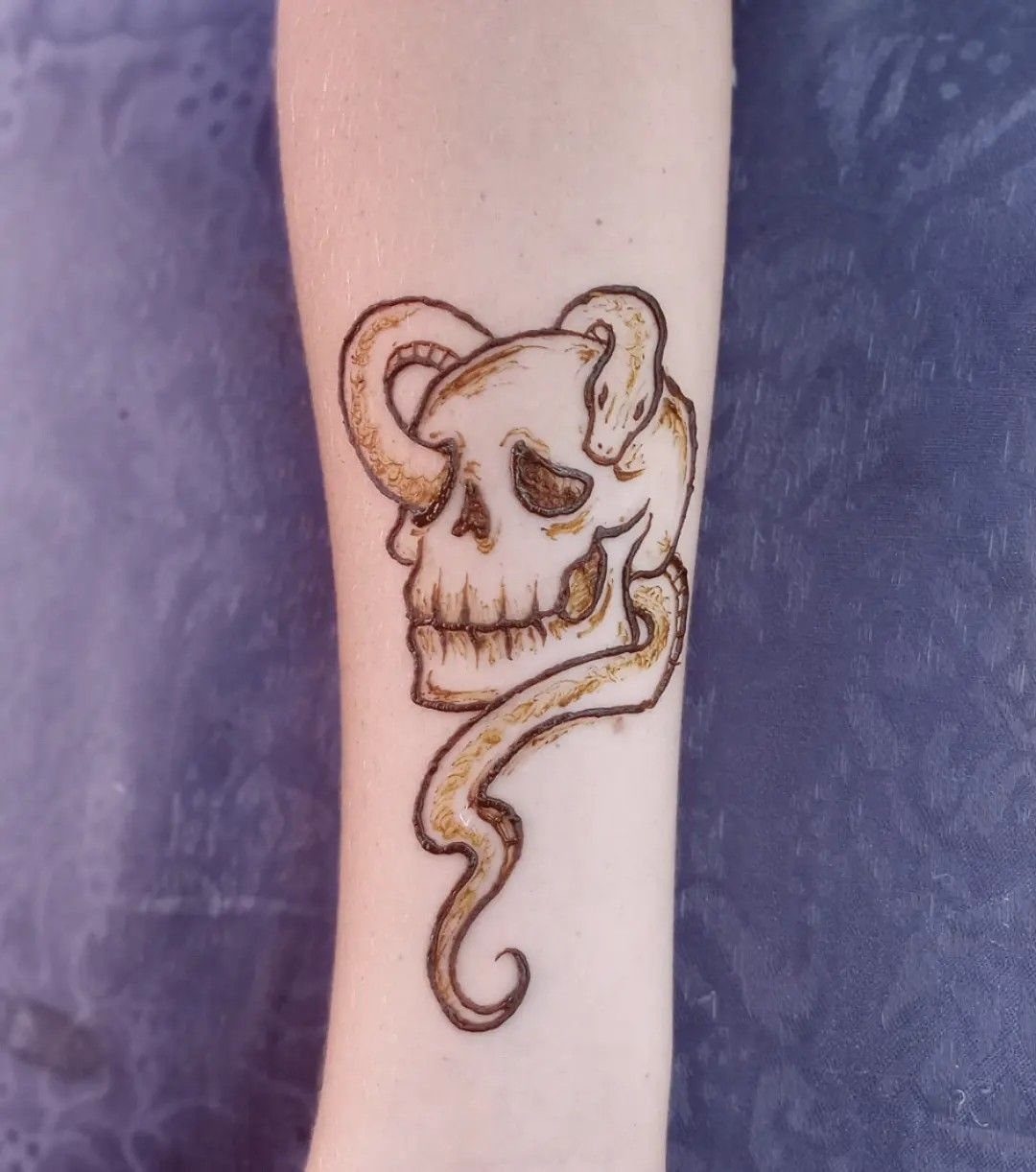
The snake wraps the skull or weaves through the eye sockets, adding movement to a static shape. It suits placements where the design can follow a natural line, like the forearm or calf.
The coil gives you flexibility in how far the design extends. A tight wrap keeps it compact; letting the snake trail away from the skull fills more space and can follow the curve of your arm or leg.
Henna on the forearm stains well and stays visible longer than spots where clothing rubs constantly.