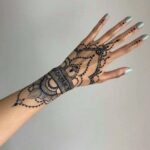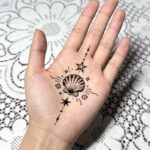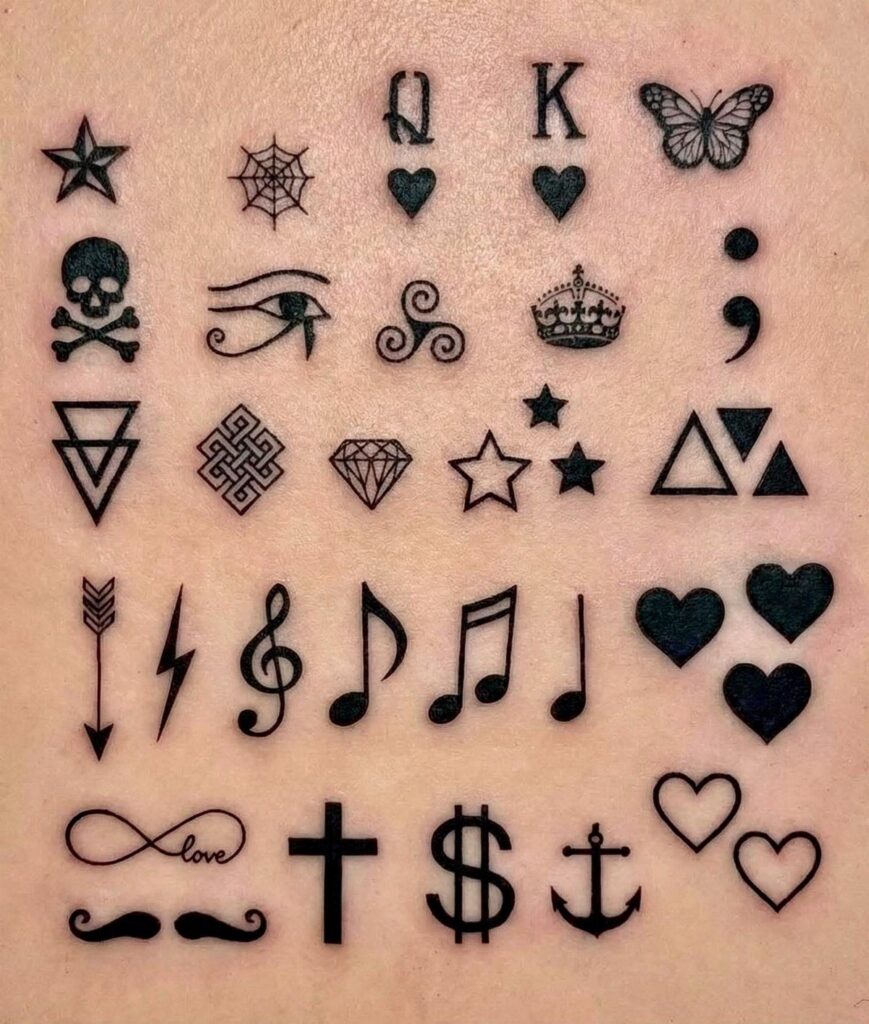
One line portraits and geometric patterns sit at opposite ends of line art complexity, but both demand flat placement and steady hands to keep the lines crisp years later.
1. One Line Portrait Tattoos
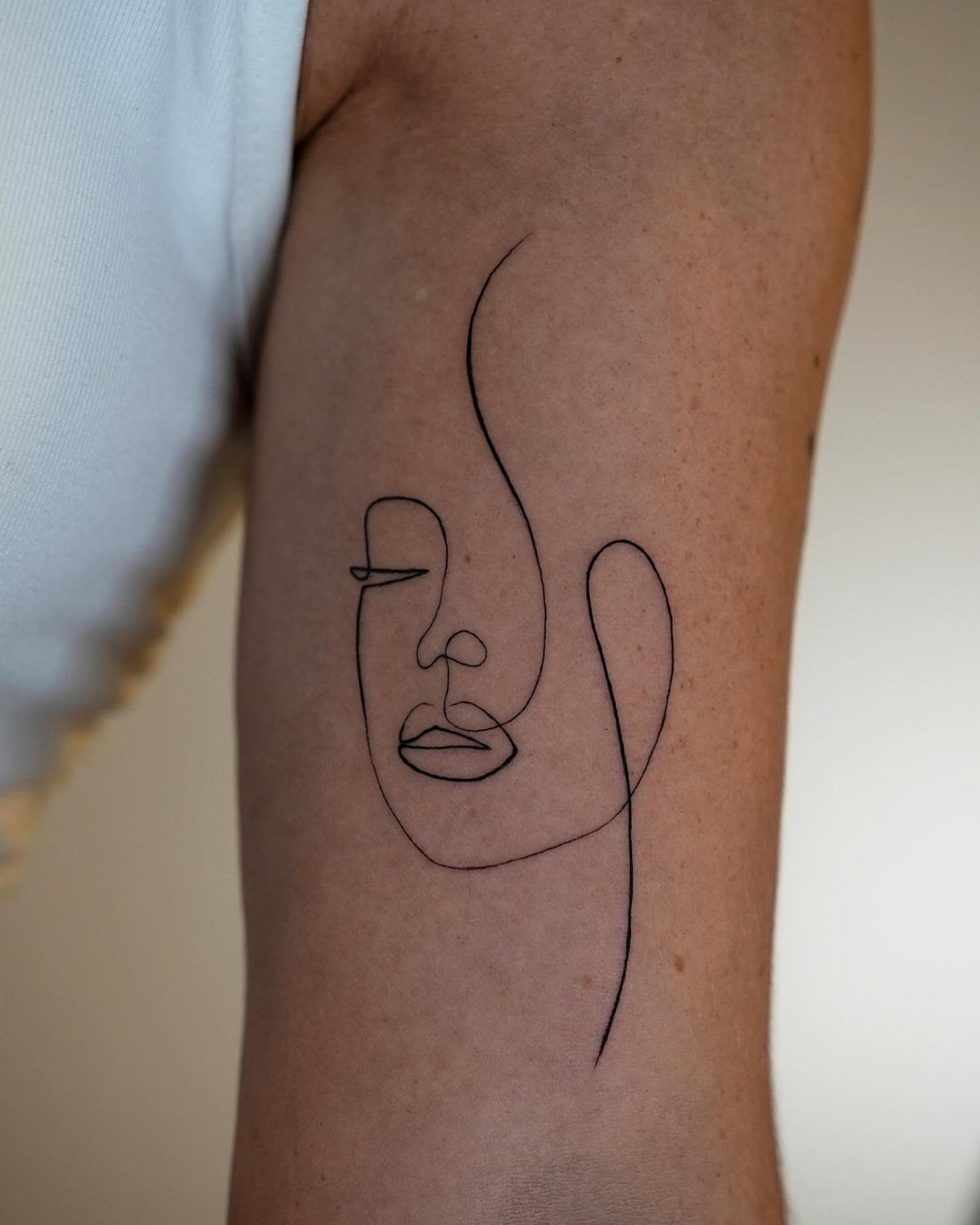
One line portrait tattoos capture a face or profile in a single continuous path, so the entire design flows without interruption. The style reads best on flat surfaces like the forearm or upper arm where the line can travel unbroken.
Placement matters more here than in most line work.
A curved spot will distort the proportions, and the face won’t hold its shape as the skin moves. Go for somewhere flat and visible if you want the portrait to stay legible years later.
2. Geometric Line Art Tattoos
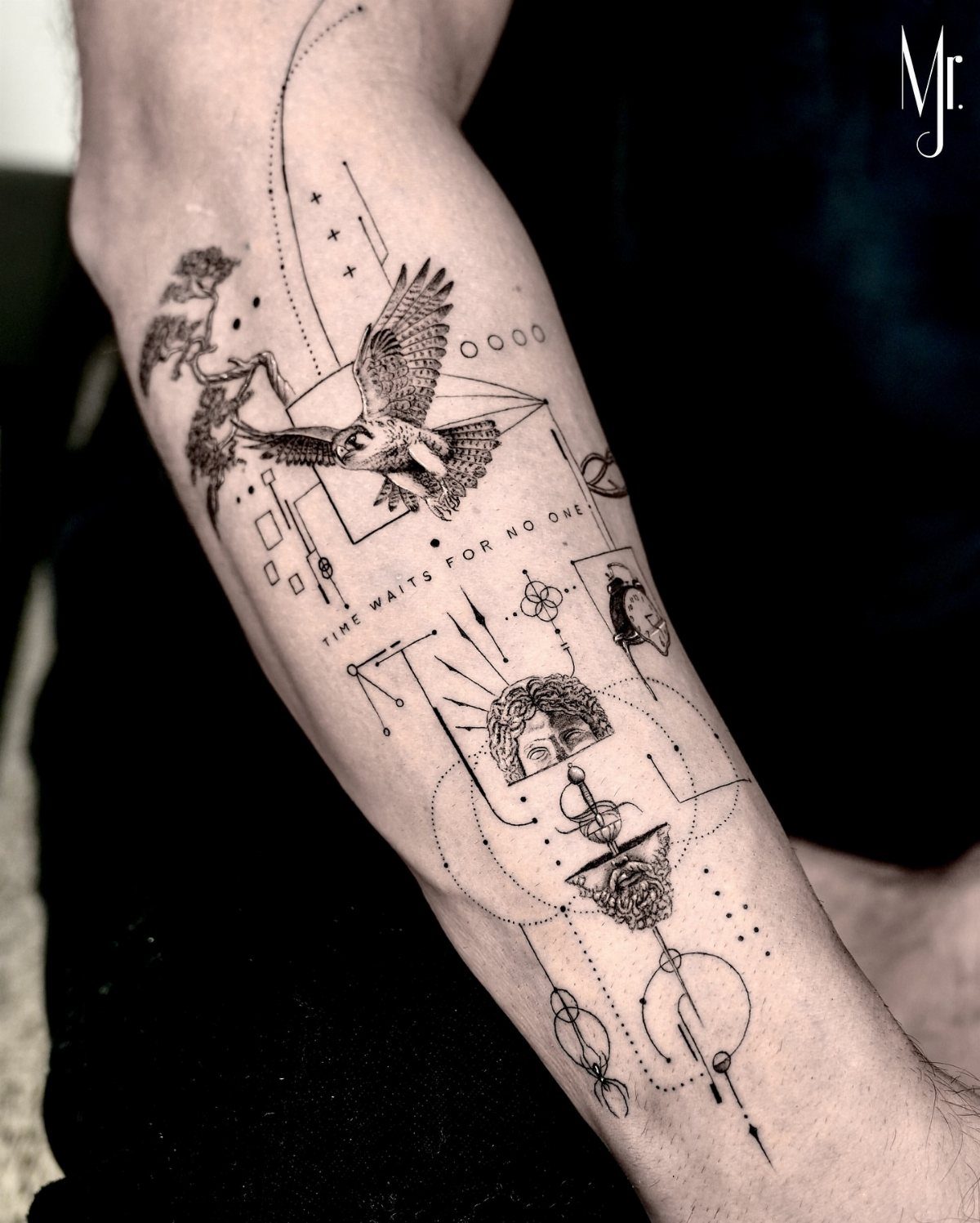
Geometric line art brings structure to organic shapes by layering triangles, circles or polygons over faces, birds or flowers. The contrast between rigid geometry and soft curves gives the design more visual weight than pure line work alone.
The text and layered imagery in this style ask for space.
Forearm or upper arm placements let the geometry breathe without crowding the details, and the flat surface keeps the lines crisp. Smaller versions lose clarity fast, so size this one bigger than you think.
3. Fine Line Floral Tattoos
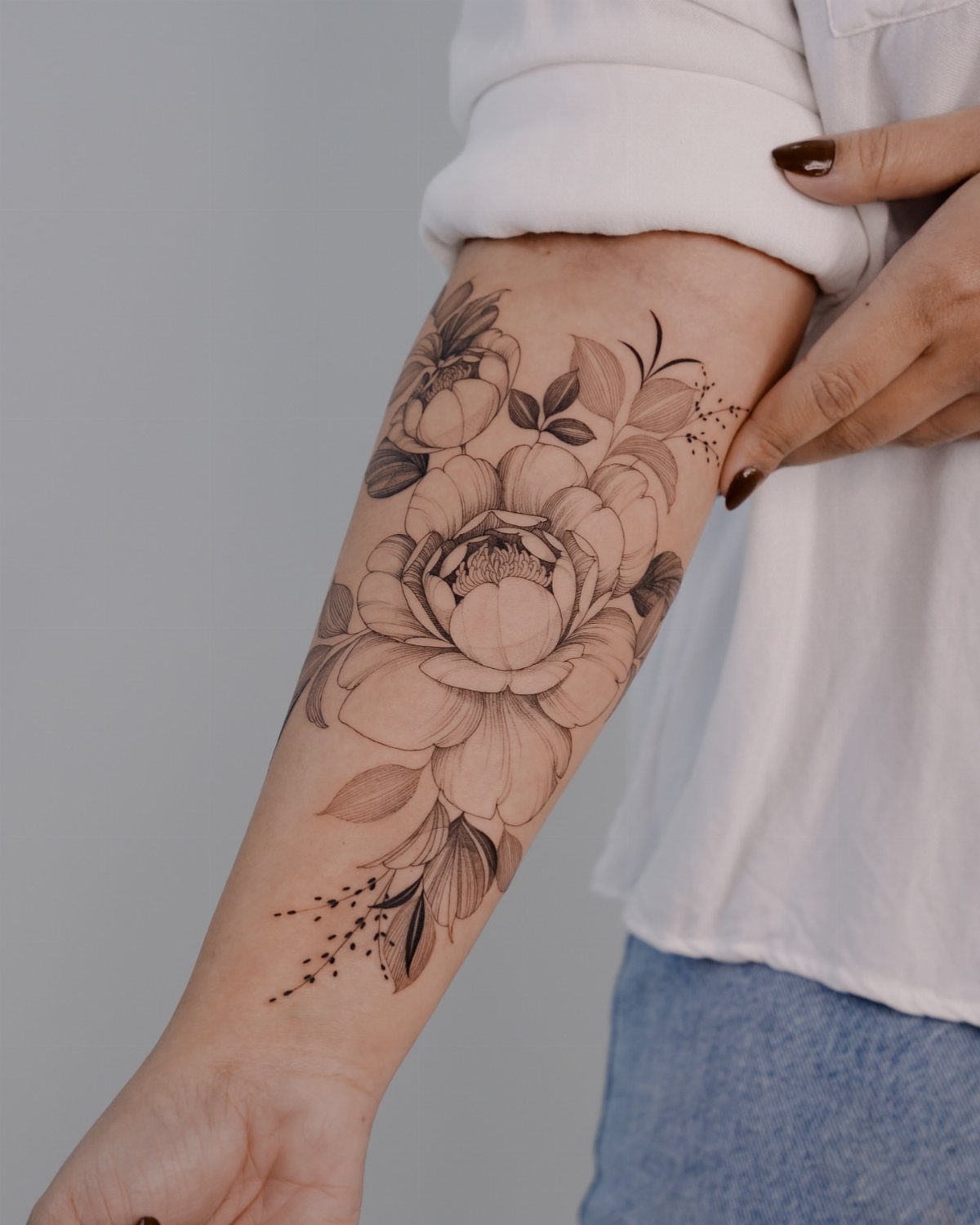
Fine line florals strip away shading and bold outlines, leaving only the essential contours of petals and leaves. Peonies, roses and wildflowers all suit this approach, and the delicate line weight keeps them from overwhelming the skin.
Healing takes attention with fine line work.
The thinner the line, the more it fades if you skip sunscreen or let the tattoo dry out in the first 2 weeks. After that, the design stays crisp if you keep it out of direct sun.
4. Single Line Tattoos
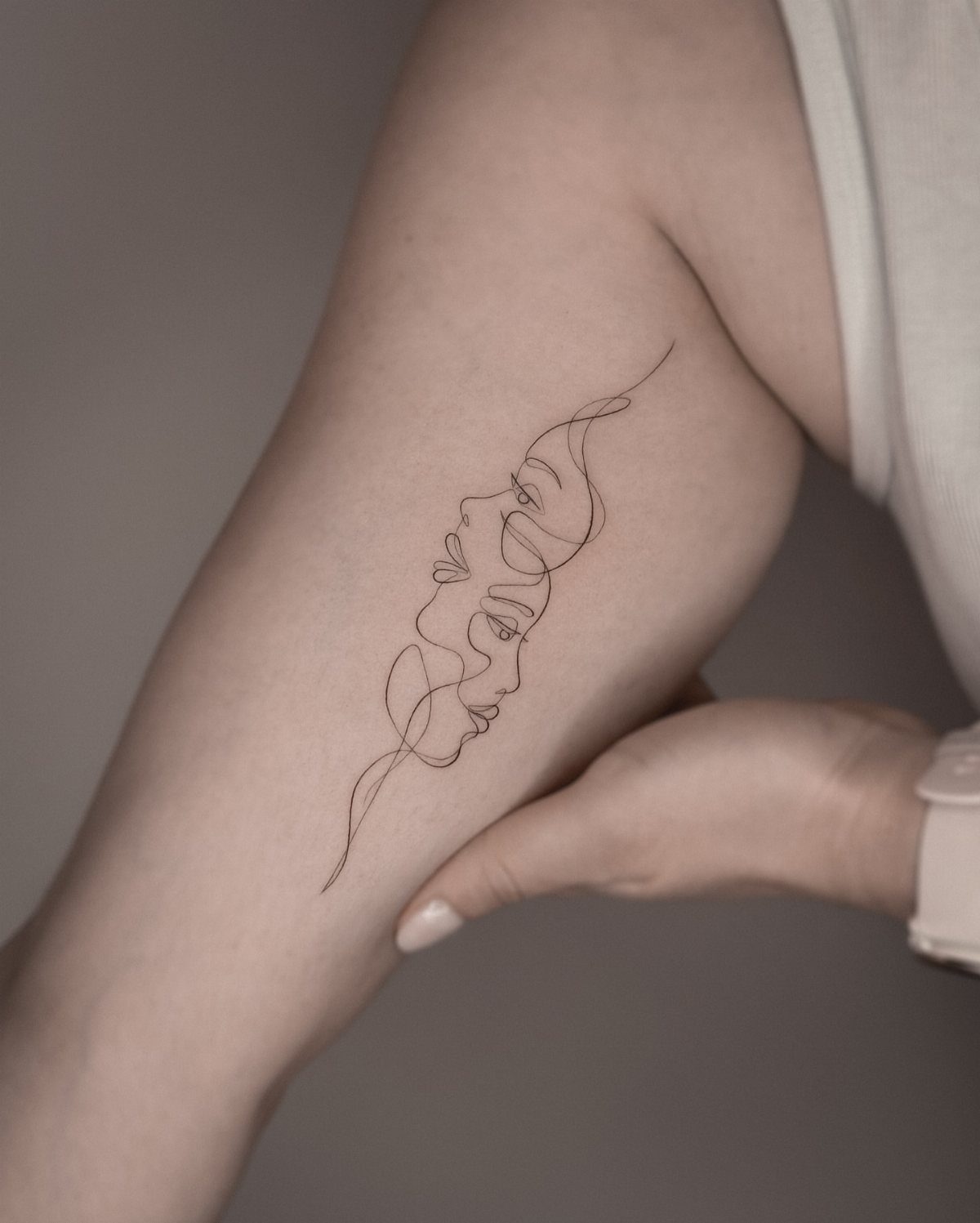
Single line tattoos rely on one unbroken path to sketch the subject, and when that subject is 2 overlapping profiles, the line doubles back on itself to create depth.
The effect is minimal but deliberate, and it reads cleanly on flat placements like the upper arm.
This style demands steady hands from your artist.
A single wobbly section ruins the whole piece, so look at healed examples of their single line work before you book. If the line stays even and smooth in older tattoos, you’re good.
5. Celestial Line Art Tattoos
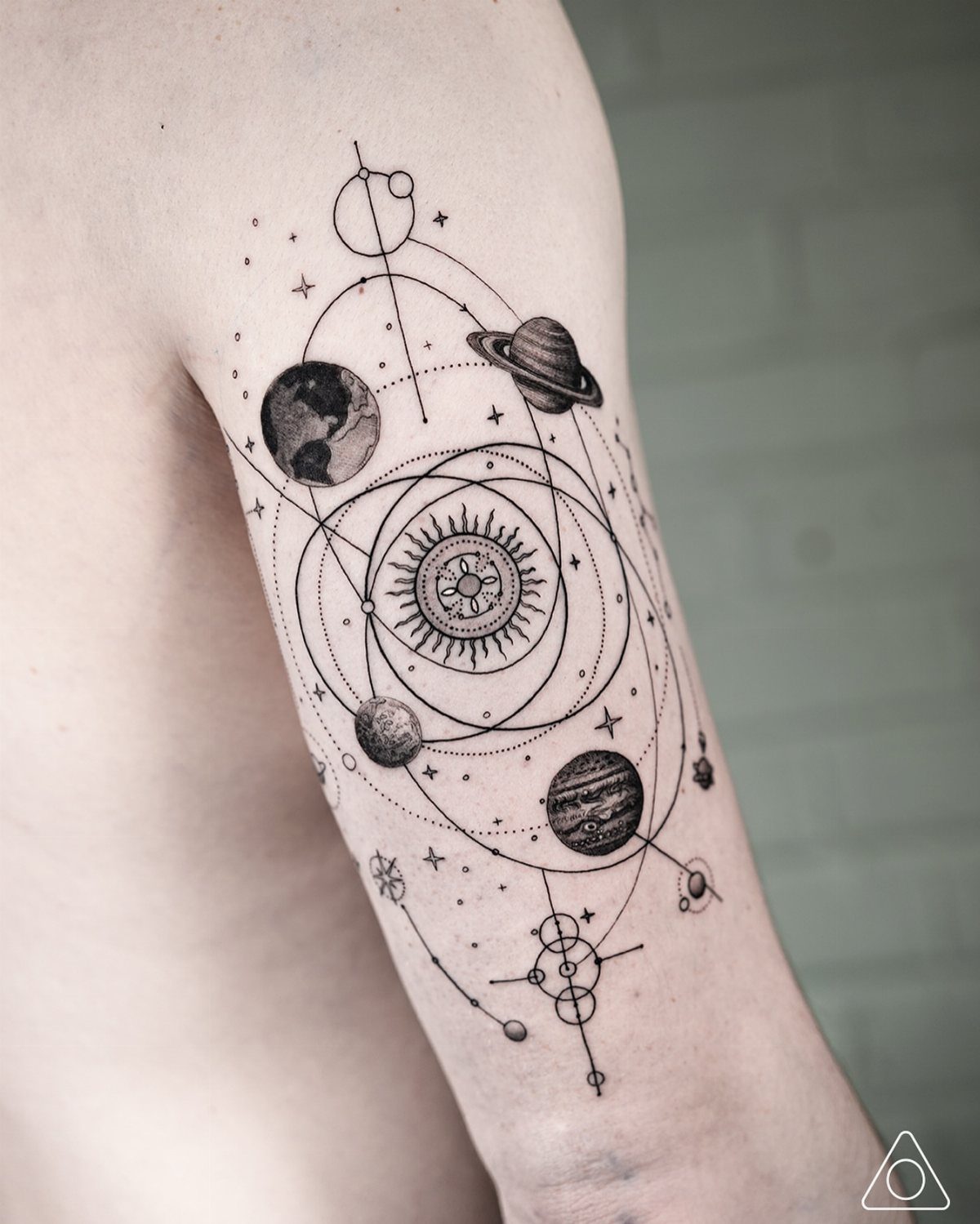
Celestial line art pulls in planets, moons, stars and orbital paths, often with a geometric frame tying the elements together. The style fits anyone who wants space imagery without the heavy realism or full-color gradients most planetary tattoos lean on.
Upper arm and forearm placements give you room to stack several celestial objects without cramping the orbits or shrinking the details.
Smaller versions work on the wrist or ankle, but you’ll need to cut it down to a single planet and a crescent moon to keep it readable.
6. Animal Outlines
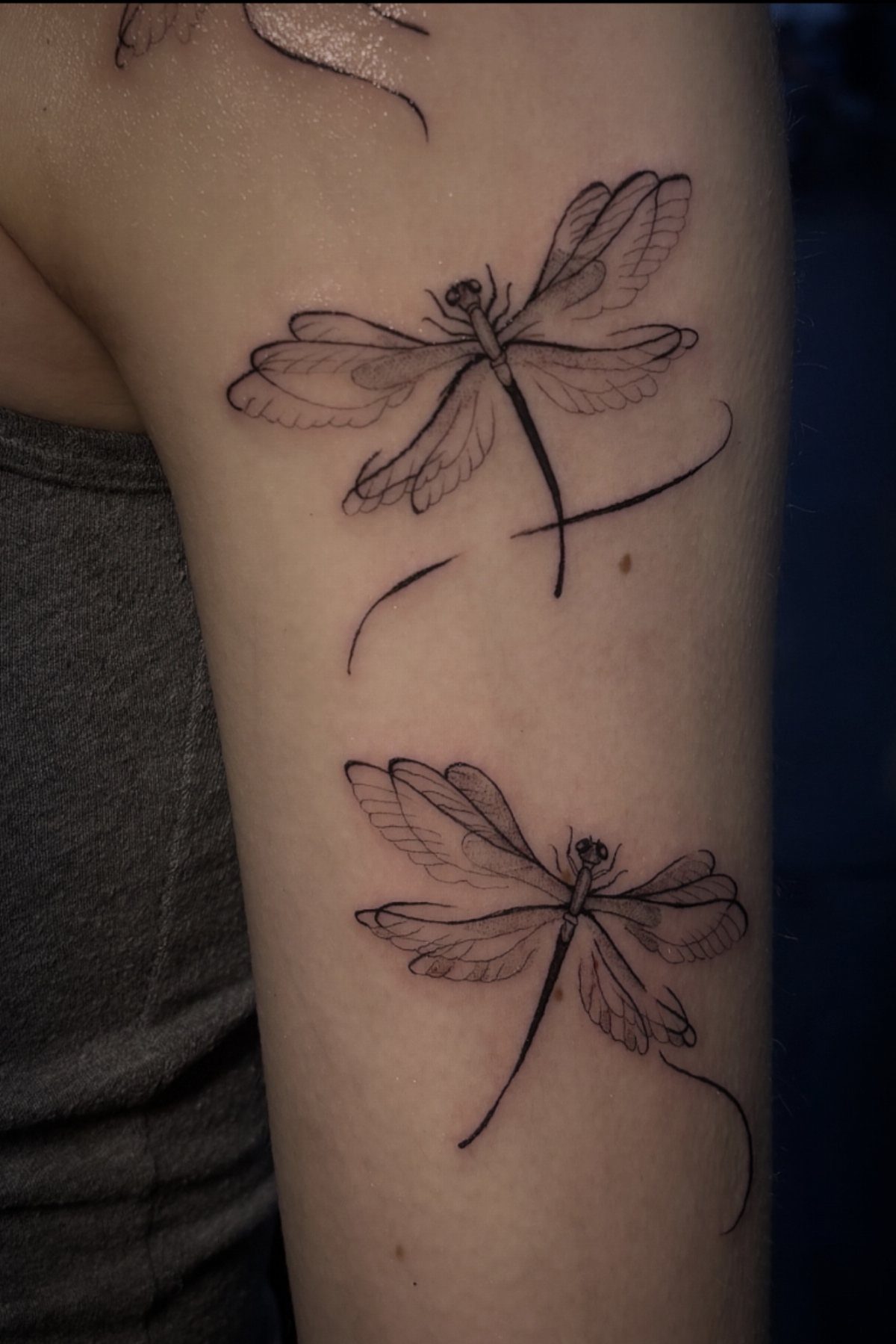
Animal outlines reduce a creature to its silhouette or skeleton structure, using fine black lines to trace wings, legs and antennae without any fill.
Dragonflies, birds and cats all translate well, and the minimal approach keeps the design from competing with other tattoos nearby.
Fine line animal work fades faster than bold traditional designs, so touch-ups keep the lines sharp. If you prefer something that holds longer, ask your artist to go slightly thicker on the line weight without losing the delicate look.
7. Minimalism
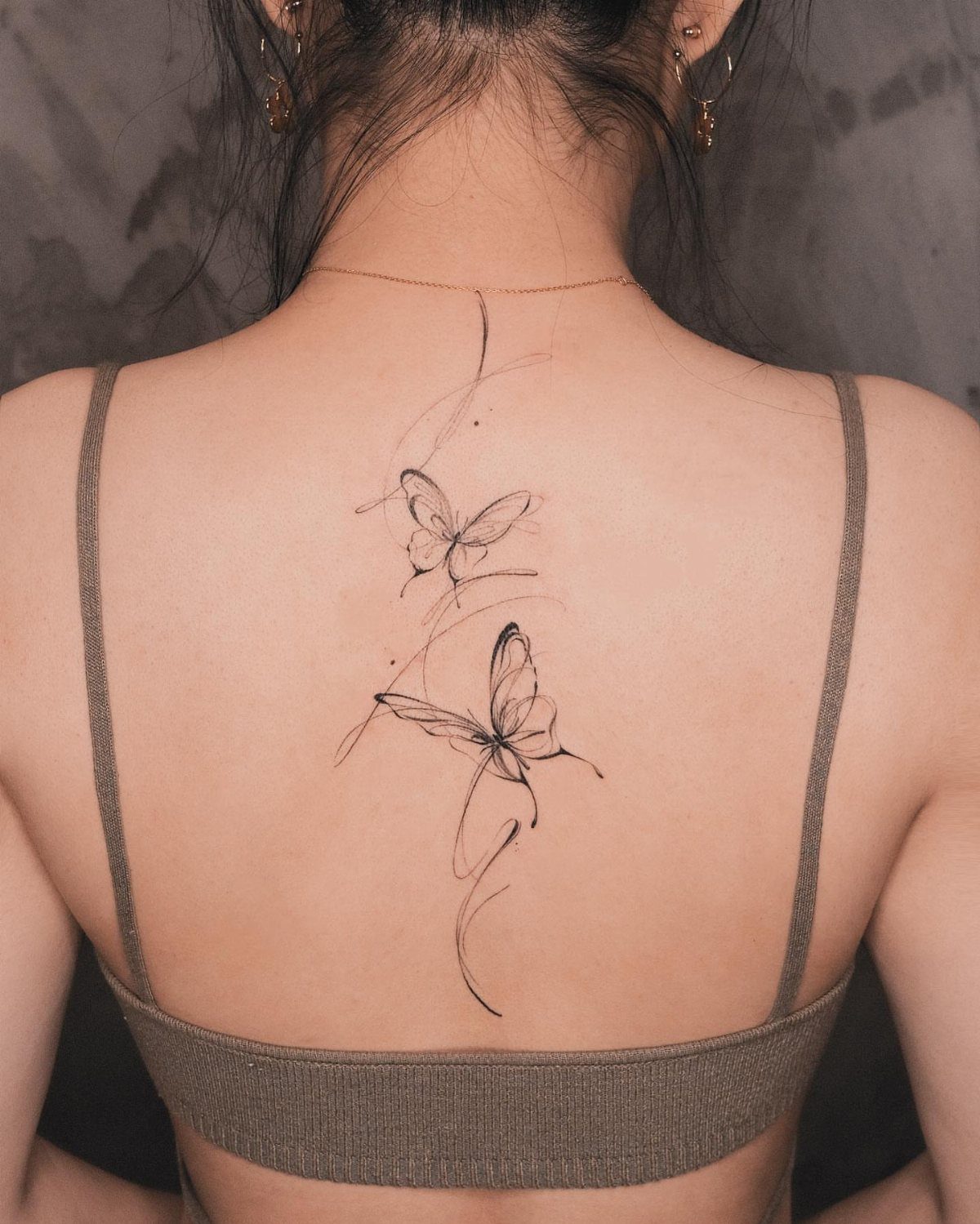
Minimalism in line art strips an image down to the fewest marks needed to make it read.
2 butterflies and a few guiding curves say everything without shading, fill or detail work, and the open composition leaves room for more tattoos later.
Upper back and spine placements suit this approach because the flat surface keeps the lines clean and the vertical space lets you stack elements without crowding them.
8. Thick and Thin Line Art Tattoos
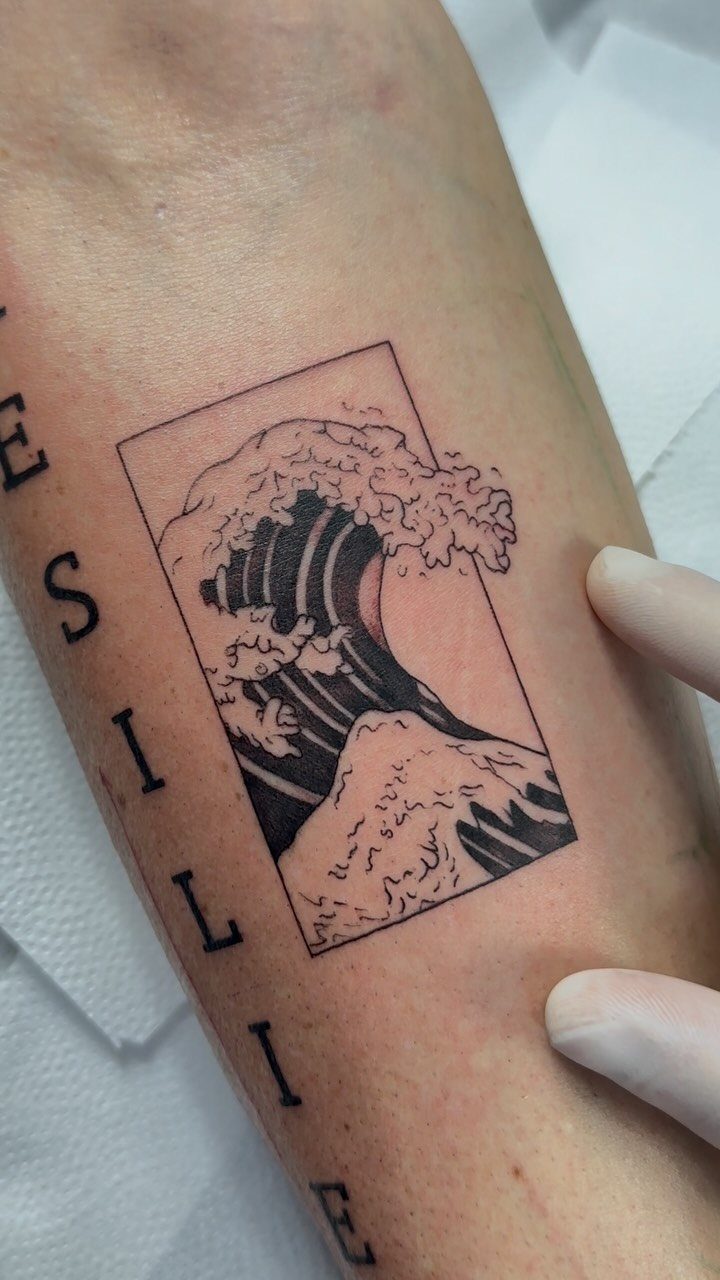
Thick lines anchor the frame or define the horizon, while thin lines pull in detail like foam texture or the curve of a wave crest.
Most of this tattoo was built with a single needle for the thin sections and a 3-round liner for the bold frame, according to the artist who inked it.
9. Tree Line Tattoos
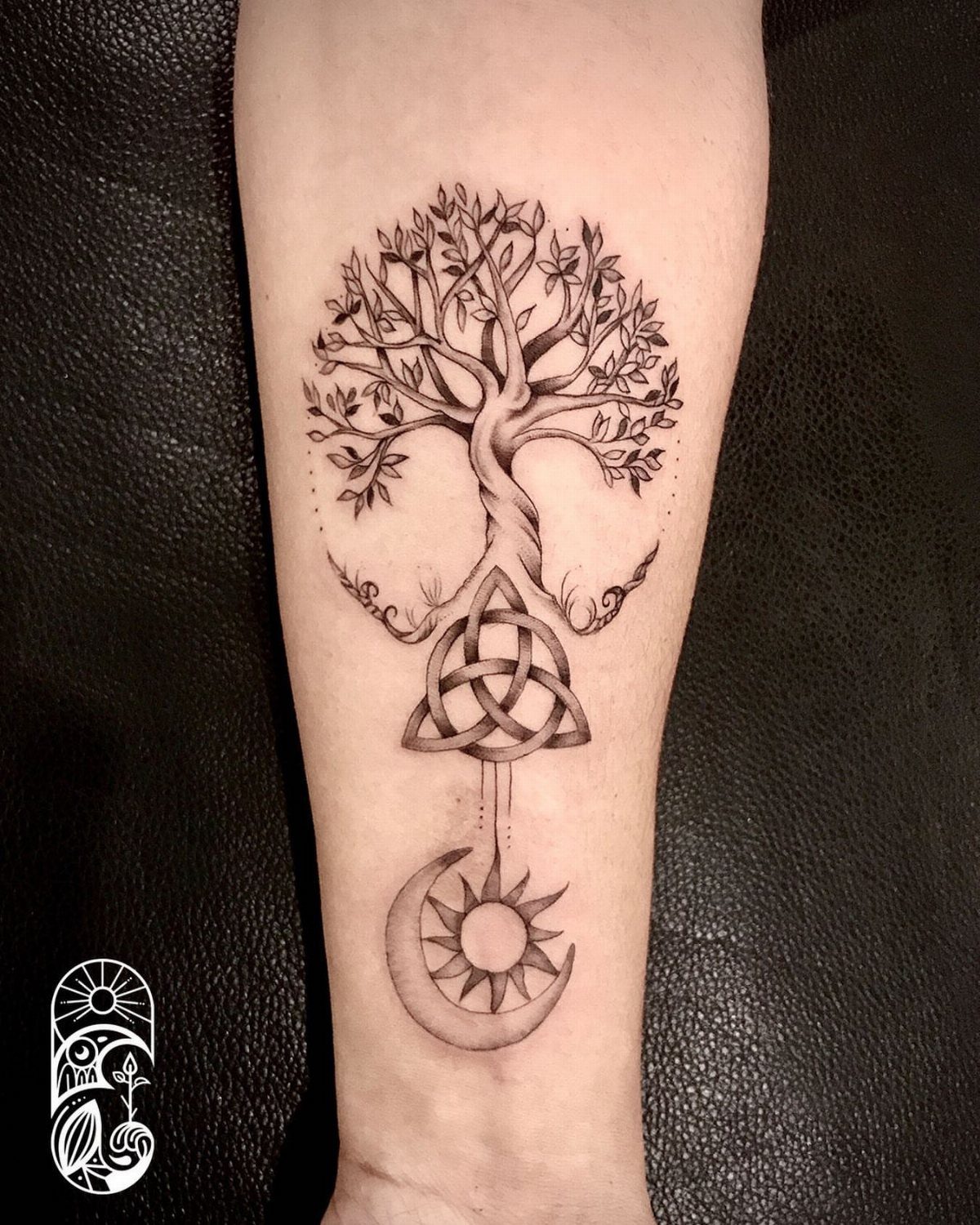
Tree line tattoos reduce branches, roots and trunks to black outlines, often layering in symbols like Celtic knots or celestial elements to tie the design to a bigger idea.
The tree itself represents growth or resilience, and the minimal line work keeps it from taking over your entire forearm.
Forearm placement works because the vertical shape follows your arm’s natural length, and flat skin keeps the knot detail legible.
If you want the design visible most of the time, go for the outer forearm; inner placement hides it unless you turn your wrist.
Placement Recommendations
Inner forearm and wrist remain the most popular placements for line tattoos because the flat, visible surface suits the precision this style demands.
A single line portrait or abstract form on the inner wrist reads as elegant without taking up much real estate, and the intimacy of the spot matches the delicate line weight.
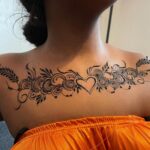
Collarbone placement works well for horizontal compositions like horizon lines or flowing abstract forms. The natural curve of the bone guides the design without distorting it, and the area stays visible in most clothing.
Ankle and lower calf offer good flat surfaces for small line pieces you want subtle but not hidden. These spots heal cleanly if you avoid tight socks during the first 2 weeks.
Behind the ear suits tiny single line work like a small portrait or minimal figurative subject. The placement is intimate and easy to cover when needed.
Skill Level Required
The thinner the line, the less room for error, and a wobbly section or uneven pressure shows up immediately.
Single needle technique uses a single needle to apply ink, which produces the fine precise lines that suit minimalist compositions.
Single line describes the unbroken path of the design, not the needle configuration used to draw it. A single line tattoo can be inked with a single needle, but the 2 ideas measure different parts of the process.
If your artist cannot show you clean healed examples of thin line work, that tells you what you need to know.
Healing and Maintenance
Fine line tattoos heal faster than bold work because the needle causes less skin trauma.
The trade-off is longevity. Inner forearm and wrist placements help because friction and sun exposure stay lower there than on hands or shoulders.
The design will still read as delicate, but the added width gives the ink more staying power as your skin ages.
Frequently Asked Questions
What is a single line tattoo?
A single line tattoo follows one unbroken path, the design tracing from start to finish without breaking the line.
The design flows from start to finish as a single mark, which means the artist cannot pause or go back to fix a section. The technique works best for portraits, profiles or abstract shapes where the simplicity reads as intentional.
What do tattoo lines mean?
Line tattoos build the design entirely from black linework, skipping shading, color and gradient fills.
The line does all the work: fine florals, geometric borders layered over organic forms, or one continuous stroke. The style strips away detail to show only the essential contours.
What are some different tattoo design styles?
Line art styles include fine line, single line, geometric, minimalist and thick-and-thin combinations. Fine line uses thin strokes for delicate florals or portraits, while geometric layers shapes like triangles or circles over faces and animals.
Single line art follows one continuous path through the design, while minimalism strips the subject to only the marks you need to recognize it.
Are fine line tattoos cheaper?
Fine line tattoos cost about the same per hour as other styles, and the total depends on size and detail rather than line weight.
The delicate work demands steady hands and precision, which takes time even when the design looks simple. Smaller fine line pieces finish faster and cost less overall, but the hourly rate matches what experienced artists charge for any custom work.