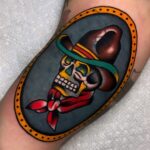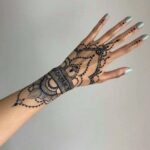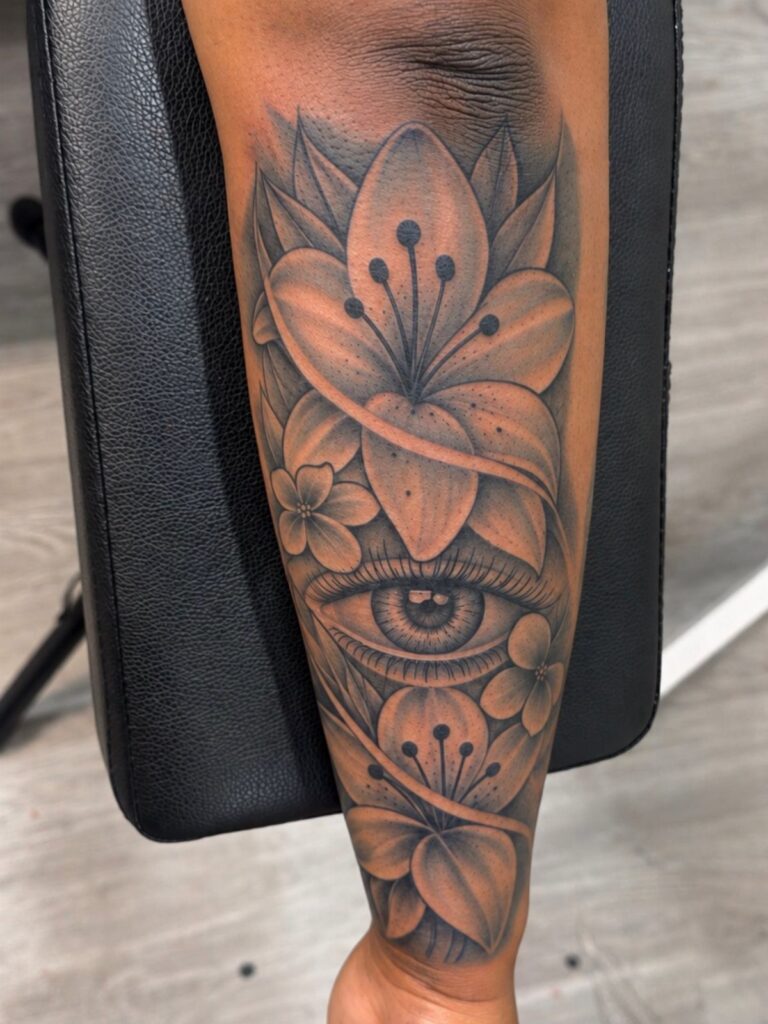
Black and gray ink ages better than any other palette, which is why most artists start there and why realism still depends on it.
Black and gray age well, pastels and watercolors fade faster, and white or UV ink needs the right backdrop to show up at all.
If you’re planning a color piece on darker skin or want a specific shade match, ask for a test grid first: small dots swatched directly on your tone show exactly how each pigment will heal.
1. Black & Gray Tattoo Ink
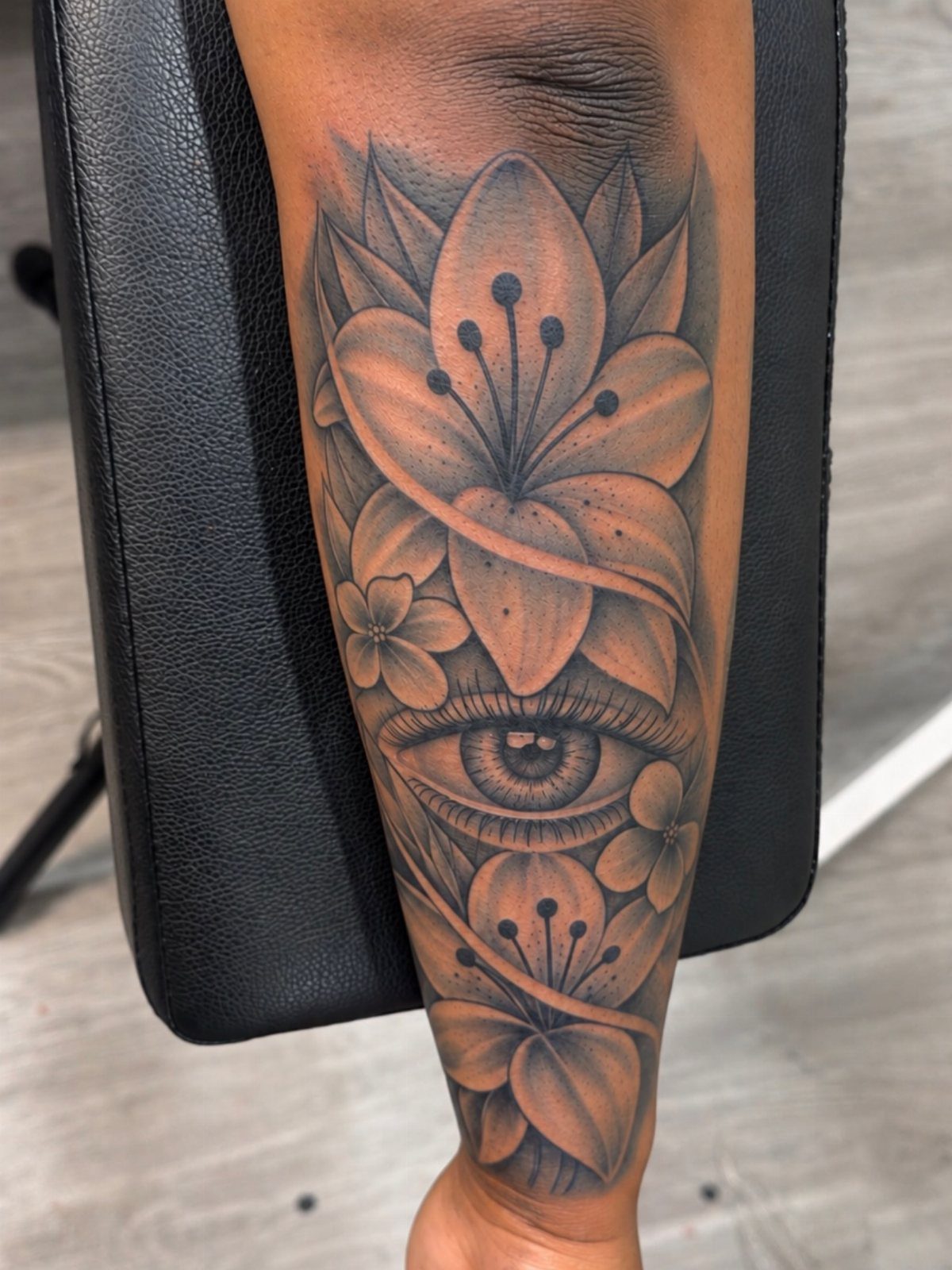
Black and gray ink builds every outline and shadow worth keeping. Artists rely on it for realism because it reads at a distance and holds sharp detail even decades later.
The mix gives you control: pure black for the darkest lines, then diluted shades for soft gradients across petals, eyes or anything that needs depth without color.
Skin tone shows through the lighter washes, which is how a good portrait gets dimension.
Most artists start here. This palette ages better than any other.
2. Pastel & Watercolor Inks
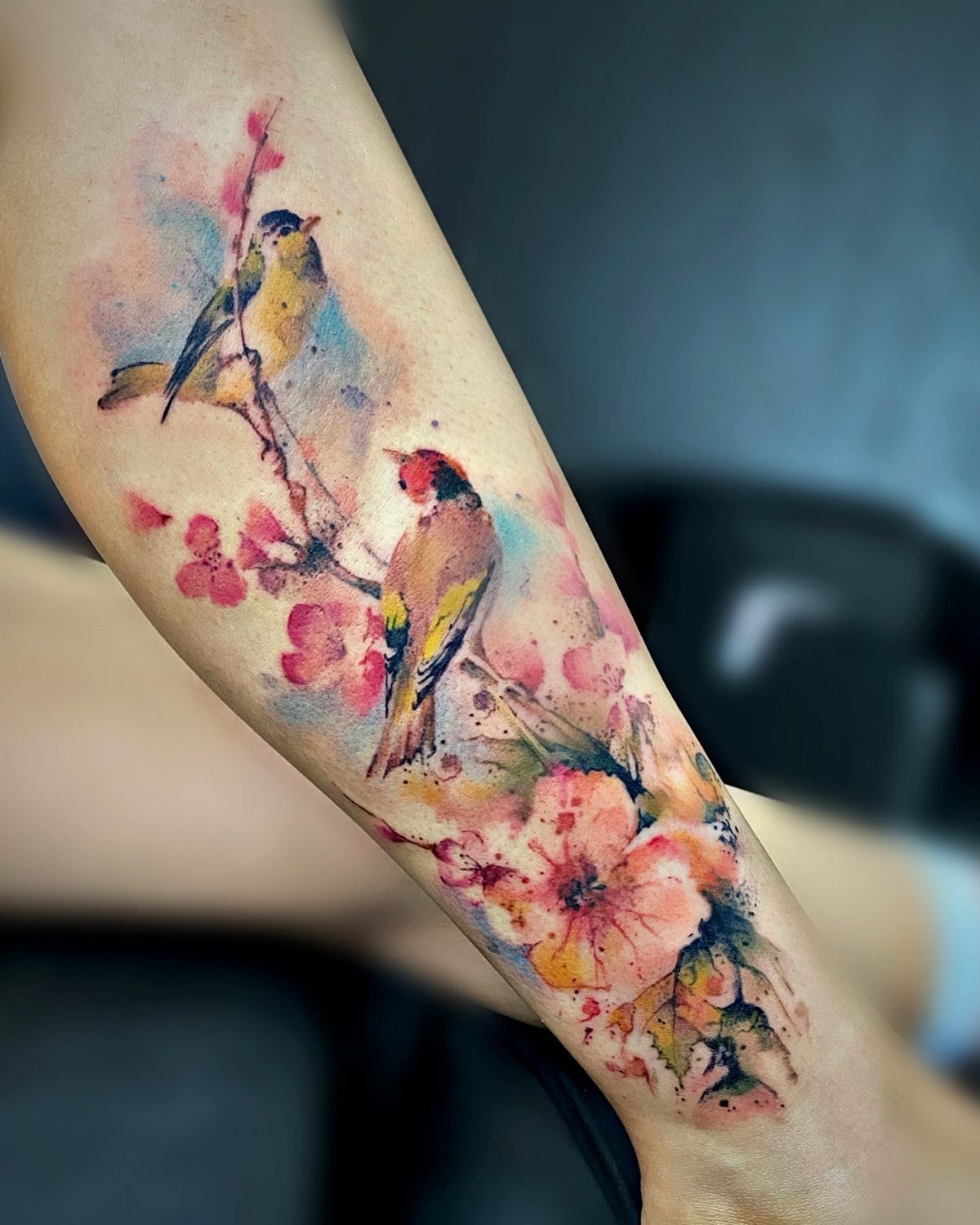
Pastel and watercolor inks give you the soft, blurred-edge look of a painting on skin. Artists use them for fine-line work where the design needs to feel light, not bold.
Expect them to fade.
These diluted colors lose brightness faster with sun exposure than saturated pigment does. Touch-ups help, but the style depends on that airy, imperfect finish.
Choose this style when you accept that delicate work will soften over time.
3. White & UV Tattoo Inks
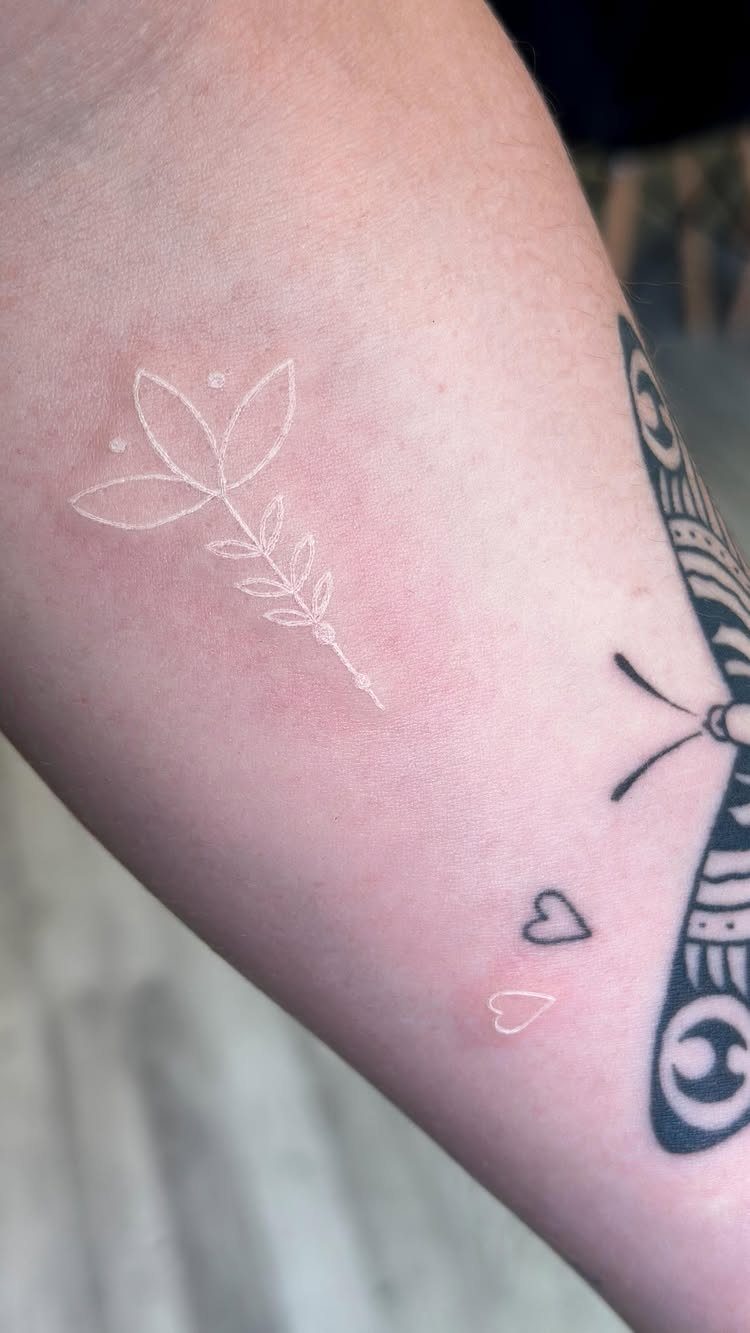
White ink adds highlights to darker tattoos or stands alone for subtle designs that barely show except in direct light. UV ink does the opposite: invisible most of the time, then glowing under blacklight.
Both sit faint on darker skin tones.
White reads best as an accent inside a piece that already has black or color to frame it. UV ink needs a fresh charge under blacklight to glow, and the effect fades as the tattoo heals.
These work for understated or hidden ink, not when you need contrast.
4. Vibrant Red and Green Inks
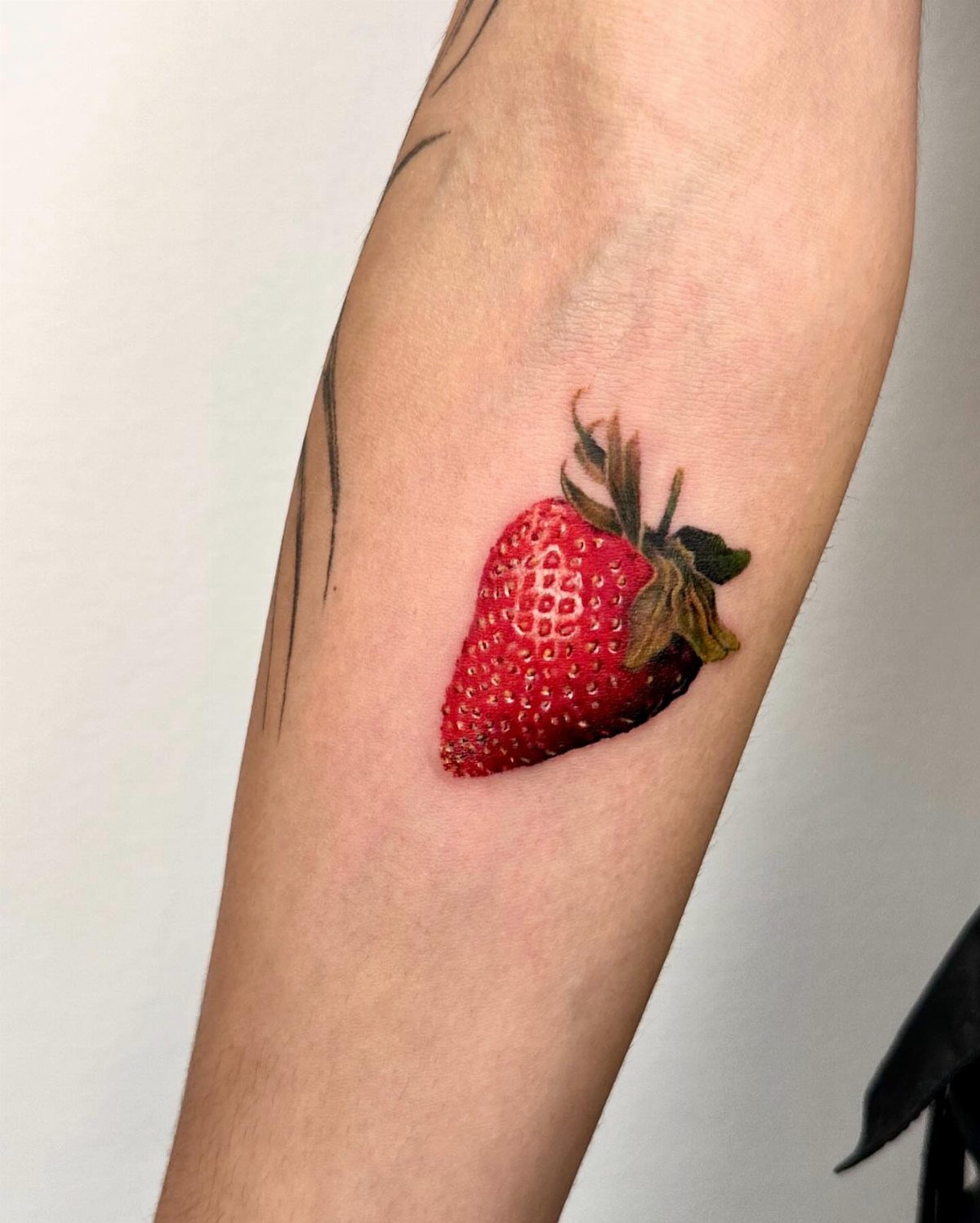
Red and green inks hold their saturation longer than most colors, which is why they work for anything that needs to pop: fruit, flowers, anything with a strong local color.
The strawberry here shows both at full strength.
Red stays vivid for years if you keep it out of the sun, and green holds almost as well. Artists mix them to get realistic detail without relying on black outlines.
These two deliver color that lasts and reads from across the room.
5. Deep Blue Tattoo Ink
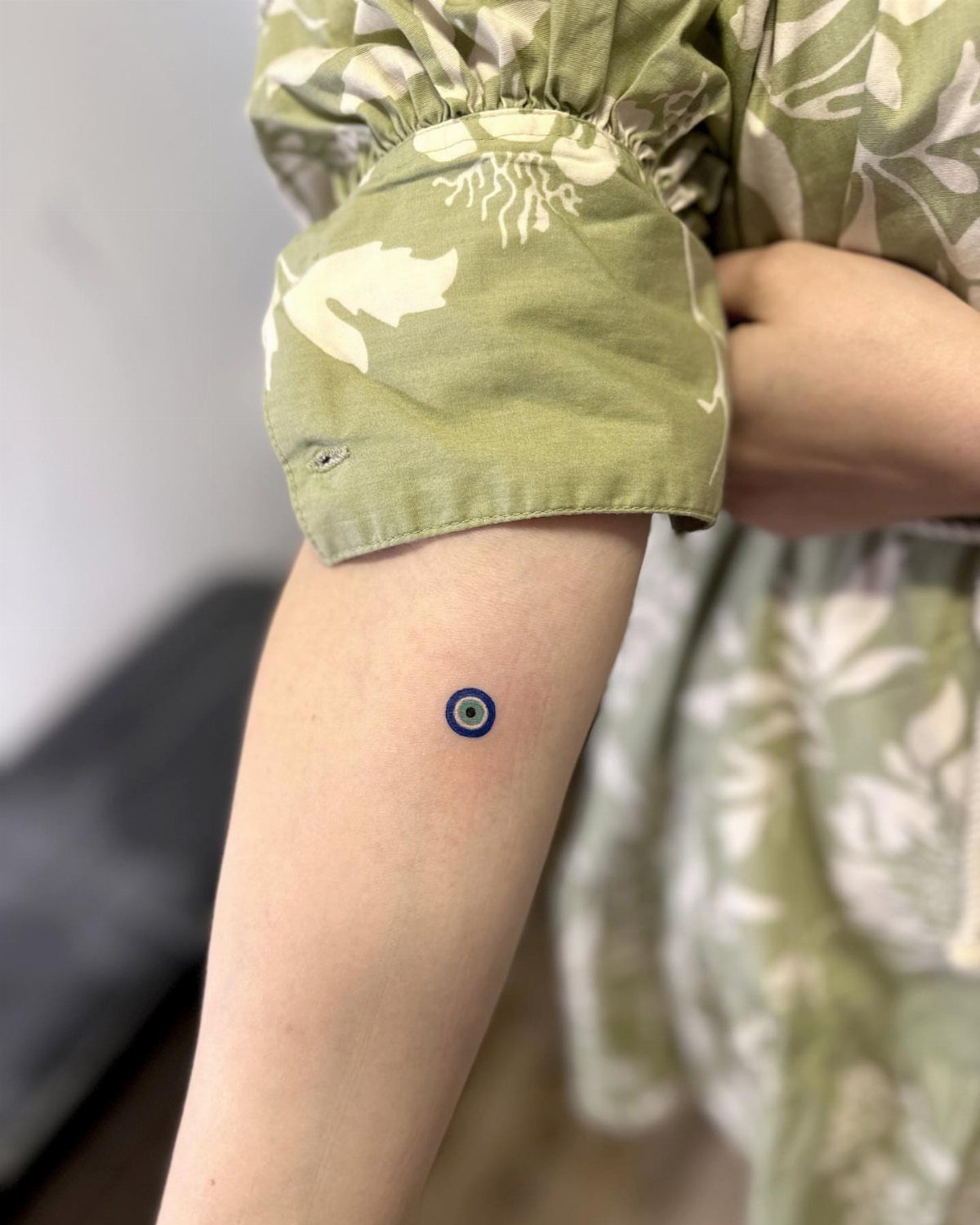
Deep blue ink gives you rich, saturated color that ages better than lighter shades. Artists use it for symbols that need intensity without going pure black.
The evil eye here relies on that contrast: dark blue in the outer ring, lighter blue or white in the center.
The pigment sits dense enough to stay readable for decades, and it works on most skin tones where pastel blues would disappear.
Blue gives you color with the staying power of black and gray.
6. Tattoo Ink Bottle Set
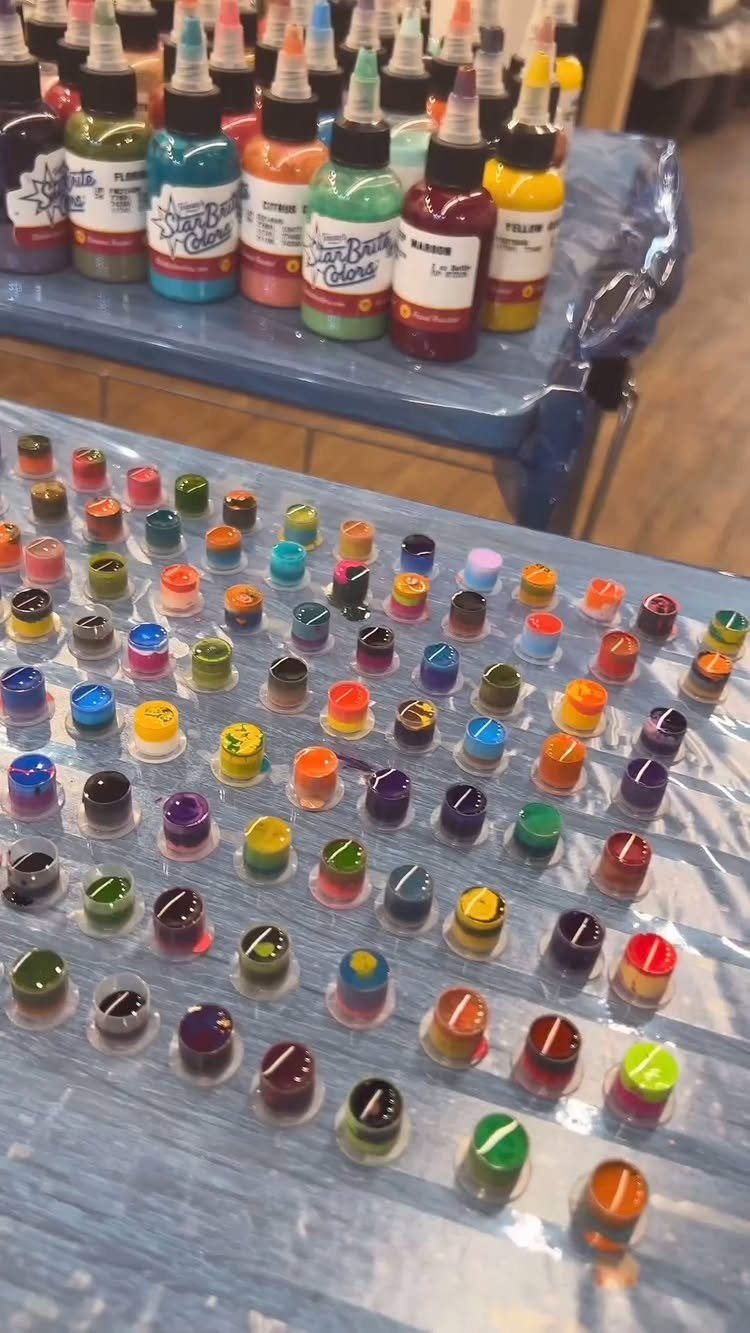
A full set of ink bottles and filled caps gives an artist every color ready to use during a session.
Most sets include primary colors, black, white and a few pre-mixed shades so the artist can match skin tone or blend custom hues on the spot.
The caps hold small amounts mixed fresh for each client, which keeps the bottles sterile. Artists pour only what they need, then toss the caps after the session.
If you’re setting up a station or stocking a shop, a complete set means you won’t run out mid-tattoo.
7. Tattoo Color Testing Grid
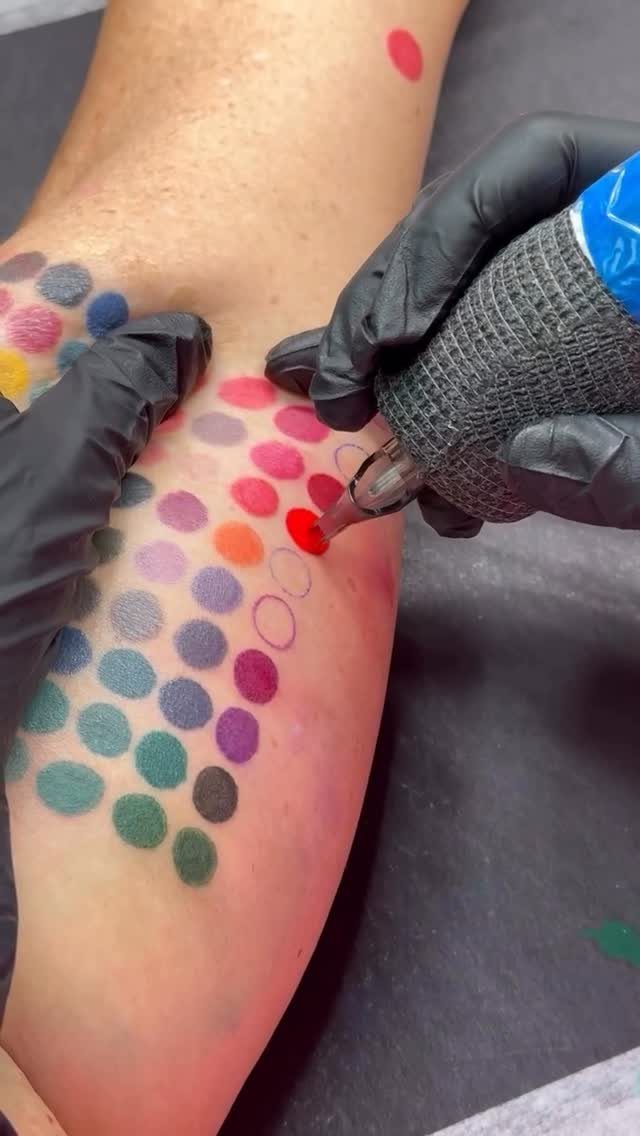
Artists swatch ink colors directly on skin to see how each pigment heals on that client’s tone. A grid of small dots lets you compare reds, blues, greens and purples side by side before committing to a full piece.
The test sits in a spot easy to cover later, usually the inner arm or thigh. Each dot takes seconds, and the healed result shows exactly how saturated or muted the color will read once the skin settles.
If you’re planning a color piece on darker skin or want a specific shade match, ask for a test grid first.
Frequently Asked Questions
What tattoo ink is better?
The best ink depends on what you’re getting done. Black and gray inks from brands like Panthera give you opacity for bold linework, while color brands like Eternal and Dynamic hold saturation longer in realistic pieces.
Artists who work across styles keep several brands on hand because each one handles differently.
Does different color tattoo ink cost more?
Prices vary by brand and pigment, but color doesn’t automatically cost more than black.
What drives the price up is how many colors the design needs and how long the artist spends blending or layering them. Lighter colors also fade faster, so you’ll pay for touch-ups sooner.
What color is best for tattoos?
Black and gray last longer than any other option, so most artists recommend them first.
Deep blue and saturated red hold up longest among colors, while pastels fade much faster. Skin tone matters too: white and pale shades disappear on darker skin, while rich pigments read clearly across most tones.