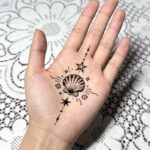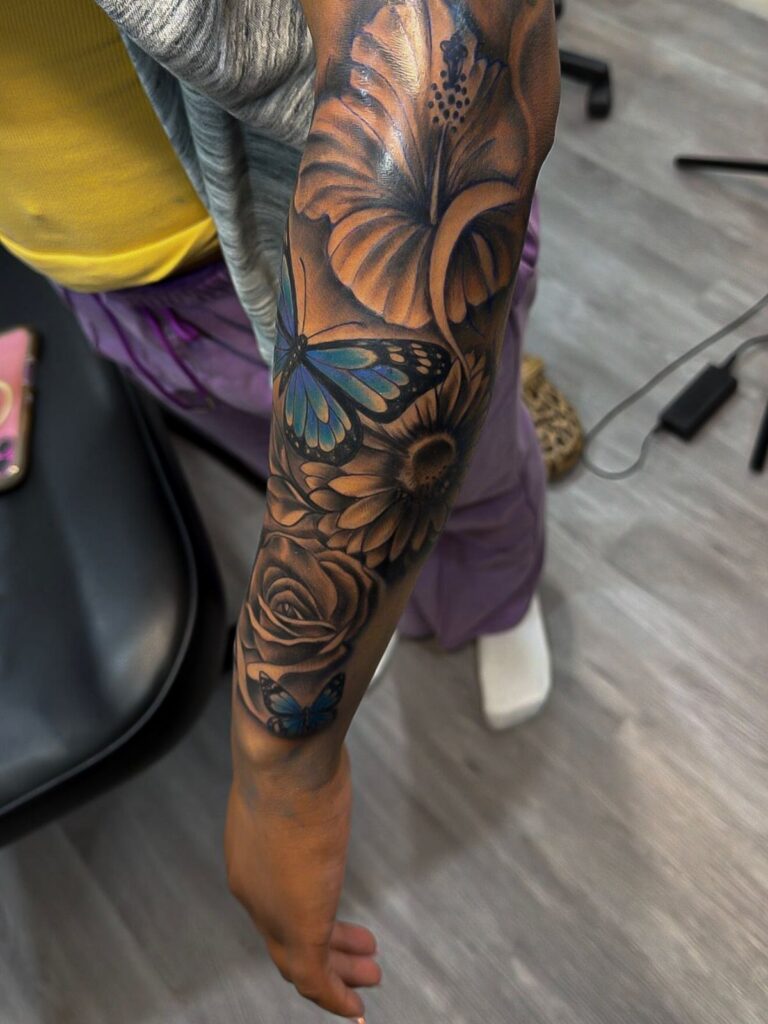
Single stars fit the smallest gaps, while mandalas and ornamental designs can anchor a shoulder or cover a thigh.
The style of your main piece decides which filler belongs: floral arrangements and soft clouds suit organic or illustrative work, while geometric grids and straight lines match technical tattoos.
Japanese waves belong to traditional Irezumi, and dropping them into realism or watercolor breaks the visual language both styles depend on.
Dotwork and mandalas can fill a palm in one sitting, but cover a full thigh and the artist may block out a whole day.
1. Floral Fillers
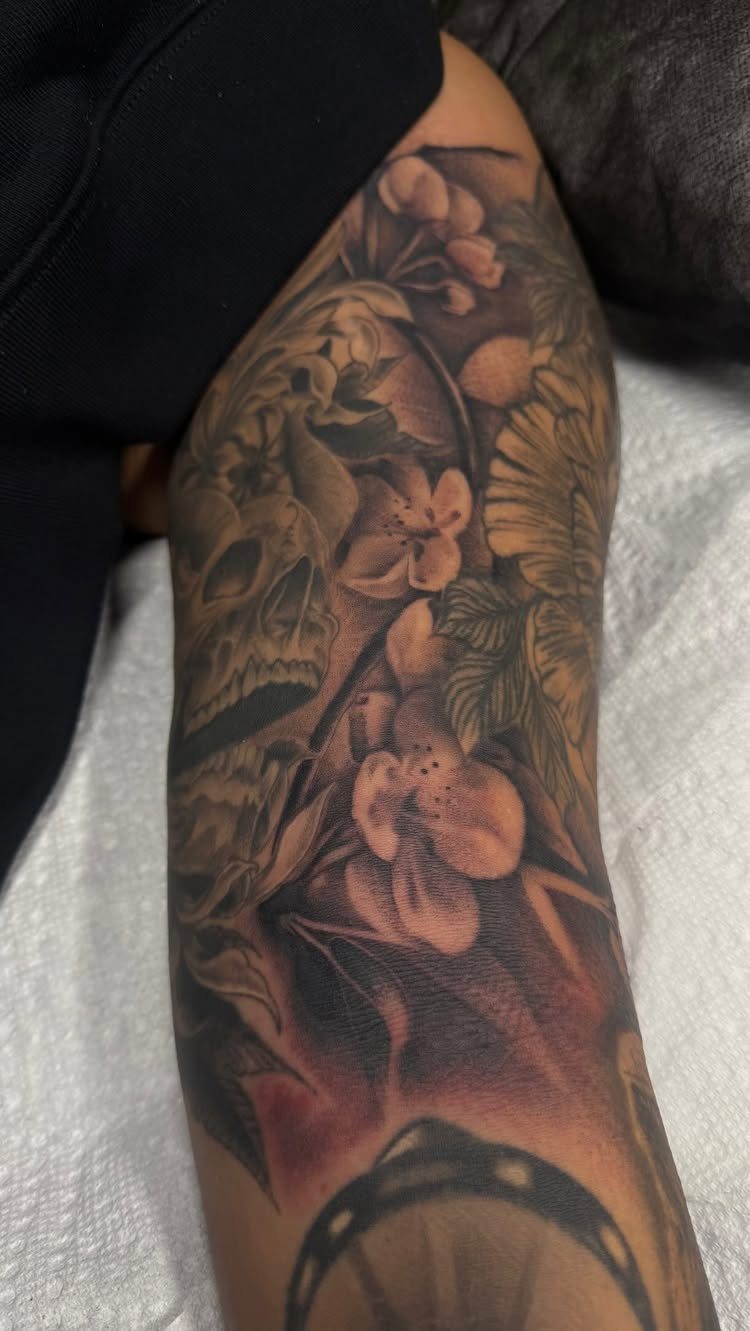
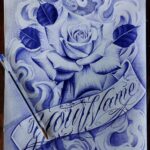
Flowers soften the edges around larger tattoos and fill narrow gaps without competing for attention.
Roses, peonies and cherry blossoms work best because their petals wrap around contours and their stems can stretch or curl to fit the space you have.
Black and grey shading gives floral fillers a softer look that sits back from bolder work.
If your main piece is already in color, match the palette or go monochrome so the filler reads as background. Small blooms fill wrist and ankle gaps; larger arrangements suit the thigh or shoulder.
Gap filler tattoos prove that it’s not the size of the tattoo that matters but the creativity behind it. A lot of really cool tattoos can fit into the tiniest of spaces.
2. Geometric Patterns
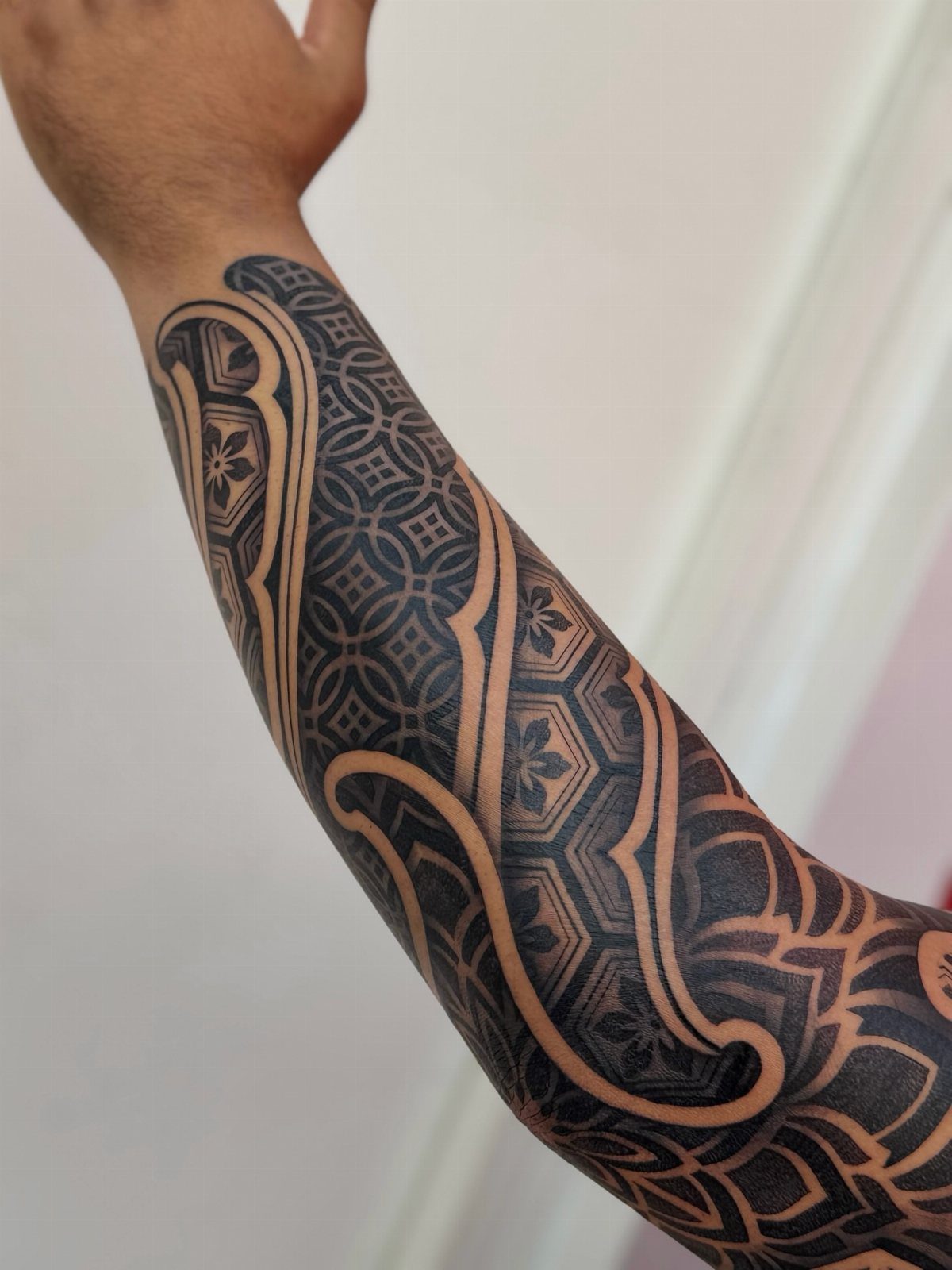
Straight lines and repeating shapes fill open areas without adding new subjects. Triangles, hexagons and interlocking circles sit flat or stack into lattice patterns that frame existing work.
Geometric fillers scale easily.
A single row of connected triangles fills a narrow strip along the forearm; denser grids cover larger sections on the ribs or calf. Black ink keeps the pattern sharp, and thick lines hold better over time than thin ones.
This approach suits tattoos that already lean technical or architectural. If your main piece is organic or illustrative, geometric filler can feel mismatched.
3. Abstract Colorful Splashes
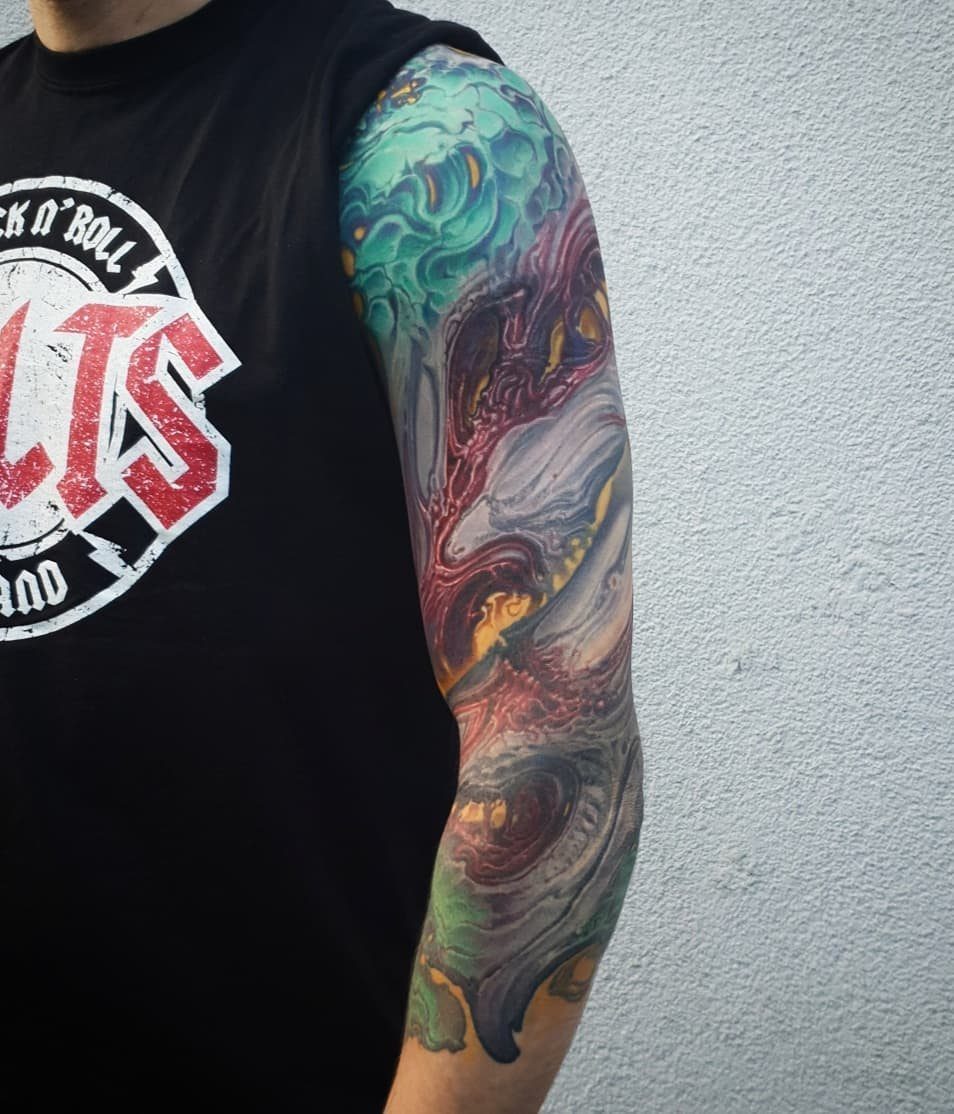
Bright, loose shapes in watercolor or brushstroke style fill space with movement and color. Splashes and gradients wrap around existing tattoos without hard edges, so they blend rather than box in your main work.
The colors fade faster than solid black.
Reds and oranges hold longer than yellows and pastels, and most artists recommend a touch-up to keep the brightness. If your skin tans easily, expect the lighter shades to wash out sooner.
This filler suits sleeves or back pieces where the color can flow across a wide area. Small splashes on the wrist or ankle lose their impact.
4. Classic Black Ink Designs
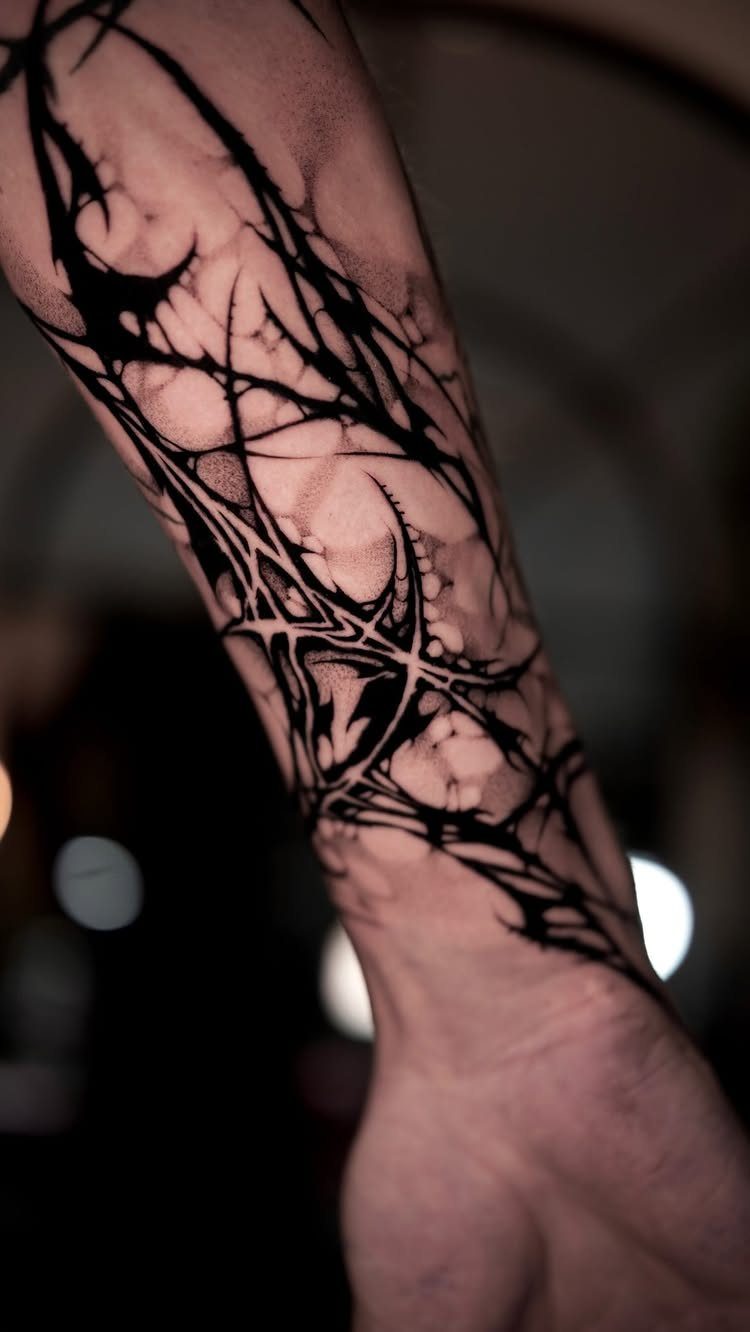
Solid black shapes with sharp edges fill gaps without extra color or detail. Abstract forms, bold strokes and negative space designs add contrast and keep the focus on your main tattoo.
Black ink ages cleanly.
Lines stay readable, and touch-ups are straightforward. This filler works on any part of the body and pairs well with realism, traditional or blackwork styles.
If your existing tattoos are already heavy in black, adding more can make the area feel crowded. Leave some skin showing to let each piece breathe.
5. Japanese Waves
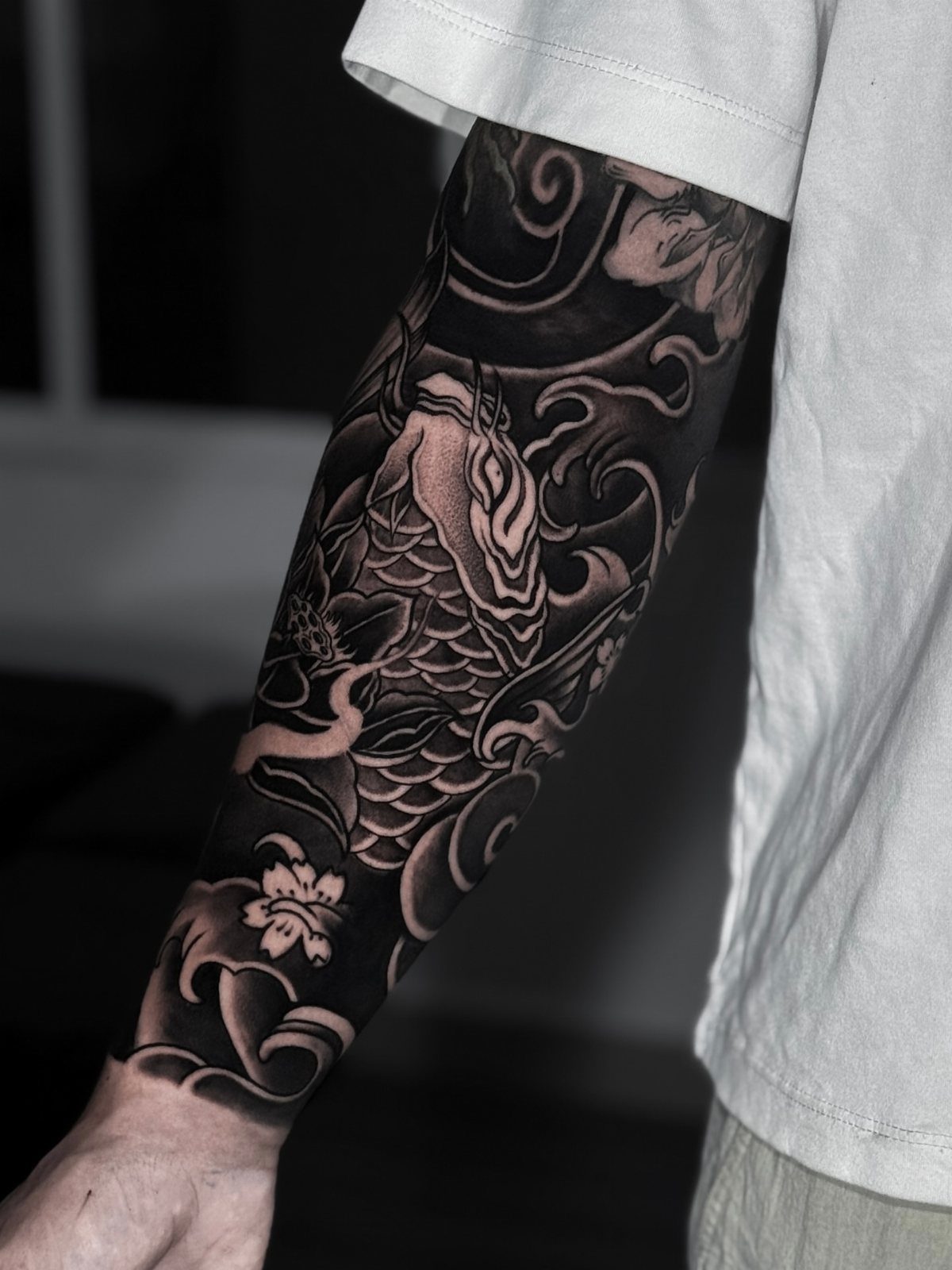
Rolling water and foam curls fill space around koi, dragons or peonies in traditional Japanese tattoos. The waves move in repeating arcs, so they stretch or compress to fit the arm, leg or torso without losing their rhythm.
Artists use thick black outlines and dense shading to match the bold style of Irezumi. The waves usually sit below the main subject, anchoring the design and pulling the eye across the body.
This filler only suits Japanese-style work. Mixing it with realism or fine-line tattoos breaks the visual language, and the result looks unfinished rather than cohesive.
6. Intricate Dot Designs
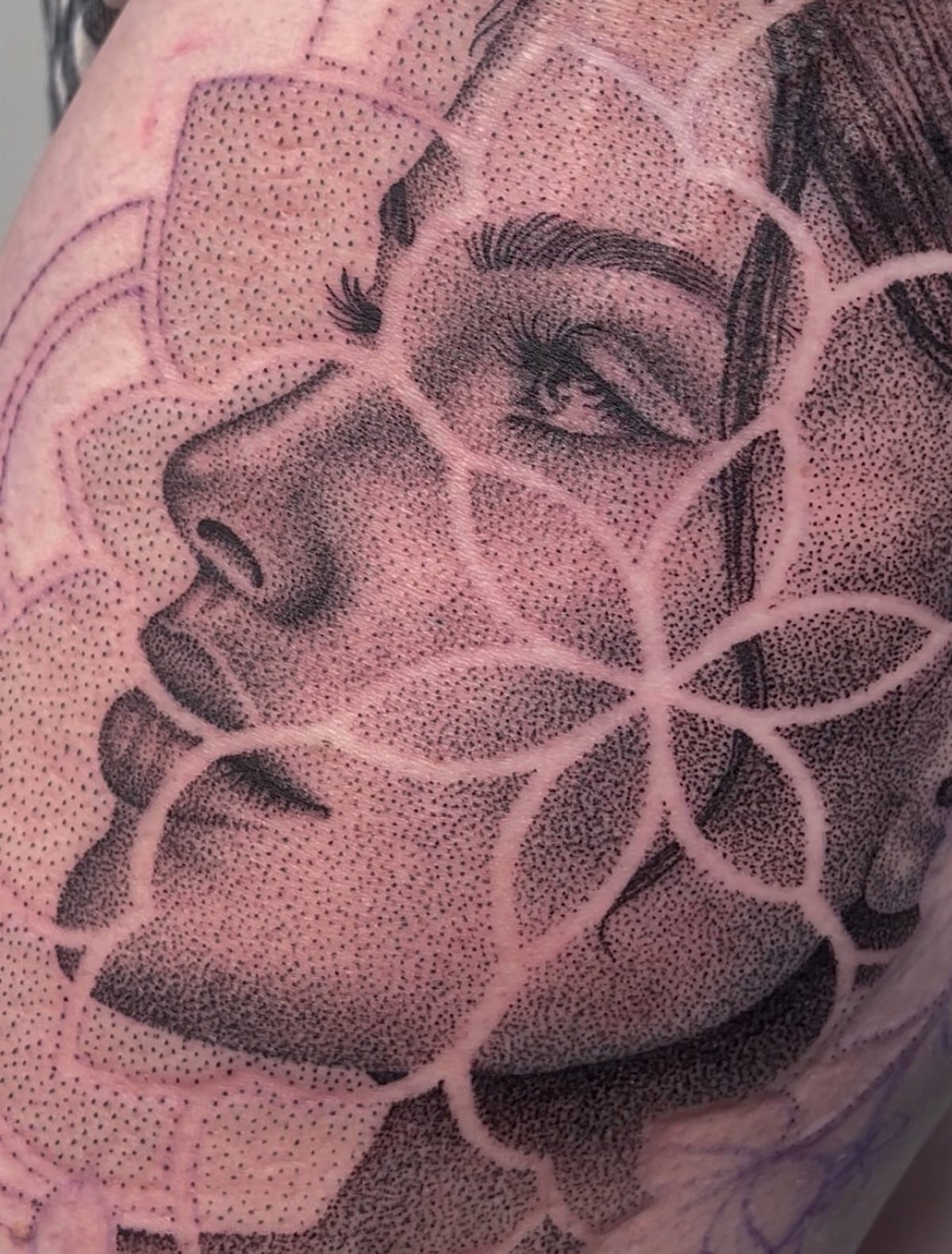
Stippling, the technique of building shapes from individual dots, creates texture without solid lines. Dotwork fillers range from tight geometric grids to soft gradients that fade into the skin.
Dotwork takes longer than solid shading because each dot is placed by hand.
Small sections take one sitting, and larger areas like the forearm or thigh may need multiple appointments. The result holds well over time, and touch-ups are rare.
If your main piece is bold traditional or new school, dotwork can look too delicate by comparison.
7. Stars
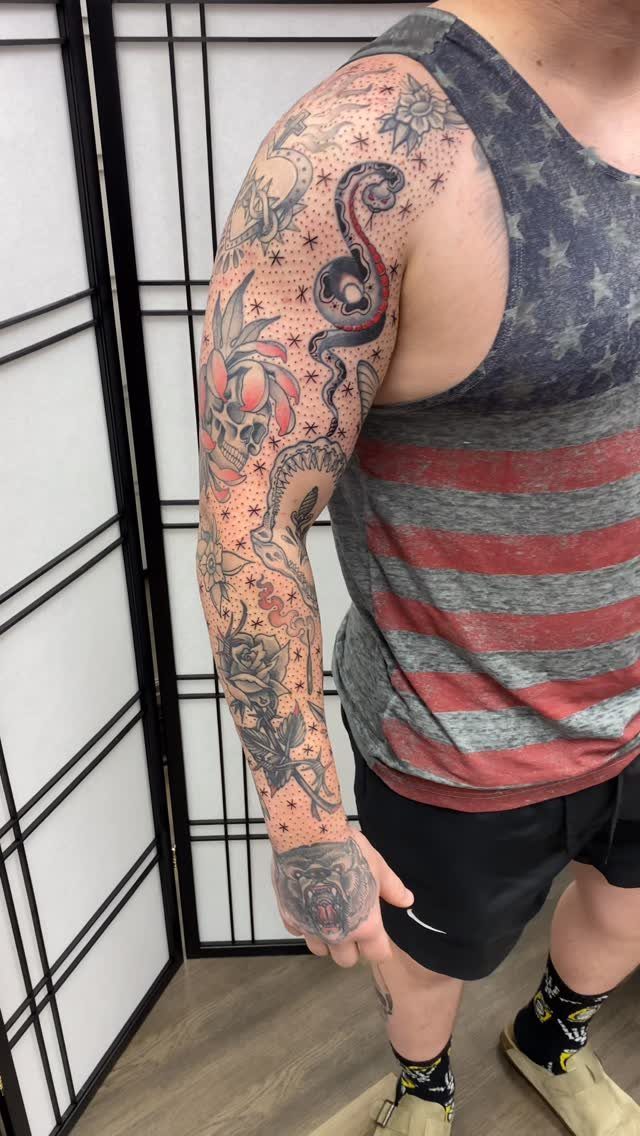
Five-pointed stars in solid black fill the smallest gaps where nothing else fits. They work between larger pieces on the forearm, around the elbow or scattered across the shoulder without pulling focus from the main tattoo.
Small stars read clearly at any size, and a cluster of them balances asymmetric layouts. If your sleeve already has a lot of detail, stars can make the arm feel busy rather than finished.
8. Clouds
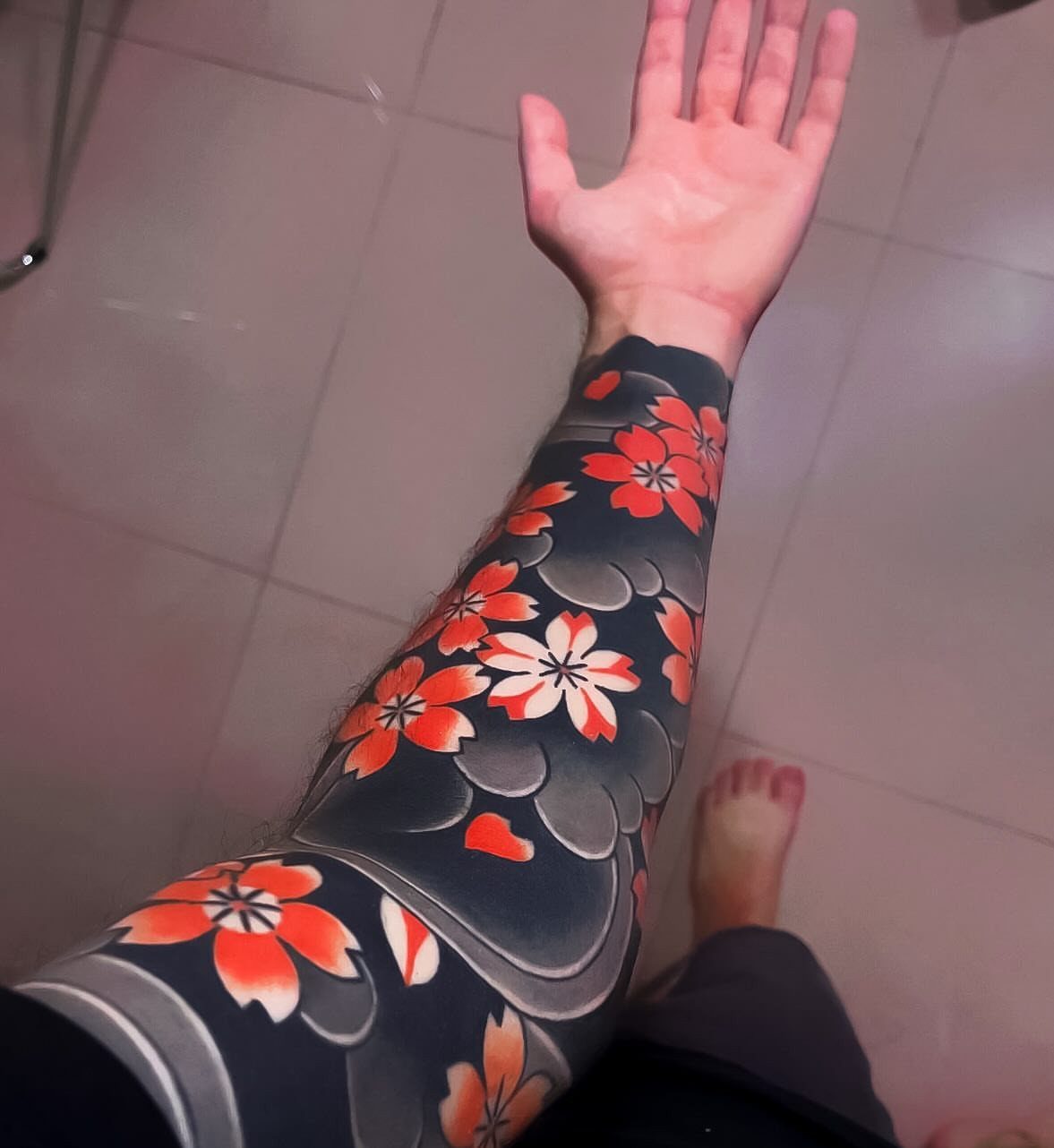
Soft grey clouds sit behind flowers, animals or portraits and push the main subject forward. The shading is loose and blurred, so clouds fill irregular gaps without hard edges that compete with your other work.
9. Mandalas
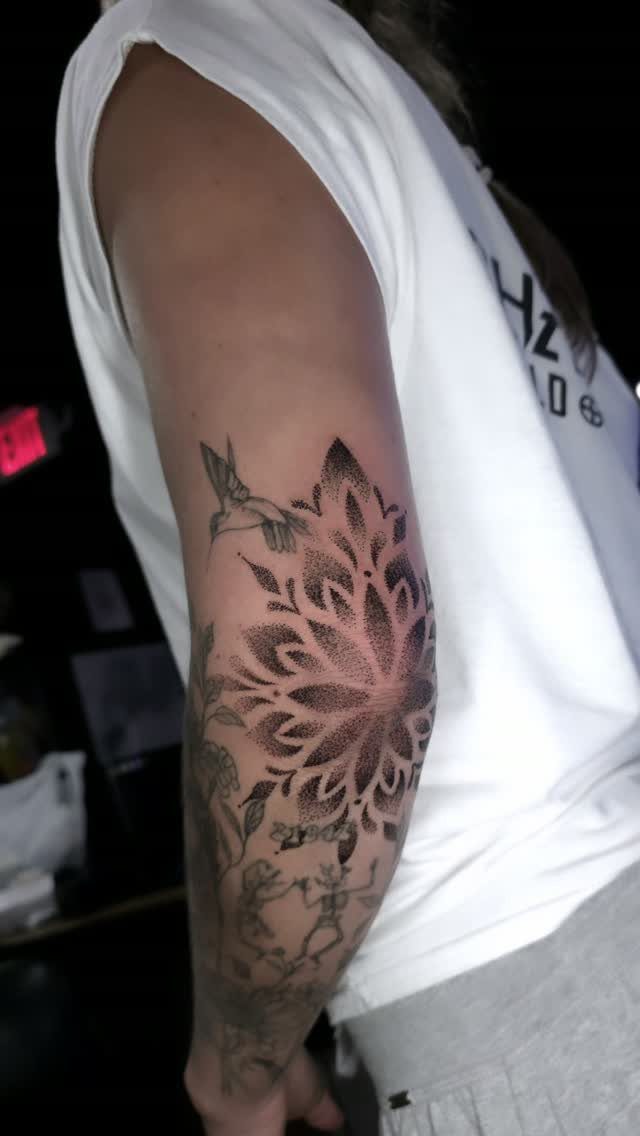
Circular mandala patterns center a composition and fill round or square gaps on the shoulder, knee or chest.
The symmetry draws the eye inward, so a mandala works as a focal point or as background texture depending on how much detail the artist adds.
Dense line work takes time.
A palm-sized mandala on the upper arm stays manageable in one sitting, while a larger piece covering the thigh or back may need a full day. The pattern holds well, and black ink stays sharp longer than color.
10. Swirls
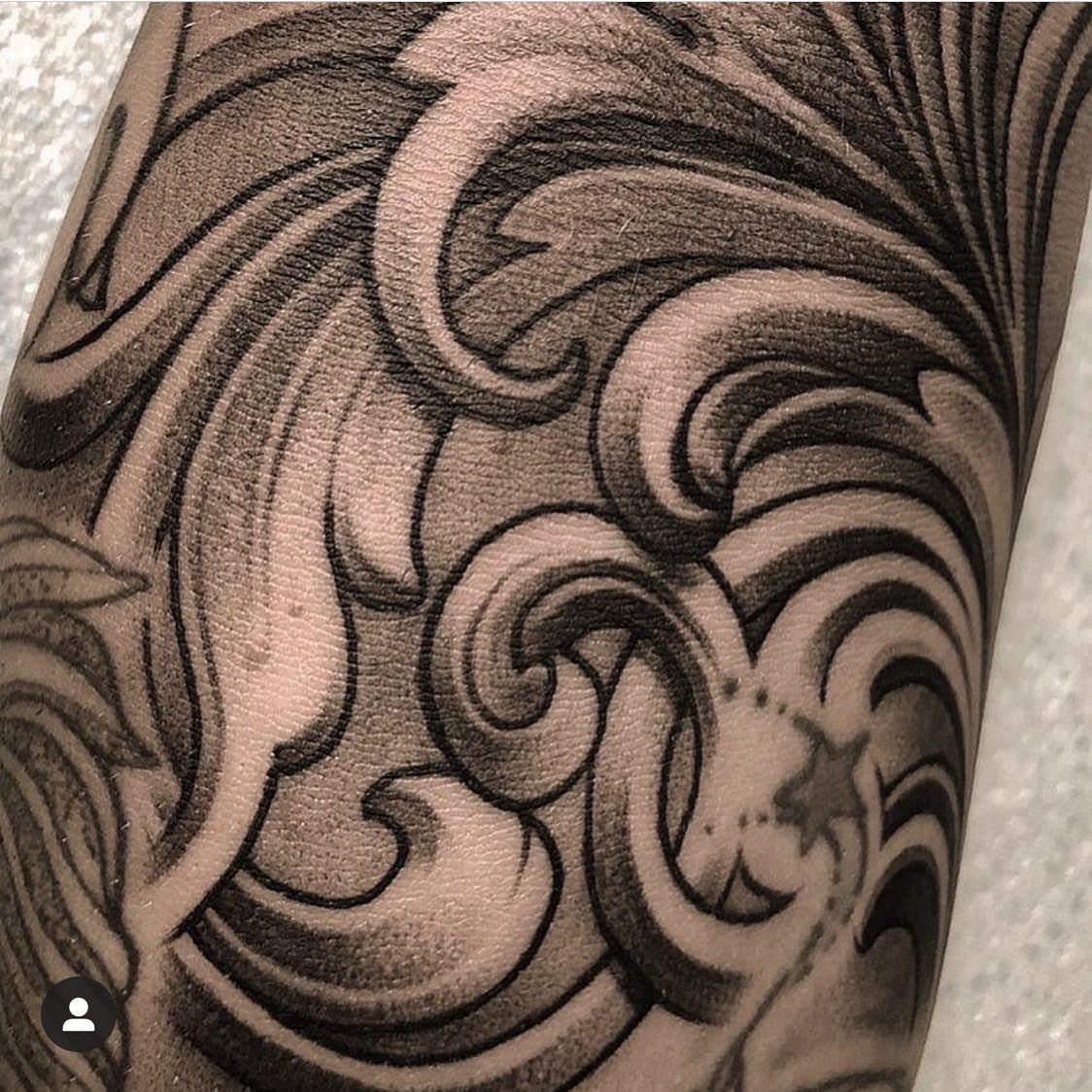
Curving lines and spiral shapes connect separate tattoos and fill the space between them without adding new imagery.
Swirls stretch or compress to fit narrow strips along the ribs, forearm or calf, and the movement guides the eye across the body.
This filler suits ornamental or illustrative styles. If your main tattoos are geometric or minimalist, swirls can feel too decorative and throw off the balance.
11. Leaves
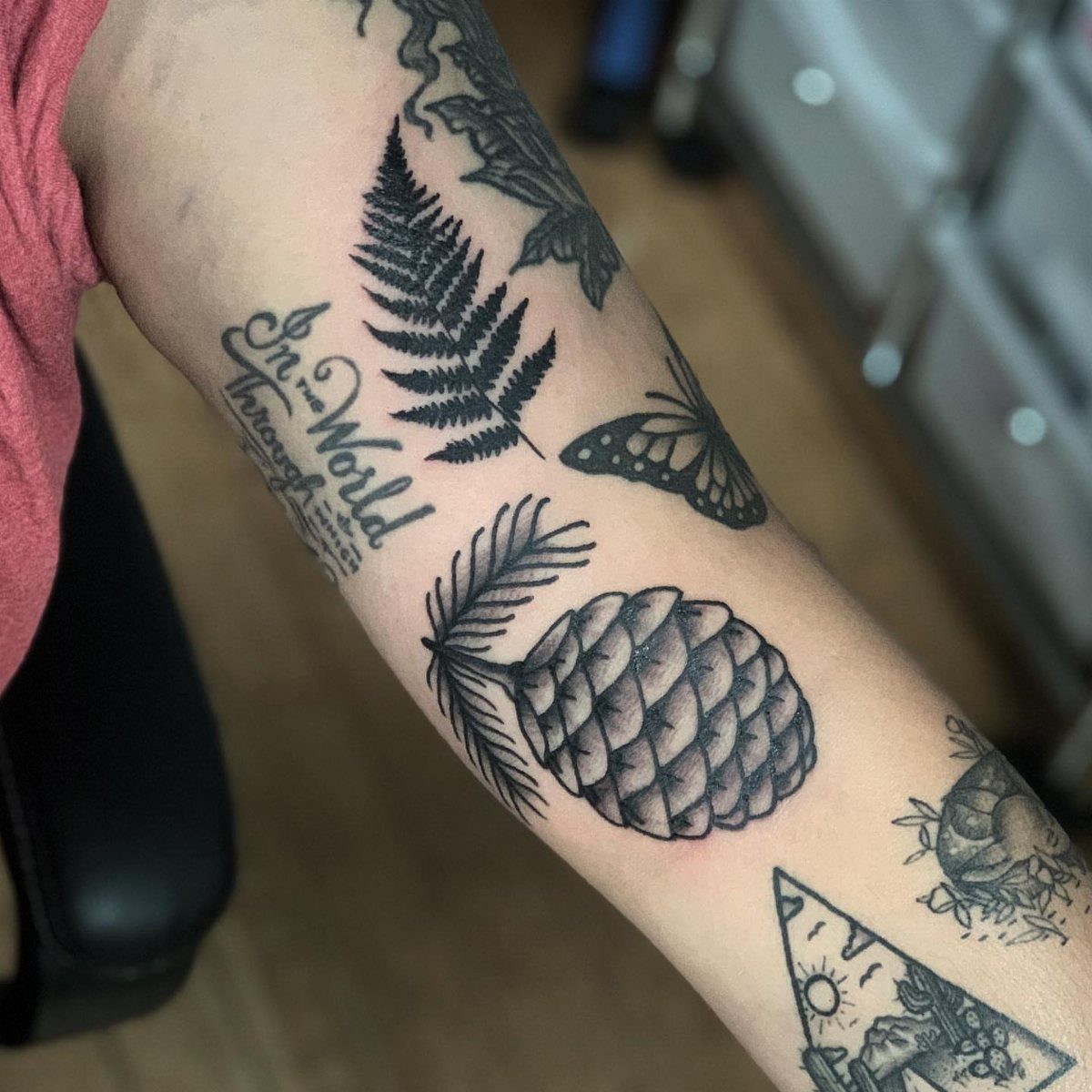
Single leaves or small sprigs fill gaps around nature-themed tattoos without crowding the design. Ferns, oak leaves and ivy work well because their shapes taper and fit into corners or narrow sections along the wrist, ankle or collarbone.
Black ink keeps leaf fillers simple and lets them sit back from bolder work. Adding veins or stippled texture gives the leaf more presence if the gap is large enough to hold detail.
12. Ornamental Designs
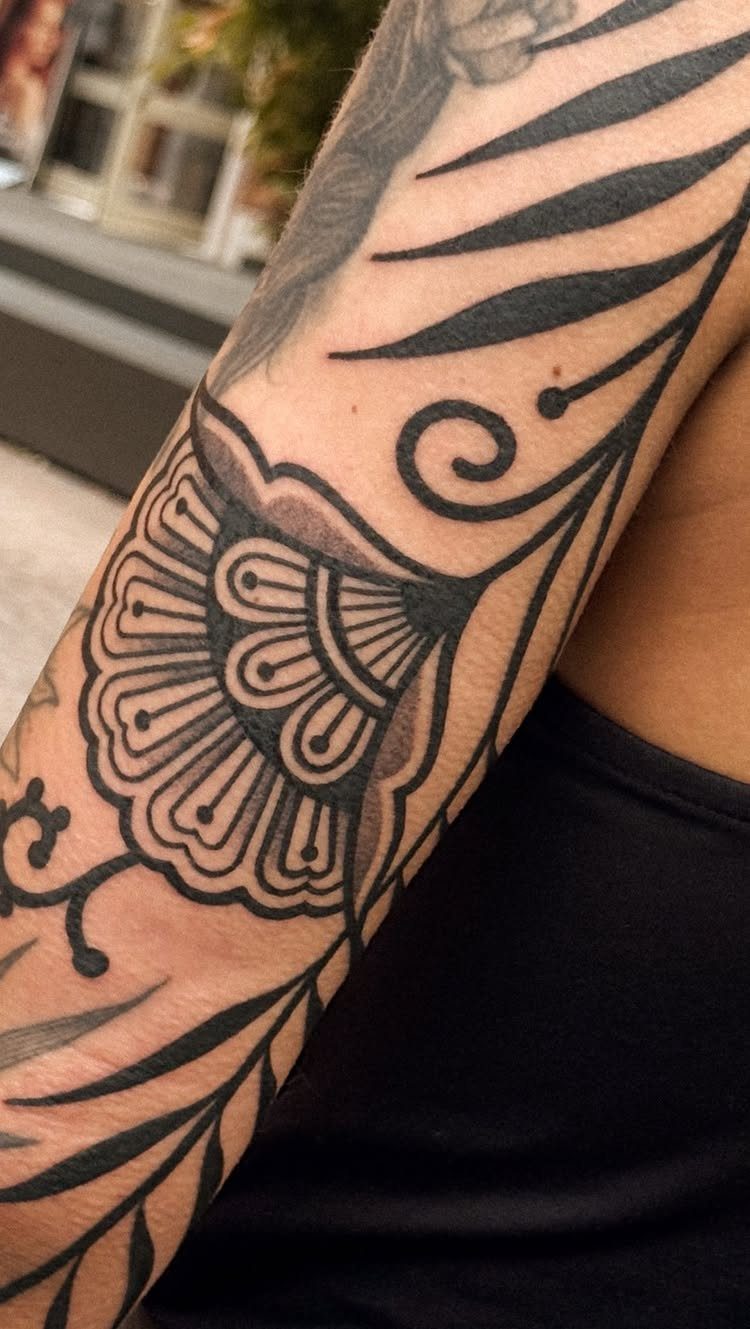
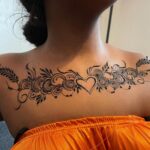
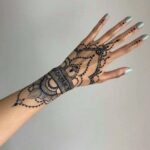
Lace-like patterns with curves, points and repeating motifs fill space around portraits, animals or script. The ornamental style comes from jewelry, ironwork and historical decoration, so it suits formal or vintage tattoos.
Thin lines and fine detail fade faster than bold work, and touch-ups keep the pattern readable. If your skin scars easily or your tattoos tend to blur, ask your artist to thicken the lines slightly so the design lasts.
Frequently Asked Questions
What is a tattoo filler?
A filler is a small design or pattern tucked into the gaps between bigger tattoos so the whole piece reads as one cohesive sleeve or panel.
Flowers, stars, clouds and geometric shapes are common choices because they fit irregular spaces without pulling focus from your main work.
What are some creative tattoo ideas?
Colorful watercolor splashes, intricate dotwork gradients and ornamental lace patterns all add texture and movement without competing with your main piece.
Japanese waves anchor traditional designs, while swirls and leaves connect separate tattoos and guide the eye across your arm or leg.