White ink layered over a healed blackout tattoo gives you high-contrast designs that read clearly from across a room, but touch-ups within a year or two keep the lines sharp.
A single-pass technique keeps the white from mixing with the black below, and floral outlines or geometric patterns hold up better long-term than fine shading or portrait work that blurs as the ink spreads.
1. White Ink Layered Over Healed Black Tattoos
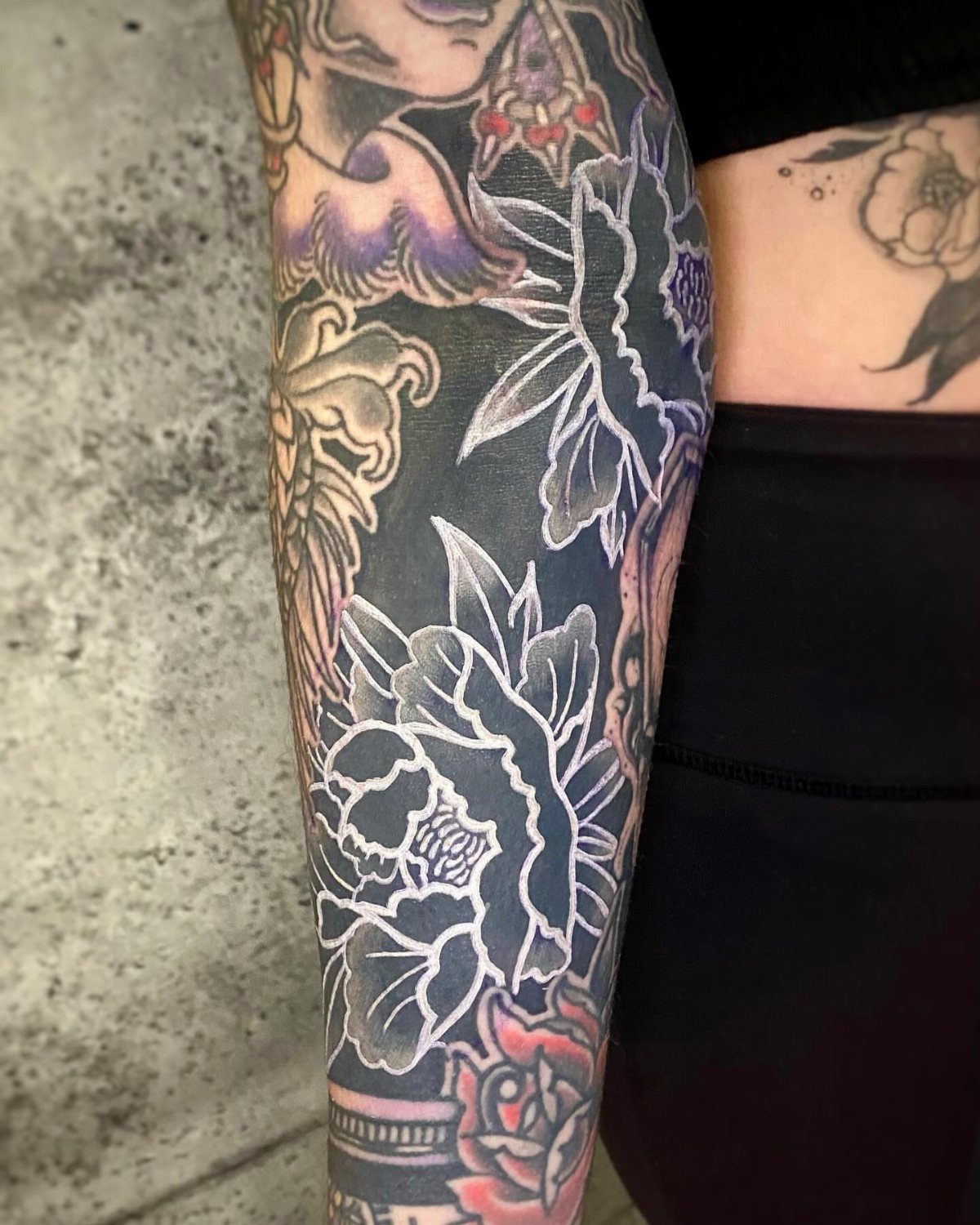
White ink sits on top of solid black work once the base has healed completely. The contrast relies on that black staying dense underneath, so any fading in the original layer will show through and dull the white.
Artists typically use a single-pass technique for the white highlights since overworking can push too much pigment into the black below.
Floral outlines and line work hold up best; fine details tend to blur faster than bold shapes as the white ink spreads slightly over time.
2. Blackout Tattoos Covering Large Areas
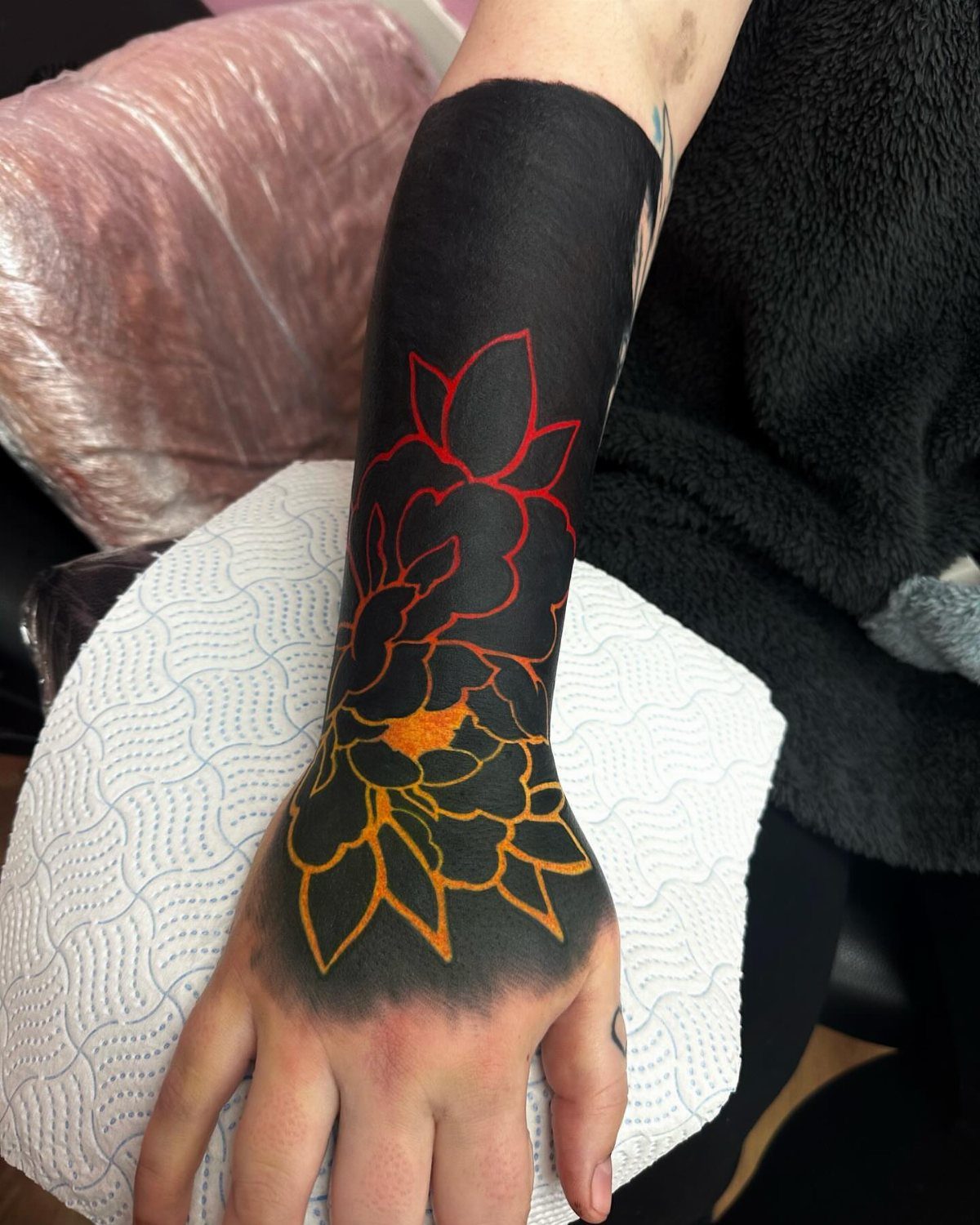
Solid black ink covers large sections of skin in one session or staged over multiple appointments, depending on how much area you’re blacking out.
A full forearm like this takes time if the artist works quickly and the skin holds ink evenly.
Once healed, the blackout gives you a clean slate for bright color or white layering.
Orange and red read clearly against black; cooler tones like blue or green can look muddy unless the artist uses opaque pigment and applies it heavily enough to sit on the surface.
Yes, blackout tattoos with white ink overlays will be significantly more expensive than traditional cover-ups. Typically blackout tattoos cover large portions of the body, making it a time-consuming process for you and your artist, as it commonly requires several visits or more.
— Tattoodo
3. White Floral and Mandala Patterns
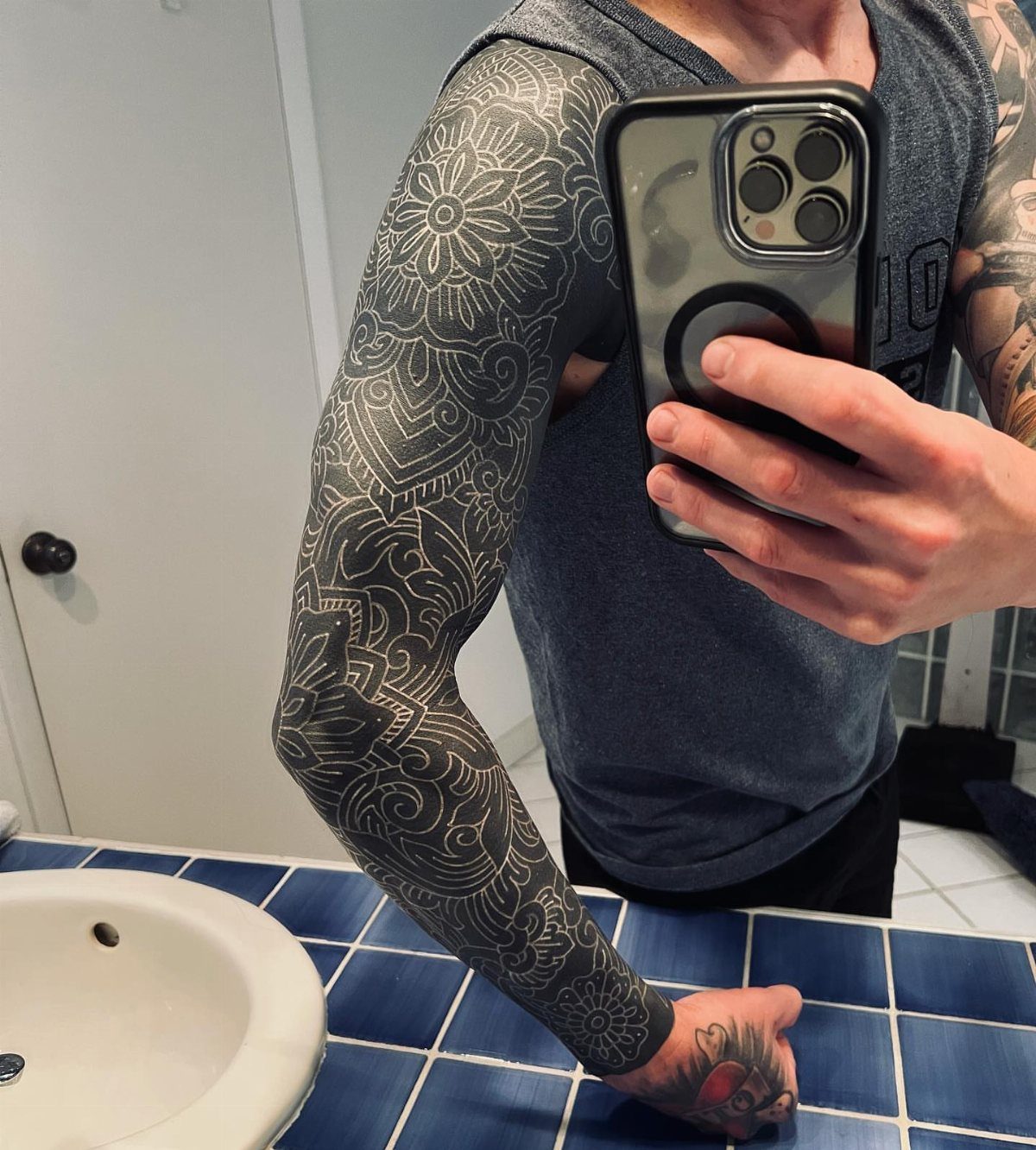
Mandalas and florals in white ink benefit from the repetition and symmetry already built into the design.
A full sleeve blackout like this one gives the artist room to plan large-scale patterns that wrap continuously around the arm without awkward gaps.
White ink loses its brightness before black does, so these patterns need touch-ups to keep the lines crisp. Skin tone matters: white shows brightest on medium to dark complexions and can look more like scar tissue on very pale skin.
4. White Ink Skull and Face Designs
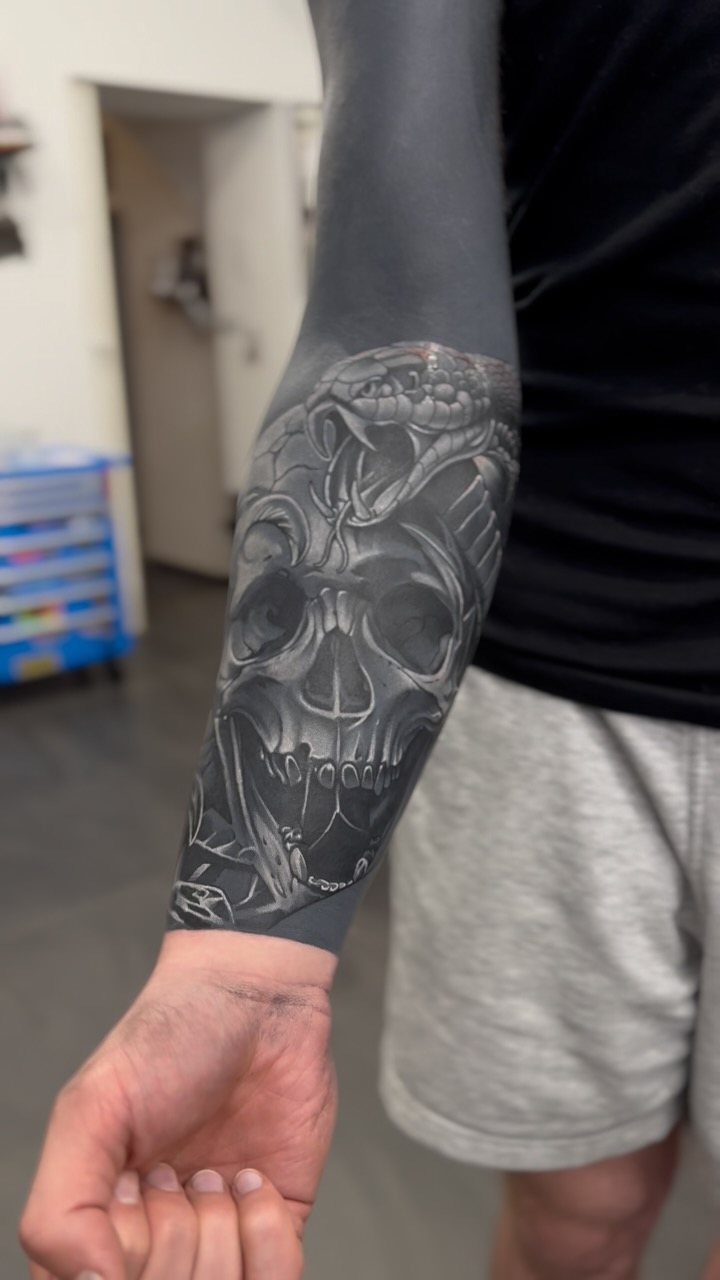
Skulls and faces demand clean line work and enough detail to register as a recognizable image from a few feet away.
White ink limits how much shading you can pack into the design, so the artist relies on negative space inside the blackout to define cheekbones, eye sockets and jawlines.
Faces age faster than abstract work because any blurring or fading changes how the expression reads. A simpler skull with fewer interior lines holds up better long-term than a portrait with fine shading.
5. White Ink Mythical and Animal Motifs
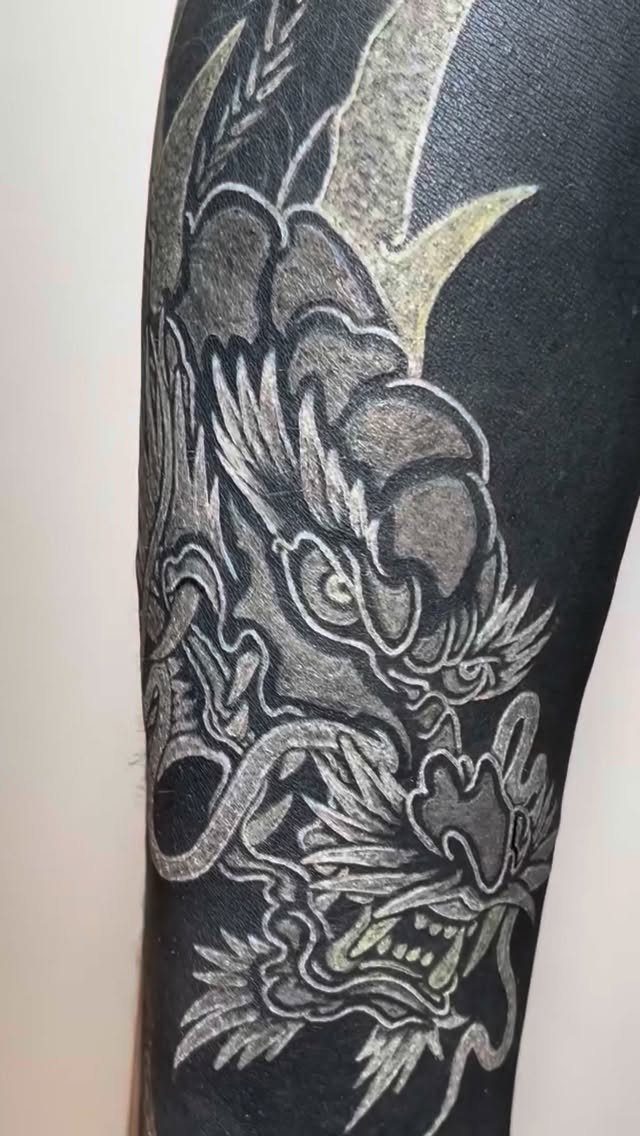
Dragons, koi and other large motifs fill the available black area and can stop wherever the design calls for it.
The scales, claws and flowing shapes let the design move naturally with the arm or leg, and the high contrast makes them visible even in low light or from across a room.
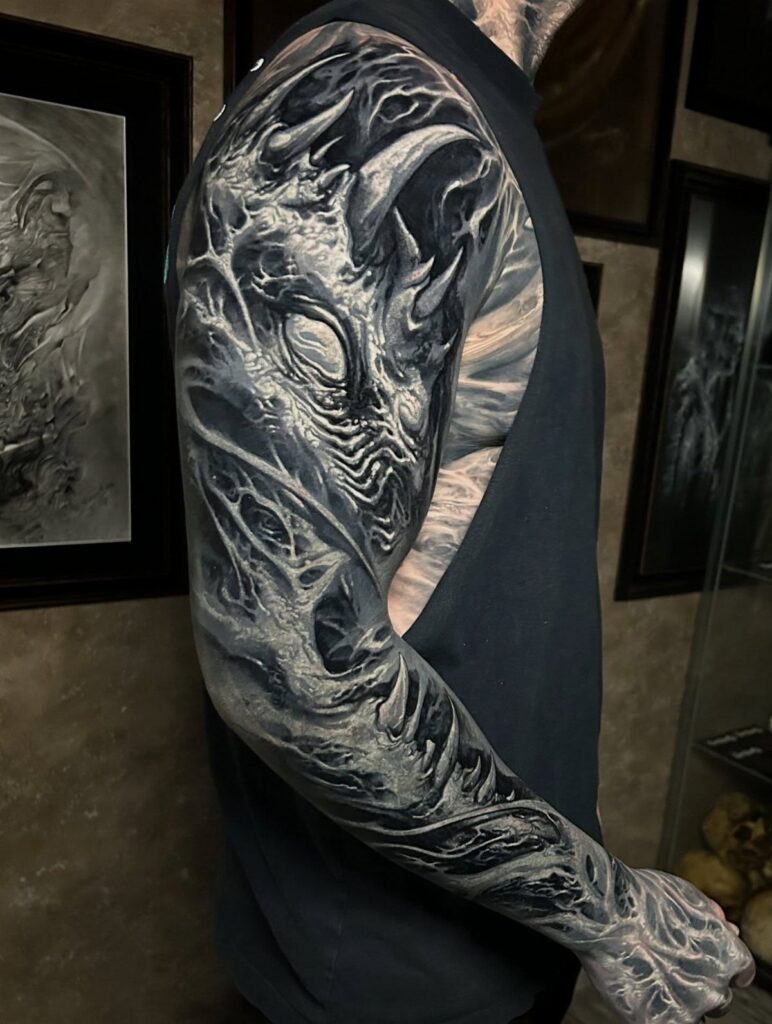
These larger animals take longer to complete than smaller patterns. A dragon head like this one can be added once the black has fully healed.
6. White Geometric Patterns on Leg Blackout
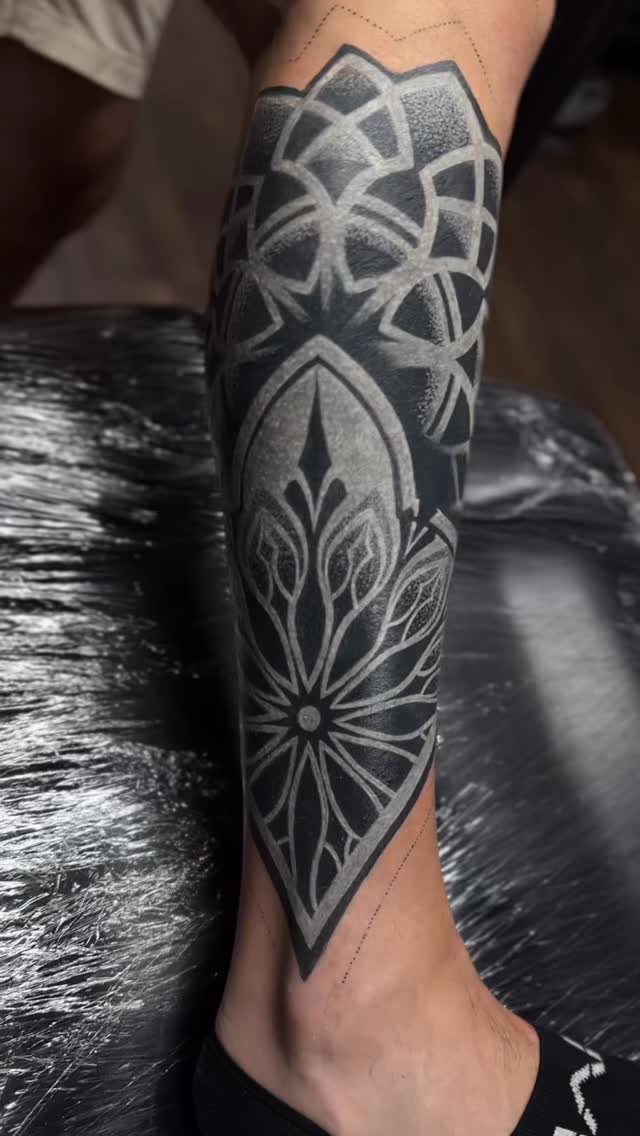
Geometric line work on the lower leg and ankle suits the narrower canvas better than large organic shapes.
The bones sit close to the surface here, so the blackout session tends to hurt more than fleshier spots, and the white layering stings just as much when it crosses the same tender areas a second time.
Botanical elements soften the hard angles of pure geometry and give the design more movement. Mixing both styles in one piece keeps it from looking too rigid or too loose.
7. White Ink Wave and Scale Textures
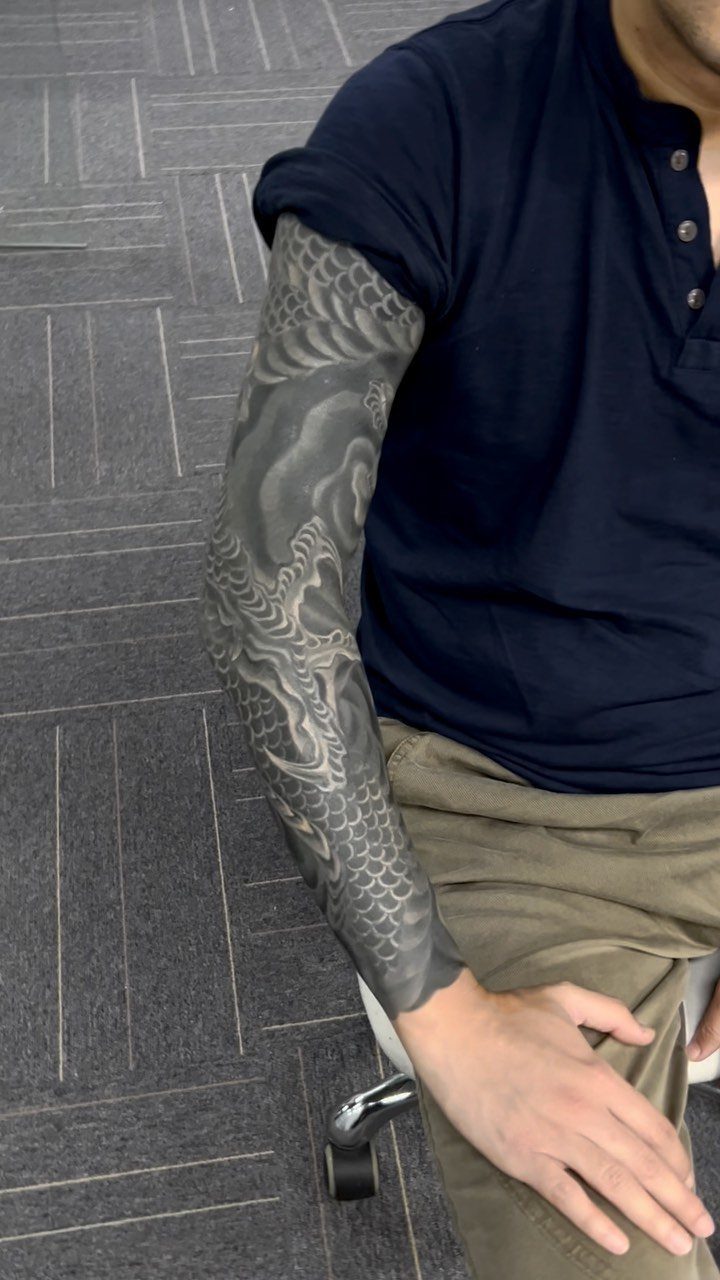
Wave and scale textures work well when the white ink follows a repeating pattern that can wrap the entire arm without a clear start or end point.
The rhythm of overlapping scales or breaking waves gives the eye something to follow around the circumference of the sleeve.
A full sleeve blackout like this takes multiple sessions to complete.
Splitting it into 2 appointments lets the black heal fully before the artist starts layering white, which keeps the ink from mixing and turning gray where the needle crosses fresh pigment.
Time Commitment
The black needs time to heal before white ink goes on top, so plan for multiple sessions spread across several months if everything goes smoothly.
White layering adds another 3 to 5 hours depending on how much detail you want.
Smaller blackout pieces finish faster, but the same healing gap applies. If you’re adding color on top of the black instead of white, expect similar timing since the artist still has to wait for the base layer to settle.
Financial Investment
Blackout work is charged by the hour in most US cities, and a full sleeve blackout runs many hours of chair time once you add up all the sessions.
White layering on top adds another hourly charge for the detail work, so a complete blackout-plus-white sleeve can run into the thousands depending on your artist’s rate and how intricate the white design runs.
Smaller pieces cost less but still require the same two-stage process, so budget accordingly for both the blackout base and the white highlights.
Touch-ups for the white ink aren’t always included in the original price, and you’ll likely need one within a year or two to keep the contrast sharp.
Frequently Asked Questions
Can you put white over a blackout tattoo?
White ink goes on top once the black base heals fully.
The contrast depends on dense black underneath, so the artist waits for the original layer to settle before adding white highlights. Single-pass application keeps the white from mixing with the black and turning gray.
What is the best white tattoo ink to go over black?
Thick, opaque white pigments like Fusion White, Eternal SuperWhite, or Solid White Ink sit on the surface of healed black work without mixing. Thinner whites blur faster and don’t hold the same brightness against dense black coverage.
Are blackout tattoos dangerous?
Safety depends on the ink quality and how the artist handles large coverage.
Organic, non-toxic black ink avoids potential carcinogens, and covering moles or other skin irregularities hides changes that need monitoring. Very large blackouts can reduce vitamin D absorption in the covered area.