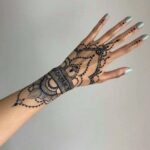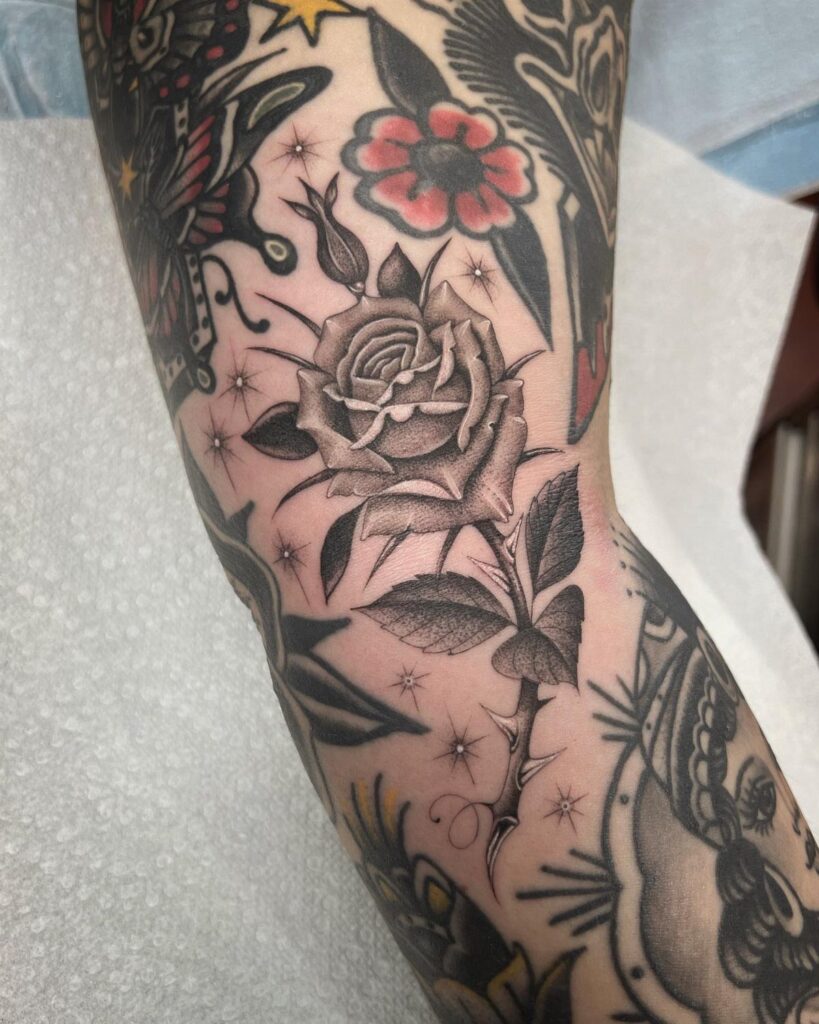
Single needle tattoos use a line so fine that the detail can blur within a few years, especially on skin that creases daily.
Placement decides how long the piece stays readable: flat areas like the forearm, calf, or shoulder blade hold fine lines longer than spots where the skin stretches and contracts.
1. Single Needle Hyper-Realistic Tattoo
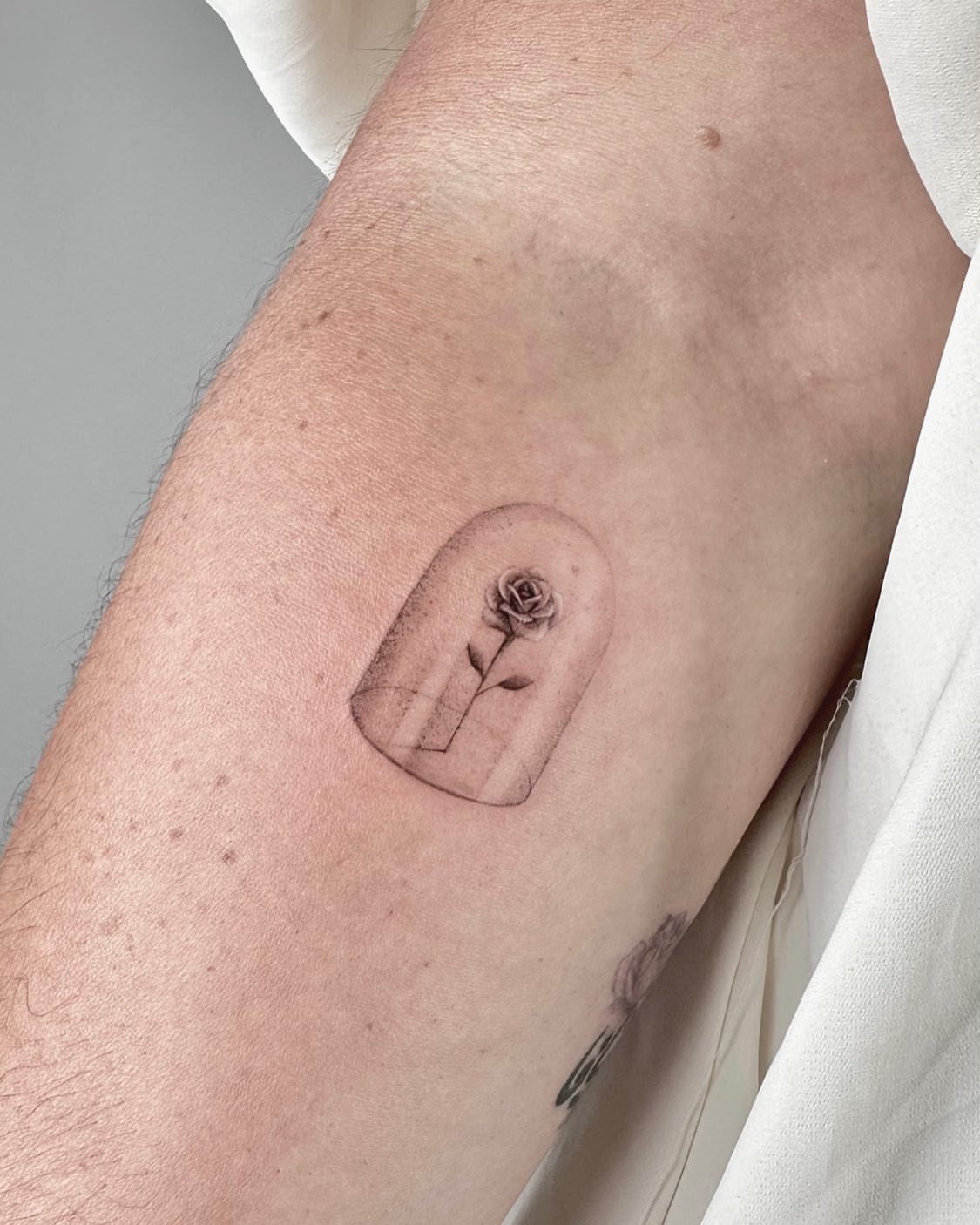
A rose sealed under glass, rendered so close to photographic that shadow and refraction both show up. Single needle work lets you shrink a realistic subject this small and keep the texture that sells it.
Micro detail this fine holds up best in the first few years before the lines start to blur together.
Placement matters. Put it somewhere the skin stays tight and you get the longest read.
For realism at this scale, find an artist who already works in single needle portraiture. Not every realist can scale down.
2. Single Needle Geometric Shapes Tattoo
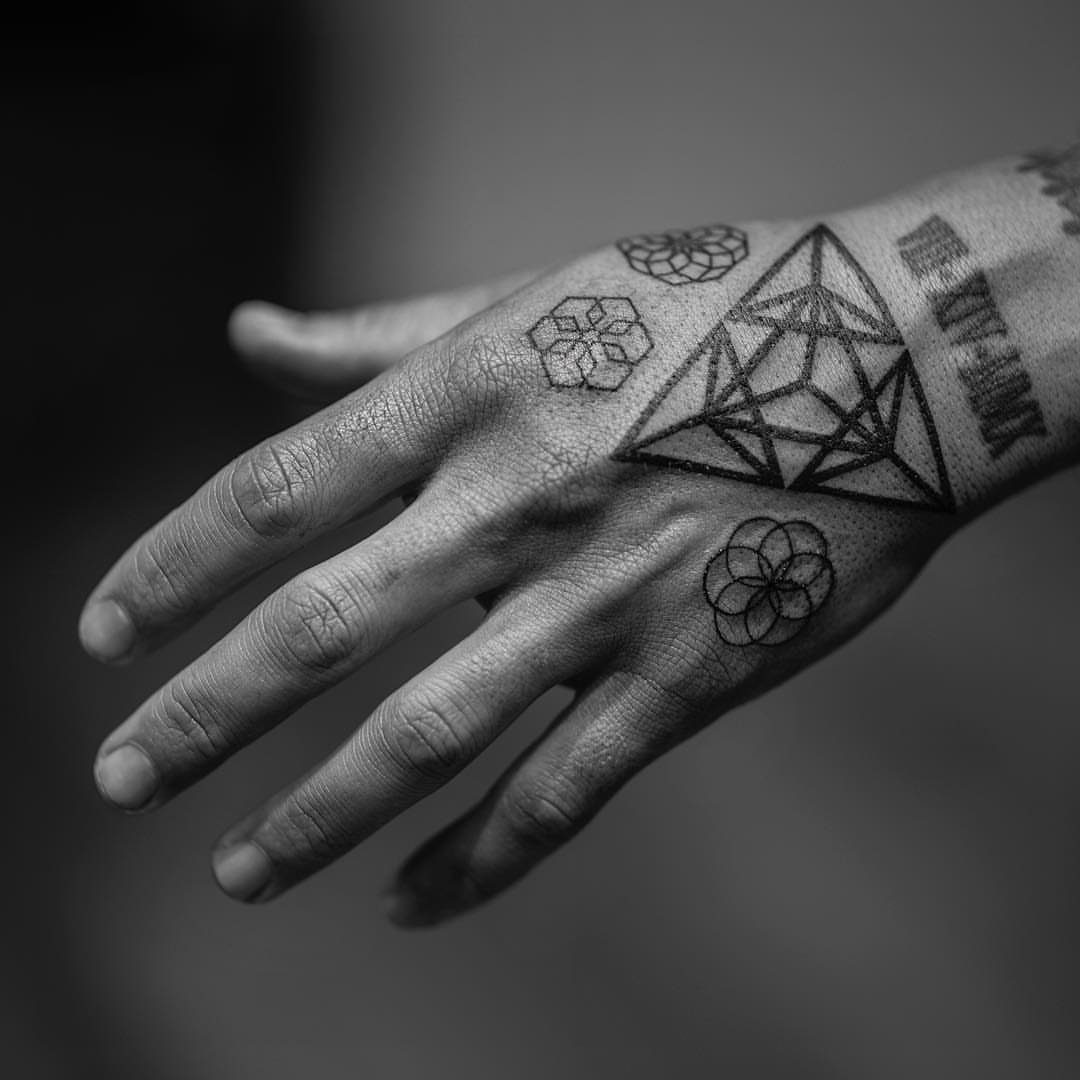
Clean shapes, hard edges, and symmetry that reads instantly.
A triangle spanning the back of the hand, smaller hexagons nested inside, Roman numerals at the wrist. Geometry suits single needle because the line has to be exact or the whole shape collapses.
Pain on the hand runs higher than most placements. Bone sits close and there is almost no padding.
Geometric work ages well. The lines stay readable longer than shaded realism because there is nothing to fade into mush.
3. Single Needle Nature Tattoo
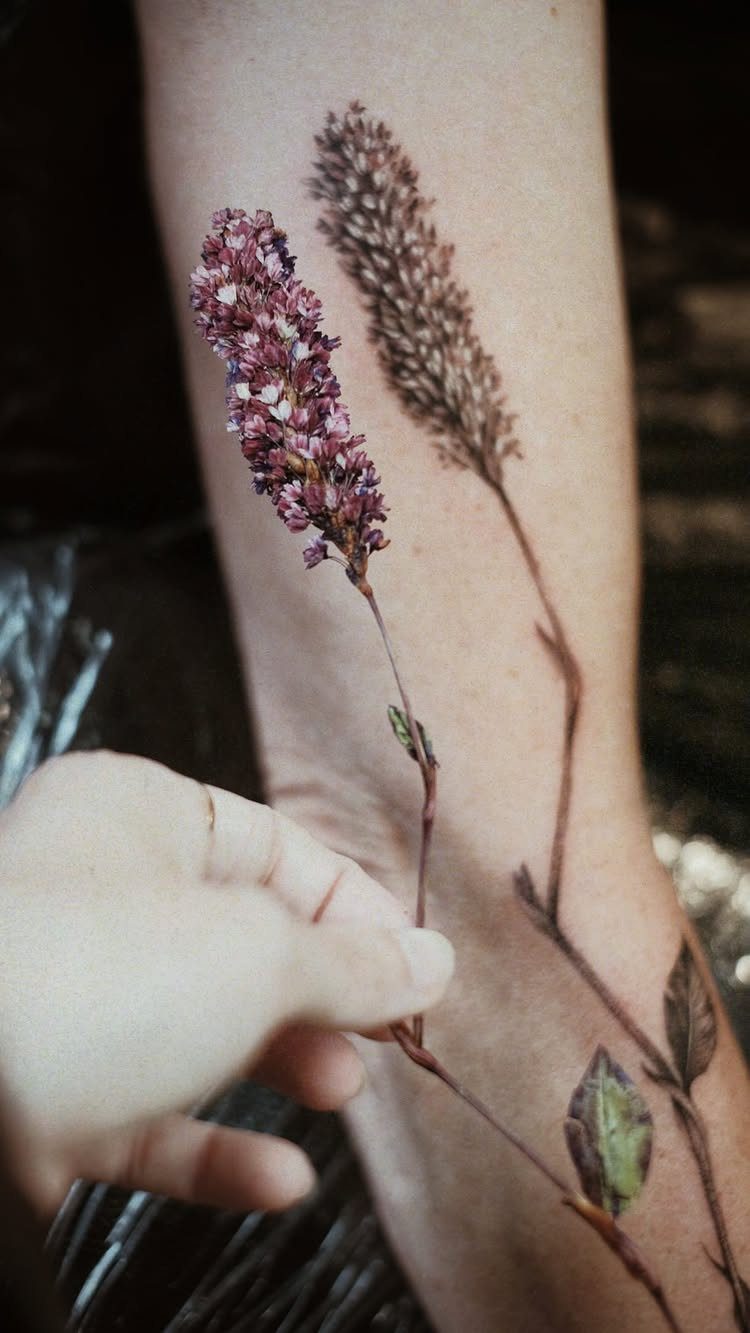
Botanical sprigs, seed heads, petals pulled apart into individual veins.
Nature subjects fit single needle perfectly because the delicate detail is already there. A stem this thin would look clumsy in a standard liner.
Placement counts.
Put fine line work somewhere flat and low-movement: forearm, calf, shoulder blade. Anywhere the skin creases daily will chew through the detail faster.
Shading stays light or absent. Most botanical pieces in this style rely on line alone, and that keeps them readable as they age.
Right in the middle of the bold statement and barely there look, the single needle technique involves the tattoo artist using just one needle instead of the more mainstream multi-needle machine.
4. Single Needle Portrait Tattoo
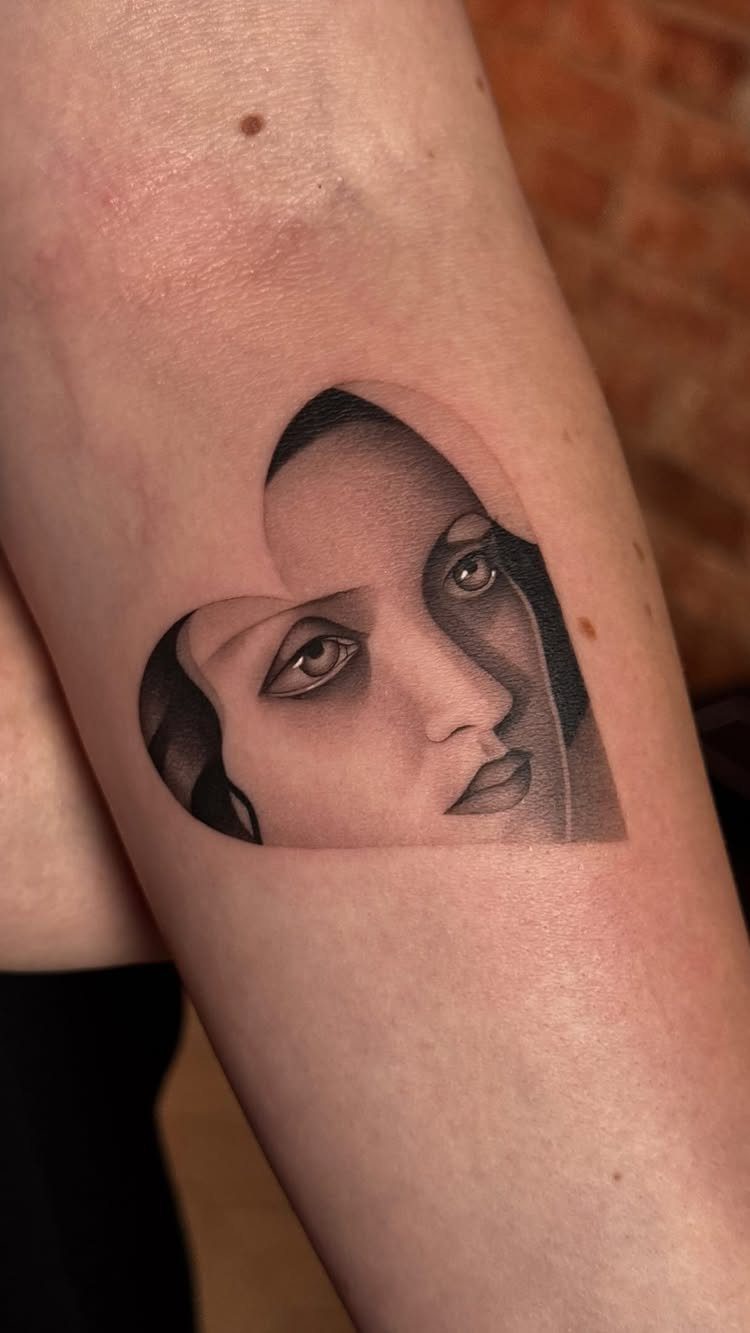
A face rendered in black and grey, scaled small enough to fit inside the upper arm.
Single needle portraits live or die on getting the eyes and mouth right. Those 2 features carry recognition, and if the proportions are off by even a millimeter the whole piece reads wrong.
Find an artist who posts healed portraits, not just fresh ink. A face that looks good on day 1 can soften into a blob by year 2 if the artist packed the ink too shallow or too dense.
Faces take longer than abstract work because there is no room for error.
5. Single Needle Script and Lettering Tattoo
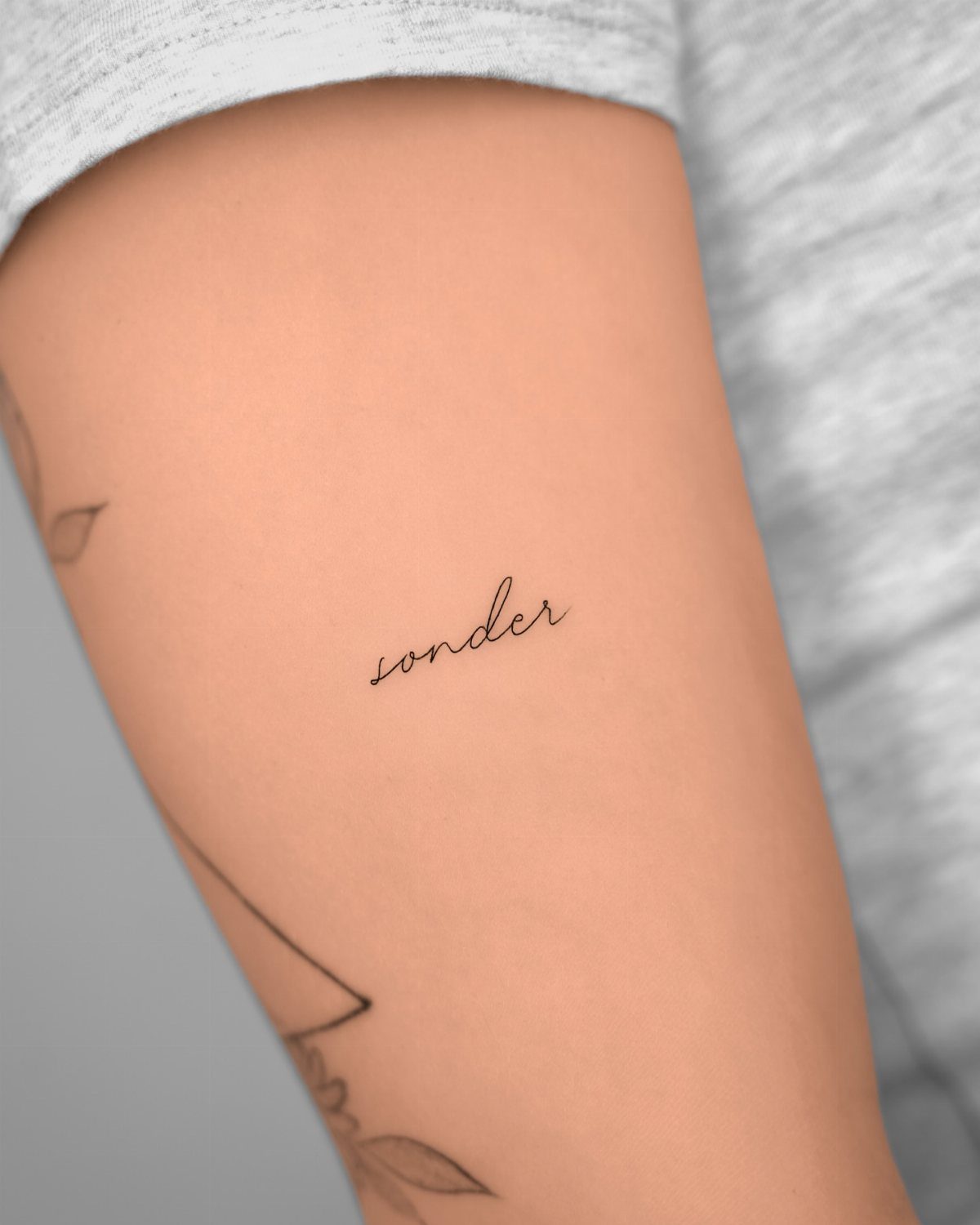
A single word in cursive, light enough that the line barely lifts off the skin. Script suits single needle when the text needs to stay small and unobtrusive.
Cursive ages faster than print.
The connections between letters are the first thing to blur, and after a few years you may lose readability. If longevity matters more than delicacy, go with a heavier line or switch to sans serif.
Placement on the inner arm keeps it private. You control who sees it.
6. Single Needle Animal Tattoo
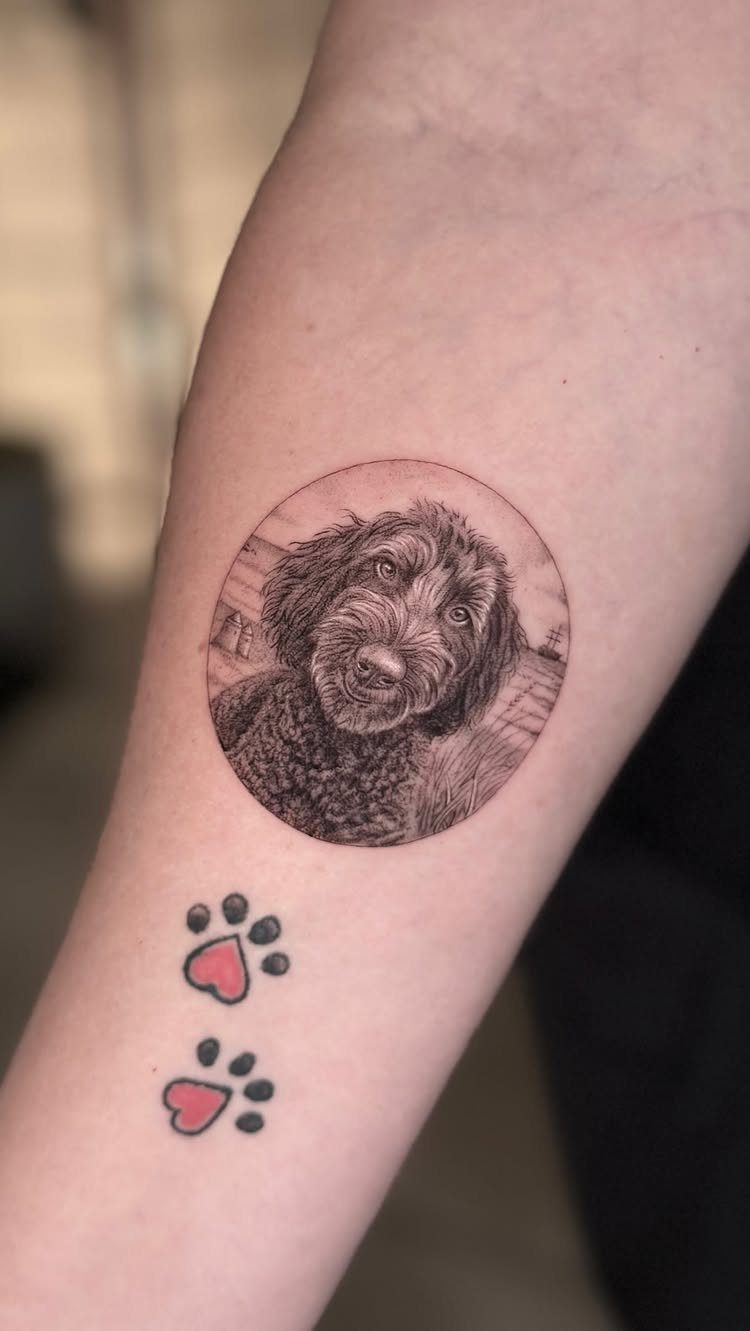
A pet portrait inside a circle, paw prints trailing below it, each fur curl accounted for. Single needle animal work captures texture that a thicker line would flatten.
Detail this fine only holds up on flat skin.
Forearm, calf, or outer bicep all work. Avoid ribs, inner arm, or anywhere the skin stretches and contracts daily.
Fine line work goes slower because the artist has to move carefully. One shaky pass and the whole line has to be reworked.
7. Single Needle Celestial Tattoo
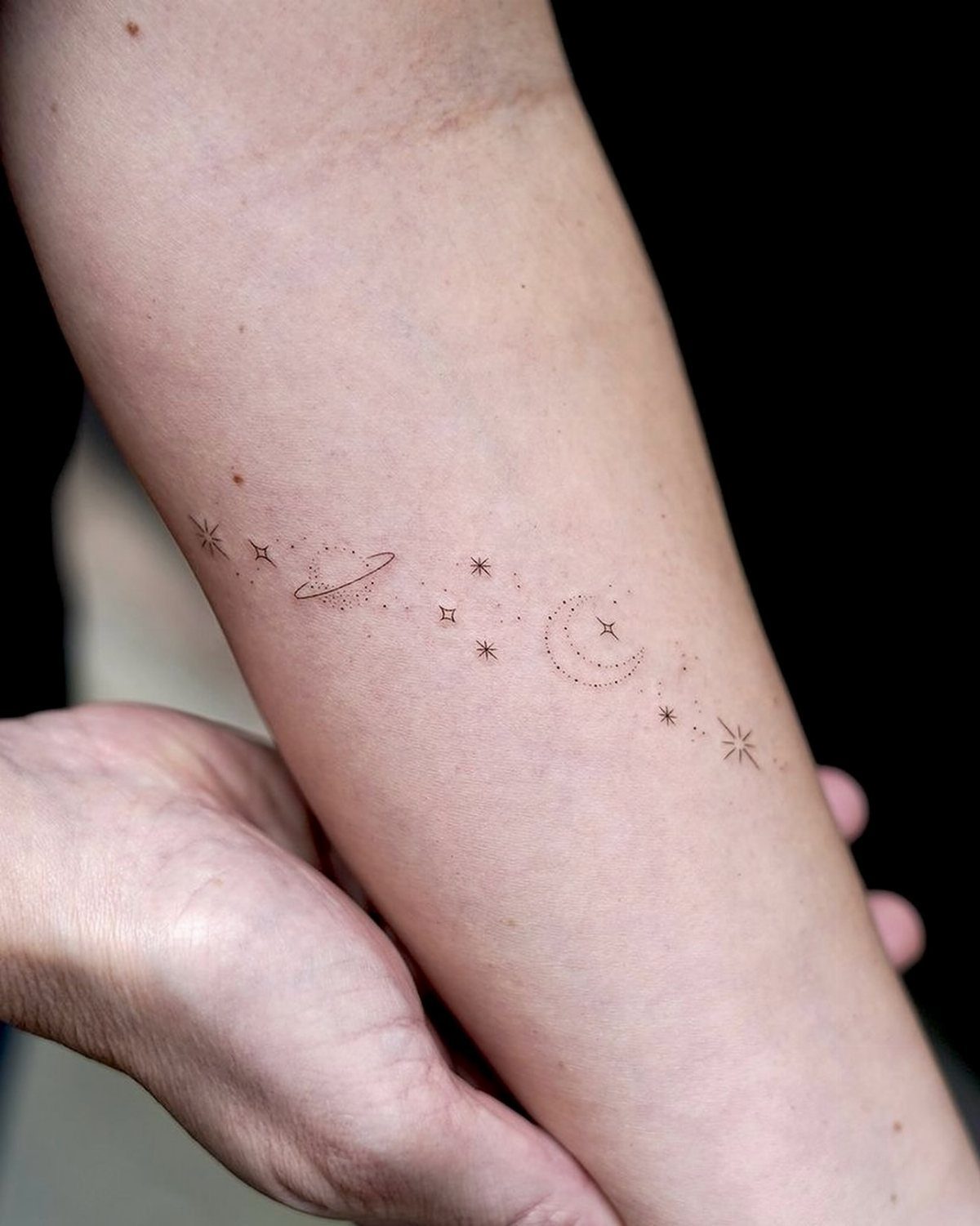
Stars, crescents, and planets strung together in a constellation you made up yourself. Celestial pieces work in single needle because the subjects are already light and minimal.
Scale stays small. Most of these sit at the wrist, behind the ear, or along the inner arm, places where a delicate mark reads clearly without filling space.
The lack of shading keeps them readable. A crescent outlined in a single pass will still look like a moon years later, where heavy gradient work can turn muddy.
Choosing a Tattoo Artist
An artist who specializes in single needle work can talk through which design adjustments keep the piece readable long-term. Not every design translates cleanly to this technique, and smaller or medium-scale subjects with high detail tend to fit best.
The fine lines fade sooner than bold work because less ink sits in the skin to begin with. Touch-ups may be needed down the line, especially for designs that rely on very soft shading.
A portfolio full of single needle pieces tells you they understand the technique and know how to pack the ink so it settles cleanly.
Ask about their process during the consultation. An experienced artist will know which lines need reinforcement and where delicate detail holds up poorly.
Aftercare for Tattoos
Keep the tattoo out of smoky environments while it heals. Smoke particles can interfere with how the skin closes over fresh ink.
Apply a fragrance-free lotion once the tattoo stops weeping, usually after the first few days. Keep the skin hydrated without smothering it.
Sunscreen becomes mandatory once the tattoo is fully healed. UV exposure breaks down ink faster than anything else, and single needle work fades more noticeably than thicker lines.
Plan for touch-ups if you want the piece to stay sharp. Fine line tattoos lose definition over time, and a quick pass every few years can restore what softened.
Frequently Asked Questions
What are single needle tattoos?
A single needle tattoo is made using one individual needle instead of the multi-needle groupings found in traditional tattoo machines.
The technique produces fine lines, subtle shading, and delicate detail that can look hyper-realistic or sketch-like. Single needle work fits best for smaller or medium-scale designs where precision matters more than bold color.
Do single needle tattoos last?
They do last, but the fine lines hold less ink and lose sharpness sooner than bold work.
Your body removes some ink naturally during skin turnover, and fine lines soften more noticeably. Sunscreen, regular lotion, and touch-ups every few years keep the piece sharp and readable.