Pain level separates the outer arm, thigh and calf, where muscle cushions the needle, from areas where skin sits closer to bone and sessions feel sharper.
Pick your placement based on how much visibility you need daily: forearms and outer arms show in short sleeves, thighs and calves stay covered in most work settings.
A minimalist line work piece finishes in under an hour, while a detailed birth flower with full color shading or a realistic pet portrait runs 2 to 4 hours in the chair.
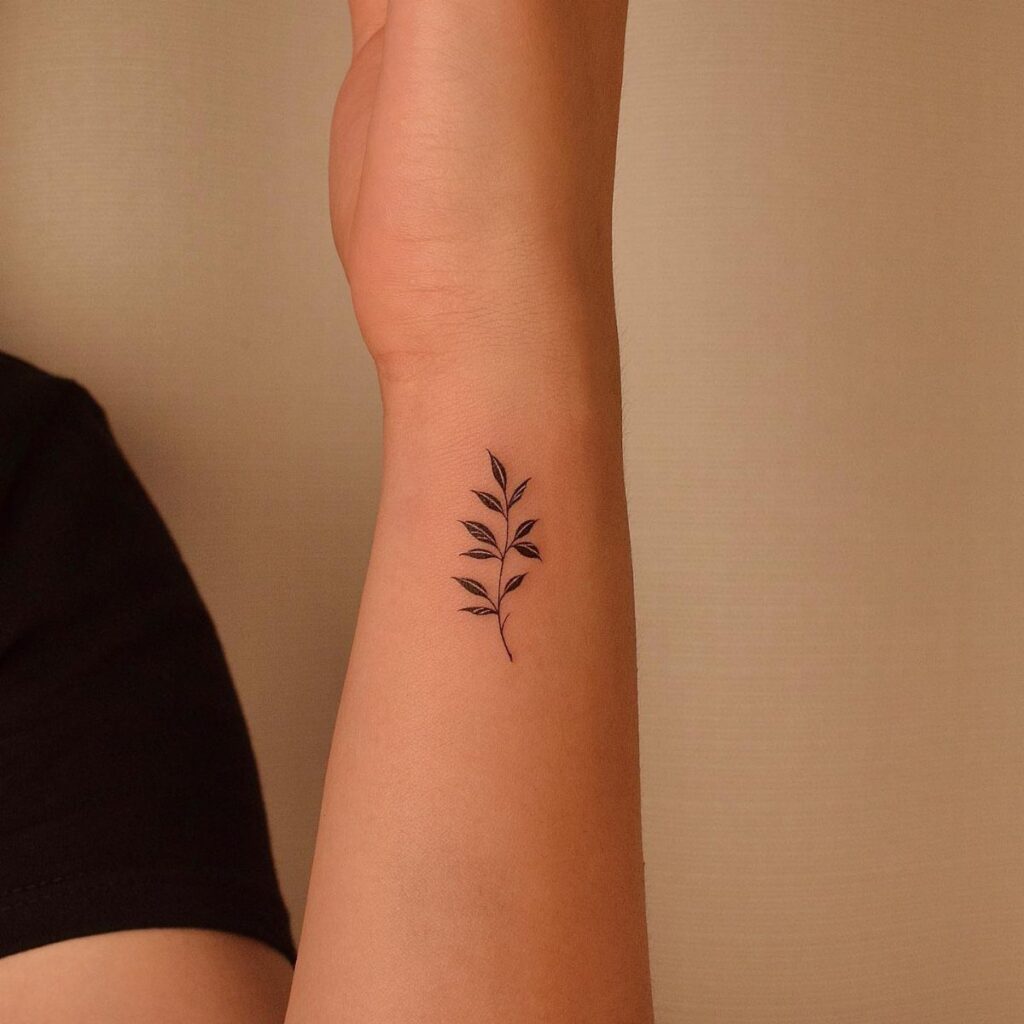
1. Minimalist Line Work Leaves Tattoo
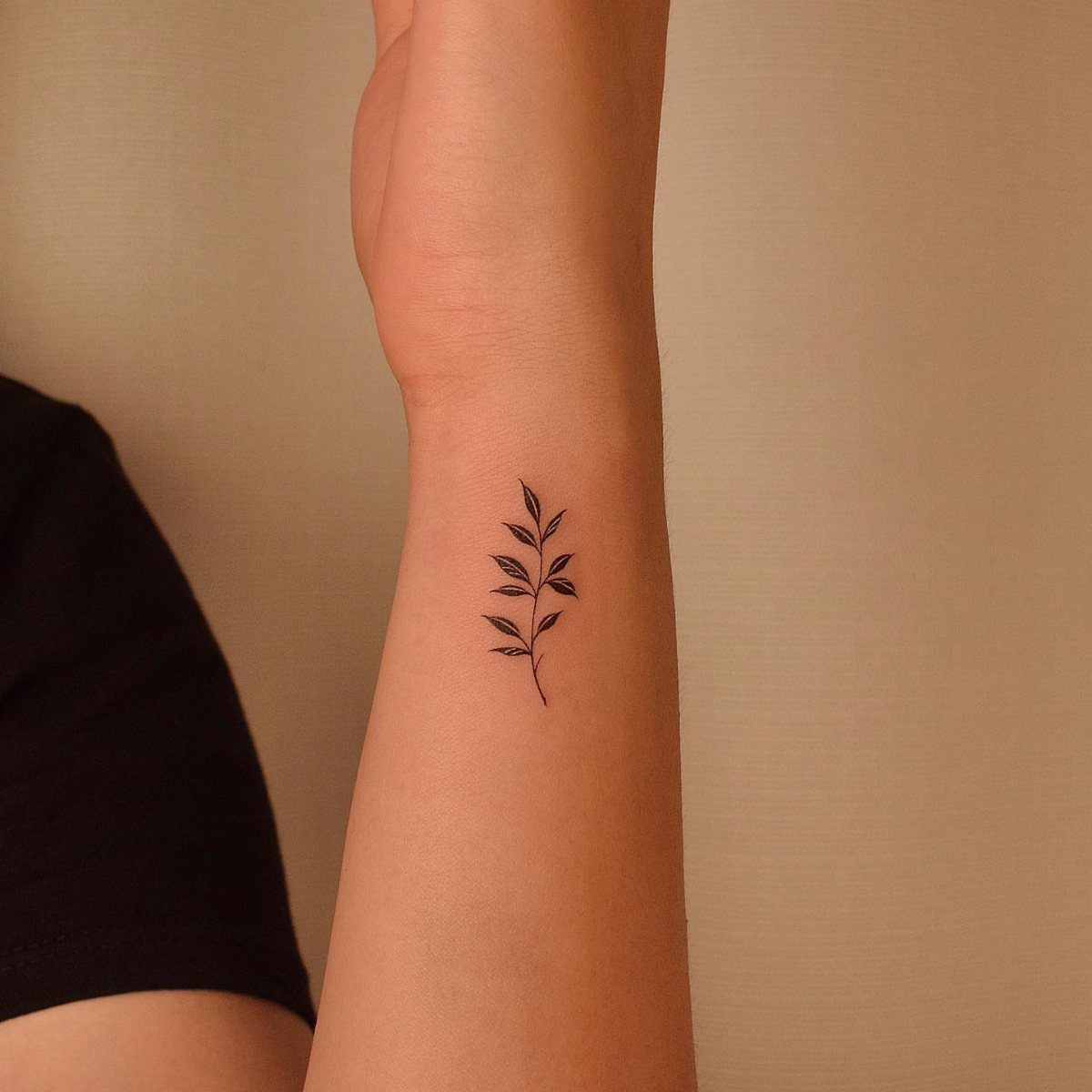
A single stem or branch rendered in unbroken black line, usually placed on the forearm or wrist where you can see it daily.
The appeal for a first tattoo is the simplicity: no shading, no color mixing, just clean lines that heal fast and age well.
Placement on the inner forearm keeps the design visible without committing to a spot that shows constantly. Pain is moderate here, and most artists finish a piece this size in under an hour.
Line work this fine demands a steady hand, so I look for an artist whose portfolio shows crisp edges and consistent weight. A wobbly line stands out immediately and stays that way.
2. Simple Text Tattoo on the Forearm
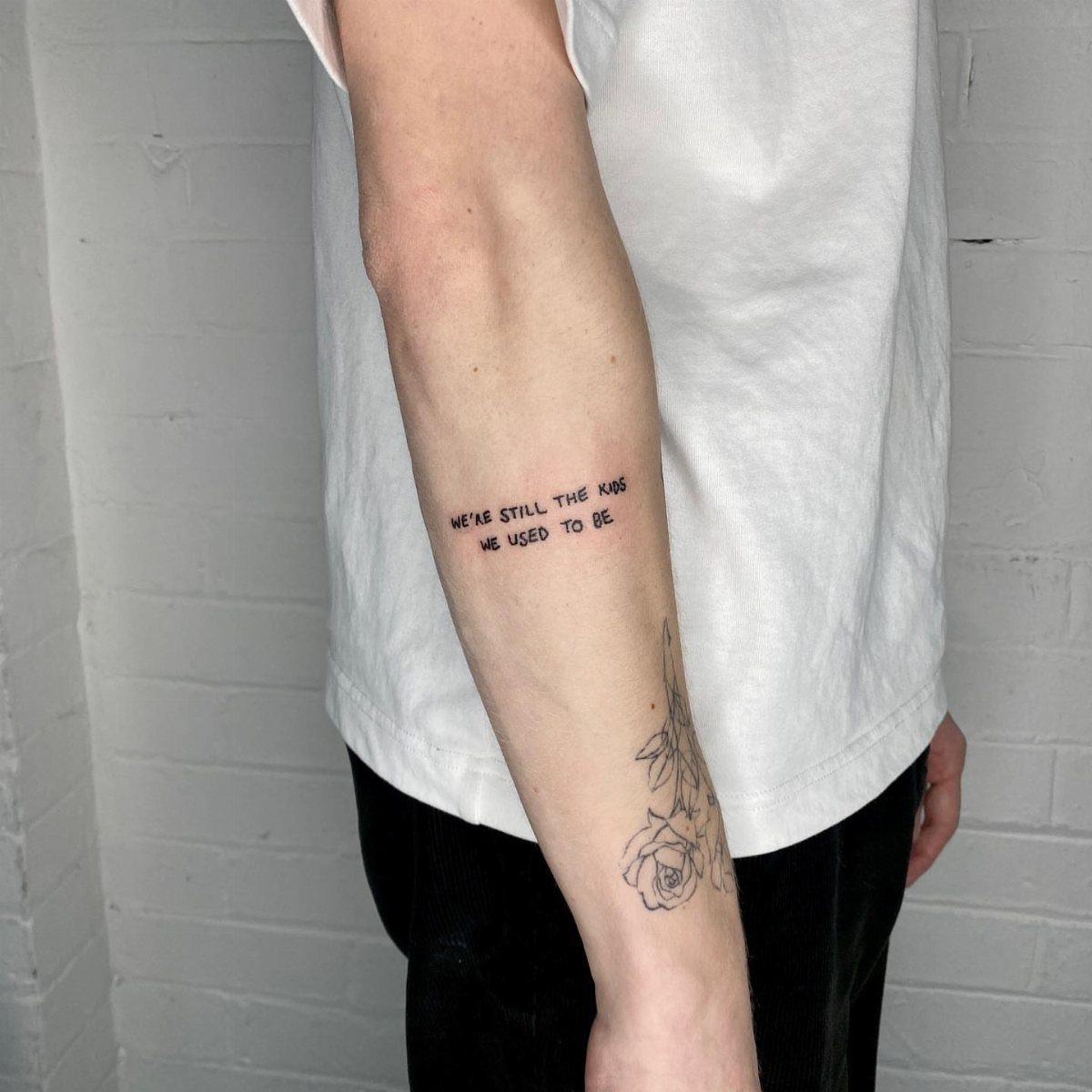
Text inked along the forearm gives you a phrase, date or name you want to read every day. The spot is flat and accessible, so lettering comes out even, and the visibility keeps the message front of mind.
Font choice decides how the tattoo reads at a distance. Script feels personal but can blur over time if the letters sit too close together; sans-serif stays legible longer.
I ask the artist to size the text so each letter has breathing room, especially if the phrase runs more than a few words.
Black ink holds contrast better than gray, and a test stencil on your arm before the needle starts confirms the placement feels right when you move.
3. Birth Flower or Birth Month Symbol
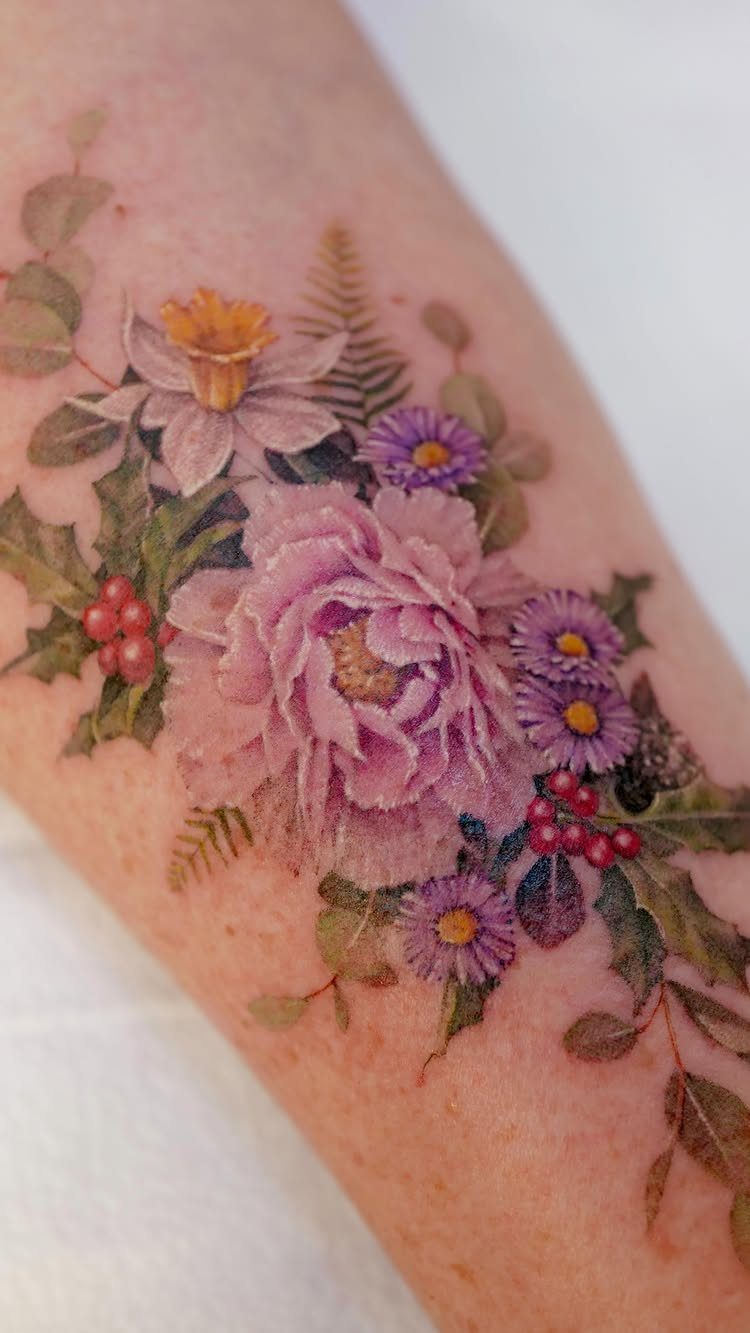
Each month carries a flower, and tattooing yours ties the design to your identity without spelling it out. Color brings the petals to life, the way peonies read soft pink and asters show their purple.
Shading and saturation take longer than line work, so budget 2 to 3 hours for a piece this detailed. Healing demands more attention with color: keep it moisturized and out of direct sun for the first month, or the brightness fades.
Birth flowers carry recognized meaning, so the design speaks to anyone who knows the calendar. A single stem in black line carries the idea without the full palette.
4. Constellation or Celestial Design
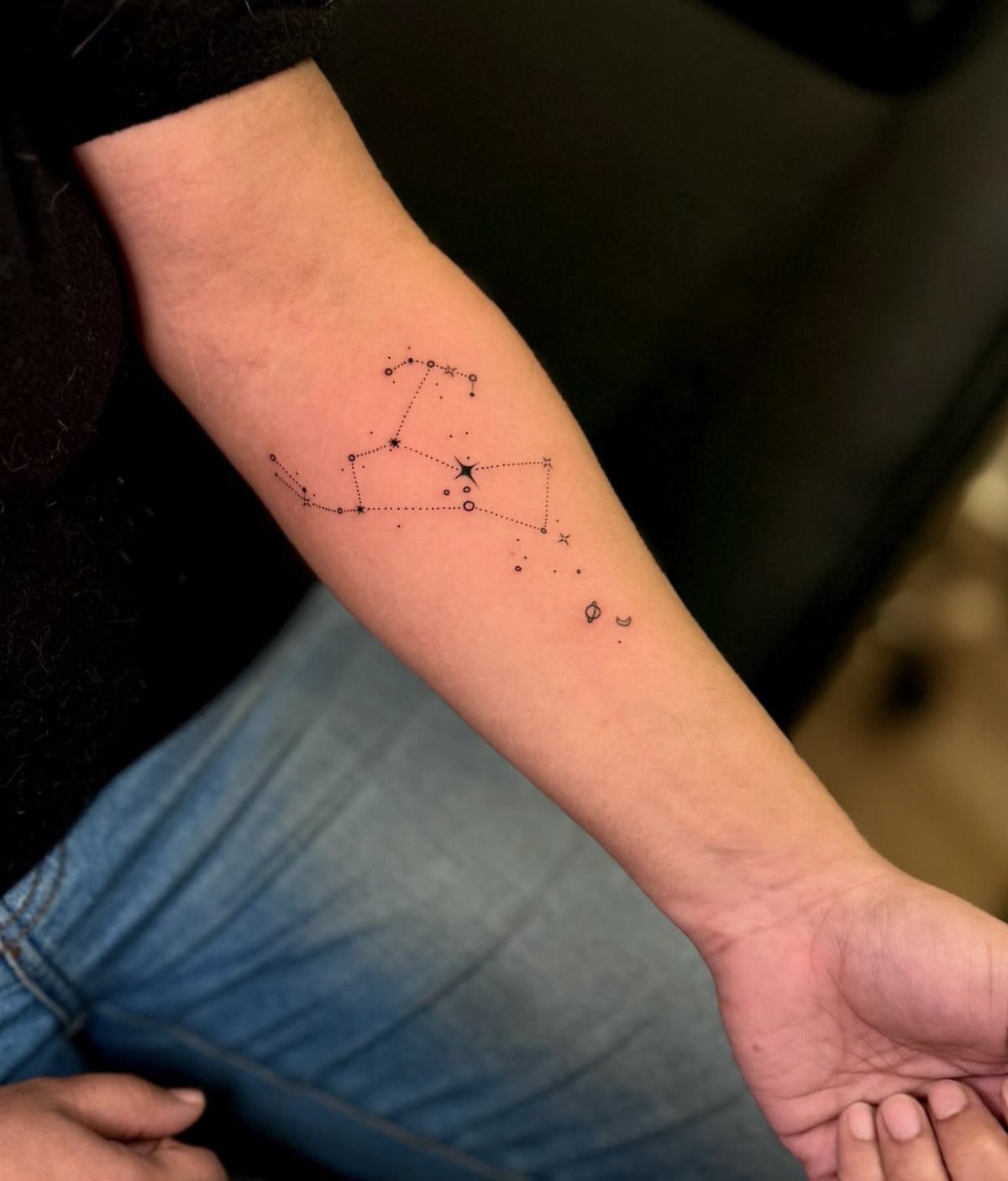
A constellation tattooed on the forearm maps your zodiac sign, a meaningful date or just a pattern you find beautiful.
Stars and crescents stay small, so the piece fits neatly on the inner arm where the skin is smooth and the design stays visible.
Dot work or tiny stars read cleanly at this scale, and black holds contrast against your skin.
Celestial designs age well because the shapes are simple and the spacing prevents blur. Ask the artist to plot the exact star positions from a specific night when you need the tattoo to feel personal.
5. Small Animal or Pet Portrait
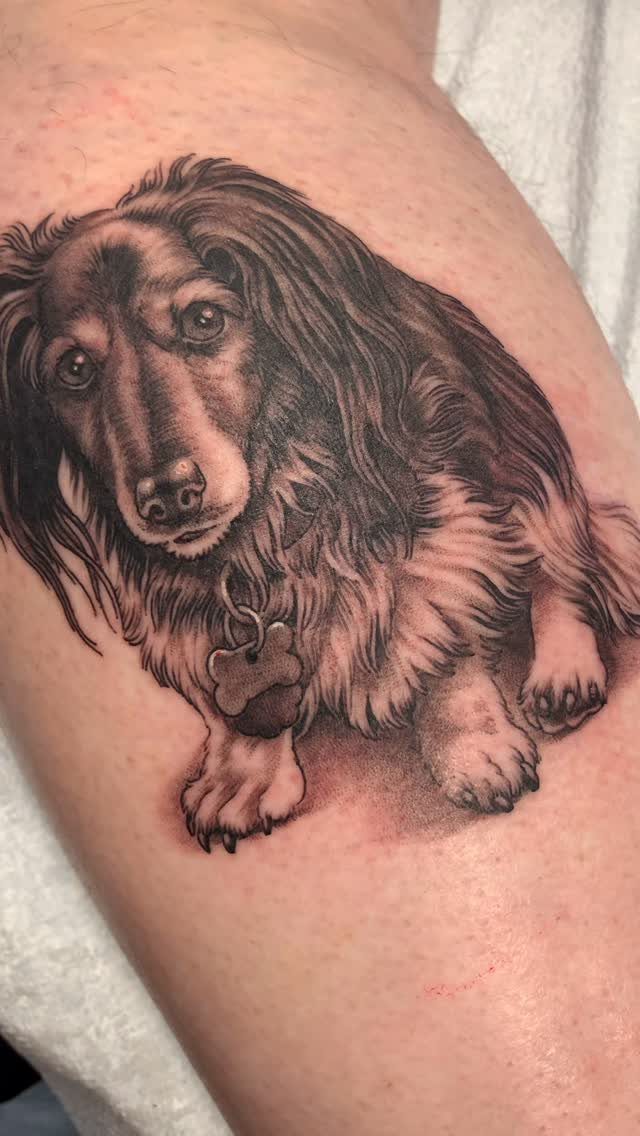
A portrait of your dog or cat rendered in black and gray realism captures the animal’s face, coat texture and expression. Fine shading builds depth without color, the way fur detail separates into individual strands.
Realism demands an artist who specializes in it: I look for portfolios with animal work that shows accurate proportions and soft transitions between light and dark.
A clear reference photo with good lighting gives the artist what they need to match your pet’s features.
Upper arm placement offers enough space for a portrait this detailed, and the skin there holds fine lines well. Expect 3 to 4 hours in the chair, and budget accordingly.
6. Geometric or Abstract Design
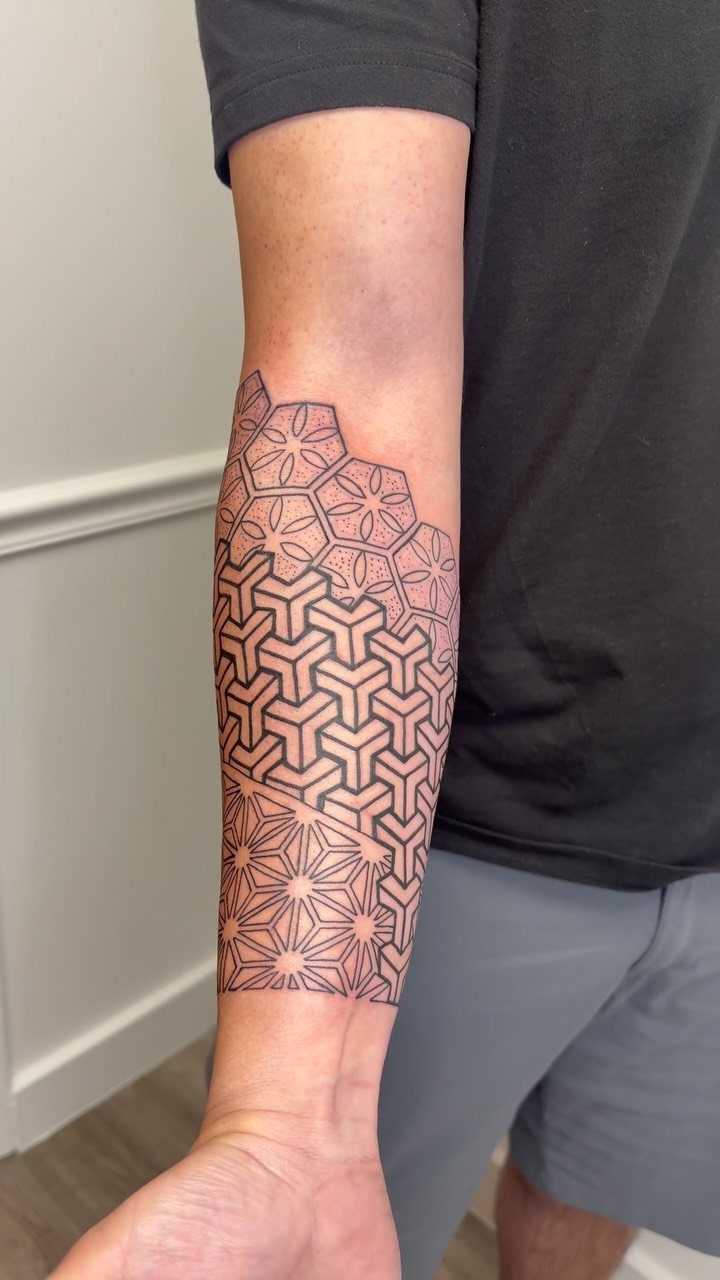
Interlocking shapes, hexagons or repeating patterns create a design that draws the eye without carrying a specific symbol. The geometry feels modern, and black holds the edges sharp.
Forearm placement suits geometric work because the flat surface keeps the pattern symmetrical.
Precision matters here: a misaligned angle or uneven spacing shows immediately.
I look for an artist whose geometric pieces photograph cleanly, with corners that meet exactly. The design ages well because bold lines hold their shape longer than fine detail.
7. Outer Arm Tattoo
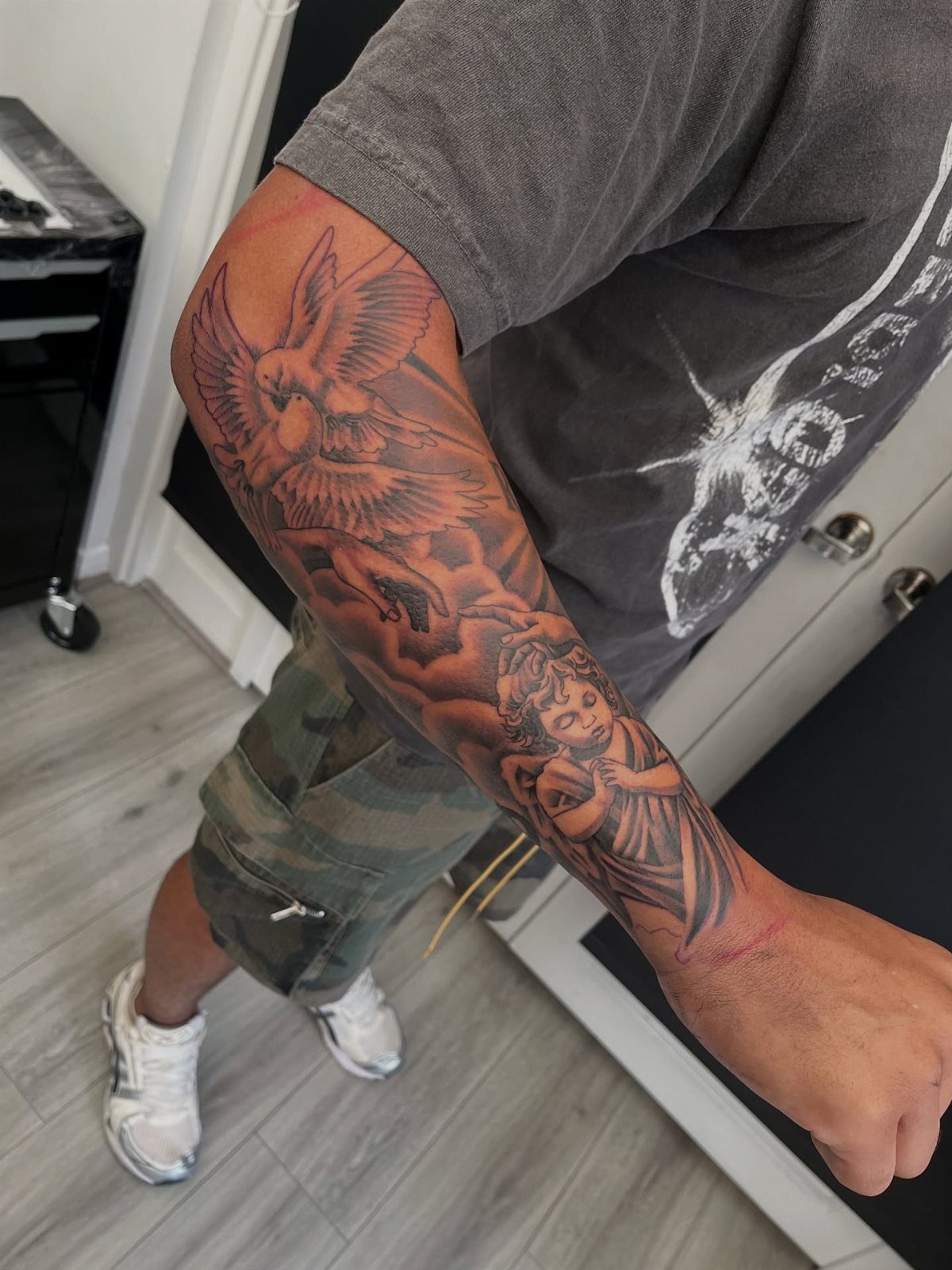
The outer arm wraps around the bicep and tricep, offering a curved canvas large enough for angels, birds and other detailed designs.
The muscle underneath gives dimension to the design, and the spot is easy to cover or show depending on what you wear.
Pain is manageable on the outer arm because the muscle cushions the needle, though areas closer to the elbow or armpit feel sharper.
Black and gray work holds well here, and the skin stretches less than softer areas, so aging stays clean.
8. Thigh Tattoo
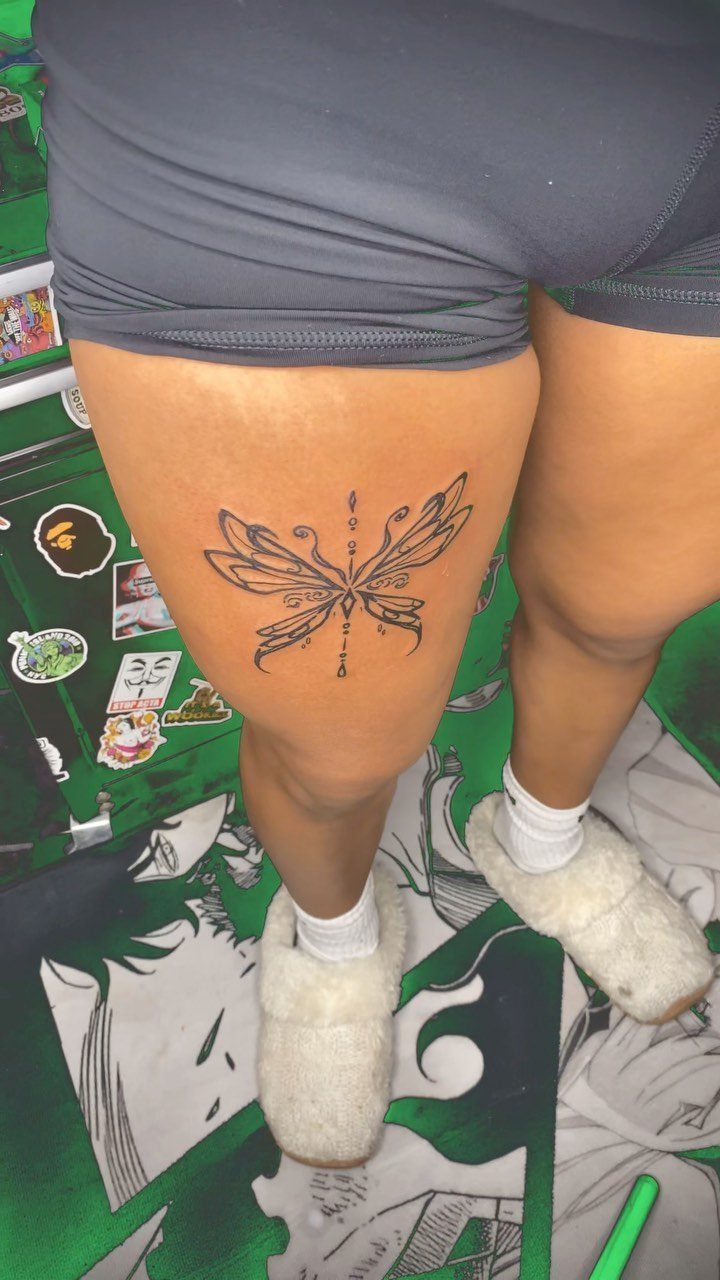
The thigh gives you a large, flat surface that hides under most clothing but shows when you choose. A butterfly placed here can spread its wings at full scale, and the skin stays smooth enough for symmetrical detail.
Pain varies: the outer thigh feels dull, the inner thigh sharper where the skin is thinner. Sessions run 1 to 3 hours depending on size, and aftercare is straightforward since fabric rubs less than waistbands or shoe contact would.
Thigh tattoos suit anyone who wants a first piece with room to grow without committing to constant visibility.
9. Calves Tattoo
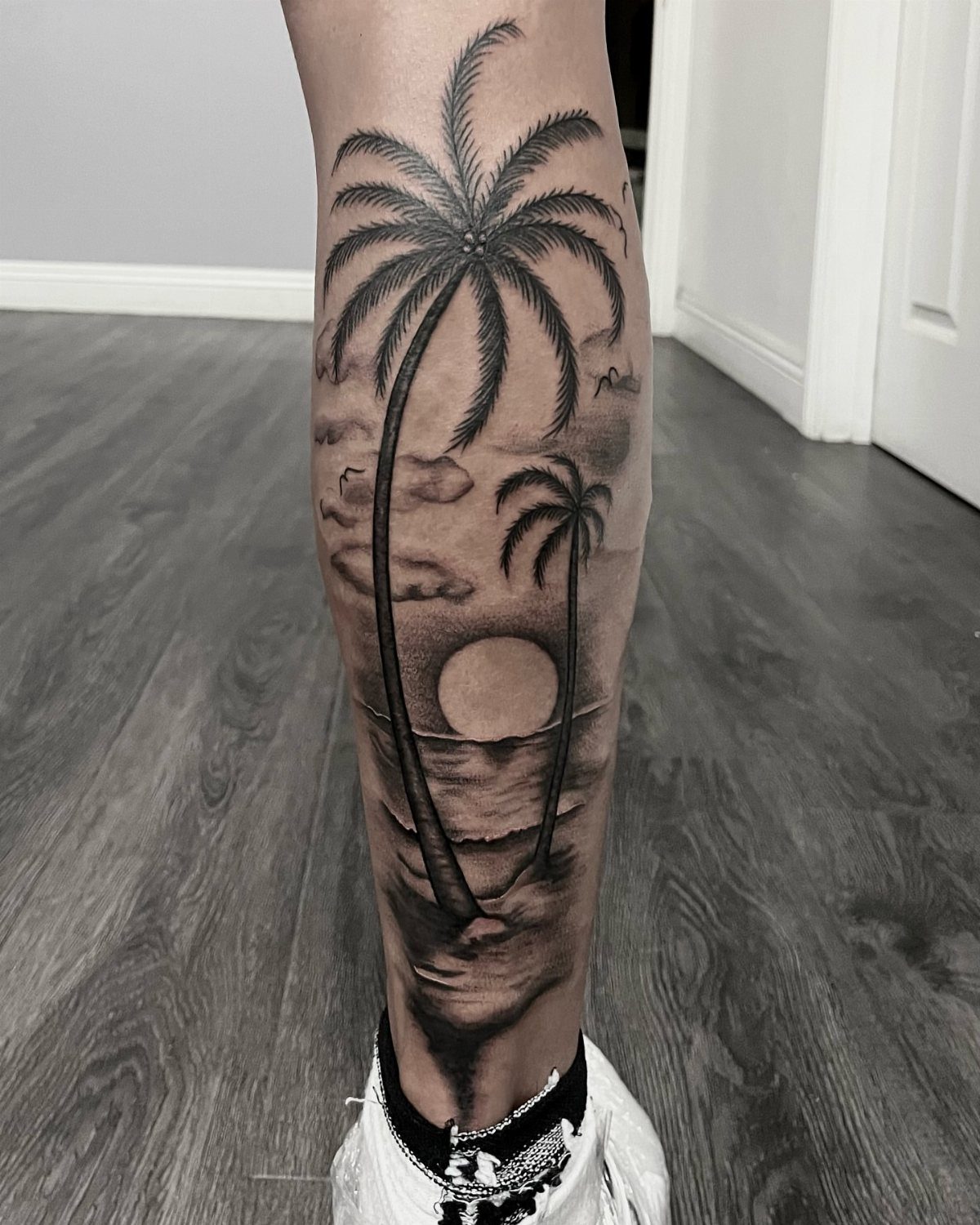
The calf sits between the knee and ankle, flat enough for landscapes like the palm trees and sunset here. The muscle underneath gives the tattoo dimension when you walk.
Healing is simple since socks and shoes rarely touch the design directly.
A calf piece reads well from the side and suits designs that benefit from vertical space.
10. Meaningful Commemorative Forearm Tattoo
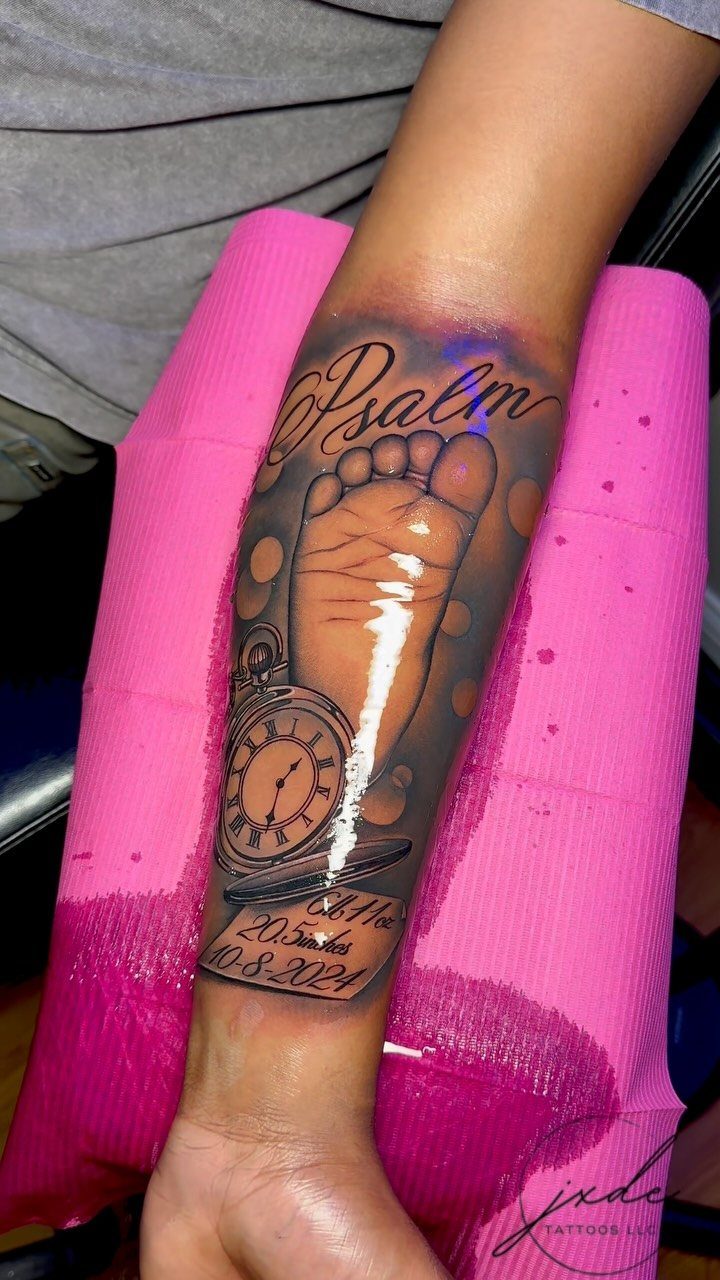
A commemorative tattoo collects symbols tied to a specific person or moment: here, a baby’s footprint, a clock marking a birth time, a date, and a scripture reference.
The forearm keeps the memory visible, and the layered design tells a story without words.
Detail this fine requires an artist who can scale a footprint accurately and set each element so the composition balances. Black ink holds the symbols readable, and the flat surface of the forearm carries fine lines well.
Session time depends on complexity, usually 2 to 4 hours, and placement here heals faster than spots that bend constantly.
Choosing the Right Design
A design with personal meaning gives you a reason to keep liking it years later. If the image connects to who you are or a moment that matters, you will look at it without regret when the novelty wears off.
Avoid choosing a tattoo because it feels like something to try or because the idea showed up once. Commitment to the design matters more than impulse, and the right choice sits comfortably in your mind for months before the appointment.
Where you work affects what you can show.
A visible tattoo may conflict with your environment, so placement and subject matter both need thought. Your artist can help you find a spot that balances visibility with your daily reality.
Size and detail interact: small tattoos with heavy detail blur as they age, so simpler shapes hold their form longer.
Tattoo Placement Considerations
Placement affects how the tattoo reads over time. Skin that stretches or bends constantly can distort the design, so flat, stable areas on the outer arm age more cleanly than spots that move with every joint.
Pain varies by location. Areas with more muscle, such as the outer arm or calf, feel duller than spots where the skin sits close to bone, such as the ribs or inner arm.
If pain is holding you back, talk through placement options with your artist before you commit to a spot.
Visibility matters for work and daily life. Your artist can suggest a location that fits the size and shape of your design while keeping it where you want it.
Importance of Artist Consultation
Talking with your artist before the session gives you a second opinion on whether the design you have in mind works for the spot you picked.
They know which placements suit which styles, and they can tell you if a detail will read clearly at the size you want.
An artist who specializes in the style you are after brings technical skill that shows in the finished piece.
I look at portfolios to see if their work matches what I am asking for, and I book time with someone whose previous tattoos photograph cleanly.
The best artists and shops often have waiting lists that stretch several months. That wait gives you more time to confirm the design feels right, and it filters out impulse decisions that lead to regret.
Frequently Asked Questions
What’s the best spot for a first tattoo?
The outer arm, calf and thigh offer flat surfaces with enough muscle to cushion the needle, keeping pain moderate and healing straightforward. These spots also give you control over visibility: they hide under most clothing but show when you choose.
How long does a small tattoo take?
A small tattoo with minimal detail, such as a single-stem leaf or a constellation, usually finishes in under an hour.
More complex small pieces, such as a birth flower with color or a geometric pattern, take 2 to 3 hours depending on shading and the number of elements. Session length also depends on placement and your artist’s pace.