A blackout covers absolutely and a nature scene stacks elements to hide different sections of the same old piece, so the design you pick depends on how much of your original tattoo you want the artist to work around.
Gothic themes and realistic animal portraits rely on deep shadow pockets where an older tattoo disappears, while abstract brushstrokes move the eye away from the shape underneath without needing a recognizable outline.
1. Realistic Animal Portraits
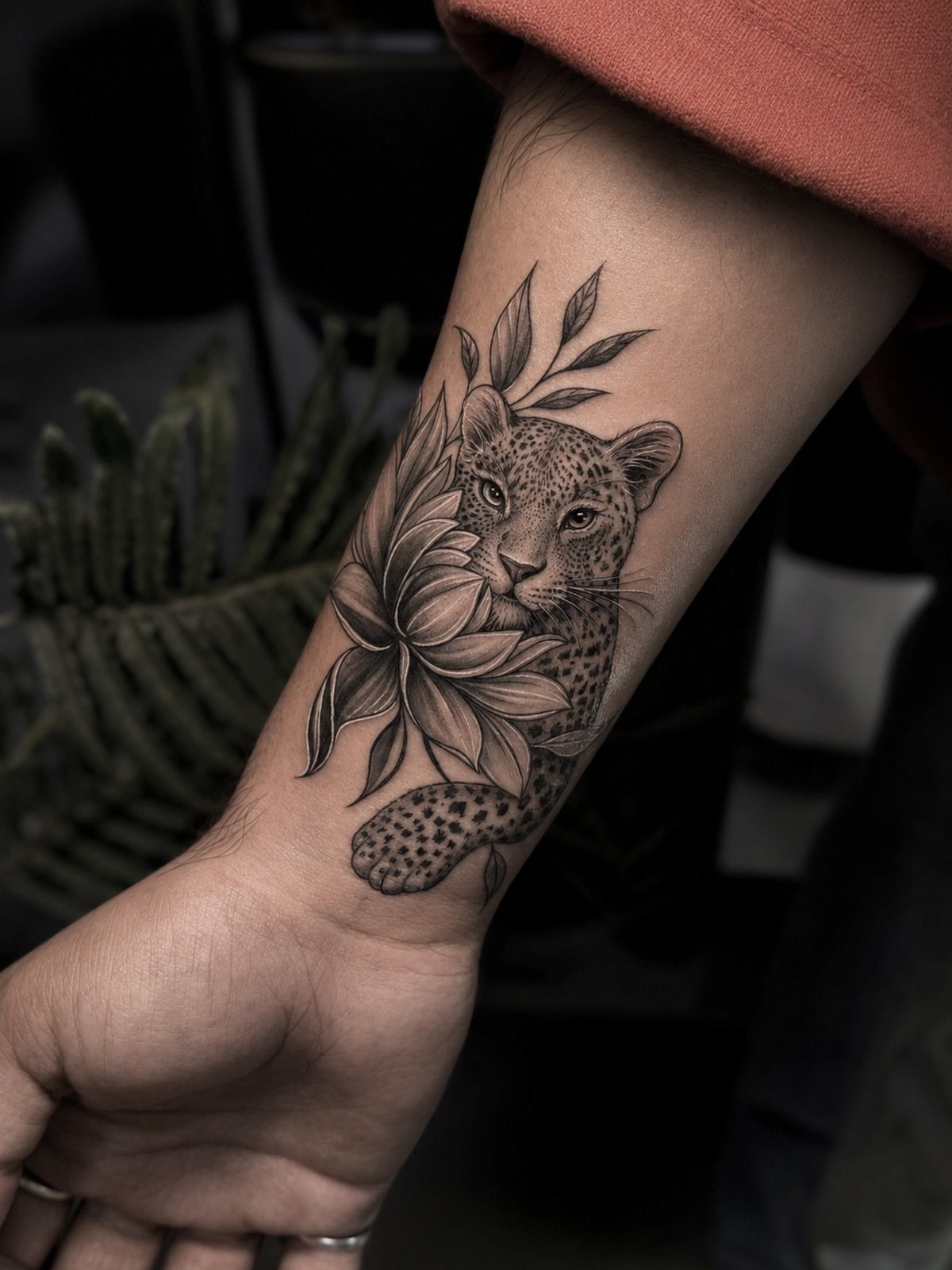
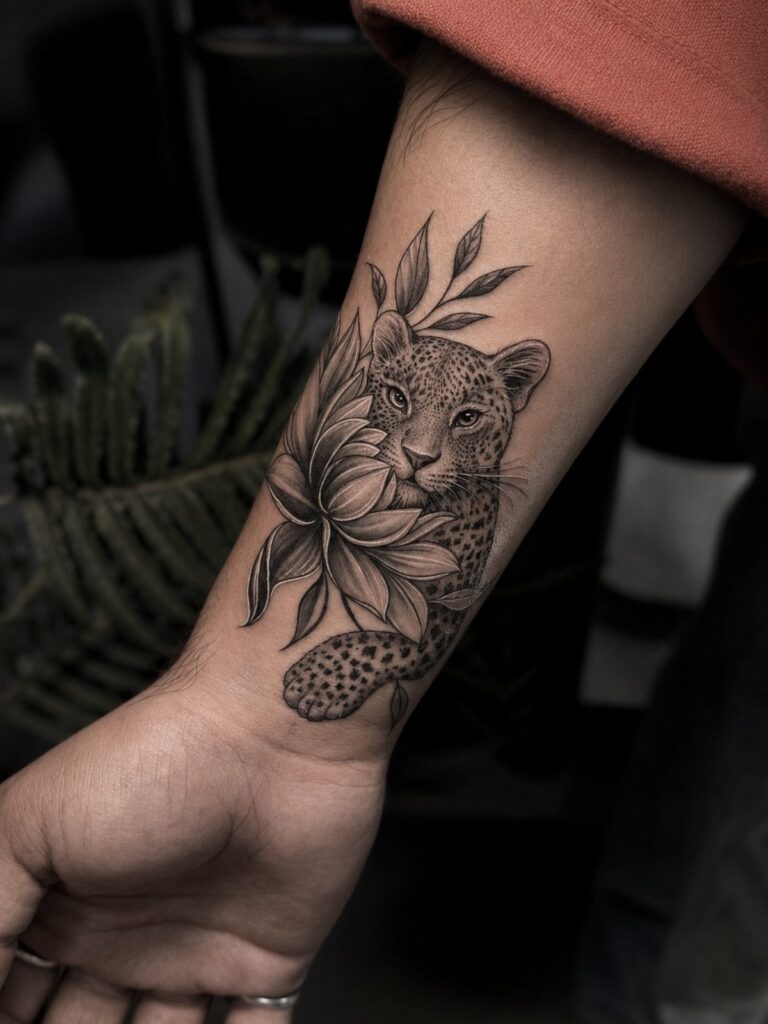
A big cat face in detailed black and grey can hide an older tattoo underneath without the viewer noticing where the old ink was.
The heavy shading in fur and the deep shadows around the eyes give an artist plenty of room to work over lines or color that didn’t age well.
Animals with dark coats or thick manes cover better than pale subjects. If the piece you’re hiding has hard edges, ask your artist to bring in the flower or foliage around the perimeter so nothing reads through.
2. Geometric Patterns
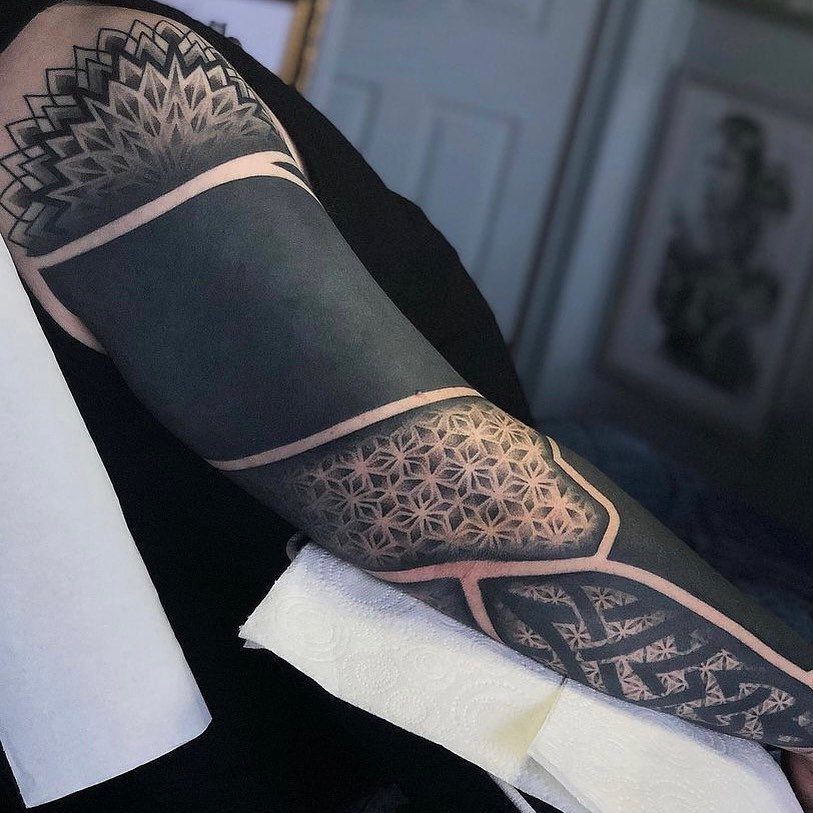
Repeating shapes and bold black fills let you build new structure over ink that’s faded or sits in an awkward spot.
A pattern can follow the muscle line of your arm and pull the eye away from whatever you wanted gone.
The solid sections do most of the covering, so tell your artist which area needs the darkest fill.
Geometric work photographs well once it heals, but it only looks clean if the lines stay parallel and the fills stay even, so find someone whose line weight doesn’t wander.
3. Skulls and Gothic Themes
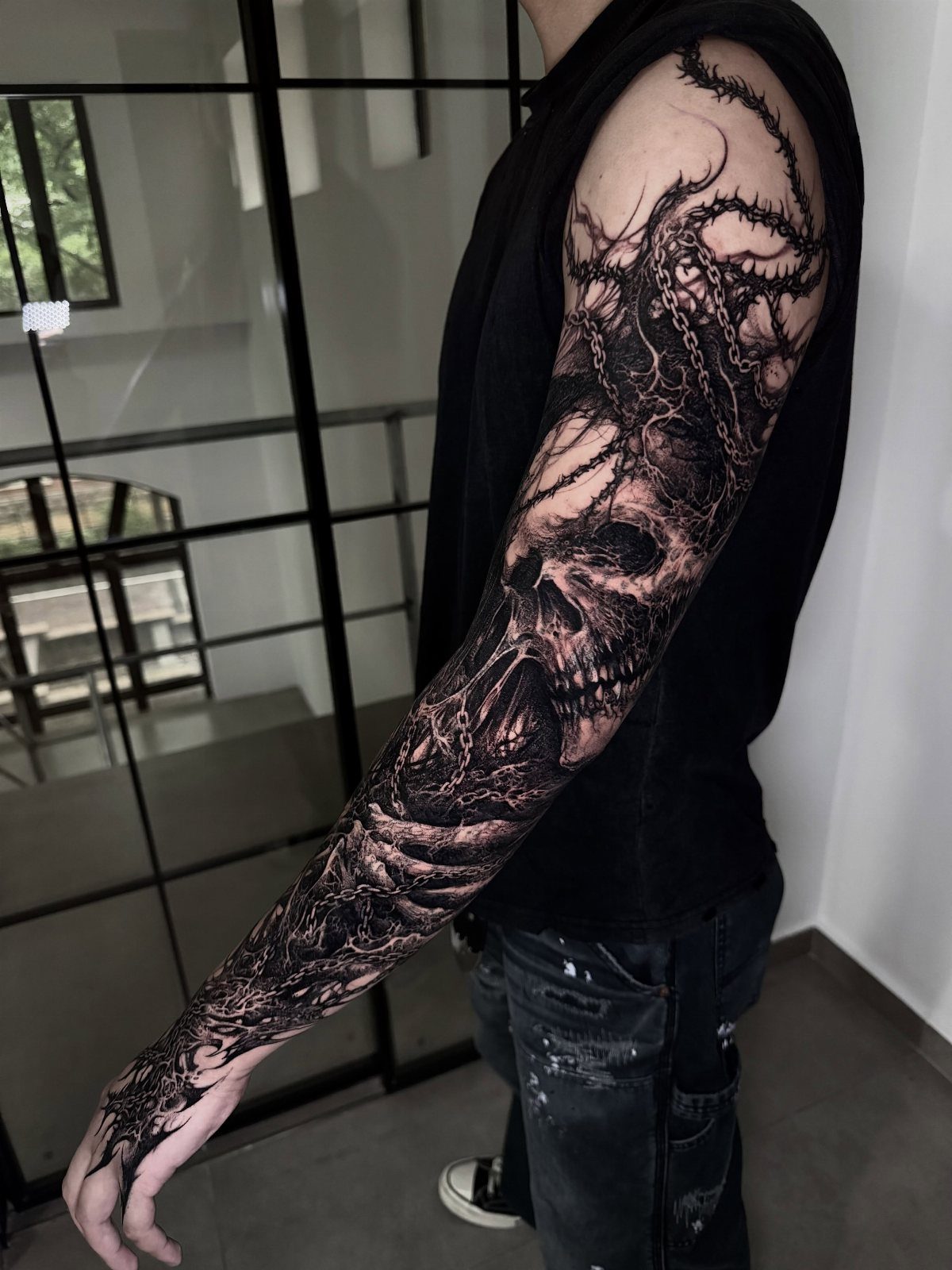
Full coverage in black ink turns an arm into one continuous image, and skulls give you natural shadow pockets where old tattoos disappear. Chains, flames and heavy line work fill space fast and read from across a room.
Gothic designs suit larger cover-ups because they expect contrast and depth. If your old tattoo has color, the new black will seal it, but pale or yellow tones sometimes ghost through in the first few months.
A second session to add more black solves that. The style holds detail better than most when it fades, so it still looks intentional after years.
4. Mythological Figures
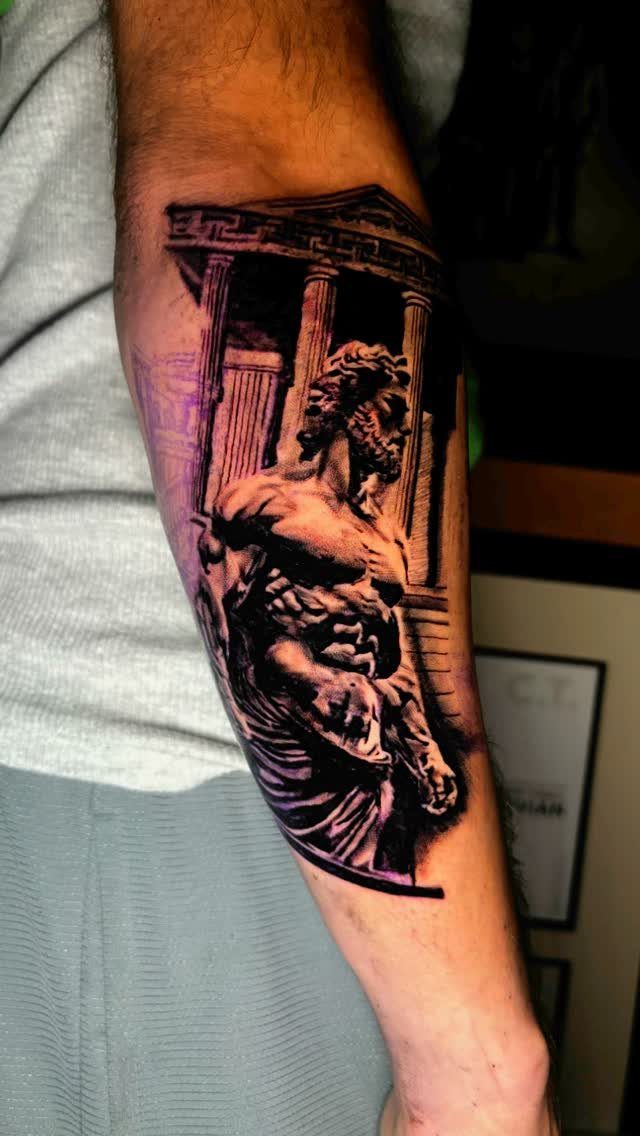
Gods and warriors come with armor, drapery and architecture, all of which give an artist places to hide old ink inside new shadow.
A muscular figure in front of columns offers enough detail that a viewer won’t spot the original tattoo you covered.
Greek and Roman figures suit the shoulder or forearm because the proportions match the muscle underneath.
If your old piece has bright color, ask for darker tones in the background or the figure’s garments so nothing bleeds through visually. Expect 2 or 3 sessions for a forearm piece this detailed.
5. Nature Scenes
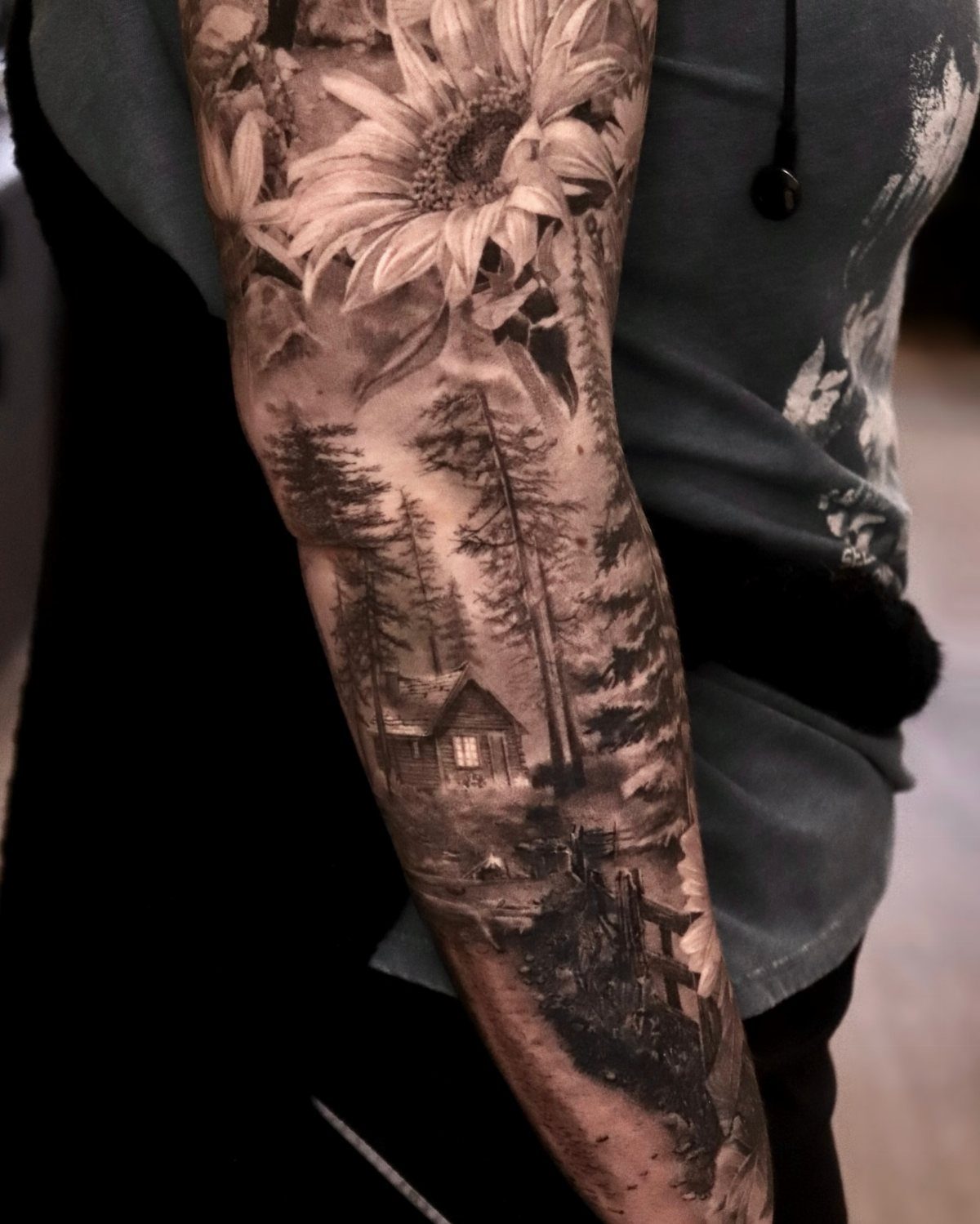
A landscape stacks elements at different depths, so trees in the foreground can cover one section while mountains or a cabin handle another.
The sunflower at the top anchors the composition and pulls attention upward, away from whatever sat there before.
Nature scenes work well over color because foliage and sky give you darks and lights in all the right places. If your old tattoo is small, center the cabin or another focal point directly over it.
Shading in the forest or around the petals hides edges that might show through, and black and grey heals more predictably than color when you’re layering ink.
6. Watercolor Tattoos
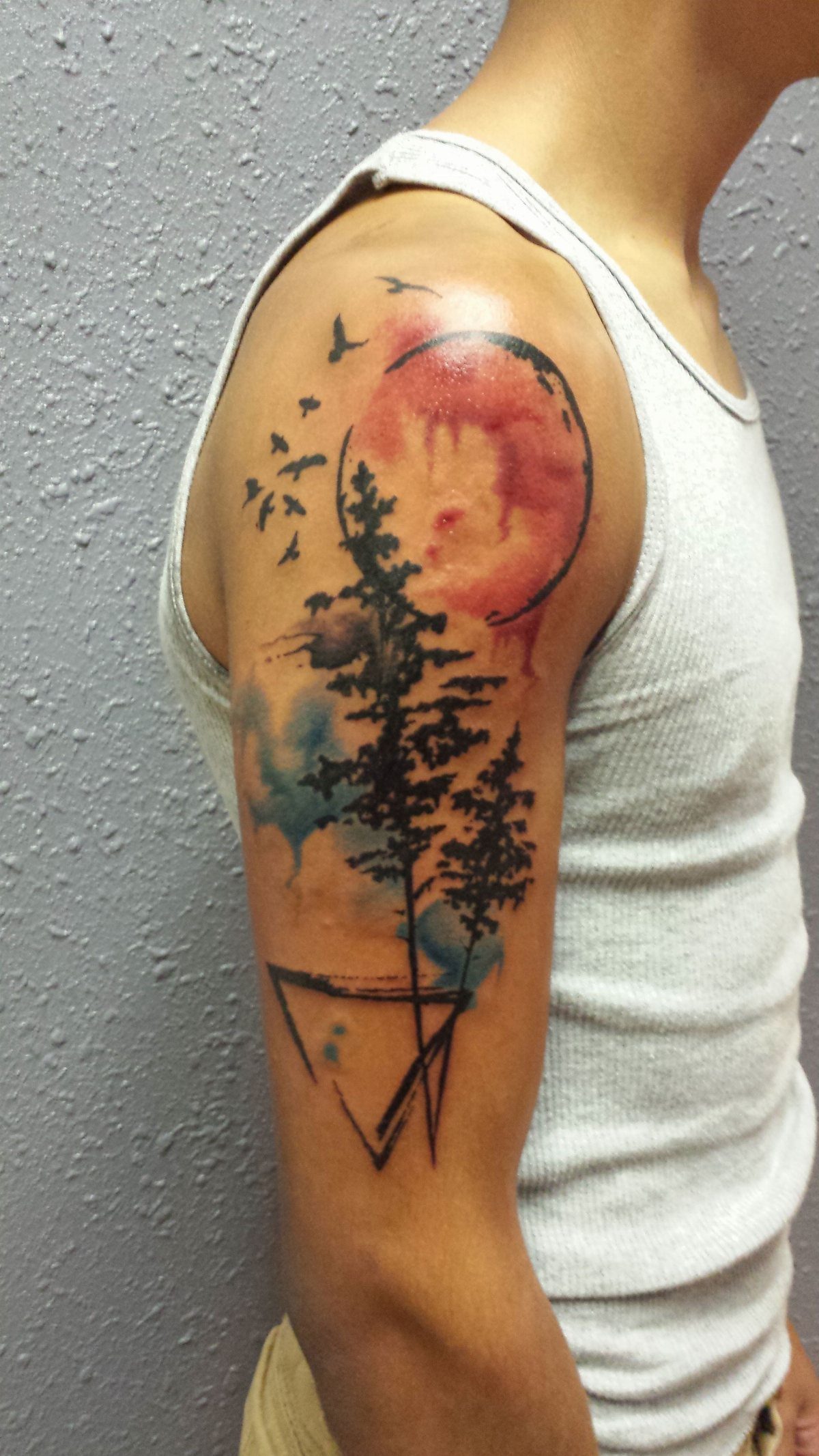
Soft washes of color blend into each other and obscure hard lines underneath, so an older tattoo with defined edges won’t read through the new piece.
The red tones in the moon and the black silhouettes of the trees give structure while the watercolor background does the covering.
Reds and purples mask old ink better than pastels. If you’re going over black or dark blue, watercolor won’t read bright without laser first.
The style fades faster than traditional work, and touchups every few years keep it looking fresh. Skip this option if your skin scars easily, because layering color over a cover-up sometimes raises texture.
7. Blackout Tattoos
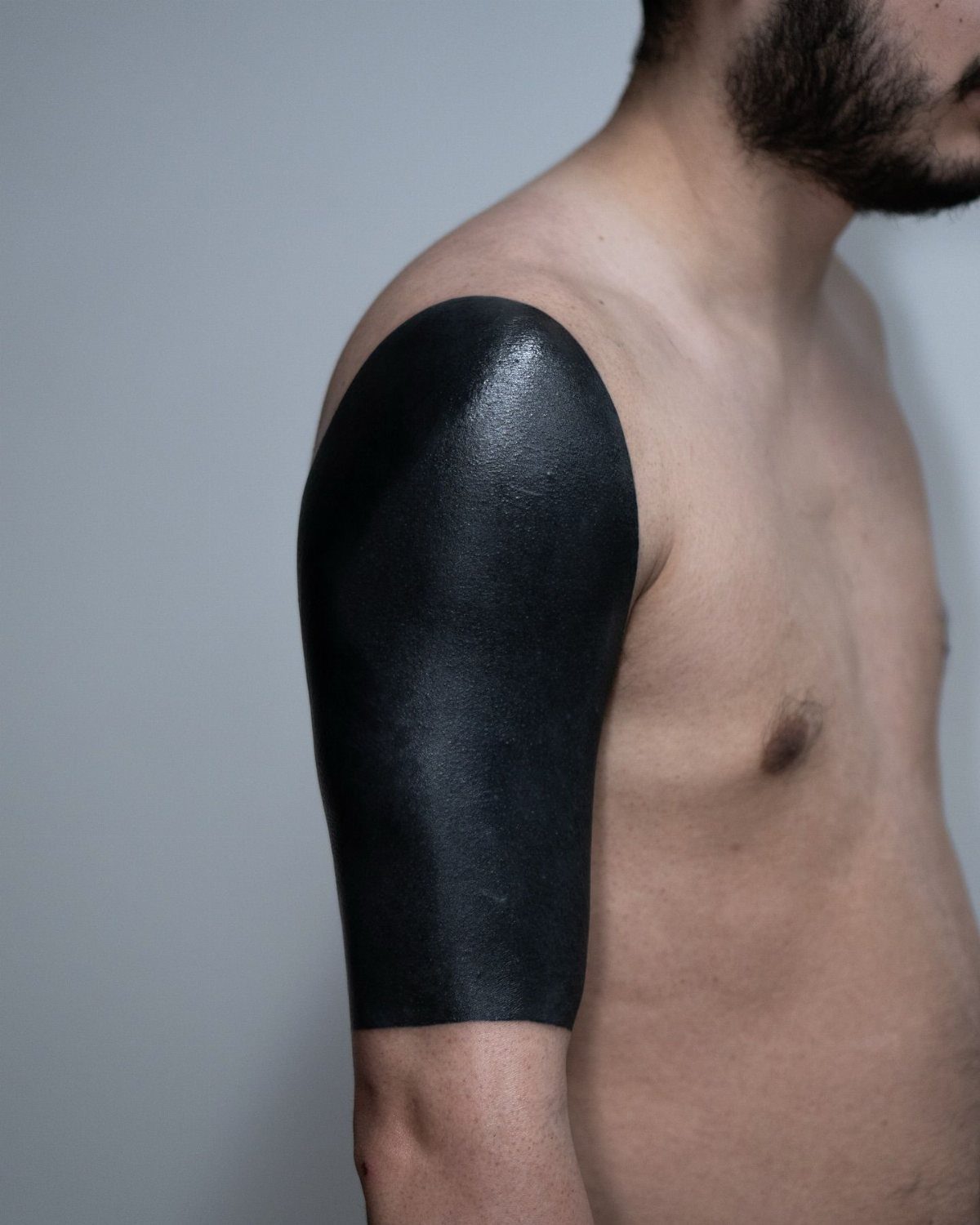
Solid black ink seals the old tattoo completely, and once it heals you get a shape that reads as intentional rather than a mistake you fixed.
The coverage is absolute, so this works even when the piece underneath has bright color or heavy line work.
Blackout hurts more than most cover-ups because the needle passes over the same skin repeatedly to build an even fill. If the black sits next to bare skin, the edge needs to stay crisp or it looks unfinished.
Some artists add negative-space patterns or fine white lines later to break up the block, but that comes in a second session after the black has settled.
8. Abstract Designs
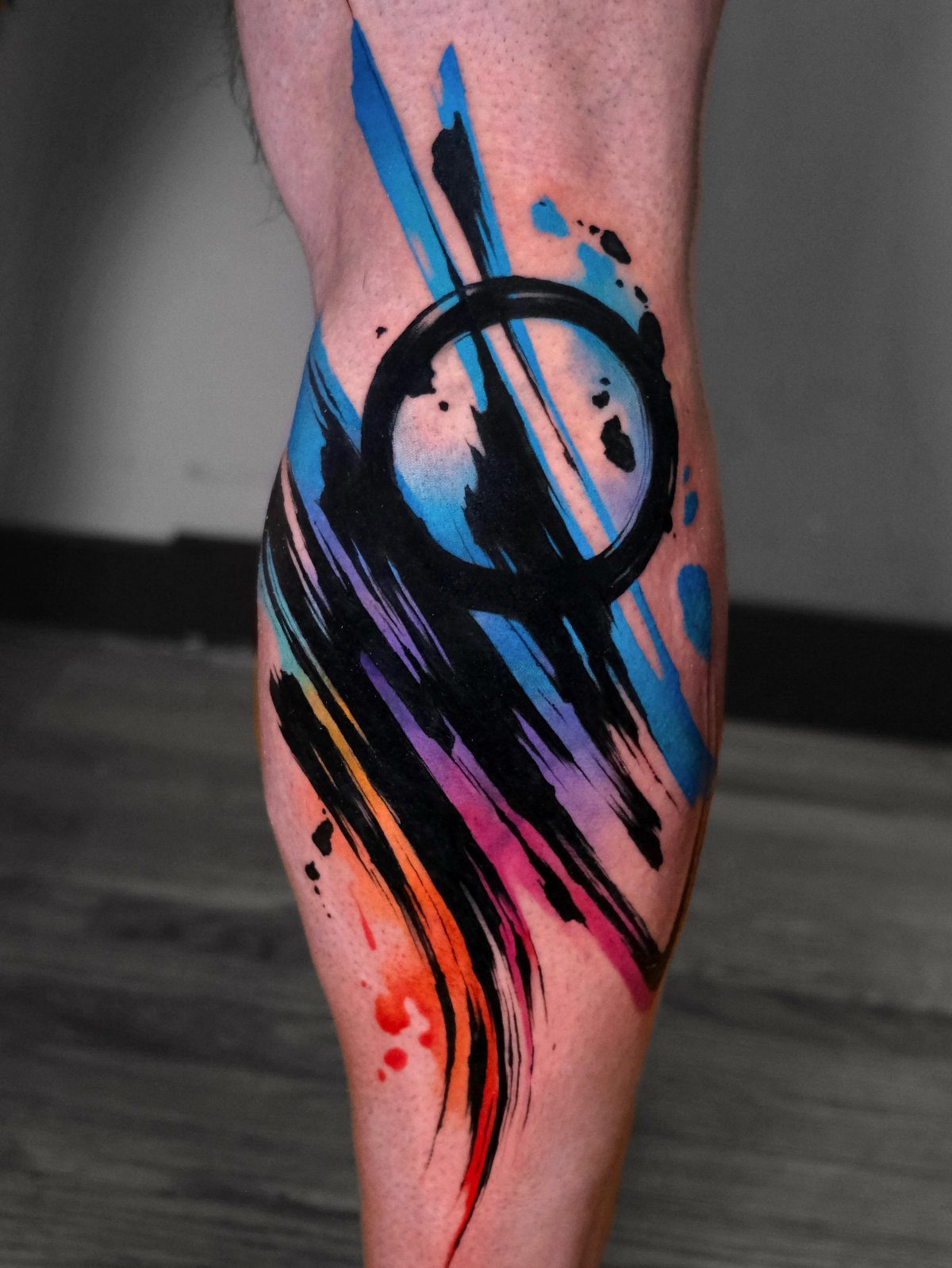
Brushstrokes and splashes of color move in different directions, so the eye follows the new design instead of hunting for the shape underneath.
The black circle and the purple streaks anchor the piece while the orange and blue fill space without needing recognizable forms.
Abstract work hides irregular edges better than realistic designs because there’s no expected outline to compare against.
If your old tattoo has a lot of detail, ask your artist to layer the new colors so the darkest tones sit directly over it.
The style gives you flexibility in shape and size, which helps when the piece you’re covering sits at an angle or wraps around muscle.
Cover-up Techniques
The artist you sit down with needs to see the old tattoo in person before sketching anything new.
Photos flatten color and miss how deep the ink sits, so a consultation tells you whether you need a design twice the size or just careful placement of dark tones.
Darker pigments cover lighter ones more completely than the reverse.
If your original piece has red or orange, black and deep purple will seal it. Yellow and pale green are harder to hide, and sometimes a laser session to lighten them first makes the cover-up cleaner.
Detailed shading, like the petals and background fill in a large chrysanthemum, gives the artist room to work over irregular edges.
The new tattoo should make sense on its own, not just as a patch over something else, so the composition needs to look intentional even if someone doesn’t know what sat there before.
Choosing the Right Artist
Not every artist does cover-ups well. Some specialize in fine line work that shows every flaw underneath, while others know how to layer heavy black or build a composition that pulls the eye away from problem areas.
Ask to see healed photos of cover-ups they’ve finished, not just fresh ink.
A design that looks solid on day one can let old lines ghost through after a few months if the artist didn’t pack enough pigment or plan the shading right.
If the piece you’re hiding sits on your hand or another high-movement area, find someone whose cover-ups in those spots have held up.
Hands fade faster than most places, so the new design needs bold shapes or dark fills that still read clearly after years of wear.
Tattoo Aftercare
A cover-up layers new ink over old, so your skin is processing more pigment than it would with a fresh tattoo on bare skin.
Keep the area clean and moisturized, and expect it to take a few extra days to stop weeping.
Sun exposure fades any tattoo, but it hits cover-ups harder because the dark tones that do the hiding lighten first. Use sunscreen once it heals, or the old tattoo can start to show through again after a summer.
If the new piece feels raised or the color looks uneven after it heals, go back for a touchup. Cover-ups sometimes need a second pass to even out areas where the old ink pushed back against the new pigment.
Frequently Asked Questions
What are some good themes for sleeve tattoos for men?
Animals with dark coats, mythological figures with armor and drapery, and nature scenes with layered depth all work well for sleeve designs.
These themes give an artist plenty of structure and shadow to build a cohesive piece that covers the full arm without losing detail as it heals.
What are the hardest tattoos to cover-up?
Deep black and saturated blue hold the record for stubborn color that bleeds through most attempts to bury it.
A laser session to lighten those tones first usually makes the cover-up cleaner and keeps old edges from ghosting through after a few months.
How do tattoo cover-ups work?
An artist layers new ink over the old tattoo, using darker pigments and strategic shading to hide what was there before.
A good cover-up stands alone as a design you’d choose anyway, which means the layout has to look deliberate rather than awkwardly shaped around a secret.