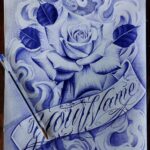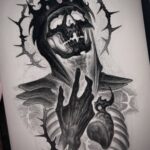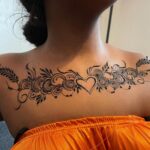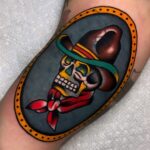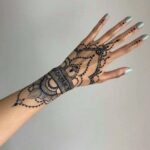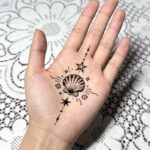
Arm cover-ups run from single blackwork panels that smother old ink in one pass to sleeves built over months with portraits, dragons and baroque scrollwork.
How much black the design holds without looking overworked tells you whether abstract shapes, tight florals or a subject that reads dark on its own will hide what’s underneath.
A mandala’s symmetry concentrates ink where old marks sit heaviest, and a snake adjusts width as it travels from bicep to wrist.
1. Black and Grey Floral Cover Up
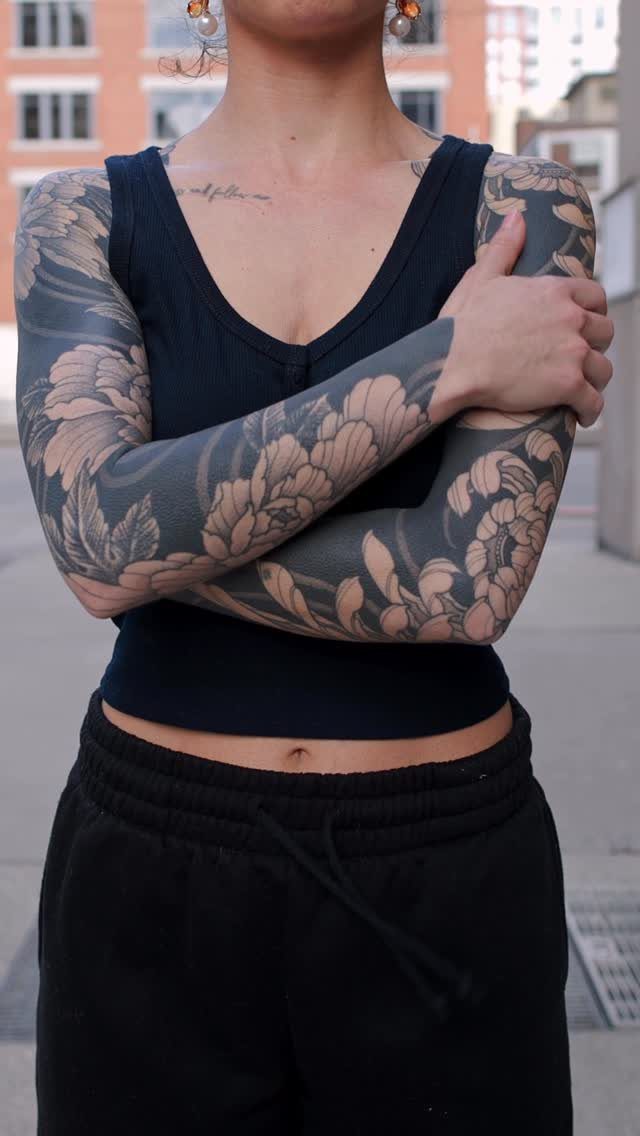
Black and grey floral designs layer petals and leaves across the old ink, using shading depth instead of color to hide what sits underneath.
The soft organic shapes break up hard lines and let the artist pack detail where coverage needs the most help.
A full arm sleeve gives room to size the flowers large enough that they read from a distance. Petals can wrap around curves, and the grey tones let the artist adjust contrast until the old tattoo disappears.
The lack of color keeps costs lower and usually heals faster than a full-color piece.
2. Blackwork Cover Up Tattoo
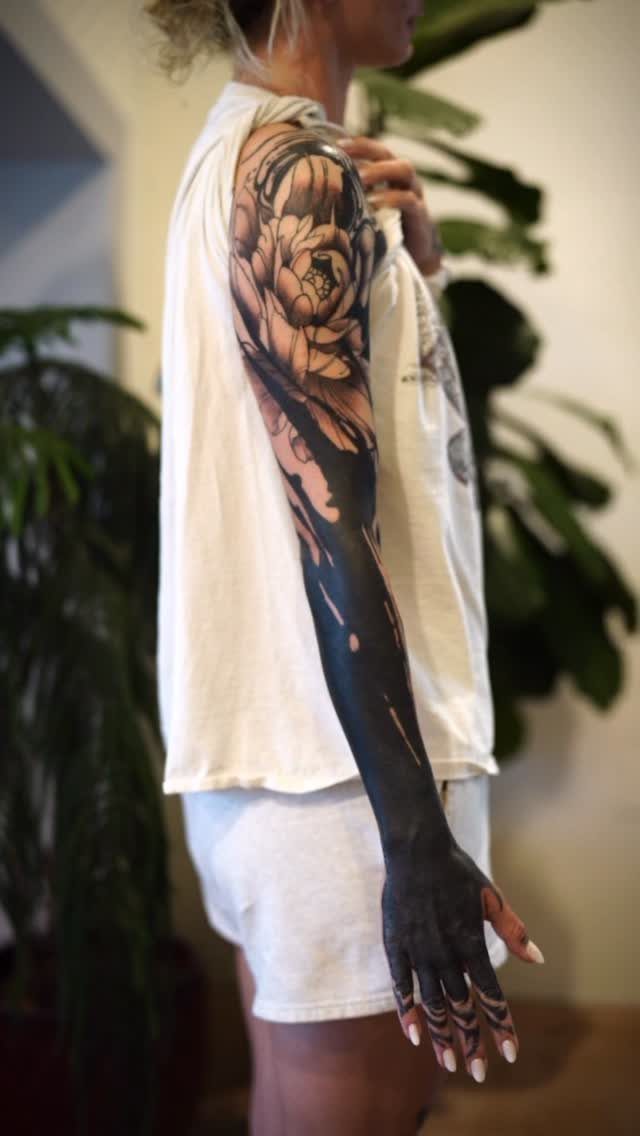
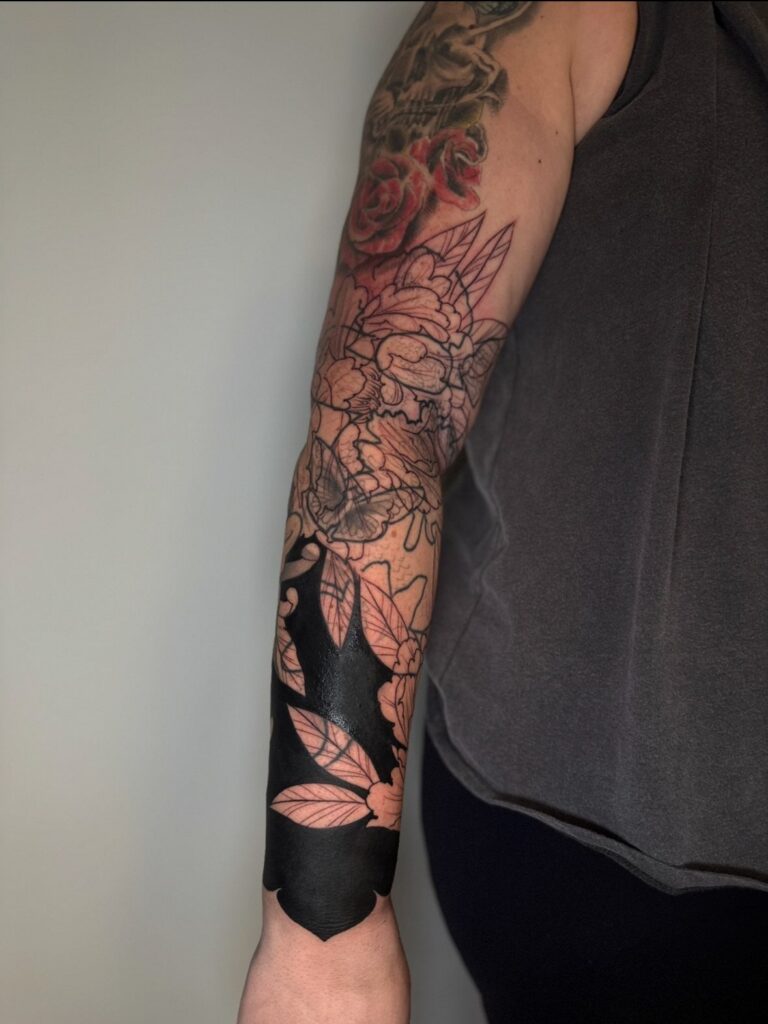
Solid black sections erase anything underneath them completely. Blackwork trades detail for coverage, filling large areas with dense ink that leaves no ghost of the old design showing through.
A floral shoulder anchors the piece, then the forearm drops into solid black that runs to the hand. That partition lets you keep some design variety up top while relying on pure opacity below, where coverage might need more weight.
Sessions run long because the artist is filling every inch, and touch-ups are rare since black ink holds better than fine line work.
3. Mandala Arm Cover Up
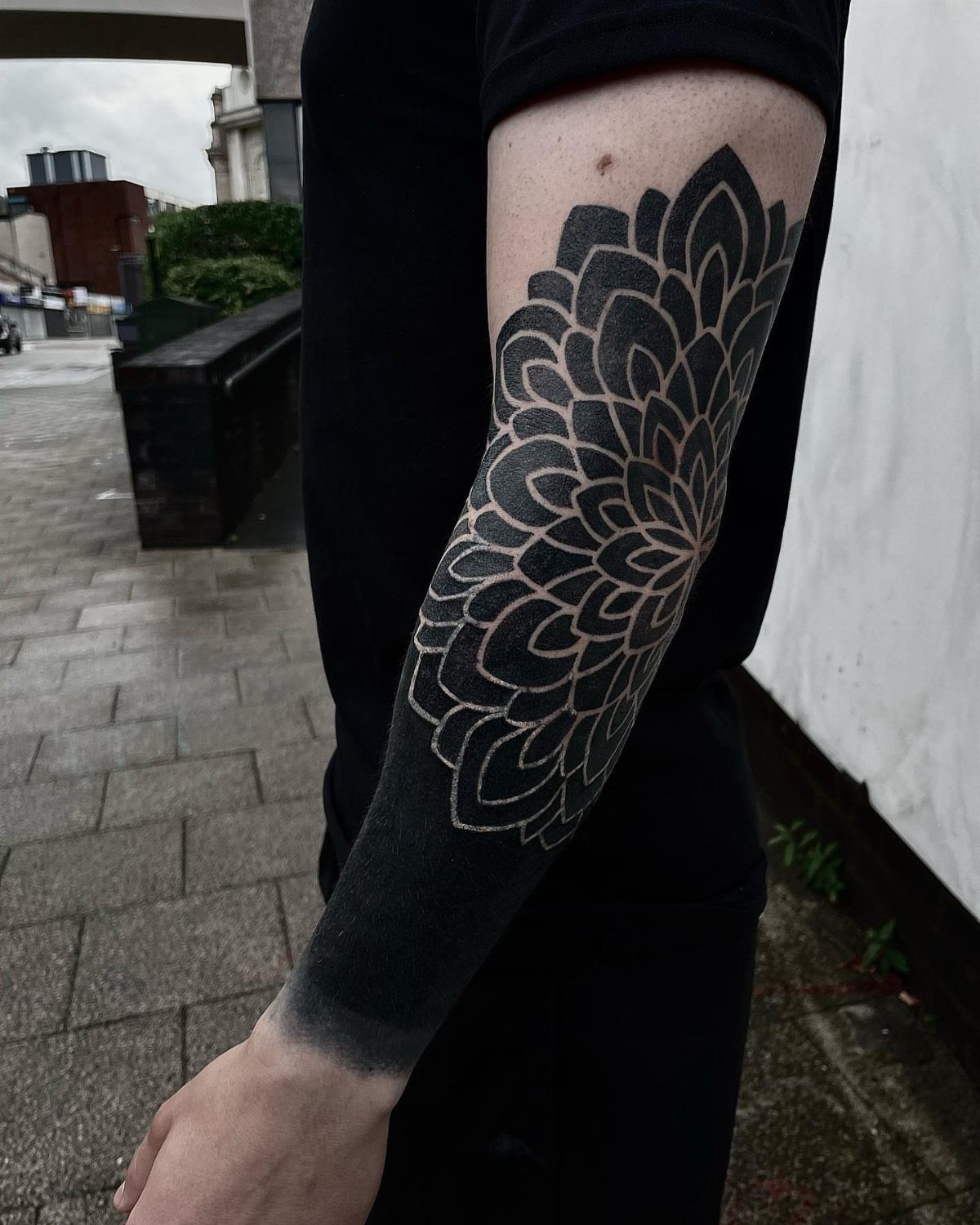
Mandala patterns distribute detail evenly, so the eye follows the geometry instead of hunting for what used to be there.
Concentric circles and radial symmetry let the artist build density exactly where the old tattoo shows through, then ease off in clearer areas.
The blackout section on the forearm handles anything a pattern alone won’t cover. That combination keeps the upper arm visually interesting while guaranteeing complete erasure below.
Expect multiple sessions. Tight line work and solid fill both take time, and rushing either one shows in the final piece.
4. Snake Cover Up Tattoo
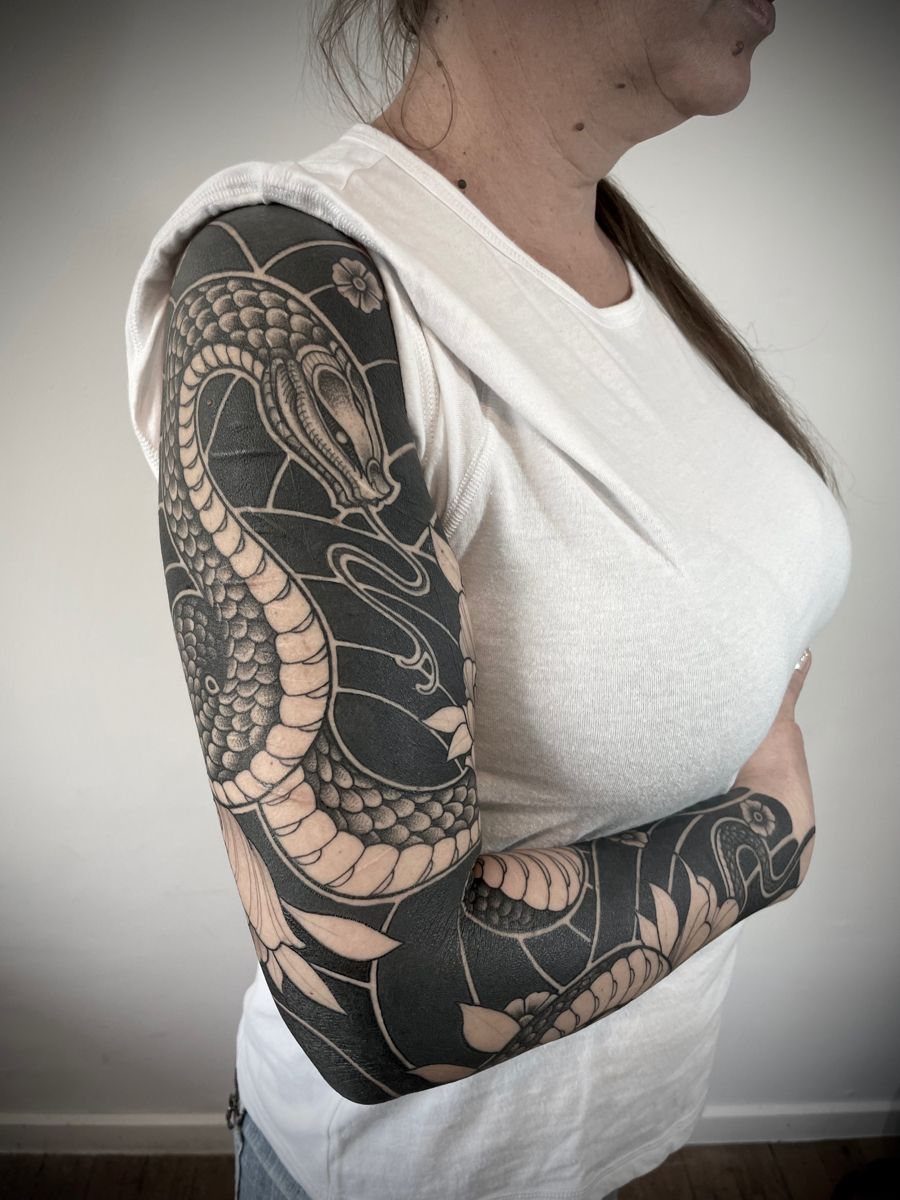
A snake’s body wraps naturally around the arm, giving the artist a long, continuous form that can widen or narrow to match coverage needs. Scales add texture where detail helps, and darker shading sits over problem areas without looking forced.
The curve works with the limb instead of fighting it, so the design reads clearly from any angle.
Grey and black tones layer in depth, and the head placement can anchor the piece at the shoulder or hand depending on what the old tattoo left behind.
5. Realistic Portrait Arm Cover Up Tattoo
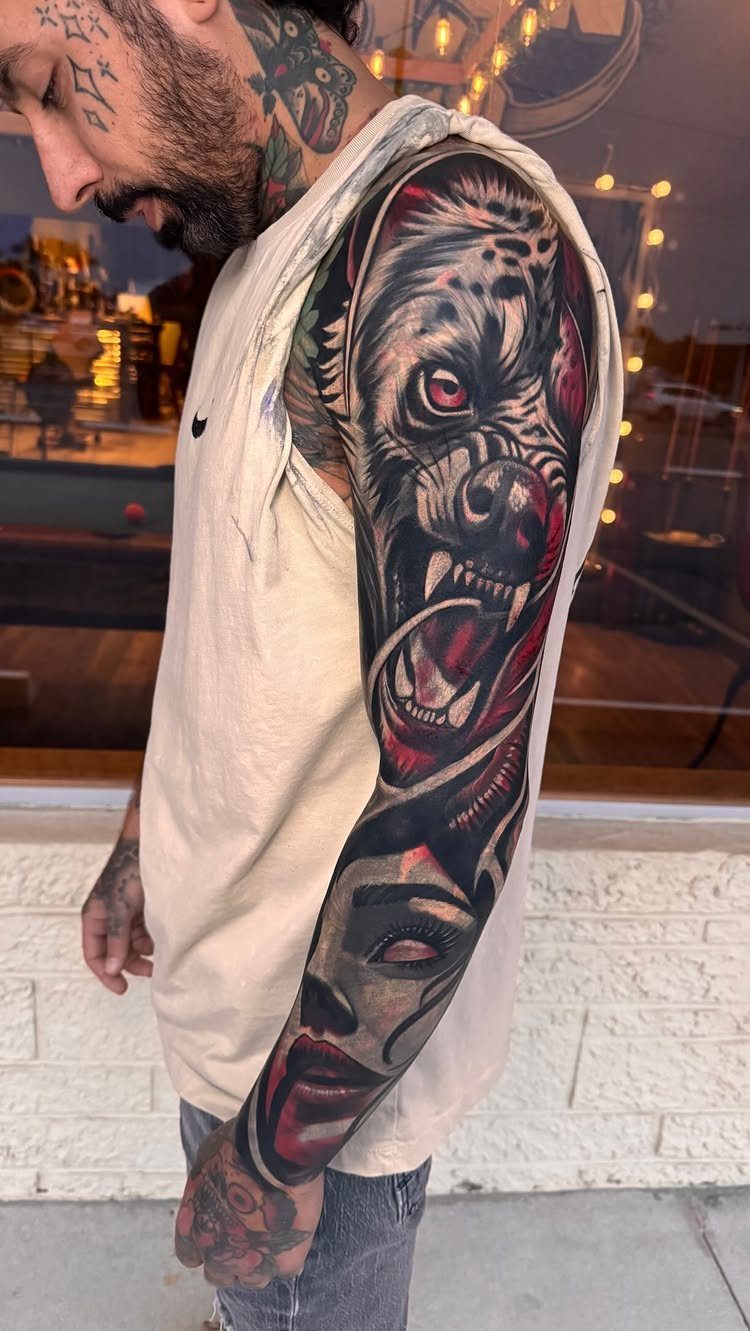
Pairing a realistic portrait with an animal face gives the artist 2 focal points to work with, each pulling attention away from what used to be there.
The maker mentioned having a blast over 2 days making this piece for a new client, and the detail in both faces shows the time investment.
Realism needs dark backgrounds to make the features pop, and that contrast naturally buries old ink. Portraits demand precision, so choose an artist whose portfolio shows clean skin tones and sharp eyes.
Budget more sessions than a simpler design. Fine detail and shading this controlled don’t happen in one sitting.
6. Abstract Cover Up Tattoo
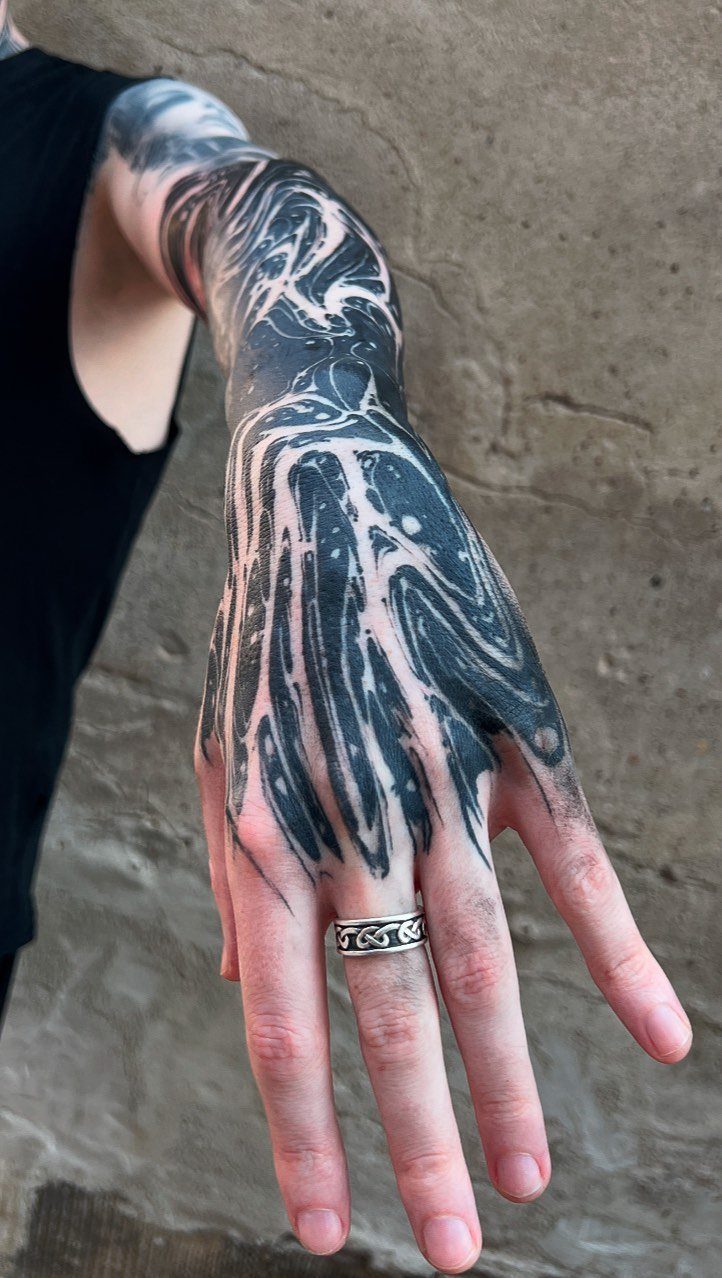
Abstract shapes follow no rules, so the artist can bend, stretch and layer forms until the old tattoo vanishes inside the composition.
Black fills the bulk of the coverage, and white swirls add contrast without needing the structure of a recognizable image.
The hand and arm both carry the design, treating the whole limb as one canvas instead of stopping at the wrist. That continuity makes the piece feel intentional rather than patched together.
Abstract work hides imperfection better than realism because the viewer has no reference to compare against.
7. Clock and Rose Cover Up
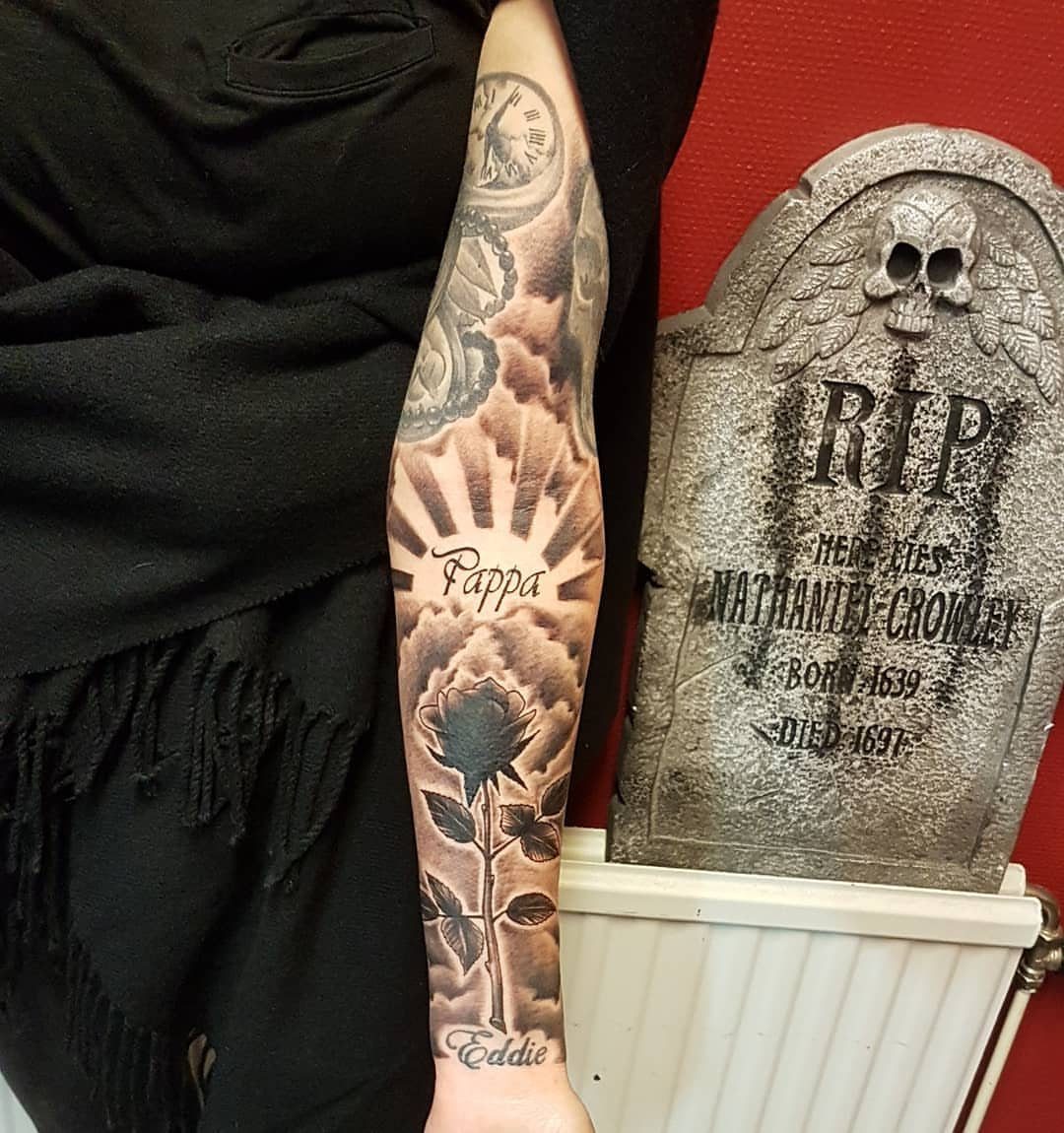
A clock face paired with a rose gives the artist two distinct elements to arrange around old ink, each one carrying enough detail to hold attention.
The mechanical lines of the clock contrast with soft petals, and the text anchors the piece with personal meaning that makes the whole design feel deliberate.
Black and grey keep the focus on shape and shading rather than color, and the high contrast helps bury what came before.
A forearm placement like this reads clearly when the arm hangs naturally, which matters for designs you plan to show in everyday settings.
8. Upper Arm Cover Up Tattoo
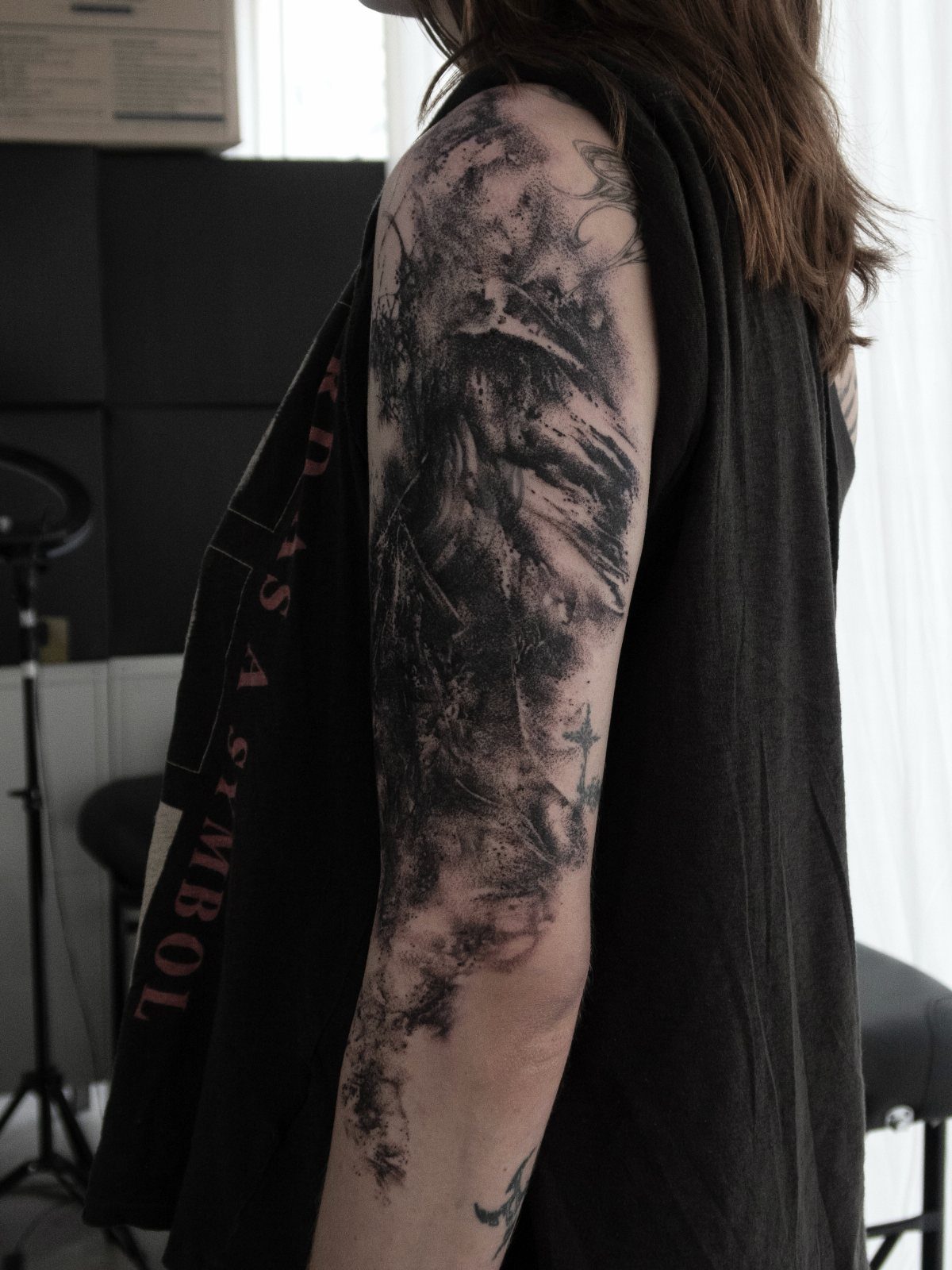
Concentrating dark ink on the upper arm takes advantage of the flat surface and gives you a bold focal point that can stand alone or start a larger sleeve.
Abstract shapes can stretch across the deltoid and wrap into the tricep, using the muscle’s curve to add dimension without needing a recognizable subject.
Solid black fills coverage gaps fast, and an abstract approach means the artist can adjust the composition on the fly as the old tattoo dictates.
Fewer sessions than detailed realism, and the bold shapes age well because there are no fine lines to blur.
9. Bicep Cover Up Tattoo
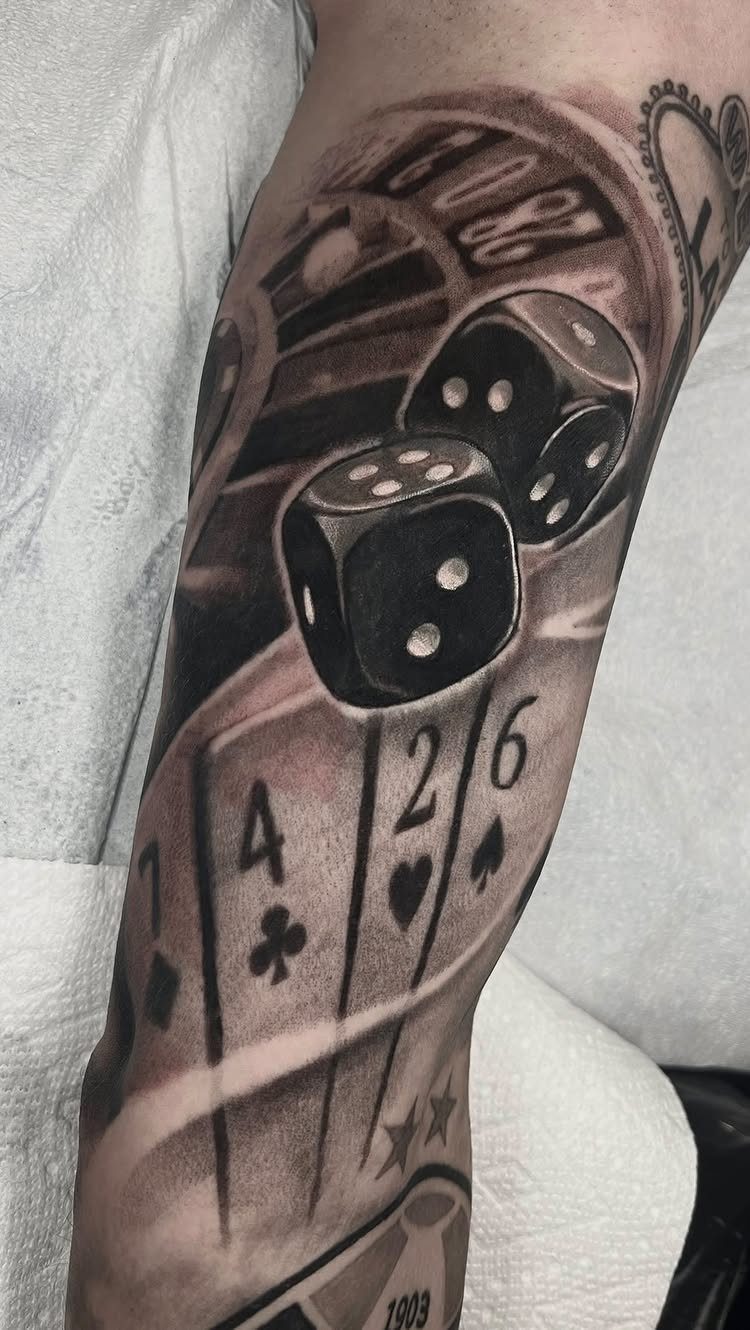
The bicep’s compact curve suits designs that cluster related elements together.
Dice, cards and a roulette wheel share a theme, so the composition feels cohesive even when each piece sits in its own space, and the artist can size each one to match coverage needs.
Black and grey let you pack shading into the negative space, which helps hide edges of old work without adding more objects.
The flat view when your arm is bent makes this spot easy to show or conceal depending on sleeve length.
A gambling motif works when the symbols mean something to you; otherwise, pick a theme that will still feel relevant years later.
10. Colorful Cover Up Tattoo
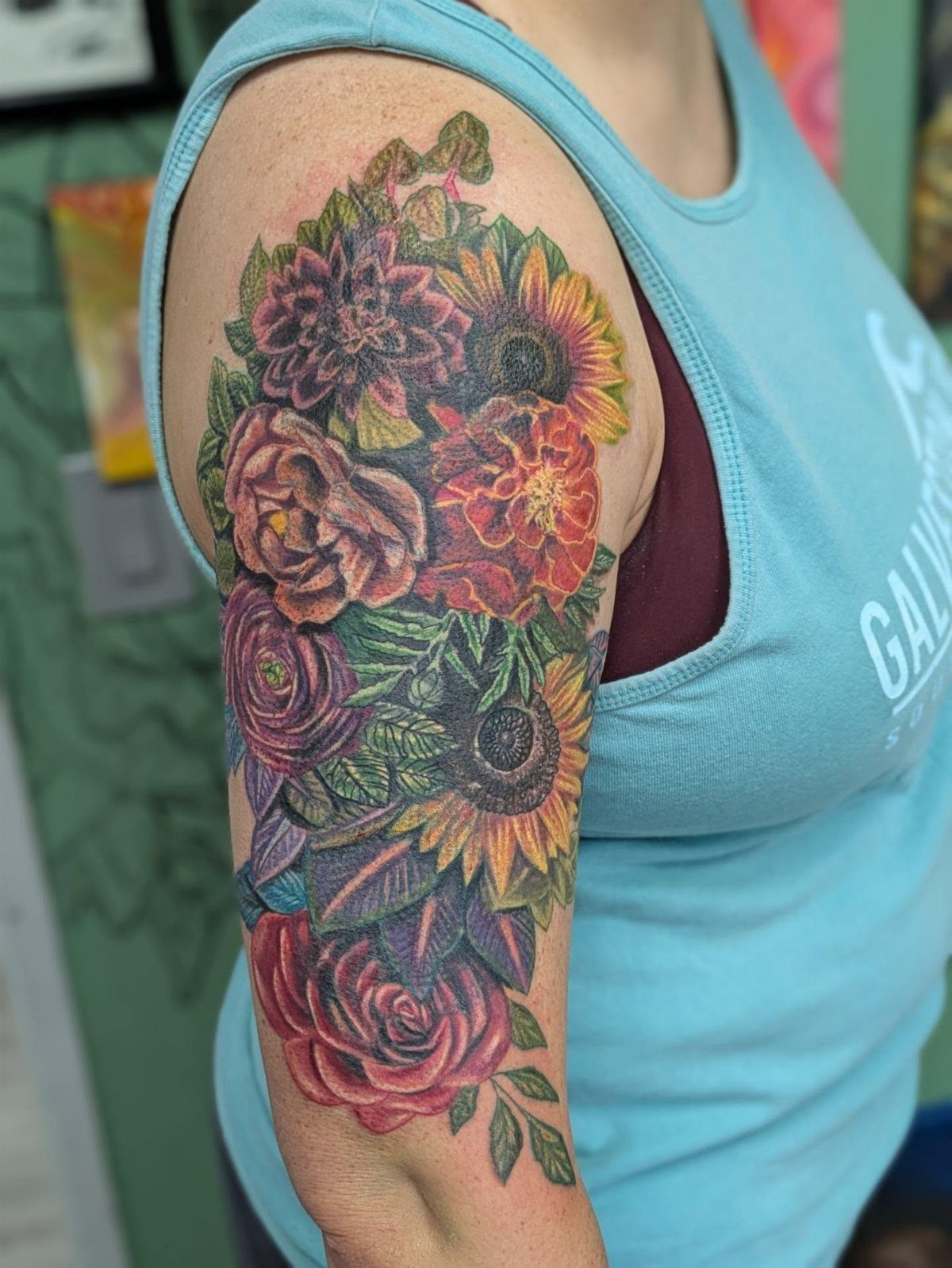
Color cover-ups trade the simplicity of black and grey for the ability to layer hues that distract the eye from what sits underneath.
Reds, yellows and greens can overlap old ink, and the artist uses the darkest tones where coverage needs the most help.
Flowers work because petals naturally overlap, giving the artist room to build depth and shift color until the original tattoo disappears.
The upper arm’s visibility makes a bright piece easy to show off, and color reads better here than on areas that get more sun exposure and fade faster.
Expect higher costs and longer heal time than monochrome work, and budget for touch-ups as colors settle.
11. Biomechanical Helmet Arm Tattoo
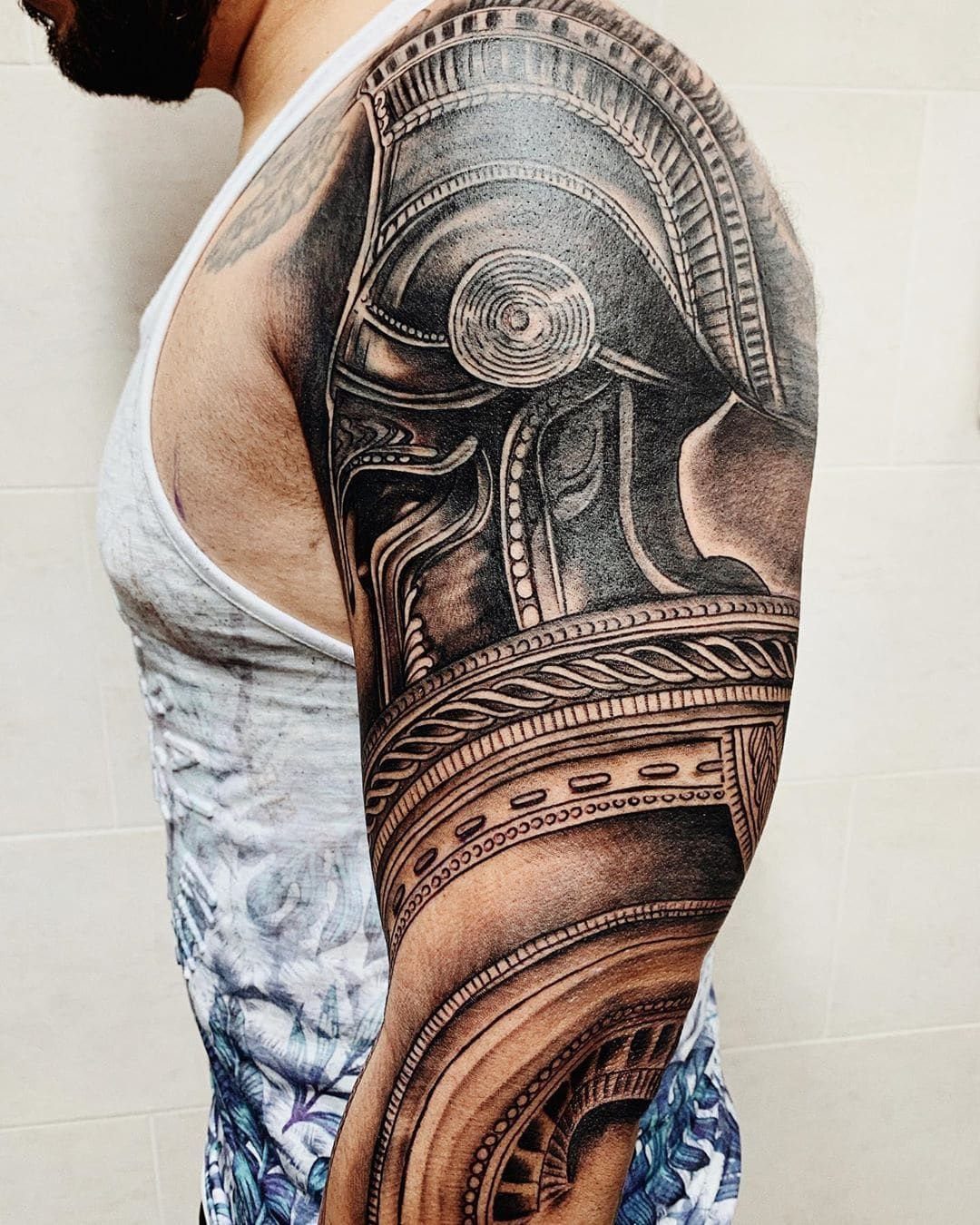
Mechanical plates layered in black and grey mimic armor or machinery, and the hard edges let the artist frame sections of old ink inside the design.
The illusion of depth makes the tattoo look like it sits under the skin, which pulls attention away from what used to be there.
A helmet or shoulder armor piece fits the upper arm’s shape naturally, and the symmetry of mechanical parts makes the composition easy to balance. Grey tones build shadow and highlight, so even without color the piece has dimension.
Biomechanical designs demand an artist who can render metal convincingly. Check their portfolio for clean line work and realistic shading before committing.
12. Skull Arm Cover Up
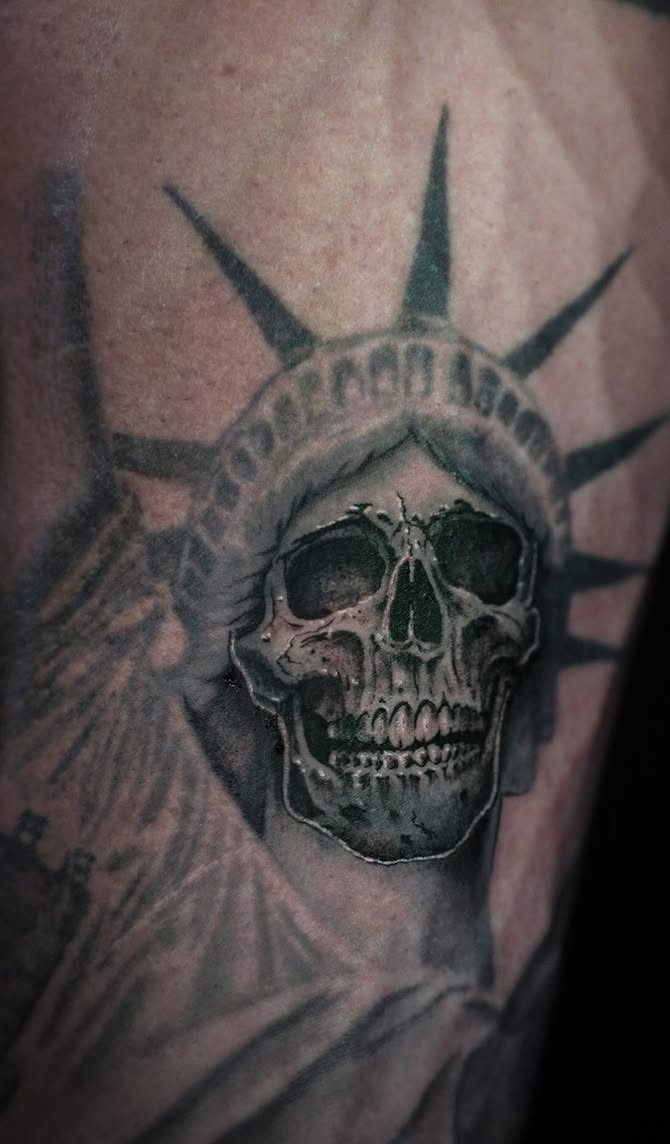
A skull wearing the Statue of Liberty’s crown combines a classic tattoo subject with a recognizable symbol, so the design carries meaning without needing a full scene.
The crown’s spikes add vertical lines that break up the skull’s rounded shape, giving the artist more geometry to work with when covering old ink.
Black and grey shading can go heavy around the eye sockets and under the jaw, exactly where coverage usually needs the most weight.
The stark contrast between bone and shadow makes the piece read clearly from a distance, and a forearm or bicep placement keeps it visible.
13. Baroque Scrollwork Cover Up
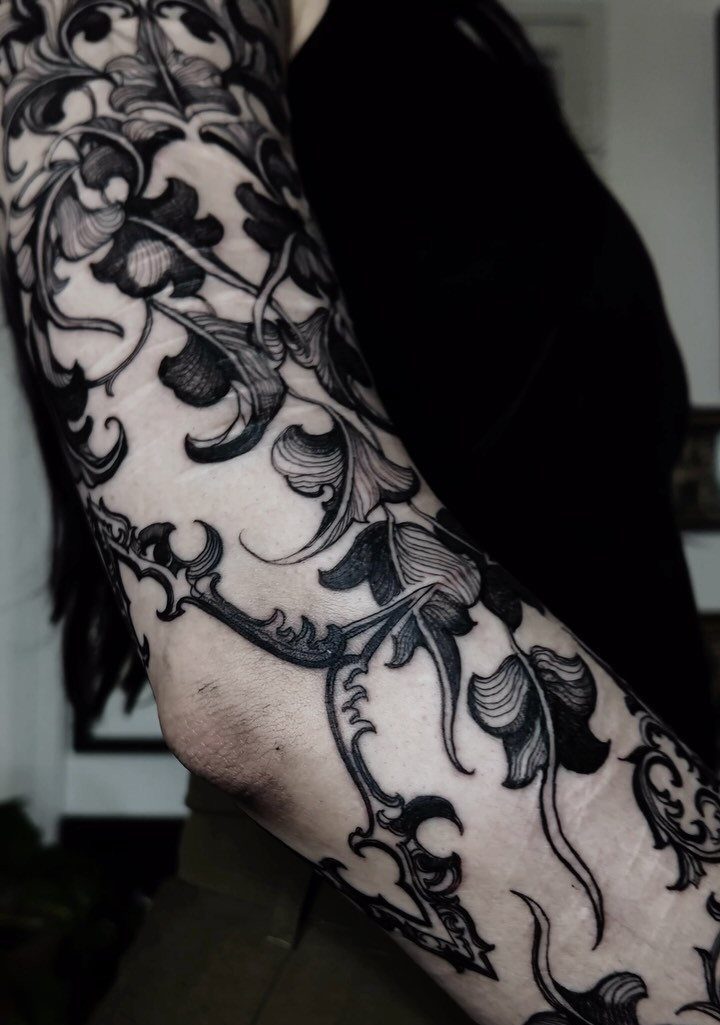
Baroque scrollwork fills space with ornamental curves and acanthus leaves, giving the artist plenty of room to adjust density where old ink needs the most coverage.
The organic swirls follow the arm’s contour naturally, and the symmetry holds everything in balance without forcing a recognizable image.
Solid black sections can sit inside the scrollwork where heavier coverage helps, and the negative space stays open enough that the piece doesn’t feel claustrophobic.
Upper arm to elbow is a good length for this style because the pattern can repeat or evolve as it moves down.
Fine line ornamental work takes longer to complete than simple fills, but the detail ages well when the artist spaces lines correctly.
14. Japanese Dragon Cover Up
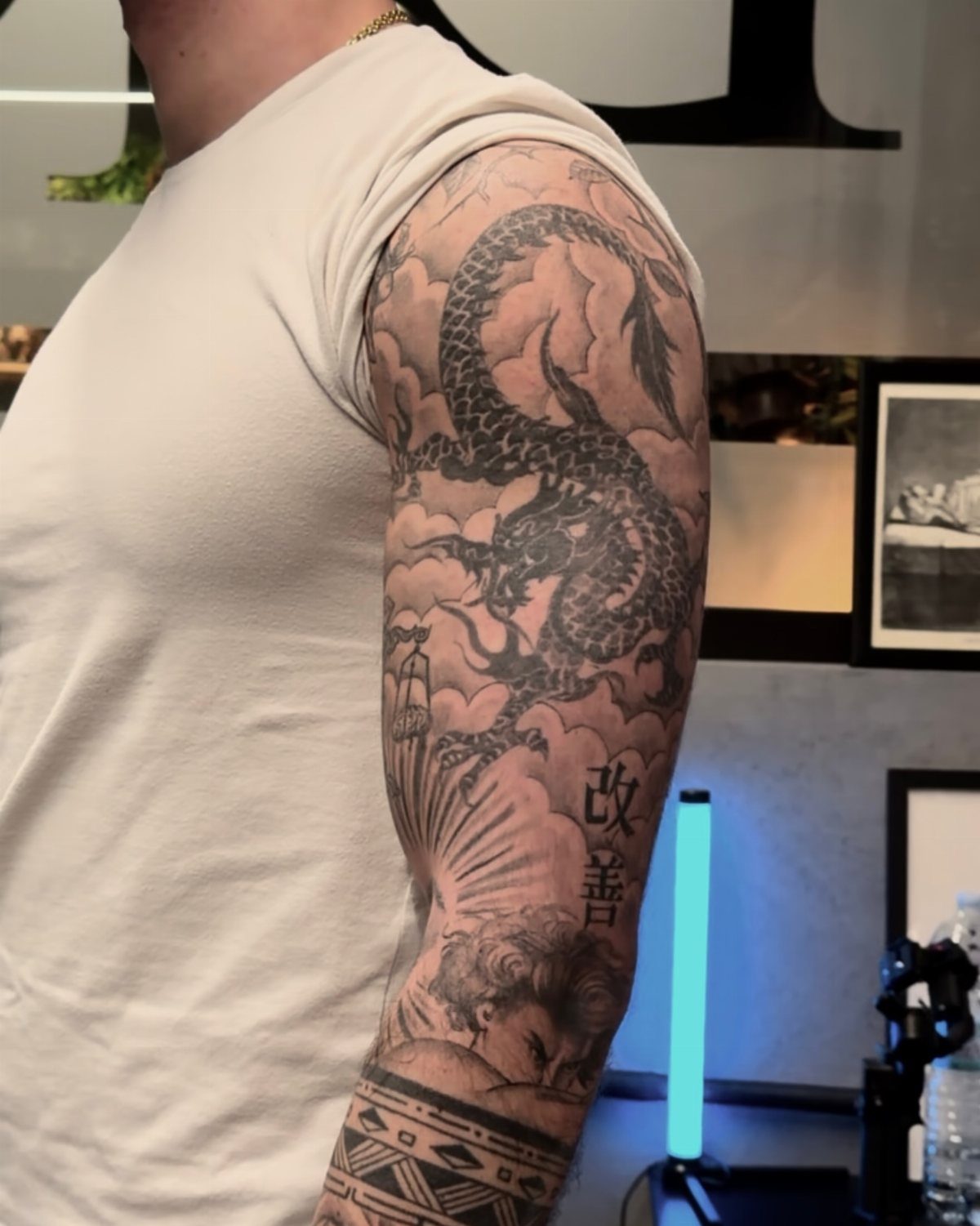
A dragon’s long body gives the artist a flexible shape to wrap around old ink, and clouds fill gaps without needing hard edges.
Japanese characters add vertical elements that break up the flow, which helps when the old tattoo left strong horizontal lines.
Black and grey shading layers depth into the scales and clouds, letting the artist go darker where coverage demands it. The upper arm and shoulder together offer enough surface that the dragon can coil naturally instead of looking cramped.
Choose an artist familiar with Japanese tattooing. The style has rules about composition and flow that show when they’re ignored.
15. Tiger Face Sleeve
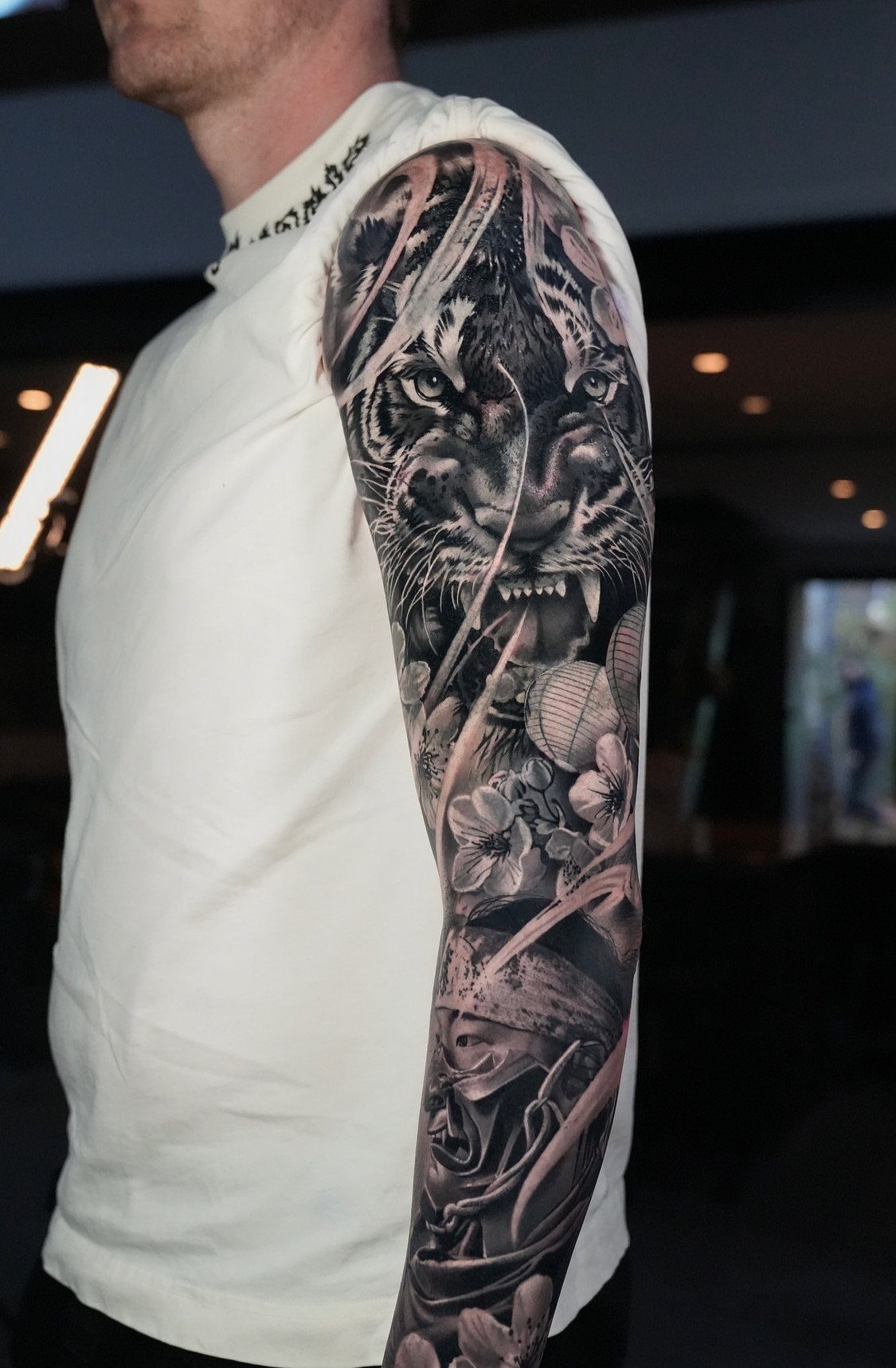
A tiger face anchors the sleeve with a focal point strong enough to pull attention away from what used to be there, and the floral elements soften the aggression while adding coverage where the artist needs it.
Black and grey tones keep the contrast high, which helps both the fur texture and the petals read clearly.
Full arm sleeves take multiple sessions, usually spaced weeks apart to let each section heal before adding more. The combination of realism and pattern gives the artist flexibility to adjust density as the piece moves down the arm.
Look for clean highlights and dimensional shading in their portfolio.
16. Japanese Waves and Red Flowers
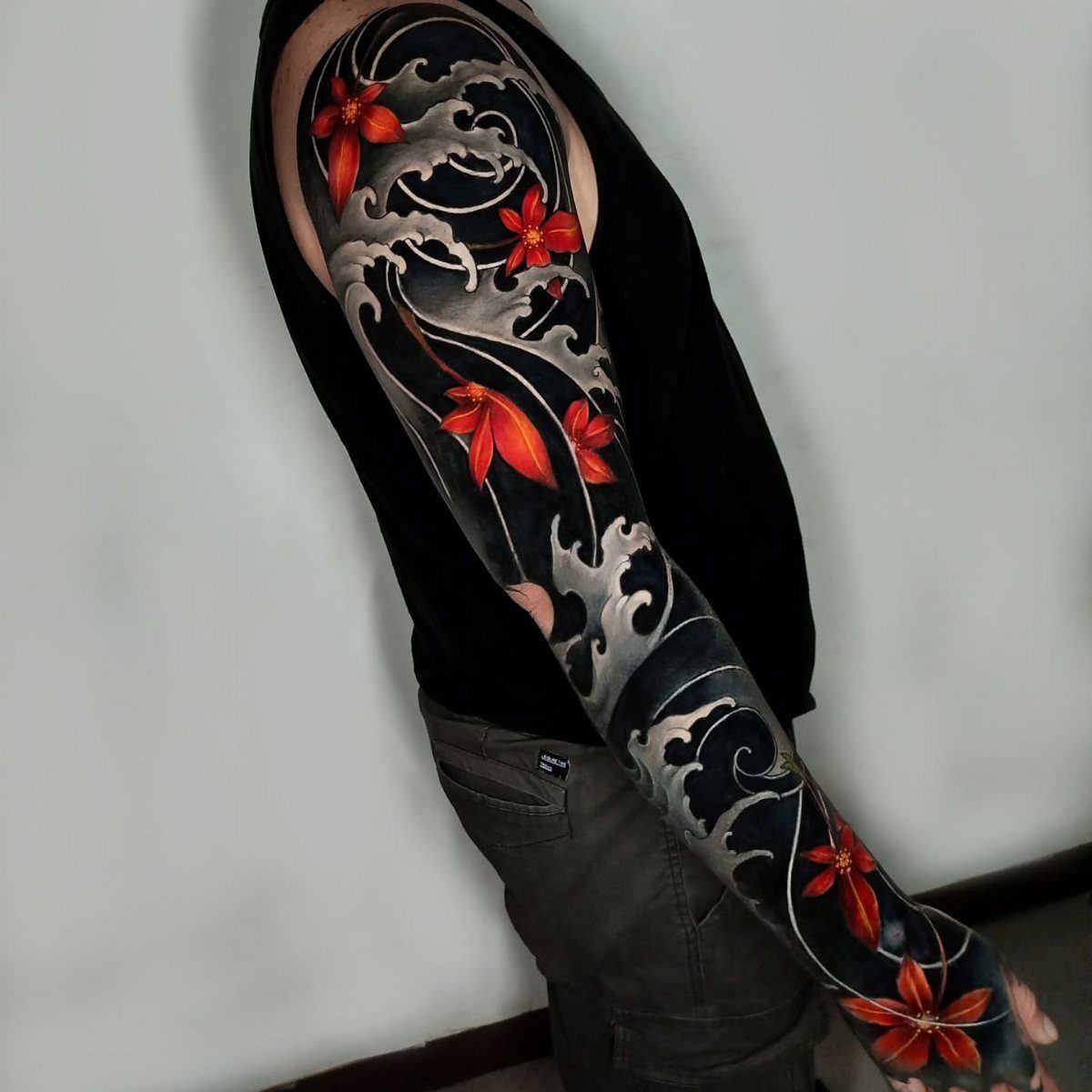
Japanese wave patterns curve and overlap in ways that let the artist adjust thickness and shading exactly where old ink shows through, and the red blossoms pull focus without demanding the precision of a full-color piece.
The limited color palette keeps sessions shorter than a fully chromatic sleeve, and red holds better than most other colors on arms that see regular sun.
Waves work as a full sleeve because they flow naturally from shoulder to wrist, treating the limb as one continuous canvas. The motion in the design distracts from symmetry, so minor imperfections in coverage stay hidden.
17. Black Dragon and Red Moon Sleeve
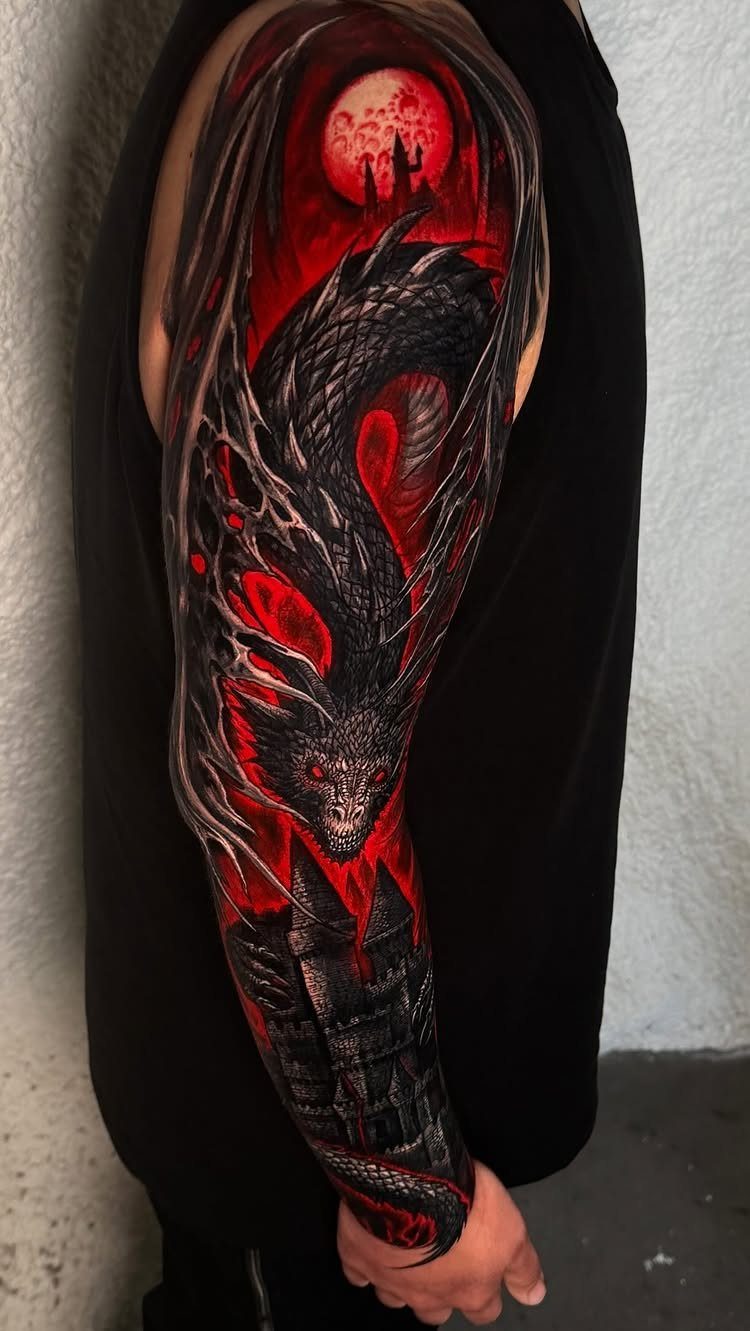
Gothic imagery gives the artist dark, dramatic elements to work with, and the red moon adds a controlled color accent without the complexity of full-color realism.
A dragon’s body can stretch or compress to fit around problem areas, and the castle anchors the background with structure that balances the organic shapes.
Full arm coverage in black and red usually costs less than multicolor work because fewer pigments mean faster application. The red background unifies the piece and hides inconsistencies in the old tattoo better than trying to match skin tone.
Red ages into a deeper burgundy over time, which keeps the contrast strong even as the ink settles.
18. Winged Knight Arm Tattoo
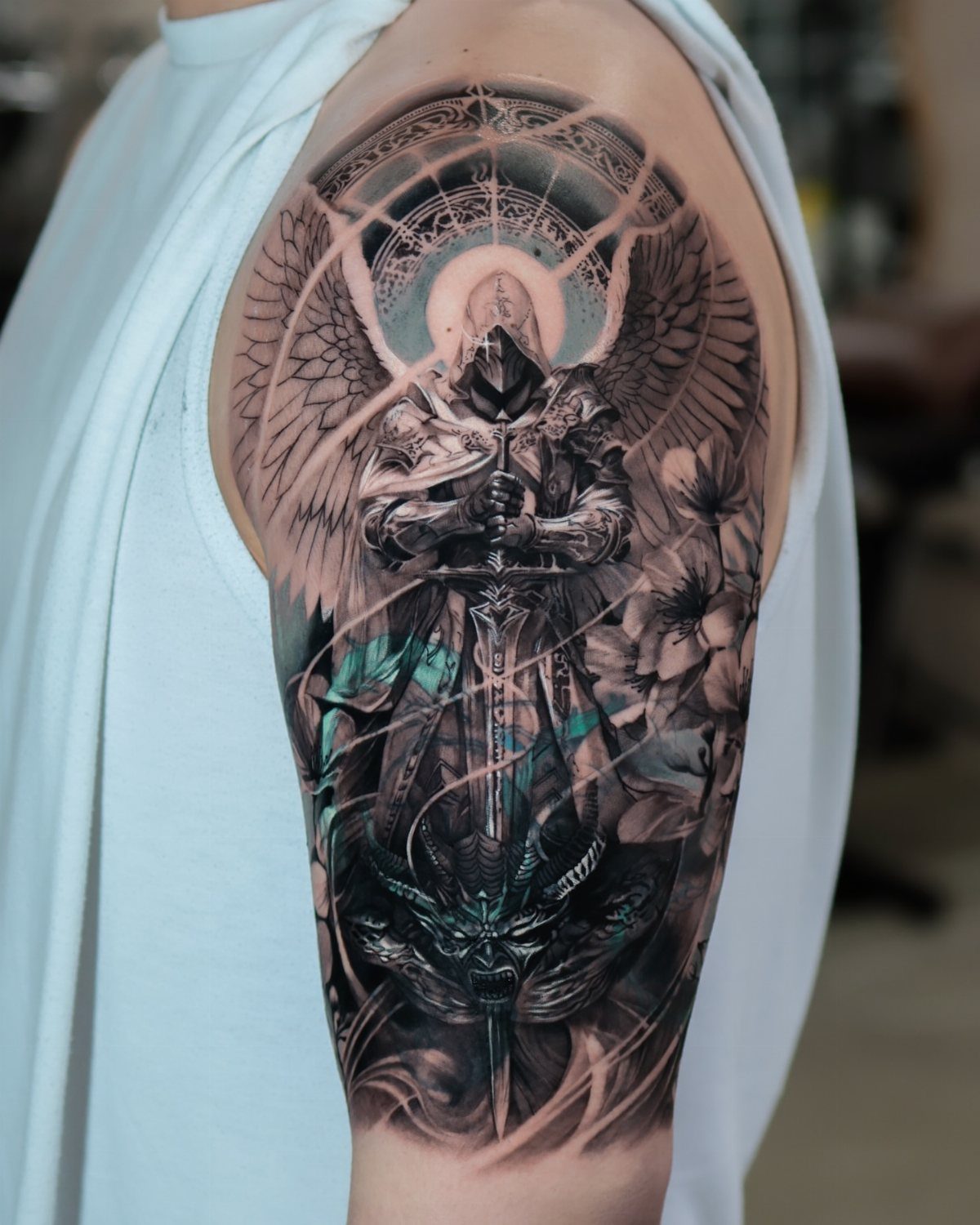
A winged knight over a demon face stacks 2 focal points vertically, which works well on the upper arm where the viewer’s eye naturally scans top to bottom.
The sword adds a strong vertical line, and geometric background elements let the artist darken sections without crowding the main figures.
Black and grey suit this kind of fantasy composition because the tonal range builds drama without needing color to separate elements.
The compact placement stays readable when your arm is at rest, and the contrast between angelic and demonic imagery makes the theme clear.
Frequently Asked Questions
Is it cheaper to get a tattoo removed or covered up?
A cover-up typically costs less than full laser removal because you’re paying for the new tattoo instead of multiple removal sessions spaced months apart.
Removal can run into thousands of dollars depending on size and color, while a cover-up lets you replace the old design in fewer appointments.
Some pieces benefit from a few laser sessions to lighten the ink before covering, which adds cost but improves the final result.
What are the hardest tattoos to cover up?
Very dark, large, or heavily saturated tattoos resist coverage because the new ink has to sit over dense pigment that shows through lighter shades.
Old solid black work and deep colors like red or green demand designs with enough darkness and detail to bury what’s underneath.
An artist can assess whether your piece needs laser lightening first or if a design with solid fills and high contrast will handle it.
Can every tattoo be covered up?
Not every tattoo can be fully concealed with new ink. Size, ink density, color, age, and how deep the pigment sits all affect whether a cover-up will work without ghosting.
Very dark or saturated pieces might need laser lightening before the artist can cover them cleanly, and a consultation shows what’s realistic for your specific tattoo.
When should you consider a cover up tattoo?
If an old tattoo no longer fits who you are and laser sessions sound like more than you want to take on, covering it is the faster route.
Faded designs, work that didn’t turn out as expected, or tattoos that no longer match your style are all good candidates.
A skilled artist will look at what you have and tell you if they can work over it immediately or if a few laser passes will open up better options.