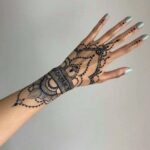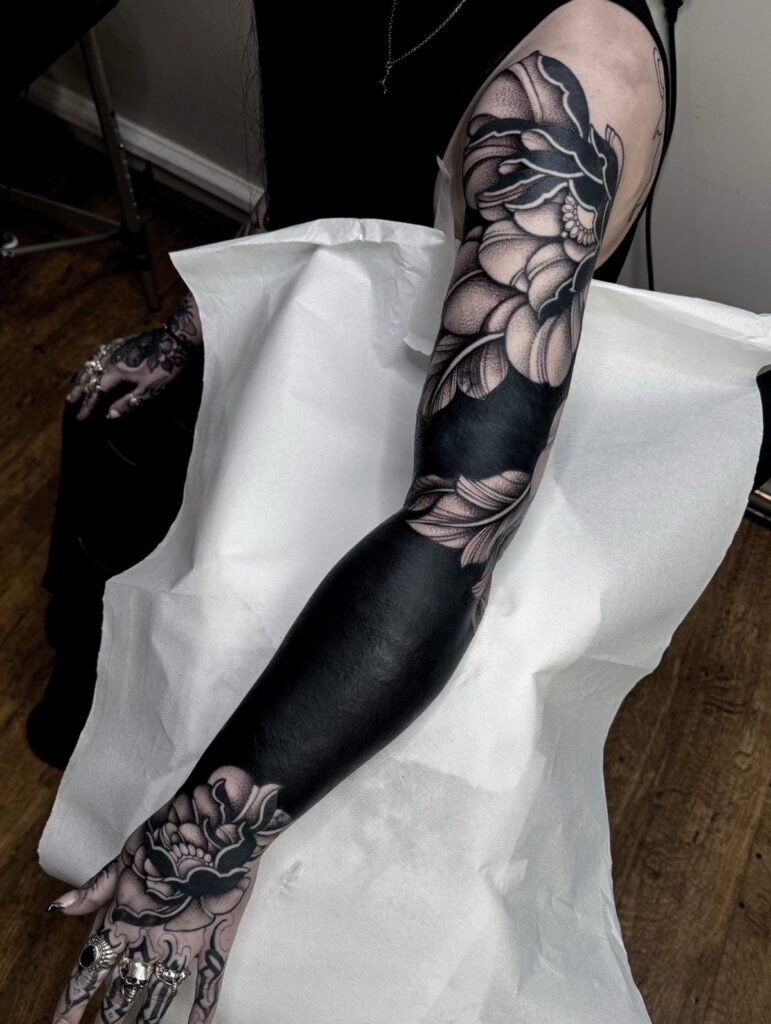
Black cover-ups range from animal fur and florals built in layered strokes to skulls wrapped in dense shading, pocket watches with roses, and solid blackout that erases everything underneath.
The choice depends on how much of the old tattoo you want to incorporate: designs like skulls, florals or pocket watches use dense black shading to swallow mistakes while keeping a focal image, blackout skips the design phase and just fills.
1. Animal Fur Black Tattoo Cover Up
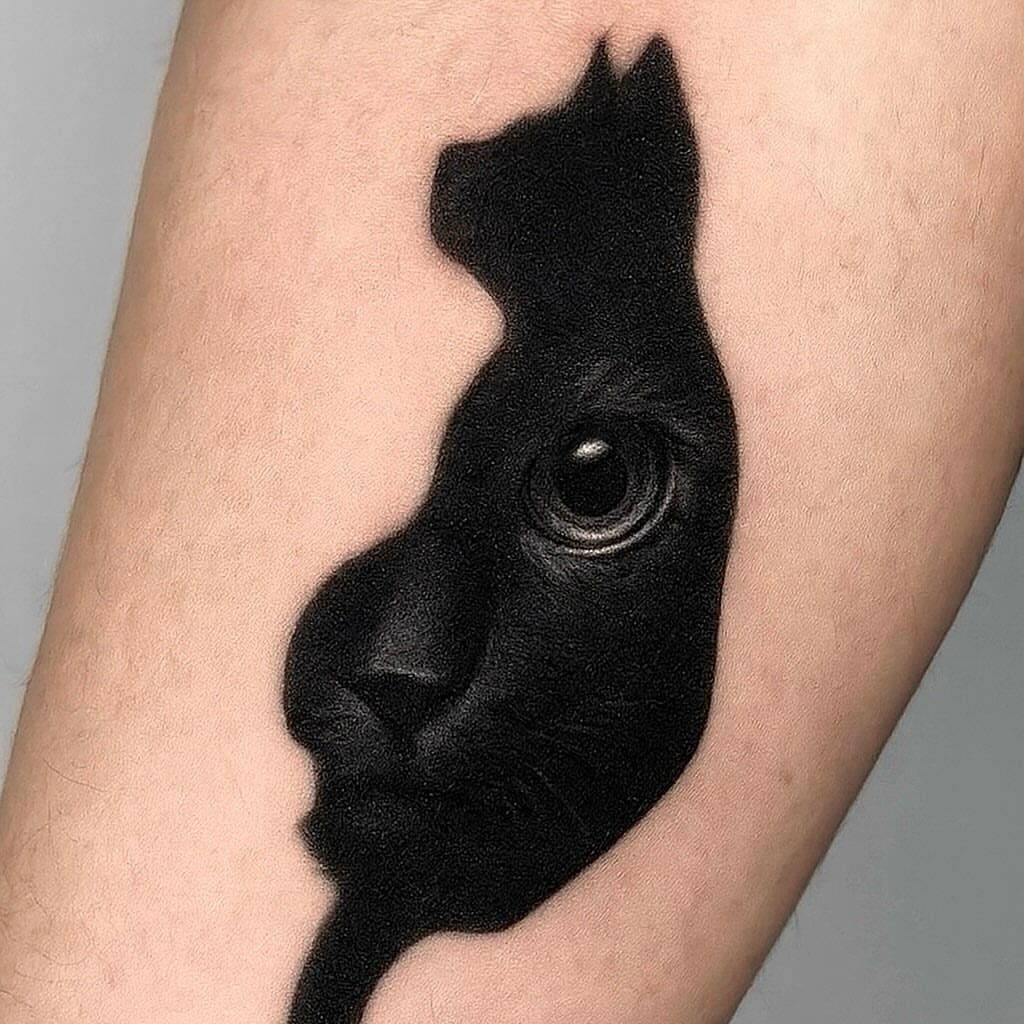
Dense fur texture renders in layered black strokes that build volume over a flat old tattoo. The black-on-black approach works because fur has directional flow and depth, so even without contrast you read the form.
Start with reference that shows how the animal’s coat lies.
Map the old ink, then plan fur direction to break up hard edges and obscure shapes underneath. Fur takes multiple passes to look dimensional, each layer adds another plane of depth that hides what sits below.
Cats, wolves and bears all offer dense coats that cover well and hold detail over time.
2. Floral Black Tattoo Cover Up
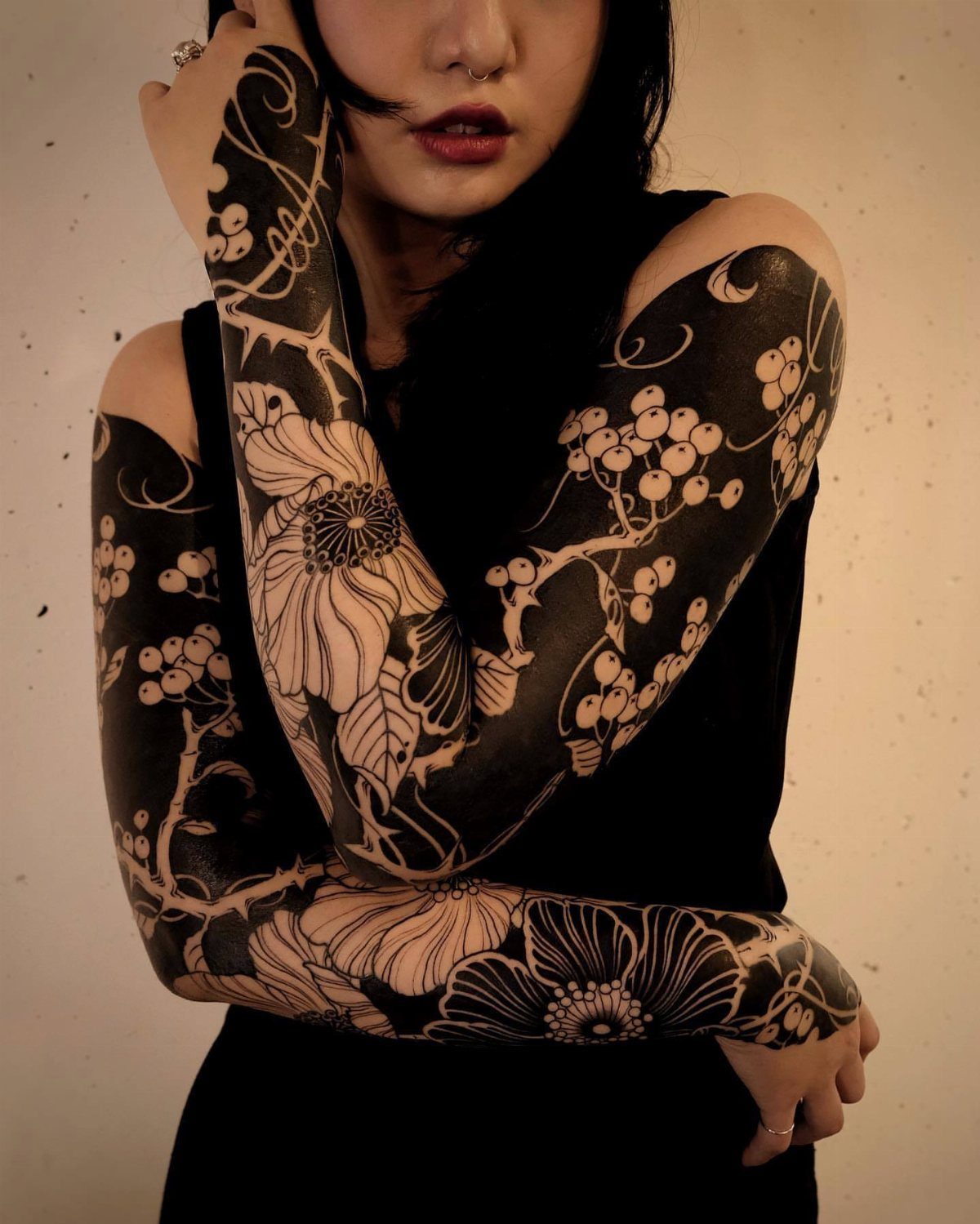
Large floral compositions in solid black ink give you room to hide old work inside petals, stems and negative space.
Flowers scale up or down to fit the area you need covered, and botanical shapes naturally wrap around muscle and bone.
Pick blooms with overlapping petals like roses, peonies or dahlias.
Those layers create pockets of dark fill that swallow mistakes. Leaves and vines connect separate flowers, so you can extend coverage as far as needed without forcing symmetry.
Black floral works best when the old tattoo sits lighter than the new ink going over it.
3. Solid Blackout Cover Up
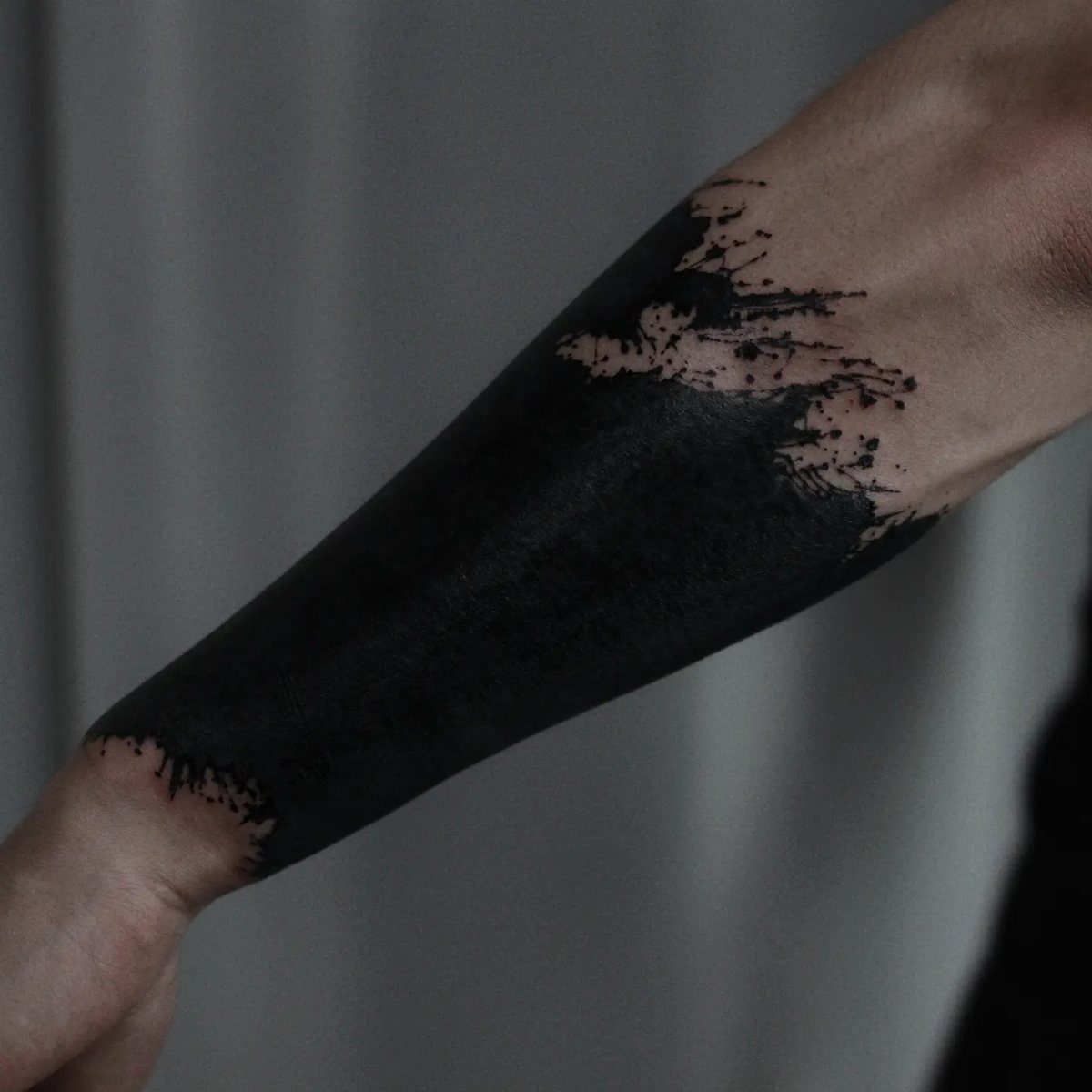
A solid block of black ink erases anything underneath, no design negotiation required. The splattered edge here softens what would otherwise read as a hard geometric shape, so it looks intentional rather than like you gave up.
Permanence is the catch: once you black out a section, your only moves later are laser removal or adding negative-space patterns on top.
Size the block to cover completely, edges matter more than the middle.
4. Skull and Blackout Sleeve Cover Up
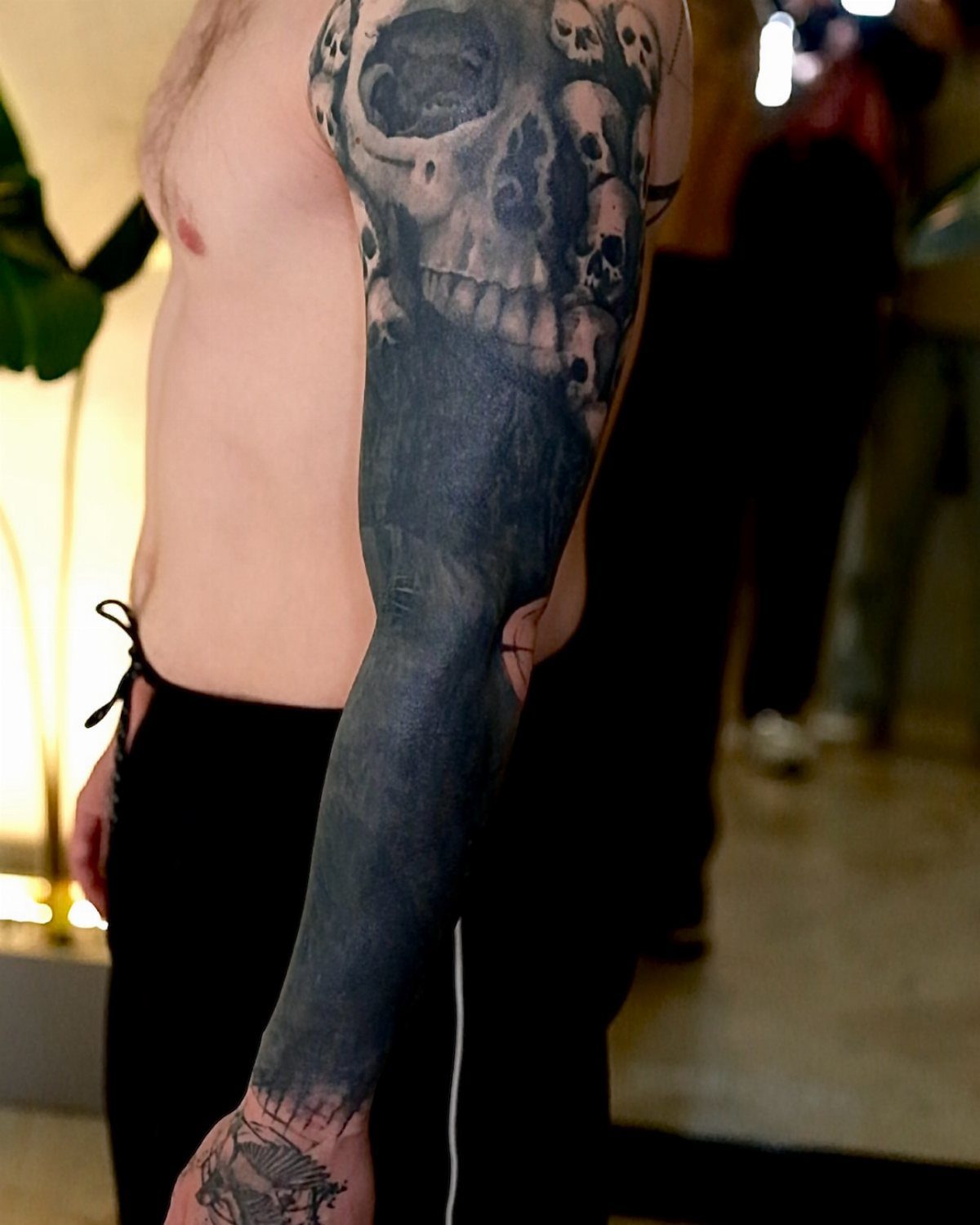
A detailed skull anchors the shoulder, then solid black extends down the forearm to erase whatever was there before.
This split approach puts the visual interest where people look first and uses blackout only where you need coverage, so you end up with a cohesive sleeve instead of 2 separate ideas.
Place your focal image on the shoulder or upper arm, then let the black flow downward.
That transition works because sleeves taper, and a fade from detail to solid feels natural along the limb. The skull reads clearly against skin, while the forearm blackout handles the heavy lifting.
This works when the old ink sits lower and your shoulder and bicep give you clean space for new detail.
5. Pocket Watch and Rose Cover Up
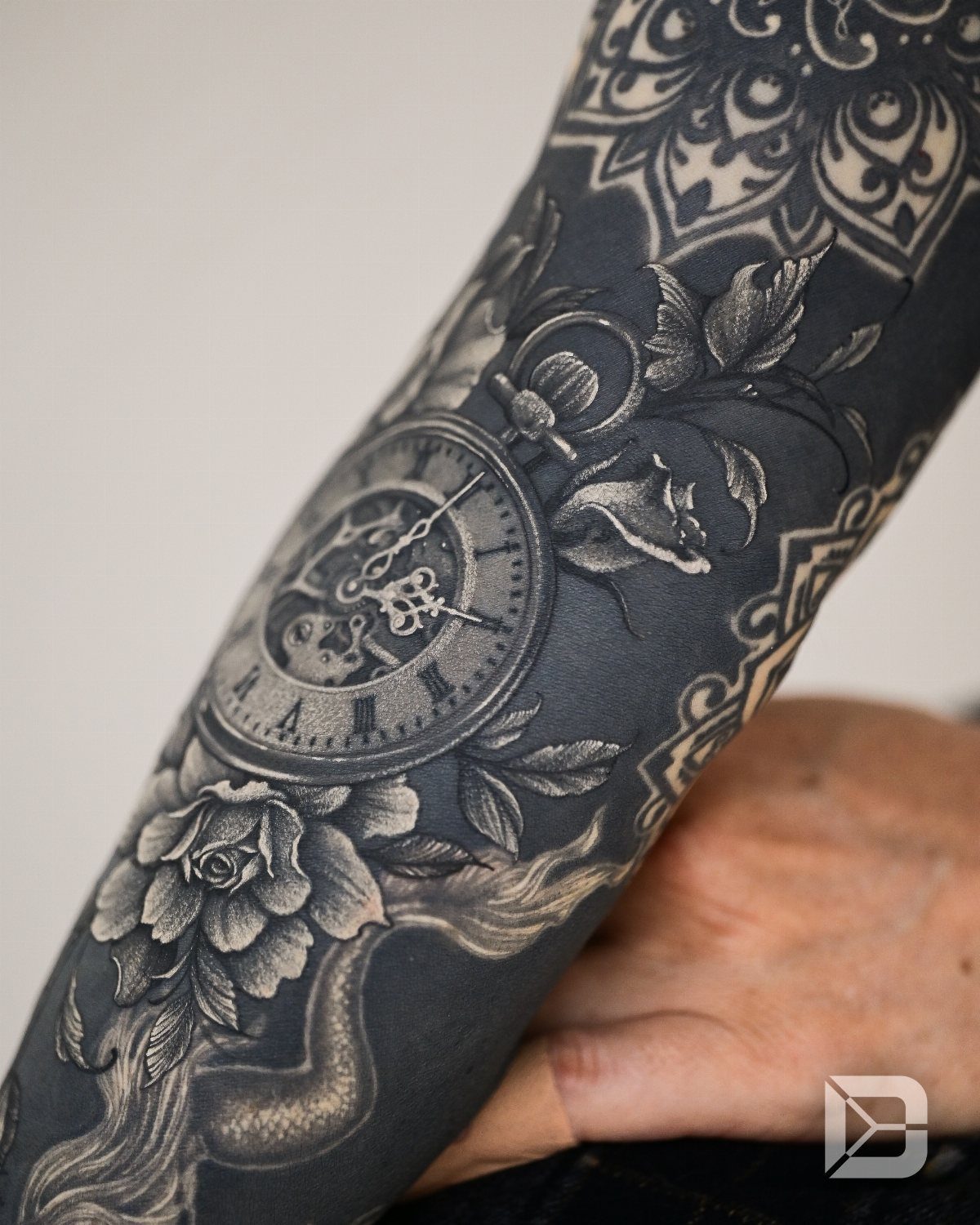
The pocket watch and roses sit embedded in dense black shading that reads almost as blackout, which is how you cover heavy old work without erasing it entirely.
The dark background swallows mistakes, while the watch and florals give the eye something to land on.
Roman numerals and mechanical detail inside the watch keep it readable even when surrounded by saturated black.
Roses soften the composition and add organic shape. Together they fill enough space to hide large or complex old tattoos.
This approach needs an artist comfortable pushing black ink to near-solid fill while keeping the central design crisp.
Pain Levels
Covering black ink does hurt, but not because you already have a tattoo there.
Pain depends on where you place the cover-up, how long the session runs, how much solid fill the design needs, and how your skin feels that day.
Large or intricate cover-ups often take longer to complete, which means sitting through more machine time in one appointment. If that becomes too much, your artist can split the work across multiple sessions so each one stays manageable.
Individual sensitivity varies. Some people handle long sessions without trouble, others need breaks or shorter appointments.
Talk to your artist before you start. They can estimate how long your cover-up will take and help you plan sessions that fit your tolerance.
The design itself matters too. Saturated black shading over old ink requires more passes than a simple outline, which adds time and discomfort.
Expectations for Results
A cover-up hides an old tattoo, it does not make it vanish.
The original ink will still sit under the new design, and in certain light or angles you may still see a shadow or outline of what was there before.
A black cover-up makes the old work much less noticeable, not invisible.
Your new design has to be bigger than the piece it’s hiding. Trying to stay too small leaves edges exposed or forces your artist to work around shapes that do not fit the new composition.
Look for an artist who has done cover-ups before, not just clean-skin work. Covering old ink is different work than tattooing clean skin.
Dark realism or heavy shadows need an artist who can build depth and texture while managing what already sits beneath. Not every artist who does realism also does cover-ups well.
Frequently Asked Questions
How much does a blackout tattoo cost?
Blackout covers large skin in solid black ink, which is faster than building a detailed cover-up and can bring the total cost down even though the area is big.
Get a quote based on square inches and estimated hours before you book.
What makes a black tattoo easier or harder to cover?
A tattoo that has faded over time gives your artist more room to work than one that was finished last month.
Size, how much solid fill the original has, line thickness, location and any scar tissue all affect difficulty. A small piece with thin outlines and some fading opens up more design choices than a large, dense tattoo that’s still dark.
Should you fade a black tattoo before covering it?
Laser fading is not mandatory, but it opens up more design choices when the original piece is very dark or filled with dense black.
A few removal sessions can lighten the original enough to give your artist more flexibility and reduce how much new ink is needed to hide it.
Fading makes sense when you want a specific design that won’t work over heavy black.