Henna tattoos on the chest last 1 to 3 weeks and let you test a design before committing to permanent ink.
If you want something visible in open necklines, keep the design above the sternum; if you’re working with a broader chest, mandala and concentric circular patterns have room to expand without crowding.
Symmetrical designs like roses or lotus flowers work on any chest width, while chandelier and necklace patterns elongate the vertical space and read like jewelry.
1. Central Lotus Flower
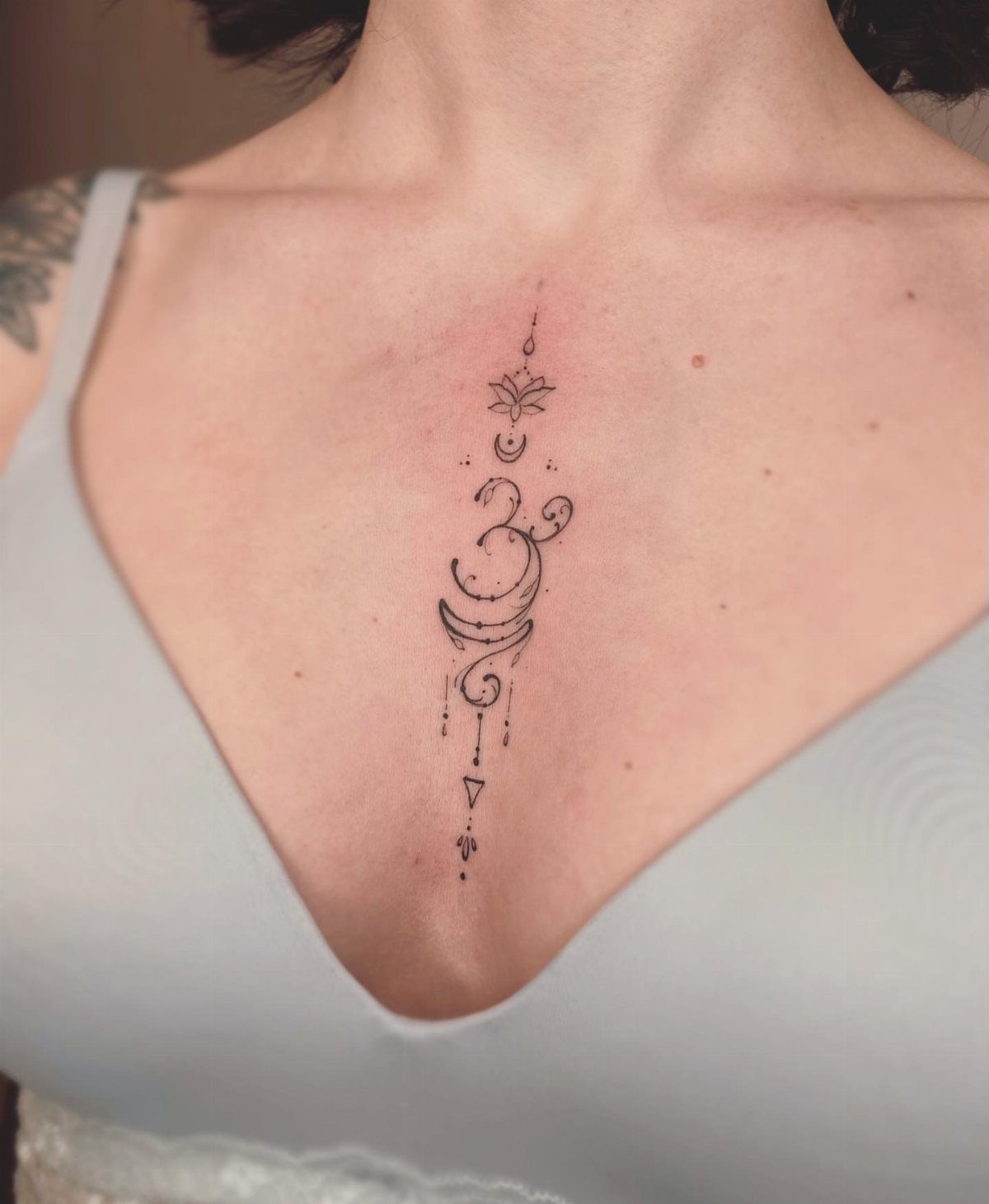
A single lotus bloom sits at the center of the chest, usually paired with small accent symbols that sit below it. The lotus reads clearly from a distance and fills the upper chest without wrapping across the collarbones.
Henna lasts long enough to test the placement before committing to ink. The paste needs time to sit for the stain to develop, and the darkest color shows up after you remove it.
Keep the design above the sternum if you want it visible in a V-neck or scoop neckline.
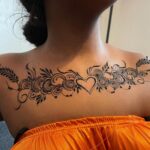
2. Swirling Vine Pattern
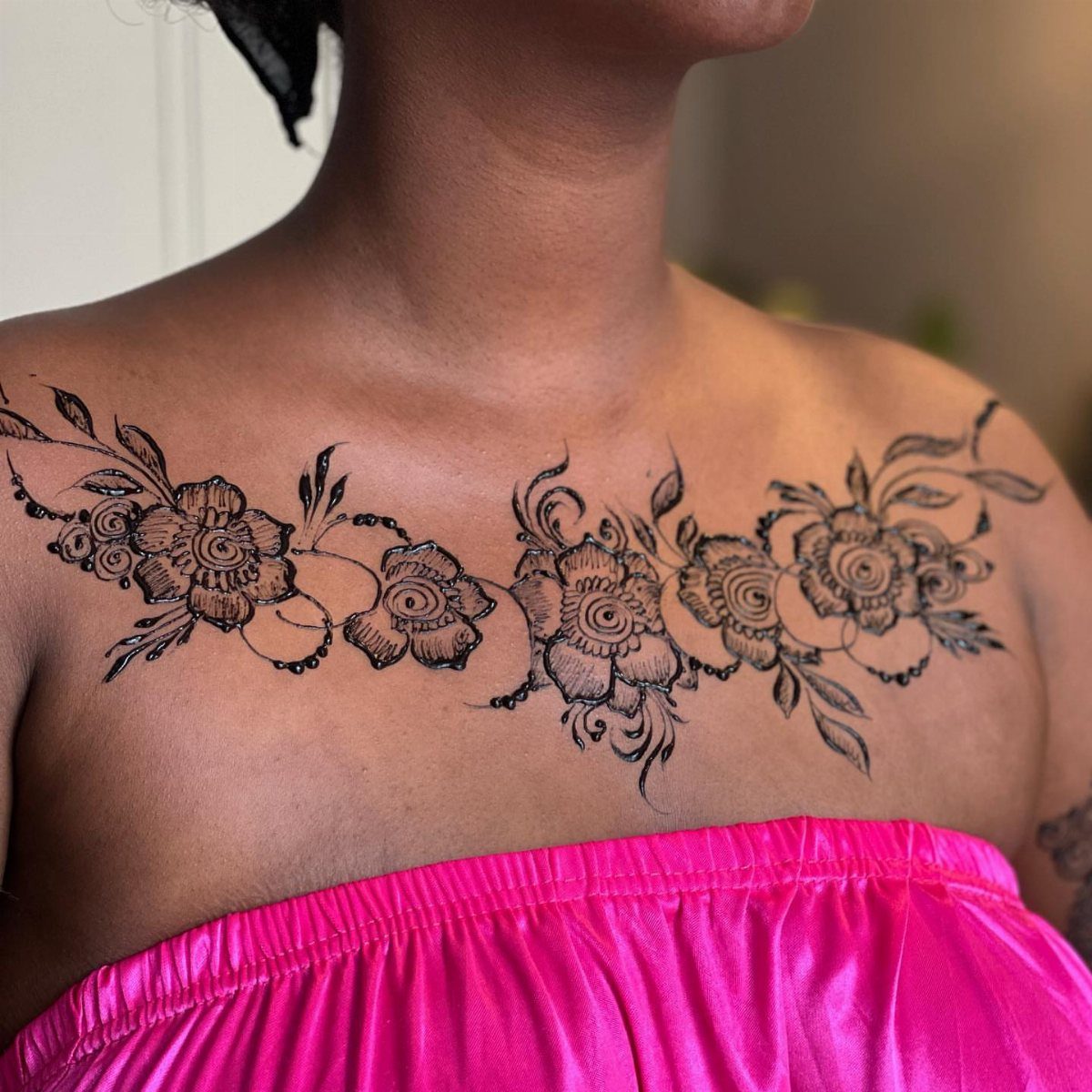
Vines curve out from the center and wrap toward the shoulders, with small flowers or buds growing off each stem.
The lines follow the natural contours of the chest and collarbone, so the design moves with you instead of sitting flat.
This style covers more skin than a single symbol, so the application takes longer if you’re doing it yourself.
Henna paste comes in cones that let you draw freehand, and you can adjust the thickness of each vine by changing how hard you squeeze.
Symmetry matters less here than flow. Start at the center and let one side finish before you mirror it.
3. Symmetrical Floral Roses
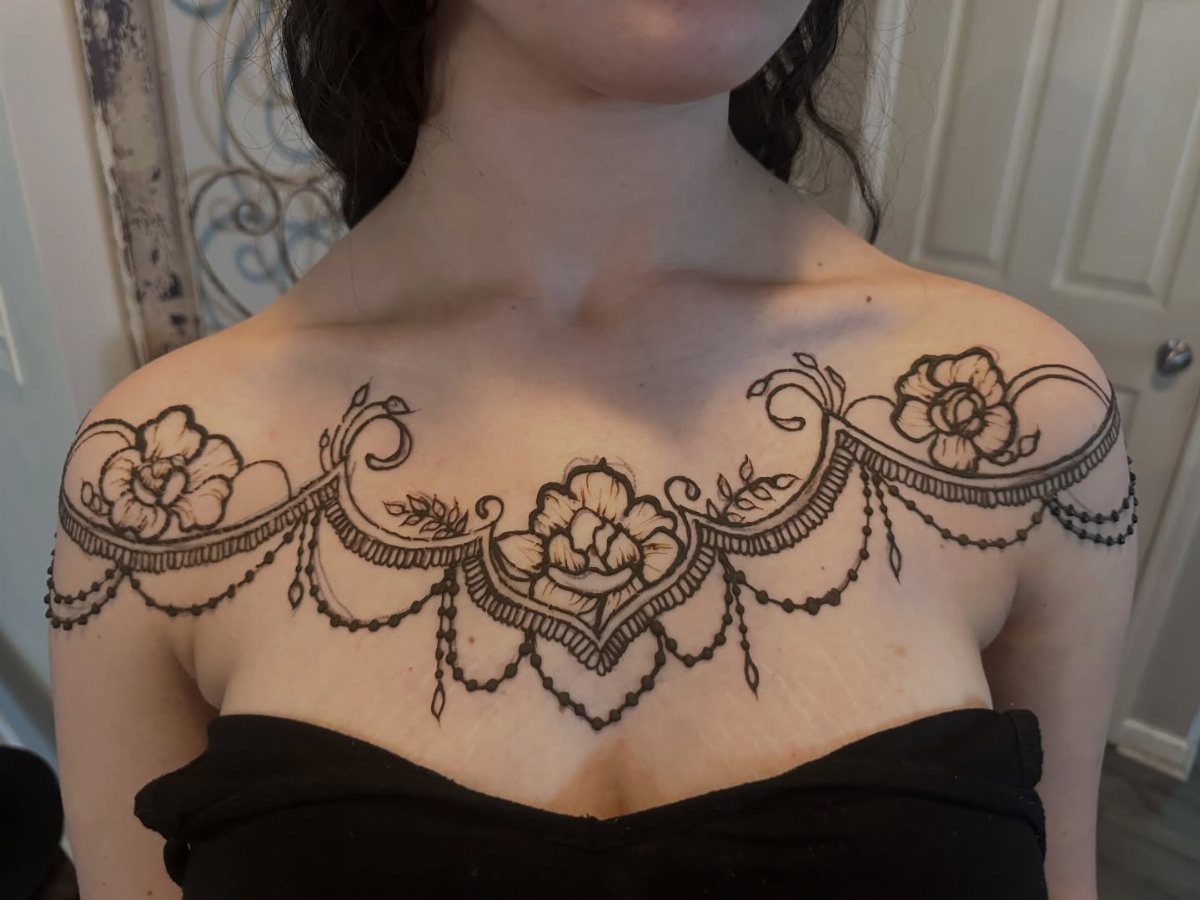
2 roses sit on either side of the chest, connected by a dotted line that drapes across the sternum like a necklace chain. The symmetry keeps the design balanced, and the dots add detail without filling the entire space.
Roses in henna take longer to draw than simple geometric shapes because the petals layer. If your hand isn’t steady, sketch the outline with a washable marker first, then trace over it with the henna cone.
The dotted line can run straight or curve slightly to follow the shape of your chest. A straighter line reads more like jewelry.
4. Mandala-style Necklace Pattern
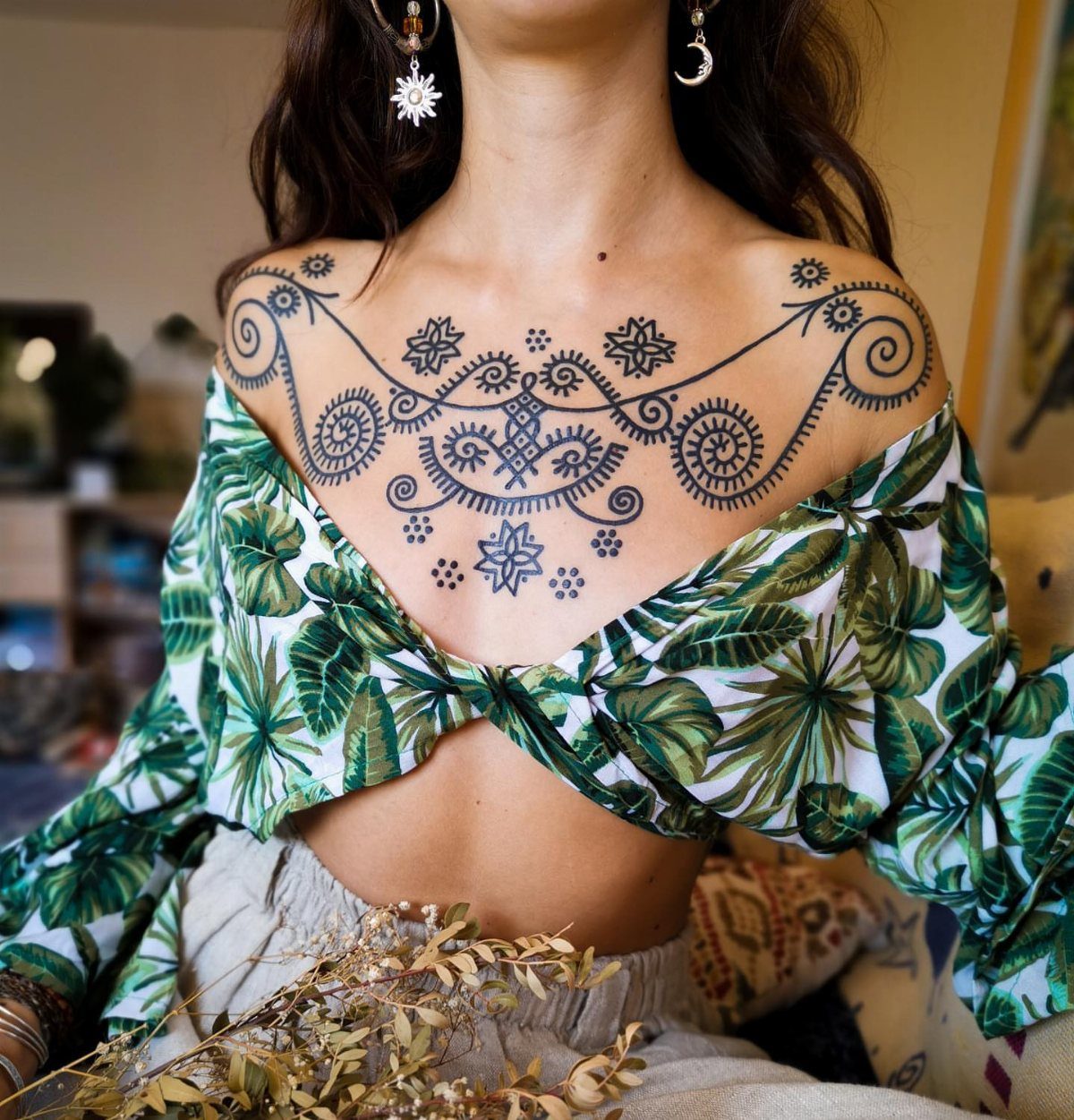
A full mandala fans out across the upper chest and collarbones, with repeating petals or geometric sections that radiate from a central point.
The size and symmetry make it look like a statement necklace, and the upper placement keeps it visible in open necklines.
This design takes longer to apply because every section needs to match.
Use a stencil if you want perfect symmetry, or freehand it if you’re comfortable with slight variations. The outer edges usually taper into points or small details that sit just above the collarbone.
5. Concentric Circular Patterns with Bull Motif
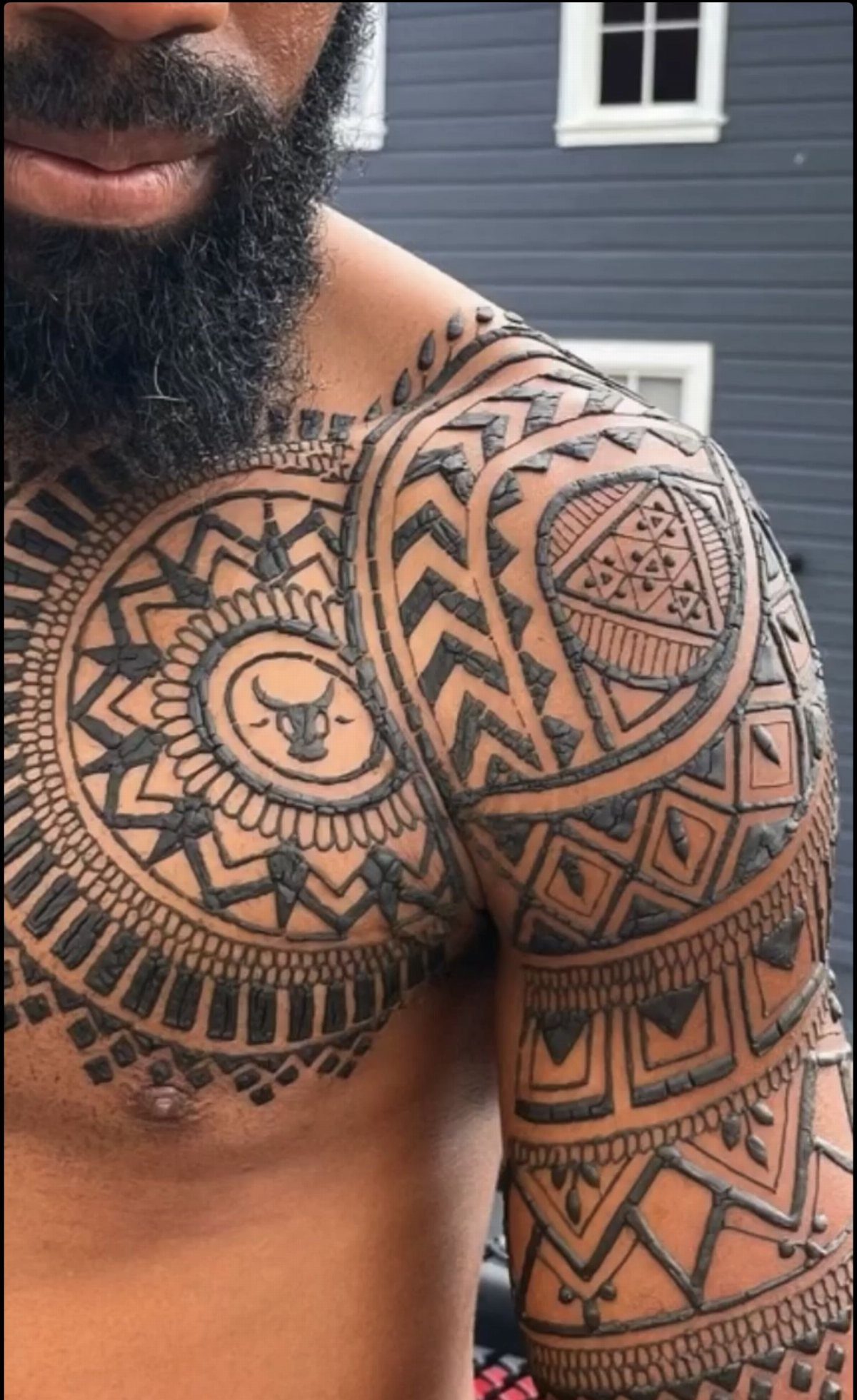
Concentric circles stack outward from a central point, often with a bull or animal motif placed inside the rings or off to one side.
The circular lines give structure, and the bull adds a focal point that breaks up the geometry.
This style works well on broader chests because the rings need room to expand without crowding.
The circles can sit flat or follow the curve of the pectoral muscle, depending on how you position them. The center of the chest tends to stain darker than the outer edges because the skin is thicker and warmer there.
If you add an animal, keep its details simple so the silhouette reads clearly once the paste is removed.
6. Central Spiral Design
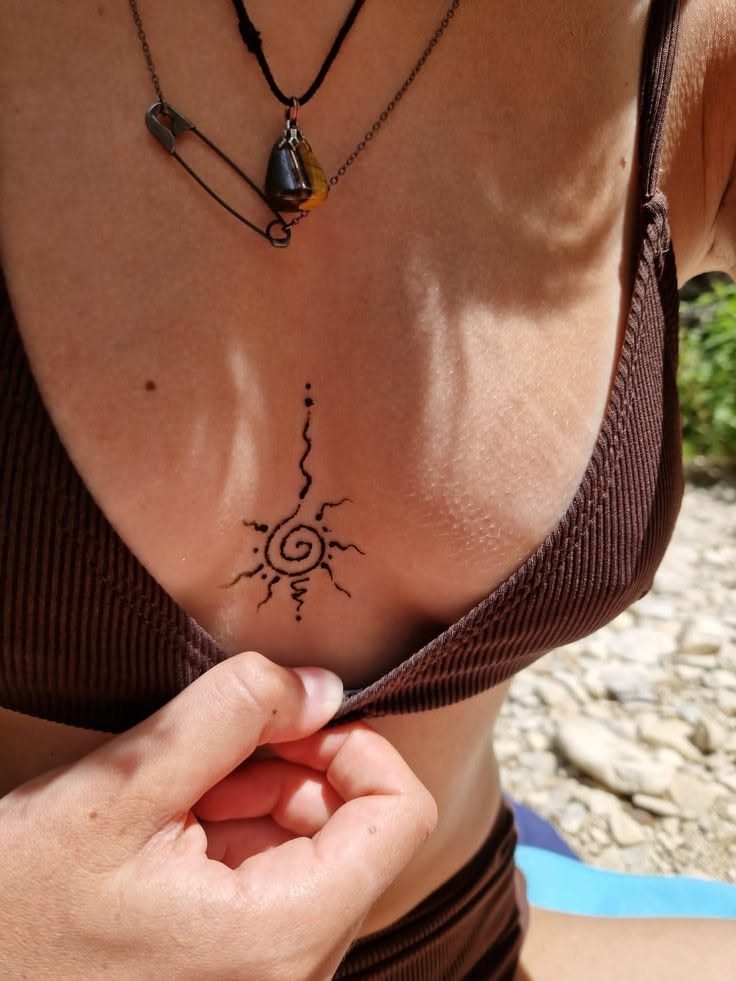
A tight spiral sits at the center of the chest, with straight or slightly curved lines radiating outward like sun rays.
The contrast between the coiled center and the directional lines gives the design energy, and the symmetry keeps it balanced.
You can space the lines evenly or cluster them in groups for a different effect. Henna stains better when the paste is thick, so go over each line twice if it looks thin on the first pass.
The spiral works on any chest width because it scales up or down without losing its shape.
7. Butterfly Design
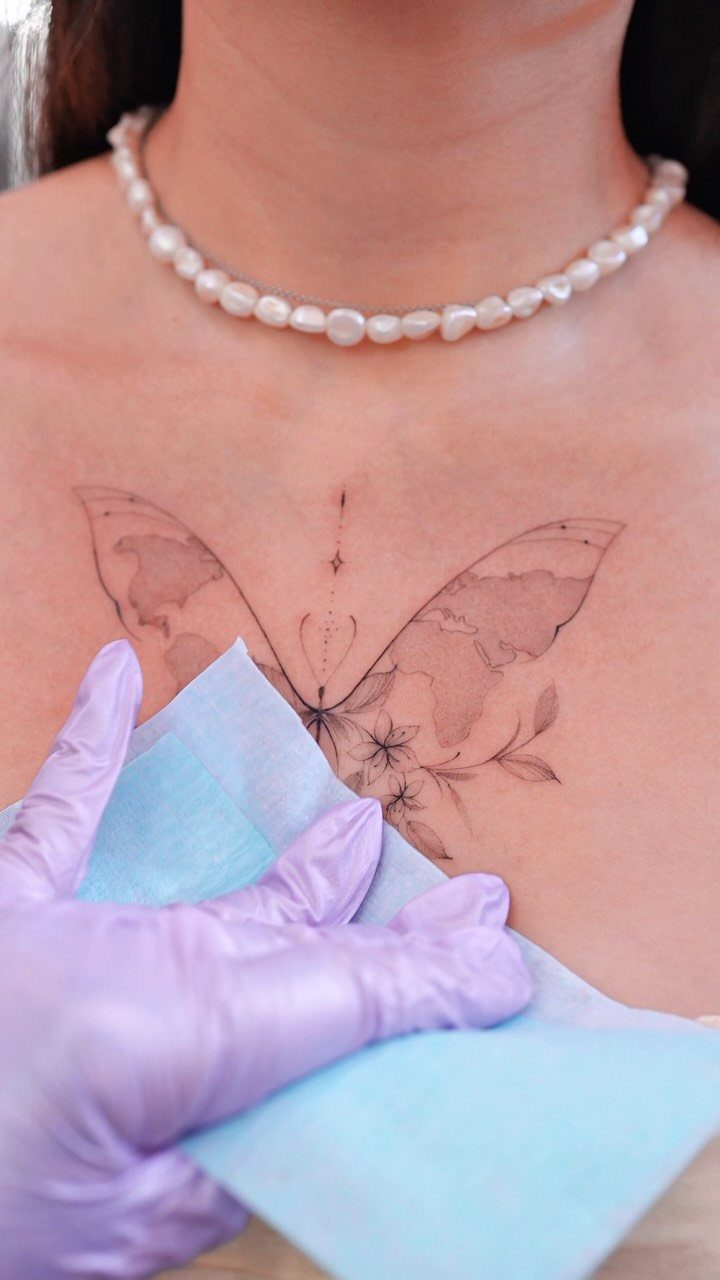
A butterfly sits at the center of the chest, wings spread wide, with small flowers or leaf shapes tucked near the body or wingtips.
The wings can be filled with dots, curved lines or solid sections, and the symmetry holds even if you keep the details loose.
Butterflies read clearly at any size, so this works on a narrow or broad chest. The floral accents soften the edges and give you room to adjust the design if the proportions feel off after you start.
If you’re new to freehand henna, outline the butterfly first with a washable marker.
8. Chandelier Pattern
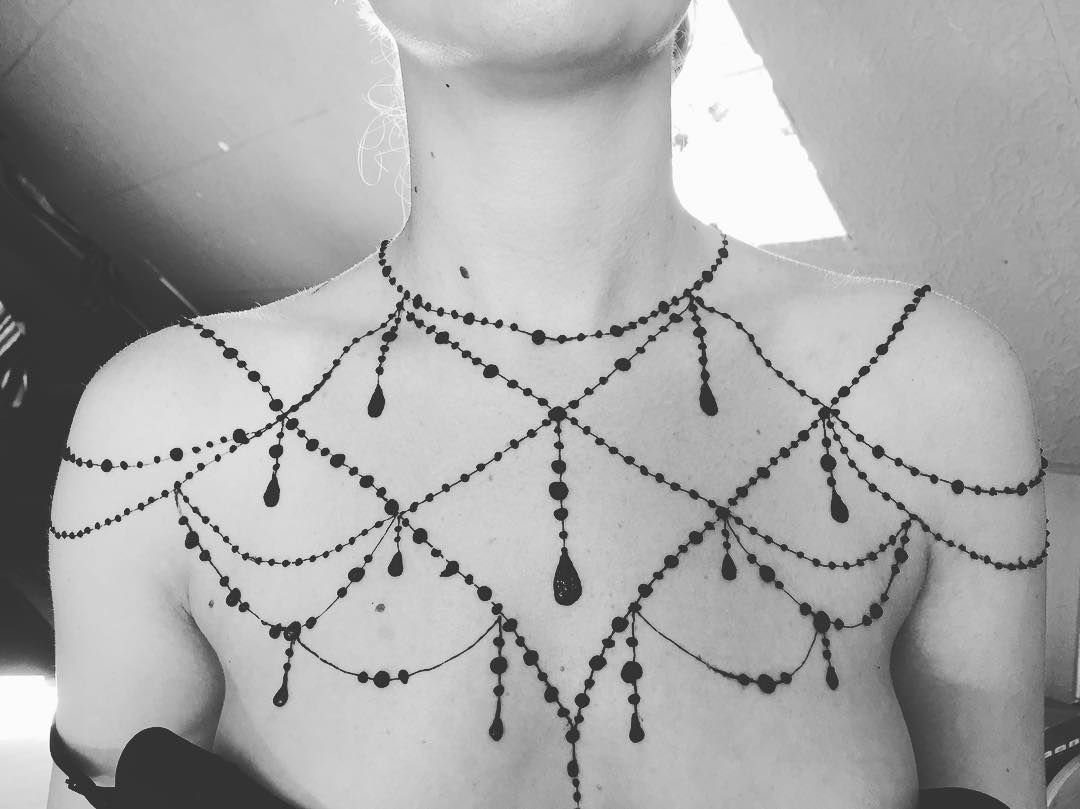
A chandelier shape hangs from the center of the chest, with a central pendant and arms that curve upward toward the collarbones.
The design mimics hanging jewelry, with chains, drops or beaded details that taper as they move away from the center.
This style takes patience because the small details need steady hands. Henna paste dries fast, so work one section at a time instead of outlining everything before you fill.
The vertical drop elongates the chest and keeps the design contained without wrapping around to the sides.
Henna Tattoo Longevity
Henna tattoos last between 1 and 3 weeks, depending on how your skin holds the stain and how you treat it afterward. The color peaks after you remove the dried paste, then gradually fades as your skin sheds.
Placement affects longevity. The chest sheds slower than areas that rub against clothing constantly, so a chest design usually holds its color closer to the upper end of that range.
Avoid scrubbing the area or using exfoliating products if you want the stain to last.
Heat helps the dye develop.
Some people wrap the design after the paste dries or hold a heat source near it for a few minutes. Once the paste flakes off, moisturizing the area daily can slow fading without interfering with the stain itself.
Cultural Considerations
Wearing it as temporary body art outside those contexts brings up questions about respect and appropriation.
Some view henna as a shared practice that welcomes participation.
Others feel it loses meaning when separated from its cultural and ceremonial role. The difference often hinges on how it’s worn and whether the person understands what it represents.
If you choose henna, learn where the designs come from and what they signify in their original context. That knowledge doesn’t settle the debate, but it shows you’ve thought past the look.
Application Tips
Clean the skin with soap and water before you apply henna, then dry it completely. Oils, lotions or sweat block the paste from contacting the skin directly, which weakens the stain.
Once the paste is on, leave it alone. The longer it stays, the darker the color develops.
Most designs need several hours, and overnight works better if you can keep it undisturbed. Avoid water during that time so the paste doesn’t smudge or lift early.
After you scrape off the dried paste, keep the area dry for several more hours.
Water reactivates the dye before it fully sets, which lightens the final color. Pat the area if you need to clean around it, and skip the shower on that spot until the stain darkens.
Frequently Asked Questions
Can you do henna on your chest?
Yes, henna works on the chest and stains well since the area sheds cells more slowly than spots that rub against fabric all day.
The upper chest is popular for designs that stay visible in open necklines, and the flat surface helps the paste sit long enough to develop a dark stain.
Is getting henna racist?
Henna carries ceremonial and cultural meaning in South Asian, Middle Eastern and North African traditions, so wearing it outside those contexts raises questions about respect and appropriation.
Some see it as a practice open to everyone, while others feel it loses significance when removed from its original role. Learning where the designs come from and what they represent shows you’ve thought past the surface.