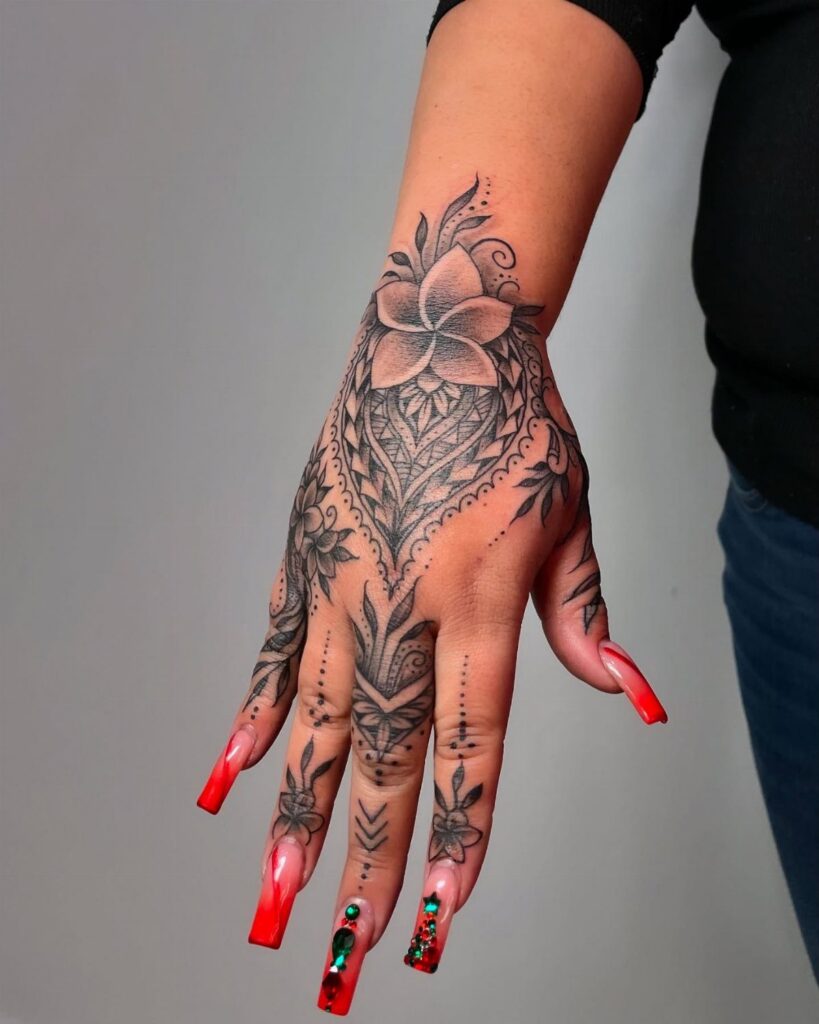
Henna designs range from a single heart outline you can apply in minutes to full sleeves, peacock motifs and tribal patterns that take hours and run from shoulder to fingertips.
Your placement decides how long the stain lasts: feet hold color for weeks because the skin is thicker, while wrists and hands fade faster from washing and friction.
1. Wrist Henna Tattoo
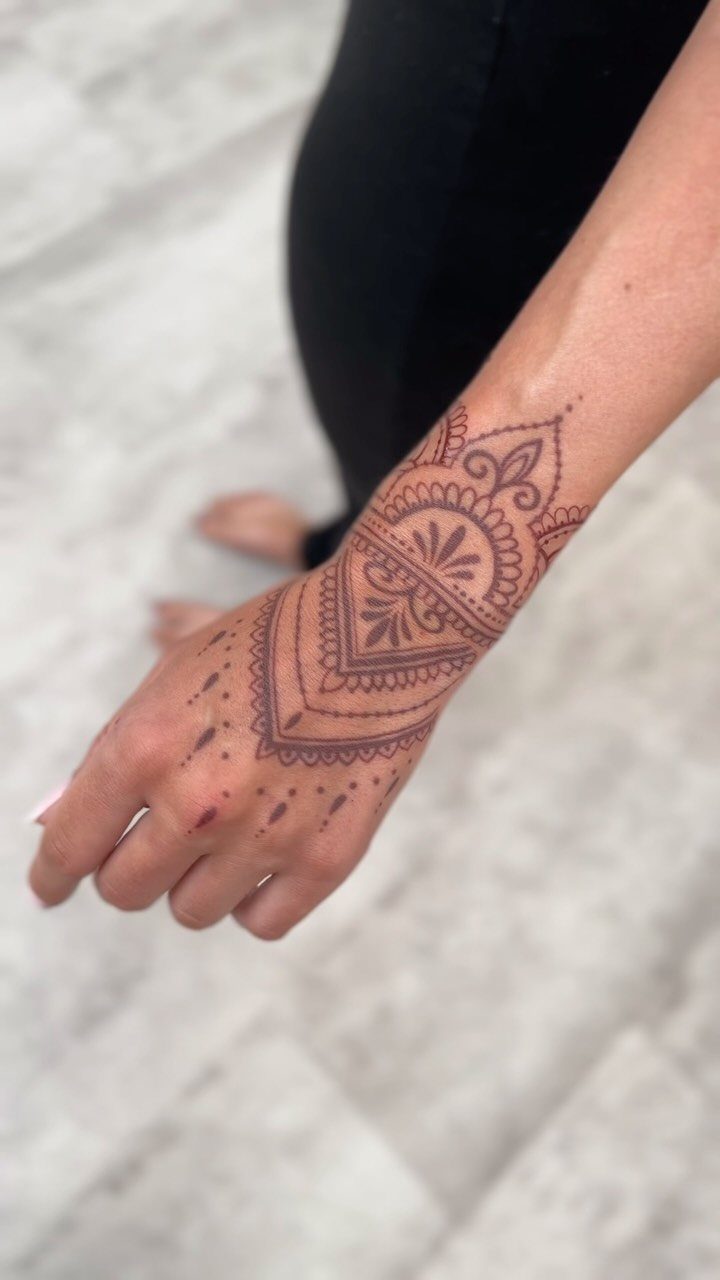
The wrist sits right where your hand meets your sleeve, so henna here stays visible without taking over. Smaller designs work best since the space curves and narrows quickly.
A bracelet-style band wraps the wrist, or a single motif sits on the inner side where the skin stays flat. Floral elements and geometric lines both read clearly at this scale.
Henna on the wrist fades faster than most placements because clothing rubs it and you wash your hands often. Plan for good color, though it fades faster than placement on thicker skin.
2. Henna Flower Tattoo
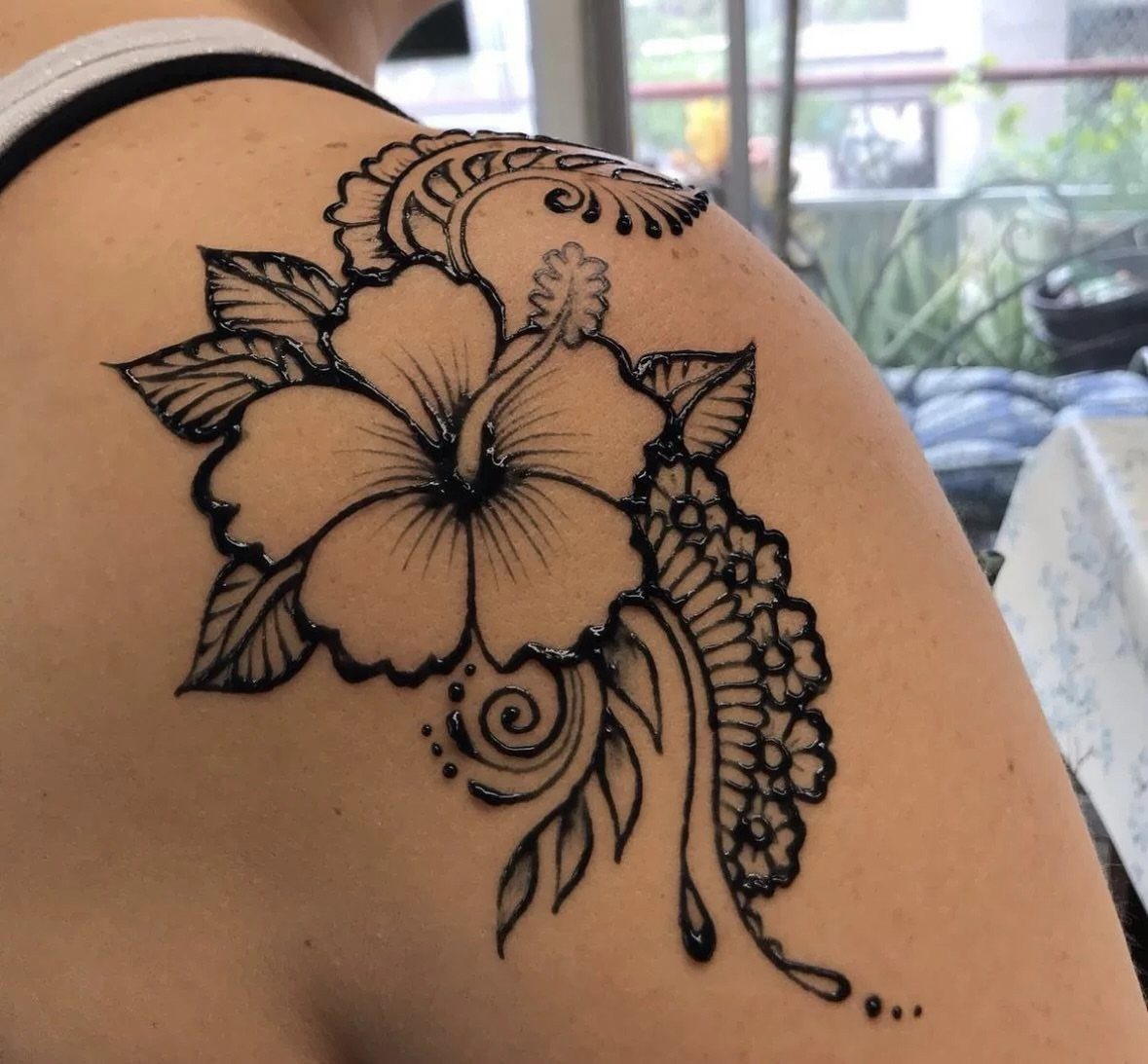
A single bloom gives you a focal point that works on almost any part of the body. Flowers in henna carry associations with growth and femininity, and they scale up or down without losing detail.
Hibiscus, lotus and rose are the most common choices. Petals, stamens and leaves all translate well into the thick, consistent lines henna paste produces.
Shoulder placement lets the design sit flat and stay protected under clothing when you need it covered. The skin here takes henna evenly, and friction from straps or collars is minimal compared to hands or feet.
3. Henna Tattoo on Hands
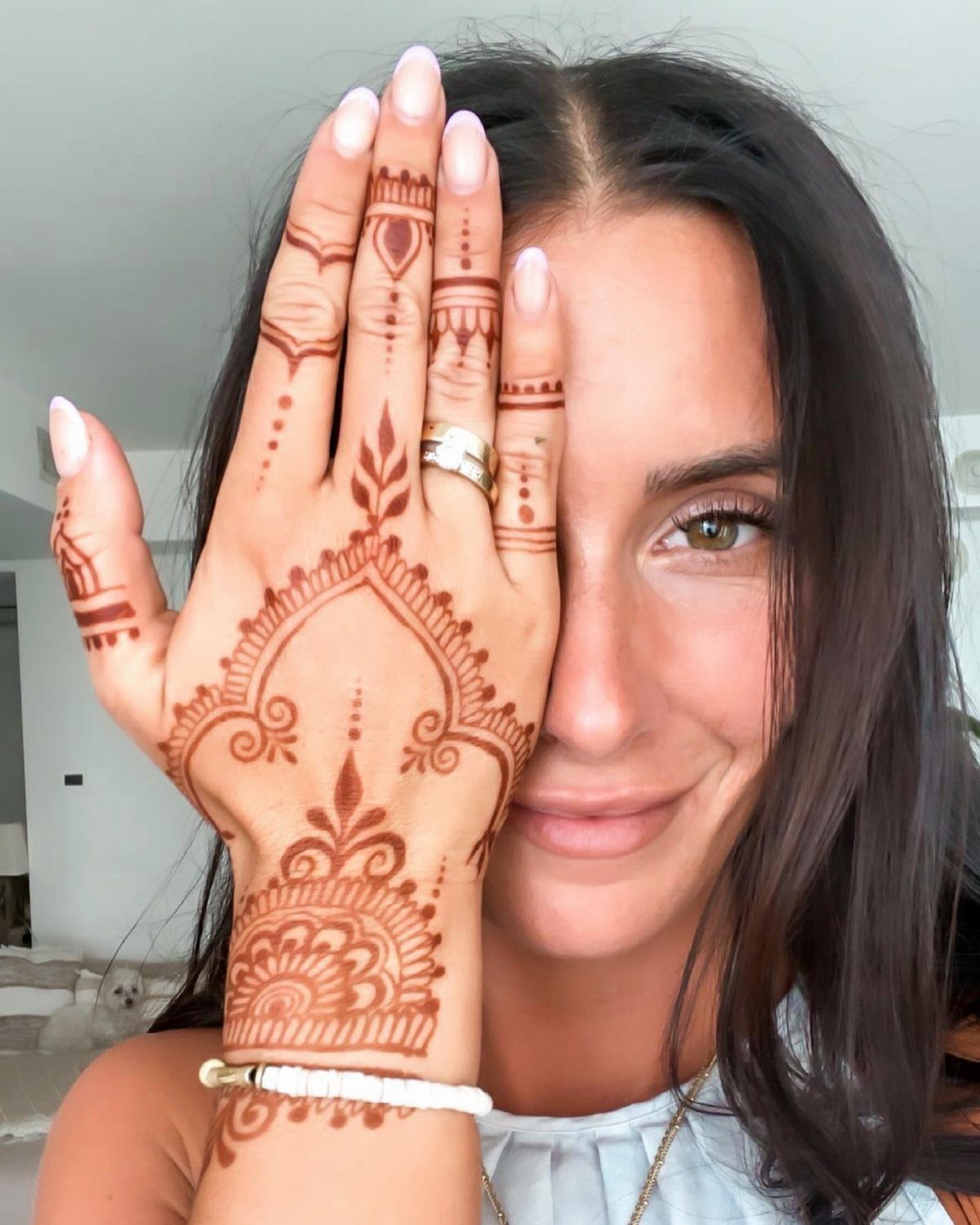
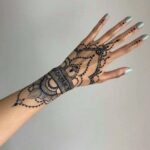
Palms and fingers have been the center of henna tradition for centuries, and the designs here are often the most elaborate. The skin on your palms is thicker, so henna stains darker and lasts longer than on thinner skin.
Full-hand designs cover the palm, fingers and sometimes the back of the hand in one continuous pattern. Paisleys, vines and mandalas fill the space, with finer lines tracing between fingers and around the thumb.
Your hands move constantly, so henna here still fades faster than a design on your forearm or shoulder. Expect the darkest stain to hold before it starts breaking up.
Speak to a local henna artist to learn about their rates. On average, a simple henna tattoo design on one hand might cost between $10 to $15; an involved bridal design could cost upwards of $500.
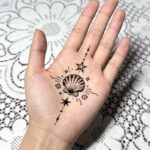
4. Minimal Henna Dots and Lines Design
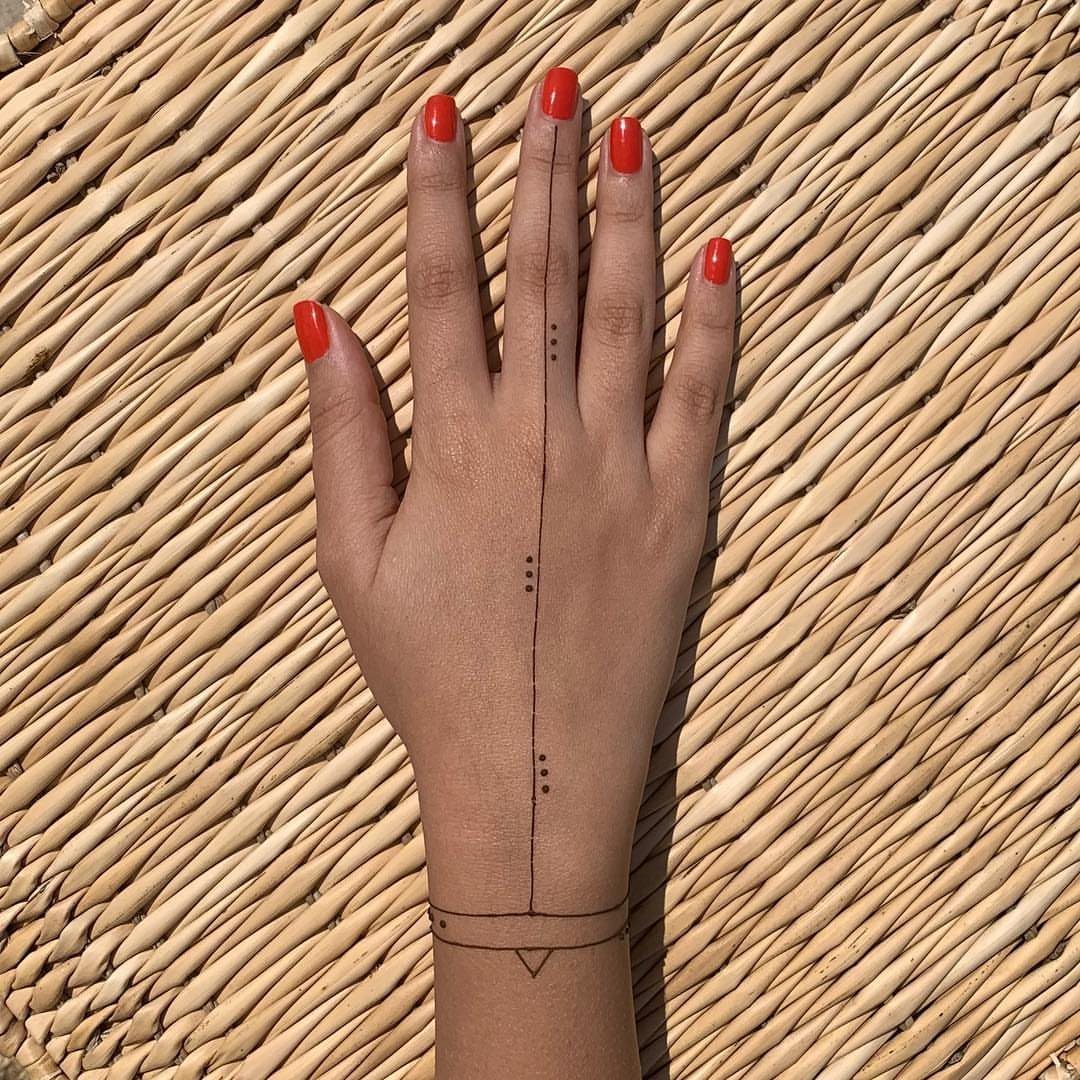
Stripped-down designs trade detail for speed and subtlety. A few dots, a single line or a small cluster of geometric shapes gives you henna that reads as modern rather than traditional.
This approach works well if you want to test henna for the first time without committing to a large piece. Application takes minutes, and mistakes are easy to wipe away before the paste sets.
Minimal designs fade more gracefully than intricate ones because there are fewer lines to track. When part of a detailed pattern disappears, the whole thing looks incomplete; a simple design just lightens evenly.
5. Henna Tattoo on Back
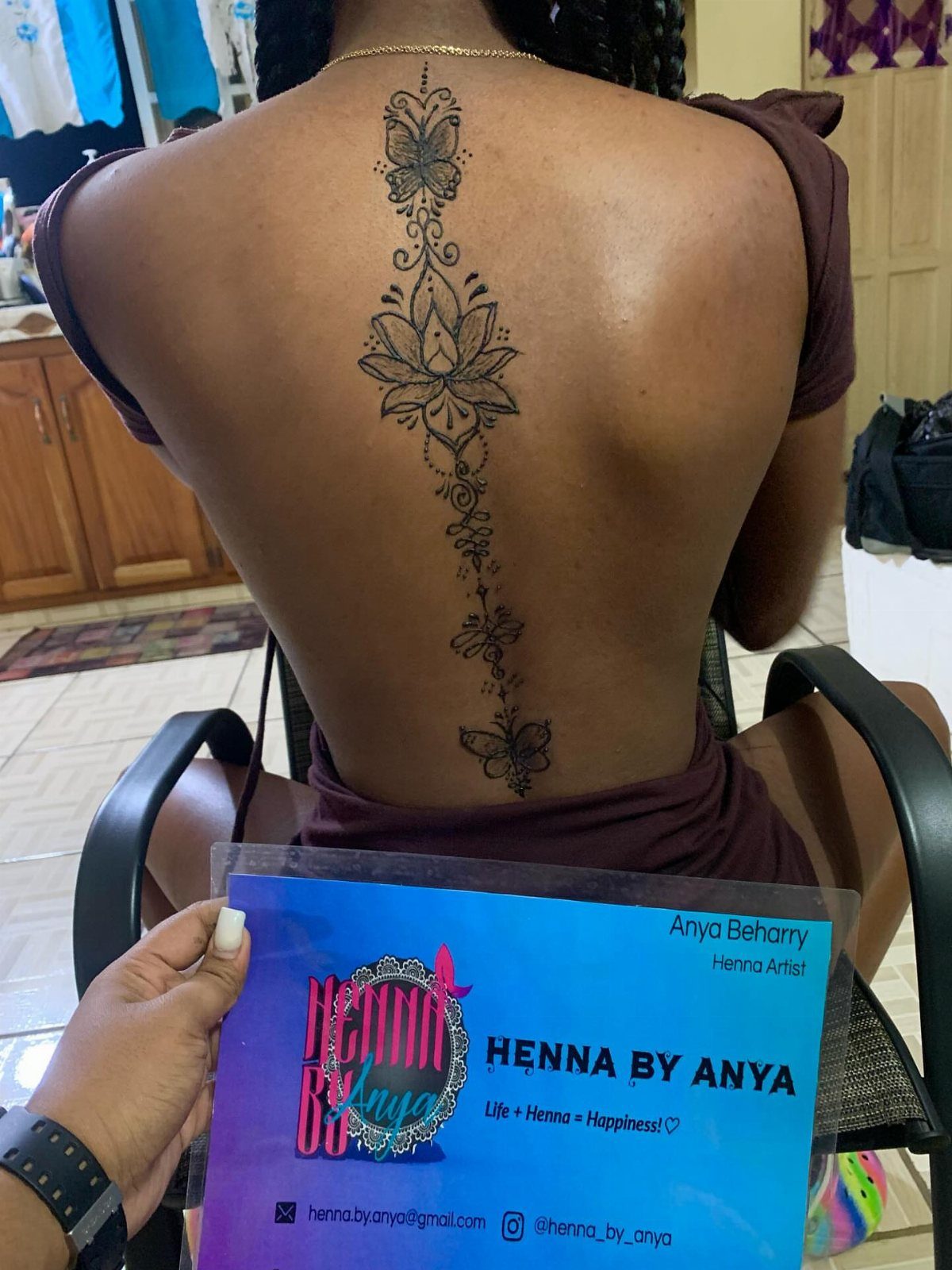
A vertical design down the spine or across the shoulder blades uses space that stays hidden under most clothing but opens up in backless tops or swimwear. The back offers a flat, uninterrupted canvas for larger compositions.
Lotus flowers, mandalas and symmetrical patterns suit this placement because the body’s centerline gives you a natural axis. Butterflies and vines can trail outward from the spine toward the shoulders or ribs.
Henna on the back is harder to apply yourself, so you’ll need someone else to do it.
The skin here is smooth and takes the stain well, and clothing rarely rubs it directly, so the design lasts longer than most spots.
6. Peacock Henna Tattoo
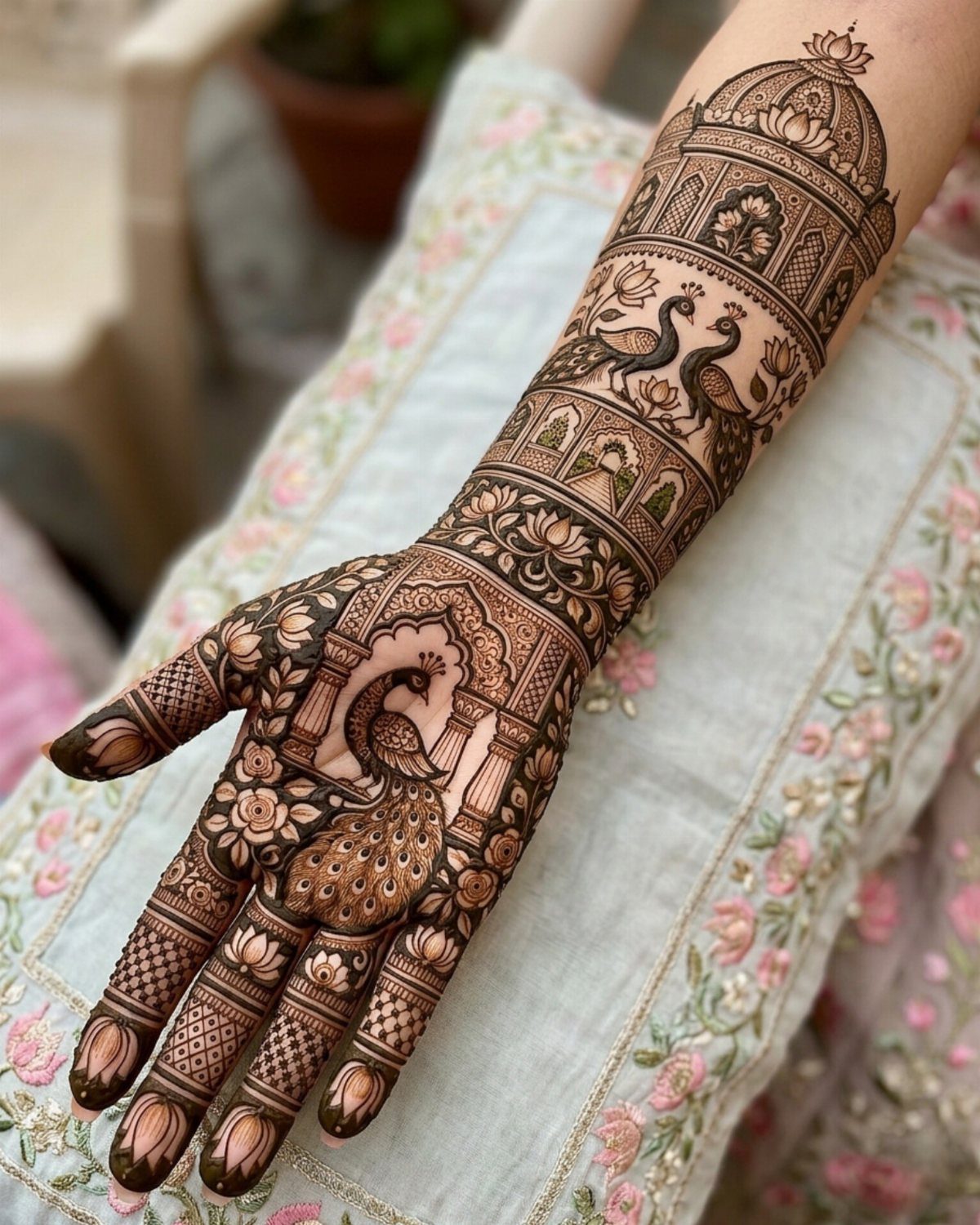
Peacock motifs carry symbolism tied to beauty, pride and renewal, and the bird’s plumage translates into layered, radiating patterns that fill space naturally. Tail feathers become rows of teardrop shapes, and the body curves into paisley-like forms.
This design suits the hand and forearm because the feathers can fan out across your fingers or wrap around your wrist.
The level of detail makes it a time investment, expect at least an hour for a full peacock with all its feather work.
Henna artists often combine peacock elements with architectural details like arches or domes, borrowing from South Asian wedding traditions.
The result is dense and ornate, best suited to occasions where the design is part of the look rather than an everyday accent.
7. Neck Henna
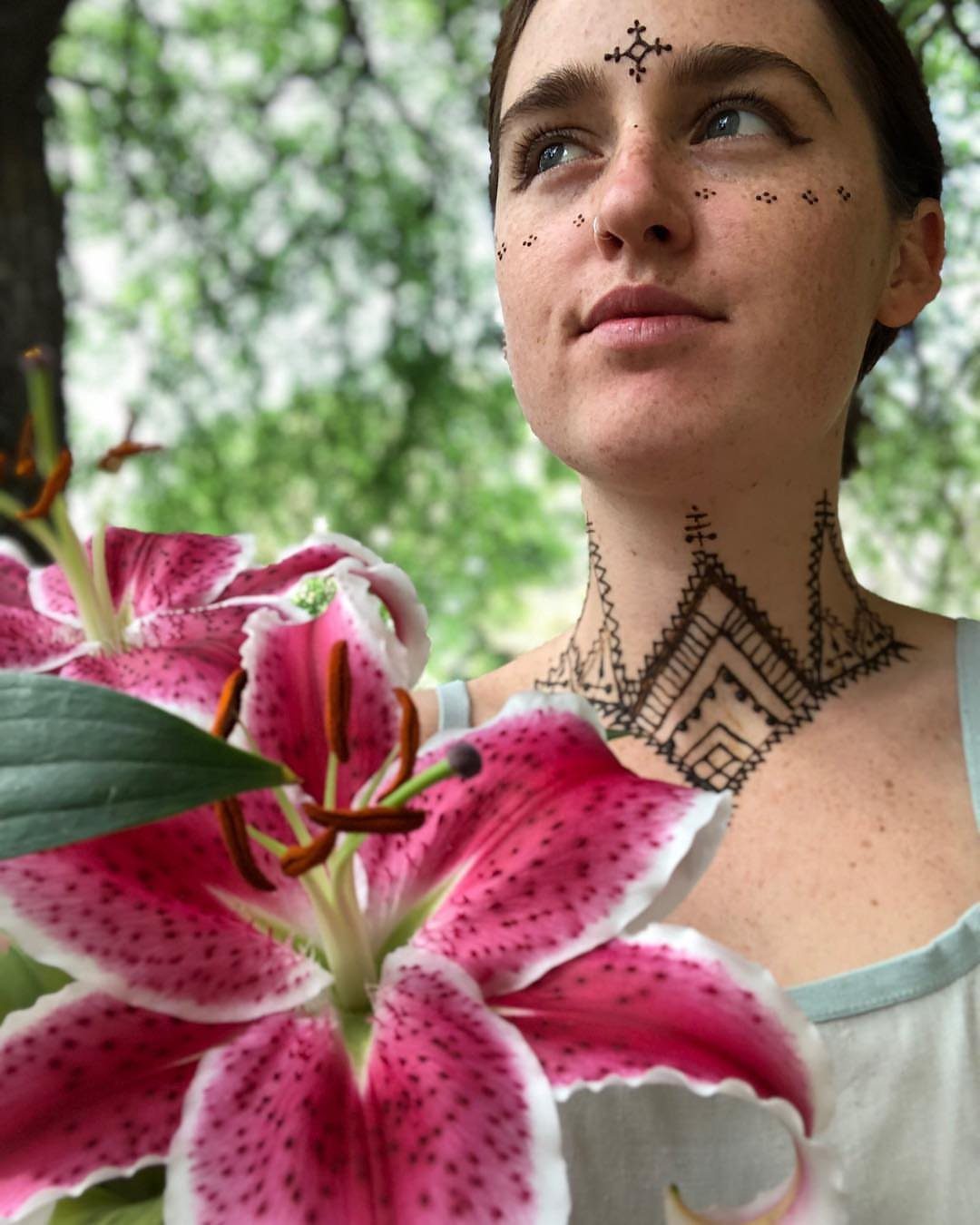
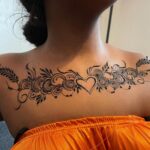
Neck placement puts henna where collarbones and jawline meet, so the design frames your face without covering it. Symmetrical patterns work best here because they follow the body’s natural lines.
Small mandalas or lace-like bands curve along the base of the neck, while side designs can climb from collarbone to ear. The space is narrow, so detail needs to stay controlled or it blurs into one shape.
Henna on the neck shows immediately and stays visible unless you wear high collars. The skin here is thinner than your palms, so the stain comes out lighter and fades faster, usually within a week.
8. Henna Tattoo on Feet
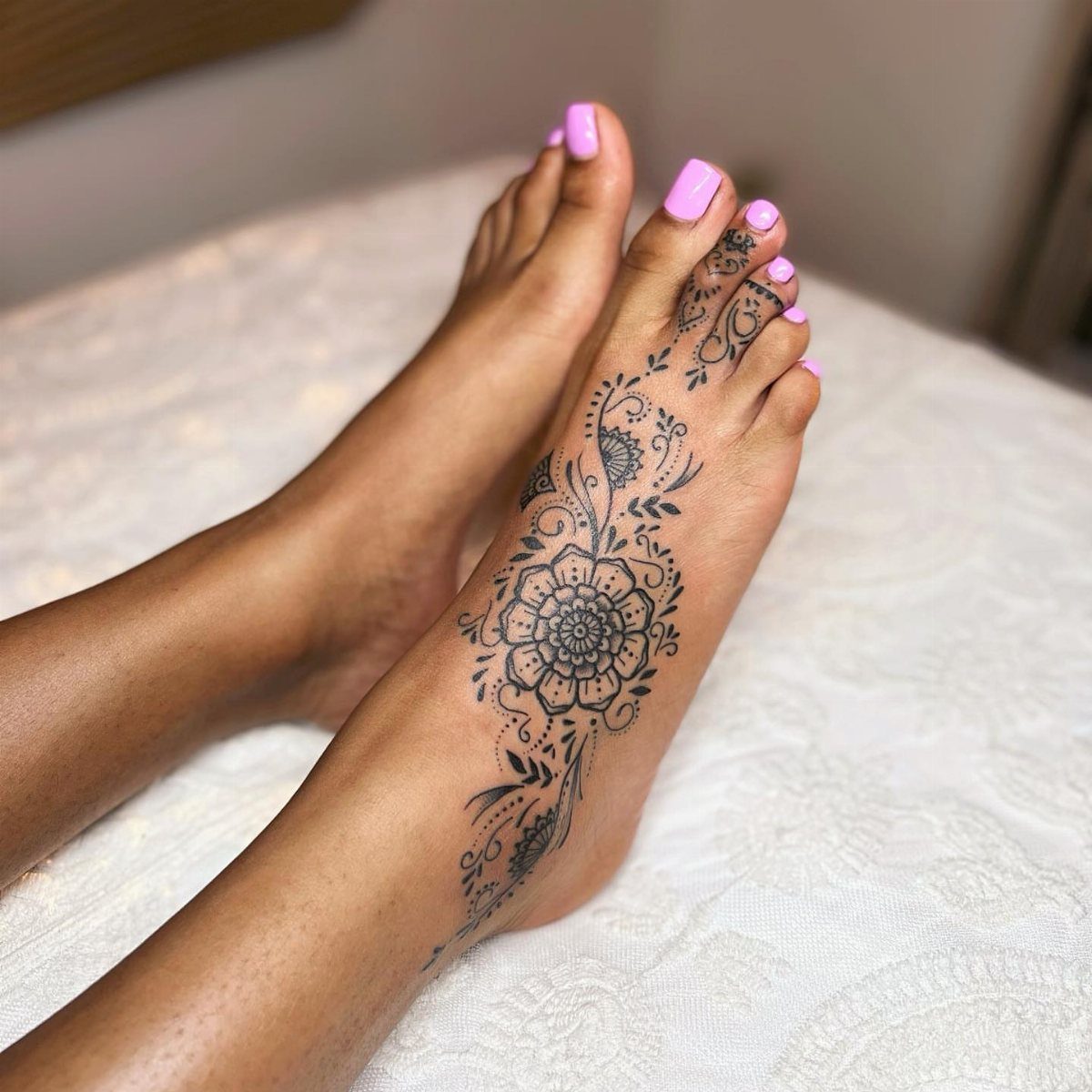
Feet take henna as well as palms do because the skin is thick and holds pigment longer. Designs here often start at the toes and spread across the top of the foot, sometimes wrapping around the ankle.
In Hindu wedding tradition, brides wear henna on both feet as a symbol of love and commitment. The patterns mirror those on the hands, creating a matched set that ties the whole look together.
Your feet hold color longer than hands because the skin is thicker, so friction from shoes matters less than you’d expect. Go barefoot or wear sandals for the first day if you want the stain to set fully.
9. Henna Sleeve Design
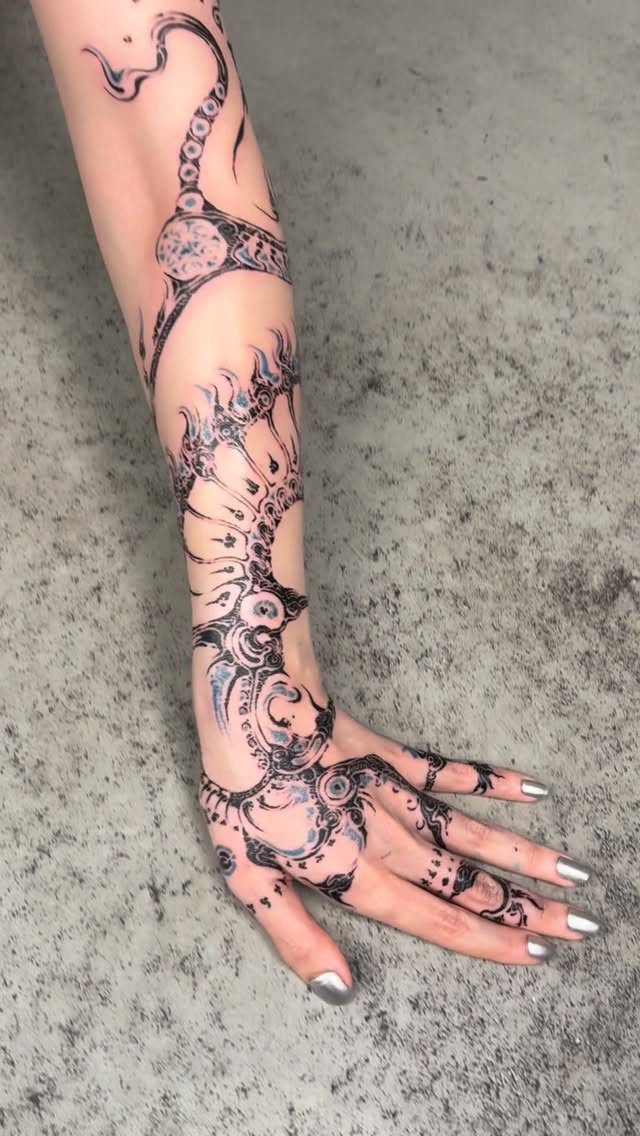
A full-arm design starts at the shoulder or upper arm and runs down to the fingertips, treating the limb as one continuous surface. This gives you room for large motifs that flow into each other without breaking.
Application takes hours because you’re covering so much skin, and the paste needs to dry completely before you move your arm much. Most sleeve designs combine florals, paisleys and geometric fill to keep the composition dense.
The forearm and hand fade faster than the upper arm because they get washed and rubbed more. Expect the color to hold longest near the elbow and shoulder, where clothing protects it.
10. Henna Tribal Tattoo
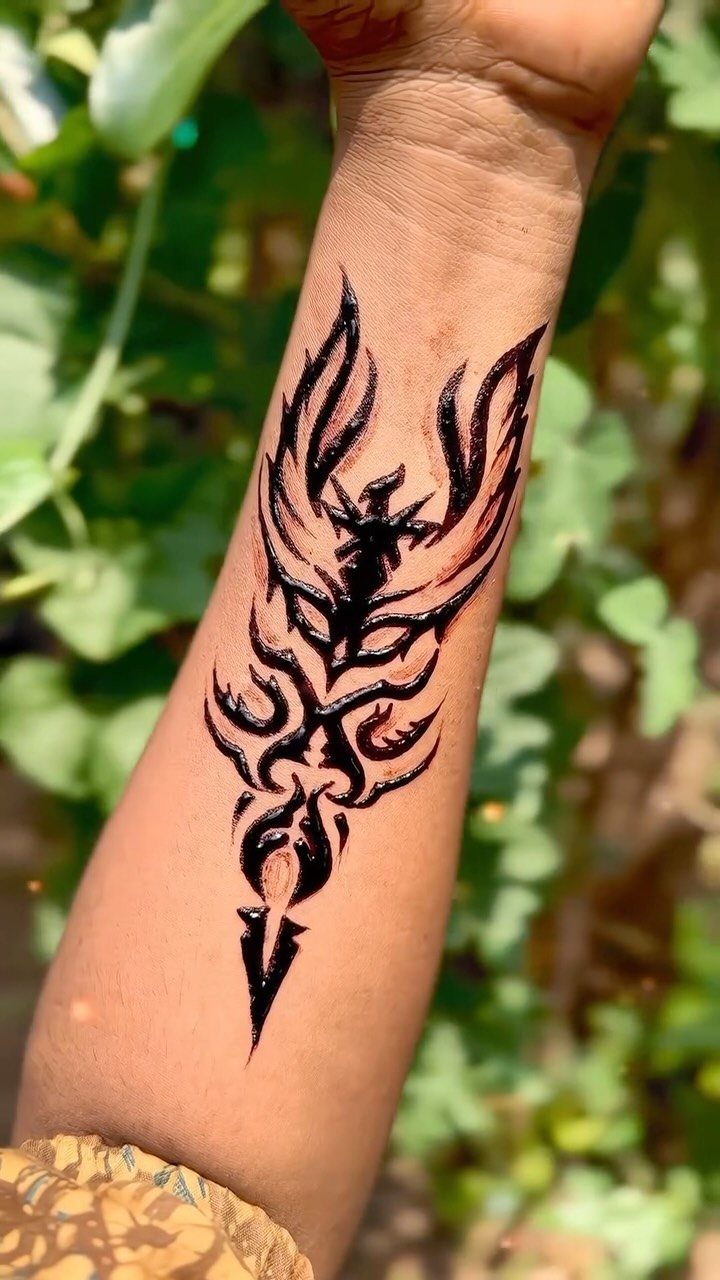
Tribal patterns rely on bold outlines and negative space instead of the fine detail that traditional henna is known for. Thick lines, angular shapes and repeating motifs give the design a graphic look that reads from a distance.
This style suits placements where the skin is flat and the design can hold a strong silhouette, like the forearm, shoulder or calf. Curves and small spaces don’t work as well because the thick lines need room to breathe.
Application is faster than intricate floral work because there’s less detail to fill in. The stain still fades the same way henna always does, but the simpler shapes stay recognizable longer as they lighten.
11. Henna Tattoo with Glitter
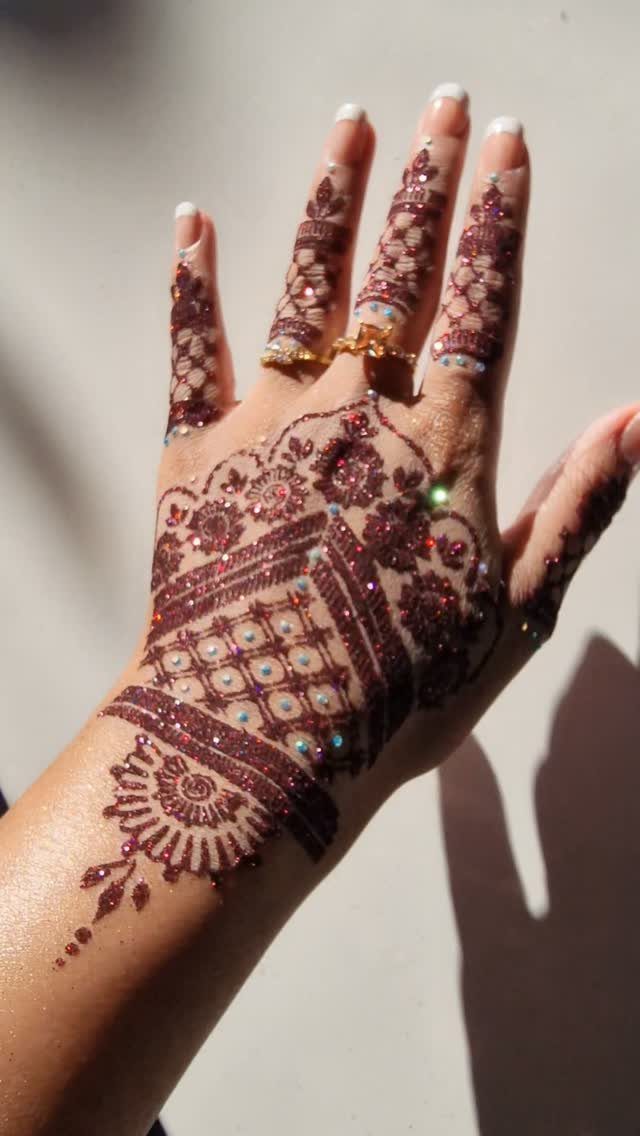
Glitter sits on top of dried henna paste or freshly stained skin, adding color and shine to the brown-red stain. Cosmetic glitter in gold, silver or jewel tones catches light and turns a traditional design into something more festive.
Apply the glitter while the henna paste is still on, pressing it into the wet surface, or dust it over the stain once the paste comes off and the skin is still slightly tacky.
Body-safe adhesive works too if the stain has fully set.
Glitter washes off with soap and water, so it’s temporary even though the henna underneath lasts. This approach suits events where you want the design to stand out for one night.
12. Stomach Henna Tattoo
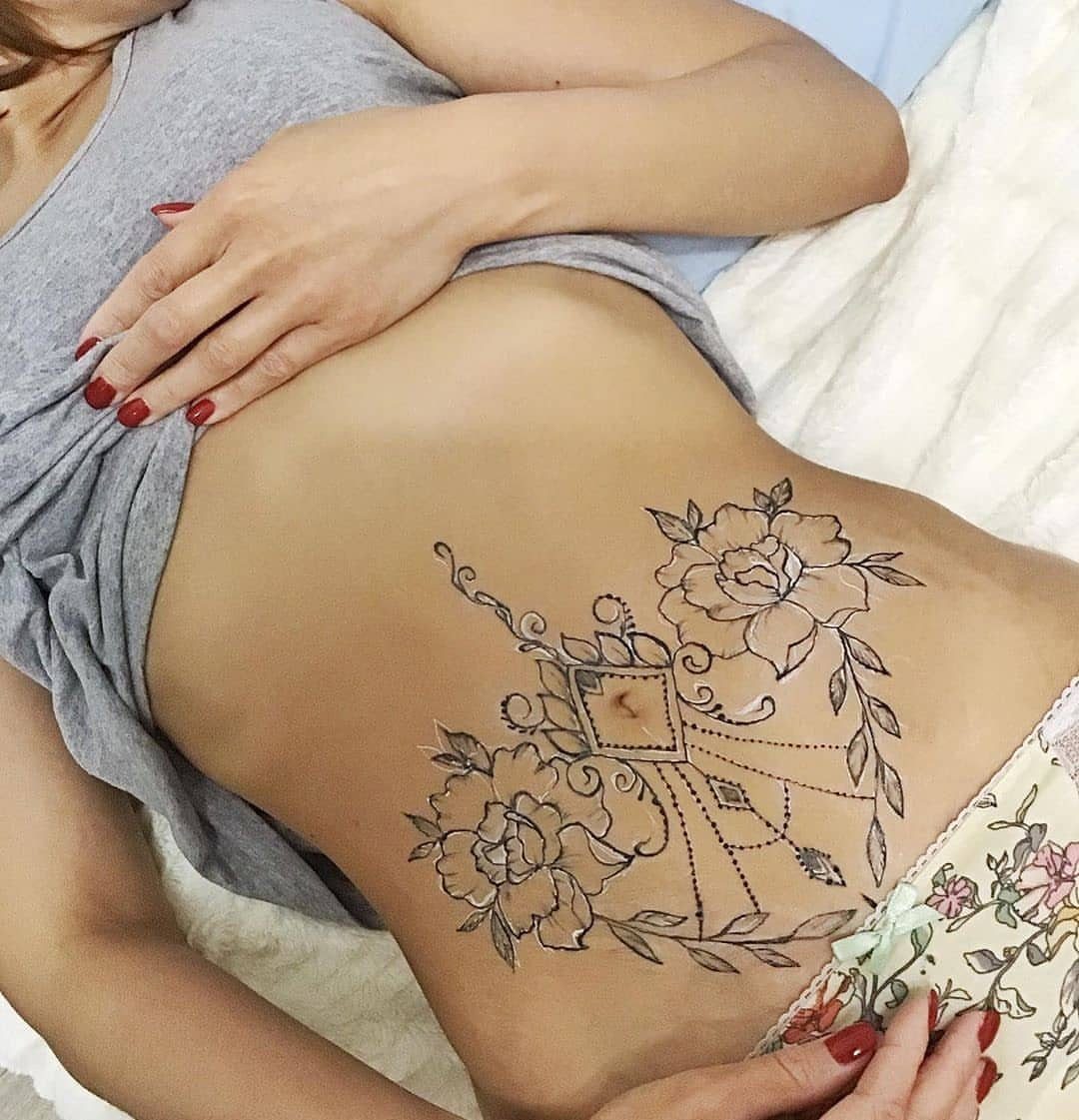
Stomach placement centers the design around your navel or spreads it across your ribs and sides, using the torso’s width for larger compositions. Flowers, mandalas and geometric patterns all work here because the skin is smooth and relatively flat.
This spot stays covered most of the time, so henna here is for specific occasions where your midriff shows: festivals, beach trips or crop-top days.
The stain lasts longer than hands or feet because clothing protects it from friction and washing.
Application is easier if you lie flat so your skin doesn’t fold. The paste can slide if you move too much before it dries, so plan to stay still after it goes on.
13. Thigh Henna Tattoo
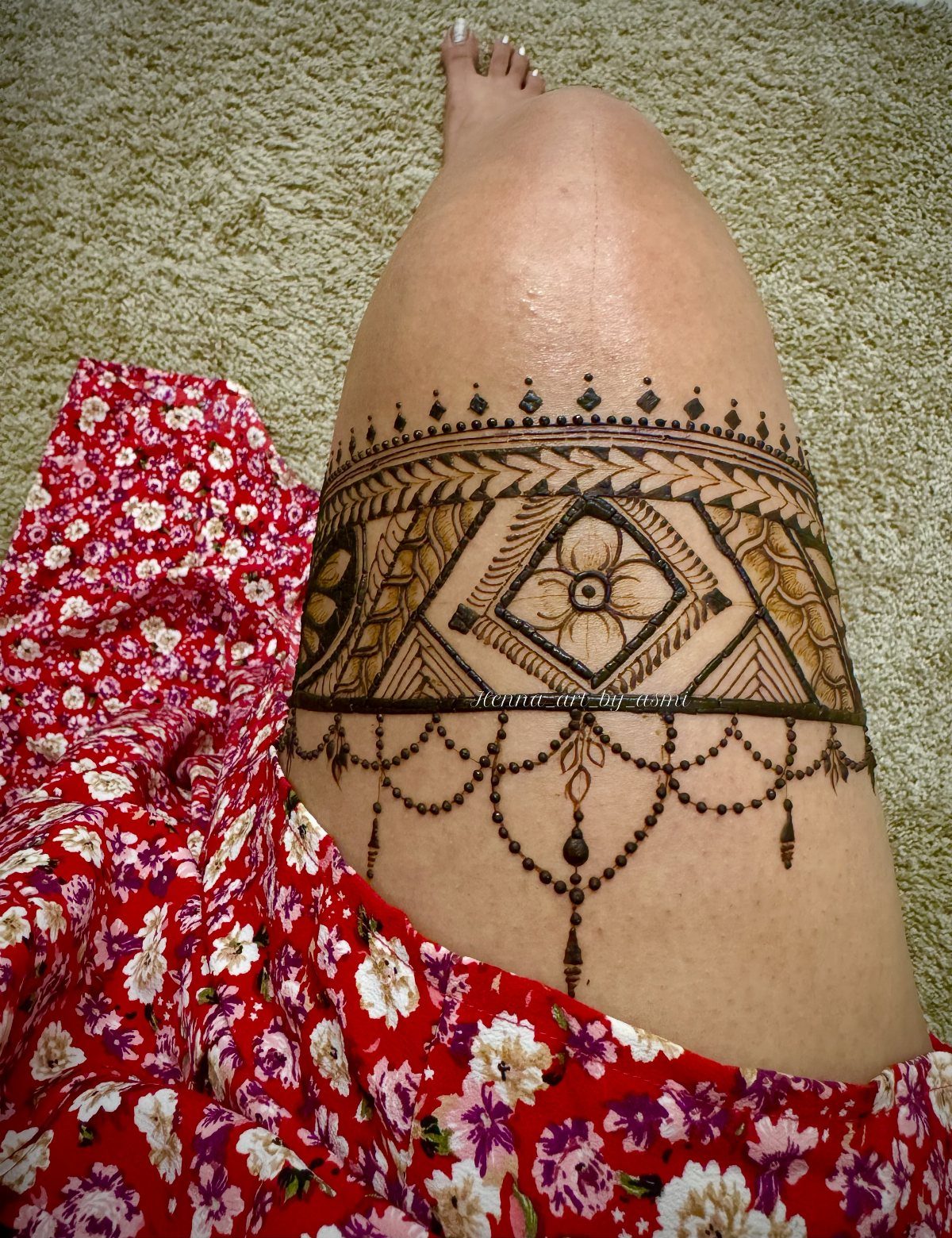
The thigh offers a wide, flat surface that takes large designs without breaking them into smaller sections. A central flower with hanging bead shapes uses vertical space naturally, and the design stays hidden under most clothing.
The thigh sees less water and rubbing than your hands, so the design stays crisp for weeks.
The skin is smooth enough to hold fine detail, and placement on the outer or front thigh keeps the design visible when you sit.
Application is straightforward since you can reach the spot yourself, and the paste dries without much risk of smudging if you stay seated.
14. Heart Henna Tattoo
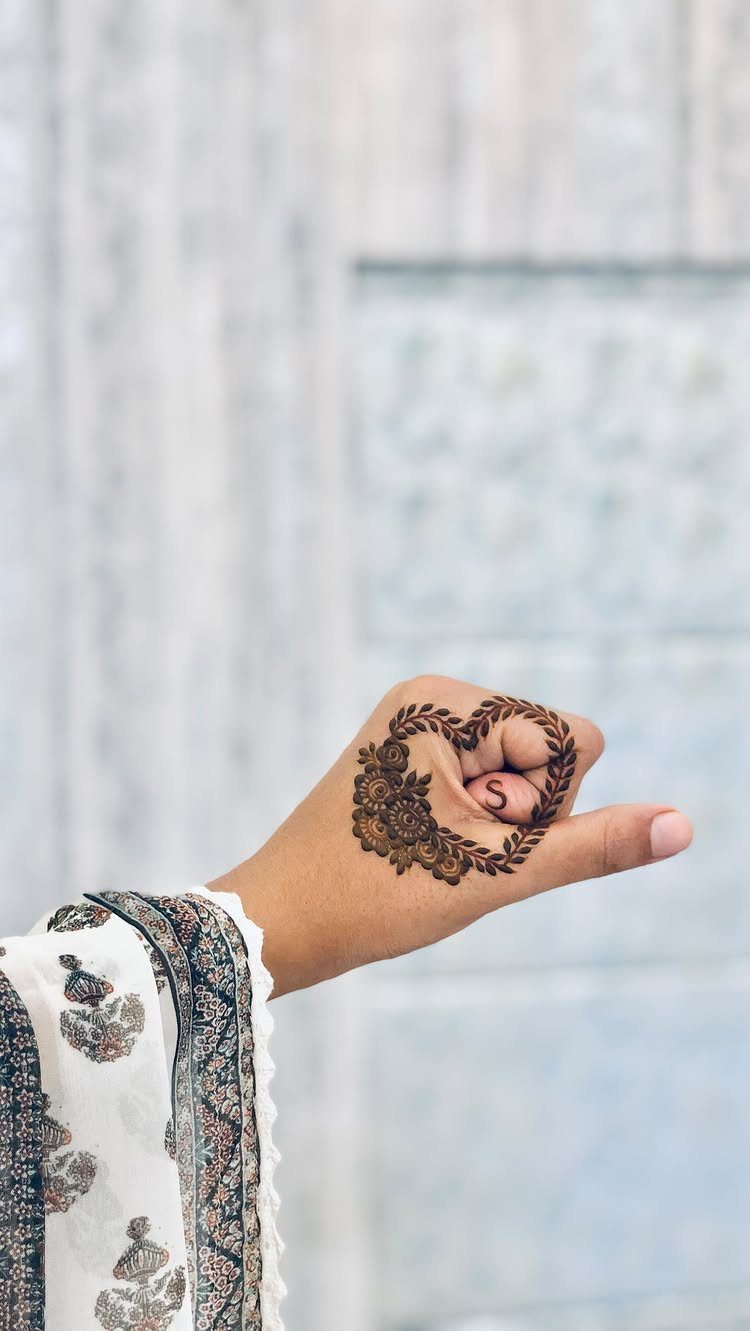
A heart outline on the back of the hand gives you a recognizable shape that works at small scale. Adding a letter or initial inside personalizes it without complicating the design.
This placement sits where people see it when you gesture or hold something, so the design stays in view during conversation.
The back of the hand fades faster than the palm because the skin is thinner and you wash it often.
Simple shapes like this take minutes to apply and work well if you’re testing henna for the first time or want something that reads clearly as it fades.
15. Henna Tattoo with Butterflies
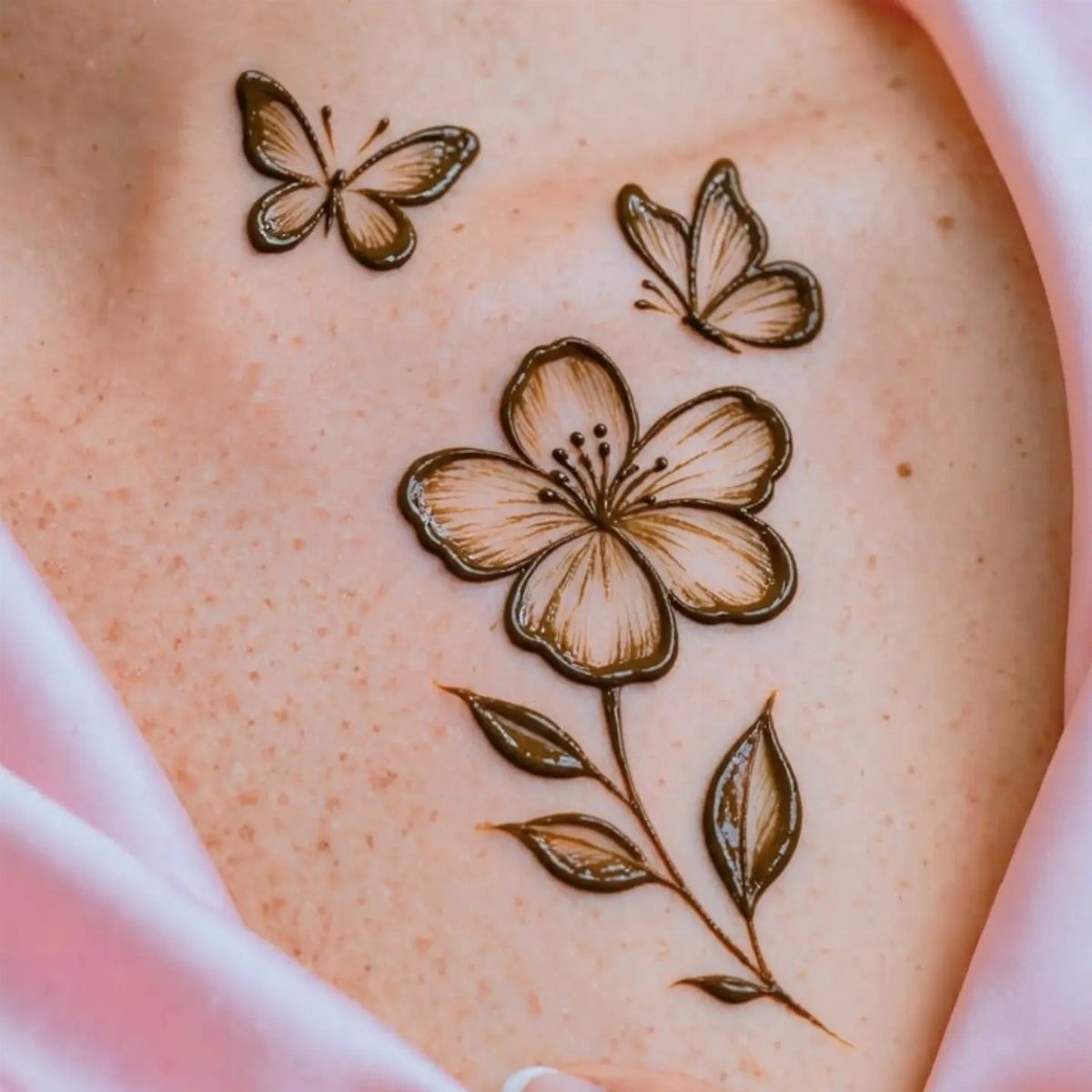
Pairing a single flower with butterflies gives you motion and symmetry in one design. The stem anchors the composition, and the butterflies balance each other on either side.
This arrangement works on any flat placement: forearm, shoulder or ribs. The elements stay separate enough that if part of the design fades unevenly, the rest still holds its shape.
Butterflies in henna carry associations with transformation and freedom, and the combination scales up or down depending on how much skin you want covered.
16. Practicing Henna on Paper
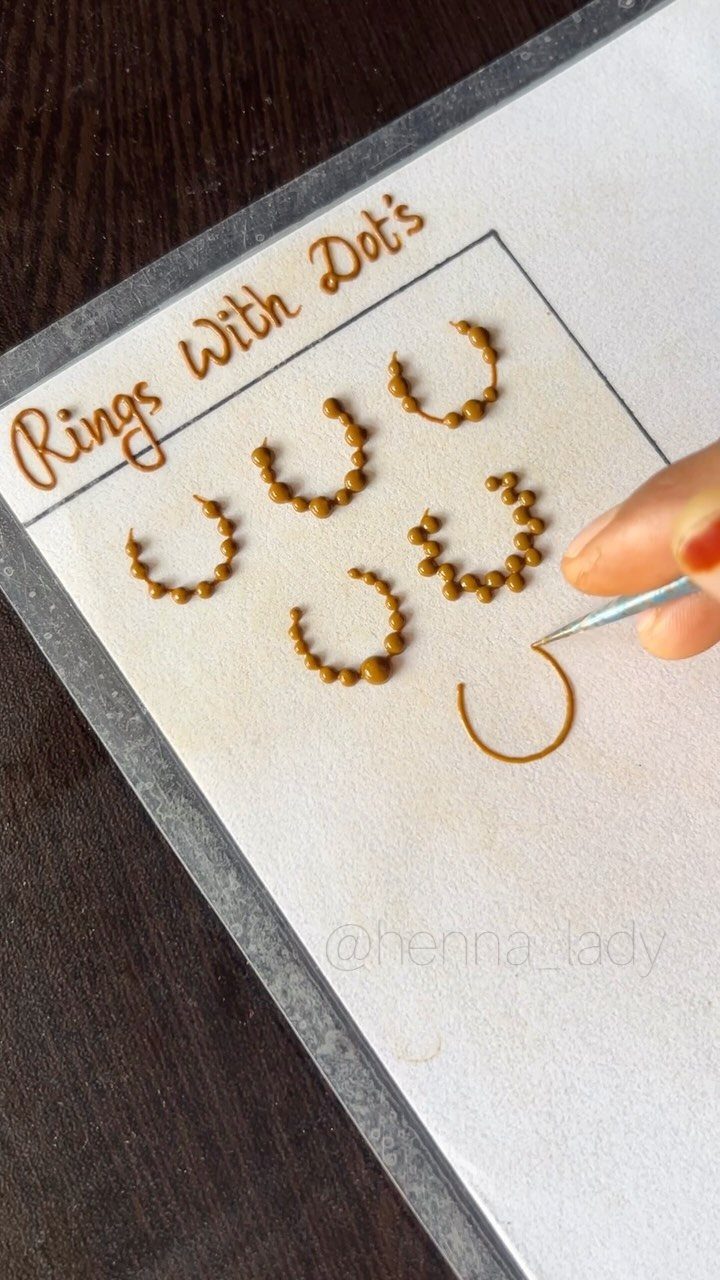
Drawing on paper lets you build control with the applicator before you touch skin. Ring designs with dot work test your pressure and line weight, and mistakes get thrown away instead of sitting on your hand for a week.
Practice sheets let you try patterns at full size and see how long a design actually takes. Copy traditional motifs or sketch your own, and when the lines come out consistent, move to skin.
Paper doesn’t absorb henna the way skin does, so you’re training your hand, not testing stain quality. Once you can draw a clean circle and space dots evenly, application on skin gets faster and cleaner.
Henna Tattoo Aftercare Tips
The longer henna paste stays on your skin, the darker the stain sets. Leave it on for at least 4–6 hours, then scrape or flake the dried paste off without using water.
Once the paste comes off, keep the area dry for the next 24 hours.
Skip swimming, long showers and workouts that make you sweat heavily. Water pulls the stain out before it fully bonds to the top layer of skin.
A sugar-and-lemon mixture applied over dried paste helps the color deepen. Some artists provide this or you can mix it yourself: equal parts sugar, water and lemon juice.
The paste stays moist longer, which means more dye time. It gets sticky, so cover the design with a sock or light wrap if it’s on your hand.
Moisturize daily after the stain sets.
Natural oils keep the skin from drying out, which slows fading. Sunscreen on the design prevents UV from lightening the color faster than normal wear does.
Cultural Significance of Henna
South Asian, Middle Eastern and North African traditions still center it in weddings, religious ceremonies and festivals, where the designs symbolize joy, beauty and spiritual awakening.
The application itself is communal. Family and friends gather while the artist works, turning the process into a shared event rather than a solo appointment.
Across South Asia, North Africa and the Middle East, henna marks weddings, festivals and rites of passage, thought to carry luck and ward off harm.
Floral and geometric motifs repeat across regions, though the density and scale vary.
While henna has traditionally been worn by women, it’s increasingly common across all genders. The designs now appear worldwide as both cultural practice and artistic expression.
Henna Tattoo Removal
Henna fades on its own within a few weeks as your skin sheds its top layer. Regular handwashing speeds this up naturally, and exfoliating the area removes stained skin faster than soap alone.
If you want the design gone sooner, scrub the stained skin with a body scrub or exfoliating cloth daily.
The dye sits in the outermost layer, so removing those cells removes the color. Repeated washing with soap over several days will also lift the stain gradually.
There’s no way to erase henna in one session. The dye has already bonded to the skin by the time the paste comes off, so you’re waiting for that layer to shed.
Frequently Asked Questions
How do I make a homemade henna tattoo?
Mix henna powder with water and lemon juice until you get a thick paste that holds its shape.
The lemon helps the dye release and deepens the final stain. Once mixed, let the paste rest for a few hours before applying it to skin so the color develops fully.
Are there different colors of henna tattoos?
Traditional henna stains reddish-brown, but black and white henna options exist using different dyes.
Black henna gets its color from a different dye that leaves a stain closer to black than brown. White henna creates a pale design that stands out against darker skin tones.
Can henna be used for tattoos?
Henna works as a temporary tattoo that stains the top layer of skin and fades within a few weeks.
The paste is applied in patterns, left to dry, then removed to reveal the design underneath. It offers body art without the permanence of ink.
What can I use if I don’t have henna?
Natural dyes like indigo or temporary body paints can substitute for henna if you want a similar look.
Indigo produces a blue-black stain, while body paints wash off with soap and water. Neither lasts as long as real henna or stains the skin the same way.