Most small henna designs fit on a wrist or finger and take under a minute to draw, while ankle bands and foot motifs need a flat, stable surface and at least 2 hours of drying time to set the stain.
A basic five-petal flower works when you need something quick on your hand, but a bangle that wraps the full wrist requires a clean join at the inside where any gap will be less visible.
1. Sun or Starburst Henna Tattoo Motif
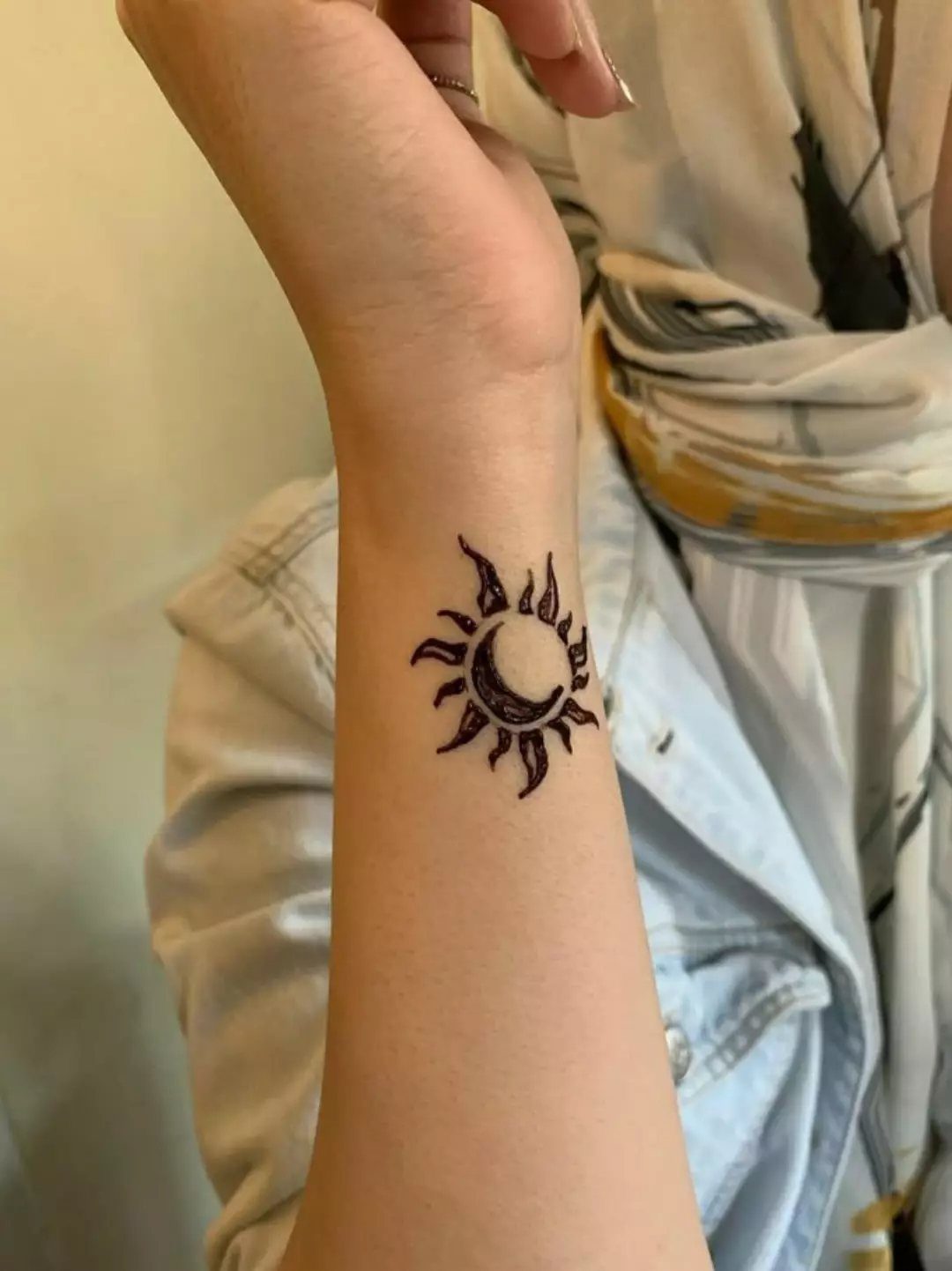
A sun or starburst motif centers around a filled circle with thin rays extending outward in every direction. The simple geometry makes it one of the easiest small henna designs to apply, especially if you’re working freehand.
Most versions sit on the inner wrist or the top of the hand, where the flat surface keeps the lines even.
For a cleaner edge, draw the outer circle first with a toothpick dipped in henna paste, then fill the center and pull the rays outward in one smooth motion.
2. Henna Flower Tattoo
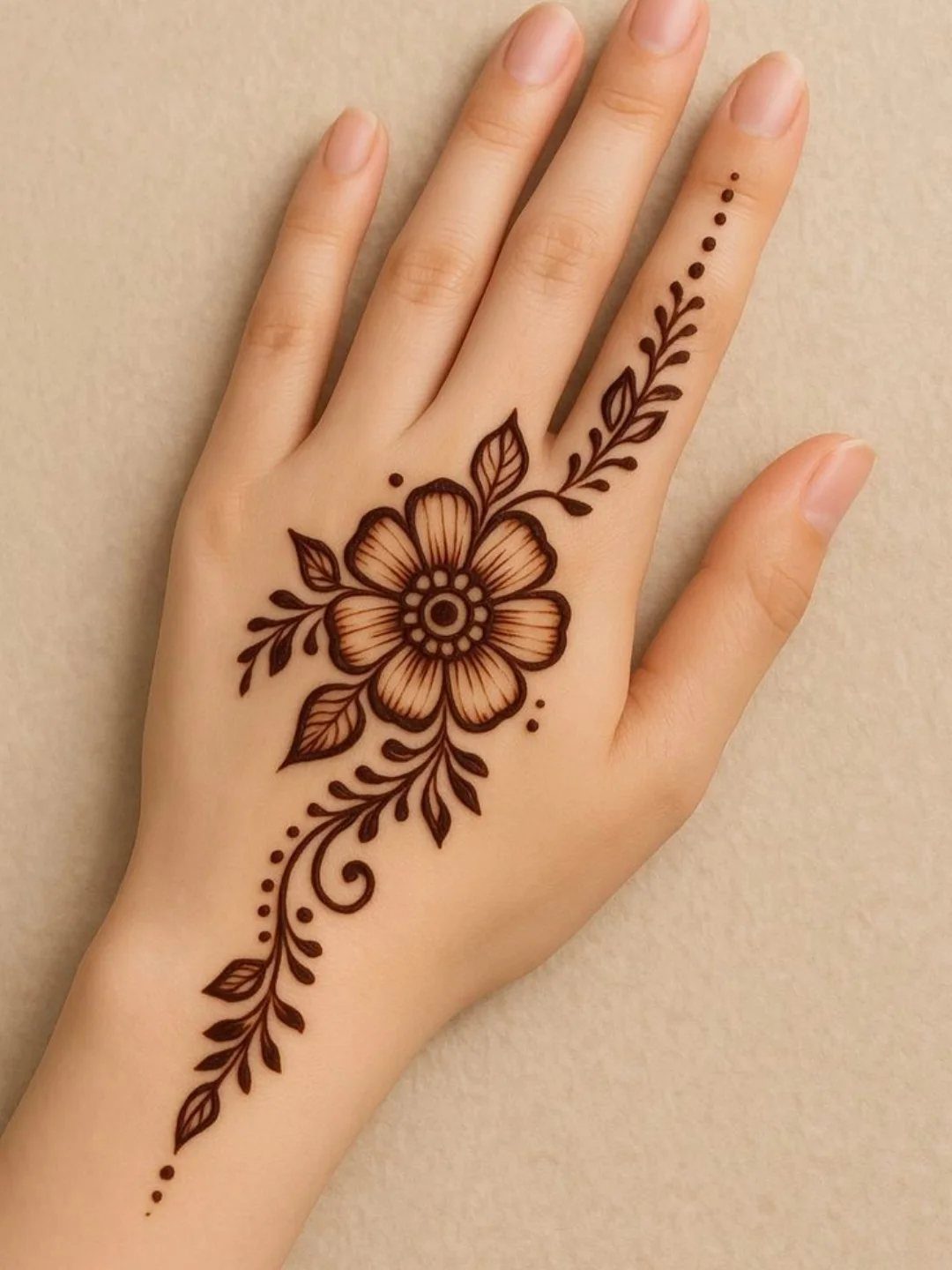
Flowers are the easiest place to start with henna. A basic five-petal bloom with a dot in the center takes under a minute to draw, and you can scale it to fit any space.
More coverage without complicated shading means repeating the same flower in a few sizes and linking them with curved stems.
Henna paste flows best when the cone tip stays close to the skin, so rest your wrist on a flat surface and let the line follow your hand’s movement instead of dragging the cone.
3. Henna Finger Tattoo
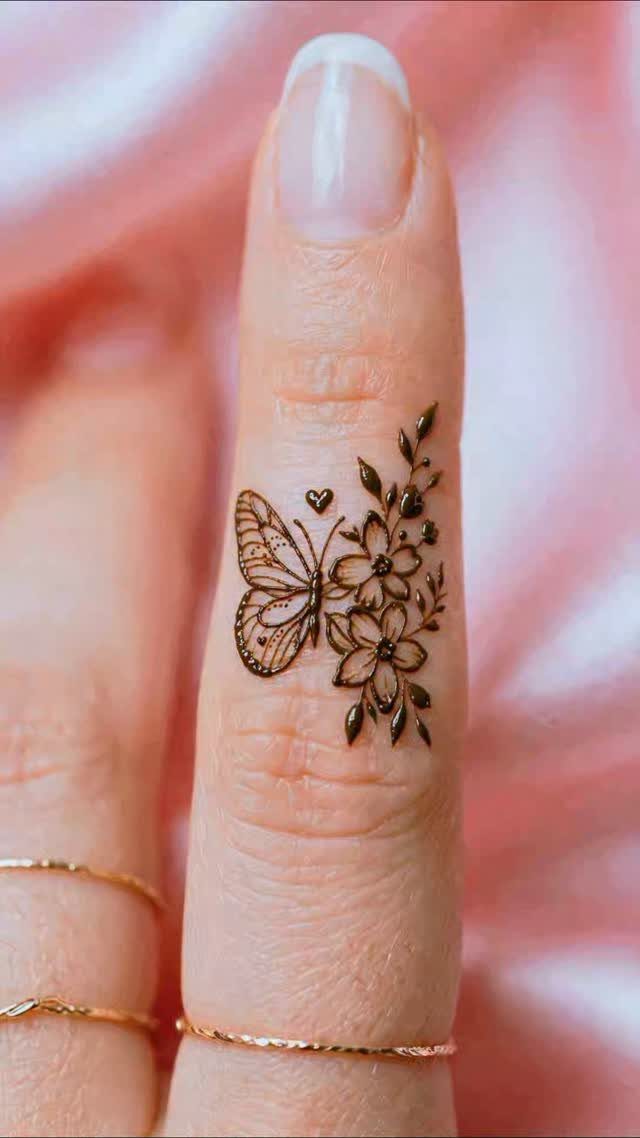
If you’re drawing on your own finger, work from the base toward the tip so smudges don’t transfer to the fresh paste.
A butterfly fits neatly on the side of a finger, with wings that span from knuckle to knuckle, while a single flower or crescent sits flat on the fingertip.
Rings can frame the design or interrupt it, so decide where they go before you start.
4. Henna Bangle Wrist Tattoo
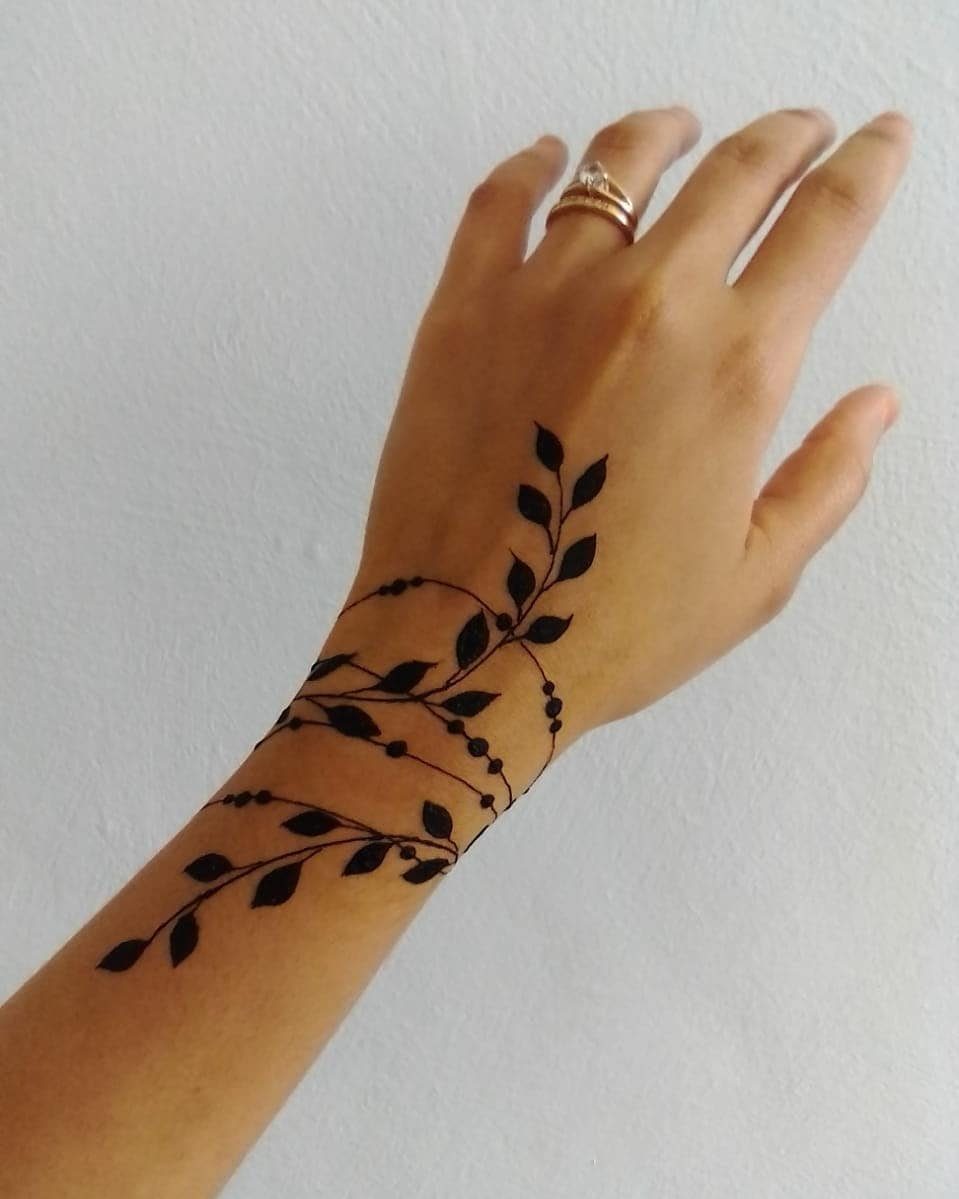
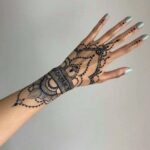
A bangle design wraps around the wrist in a continuous band, usually made from repeating leaves, dots, or vines.
The illusion works best when the pattern closes completely, so start at the inside of the wrist where any gap will be less visible.
If your first attempt doesn’t meet up cleanly, you can disguise the seam with a small flower or cluster of dots.
Bangle tattoos sit right where a watch band or bracelet would, and they last longest on the wrist’s outer edge where fabric rubs less.
5. Minimalist Floral Chain Henna Tattoo Design
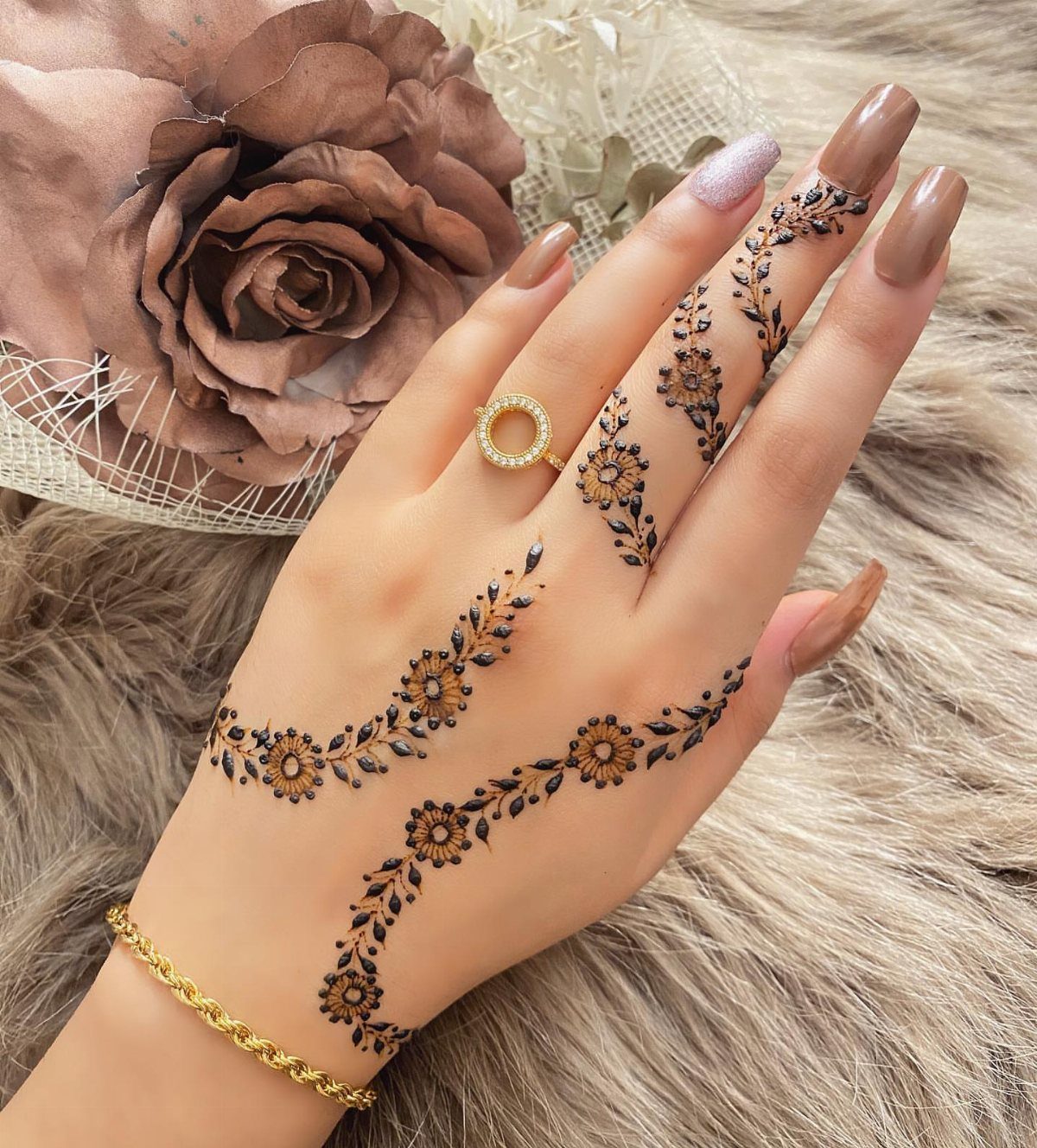
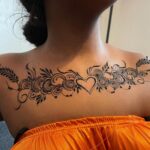
A floral chain connects tiny buds or blossoms with a thin line, usually running along the side of the hand or across the wrist.
The rhythm comes from spacing the flowers evenly and keeping the connecting line straight or gently curved.
You can draw the flowers first and link them after, or run the line continuously and drop a small bloom at regular intervals.
The minimalist floral chain henna tattoo design reads best when the flowers stay small, around the size of a pea, so the chain doesn’t crowd the hand.
6. Cartoon Bunny Foot Henna Tattoo
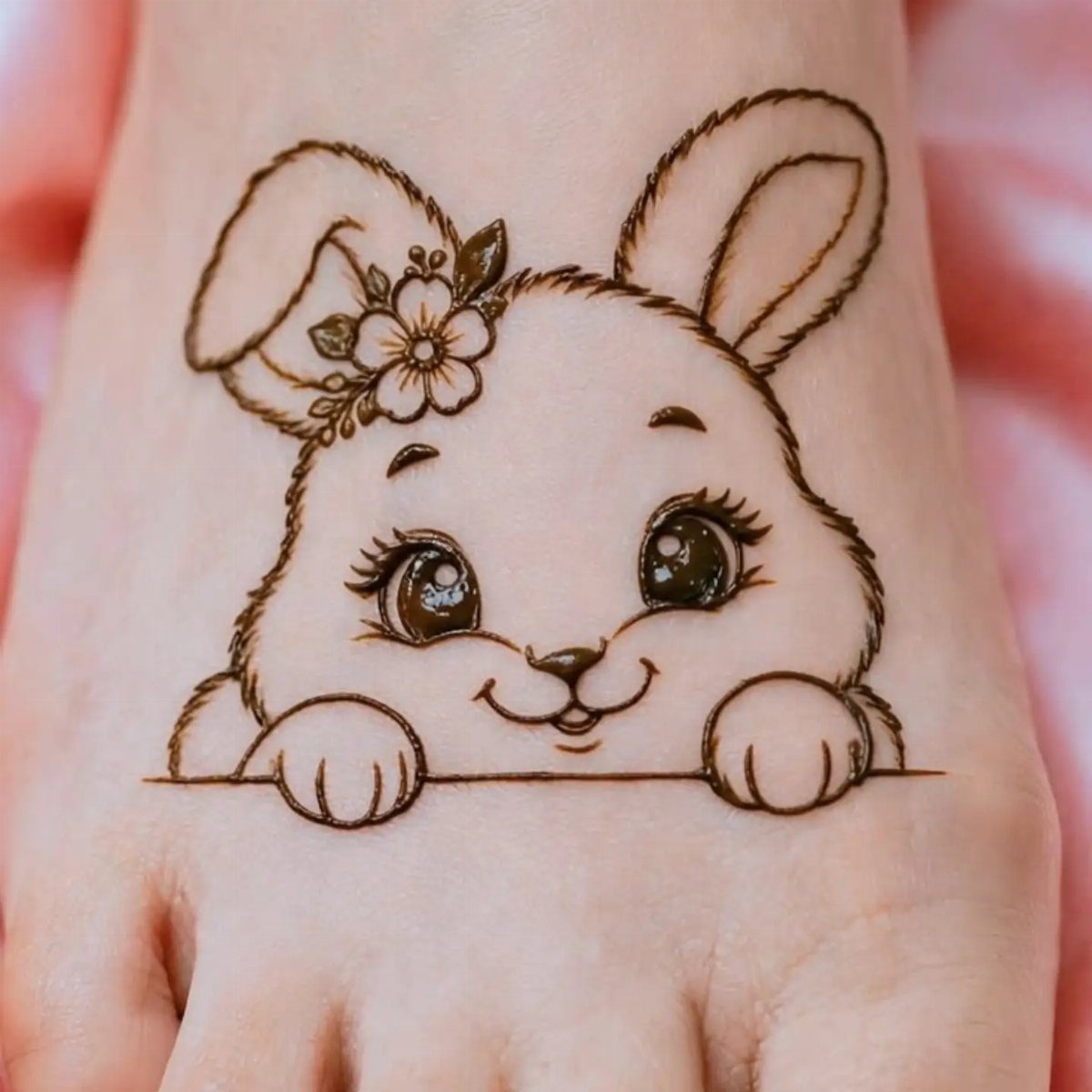
A cartoon bunny gives you a recognizable shape without needing realistic shading or anatomy.
Feet are easier to work on than hands because you can rest them flat while the paste dries, and the top of the foot gives you a smooth, wide surface for larger motifs.
If you’re drawing the bunny yourself, start with the head as a circle, add 2 tall ovals for ears, and finish with a few dots for the face.
The flower can be as basic as a few petals around a center dot. The paste needs to stay on long enough to stain well, so plan the design for a time when you can keep your foot still.
7. Henna Ankle Band and Foot Tattoo
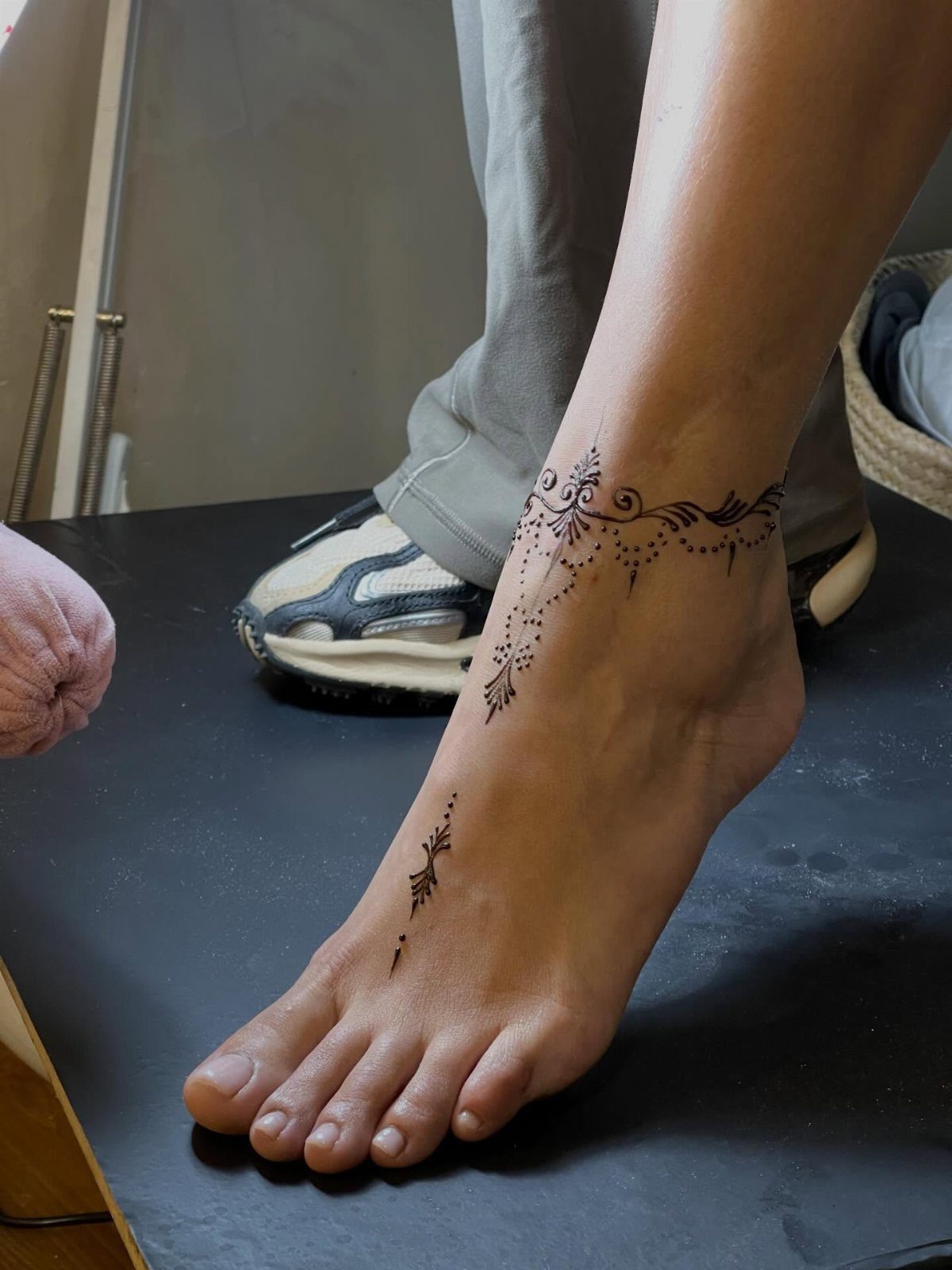
An ankle band runs all the way around or stops at the front, and a small accent motif drops from it down the top of the foot.
The band itself is usually a row of linked leaves, dots, or zigzag lines, and the foot design can be a single flower, vine, or teardrop.
Ankles move less than hands, so the paste stays undisturbed while it sets.
If you’re applying this yourself, sit with your foot propped on a stool and start the band at the back of the ankle where any uneven join will stay hidden.
The foot design works best when it follows the natural line from ankle to toe, keeping the width narrow so it doesn’t spread too wide across the foot’s curve.
Essential Henna Tools
Natural henna powder gives you full control over consistency and color, but ready-made cones skip the mixing step entirely. If you’re starting out, a pre-mixed cone saves time and keeps the paste at the right thickness without trial and error.
Applicator cones taper to a fine tip that lets you draw thin lines and small dots.
Bottles with metal tips work the same way, though the cone feels more natural if you’re used to drawing freehand. Keep tissue nearby to catch drips and wipe the tip clean between strokes.
Pure henna powder should list Lawsonia inermis and nothing else.
Additives marketed as strengthening or darkening the stain often contain synthetic dyes that can irritate skin, so read the label before you buy. Natural essential oils mixed into the paste support the stain without added chemicals.
Tips for Applying Henna
Paper practice lets you test a design’s size and shape before you apply it to skin. Draw the outline a few times until the lines come out even, then move to your hand or wrist.
The cone tip should hover just above the surface so the paste flows without dragging. If the line wobbles, stop and reposition instead of trying to correct it mid-stroke.
The paste dries to the touch in 15 to 30 minutes, but leaving it on for several hours produces a darker stain.
Avoid touching the design or letting fabric rub against it while it sets. Once the paste flakes off, keep the area dry so the stain can deepen.
Henna Tattoo Longevity
Henna stains the outermost layer of skin, so the tattoo fades as that layer sheds. Most designs last 1 to 3 weeks, with the darkest color appearing in the first few days and gradually lightening.
Skin type and placement both affect how long the stain holds. Thicker skin on the palms and soles takes henna better than thinner skin on the wrist or forearm, and areas that see frequent washing fade faster.
To extend the life of the design, avoid scrubbing the area and apply a thin layer of natural oil after the paste comes off.
The oil slows moisture loss and keeps the stain from fading too quickly. Water exposure right after application lightens the final color, so plan your henna session around showers and hand-washing.